Tag Archives: architecture

My Visit to 1920s–and 2020s–San Francisco

The podcast on children’s books that I’ve been cohosting since May has been taking up all of my social media energy, but I’ve finally gotten sufficiently on top of it to return to the world of 100 years ago and revisit San Francisco, where I spent a few days in July.

Like everyone else, I’d heard the horror stories about what’s happened to the city, which I had last visited in 2004. Since my trip, I’ve seen some articles along the lines of “it’s not really as awful as they say,” or at least “it’s more complicated,” but at the time my expectations were along the lines of “urban hellscape.”*

So, as I strolled with my husband around neighborhoods like Nob Hill, North Beach, and Chinatown, I was pleasantly surprised to see a totally normal city. Not a utopia, but the same mix of commerce, bustle, and urban problems that I’m used to in Washington, D.C. If tourists were staying away in droves, no one had told the throngs of people at Fisherman’s Wharf or on the twisty-turny street.

After a week in Sacramento, with its downtown full of empty storefronts and sidewalks empty of people aside from the homeless, San Francisco seemed positively vibrant.**

On the bus from Sacramento to San Francisco, I had prepared for my visit by doing some reading from 100-year-old magazines. In an article in the January 1922 issue of Illustrated World called “San Francisco Fifteen Years After the Fire,” Charles Geiger recounted the city’s impressive recovery following the 1906 earthquake and subsequent fires that destroyed much of the city. “When one gazes about and observes the new and beautiful city of San Francisco, which fifteen years ago was a barren desolate waste following the catastrophe which befell it,” Geiger wrote, “he is filled with admiration for the bravery and the daring of the people of this great western city who at a cost of half a million dollars have made a remarkable record of achievement.”
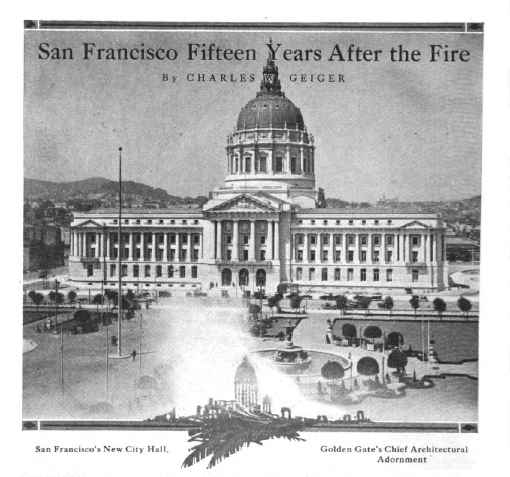
Illustrated World, January 1922

The most notable of these achievements, Geiger says, is the reconstruction of the Civic Center, which includes the City Hall, the city’s “chief architectural adornment,” the Exposition Auditorium, and the Public Library.

Illustrated World, January 1922

I couldn’t wait to check out this marvel of civic rebirth. My husband agreed to come along. I would have felt more comfortable with a Lonely Planet guidebook, with maps orienting you by neighborhood and text warning you of dangers. Bookstores in San Francisco turned out to be surprisingly few and far between, though. I did go to the legendary City Lights Bookstore in North Beach, but when I asked the young man at the checkout if they had guidebooks he looked at me like I’d asked for the Colleen Hoover fanfiction section. Guidebooks for where, he asked.

“San Francisco,” I confessed, unmasked as a tourist.***

“There might be some over there,” he said, pointing to a nearby shelf. And there were a few, but they were all along the lines of A Guide to San Francisco’s Ghosts. I didn’t want a visitation from the dead! I just wanted to go to City Hall!

So, on a Saturday morning, I put City Hall into Google Maps and got a route that went through Union Square and along Market Street. That sounded okay. Market Street was famous, right? Plus, I’d read on a blog post that one of the best bookstores in San Francisco was in the area.

Union Square was buzzing. Tourists and locals were enjoying the beautiful weather and pouring in and out of stores and restaurants. We continued along Market Street.

It didn’t take more than a block or two for us to see that something was very, very wrong. Since it was a weekend, I wouldn’t have expected a lot of foot traffic in this downtown area, but it didn’t seem like anyone came here, ever, other than the people standing around on the sidewalks, seemingly on drugs. We didn’t feel threatened, exactly. We just felt uneasy, like we had entered some postapocalyptic landscape. I don’t have any pictures. It wasn’t a place where you wanted to stand around messing with your phone, and, in any case, how do you photograph nothing? Suffice it to say that the wasteland of empty glass buildings didn’t at all resemble this photo of the area in Illustrated World.
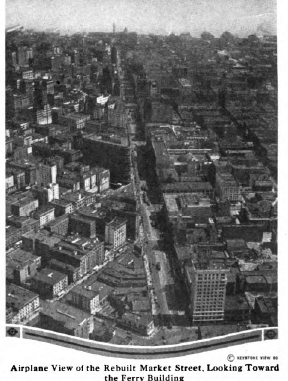
Illustrated World, January 1922

Fortunately, it didn’t take long to get to the Civic Center area, which, while not exactly bustling, at least showed signs of life. Kids played at a playground in the square, and I wasn’t the only tourist snapping photos of City Hall.

The buildings Geiger had marveled over resembled their 1922 selves, although the new public library he wrote about is now the Asian Art Museum.
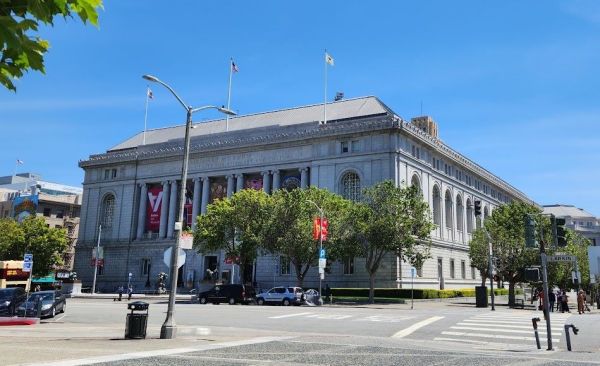
The current library, which opened in 1996, is nearby, and we paid a visit. It was a pleasant space, though fairly empty on this sunny Saturday.

The bookstore, disappointingly, turned out to be a corner of the library where used books were for sale. No Lonely Planets here. I was ready to get out of Civic Center. Let’s go to Haigh-Ashbury, I said to my husband, and put the address of a highly recommended bookstore in that neighborhood into the Uber app.

When we got to the address, though, there was no bookstore to be found. I was starting to take this personally. Luckily, it turned out that the store—The Booksmith—had recently moved a block or so down Haight Street. I spent a happy hour browsing, and added The Booksmith to my list of favorites. And I finally got my Lonely Planet, which belatedly warned me that the Civic Center area is “best avoided without a mapped route to a specific destination.”

The rest of the trip was more reminiscent of 1960s than 1920s San Francisco. We chatted with tie-dye-dressed servers at a Haight-Ashbury creperie, who told us about the throngs the previous week, when the Dead had been in town, watched drummers drumming on Hippie Hill in Golden Gate Park,
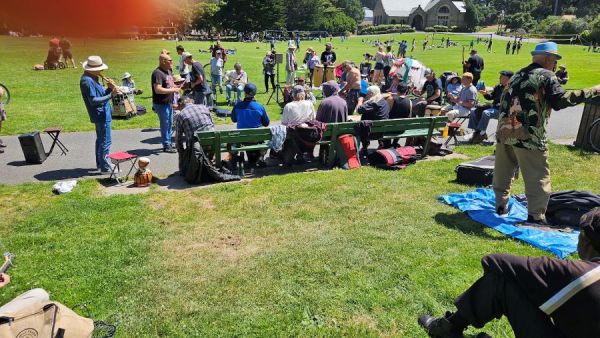
and visited Berkeley, a first for me.
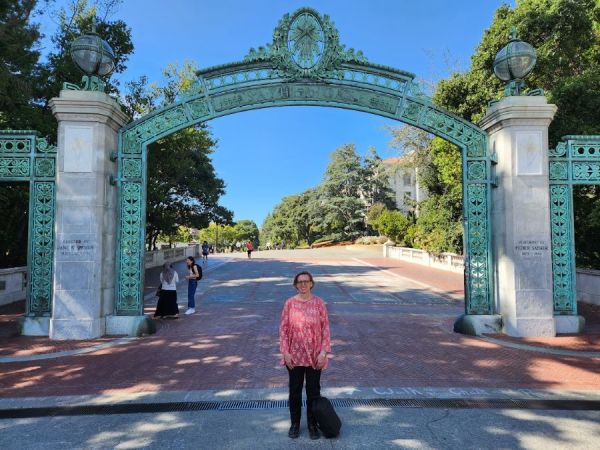
I took in some sensational views, praise that we Cape Town residents do not dish out lightly.****

Outside the Fairmont Hotel on Nob Hill, there’s a statue of Tony Bennett, who first sang “I Left My Heart in San Francisco” there in 1961. He had died a few days before we arrived, and I stopped by twice to look at the floral tributes. Both times I saw a young hotel employee—maybe the same one, but I’m not sure—sadly paying his respects.
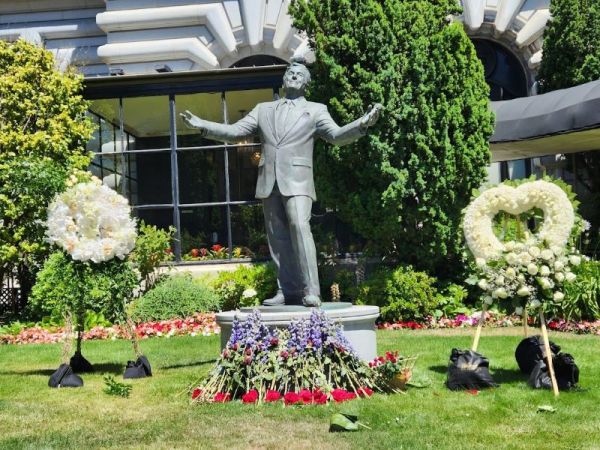
A few days after we left, I learned that, on August 2, 1923, a hundred years minus a week before our visit, Warren Harding had died at San Francisco’s Palace Hotel. The hotel, built in 1909 after the 1875 original burned in the fire, is still there. It’s on Market Street, in a less desolate area than where we walked. If I’d been more up on my history, I could have paid a visit.

Palace Hotel ballroom, 1920, promotional material (via Wikipedia Commons)

Oh, well. If I was going to memorialize someone, I’d pick Tony Bennett over Warren Harding any day.

As for San Francisco’s future, it would be tempting to loop back to Geiger’s glowing account of the city’s rebirth and say, “If they could rebuild then, they can rebuild now.” A closer look at the reconstruction, though, reveals that, while impressively rapid, it was marred by corruption, violence against alleged looters, and an attempt by city leaders to move residents of Chinatown, which had been destroyed by the fire, to mud flats on the outskirts of the city.

I did find one source of inspiration: the Chinese community, along with Chinese government representatives, successfully fought the relocation plan. Chinatown was rebuilt, with the new buildings featuring architectural flourishes like pagodas and dragons that still define the neighborhood today. It was a local businessman named Look Tin Eli who had the idea for the design of the new buildings, but some critics have called them a fantasy of China by western architects aimed at turning the neighborhood into a tourist attraction. Still, the community activism, business acumen, and resilience that led to Chinatown’s rebirth is a story I’m glad to have learned about.
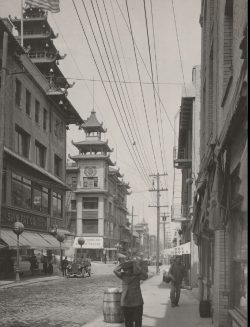

Dupont Street, now Grant Avenue, San Francisco, ca. 1910 (Bancroft Library, University of California, Berkeley)
squiggle

*Heads up that these articles are from the New York Times and New Yorker, respectively. Both publications have a monthly quota of free articles for non-subscribers. I’m a Times subscriber, but it always irritates me when I unknowingly click on a link to a New Yorker article and belatedly realize that I’ve used up one of my six articles.

**Of course, Sacramento might have been more vibrant if the state legislature had been in session and/or temperatures hadn’t been hovering around 100. Also, a shout-out to the wonderful downtown bookstore Capital Books.

***Except who really cares? I’ve never understood why you’re supposed to be embarrassed about being a tourist, assuming you’re acting like a normal person and not an ugly-American stereotype, in which case you probably wouldn’t be embarrassed anyway. Is everyone just supposed to stay in the place they come from all the time to avoid this shameful label?

****If you’re new to this blog and thinking, “But you just said you live in Washington, D.C.,” I spend part of the year in each city.

squiggle

New on the podcast, Rereading Our Childhood:

Rereading The Owl Service by Alan Garner

Rereading The Great Brain by John D. Fitzgerald

Rereading A Wrinkle in Time by Madeleine L’Engle

Reading Little Witch and The Little Leftover Witch

Rereading Freaky Friday by Mary Rodgers

My Quest to Earn a 1920 Girl Scout Badge: Pathfinder, Part 1

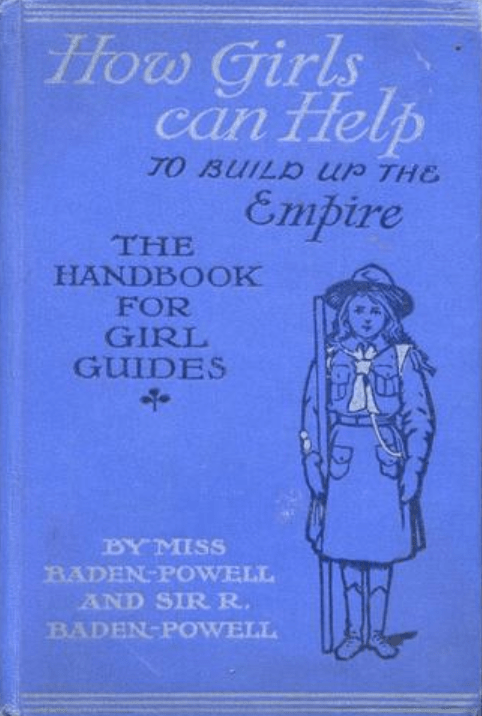
It’s been almost three years since I set out to earn badges from the 1916 Girl Scout handbook, How Girls Can Help Their Country.* In the meantime, a 1920 edition has been published. Renamed Scouting for Girls, it’s full of new badges, as well as revamped old ones with new, generally more realistic requirements.

I’m on it! But I’m scaling back from my insanely ambitious effort last time, when I tackled all 36 badges over the course of just two posts. That was a bit much, what with all the knot tying and flower drawing and ironing and recorder playing. My poor husband! Plus, at that torrid pace I tended to give up on requirements I could have fulfilled if I’d been willing to devote more time to them, like memorizing the names of all the cabinet secretaries. I decided to take it slower this time, with one badge per post.

For my first badge, I chose Pathfinder, where you learn about your local area. I came fairly close to success last time, but I failed the requirement to know all the public buildings and public schools in my city. There’s a vastly improved set of requirements in the 1920 handbook, plus I’m in a different city—Cape Town, South Africa, then and Washington, D.C., now. (I rotate between the two.) I decided to focus my efforts, where possible, on the neighborhood of Mount Pleasant. It’s not my actual neighborhood, but it was developed in the early years of the 20th century so has a 1920s feel.**

Being a Pathfinder ended up being no simple task. At least, not in the overachiever way I decided to go about it, which included not just knowing about places in my community but photographing them and learning about their history. Where possible, I chose buildings that were at least a hundred years old. The project started to balloon out of control, so I decided to scale my ambition back further and devote this post to one particularly labor-intensive requirement. I’ll be back with additional pathfinding in a future post.

Here’s the requirement:

#4. Know the names and locations of the Post Office, Telegraph and Telephone Stations, Public Library, City or Town Hall, one hospital of good standing, one hotel or inn, three churches, one Protestant, one Catholic, one Synagogue, and the nearest railroad.***

As you see, a lot to unpack here.

Post Office

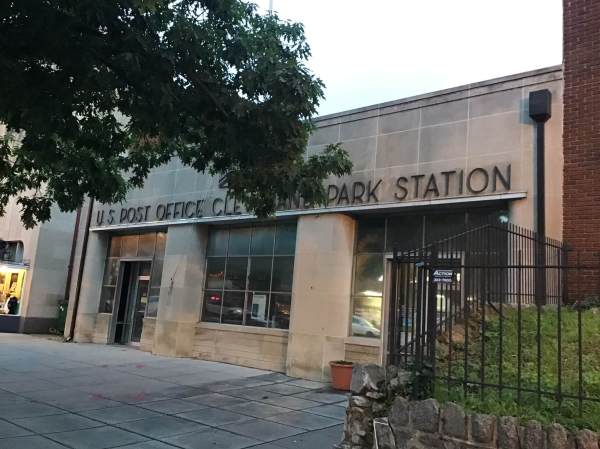
Cleveland Park Post Office

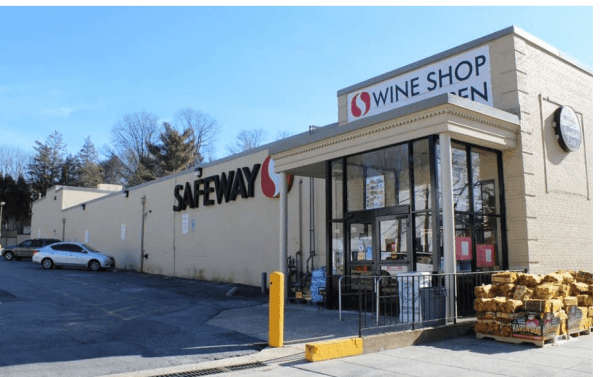
Mount Pleasant doesn’t have its own post office, so I photographed the one in nearby Cleveland Park. The 1941 building was designed by architect Carroll Meigs. When I looked him up, I found (after being sidetracked by the father-son civil engineering duo of Montgomery C. Meigs Sr. and Jr.****) a request to the D.C. government’s historic preservation office by the owners of a Meigs-designed Safeway in the Palisades neighborhood not to have the store designated as historically significant. As part of this effort, the owners dump all over Meigs and the store’s builder, calling its architecture “undistinguished” and saying that “despite the fact that both men had practices based in Washington, DC, neither are considered preeminent in their field.” The review board agreed, saying, “Even if its architect had been recognized as a creative master, this is not a master work or a manifestation of artistry.” The store, which was the oldest Safeway on the East Coast, closed in 2019.*****

Telegraph and Telephone Stations

With technological progress and the breakup of Ma Bell, telegraph and telephone stations have gone by the wayside. A search for nearby cell phone towers proved unexpectedly difficult—the sites I looked at were all difficult to navigate, insecure, or lacking in information. And the reward, a photo of a cell phone tower, didn’t particularly motivate me to persevere.

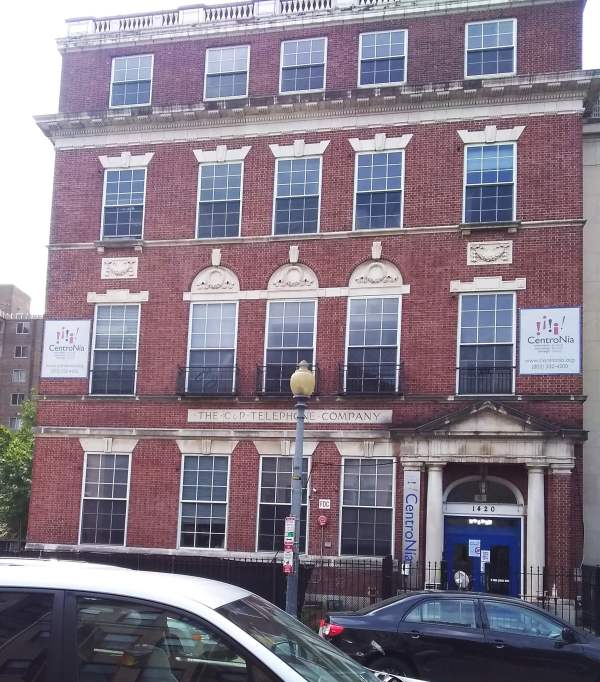
Former C&P Building

However, I did happen upon this old C&P Telephone building in Columbia Heights, a few blocks from Mount Pleasant, which is now a child care center. Apologies for the photo quality—there was a lot of glare on my phone, so I was blindly snapping away.

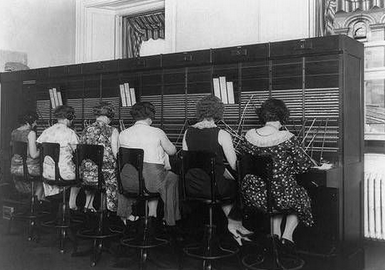
For extra credit, here’s a photo of women working at a C&P telephone exchange, from my post “Are You H.L. Mencken and George Jean Nathan’s Ideal Woman?”

Women at C&P Telephone Exchange, Washington, D.C., ca. 1920, Herbert French.
C&P Telephone Exchange, Washington, D.C., ca. 1920 (Herbert E. French)

Public Library

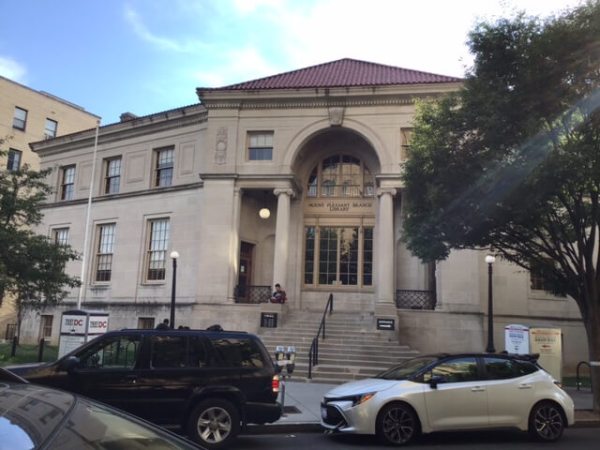
Mount Pleasant Library

The Mount Pleasant Public Library was built in 1925. It’s the third oldest D.C. library still in use and was the last to be built with funding from Andrew Carnegie.

This library, which was renovated and expanded in 2012, has been a constant in my life as I’ve moved in and out of Washington over the decades. I’ve checked out probably hundreds of books there and gone to a few yoga classes. During COVID, the library set up operations outdoors; you’d put a hold on a book, and when it arrived you’d give your name to a librarian sitting at a table outside the entrance and they’d go in and fetch it. That’s what I call service!

I’m nostalgic for the days when the wide set of steps in front actually led to the entrance—access is now through a flight of stairs on the side—but I’m lucky to be able to call this my local public library.******

City or Town Hall

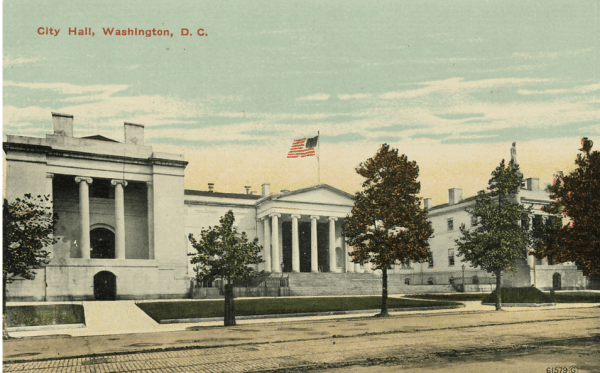
Postcard of District Building (now the John A. Wilson Building), 1914 (eBay)

My ambitious goal to photograph all the sites myself fell by the wayside with D.C.’s center of government, the John A. Wilson Building. It’s kind of far away, down past the White House. So you’ll have to make do with this vintage postcard.

I did learn a lot about the Wilson Building, though, starting with the fact of its existence. I realized when I saw this requirement that I had no idea where the seat of the D.C. government was—a shameful fact given that I have lived here on and off (mostly off) since 1983. This is partly due to D.C.’s neither-fish-nor-fowl administrative status, which makes City Hall less of an institution than it is in other cities. But still, shameful.******* Originally known simply as the District Building, the Wilson Building dates from 1908. It was renamed in 1994 after a former head of the city council.

Postcard of D.C. City Hall (now the D.C. Court of Appeals), early 1900s (streetsofwashington.com)

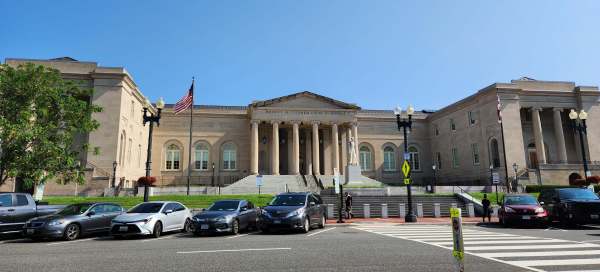
The original City Hall, built in 1822, now houses the District of Columbia Court of Appeals. I was familiar with this building, since it’s right in front of you when you get off the Metro at Judiciary Square on your way to the Mall.********

I will definitely keep an eye out for the Wilson Building next time I’m in the area.

Hospital of Good Standing

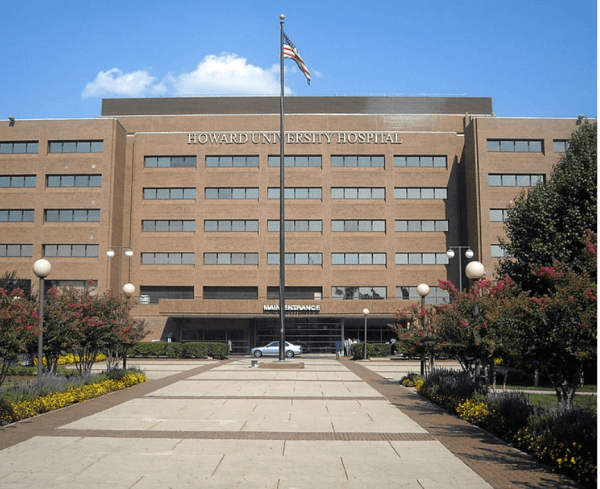
Howard University Hospital, 2008 (AgnosticPreachersKid)

My effort to locate an old-timey hospital in D.C. provide futile. Several of the city’s hospitals are over a hundred years old as institutions, but all of them have relocated to modern buildings.

The closest hospital to Mount Pleasant, according to ushospitalfinder.com, is Howard University Hospital. It’s currently housed in a nondescript modern facility, but it has an interesting history, originating as the Freedman’s Hospital and Asylum in 1862. Beginning in 1863, it was headed by Dr. Alexander Augusta, the country’s first black hospital administrator and professor of medicine. After the Civil War, it became Howard’s teaching hospital but remained a federal facility.

Alexander Augusta, date unknown (blackpast.org)

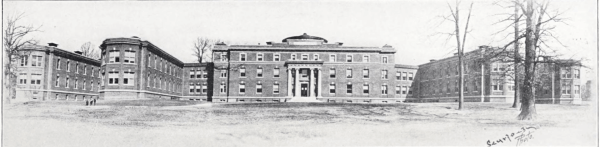
New quarters for the hospital, previously located on a military base, were built in 1909. The hospital was transferred to the control of Howard University in 1967, and the building remained in use as a hospital until 1975. It still stands, now housing the university’s communications school.

Howard University Hospital, 1910 (from the book An Era of Progress and Promise)

The current hospital, built in 1975, is on the former site of Washington’s Griffiths Stadium.********* It’s been beset with scandals and financial problems in recent years, making the “good standing” criterion in the badge requirement debatable. It’s under new management now, though, and was allocated $100 million for the construction of a new facility under the infrastructure law passed earlier this year, which I’ll take as a thumbs-up.

Hotel or Inn

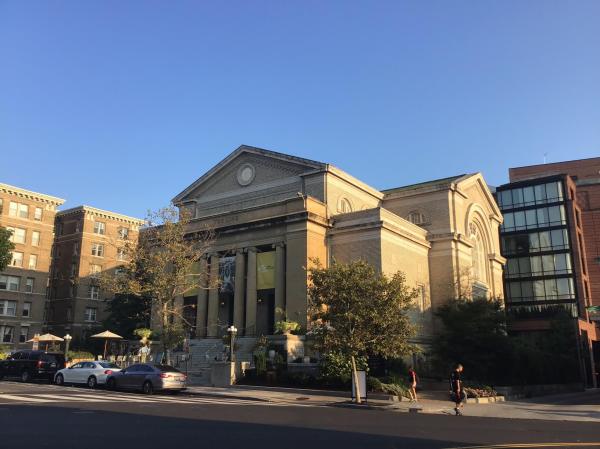
The Line Hotel

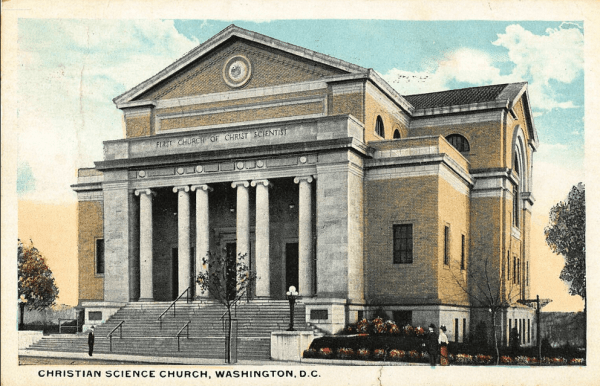
Finally, an easy one! The Line Hotel in the Adams Morgan neighborhood, just down the road from hotel-less Mount Pleasant, occupies a former Christian Science church that was built in 1912. The building sat empty for a quarter-century while the church retained a presence in the form of a reading room next door.

Postcard, Christian Science Church, 1921 (eBay)

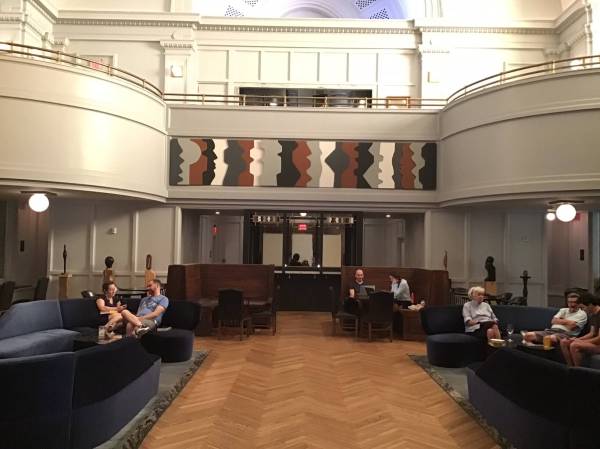
The Line opened in 2017 and quickly became a trendy hangout, with music pouring out of the building and guests and local residents relaxing on colorful cushions on the steps. It soon became embroiled in a dispute with the city government about a $46 million tax abatement related to the hiring of D.C. residents, which was eventually resolved in its favor. (Learning about your local community turns out to lead to all sorts of cans of worms). The hotel shut down for a while, along with the rest of the hospitality industry, because of COVID. A visit to the Line on a recent Sunday afternoon showed that it was, if not exactly hopping, pleasantly buzzing.

Lobby, The Line Hotel

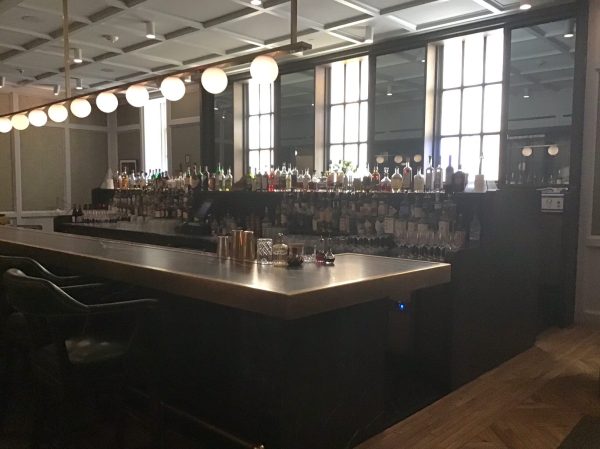
The two impressively stocked bars were deserted, but I wouldn’t necessarily call a deserted bar at 6 p.m. on a Sunday a bad thing.

Bar, The Line Hotel

Three Churches, One Protestant, One Catholic, One Synagogue

National Baptist Memorial Church

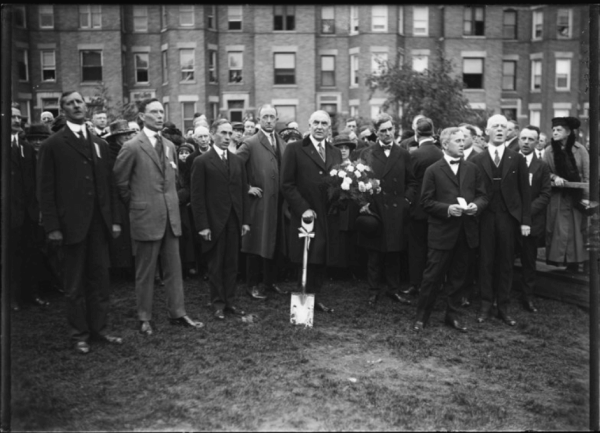
Mount Pleasant borders 16th Street NW, a boulevard that’s lined with houses of worship all the way up to the Maryland border, so I had an abundance of riches to choose from. To represent the Protestants, I selected the National Baptist Memorial Church, which is is exactly a hundred years old. Here’s  President Harding at the 1921 groundbreaking.

President Harding at National Memorial Baptist Church groundbreaking, 1921 (Library of Congress)

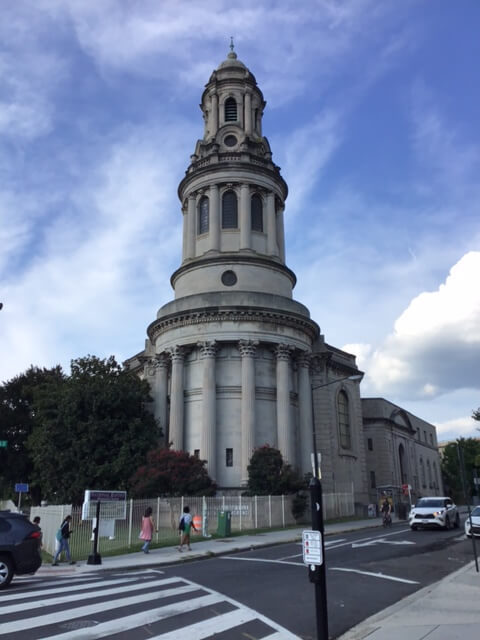
You can see the National Baptist Memorial Church on the left in the photo at the top of this post, along with All Souls Unitarian Church and the Unification Church’s National Family Church, which was built in 1933, with granite shipped from Utah, as the Washington, D.C., headquarters of the Mormon church.

St. Augustine Catholic Church, 2009 (AgnosticPreachersKid)

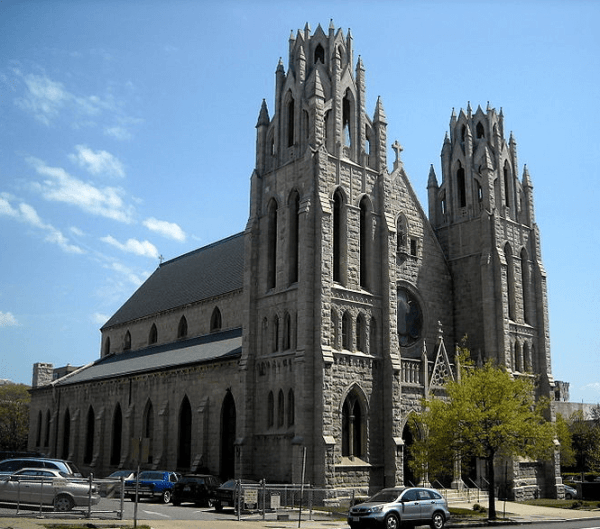
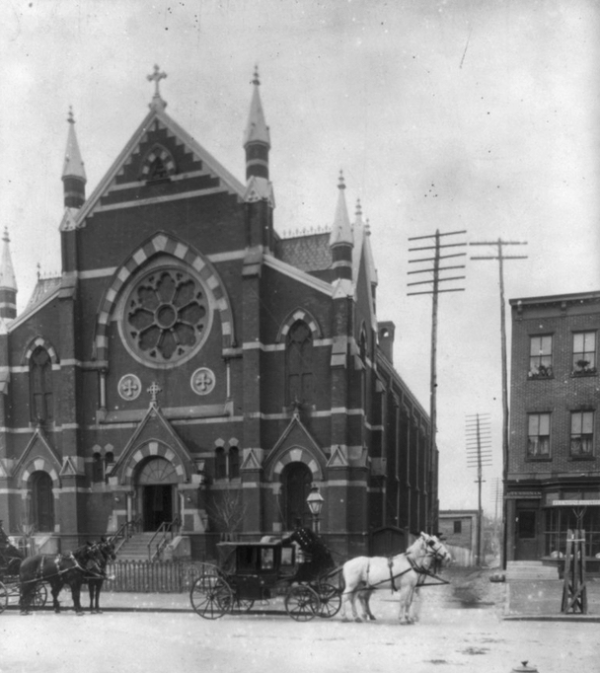
I had to go further afield to find a Catholic church and a synagogue. St. Augustine Catholic church has a storied history as the first African-American Catholic church in the District. It was founded in 1858, and its parish school was one of the first in the city to educate black children.

St. Augustine Church, ca. 1899 (Library of Congress)

St. Augustine subsequently merged with St. Paul’s, which had a dwindling congregation of white parishioners. The original church was torn down, and the longtime headquarters of the Washington Post was built on the site. The current church, built in 1897, is the old St. Paul’s.

Kesher Israel Synagogue

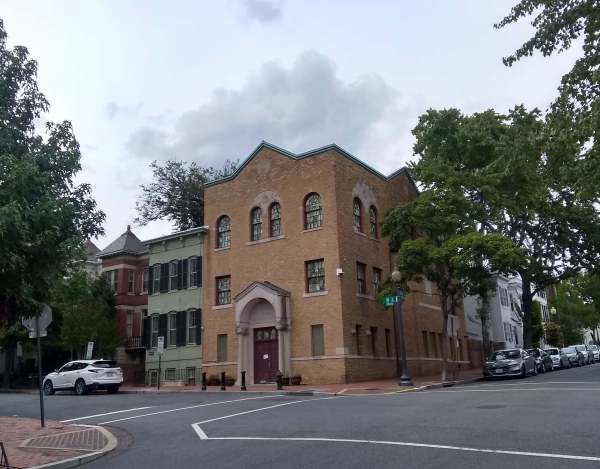
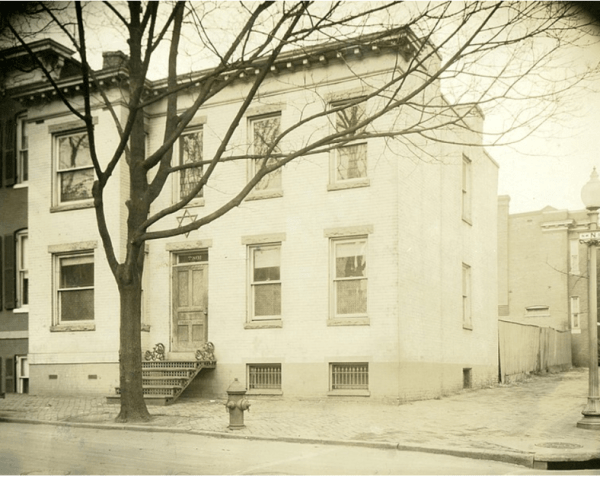
On a walk in Georgetown, I passed Kesher Israel, a Modern Orthodox synagogue that was founded in 1911. The congregation operated above a store on M Street at first, and in 1915 it moved into new quarters, pictured below. The current synagogue was built on the same site in 1931.

Kesher Israel Synagogue, 1915 (kesher.org)

Prominent members of Kesher Israel have included Herman Wouk, author of The Caine Mutiny, who called Kesher Israel “the best little shul in America,” and senator and vice presidential nominee Joe Lieberman, who occasionally walked the three miles from the synagogue to the Capitol for votes that took place on the Sabbath.

Nearest Railroad

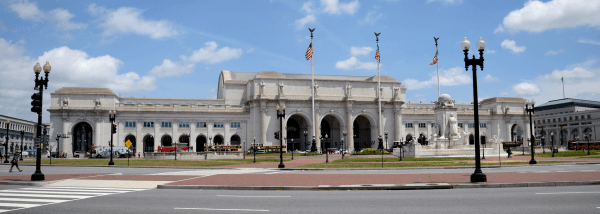
Union Station, 2015 (VeggieGarden)

Union Station is Washington’s Amtrack station—the railroad’s second busiest, I recently learned (after New York’s Penn Station, presumably). Busiest in terms of riders, that is. In terms of hustle and bustle in the station itself, not so much. I took the Metro there on my way to the Library of Congress recently and was taken aback to see how deserted the station, once a bustling shopping center, is now.

Curious about how this had happened, I did some Googling and found a recent Washington Post article about the sad state of affairs, which has to do with a drop in ridership during COVID, an influx of homeless people when libraries and other public buildings closed, and the station’s complex ownership/leasing/subleasing setup. Planning for a $10 billion renovation project is underway, but that will take a decade. I hope that the station will return to at least a semblance of its former glory well before then, and that I will once again be able to browse happily in its shops.

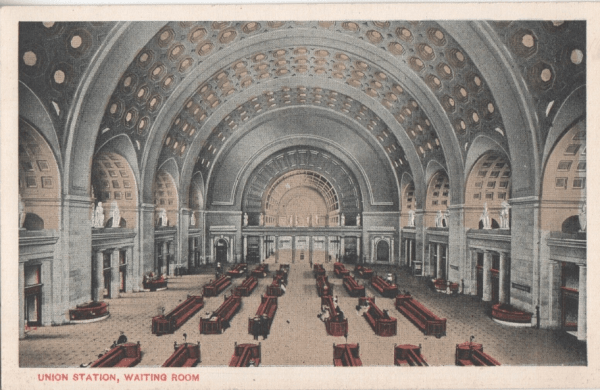
In the meantime, here’s a photo of the station’s lobby, taken a few years after it opened in 1908.

Postcard of Union Station waiting room, ca. 1910 (eBay)

Whew! That was quite a requirement! It was well worth the effort, though. When I walk around my community now, I see it with new eyes and feel an increased sense of belonging.

Stay tuned for Part 2!

squiggle

*How Girls Can Help Their Country was a spinoff of the British How Girls Can Help to Build Up the Empire.

**Mount Pleasant is one of Washington’s most diverse neighborhoods today, but, like many Washington neighborhoods, it has a troubling racial history. In the 1920s, almost all residents signed deeds prohibiting the sale of their homes to African Americans. You can learn more about the neighborhood’s history in this 2021 Washington Post article by a Mount Pleasant resident.

***I’m condensing this and other badge requirements, since there are separate instructions for city dwellers and residents of small towns or rural areas.

****Meigs Sr. served as the Union Quartermaster in the Civil War and supervised the construction of the U.S. Capitol. Meigs Jr. was, in addition to being a civil engineer, the father of boring children’s writer Cornelia Meigs.

*****Meigs has gotten enough grief, so I’ll refrain from commenting and let you be the judge:

Historic Preservation Review Board Application, 2018

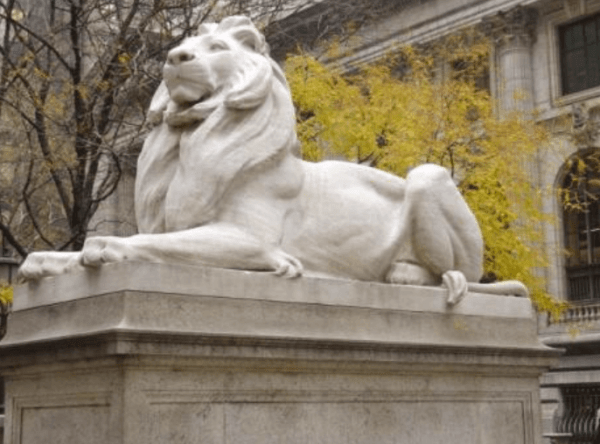
******When I was a kid, they used to play a song about the “local public library” on Captain Kangaroo and show photos of the lions at the library at 5th Avenue and 42nd Street in New York. I assumed that was the name of the building, and I asked my mom if she could take me there. She pointed out that we had just gone to the library. I said, “No—the Local Public Library!” Naturally, she had no idea what I was talking about. The sad thing is that we lived in New Jersey at the time and she could easily have taken me to visit the lions (to the extent that anything is easy when you’re the mother of four small children).

nypl.org

*******I polled two friends and both of them knew that the Wilson building is the home of the D.C. government.

********Update 7/22/2025: I took this photo of the D.C. Court of Appeals building on the way to the Metro from the nearby D.C. courthouse. I arrived in D.C. on Friday, my first time back since December, and, going through my huge stack of mail, found a summons for today. I was pretty sure I was ineligible since I spend most of the year out of town, but it was too late to sort that out so I had to show up. The woman at the desk told me to reschedule for an arbitrary day in the future and, in the meantime, provide proof that I don’t spend most of the year in D.C., after which I’ll be dismissed. She said that my presence on a jury could cause a mistrial, which seems kind of harsh given all this pathfinding.

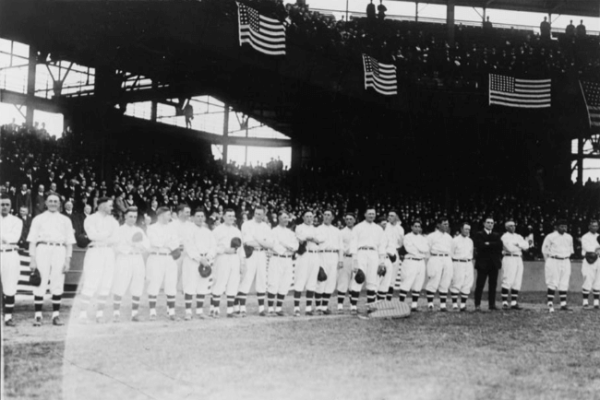
*********I had to stop myself from going down a whole other rabbit hole about Griffith Stadium, former home to the Washington Senators, the Redskins (now the Commanders, although I prefer the interim moniker Washington Football Team), and the Grays, the Negro League baseball team. You can learn more about this, and about the history of Howard University Hospital, on this fascinating page on Howard’s website.

Opening Day, Griffith Stadium, 1918 (Library of Congress)