

August in Washington, D.C., wound down in a very un-D.C. fashion, with moderate temperatures and low humidity, a far cry from the weather in late July when I went to the DC Open finals.* The women’s final, played in the afternoon after a long rain delay, felt like a battle to see which player could draw more of the humid air into her lungs. (Conditions were better for the men, who played at sunset after another long rain delay.)

I started my Labor Day weekend early by joining two friends for a swim at the Hearst Pool near the National Cathedral. This was my first visit to this pool, which opened in 2021, and only my second swim of the summer. As I swam leisurely laps and lazed on a lounge chair chatting with my friends, I regretted that I hadn’t spent more time at the pool.
I decided to cut myself some slack, though, given that my summer started out as a Cape Town winter and along the way featured COVID in Dublin, a week visiting family in Colorado, and Hurricane Erin, which didn’t come as far north as DC but brought cloudy skies and cool weather. I’d celebrate the last days of summer, I decided, by taking a look at swimmers on the magazine covers of 1925.
The New Yorker, in its first summer, went all-in on celebrating the joys of the surf.

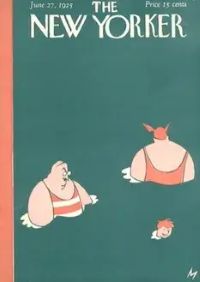
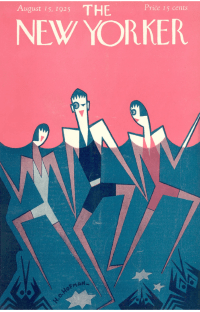
Judge was on board too.


Vanity Fair was not to be outdone by Judge in the red wrap department.

Kids joined in the fun at the Saturday Evening Post.


It struck me that, while the men and boys are still covered up on top, the women’s suits aren’t all that different from what you’d see at the beach or the pool these days. When I was growing up, all girls’ and women’s suits had higher-cut legs (if you wanted to be modest, you had to get one with a little skirt, which was kind of pointless because it would float up when you got into the water), but now you see all different kinds of suits, including ones like these.
Women had to fight for the type of suits that you see on the 1925 covers. Twenty years before, bathing suits looked like this:
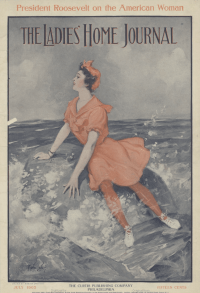
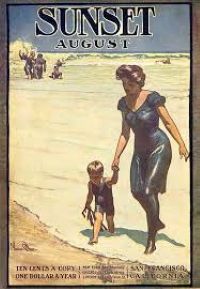
Stockings were on their way out by the mid-1910s,

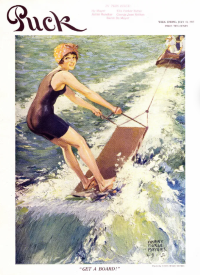
but bare-legged swimming was still barred in some places. The outcry following the arrest of Olympic gold medalist Ethelda Bleibtrey for swimming “nude” (i.e. without stockings) at Manhattan Beach in Los Angeles in 1919 helped put an end to the leg-baring bans.
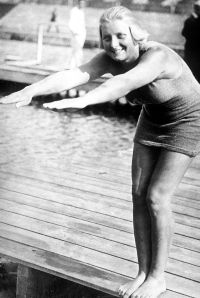
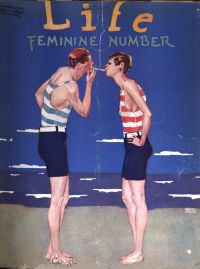
By 1925, Life was poking fun at the similarity between men’s and women’s suits. (They would diverge again when men started bathing topless in the 1930s.)
With Labor Day behind us and pools closed, swimming is a wistful memory.
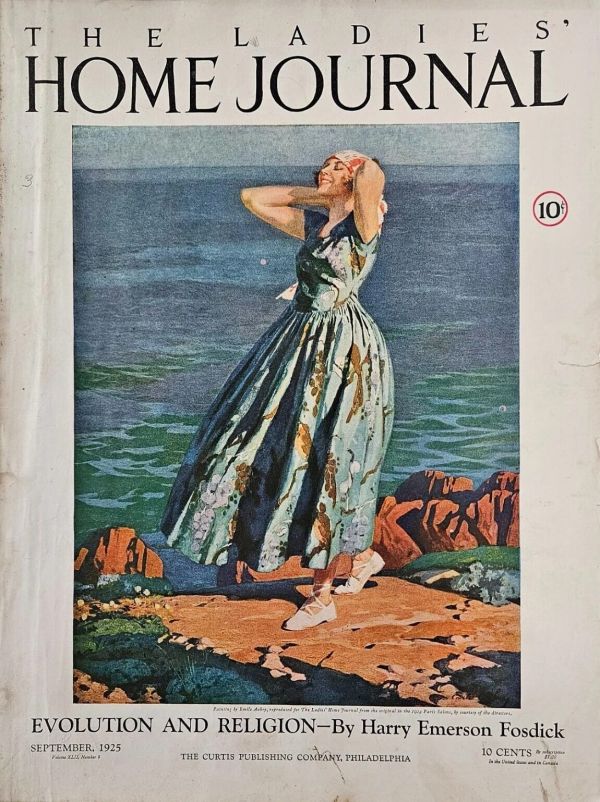
As this woman reminds us, though, you don’t have to go in the water to enjoy the warm weather while it lasts.

*The tournament is officially called the [Corporate Sponsor 1] [Corporate Sponsor 2] DC Open, but I don’t have either the mental energy to remember all that or the desire to advertise these companies every time I mention it.
**I really, really want her dress.
 My Life 100 Years Ago