Category Archives: My Life in 1918

My 1918 Bedside Bookshelf

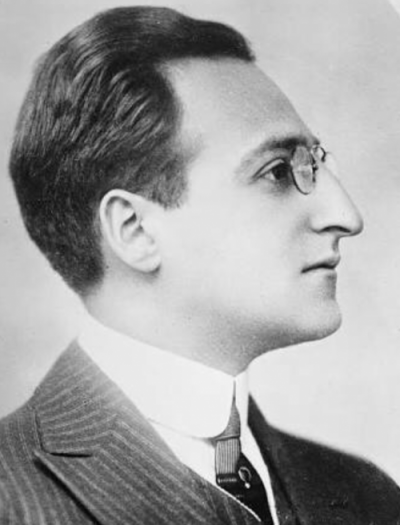
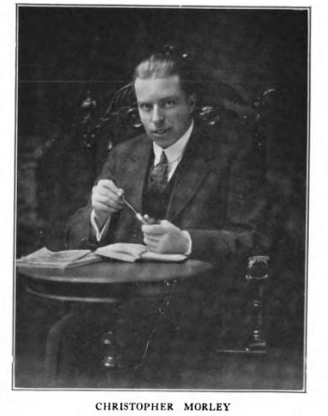
Christopher Morley was one of those famous-in-their-time people no one has heard of today.* In 1918, the hardworking twenty-seven-year-old had just published Parnassus on Wheels, his first novel, and a book of light verse called Songs for a Little House,** and he had a book of essays coming out. He was also the literary editor of Ladies’ Home Journal.
The Bookman, February 1918

In a piece in the February 1918 issue of The Bookman (originally published in the New York Sun), Morley stirred up quite a kerfuffle. The issue: what books you should choose for your guest room. “Let us assume that many of your guests are of the male sex and have the habit of reading in bed,” he writes. “You keep a reading lamp by the bed, of course, and a bookshelf. What thirty volumes would you choose to fill that shelf?”

Of course, Morley doesn’t really want to know what books YOU’D choose. He wants to tell you what books HE’D choose. As advertised, they’re pretty manly. Robert Louis Stevenson, Arthur Conan Doyle, Joseph Conrad, Rudyard Kipling. Plus some manly-sounding books I never heard of, like The Adventures of Captain Kettle and Casuals of the Sea. You can read the rest of the list here. Morley writes that

I find that for such strollers, wastrels and errant persons as frequent my house, this is a fairly well-selected guest-room library. I wonder if your readers will concur.
They didn’t. Harold Crawford Stearns sent in a list, published in March, that only had one duplicate with Morley’s, the Bible. It was equally manly, though. In April, D.M.T. Willis argued that Morley had chosen not bedtime books but “books that one wants to read when wide awake on a cold afternoon before the fire, or in a hammock under trees in warm weather.”

Bedtime reading, he says,

seems to me like the intense desire to eat candy one experiences immediately after church service, a sort of reactive indulgence, a kind of “now-I-can-do-as-I-please-for-the-rest-of-the-night” feeling.

My sentiments exactly!

Willis includes little blurbs with his list, like, “The Rubaiyat. Because every man and most women sometime at night want to feel as happy-go-lucky and sentimental as Omar,” and “The Bible, because some one might read it and become a poet.” His list is as lacking as Morley’s in women authors, but he’s such a charming blurber that I would totally stay at his house.
As for the contribution from Edward O’Brien, the editor of the Best American Short Stories series, all I can say is, really, Edward? The Canterbury Tales? At bedtime? I checked out another one of his choices, Religio Poetae, by Coventry Patmore. Here’s how the title essay starts:

No one, probably, has ever found his life permanently affected by any truth of which he has been unable to obtain a real apprehension, which, as I have elsewhere shown, is quite a different thing from real comprehension.

Zzzzzz.

The Bookman, to its credit, is snarky about Morley’s gender policy, saying in April that

Mr. Morley’s guest-room is apparently adapted solely to the needs of his male friends—or is it that his women visitors are of the kind that do not read?***

Finally, some women, identifying themselves as “Two Old Maids,” weigh in, and at last we have a handful of women authors: Jane Addams, Edna Ferber, and Lady Montagu.

Of course, I’m just like Christopher Morley: the real reason I’m writing about this is to give you MY 1918 guest room bookshelf list.

First I need a 1918 guest bedroom, though. Luckily I found one that’s perfect:
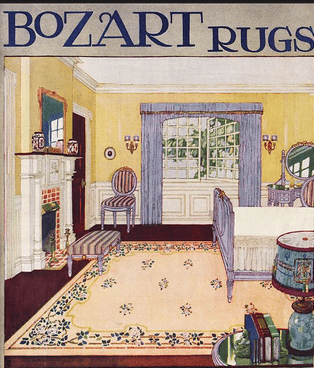
Screenshot (251)-2

Ladies’ Home Journal, May 1918

Okay, now for my list. It includes a mix of  books I’ve read for this project, other 1918-era books I’ve been wanting to read, and a few earlier classics. In the spirit of D.M.T. Willis, I’ve included blurbs explaining why I picked each one.

  1. Bab: A Sub-Deb by Mary Roberts Rinehart. Because this story about a rebellious, hapless teenager is hilarious, and short enough that you’ll be able to read the whole thing during your visit.
  2. Emma by Jane Austen. Because somehow it seems more 1918-ish than the rest of Austen.
  3. Mrs. Spring Fragrance by Sui Sin Far. Because I just finished this fantastic collection of short stories about the Chinese community in Seattle and San Francisco, and I can’t wait to tell you about it.
  4. The Age of Innocence by Edith Wharton. Because being a houseguest with a well-stocked bookshelf at hand is such an Edith Wharton thing to do.
  5. The Magic City by E. Nesbit. Because every guest room bookshelf needs some magic, and I missed this one during my E. Nesbit years.
  6. Tendencies in Modern American Poetry by Amy Lowell. Because I want to take a deeper look into what was happening in poetry in 1918, and who better to explain it than Lowell?
  7. The Tree of Heaven by May Sinclair. Because it was one of the big books of 1918, but when I ordered a print-on-demand version they sent me a book with Sinclair’s name on the cover but a 1907 Robert Chambers book with the same title inside.
  8. Pointed Roofs by Dorothy Richardson. Because May Sinclair said in The Egoist that she’s a great modernist but I’d never heard of her.
  9. Villette by Charlotte Brontë. Because I’ve been wanting to read it and it seems more bedtimey than Jane Eyre.
  10. Renascence, and Other Poems by Edna St. Vincent Millay. Because Louis Untermeyer panned it in The Dial and I’m in the mood to pick a fight.
  11. Marion: The Story of an Artist’s Model by Winnifred Eaton. Because the story of a half-white, half-Chinese artist’s model sounds intriguing, plus she’s Sui Sin Far’s sister.
  12. Anne of Green Gables by L.M. Montgomery. Because, shamefully, I’ve never read it.
  13. Daddy-Long-Legs by Jean Webster. Because this breezy epistolary novel, which I wrote about here, is the perfect bedtime read.
  14. Personality Plus by Edna Ferber. Because the Two Old Maids sound like they know what they’re talking about.
  15. O Pioneers! by Willa Cather. Because it’s one of the best books I’ve ever read. Just don’t read the ending right before you turn off the light, like I did.
  16. The Last Ditch by Violet Hunt. Because her wonderful poem in Poetry magazine about her breakup with Ford Madox Hueffer (Ford) made me want to read more of her work.
  17. The Story of an African Farm by Olive Schreiner. Because I really need to read this South African classic.
  18. Behind the Scenes, or, Thirty Years a Slave and Four Years in the White House, by Elizabeth Keckley. Because Keckley’s amazing journey sounds well worth reading about.
  19. The Circular Staircase by Mary Roberts Rinehart. Because this was Rinehart’s first best-seller, and if her mysteries are as good as Bab: A Sub-Deb I can’t wait to get started.
  20. Understood Betsy by Dorothy Canfield Fisher. Because I read this when I was very young and I’d love to see if I remember anything.
  21. The God by H.D. Because I need to start actually reading the Imagist poets instead of just reading about their love lives.
  22. Married Love by Marie Carmichael Stopes. Because, who knows, this British sex manual might come in handy for my houseguests.
  23. Parnassus on Wheels by Christopher Morley. Because Jeff O’Neal raved about it, but mostly because I love the idea of Morley sitting on the bookshelf with all these women.

Of course, what I’ve really done is put together a list of books I want YOU to have when I stay in YOUR guest room. I’ll be traveling a lot over the next few months, so get ready!

(And there’s still room on the bookshelf–I haven’t reached Morley’s 30 volumes yet–so I’d welcome your suggestions.)
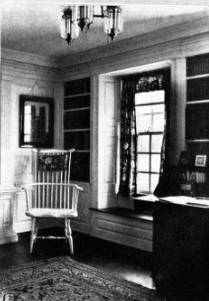
The House Beautiful, September 1917

*Except for Jeff O’Neal of Book Riot, who talked about Morley’s novel Parnassus on Wheels on last year’s holiday book recommendation podcast.

**It’s just like it sounds. He writes so goopily about his wife that I assumed, based on previous 1918 experience, that she would run off with a female Imagist poet in short order. But no, they were still married when he died in 1957.

*** This can’t possibly mean what it sounds like. If it did, she wouldn’t be sleeping in the guest room, would she?

The best and worst of March 1918: Magazines, essays, cover art, and humor

When I was in the Foreign Service, living in Cambodia or Honduras or wherever, people used to ask, “But don’t you miss home?” I never knew what to say. The honest answer was, “I miss some things, sometimes, but it’s way more interesting here. Don’t you get bored living in the same place all the time?” That seemed kind of rude, though.

A quarter of the way through, that’s how I feel about my life in 1918. I’ll see, for example, that Meg Wolitzer, Curtis Sittenfeld, and Rebecca Harrington all have books coming out, and for a second I’ll wish that I could read them, but then I’ll pick up Mrs. Spring Fragrance or the latest issue of The Dial, and the feeling goes away. I can read those books next year. In the meantime, it’s way more interesting here.

Now for the best and worst of March 1918:

Best Magazine: The Little Review

Ulysses, as I wrote earlier this month, made its first appearance in the Little Review in March 1918. The issue also includes Ezra Pound writing on Marianne Moore, fiction by Wyndham Lewis, and an essay by Ford Madox Hueffer (a.k.a. Ford) that contains the sentence “The Englishman’s mind is of course made up entirely of quotations.” But the rest of the issue could have been blank (which wouldn’t have been unprecedented—the first thirteen pages of the September 1916 issue were blank, an expression of editor Margaret Anderson’s frustration over the lack of quality submissions) and it still would have been the best magazine of the month, if not the year.

Worst Magazine: The Art World

The Art World, as I noted last week, had nothing good to say about impressionism or anything that came after. To put that into perspective, the first major exhibition of impressionist art was in 1874. So an art magazine taking this stance in 1918 is like Rolling Stone saying in 2018 that this rock-and-roll music is just a lot of noise.

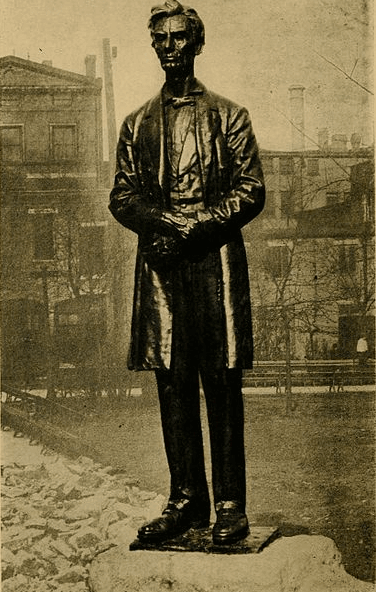
Statue of Lincoln, George Grey Barnard, Lytle Park, Cincinnati (1917)

In its March 1918 issue, the last before it merged into another magazine, The Art World criticized George Grey Barnard’s statue of Lincoln in Cincinnati, saying that Barnard

does not show the majestic Lincoln at the bar of history being judged and admired, but a slave Lincoln at the block, being sold and pitied…let us hope that Mr. Barnard will now deign to accept the advice we gave him in June 1917 and make a new Lincoln—virile, heroic, and majestic.

The magazine approvingly quotes portraitist Cecilia Beaux saying of the 1913 Armory Show in New York, the first large exhibition of modern art in the United States, that

“It was like a sudden windstorm that raises no little dust, noise, and confusion for the moment; when the wind dies down you discover that much that was of no real value has blown away, leaving a clearer, wholesome atmosphere.”

The Art World branches out to the written word in this issue, calling a modernist poem “speech worthy of a yapping maniac.”

Best humorous essay: “Making the Nursery Safe for Democracy,” by Harold Kellock, The Bookman


Essays about family life in 1918 are generally steeped in sarcasm (if they’re by men) or sentimentality (if they’re by women). It’s hard to find a family that seems real. Then I came across Harold Kellock’s essay about his four-year-old son being bombarded with royalist propaganda through his nursery reading. Every night, Kellock is forced to read his son a story about some heroic king. “In a world wherein we are pouring out our blood and treasure that democracy may live safely,” he complains, “our children scarcely out of the cradle are being made into staunch little monarchists.” He takes a stab at democratizing the stories, but it doesn’t work, and he resigns himself to nursery royalism.

“Then,” I read, “the king took Gretel to his palace and celebrated the marriage in great state. And she told the king all her story, and he sent for the fairy and punished her.” Think of having the power of punishment over fairies! The King und Gott! But my son swallows it complacently. He does not question the divine right of kings.

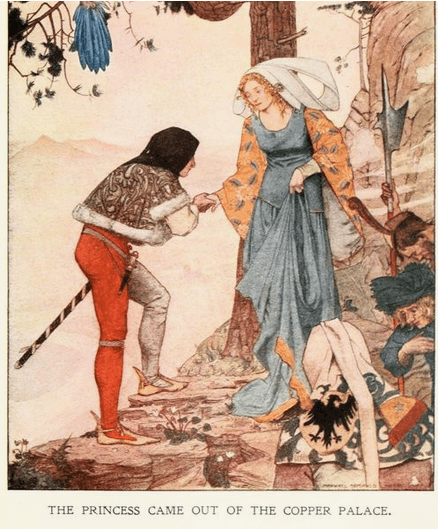
Faery Tales from Hans Christian Andersen, Maxwell Armfield, 1910

Kellock reassures himself that, when the time comes, he can turn his child into a democrat by showing him photographs “of some vacuous king, discreetly bearded to hide his recessional features,” or “a typical princess, whose hat and features alike seem so unfortunately chosen, opening a Red Cross bazaar.”

But not for a while, he says.

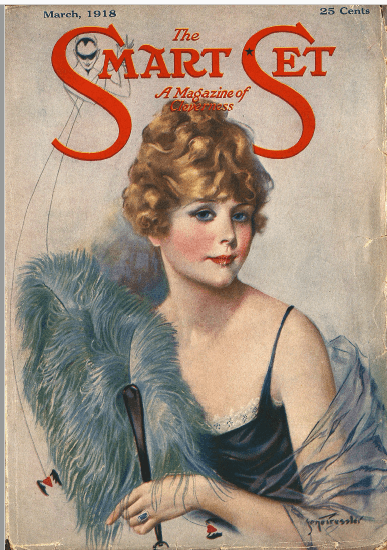
Worst humorous essay: “I Must Have Been A Little Too Rough,” by George B. Jenkins, Jr., Smart Set

I hope this is the worst thing I read all year. There must be an anti-gender violence message hidden somewhere, but…well, read it for yourself.

I must have been a little too rough.

“Women,” her father had told me, “are tired of the courteous treatment of the average man. They are bored by the vapid compliments, the silly lies, the stupid chatter of pale youths with gardenias in their lapels. If you want to be a success with women, be rude! Be violent! Overpower them, assert your physical superiority! If necessary, beat them!” He became quite excited. “Pound them! Assault them! Half-murder them!”

I listened to him respectfully, though I did not care for him at all. Yet I believed him, for he is notoriously successful in his affaires.

I decided to test his theories. Striding into the next room, I grasped his daughter about the waist.

“I love you!” I roared, squeezing her until her face was purple.

“You belong to me!” I shouted, dragging her around the room by her hair, and overturning several chairs in our progress.

“Damn you!” I shrieked, striking her on the shoulder, where the blow left a blue welt, “I will fight the world for you.”

She began to whimper.

“Shut up!” I ordered, in my rudest manner, and slung her across the room.

But I must have been a little too rough, for she fell out the window.

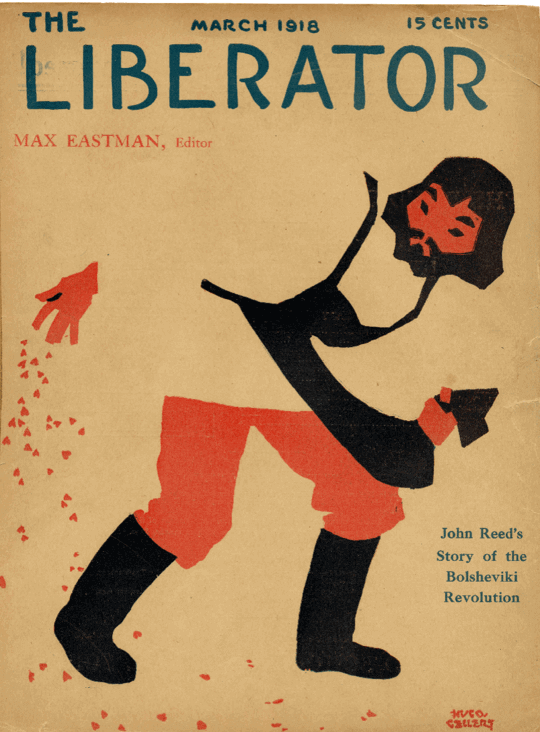
Best magazine cover: The Liberator

The first issue of The Liberator was published in March 1918. Its predecessor, The Masses, had closed down in 1917 after being declared treasonous by the government for its anti-war stance. The debut issue included reporting from Russia by John Reed, whose Ten Days that Shook the World was published the next year (and who died in Russia in 1920 at the age of 32). I’ll write more about The Liberator later. For now, here’s its inaugural cover, by Hungarian-American artist Hugo Gellert.

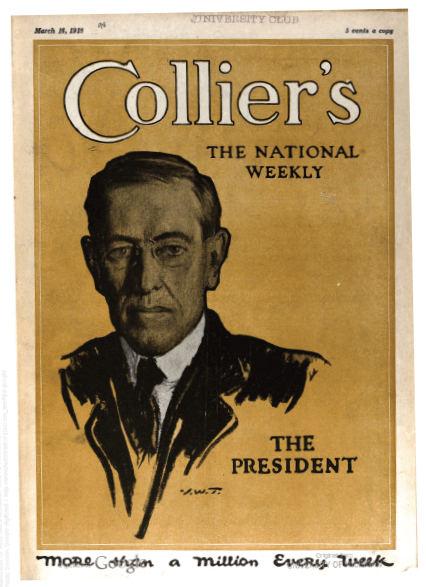
Worst magazine cover: Collier’s

I’m imagining the meeting where this cover was conceived.

Art director: How about…the President?
Editor: What would he be doing?
Art director: Nothing, just a picture of his face, in black and white. With a caption that says [stretches his hand into the air dramatically], “The President.”
Editor: I like it!

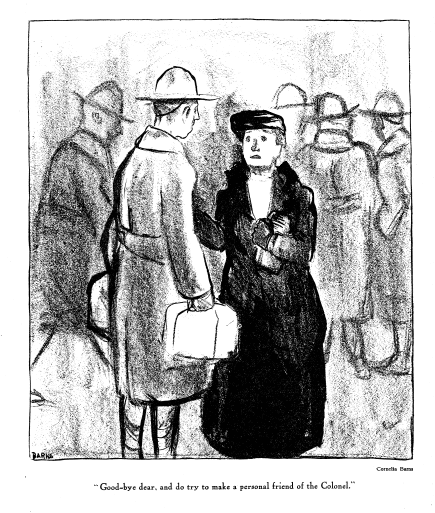
Best humor:


As I’ve noted before, there are no good jokes in 1918 magazines. But I liked this Cornelia Barns Liberator cartoon, featuring the world’s most coldhearted mother seeing her son off to war.

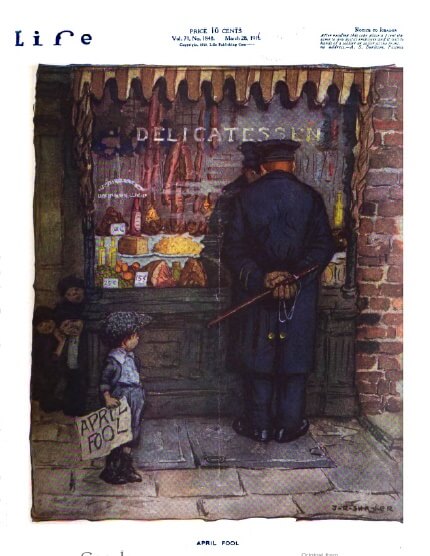
Worst humor:

First dog: How is brother collie over there? Is he in your set?
Second: Oh, yes; we visit the same garbage pails.

(Life magazine, March 28, 1918)

And, in honor of Women’s History Month, the most inspiring women:

I came across so many! Novelists Edith Wharton, Willa Cather, and Mary Roberts Rinehart; artist Elizabeth Gardner; dancer Irene Castle; Little Review editor Margaret Anderson; suffragist Anna Kelton Wiley; prosecutor Annette Abbott Adams; rebellious housewife Julia Clark Hallam; and the anonymous woman who wrote about how divorce saved her sanity.

But every month is Women’s History month at My Year in 1918, and there are lots more inspiring women to come. (Sneak preview: a pioneering British sexologist and a witty Chinese-American writer.) On to April!

The best and worst of February 1918: Magazines, stories, cover art, and jokes

Two months into My Year in 1918, I feel like I used to feel two months into a Foreign Service posting: completely at home in some ways but totally bewildered in others. I know who Viscount Morley was*, and which author every critic trots out to bemoan the sad state of fiction**, but there are references that go right over my head. Who is Baron Munchausen? What is Fletcherizing? And the jokes. I’ll never get the jokes.

Best magazine: The Crisis

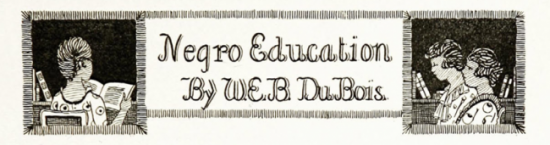
Banner reading Negro Education by W.E.B. DuBois with illustrations of women reading, The Crisis, 1918.

The Crisis, February 1918

 This is a repeat, but no other magazine approaches The Crisis in terms of quality of writing and importance of subject matter. Aside from W.E.B. Du Bois’ autobiographical essay, which I wrote about last week on the 150th anniversary of his birth, the February issue includes Du Bois’ scathing take-down of a government-sponsored study on “Negro Education” that advocated the replacement of higher education institutions with manual, industrial, and educational training. There’s a horrifying account of the mob murder of an African-American man in Dyersburg, Tennessee—so brutal, the magazine reports, that some white townspeople felt he should have had a “decent lynching.” On the literary side, there’s “Leonora’s Conversion,” a slight but engaging story about a wealthy young black woman’s brief flirtation with the church.

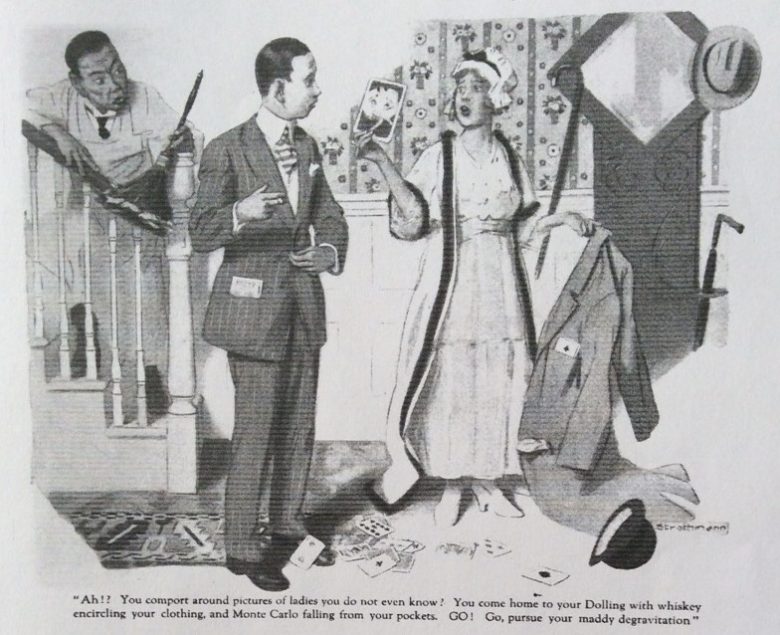
I’m not awarding a Worst Magazine this month. Good Housekeeping was a contender again—dialect-talking black maid Mirandy has the month off, but Japanese manservant Hashimura Togo*** expounds on his employer’s marital problems in equally fractured English. (“‘You have left off kissing me as usually,’ she dib. ‘O.’ He march and deliver slight lip.”) The magazine redeems itself somewhat, though, with an article by suffragist Anna Kelton Wiley called “Why We Picketed the White House.”

Illustration of story about Togo by Wallace Irving, Good Housekeeping, February 1918.

Good Housekeeping, February 1918

Best short story: “A Sordid Story,” by J., The Egoist

February wasn’t a great month for short stories. Most of the ones I read, including two that made it into The Best American Short Stories of 1918, started out promisingly but ended with pathos or a gimmicky twist. “A Sordid Story,” in the January**** Egoist, isn’t great literature, but it has daring subject matter and lots of atmosphere. It features a Cambridge student named Alphonse, whose life is described in the most British sentence I’ve ever read:

He made friends easily and took friendship seriously; so seriously that he spent nearly the whole of the Michaelmas term following the taking of his degree in reading Aeschylus’s Prometheus Bound and The Gospel according to St. Luke in the Greek with a much younger man—a certain Roderick Gregory—who was in his second year, but had hitherto failed to pass his Little-Go.

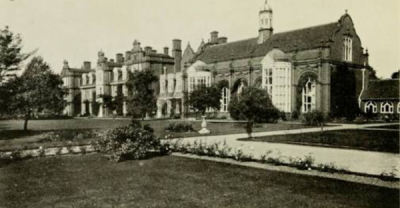
Photograph of Cambridge University by Maxwell Armfield, Cambridge and Its History, 1912.

Maxwell Armfield, from “Cambridge and its History,” 1912

Alphonse falls for Roderick’s sister Beatrice, who “used to have a pet pig, and she called him Shakespeare, because he would be Bacon after his death.” But he spends the night with a working-class girl who grabs his arm as he’s walking near Midsummer Common and says, giggling, “Can yer tell me what o’clock it is?” Horrified with himself the next day, he goes back to her lodgings to pay her off. She tells him that he was her first lover, then, when he tells her it’s over, says, “Yer weren’t the first, then!” Relieved “not to be the first to help send a woman downward,” he goes back to his rooms, where Roderick is playing the cello and twenty-five copies of the Quarterly Journal of Mathematics, in which he has published a paper, await him. It’s only years later that he figures out that he was, in fact, the first.

Worst short story: “A Verdict in the Air,” J.A. Waldron, Judge

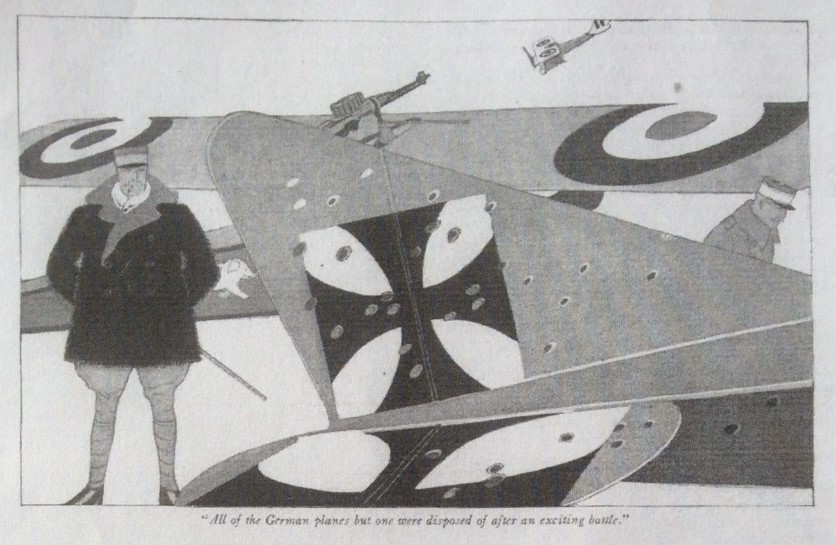
Lawrence Fellows illustration, Judge magazine, 1918, man standing near airplanes.

Lawrence Fellows, Judge, February 9, 1918

Harwood, on leave from aviation training, goes to a cabaret in Chicago. To his surprise, one of the singers is his childhood sweetheart Bessie Dean, who left their Ohio hometown to pursue a career in opera. She introduces Harwood to her husband Grindel, who takes a dislike to him. A few days later, Harwood is training on the Pacific Coast, when who should show up as a mechanic but Grindel! Harwood has a series of flying accidents, and Grindel is suspected, but he goes AWOL. Harwood is sent to fight with the French army. He visits a friend at a field hospital, where the nurse is none other than Bessie, who has escaped her husband. Back at the front, there’s a heated battle. Harwood pursues the last remaining German plane and hits its rudder after a lively skirmish. As the plane plunges to the ground, he sees that the pilot is—you guessed it—Grindel!

Well, the illustration is kind of cool.

Best magazine covers:

February was a great month for magazine covers. I just wish that the insides of the magazines were half as good. Besides the ones from Harper’s Bazar and Vanity Fair that I’ve mentioned already, there’s this Helen Dryden cover from Vogue,

Helen Dryden Vogue cover, February 1918, woman in pink hoop skirt looking into mirror.

Helen Dryden, February 1918

 and this one, which Norman Rockwell sold to Judge after the Saturday Evening Post turned it down. I can kind of see why.

Norman Rockwell Judge magazine cover, girl grabbing tartan skirt from brother dressed as a Scottish soldier.

Norman Rockwell, Judge, February 9, 1918

Best joke:

 This isn’t exactly a joke, but it made me laugh. It’s the opening of Louis Untermeyer’s review of poetry collections by Edna St. Vincent Millay, Samuel Roth, and Edwin Curran in the February 14 issue of The Dial.

These three first volumes, with their curious kinship and even more curious contrasts, furnish a variety of themes. They offer material for several essays: on “What Constitutes Rapture”; on “The Desire of the Moth for the Star”; on “The Growing Tendency among Certain Publishers to Ask One Dollar and Fifty Cents for Seventy Pages of Verse”; on “A Bill for the Conservation of Conservative Poetry”; on “Life, Literature, and the Last Analysis”; on “Why a Poet Should Never be Educated.”

Studio photograph of Louis Untermeyer, ca. 1910-1915.

Louis Untermeyer, ca. 1910-1915, Library of Congress

The Growing Tendency among Certain Publishers to Ask One Dollar and Fifty Cents for Seventy Pages of Verse! That Louis Untermeyer is such a card!

Not amused? Okay, then, you go back to 1918 and try to find something funnier.

Worst joke:

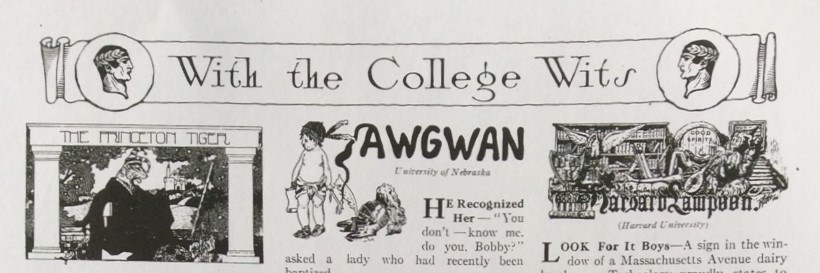
Judge magazine banner, With the College Wits, February 9, 1918.

Judge magazine, February 9, 1918

 Once again, hard to choose. Maybe this, from the February 9 issue of Judge:

“You don’t—know me, do you, Bobby?” asked a lady who had recently been baptized.
“Sure I do,” piped the youth. “You’re the lady what went in swimming with the preacher, last Sunday.”

On to March!

*A British diplomat

**Mrs. Humphrey Ward

***Really Wallace Irwin, who made a career of writing about Togo. Mark Twain was a fan.

****I was reading The Egoist a month late on the principle that it would have taken time for the magazine to get to the United States, which I’ve since decided is ridiculous.

The best and worst of January 1918: Magazines, stories, thinkers, and jokes

 I made it! One month of reading books, magazines, and the news as if I were living in 1918. It’s been even more fun than I expected. The 1918 New York Times at breakfast, printouts of The Dial and The Egoist for on-the-go reading, and Edith Wharton at bedtime. I don’t miss 2018 at all.

Here are some of the month’s highs and lows.

Best magazine: The Crisis

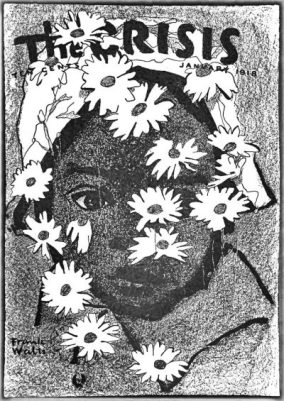
The Crisis cover, January 1918, drawing of African-American woman and daisies

The Crisis, January 1918, Frank Walts

I expected the NAACP’s magazine, edited by W.E.B. Du Bois, to be historically interesting. It was–and it also turned out to be the month’s most compelling read, full of top-quality explanatory journalism, social criticism, personal essays, and fiction.

Runner-up: The New Republic. When I’m befuddled by something I read about in the New York Times—like, was the American war effort as pathetic as Wilson’s critics make it sound, or did Harry Garfield really have to shut down the entire East Coast—all I have to do is wait a few days and the New Republic will provide a clear, convincing explanation. And then explain it again. And then, in case I still don’t get it, spend another couple of pages making the same point. Illuminating? Yes. Concise? No.

Worst magazine: Good Housekeeping

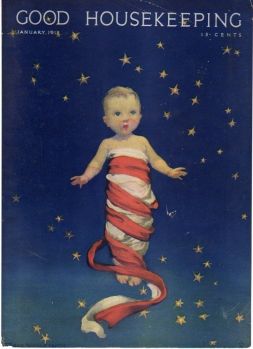
Good Housekeeping cover, January 1918, baby wrapped in flag with starry sky

Good Housekeeping, January 1918, Jessie Willcox Smith

Good Housekeeping was already in the lead for this category because of the horrible Marie Corelli article about cleansing the world through eugenics. Then I read “Mirandy on the One We Didn’t Marry,” by Dorothy Dix. I knew of Dix as a pioneering advice columnist. I’m a big fan of advice columns, and I was eager to find out what she had to say to the women of 1918. But Mirandy turns out to be Dix’s monthly impersonation of an African-American woman who provides her views on life in heavy dialect. “Ef you ’grees wid a woman ‘bout her husban’s faults an’ weaknesses she is lak enough to up an’ lambast you wid de fust thing dat is handy,” Mirandy says. There’s an illustration of a kerchiefed woman with an umbrella giving a talking-to to her pop-eyed friend. If you want to hear a real African-American woman’s take on family life, check out the lovely “A Mother’s New Year’s Resolutions” by Josephine T. Washington, in, where else, The Crisis.

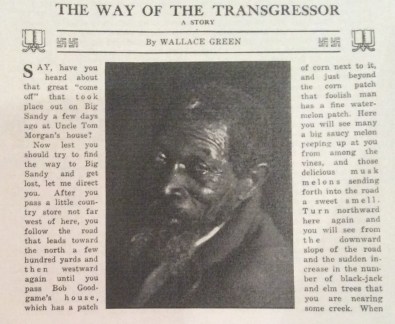
 Best short story: “The Way of the Transgressor,” by Wallace Green

Headline and photograph illustration, The Way of the Transgressor, The Crisis, January 1918.

The Crisis, January 1918

I wrote about this story, which ran in the January 1918 issue of The Crisis, earlier this month. It’s vivid, unformulaic, funny, and moving. Unfortunately, I haven’t been able to find out anything about Green (if that was his real name), or to find anything else that he wrote. I’ll keep looking.

Runner up: “The Policewoman’s Daughter,” by Ben Hecht (Smart Set, January 1918). Agatha is an innocent young woman with a domineering mother (a figurative, not a literal, policewoman), and the story takes place entirely in her head as she waits in the parlor of a seedy hotel for an assignation with a violinist. As the minutes tick by and it becomes clear that he isn’t going to show up, she falls into a state of anguish, followed by relief that God has saved her from ruin. Then she realizes that she got the date wrong, and her joyful anticipation returns. Hecht, who was twenty-three when this story was written, would go on to be one of Hollywood’s top screenwriters. His many credits include His Girl Friday, which is one of the talkiest films ever made. In “The Policewoman’s Daughter,” no one says a word. Talk about versatility!

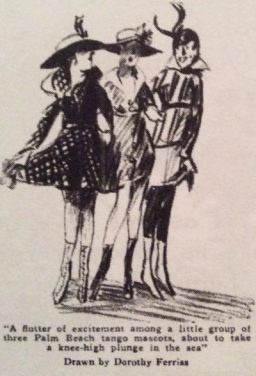
Worst short story: “A Palm Beach Honeymoon,” author unknown

Vanity fair illustration, Palm Beach Honeymoon, January 1918

I opened up Vanity Fair and, after 23 pages of ads, seven of them for dogs, finally got to some editorial copy. Or so I thought. “A Palm Beach Honeymoon” is the story of, well, a Palm Beach honeymoon. Robert is smitten with Mabel, his stunning bride, but he gradually becomes aware that, from her perspective, something in the marriage is amiss. Desperate to find out what it is, he asks his friend, who has been flirting with Mabel’s maid, to see what he can find out. His friend reveals that, during the train ride down, the porter threw away Mabel’s copy of Vanity Fair. Really, Vanity Fair? That’s what I get after all those ads? An advertorial?

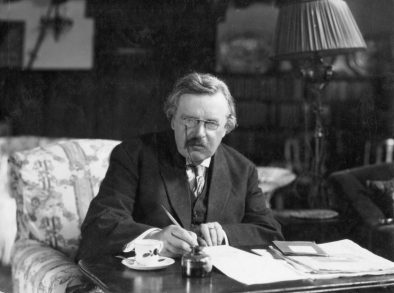
 Most famous thinker no one cares about today: G.K. Chesterton

Portrait photograph of G.K. Chesterton sitting at desk.

G.K. Chesterton, date unknown

 1918 was a bad year, great thinker-wise. Mark Twain died in 1910. So did William James, followed by his brother Henry in 1916. Walter Lippmann was starting to make his mark, but he was still in his twenties in 1918, and in any case he was on hiatus from journalism, working as an assistant to the Secretary of War. So that leaves…G.K. Chesterton. He’s probably best known today for his Father Brown detective stories, but back then he was known for, well, everything. He was a critic and a historian and a theologian and a bunch of other things. Everyone was always quoting him or criticizing him or reviewing his books. There could be a reading-in-1918 drinking game where you take a shot every time someone mentions him. Luckily there isn’t, because I’d be sozzled all the time.

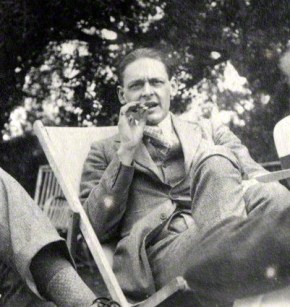
 Least famous thinker everyone cares about today: T.S. Eliot

Photograph of T.S. Eliot in lawn chair, Otteline Morrell, 1923.

T.S. Eliot, 1923 (Lady Ottoline Morrell)

 Okay, Eliot, who was 30 in 1918, wasn’t completely unknown. “The Love Song of J. Alfred Prufrock” had been published in Poetry magazine in 1915, and The Egoist, where he was assistant editor, put together a small collection of his poems in 1917. He was publishing reviews in The Egoist and elsewhere. But he was still working as a banker, and no one, except maybe Ezra Pound, suspected that he’d end up as the century’s most important poet and critic.

 Best joke:

 Geraldine—Why didn’t you enlist?
Gerald—I had trouble with my feet.
Geraldine—Flat, or cold?
(Judge, January 5, 1918)

Judge magazine, January 5, 1918

I know what you’re thinking: “This joke is not funny at all. I wish I could go back in time and never have heard this joke.” But, believe me, this is the best joke I could find. I know. It’s sad.

 Worst joke:

It’s pretty much a tie between all the other jokes  I read this month. They’re either corny, like this one:

“I’d like to have Simpkins’ yellow streak.”
“Why you coward!”
“It’s in a gold mine.”

or incomprehensible, like this one:

He—What music are you going to have at your dance?
Other he—The fraternity hat-band.

(Both from Judge, January 5, 1918)

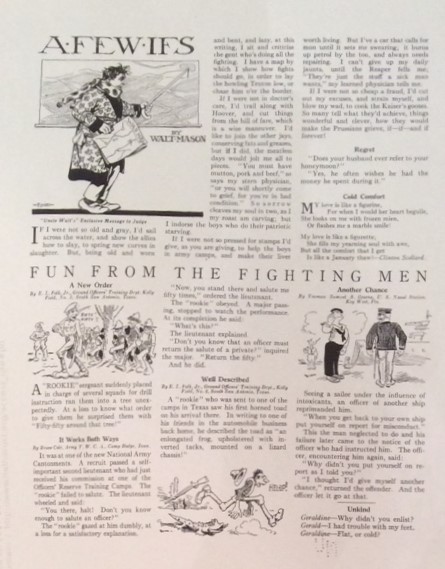
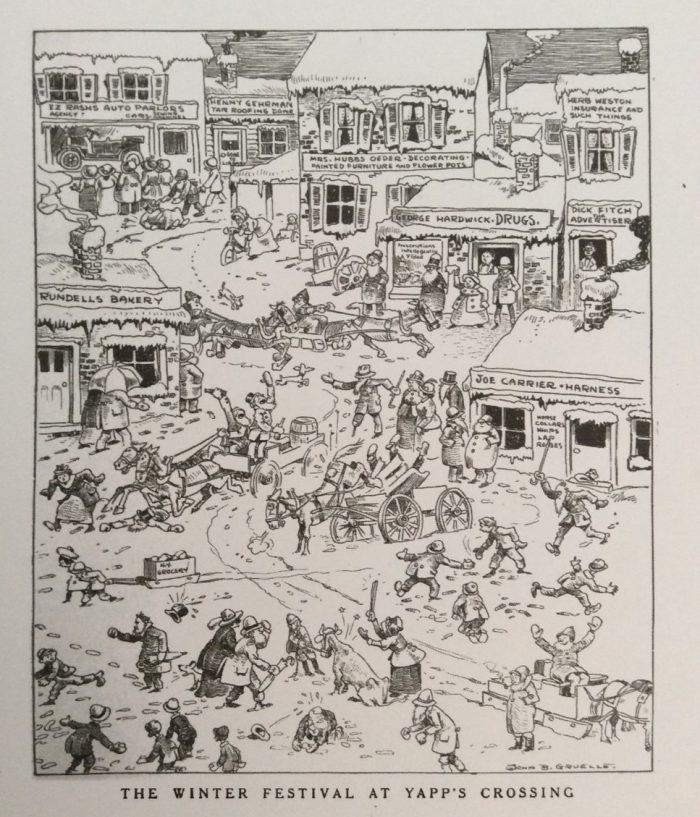
Okay, I can’t end on that note. As I’ve noted before, Judge did have excellent illustrators. I’ll close out the month with another Yapp’s Crossing illustration from John Gruelle, who, it turns out, was the creator of Raggedy Ann and Raggedy Andy.

On to February!

Good-bye to All That

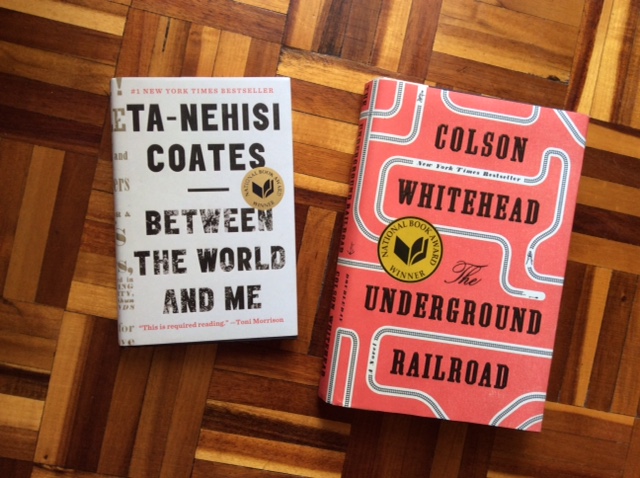
I fell into a reading rut in 2017. I would read a book I saw reviewed in the New York Times, or buy a new book by a favorite author. That was about it. It’s not that the books I read weren’t good. Some of them were even great. I expect that people a hundred years from now will still be reading The Underground Railroad and Between the World and Me. I only disliked one book—and I’m not going to say what it was.

Photograph of Between the World and Me by Ta-Nehisi Coates and The Underground Railroad by Colson Whitehead.

Future classics

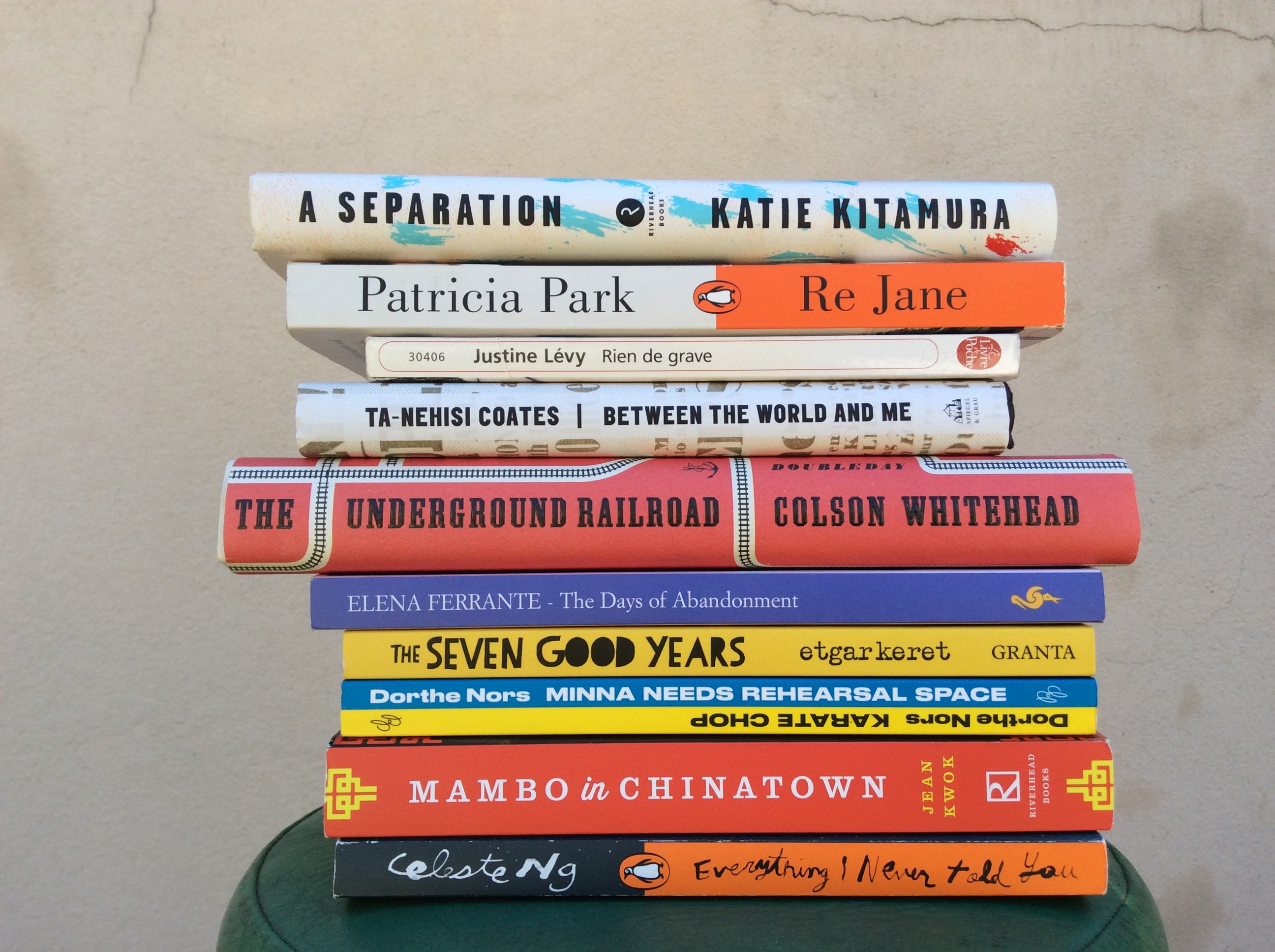
I checked off eight of the twelve categories in Modern Mrs. Darcy’s Reading for Growth challenge, including ten books by #ownvoices or #diversebooks authors, five immigrant stories, and six books in translation (plus one in French). I didn’t particularly care about most of the other categories: a Newbery Award honoree, a book over 600 pages, or three books by the same author.

Pile of books with Katie Kitamura's A Separation on top.

Some of my reading challenge reads

But the other category I missed…there’s where the trouble lies. I didn’t read any books published before I was born. And it’s not like I narrowly missed this goal. The oldest book I read in 2017 was Justine Lévy’s Rien de Grave, which was published in 2004. That’s right, I managed to read forty books last year without reading anything published before the millennium. The books I read in 2017 were published, on average, in 2015.

I wasn’t always that kind of reader. In 1987, the books I read were published an average of 21 years before. Henry James’s Washington Square is on that list, along with books by Philip Roth and Edith Wharton. I discovered Laurie Colwin, still one of my favorite writers, and read five of her books. I read a book on Elizabethan thought published in the 1940s and a bunch of classic mysteries. There’s junk on the list, too; Judith Krantz features prominently. But, unlike my 2017 self, I was open to anything. (Well, except when it comes to diversity. All of the books I read in 1987 were by white authors except The Golden Gate by Vikram Seth, which features mostly white characters. I can blame this only partly on a less diverse publishing market.)

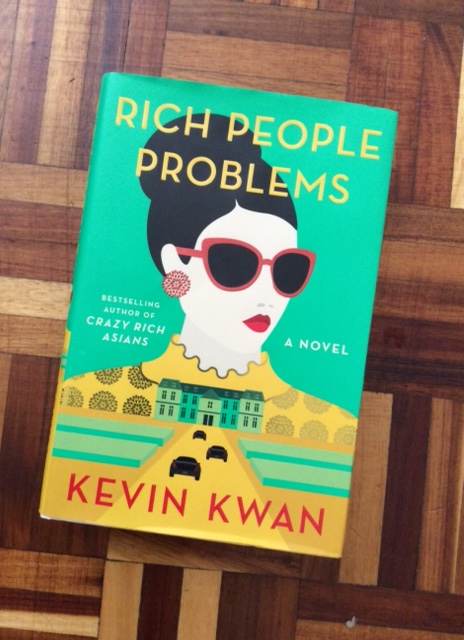
Well, My Year in 1918 will solve this problem. But it won’t be easy to give up contemporary books for a year. I enjoy a challenging read, but when I want to relax I default to my comfort zone, well-written novels by writers like Elinor Lipman, Meg Wolitzer, Curtis Sittenfeld, and Marisa de los Santos. Except for Lipman, they all have books coming out this year. I was having a great time reading Kevin Kwan’s Rich People Problems, but I was only halfway through on December 31, so I’ll have to wait until next January to find out who inherits Tyersall Park. I’ll have to wait for Dinner at the Center of the Earth by my wonderful NYU professor, Nathan Englander. I got Christmas presents that will have to wait for another Christmas to roll around. The current affairs books in my to-read pile won’t be so current next January.

Photograph of Rich People Problems by Kevin Kwan.

So good-bye, crazy rich Asians and befuddled New Yorkers, painfully innocent college students and hyper-observant Londoners! Farewell, innovative economists and eccentric Japanese tidiers! See you in 2019.

The journey begins!

Happy New Year, everyone! This is the day that I turn the clock back. The day I tune out of 2018 and into 1918. The day I’ll look back at in December and say, “I had no idea what I was getting myself into.”

For the next year, I’ll be following the news and reading books and magazines as if I were living a hundred years ago. Goodbye Jonathan Safran Foer, hello Booth Tarkington. Goodbye Buzzfeed, hello Smart Set. This will be the record of my journey to a time when the world we now know as modern was emerging, but nineteenth-century attitudes were very much alive. T.S. Eliot’s poetry shared the page with faux-archaic nature verse. Women, African-Americans, and other marginalized groups were standing up for their rights, but casual sexism and racism were everywhere.

Saturday Evening Post cover, J.C. Leyendecker, New Year's baby wearing military helmet.

J.C. Leyendecker

A few words on what this blog is, and what it isn’t.

It isn’t: A work of performance art. I’m not going to wear vintage dresses and go around saying, “O that this war would end!”

It is: An attempt to see 1918 as those who lived then saw it. When I wake up every morning, I’ll read the newspaper from a hundred years ago. Every book I’ll read would have been accessible to someone living then. I’ll read magazines, watch movies, listen to music, and cook recipes from that time.

It isn’t: A “this day in history” blog.

It is: A look beyond the 1918 news cycle. I’ll write about what was going on in the news,  but I’m just as interested in literature, popular culture, and the world of ideas.

It isn’t: An expert analysis of the literature, politics, and social forces of the era. I’m not an academic or a specialist on the early 20th century. I’m sure I’ll misunderstand things and make mistakes along the way. (UPDATE 10/31/2020: This was an accurate prediction.)

It is: An effort to learn what 1918 itself—and not the historians and critics who came later—has to tell us.

It isn’t: An exercise in moral superiority. I expect I’ll write quite a bit about attitudes on race and gender, but simple finger-pointing wouldn’t be very interesting. In any case, I don’t think that moral superiority is a particularly appropriate attitude in 2018.

It is: An attempt to get to know the period, with all its faults and virtues, all its heroes and villains. And to have fun. There will be farmerettes! And flappers! (Or at least their ancestors, known, apparently, as salamanders.) And Dixieland jazz! And did I mention recipes?

So here goes. I’m looking forward to the journey.