
Tag Archives: New York

New Yorker first issue cover Eustace Tilley, man in top hat with magnifying glass looking at butterly

The Best and Worst of the New Yorker’s First Issue

I grew up with the New Yorker. My family had a subscription. We had a huge cartoon collection that I browsed through constantly. My high school English teacher explained the proper way to read the magazine: front to back, skipping the cartoons and ads, then back to front, reading them. I read books like James Thurber’s memoir The Years With Ross (Harold Ross was the magazine’s founding editor) and Brandon Gill’s Here at the New Yorker. I knew from all this reading that the magazine’s early issues were considered unfunny and sophomoric. So I approached the first issue, dated February 22, 1925, with low expectations.

Which were mostly, but not entirely, met.

Here are some bests and worsts from the 36-page issue. Actually, worsts and bests, because with the way everything else is going these days I’m in the mood to end on an upbeat note.

Worst Archetype

An editor’s note in the debut issue says that the New Yorker “is not edited for the old lady in Dubuque.” This now-famous bon mot also appeared in the magazine’s prospectus and, according to an article about the magazine in the March 2, 1925, issue of Time, “on cards which they tacked up about town.”*

Time claimed to have asked an old lady from Dubuque for her views on the New Yorker’s first issue. The old lady, who was actually Time (and, later, New Yorker) writer Niven Busch, replied, “I, and my associates here, have never subscribed to the view that bad taste is any the less offensive because it is metropolitan taste…there is no provincialism so blatant as that of the metropolitan who lacks urbanity.”

Mary Hayford, little old lady from Dubuque
Mary Hayford (Encyclopedia Dubuque)

In 1964, Dubuque, playing the long game, sent an actual old lady,** Mary Hayford, to New York to counter the hayseed image. “We have three fine colleges and everyone is studying for their master’s and Ph.D., so we’re very culturally minded,” she told the New York Times. Hayford appeared on the Tonight Show and went on to travel around the country as an ambassador for Dubuque. In her 1989 obituary, the New York Times said that Hayford “helped turn a New York snub into a symbol of pride.”

Best Archetype
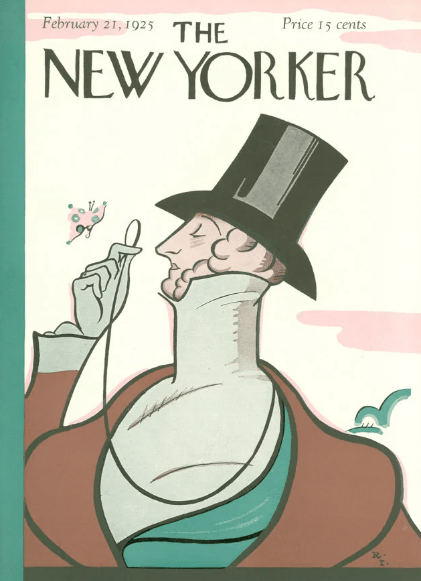
Rea Irvin

Eustace Tilley,*** Rea Irvin’s cover fop, appears on the magazine’s anniversary covers to this day, sometimes in his original guise, sometimes with a twist. The hundredth-anniversary edition came in six different versions.

Worst Front of the Book Item
New Yorker Header - Of All Things

I’m not going to dignify it by reproducing it here, but there’s an item in the “Of All Things” department that manages, in just six lines, to be racist toward both American Indians and Jewish people. The rest of the section mostly consists of jokes about drama critic George Jean Nathan’s love life.****

Best Front of the Book Item

New Yorker header 1925 - Talk of the Town

I’m obsessed with 1920s crossword puzzle books,***** so I was interested to read that, according to an anonymous writer in the Talk of the Town section, they’re falling out of fashion in the trendy New York circles where they first became popular. Simon & Schuster, isn’t worried, though; they’re publishing a new volume of puzzles by celebrities. The Talk of the Town writer says that he has a puzzle in the book, which, he tells us blushingly, “’they” say is one of the best. Through some literary detective work, I ID’d the writer/puzzle constructor as advisory editor Marc Connelly.******

Worst Description

New Yorker illustration, Giulio Gatti Casazza, 1925

A profile on Giulio Gatti-Cassaza, manager of the Metropolitan Opera, describes his nose as follows: “It is a fine, memorable feature, this Gatti- Cassaza nose. It is the sharpest, most assertive part of his wise, sensitive, melancholy face.” If this description leaves you feeling insufficiently well informed about G G-C’s nose, the profile includes two more sentences about it.

To this day, the New Yorker retains what a writer for the magazine described in 2012 as “a literary commitment to tiny details, combined with a comedic eye for social types.” Whether you think this is a good or bad thing depends on how much you want to know about people’s noses.

Best Description
A brief item in a section called “The Hour Glass” describes New York State Senate minority leader (and future New York mayor) James J. Walker thus: “His face is thin; his features sharp, and his cheeks have the perennially youngish tint of the juvenile who bounds onstage as the chief chorine shrills: ‘Oh, girls, here comes the Prince now.’” I feel like I’ve read a similar description somewhere before, but it’s more entertaining than reading about noses.

Worst Gossip

New Yorker header, In Our Midst, 1925

“In Our Midst” is a column of innocuous gossip that seems intended to let us know who is cool enough to be featured in the New Yorker.******* It’s all pretty boring, so I’ll arbitrarily choose this: “Jerome (‘Jerry’) D. Kern was in town one day buying some second-hand books.”

Best Gossip

Also from “In Our Midst”: “Those are pretty clever and interesting stories about married life that Mrs. Vi Shore is writing for Liberty. Yr. corres. wonders if Mr. Shore reads them.”

Hey, New Yorker, I’ve got an idea! Maybe, instead of boring gossip, you could publish interesting short stories! In the meantime, I’m going to track down Mrs. Vi Shore’s.

Worst Criticism
The Books section includes a rave review of God’s Stepchildren by Sarah G. Millin, “a powerful story, the story, simple, direct, unfailingly real and not for a sentence dull, of what comes of white-and-black mating in South Africa. It is, of course, tragic.” I have actually read this book, for my 1920s bestseller discussion group. Meanwhile, E.M. Forster’s A Passage to India, which I have, more unremarkably, also read, is given this squib at the end of the section: “A foaming-up of India race hate, pictured with searching skill.”

If it were up to me, I’d highlight the book that comes out against, not for, race hate.

Best Criticism
New Yorker header - Art - 1925

The art columnist, bylined “Froid” and actually Murdock Penderton, has this to say about an exhibition of British paintings: “If you are a person who quit trading with the corner grocer because you believed him a German spy, you will enjoy this exhibit.…A placard with sufficient fairness warns you that this exhibit is held in the interest of further cementing the bonds of the English speaking races….If you care for anything later than Ingres, stay at home and let the cement of the English speaking races crumble away.”

Worst Going On

New Yorker header - Goings On About Town - 1925

I want to attend almost all of the goings on on “THE NEW YORKER’S conscientious calendar of events worth while.” I do not, however want to go to “Dinner to Gen. Summerall, Hotel Plaza. Tuesday, Feb. 17, given by a citizens’ committee, Gen. John F. O’Ryan, chairman.” I’m sure the Gen. is a nice guy and all, but I was a diplomat for 28 years and I never, ever want to go to another dinner with speeches.

Best Going On

“Lady, Be Good—Liberty Theatre. A nice little musical comedy, with the enviably active Astaires and the most delightful score in the city.”

Adele Astaire, Fred’s sister and dance partner, called the story line “tacky” and “weak,” but who cares? The Astaires! A Gershwin score! Sigh. I had to satisfy myself with a 1966 broadcast of Fred Astaire singing the show’s two big hits (“Fascinating Rhythm” along with the title track) and shuffling around a little.

Worst Ad
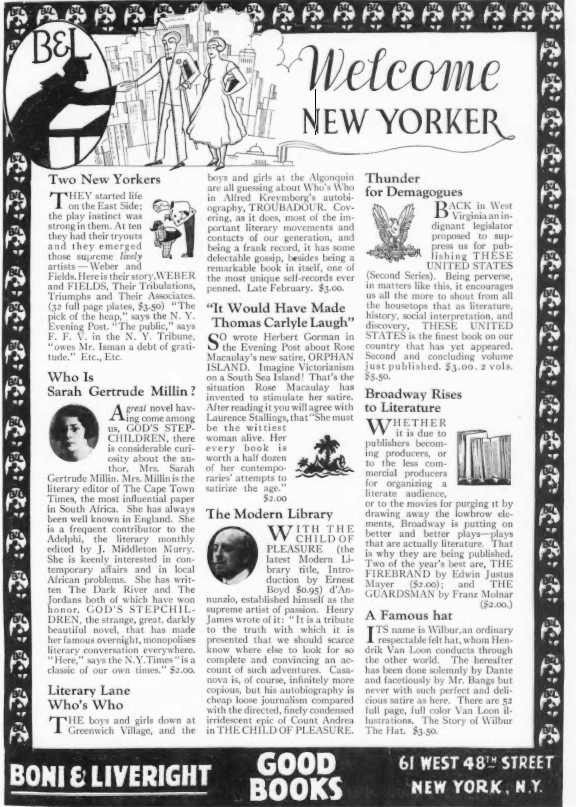
“What’s wrong with this friendly welcome?” you might be asking. But there’s Sarah G. Millin again, who has written, the ad says, a “strange, great, darkly beautiful novel.” I’ll give them strange.********

Best Ad
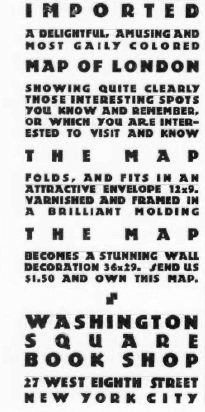
If the map is as stylish as this ad, I’ll pay $1.50 for it.

Worst Cartoon
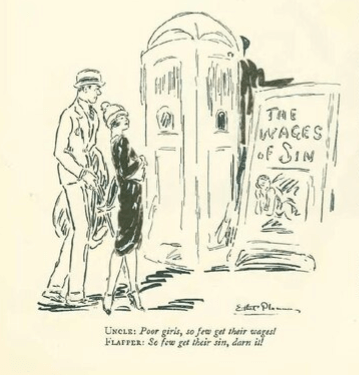
New Yorker cartoon - 1925 - wages of sin

There were only six cartoons, and they were all okay, so I’ll yield the floor to Time magazine, which complained that the magazine contained “one extremely funny original joke, tagged, unfortunately, with a poor illustration.” Given the absence of other contenders for extremely funny original joke, it has to be this one, by Ethel Plummer, who only submitted a few more cartoons to the magazine.

Best Cartoon
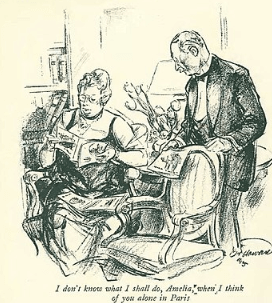
Oscar Howard

I wouldn’t say this had me in stitches, but it’s a quintessential New Yorker cartoon, the type you might expect from Helen Hokinson in the 1940s.********* Like Plummer, though, cartoonist Oscar Howard only made a few appearance in the magazine.

All in All…
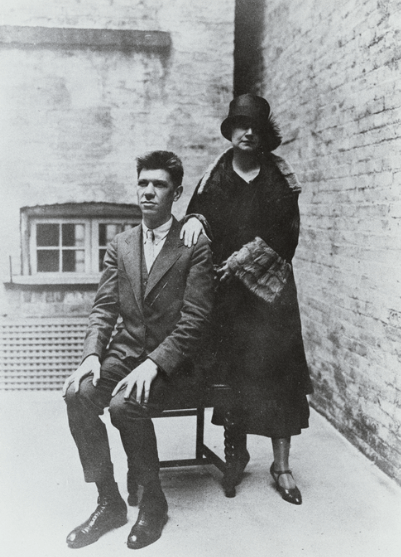
Photograph of New Yorker founder Harold Ross and Jane Grant, ca. 1920-1925
Harold Ross and Jane Grant, his wife and collaborator, ca. 1920-1925 (New York Public Library)

The critics were right: the magazine is sophomoric and trying too hard. It’s difficult to tell whether it’s celebrating or skewering its subjects. And it’s horribly racist. Looking at the first issue, though, you can see flashes of what’s to come. It’s there in the typeface (designed by Irvin), in the drawings, and in the sections, many of which have survived. (There’s even one of those pieces of filler with a newspaper headline and a snarky comment. Not a funny comment, but it’s a start.)

Ross was frank about the New Yorker’s flaws, writing in the first issue that the magazine “recognizes certain shortcomings and realizes that it is impossible for a magazine fully to establish its character in one number.”

It will take a while, but the bones of a great magazine are there.

*Time itself had debuted two years earlier, on March 3, 1923. I read the first issue but didn’t get around to doing a post. The highlight for me, as an amateur T.S. Eliot scholar, was an article reporting speculation that The Waste Land was a hoax.

**That is, if you think 60 is old, which I, with skin in this game, don’t.

***According to a piece on Tilley in the New Yorker’s 80th anniversary issue in 2005, his name came from a series of humorous pieces by staff writer Corey Ford during the magazine’s first year.

****Not that I’m in a position to criticize this choice of material, having written an entire blog post making fun of George Jean Nathan and H.L. Mencken’s love lives.

*****As I noted in my post on children’s books of 1924, publisher Simon & Schuster called them “cross word puzzles.” The New Yorker, in its first issue, calls them cross-word puzzles. On the other hand, they write “teen-ager” to this day, so they’re not exactly my go-to source on hyphenation.

******Connelly, like several of the magazine’s other advising editors, was a member of the Algonquin Round Table. The other advisory board members on the masthead were Ralph Barton, Rea Irvin, George S. Kaufman, Alice Duer Miller, Dorothy Parker, and Alexander Woollcott. (In 1925, “celebrity” meant someone who was notable, not hugely famous.)

******* Other people whose mundane activities the New Yorker deems worthy of mention include  writer Don Marquis, Bookman editor John Farrar, humor writer Donald Ogden Stewart, actress Norma Talmadge, and bunch of people I’m not enough of a sophisticate to have heard of. To be fair, the definition of “gossip” at the time was more along the lines of “bits of news” than “delicious scandal.”
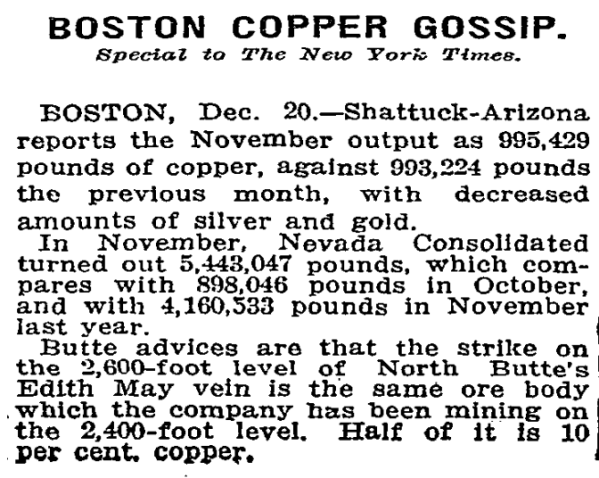
1913 New York Times article headlined "Boston Copper Gossip."
New York Times, December 21, 1913

********Millin is, the ad says, the literary editor of the Cape Town Times. Except that’s not the newspaper’s name—it is, and was, the Cape Times. I realize that this is an extremely niche complaint.

*********Hokinson made her debut in the magazine’s July 4, 1925, edition.

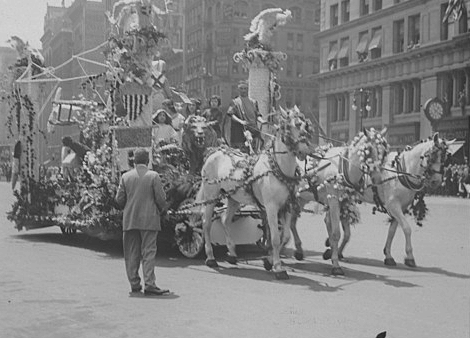
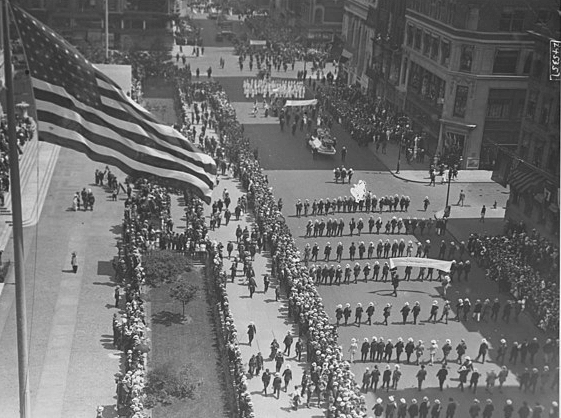
The Parade of the Century: New York, July 4, 1918

I was all set to get working on the best and worst of June 1918—belatedly, due to my ruminations on reaching the midpoint of this project—when they had a humongous 4th of July parade in New York. Change of plan! June was a slow month for bests and worsts anyway, so I’ll roll it into July.

So! The parade!

New York, July 4, 1918 (International Film Service)

The theme was loyalty—specifically, how loyal all the different nationalities living in our land are to the U.S.A. But a mini-WWI broke out during the planning, with other delegations objecting to the Hungarian historical display, what with Hungary being at war with their nationalities and also with the United States. So a deal was struck: Hungarian historical characters out, Hungarian national costumes in. But the Italian Four-Minute Men* objected to the costumes, and the Hungarians said if they couldn’t wear costumes they weren’t coming, and finally the Grand Marshal brokered another deal whereby no one would wear national costumes. Which seems to defeat the purpose of a parade of nationalities.

In the end, the New York Times said,

the reflection of European antagonisms did not appear in the parade, and nationalist displays which had been found objectionable when the advance program was made known had been censored to fit the demands of the spirit of the day.

Because what expresses the spirit of the Glorious Fourth like censorship?

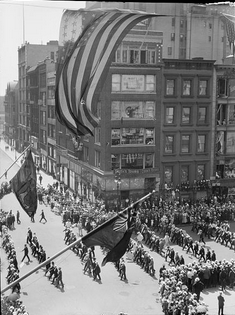
4th of July parade, New York, 1918, Arnold Genthe (Library of Congress)

There were political machinations as well. William Randolph Hearst invited practically all of congress—members, the New York Times said, of “both the Republican and Democratic faiths”—to come up from Washington for the parade and other amusements, including the Ziegfeld Follies and a gala dinner at the Astor Hotel. Even though no one cared about conflict of interest, this seemed to be beyond the pale for some, because “a great many declinations were given.” In the end, 33 members of congress showed up. Seven railroad cars from Washington to New York were reserved for “Mr. Hearst’s excursionists,” but that’s not as impressive as it sounds because, the Times said, “it was apparent that many of those who accepted Mr. Hearst’s invitation were women.” But don’t feel too bad for WRH—John Francis Hylan, the Tammany Hall mayor, abandoned the reviewing stand that had been built for him, declared Hearst’s stand the official stand, and decamped there to hang out with him and the congressmen.

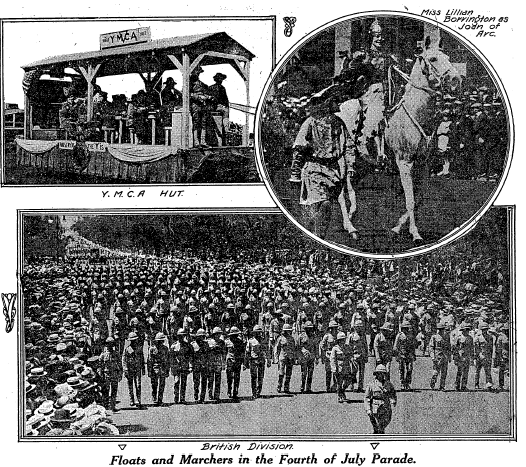
New York Times, July 5, 1918. (A rare photograph in the daily newspaper–in general they only appeared in the Sunday Rotogravure.)

I was afraid, that, given the size of the parade—75,000 marchers, plus 150 bands, plus 123 floats, plus American, French, British, Italian, and Polish soldiers—there would be no one left to watch it. But no, the streets were thronged with spectators. The Times waxed poetic:

It was more than a pageant, more than a parade; it touched on more than Independence Day; it went further than a mere display of the loyalty of citizens born abroad. It was more than a military display, more than a picturesque pageant, though those who have seen all of New York’s great parades in recent years said that it surpassed them all in the brilliancy of the color and the variety of figures represented.

Farmerettes float, New York, July 4, 1918 (National Archives)

The weather was perfect, and the staging went like clockwork, from the assembly point at the arch in Washington Square Park to the end point at Fifth Avenue and Seventy-Somethingth Street. (There were typsetting issues with the article, and this sentence was cut off.)

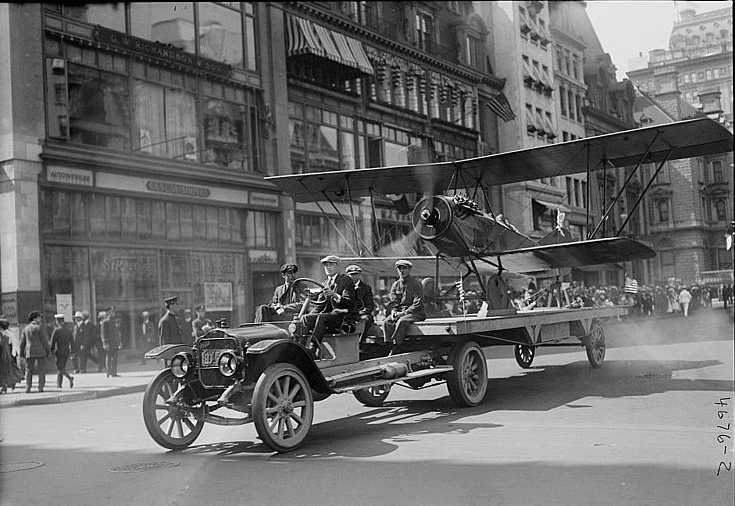
There was a squadron of twenty-two airplanes flying over the parade, “a sight never before seen in New York.” The planes

flew up and down over the city, breaking up to amuse the million upturned eyes with flying tricks, while the aviators dropped leaflets bearing the words and music of the “Star-Spangled Banner.”

“The sole Curtiss S-1 mounted on a White truck for the New York Independence Day Parade in 1918” (Bain News Service)

And get this:

Regarded purely as a pageant, the parade was remarkable in bringing out a greater variety of display of national spirit and national costume than the city has perhaps ever seen before.

That’s right, national costumes! Either the organizers backed down or the participants, having worked their fingers to the bone sewing their costumes, just didn’t care what the Hungarians and Italians and Jugoslavs had negotiated among themselves.

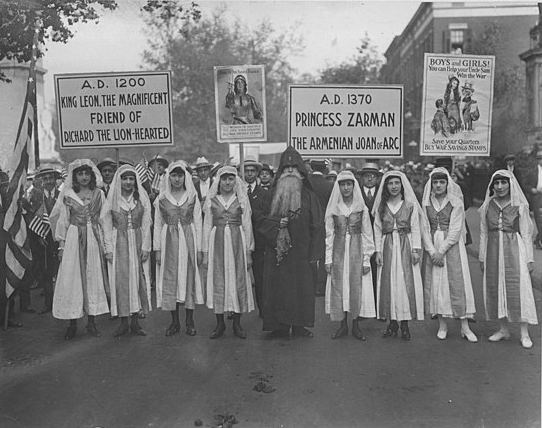
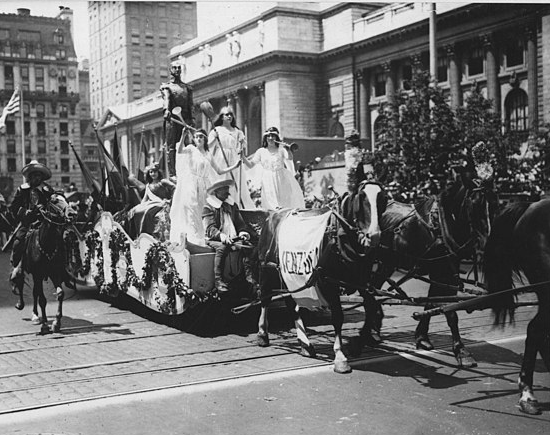
The brilliant pageantry of the Slav races had to some extent been anticipated, but what had not been expected by the public**, at least, was the remarkable exhibitions put forth by Armenia, Syria, Switzerland, Spain, Venezuela, and other nations whose floats and marchers were on a plane of artistic effect that is not often found in a street parade.

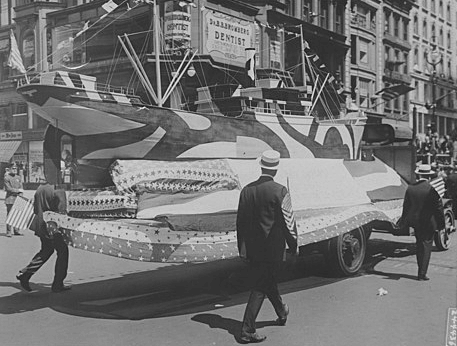
Camouflaged ship float, New York, July 4, 1918, Underwood & Underwood (National Archives)

Highlights among the floats were

a miniature battleship, perhaps twenty feet long, rolling along on invisible wheels and firing little shots from its toy guns as it went along

and one by the Mayor’s Committee on National Defense with the Statue of Liberty surrounded by armed men and

about twenty-five children of the streets, picked up at the last moment as part of the committee’s Americanization display.

Also, the Salvation Army threw donuts out to the crowd.

July 4 parade, New York, 1918 (National Archives)

The nationalities section of the parade was headed by Joan of Arc, followed by Zoroastrian Parsee Dinsshan F. Chadiali, who was the only Zoroastrian Parsee-American as far as he knew, and his son. After that,

a group of Bulgarians of American origin***—citizens of the blood of the nations of the German were thus indicated instead of simply the name of the nationality, as were Allies and neutrals—came in motor cars.

A huge group of Czechoslovaks “tramped past the reviewing stand for nearly half an hour.”

Italian float, July 4 parade, New York, 1918, Underwood & Underwood (National Archives)

Switzerland had a guy carrying a giant Swiss cheese over his shoulder. Also the best motto: “For Modesty and Against Pretension.”

Syria’s float had Christ and the Apostles, with a banner reading “The First Syrian expedition to conquer the world.”

Daughters of Armenia, July 4 parade, New York, 1918 (International Film Service)

A piece of interesting trivia on the Danish banner: “Bronck, a Dane, founded the Bronx.”

The French delegation wasn’t provided with a military band as promised, and was pissy about it. Huge cheers, though!

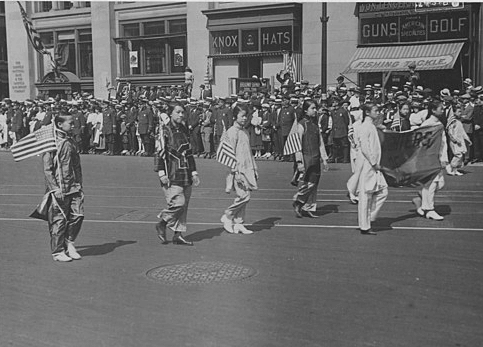
Chinese girls marching, New York, July 4, 1918 (National Archives)

“Jewish” was considered a nationality, and there was a float with Judah Maccabee’s army fighting for freedom alongside Jewish soldiers in the American army.

Palestine, somehow, was represented by Miss Sally Bergman.

A Russian banner bore the slogan “We Do Not Accept the Infamous Peace of Brest-Litovsk.”

The Hungarians, after all the hoopla, marched as “ordinary citizens in civilian dress.” IMHO the Hungarians got shafted.

Venezuelan float, July 4 parade, New York, 1918 (International Film Service)

All in all, a remarkable event—although one that may be more fun to read about it would have been to attend. As spectacular as the costumes were, watching Czechoslovaks tramp by for half an hour must have gotten kind of old, no offense to my grandmother, who, if I have my family history right, may have been one of them. And I’m not clear about the bathroom situation.

But—good news!—you can watch the parade from the comfort of your own home. It was filmed so that soldiers overseas could watch it. Here’s a six-minute excerpt, followed by two minutes of footage of the celebration in Washington, D.C., which I wasn’t as into until I realized that it features, in the final seconds, All-Woman Battalion of Death Commander Maria Bochkareva, who was in town to plead with President Wilson for help.

From a 2018 perspective, the idea of having a giant parade around the theme “recent immigrants are not traitors to our country!”—with prizes given for the best loyalty pledge****—sounds a little off. Especially given that, the day after the parade, there was a big roundup of people of German descent who had committed treasonous acts like painting their pencils the wrong color.

On the other hand, living as we are—and as people in 1918 also were—at a time when immigrants are being used as political punching bags, there’s something refreshing about the spectacle of hundreds of thousands of people celebrating all the different ways there are to be American.

Parade passing the New York Public Library, July 4, 1918, Underwood and Underwood (National Archives)

*Four-minute men gave four-minute speeches on topics provided to them by the Committee on Public Information.

**”The public,” in situations like this, generally seems to mean “me, the unbylined New York Times reporter.”

***“Bulgarians of American origin” seems backwards to me, but whatever.

****As of July 6, the judges were still holding out. Smart money is on the Poles. (UPDATE 7/12/18: I was right!!! Poles #1, Syrians #2, Portuguese #3. The awards turn out to be for the floats and marchers as a whole, not just the loyalty pledge. The Hungarians got an honorable mention–I think the organizers just felt guilty.)

A 1918 play about a single mother, too far ahead of its time

Reading the March 1918 issue of The Bookman a couple of weeks ago, I came across a brief review of The Madonna of the Future, which had recently opened on Broadway. As critic Clayton Hamilton tells us,

the heroine of this play is a very rich young woman, unencumbered with relatives, who desires to become a mother but does not desire to be saddled with a husband. In consequence of her convictions, she picks out an apparently eugenic mate and becomes, in due time, the mother of a nameless child.

My reaction: What? This is the least 1918 thing I’ve ever heard of!   

“Madonna of the Future” star Emily Stevens, New York Times, January 27, 1918

The Dramatic Mirror thought so too. “The most pitiful creature of the brothel would scorn such an idea,” the magazine huffed. It was not alone, apparently—New York Chief Magistrate William McAdoo* received a number of complaints. He wrote to the theater’s lawyers telling them that, if the issue arose in court, he would have to declare the play obscene. McAdoo said that

the character of the heroine repeatedly and tiresomely states over and over again that the doctrines advanced by her are unconventional and, in the sense usually accepted by ordinary people, immoral. She says that her highest ideal of maternity is that of the cow, which might suggest that the proper place for this play would be a stable instead of the stage, committing the dialogue to learned veterinarians.

I haven’t been able to find a script of the play, but here’s what I’ve managed to piece together. Iris Fotheringham, a wealthy young woman from Tarrington, New York, hates men, but has what the Dramatic Mirror calls “one redeeming virtue—the dream of all good women—the desire of motherhood.” She decides that her secretary, Rex Letherick, would be a suitable father,** and whisks him off to Europe. After the baby is born, she blithely resumes her New York life. Rex is desperately in love with Iris, and, as the Dramatic Mirror puts it, “still willing to be her husband.” Iris gets wind that there’s another woman in the picture, gets jealous, and marries Rex.

Alan Dale and his daughter Marjorie, 1900 (Library of Congress)

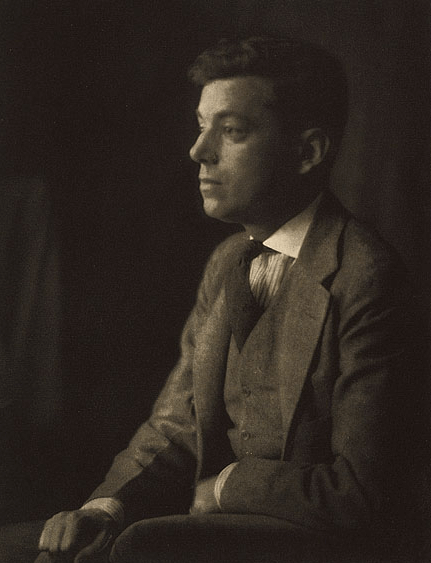
What makes this story even more interesting is that the play’s author, Alan Dale, was America’s most famous theater critic. The British-born Dale (real name Alfred Cohen) had been writing acerbic reviews for the Hearst newspapers since the 1880s. He had made a lot of enemies along the way. “The theatrical world is finding considerable amusement in the situation created by the police complaint,” the Dramatic Mirror gloated, speculating that the cause of the play’s troubles was a morality campaign by the city’s Tammany Hall mayor. For good measure, the magazine threw in some cracks about the play’s bad reviews.

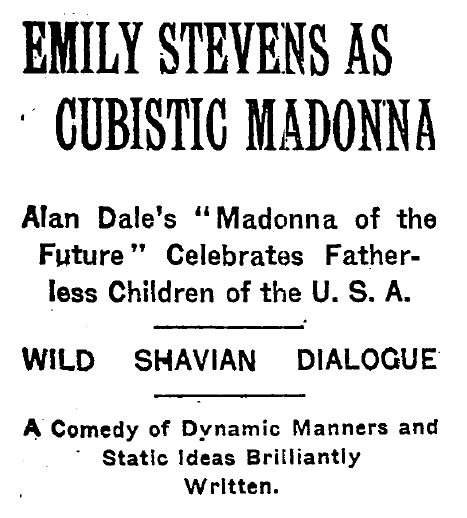
New York Times, January 29, 1918

This was unfair, as far as I can tell. The un-bylined New York Times reviewer called the play “a brilliantly written comedy of ideas,” although he complained that the ending was a copout. He noted similarities to George Bernard Shaw, but said that Shaw, “having real ideas of his own, also has the courage of them.”  Astonishingly, the reviewer got away with saying that the de-stigmatization of single motherhood was important to contemplate,

for women in these coming manless times will be much occupied with the thought that life would be less empty if only there were children. And the world will have need of new citizens.

George Jean Nathan, date unknown

George Jean Nathan, who co-edited Smart Set with H.L. Mencken and is now regarded as the greatest theater critic of his time, really, really hated Dale’s reviews. He complained in Smart Set’s April 1918 issue that Dale displayed

the sort of humour…that proceeds from the comparison of something or other with a Limburger cheese or from some such observation as “‘Way Down Yeast’ ought to get a rise out of everybody.” The sort of humor, in short, whose stock company has been made up largely of bad puns, the spelling of girl as “gell,” the surrounding of every fourth word with quotation marks, such bits as “legs—er, oh I beg your pahdon—I should say ‘limbs’,” a frequent allusion to prunes and to pinochle, and an employment of such terms as “scrumptious” and “bong-tong.”

But Nathan goes on to praise The Madonna of the Future, saying that

its theme is viewed through the glasses of a man possessed of a certain pleasant measure of cultural background and expounded in well thought out and effective vein; its net impression is of a piece of writing designed by a civilized gentleman for a civilized audience.

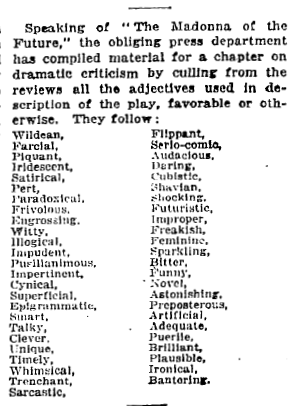
The New York Times ran this list of adjectives that had been used to describe the play, ranging from puerile to shocking to brilliant:

New York Times, March 10, 1918

After the theater received the letter, the script was revised, there was some back and forth with McAdoo, the play closed on Broadway after less than two months, and the censored version, retitled The Woman of the Future, moved to New York’s “subway circuit.”

In spite of its short run, The Madonna of the Future caused quite a stir. Today’s Iris Fotheringhams may, in part, have Alan Dale to thank for getting people used to the idea that having a baby without a husband isn’t all that big a deal.

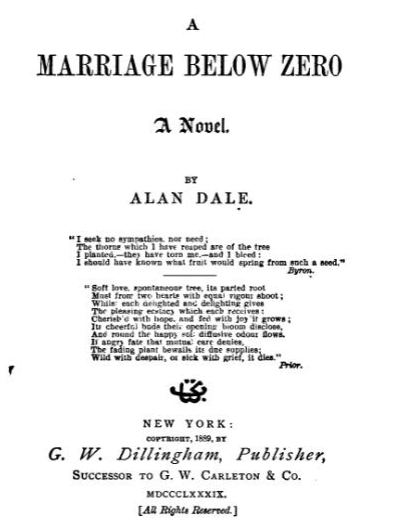
Alan Dale lives on in another way as well: his 1889 novel A Marriage Below Zero has been described as the first English-language novel to depict a romantic relationship between two men.

All in all, not a bad legacy for someone who said “scrumptious” and “bong-tong.”

G.W. Dillingham, 1889

*This William McAdoo, a former congressman and New York police commissioner, was born in Ireland and was apparently no relation to Secretary of the Treasury/Railroad Administrator/Woodrow Wilson son-in-law William Gibbs McAdoo.

**Well, he has a great porn star name anyway.

A Caruso fan on the factory floor

Remember Elizabeth Hasanovitz, the Hebrew school teacher’s daughter who fled Russia for a better life in New York? (If not, you can read about her here.) She’s back, in the second installment of her memoir in the February 1918 Atlantic.

Banner, The Atlantic Monthly, February, 1918.

Elizabeth attempted suicide at the end of the last installment, ground down by her life as a seamstress. She recovers quickly and gets a job in a non-union factory, making the princely sum of ten dollars a week.

My cheerfulness returned. Again I went among my friends, entertaining them with song and infecting them with my joyousness. Even in the shop I felt happy.

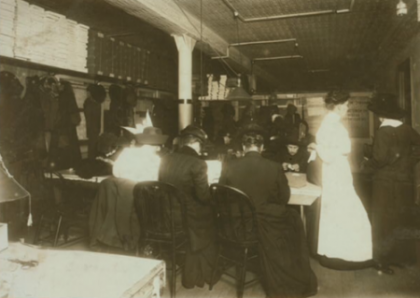
Women factory workers sitting at table.

She starts saving up to send for her younger brother, and her friend Clara helps out with a fifty-dollar loan. Even the conversation at work has improved.

Very little talk about “fellers,” swell evening pumps, lace petticoats that the six dollar wage-earners were constantly discussing, in the sweater shop. Here we talked about questions of the day, world-happenings, music, art, literature, and trade questions.

Once she pays her debt to Clara, Elizabeth starts thinking about the finer things in life.

I at once went to the Opera House, secured tickets for five dollars at twenty-five cents each, so that I was provided with opera tickets for the next few weeks.

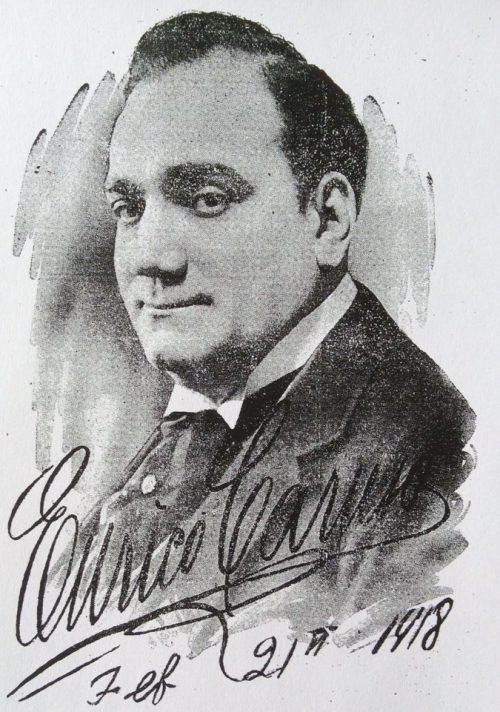
Photograph of Enrico Caruso above autograph and date, Feb 21st 1918.

Enrico Caruso, New York Times, February 24, 1918

She sees Enrico Caruso sing and Anna Pavlova dance. Her tickets are standing room*, and she often goes straight from work.

If it happened to rain, my dress would be soaked through and through, and with wet clothes I would stand through the performance, changing from foot to foot, while there were often plenty of empty seats in the orchestra. Very often I would pay with a cold the next day.

Back at the factory, Elizabeth tries to get her co-workers interested in joining the Dress-and-Waist-Makers’ Union. The good conditions they enjoy, she argues, were won by activists in unionized factories. The other girls say, “You better shut up; if you don’t you will get fired.” She pays a visit to the union, and word gets back to her colleagues and her boss. They warn her that union leaders are nothing but grafters, after the members’ money.

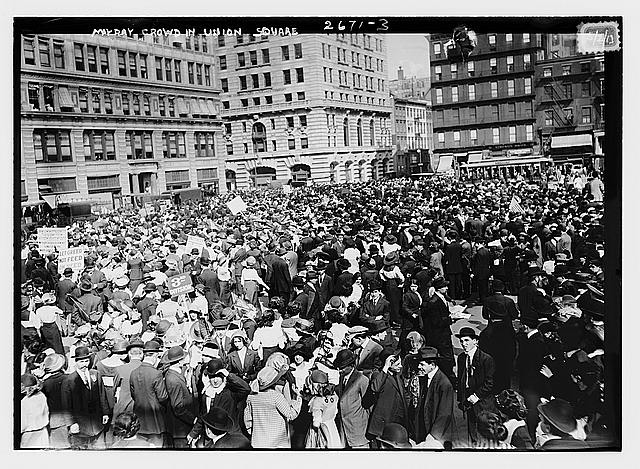
Crowd of workers marching in Union Square, New York, 1913.

May Day march, Union Square, 1913 (Bain News Service, Library of Congress collection)

Elizabeth decides to attend the May Day workers’ march.

The day fell on Thursday**, a bright warm spring day. The many thousands of young girls, in uniforms of white waists with red collars, all in line, were ready to march on. The sun illuminated their pale but happy faces as they walked through the avenues and streets. Looking up at the skyscrapers where they slaved all year, their shiny eyes would gleam with pride and hope, as if they would speak and warn the world, “behold you who keep us in the darkness, no more are we to slave for you!”

 The next day, in high spirits, Elizabeth sets out for work, humming a favorite Russian song.

“Good morning,” said I merrily to the foreman, who happened to be the first to meet me when I entered the shop.***

 “Good morning,” came an angry sound from his nose.

That Saturday, Elizabeth receives her pay–and a dismissal notice.

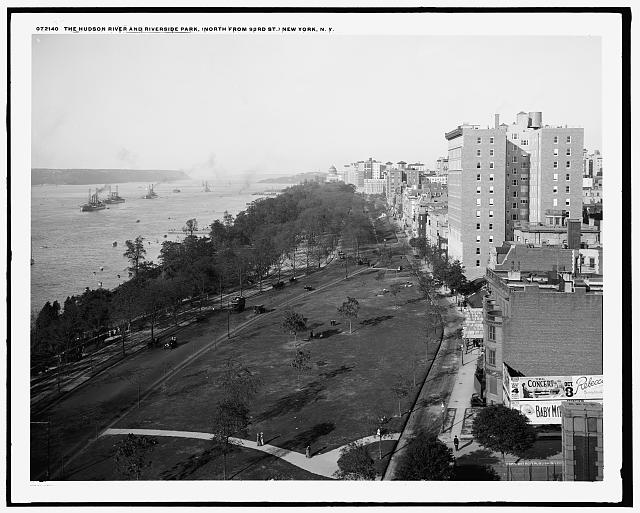
Aeriel view of Riverside Park, New York, ca. 1909.

Riverside Park, New York, ca. 1909 (Detroit Publishing Company, Library of Congress collection)

It’s the slow season, and Elizabeth has no luck finding a new job. She wonders how she will provide for her brother when he arrives. She sits on a bench in Riverside Park, looking out at the Hudson and thinking very Russian thoughts.

Life, life—O Happiness, where is thy sweetness, murmured I, in such mortal anguish for life.

 (To be continued.)

Elizabeth is still a drama queen. And she’s as snooty as ever. When her mother sends her a poem that her sixteen-year-old brother Nathan has written for her, she criticizes his grammar. She says of her friend Clara, who took her in after her suicide attempt and lent her the money for her brother’s passage,

Her spiritual development was on a much smaller scale than mine, and she would easily be inspired by things that did not interest me at all. My temper was a more revolutionary one, and I was more sensitive.

But, amid the flippancy of the fashionable magazines of 1918 and the dullness of the mainstream press, she’s a fresh, genuine voice.

(If you want to read about Elizabeth in her own words, her autobiography is available in several versions at Amazon. The issues of the Atlantic that it was serialized in (January – April 1918) can be accessed at Hathitrust Digital Library here.)

*in a parterre, maybe!

**So it was probably 1913.

***A different translator or editor apparently took over midway through the article, and Elizabeth in inverted sentences begins always to talk.