Tag Archives: New York Times

How to be a New York Times war correspondent, 1918-style

So you got hold of a time machine and you want be a New York Times war correspondent in 1918? Here are some tips.

1. If the British Prime Minister gives an important speech on the war, don’t worry about analyzing it. Just send in the official report.
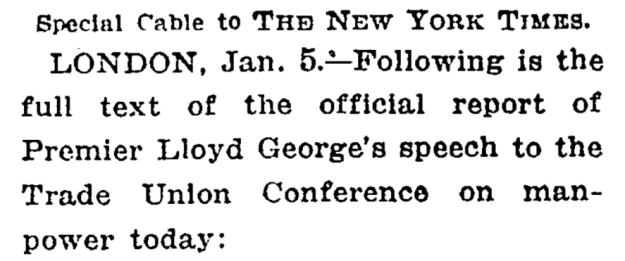
New York Times text, January 6, 1918

New York Times, January 6, 1918

2. To be on the safe side, you might also want to quote a British newspaper’s analysis of the speech in its entirety.
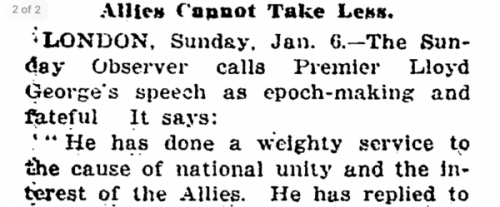
New York Times text, January 6, 1918

New York Times, January 6, 1918.

3. If you don’t know what’s going on, open with a vague statement.
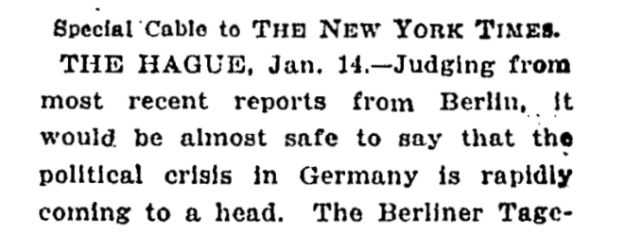
New York Times text, "Judging from most recent reports from Berlin..." January 15, 1918.

New York Times, January 15, 1918

4. Or just come out and admit that you don’t have a clue.
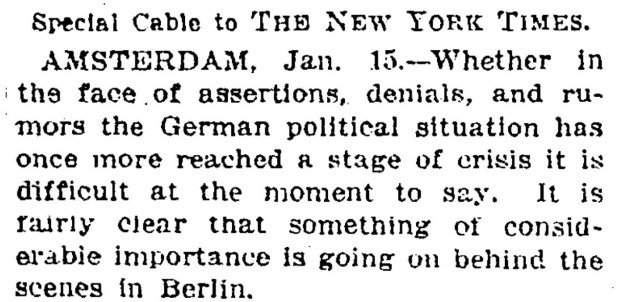
New York times text, "it is fairly clear that something of considerable importance is going on in Berlin."

New York Times, January 16, 1918

5. If you manage to talk with someone who’s actually involved in the war but all he does is spout generalities, throw in lots of atmospherics.
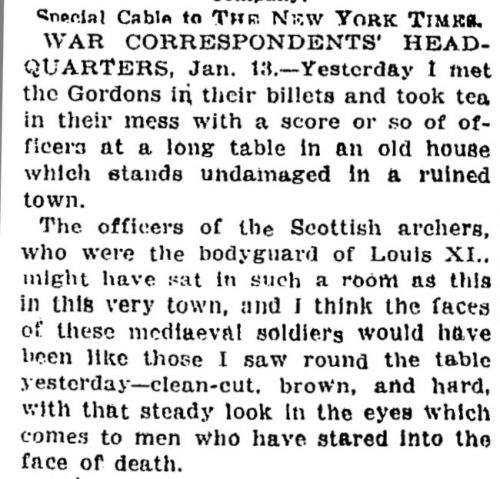
New York Times text, "Yesterday I met the Gordons in their billets and took tea..."

New York Times, January 14, 1918

6. Don’t worry about sending in war news. This will be provided by your colleagues, like a reporter covering the unveiling of a plaque at the Biltmore Hotel honoring its employees at the front, who will come across a letter from one of these employees containing actual war news.
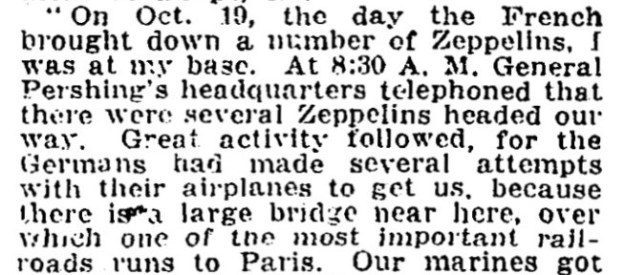
New York Times text, January 1918.

New York Times, January 14, 1918

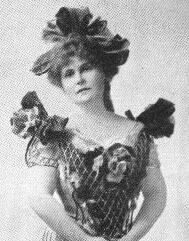
7. Human interest is also good! If the German press reports that the mistress of the former German emperor has died, write about that. Don’t worry about getting confirmation. The Times can just run another obituary in 1940, when she actually does die.
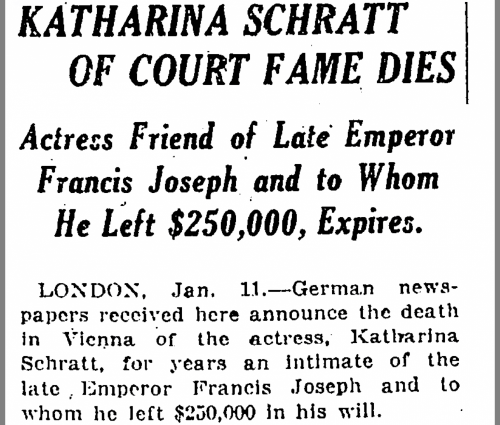
New York Times headline, Katharina Schmitt of Court Fame Dies.

New York Times, January 12, 1918

I know that reporters in Europe faced censorship and restrictions on their movements. And the Western Front was quiet in January 1918. Still, I have to believe it was possible to do better than this. I can see now why the public was so eager for soldiers’ personal accounts of life at the front, provided in books and public lectures. I hope that, as the war heats up and American lives are increasingly on the line, the Times will provide the public with better information.
The bonkers world of Marie Corelli

I promised in my first post that there would be heroes and villains. I haven’t found any heroes yet, other than the railroad workers who shot steam at locomotives to defrost them. But I’ve found my first villain: the wildly popular British novelist Marie Corelli.

1909 photograph of Marie Corelli.

Marie Corelli, 1909

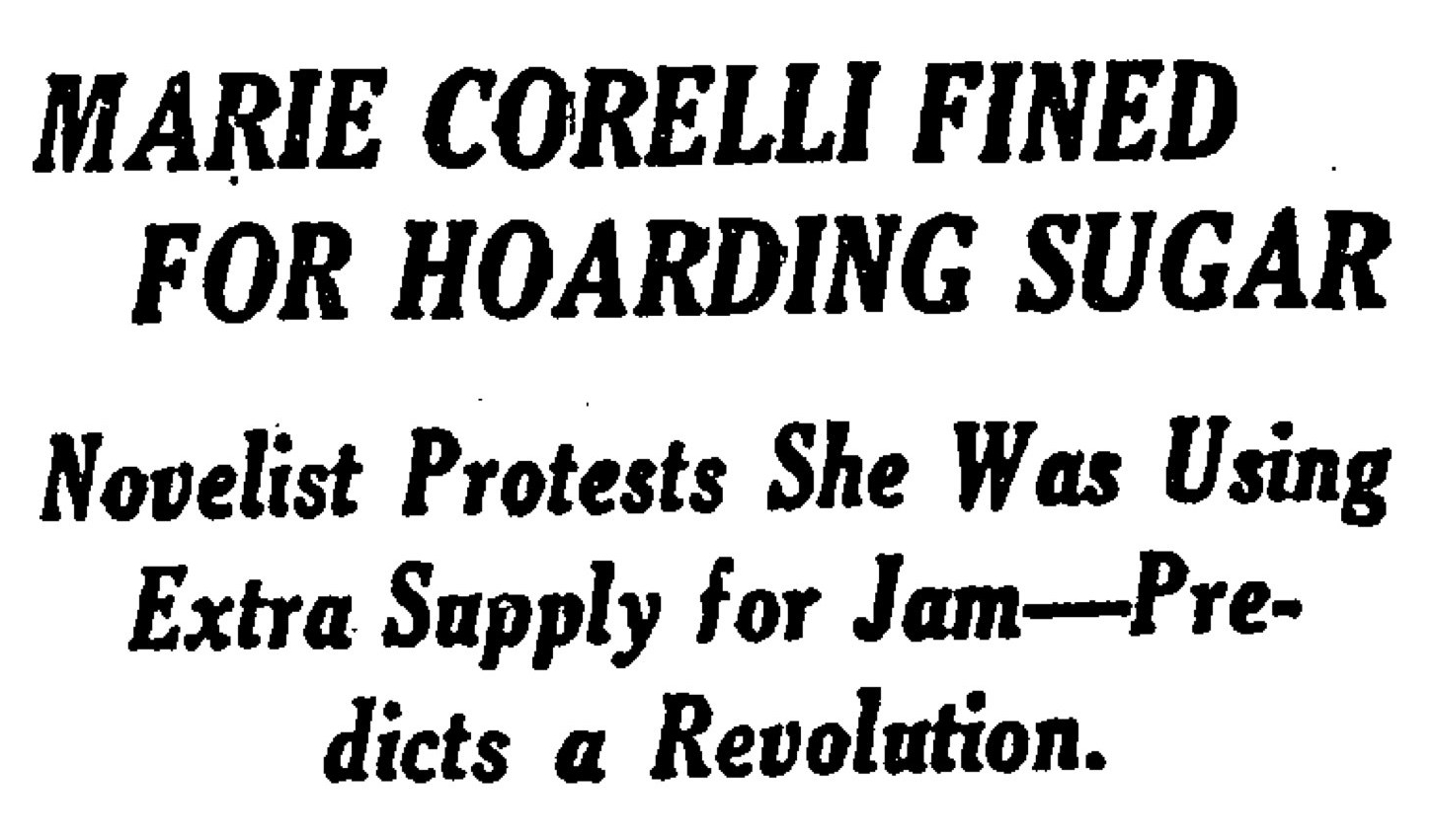
According to the January 3, 1918, New York Times, Corelli was fined £71 by the Stratford-on-Avon Police Court for hoarding sugar. Authorized 32 pounds in a ten-week period, she obtained 179 pounds, plus 50 pounds of preserving sugar. The court didn’t buy her lawyer’s argument that she had acted out of patriotism in preserving fruit for future use. When the police showed up at her house, she said, “You are upsetting the country altogether with your food orders. Lloyd George will be resigning tomorrow, and there will be a revolution in less than a week.”

New York Times headline, Marie Corelli Fined for Hoarding Sugar.

New York Times, January 3, 1918

Who was this woman? I decided to learn more, and I found an article she wrote for the January 1918 issue of Good Housekeeping called “The World’s Great Need.” The world’s great need, according to Corelli, is sanity—something that is sorely lacking in this article, aside from a well-argued condemnation of corporal punishment. Corelli writes that that the desire to “wallow in blood and slaughter” has prevailed over reason. That’s an understandable sentiment in 1918; it’s her solution that’s a problem. Anyone who violates the peace and progress of the world, she says, “should either be shot like mad-dogs as incurable and dangerous, or imprisoned for life in asylums for the criminally insane.”

Corelli thinks a lot of people are insane. There’s the Scottish woman who, “after accepting many useful kindnesses from a friend” (could it have been Corelli?), cut the friend out of her prayers following a minor disagreement. Not to mention the Futurists, the Cubists, Debussy, writers of “revoltingly sexual fiction,” and other producers of art that is “utterly opposed to truth and nature.” How to return sanity to the world? Simple—just require everyone wishing to marry to submit to “a searching health examination, so that union may be forbidden to the unfit.”

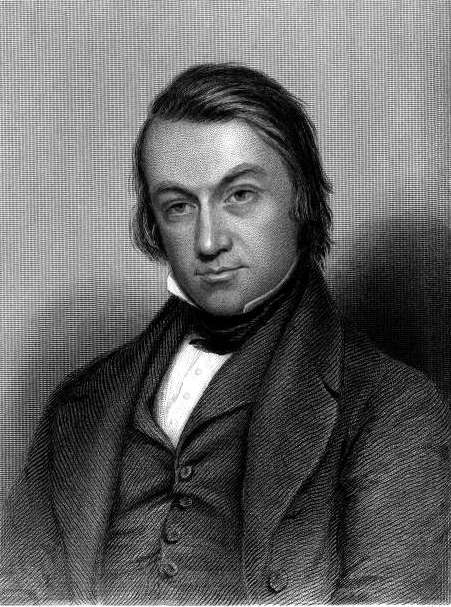
Portrait of Charles Mackay.

Charles Mackay, Marie’s father (The Modern Scottish Minstrel, Volumes I-VI)

Corelli was an ardent spiritualist; her books deal with mystical and extrasensory phenomena. (If her predictions to the police about Lloyd George and the revolution are any indication, though, she wasn’t a very gifted prognosticator.) Ironically, she was the daughter, by a household servant, of Charles Mackay, whose 1841 classic Extraordinary Popular Delusions and the Madness of Crowds debunks hocus-pocus of all types.

It can’t have been easy to be Marie Corelli. She was born with the stigma of illegitimacy and mocked by the literary establishment. She may have had a decades-long same-sex relationship with her father’s caretaker; if so, she had to keep it secret. (UPDATE 10/31/2020: Read more about this here.) Still, she chose what beliefs to espouse, and she chose some of the worst elements of 1918 thinking—eugenics, superstition, and reactionary literary taste. Not to mention the sugar hoarding!

You think YOU’RE cold…

It’s easy for me to say that things could be worse. I’m in Cape Town, where it’s 72°F, while my friends in the United States are shivering in the bitter cold. But, as glad as I am that I’m not there, I’m even more glad not to be suffering through the December 1917-January 1918 cold spell.

The New York Times reported on January 1 that New Year’s Eve, with a low of -7°F, was the second coldest day on record in New York, surpassed only by the day before, when it was -13. It was even colder if you went by the big thermometer in front of Perry’s Drug Store in Park Row, apparently the go-to place to check the temperature.

There was a severe coal shortage, so going inside didn’t provide much relief. The Times reported on the front page that some occupants of private houses and apartments had been forced to check in to hotels to keep warm. On Wall Street, bankers were working in their overcoats. The District Attorney’s office ran out of coal, so staff members finished their work by candlelight. You had to turn to the second page to read about the twelve people, mostly in poor neighborhoods in Brooklyn, who died from exposure.

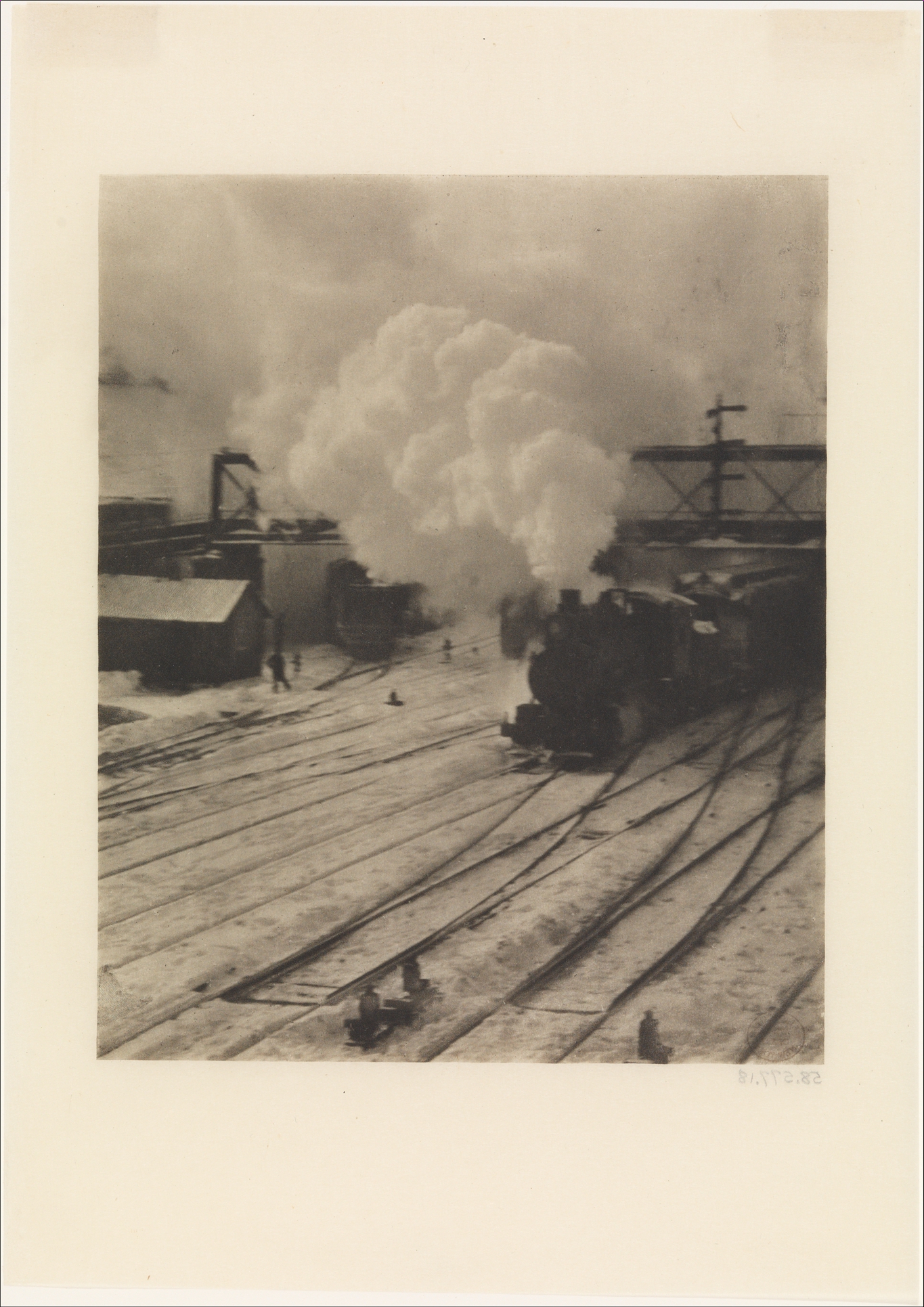
Alfred Stieglitz photograph of New York Central Yards, 1903.

In the New York Central Yards, Alfred Stieglitz, 1903 (metmuseum.org)

Rail service was paralyzed. Locomotive boilers froze solid and pistons were encased in giant slabs of ice. Rail yard workers shot jets of steam to thaw the engines, but their clothes quickly froze. Coal trains finally made it into the city on New Year’s Day, after passenger service was suspended to let them through. When trains full of coal arrived at the 119th St. rail yard near the East River, hundreds of poor men, women, and children arrived with buckets. When they were told that the coal was reserved for city government buildings, they became enraged and attacked the wagons. Several tons of coal fell into the street, and a “wild scramble” ensued. Finally, the local police captain “used his reserves reluctantly and gently to disperse the crowd.”

So keep warm, and be grateful for the miracle of electricity!