Category Archives: Fiction and Poetry

Call me a philistine: bad modernism and bugle poems

When I started this blog, I imagined myself drifting through 1918 on a cloud of superiority, watching appreciatively as modernism flowered in the small journals and rolling my eyes at the sentimental tripe in the popular press. (When I promised not to engage in moral superiority, I didn’t say anything about aesthetic superiority.)
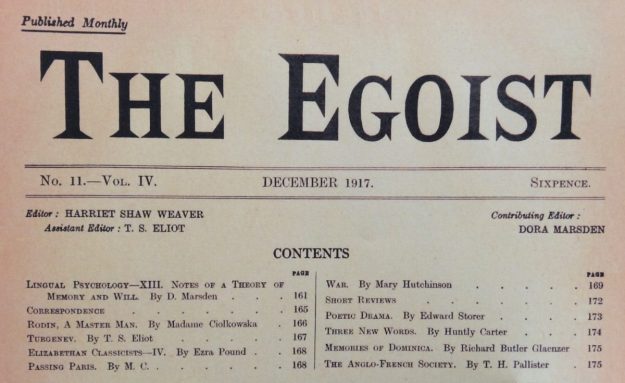
Table of contents, The Egoist, December 1917.

That’s not what has happened. When I eagerly picked up the December 1917 issue of The Egoist, the British journal where T.S. Eliot was assistant editor, the first thing I saw was an article called “XIII. Notes of a Theory of Memory and Will,” by D. Marsden. It began like this: “(1) If one were required to name the most basic characteristic of experience, choice would have to fall upon that of progressive economy of effort in respect of activities which are repeated.” That’s hard to argue with; I’m getting much faster at uploading photos on WordPress. But D. goes on like this for four pages, and I wasn’t sure what the point was. (I found out later that the point was that D(ora) Marsden was the editor of The Egoist, and, while she deserves credit for recognizing the genius of Eliot and Pound, she significantly overestimated the genius of D. Marsden.)

The Egoist gets better after that. T.S. Eliot discusses the role of a critic in a review of a book on Turgenev, and Ezra Pound writes in an article about the Elizabethans that in each great age “a few poets have written a few beautiful lines…and ten thousand people have copied them.” An editorial note informs readers that the first edition of A Portrait of the Artist as a Young Man (“which, it will be remembered, was printed in America owing to the refusal of British publishers and printers to handle it”) has sold out, but a British edition is on the way. So there are some fascinating historical nuggets, but if I had happened to put down Vanity Fair and pick this up in 1918, it wouldn’t have converted me instantly to modernism.
Cover banner, The Little Review.

Undeterred, I dove in just as eagerly to the January 1918 edition of The Little Review, an American literary journal. It opens with a seven-page prose poem by William Carlos Williams called “Impressions.” Here’s a typical passage:

What can it mean to you that a child wears pretty clothes and speaks three languages or that its mother goes to the best shops? It means: July has good need of his blazing sun. But if you pick one berry from the ash tree I’d not know it again for the same no matter how the rain washed.

After two or three pages of this, I said to myself, “This is nothing like the plum/icebox poem that everyone’s putting on Facebook! Was WCW drunk?” It turns out that he was flirting with poetic Cubism—a style of deliberate disjointedness in imitation of the Cubist painters. Well, it was disjointed all right. After the Williams poem, there was a long essay about the sexes by Ford Madox Hueffer (later known as Ford Madox Ford) that was deliciously gossipy but didn’t have much of a point.
Banner, St. Nicholas League, St. Nicholas Magazine, 1918.

Meanwhile, St. Nicholas magazine was having a contest where children wrote poems about bugles. Genevra Parker, age 13, got a silver medal. Here’s the first verse of her poem, which appeared in the January 1918 issue:

Blow, blow, blow—
To the murm’ring streamlets blow!
To the sparkling dew, and the roses, too,
And the echoes long and low;
To the clover-tops and the early bees;
Blow through the quiet lanes—
Sing to me of the silver sea
And the horseman on the plains.

Okay, Genevra isn’t breaking any new ground here, poetry-wise. But it’s a cool poem! And she was thirteen years old! And I can tell what it’s about: a bugle!

There’s some beautiful imagery in Williams’ poem, and I admire the spirit of experimentation behind his effort to bring Cubism from painting to verse. But, as a reading experience, I enjoyed “The Bugle-Call” a lot more.

Okay, you can call me a philistine now.
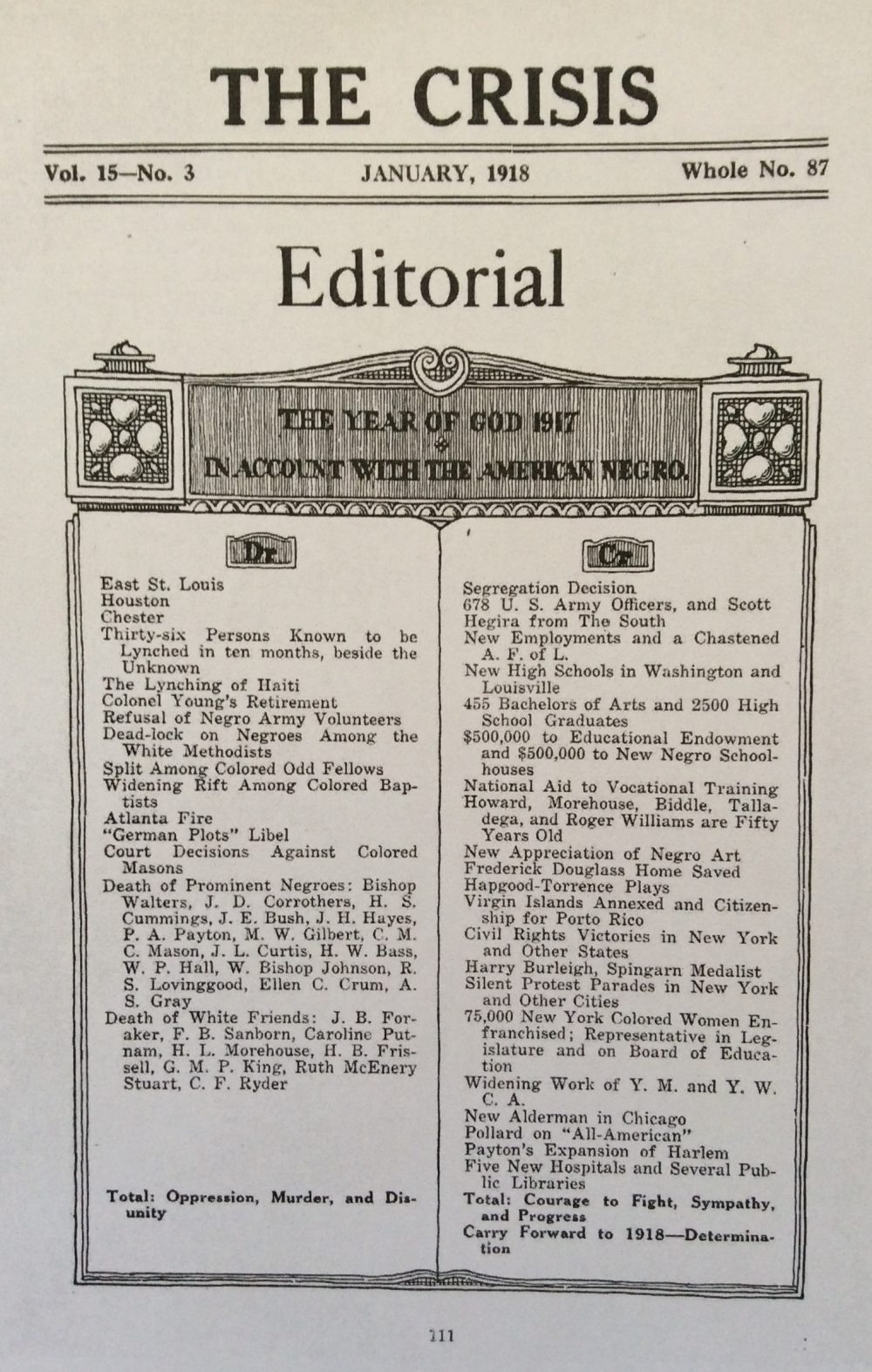
African-American voices of 1918

The Crisis editorial page, January 1918.

In 1918, African-Americans were almost invisible in the mainstream press. The New York Times, in a January 6 story called “Problems in Training Negro Soldiers,” groused that the “friends of the negro” were pressuring the War Department, which had drafted 83,600 black soldiers, to solve the “so-called race question in America.” The only other reference to African-Americans I’ve seen so far in the Times was the inclusion of an “unidentified Negro woman” on a list of New Yorkers—the rest were all named—who died of exposure during a cold snap.

I sought out African-American voices in honor of Martin Luther King Day, and found them in the January 1918 edition of The Crisis, the NAACP magazine, which was edited by W.E.B. Du Bois. It’s the best-written and most interesting magazine of the time that I’ve come across, and it feels the most contemporary.

An article by Lindsey Cooper on the 1917 East St. Louis race riots is the closest thing I’ve seen to modern long-form journalism. Framed as a report on the congressional investigation into the riots—which was conducted, of course, exclusively by white men—it provides an in-depth discussion of the social forces that sparked them. Across the Mississippi from St. Louis and home to many of the area’s African-Americans, East St. Louis, Illinois, was a cesspool of vice. The city subsided mainly by means of saloon licenses (376 saloons for a population of 75,000) because a separate municipality—the nation’s richest per capita—had been carved out for nearby factories.

When the white workers of St. Louis tried to unionize, factory owners thwarted their efforts by hiring black workers arriving from the South. This led to a cauldron of racial resentment that boiled over in an explosion of violence in May and July 1917. At least forty African-Americans were killed as police stood by ineptly or indifferently; some encouraged the violence. The National Guard was called, to little effect.  Cooper recounts the story of a man and his son who were dragged out of a car and killed as they passed through East St. Louis on the way home from a fishing expedition. A member of Congress, told of the incident during the hearing, commented, “Indians could have done no worse.”

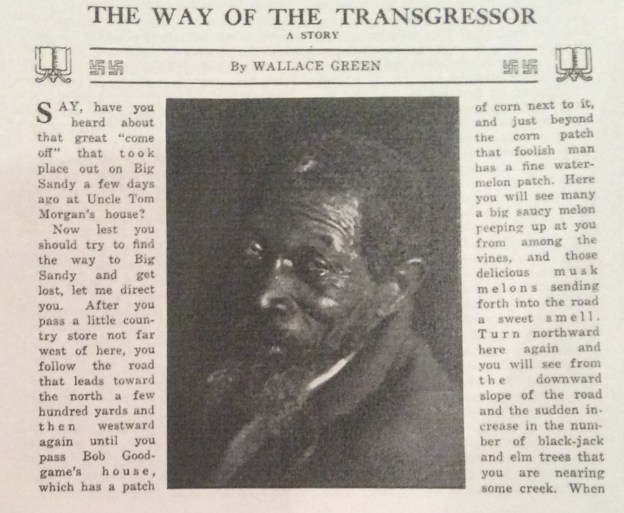
Headline and photograph illustration, The Way of the Transgressor, The Crisis, January 1918.

The Crisis also includes the best short story I’ve seen so far, “The Way of the Transgressor,” by Wallace Green. Green doesn’t try any fancy literary tricks, but the story is refreshingly lacking in the archness and overwriting of the day. It tells of a rural square dance that ends in a blaze of violence, but the best part is the depiction of the dance before the guns come out. I felt like I was there at Uncle Tom Morgan’s two-room log house, watching handsome Jack Sutton and tender-eyed Sealy Green walk down the center of the yard arm in arm “like two monarchs upon streets paved with gold, singing ‘You can’t turn the tea like me.’” Young men longed to swing in the beautiful arms of Pet Henderson, in “a red garment that fit her so well that she seemed to have been just taken out of the melting pot.”

And there’s more. A blazing indictment of the hypocrisy of racist white Christians. A letter from “A Voice from the Orient” calling Wilson out for racism. Another letter, apparently from a white Cuban-American soldier, telling of his experience under the inspiring leadership of the Afro-Cuban general Antonio Maceo in the Cuban Army of Liberation. And a refreshingly unsentimental “Mother’s New Year’s Resolution”: “I will live with my children, not merely for them; since such companionship is worth more than divergent ways, marked by needless sacrifices on the one side and a growing selfishness on the other…I will impart to my children the facts of life, that they may look with reverence upon their bodies.”

You can find The Crisis online, thanks to the Modernist Journals Project, at https://modjourn.org/journal/crisis/. It’s well worth a read, on Martin Luther King Day or any day.

Wednesday Miscellany

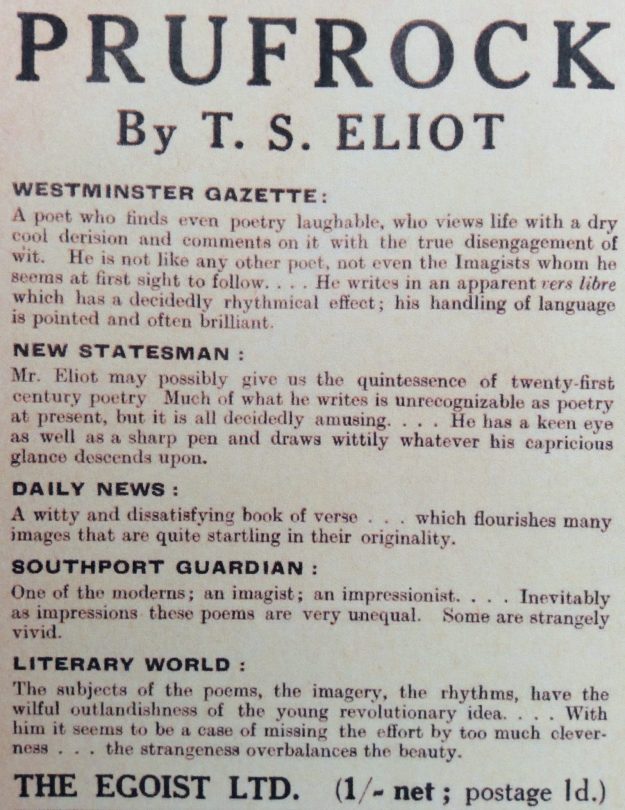
An ad in The Egoist, the British literary journal where T.S. Eliot was assistant editor. I love how proudly they quote the criticism. Dissatisfying! Very unequal! Missing the effort by too much cleverness!

Advertisement for Prufrock by T.S. Eliot.

The Egoist, January 1918

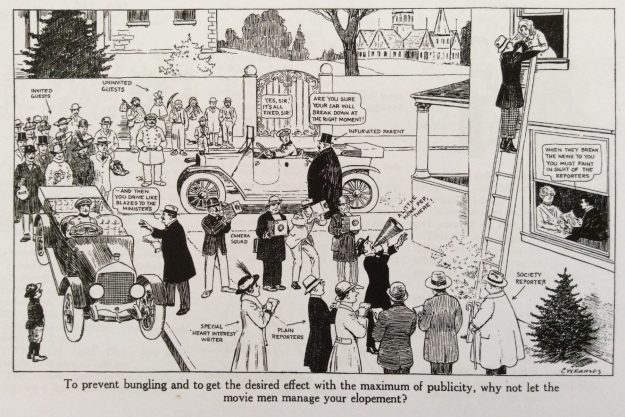
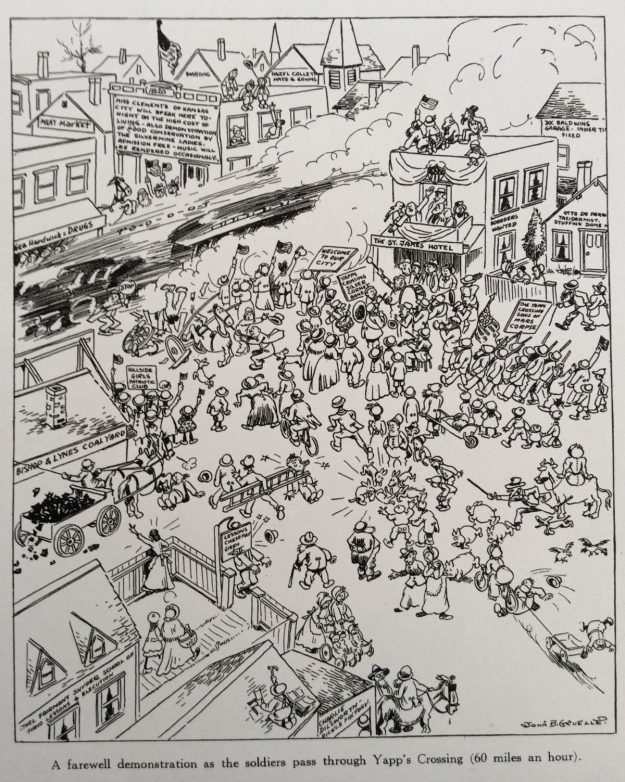
Judge was a humor magazine that managed almost never to be funny–more on that later–but they had some great illustrators. My favorites from the January 3, 1918, issue:

Judge cartoon, what if the movie men managed your elopement, January 3, 1918

Judge Cartoon, soldiers pass through Yapp's crossing, Johnny Gruelle, January 3, 1918.

Johnny Gruelle

An early 20th-century Bridget Jones

As I’ve mentioned, I worried about what I would do for comfort reading during My Year in 1918. Sure, I love Edith Wharton, and I look forward to discovering some of her lesser-known works. But what if I’m not in the mood for finely wrought prose? What if my brain is fried and I just want to relax?

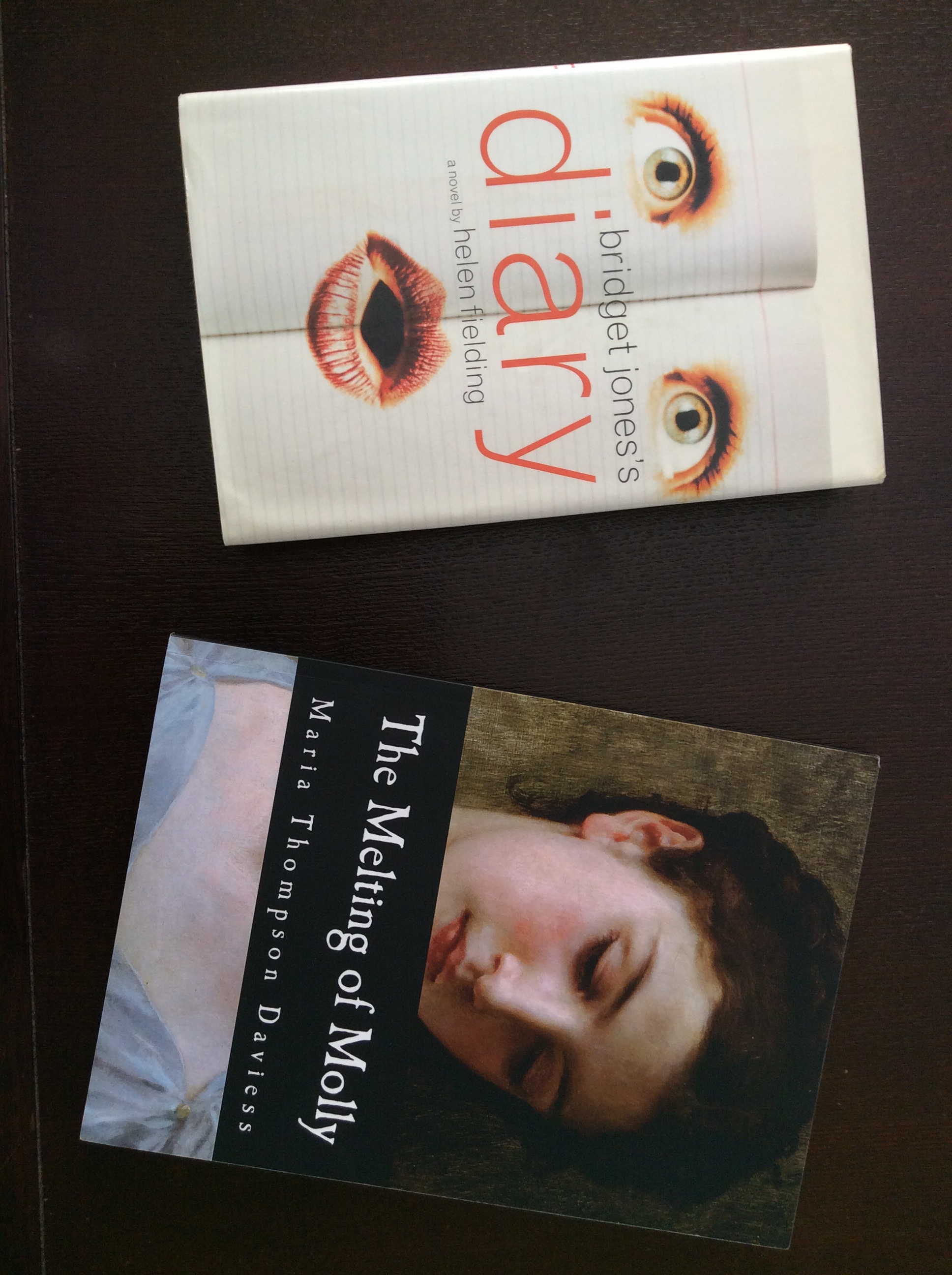
Photograph of Bridget Jones's Diary by Helen Fielding and The Melting of Molly by Maria Thompson Daviess.

Well, having just finished The Melting of Molly by Maria Thompson Daviess, the #4 fiction bestseller of 1912, I can put that worry to rest. Molly Carter is an early 20th-century Bridget Jones, a ditzy diarist obsessed with men and weight loss. Bridget starts every diary entry by noting her weight and calorie consumption, but Molly doesn’t have to count calories, since she’s on a crash diet that requires her to eat the same thing every day. Here’s her daily fare:

  • Breakfast: one slice of dry toast, one egg, fruit and a tablespoonful of baked cereal, small cup of coffee, no sugar, no cream.
  • Dinner: one small lean chop, slice of toast, spinach, green beans and lettuce salad.
  • Supper: slice of toast and an apple. (“Why the apple?” Molly mourns. “Why supper at all?”)

Molly’s a more successful dieter than Bridget—she drops over thirty pounds in three months or so, and somehow doesn’t end up with scurvy. But she’s just as confused about her love life. Where Bridget’s romantic tribulations are modeled on Pride and Prejudice, though, Molly’s story seems to be inspired by Emma.

Married off to a rich older man at eighteen after her true love abandons her to join the diplomatic corps, Molly is widowed at age twenty-four. The story begins a year later, with her old flame announcing that he’s coming to town as she prepares to shuck off her widow’s weeds. Hence the crash diet—he expects her to greet him in his favorite blue muslin frock with the twenty-three inch waist. Meanwhile, she’s the mother figure to the five-year-old son of the widowed doctor next door, who keeps a fatherly eye on her (and prescribes the crash diet). Other suitors materialize, including a pompous judge and Molly’s rakish cousin Tom, who showers her with not-so-brotherly kisses. If you don’t see where this is going from the beginning, well, you’re not paying much attention, and you definitely haven’t read Emma.

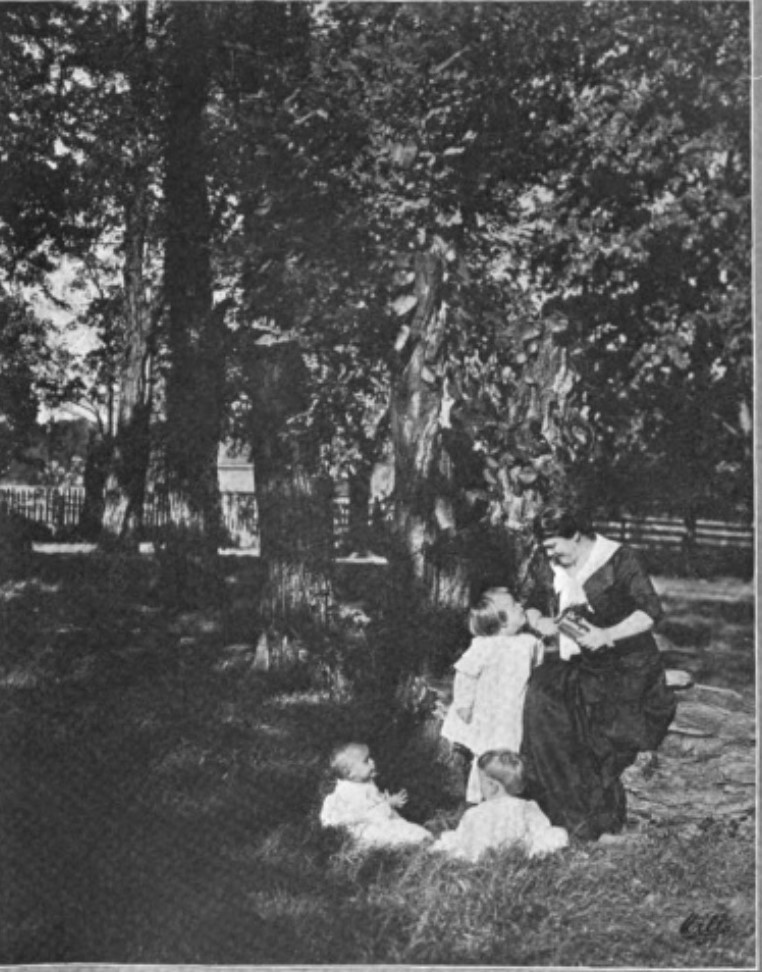
Maria Thompson Daviess outsider her home with children, Book News Monthly, January 1914..

Maria Thompson Daviess at home (Book News Monthly, January 1914)

The Melting of Molly is no forgotten literary classic. Molly’s feelings for the doctor veer abruptly between love and hate, often in a single sentence, for no apparent reason other than to keep the suspense going. The arrival of Molly’s former beau, which the whole book builds up to, ends up being a non-event. And Molly’s ruminations can be difficult to follow at times, unless that’s just 21st-century me. The Melting of Molly was one of fifteen novels Daviess wrote between 1909 and 1918, and this torrid pace may explain the less-than stellar writing.

Still, I’m glad those other fourteen books are out there. I’ll have plenty to keep myself entertained between Edith Wharton novels.

Good-bye to All That

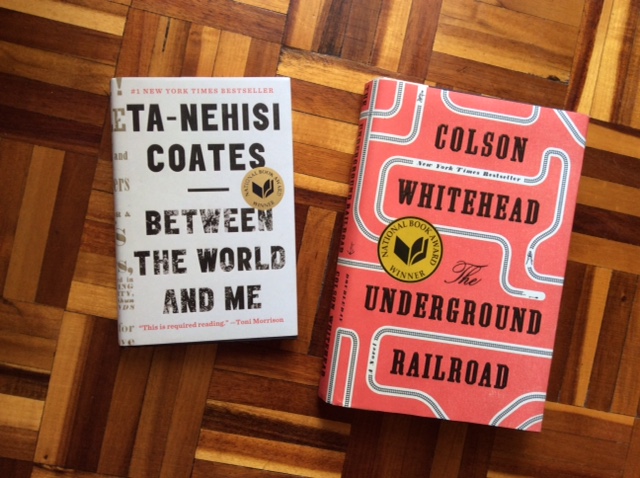
I fell into a reading rut in 2017. I would read a book I saw reviewed in the New York Times, or buy a new book by a favorite author. That was about it. It’s not that the books I read weren’t good. Some of them were even great. I expect that people a hundred years from now will still be reading The Underground Railroad and Between the World and Me. I only disliked one book—and I’m not going to say what it was.

Photograph of Between the World and Me by Ta-Nehisi Coates and The Underground Railroad by Colson Whitehead.

Future classics

I checked off eight of the twelve categories in Modern Mrs. Darcy’s Reading for Growth challenge, including ten books by #ownvoices or #diversebooks authors, five immigrant stories, and six books in translation (plus one in French). I didn’t particularly care about most of the other categories: a Newbery Award honoree, a book over 600 pages, or three books by the same author.

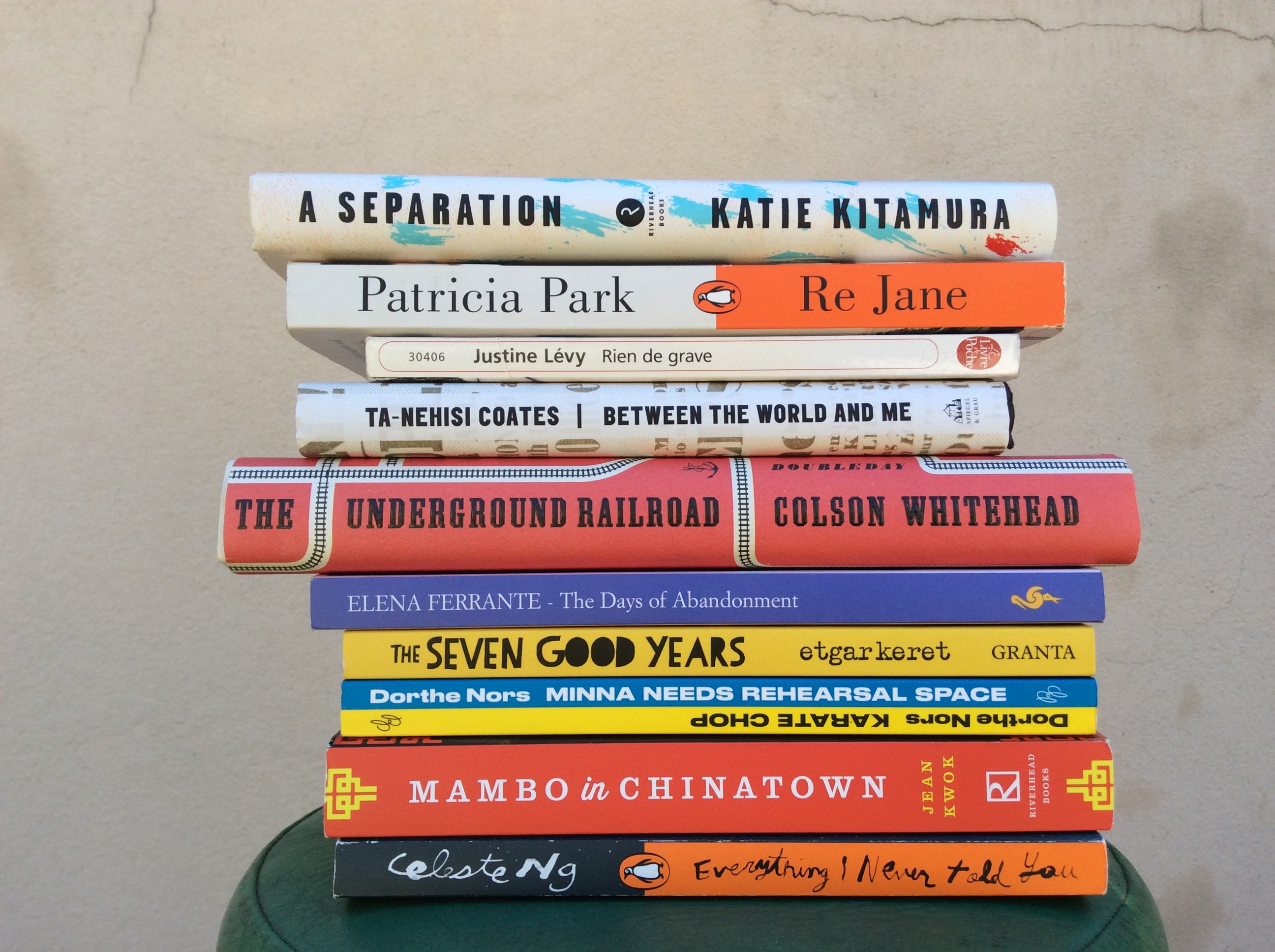
Pile of books with Katie Kitamura's A Separation on top.

Some of my reading challenge reads

But the other category I missed…there’s where the trouble lies. I didn’t read any books published before I was born. And it’s not like I narrowly missed this goal. The oldest book I read in 2017 was Justine Lévy’s Rien de Grave, which was published in 2004. That’s right, I managed to read forty books last year without reading anything published before the millennium. The books I read in 2017 were published, on average, in 2015.

I wasn’t always that kind of reader. In 1987, the books I read were published an average of 21 years before. Henry James’s Washington Square is on that list, along with books by Philip Roth and Edith Wharton. I discovered Laurie Colwin, still one of my favorite writers, and read five of her books. I read a book on Elizabethan thought published in the 1940s and a bunch of classic mysteries. There’s junk on the list, too; Judith Krantz features prominently. But, unlike my 2017 self, I was open to anything. (Well, except when it comes to diversity. All of the books I read in 1987 were by white authors except The Golden Gate by Vikram Seth, which features mostly white characters. I can blame this only partly on a less diverse publishing market.)

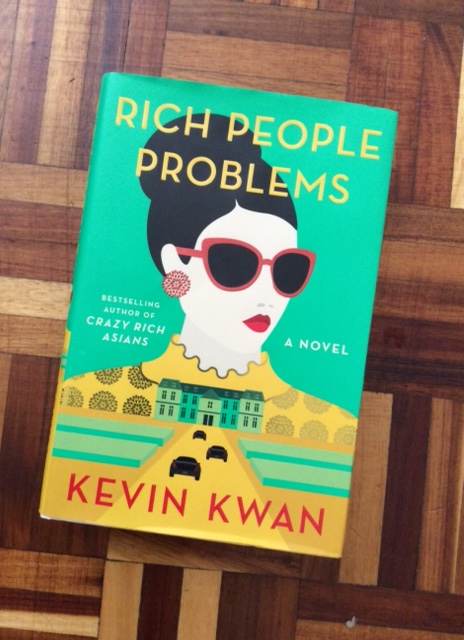
Well, My Year in 1918 will solve this problem. But it won’t be easy to give up contemporary books for a year. I enjoy a challenging read, but when I want to relax I default to my comfort zone, well-written novels by writers like Elinor Lipman, Meg Wolitzer, Curtis Sittenfeld, and Marisa de los Santos. Except for Lipman, they all have books coming out this year. I was having a great time reading Kevin Kwan’s Rich People Problems, but I was only halfway through on December 31, so I’ll have to wait until next January to find out who inherits Tyersall Park. I’ll have to wait for Dinner at the Center of the Earth by my wonderful NYU professor, Nathan Englander. I got Christmas presents that will have to wait for another Christmas to roll around. The current affairs books in my to-read pile won’t be so current next January.

Photograph of Rich People Problems by Kevin Kwan.

So good-bye, crazy rich Asians and befuddled New Yorkers, painfully innocent college students and hyper-observant Londoners! Farewell, innovative economists and eccentric Japanese tidiers! See you in 2019.

The bonkers world of Marie Corelli

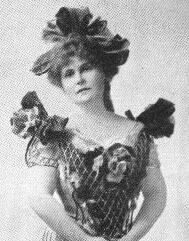
I promised in my first post that there would be heroes and villains. I haven’t found any heroes yet, other than the railroad workers who shot steam at locomotives to defrost them. But I’ve found my first villain: the wildly popular British novelist Marie Corelli.

1909 photograph of Marie Corelli.

Marie Corelli, 1909

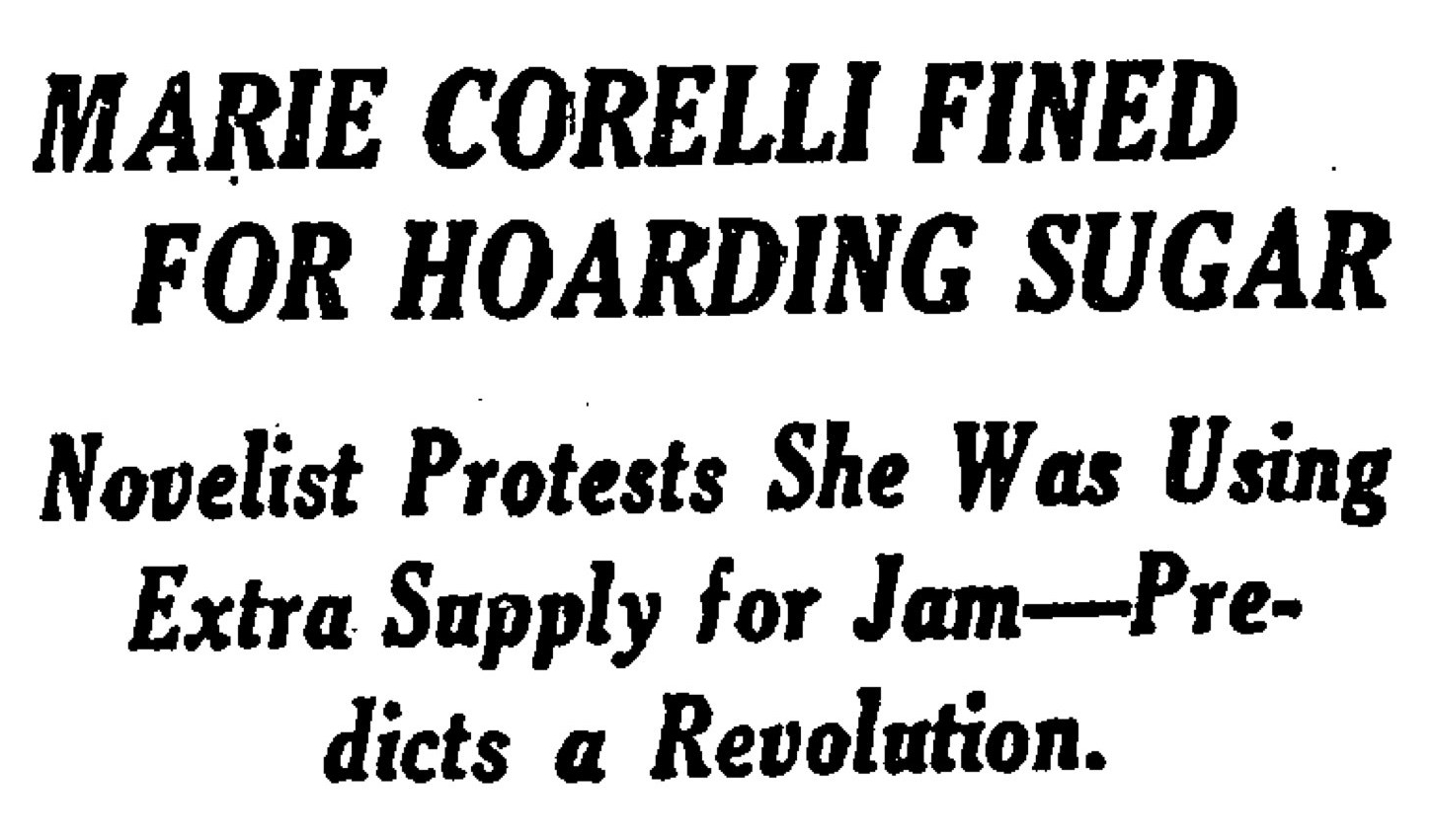
According to the January 3, 1918, New York Times, Corelli was fined £71 by the Stratford-on-Avon Police Court for hoarding sugar. Authorized 32 pounds in a ten-week period, she obtained 179 pounds, plus 50 pounds of preserving sugar. The court didn’t buy her lawyer’s argument that she had acted out of patriotism in preserving fruit for future use. When the police showed up at her house, she said, “You are upsetting the country altogether with your food orders. Lloyd George will be resigning tomorrow, and there will be a revolution in less than a week.”

New York Times headline, Marie Corelli Fined for Hoarding Sugar.

New York Times, January 3, 1918

Who was this woman? I decided to learn more, and I found an article she wrote for the January 1918 issue of Good Housekeeping called “The World’s Great Need.” The world’s great need, according to Corelli, is sanity—something that is sorely lacking in this article, aside from a well-argued condemnation of corporal punishment. Corelli writes that that the desire to “wallow in blood and slaughter” has prevailed over reason. That’s an understandable sentiment in 1918; it’s her solution that’s a problem. Anyone who violates the peace and progress of the world, she says, “should either be shot like mad-dogs as incurable and dangerous, or imprisoned for life in asylums for the criminally insane.”

Corelli thinks a lot of people are insane. There’s the Scottish woman who, “after accepting many useful kindnesses from a friend” (could it have been Corelli?), cut the friend out of her prayers following a minor disagreement. Not to mention the Futurists, the Cubists, Debussy, writers of “revoltingly sexual fiction,” and other producers of art that is “utterly opposed to truth and nature.” How to return sanity to the world? Simple—just require everyone wishing to marry to submit to “a searching health examination, so that union may be forbidden to the unfit.”

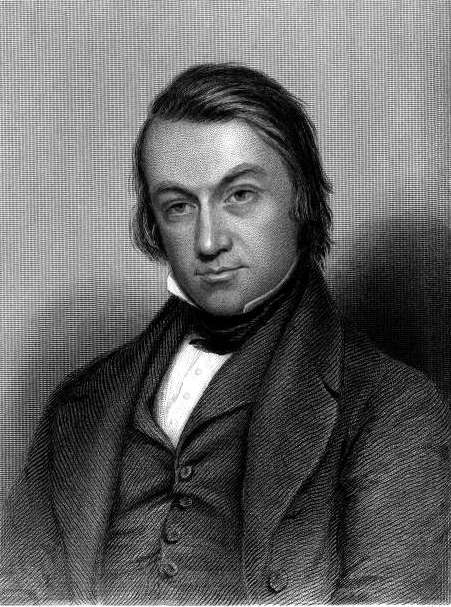
Portrait of Charles Mackay.

Charles Mackay, Marie’s father (The Modern Scottish Minstrel, Volumes I-VI)

Corelli was an ardent spiritualist; her books deal with mystical and extrasensory phenomena. (If her predictions to the police about Lloyd George and the revolution are any indication, though, she wasn’t a very gifted prognosticator.) Ironically, she was the daughter, by a household servant, of Charles Mackay, whose 1841 classic Extraordinary Popular Delusions and the Madness of Crowds debunks hocus-pocus of all types.

It can’t have been easy to be Marie Corelli. She was born with the stigma of illegitimacy and mocked by the literary establishment. She may have had a decades-long same-sex relationship with her father’s caretaker; if so, she had to keep it secret. (UPDATE 10/31/2020: Read more about this here.) Still, she chose what beliefs to espouse, and she chose some of the worst elements of 1918 thinking—eugenics, superstition, and reactionary literary taste. Not to mention the sugar hoarding!