Tag Archives: 1910s

On W.E.B. Du Bois’ 150th birthday, a look back at his “Jubilee”

The February 1918 issue of the NAACP magazine The Crisis, headlined EDITOR’S JUBILEE NUMBER, starts with this note: “The Editor of the CRISIS will celebrate his fiftieth birthday on the twenty-third of February, 1918. He would be glad on this occasion to have a word from each of his friends.” The editor was W.E.B. Du Bois, born 150 years ago today.
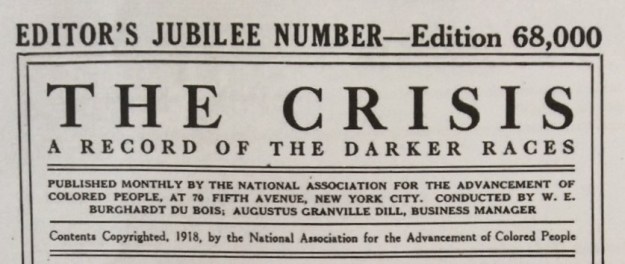
Top of title page of The Crisis, February 1918, Editor's Jubilee Number.

The Crisis, February 1918

The issue includes an autobiographical essay by Du Bois called “The Shadow of Years.” He tells of his ancestry:

a flood of Negro blood, a strain of French, a bit of Dutch, and thank God! No “Anglo-Saxon”

—his childhood in Great Barrington, Massachusetts, playing comfortably with his white friends and largely unaware of the country’s vast racial divide:

I think I probably surprised my hosts more than they me, for I was easily at home and perfectly happy and they looked to me just like ordinary people, while my brown face and frizzled hair must have seemed strange to them
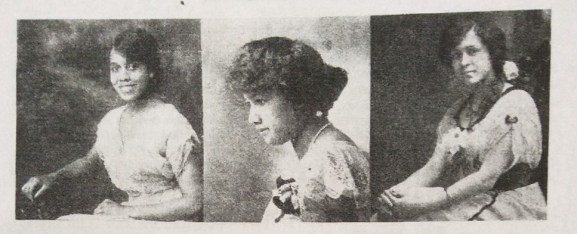
Three photographs of African-American women in The Crisis magazine, 1918.

The Crisis, February 1918

—encountering other African-Americans in large numbers for the first time at Fisk College in Tennessee:

Lo! My people came dancing about me—riotous in color, gay in laughter, full of sympathy, need, and pleading; unbelievably beautiful girls—“colored” girls—sat beside me and actually talked to me while I gazed in tongue-tied silence

—and the “Days of Disillusionment” that fueled his desire to work for the upliftment of his people:

I began to realize how much of what I had called Will and Ability was sheer luck. Suppose my good mother had preferred a steady income from my child labor, rather than bank on the precarious dividend of my higher training?…Suppose Principal Hosmer had been born with no faith in “darkeys,” and instead of giving me Greek and Latin had taught me carpentry and the making of tin pans?
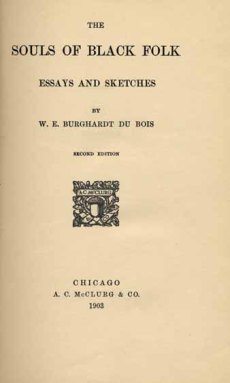
The Souls of Black Folk, title page, second edition, 1903.

Second edition, 1903

If you want to learn more about the human side of this towering (and sometimes intimidating) thinker, you can find the “The Shadow of Years” here. Or you can read “Of the Meaning of Progress,” the essay in Du Bois’ 1903 classic The Souls of Black Folk about his days as a young teacher in a rural Tennessee community. (I’ve been listening to the audiobook, wonderfully narrated by Rodney Gardiner.)

In “The Shadow of Years,” Du Bois presents himself as an old man. “The most disquieting sign of my mounting years is a certain garrulity about myself, quite foreign to my young days,” he begins. He ends the essay as follows:

Last year, I looked death in the face and found its lineaments not unkind. But it was not my time. Yet, in nature sometime soon and in the fullness of days, I shall die; quietly, I trust, with my face turned South and Eastward; and dreaming or dreamless, I shall, I am sure, enjoy death as I have enjoyed life.

But Du Bois lived almost long enough to celebrate another Jubilee, dying in Ghana in 1963 at the age of ninety-five.

As for his request in The Crisis for a word from each of his friends, I’ll just say this, from the distance of a hundred years:

Thank you.

(You can read more about The Crisis here and here.)

Dear Daddy-Long-Legs, Drop dead!

If you’ve followed My Year in 1918 since the beginning, you may be thinking around now, “What’s with this person? She said she was going to read her way through 1918, but all she does is sit around looking at magazines. She’s mentioned one book so far, and it wasn’t exactly Dostoevsky.”

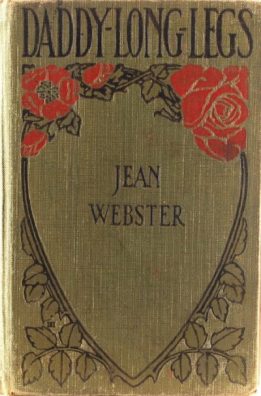
As my Book List will attest, I have, in fact, read other books. I just haven’t had much to say about them. But now I’ve read a book that I have a lot to say about—Jean Webster’s 1912 epistolary novel Daddy-Long-Legs.

Daddy-Long-Legs by Jean Webster, first edition cover, 1912.

First edition, 1912

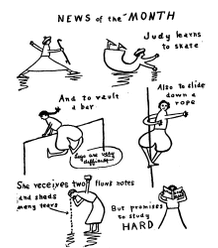
Daddy-Long-Legs—which I’d read before, when I was twelve or so—is the story of Jerusha Abbott, a foundling who was raised, if that’s the word for it, in the grim John Grier Home. A trustee of the home offers to put her through college. She’s supposed to write him a letter every month, and he keeps his identity secret. She renames herself Judy and—despite never having seen the inside of a house—adapts quickly to college life. She sends her benefactor cheery, breezy missives, illustrated with whimsical drawings. She saw his elongated shadow in the hallway once, so she nicknames him “Daddy-Long-Legs.”

Daddy-Long-Legs illustration, News of the Month.

Daddy-Long-Legs, illustration by Jean Webster

Judy tells Daddy-Long-Legs everything—about her (quickly overcome) academic struggles, her fun-loving roommate Sally McBride of Worcester, Mass.*, her snooty roommate Julia Pendleton, and her growing fondness for Julia’s young uncle, Jervie, who’s a socialist and not at all like the rest of his clan.

If you haven’t read Daddy-Long-Legs, and are planning to, and are the world’s densest reader**, then stop here, because I’m going to give away the ending.

JERVIE AND DADDY-LONG-LEGS ARE ONE AND THE SAME!

Judy discovers this after she writes to Daddy-Long-Legs, broken-hearted after turning down Jervie’s marriage proposal because of the vast social divide between them, and begs for a meeting. Her last letter, written after she discovers the truth and accepts his proposal, is an outpouring of joy.

From a twenty-first-century perspective: No. Just…no.

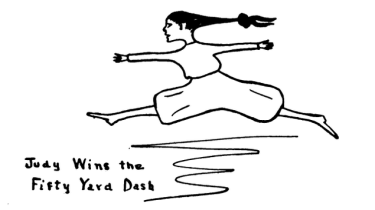
Daddy-Long-Legs illustration, Judy Wins the Fifty Yard Dash.

Run, Judy, run! (Daddy-Long-Legs, illustration by Jean Webster)

How about this instead?

Dear Whoever,

Of all the sick mind games anyone ever played, yours is the sickest. I came from nowhere. I had nobody. Nobody, that is, except the benefactor who lifted me from poverty—in spite of everything, thank you for that—and the man I loved. I told my benefactor all about him—his generosity, his liveliness, but also his little inconsiderate acts (showing up at inconvenient times and expecting everyone to drop everything) and his horrible family. And you let me do this—for FOUR YEARS—even as our friendship turned to love.

Two men in the world cared about me. Now it’s just one. Daddy-Long-Legs is dead. No, worse—he never existed. I can always find another lover, but I’ll never have another father. I’ll miss him, Jervie, more than I’ll miss you.

And all that string-pulling along the way…making me spend the summer at your old nanny’s farm when I begged to go to the McBride family camp in the Adirondacks. “It’s the kind of nice, jolly, care-free time that I’ve never had; and I think every girl deserves it once in her life,” I said. But no, to the farm it was—so that I could keep you entertained during your brief visit. I’m not your plaything, Jervie.

You probably think I’m going to run off and marry Jimmie McBride. But you know what? I’m twenty-one. I’ve never lived anywhere but in a foundling asylum and a girls’ college. I’m not going to marry anyone. I need some time on my own.

 Not yours, not anyone’s,

 Judy

 There. That’s better.

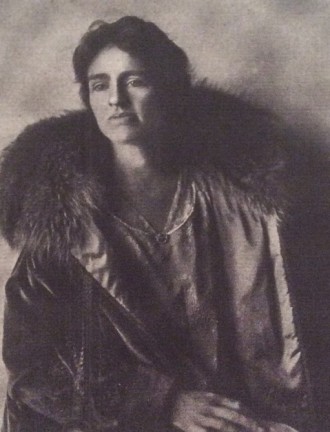
Portrait photograph of Jean Webster, Bookman magazine, 1916.

Jean Webster, Bookman magazine, July 1916

The ending aside, though, Daddy-Long-Legs was my most enjoyable read of the year so far—bright and breezy and fun. Jean Webster seems like she would have been bright and breezy and fun too. But her life was shadowed with tragedy. Her father started a publishing business with Samuel Clemens (AKA Mark Twain), who was his wife’s uncle, but it ended up going broke, and he committed suicide when Jean was fourteen. She had a long affair with Standard Oil heir Glenn Ford McKinney, whose wife suffered from severe mental illness. They finally married in 1915, after his divorce, but she died in childbirth the next year, at the age of thirty-nine. Her daughter was named Jean in her memory.

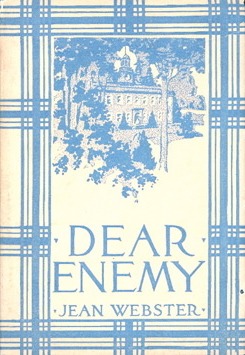
Dear Enemy by Jean Webster, first edition cover, 1912.

First edition, 1915

A bright light, gone far too soon. But she left a lot of books behind. There’s a sequel to Daddy-Long-Legs called Dear Enemy, which I’ll read later in the year.*** For now, on to more serious fare—Willa Cather’s O Pioneers!

 I’m sure it will be great, but I miss Judy already.

*Shout out!

**Well, tied with twelve-year-old me

***UPDATE 4/2019: I did, and wrote about it here and here.

Are you a superior adult? Take this 1918 intelligence test and find out!

Intelligence tests were all the rage in 1918. Without them, how could you determine whether someone was a dullard, a laggard, an imbecile, feeble-minded, retarded, or deficient (all terms I found in a single article in Century magazine)? How could you implement your eugenics program?

There were lots of articles about intelligence tests, but I was having trouble finding the tests themselves, so I had no idea where I fit in, 1918-intelligence-wise. Luckily, Literary Digest stepped in. Its February 16, 1918 issue included a test that, it promised, “is so easily used that within a brief period readers of The Digest will doubtless be applying it to their family and friends.” Okay, a hundred years isn’t all that brief, but here we go.

Science and Invention, A Test of Your Intelligence.

The test goes like this: you go through a list of 100 words, which have been selected randomly from the dictionary and placed in order of difficulty, and see how many you can define. 75 and above makes you a “superior adult”—top third of the population. 65 makes you an average adult. There are different scales for kids, but, trust me, if you’re a kid and you’re reading this blog, you’re superior.

The test designers are pretty flexible about scoring. Like, if a child defines “orange” as “an orange is to eat,” or “gown” as “it’s a nice gown that ladies wear,” then that’s okay. The key is to establish that you have a clear understanding of what the word means.

The easiest words are at the beginning, so you get a free pass on some of them depending on your age. A fifteen-year-old starts with #21. I’d suggest starting at #51.

Here’s the test. If you’re going to take it, don’t read any further until you’re finished—spoilers lie ahead. The Google dictionary is an easy way to check your answers.

Intelligence test testing recognition of 100 vocabulary words, from easiet, orange, to hardest, complot.

Literary Digest, February 16, 1918

Whew! That was exhausting, wasn’t it? And surprisingly hard. Or maybe that’s just me.

I was pretty cocky going in. Not to get all braggy on you, but vocabulary is my thing. Whenever there was a vocabulary test—which, luckily for me, there is at several key junctures in the American educational process—I would ace it. Random dictionary words, how hard can they be? I figured I might miss a couple of 1918-specific words, about wireless telegraphy or animal husbandry or whatever, but I was counting on upper nineties.

I got a 92. Safely in the superior adult range, but not spectacular. If there had been a competition, with a prize like, say, a date with Ezra Pound, I definitely wouldn’t have won.

Here’s where I went wrong: Depredation. Drabble, Declivity. Ambergris. Theosophy. Parterre. Shagreen. Limpet.

A limpet (Tango 22)

In some cases I was close. I knew that theosophy was a philosophy related to theology, and that there were societies about it, but I didn’t know exactly what they believed. I knew a limpet was a sea creature, but I thought it was a wiggly fish. (Which doesn’t make sense in retrospect, given the phrase “stuck to me like a limpet.”) Other words, like drabble*, sounded like I should know them, but when I thought about the meaning I drew a blank. The only one that didn’t even sound familiar was shagreen. So. 92.

At this point, you may be thinking, false advertising—the blog title is about an intelligence test, not a vocabulary test. But the amazing thing is, it IS an intelligence test! The result, Literary Digest says, is reliably within ten percent of your score on the Binet-Simon (IQ) scale. And it doesn’t depend much on your level of schooling.

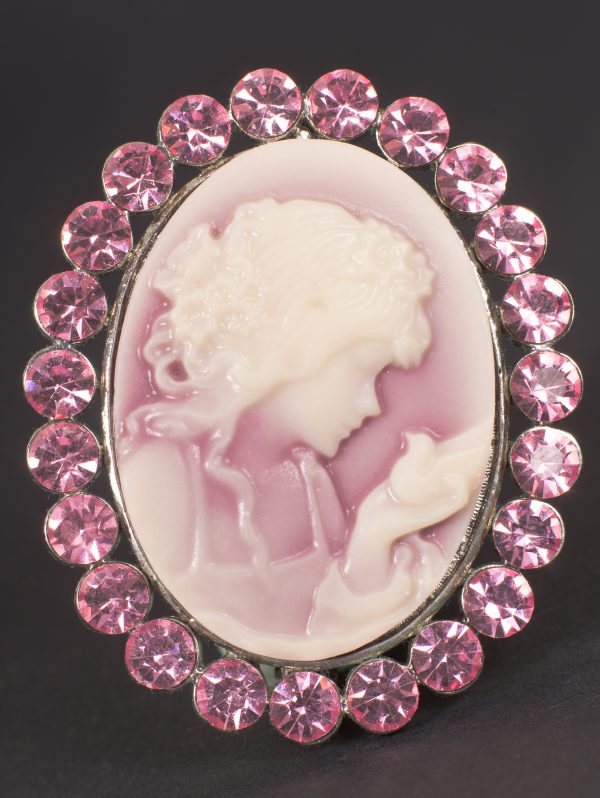
That’s right, this is a reliable, objective test of intelligence! There’s no earthly reason why, say, a sharecropper’s child should have more trouble identifying a cameo

Tobias “ToMar” Maier

or a parterre

or the other kind of parterre

than the child of a Rockefeller or a Carnegie.

It makes you think, doesn’t it? If a vocabulary test that’s so clearly reliant on cultural background is such an accurate predictor of your score on an IQ test, then maybe that should raise questions about the IQ test?

But that’s just me, with my 21st-century nitpicking.

I hope you had fun. If anyone got 100, please be in touch—and let me know where the hell you ever heard of shagreen!

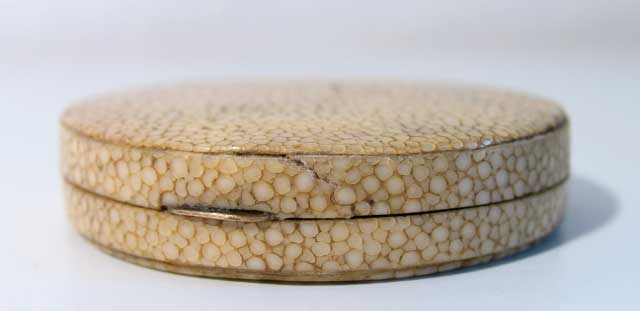
A box covered with shagreen

*A cool feature of the Google dictionary is that it has a little graph showing how the word’s popularity has changed over time. Generally, these are fairly predictable, but “drabble” takes off like crazy in the 1960s and peaks in about 1975. I was puzzled, since I didn’t recall everyone suddenly talking about things becoming wet and dirty by movement into or through muddy water. Then it dawned on me: the graph traces the career path of Margaret Drabble, the British novelist. Who’s great! If, unlike me, you’re allowed to read books written in the last hundred years, I recommend The Millstone.

Sound familiar? Book chat, 1918-style

If you spend as much time reading about books online as I do (or did, before I went back to 1918), there are certain topics that you come across again and again. I knew that these debates had been around for a while. But I had no idea that they’d been around for a hundred years. Here’s the 1918 take on a couple of book-chat perennials.

Can writing be taught?

Can creative writing be taught? Do writing classes really make students’ writing better? As a recent MFA grad, I’ve grown tired of this seemingly endless debate. (No one ever asks MBAs this type of question, and I don’t recall MFAs ever causing an international financial crisis.) But MFA programs weren’t around in 1918, so I thought I’d get a break.

But no, here’s Edward J. O’Brien, founding editor of The Best American Short Stories, weighing in in the January 1918 issue of The Bookman. “Experience with many short story writers who had completed courses in short-story writing under competent critics had left me frankly sceptical as to the value of endeavouring to teach the technique of a developing and changing literary form,” he says. He’s reviewing a book called A Handbook on Story-Writing by Blanche Colton Williams of Columbia University. After such an education, he goes on, “The last state of the pupil seemed worse than the first.” Oh no.

Postcard of Columbia University library, 1917.

Columbia University library, 1917 (librarypostcards.blogspot.com)

But then one day he’s bad-mouthing writing classes to a short story writer he admires, and the writer reveals that he’s studying writing at Columbia. He invites O’Brien to tag along, and he wins a convert. “What I found in this class was a free play of critical intelligence, taking actual stories as its point of departure…Here was a true academy, in which the teacher learned from the pupil.” This approach, he says, is skillfully presented in Williams’ book. Plot, point of view, character, and dialogue—all are lucidly discussed.

Score one for Team MFA!

Should adults read books written for children?

If there’s any debate in book-talk-land that’s even more heated than the one over MFAs, it’s the question of whether adults should read books written for children. Ruth Graham took up the anti-YA banner in a 2014 Slate article called, succinctly, “Against YA.” “Read whatever you want,” she said. “But you should be embarrassed if what you’re reading was written for children.” A raucous argument ensued, with writers like Meg Wolitzer coming to the defense of adult YA readers.

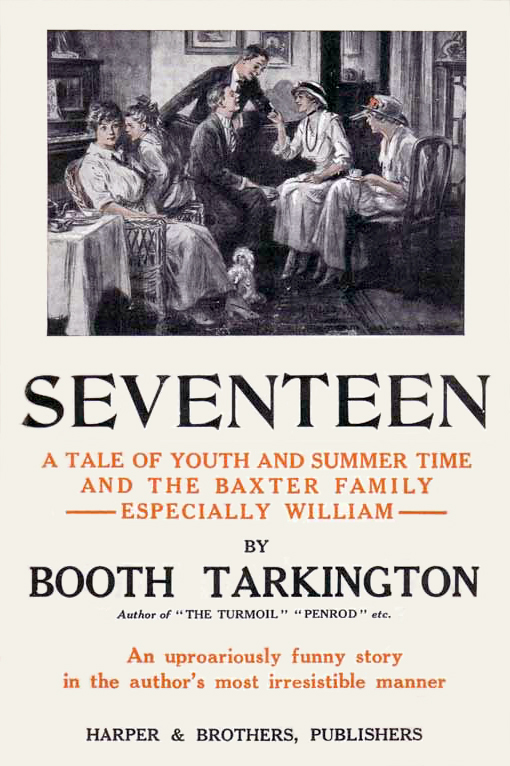
Seventeen by Booth Tarkington, first edition cover, 1916.

First edition cover, 1916

Again, not a topic I’d expect to have much currency in 1918, when grown-ups were grown-ups and children wore sailor suits. But, writing in The Bookman in February 1918, children’s writer and anthologist Montrose J. Moses notes that books for boys are popular among soldiers. The low level of literacy among enlisted men could be part of the reason, he says. But he thinks it’s more than that. “I believe—and I have followed the trend of juvenile literature for many years,—that this tendency on the part of the soldier to read boys’ books is only another evidence of the fact that juvenile literature, since it has come under the influence of out-door sports and modern inventions, has in it a degree of expertness which appeals to no age and to all interest.”

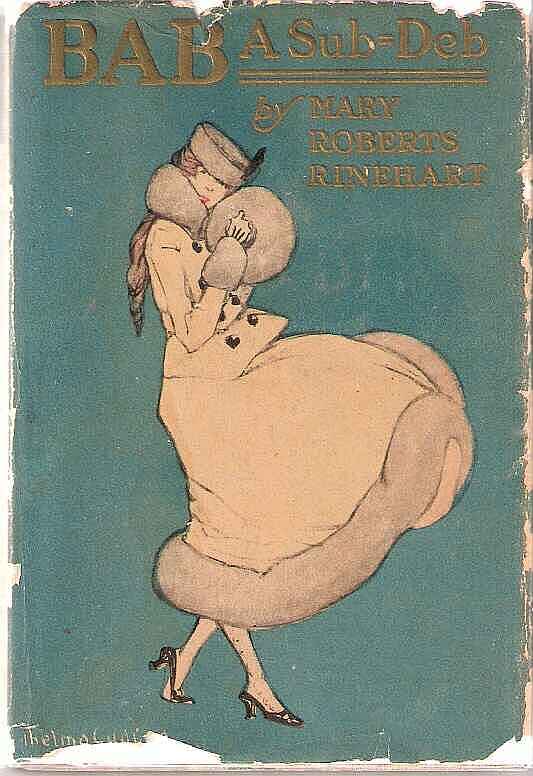
Cover, Bab A Sub-Deb by Mary Roberts Rinehart, 1917

First edition, 1917

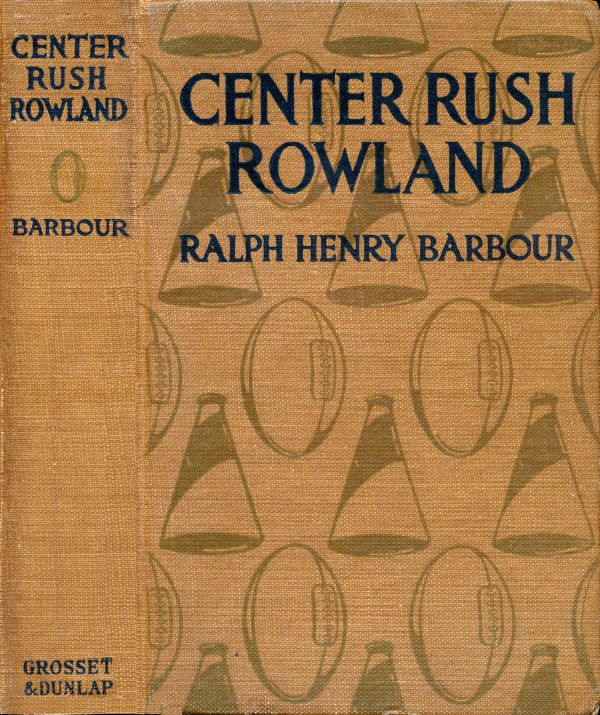
It’s not only soldiers who were reading about children. A surprisingly high percentage of 1918-era books for adults have child protagonists. Booth Tarkington’s Seventeen (1916) and Mary Roberts Rinehart’s Bab: A Sub-Deb (1917) were adult best-sellers by well-established writers. But John Walcott, writing in The Bookman in December 1917, says that children don’t share their parents’ enthusiasm for these books. “Have you chanced to note the rueful grin with which a real Bab or [Seventeen’s] Willie Baxter scans those delightful and too-revealing records?” he asks. “The relief with which they turn to the latest number of St. Nicholas, or the latest ‘corker’ by Mr. Ralph Henry Barbour?” Young people, he says, take themselves with deadly seriousness, “and it behooves those who cater for [their] favour to do likewise.” That’s what Barbour does, with his tales of schoolboy athletics. “Just now,” Walcott says, “he is working his way methodically through the line-up, so that after Left End Edwards, Left Tackle Thayer, and Left Guard Gilbert, we have naturally arrived at Center Rush Rowland, and we have the right side of the line to look forward to in the near future. Heroes all!”

Cover of Center Rush Rowland, 1917.

It’s Barbour and his schoolboy athletes, Moses says, that the soldiers are clamoring for. And I can see why. For young men going off to fight for a cause that even the Allied countries’ leaders were having trouble articulating, it’s easy to understand the appeal of a tale in which the hero competes, as Moses puts it, in “the season’s decisive event upon the modern field of academic glory.”

How to be a New York Times war correspondent, 1918-style

So you got hold of a time machine and you want be a New York Times war correspondent in 1918? Here are some tips.

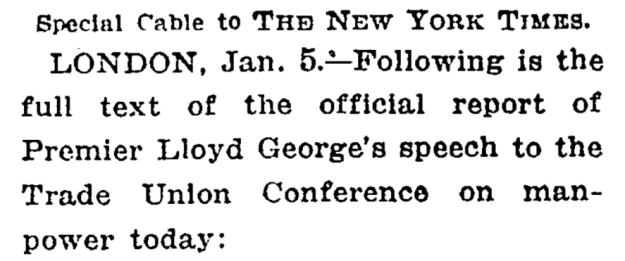
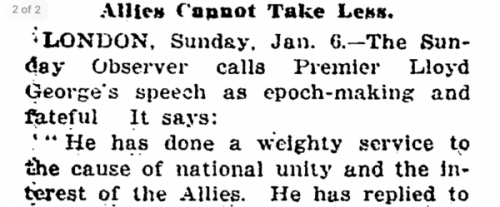
1. If the British Prime Minister gives an important speech on the war, don’t worry about analyzing it. Just send in the official report.

New York Times text, January 6, 1918

New York Times, January 6, 1918

2. To be on the safe side, you might also want to quote a British newspaper’s analysis of the speech in its entirety.

New York Times text, January 6, 1918

New York Times, January 6, 1918.

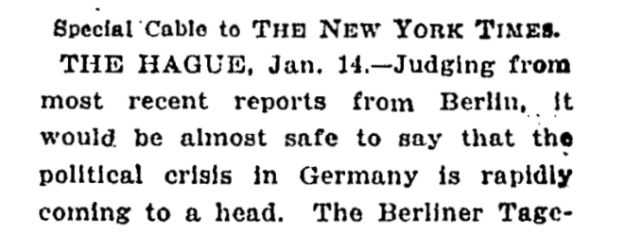
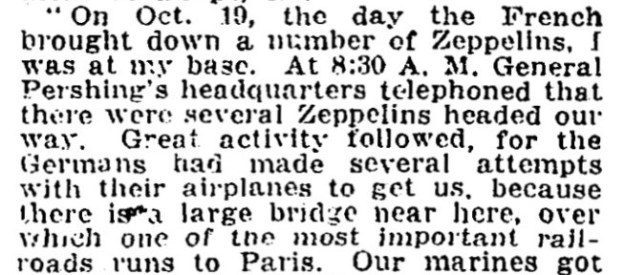
3. If you don’t know what’s going on, open with a vague statement.

New York Times text, "Judging from most recent reports from Berlin..." January 15, 1918.

New York Times, January 15, 1918

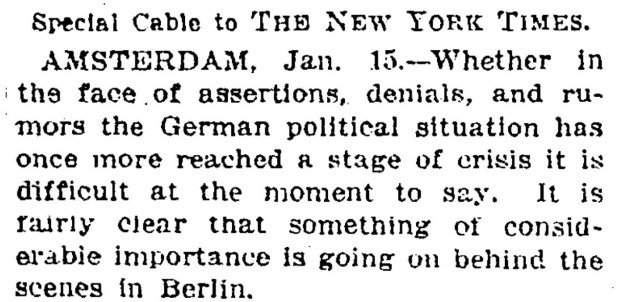
4. Or just come out and admit that you don’t have a clue.

New York times text, "it is fairly clear that something of considerable importance is going on in Berlin."

New York Times, January 16, 1918

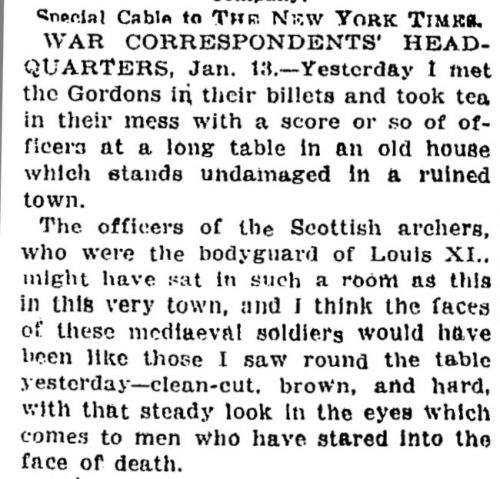
5. If you manage to talk with someone who’s actually involved in the war but all he does is spout generalities, throw in lots of atmospherics.

New York Times text, "Yesterday I met the Gordons in their billets and took tea..."

New York Times, January 14, 1918

6. Don’t worry about sending in war news. This will be provided by your colleagues, like a reporter covering the unveiling of a plaque at the Biltmore Hotel honoring its employees at the front, who will come across a letter from one of these employees containing actual war news.

New York Times text, January 1918.

New York Times, January 14, 1918

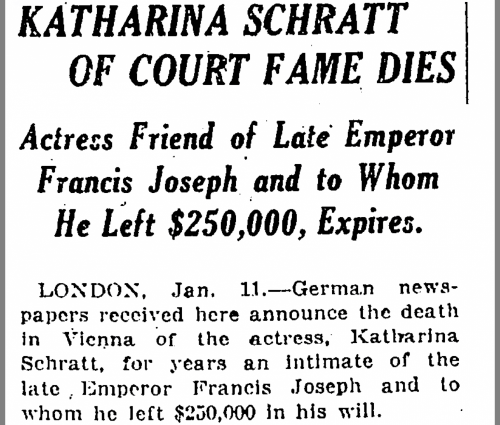
7. Human interest is also good! If the German press reports that the mistress of the former German emperor has died, write about that. Don’t worry about getting confirmation. The Times can just run another obituary in 1940, when she actually does die.

New York Times headline, Katharina Schmitt of Court Fame Dies.

New York Times, January 12, 1918

I know that reporters in Europe faced censorship and restrictions on their movements. And the Western Front was quiet in January 1918. Still, I have to believe it was possible to do better than this. I can see now why the public was so eager for soldiers’ personal accounts of life at the front, provided in books and public lectures. I hope that, as the war heats up and American lives are increasingly on the line, the Times will provide the public with better information.

The bonkers world of Marie Corelli

I promised in my first post that there would be heroes and villains. I haven’t found any heroes yet, other than the railroad workers who shot steam at locomotives to defrost them. But I’ve found my first villain: the wildly popular British novelist Marie Corelli.

1909 photograph of Marie Corelli.

Marie Corelli, 1909

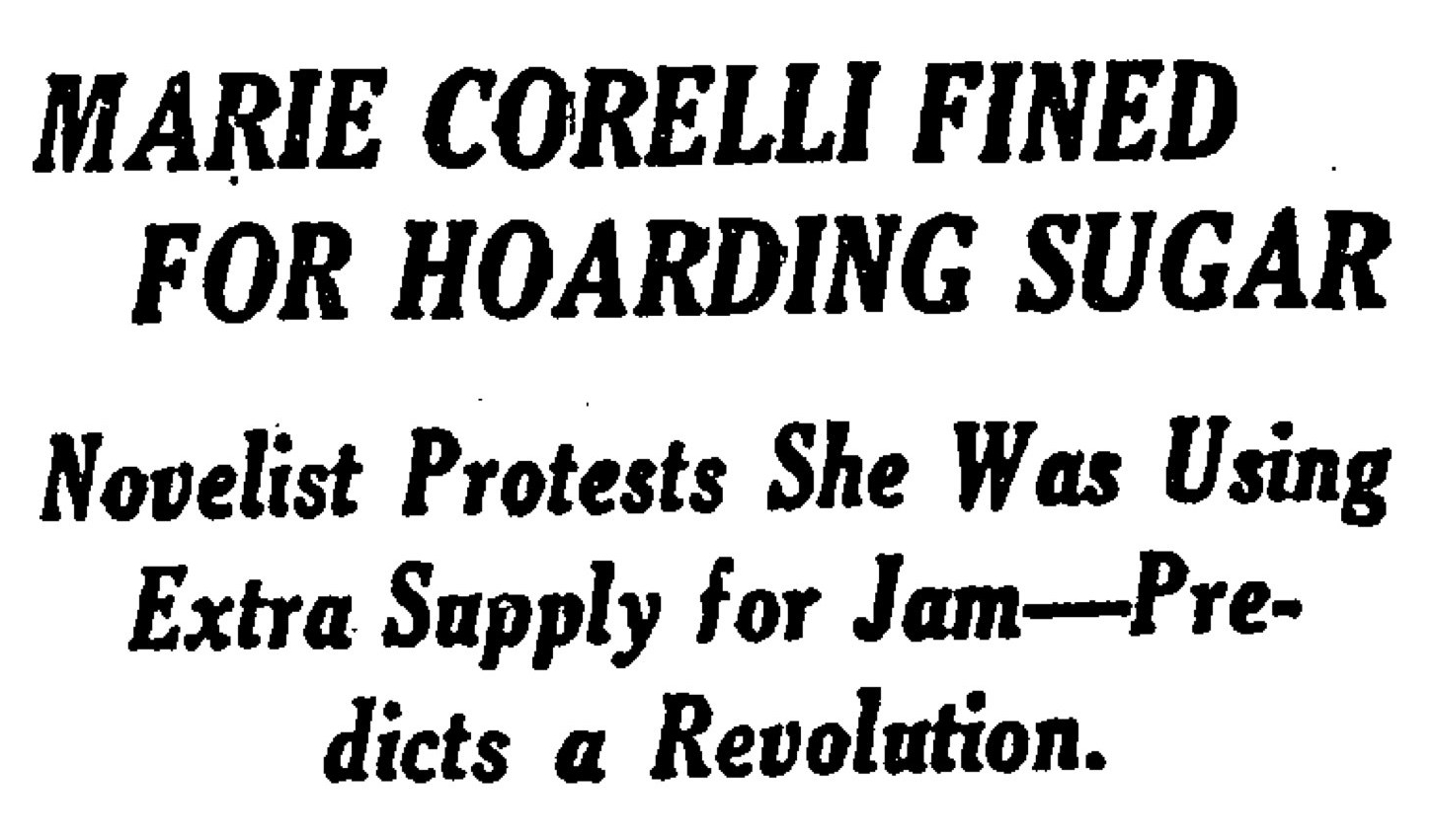
According to the January 3, 1918, New York Times, Corelli was fined £71 by the Stratford-on-Avon Police Court for hoarding sugar. Authorized 32 pounds in a ten-week period, she obtained 179 pounds, plus 50 pounds of preserving sugar. The court didn’t buy her lawyer’s argument that she had acted out of patriotism in preserving fruit for future use. When the police showed up at her house, she said, “You are upsetting the country altogether with your food orders. Lloyd George will be resigning tomorrow, and there will be a revolution in less than a week.”

New York Times headline, Marie Corelli Fined for Hoarding Sugar.

New York Times, January 3, 1918

Who was this woman? I decided to learn more, and I found an article she wrote for the January 1918 issue of Good Housekeeping called “The World’s Great Need.” The world’s great need, according to Corelli, is sanity—something that is sorely lacking in this article, aside from a well-argued condemnation of corporal punishment. Corelli writes that that the desire to “wallow in blood and slaughter” has prevailed over reason. That’s an understandable sentiment in 1918; it’s her solution that’s a problem. Anyone who violates the peace and progress of the world, she says, “should either be shot like mad-dogs as incurable and dangerous, or imprisoned for life in asylums for the criminally insane.”

Corelli thinks a lot of people are insane. There’s the Scottish woman who, “after accepting many useful kindnesses from a friend” (could it have been Corelli?), cut the friend out of her prayers following a minor disagreement. Not to mention the Futurists, the Cubists, Debussy, writers of “revoltingly sexual fiction,” and other producers of art that is “utterly opposed to truth and nature.” How to return sanity to the world? Simple—just require everyone wishing to marry to submit to “a searching health examination, so that union may be forbidden to the unfit.”

Portrait of Charles Mackay.

Charles Mackay, Marie’s father (The Modern Scottish Minstrel, Volumes I-VI)

Corelli was an ardent spiritualist; her books deal with mystical and extrasensory phenomena. (If her predictions to the police about Lloyd George and the revolution are any indication, though, she wasn’t a very gifted prognosticator.) Ironically, she was the daughter, by a household servant, of Charles Mackay, whose 1841 classic Extraordinary Popular Delusions and the Madness of Crowds debunks hocus-pocus of all types.

It can’t have been easy to be Marie Corelli. She was born with the stigma of illegitimacy and mocked by the literary establishment. She may have had a decades-long same-sex relationship with her father’s caretaker; if so, she had to keep it secret. (UPDATE 10/31/2020: Read more about this here.) Still, she chose what beliefs to espouse, and she chose some of the worst elements of 1918 thinking—eugenics, superstition, and reactionary literary taste. Not to mention the sugar hoarding!