Tag Archives: 1918

Wednesday Miscellany: Grotesque wallpaper, a Locomobile, and a Rockwell Easter cover

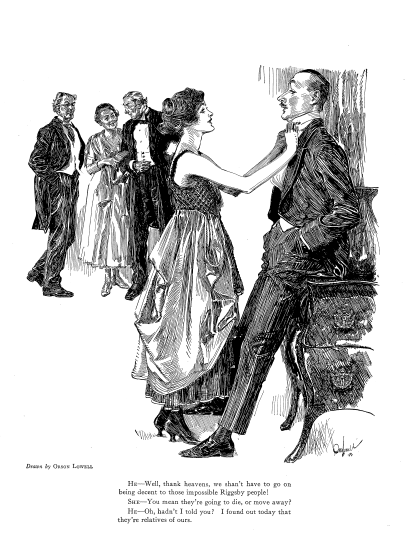
He—Well, thank heavens, we shan’t have to go on being decent to those impossible Riggsby people!
She—You mean they’re going to die, or move away?
He—Oh, hadn’t I told you? I found out today that they’re relatives of ours.

The punch line’s only so-so, but I love “You mean they’re going to die, or move away?”

Judge magazine, March 16, 1918

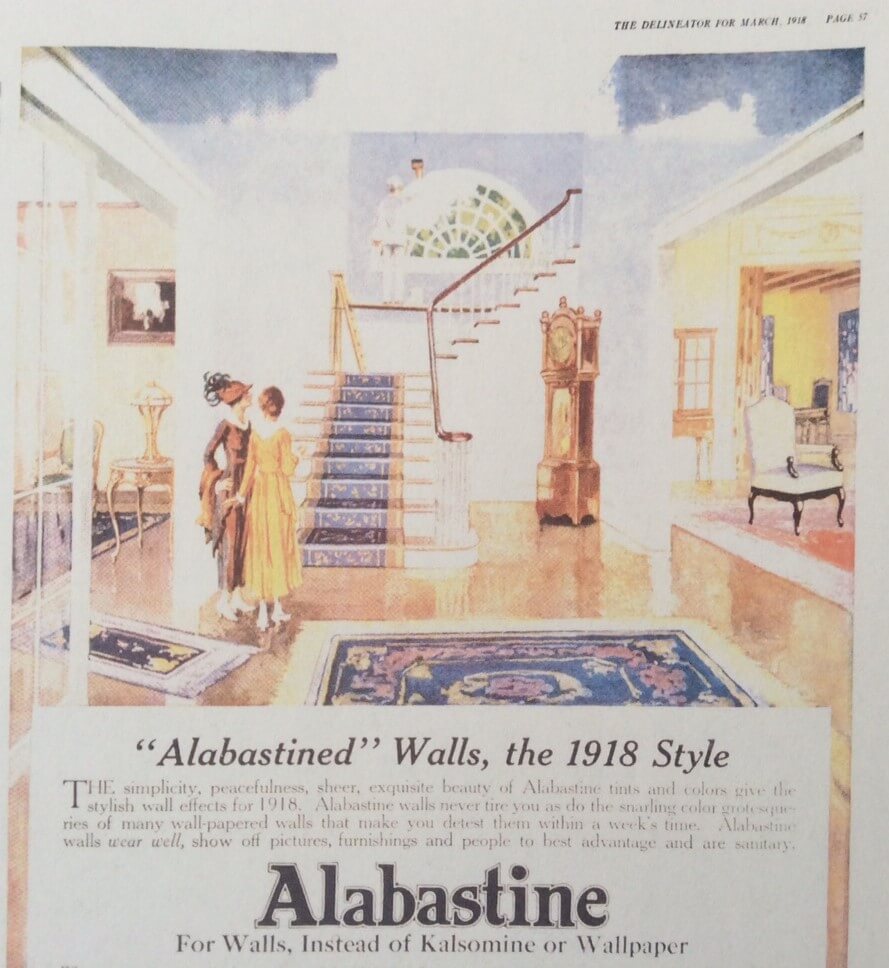
I know, right? The snarling color grotesqueries of wallpaper are the worst.

The Delineator, March 1918

Um, if your car is so serious that it has its own Latin motto, maybe don’t call it the Locomobile?

Life magazine, March 28, 1918

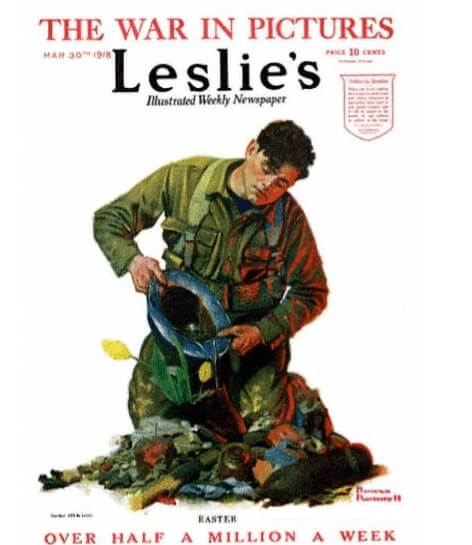
And finally, a soldier uses his helmet to water tulips on this Norman Rockwell cover, titled “Easter.”

A forgotten early 20th-century Betty Friedan

Quick: where do these sentences come from?

[The housewife] masters in a year or two years at most details which must nevertheless be repeated, although all the freshness and interest have gone out of them, as long as life lasts.

In a vague and unanalyzed way she feels the inexorable effects of child training and housekeeping upon her own mental life and powers.

She has a sense of injury that she has fallen upon a career so uninteresting and uncongenial.

Betty Friedan, right? The Feminine Mystique. The problem that has no name.

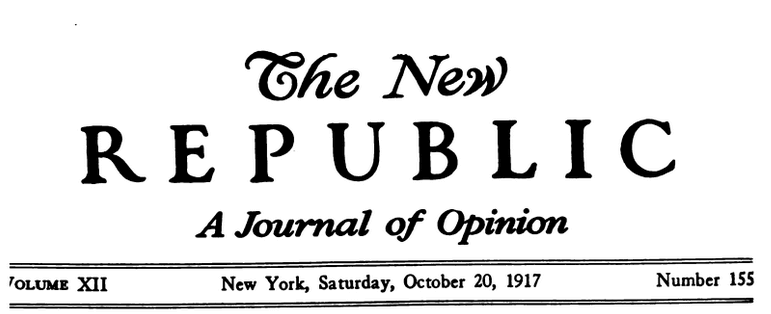
No, not right—as you’ve probably guessed, since this blog isn’t called “My Year in 1963.” (The post title may have been a tip-off as well.) They come from an October 20, 1917,* article in the New Republic called “The Price of a Home,” by Julia Clark Hallam.

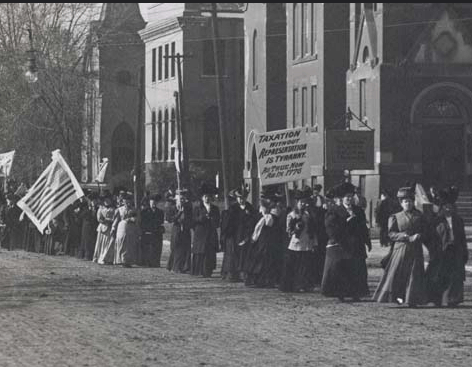
Parade staged by the Iowa Woman’s Suffrage Association. Boone, Iowa. October 29, 1908. Photographer: Moxley. (State Historical Society of Iowa, Des Moines)

There were feminists back then, of course. For the most part, though, they were fighting for the vote, not talking about bored housewives. In fact, in order to win men over to the suffragist cause, they were deliberately not rocking the gender equality boat.

Julia Clark Hallam was a suffragist, too—she headed the Iowa Equal Suffrage Society from 1909 to 1910. But she wasn’t having any of this “one battle at a time” business.

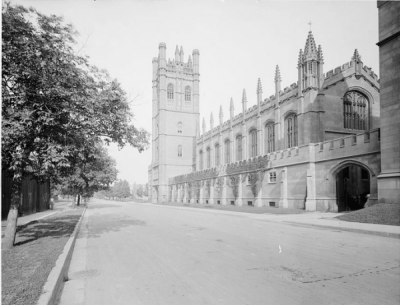
Hutchison Hall, University of Chicago, ca. 1910-1920 (Library of Congress)

“The Price of a Home” starts with the tale of a woman (clearly Hallam herself) who applies to graduate school twenty-five years after graduating from college with honors. In the years in between, she has raised four children. The school’s dean agrees to admit her, but he predicts that she won’t succeed. She asks why.

“Because,” replied the dean, after taking a moment or two for reflection, “our experience has compelled us to realize that the occupation of home making, important as it is, does not prepare the mind for its higher activities and attainment.”

Hallam sees the dean’s point.

Lack of intellectual content in experience and constant repetition arrest mental development as certainly as newness, freshness and interestingness make for mental growth.

The way she describes this problem leaves little doubt that she’s experienced it first-hand.

There are days when [the housewife] feels she must throw all the dishes on the scrap heap rather than wash them, and as for breaking an egg, which has to be done so endlessly in cooking, she clenches her teeth lest she jam the whole sack of eggs into the garbage pail.

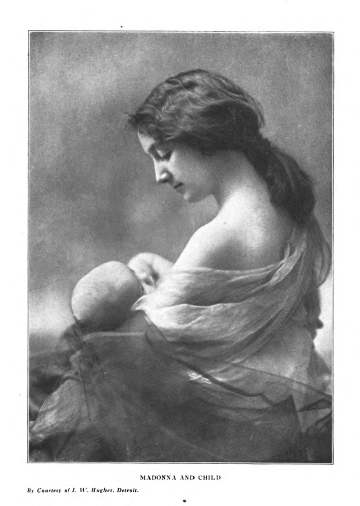
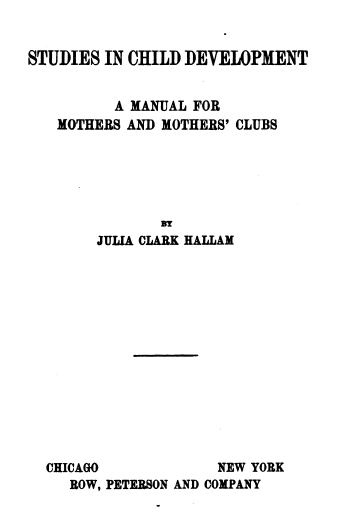
Frontispiece, Studies in Child Development, Julia Clark Hallam

In a follow-up article the next week, Hallam takes on the argument that, while keeping house might be tedious, raising children is intellectually stimulating.

Doubtless there are elements of truth in this argument, yet I wonder if those who press it realize how often a child has to be bathed? Let us admit that the first ministrations of this kind bring the thrill of the mentally fresh and the emotionally pleasurable. But after the act has been repeated several hundred times the thrill refuses to report for duty.

Again sounding very much like Friedan, she says that technology is not the solution.

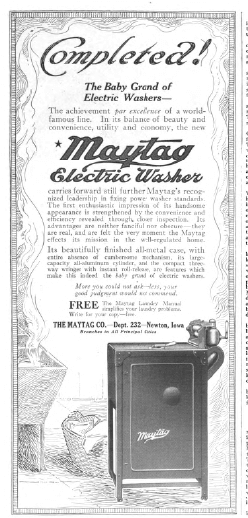
I am inclined to believe that mechanical inventions are proving thought-killers rather than thought-producers, and that the time they save is wasted unless it can be given to activities which have a real mental content.

Good Housekeeping, January 1918

It’s too late for the present generation of homemakers, Hallam says. But she’s optimistic about the future.

My most earnest hope and conviction is that through the influence of continued intellectual rebellion on their parts against the present conditions, we shall blaze a trail which for our daughters and granddaughters will lead out to a reconstructed society where all individuals shall have equal share in grasp of mind and freedom of spirit.

In the debate sparked by the article, Hallam comes in for a fair amount of condescension. But not all of her critics are men. Elizabeth Childe of Washington, D.C., says that, after searching through “a mind darkened by twenty years of homemaking,” she has found the flaw in Hallam’s argument: her failure to distinguish between housework and the rewarding—to Childe, at least—occupation of homemaking. Friedan, too, was criticized for saying that no one could possibly enjoy being a housewife. (Another criticism of Friedan, that of class bias, could also be applied to Hallam. Her husband’s work—he was a lawyer—might seem enviable, but would she want to trade places with a male assembly line worker?)

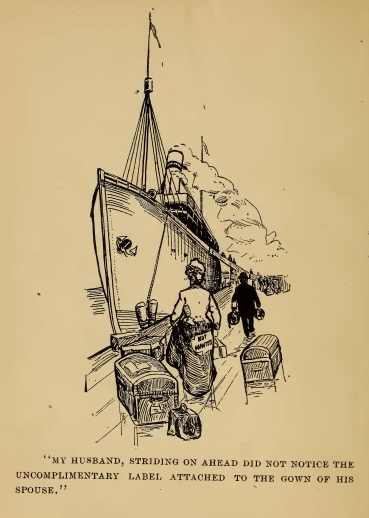
Frontispiece, The Story of a European Tour, Julia Clark Hallam

Hallam did earn her degree, an M.A. from the University of Chicago, in 1910. In addition to her work as a suffragist, she taught high school in the United States and the Philippines. She wrote several books as well. The Story of a European Tour (1900), is, sad to say, even more boring than it sounds.** In Studies in Child Development (1913), we learn about “The Boy’s Greatest Danger,” which is, you guessed it, “onanism, or self-pollution.” You can read what she has to say about this life-threatening problem, and how to solve it, here.*** But most of her advice is more sensible, and she was described as a pioneering advocate for sex education (or social hygiene, as it was then known).

Hallam died in 1927, at the age of 67. Her occupation, as listed on her death certificate: housewife.

*Granted, this blog isn’t called “My Year in 1917” either. But the debate over Hallam’s article continued for months in the letters to the editor, which is how I came across her.

**The height of the action, judging from my quick skim: she and her husband think they’ve lost their train tickets, find them at the last minute, are separated on the platform in the confusion, and are brought together by a nice young man from Princeton.

***If you’re pressed for time, here’s a sample: “Everyone has seen an electric battery which has spent its force. It is a dead thing. So the body, with its splendid life forces wasted—not to speak of the moral and spiritual and degradation that follows. It is one of the great tragedies of life.”

Wednesday Miscellany: Pacifist nightmares, a sad funny page, and a widowed dancer

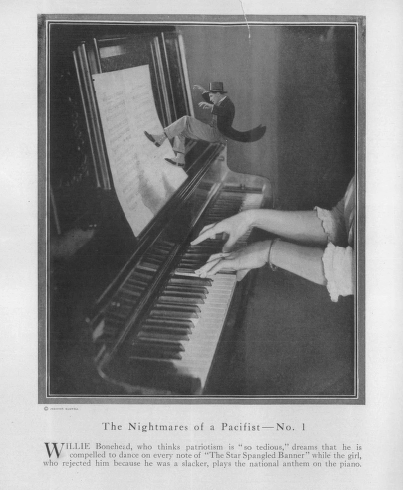
Judge magazine has been running a series called “The Nightmares of a Pacifist,” featuring conscientious objector Willie Bonehead, whose guilty subconscious places him in a series of horrific scenarios. First he is “compelled to dance on every note of the ‘Star Spangled Banner,’ while the girl, who rejected him because he was a slacker, plays the national anthem on the piano.”

Judge magazine, March 2, 1918

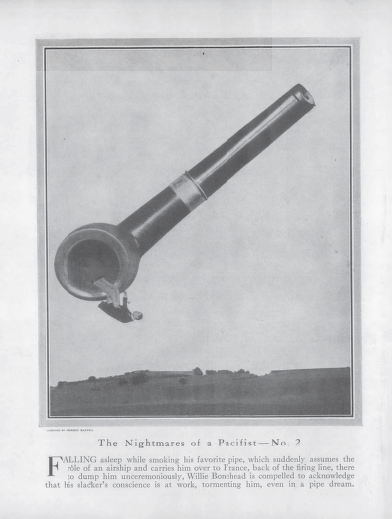
Next he falls asleep while smoking his pipe, which transports him to the front line.

Judge magazine, March 9, 1918

The political message is pretty heavy-handed, but I like the proto-surrealist art.

Turkish cigarettes join the fight against…the Turks.*

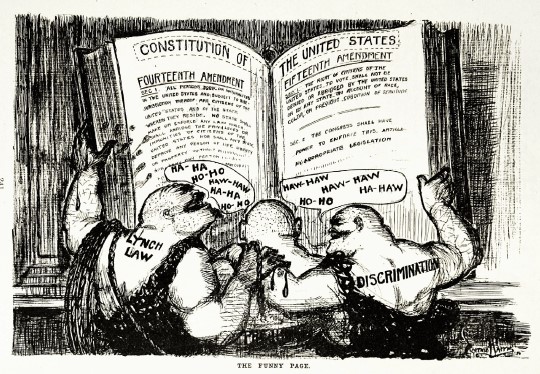
The table of contents of the March 1918 issue of The Crisis, the NAACP magazine edited by W.E.B. Du Bois, has a listing for “The Funny Page.” The Crisis isn’t exactly a barrel of laughs, so I wondered what this could be. Here’s the answer:

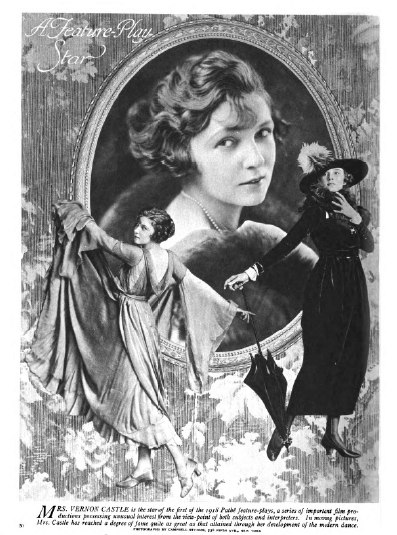
I can’t stop looking at this picture of dancer Irene Castle, which appeared in Cosmopolitan in  March 1918. Just as the issue was hitting the newsstands, her husband and dancing partner Vernon died in an aviation training accident in Texas. He had completed 300 missions as a Royal Air Corps pilot. The Castles were the subject of a 1939 Astaire-Rogers biopic.

*Yes, yes, I know, the United States was not actually at war with the Ottoman Empire.

Women spies of 1918

I was going to write about women artists in honor of Women’s History Month, but then I opened the March 19, 1918, New York Times and saw that women were hatching international conspiracies all over Manhattan. Change of plan!

First, this:

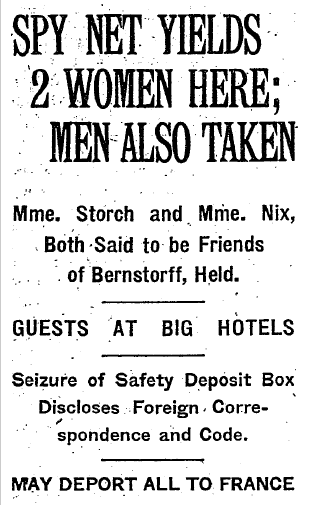
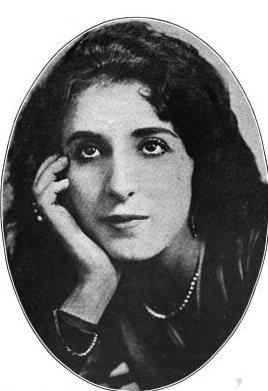
Two men and two women were arrested, the Times reports, for alleged participation in an international German spy ring. The principal suspect is Despina Davidovitch Storch, the 23-year-old Turkish ex-wife of a French army officer. The Times said of Storch that

she is in appearance a strikingly handsome woman, and in the year that she made her home at the Waldorf-Astoria numbered among her friends many well-known persons, some of whom it was intimated yesterday are not at all anxious now to appear to have been among her admirers.

Despina Storch, 1917 (Underwood & Underwood, N.V.)

Mme. Storch was arrested in Key West with a young Frenchman, the Baron Henri de Beville, as the two were preparing to flee to Cuba. The Baron’s father, according to the apparently sympathetic Times, was “broken hearted as a result of his son’s arrest,” and felt that his son was “a victim of the ‘charms’ of the Turkish woman.”

(This account of masculine helplessness comes from a paper that, remember, wasn’t particularly sympathetic to women getting the vote.)

The pair had been living a peripatetic life. They were taken into custody in Madrid in 1915 as suspected enemy agents, sailed to Cuba after their release, and went on to the United States. They had also lived in Paris and Lisbon, where they amassed bills of $1000 a month. Their equally lavish New York lifestyle attracted the attention of the American authorities, who also found a safe deposit box in Mme. Storch’s name containing “a mass of foreign correspondence and a code.”

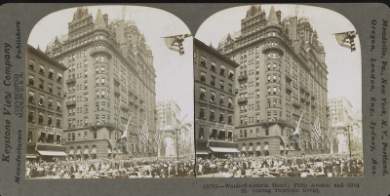
Waldorf-Astoria, 1917 (Library of Congress)

Their alleged co-conspirators were picked up in New York. Mrs. Elizabeth Charlotte Nix, who, according to the Times, “is about 40 years of age, but looks ten years younger,” had received a $3000 payment from the German ambassador before he left the country when war was declared, but she denied that it was a spy payment. The principal crime of “Count” Robert de Clairmont, as far as I can tell, was his dubious claim to his title.

The Justice Department official who announced the arrests, Charles F. De Woody,* recommended that the four suspects be deported to France. The problem with trying them in the United States was that—oops!—the espionage law only applied to men. President Wilson had mentioned this problem in his State of the Union address, and Congress was taking action, but not in time to go after Mme. Stroch and Mrs. Nix.

Meanwhile, down in Greenwich Village, a very different sort of (alleged) German-sponsored conspiracy was uncovered.

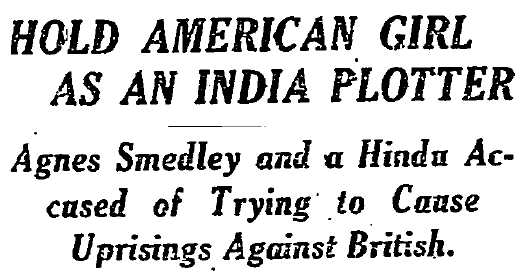
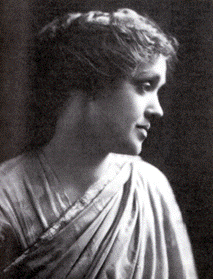
Agnes Smedley, the twenty-six-year-old “girl,” was arrested with Sailendra Nath Ghose, a “highly educated Hindu” who was already under indictment in San Francisco, for fomenting rebellion against British rule in India. (Uncharacteristically, the Times makes no mention of Smedley’s level of attractiveness.) Their activities were allegedly part of a “worldwide German-directed plot to cause trouble in India” and thereby weaken British war efforts. They sought assistance from several Latin American countries (Ghose lived for a time in Mexico, under the implausible pseudonym of Sanchez) and from Leon Trotsky.

Agnes Smedley

“First women arrested in New York for enemy activities” might not be your idea of an inspiring Women’s History Month first. Well, then, there’s Annette Abbott Adams, the San Francisco-based Assistant U.S. District Attorney who spoke to the Times about the Ghose indictment. She would go on to be the first woman Assistant Attorney General and later a high-ranking California judge.

Annette Abbott Adams, 1914

The indictment against Smedley was eventually dropped. She spent many years in China as a sympathetic chronicler of the Communist Party, and wrote a well-regarded autobiographical 1929 novel, Daughter of the Earth. She counted a Soviet spymaster among her lovers. She died in England at the age of 58, and is buried in Beijing.

As for Despina Storch…stay tuned! (UPDATE: Find out what happened to her here.)

*Even the bureaucrats in this story have picturesque names.

Ulysses is 100!

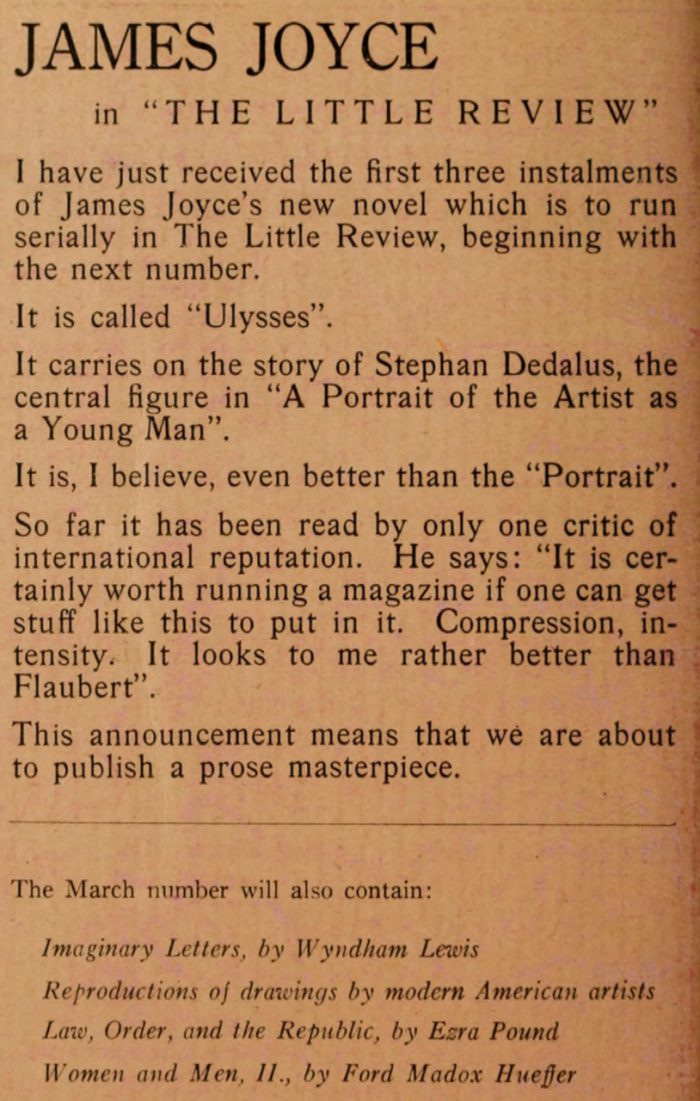
The Little Review, March 1918

Happy 100th anniversary, Ulysses! This week, more or less, marks the centennial of the first publication of its opening chapter in the American journal The Little Review.

The reason for the “more or less” is that The Little Review wasn’t the world’s most prompt publication. The February issue, according to an announcement in the January issue, was published on February 10. Ezra Pound, who was the magazine’s foreign editor, wrote to Joyce on March 29 that the March issue was in print and thirty copies had reached him in London, so mid-month seems a reasonable estimate. (If anyone has a more exact publication date, please let me know!)

Not hedging any bets, the Little Review announced in its January issue, and again in February, that “we are about to publish a prose masterpiece.”

Little Review, February 1918

The Egoist also announced the upcoming serialization, but with British reserve rather than American braggadocio.

But The Egoist had to back out because its printer refused to print the issue.

Egoist, March 1918

So the Little Review had to go it alone.

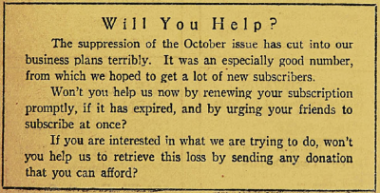
The magazine’s editors knew they were taking a risk. As I recently noted, the October 1917 issue had been suppressed after the Postmaster General declared Wyndham Lewis’s story “Cantleman’s Spring-Mate” obscene*—a disappointing and expensive blow.

Little Review, December 1918

They knew that publishing Ulysses could get them into even more trouble. But they went ahead anyway.

Who were these people? I wondered.

Ezra Pound, 1913 (Alvin Langdon Coburn)

I knew who Ezra Pound was, of course. He was everywhere in 1918, working himself into a state of exhaustion as the foreign editor of the Little Review and Poetry magazine, an editor at the Egoist, and a contributor to New Age, another modernist journal. He wrote prolifically—sometimes at the expense of coherence**—for these and other publications, and did translation as well. And, oh right, he was a poet. It’s Pound who is best remembered as the creative mind behind The Little Review.

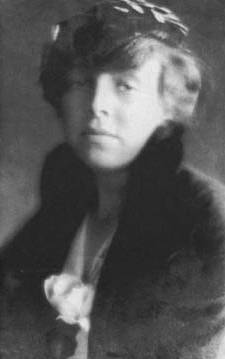
But it was the magazine’s editor, Margaret Anderson, who had the most at stake. She would be responsible for any criminal charges regarding its content while Pound was safe in London.

Margaret Anderson

Like a surprisingly large number of people I’ve come across in my 1918 reading, Anderson was from Indiana***.  She grew up in various towns, including Columbus (Indiana, not Ohio), where I lived for a few years as a child, and which is way less boring now than it was in Anderson’s time. The rebellious daughter of wealthy parents, she dropped out of the genteel women’s college where she was being groomed for life as a society matron and moved to Chicago just as the Chicago literary renaissance was getting underway. She worked as a book critic for a Chicago newspaper and literary editor at a religious publication before joining the staff of Dial magazine, where she learned the ropes of magazine publishing.

In 1914, at the age of twenty-seven, Anderson founded The Little Review with financial support from Breeder’s Gazette editor DeWitt Wing, whom she met at a party. (Everyone who wrote about Anderson mentioned her physical attractiveness, which might have played a role in Witt’s impetuous decision.)  Money was always tight, though. Accounts of Anderson’s life make much of a six-month period that she and her colleagues spent living in a tent on Lake Michigan after she was forced out of her apartment—although most don’t mention the wooden floors, or the servants.

Anderson’s partner at the magazine, and also in life, was Jane Heap, a former lover of Djuna Barnes. They moved briefly to San Francisco and then relocated to Greenwich Village in 1917.  Pound joined the magazine that year. Its table of contents during that period is a Who’s Who of modernism.

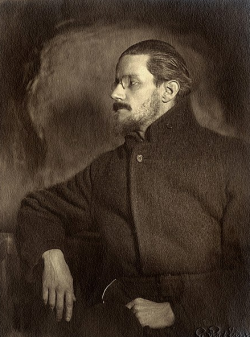
James Joyce, ca. 1918 (Cornell Joyce collection)

Reading the chapter in the Little Review was my own first encounter with Ulysses, and it wasn’t as difficult as I’d been led to believe.**** I had read A Portrait of the Artist of the Young Man, and its main character, Stephen Dedalus, features in the opening section. Stephen and Buck Mulligan, his roommate (towermate, actually—they live in a former military fort), are bickering as they get ready for work. It’s not exactly Bab: A Sub-Deb, but it’s not any more difficult than some of the mannered, faux-archaic novels of the time.

Obscenity-wise, it’s pretty tame stuff, unless the sexual references went over my head, which is quite possible. The most risqué passages I could find were this description of a milk seller:

He watched her pour into the measure and thence into the jug rich white milk, not hers. Old shrunken paps.

and this song sung by Buck Mulligan:

—For old Mary Ann
She doesn’t care a damn
But, hising up her petticoats……

 Way tamer than “Cantleman’s Spring-Mate.” The Postmaster General apparently thought so too, and the March issue made it through the mail. The Little Review was safe—for now.

James Joyce Tower and Museum in Sandycove, Dublin, Ireland (YvonneM)

*A recap, in case you missed it: Cantleman, going off to war, sees animals rutting, gets into the spirit, does same with local lass.

**If you can make any sense of his overview of popular magazines in the January 3, 1918 issue of New Age—Part XVIII in a series—you’re a better 1918 reader than I am.

***Other influential Hoosiers: novelist Booth Tarkington, food safety pioneer Harvey Wiley, and folksy poet James Whitcomb Riley, who died in 1916 but was still much written about in the stodgier magazines. Janet Flanner was working as a film critic in Indianapolis but in a few years would step onto the national stage as the Paris correspondent of the New Yorker.

****Of course, I realize that this is like saying after the first mile that running a marathon is a piece of cake.

Wednesday Miscellany: Paper doll servants, a puzzling puzzle, and a bad ad

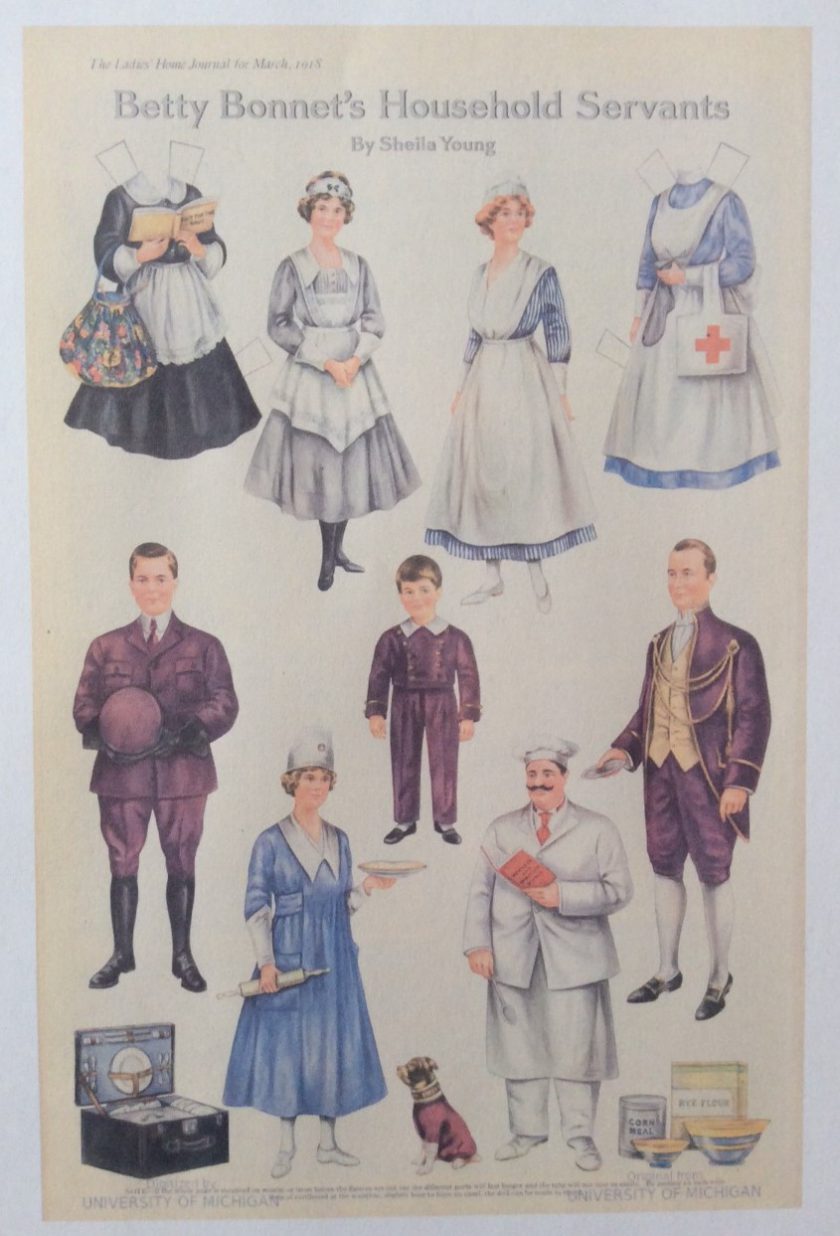
Look, kids! Paper doll servants to order around!

Paper doll servants, Ladies' Home Journal, 1918.

Ladies’ Home Journal, March 1918

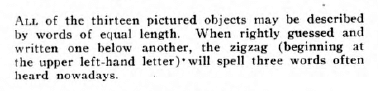
Can someone help me out with this Illustrated Zigzag? STICT RICK SUES can’t possibly be right.

Illustration for Illustrated Zigzag puzzle, St. Nicholas magazine, 1918.

St. Nicholas magazine, March 1918

I wonder how many people had to sign off on this before it was green-lighted.

Fisk Tires ad with dark-skinned men carrying things on their heads next to palm trees, 1918.

Harper’s Bazar, March 1918

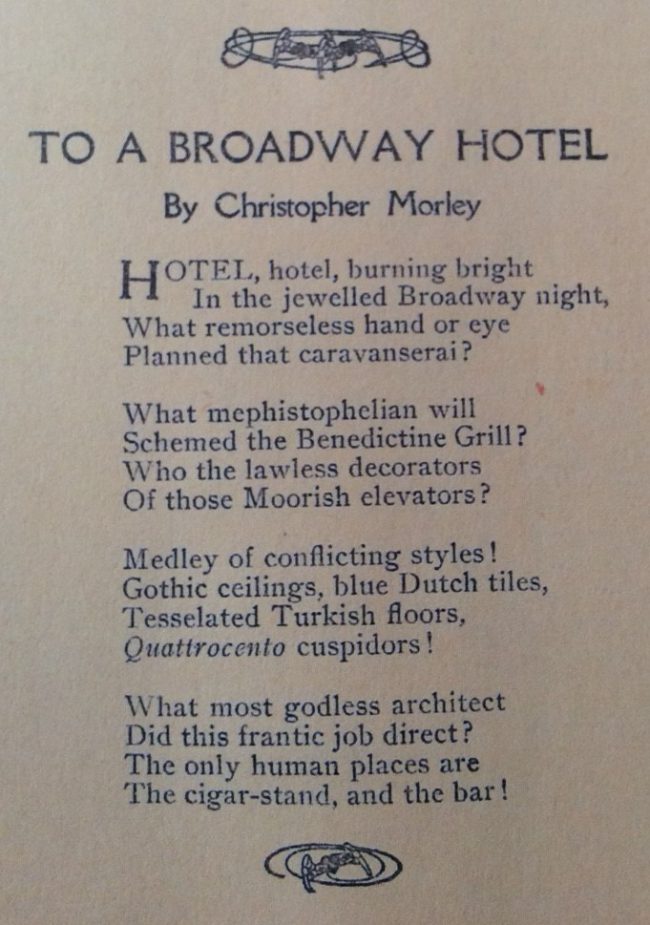
Garish New York hotels are apparently not just a contemporary phenomenon.

Christopher Morley poem, To a Broadway Hotel, Smart Set magazine, 1918.

Smart Set, March 1918

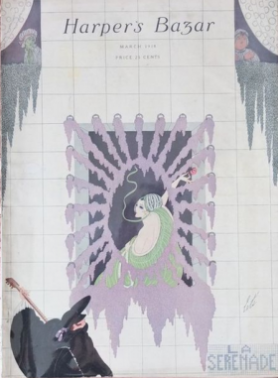
And finally, an Erté serenade.

Harper's Bazar cover by Erté showing masked man serenading a woman, March 1918.

Harper’s Bazar, March 1918

Divorce with a happy ending: a daring 1918 essay

During Women’s History Month, I’ve been thinking a lot about the forgotten women of 1918—not the ones we celebrate for changing the world, but the ones who changed the world just by the way they lived their lives.

Sunset magazine cover, February 19, woman holding a basket of oranges.

Sunset, February 1918

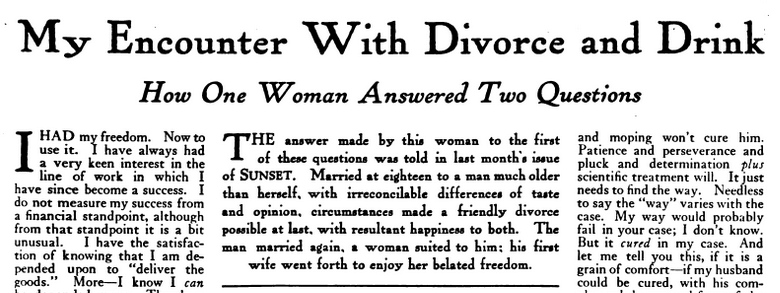
One of my favorite women of 1918 didn’t even leave her name behind. All she left is a two-part unsigned article in the January and February 1918 issues of Sunset magazine called “My Encounter with Divorce and Drink.”

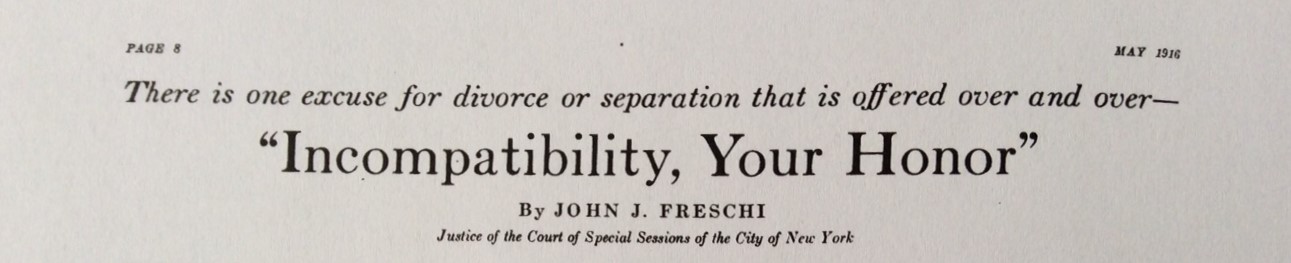
Divorce was on the rise, but the idea of ending a marriage because of incompatibility was controversial. A family court judge, writing in Woman’s Home Companion in 1916, told of a “hysterical young wife” who came to the court asking for a divorce. Her husband had been drinking and staying out all night and had threatened to strike her. It turned out, though, that once she stopped her nagging he became a model spouse. The judge wrote that “if young wives, beginning to fret about incompatibility, were to take stock of the things they do to irritate their husbands…then about three fourths of the divorce courts would go out of business.”

Sunset magazine article headline, Incompatibility, Your Honor, May 1916.

Sunset, May 1916

Our Sunset narrator has a different take.

I married young. And I married a good man (a very good man) fifteen years older than myself. And oh! how proud I was to have attracted a man of the assured position, both business and social, which my husband possessed.

Differences quickly arose, though.

He was for that old, established order of “corruption and contentment.” And I was a radical! Oh! those were a few of the differences. They were the surface differences. The others were deeper.

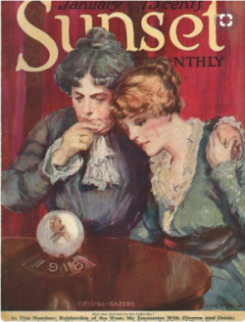
Sunset magazine cover, January 1918, two women looking worriedly into chrystal ball that says 1918.

Sunset, January 1918

The problem, she says, was with the “old marriage platform” itself.

My husband’s mentality did not—could not—dominate mine. Mind you, I do not say that mine was the superior mentality. But then, neither was his. And, because he was a man and I was only a woman, he could not recognize my individual right to be a personal entity, entirely disassociated from him on the mental plane.

It wasn’t a case of right or wrong, she says; they were just wrong for each other.

He should have married a woman who would sing in the choir, go to Wednesday evening prayer meetings, belong to the Ladies’ Aid and Missionary Society, and, as a violent dissipation, play euchre (for a prize!!) one evening every two weeks with a lot of others of the same ilk.

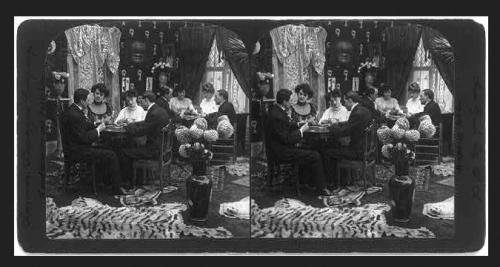
Photograph of people playing cards in a parlor in about 1906.

Playing Cards at the Parlor Table, ca. 1906 (Library of Congress)

She suffered through many of these euchre games herself.

They didn’t even play euchre intelligently, these women. But the men played it with an abandoned recklessness and a superb dash that clearly demonstrated the latent strain of “gay dog” that lay sleeping in each breast.

They had two children, but neither survived. If they had, she says, she would have stayed in the marriage, no matter how much it stifled her. She raged silently when her neighbors spoke of “God’s will.”

God’s will! To torture two innocent, beautiful, trusting little children! I would have them in no heaven presided over by such a Deity!

Then her husband met another woman.

Just the right woman for my husband. I knew it before he did. I watched his need for her and her love for him grow. Before they knew it—the blessed innocents—I was thanking the Fates for it.

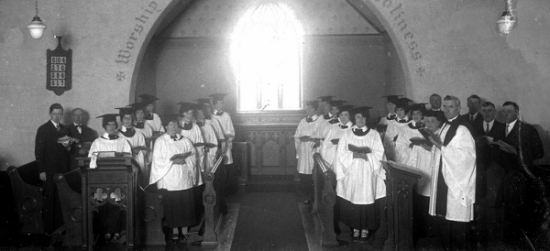
Church choir singing in front of church window, ca. 1918.

Church choir, ca. 1910

She is such a nice little thing; although older than I, still she was always a “little thing” to me. Gay and bright, with a sweet soprano that has been leading the “hallelujas” for many a year now, in another small-town choir.

And so they went their separate ways.

I never so appreciated my husband’s generosity, his patience, his real, strong sweetness of disposition, as when we parted. I was never so genuinely fond of him, so grateful for his forbearance (and he needed lots, to live with me) so clearly aware of his many sterling qualities, nor so happy, as when we said “goodby” and I went quietly away and “deserted” him.

She suspects that her husband finds life a little dull without the “ginger which I furnished in his life.” But she knows that he’s happier now.

Bohemian gathering in Greenwich village, 1910s.

Bohemian gathering, Greenwich Village, 1910s (New York Historical Society)

And isn’t it funny? They both admire me tremendously. They come, once in a while to visit me. They meet my friends. And get dizzy drunk with the rare, vivified atmosphere of brains which my friends generate. And they are as proud as Punch of me because I enjoy that sort of thing. They think I am wonderfully “advanced.”

 After they make me a little visit, they go home again, quite satiated, to peace, and repose.

 As she concludes her story, she says,

Divorce, to you reading this, may be all wrong. Surely, then, it is wrong for you. For me it happened to be right.

After the divorce, she threw herself into her career for a few years, and then she met another man. He was a drinker, and the second installment tells of how, with her help, he reformed.

Sunset magazine headline and story text, My Encounter with Divorce and Drink, February 1918.

Sunset, February 1918

But, to me, the more compelling part of her story, and the part that I’m glad that readers of 1918 had a chance to read, is about the marriage that didn’t survive—not because of abuse, or liquor, or infidelity, but because two nice people turned out to be wrong for each other.

And about how, having left the marriage, they each found a happy ending.

Chocolate is healthy, how to get fat, and other advice from a nutrition pioneer

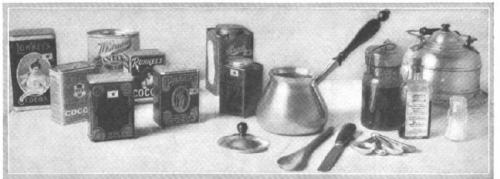
Drawing of kitchen items, Good Housekeeping, January 1918.

Good Housekeeping, January 1918

Good news, chocolate lovers! Good Housekeeping magazine has given chocolate a big thumbs-up. Writing in the January 1918 issue, Dr. Harvey Wiley says that it

contains considerable food-value. A small bulk furnishes a large amount of nutrition. It has in its composition more protein than has wheat flour, and about twenty times as much fatty material, and a considerable proportion of starch as well. It is, therefore, extremely nourishing and is usually easily digested.

Dr. Wiley provides a number of recipes, including hot cocoa (a harmless way to disguise milk if your child won’t drink it), chocolate pudding, and an unappetizing-sounding chocolate corn-starch mold. He compares chocolate recipes, like cake, with their non-chocolate equivalents, and shows how, in each case, the chocolate version provides more nourishment.

Nourishment being measured in, um, calories.

Header for Dr. Wiley's Question-Box, Good Housekeeping, 1918.

Good Housekeeping, March 1918

Most of Dr. Wiley’s advice is more sensible than this. In the March edition of his monthly Good Housekeeping feature “Dr. Wiley’s Question-Box,” C. A. B. of New York asks:

A friend of mine is most anxious to join a certain branch of the U.S. service, but due to his height (6 ft. 2 in.) finds it will be necessary to take on 25 pounds additional weight before he can qualify. Can you give him advice as to how he can go about getting up to the required number of pounds?

 Dr. Wiley replies:

If your tall friend has a normal digestion he can increase his weight by over-eating and under-exercising. If he will go into a state of hibernation, so to speak, sleep fourteen hours a day, and lie perfectly still the rest of the time, eat large quantities of starch, sugar, ice-cream, cake, and other fattening substances, he will probably be able to gain twenty-five pounds in weight. When he does this, however, he will be far less efficient physically than he was before, and less suited to serve his country.

 Dr. Wiley tells M. MacE. of Ohio that, whatever the Food Administration might say, corn syrup is not in fact “the most healthful and easily assimilated of all sweets.” He tells A.L.S. of Kansas, a flour miller, that white flour is “the base of nearly all the bad nutrition in the United States.”

I was curious to find out more about Dr. Wiley. He turned out to be a fascinating character and an important figure in U.S. history.
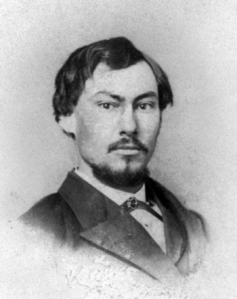
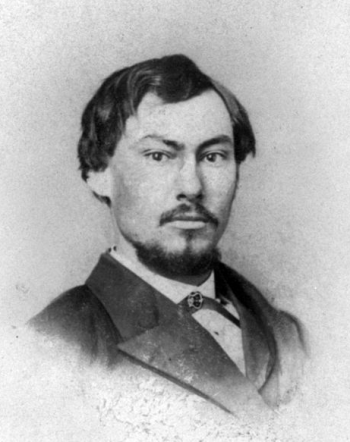
Portrait photograph of FDA founder Harvey Wiley, 1867.

Harvey Wiley, 1867 (Library of Congress)

Dr. Wiley was born in a log cabin in Indiana in 1844. He attended medical school after serving in the Civil War and then taught at Butler College and Purdue University. He was highly regarded as a teacher, but his unusual behavior raised eyebrows. According to his autobiography, a member of Purdue’s board of trustees stated that:

we are deeply grieved at his conduct. He has put on a uniform and played baseball with the boys, much to the discredit of the dignity of a professor. But the most grave offense of all has lately come to our attention. Professor Wiley has bought a bicycle. Imagine my feelings and those of other members of the board on seeing one of our professors dressed up like a monkey and astride a cartwheel riding along our streets.

 After being passed over for Purdue’s presidency, apparently for being “too young and too jovial,” he was appointed chief chemist of the U.S. Department of Agriculture and moved to Washington, D.C., where he was the second person to own an automobile (and the first to have a serious accident).
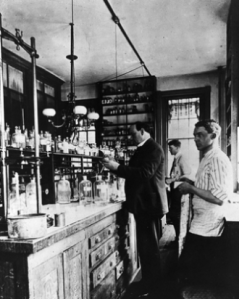
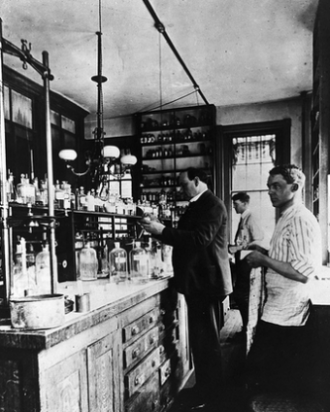
Dr. Harvey Wiley in his USDA lab.

Dr. Wiley in his USDA lab (FDA)

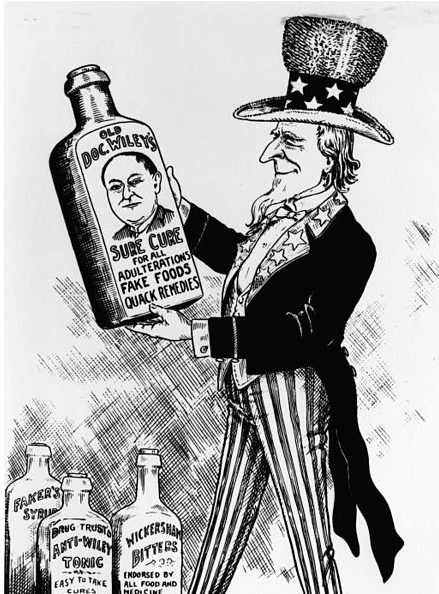
Dr. Wiley skyrocketed to national fame after assembling a group of healthy young civil servants and testing various food additives on them, steadily increasing the amounts until they became ill. The group became known as the “Poison Squad.” (You can read about it in this 2013 article in Esquire.) He was given a more dignified nickname—“Father of the Pure Food and Drugs Act”—after passage of the landmark law in 1906, and was appointed the first commissioner of the Food and Drug Administration. His enforcement of the act won him powerful enemies, though, and he resigned in frustration in 1911. According to the FDA, a newspaper headline read, “WOMEN WEEP AS WATCHDOG OF THE KITCHEN QUITS AFTER 29 YEARS.” 
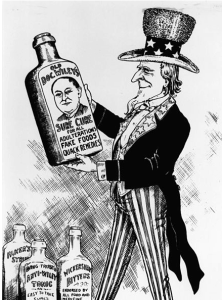
Cartoon of Uncle Sam holding bottle saying Old Doc Wiley's Sure Cure.

Cartoon, date and source unknown (FDA)

Dr. Wiley spent the rest of his career at Good Housekeeping. There was some irony in this, since, according to Esquire, he was an outspoken misogynist, given to calling women “savages” and questioning their brain capacity.

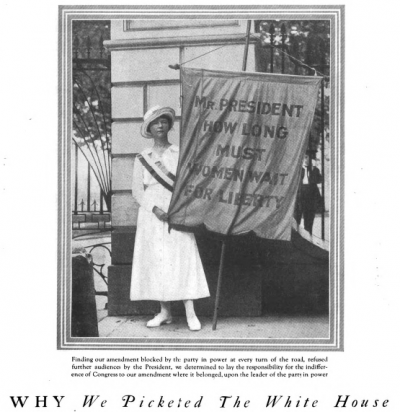
He came around in the end, though. In 1911, the longtime bachelor married Anna Kelton, a prominent suffragist who was half his age. They had two sons. Anna Kelton Wiley contributed an article to the February 1918 issue of Good Housekeeping called “Why We Picketed the White House.” The magazine ran a disclaimer next to the article saying that, while it does not believe in picketing the White House,

when the White House pickets secured so distinguished a recruit as the wife of Dr. Harvey W. Wiley, we offered to open our pages to a statement of the reasons for the picketing.
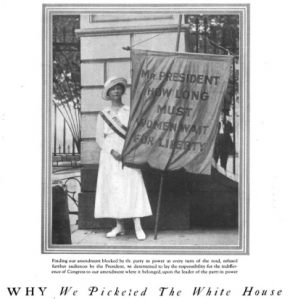
Suffragist holding protest sign, Good Housekeeping, 1918.

Good Housekeeping, February 1918

 Anna Kelton Wiley writes in the article that it was only after attempts to gain the vote through less confrontational methods failed that she and other suffragists*

determined to organize at the White House gates, a silent, daily reminder of the insistence of our claims…We determined not to be put aside like children…Not to have been willing to endure the gloom of prison would have made moral slackers of all. We should have stood self-convicted cowards.

 In this effort, she writes, she was

upheld by a fearless husband, who said, “I have fought all my life for a principle. If it is your conscience to go, I will not stand in your way.”

Like most pioneers of the past, Dr. Wiley did some things that seem questionable now. Systematically poisoning a group of healthy young men wouldn’t have won FDA approval today. But it’s thanks in part to him that there is an FDA. And it’s thanks in part to Anna Kelton Wiley that women won the right to vote. Now, that’s a Washington power couple we can celebrate.

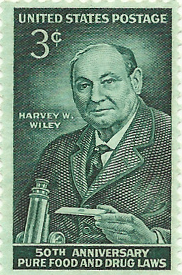
Commemorative stamp of FDA founder Harvey Wiley, 1956.

Commemorative stamp, 1956 (U.S. Post Office)

Okay, time for some nice healthy chocolate!

UPDATE 10/24/2018: There’s a new biography of Dr. Wiley called The Poison Squad, by journalist Deborah Blum. Now (or, rather, after 2018 ends) I can find answers to all my questions about him, like did he really have the first serious automobile accident in Washington, D.C. history?

*But not all—the magazine ran an article the next month by Carrie Chapman Catt, President of the National American Woman Suffrage Association, called “Why We Did Not Picket the White House.”

A Caruso fan on the factory floor

Remember Elizabeth Hasanovitz, the Hebrew school teacher’s daughter who fled Russia for a better life in New York? (If not, you can read about her here.) She’s back, in the second installment of her memoir in the February 1918 Atlantic.

Banner, The Atlantic Monthly, February, 1918.

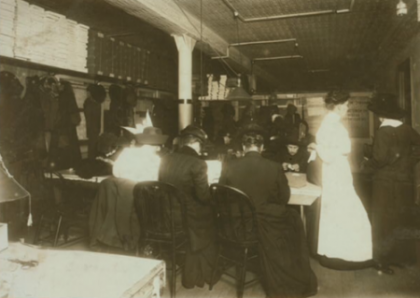
Elizabeth attempted suicide at the end of the last installment, ground down by her life as a seamstress. She recovers quickly and gets a job in a non-union factory, making the princely sum of ten dollars a week.

My cheerfulness returned. Again I went among my friends, entertaining them with song and infecting them with my joyousness. Even in the shop I felt happy.

Women factory workers sitting at table.

She starts saving up to send for her younger brother, and her friend Clara helps out with a fifty-dollar loan. Even the conversation at work has improved.

Very little talk about “fellers,” swell evening pumps, lace petticoats that the six dollar wage-earners were constantly discussing, in the sweater shop. Here we talked about questions of the day, world-happenings, music, art, literature, and trade questions.

Once she pays her debt to Clara, Elizabeth starts thinking about the finer things in life.

I at once went to the Opera House, secured tickets for five dollars at twenty-five cents each, so that I was provided with opera tickets for the next few weeks.

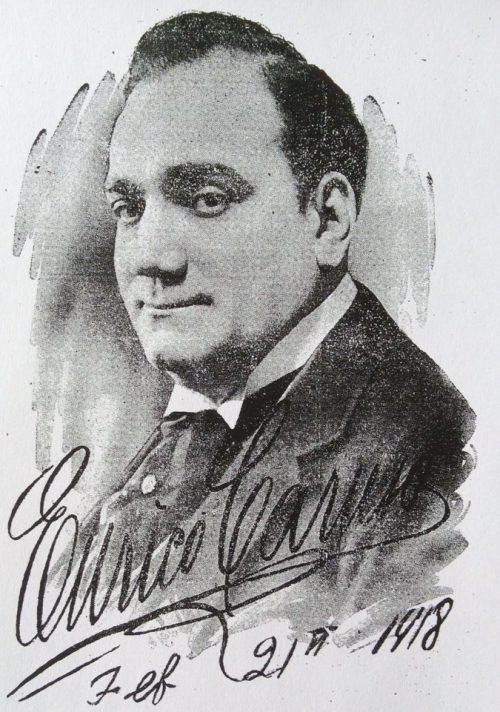
Photograph of Enrico Caruso above autograph and date, Feb 21st 1918.

Enrico Caruso, New York Times, February 24, 1918

She sees Enrico Caruso sing and Anna Pavlova dance. Her tickets are standing room*, and she often goes straight from work.

If it happened to rain, my dress would be soaked through and through, and with wet clothes I would stand through the performance, changing from foot to foot, while there were often plenty of empty seats in the orchestra. Very often I would pay with a cold the next day.

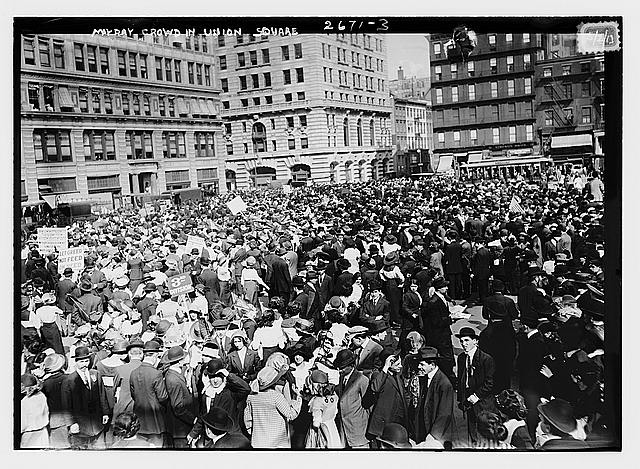
Back at the factory, Elizabeth tries to get her co-workers interested in joining the Dress-and-Waist-Makers’ Union. The good conditions they enjoy, she argues, were won by activists in unionized factories. The other girls say, “You better shut up; if you don’t you will get fired.” She pays a visit to the union, and word gets back to her colleagues and her boss. They warn her that union leaders are nothing but grafters, after the members’ money.
Crowd of workers marching in Union Square, New York, 1913.

May Day march, Union Square, 1913 (Bain News Service, Library of Congress collection)

Elizabeth decides to attend the May Day workers’ march.

The day fell on Thursday**, a bright warm spring day. The many thousands of young girls, in uniforms of white waists with red collars, all in line, were ready to march on. The sun illuminated their pale but happy faces as they walked through the avenues and streets. Looking up at the skyscrapers where they slaved all year, their shiny eyes would gleam with pride and hope, as if they would speak and warn the world, “behold you who keep us in the darkness, no more are we to slave for you!”

 The next day, in high spirits, Elizabeth sets out for work, humming a favorite Russian song.

“Good morning,” said I merrily to the foreman, who happened to be the first to meet me when I entered the shop.***

 “Good morning,” came an angry sound from his nose.

That Saturday, Elizabeth receives her pay–and a dismissal notice.

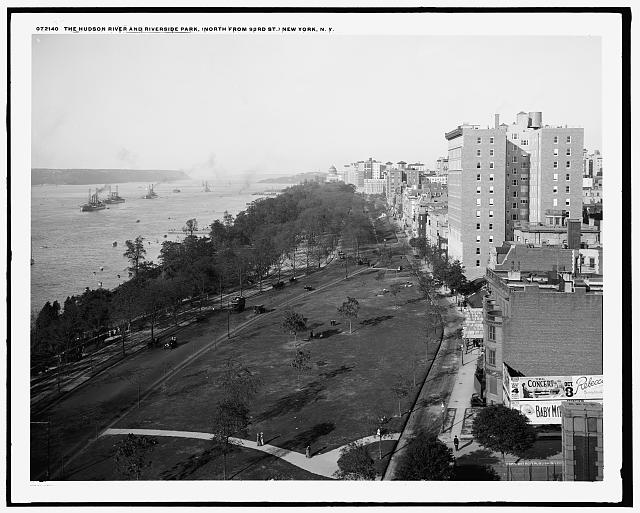
Aeriel view of Riverside Park, New York, ca. 1909.

Riverside Park, New York, ca. 1909 (Detroit Publishing Company, Library of Congress collection)

It’s the slow season, and Elizabeth has no luck finding a new job. She wonders how she will provide for her brother when he arrives. She sits on a bench in Riverside Park, looking out at the Hudson and thinking very Russian thoughts.

Life, life—O Happiness, where is thy sweetness, murmured I, in such mortal anguish for life.

 (To be continued.)

Elizabeth is still a drama queen. And she’s as snooty as ever. When her mother sends her a poem that her sixteen-year-old brother Nathan has written for her, she criticizes his grammar. She says of her friend Clara, who took her in after her suicide attempt and lent her the money for her brother’s passage,

Her spiritual development was on a much smaller scale than mine, and she would easily be inspired by things that did not interest me at all. My temper was a more revolutionary one, and I was more sensitive.

But, amid the flippancy of the fashionable magazines of 1918 and the dullness of the mainstream press, she’s a fresh, genuine voice.

(If you want to read about Elizabeth in her own words, her autobiography is available in several versions at Amazon. The issues of the Atlantic that it was serialized in (January – April 1918) can be accessed at Hathitrust Digital Library here.)

*in a parterre, maybe!

**So it was probably 1913.

***A different translator or editor apparently took over midway through the article, and Elizabeth in inverted sentences begins always to talk.

On W.E.B. Du Bois’ 150th birthday, a look back at his “Jubilee”

The February 1918 issue of the NAACP magazine The Crisis, headlined EDITOR’S JUBILEE NUMBER, starts with this note: “The Editor of the CRISIS will celebrate his fiftieth birthday on the twenty-third of February, 1918. He would be glad on this occasion to have a word from each of his friends.” The editor was W.E.B. Du Bois, born 150 years ago today.

Top of title page of The Crisis, February 1918, Editor's Jubilee Number.

The Crisis, February 1918

The issue includes an autobiographical essay by Du Bois called “The Shadow of Years.” He tells of his ancestry:

a flood of Negro blood, a strain of French, a bit of Dutch, and thank God! No “Anglo-Saxon”

—his childhood in Great Barrington, Massachusetts, playing comfortably with his white friends and largely unaware of the country’s vast racial divide:

I think I probably surprised my hosts more than they me, for I was easily at home and perfectly happy and they looked to me just like ordinary people, while my brown face and frizzled hair must have seemed strange to them

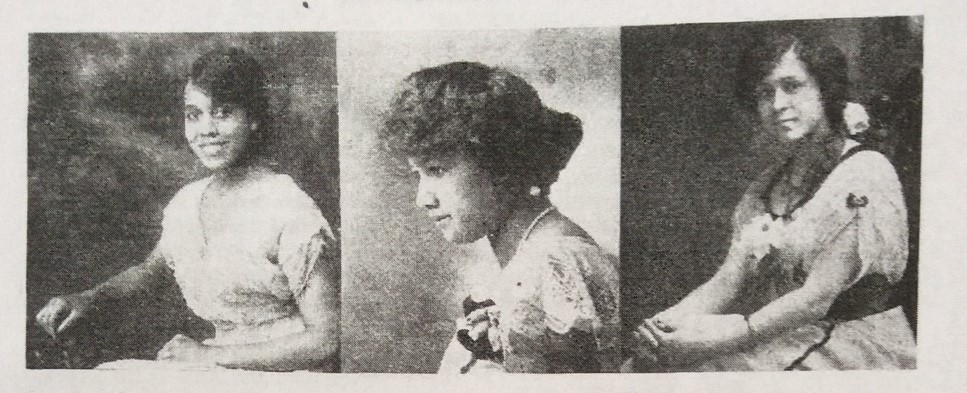
Three photographs of African-American women in The Crisis magazine, 1918.

The Crisis, February 1918

—encountering other African-Americans in large numbers for the first time at Fisk College in Tennessee:

Lo! My people came dancing about me—riotous in color, gay in laughter, full of sympathy, need, and pleading; unbelievably beautiful girls—“colored” girls—sat beside me and actually talked to me while I gazed in tongue-tied silence

—and the “Days of Disillusionment” that fueled his desire to work for the upliftment of his people:

I began to realize how much of what I had called Will and Ability was sheer luck. Suppose my good mother had preferred a steady income from my child labor, rather than bank on the precarious dividend of my higher training?…Suppose Principal Hosmer had been born with no faith in “darkeys,” and instead of giving me Greek and Latin had taught me carpentry and the making of tin pans?

The Souls of Black Folk, title page, second edition, 1903.

Second edition, 1903

If you want to learn more about the human side of this towering (and sometimes intimidating) thinker, you can find the “The Shadow of Years” here. Or you can read “Of the Meaning of Progress,” the essay in Du Bois’ 1903 classic The Souls of Black Folk about his days as a young teacher in a rural Tennessee community. (I’ve been listening to the audiobook, wonderfully narrated by Rodney Gardiner.)

In “The Shadow of Years,” Du Bois presents himself as an old man. “The most disquieting sign of my mounting years is a certain garrulity about myself, quite foreign to my young days,” he begins. He ends the essay as follows:

Last year, I looked death in the face and found its lineaments not unkind. But it was not my time. Yet, in nature sometime soon and in the fullness of days, I shall die; quietly, I trust, with my face turned South and Eastward; and dreaming or dreamless, I shall, I am sure, enjoy death as I have enjoyed life.

But Du Bois lived almost long enough to celebrate another Jubilee, dying in Ghana in 1963 at the age of ninety-five.

As for his request in The Crisis for a word from each of his friends, I’ll just say this, from the distance of a hundred years:

Thank you.

(You can read more about The Crisis here and here.)