
Tag Archives: Eduardo Garcia Benito

A Double Rainbow of 1924 Magazine Covers

I recently went on on a trip from Cape Town to Washington, D.C., Seattle, North Cascades National Park, Seattle again, Denver, D.C. again, and then back home to Cape Town, all in three weeks. It was wonderful, but it was too much: too many airports, too many suitcases, too many weird bathroom setups. (Well, two, but that was two too many.) I kept saying to myself, “I’ll be so happy to just be able to hang out at home,” forgetting to take Cape Town winters into consideration and add, “provided that it doesn’t rain nonstop so that staying at home is the only option.”

I went out walking every day when the rain let up, hoping to make it home before the skies opened again. On one of these walks I looked up and saw a double rainbow, which lifted my spirits tremendously. Cape Town is unfortunately not a place where it’s wise to to take out your phone and start snapping away while walking along a busy road, so I don’t have a photo of it. But I assume you’re familiar with the concept.

I haven’t done a magazine illustration post in a while,* so I decided to pay tribute to that moment, and to summer from a Cape Town winter, with a rainbow of summer 1924 magazine covers.

First up in vivid red is Spanish illustrator Eduardo Garcia Benito’s June Vanity Fair cover.**

Eduardo Garcia Benito, June 1924

Imposing a constraint, like “it has to be orange,” makes you expand your horizons. I wasn’t familiar with The Designer, although it must have had a large circulation if it was serializing Sinclair Lewis’s Arrowsmith.*** I wasn’t familiar with the cover artist, American illustrator Charles Allan Winter, either.
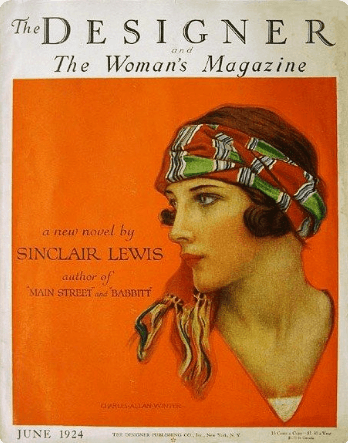
Charles Allan Winter, June 1924

It’s nice to see Life cover artist Warren Davis drawing something other than his usual half-naked women frolicking around.
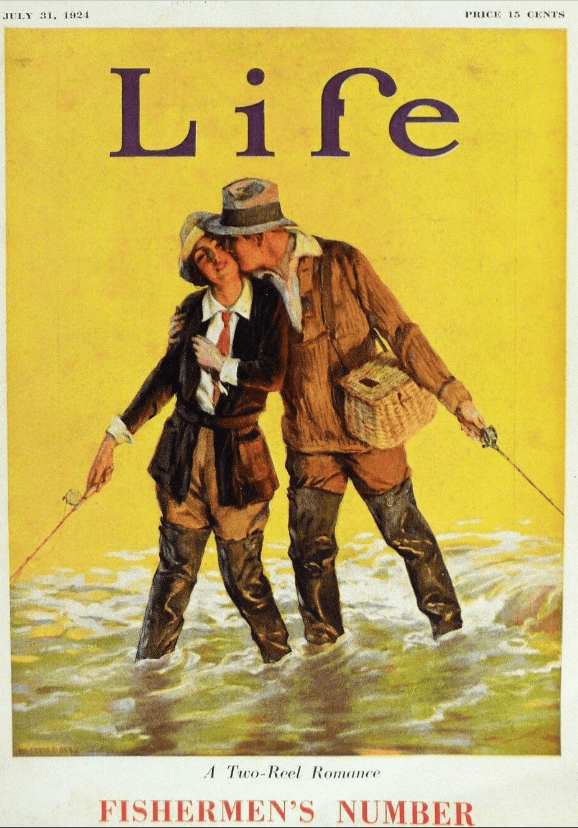
Warren Davis, July 31, 1924

You can’t expand your horizons much further than to a short-lived Spanish sports magazine for which the only online reference I could find is a Catalan-language Wikipedia page that has been flagged for possible deletion. The illustrator, Spanish artist Rafael de Penagos, is new to me. He received a gold medal at the 1925 International Exhibition of Modern Decorative and Industrial Arts in Paris, from which Art Deco got its name (surprisingly, not until the 1960s).
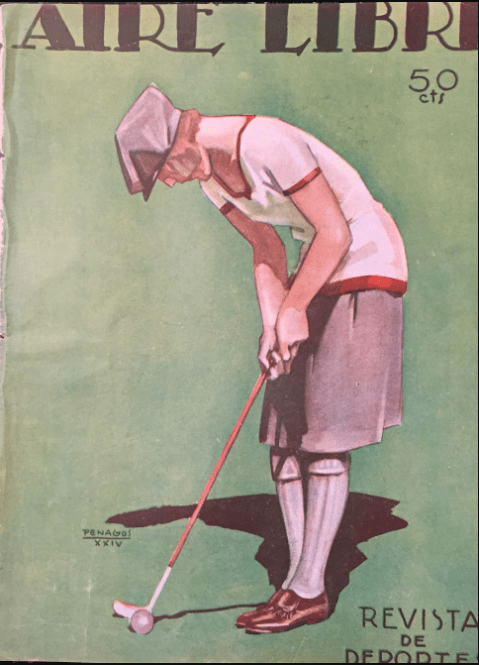
Rafael de Panagos, July 1, 1924

In vibrant blue, a House & Garden cover by French artist André Édouard Marty. Marty, not to be confused with leading French Communist Party member André Marty, was another leading figure in the Art Deco movement.
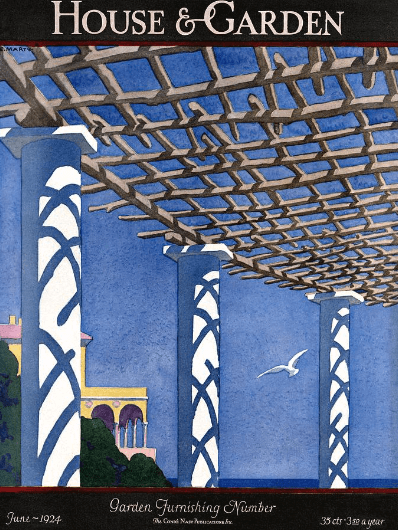
André Édouard Marty, June 1924

I’m not of the school of thought that indigo is a color of the rainbow, since squeezing it in between blue and purple throws off the symmetry, but I couldn’t resist these flower-strewing children, drawn by an artist I couldn’t identify.**** This issue of Woman’s Home Companion includes an essay on parenthood by F. Scott Fitzgerald, the last installment of Dorothy Canfield Fisher’s The Home-Maker, an ahead-of-its-time novel about a stay-at-home dad,***** and an illustrated story by N.C. Wyeth. Not bad for fifteen cents.
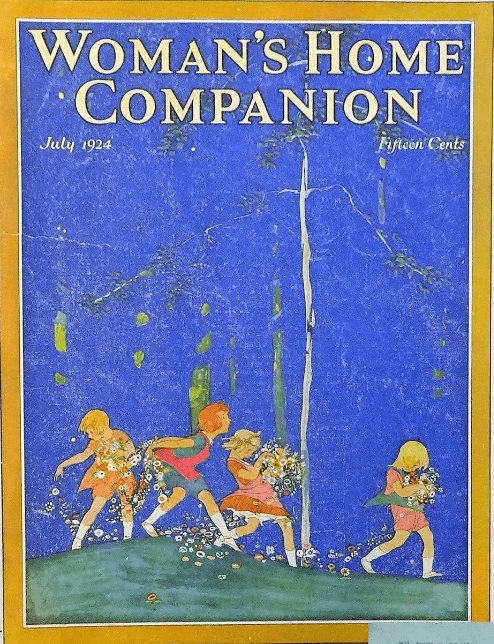
July 1924

Here’s the purplest cover I could find, from Vogue regular Pierre Brissaud.******
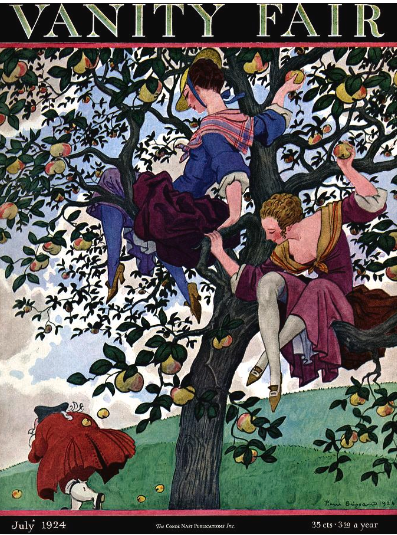
Pierre Brissaud, July 1924

To wrap things up, here’s a cover by John Holmgren, yet another new-to-me artist, who managed to fit every color of the rainbow onto this Judge cover.
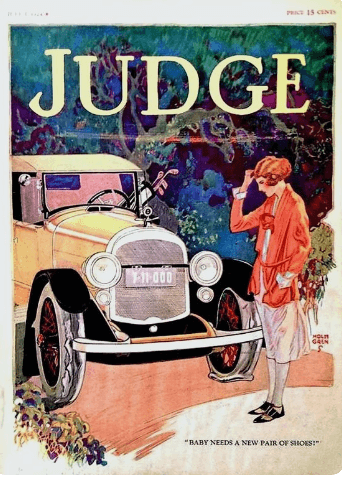
John Holmgren, July 5, 1924

But wait! This is just a SINGLE rainbow.

July slipped into August as I was working on this post, which gave me another month’s worth of magazine covers to work with. Now August is slipping away as well, and I’m back in Washington. At this rate, the leaves will be falling off the trees by the time I post this if I write about each one, so here they all are:
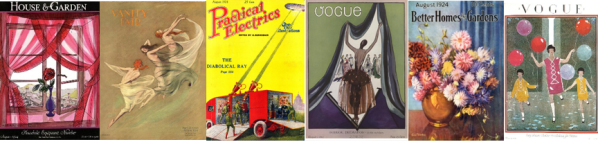
House and Garden: Joseph B. Platt. Vanity Fair: Warren Davis (back to his old tricks). Vogue (green): George Wolfe Plank. Vogue (purple): Harriet Meserole. Other artists unknown.

Enjoy the end of summer (or, if you’re in Cape Town, FINALLY the end of winter), everyone!

squiggle

*Or any other post, for that matter.

**There’s a truly bonkers essay by D.H. Lawrence in this issue called “On Being a Man.” It starts out with a racist account of sitting on a train with an African American man and segues into a discussion of why marriage is literally hell.

***Lewis won, and rejected, the 1926 Pulitzer for Arrowsmith. In a written statement, he objected to the criteria for which the prize was awarded: “for the American novel published during the year which shall best present the wholesome atmosphere of American life, and the highest standard of American manners and manhood.” I’m with Lewis on this, although some said that he was just miffed that he hadn’t won the award for Main Street, published in 1921.

****ChatGPT claimed that the cover artist was Charles Dana Gibson, which I didn’t buy. I asked for a source for this information, and it said, oh, sorry, it’s actually Frances Tipton Hunter. This sounded more plausible but I still wasn’t convinced, so I asked again for the source, at which point ChatGPT threw up its hands and admitted that it was just making stuff up.

*****I spoke about this book at a roundtable on 1920s best-sellers at a conference on Modernism in the UK in 2022.

******As I was finishing up this post I came across this beautiful, and arguably purpler, Vogue cover by George Wolfe Plank.

George Wolfe Plank, June 15, 2024
squiggle

New on Rereading Our Childhood, the podcast I cohost (or not so new but newer than my last blog post):

Our Favorite Children’s Books from 50 Years Ago

Rereading Danny Dunn and the Anti-Gravity Paint by Jay Williams and Raymond Abrishkin

Rereading The Egypt Game by Zilpha Keatley Snyder

Rereading The Phantom Tollbooth by Norton Juster

Rereading Stuart Little by E.B. White

Rereading February’s Road by John Verney

Reading Anne of Green Gables by L.M. Montgomery

Rereading The Book of Three by Lloyd Alexander

Rereading Misty of Chingoteague by Marguerite Henry

Rereading The Mysterious Disappearance of Leon (I Mean Noel) by Ellen Raskin
Rereading Ramona the Pest by Beverly Cleary

Rereading Black Hearts in Battersea by Joan Aiken

In search of an extraordinary spring 1922 magazine cover

I haven’t done a post on magazine covers since last August. I tried early this year, but the covers I found were uninspiring. Has the Golden Age of Illustration come to an end, I wondered.*

I decided to give it another shot, and I spent a long time looking at covers from March and April 1922. They weren’t bad. Most of them were quite good, in fact. But nothing seemed new or fresh or different.

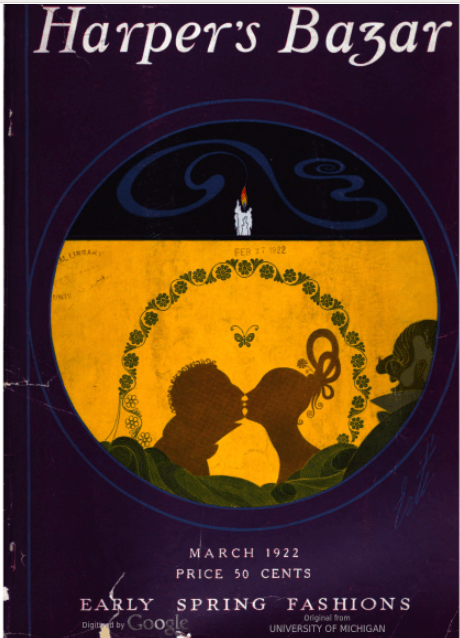
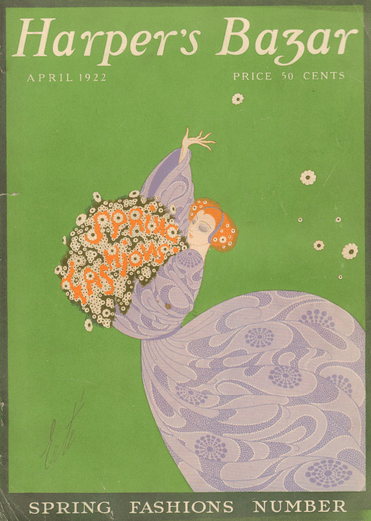
I expect Erté’s Harper’s Bazar covers to be attractive and haunting, but the March one is haunting without being attractive and the April one is attractive without being haunting.**

Erte Harper's Bazar March 1922 cover, couple kissing in silhouette.
Erté, March 1922
Erte Harpers' Bazar April 1922 cover, woman strewing flowers.
Erté, April 1922

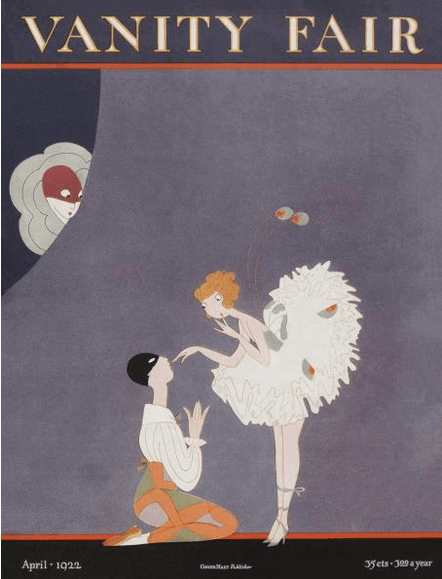
This A. H. Fish Vanity Fair cover was solid but not memorable.

A.H. Fish April 1922 Vanity Fair cover, ballerina with pierrot.
A.H. Fish, April 1922

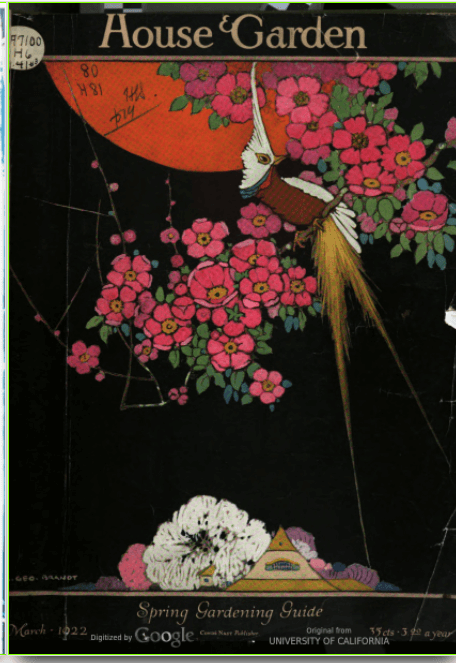
Are these either houses or gardens? I think not, House & Garden!

George Brandt House & Garden March 1922 cover, floral display.
H. George Brandt, March 1922
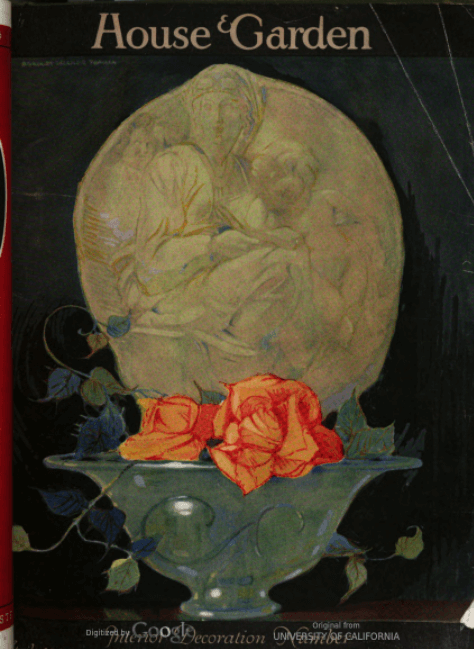
B.W. Tomlin House & Garden April 1922 cover, flowers in front of bas relief.
Bradley Walker Tomlin, April 1922

Okay, maybe I was just in a bad mood. I’ll stop carping now and just tell you what I found.

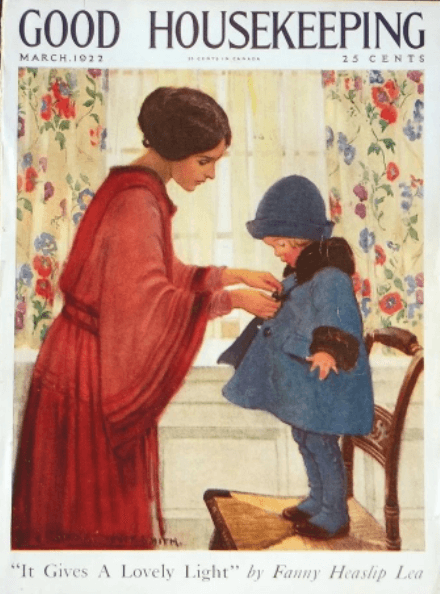
Regular Good Housekeeping cover illustrator Jessie Willcox Smith was her usual competent, family-friendly self.

Jessie Willcox Smith March 1922 Good Housekeeping cover, mother putting coat on child.
Jessie Willcox Smith, March 1922
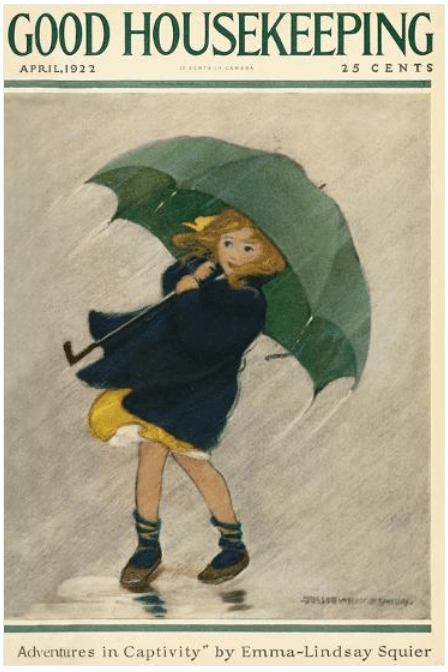
Jessie Willcox Smith Good Housekeeping April 1922 cover, girl with green umbrella in rain.
Jessie Willcox Smith, April 1922

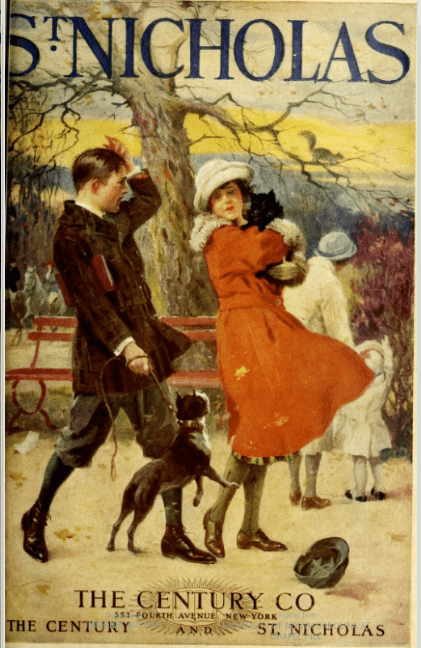
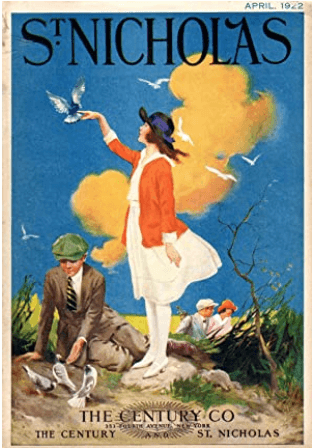
The kids were up to their usual wholesome fun at St. Nicholas.

St. Nicholas March 1922 cover, boy and girl with dogs.
March 1922
St. Nicholas April 1922 cover, boy and girl feeding birds.
April 1922

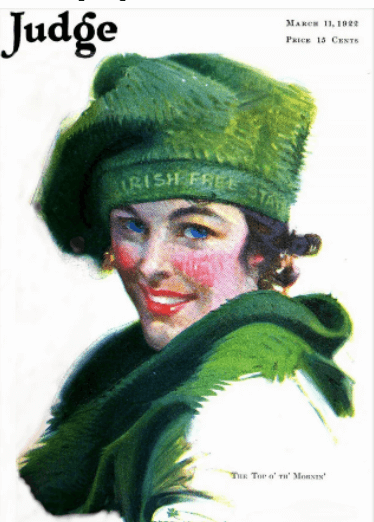
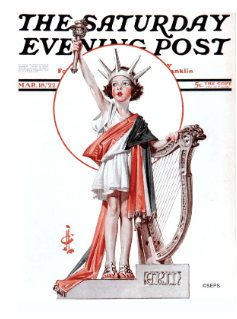
With Ireland newly independent, St. Patrick’s Day celebrations were especially festive.

Judge March 11, 1922 cover, woman in green beret with Irish Free State slogan.
March 11, 1922
J.C. Leyendecker March 15, 1922 Saturday Evening Post cover, girl dressed as Statue of Liberty with harp, Ireland independence.
J.C. Leyendecker, March 18, 1922

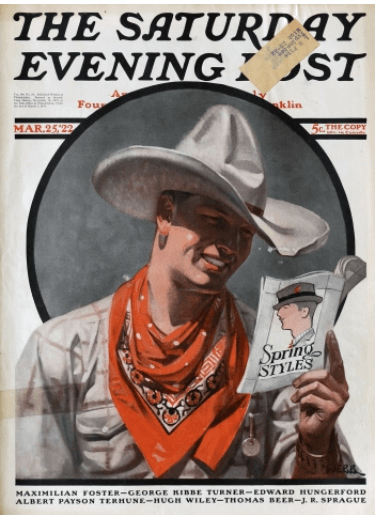
There was a newcomer, Tom Webb, at the Saturday Evening Post,

Tom Webb March 25, 1922 Saturday Evening Post cover, cowboy looking at Spring Styles ad.
Tom Webb, March 25, 1922

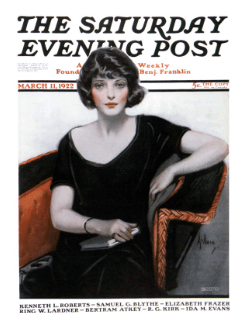
along with old Post hand Neysa McMein,

Neysa McMein March 11, 1922 Saturday Evening Post cover, woman in black dress sitting in chair.
Neysa McMein, March 11, 1922

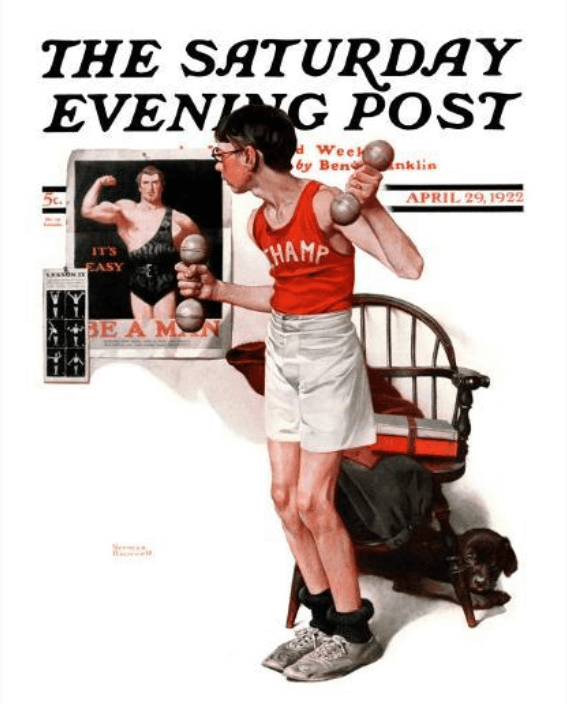
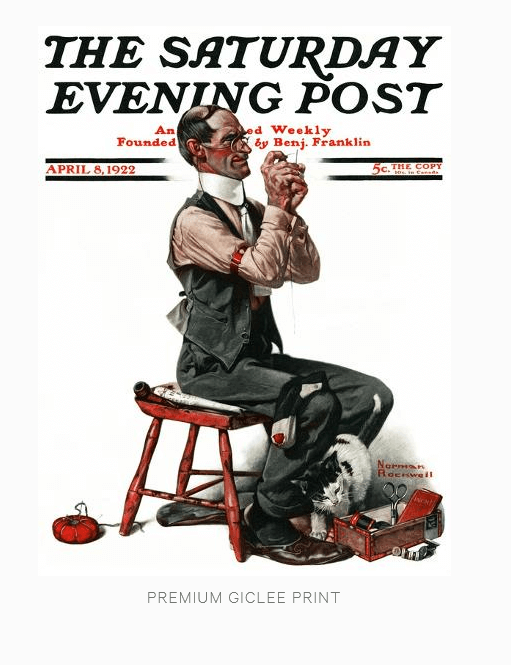
as well as Norman Rockwell, already a SEP veteran at 28.

Norman Rockwell April 29, 1922 Saturday Evening Post cover, skinny boy lifting weights with poster of muscleman.
Norman Rockwell, April 29, 1922
Norman Rockwell April 8, 1922 Saturday Evening Post cover, man threading needle.
Norman Rockwell, April 8, 1922

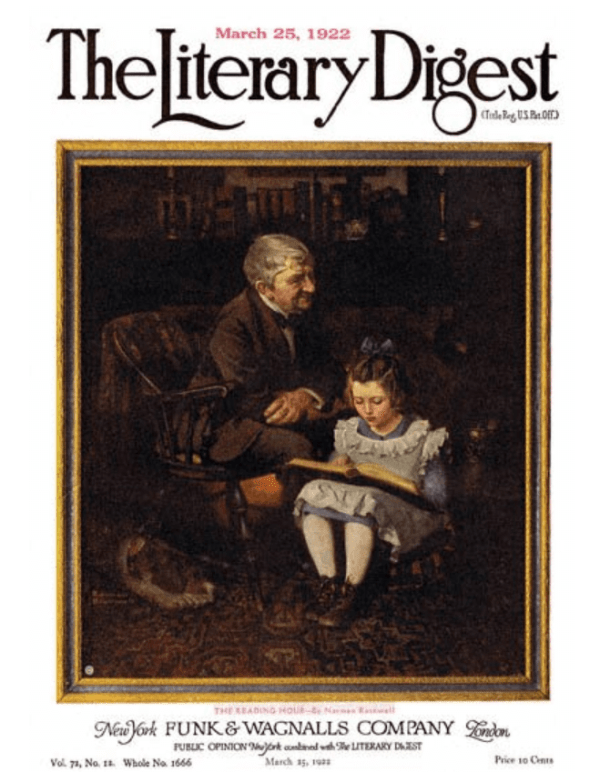
The insanely prolific Rockwell was all over the place in March and April, at The Literary Digest

Norman Rockwell Literary Digest cover, March 25, 1922, man with girl reading book.
Norman Rockwell, March 25, 1922

and The Country Gentleman

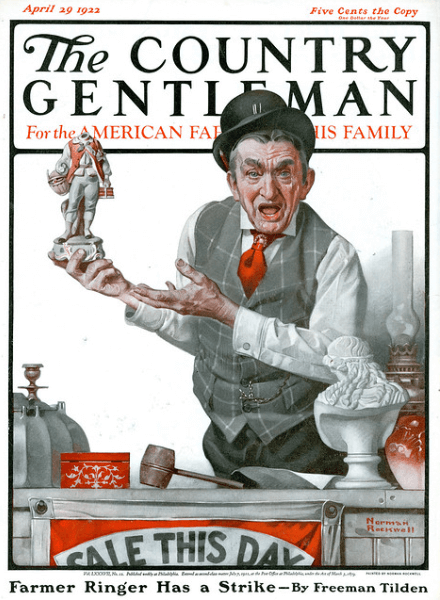
Norman Rockwell Country Gentleman cover, April 29, 1922, auctioneer holding headless figure.
Norman Rockwell, April 29, 1922
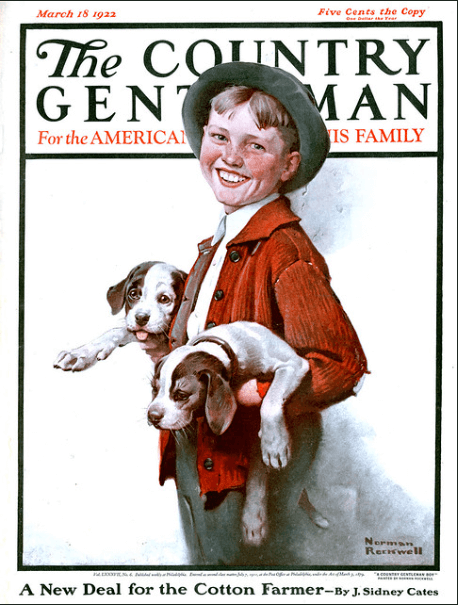
Norman Rockwell Country Gentleman cover, March 18, 1922, smiling boy holding two dogs.
Norman Rockwell, March 18, 1922

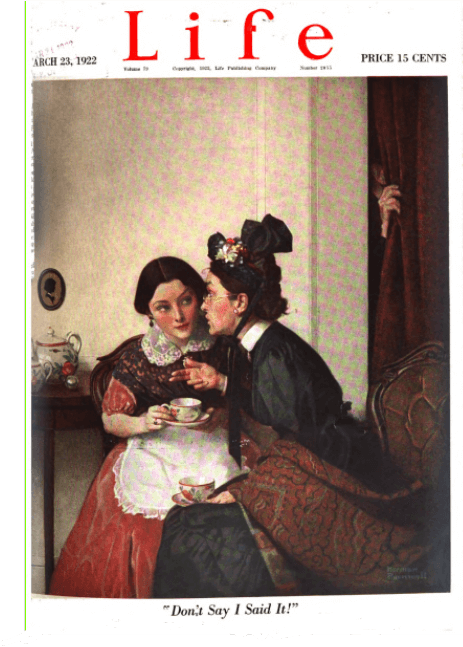
and Life.

Norman Rockwell, March 23, 1922

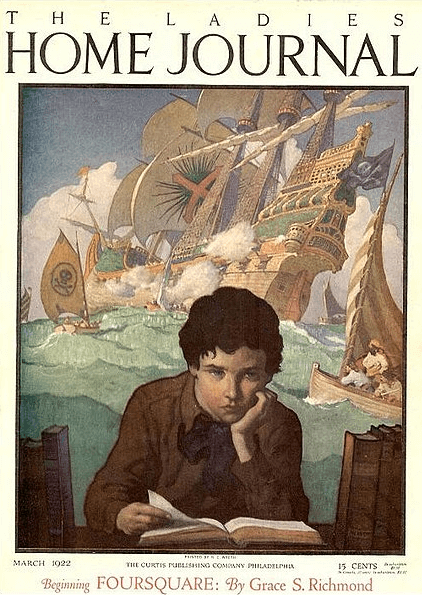
For the Ladies’ Home Journal, N.C. Wyeth (father of Andrew) painted a boy dreaming of stolen loot.

N.C. Wyeth Ladies' Home Journal March 1922 cover, boy reading book with picture of daydream of pirates.
N.C. Wyeth, March 1922

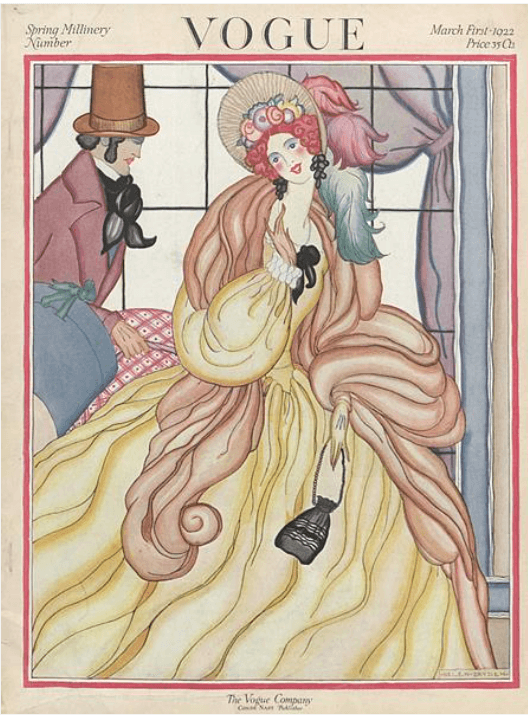
Over at Vogue, a Helen Dryden cover featured an old-timey couple,

Helen Dryden Vogue cover, March 1, 1922, woman in long dress and flowery hat with whiskered man in top hat.
Helen Dryden, March 1, 1922

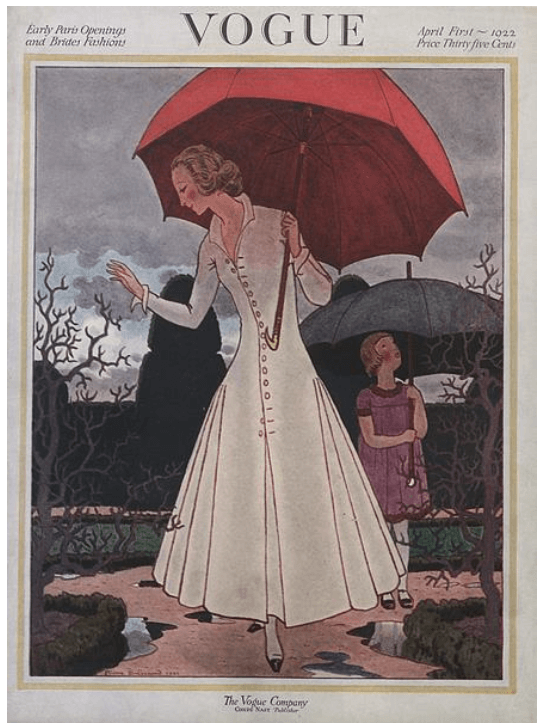
and there were two new-to-me Vogue cover artists, Pierre Brissaud and Henry R. Sutter.***

Pierre Brissaud Vogue cover, April 1, 1922, woman and girl under umbrellas.
Pierre Brissaud, April 1, 1922
Henry R. Sutter Vogue cover, April 15, 1922, woman in cape looking down at valley.
Henry R. Sutter, April 15, 1922

So, this is all very nice, and if I hadn’t been looking at hundred-year-old magazine covers for over four years I might be impressed. It’s just that there wasn’t anything that hadn’t been done before.

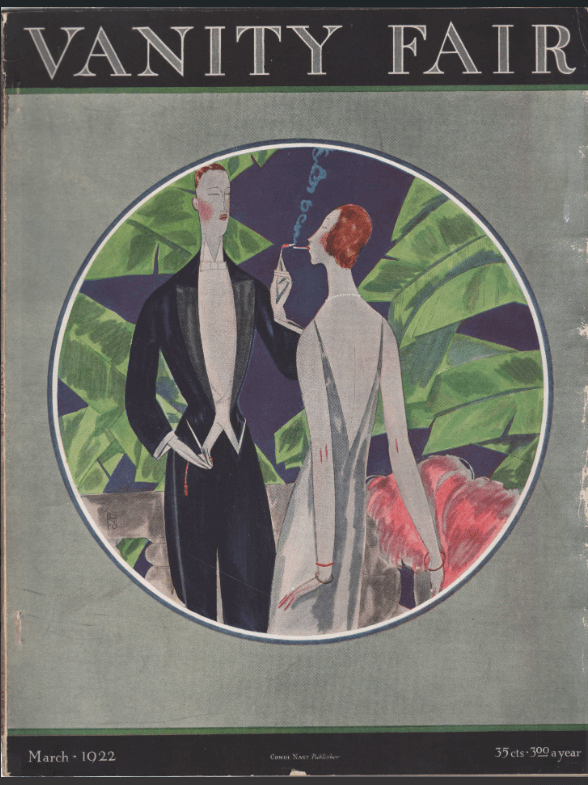
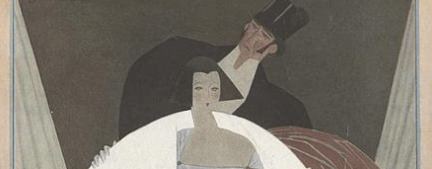
And then I came across this Vanity Fair cover from March 1922, by newcomer Eduardo Garcia Benito, who had arrived in New York from Spain the year before.**** I hadn’t seen anything yet like the sleek, clear lines and bold colors of this cover, which would come to typify Art Deco illustration.*****

Eduardo Gracia Benito Vanity Fair cover, March 1922, man lighting cigarette for woman in front of foliage, Art Deco style.
Eduardo Garcia Benito, March 1922

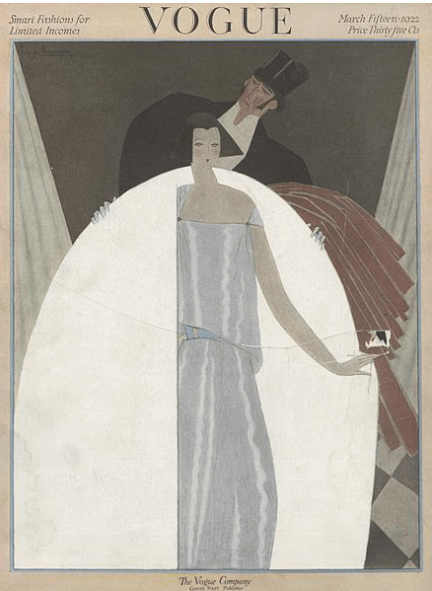
And then I took a second look at the other March Vogue cover, by Georges Lepape, which, maybe because of the muted colors, I hadn’t paid particular attention to.

Georges Lepape Vogue cover, March 15, 1922, man putting fur coat on woman, Art Deco style.
Georges Lepape, March 15, 1922

Same minimalist design. Same clear lines. Same boyish silhouette on the woman.

Two years into the decade, the twenties have begun!

squiggle

*I had already expressed concern about this in my 1915/1920 Magazine Cover Smackdown post.

**Here is an examples of an attractive and haunting Erté cover:

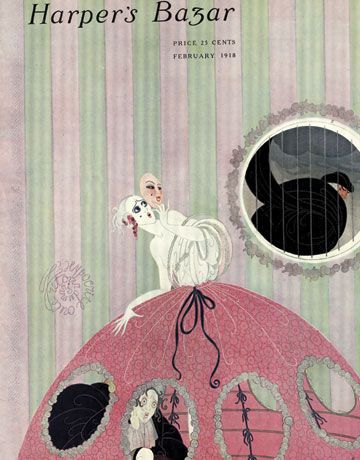
Erté Harper's Bazar cover, February 1918, masked woman looking out window at man.
Erté, February 1918

***UPDATE 5/1/2022: I looked into this some more and these both seem to be Vogue debuts. Brissaud went on to be a regular Vogue cover artist. Sutter only did six covers that I could find (i.e. that appear on art.com, which I think has all of them), all in 1922 and 1923. I haven’t been able to find much information about him other than that he lived in Provincetown, Massachusetts.

****This wasn’t Benito’s Condé Nast debut, though. This November 15, 1921, Vogue cover was his first (as far as I can tell) of many for the magazine.

Eduardo Garcia Benito, November 15, 1921

*****I could do without the “Women can smoke too!” message, though.