Tag Archives: history

Chocolate is healthy, how to get fat, and other advice from a nutrition pioneer

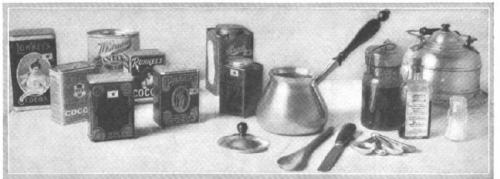
Drawing of kitchen items, Good Housekeeping, January 1918.

Good Housekeeping, January 1918

Good news, chocolate lovers! Good Housekeeping magazine has given chocolate a big thumbs-up. Writing in the January 1918 issue, Dr. Harvey Wiley says that it

contains considerable food-value. A small bulk furnishes a large amount of nutrition. It has in its composition more protein than has wheat flour, and about twenty times as much fatty material, and a considerable proportion of starch as well. It is, therefore, extremely nourishing and is usually easily digested.

Dr. Wiley provides a number of recipes, including hot cocoa (a harmless way to disguise milk if your child won’t drink it), chocolate pudding, and an unappetizing-sounding chocolate corn-starch mold. He compares chocolate recipes, like cake, with their non-chocolate equivalents, and shows how, in each case, the chocolate version provides more nourishment.

Nourishment being measured in, um, calories.

Header for Dr. Wiley's Question-Box, Good Housekeeping, 1918.

Good Housekeeping, March 1918

Most of Dr. Wiley’s advice is more sensible than this. In the March edition of his monthly Good Housekeeping feature “Dr. Wiley’s Question-Box,” C. A. B. of New York asks:

A friend of mine is most anxious to join a certain branch of the U.S. service, but due to his height (6 ft. 2 in.) finds it will be necessary to take on 25 pounds additional weight before he can qualify. Can you give him advice as to how he can go about getting up to the required number of pounds?

 Dr. Wiley replies:

If your tall friend has a normal digestion he can increase his weight by over-eating and under-exercising. If he will go into a state of hibernation, so to speak, sleep fourteen hours a day, and lie perfectly still the rest of the time, eat large quantities of starch, sugar, ice-cream, cake, and other fattening substances, he will probably be able to gain twenty-five pounds in weight. When he does this, however, he will be far less efficient physically than he was before, and less suited to serve his country.

 Dr. Wiley tells M. MacE. of Ohio that, whatever the Food Administration might say, corn syrup is not in fact “the most healthful and easily assimilated of all sweets.” He tells A.L.S. of Kansas, a flour miller, that white flour is “the base of nearly all the bad nutrition in the United States.”

I was curious to find out more about Dr. Wiley. He turned out to be a fascinating character and an important figure in U.S. history.
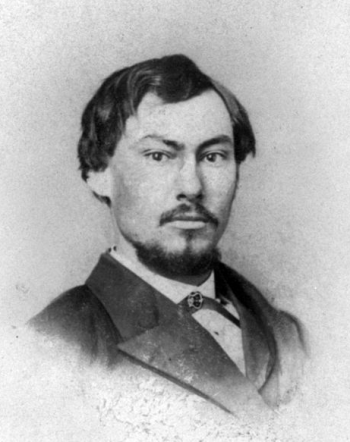
Portrait photograph of FDA founder Harvey Wiley, 1867.

Harvey Wiley, 1867 (Library of Congress)

Dr. Wiley was born in a log cabin in Indiana in 1844. He attended medical school after serving in the Civil War and then taught at Butler College and Purdue University. He was highly regarded as a teacher, but his unusual behavior raised eyebrows. According to his autobiography, a member of Purdue’s board of trustees stated that:

we are deeply grieved at his conduct. He has put on a uniform and played baseball with the boys, much to the discredit of the dignity of a professor. But the most grave offense of all has lately come to our attention. Professor Wiley has bought a bicycle. Imagine my feelings and those of other members of the board on seeing one of our professors dressed up like a monkey and astride a cartwheel riding along our streets.

 After being passed over for Purdue’s presidency, apparently for being “too young and too jovial,” he was appointed chief chemist of the U.S. Department of Agriculture and moved to Washington, D.C., where he was the second person to own an automobile (and the first to have a serious accident).
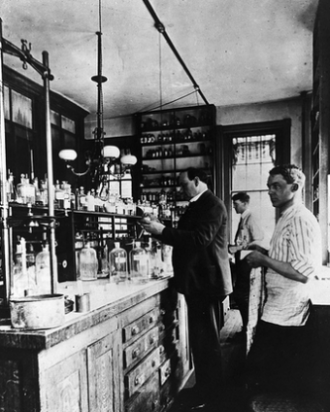
Dr. Harvey Wiley in his USDA lab.

Dr. Wiley in his USDA lab (FDA)

Dr. Wiley skyrocketed to national fame after assembling a group of healthy young civil servants and testing various food additives on them, steadily increasing the amounts until they became ill. The group became known as the “Poison Squad.” (You can read about it in this 2013 article in Esquire.) He was given a more dignified nickname—“Father of the Pure Food and Drugs Act”—after passage of the landmark law in 1906, and was appointed the first commissioner of the Food and Drug Administration. His enforcement of the act won him powerful enemies, though, and he resigned in frustration in 1911. According to the FDA, a newspaper headline read, “WOMEN WEEP AS WATCHDOG OF THE KITCHEN QUITS AFTER 29 YEARS.” 
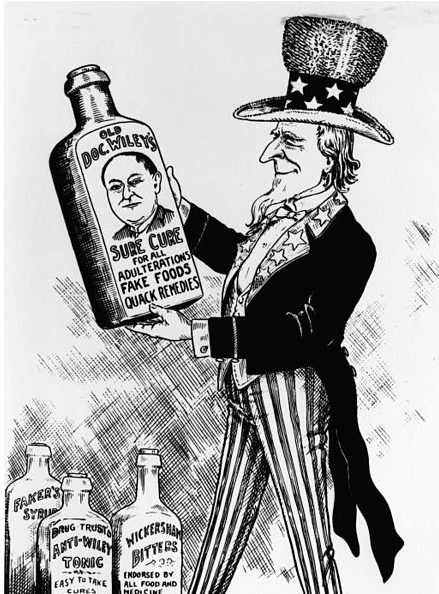
Cartoon of Uncle Sam holding bottle saying Old Doc Wiley's Sure Cure.

Cartoon, date and source unknown (FDA)

Dr. Wiley spent the rest of his career at Good Housekeeping. There was some irony in this, since, according to Esquire, he was an outspoken misogynist, given to calling women “savages” and questioning their brain capacity.

He came around in the end, though. In 1911, the longtime bachelor married Anna Kelton, a prominent suffragist who was half his age. They had two sons. Anna Kelton Wiley contributed an article to the February 1918 issue of Good Housekeeping called “Why We Picketed the White House.” The magazine ran a disclaimer next to the article saying that, while it does not believe in picketing the White House,

when the White House pickets secured so distinguished a recruit as the wife of Dr. Harvey W. Wiley, we offered to open our pages to a statement of the reasons for the picketing.
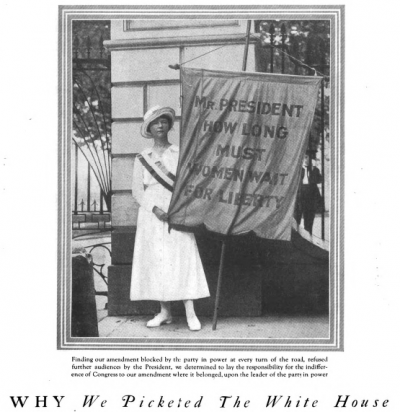
Suffragist holding protest sign, Good Housekeeping, 1918.

Good Housekeeping, February 1918

 Anna Kelton Wiley writes in the article that it was only after attempts to gain the vote through less confrontational methods failed that she and other suffragists*

determined to organize at the White House gates, a silent, daily reminder of the insistence of our claims…We determined not to be put aside like children…Not to have been willing to endure the gloom of prison would have made moral slackers of all. We should have stood self-convicted cowards.

 In this effort, she writes, she was

upheld by a fearless husband, who said, “I have fought all my life for a principle. If it is your conscience to go, I will not stand in your way.”

Like most pioneers of the past, Dr. Wiley did some things that seem questionable now. Systematically poisoning a group of healthy young men wouldn’t have won FDA approval today. But it’s thanks in part to him that there is an FDA. And it’s thanks in part to Anna Kelton Wiley that women won the right to vote. Now, that’s a Washington power couple we can celebrate.
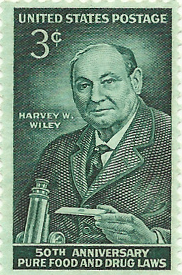
Commemorative stamp of FDA founder Harvey Wiley, 1956.

Commemorative stamp, 1956 (U.S. Post Office)

Okay, time for some nice healthy chocolate!

UPDATE 10/24/2018: There’s a new biography of Dr. Wiley called The Poison Squad, by journalist Deborah Blum. Now (or, rather, after 2018 ends) I can find answers to all my questions about him, like did he really have the first serious automobile accident in Washington, D.C. history?

*But not all—the magazine ran an article the next month by Carrie Chapman Catt, President of the National American Woman Suffrage Association, called “Why We Did Not Picket the White House.”
Friday Miscellany: The artistry of 1918 magazine ads

There wasn’t a lot of room for color in magazines in 1918–often just the cover and a few pages of ads. The advertisers made the most of their limited opportunities. Here are a few ads that caught my eye.

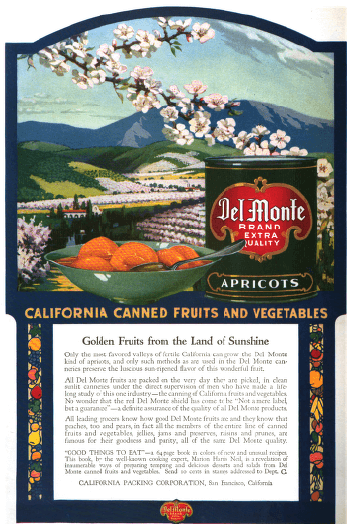
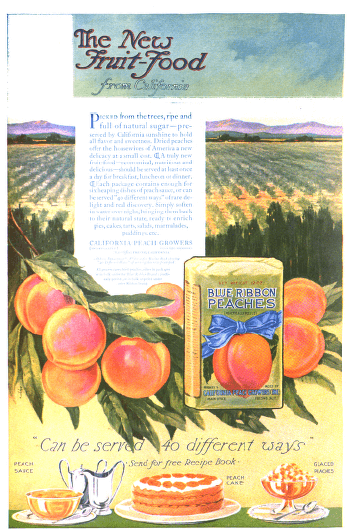
These two make me want to spend my next vacation in 1918 magazine ad California.

Del Monte advertisement showing bowl of apricots in front of mountain scene, 1918.

Woman’s Home Companion, March 1918

Blue Ribbon peaches ad showing peaches in front of a field, 1918.

Woman’s Home Companion, March 1918

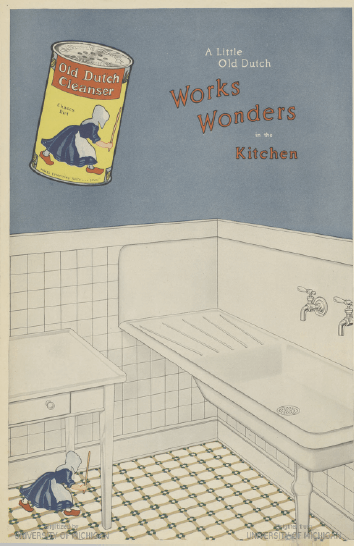
This one almost makes me want to go scrub the kitchen.

Old Dutch Cleanser ad showing tiny woman cleaning a kitchen floor, 1918.

Cosmopolitan, January 1918

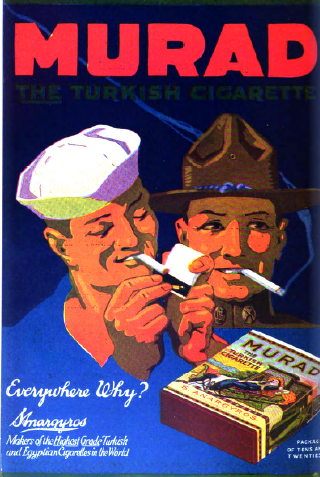
And this one makes war seem like an absolute pleasure, as long as you have your Murads.

Murad cigarette ad showing a sailor and soldier lighting cigarettes, 1918.

Scribner’s, March 1918

A Caruso fan on the factory floor

Remember Elizabeth Hasanovitz, the Hebrew school teacher’s daughter who fled Russia for a better life in New York? (If not, you can read about her here.) She’s back, in the second installment of her memoir in the February 1918 Atlantic.

Banner, The Atlantic Monthly, February, 1918.

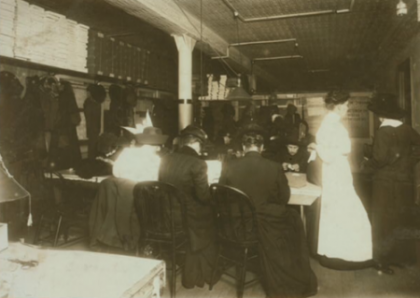
Elizabeth attempted suicide at the end of the last installment, ground down by her life as a seamstress. She recovers quickly and gets a job in a non-union factory, making the princely sum of ten dollars a week.

My cheerfulness returned. Again I went among my friends, entertaining them with song and infecting them with my joyousness. Even in the shop I felt happy.

Women factory workers sitting at table.

She starts saving up to send for her younger brother, and her friend Clara helps out with a fifty-dollar loan. Even the conversation at work has improved.

Very little talk about “fellers,” swell evening pumps, lace petticoats that the six dollar wage-earners were constantly discussing, in the sweater shop. Here we talked about questions of the day, world-happenings, music, art, literature, and trade questions.

Once she pays her debt to Clara, Elizabeth starts thinking about the finer things in life.

I at once went to the Opera House, secured tickets for five dollars at twenty-five cents each, so that I was provided with opera tickets for the next few weeks.

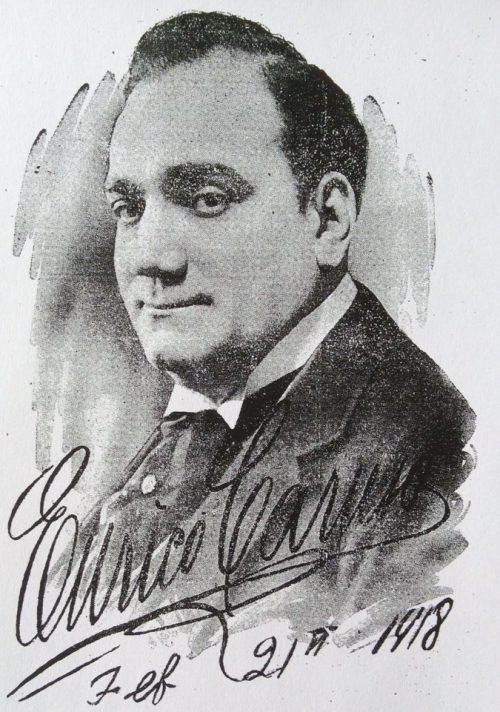
Photograph of Enrico Caruso above autograph and date, Feb 21st 1918.

Enrico Caruso, New York Times, February 24, 1918

She sees Enrico Caruso sing and Anna Pavlova dance. Her tickets are standing room*, and she often goes straight from work.

If it happened to rain, my dress would be soaked through and through, and with wet clothes I would stand through the performance, changing from foot to foot, while there were often plenty of empty seats in the orchestra. Very often I would pay with a cold the next day.

Back at the factory, Elizabeth tries to get her co-workers interested in joining the Dress-and-Waist-Makers’ Union. The good conditions they enjoy, she argues, were won by activists in unionized factories. The other girls say, “You better shut up; if you don’t you will get fired.” She pays a visit to the union, and word gets back to her colleagues and her boss. They warn her that union leaders are nothing but grafters, after the members’ money.

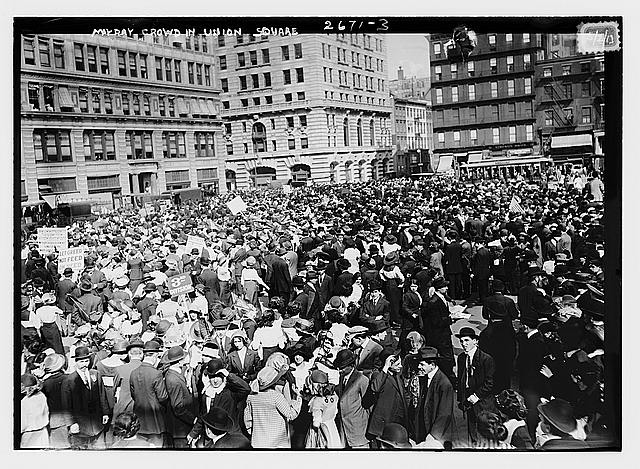
Crowd of workers marching in Union Square, New York, 1913.

May Day march, Union Square, 1913 (Bain News Service, Library of Congress collection)

Elizabeth decides to attend the May Day workers’ march.

The day fell on Thursday**, a bright warm spring day. The many thousands of young girls, in uniforms of white waists with red collars, all in line, were ready to march on. The sun illuminated their pale but happy faces as they walked through the avenues and streets. Looking up at the skyscrapers where they slaved all year, their shiny eyes would gleam with pride and hope, as if they would speak and warn the world, “behold you who keep us in the darkness, no more are we to slave for you!”

 The next day, in high spirits, Elizabeth sets out for work, humming a favorite Russian song.

“Good morning,” said I merrily to the foreman, who happened to be the first to meet me when I entered the shop.***

 “Good morning,” came an angry sound from his nose.

That Saturday, Elizabeth receives her pay–and a dismissal notice.

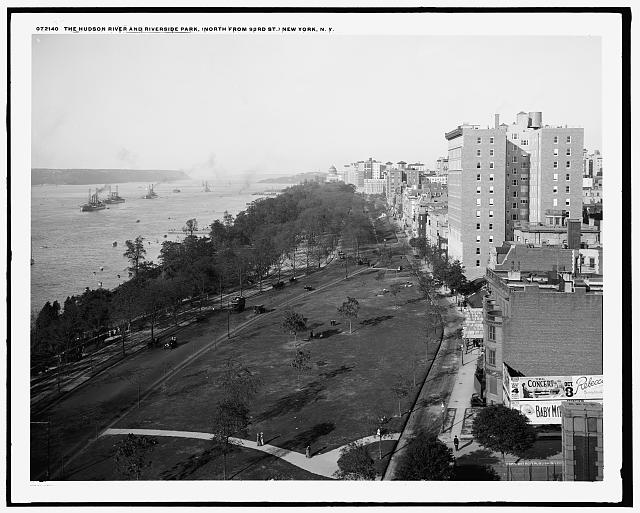
Aeriel view of Riverside Park, New York, ca. 1909.

Riverside Park, New York, ca. 1909 (Detroit Publishing Company, Library of Congress collection)

It’s the slow season, and Elizabeth has no luck finding a new job. She wonders how she will provide for her brother when he arrives. She sits on a bench in Riverside Park, looking out at the Hudson and thinking very Russian thoughts.

Life, life—O Happiness, where is thy sweetness, murmured I, in such mortal anguish for life.

 (To be continued.)

Elizabeth is still a drama queen. And she’s as snooty as ever. When her mother sends her a poem that her sixteen-year-old brother Nathan has written for her, she criticizes his grammar. She says of her friend Clara, who took her in after her suicide attempt and lent her the money for her brother’s passage,

Her spiritual development was on a much smaller scale than mine, and she would easily be inspired by things that did not interest me at all. My temper was a more revolutionary one, and I was more sensitive.

But, amid the flippancy of the fashionable magazines of 1918 and the dullness of the mainstream press, she’s a fresh, genuine voice.

(If you want to read about Elizabeth in her own words, her autobiography is available in several versions at Amazon. The issues of the Atlantic that it was serialized in (January – April 1918) can be accessed at Hathitrust Digital Library here.)

*in a parterre, maybe!

**So it was probably 1913.

***A different translator or editor apparently took over midway through the article, and Elizabeth in inverted sentences begins always to talk.

Dear Daddy-Long-Legs, Drop dead!

If you’ve followed My Year in 1918 since the beginning, you may be thinking around now, “What’s with this person? She said she was going to read her way through 1918, but all she does is sit around looking at magazines. She’s mentioned one book so far, and it wasn’t exactly Dostoevsky.”

As my Book List will attest, I have, in fact, read other books. I just haven’t had much to say about them. But now I’ve read a book that I have a lot to say about—Jean Webster’s 1912 epistolary novel Daddy-Long-Legs.

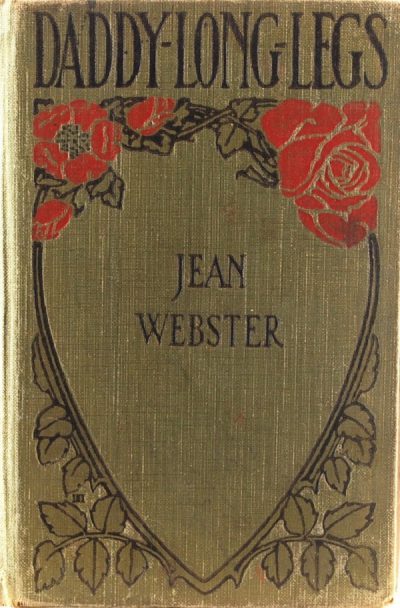
Daddy-Long-Legs by Jean Webster, first edition cover, 1912.

First edition, 1912

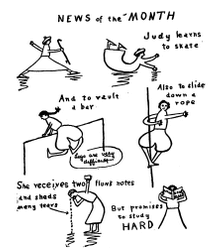
Daddy-Long-Legs—which I’d read before, when I was twelve or so—is the story of Jerusha Abbott, a foundling who was raised, if that’s the word for it, in the grim John Grier Home. A trustee of the home offers to put her through college. She’s supposed to write him a letter every month, and he keeps his identity secret. She renames herself Judy and—despite never having seen the inside of a house—adapts quickly to college life. She sends her benefactor cheery, breezy missives, illustrated with whimsical drawings. She saw his elongated shadow in the hallway once, so she nicknames him “Daddy-Long-Legs.”

Daddy-Long-Legs illustration, News of the Month.

Daddy-Long-Legs, illustration by Jean Webster

Judy tells Daddy-Long-Legs everything—about her (quickly overcome) academic struggles, her fun-loving roommate Sally McBride of Worcester, Mass.*, her snooty roommate Julia Pendleton, and her growing fondness for Julia’s young uncle, Jervie, who’s a socialist and not at all like the rest of his clan.

If you haven’t read Daddy-Long-Legs, and are planning to, and are the world’s densest reader**, then stop here, because I’m going to give away the ending.

JERVIE AND DADDY-LONG-LEGS ARE ONE AND THE SAME!

Judy discovers this after she writes to Daddy-Long-Legs, broken-hearted after turning down Jervie’s marriage proposal because of the vast social divide between them, and begs for a meeting. Her last letter, written after she discovers the truth and accepts his proposal, is an outpouring of joy.

From a twenty-first-century perspective: No. Just…no.

Daddy-Long-Legs illustration, Judy Wins the Fifty Yard Dash.

Run, Judy, run! (Daddy-Long-Legs, illustration by Jean Webster)

How about this instead?

Dear Whoever,

Of all the sick mind games anyone ever played, yours is the sickest. I came from nowhere. I had nobody. Nobody, that is, except the benefactor who lifted me from poverty—in spite of everything, thank you for that—and the man I loved. I told my benefactor all about him—his generosity, his liveliness, but also his little inconsiderate acts (showing up at inconvenient times and expecting everyone to drop everything) and his horrible family. And you let me do this—for FOUR YEARS—even as our friendship turned to love.

Two men in the world cared about me. Now it’s just one. Daddy-Long-Legs is dead. No, worse—he never existed. I can always find another lover, but I’ll never have another father. I’ll miss him, Jervie, more than I’ll miss you.

And all that string-pulling along the way…making me spend the summer at your old nanny’s farm when I begged to go to the McBride family camp in the Adirondacks. “It’s the kind of nice, jolly, care-free time that I’ve never had; and I think every girl deserves it once in her life,” I said. But no, to the farm it was—so that I could keep you entertained during your brief visit. I’m not your plaything, Jervie.

You probably think I’m going to run off and marry Jimmie McBride. But you know what? I’m twenty-one. I’ve never lived anywhere but in a foundling asylum and a girls’ college. I’m not going to marry anyone. I need some time on my own.

 Not yours, not anyone’s,

 Judy

 There. That’s better.

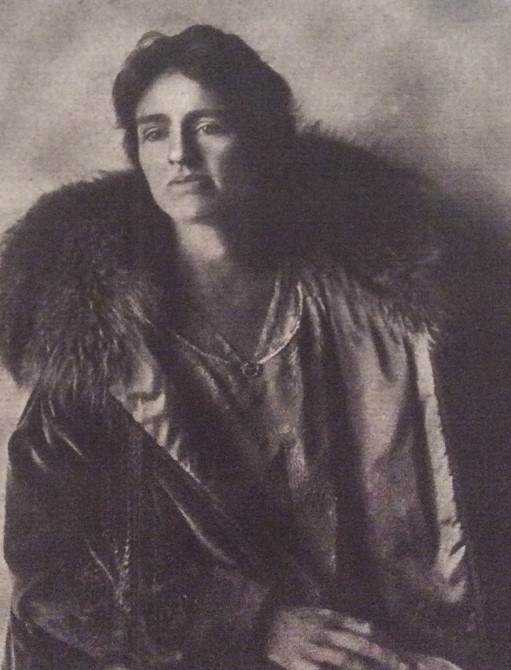
Portrait photograph of Jean Webster, Bookman magazine, 1916.

Jean Webster, Bookman magazine, July 1916

The ending aside, though, Daddy-Long-Legs was my most enjoyable read of the year so far—bright and breezy and fun. Jean Webster seems like she would have been bright and breezy and fun too. But her life was shadowed with tragedy. Her father started a publishing business with Samuel Clemens (AKA Mark Twain), who was his wife’s uncle, but it ended up going broke, and he committed suicide when Jean was fourteen. She had a long affair with Standard Oil heir Glenn Ford McKinney, whose wife suffered from severe mental illness. They finally married in 1915, after his divorce, but she died in childbirth the next year, at the age of thirty-nine. Her daughter was named Jean in her memory.

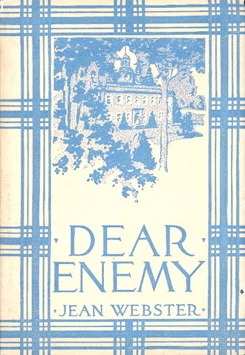
Dear Enemy by Jean Webster, first edition cover, 1912.

First edition, 1915

A bright light, gone far too soon. But she left a lot of books behind. There’s a sequel to Daddy-Long-Legs called Dear Enemy, which I’ll read later in the year.*** For now, on to more serious fare—Willa Cather’s O Pioneers!

 I’m sure it will be great, but I miss Judy already.

*Shout out!

**Well, tied with twelve-year-old me

***UPDATE 4/2019: I did, and wrote about it here and here.