
Tag Archives: Pierre Brissaud

A Double Rainbow of 1924 Magazine Covers

I recently went on on a trip from Cape Town to Washington, D.C., Seattle, North Cascades National Park, Seattle again, Denver, D.C. again, and then back home to Cape Town, all in three weeks. It was wonderful, but it was too much: too many airports, too many suitcases, too many weird bathroom setups. (Well, two, but that was two too many.) I kept saying to myself, “I’ll be so happy to just be able to hang out at home,” forgetting to take Cape Town winters into consideration and add, “provided that it doesn’t rain nonstop so that staying at home is the only option.”

I went out walking every day when the rain let up, hoping to make it home before the skies opened again. On one of these walks I looked up and saw a double rainbow, which lifted my spirits tremendously. Cape Town is unfortunately not a place where it’s wise to to take out your phone and start snapping away while walking along a busy road, so I don’t have a photo of it. But I assume you’re familiar with the concept.

I haven’t done a magazine illustration post in a while,* so I decided to pay tribute to that moment, and to summer from a Cape Town winter, with a rainbow of summer 1924 magazine covers.

First up in vivid red is Spanish illustrator Eduardo Garcia Benito’s June Vanity Fair cover.**

Eduardo Garcia Benito, June 1924

Imposing a constraint, like “it has to be orange,” makes you expand your horizons. I wasn’t familiar with The Designer, although it must have had a large circulation if it was serializing Sinclair Lewis’s Arrowsmith.*** I wasn’t familiar with the cover artist, American illustrator Charles Allan Winter, either.

Charles Allan Winter, June 1924

It’s nice to see Life cover artist Warren Davis drawing something other than his usual half-naked women frolicking around.
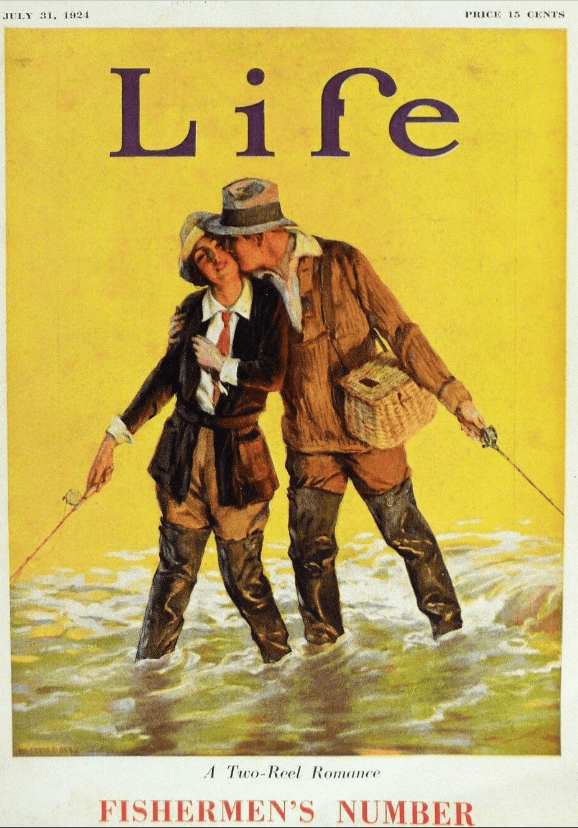
Warren Davis, July 31, 1924

You can’t expand your horizons much further than to a short-lived Spanish sports magazine for which the only online reference I could find is a Catalan-language Wikipedia page that has been flagged for possible deletion. The illustrator, Spanish artist Rafael de Penagos, is new to me. He received a gold medal at the 1925 International Exhibition of Modern Decorative and Industrial Arts in Paris, from which Art Deco got its name (surprisingly, not until the 1960s).
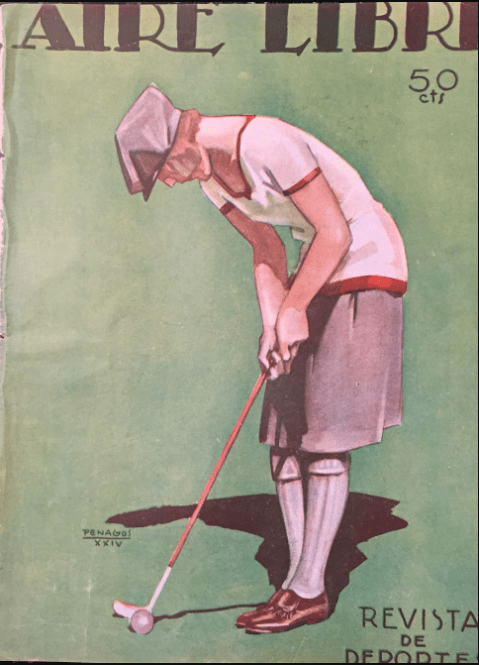
Rafael de Panagos, July 1, 1924

In vibrant blue, a House & Garden cover by French artist André Édouard Marty. Marty, not to be confused with leading French Communist Party member André Marty, was another leading figure in the Art Deco movement.
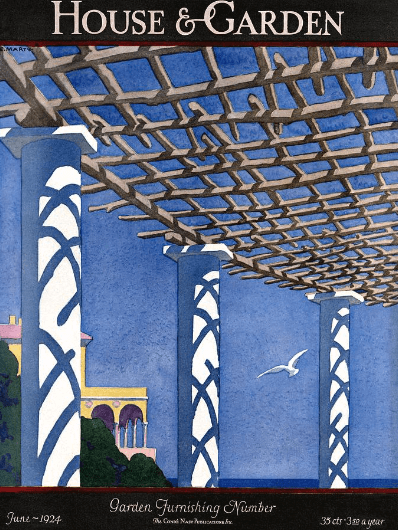
André Édouard Marty, June 1924

I’m not of the school of thought that indigo is a color of the rainbow, since squeezing it in between blue and purple throws off the symmetry, but I couldn’t resist these flower-strewing children, drawn by an artist I couldn’t identify.**** This issue of Woman’s Home Companion includes an essay on parenthood by F. Scott Fitzgerald, the last installment of Dorothy Canfield Fisher’s The Home-Maker, an ahead-of-its-time novel about a stay-at-home dad,***** and an illustrated story by N.C. Wyeth. Not bad for fifteen cents.
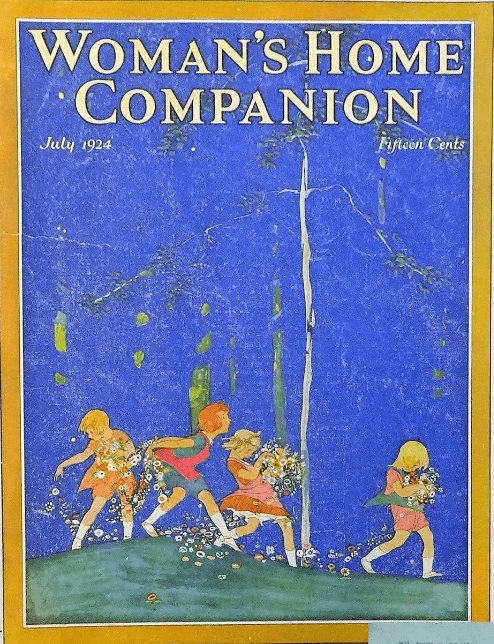
July 1924

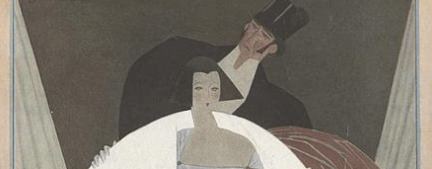
Here’s the purplest cover I could find, from Vogue regular Pierre Brissaud.******
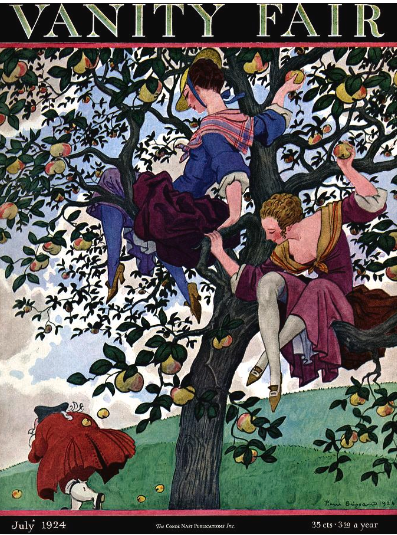
Pierre Brissaud, July 1924

To wrap things up, here’s a cover by John Holmgren, yet another new-to-me artist, who managed to fit every color of the rainbow onto this Judge cover.
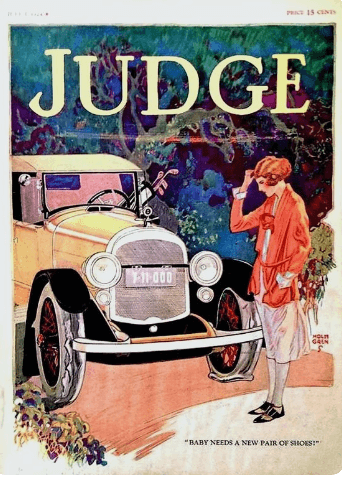
John Holmgren, July 5, 1924

But wait! This is just a SINGLE rainbow.

July slipped into August as I was working on this post, which gave me another month’s worth of magazine covers to work with. Now August is slipping away as well, and I’m back in Washington. At this rate, the leaves will be falling off the trees by the time I post this if I write about each one, so here they all are:
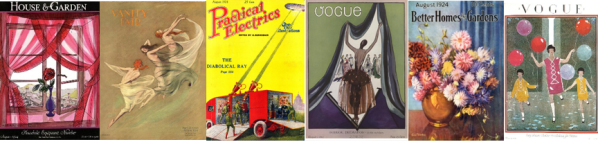
House and Garden: Joseph B. Platt. Vanity Fair: Warren Davis (back to his old tricks). Vogue (green): George Wolfe Plank. Vogue (purple): Harriet Meserole. Other artists unknown.

Enjoy the end of summer (or, if you’re in Cape Town, FINALLY the end of winter), everyone!

squiggle

*Or any other post, for that matter.

**There’s a truly bonkers essay by D.H. Lawrence in this issue called “On Being a Man.” It starts out with a racist account of sitting on a train with an African American man and segues into a discussion of why marriage is literally hell.

***Lewis won, and rejected, the 1926 Pulitzer for Arrowsmith. In a written statement, he objected to the criteria for which the prize was awarded: “for the American novel published during the year which shall best present the wholesome atmosphere of American life, and the highest standard of American manners and manhood.” I’m with Lewis on this, although some said that he was just miffed that he hadn’t won the award for Main Street, published in 1921.

****ChatGPT claimed that the cover artist was Charles Dana Gibson, which I didn’t buy. I asked for a source for this information, and it said, oh, sorry, it’s actually Frances Tipton Hunter. This sounded more plausible but I still wasn’t convinced, so I asked again for the source, at which point ChatGPT threw up its hands and admitted that it was just making stuff up.

*****I spoke about this book at a roundtable on 1920s best-sellers at a conference on Modernism in the UK in 2022.

******As I was finishing up this post I came across this beautiful, and arguably purpler, Vogue cover by George Wolfe Plank.

George Wolfe Plank, June 15, 2024
squiggle

New on Rereading Our Childhood, the podcast I cohost (or not so new but newer than my last blog post):

Our Favorite Children’s Books from 50 Years Ago

Rereading Danny Dunn and the Anti-Gravity Paint by Jay Williams and Raymond Abrishkin

Rereading The Egypt Game by Zilpha Keatley Snyder

Rereading The Phantom Tollbooth by Norton Juster

Rereading Stuart Little by E.B. White

Rereading February’s Road by John Verney

Reading Anne of Green Gables by L.M. Montgomery

Rereading The Book of Three by Lloyd Alexander

Rereading Misty of Chingoteague by Marguerite Henry

Rereading The Mysterious Disappearance of Leon (I Mean Noel) by Ellen Raskin
Rereading Ramona the Pest by Beverly Cleary

Rereading Black Hearts in Battersea by Joan Aiken
Summer 1923 Magazine Covers, in All Their Glory

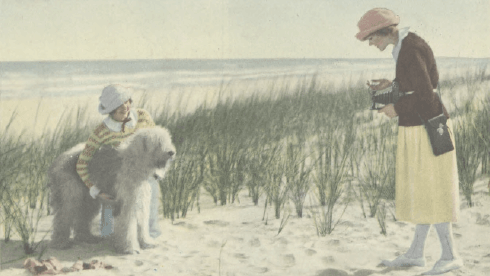
Belated happy summer, everyone! I’ve been so busy working on Rereading Our Childhood, the podcast that my friend Deborah Kalb and I launched back in May, that I’ve been woefully neglecting the world of a hundred years ago. But I’ve missed it. Summer is peak nostalgia season, so this feeling intensified after I left an especially cold and rainy Cape Town winter for summer in California, Colorado, and, now, Washington, D.C. I missed the trips to the beach of years past,

Rolf Armstrong, August 1918

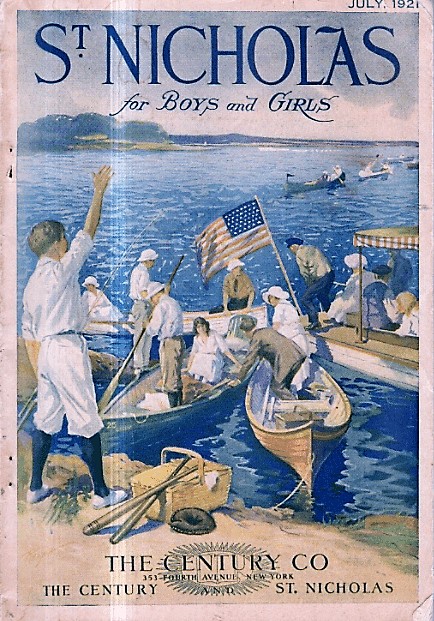
and the boating expeditions,

July 1921

and even the summer storms.

George Wolfe Plank, June 15, 1921

My last post on magazine covers, back in the winter, turned up much to ponder,

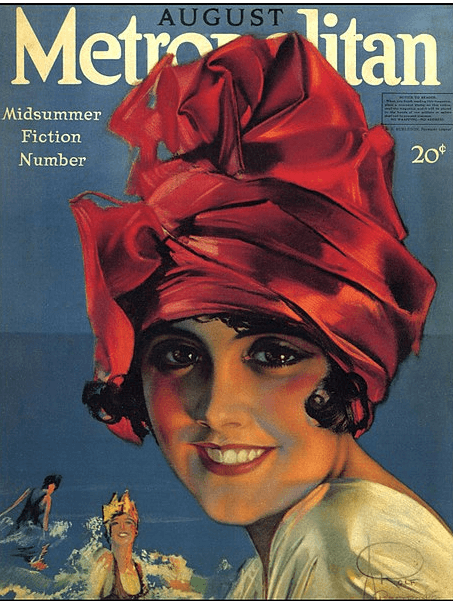
but as far as artistry went I was underwhelmed. I worried, as I occasionally have, that magazine covers had peaked sometime in the 1910s. My fears were unfounded, though—the summer 1923 covers revealed summer, and magazine artistry, in all their colorful glory.

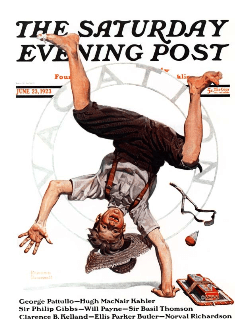
Summer kicked off in June with a “school’s out” celebration

Norman Rockwell

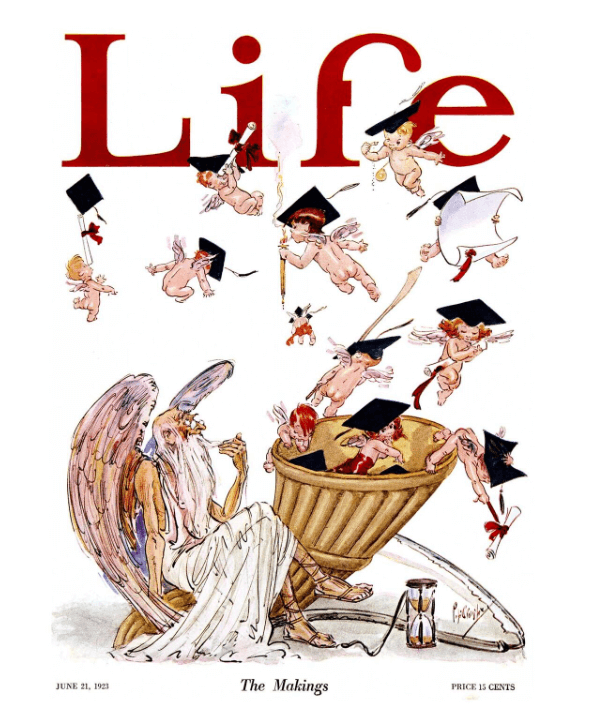
and graduates taking wing.

Percy Crosby

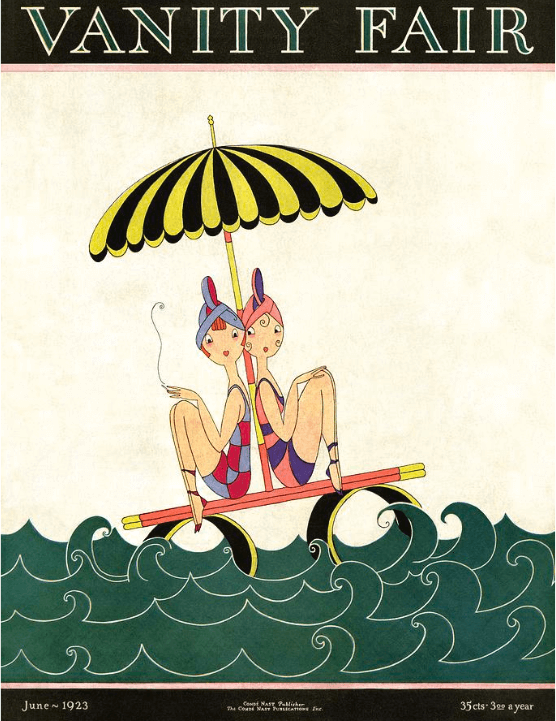
There were dips in the sea

Anna Harriet Fish

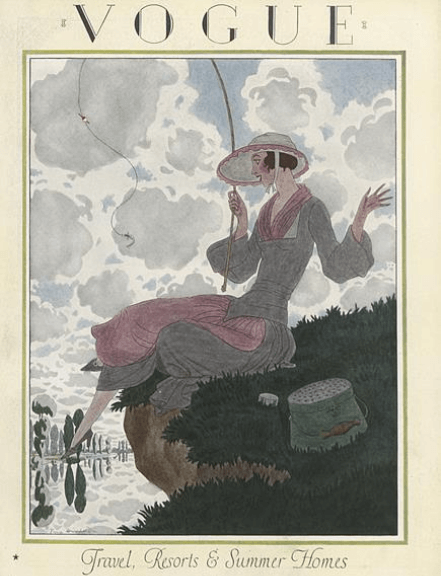
and fishing at the lake

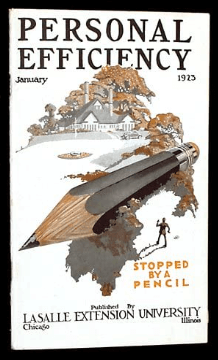
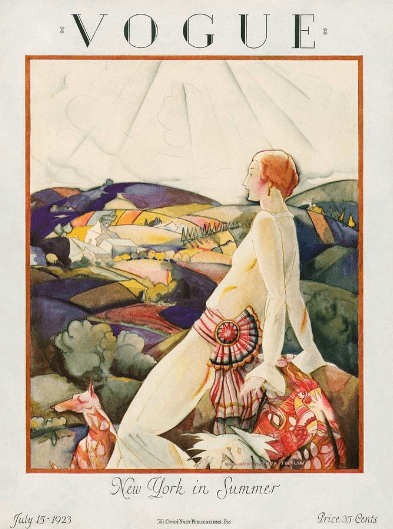
Pierre Brissaud

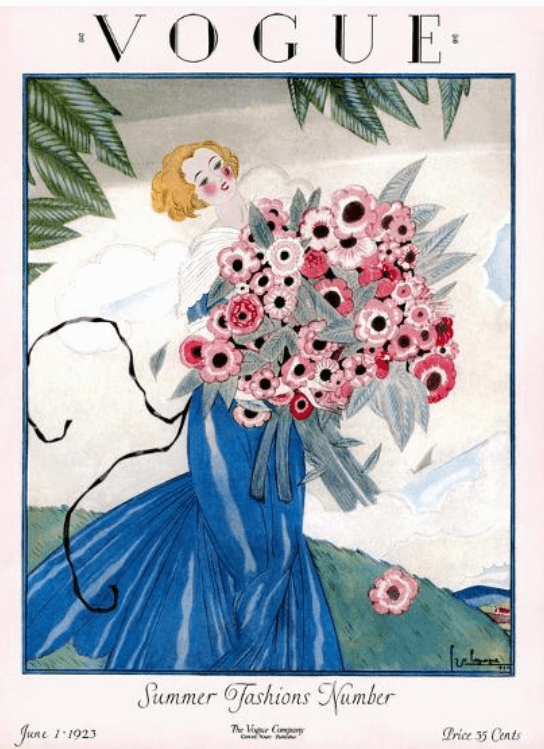
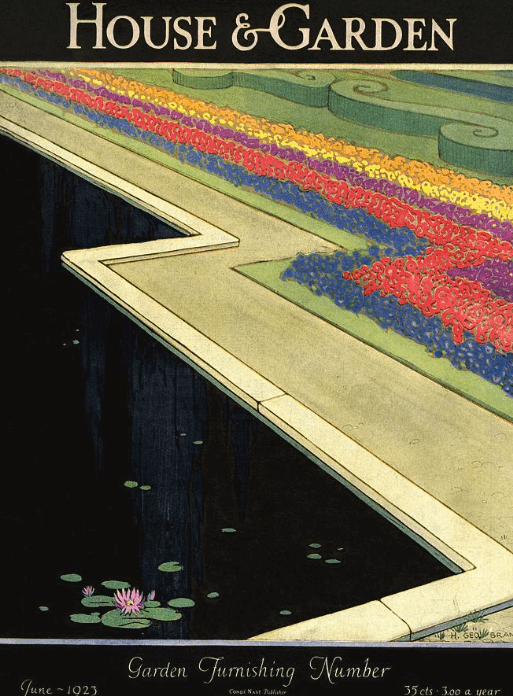
and flowers galore.

Georges Lepape
George Brandt

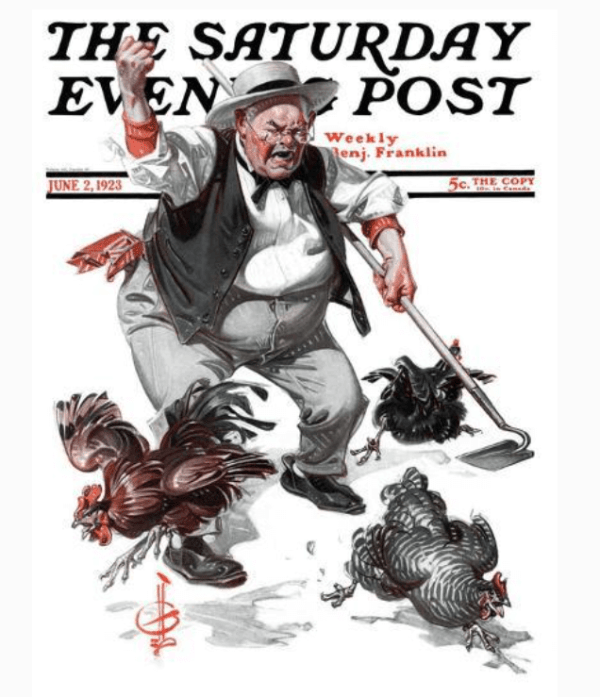
Also, chickens.

J.C. Leyendecker
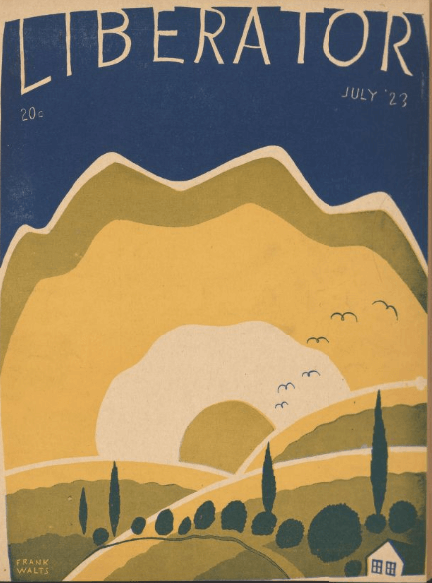
Frank Walts

July

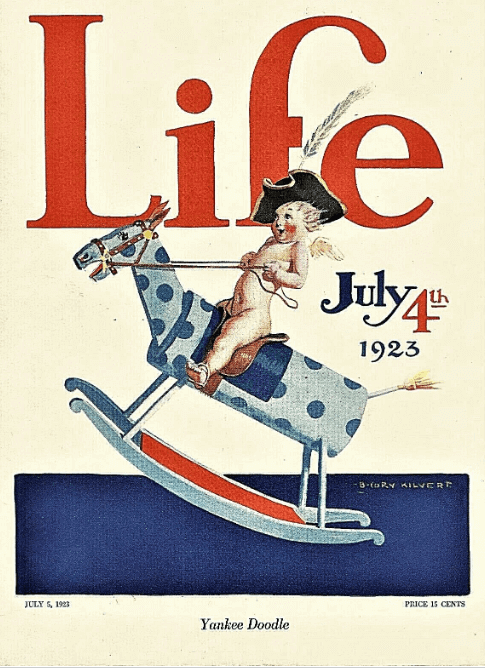
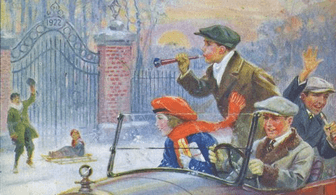
July started off with a celebration of the Glorious Fourth,

B. Cory Kilvert

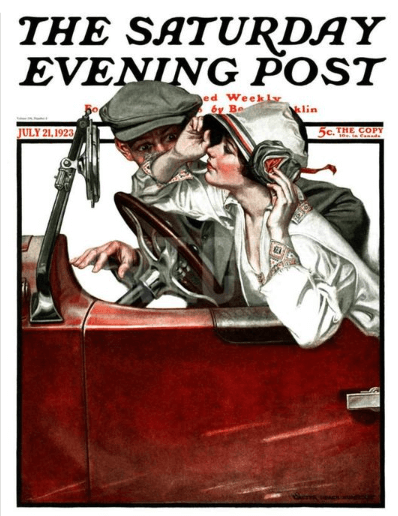
and then we got in the car

Ruth Eastman
Walter Beach Humphrey

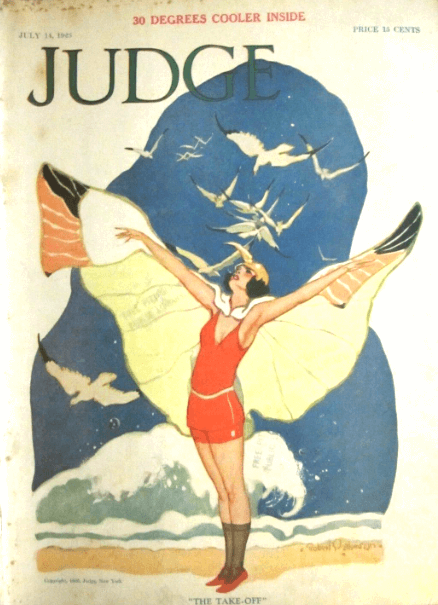
and headed off to the beach

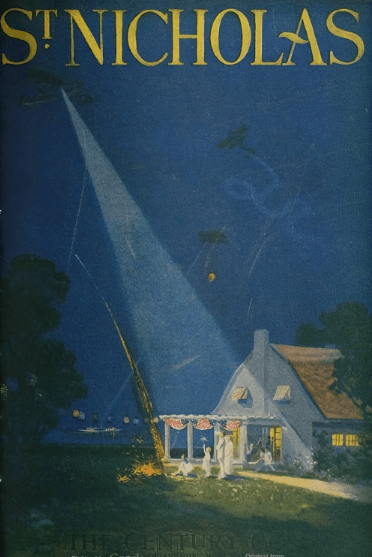
George Wolfe Plank
Robert Patterson

and then to the countryside.

Frank Walts
 Bradley Walker Tomlin

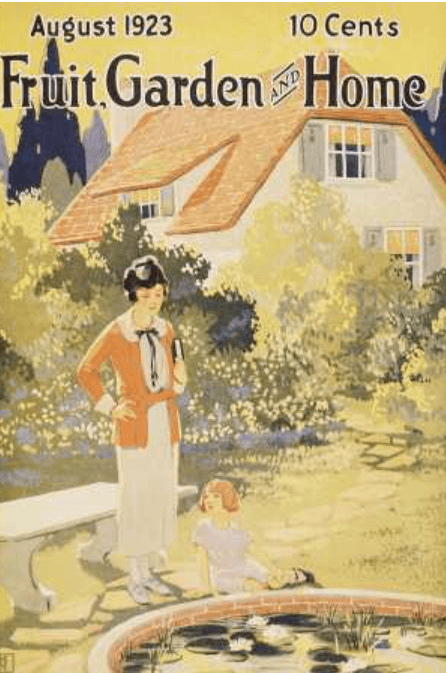
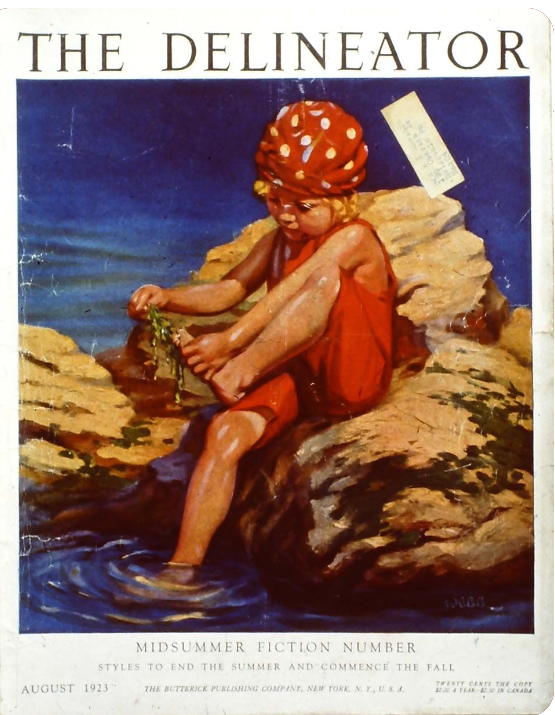
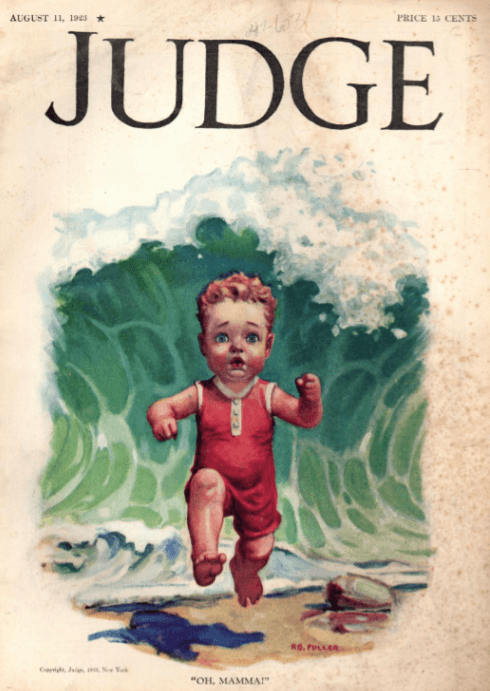
In August, we’ve been savoring the last few weeks of the season—spending time with the kids,

Thomas Webb
R.B. Fuller

J.C. Leyendecker

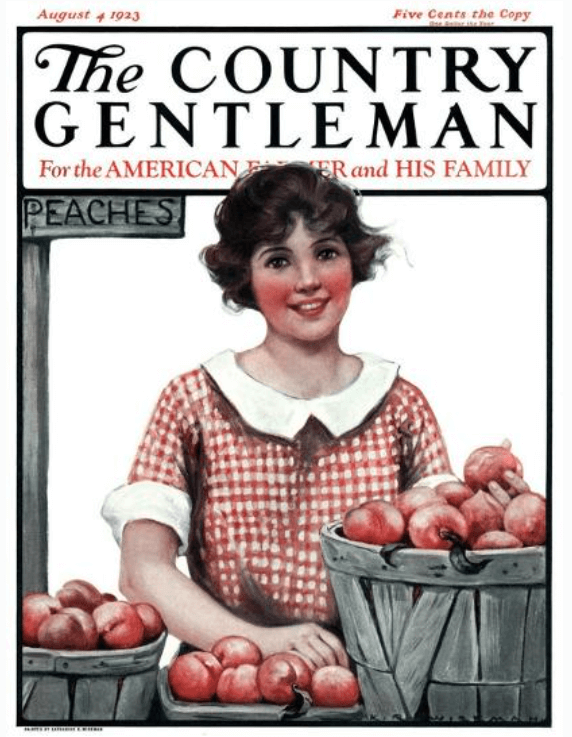
enjoying the last peaches of the season,

Katherine R. Wireman

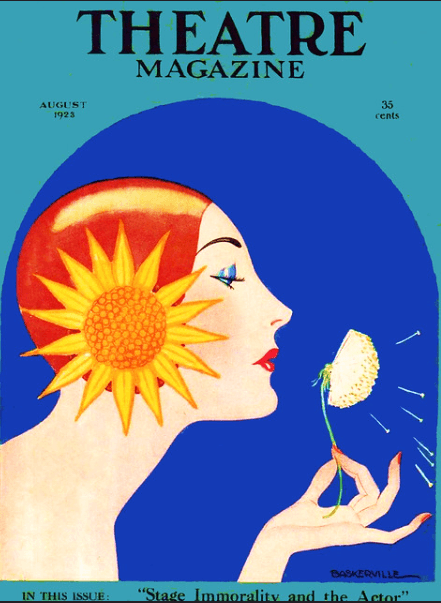
and wishing that summer would stay with us for just a few more weeks.

Charles Baskerville

Enjoy it while it lasts, everyone!

squiggle

New on Rereading Our Childhood:

Rereading Jennifer, Hecate, Macbeth, William McKinley, and Me, Elizabeth by E.L. Konigsberg

Rereading Henry Reed, Inc. by Keith Robertson

Rereading Harriet the Spy by Louise Fitzhugh

Rereading The Children of Green Knowe by L.M. Boston

Rereading Ballet Shoes by Noel Streatfeild

Rereading “B” is for Betsy by Carolyn Haywood

Rereading Encyclopedia Brown, Boy Detective by Donald J. Sobol

The Top, Um, Seven Posts of 1922

Happy New Year, everyone! I’m full of New Year’s resolutions, including to do enough posts this year to actually do a Top 10 a year from now.*

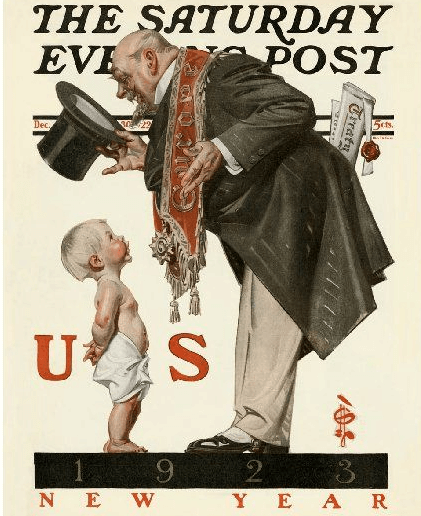
Halfway through his Saturday Evening Post New Year’s baby cover run, J.C. Leyendecker weighs in with a cover that left me baffled. A prosperous gentleman with a treaty in his pocket is conversing with the baby. But the Treaty of Versailles was signed in 1919 and went into effect in 1920, so what treaty is this? A Google search revealed that the Treaty of Lausanne, which cleaned up some remaining Turkey-related bits and pieces from World War I, was signed in 1923. But the United States wasn’t a signatory, so why the U and S on either side of the baby? I have no idea.** The baby, on the other hand, seems totally up to speed.

J.C. Leyendecker

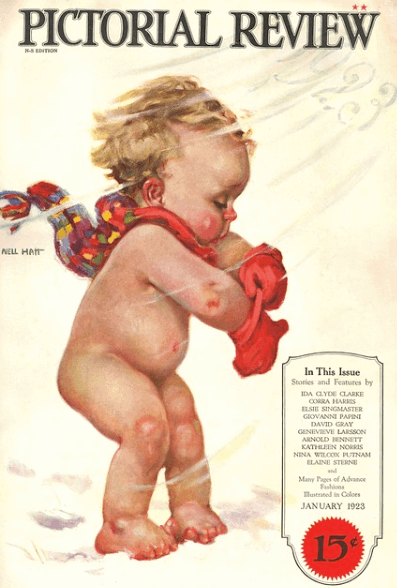
Meanwhile, they’re ringing in the new year at Pictorial Review

Nell Hatt

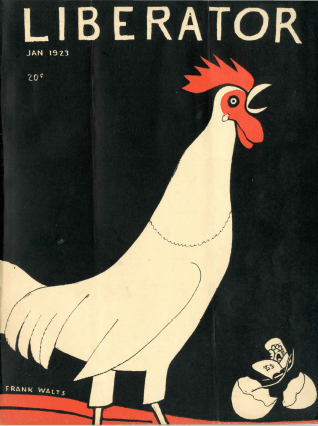
and Liberator in ways that you don’t have to have a Ph.D. in history to understand.

Frank Walts

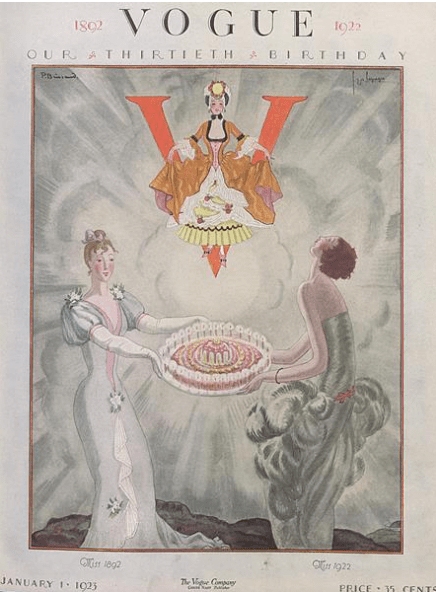
Vogue is celebrating its 30th anniversary, with Miss 1892 and Miss 1922 holding the cake.

Pierre Brissaud

The Top Seven

Now on to the Top Seven! As was the case last year, they’re pretty much in chronological order, with the last post in the last spot, etc., except that the Top 10 Posts of 1921, which was the first post chronologically, politely steps back to the sixth position to make way for more substantive fare.

7. Children’s Books: Your 1922 Holiday Shopping Guide

As I do every year, I took a look at the latest crop of children’s books. I found a few that are now regarded as classics, some more deservedly so than others, along with some intriguing lesser-known books like one illustrated by a teenaged American Indian artist and one illustrated by Freud’s gender-nonconfirming niece.

6. The Top 10 Posts of 1921

A roundup of magazine ads took the top spot last year, with one of my favorite posts ever, a profile of illustrator Rita Senger featuring an interview with her granddaughter, in second place.

5. My Quest to Earn a 1920 Girl Scout Badge: Pathfinder, Part 1

I scaled my ambition way back from my previous quest to earn all the badges from the 1916 Girl Scout book and set my sights on just one badge this time—Pathfinder, where you learn all about your community, Washington, D.C. in my case. But even that turned out to be an ambitious goal, so I focused on one requirement. Then I went to Belgium for six weeks, then back to D.C., then to Cape Town, where I am now. I’ll wrap this up with some long-distance pathfinding soon.

4. My Magical Journey to 1922

Reading a bunch of children’s books for a project I look forward to telling you about soon inspired me to take a magical journey to the advertising pages of the June 1922 Ladies’ Home Journal.

3. In search of an extraordinary spring 1922 magazine cover

In a hard-to-please mood, I set out to find a magazine cover that didn’t look like I’d seen it a thousand times before. Luckily, I found some winners.

2. Jane Austen’s Life 100 Years Ago

I loved loved loved writing this post about a 1920 book about Jane Austen by eccentric professor and critic Oscar Firkins. Firkins on Mansfield Park: “We feel that Edmund is overstarched, that Fanny is oversweetened, and that the two Crawfords are unfortunate in their resemblance to unstable chemical compounds.” For more, read the post, or better yet, Firkins’ book.

1. Langston Hughes, Teenaged Poet

I was delighted to see this post, about Hughes’ first published writing in the children’s magazine The Brownies’ Book, in the top spot. His contributions included not just poems but also articles on Mexico, where he was living. “The Negro Speaks of Rivers,” which became his signature poem, was submitted to The Brownies’ Book but ended up in The Crisis instead.

The Best of the Rest

Meanwhile, the backlist was going strong, with the top eight pre-2022 posts outperforming the top 2022 post. (This isn’t a fair comparison, though, since views of current posts are credited to the home page.) Here are the top three. The Rita Senger post, mentioned above, was the fourth most read.

1. The Uncrowned King of Bohemia: The fascinating life of a not-so-great poet

This post about the eventful and tragic life of poet George Sterling, who founded the artists’ colony in Carmel-by-the-Sea, bumped My Quest to Earn a 1919 Girl Scout Badge out of its traditional top perch. Fame has its price: it also attracted my first angry reader, who didn’t appreciate my flippant tone.

2. My Quest to Earn a 1919 Girl Scout Badge

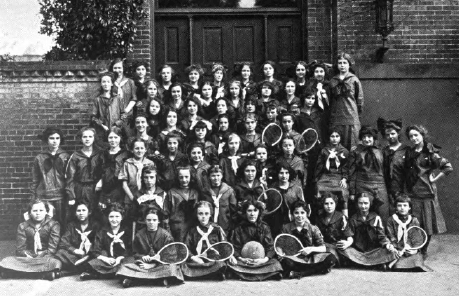
Girl Scout troop, 1916.

My somewhat deranged effort to earn all the Girl Scout badges was not far behind, however.

3. The doctor and the chorus girl: a heartbreaking tale of interracial love

Eugene Nelson and Helen Lee Worthing, 1929.

This post, which started out with my idle curiosity about what happened to a young woman who won one of those star of tomorrow contests in a movie magazine, turned into an obsession as I tracked down the fate of Helen Lee Worthing and her African-American husband, Eugene Nelson. I’ve never worked harder on a post, and I’m pleased that it’s still finding readers.

The Journey Continues

This month marks five years since I set off on my journey to 1918. It’s been more rewarding than I could have imagined. I’ve made a number of online friends, including my fellow members of a 1920s bestsellers book discussion group. Some of them became real-life friends when I joined them in Bristol, UK, over the summer for a roundtable at a conference of the British Association for Modernist Studies. I spoke about Edna Ferber and Dorothy Canfield Fisher (that’s me in the mask).

Then it was off to London for T.S. Eliot International Summer School. Here’s a selfie from our field trip to Burnt Norton:

The eccentric project that started with a report on a January 1918 cold snap has turned out to be quite an adventure!

squiggle

*Who knows how that resolution will go—not very well, if the timeliness of this post is any indication—but I can tell you about one that’s a rousing success so far: to lift 3-pound weights every day while listening to a Taylor Swift song. This is a hybrid of my failed weight-lifting resolution of last year and my aspiration to improve my credentials as a Taylor Swift fan. I’m catching up on the pre-Red era, starting with the first song on the first album. Best song so far: Our Song.

**Apparently there was a side agreement with the United States called the Chester Concession, but my interest in understanding this magazine cover does not extend to learning what this was all about. Besides, it was never ratified by the Senate.

squiggle

New on the Book List: The Secret Adversary, by Agatha Christie