Category Archives: Magazines

In search of a good mother poem

Mother’s Day has come and gone with no acknowledgement from me.* But better late than never, right?

Mothers were a big deal in 1918. Of course, they never exactly go out of fashion, but, with American soldiers just beginning to be in harm’s way, they were on everyone’s mind.

President Wilson paid tribute to the

patriotic sacrifices which are being most freely and generously made by the mothers of this land in unselfishly offering their sons to bear arms, and, if need be, die in defense of liberty and justice.
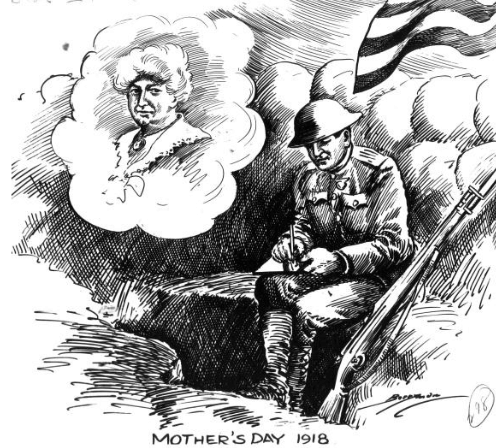
Clifford Berryman, Washington Evening Star, May 2, 1918

According to the New York Times, General Pershing called on his troops to write home on Mother’s Day. The Y.M.C.A. in France took stationery to the trenches and delivered the letters to the army postal service, where they were marked “Mother’s Mail” and given top priority. “Mother booklets” were distributed to the soldiers, containing Rudyard Kipling’s “Mother o’ Mine,”** Henry van Dyke’s “Prayer for a Mother’s Birthday,” and “a typical letter written from any mother to any soldier.”***

There was a lot of poetry about mothers, most of it, as in any era, pretty bad. So I was intrigued when William Lyon Phelps, author of a seemingly endless series of articles in The Bookman called “The Advance of English Poetry in the Twentieth Century” (we’re on Part VIII now), praised some poems on motherhood by Anna Hempstead Branch. Phelps, an author, critic, and scholar whose lectures drew enthralled throngs,**** called Branch’s poems “as beautiful in their uncrowded simplicity as an eighteenth century room.”

I didn’t get my hopes up too high, though, since, according to Phelps, Branch was the only contemporary poet James Witcomb Riley could stand. The Hoosier Poet has a special place in my heart—he was imprinted on me during a few impressionable childhood years in Indiana—but even Phelps, who was no avant-gardist, called him “the most conservative man I ever knew.” My expectations were lowered further when I read on Wikipedia that Phelps “was regarded as a major poet during her life,” which always has a subtext of “but we all know better now.”
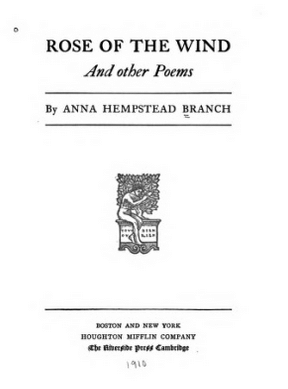
Here’s the first part of Songs for My Mother, called “Her Hands.”

My mother’s hands are cool and fair,
They can do anything.
Delicate mercies hide them there
Like flowers in the spring.

When I was small and could not sleep,
She used to come to me,
And with my cheek upon her hand
How sure my rest would be.

For everything she ever touched
Of beautiful or fine,
Their memories living in her hands
Would warm that sleep of mine.

Her hands remember how they played
One time in meadow streams, —
And all the flickering song and shade
Of water took my dreams.

Swift through her haunted fingers pass
Memories of garden things; —
I dipped my face in flowers and grass
And sounds of hidden wings.

One time she touched the cloud that kissed
Brown pastures bleak and far; —
I leaned my cheek into a mist
And thought I was a star.

All this was very long ago
And I am grown; but yet
The hand that lured my slumber so
I never can forget.

For still when drowsiness comes on
It seems so soft and cool,
Shaped happily beneath my cheek,
Hollow and beautiful.

With all due respect to Phelps, and to Branch’s fragrant mother—no. It’s not just that this poem has nothing to do with where poetry was going.***** Try to read that last stanza out loud. For it to work, you have to pronounce the last line “hollOW and beatiFOOL.” It’s fine to bend the rules on rhyming and scanning if your structure is looser—for example, “Streets that follow like a tedious argument/Of insidious intent,” from T.S. Eliot’s “The Love Song of J. Alfred Prufrock,” doesn’t scan particularly well—but if you’re locked into your scheme as tightly as Branch is, you’ve got to stick with it. I did like “I…thought I was a star,” but I got lost trying to follow the cloud/pasture/cheek/mist trajectory.

Then I stumbled upon William Carlos Williams’ 1917 poem “Dedication for a Plot of Ground.” Once again, I didn’t get my hopes up. For one thing, WCW and I have a history, dating back to the early days of this blog when I denounced his foray into poetic Cubism. Plus, have you ever come across a more boring title?
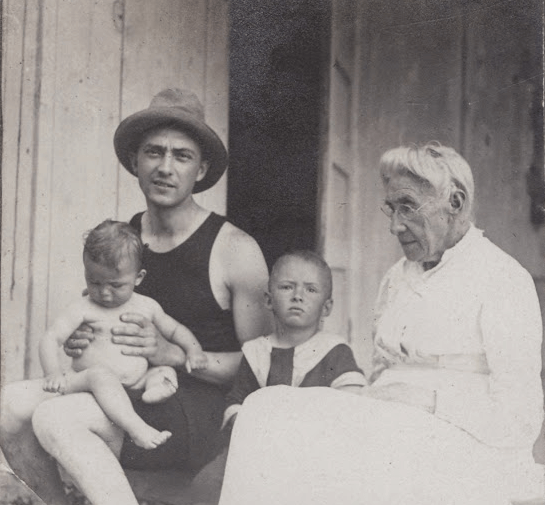
William Carlos Williams with his two sons, Paul and William, and his grandmother, Emily Dickinson Wellcome, circa 1918 (Beinecke Library, Yale, University)******

The poem is about Williams’ maternal grandmother. Here it is:

This plot of ground
facing the waters of this inlet
is dedicated to the living presence of
Emily Dickinson Wellcome
who was born in England; married;
lost her husband and with
her five year old son
sailed for New York in a two-master;
was driven to the Azores;
ran adrift on Fire Island shoal,
met her second husband
in a Brooklyn boarding house,
went with him to Puerto Rico
bore three more children, lost
her second husband, lived hard
for eight years in St. Thomas,
Puerto Rico, San Domingo, followed
the oldest son to New York,
lost her daughter, lost her “baby,”
seized the two boys of
the oldest son by the second marriage
mothered them—they being
motherless—fought for them
against the other grandmother
and the aunts, brought them here
summer after summer, defended
herself here against thieves,
storms, sun, fire,
against flies, against girls
that came smelling about, against
drought, against weeds, storm-tides,
neighbors, weasels that stole her chickens,
against the weakness of her own hands,
against the growing strength of
the boys, against wind, against
the stones, against trespassers,
against rents, against her own mind.

She grubbed this earth with her own hands,
domineered over this grass plot,
blackguarded her oldest son
into buying it, lived here fifteen years,
attained a final loneliness and—

If you can bring nothing to this place
but your carcass, keep out.

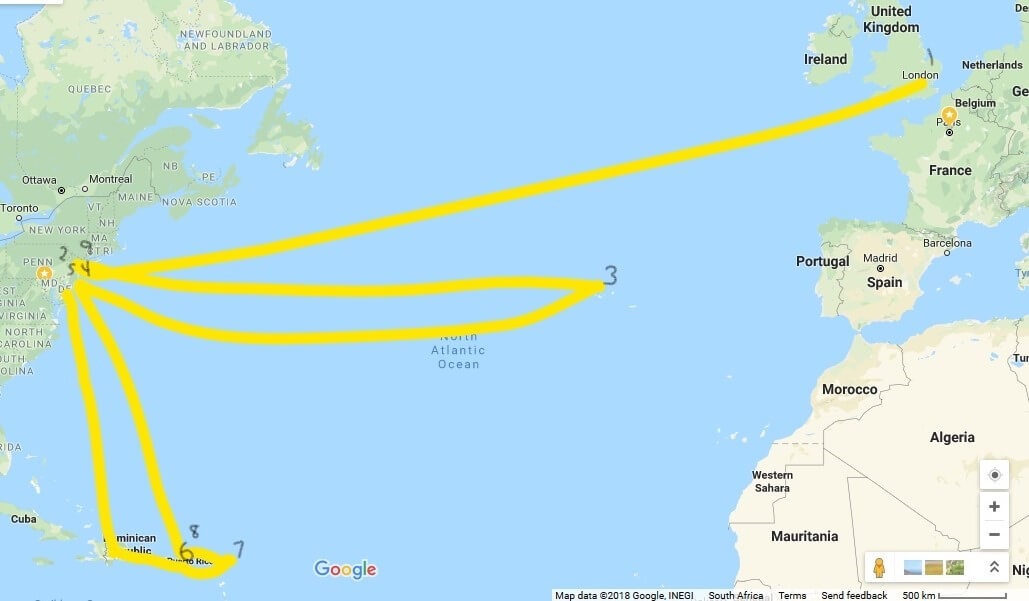
Now, THAT’s a poem. It’s fierce. And Emily Dickinson Wellcome was a fierce mother. What a life! Look at it in geographic terms*******:
And so much loss and heartbreak along the way.

If I had to pick a mother from between these two, I’d choose Phelps’s mom, Mary L.B. Branch. When she wasn’t caressing Anna’s brow, she was a poet and children’s author (although not a very good one, from my brief look at her work). She and her husband raised Anna in Connecticut, where her family had lived since 1640. There’s something to be said for stability.

But a poem about a mother? I’ll take Emily, any day.

[UPDATE 9/25/2019: I subsequently found the worst mother poem of all. Read about it here.]

Title page, The Kanter Girls, by Mary L.B. Branch, 1895

*My Year in 1918-wise, that is. IRL I was on it.

**Which I just read and it’s all about dying and is a terrible poem to give to a soldier!

***1918 mothers were surprisingly interchangeable. American soldiers were apparently known for their need for mothering and their tendency to glom on to the nearest French woman of appropriate age. (But the French apparently thought it was pretty cool, since they followed the American soldiers’ example and celebrated Mother’s Day for the first time that year.)

****People supposedly sat outside packed churches to listen to him through the windows. Those were the days!

*****For an interesting discussion of how a poem can have nothing to do with where poetry is going and still be great, read Frank Hudson’s recent post on Sara Teasdale’s “Union Square.” He sings it too!

******CORRECTION 9/4/2019: I originally identified the woman in this photograph as Williams’ mother after seeing her identified as such in several places, including a blog post published by Yale’s Beinecke library, which owns the photograph. When I saw her identified as Williams’ grandmother Emily Dickinson Wellcome in the Williams biography Something Urgent I Have to Say to You, I inquired with Beinecke Library and was told it is Wellcome.

******Not completely accurate geographic terms, apparently—E.D.W. was not the most truthful of grandmothers.

Thursday Miscellany: Mauvais français, trippy Kewpies, and loud loos

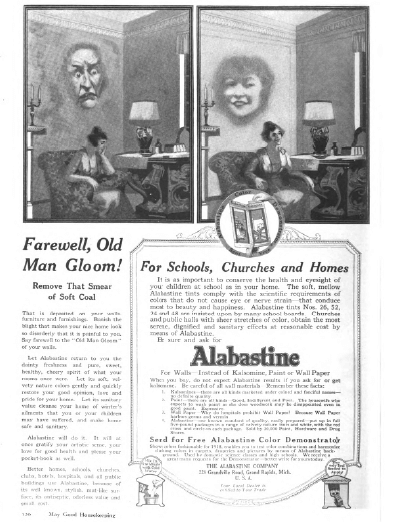
French phonetic pronunciation was a big thing in 1918 product names. (See also Bozart Rugs.) In this case I kind of get it, since you wouldn’t want to go to all the effort of creating a costly new odor out of 26 flowers only to have everyone call it “Talc Gentile.”

Good Housekeeping, May 1918

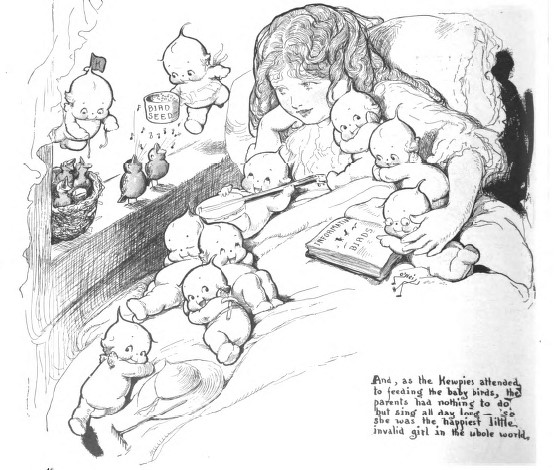
Good Housekeeping ran a recurring feature on the Kewpies for the children of 1918, who were apparently less easily freaked out than I am. In this episode, an invalid child’s bed is absolutely infested with Kewpies, but she’s OK with it.

Good Housekeeping, May 1918

Apparently having other people hear you flush the toilet was a highly dreaded 1918 situation.

Good Housekeeping, May 1918

I don’t know, my own ideal scenario is NO creepy disembodied faces on my living room wall.

Good Housekeeping, May 1918

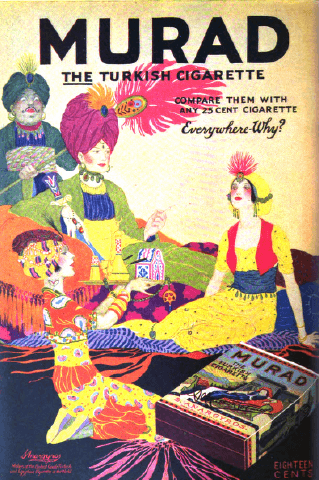
I know I’ve been kind of a shill for the 1918 cigarette industry, and Murads in particular. But I can’t help it, I just love Murad ads. So, just so we’re all on the same page here, CIGARETTES ARE BAD FOR YOU. THEY KILL. THEY SMELL REALLY, REALLY BAD. YOU SHOULDN’T SMOKE, AND IF YOU ALREADY DO YOU SHOULD QUIT.* Now that I’ve made that clear, here’s an ad for Murads in the May 1918 Scribner’s. 

*ESPECIALLY IF YOU LIVE IN MY BUILDING.

1918 Word of the Year: Virile

Quick: what do society portrait painter Cecilia Beaux, Canadian newspapers, and Alsace have in common?

You got it! They’re all super-manly.

Virile, that is.

For the most part, I’ve found that 1918 writing seems surprisingly contemporary. But I noticed early on in My Year in 1918 that certain words were used in ways that they aren’t used now. So I set out in search of the most 1918 word of all. It might be premature to declare a winner this early, but I don’t see how anything can beat virile.

Let’s look at some of the other contenders.
Race. In 1918, race didn’t just mean race as we know it—in fact, it rarely meant that. It meant nationality or religion or basically any kind of sub-group. It was used all the time. But how 1918 people used the word doesn’t say much about who they were—except to emphasize how inclined they were to divide people into groups. And to believe that membership in these groups determined their character. (Okay, on second thought that does say a lot. But not as much as virile.)

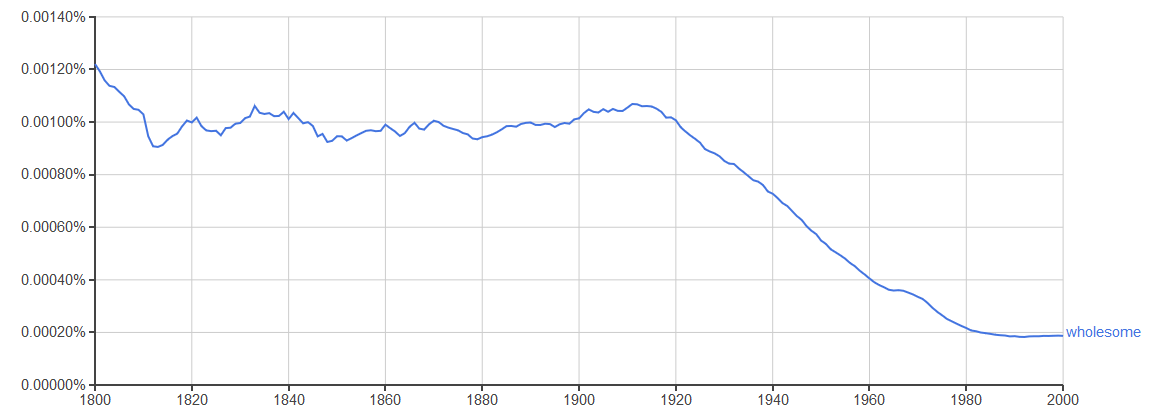
Wholesome. Wholesome didn’t have the faintly condescending connotation that it has now. To say that a book or a work of art was wholesome was meant as high praise. But the word had a whiff of the stuffy Victorian parlour, and the modernists sneered at it. Wholesome was headed for a fall. Just look at its Google N-Gram:

Virile, on the other hand, was in its heyday.

Why virile? Why now? First of all, the obvious: the United States was at war, and what’s more virile than a war? Theodore Roosevelt, Mr. Manliness himself, had said so:

No qualities called out by a purely peaceful life stand on a level with those stern virile virtues which move the men of stout heart and strong hand who uphold the honor of their flag in battle.

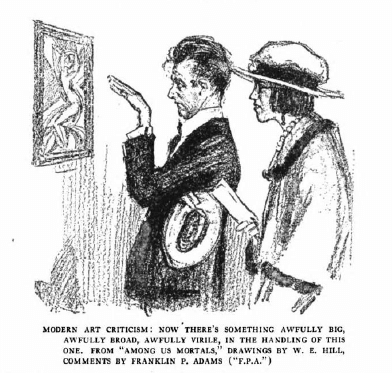
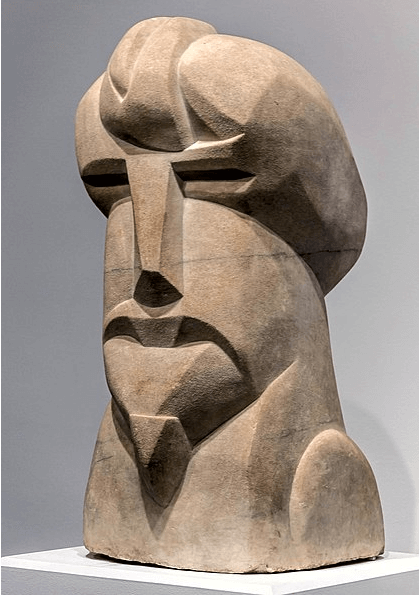
And virility was a virtue that had appeal for everyone. The old school liked its robustness. When Kipling won the Nobel Prize in 1907, the committee praised his “virility of ideas.” The modernists wanted to smash up the old order, so they liked virile too. In 1914, when the sculptor Henri Gaudier-Brzeska was making a bust of him, Pound said, “Make it virile.” Gaudier-Brzeska responded with this priapic work. Careful what you ask for, Ezra!*

Hieratic Head of Ezra Pound, Henri Gaudier-Brzeska, 1914

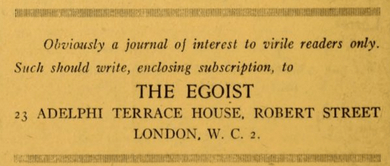
It was the modernists, in fact, who first clued me in to virile, back in February when I took offense at this ad for The Egoist, the British literary magazine where T.S. Eliot worked:

Little Review, February 1918

As for H.L. Mencken, virility was his middle name. (Well, actually, L. was.) The Los Angeles Times said that, with his “virile and ruthless attitude,” he had “done much to quash the effeminacy which for half a century has devastated our literature.”

Well, maybe not everyone liked virile. I imagine that Jewish men, who were stereotyped as unmanly (the word languid was frequently deployed), weren’t too fond of it. And the whole virile thing must have gotten old for women.

New York Times, January 12, 1918

Not all women, though. Take Miss Mary G. Kilbreth, Acting President of the New York State Association Opposed to Woman Suffrage, who complained that

a woman autocracy has been established in the national capital. Will the people tamely submit to the yoke? The French dealt summarily with women politicians after the French Revolution,** but the French are a virile race.*** Are we?****

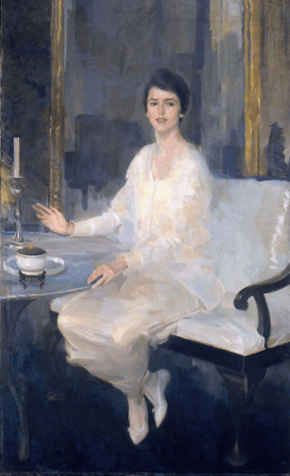
Anyway, women can be virile too! Take portrait painter Cecilia Beaux, of whom The Art World said in March 1918, “Physically, professionally, this forceful woman and virile painter is at her zenith.” Here’s a painting by the studly Miss Beaux:

Ernesta, Cecilia Beaux, 1914 (Metropolitan Museum of Art)

Now for a few of my favorite virile things from 1918:

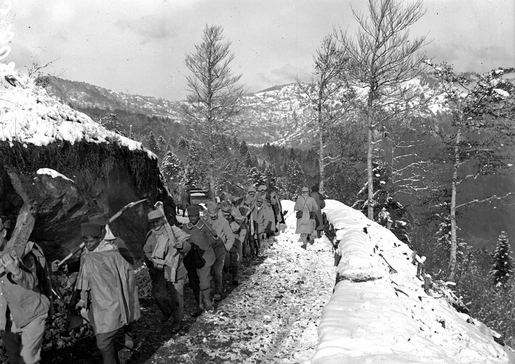
Alsace:

Malagasy working on the road from Ballon d’Alsace to Alfred, November 1917 (Charles Winckelsen)

As, thinking on these things, I passed the boundary stone into the virile landscape of Alsace, suddenly I recalled the huge American encampment my train had whirled past in France. (Ladies’ Home Journal, April 1918)

Antique Spanish furniture:

House & Garden, January 1918

It is so virile that it holds its own by harmonious contrast and so adaptable that it appears to complete advantage against either a severely austere or a richly elaborate setting. It is only when placed in a weak, namby-pamby environment that it is neither austere nor completely opulent that old Spanish furniture looks out of keeping. (House and Garden, January 1918)

Converting people to Christianity:

Young men are more ready than any other class of people to accept Christ when the offer is made simply, virilely, unapologetically, and without ecclesiastical slants and theological camouflage. (Literary Digest, April 6, 1918)

Canadian Newspapers:

Literary Digest, January 26, 1918

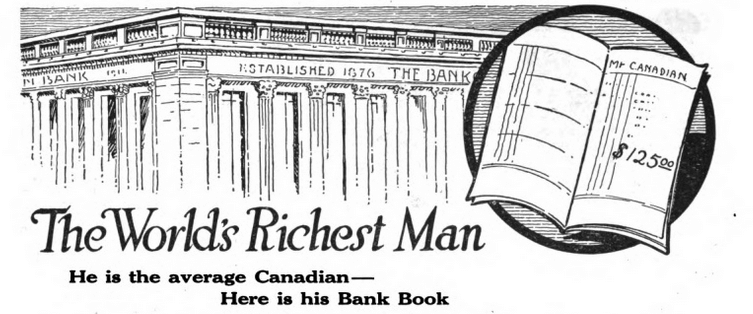
In the larger cities of Canada are printed a number of strong, virile, influential Newspapers that give the people their daily news of war, of peace, of progress, politics and MERCHANDISING. (Advertisement, Literary Digest, January 26, 1918)

And, in fact, everyone in Canada:

Literary Digest, February 16, 1918

Right at your side door, separated from you only by a friendly and imaginary line, is a young and growing nation of virile people, who have more money to their credit per capita than any other race of people. (Advertisement, Literary Digest, February 16, 1918)

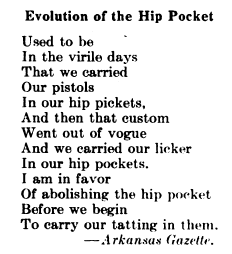
I’m off to find a fan to wave in front of my face. I’ll leave you with this virile poem:*****

Literary Digest, January 26, 1918

*Actually, he loved it.

**If this is a reference to Marie-Jean Roland, a revolutionary who fell out of favour during the Reign of Terror, then “dealt summarily with” means “chopped off the head of.”

***If only they were a wholesome, virile race, we’d have had a trifecta.

****To which the logical answer is, “Who cares what you think? You’re a woman.”

*****I think “hip pickets” is supposed to be “hip pockets.” Or maybe I’m missing some subtle 1918 wordplay.

Thursday Miscellany: What they did in 1918 because they didn’t have…

1918 situation: You want to make a movie about dolls coming to life.
Obstacle: Animation is in its infancy and mostly happening in Europe.
Solution: Make a stop-motion movie with custom-made dolls.

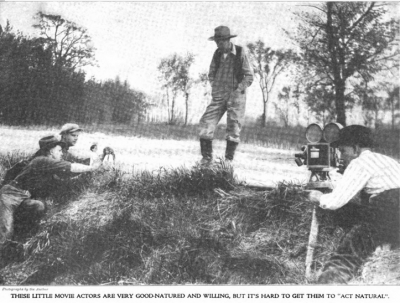
The 50-minute movie, called The Dream Doll, was released in December 1917.  You can read more about the film-making process in the January 1918 issue of Everyone’s magazine. Sadly, this movie doesn’t seem to be available online. Most silent movies are “lost,” i.e. there are no copies still in existence,* and this may be the case for The Dream Doll. So it’s not much of a spoiler to tell you that it was all a dream.

(UPDATE 5/4/2018: My recently discovered fellow back-to-1918 blogger, Whatever It Is, I’m Against It, found two short movies by Moss here.  The first one is from much later, but the second one, Mary and Gretel, is also from 1917 and is presumably similar in technique to The Dream Doll. WIIIAI is also on the swapped babies story, see below.)

Everyone’s magazine, January 1918

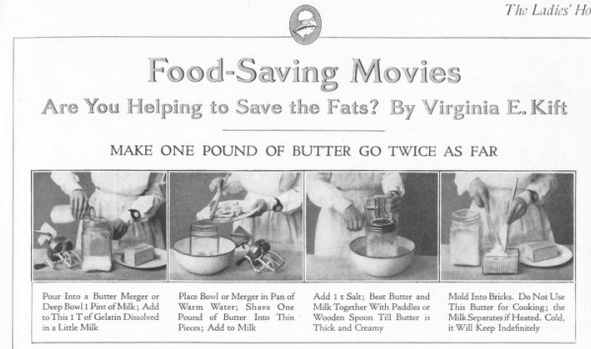
1918 situation: You want to show video clips of how to do your bit for food conservation by saving fat.
Obstacle: YouTube not invented.
Solution: Food-saving “movies,” i.e. photo sequences.

In the unlikely case that you want to make butter go twice as far by mixing it with milk and gelatin, or save butter by using chocolate instead, or use your inedible fat for soap making, you can learn how here.

Ladies’ Home Journal, March 1918

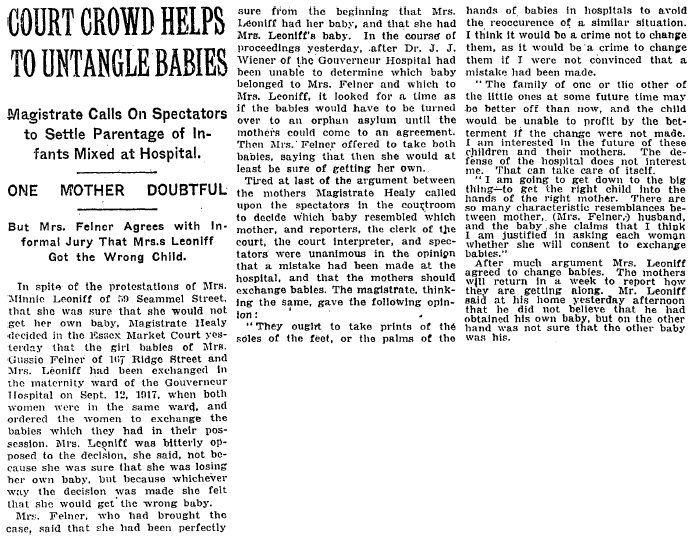
1918 situation: Babies maybe switched at birth.
Obstacle: No DNA testing yet.
Solution: Have everyone in the courtroom vote about who looks like who.

The reporters, court clerk, court interpreter, and spectators all thought that the babies had been swapped. The judge agreed, and ordered them swapped back. One of the mothers wanted to keep the baby she’d been raising for the past eight months. Too bad. Case closed!

New York Times, April 28, 1918

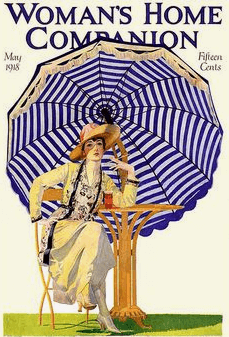
This post needs some color, so, apropos of nothing, here is the cover of the May 1918 issue of Woman’s Home Companion.

*Reasons: lack of storage space, deterioration, fires, and unawareness that people in the future would care.

A pioneering 1918 infographic, worth a thousand words

Words! So. Many. Words. Mine, and the 1918 people’s. I need a break.

The April 1918 issue of The Bookman has just the thing: a graphic about book publication in the United States and Great Britain. And a picture is worth a thousand words, which is the length that my typical post has swollen to these days.

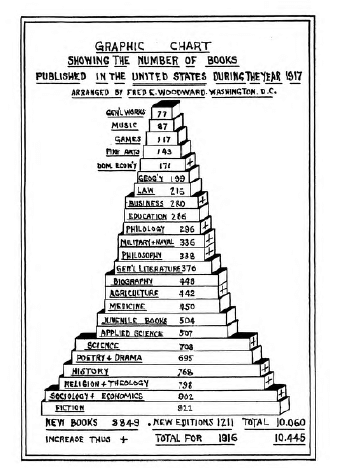
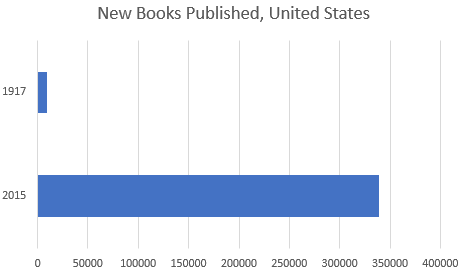
Here are the stats for books published in the U.S. in 1917:

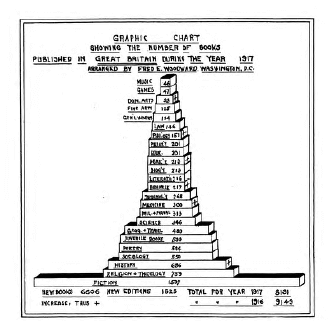
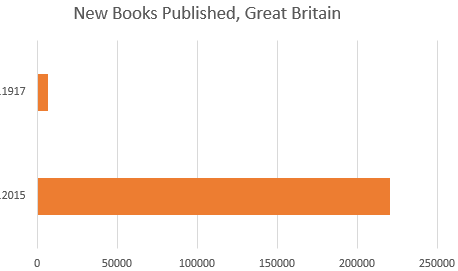
And in Great Britain:

In the accompanying article, Fred E. Woodward, who drew the graphic, points out that

a single glance at the two charts reveals a notable difference between the two figures, the one representing the books of the United States being an almost symmetrical pyramid endued with the appearance of stability and a certain element of vigor and strength, while the one representing Great Britain exhibits an enormous overplus of works of fiction as compared to the remaining classes.

Interesting. Not so interestingly, Woodward goes on to explain the charts at length, which kind of defeats the purpose of a chart. But I can forgive him a lot because, as far as I can tell, he is basically inventing information graphics here. (I did some research and found some earlier examples, going back to a depiction by J.J. Sylvester of chemical bonds and their mathematic properties in Nature magazine in 1878.* So let’s just say Woodward was inventing fun infographics.**)

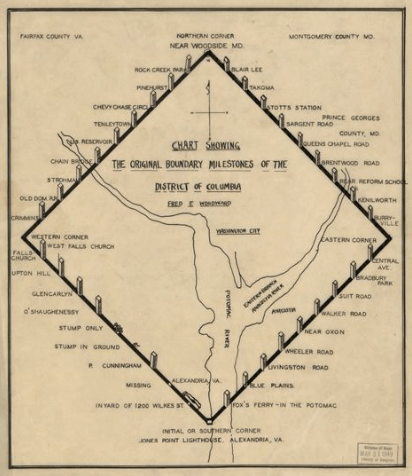
Chart showing the original boundary milestones of the District of Columbia, Fred E. Woodward, 1906 (Library of Congress)

Fred Woodward really, really liked drawing infographics about books. He did a way more complicated one in the April 1917 issue of The Bookman, and, also in 1917, wrote a graphic pamphlet on book sales for the U.S. Bureau of Education. Woodward also wrote a 1907 book called A Ramble Along the Boundary Stones of the District of Columbia with a Camera. I’m going to D.C. soon and, believe me, I’m going to be rambling along those boundary stones.

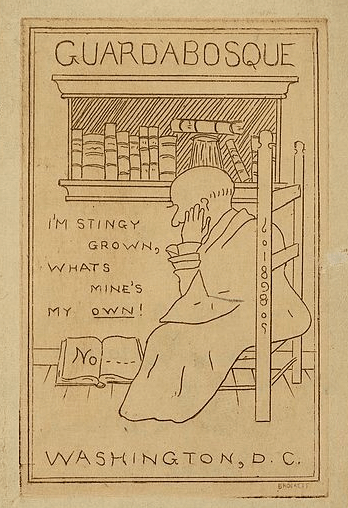
Bookplate of Fred E. Woodward, Washington, D.C., 1898 (Library of Congress)

The Library of Congress has this 1898 bookplate of Woodward’s (drawn by someone else, though) in its collection.  “Guardabosque” is a play on his name—it means forest ranger in Spanish, which is apparently the original meaning of Woodward. According to the LOC, there’s an inscription on the back saying that Woodward was the head of the books department at Woodward & Lothrop in Washington. A little more sleuthing revealed that he was the younger brother of the founder of the iconic, and now sadly out of business, department store.*** He’s apparently no relation, though, to graphic artist Fred Woodward, formerly the art director of Rolling Stone and now at GQ.

I was going to hold forth about how few books were published 100 years ago compared to now, but, you know, words. So here’s an infographic:

(Source, 1917: The Bookman magazine, April 1918. Source, 2015: International Publishers Association Annual Report, 2016.)

I realize that this is an apples-and-oranges situation in terms of comparisons. And that I’m no Fred Woodward (either one) infographics-wise.

Still, you get the picture.

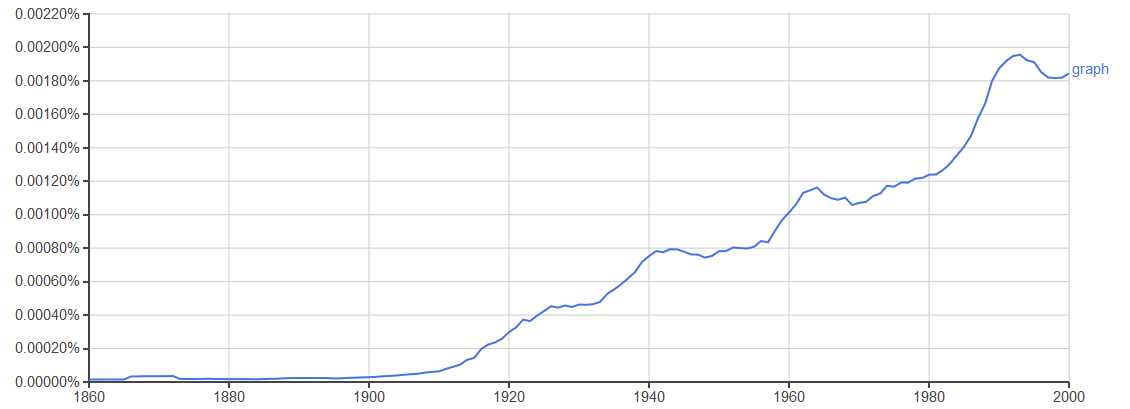
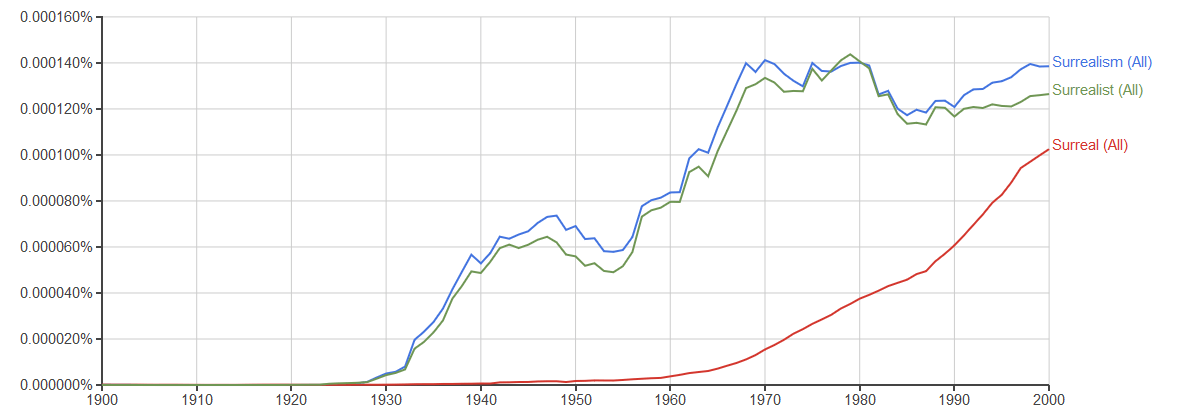
*Sylvester, as it turns out, coined the word “graph” in another 1878 Nature article. This is even more amazing than there having been no such word as “surreal” in 1918. If you don’t believe that “graph” is so new, which I didn’t, here’s the Google N-Gram:

**I realize that Woodward probably wasn’t doing this all by himself. Please be in touch if you know of other examples!

***I have wonderful memories of going Christmas shopping in the children’s castle at Woodies (as we D.C. cognoscenti call it) in the 1970s.

The best and worst of April 1918: Magazines, stories, faint praise, and neologisms

A third of the way through!

After four months in 1918, I’ve become both more optimistic and more pessimistic about our present world. More optimistic because so many problems that seemed intractable back then, like the acceptability in mainstream circles of overt racism, sexism, and antisemitism, are gone now. More pessimistic because of all the new problems, like global warming, that people back then couldn’t have conceived of.

Okay, enough philosophizing. On to the best and worst of April 1918.

Best magazine: The Dial

The Dial is one of the most reliably interesting reads of 1918. It started out in 1840 as an outlet for the Transcendentalists (Louisa May Alcott’s father came up with the name) and was now a Chicago-based political and literary journal. H.L. Mencken wasn’t a fan—he ridiculed the “insane labeling and pigeon-holing that passes for criticism among the gifted Harvard boys of the Dial and the Nation”—but staff writer Randolph Bourne gave as good as he got, saying that Mencken and Theodore Dreiser “beat at a straw man of puritanism which, for the younger generation, has not even the vitality to be interesting.”*

The Dial did have a tendency to review seemingly every book that showed up on its doorstep, like Colorado, the Queen Jewel of the Rockies. But when a single (April 11) issue includes John Dewey on education, historian Charles Beard (who had recently resigned in protest from Columbia) on universities and democracy, Conrad Aiken on poetry,** and Bourne on immigrant fiction, I can forgive a lot.

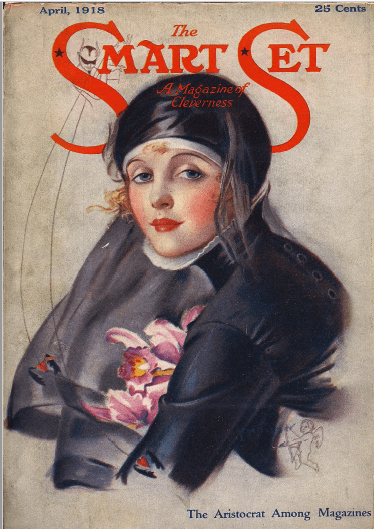
Best short story: “The Swimming Pool” by Evelyn Campbell, Smart Set

I haven’t read many magazine short stories this month. In fact, I’ve read just one: this one. And I wouldn’t call it a great story. So this might strike you as a shoddy bit of best-and-worst selecting. But something about this story by Evelyn Campbell, a 22-year-old screenwriter and Ziegfeld Follies girl, got to me.

A woman, swimming in a pool as darkness falls, strikes up a conversation with a man. They’re both natural swimmers, creatures of the water, and during their brief conversation they fall a little in love.

Suddenly it was dusk. Not in the enclosure made brilliant by white bulbs, but up above in the oblong of dark blue sky where newly awakened stars began to show timid faces to their bolder rivals. They were in the deep water which lay densely beneath them. Again they turned upon their backs and floated.

As the woman leaves the country club with her horrible rich husband and their children, she passes the man, who’s wearing an ill-cut suit. Her daughter says, Oh, look, the new janitor. A typical Smart Set snappy ending. In most stories, though, the twist at the end is the point—the rest is just setup. Here, the spell that the water casts on the swimmers is the point, and the ending is just the resolution.

Some of Campbell’s descriptions work better than others—I can’t picture what “in the middle of the pool a big golden square turned the water to bright emerald” looks like—but she’s trying something other writers just weren’t doing in 1918. That is, Imagist poets were, but not magazine short story writers.

Best magazine cover: The Crisis

Even by 1918’s high standards, this was an exceptional month for magazine covers. I’ve posted pictures of several of them already (here and here and here). The standout, though, is the cover of the April issue of The Crisis, the NAACP magazine edited by W.E.B. Du Bois. It features a copy of a painting called “Lead Kindly Light,” made for the magazine by 34-year-old William Edouard Scott (and now owned by the Huntington Museum of Art in West Virginia).
Here’s how the magazine’s editorial, probably written by Du Bois, interprets the painting.

It is just an old lantern, filled with grimy oil. It cannot lead anywhere, yet its light leads. Its golden light streams through the night.

Whose is the light?

It is not the lantern’s. It simply seems to be the lantern’s radiance. It is the Light of the World and it leads not toward the millennium in the North, but out of the insult and prostitution and ignorance and lies and lynchings of the South—up toward a chance, a new chance,—nothing more. But thank God for that…

Lead, Kindly Light.

Worst magazine cover: Ladies’ Home Journal

This is a repeat, but nothing was going to beat this Ladies’ Home Journal cover, titled (by me) “Oh, how sweet! My boyfriend killed someone!”

Best poem: “Is It Worth While,” Violet Hunt, Poetry

Violet Hunt, ca. 1900

Reading Poetry magazine, you can see how living in 1918 was like living in two worlds. In the April 1918 issue, there’s page after page of purple mountains, and it could be 1868, and suddenly there’s Violet Hunt mourning her relationship with Ford Madox Hueffer (Ford), and it could be 1968.

You can read the rest of the poem here.

Faintest praise in a book review: T.S. Eliot, The Egoist

archive.org

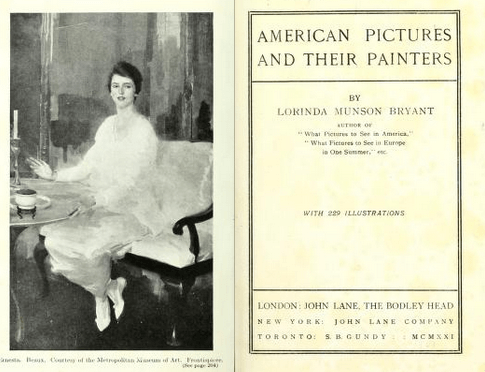
This was a surprisingly competitive category. At first, this unsigned review in the April 11 Dial, of Lorinda Munson Bryant’s American Pictures and their Painters, looked like a shoo-in:

One sincerely wishes that Mrs. Bryant in her enthusiasm for nature, both inanimate and human, had focused her numerous descriptions of the subject matter of the paintings. That the painter has chosen to paint a wintry landscape…is surely no excuse for a genteel panegyric on winter, or that the artist has selected a human being…is no excuse for a general eulogy of mankind. In the family circle a little girl, it is true, may be a “darling,” but in a painting that may be the least interesting of her attributes….If the subject is a woman, and a thin one at that, the author thinks the artist would have been wiser to select a plumper and rosier model…Aside from these minor defects the book is a handy and valuable compendium.

From “Hearts of Controversy,” by Alice Meynell, second edition, 1918

But then I came across this review of Alice Meynell’s Hearts of Controversy by Apteryx, AKA T.S. Eliot, in the April issue of The Egoist, and we had a winner.

In its peculiar anti-style, Mrs. Meynell’s book, like all her books, is extremely well written, and she can incidentally pick out good bits from authors. If we can accept this attitude, we shall enjoy the book very much. And people who have a taste for that antiquated genre, that parlour-game, the Polite Essay—which consists in taking a tiny point and cutting figure eights around it, without ever uttering one’s meaning in plain words—will find in Mrs. Meynell’s last essay (“Charmain”) an almost perfect example of a forgotten craft which indeed had its attractions.

*                                              *                                              *

But we must learn to take literature seriously.

(Asterixes Apteryx’s.)

Best neologism: Surréaliste

Study for a portrait of Guillaume Apollinaire, Jean Metzinger, 1911

“SURRÉALISTE is the denomination M. Guillaume Apollinaire—there is no doubt his astounding name continues to have good reason for keeping well in evidence—has attached to his play, Les Mamelles de Tirésias,” the Paris correspondent for The Egoist tells us. I knew that the surrealist movement was just getting underway in 1918, but it seemed strange to think of the word itself being a novelty. So I crunched some big data—that is, did a Google Books N-Gram***—and it’s true, surreal and its variants were pretty much non-existent at that point. So what did people say when things were, you know, surreal? (UPDATE 1/16/2021: It turns out that “stream of consciousness” in a literary context was also coined this month, by May Sinclair in an article about novelist Dorothy Richardson in The Egoist, which I actually read without realizing “stream of consciousness” was making its debut.)

Best humor: 

In The Bookman, there’s a report about the mystery surrounding the identity of the author of The Book of Artemas, a bestselling British spoof relating current events in biblical style. Was it G.K. Chesterton? J.M. Barrie? Hilaire Belloc? George Bernard Shaw? (It would turn out to be someone no one ever heard of named Arthur Telford Mason.) Here’s an excerpt:

5. Whilst Wudro, the son of Wyl, was tending his flock of young men in the pasture that is knowledge, and after he had taught them how they should go and what things they should know,
6. Behold, the men of Amer came unto him, saying, We have chosen thee for to rule over us; and we have
brought thee an high hat for to wear as the badge of thine office; and the size of the hat, it is six and seven-eights.
7. And because he knew not what he was letting himself
in for, he gave way to their importuning, and did put on the high hat, the size whereof was six and seven-eights.
8. And it came to pass that when the men of En fought against the men of Hu, they did send messengers unto the land of Amer for to buy them munitions for the war. And they took
with them gold in great quantity wherewith to satisfy the merchants that did sell unto them. Therefor did the land of Amer prosper exceedingly.

Worst joke:

Judge, April 27, 1918

On to May!

*Kind of harsh, since Bourne was only six years younger than Mencken.

**He agrees with me about Christopher Morley’s goopiness.

***Which is really fun—you should try if you’re off Facebook and looking for new ways to waste time.

Thursday Miscellany: Lady soldiers (ha ha!), a Vogue retread, a fed-up doctor, and an Erté duel

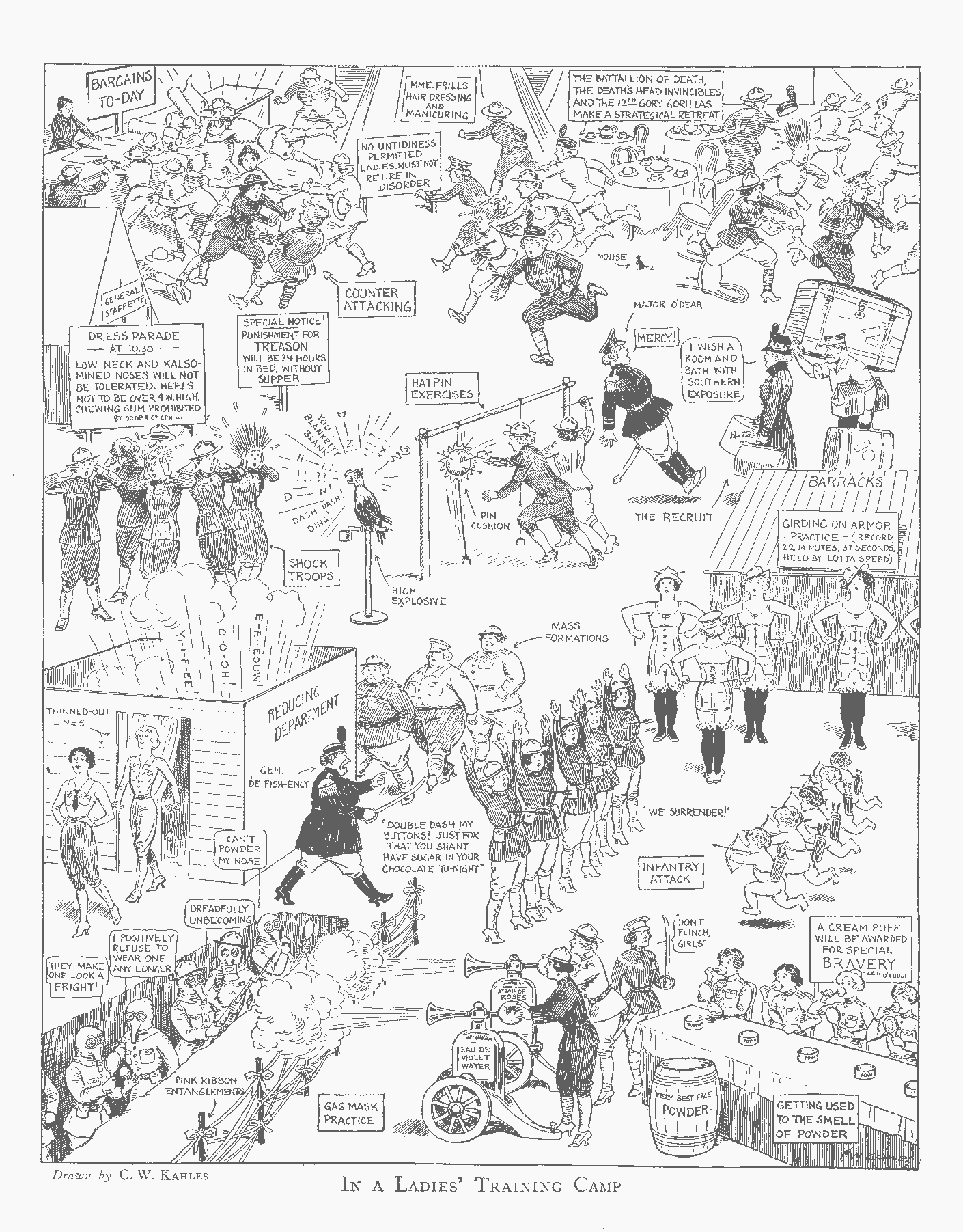
Ha ha, lady soldiers! I was going to ask C.W. Kahles if he’d ever heard of Russia’s all-woman Battalion of Death, but there they are in the upper right corner, running away from a mouse.

Judge magazine, April 20, 1918

This April 1918 Vogue cover, the only repeat in the magazine’s history, first ran in November 1911. It’s worth a second look.

Nutritionist/FDA founder/Poison Squad leader Dr. Harvey Wiley is back, with some sensible child-rearing advice. He often seems like a time traveler from a future era, full of “I can’t believe I’m stuck in this stupid century” exasperation.

Dr. Wiley’s Question Box, Good Housekeeping, April 1918

One of the most pleasant surprises about 1918 is the bright and modern decor. I want to live in this bungalow.

The Delineator, April 1918

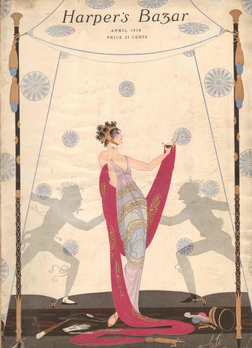
There’s often something vaguely sinister lurking under the surface of Erté’s gorgeous magazine covers. This one, titled “The Duel,” is more unsettling than most.

Insurgent Youth: The literary generation gap in 1918

“There is a vendetta between the generations.”

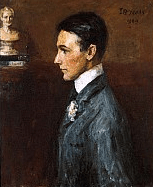
John Butler Yeats portrait of Van Wyck Brooks, 1909.

Portrait of Van Wyck Brooks by John Butler Yeats, 1909

So said critic Van Wyck Brooks in The Dial on April 11, 1918. (UPDATE 12/22/2020: Reading this again, I see that the actual quote is “There is a vendetta between the two generations.”) Randolph Bourne, a colleague of Brooks’ at the magazine, addressed the same theme in his March 28 essay “Traps for the Unwary,” asking

What place is there to be for the younger American writers who have broken the “genteel” tradition?…Read Mr. Brownell on standards and see with what a bewildered contempt one of the most vigorous and gentlemanly survivals from the genteel tradition regards the efforts of the would-be literary artists of today.*

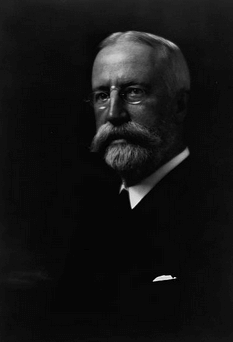
William Crary Brownell, date unknown (Library of Congress)

So I read Mr. Brownell on standards. (William Crary Brownell, that is. 1918 writers have an irritating habit of referring to people on first introduction as Mr. or Mrs. or Miss Last Name.) He was, it seems, a founding figure in American literary criticism, having sought to raise the country’s level of criticism as Matthew Arnold had in Britain. H.L. Mencken called Brownell “The Aristotle of Amherst”—not one of his better sallies, IMHO.

Brownell’s thesis in a nutshell: standards are important, but the younger generation doesn’t have them. He singles out “a recent clever novel—by a lady—that has evoked a very general chorus of cordial appreciation.” After quoting from a passage about a guy clipping his toenails, without providing the name of the book or author (another annoying 1918 habit), he says that

the picture is manifestly less a gem of genre than a defiance of decorum…One must draw the line somewhere and it is decorous to draw it on the hither side of the purlieus of pornography.

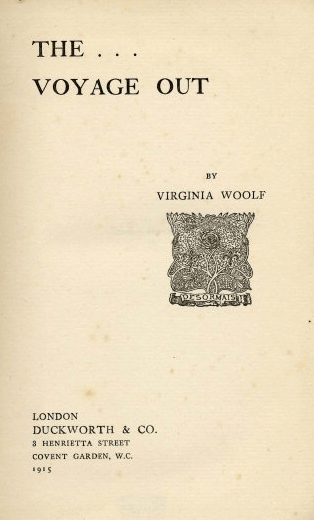
The lady writer, it turns out, is Virginia Woolf, and the book is her first novel, The Voyage Out.

First edition of Virginia Woolf’s The Voyage Out, Duckworth & Co., London, 1915

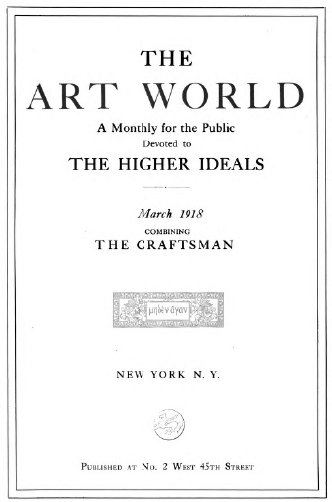
Brownell’s pretty boring, to be honest. Columbia professor Brander Matthews is a more entertaining old fogey. In his essay “The Tocsin of Revolt”,** in the March 1918 issue of The Art World, he says that

when a man finds himself at last slowly climbing the slopes that lead to the lonely peak of three-score-and-ten he is likely to discover that his views and his aspirations are not in accord with those held by men still living leisurely in the foothills of youth…If he is wise, he warns himself against the danger of becoming a mere praiser of past times; and if he is very wise he makes every effort to understand and to appreciate the present and not to dread the future.

Brander Matthews, date unknown

The young and old have clashed since time immemorial, Matthews says—and the survival of art depends on these very battles. This is all very sensible, and I wondered what Matthews was doing in such a reactionary magazine.

But!

But at the present moment, and perhaps more especially in our own country, there are signs of danger.

Uh-oh! Like what?

In this new century we have been called upon to admire painting by men who have never learned how to paint, dancing by women who have never learned how to dance, verse by persons of both sexes who have never acquired the elements of versification.

Matthews ends on a hopeful note. Ultimately, he believes, the younger generation

will tire of facile eccentricity and of lazy freakishness, of unprofitable sensationalism and undisciplined individualism. They will again seek the aid of tradition and they will toil to master the secrets of technic.***.

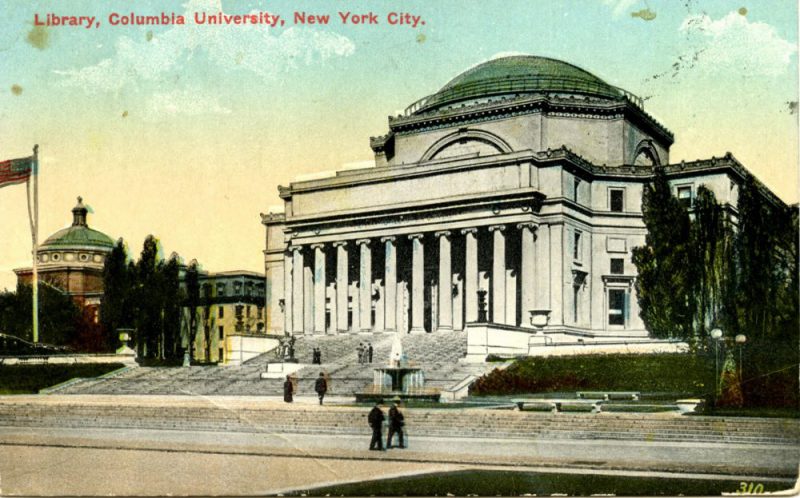
Bourne, a Columbia graduate himself, says of Matthews in a March 14 review of his autobiography that he was “incorrigibly anecdotal, genial, and curious.” He marvels, though, at his portrait of Columbia, then being torn apart by a free-speech controversy, as a paradise of harmoniousness. Ultimately, he delivers a damning verdict:

If there was ever a man of letters whose mind moved submerged far below the significant literary currents of the time, that is the man revealed in this book.

Columbia University library, 1917 (librarypostcards.blogspot.com)

Of Brownell, Bourne says in “Traps for the Unwary” that

one can admire the intellectual acuteness and sound moral sense…and yet feel how quaintly irrelevant for our purposes is an idea of the good, the true, and the beautiful.

Bourne agrees with Brownell and Matthews that standards are important, and that young people are turning out a lot of junk. The problem, he says, is that the older critics lump all young people together. What’s needed is a new criticism, focused on the younger generation, that

shall be both severe and encouraging. It will be obtained when the artist himself has turned critic and set to work to discover and interpret in others the motives and values and efforts he feels in himself.

In the natural order of things, Bourne could have been a standard-bearer for this new criticism after Brownell and Matthews passed on. But the two elders would survive for another decade, while Bourne had only months to live. Having battled disability and chronic illness throughout his life, he succumbed to influenza on December 22, 1918.****

If Bourne didn’t have the chance to build this new criticism, though, others did—first and foremost T.S. Eliot, who, across the Atlantic, was perfecting his craft as both a poet and a critic.

Randolph Bourne, date unknown

*The young generation was, I should note, fairly long in the tooth. Brooks was 32 and Bourne was 31. Other members of this literary youthquake included Ezra Pound (32), Margaret Anderson (31), T.S. Eliot (29), and John Reed (30). Meanwhile, much of the actual younger generation—21-year-old F. Scott Fitzgerald and 18-year-old Ernest Hemingway, for example—was off fighting in France. (UPDATE 11/17/1918: Actually, neither of them was fighting in France. Fitzgerald a lieutenant in the army but the war ended before he was sent overseas. Hemingway was an ambulance driver in Italy.)

**I think he means toxin. Matthews was an advocate of simplified spelling, so that may be the issue, although I never thought of “toxin” as particularly complicated. (UPDATE 12/16/1918: I came across “tocsin” in the New York Times and it turns out to mean a warning bell. Some dictionaries now consider it archaic.)

***Or technique, as we old-fashioned spellers call it.

****You can learn more about this brilliant thinker, and also about Walter Lippman, Alice Paul, John Reed, and Max Eastman, in Young Radicals, a wonderful book by Jeremy McCarter, co-author of Hamilton: The Revolution.

Thursday Miscellany: an eight-year-old writer, a Vanity Fair harlequin, and toasted cigarettes

(I’m changing my schedule from M-W-F to Tu-Th-Sat, so Wednesday Miscellany is now Thursday Miscellany.)

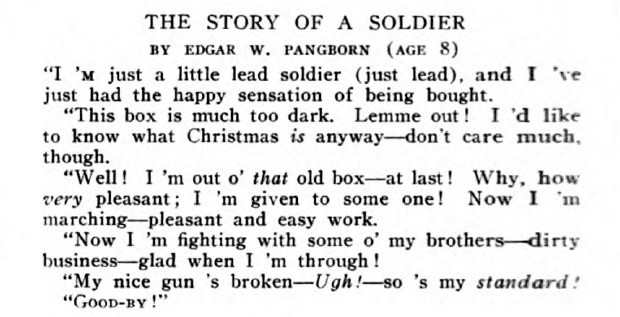
This story was a submission to a contest in St. Nicholas magazine. Even if you don’t read it as an allegory of a doomed WWI soldier–and it’s hard not to–it seems way too good to have been written by an eight-year-old. I Googled Edgar Pangborn,  and it turns out that he went on to become a science fiction writer who was one of the founders of the “humanist” school and served as an inspiration to Ursula Le Guin.*

St. Nicholas magazine, April 1918

Oh, how sweet! My boyfriend killed someone!

Ladies’ Home Journal, April 1918

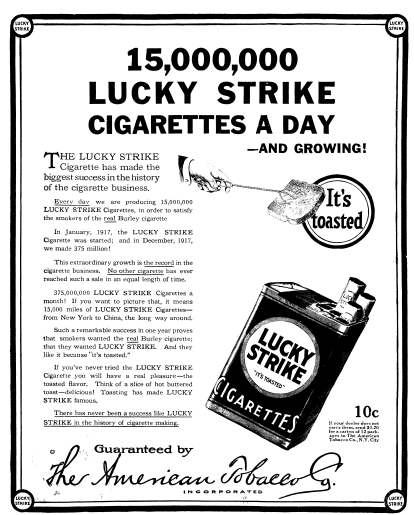
In case you thought, like I did, that Don Draper made up “It’s toasted” in 1960.

Judge magazine, March 2, 1918

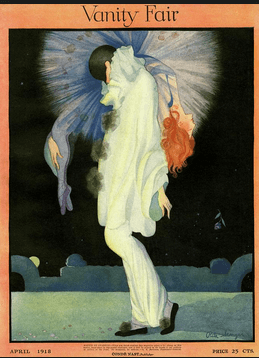
And finally, a harlequin and a ballerina on Rita Senger’s April 1918 Vanity Fair cover.

*He’s going to be hard to top as the youngest person I run across in My Year in 1918 who will go on to later fame.

A 1918 play about a single mother, too far ahead of its time

Reading the March 1918 issue of The Bookman a couple of weeks ago, I came across a brief review of The Madonna of the Future, which had recently opened on Broadway. As critic Clayton Hamilton tells us,

the heroine of this play is a very rich young woman, unencumbered with relatives, who desires to become a mother but does not desire to be saddled with a husband. In consequence of her convictions, she picks out an apparently eugenic mate and becomes, in due time, the mother of a nameless child.

My reaction: What? This is the least 1918 thing I’ve ever heard of!   

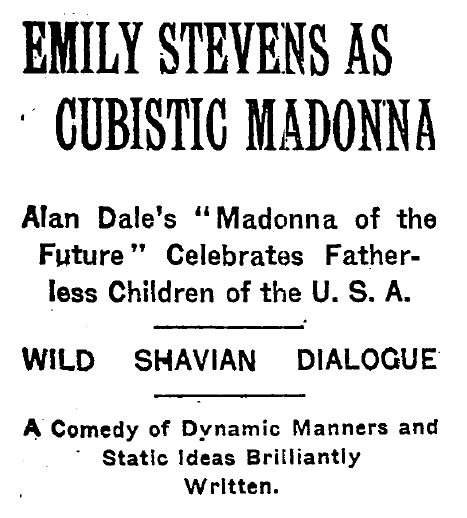
“Madonna of the Future” star Emily Stevens, New York Times, January 27, 1918

The Dramatic Mirror thought so too. “The most pitiful creature of the brothel would scorn such an idea,” the magazine huffed. It was not alone, apparently—New York Chief Magistrate William McAdoo* received a number of complaints. He wrote to the theater’s lawyers telling them that, if the issue arose in court, he would have to declare the play obscene. McAdoo said that

the character of the heroine repeatedly and tiresomely states over and over again that the doctrines advanced by her are unconventional and, in the sense usually accepted by ordinary people, immoral. She says that her highest ideal of maternity is that of the cow, which might suggest that the proper place for this play would be a stable instead of the stage, committing the dialogue to learned veterinarians.

I haven’t been able to find a script of the play, but here’s what I’ve managed to piece together. Iris Fotheringham, a wealthy young woman from Tarrington, New York, hates men, but has what the Dramatic Mirror calls “one redeeming virtue—the dream of all good women—the desire of motherhood.” She decides that her secretary, Rex Letherick, would be a suitable father,** and whisks him off to Europe. After the baby is born, she blithely resumes her New York life. Rex is desperately in love with Iris, and, as the Dramatic Mirror puts it, “still willing to be her husband.” Iris gets wind that there’s another woman in the picture, gets jealous, and marries Rex.

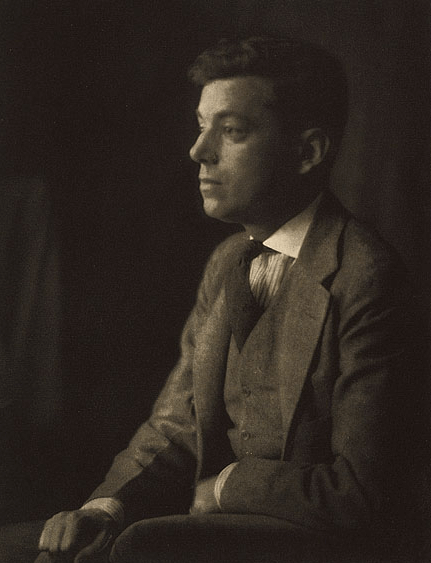
Alan Dale and his daughter Marjorie, 1900 (Library of Congress)

What makes this story even more interesting is that the play’s author, Alan Dale, was America’s most famous theater critic. The British-born Dale (real name Alfred Cohen) had been writing acerbic reviews for the Hearst newspapers since the 1880s. He had made a lot of enemies along the way. “The theatrical world is finding considerable amusement in the situation created by the police complaint,” the Dramatic Mirror gloated, speculating that the cause of the play’s troubles was a morality campaign by the city’s Tammany Hall mayor. For good measure, the magazine threw in some cracks about the play’s bad reviews.

New York Times, January 29, 1918

This was unfair, as far as I can tell. The un-bylined New York Times reviewer called the play “a brilliantly written comedy of ideas,” although he complained that the ending was a copout. He noted similarities to George Bernard Shaw, but said that Shaw, “having real ideas of his own, also has the courage of them.”  Astonishingly, the reviewer got away with saying that the de-stigmatization of single motherhood was important to contemplate,

for women in these coming manless times will be much occupied with the thought that life would be less empty if only there were children. And the world will have need of new citizens.

George Jean Nathan, date unknown

George Jean Nathan, who co-edited Smart Set with H.L. Mencken and is now regarded as the greatest theater critic of his time, really, really hated Dale’s reviews. He complained in Smart Set’s April 1918 issue that Dale displayed

the sort of humour…that proceeds from the comparison of something or other with a Limburger cheese or from some such observation as “‘Way Down Yeast’ ought to get a rise out of everybody.” The sort of humor, in short, whose stock company has been made up largely of bad puns, the spelling of girl as “gell,” the surrounding of every fourth word with quotation marks, such bits as “legs—er, oh I beg your pahdon—I should say ‘limbs’,” a frequent allusion to prunes and to pinochle, and an employment of such terms as “scrumptious” and “bong-tong.”

But Nathan goes on to praise The Madonna of the Future, saying that

its theme is viewed through the glasses of a man possessed of a certain pleasant measure of cultural background and expounded in well thought out and effective vein; its net impression is of a piece of writing designed by a civilized gentleman for a civilized audience.

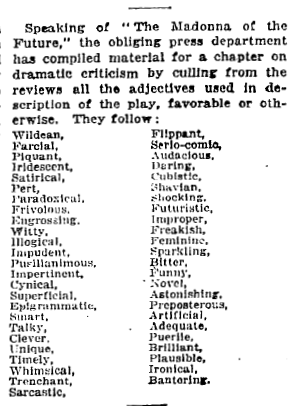
The New York Times ran this list of adjectives that had been used to describe the play, ranging from puerile to shocking to brilliant:

New York Times, March 10, 1918

After the theater received the letter, the script was revised, there was some back and forth with McAdoo, the play closed on Broadway after less than two months, and the censored version, retitled The Woman of the Future, moved to New York’s “subway circuit.”

In spite of its short run, The Madonna of the Future caused quite a stir. Today’s Iris Fotheringhams may, in part, have Alan Dale to thank for getting people used to the idea that having a baby without a husband isn’t all that big a deal.

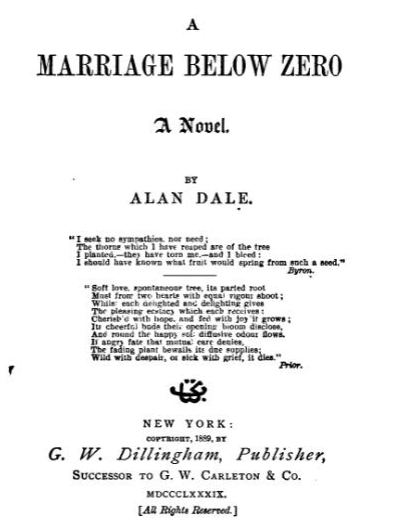
Alan Dale lives on in another way as well: his 1889 novel A Marriage Below Zero has been described as the first English-language novel to depict a romantic relationship between two men.

All in all, not a bad legacy for someone who said “scrumptious” and “bong-tong.”

G.W. Dillingham, 1889

*This William McAdoo, a former congressman and New York police commissioner, was born in Ireland and was apparently no relation to Secretary of the Treasury/Railroad Administrator/Woodrow Wilson son-in-law William Gibbs McAdoo.

**Well, he has a great porn star name anyway.