Category Archives: Art and Illustration

Still more beautiful images–but there will be words soon!

Happy February! I can say this without irony because I live in the southern hemisphere, where it’s like this:

Photograph of beach in Muizenberg, Cape Town, South Africa.

I had a rocky entry into 2019. I had fantasized about all the great new books I’d be able to read once I rejoined the 21st century, but when January 1 rolled around I couldn’t stop reading as if I were living in 1918. The whole idea just freaked me out. It was like reverse culture shock when you return home from overseas, which anyone who’s experienced it can tell you is the worst kind of culture shock. Then there was a transition period when I read “The Waste Land” and other non-contemporary but post-1918 poetry. Now I’ve (mostly) gotten over it and am happily reading Stephen McCauley’s 2018 novel My Ex-Life. In the meantime, I just finished the last 1918 book that I started in 2018 (although I’m still listening to the audiobook of The Education of Henry Adams). As soon as I read the last page, I metaphorically jumped up and said, “I’m ready to go back to blogging!” (Real blogging, not just posting pictures like this.) And I will soon. In the meantime, here are more of the images I’ve posted on Twitter during the hiatus.

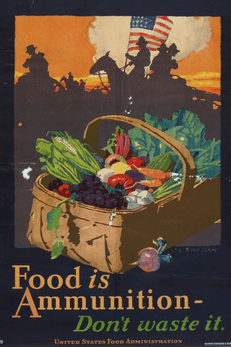
During WWI, Americans were warned to “Hooverize,” or conserve food. (The future president was the “Food Czar” and a huge celebrity.) This poster by John Sheridan was one reminder.

Poster by John Sheridan, 1918, showing basket of vegetables in front of and soldiers. Caption: Food is Ammunition: Don't waste it.

U.S. Food Administration poster, John Sheridan, 1918

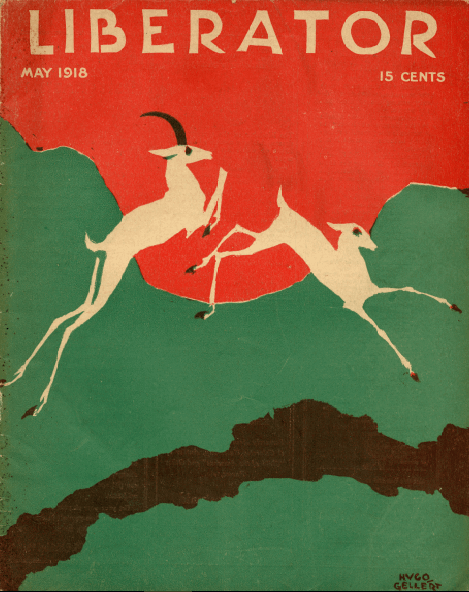
For those of you suffering through the cold spell in the U.S., here’s a reminder of spring from The Liberator’s wonderful Hugo Gellert.

May 1918 Liberator cover by Hugo Gellert. Illustration of jumping deer on abstract background.

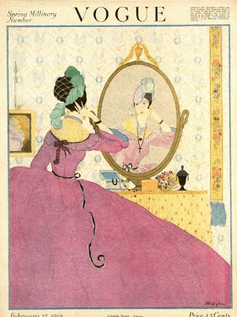
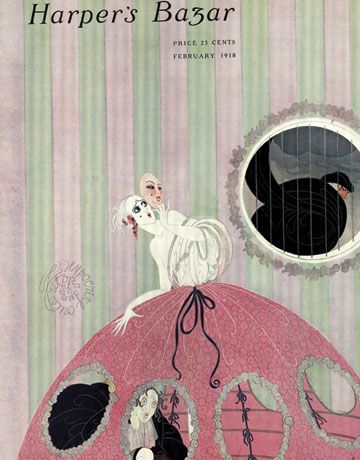
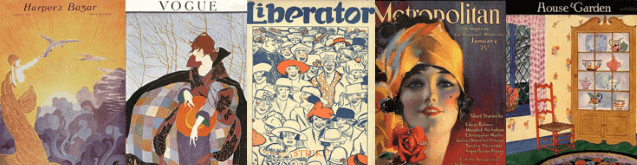
Variations on a theme, February 1918: Helen Dryden (Vogue) and Erté (Harper’s Bazar).

February 1918 Vogue cover by Helen Dryden. Illustration of woman in pink hoop-skirt dress looking in mirror.

February 1918 Harper's Bazar cover by Erté. Masked woman with man hiding inside her hoop skirt.

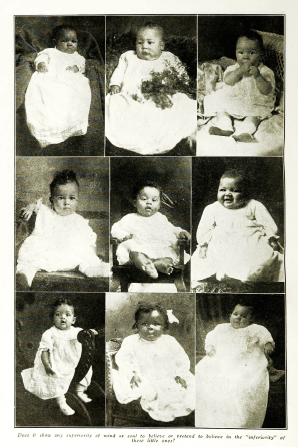
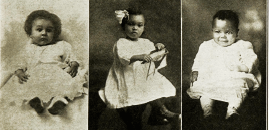
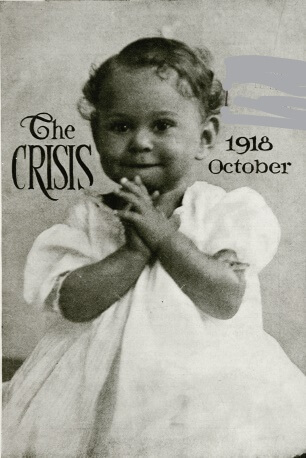
The Crisis, the NAACP magazine edited by W.E.B. Du Bois, took on discrimination and lynching and other horrors, but it was black America’s community newspaper too. There was an annual children’s issue, with lots of pictures of cute babies. Here are some from October 1918.*

Photographs of nine babies in October 1918 issue of The Crisis.

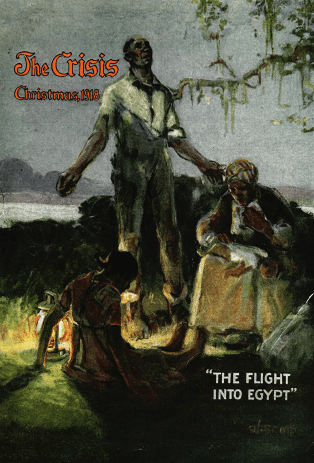
Another luminous William Edouard Scott painting, on the cover of the December 1918 issue of The Crisis. In his editorial, W.E.B. Du Bois poetically identifies African-Americans’ flight north with Joseph and Mary’s flight to Egypt.

The Crisis cover, December 1918. William Edouard Smith painting The Flight into Egypt. African-American family in field.

See you soon!

*Surprise surprise: people love cute babies. This was by far my most popular tweet of the week, although not as popular as the constipation ad.

More beautiful images from 1918

As I mentioned last week, I’ve been posting some of my favorite images from 1918 on Twitter while I regroup after spending 2018 reading as if I were living in 1918. Here’s this week’s batch.

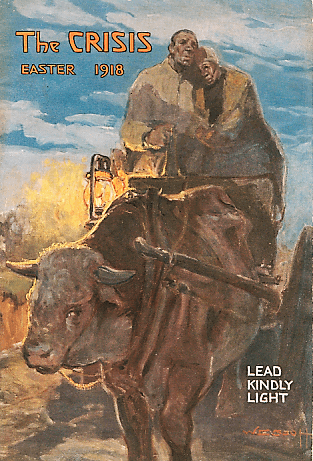
On Martin Luther King Day, I posted the April 1918 cover of The Crisis, featuring a painting by William Edouard Scott of a couple making their way to a new life in the north. The painting is now in the Huntington Museum of Art in West Virginia (although not currently on display).

April 1918 Crisis cover, William Edouard Scott painting Lead Kindly Light. Man and woman riding ox cart with lamp.

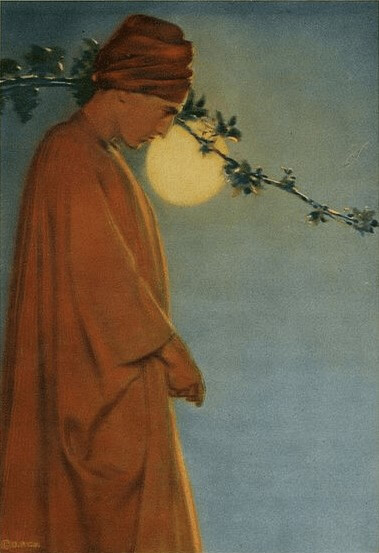
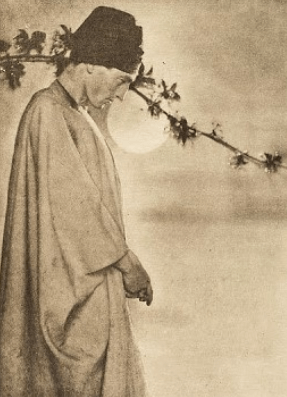
Poet George Sterling posed for this illustration in an edition of the Rubaiyat of Omar Khayyam featuring photographs by Adelaide Hanscom (later Leeson). The original 1905 edition was in black and white; the photographs were tinted in a 1914 reissue. I wrote about Sterling, who founded Carmel, California as an artists’ colony and was known as the “Uncrowned King of Bohemia,” here.

Tinted photograph of poet George Sterling, Rubaiyat illustration. Photograph of poet George Sterling, Rubaiyat illustration, 1905.

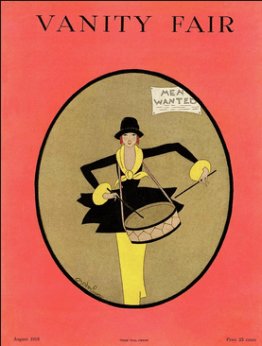
I’m intrigued by the short-haired, drop-waisted woman on the cover of the July 1918 issue of Vanity Fair. She looks like a time-traveling flapper from 1923. The artist is Georges Lepape.

George Lepape July 1918 Vanity Fair Cover. Startled flapper looking at caterpiller on wall.

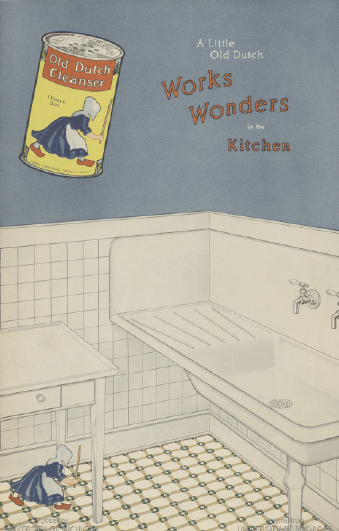
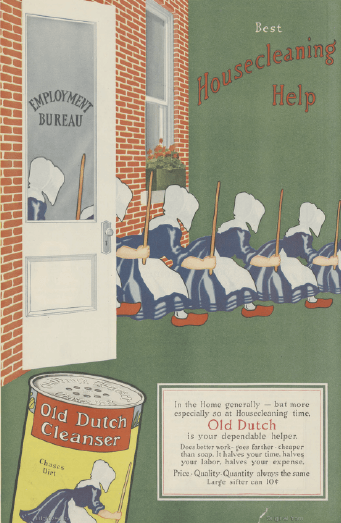
“Haunting” isn’t a word we typically associate with cleaning products, but I was haunted by the tiny cleaners in the Old Dutch Cleanser ads. Here are two of my favorites, from the February and May 1918 issues of the Ladies’ Home Journal.

1918 Old Dutch Cleanser ad. Tiny hooded woman washing floor. 1918 Old Dutch Cleanser ad. Hooded women leaving employment bureau.

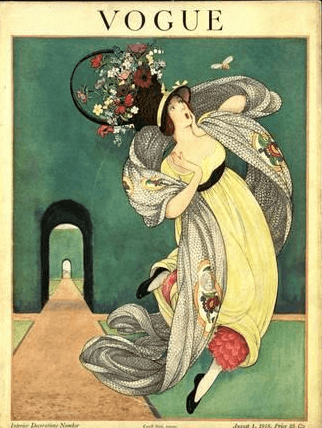
Women in 1918 were apparently easily startled by insects. This one’s from George Wolf Plank’s cover for the August 1 issue of Vogue.

George Wolfe Plank August 1, 1918 Vogue cover. Startled woman with flowered hat looking at butterfly.

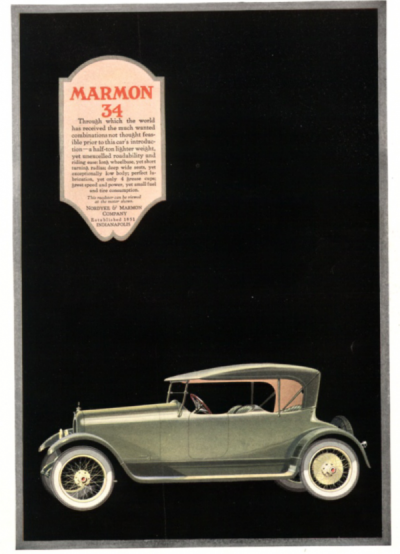
I’m not a car person, but I love 1918 cars (and car advertisements). The Marmon 34 set a coast-to-coast speed record in 1916: 5 days, 18 hours, 30 minutes. This ad is from the February 1918 issue of Harper’s Bazar.

1918 Marmon 34 ad. Green automobile on black background.

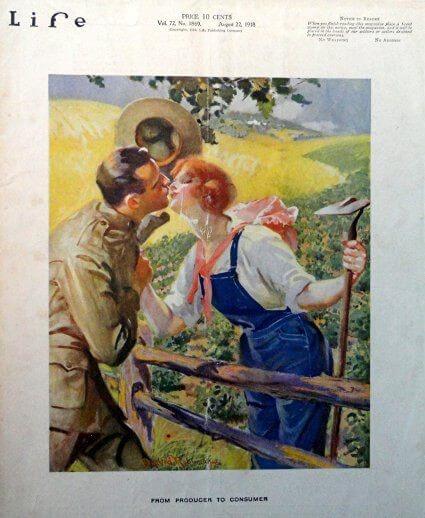
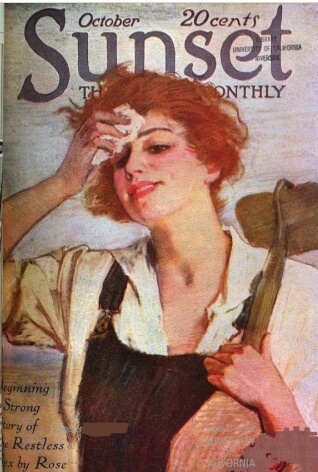
I found the word “farmerette” hilarious when I started my reading-in-1918 project, but now I see a picture of a woman in overalls and think, “Oh, a farmerette.” Italian-American painter Matteo Sandonà drew the farmerette on the Sunset cover; I couldn’t find the artist for the Life cover.

1918 Life magazine cover, farmerette kissing soldier in field.

October 1918 Sunset magazine cover, farmerette in overalls wiping brow.

Maybe I’ll be ready to move on to 1919 soon. If not, there are lots more great pictures from 1918.

Some beautiful images while I catch my breath

Hi everyone,

Since January 1, I’ve been making the transition, slowly, from the world of 1918 to the world of 2019. People keep asking me what’s going to happen with the blog. I originally envisioned it as strictly a one-year project, but I’m planning to continue into 1919. It won’t be exactly the same, since I won’t ONLY be reading from a hundred years ago. (Doing that for a year is a project. Doing it indefinitely is an eccentricity.) And I won’t be posting as often, since there’s the whole having a life business to attend to.

To keep the spirit alive while I regroup, I’ve been posting some of my favorite images from 1918 on Twitter. Here’s the first week’s worth.

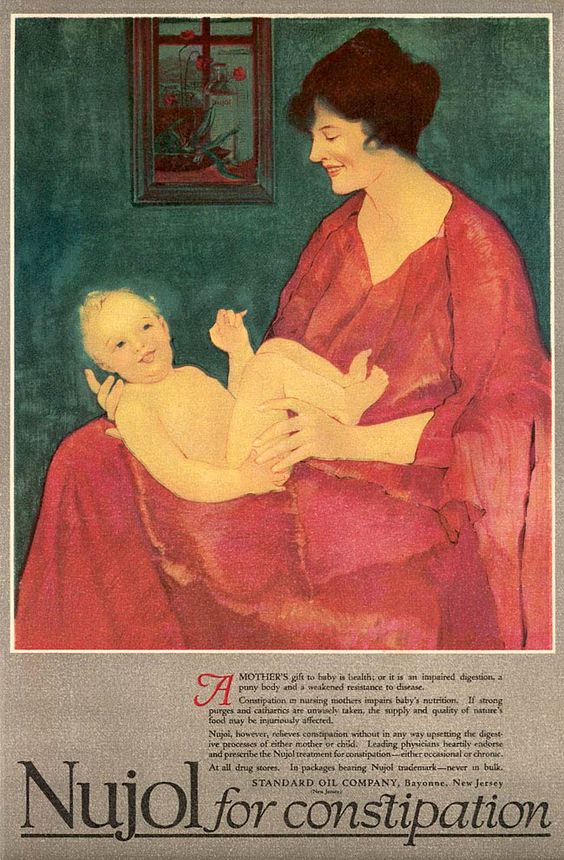
The best art often came in unlikely places, like this ad for Nujol constipation medicine in the January 1918 issue of Woman’s Home Companion.

1918 Nujol constipation advertisement. Painting of smiling woman holding baby.

Woman’s Home Companion, January 1918

One of the highlights of my year of reading as if I were living in 1918 was Erté’s Harper’s Bazar (sic) covers. If I had to pick a favorite, it might be this one from May, titled “Fireflies.”

Harper's Bazar magazine cover, May 1918. Erté illustration titled Fireflies. Woman holding up globe with fireflies.

Longing for a snow day in sunny Cape Town, I found this January 1918 Vanity Fair cover by Gordon Conway, a 23-year-old WOMAN artist.

January 1918 Vanity Fair cover by Gordon Conway. Woman in snow holding semaphore flags with hearts on them.

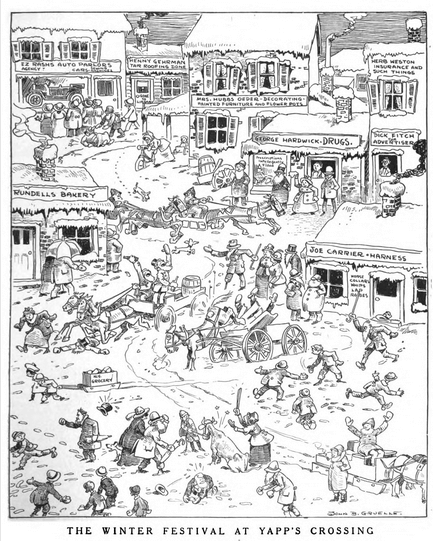
Continuing with the snow theme, here’s a drawing by Johnny Gruelle (creator of Raggedy Ann and Andy) from Judge, the popular humor magazine.

Johnny Gruelle cartoon in Life magazine titled The Winter Festival at Yapp's Crossing.

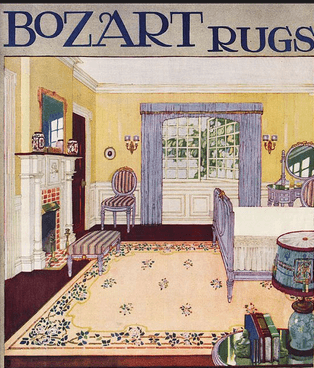
My dream 1918 bedroom, from an ad for Bozart Rugs.

1918 advertisement for Bozard rugs. Painting of bedroom with a pink rug.

Ladies’ Home Journal, May 1918

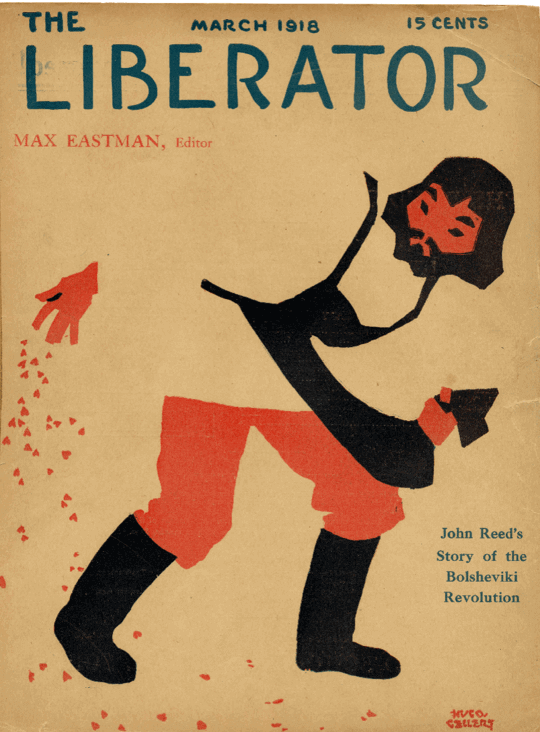
The inaugural cover of The Liberator, March 1918. The magazine succeeded The Masses, which shut down after its editors were (unsuccessfully) prosecuted for obstructing conscription. Hugo Gellert created this and many other Liberator covers.

March 1918 Liberator magazine cover by Hugo Gellert. Drawing of man in cutout style.

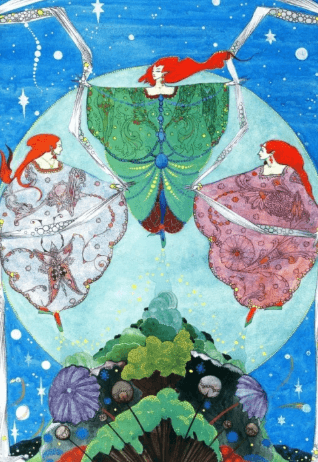
One of many gorgeous illustrations by Harry Clarke from Fairy Tales by Hans Christian Andersen (1916).

Harry Clarke illustration from Fairy Tales by Hans Christian Andersen, 1916. Three women in colorful robes..

See you soon!

The best and worst of November 1918: Fake and real armistices, osculation, and meat we’ll learn to like

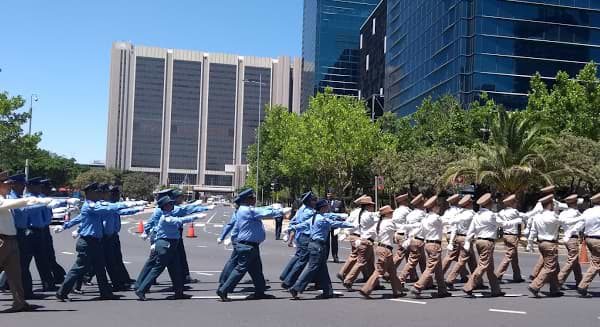
With the centenary of the Armistice approaching, I wanted to celebrate, but how? I couldn’t find any planned events for Remembrance Day (as it’s called in the Commonwealth) here in Cape Town.* But I knew that veterans lay a wreath at the war memorial every year, so I figured they’d be doing something special for this one. I arrived at 10:30 and found marching bands marching, bagpipers piping (oddly, “Sarie Marais,” an anti-British song from the Boer War) and a big tent full of people. A young woman gave me a paper poppy.

Marching band in Cape Town.

There were prayers, hymns, and a speech by Deputy Mayor Ian Neilson, my old friend from Pretoria in the late eighties. (South Africa can be small-towny like that.) How to celebrate an event like this, in the presence of both current soldiers and elderly white veterans who won their medals doing who knows what, is always a fraught question in South Africa. Ian hit just the right note, highlighting the contributions of black soldiers in South Africa and the United States for whom the Allied victory didn’t bring freedom.

At 11:00, the hour of the Armistice, there was a two-minute silence, a tradition that, it turns out, originated in Cape Town. Representatives of diplomatic missions and veterans’ groups laid wreaths on the monument, and afterwards the rest of us were given white roses. Here’s where I placed mine, thinking about the soldiers I’ve gotten to know in my year of 1918 reading, many of whom who didn’t make it home.

Wreaths at base of monument.

Now on to the best and worst of November.

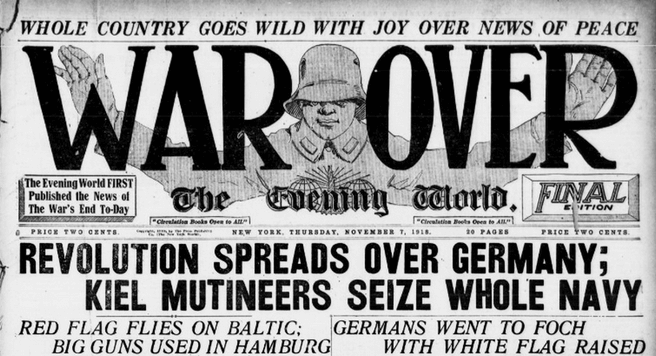
Best fake news: Allies win the war!

New York Evening World headline, War Over.

New York Evening World, November 7, 1918 (Library of Congress)

What’s fake about that, you may be asking. Well, check the date.

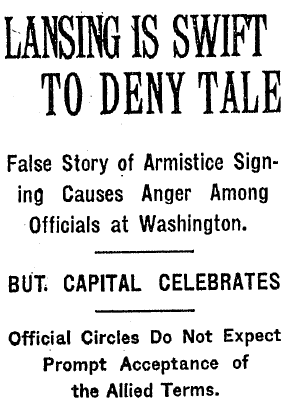
In one of the most monumental screw-ups in the history of journalism, the United Press Association (which later became the UPI) reported on November 7 that the war had ended. According to a gloating report in the New York Times, which didn’t run the erroneous story, reporters mistook a ceasefire in an area where French and German officials were meeting for the end of the war. The censors, who were responsible for weeding out secrets, not errors, OK’d the story, and the agency cabled its headquarters. Which didn’t bother to check with officials in Washington, the attitude being “What do they know?” Newspapers rushed out extra editions.

New York Times headline, Lansing is Swift to Deny Tale.

New York Times, November 8, 1918

Secretary of War Baker said this was news to him, and Secretary of State Lansing checked with Paris and issued a denial, but no one cared. New Yorkers poured onto the streets. In Washington, newspapers were dropped from helicopters. (CORRECTION: From an airplane. As an alert reader has pointed out, helicopters weren’t invented yet.) 1,500 women workers from the State and War Departments, who apparently didn’t take their bosses any more seriously than anyone else did, rushed over to the White House, where they waved American flags and cheered President Wilson.**

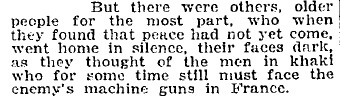
Later that night, when word spread that the war was in fact still going on, a lot of people were too drunk to care.

New York Times text, But there were others...

New York Times, November 8, 1918

Luckily, only four days passed before the…

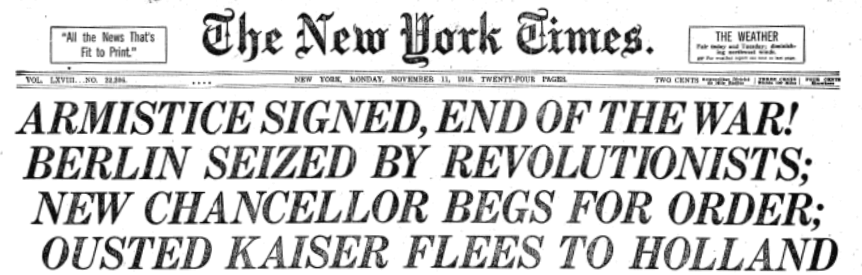
Best real news: Allies win the war!

New York Times Armistice headline.

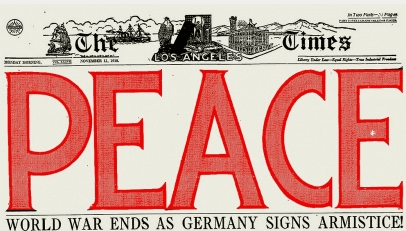
Or, more succinctly and colorfully,

Los Angeles Times headline, PEACE.

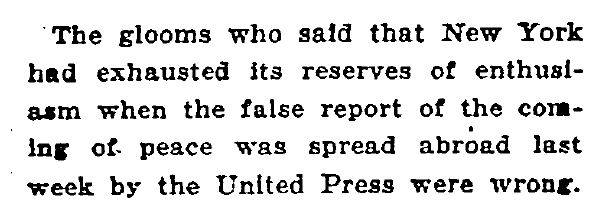
I worried about the fake victory celebration putting a damper on the real victory celebration, but that was just me being a gloom:

New York Times text, The glooms who said that New York...

New York Times, November 12, 1918

People went wild with joy all over again.

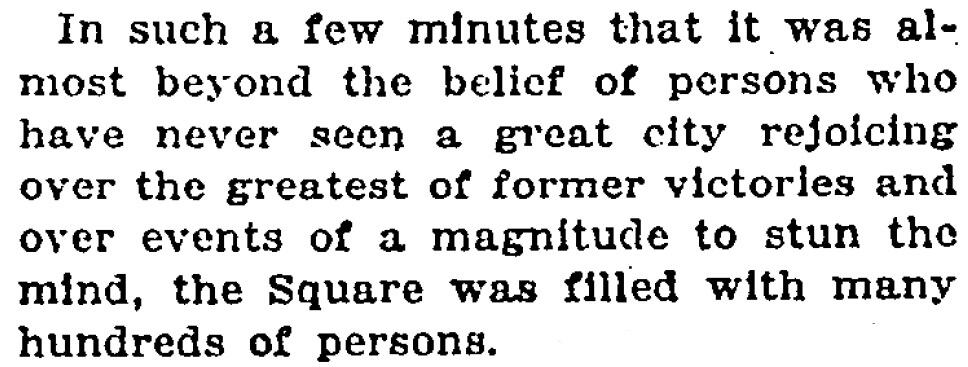
New York Times text, In such a few minutes that it was almost beyond belief...

New York Times, November 11, 1918

What persons were these, I wondered. Three-day-old persons? But the premature celebration had vanished from everyone’s heads, apparently.

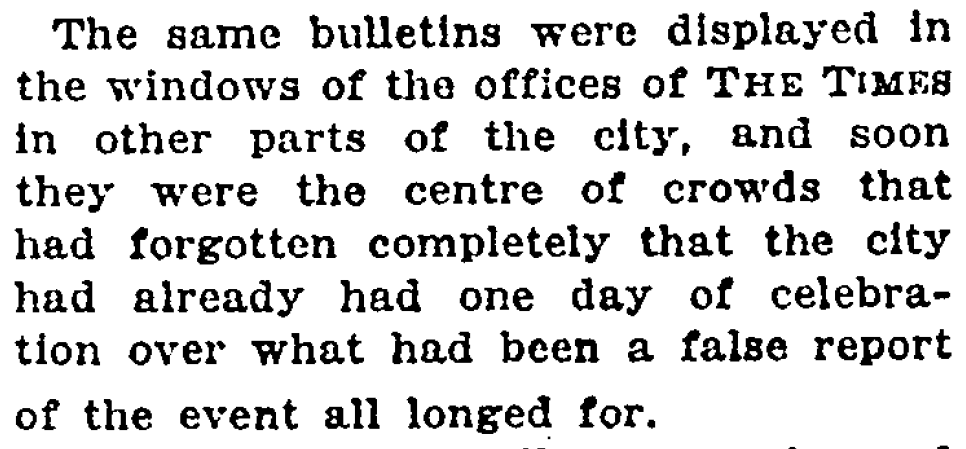
New York Times text.

New York Times, November 11, 1918

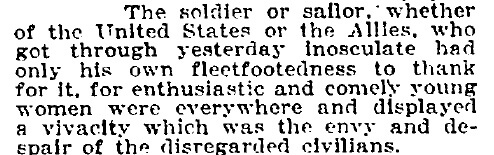
Osculation ensued!

New York Times text, The soldier or sailor...who had got through yesterday inosculate...

New York Times, November 12, 1918

Best cartoon:

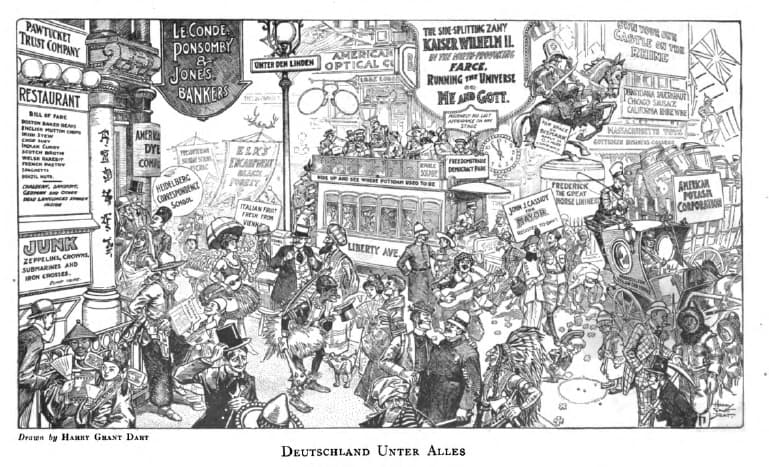
I only kind of get this Harry Gant Dart cartoon–something about the Germans not being in control of their own country anymore–but the drawing is amazing and it’s a refreshing change from all the cartoons about people hanging and strangling the Kaiser.

Cartoon of Berlin full of foreign people, stores, etc.

Judge, November 30, 1918

Best illustration:

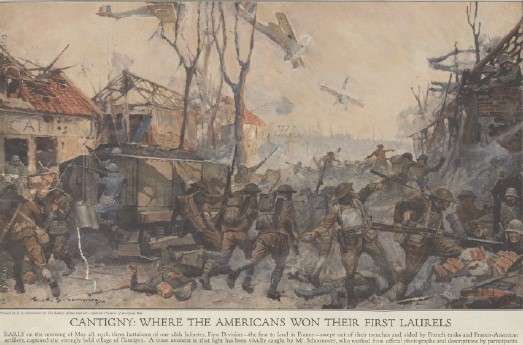
Amid the celebration, a reminder of the conflict’s cost.

Painting of battle at Cantigny.

Frank E. Schoonover, Ladies’ Home Journal, November 1918

Worst Thanksgiving celebration:

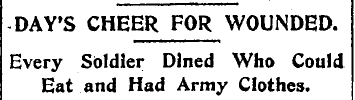
New York Times headline, Day's Cheer for Wounded.

New York Times, November 29, 1918

According to the New York Times, New Yorkers were eager to entertain the troops, including 750 convalescent and wounded soldiers who had returned from France during the week and were quartered at Debarkation Hospital No. 3 at 18th Street and 6th Avenue. Between them, they had received 1,400 invitations–two each! Lavish dinners and theater tickets had been laid on. But, when their uniforms returned from the sterilization department and the soldiers “prepared to don them to sally forth to the feasts,” it turned out that they had  shrunk beyond recognition. A “big soldier,” presented with his outfit, declared it a “Boy Scout uniform.”

Many unsuccessful efforts were made by others to wear the shrunken military garb, and, of course, regulations barred them from appearing on the streets in any other clothes.

An emergency order went out, and 125 uniforms were procured. What to do with the rest of the soldiers? Waive the regulations in appreciation of the sacrifices they had made in securing the biggest military victory of all time? Don’t make me laugh!

The fortunate wearers of these went forth, while the others, grumbling at their ill-luck, reclothed themselves in pajamas and hospital blankets.

Thank you for your service, boys!

Worst Meats:

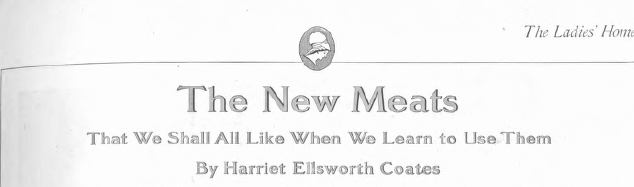
The headline had me worried

Headline, The New Meats That We Shall All LIke When We Learn to Use Them.

Ladies’ Home Journal, November 1918

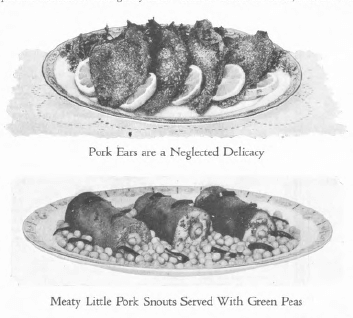
and the illustrations confirmed my worst fears.

Illustration captioned Meaty Little Pork Snouts Served with Green Peas

Worst ad:

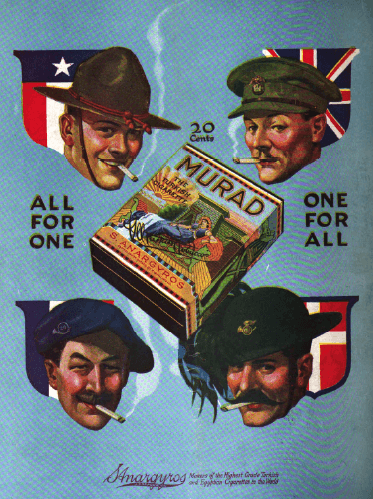
Since you didn’t die in the war…

Murad cigarette ad with Allied soldiers smoking.

Judge, November 9, 1918

Worst magazine cover:

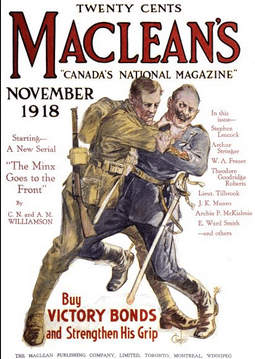
Like I said, not a fan of the Kaisercide trope.

Maclean's magazine cover, soldier strangling Kaiser.

Best magazine cover:

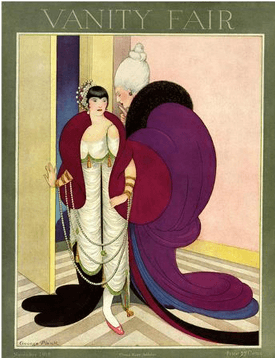
I like this George Wolfe Plank Vanity Fair cover a lot,***

Vanity Fair cover of society women whispering to other woman.

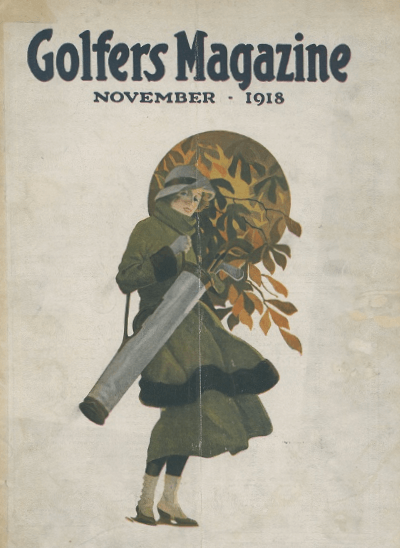
and also the crisp, clear lines of this one from Golfers Magazine,

Golfer's Magazine cover of woman with golf bag.

but the best cover award has to have something to do with what happened during this momentous month.

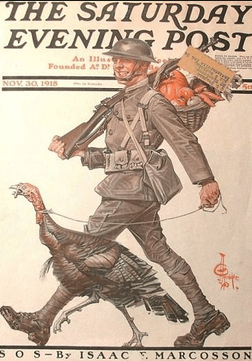
This J. C. Leyendecker Saturday Evening Post cover is wonderful, but I’ve already given it enough love.****

Saturday Evening Post cover of soldier walking turkey.

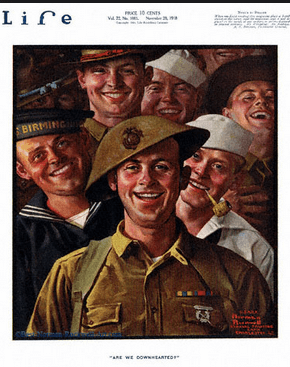
I was just about to bestow the award on Norman Rockwell’s joyful soldiers on the cover of Life

Norman Rockwell Life magazine cover of smiling soldiers, 1918.

Life, November 28, 1918

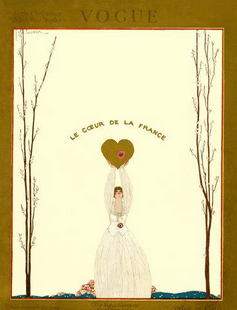
when I thought, “Wait, what about Vogue?”, and found the winner, this gorgeous, understated Georges Lepape cover:

Georges Lepape cover of woman holding up heart, caption Le Coeur de la France, 1918.

Vogue, November 15, 1918

On to—can it be?—December!

*Of course, only reading news from 100 years ago didn’t help.

**This item, which I cribbed from Whatever It Is, I’m Against It, makes me blush on behalf of my fellow women State Department workers.

***If you’re wondering what’s happened to Erté, there aren’t any copies of the October and November 1918 issues of Harper’s Bazar, or even the covers, anywhere on the internet as far as I can tell.

****Fun fact: the soldier is Neil Hamilton, who later played Police Commissioner Gordon on Batman.

The best and worst of October 1918: Beautiful children, dubious remedies, and (sigh) fall colors

In the past, I’ve reflected cheerfully on how fast 1918 is flying by. Now, with two months to go, I do so with a sense of panic. I haven’t read The Magnificent Ambersons, or The Education of Henry Adams,* or any South African books, or anything in a foreign language except some French poems in The Little Review, or any children’s books except E. Nesbit’s disappointing The Railway Children. I blithely promised in my first post that “I’ll read magazines, watch movies, listen to music, and cook recipes from that time.” Well, I’ve read a lot of magazines. Much to be done in the next sixty days!

But first, the best and worst of October.

Best news:

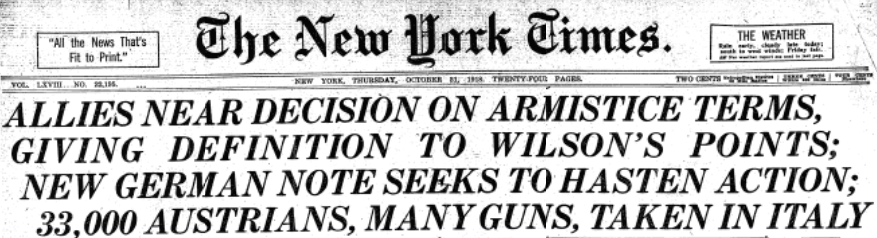
It’s a tie among pretty much all of the front-page New York Times headlines of the month, with the Germans retreating so fast that in some places the Allies can’t keep up with them.

New York Times, October 31, 1918

Worst news:

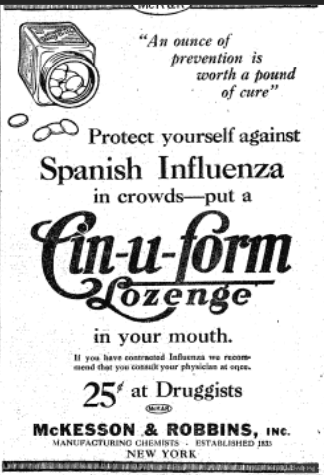
Authorities keep saying that the worst of the Spanish influenza epidemic is over, but they keep being wrong. This is a hard story to follow if you’re not reading historical accounts, but my fellow 100-years-ago blogger Whatever It Is, I’m Against It is on the job. He’s been tracking the coverage of the epidemic in the New York Times from the beginning, as well as highlighting the ridiculous ads touting the purported flu-preventing qualities of various products, like this one, which I saw in the Times and was going to use myself so it isn’t copying:

New York Times, October 23, 1918

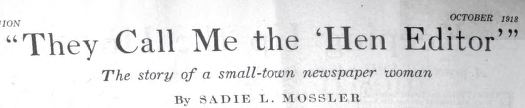
Best magazine: The Crisis

For its annual children’s issue, The Crisis asked readers to send in pictures of their children. 70 of them appear in the magazine. Under one group of pictures is the caption, “Would not the world be richer if the Gates of Opportunity were flung wide before these children as they grow?”

The Crisis, October 1918

In a story called “Race Purity,” a little boy, apparently African-American, hits a little girl, apparently white, in the face. A man passing by calls him a “d-mn little [racial slur]” and gently tells the girl to go home, saying, “I’d like to see that mother of yours that allows you to play with—.” The girl gasps through her tears, “he’s my bru-vv-er.”

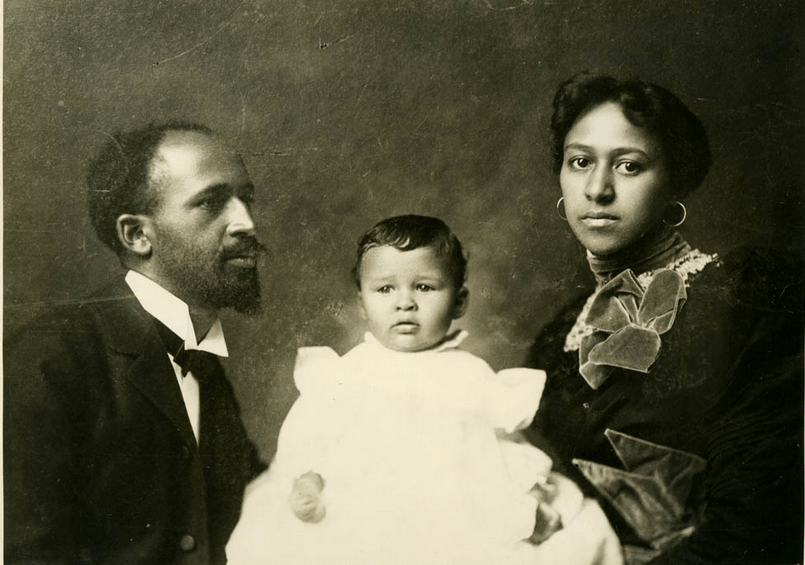
W.E.B. du Bois, his wife Nina, and their son Burghardt, ca. 1898

Du Bois imagines his only son, Burghardt, who died as an infant, as “a ghost boy—just twenty-one he would have been last May,” gone off to the war. “It was not given to this my boy nor yet to me to go in the flesh; but he went dead, yet dreaming, and I dream-drunk, and yet alive, albeit with twitching, hanging hands.”

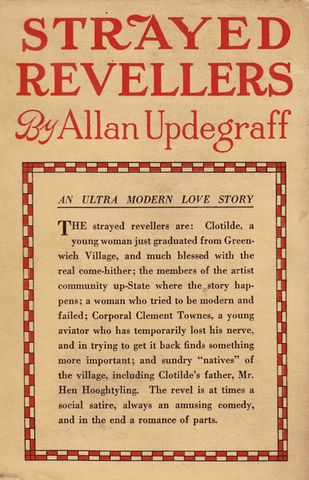
Best-sounding new novel: Strayed Revellers, by Allan Updegraff

The Bookman says of this book by Updegraff, a college buddy of Sinclair Lewis, that

his theme is very new, showing what the war did to a group of Greenwich villagers, extremely gay ones, who kill themselves, admit carelessly to illegitimate parents, get drunk on water and gelatin and lead a wild life generally.

 I’m sold!

 Worst new novel: Strayed Revellers, by Allan Updegraff

But then I pulled up the book on Hathitrust and flipped to the last page, which features a guy mansplaining anarchism to our heroine, Clothilde:

“The name’s filthied by men who care more for their individual stomachs and unwashed hides than they do for No-Rule. And it’s Socialism, too,–since they have a regard for the social will, as well as for their own individual wills—even though the name ‘Socialist’ has been so dirtied by men whose social instincts stop with the attainment of personal safety and a two-cent drop in the price of soup-meat, not to mention the dirtying done by rank pro-Germans, that real Socialists will probably take a new name after the war.”

No amount of getting drunk on gelatin is worth this. Run, Clothilde!

Worst headline:

Woman’s Home Companion, October 1918

So smack them!

Best ad:

This is one of the least attractive ads I saw all month. But it caught my attention, all right. And it represents the direction advertising is moving in–good-bye beautiful artwork, hello gimmicks!**

Delineator, October 1918

Worst ad: 

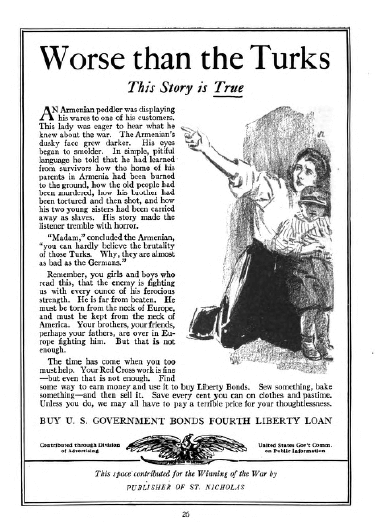
Hey, little kids! Murder! Rape!***

St. Nicholas magazine, October 1918

Best magazine cover:

Lots of worthy candidates.

I always have a weakness for a hardworking farmerette.

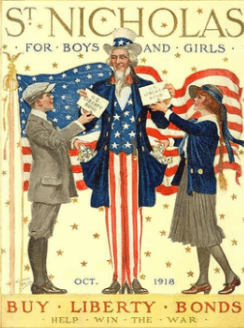
An appeal to kids’ patriotism at a time when the government seemed worried that the Allies were winning the war so fast that people wouldn’t want to fund it.

This because it’s, well, beautiful:

As is this.

In the end, I had to declare a tie, because I couldn’t bear to choose between this one

and this one, which makes me wistful from my perch in Cape Town, where it’s spring now. And even our backwards April autumns don’t have colors like this.

Worst magazine cover: Maclean’s

 Not doing much to counter the boringness image, Canada!****

On to November!

*Not my fault because, annoyingly, both of these American classics were published in late October.

**This is also, as it turns out, the cover image on the Spanish translation of Ring Lardner, Jr.’s memoir I’d Hate Myself in the Morning.

***Besides, the ad is all about how horrible the Turks are. It’s as if the copywriter forgot that that the U.S. never declared war on Turkey and then when he remembered hastily stuck something at the end about how the Germans are even worse.

****Especially since the most prominently featured boring story isn’t even in this issue, it just “starts soon.”

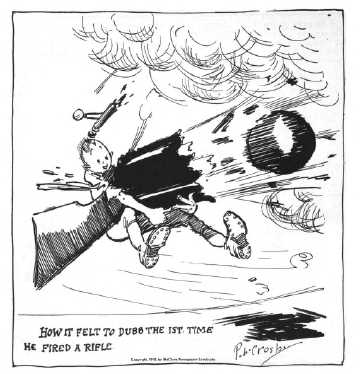
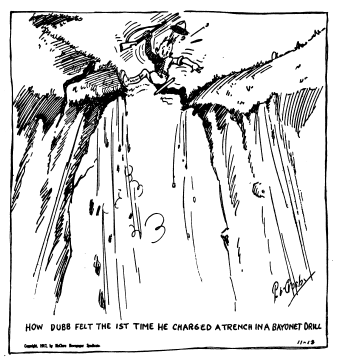
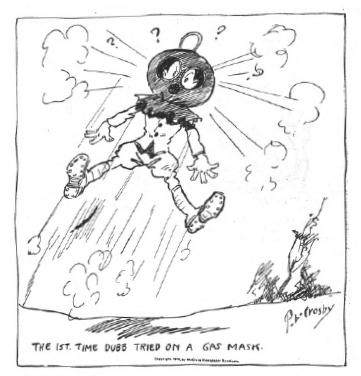
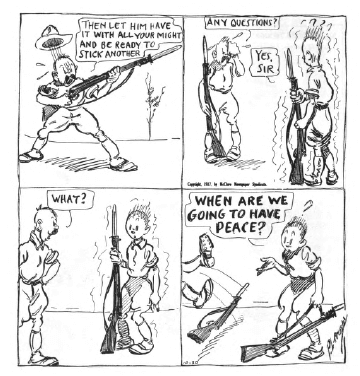
The Comic Side of WWI: Percy Crosby and the Rookie from the 13th Squad

With the centenary of the armistice approaching, I’ve been feeling like I should be writing about the war more and not just going on about dieting and Dorothy Parker. But how? I’m not an expert on the Battles of the Meuse-Argonne and wouldn’t do a very good job of pretending to be one. Then it occurred to me that I could tell the stories of individual soldiers, as I did once before, months ago, when I wrote about aviator and Mutiny on the Bounty co-author Jimmy Hall.

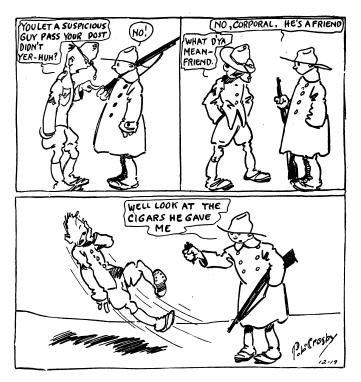
So here’s the story of Percy Lee Crosby. Well, he mostly tells his own story, through his wonderful cartoons.

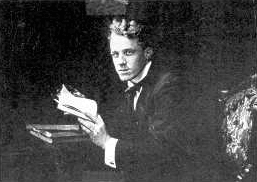
Percy Crosby, date unknown

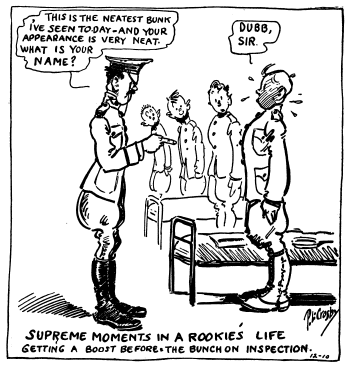
Crosby grew up in Queens, the son of Irish immigrants. His father ran an art supply store, and his talent was evident from an early age. He dropped out of high school as a sophomore and got a series of jobs as a writer and illustrator for magazines and newspapers, including the Socialist Daily Call, which sparked a lifelong commitment to leftist causes. He eventually started writing a syndicated comic strip, The Clancy Kids. While in training in France in 1917, Crosby, then a 25-year-old lieutenant, began writing That Rookie from the 13th Squad as a daily syndicated panel. A collection of these cartoons was published in February 1918.

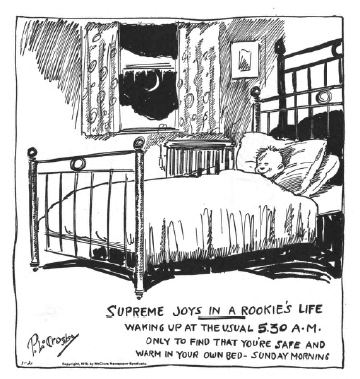
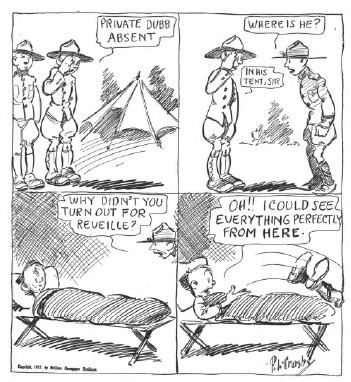
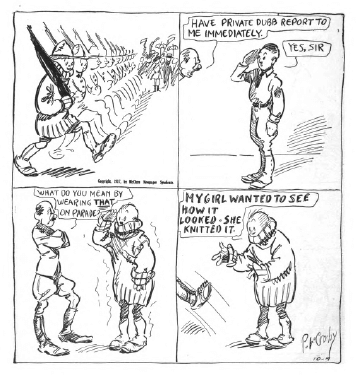
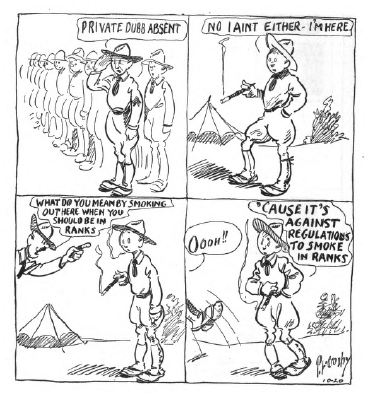
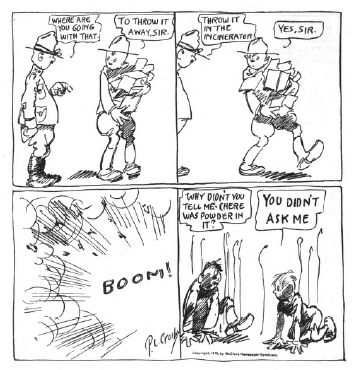
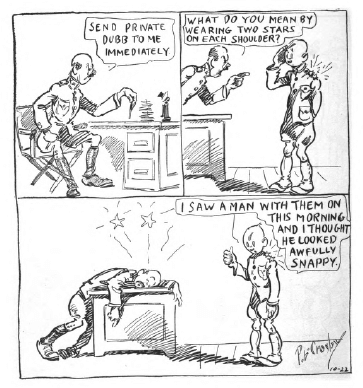
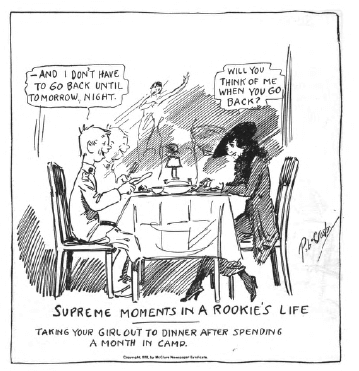
When we meet the Rookie, a private in training at a U.S. military base, he hasn’t yet gotten the hang of military discipline,

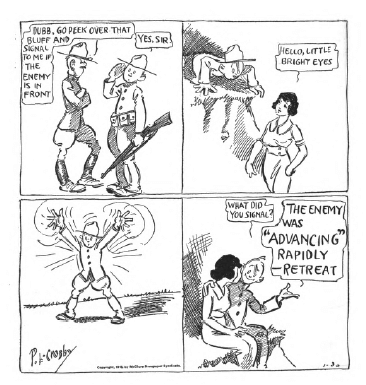
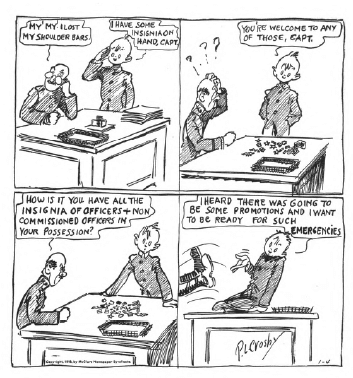
and he’s the bane of his commanding officers’ existence.

Despite his haplessness and youthful appearance, he has a beautiful girlfriend,

although he has a bit of a wandering eye

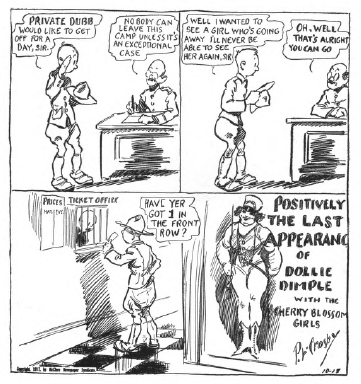
and enjoys a good burlesque show.

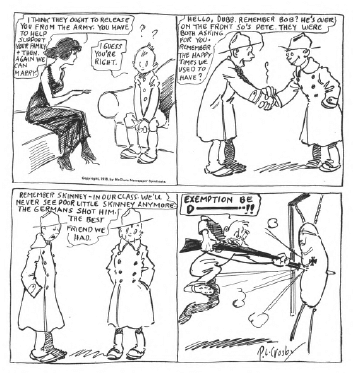
He’s not the bravest of souls, but he resists the temptation of a deferment.

Training can be terrifying

and he wishes the war would just be over and done with.

But he pulls his socks up,

dreams big dreams,

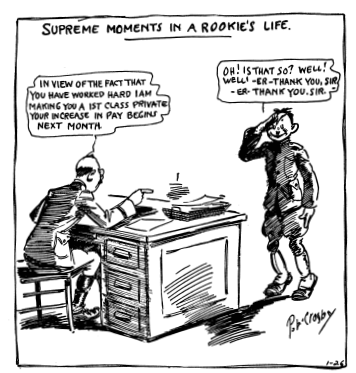
and rises in the ranks.

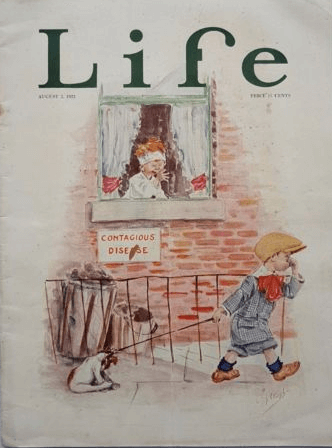
Crosby was struck in the eye by shrapnel on the Argon and awarded a Purple Heart. He returned to action, survived the war, and published another Rookie collection in 1919. In 1923, he began writing Skippy, a strip about the adventures of a nine-year-old boy that made him rich and famous. There were Skippy dolls and toys and an Oscar-winning Skippy movie. (And the peanut butter, which sparked a long trademark dispute.) Skippy was a major influence on Peanuts creator Charles Schulz.

Life Magazine cover featuring Skippy, August 2, 1923

In the 1932 Olympics, Crosby won a silver medal in, I kid you not, watercolors and drawing. This, along with architecture, literature, painting, and sculpture, was an Olympic events from 1928 to 1936. I couldn’t find a picture of his entry, “Jackknife,” but here are some spectators checking out the action in the painting event.

Crosby started buying two-page ads in major newspapers espousing left-wing positions and taking on targets like the FBI, the IRS, and Al Capone. The New Republic dubbed him the “Mad Patriot.” He socialized with the stars of the New York artistic and literary scene, including Jerome Kern, Ring Lardner, John Barrymore, and Heywood Broun. Like many of them, he was a heavy drinker.

Crosby and his first wife divorced, and he stopped drinking for a few years when he remarried. He fell off the wagon, though, and after a violent episode in 1939 his wife filed for divorce and got a restraining order against him. He never saw her or their four children, aged five to nine at the time, again. He married again, but his drinking continued and his behavior became increasingly erratic. In 1948, following a suicide attempt after the death of his mother, he was committed to a mental hospital. Despite his efforts to be freed–he claimed that his long confinement was related to his left-wing views–he remained institutionalized until his death in 1964.

In 1918, though, these bad times were far in the future. So let’s end with the Rookie, on watch at the front now, thinking a soldier’s thoughts.


The best and worst of August and September 1918: Modernist all-stars, predictions, and red scarves

Three-quarters of the way through 1918, everything seems normal to me now.* Appalling a lot of the time (racism, eugenics, anti-Semitism, class snobbery), but normal. Nine months of immersion have broken down the barriers of aesthetics and language use. I now think of people as being the age they were in 1918. Happy August/September birthdays to Dorothy Parker (25), T.S. Eliot (30), and William Carlos Williams (35), youngsters all!

I didn’t do a Best and Worst for August because I was back in the United States, socializing nonstop. I don’t know how those 1918 rich people did it—it’s exhausting!** By the time I got back to Cape Town and emerged from the fog of jet lag, September was halfway gone. Which October will be too if I don’t hurry up. So, without further ado, the best and worst of August and September 1918!

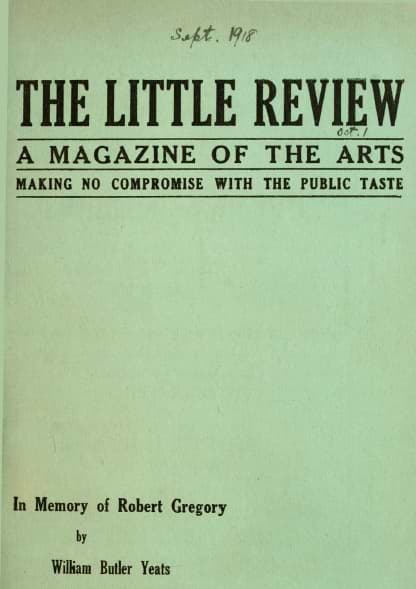
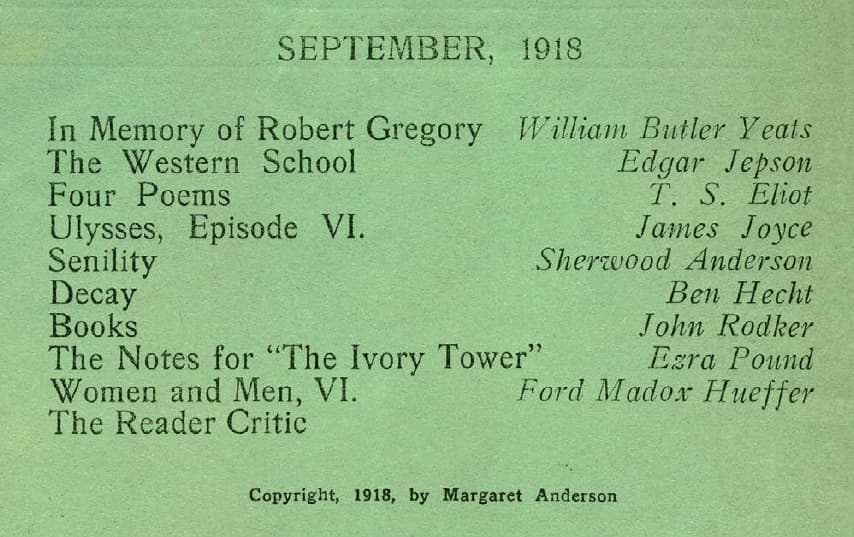
Best Magazine: The Little Review, September 1918
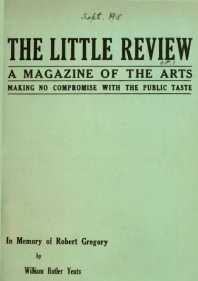
Just look at the table of contents of the Little Review’s September issue. It’s the literary equivalent of the Yankees’ 1927 starting lineup.***
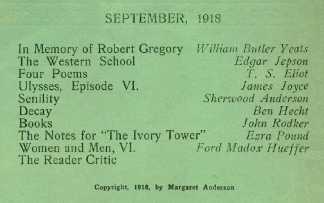
Of course, another possible analogy is to one of those movies so overstuffed with stars that you just know it’s going to be horrible.

So which is it?

Somewhere in between. Yeats’s “In Memory of Robert Gregory,” mourning the death of the son of close friends in an aviation accident in Italy (or maybe it was friendly fire), sounds like outtakes from “Easter 1916,” but so-so Yeats is better than just about anyone else at the top of their game. The Eliot poems include his notoriously anti-Semitic “Sweeney Among the Nightingales” (“Rachel née Rabinovitch/Tears at the grapes with murderous paws”), but also a poem in French, “Dans le Restaurant,” part of which eventually made its way, in English, into “The Waste Land.” I confess that I haven’t kept up with the Ulysses serialization, but, hey, it’s Ulysses.

So more 1927 Yankees than New Year’s Eve. And there are more accolades for this issue to come—keep on reading!

Worst Magazine: Current Opinion, September 1918
Halfway through the September issue of The Bookman, I was convinced we had a winner. The magazine, under a new owner, had undergone its second major revamp of the year, and 1918 magazines revamps are never a good thing. They just make the magazine more like all the other magazines. The old Bookman was fusty, but it was entertaining. In the new Bookman, most of the article aren’t even about books. If they are, they’re about old books like Tom Jones or boring books about “Sea Power Past and Present.” But then the magazine redeems itself with an Amy Lowell love poem**** and an excerpt from the upcoming sequel to Christopher Morley’s fun 1917 novel Parnassus on Wheels. And they kept “The Gossip Shop,” which, although most of the gossip is about which writer got his commission and is shipping off to France, is still kind of fun. So I felt better about The Bookman but was left without a worst magazine.

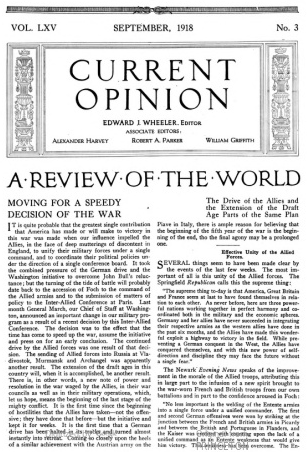
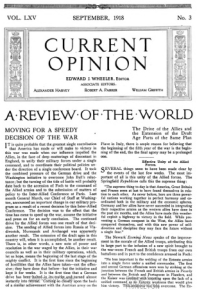
Then I came across the September issue of Current Opinion, featuring an article called “Why the Jew is Too Neurotic.” The reason is explained in the sub-head: “Because his Extraordinary Resemblance to the Average Spoiled Child Causes Mental Strain.” The rest of the article isn’t as bad as that makes it sound. Something about how the Jews were the favorite children of God, and were isolated from the rest of society, and…I’ll spare you the psychoanalytic logic. And there’s sympathetic discussion of anti-Jewish discrimination throughout the ages. But the article epitomizes what’s worst about 1918: the tendency to lump together entire “races” (African-Americans, Jews, Germans, Czechoslovakians, whoever) and ascribe a common set of qualities to them. Inconsistency alert: the issue also includes an admiring profile of New York Times owner Adolph Ochs, who comes across as a gee-whiz regular guy and not neurotic at all.

Best Line in an Editorial: “Vardaman Falls,” New York Times, August 22

I’m not a fan of 1918 NYT editorials, which are generally narrow-minded, prejudiced, and smug. But this one, a gloating account of the primary election defeat of Senator James Vardaman, one of the worst racists in congressional history (although that didn’t bother the Times nearly as much as his antiwar stance), has my favorite 1918 sentence so far:

Was he the victim of his own singularity, grown megalomaniacal, or did he simply overestimate the hillbilliness of his state?

Least Prescient Literary Criticism: Louis Untermeyer, “The Georgians,” The Dial,  August 15
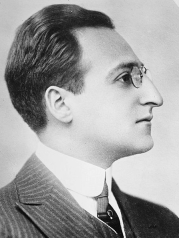
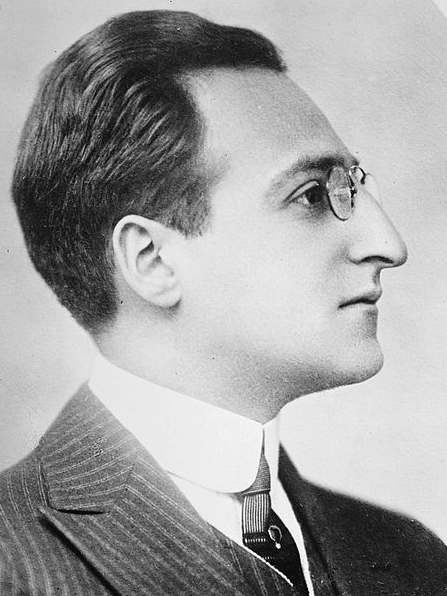
Louis Untermeyer, ca. 1910-1915, Library of Congress

It’s not really fair, with the benefit of hindsight, to poke fun at predictions by past critics about how future critics will regard their own times. But it’s fun! So let’s!

Louis Untermeyer, who was actually one of the best critics of the era as well as being a noted poet himself, ruminates on this topic in a review of the anthology Georgian Poetry: 1916-1917. He says of the anthologized poets that “these men of what he [the future critic] will doubtless call the 1920s” will say that the Georgians “produced a literature as distinctive and even more human than their [Elizabethan and Victorian] predecessors.”

No they won’t, Louis. And we don’t call the 1910s the 1920s. We call them the 1910s.

Specifically, Untermeyer predicts that the future critic

will have a vigorous chapter on the invigorating vulgarisms of Mansfield and an interesting essay on Lascelles Abercrombie, who he will find, in spite of the latter’s too packed blank verse, to be even more “modern” than the author of “The Everlasting Mercy.”

Um, not quite. What’s really going to happen, Louis, is that T.S. Eliot***** and the modernists are going to wipe these guys off of the map. Which brings us to…

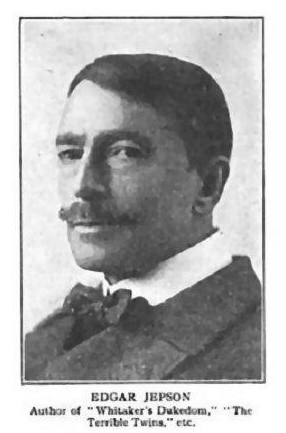
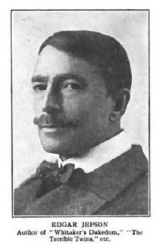
Most Prescient Literary Criticism: Edgar Jepson, “The Western School,” The Little Review, September
National Magazine, April-September 1915

Continuing our September 1918 Little Review/1927 Yankees starting lineup analogy, Edgar Jepson is, say, Tony Lazzeri to Eliot’s and Joyce’s Ruth and Gehrig. In his article “The Western School,” Jepson, a British writer of detective and adventure fiction, complains about the undue accolades being given to subpar work by prominent poets. He makes his case convincingly by quoting these lines by Vachel Lindsay:

And kettle-drums rattle
And hide the shame
With a swish and a swirk
and dead Love’s name

and these from “All Life in a Life” by Edgar Lee Masters:

He had a rich man or two
Who took up with him against the powerful frown
That looked him down
For you’ll always find a rich man or two
To take up with anything–
There are those who want to get into society, or bring
Their riches to a social recognition

and these from “Snow,” a long poem by Robert Frost about some monks having a conversation in the middle of the night:

That leaf there in your open book! It moved
Just then, I thought. It’s stood erect like that,
There on the table, ever since I came,
Trying to turn itself backward or forward—
I’ve had my eye on it to make out which…

But don’t despair for poetry! For, Jepson says,

the queer and delightful thing is that in the scores of yards of pleasant verse and wamblings and yawpings which have been recently published in the Great Pure Republic I have found a poet, a real poet, who possesses in the highest degree the qualities the new school demands.

None other than…T.S. Eliot!

Could anything be more United States, more of the soul of that modern land than “The Love Song of J. Alfred Prufrock”?… Never has the shrinking of the modern spirit of life been expressed with such exquisiteness, fullness, and truth.

Jepson also praises Eliot’s “La Figlia Che Piange” (“Weave, weave the sunlight in your hair”), saying that

it is hardly to be believed that this lovely poem should have been published in Poetry in the year in which the school awarded the prize [Poetry magazine’s Levinson prize] to that lumbering fakement “All Life in a Life.”

Jepson may be overstating his role in the discovery of Eliot, who, after all, is in plain sight in that very issue. But he deserves credit for his prescience, especially since he also complains about Lindsay’s “Booker Washington Trilogy” in language straight out of the #OwnVoices movement:

I have a feeling that it is rather an impertinence. Why should a white man set out to become the poetic mouth-piece of the United States blacks? These blacks have already made the only distinctively United States contributions to the arts—ragtime and buck-dancing. Surely it would be well to leave them to make the distinctively United States contribution to poetry.

Home run for Tony Lazzeri!

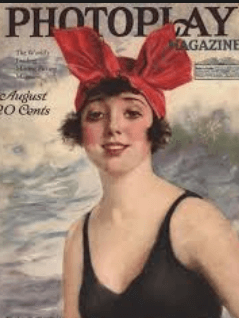
Best Magazine Cover of a Woman Swimming with a Red Scarf on Her Head:

In this surprisingly competitive category, here are the runner up
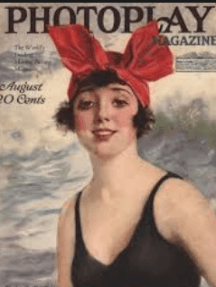
and the winner.
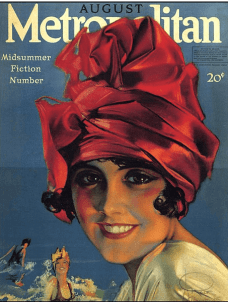
Best Ad Depicting the Advertised Item as Humongous

Winner:
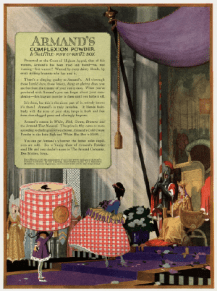
Harper’s Bazar, September 1918

Runner-up:
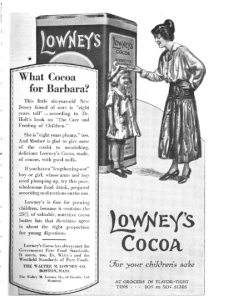
Good Housekeeping, August 1918

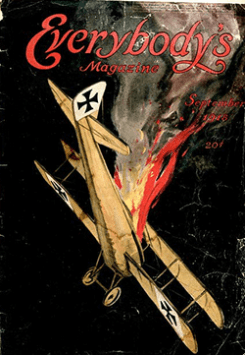
Worst Magazine Cover:

At the risk of sounding like a Boche sympathizer, this is just mean.
Screenshot (1116)-1

Everybody’s, September 1918

Best Magazine Cover:

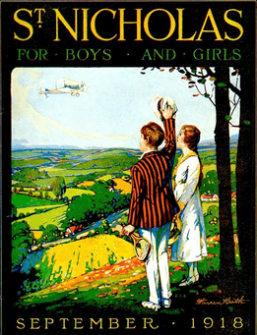
There are a lot of worthy contenders, like this
Screenshot (1137)

St. Nicholas, August 1918

and this

Screenshot (1118)-1

Vanity Fair, August 1918

and this startlingly modern-looking one

Screenshot (1131)

House & Garden, August 1918

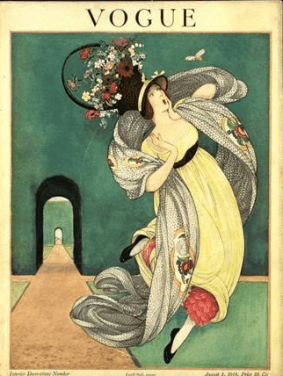
and this, which, in another month, might have won.
Screenshot (1128)-1

Vogue, August 1, 1918

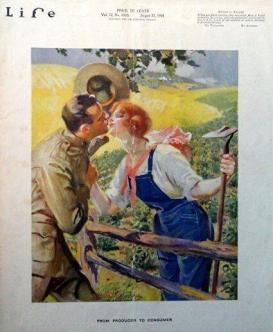
But the war was intensifying, American casualties were mounting, and it seems wrong not to recognize that. So here’s the winner, a soldier saying good-bye to his farmerette sweetheart.
August - Life cover - couple kissing-1

Life, August 22, 1918

On to October!

squiggle

*Of course, I might feel differently if I had to wear a corset.

**Although not as exhausting as working in a Lower East Side textile factory all day and then going to night school.

***Ford Madox Hueffer is Ford Madox Ford, remember.

****To her female lover. Which may not have been clear to her audience, although does “quiet like the garden/And white like the alyssum flowers/And beautiful as the silent spark of the fireflies” sound like a man to you?

*****Whom, to be fair, Untermeyer mentions later in the article. He says that the future critic will realize “in the light of the new psychology” how much prose writers like J.D. Beresford, Gilbert Cannan, A. Neil Lyons, Rebecca West and Thomas Burke had in common with “such seemingly opposed verse craftsmen” as Edward Thomas, W.W. Gibson, Rupert Brooke, James Stephens, and T.S. Eliot. If you blah-blah-blah out the writers no one reads today, we’re left with “Rebecca West has something in common with Rupert Brooke and T.S. Eliot.” I’ll give him that. Kind of.

The best and worst of June and July 1918: Insanity, proto-flappers, and octopus eyes

I’m not in much of a mood to wax philosophical, having recently made my second trip from Cape Town to Washington, D.C. in two months. So I’ll just say that I feel really, really sorry for all those people out there who aren’t spending the year reading as if they were living in 1918. Check out these bests and worsts of June and July to see why.

Best Magazine: The American Journal of Insanity

The American Journal of Insanity is so good that its name isn’t even the best thing about it. It’s full of case histories of various psychological conditions that read like novels.* The saddest is the story, in an article titled “The Insane Psychoneurotic,”  of a Romanian Jewish immigrant who studied to become a lawyer while working (like Marcus Eli Ravage and every other Romanian Jewish immigrant) in a Lower East Side textile factory. He fell into a depression after failing the bar exam three times, became elated when he passed on his fourth try, and then went blind. A doctor restored his sight by pressing a pencil against his eye and telling him that he would be able to see when he opened his eyes. He lost the ability to talk and recovered it when a woman volunteer agreed to his (written) request that she allow him to use her first name. He was institutionalized for a while and released to outpatient care when he seemed to be getting better. Twelve days after his release, though, he hanged himself.
There’s also an article on shell shock by a French doctor that deals in a sympathetic and nuanced manner with the often-dismissed condition, and that in no way justifies the discussion of his and his colleagues’ research in the New York Times under this headline:**

New York Times, July 2, 1918

Before awarding it the prestigious “Best Magazine” title, I figured I should check whether The American Journal of Insanity, like many other erstwhile subjects of my 1918 admiration (I’m looking at you, Marie Carmichael Stopes!), was a fan of eugenics, and in particular of the forced sterilization of “defectives.” So I did a word search of the 1918-1919 volume, cheated a little to glance at the 1919 article that came up, and found out that they were absolutely appalled by it. Way to go, AJI!
Best quote from a book in a review:  

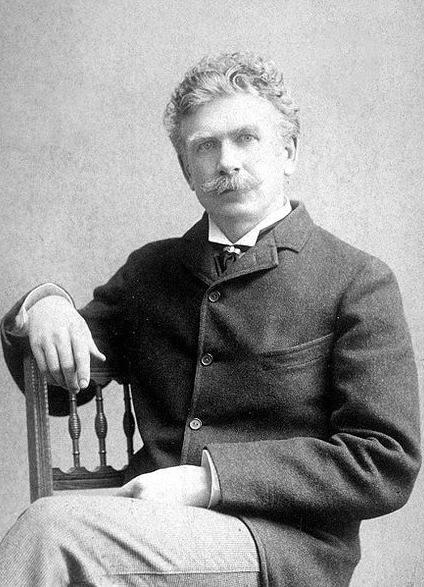
Ambrose Bierce, 1892

“They had a child which they named Joseph and dearly loved, as was then the fashion among parents in all that region.” (From the Ambrose Bierce short story “A Baby Tramp” (1893), quoted in a retrospective on Bierce in The Dial, July 18, 1918.)

Worst Editorial: “Their Hope Doomed to Disappointment,” New York Times, July 27, 1918

A German newspaper has, according to a July 27 Times editorial, proposed that the German army undermine morale among American prisoners of war by making black and white soldiers live together in close quarters.
This, the deviser of the scheme thinks, would give keenest pain both to those thus united in misfortune and to Americans in general…His basis of belief is some vague knowledge he has of the negro’s place in the United States and an exaggerated and distorted notion of an antagonism existing here between the white and black races.

Which, the Times says, is totally not the case!***

Someone should tell the German editor that negroes are not hated in this country—that in innumerable white families they occupy positions that bring them into daily and intimate contact with the other members, especially the children, and it is the Americans who know the negro best that in proper place and season are most forgetful of racial differences or make most kindly allowance for them.

Really, you can’t make this stuff up.

Best Ad: 

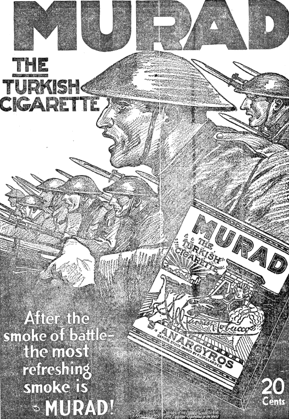
I wish I could honor a more healthy product, but Murad owns this category.

Scribner’s, July 1918

Worst Ad:

…Although not all Murad ads are created equal. This one looks like their regular artist was off sick so they hired a failed Italian Futurist as a temp.

New York Times, July 31, 1918

Best Magazine Covers:

I love this Georges Lepape portrait of a short-haired, drop-waisted proto-flapper.

Vanity Fair, July 1918

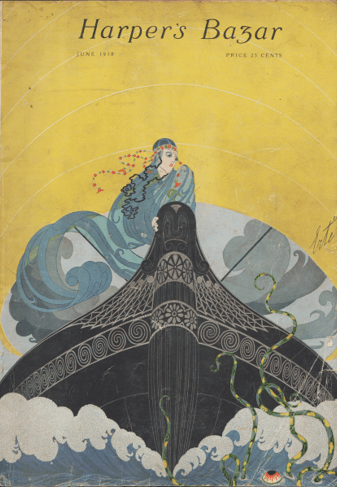
My favorite thing about this Erté Harper’s Bazar cover, called “Surprises of the Sea,” is the octopus eye.

On to August!

*Although they don’t seem, at this point in the history of psychiatry, to ever actually cure anyone. Which could explain why the case histories read like novels.

**Which first came to my attention as a “Whatever It Is, I’m Against It” Headline of the Day.

***Even though the very same issue has an article and an editorial about lynching.

The best and worst of May 1918: Short stories, cover art, ads, and cartoons

I’m back! I’ve been traveling during the past few weeks–from Cape Town to DC to Boston to DC to Boston again and back to DC. Now, belatedly, for the best and worst of May 1918.

Best short story: “The Man Who Came Back,” from Buttered Side Down: Stories, by Edna Ferber (1912)


I decided to expand this category to include any short story I read, not just magazine stories from the “current” month. Just in time, because I’m loving this Edna Ferber collection. Ferber, who is best known for later novels like Show Boat and Cimarron and Giant—or, more accurately, for the movies and shows adapted from them—was twenty-seven when Buttered Side Down was published. She writes about ambitious young people from small towns whose big dreams haven’t panned out. They’re the most real people I’ve come across in my 1918 reading.

In “The Man Who Came Back,” Ted Terrill, our handsome hero, has returned to his small town after spending three years in prison. Here’s how, trying to keep up with the smart set, he met his downfall:

In a mad moment he had attempted a little sleight-of-hand act in which certain Citizens’ National funds were to be transformed into certain glittering shares and back again so quickly that the examiners couldn’t follow it with their eyes. But Ted was unaccustomed to these now-you-see-it-and-now-you-don’t feats and his hand slipped. The trick dropped to the floor with an awful clatter.

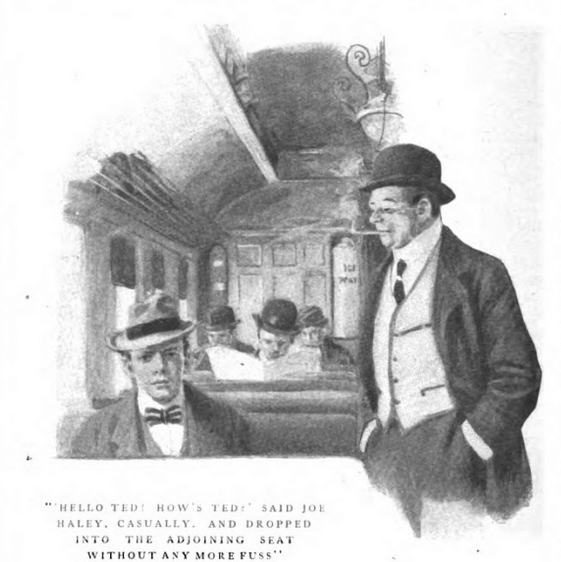
Ted is planning to stop in town just long enough to visit his mother’s grave—she died of heartbreak while he was in prison—and make a new start in Chicago, but on the train he runs into Joe Haley, the owner of a fashionable hotel. Joe offers him a job as a bookkeeper, saying that he’d be better off facing up to his crime at home than living in fear of discovery in a new place.

Illustration from “The Man Who Came Back,” American Magazine, April 1911

Ted is trained by his predecessor, Minnie Wenzel, who is marrying a “swell fellow.” His family’s former servant, Birdie, whose face “looked like a huge mistake,” works at the hotel as a waitress. All goes well until one day Joe tells Ted $300 is missing. “Ted, old kid,” he says sadly, “what’n’ell made you do it again?’” Birdie bursts in and unmasks the real culprit, Minnie, who has been pocketing the money for her trousseau. Ted asks Birdie if he can walk her home. But Birdie—and this is what elevates the story from good to great—turns him down. If she let him, she says,

“inside half a year, if yuh was lonesome enough, yuh’d ask me to marry yuh. And b’gorra,” she said softly, looking down at her unlovely red hands, “I’m dead scared I’d do it. Get back to work, Ted Terrill, and hold yer head up high, and when yuh say your prayers to-night, thank your lucky stars I ain’t a hussy.”

Edna Ferber, date unknown

Best magazine covers:

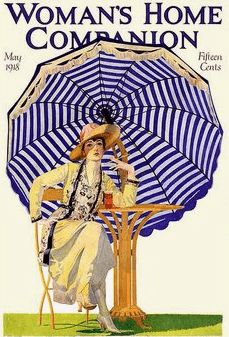
Two favorites in indigo: this one from Woman’s Home Companion, artist unknown,

…and, as always, Erté. This one’s called “Fireflies.”

Also, a paean to spring from The Liberator’s wonderful Hugo Gellert.

Best ad:

May wasn’t a sensational month ad-wise, but I always have a soft spot for Old Dutch Cleanser.

Ladies’ Home Journal, May 1918

Worst ad:

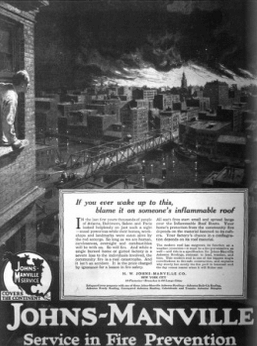
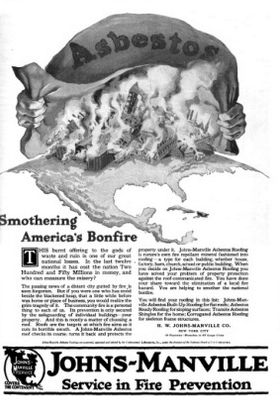
Even without the benefit of hindsight, this ad for asbestos looks ominous.

Literary Digest, May 11, 1918

(Although not as ominous as this 1917 ad I came across in Scientific American.)

Scientific American, April 28, 1917

Best cartoon:

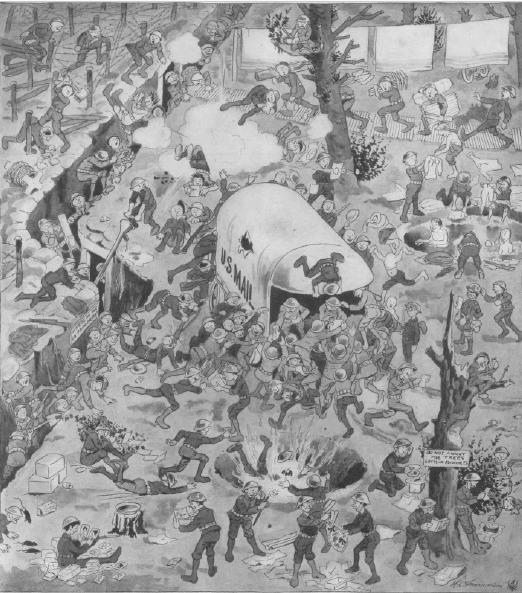
Cartooning was in its infancy in 1918, but I don’t think the artistry of that era has ever been surpassed.

“The Mail from Home Arrives,” H.C. Greening, Judge magazine, May 11, 1918

Worst cartoon:

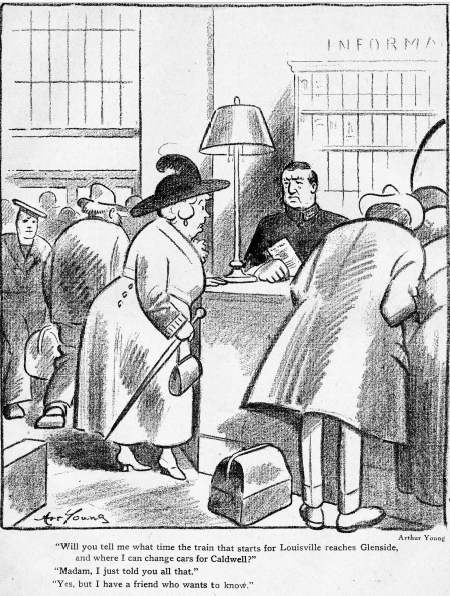
 Captions, though, still left a lot to be desired.

“Will you tell me what time the train that starts for Louisville reaches Glenside, and where I can change cars for Caldwell?”
“Madam, I just told you all that.”
“Yes, but I have a friend who wants to know.”

Screenshot (729)-2

Arthur Young, The Liberator, May 1918

 On to (okay, the middle of) June!

squiggle

*UPDATE 12/7/2019: It’s Coles Phillips, most famous for his Fadeaway Girl illustrations. I wrote about him here.

Coles Phillips Vogue cover, woman with hat,


Thursday Miscellany: Mauvais français, trippy Kewpies, and loud loos

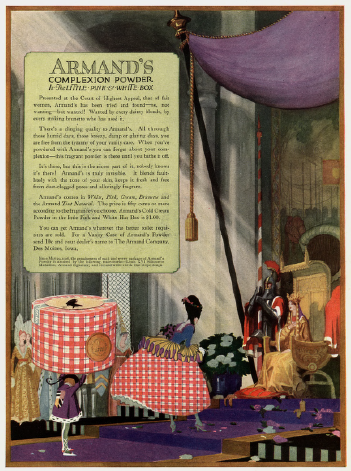
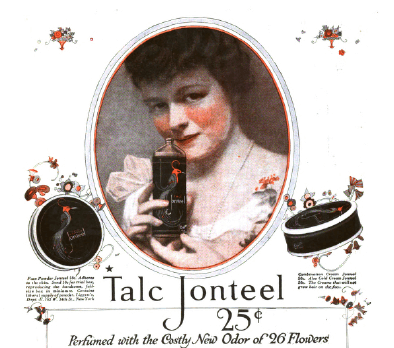
French phonetic pronunciation was a big thing in 1918 product names. (See also Bozart Rugs.) In this case I kind of get it, since you wouldn’t want to go to all the effort of creating a costly new odor out of 26 flowers only to have everyone call it “Talc Gentile.”

Good Housekeeping, May 1918

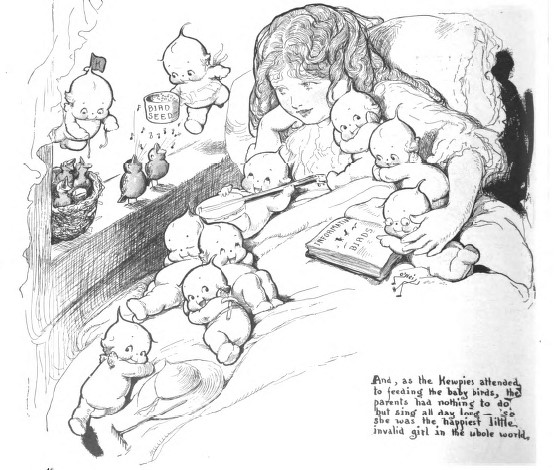
Good Housekeeping ran a recurring feature on the Kewpies for the children of 1918, who were apparently less easily freaked out than I am. In this episode, an invalid child’s bed is absolutely infested with Kewpies, but she’s OK with it.

Good Housekeeping, May 1918

Apparently having other people hear you flush the toilet was a highly dreaded 1918 situation.

Good Housekeeping, May 1918

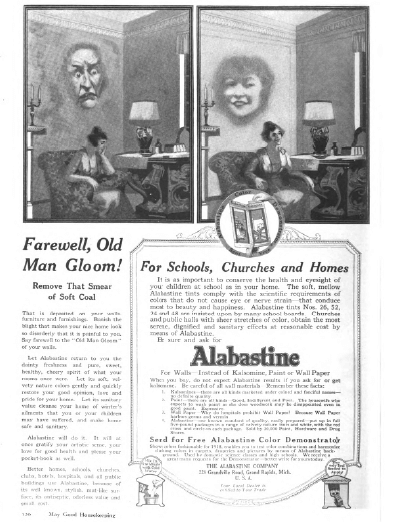
I don’t know, my own ideal scenario is NO creepy disembodied faces on my living room wall.

Good Housekeeping, May 1918

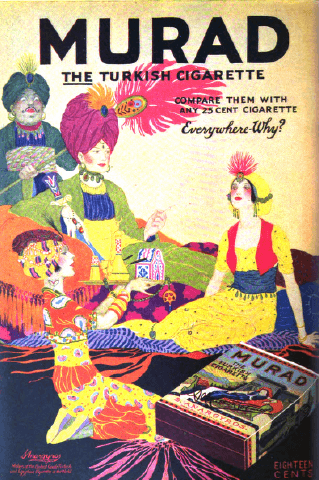
I know I’ve been kind of a shill for the 1918 cigarette industry, and Murads in particular. But I can’t help it, I just love Murad ads. So, just so we’re all on the same page here, CIGARETTES ARE BAD FOR YOU. THEY KILL. THEY SMELL REALLY, REALLY BAD. YOU SHOULDN’T SMOKE, AND IF YOU ALREADY DO YOU SHOULD QUIT.* Now that I’ve made that clear, here’s an ad for Murads in the May 1918 Scribner’s. 

*ESPECIALLY IF YOU LIVE IN MY BUILDING.