Category Archives: Art and Illustration

A pioneering 1918 infographic, worth a thousand words

Words! So. Many. Words. Mine, and the 1918 people’s. I need a break.

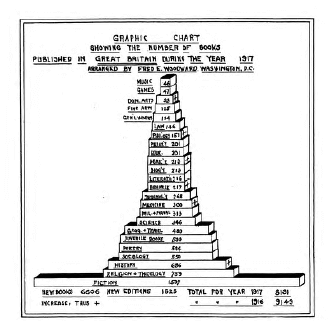
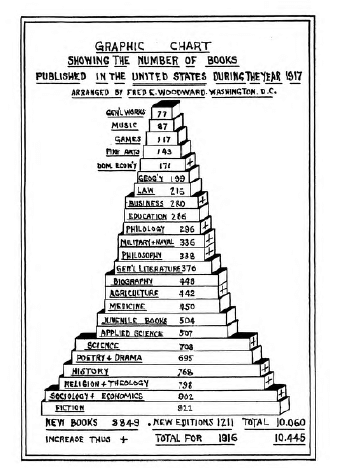
The April 1918 issue of The Bookman has just the thing: a graphic about book publication in the United States and Great Britain. And a picture is worth a thousand words, which is the length that my typical post has swollen to these days.

Here are the stats for books published in the U.S. in 1917:

And in Great Britain:

In the accompanying article, Fred E. Woodward, who drew the graphic, points out that

a single glance at the two charts reveals a notable difference between the two figures, the one representing the books of the United States being an almost symmetrical pyramid endued with the appearance of stability and a certain element of vigor and strength, while the one representing Great Britain exhibits an enormous overplus of works of fiction as compared to the remaining classes.

Interesting. Not so interestingly, Woodward goes on to explain the charts at length, which kind of defeats the purpose of a chart. But I can forgive him a lot because, as far as I can tell, he is basically inventing information graphics here. (I did some research and found some earlier examples, going back to a depiction by J.J. Sylvester of chemical bonds and their mathematic properties in Nature magazine in 1878.* So let’s just say Woodward was inventing fun infographics.**)

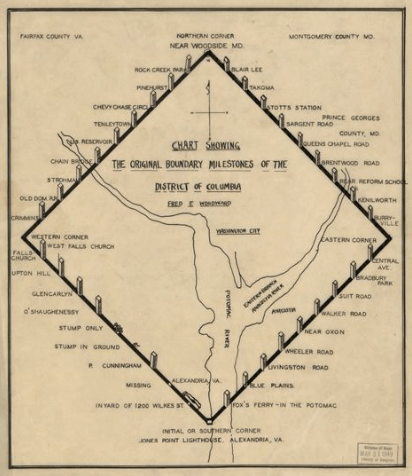
Chart showing the original boundary milestones of the District of Columbia, Fred E. Woodward, 1906 (Library of Congress)

Fred Woodward really, really liked drawing infographics about books. He did a way more complicated one in the April 1917 issue of The Bookman, and, also in 1917, wrote a graphic pamphlet on book sales for the U.S. Bureau of Education. Woodward also wrote a 1907 book called A Ramble Along the Boundary Stones of the District of Columbia with a Camera. I’m going to D.C. soon and, believe me, I’m going to be rambling along those boundary stones.

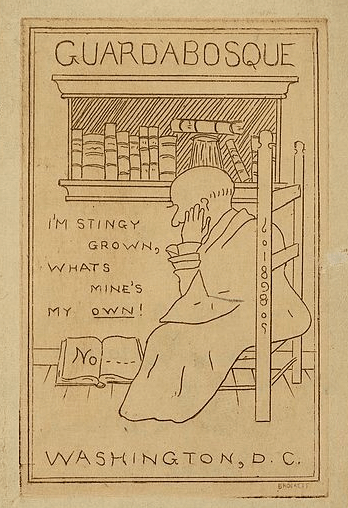
Bookplate of Fred E. Woodward, Washington, D.C., 1898 (Library of Congress)

The Library of Congress has this 1898 bookplate of Woodward’s (drawn by someone else, though) in its collection.  “Guardabosque” is a play on his name—it means forest ranger in Spanish, which is apparently the original meaning of Woodward. According to the LOC, there’s an inscription on the back saying that Woodward was the head of the books department at Woodward & Lothrop in Washington. A little more sleuthing revealed that he was the younger brother of the founder of the iconic, and now sadly out of business, department store.*** He’s apparently no relation, though, to graphic artist Fred Woodward, formerly the art director of Rolling Stone and now at GQ.

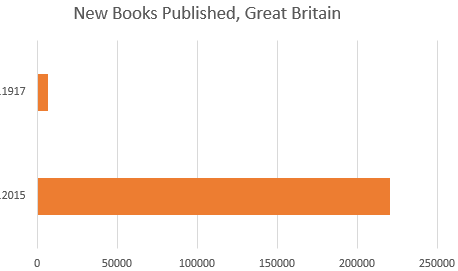
I was going to hold forth about how few books were published 100 years ago compared to now, but, you know, words. So here’s an infographic:

(Source, 1917: The Bookman magazine, April 1918. Source, 2015: International Publishers Association Annual Report, 2016.)

I realize that this is an apples-and-oranges situation in terms of comparisons. And that I’m no Fred Woodward (either one) infographics-wise.

Still, you get the picture.

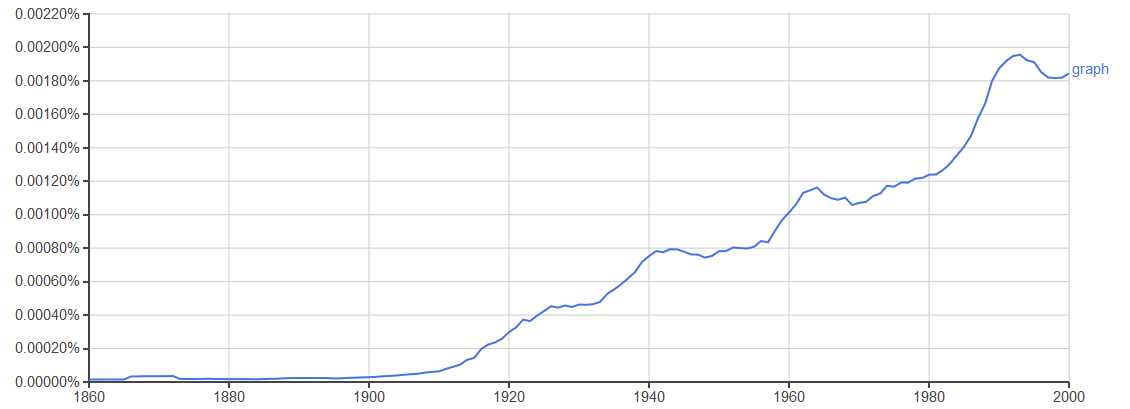
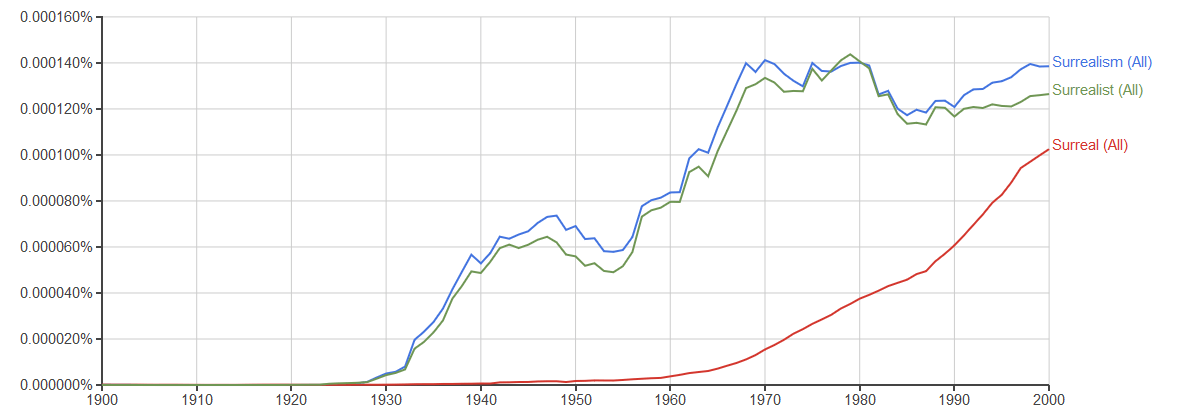
*Sylvester, as it turns out, coined the word “graph” in another 1878 Nature article. This is even more amazing than there having been no such word as “surreal” in 1918. If you don’t believe that “graph” is so new, which I didn’t, here’s the Google N-Gram:

**I realize that Woodward probably wasn’t doing this all by himself. Please be in touch if you know of other examples!

***I have wonderful memories of going Christmas shopping in the children’s castle at Woodies (as we D.C. cognoscenti call it) in the 1970s.

The best and worst of April 1918: Magazines, stories, faint praise, and neologisms

A third of the way through!

After four months in 1918, I’ve become both more optimistic and more pessimistic about our present world. More optimistic because so many problems that seemed intractable back then, like the acceptability in mainstream circles of overt racism, sexism, and antisemitism, are gone now. More pessimistic because of all the new problems, like global warming, that people back then couldn’t have conceived of.

Okay, enough philosophizing. On to the best and worst of April 1918.

Best magazine: The Dial

The Dial is one of the most reliably interesting reads of 1918. It started out in 1840 as an outlet for the Transcendentalists (Louisa May Alcott’s father came up with the name) and was now a Chicago-based political and literary journal. H.L. Mencken wasn’t a fan—he ridiculed the “insane labeling and pigeon-holing that passes for criticism among the gifted Harvard boys of the Dial and the Nation”—but staff writer Randolph Bourne gave as good as he got, saying that Mencken and Theodore Dreiser “beat at a straw man of puritanism which, for the younger generation, has not even the vitality to be interesting.”*

The Dial did have a tendency to review seemingly every book that showed up on its doorstep, like Colorado, the Queen Jewel of the Rockies. But when a single (April 11) issue includes John Dewey on education, historian Charles Beard (who had recently resigned in protest from Columbia) on universities and democracy, Conrad Aiken on poetry,** and Bourne on immigrant fiction, I can forgive a lot.

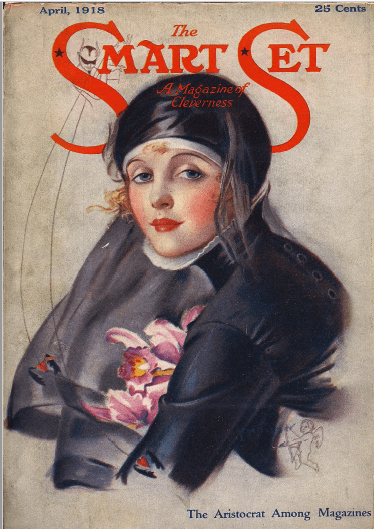
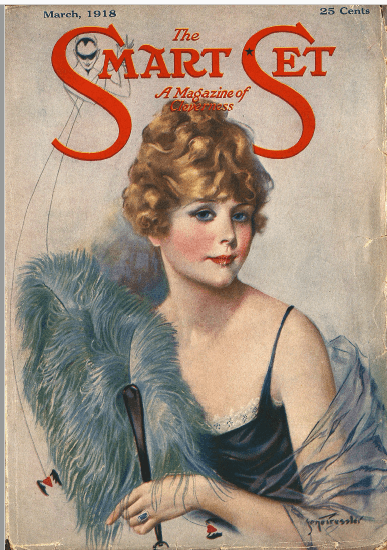
Best short story: “The Swimming Pool” by Evelyn Campbell, Smart Set

I haven’t read many magazine short stories this month. In fact, I’ve read just one: this one. And I wouldn’t call it a great story. So this might strike you as a shoddy bit of best-and-worst selecting. But something about this story by Evelyn Campbell, a 22-year-old screenwriter and Ziegfeld Follies girl, got to me.

A woman, swimming in a pool as darkness falls, strikes up a conversation with a man. They’re both natural swimmers, creatures of the water, and during their brief conversation they fall a little in love.

Suddenly it was dusk. Not in the enclosure made brilliant by white bulbs, but up above in the oblong of dark blue sky where newly awakened stars began to show timid faces to their bolder rivals. They were in the deep water which lay densely beneath them. Again they turned upon their backs and floated.

As the woman leaves the country club with her horrible rich husband and their children, she passes the man, who’s wearing an ill-cut suit. Her daughter says, Oh, look, the new janitor. A typical Smart Set snappy ending. In most stories, though, the twist at the end is the point—the rest is just setup. Here, the spell that the water casts on the swimmers is the point, and the ending is just the resolution.

Some of Campbell’s descriptions work better than others—I can’t picture what “in the middle of the pool a big golden square turned the water to bright emerald” looks like—but she’s trying something other writers just weren’t doing in 1918. That is, Imagist poets were, but not magazine short story writers.

Best magazine cover: The Crisis

Even by 1918’s high standards, this was an exceptional month for magazine covers. I’ve posted pictures of several of them already (here and here and here). The standout, though, is the cover of the April issue of The Crisis, the NAACP magazine edited by W.E.B. Du Bois. It features a copy of a painting called “Lead Kindly Light,” made for the magazine by 34-year-old William Edouard Scott (and now owned by the Huntington Museum of Art in West Virginia).

Here’s how the magazine’s editorial, probably written by Du Bois, interprets the painting.

It is just an old lantern, filled with grimy oil. It cannot lead anywhere, yet its light leads. Its golden light streams through the night.

Whose is the light?

It is not the lantern’s. It simply seems to be the lantern’s radiance. It is the Light of the World and it leads not toward the millennium in the North, but out of the insult and prostitution and ignorance and lies and lynchings of the South—up toward a chance, a new chance,—nothing more. But thank God for that…

Lead, Kindly Light.

Worst magazine cover: Ladies’ Home Journal

This is a repeat, but nothing was going to beat this Ladies’ Home Journal cover, titled (by me) “Oh, how sweet! My boyfriend killed someone!”

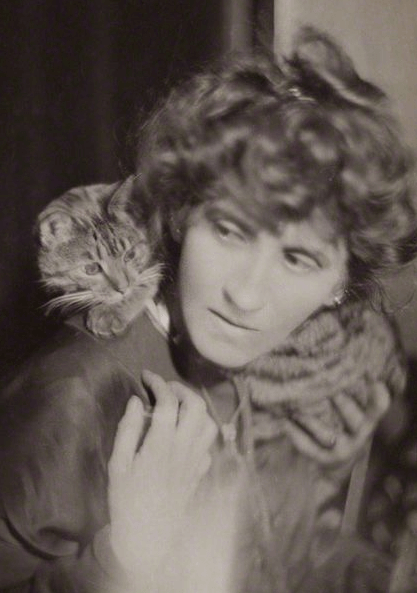
Best poem: “Is It Worth While,” Violet Hunt, Poetry

Violet Hunt, ca. 1900

Reading Poetry magazine, you can see how living in 1918 was like living in two worlds. In the April 1918 issue, there’s page after page of purple mountains, and it could be 1868, and suddenly there’s Violet Hunt mourning her relationship with Ford Madox Hueffer (Ford), and it could be 1968.

You can read the rest of the poem here.

Faintest praise in a book review: T.S. Eliot, The Egoist

archive.org

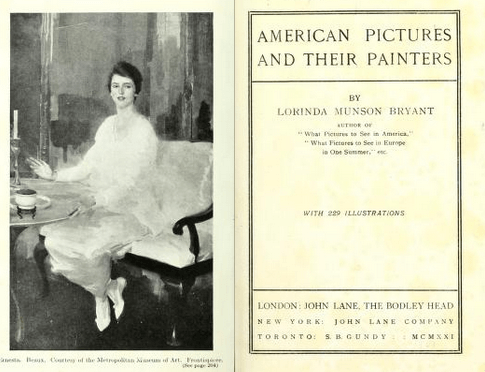
This was a surprisingly competitive category. At first, this unsigned review in the April 11 Dial, of Lorinda Munson Bryant’s American Pictures and their Painters, looked like a shoo-in:

One sincerely wishes that Mrs. Bryant in her enthusiasm for nature, both inanimate and human, had focused her numerous descriptions of the subject matter of the paintings. That the painter has chosen to paint a wintry landscape…is surely no excuse for a genteel panegyric on winter, or that the artist has selected a human being…is no excuse for a general eulogy of mankind. In the family circle a little girl, it is true, may be a “darling,” but in a painting that may be the least interesting of her attributes….If the subject is a woman, and a thin one at that, the author thinks the artist would have been wiser to select a plumper and rosier model…Aside from these minor defects the book is a handy and valuable compendium.

From “Hearts of Controversy,” by Alice Meynell, second edition, 1918

But then I came across this review of Alice Meynell’s Hearts of Controversy by Apteryx, AKA T.S. Eliot, in the April issue of The Egoist, and we had a winner.

In its peculiar anti-style, Mrs. Meynell’s book, like all her books, is extremely well written, and she can incidentally pick out good bits from authors. If we can accept this attitude, we shall enjoy the book very much. And people who have a taste for that antiquated genre, that parlour-game, the Polite Essay—which consists in taking a tiny point and cutting figure eights around it, without ever uttering one’s meaning in plain words—will find in Mrs. Meynell’s last essay (“Charmain”) an almost perfect example of a forgotten craft which indeed had its attractions.

*                                              *                                              *

But we must learn to take literature seriously.

(Asterixes Apteryx’s.)

Best neologism: Surréaliste

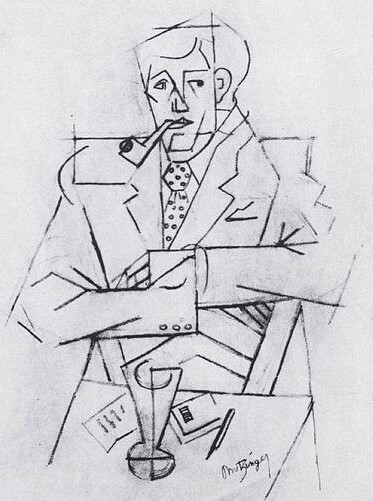
Study for a portrait of Guillaume Apollinaire, Jean Metzinger, 1911

“SURRÉALISTE is the denomination M. Guillaume Apollinaire—there is no doubt his astounding name continues to have good reason for keeping well in evidence—has attached to his play, Les Mamelles de Tirésias,” the Paris correspondent for The Egoist tells us. I knew that the surrealist movement was just getting underway in 1918, but it seemed strange to think of the word itself being a novelty. So I crunched some big data—that is, did a Google Books N-Gram***—and it’s true, surreal and its variants were pretty much non-existent at that point. So what did people say when things were, you know, surreal? (UPDATE 1/16/2021: It turns out that “stream of consciousness” in a literary context was also coined this month, by May Sinclair in an article about novelist Dorothy Richardson in The Egoist, which I actually read without realizing “stream of consciousness” was making its debut.)

Best humor: 

In The Bookman, there’s a report about the mystery surrounding the identity of the author of The Book of Artemas, a bestselling British spoof relating current events in biblical style. Was it G.K. Chesterton? J.M. Barrie? Hilaire Belloc? George Bernard Shaw? (It would turn out to be someone no one ever heard of named Arthur Telford Mason.) Here’s an excerpt:

5. Whilst Wudro, the son of Wyl, was tending his flock of young men in the pasture that is knowledge, and after he had taught them how they should go and what things they should know,
6. Behold, the men of Amer came unto him, saying, We have chosen thee for to rule over us; and we have
brought thee an high hat for to wear as the badge of thine office; and the size of the hat, it is six and seven-eights.
7. And because he knew not what he was letting himself
in for, he gave way to their importuning, and did put on the high hat, the size whereof was six and seven-eights.
8. And it came to pass that when the men of En fought against the men of Hu, they did send messengers unto the land of Amer for to buy them munitions for the war. And they took
with them gold in great quantity wherewith to satisfy the merchants that did sell unto them. Therefor did the land of Amer prosper exceedingly.

Worst joke:

Judge, April 27, 1918

On to May!

*Kind of harsh, since Bourne was only six years younger than Mencken.

**He agrees with me about Christopher Morley’s goopiness.

***Which is really fun—you should try if you’re off Facebook and looking for new ways to waste time.

Thursday Miscellany: Lady soldiers (ha ha!), a Vogue retread, a fed-up doctor, and an Erté duel

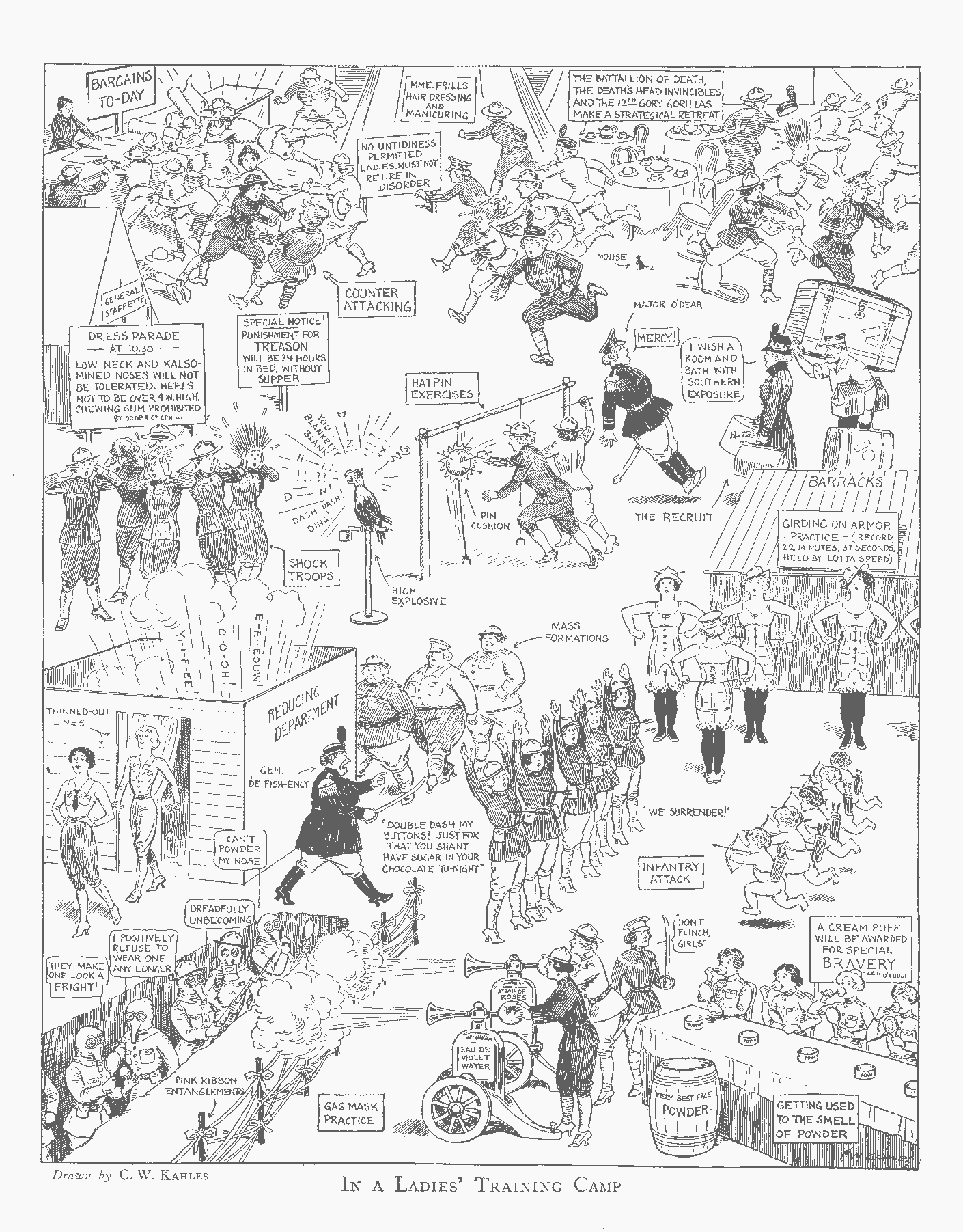
Ha ha, lady soldiers! I was going to ask C.W. Kahles if he’d ever heard of Russia’s all-woman Battalion of Death, but there they are in the upper right corner, running away from a mouse.

Judge magazine, April 20, 1918

This April 1918 Vogue cover, the only repeat in the magazine’s history, first ran in November 1911. It’s worth a second look.

Nutritionist/FDA founder/Poison Squad leader Dr. Harvey Wiley is back, with some sensible child-rearing advice. He often seems like a time traveler from a future era, full of “I can’t believe I’m stuck in this stupid century” exasperation.

Dr. Wiley’s Question Box, Good Housekeeping, April 1918

One of the most pleasant surprises about 1918 is the bright and modern decor. I want to live in this bungalow.

The Delineator, April 1918

There’s often something vaguely sinister lurking under the surface of Erté’s gorgeous magazine covers. This one, titled “The Duel,” is more unsettling than most.

Wednesday miscellany: Naked microscope bookplate people, stylish women, and cherry blossoms

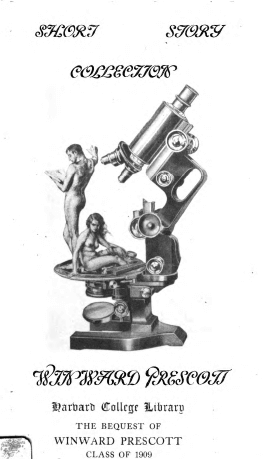
Imagine my surprise when I opened a copy of Hugh de Sélincourt’s 1918 book Nine Tales, digitized from Harvard’s Widener Library, and found these naked people on a microscope. I was all the more surprised because I went to Harvard* in the 1980s and Widener was so conservative that their cataloging system had a separate “X” category for dirty books, which you had to order from the librarian instead of getting them in the stacks. I had to check out Henry Miller’s Tropic of Cancer for a class one time and I felt like a pervert.

So what’s the story? I searched for the bookplate on Google Images and, proving that you can find anything on the internet, was directed to a website for The McCrone Group, a microscopy company, that includes a page about bookplates with pictures of microscopes, written by John Gustav Delly. I learned that Winward Prescott, Harvard ’09, was a serious bookplate collector; his donation now makes up the largest part of the extensive collection at Harvard’s Houghton Library. If you check out the McCrone Group page–which I highly recommend–the bookplate is image 72.

She’s living her best life.

Judge magazine, April 6, 1918

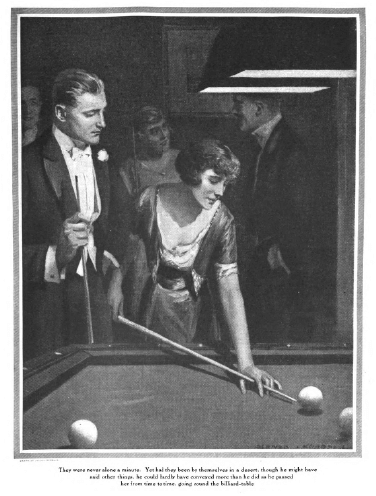
Okay, not courageous at a Russian woman soldier level, but wearing a dress this low-cut to play billiards takes guts.

Illustration from “Camille,” Cosmopolitan, April 1918

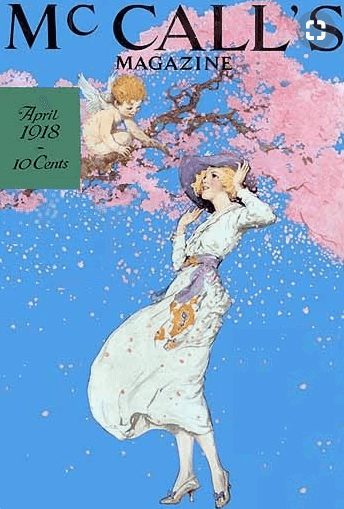
And, just in time for the D.C. cherry blossoms, a McCall’s cover by Willy Pogany.

*And, no, people don’t mention this at any possible opportunity. It’s relevant!

The best and worst of March 1918: Magazines, essays, cover art, and humor

When I was in the Foreign Service, living in Cambodia or Honduras or wherever, people used to ask, “But don’t you miss home?” I never knew what to say. The honest answer was, “I miss some things, sometimes, but it’s way more interesting here. Don’t you get bored living in the same place all the time?” That seemed kind of rude, though.

A quarter of the way through, that’s how I feel about my life in 1918. I’ll see, for example, that Meg Wolitzer, Curtis Sittenfeld, and Rebecca Harrington all have books coming out, and for a second I’ll wish that I could read them, but then I’ll pick up Mrs. Spring Fragrance or the latest issue of The Dial, and the feeling goes away. I can read those books next year. In the meantime, it’s way more interesting here.

Now for the best and worst of March 1918:

Best Magazine: The Little Review
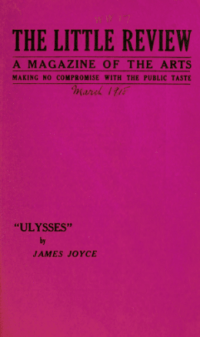
Ulysses, as I wrote earlier this month, made its first appearance in the Little Review in March 1918. The issue also includes Ezra Pound writing on Marianne Moore, fiction by Wyndham Lewis, and an essay by Ford Madox Hueffer (a.k.a. Ford) that contains the sentence “The Englishman’s mind is of course made up entirely of quotations.” But the rest of the issue could have been blank (which wouldn’t have been unprecedented—the first thirteen pages of the September 1916 issue were blank, an expression of editor Margaret Anderson’s frustration over the lack of quality submissions) and it still would have been the best magazine of the month, if not the year.

Worst Magazine: The Art World
The Art World, as I noted last week, had nothing good to say about impressionism or anything that came after. To put that into perspective, the first major exhibition of impressionist art was in 1874. So an art magazine taking this stance in 1918 is like Rolling Stone saying in 2018 that this rock-and-roll music is just a lot of noise.
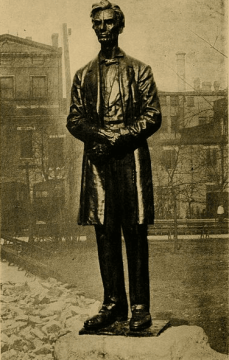
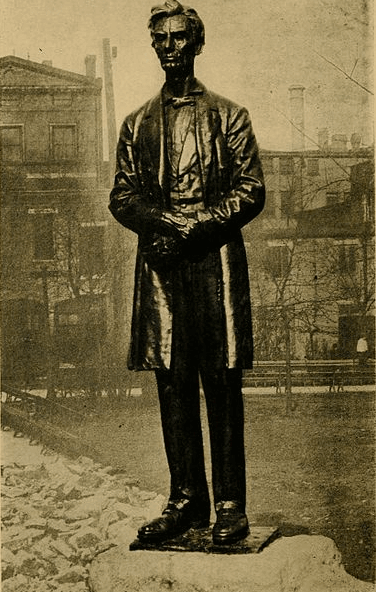
Statue of Lincoln, George Grey Barnard, Lytle Park, Cincinnati (1917)

In its March 1918 issue, the last before it merged into another magazine, The Art World criticized George Grey Barnard’s statue of Lincoln in Cincinnati, saying that Barnard

does not show the majestic Lincoln at the bar of history being judged and admired, but a slave Lincoln at the block, being sold and pitied…let us hope that Mr. Barnard will now deign to accept the advice we gave him in June 1917 and make a new Lincoln—virile, heroic, and majestic.
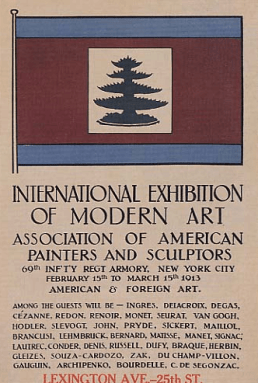
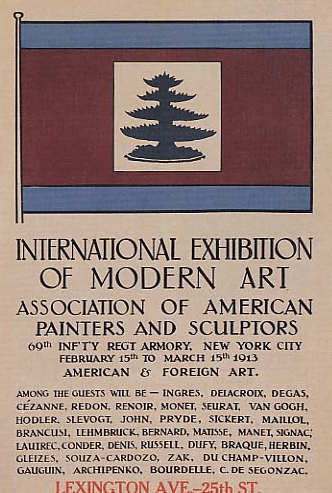
The magazine approvingly quotes portraitist Cecilia Beaux saying of the 1913 Armory Show in New York, the first large exhibition of modern art in the United States, that

“It was like a sudden windstorm that raises no little dust, noise, and confusion for the moment; when the wind dies down you discover that much that was of no real value has blown away, leaving a clearer, wholesome atmosphere.”

The Art World branches out to the written word in this issue, calling a modernist poem “speech worthy of a yapping maniac.”

Best humorous essay: “Making the Nursery Safe for Democracy,” by Harold Kellock, The Bookman
 

Essays about family life in 1918 are generally steeped in sarcasm (if they’re by men) or sentimentality (if they’re by women). It’s hard to find a family that seems real. Then I came across Harold Kellock’s essay about his four-year-old son being bombarded with royalist propaganda through his nursery reading. Every night, Kellock is forced to read his son a story about some heroic king. “In a world wherein we are pouring out our blood and treasure that democracy may live safely,” he complains, “our children scarcely out of the cradle are being made into staunch little monarchists.” He takes a stab at democratizing the stories, but it doesn’t work, and he resigns himself to nursery royalism.

“Then,” I read, “the king took Gretel to his palace and celebrated the marriage in great state. And she told the king all her story, and he sent for the fairy and punished her.” Think of having the power of punishment over fairies! The King und Gott! But my son swallows it complacently. He does not question the divine right of kings.
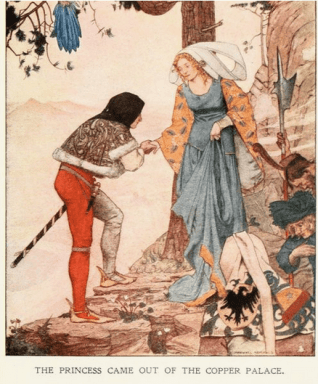
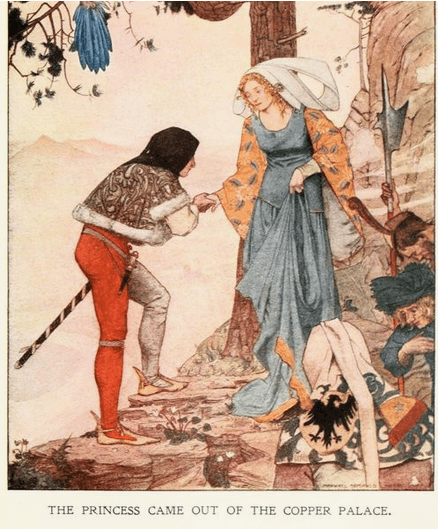
Faery Tales from Hans Christian Andersen, Maxwell Armfield, 1910

Kellock reassures himself that, when the time comes, he can turn his child into a democrat by showing him photographs “of some vacuous king, discreetly bearded to hide his recessional features,” or “a typical princess, whose hat and features alike seem so unfortunately chosen, opening a Red Cross bazaar.”

But not for a while, he says.

Worst humorous essay: “I Must Have Been A Little Too Rough,” by George B. Jenkins, Jr., Smart Set
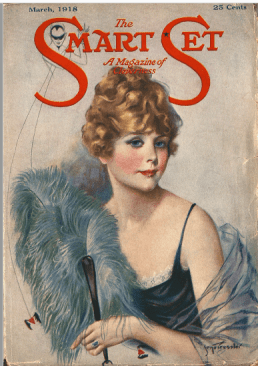
I hope this is the worst thing I read all year. There must be an anti-gender violence message hidden somewhere, but…well, read it for yourself.

I must have been a little too rough.

“Women,” her father had told me, “are tired of the courteous treatment of the average man. They are bored by the vapid compliments, the silly lies, the stupid chatter of pale youths with gardenias in their lapels. If you want to be a success with women, be rude! Be violent! Overpower them, assert your physical superiority! If necessary, beat them!” He became quite excited. “Pound them! Assault them! Half-murder them!”

I listened to him respectfully, though I did not care for him at all. Yet I believed him, for he is notoriously successful in his affaires.

I decided to test his theories. Striding into the next room, I grasped his daughter about the waist.

“I love you!” I roared, squeezing her until her face was purple.

“You belong to me!” I shouted, dragging her around the room by her hair, and overturning several chairs in our progress.

“Damn you!” I shrieked, striking her on the shoulder, where the blow left a blue welt, “I will fight the world for you.”

She began to whimper.

“Shut up!” I ordered, in my rudest manner, and slung her across the room.

But I must have been a little too rough, for she fell out the window.

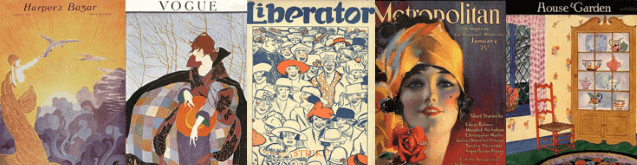
Best magazine cover: The Liberator
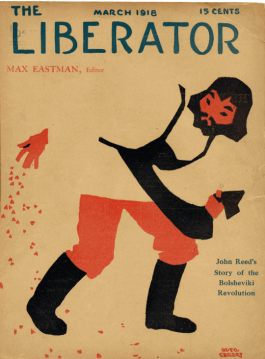
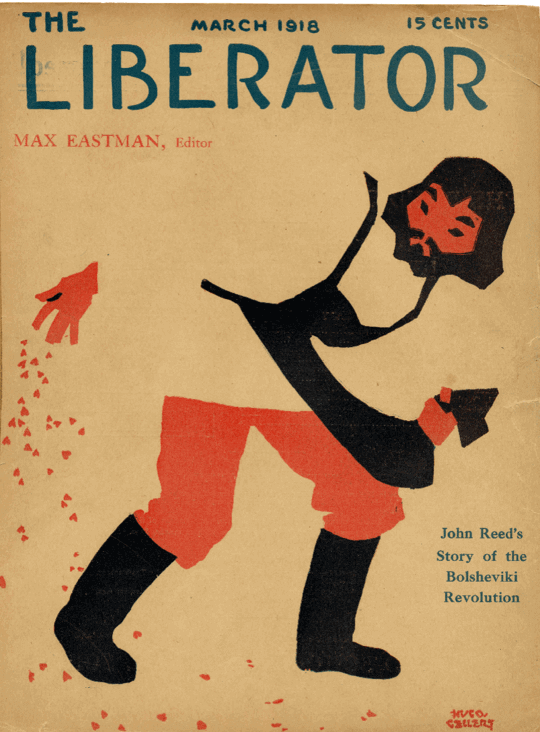
The first issue of The Liberator was published in March 1918. Its predecessor, The Masses, had closed down in 1917 after being declared treasonous by the government for its anti-war stance. The debut issue included reporting from Russia by John Reed, whose Ten Days that Shook the World was published the next year (and who died in Russia in 1920 at the age of 32). I’ll write more about The Liberator later. For now, here’s its inaugural cover, by Hungarian-American artist Hugo Gellert.

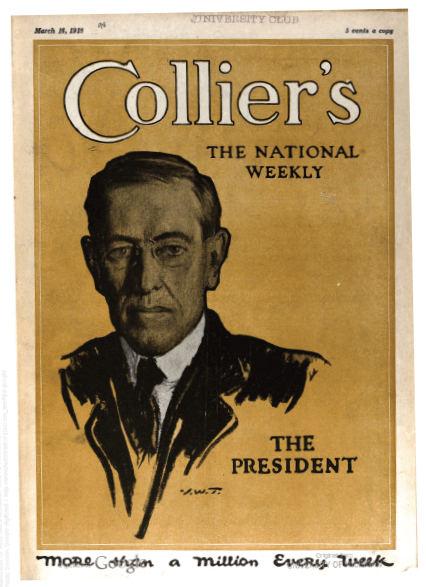
Worst magazine cover: Collier’s
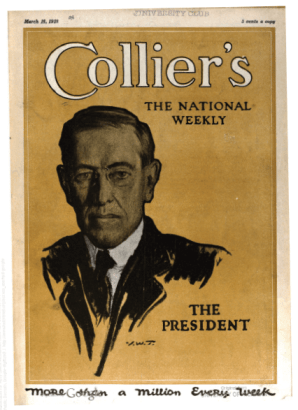
I’m imagining the meeting where this cover was conceived.

Art director: How about…the President?
Editor: What would he be doing?
Art director: Nothing, just a picture of his face, in black and white. With a caption that says [stretches his hand into the air dramatically], “The President.”
Editor: I like it!

Best humor:
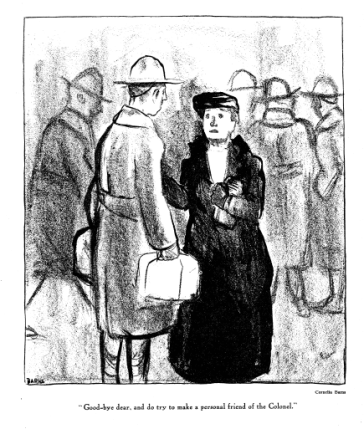

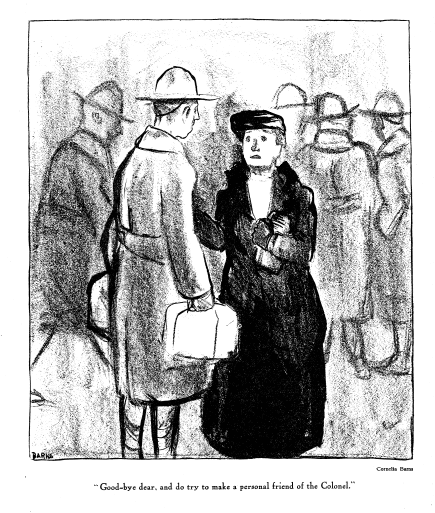
As I’ve noted before, there are no good jokes in 1918 magazines. But I liked this Cornelia Barns Liberator cartoon, featuring the world’s most coldhearted mother seeing her son off to war.

Worst humor:
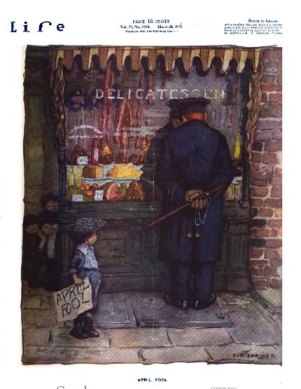
First dog: How is brother collie over there? Is he in your set?
Second: Oh, yes; we visit the same garbage pails.

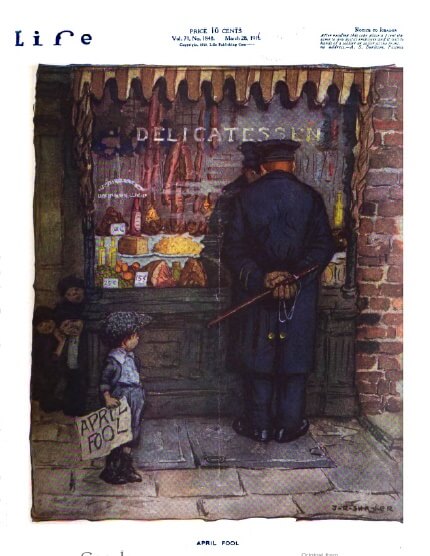
(Life magazine, March 28, 1918)

And, in honor of Women’s History Month, the most inspiring women:

I came across so many! Novelists Edith Wharton, Willa Cather, and Mary Roberts Rinehart; artist Elizabeth Gardner; dancer Irene Castle; Little Review editor Margaret Anderson; suffragist Anna Kelton Wiley; prosecutor Annette Abbott Adams; rebellious housewife Julia Clark Hallam; and the anonymous woman who wrote about how divorce saved her sanity.

But every month is Women’s History month at My Year in 1918, and there are lots more inspiring women to come. (Sneak preview: a pioneering British sexologist and a witty Chinese-American writer.) On to April!
Wednesday Miscellany: Grotesque wallpaper, a Locomobile, and a Rockwell Easter cover

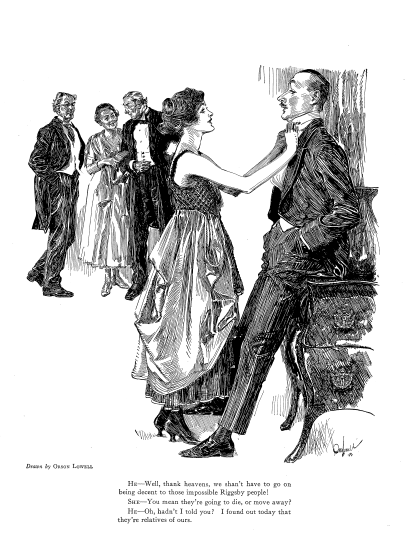
He—Well, thank heavens, we shan’t have to go on being decent to those impossible Riggsby people!
She—You mean they’re going to die, or move away?
He—Oh, hadn’t I told you? I found out today that they’re relatives of ours.

The punch line’s only so-so, but I love “You mean they’re going to die, or move away?”

Judge magazine, March 16, 1918

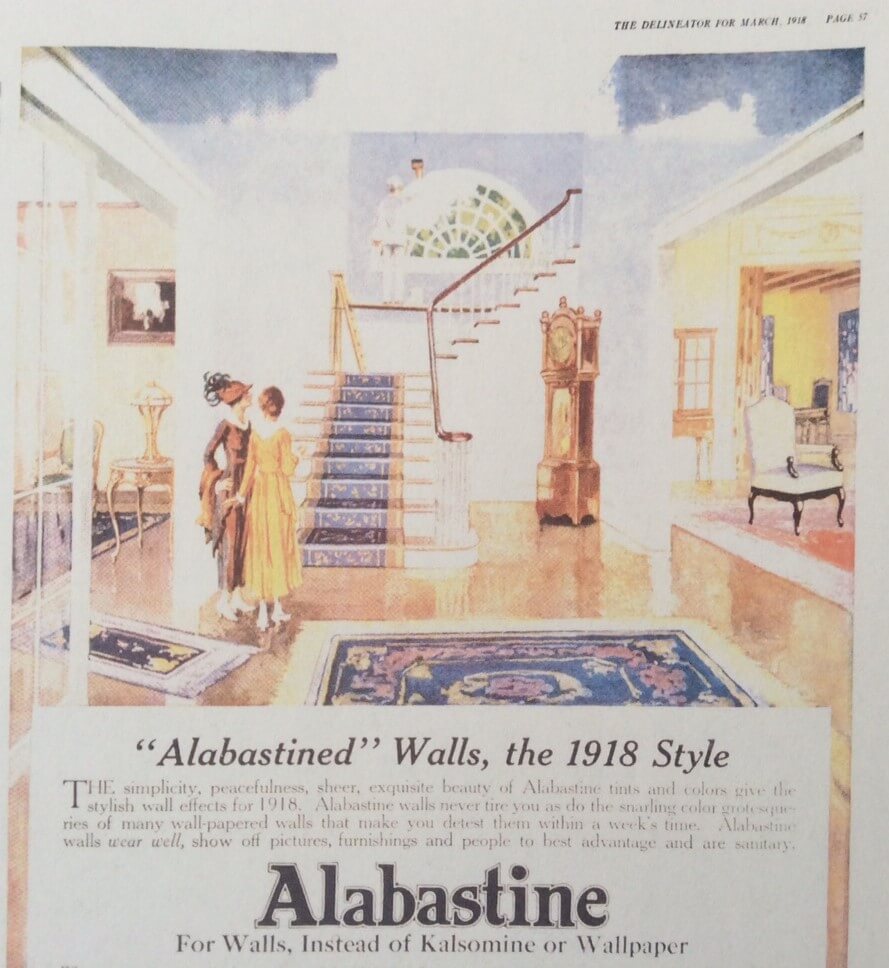
I know, right? The snarling color grotesqueries of wallpaper are the worst.

The Delineator, March 1918

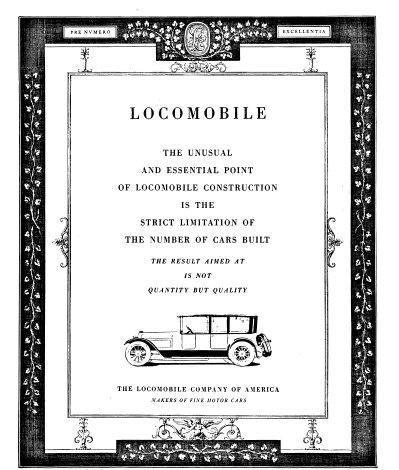
Um, if your car is so serious that it has its own Latin motto, maybe don’t call it the Locomobile?

Life magazine, March 28, 1918

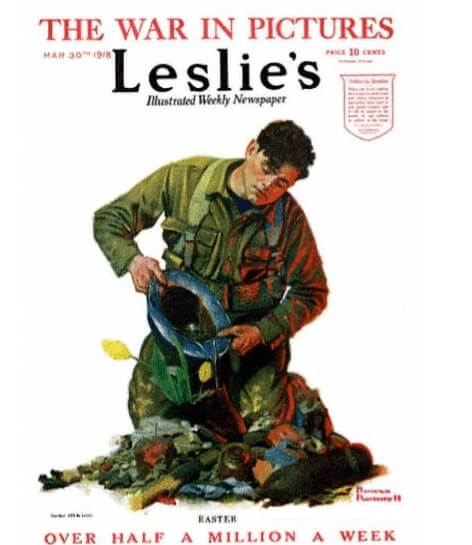
And finally, a soldier uses his helmet to water tulips on this Norman Rockwell cover, titled “Easter.”

Elizabeth Gardner: A boundary-breaking, cross-dressing painter with a surprising afterlife

In the March 1918 issue of the The Art World, there’s an article called “Some Painters Who Happen to Be Women.” I read it, and it’s true! They all just happened to be women. None of them did it on purpose, just to be annoying.

According to the article’s author, Lida Rose* McCabe, who happened to be a woman herself,

woman as an art producer has ceased to be curio, enigma or trifle. Upon intrinsic merit her achievement now stands or falls. In all that makes for exhibition, Jury award, Academician, museum purchase or public commission, hers is today the modern sexlessness—attributed to angels in painting and sculpture.

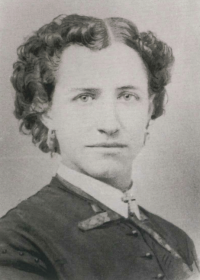
Elizabeth Jane Gardner, ca. 1860

The oldest of these modern sexless artists—“her years fourscore!” McCabe marvels—is Elizabeth Jane Gardner. The Art World is a pretty fusty magazine, so I assumed that she was a boring society painter. Well, I was wrong. In 1864, at the age of 23, Gardner left for Paris to study art, but, McCabe tells us,

no school, no master would receive her. The few French or foreign women then known to the Salon or Latin quarter, like the few who had preceded them down the ages, were the wives, sisters, or daughters of artists.

Gardner found an ingenious way to get around this problem. Her hair had been cut short because of a fever before she left for France, so, she tells McCabe,

“I applied to the police to wear boy’s clothes. It was readily granted, and in that guise I entered the Gobelin’s school. My masculine attire which I always changed on heading home, never caused me the slightest annoyance. The students were most courteous, and in the streets I was never inconvenienced.”

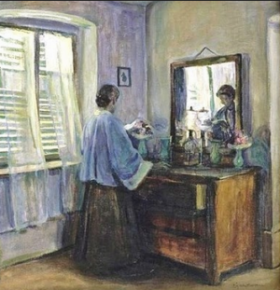
Closed Shutters, Elizabeth Gardner

Success came quickly. Two of Gardner’s paintings were selected for the Salon in 1866, and in 1872 she was awarded its gold medal, the first woman to receive that honor.** In the early 1900s, the Musée de Luxembourg bought her painting Closed Shutters for its American wing. In the otherwise admiring profile, McCabe sneers at this painting, saying that

with due deference to its quality, there are few of our museums, private collections or current exhibitions without a picture by a native home-trained woman painter to equal if not surpass Closed Shutters.***

McCabe tells us that Gardner married her teacher, noted artist William Bouguereau. What she doesn’t tell is that Gardner, who was maybe not as sexless as McCabe makes out, carried on a long liaison with Bouguereau after the death of his first wife in 1877. His mother bitterly opposed their marriage, and this was apparently too great an obstacle for this pair of otherwise free spirits to overcome. (Could money have been involved?) His mother finally died in 1896, at the age of ninety-one, and they married shortly afterwards.

Self-portrait, William Bouguereau, 1879

Gardner was heavily influenced by Bouguereau, to the extent that she was quoted as saying, “I know I am censured for not more boldly asserting my individuality, but I would rather be known as the best imitator of Bouguereau than be nobody!”

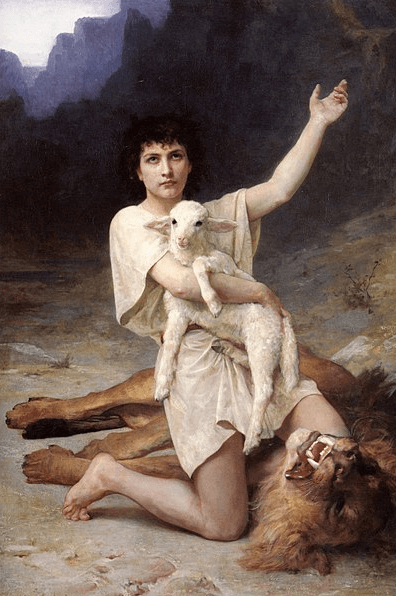
David the Shepherd, Elizabeth Gardner, ca. 1895

Many of Gardner’s paintings are conventional nineteenth-century tableaux: Greek myths, biblical scenes, and the like. Others, though, raise eyebrows today.

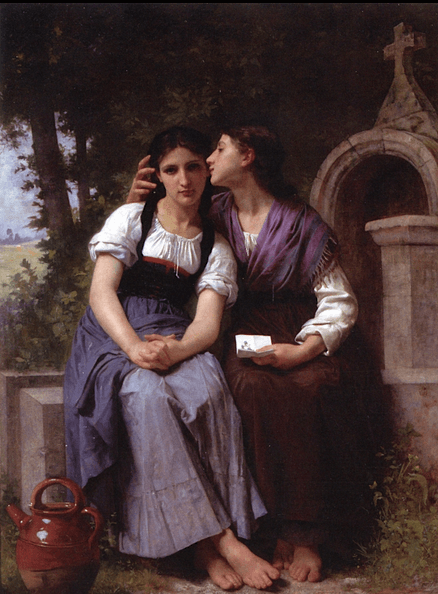
Take, for instance, The Confidence (ca. 1880). The painting, now owned by the Georgia Museum of Art in Athens, Georgia, shows two young women sharing a secret. To a modern eye, it looks sexualized—the intimate position of the heads, the bare feet close together. In a 2013 article about the loan of the painting to (of all places) Bob Jones University, however, a museum staff member said that this wasn’t the case.  “It’s very affectionate, but it’s also very 19th-century sisterly affectionate.”

The Confidence, Elizabeth Gardner, ca. 1880

The Confidence had a second life in—I bet you didn’t see this coming!—an R.E.M. video. As the Athens-based band sings its 1991 song “Low,” the girls in the painting come to life and the action continues. And, take my word for it, it’s anything but sisterly. (Or check it out yourself on R.E.M.’s website.)

I’m not sure what Elizabeth Gardner would have thought, but Lida Rose McCabe must be turning over in her grave.

squiggle

*So now I can’t get the song from The Music Man out of my head.

**The Art World sees art as a resume-building process. Still—impressive!

***The Art World’s taste in art was so reactionary that even impressionism was a bridge too far. Its take on Monet’s Rouen Cathedral: “Nothing more than a ‘color stunt.’”

Wednesday Miscellany: Pacifist nightmares, a sad funny page, and a widowed dancer

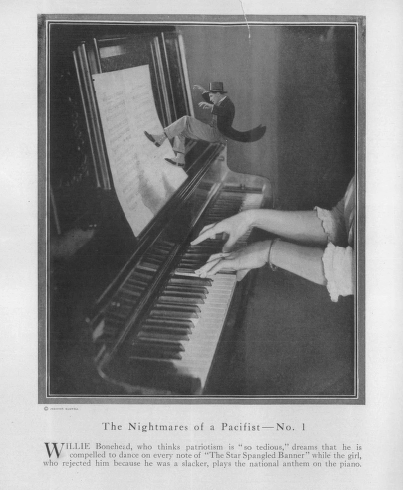
Judge magazine has been running a series called “The Nightmares of a Pacifist,” featuring conscientious objector Willie Bonehead, whose guilty subconscious places him in a series of horrific scenarios. First he is “compelled to dance on every note of the ‘Star Spangled Banner,’ while the girl, who rejected him because he was a slacker, plays the national anthem on the piano.”

Judge magazine, March 2, 1918

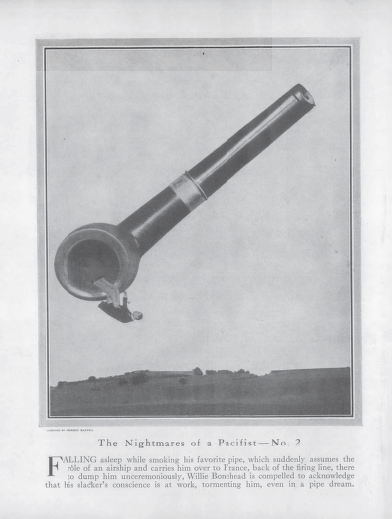
Next he falls asleep while smoking his pipe, which transports him to the front line.

Judge magazine, March 9, 1918

The political message is pretty heavy-handed, but I like the proto-surrealist art.

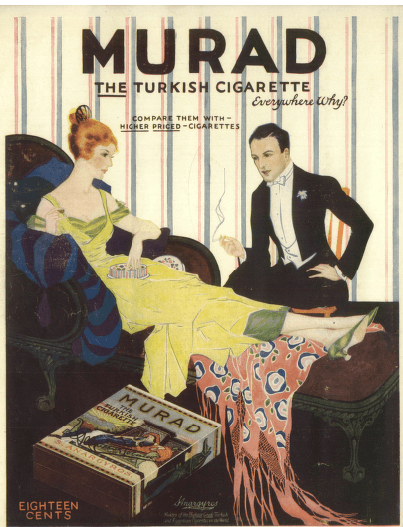
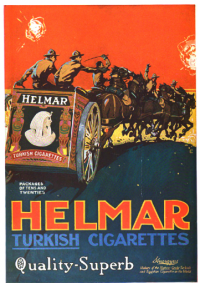
Turkish cigarettes join the fight against…the Turks.*

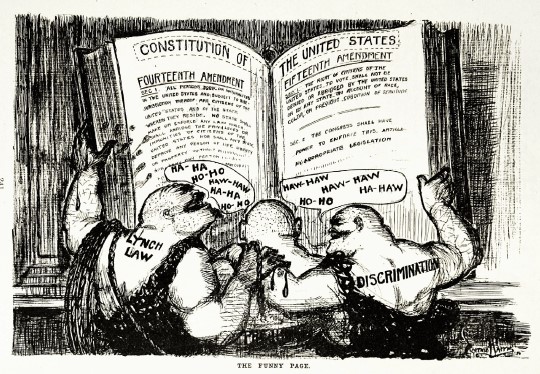
The table of contents of the March 1918 issue of The Crisis, the NAACP magazine edited by W.E.B. Du Bois, has a listing for “The Funny Page.” The Crisis isn’t exactly a barrel of laughs, so I wondered what this could be. Here’s the answer:

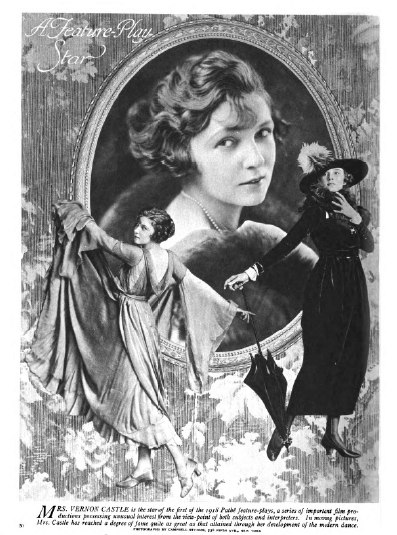
I can’t stop looking at this picture of dancer Irene Castle, which appeared in Cosmopolitan in  March 1918. Just as the issue was hitting the newsstands, her husband and dancing partner Vernon died in an aviation training accident in Texas. He had completed 300 missions as a Royal Air Corps pilot. The Castles were the subject of a 1939 Astaire-Rogers biopic.

*Yes, yes, I know, the United States was not actually at war with the Ottoman Empire.

Wednesday Miscellany: Paper doll servants, a puzzling puzzle, and a bad ad

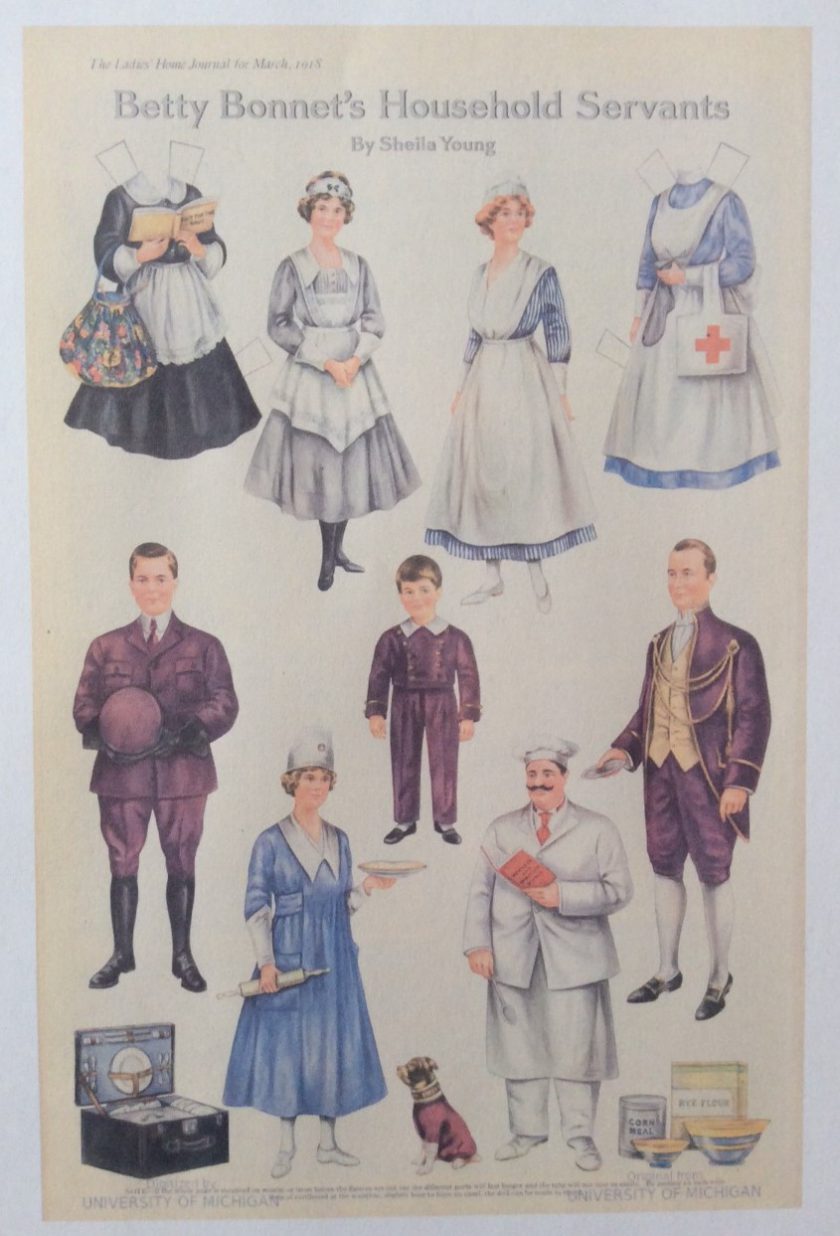
Look, kids! Paper doll servants to order around!

Paper doll servants, Ladies' Home Journal, 1918.

Ladies’ Home Journal, March 1918

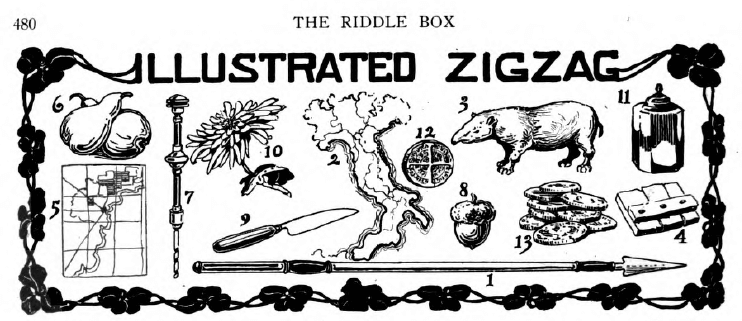
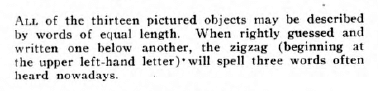
Can someone help me out with this Illustrated Zigzag? STICT RICK SUES can’t possibly be right.

Illustration for Illustrated Zigzag puzzle, St. Nicholas magazine, 1918.

St. Nicholas magazine, March 1918

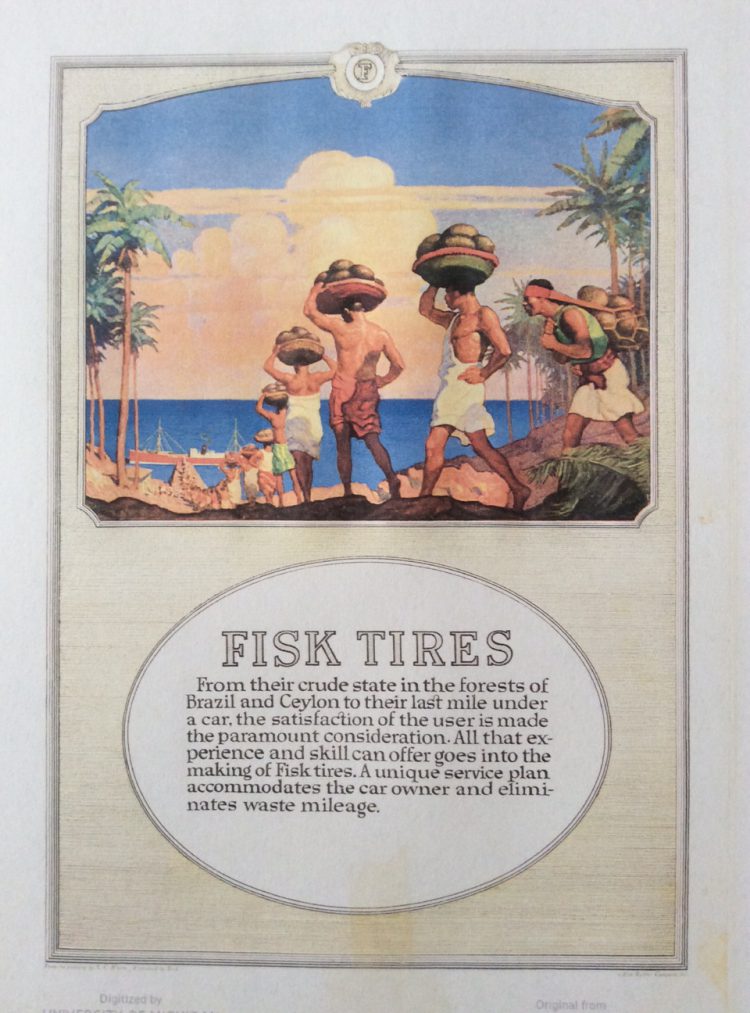
I wonder how many people had to sign off on this before it was green-lighted.

Fisk Tires ad with dark-skinned men carrying things on their heads next to palm trees, 1918.

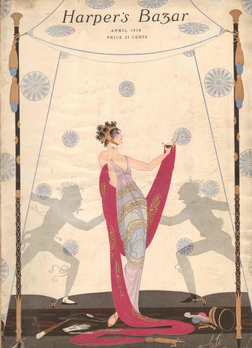
Harper’s Bazar, March 1918

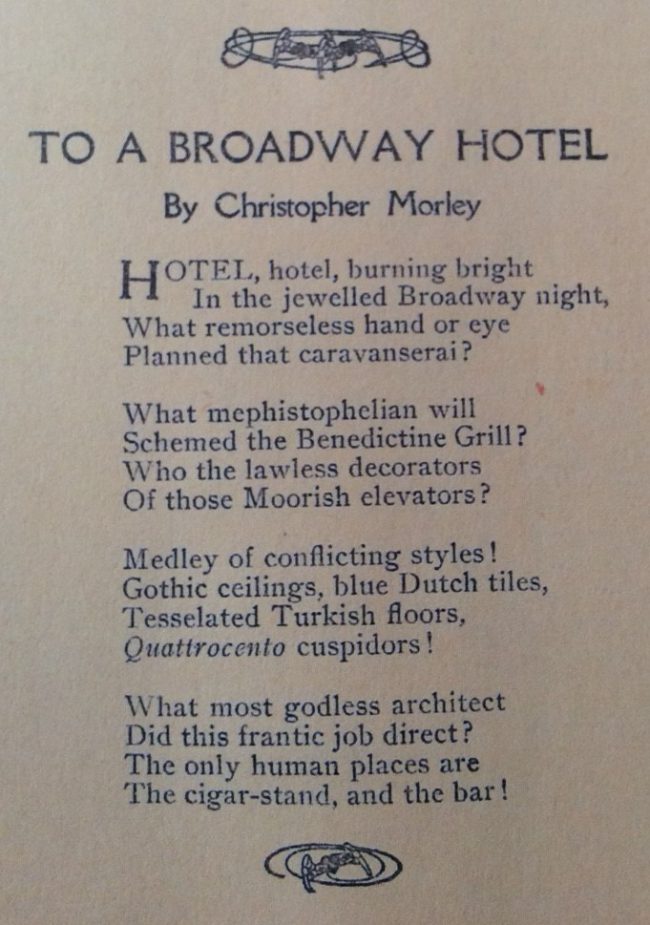
Garish New York hotels are apparently not just a contemporary phenomenon.

Christopher Morley poem, To a Broadway Hotel, Smart Set magazine, 1918.

Smart Set, March 1918

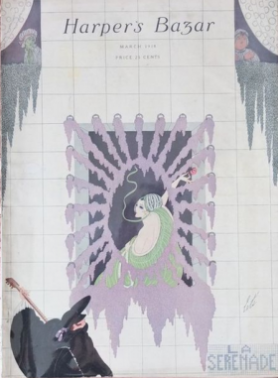
And finally, an Erté serenade.

Harper's Bazar cover by Erté showing masked man serenading a woman, March 1918.

Harper’s Bazar, March 1918

The best and worst of February 1918: Magazines, stories, cover art, and jokes

Two months into My Year in 1918, I feel like I used to feel two months into a Foreign Service posting: completely at home in some ways but totally bewildered in others. I know who Viscount Morley was*, and which author every critic trots out to bemoan the sad state of fiction**, but there are references that go right over my head. Who is Baron Munchausen? What is Fletcherizing? And the jokes. I’ll never get the jokes.

Best magazine: The Crisis

Banner reading Negro Education by W.E.B. DuBois with illustrations of women reading, The Crisis, 1918.

The Crisis, February 1918

 This is a repeat, but no other magazine approaches The Crisis in terms of quality of writing and importance of subject matter. Aside from W.E.B. Du Bois’ autobiographical essay, which I wrote about last week on the 150th anniversary of his birth, the February issue includes Du Bois’ scathing take-down of a government-sponsored study on “Negro Education” that advocated the replacement of higher education institutions with manual, industrial, and educational training. There’s a horrifying account of the mob murder of an African-American man in Dyersburg, Tennessee—so brutal, the magazine reports, that some white townspeople felt he should have had a “decent lynching.” On the literary side, there’s “Leonora’s Conversion,” a slight but engaging story about a wealthy young black woman’s brief flirtation with the church.

I’m not awarding a Worst Magazine this month. Good Housekeeping was a contender again—dialect-talking black maid Mirandy has the month off, but Japanese manservant Hashimura Togo*** expounds on his employer’s marital problems in equally fractured English. (“‘You have left off kissing me as usually,’ she dib. ‘O.’ He march and deliver slight lip.”) The magazine redeems itself somewhat, though, with an article by suffragist Anna Kelton Wiley called “Why We Picketed the White House.”

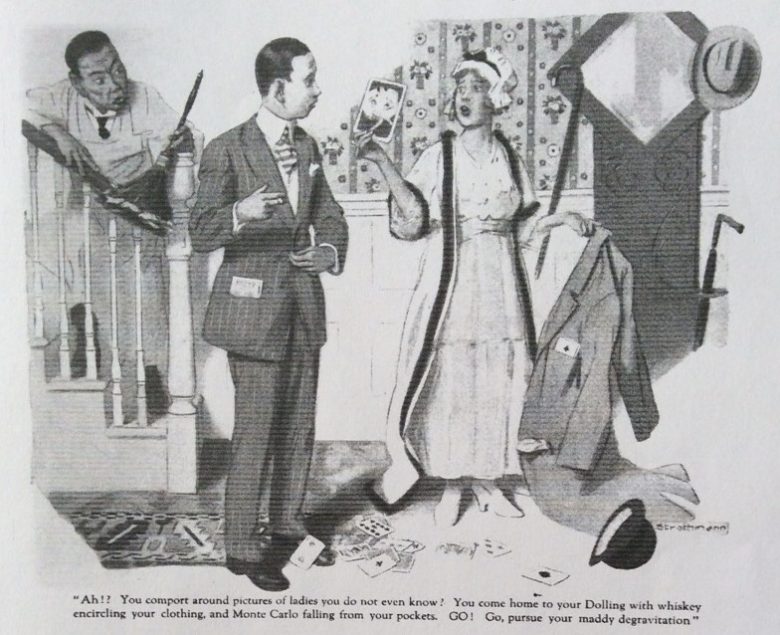
Illustration of story about Togo by Wallace Irving, Good Housekeeping, February 1918.

Good Housekeeping, February 1918

Best short story: “A Sordid Story,” by J., The Egoist

February wasn’t a great month for short stories. Most of the ones I read, including two that made it into The Best American Short Stories of 1918, started out promisingly but ended with pathos or a gimmicky twist. “A Sordid Story,” in the January**** Egoist, isn’t great literature, but it has daring subject matter and lots of atmosphere. It features a Cambridge student named Alphonse, whose life is described in the most British sentence I’ve ever read:

He made friends easily and took friendship seriously; so seriously that he spent nearly the whole of the Michaelmas term following the taking of his degree in reading Aeschylus’s Prometheus Bound and The Gospel according to St. Luke in the Greek with a much younger man—a certain Roderick Gregory—who was in his second year, but had hitherto failed to pass his Little-Go.

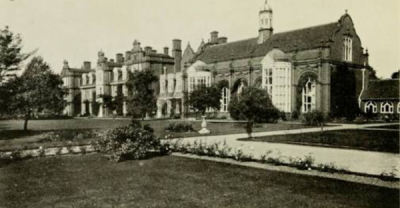
Photograph of Cambridge University by Maxwell Armfield, Cambridge and Its History, 1912.

Maxwell Armfield, from “Cambridge and its History,” 1912

Alphonse falls for Roderick’s sister Beatrice, who “used to have a pet pig, and she called him Shakespeare, because he would be Bacon after his death.” But he spends the night with a working-class girl who grabs his arm as he’s walking near Midsummer Common and says, giggling, “Can yer tell me what o’clock it is?” Horrified with himself the next day, he goes back to her lodgings to pay her off. She tells him that he was her first lover, then, when he tells her it’s over, says, “Yer weren’t the first, then!” Relieved “not to be the first to help send a woman downward,” he goes back to his rooms, where Roderick is playing the cello and twenty-five copies of the Quarterly Journal of Mathematics, in which he has published a paper, await him. It’s only years later that he figures out that he was, in fact, the first.

Worst short story: “A Verdict in the Air,” J.A. Waldron, Judge

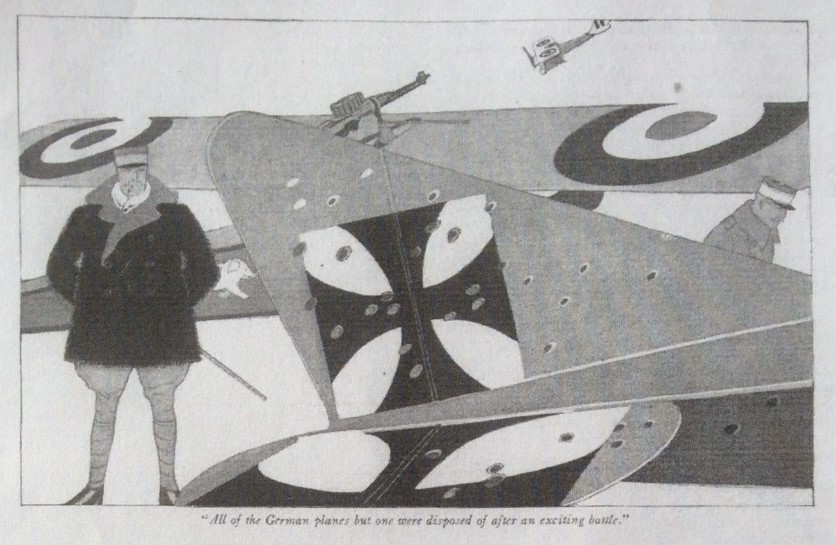
Lawrence Fellows illustration, Judge magazine, 1918, man standing near airplanes.

Lawrence Fellows, Judge, February 9, 1918

Harwood, on leave from aviation training, goes to a cabaret in Chicago. To his surprise, one of the singers is his childhood sweetheart Bessie Dean, who left their Ohio hometown to pursue a career in opera. She introduces Harwood to her husband Grindel, who takes a dislike to him. A few days later, Harwood is training on the Pacific Coast, when who should show up as a mechanic but Grindel! Harwood has a series of flying accidents, and Grindel is suspected, but he goes AWOL. Harwood is sent to fight with the French army. He visits a friend at a field hospital, where the nurse is none other than Bessie, who has escaped her husband. Back at the front, there’s a heated battle. Harwood pursues the last remaining German plane and hits its rudder after a lively skirmish. As the plane plunges to the ground, he sees that the pilot is—you guessed it—Grindel!
Well, the illustration is kind of cool.

Best magazine covers:

February was a great month for magazine covers. I just wish that the insides of the magazines were half as good. Besides the ones from Harper’s Bazar and Vanity Fair that I’ve mentioned already, there’s this Helen Dryden cover from Vogue,

Helen Dryden Vogue cover, February 1918, woman in pink hoop skirt looking into mirror.

Helen Dryden, February 1918

 and this one, which Norman Rockwell sold to Judge after the Saturday Evening Post turned it down. I can kind of see why.

Norman Rockwell Judge magazine cover, girl grabbing tartan skirt from brother dressed as a Scottish soldier.

Norman Rockwell, Judge, February 9, 1918

Best joke:

 This isn’t exactly a joke, but it made me laugh. It’s the opening of Louis Untermeyer’s review of poetry collections by Edna St. Vincent Millay, Samuel Roth, and Edwin Curran in the February 14 issue of The Dial.

These three first volumes, with their curious kinship and even more curious contrasts, furnish a variety of themes. They offer material for several essays: on “What Constitutes Rapture”; on “The Desire of the Moth for the Star”; on “The Growing Tendency among Certain Publishers to Ask One Dollar and Fifty Cents for Seventy Pages of Verse”; on “A Bill for the Conservation of Conservative Poetry”; on “Life, Literature, and the Last Analysis”; on “Why a Poet Should Never be Educated.”

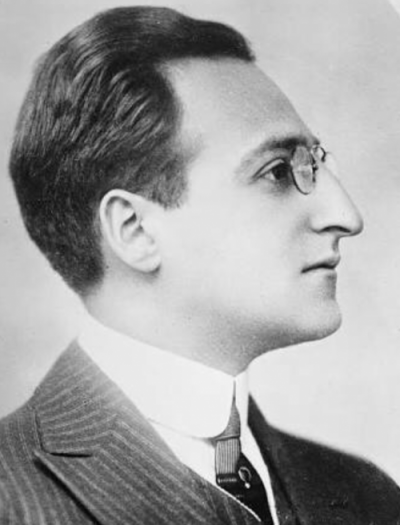
Studio photograph of Louis Untermeyer, ca. 1910-1915.

Louis Untermeyer, ca. 1910-1915, Library of Congress

The Growing Tendency among Certain Publishers to Ask One Dollar and Fifty Cents for Seventy Pages of Verse! That Louis Untermeyer is such a card!

Not amused? Okay, then, you go back to 1918 and try to find something funnier.

Worst joke:

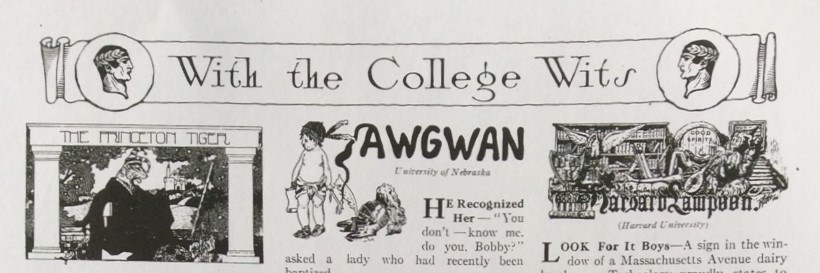
Judge magazine banner, With the College Wits, February 9, 1918.

Judge magazine, February 9, 1918

 Once again, hard to choose. Maybe this, from the February 9 issue of Judge:

“You don’t—know me, do you, Bobby?” asked a lady who had recently been baptized.
“Sure I do,” piped the youth. “You’re the lady what went in swimming with the preacher, last Sunday.”

On to March!

*A British diplomat

**Mrs. Humphrey Ward

***Really Wallace Irwin, who made a career of writing about Togo. Mark Twain was a fan.

****I was reading The Egoist a month late on the principle that it would have taken time for the magazine to get to the United States, which I’ve since decided is ridiculous.