Category Archives: Magazines

Wednesday Miscellany: Romantic magazine covers and a Hoover-themed valentine

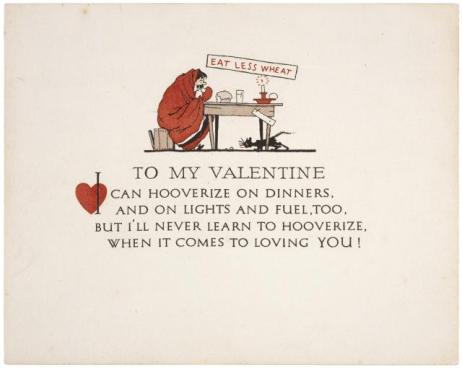
Strange as it sounds, government administrators were huge celebrities in 1918. And none was more famous than Herbert Hoover, head of the U.S. Food Administration. (Yes, that Herbert Hoover.) To reduce consumption so that food could be sent to Europe, he led campaigns for “Meatless Mondays” and “Wheatless Wednesdays.” Ads for food and cooking equipment touted their effectiveness in helping housewives “Hooverize.” Good Housekeeping magazine called him–with a wink, presumably–“the man who made food famous.”

In that spirit, here’s a 1918 valentine to all of you:

1918 Hooverizing-themed valentine.

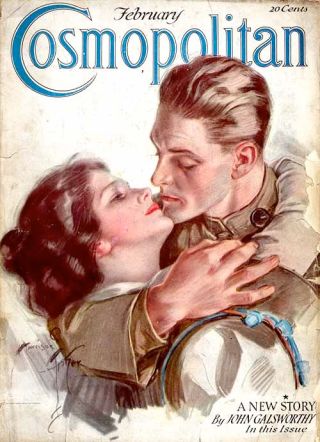
Magazines in 1918 were pretty conservative about portraying any kind of romantic activity, but judging from the cover of the February 1918 Cosmopolitan, soldiers got a free pass.

Harrison Fisher Cosmopolitan cover, soldier kissing wife, February 1919.

Harrison Fisher, Cosmopolitan, February 1918

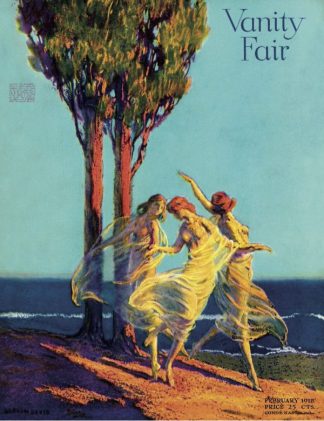
Finally, the February 1918 cover of Vanity Fair…not Valentine’s-themed, but definitely romantic.

Vanity fair cover, three topless nymphs dancing in front of a tree, February 1919.

Warren Davis, Vanity Fair, February 1918

Happy Valentine’s Day, everyone!

Celebrating Valentine’s Day, 1918-style

Valentine’s Day in 1918 was nothing like the holiday we celebrate today, with couples going out for stressful dinners at crowded restaurants while single people sit at home wanting to die. Part of the reason was the war—there was much less attention to such frivolous topics than in previous years.

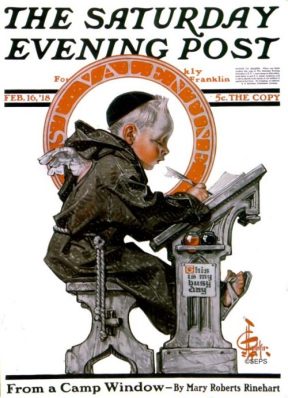
To the extent that it was celebrated, Valentine’s Day was a holiday for children, who exchanged handmade cards at parties, and single women, who got up to all sorts of hijinks with their friends. Men, apparently, refused to have anything to do with it. The February 16 cover of the Saturday Evening Post, which was a men’s magazine at the time, did have a Valentine’s theme, though,

J. C. Leyendecker Saturday Evening Post cover, St. Valentine writing, February 16, 1918.

J. C. Leyendecker, February 16, 1918

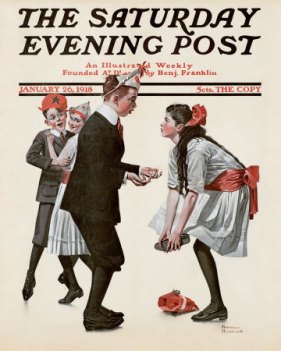
and its January 26 Norman Rockwell cover celebrates young romance:

Norman Rockwell Saturday Evening Post cover, boy stepped on girl's toe at dance, January 26, 1918.

Norman Rockwell, January 26, 1918

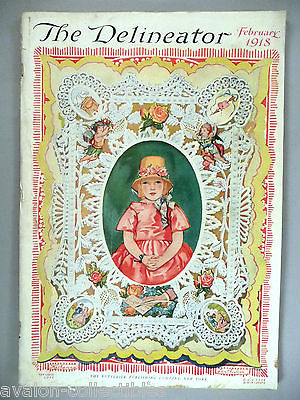
The Delineator tells us in its February issue that

Saint Valentine’s Day offers wide latitude for ingenuity and artistic skill, both to the wee tot in kindergarten, whose baby fingers have been newly trained to paste and weave and prick, and her grown-up sisters who can, with pen or brush, evolve delightful valentines with the personal touch, or design charming place-cards and dance programs, and contrive cunning nut and bonbon dishes.

Katherine Southwick Delineator cover, girl in bonnet with lacy border, February 1918.

Katherine Southwick, February 1918

According to The Delineator, the day “lends itself most happily for luncheons for brides-to-be and announcement parties.” One such party features a game called heart archery. A large heart is mounted on an easel, with a bulls-eye and numbered sections. Gifts are placed in a box, “tied with crimson ribbons and with the number on a tiny dangling red heart.”

Armed with a bow and arrow (handed to the guest by Cupid himself if possible), the guest tries out her skill in hitting the bull’s eye. If she is successful she should find that her number draws a package containing a ring, indicating that she will be the next bride. Other gifts, all significant, fall to the less fortunate: a mitten for rejection, a coin for wealth*, a rabbit’s foot for luck, a toy boat for a sea journey**, an automobile, a thimble for the spinster, etc. Any hostess will have the ingenuity to work out little fortunes for her guests, and if they fall to the right people, all the merrier.

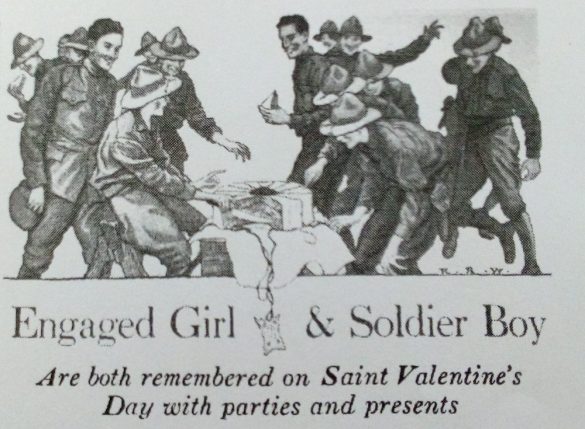
Woman's Home Companion illustration, Engaged Girl and Soldier Boy Valentine's Day parties, February 1918.

Delineator, February 1918

Woman’s Home Companion tells us about some small-town girls who sent Valentine’s Day treats to the boys in khaki. (How, I’m not quite sure, given that the February issue must have been printed well in advance, and the United States wasn’t at war yet the February before.) They baked a huge spice cake, divided it into fifteen sections, one for each of the soldiers from their town, and iced it in white and red, “with an appropriate red heart as a centerpiece.” A good-luck charm (four-leaf clover, wishbone, or horseshoe) was baked into each piece. Small gifts, such as homemade cookies, chocolates, and khaki-colored initialed handkerchiefs, were “distributed impartially.”

So happy Valentine’s Day everyone, brides, spinsters, and rejects alike! Watch out for flying arrows, and don’t break your tooth on a good luck charm!

*You know, because being wealthy is way less lucky than getting married at age twenty.

**Maybe not such a great idea in 1918?

America at war: Suddenly, it’s real

I didn’t learn much about World War I in school. It was the seventies, and there was a backlash underway against the rote memorization of battle dates and that sort of thing. It was all about cause and effect. One day we’d be learning about Archduke Ferdinand and the alliances, and the next day the teacher would say, “Now, after the Allied victory…” We’d say, “Wait, what about the war?” and the teacher would ask us if we really wanted to learn about a bunch of battles. We’d say no and that would be that—on to Versailles.

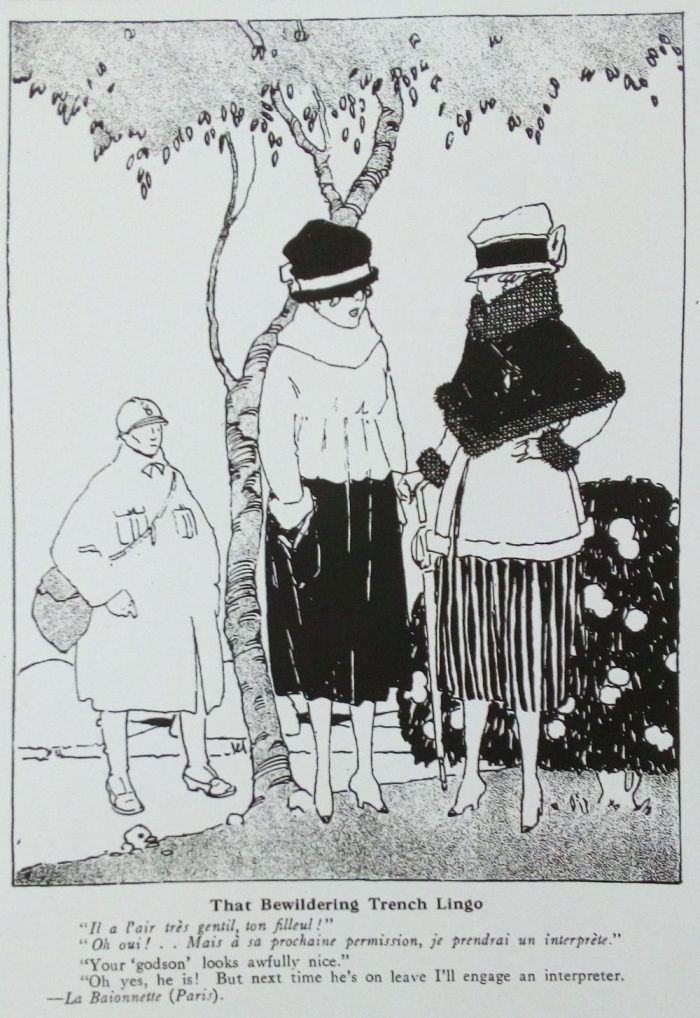
So my vague impression was that the Americans came in in 1917 and gave new energy to the exhausted Allies, who won fairly quickly. A month of reading the 1918 news set me straight. As depicted in the press, the early stage of the American war effort was a colossal screw-up. American soldiers in France, short on weapons and supplies, did little but consume scarce food supplies and—judging from the humor magazines—hit on French women.*

French cartoon in Judge magazine, That Bewildering Trench Lingo, 1918.

Judge magazine, February 9, 1918

The Wilson administration’s handling of the war was universally regarded as inept. The New Republic said in its January 19 issue that “any friend of the administration who fails at the present time to speak frankly about the effect produced by the breakdown of management of the war upon the state of mind of the public is doing to President Wilson a most indifferent service.” The fuel shortage, it said, is creating a sense that the country is “helplessly drifting into a succession of similar crises, which if they are allowed to develop will continue to paralyze American ability to assist our Allies and do harm to Germany, and which will react balefully on the morale of the nation.” And that’s what the administration’s friends were saying! (New Republic founding editor Walter Lippmann was serving as an aide to Secretary of War Newton Baker.)

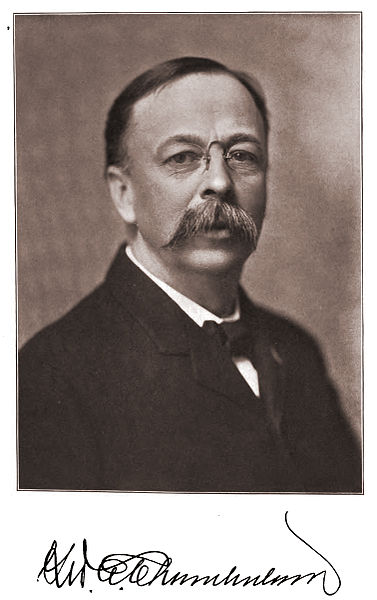
Photo portrait of Senator George Chamberlain, 1904.

Senator George Chamberlain, 1904

Congress was so fed up that Republican Senator George Chamberlain introduced a bill to reorganize the government’s conduct of the war through the establishment of a War Council with sweeping powers, accountable only to the President. “The military establishment of America has fallen down,” Chamberlain said in a January 20 speech, because of “inefficiency in every bureau and department of the Government of the United States.”  The New Republic denounced this “crude, ill considered, and indefensible measure,” but said that, if Wilson didn’t come up with better structures for the conduct of the war, “the existing mechanism will continue to creak, and groan and exasperate its victims.”

As January ended and February began, though, American soldiers completed their training and moved to the front lines. A Times correspondent reported that, as they did so, “Every man was happy just because he was going to fight at last, and as the regiments marched along the men sang joyously until they reached a point where all further operations were carried out in complete silence.”

On January 30, there was heavy shelling on an American position on the French front. Two soldiers were killed and one was captured. The Associated Press interviewed one of the wounded, a sandy-haired youth from Bismarck, North Dakota, who “said with a smile to the correspondent, ‘Did you ever hear of such bad luck? Now I’ve got a piece bit out of my leg by a shell splinter…believe me, if I ever get back to that line again—well, all I want is another chance.”

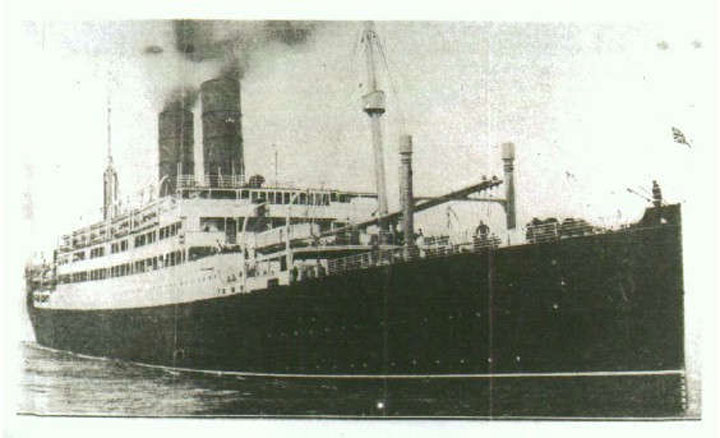
Photograph of British ship SS Tuscania, 1914.

SS Tuscania, 1914

Then, on February 5, the SS Tuscania, a British ship transporting American soldiers across the Atlantic, was torpedoed by a German submarine and sunk in the Irish Sea. The British and American governments were slow to produce casualty lists, and relatives waited anxiously for days. Among them were the cartoonist Richard F. Outcault, creator of Buster Brown and the Yellow Kid, and his wife. “I am expecting hourly to hear from Dick,” Mrs. Outcault told the New York Times, “and I expect to get news soon. He is a level-headed boy, and I am sure he knew how to take care of himself in an emergency.” Richard F. Outcault, Jr., was among the survivors. 210 other families were not so lucky.

The strange air of unreality was gone. America was at war.

*UPDATE 4/1/2019: Remember when I promised to make mistakes? This is one of them. First of all, the soldier is French. And he’s not hitting on the women–one of them is his marraine, or (honorary) godmother. Marraines served as substitute mothers to soldiers without families or whose families were out of reach in German-occupied areas.

Wednesday Miscellany: Erté, boys’ fashion, and fast cars

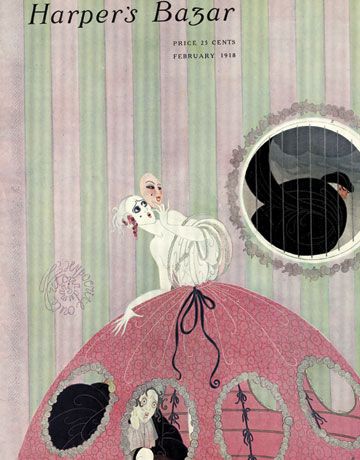
Erté, the artist and designer whose name is synonymous with Art Deco, was only twenty-five in 1918, but he was already making a name for himself. (A fake name: his real one was Romain de Tirtoff. Erté comes from the French pronunciation of his initials.) He got his start designing covers for Harper’s Bazar. I’m not sure what this one means, but an online slideshow of classic covers at the magazine’s website says that it “suggests a dadaist influence.”

Erté Harper's Bazar cover, February 1918, masked woman looking out window at man.

Erté, February 1918

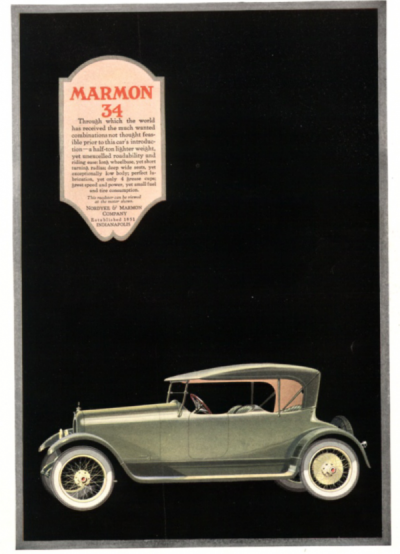
I had the impression that everyone drove around in Model T’s in 1918, but the magazines were full of ads for all different kinds of cars. This one, the Marmon 34, set a new coast-to-coast speed record in 1916: 5 days. 18 hours. 30 minutes.

Marmon 34 ad, 1918, car on black background.

Harper’s Bazar, February 1918

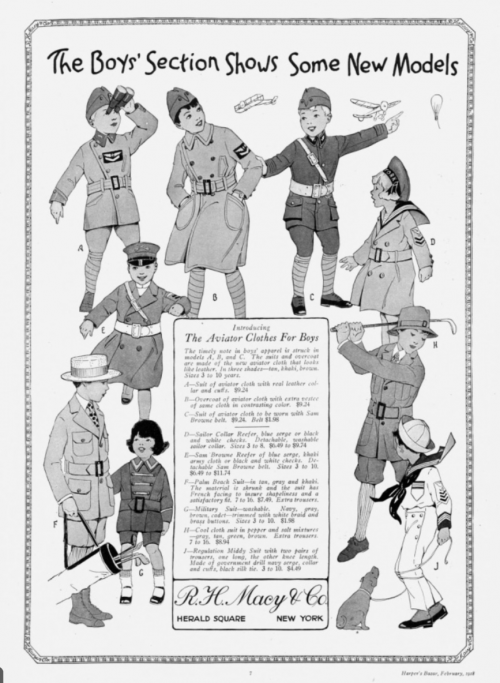
Clothes for the well-dressed boy. The Palm Beach suit costs $7.49–a week’s pay for an office boy at a New York law firm.

Macy's boys' clothing ad, Harper's Bazar, 1918.

Harper’s Bazar, February 1918

Sound familiar? Book chat, 1918-style

If you spend as much time reading about books online as I do (or did, before I went back to 1918), there are certain topics that you come across again and again. I knew that these debates had been around for a while. But I had no idea that they’d been around for a hundred years. Here’s the 1918 take on a couple of book-chat perennials.

Can writing be taught?

Can creative writing be taught? Do writing classes really make students’ writing better? As a recent MFA grad, I’ve grown tired of this seemingly endless debate. (No one ever asks MBAs this type of question, and I don’t recall MFAs ever causing an international financial crisis.) But MFA programs weren’t around in 1918, so I thought I’d get a break.

But no, here’s Edward J. O’Brien, founding editor of The Best American Short Stories, weighing in in the January 1918 issue of The Bookman. “Experience with many short story writers who had completed courses in short-story writing under competent critics had left me frankly sceptical as to the value of endeavouring to teach the technique of a developing and changing literary form,” he says. He’s reviewing a book called A Handbook on Story-Writing by Blanche Colton Williams of Columbia University. After such an education, he goes on, “The last state of the pupil seemed worse than the first.” Oh no.

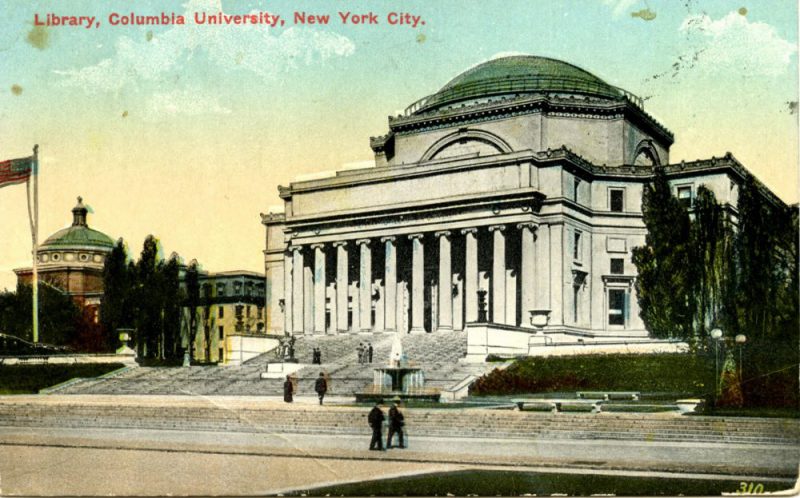
Postcard of Columbia University library, 1917.

Columbia University library, 1917 (librarypostcards.blogspot.com)

But then one day he’s bad-mouthing writing classes to a short story writer he admires, and the writer reveals that he’s studying writing at Columbia. He invites O’Brien to tag along, and he wins a convert. “What I found in this class was a free play of critical intelligence, taking actual stories as its point of departure…Here was a true academy, in which the teacher learned from the pupil.” This approach, he says, is skillfully presented in Williams’ book. Plot, point of view, character, and dialogue—all are lucidly discussed.

Score one for Team MFA!

Should adults read books written for children?

If there’s any debate in book-talk-land that’s even more heated than the one over MFAs, it’s the question of whether adults should read books written for children. Ruth Graham took up the anti-YA banner in a 2014 Slate article called, succinctly, “Against YA.” “Read whatever you want,” she said. “But you should be embarrassed if what you’re reading was written for children.” A raucous argument ensued, with writers like Meg Wolitzer coming to the defense of adult YA readers.

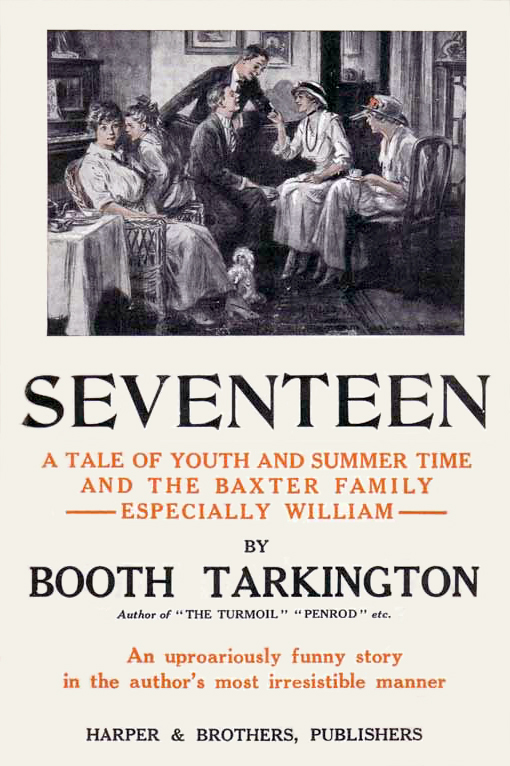
Seventeen by Booth Tarkington, first edition cover, 1916.

First edition cover, 1916

Again, not a topic I’d expect to have much currency in 1918, when grown-ups were grown-ups and children wore sailor suits. But, writing in The Bookman in February 1918, children’s writer and anthologist Montrose J. Moses notes that books for boys are popular among soldiers. The low level of literacy among enlisted men could be part of the reason, he says. But he thinks it’s more than that. “I believe—and I have followed the trend of juvenile literature for many years,—that this tendency on the part of the soldier to read boys’ books is only another evidence of the fact that juvenile literature, since it has come under the influence of out-door sports and modern inventions, has in it a degree of expertness which appeals to no age and to all interest.”

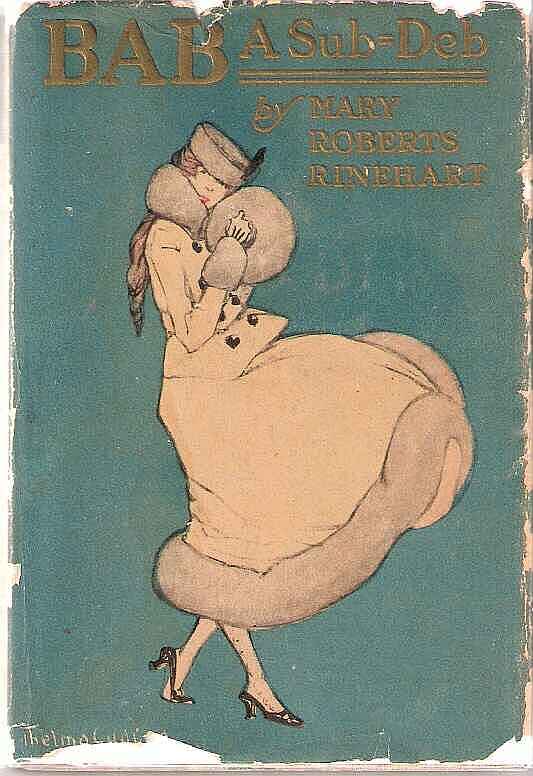
Cover, Bab A Sub-Deb by Mary Roberts Rinehart, 1917

First edition, 1917

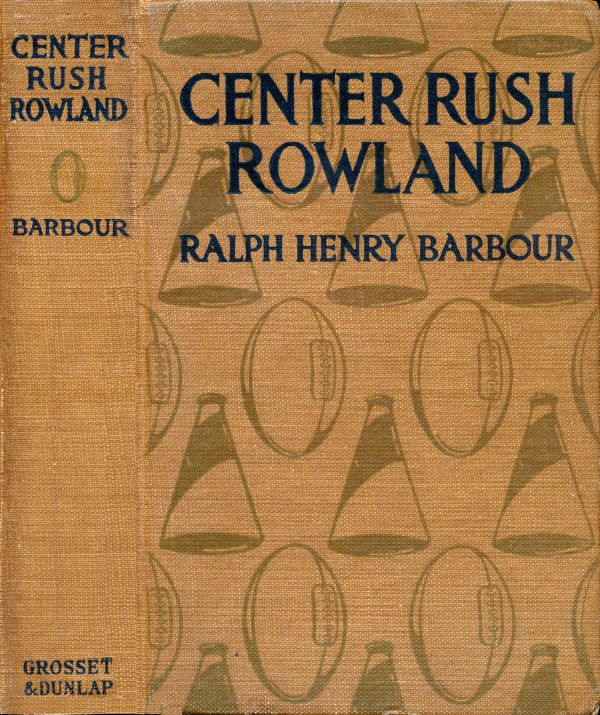
It’s not only soldiers who were reading about children. A surprisingly high percentage of 1918-era books for adults have child protagonists. Booth Tarkington’s Seventeen (1916) and Mary Roberts Rinehart’s Bab: A Sub-Deb (1917) were adult best-sellers by well-established writers. But John Walcott, writing in The Bookman in December 1917, says that children don’t share their parents’ enthusiasm for these books. “Have you chanced to note the rueful grin with which a real Bab or [Seventeen’s] Willie Baxter scans those delightful and too-revealing records?” he asks. “The relief with which they turn to the latest number of St. Nicholas, or the latest ‘corker’ by Mr. Ralph Henry Barbour?” Young people, he says, take themselves with deadly seriousness, “and it behooves those who cater for [their] favour to do likewise.” That’s what Barbour does, with his tales of schoolboy athletics. “Just now,” Walcott says, “he is working his way methodically through the line-up, so that after Left End Edwards, Left Tackle Thayer, and Left Guard Gilbert, we have naturally arrived at Center Rush Rowland, and we have the right side of the line to look forward to in the near future. Heroes all!”

Cover of Center Rush Rowland, 1917.

It’s Barbour and his schoolboy athletes, Moses says, that the soldiers are clamoring for. And I can see why. For young men going off to fight for a cause that even the Allied countries’ leaders were having trouble articulating, it’s easy to understand the appeal of a tale in which the hero competes, as Moses puts it, in “the season’s decisive event upon the modern field of academic glory.”

Friday Miscellany: Cigarette poetry, comics, and more vermin for children

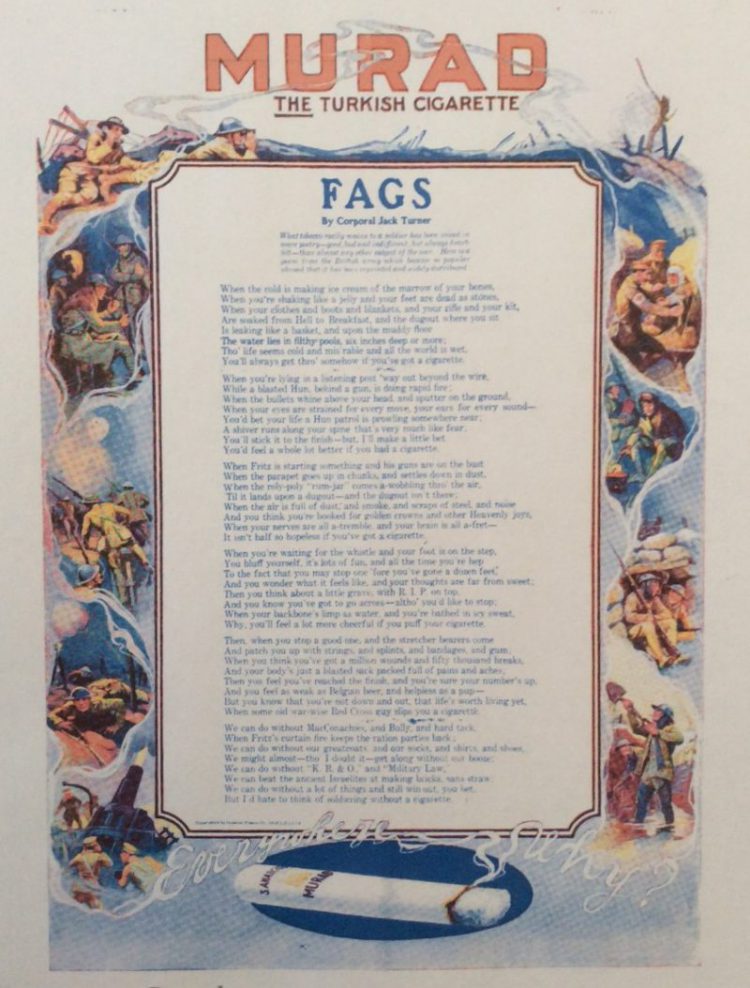
Apparently no one knows whether British Corporal Jack Turner, who supposedly wrote this poem, was real or not. If he was a figment of an ad writer’s imagination, it makes me mad. If he was real, it makes me want to cry.

…Then you think about a little grave, with R. I. P. on top,
And you know you’ve got to go across–altho’ you’d like to stop;
When your backbone’s limp as water, and you’re bathed in icy sweat,
Why, you’ll feel a lot more cheerful if you puff your cigarette.

Poem, Fags, Murad cigarette advertisement, 1918.

Judge magazine, February 2, 1918

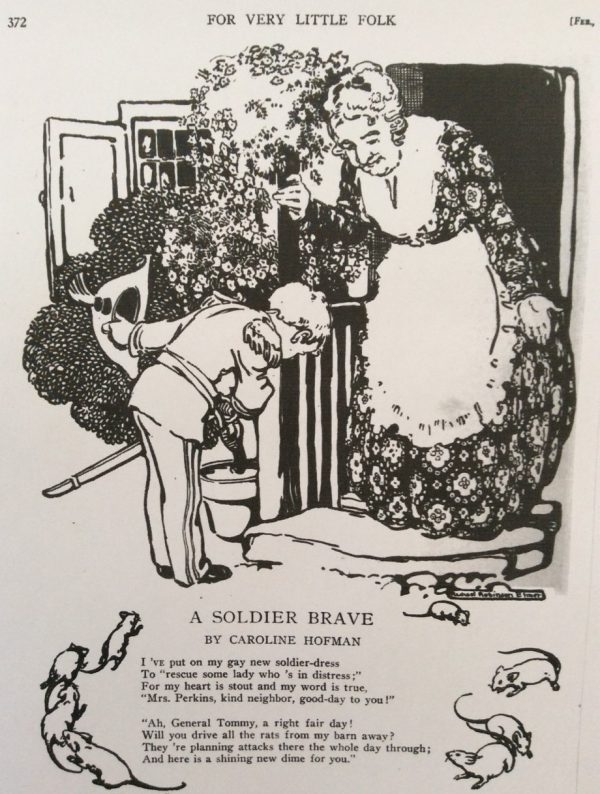
What was it with St. Nicholas magazine and the vermin?

Poem, A Soldier Brave, St. Nicholas magazine, 1918.

St. Nicholas magazine, February 1918

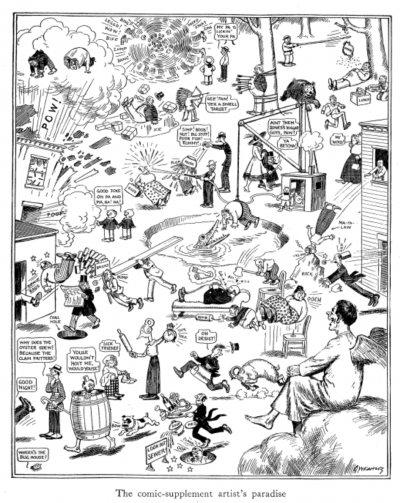
I haven’t read any 1918 comics yet, but this gets me pretty much up to speed.

Cartoon, "The cartoon-supplement artist's paradise," Judge magazine, 1918.

Judge magazine, February 2, 1918

The best and worst of January 1918: Magazines, stories, thinkers, and jokes

 I made it! One month of reading books, magazines, and the news as if I were living in 1918. It’s been even more fun than I expected. The 1918 New York Times at breakfast, printouts of The Dial and The Egoist for on-the-go reading, and Edith Wharton at bedtime. I don’t miss 2018 at all.

Here are some of the month’s highs and lows.

Best magazine: The Crisis

The Crisis cover, January 1918, drawing of African-American woman and daisies

The Crisis, January 1918, Frank Walts

I expected the NAACP’s magazine, edited by W.E.B. Du Bois, to be historically interesting. It was–and it also turned out to be the month’s most compelling read, full of top-quality explanatory journalism, social criticism, personal essays, and fiction.

Runner-up: The New Republic. When I’m befuddled by something I read about in the New York Times—like, was the American war effort as pathetic as Wilson’s critics make it sound, or did Harry Garfield really have to shut down the entire East Coast—all I have to do is wait a few days and the New Republic will provide a clear, convincing explanation. And then explain it again. And then, in case I still don’t get it, spend another couple of pages making the same point. Illuminating? Yes. Concise? No.

Worst magazine: Good Housekeeping
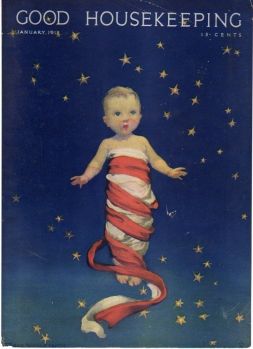
Good Housekeeping cover, January 1918, baby wrapped in flag with starry sky

Good Housekeeping, January 1918, Jessie Willcox Smith

Good Housekeeping was already in the lead for this category because of the horrible Marie Corelli article about cleansing the world through eugenics. Then I read “Mirandy on the One We Didn’t Marry,” by Dorothy Dix. I knew of Dix as a pioneering advice columnist. I’m a big fan of advice columns, and I was eager to find out what she had to say to the women of 1918. But Mirandy turns out to be Dix’s monthly impersonation of an African-American woman who provides her views on life in heavy dialect. “Ef you ’grees wid a woman ‘bout her husban’s faults an’ weaknesses she is lak enough to up an’ lambast you wid de fust thing dat is handy,” Mirandy says. There’s an illustration of a kerchiefed woman with an umbrella giving a talking-to to her pop-eyed friend. If you want to hear a real African-American woman’s take on family life, check out the lovely “A Mother’s New Year’s Resolutions” by Josephine T. Washington, in, where else, The Crisis.

 Best short story: “The Way of the Transgressor,” by Wallace Green
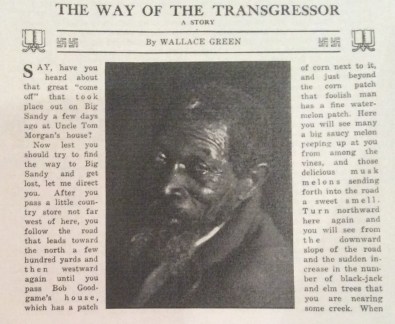
Headline and photograph illustration, The Way of the Transgressor, The Crisis, January 1918.

The Crisis, January 1918

I wrote about this story, which ran in the January 1918 issue of The Crisis, earlier this month. It’s vivid, unformulaic, funny, and moving. Unfortunately, I haven’t been able to find out anything about Green (if that was his real name), or to find anything else that he wrote. I’ll keep looking.

Runner up: “The Policewoman’s Daughter,” by Ben Hecht (Smart Set, January 1918). Agatha is an innocent young woman with a domineering mother (a figurative, not a literal, policewoman), and the story takes place entirely in her head as she waits in the parlor of a seedy hotel for an assignation with a violinist. As the minutes tick by and it becomes clear that he isn’t going to show up, she falls into a state of anguish, followed by relief that God has saved her from ruin. Then she realizes that she got the date wrong, and her joyful anticipation returns. Hecht, who was twenty-three when this story was written, would go on to be one of Hollywood’s top screenwriters. His many credits include His Girl Friday, which is one of the talkiest films ever made. In “The Policewoman’s Daughter,” no one says a word. Talk about versatility!

Worst short story: “A Palm Beach Honeymoon,” author unknown
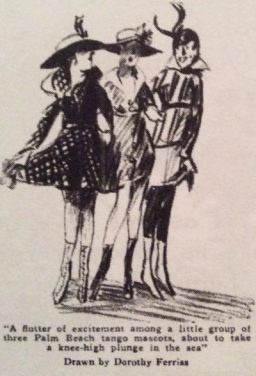
Vanity fair illustration, Palm Beach Honeymoon, January 1918

I opened up Vanity Fair and, after 23 pages of ads, seven of them for dogs, finally got to some editorial copy. Or so I thought. “A Palm Beach Honeymoon” is the story of, well, a Palm Beach honeymoon. Robert is smitten with Mabel, his stunning bride, but he gradually becomes aware that, from her perspective, something in the marriage is amiss. Desperate to find out what it is, he asks his friend, who has been flirting with Mabel’s maid, to see what he can find out. His friend reveals that, during the train ride down, the porter threw away Mabel’s copy of Vanity Fair. Really, Vanity Fair? That’s what I get after all those ads? An advertorial?

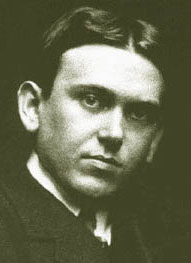
 Most famous thinker no one cares about today: G.K. Chesterton
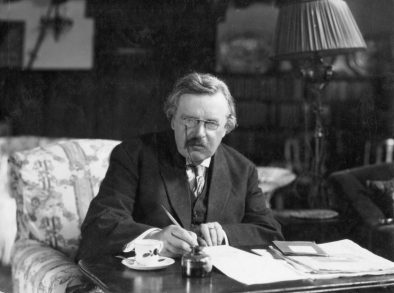
Portrait photograph of G.K. Chesterton sitting at desk.

G.K. Chesterton, date unknown

 1918 was a bad year, great thinker-wise. Mark Twain died in 1910. So did William James, followed by his brother Henry in 1916. Walter Lippmann was starting to make his mark, but he was still in his twenties in 1918, and in any case he was on hiatus from journalism, working as an assistant to the Secretary of War. So that leaves…G.K. Chesterton. He’s probably best known today for his Father Brown detective stories, but back then he was known for, well, everything. He was a critic and a historian and a theologian and a bunch of other things. Everyone was always quoting him or criticizing him or reviewing his books. There could be a reading-in-1918 drinking game where you take a shot every time someone mentions him. Luckily there isn’t, because I’d be sozzled all the time.

 Least famous thinker everyone cares about today: T.S. Eliot
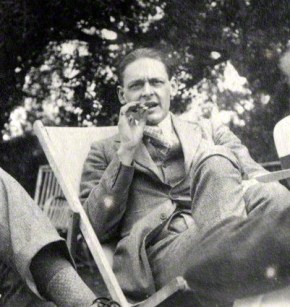
Photograph of T.S. Eliot in lawn chair, Otteline Morrell, 1923.

T.S. Eliot, 1923 (Lady Ottoline Morrell)

 Okay, Eliot, who was 30 in 1918, wasn’t completely unknown. “The Love Song of J. Alfred Prufrock” had been published in Poetry magazine in 1915, and The Egoist, where he was assistant editor, put together a small collection of his poems in 1917. He was publishing reviews in The Egoist and elsewhere. But he was still working as a banker, and no one, except maybe Ezra Pound, suspected that he’d end up as the century’s most important poet and critic.

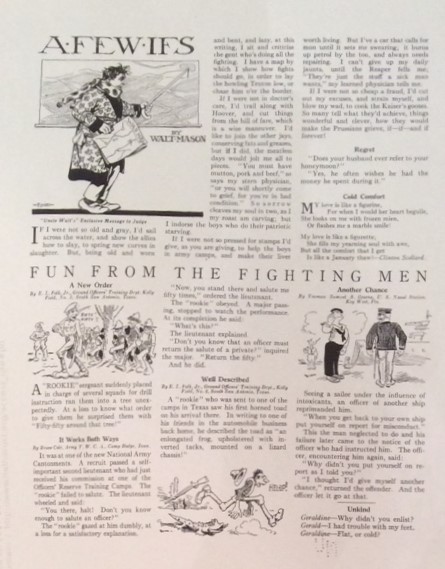
 Best joke:

 Geraldine—Why didn’t you enlist?
Gerald—I had trouble with my feet.
Geraldine—Flat, or cold?
(Judge, January 5, 1918)
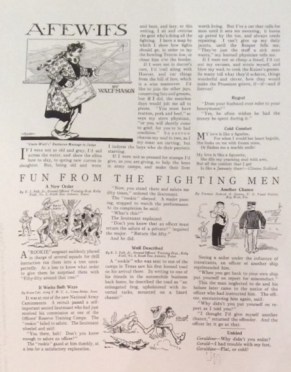
Judge magazine, January 5, 1918

I know what you’re thinking: “This joke is not funny at all. I wish I could go back in time and never have heard this joke.” But, believe me, this is the best joke I could find. I know. It’s sad.

 Worst joke:

It’s pretty much a tie between all the other jokes  I read this month. They’re either corny, like this one:

“I’d like to have Simpkins’ yellow streak.”
“Why you coward!”
“It’s in a gold mine.”

or incomprehensible, like this one:

He—What music are you going to have at your dance?
Other he—The fraternity hat-band.

(Both from Judge, January 5, 1918)

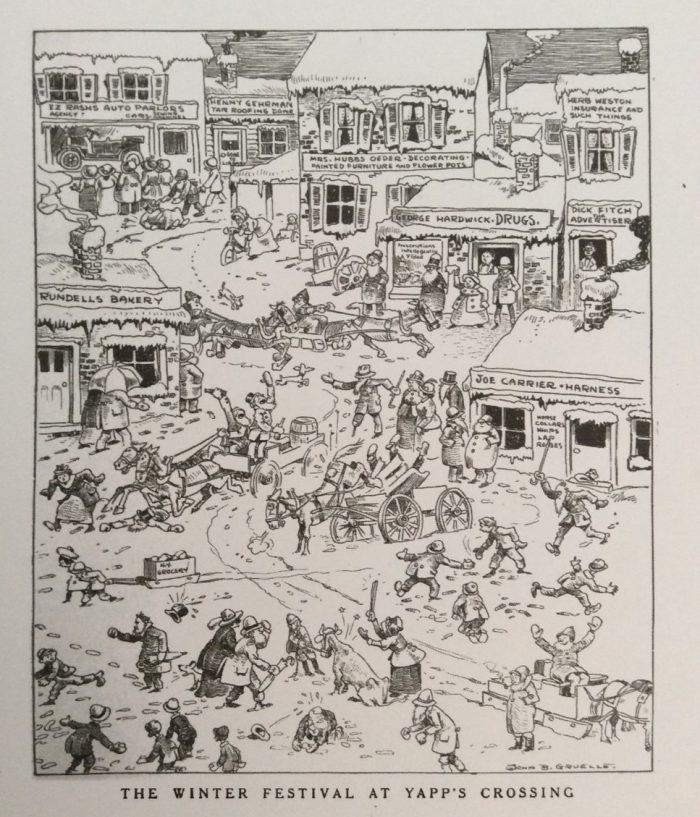
Okay, I can’t end on that note. As I’ve noted before, Judge did have excellent illustrators. I’ll close out the month with another Yapp’s Crossing illustration from John Gruelle, who, it turns out, was the creator of Raggedy Ann and Raggedy Andy.
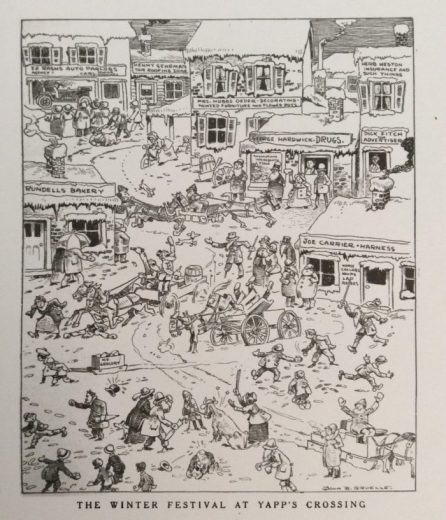
On to February!
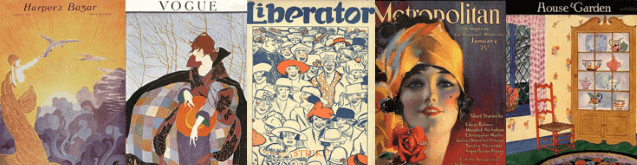
crop

A 1918 story gets the MFA workshop treatment

For a recent MFA graduate like me, the 1918 writers’ market inspires huge envy. There were dozens of mass-circulation magazines, and all of them were full of short stories. Quality was a different matter—the poet and critic Louis Untermeyer summed up the critical consensus when he said in the January 17, 1918, issue of The Dial that the magazines offer the public “a series of pink and white heroines with perfume in their veins, endless variations of the Cinderella-Zenda romances, wax dummies with virile pretentions on their lips and riding breeches on their soul.” So I wasn’t expecting much. Most of the stories I’ve read have been pretty entertaining, though. The biggest problem is that, almost without exception, they end abruptly with a “surprise” twist that anyone could have seen coming.

The core of an MFA program is the workshop. Students read each other’s stories and—in my program, anyway—write letters commenting on them. I decided to give this treatment to one of the stories I read this month, “Between the Cat’s Paws,” by Elizabeth Jordan, which appeared in the January 1918 issue of Woman’s Home Companion.

Banner, Woman's Home Companion, January 1918.

Dear Elizabeth:

I enjoyed reading “Between the Cat’s Paws.” You did a good job of portraying the main character, Penfield “Penny” Hewett, a 23-year-old lover of “golf sticks and polo ponies,” who, to the unflattering astonishment of his friends and family, has found success as an architect. We see the increasing sense of entrapment caused by his long engagement to his college classmate Arabella, who’s a suffragist in the East and rarely writes these days. And we see how he’s torn apart by his feelings for Ruth, the sister of Ralph, his business partner and pal. I wish I’d learned more about Ruth, though, beyond that she’s an “awfully nice girl” who keeps Penny and Ralph “comfy.”

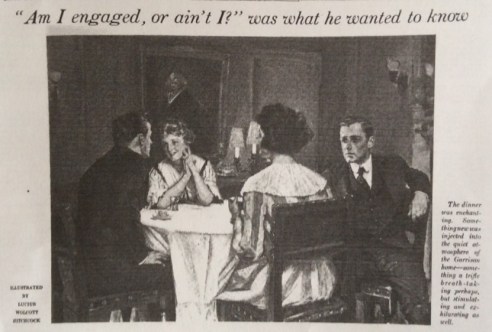
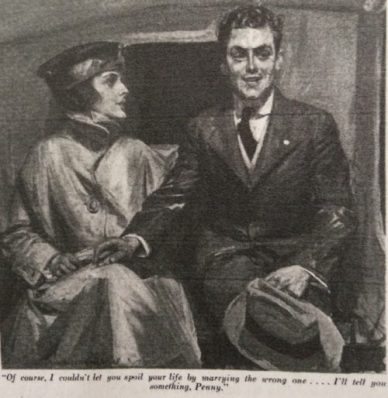
Illustration, Woman's Home Companion, January 1918.

The climax of the story, when Arabella shows up in town after failing to respond to Penny’s subtle (he thinks) inquiries as to whether the engagement is still on, mostly works. I would have liked to see more of the interplay between Penny, Arabella, Ruth, and Ralph at the tea he arranges at Arabella’s insistance, and at the dinner that follows. You can’t just say that “the best in each of the four at the table came out and fused into a perfect comradeship,” we need to see this happening.

The next scene, with Penny and Arabella alone in a taxi, worked better for me. I believed that Arabella, having seen through Penny’s description of Ruth as “a peach” and “the sort of girl that makes a perfect friend,” would want to check Ruth out before setting Penny free, and I smiled when, to Penny’s bemusement, she said, “Well, Penny, it’s all right. You can have her.” I didn’t believe it, though, when she said that she would have gone ahead with the marriage if she hadn’t approved of Ruth. This seems like a case of the story driving the character, rather than the other way around.

Illustration, Woman's Home companion, January 1918.

I also didn’t buy it when Arabella and Ralph fell in love. Arabella seems too sophisticated and ambitious for Ralph. And Ralph is clearly in love with Penny. You say that his eyes “usually rested on Penny with the deep, dumb devotion that shines in the eyes of a splendid collie,” and that Ralph “adored his chum and did not care who knew it.” I can imagine Arabella (who may be gay as well, given that, pre-Ralph, she was planning to devote her life to her career once she was free of Penny) forming an alliance of convenience with Ralph. But true love? I don’t think so.

Thanks for a good read, and I look forward to more of your stories.

Best,

Mary Grace

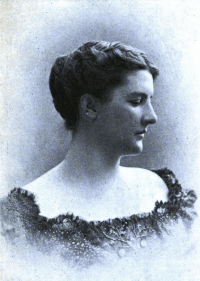
Portrait photograph of Elizabeth Jordan, 1901.

Elizabeth Jordan in 1901

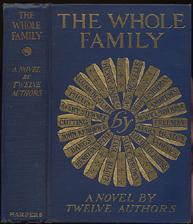
Elizabeth Jordan is—like practically everyone I’ve come across in 1918—an intriguing character. In addition to being a prolific short story writer, she was a noted journalist and editor. She accepted and edited Sinclair Lewis’s first novel for the publishing house Harper & Brothers (now HarperCollins), and she was the long-time editor of Harper’s Bazaar. She was a close friend of Henry James, and she convinced him to contribute a chapter to a 1908 round-robin novel called The Whole Family.

Cover of The Whole Family, 1908.

Jordan was a suffragist herself, and one of my favorite things about “Between the Cat’s Paws” is that ambitious, socially engaged Arabella isn’t a villain or figure of fun, as some writers might have made her. She’s the smartest character in the story (okay, that’s not saying a whole lot), and she pulls all the strings. As for the homoerotic subtext, this is something I’ve seen a surprising amount of, even in The Melting of Mollyespecially in The Melting of Molly. More on this subject later.

I enjoyed “Between the Cat’s Paws.” If Jordan had been free to write a story about the world as she really lived in it, though—now, that’s a story I’d like to read.

Who do you love? Walter Lippmann vs. H.L. Mencken

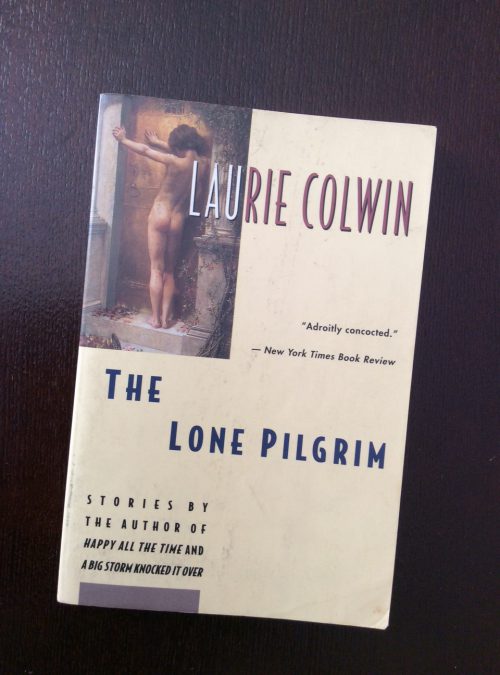
There’s a short story by the wonderful, much-missed writer Laurie Colwin called “An Old-Fashioned Story.” It’s about a rebellious young woman named Elizabeth whose horrible rich parents decided when she was a child that she should marry Nelson, the upstanding son of their equally horrible best friends. Elizabeth isn’t having any of it. Nelson’s ne’er-do-well older brother James sounds more up her alley, but he’s always off somewhere and she hasn’t seen him since she was a child. He finally shows up at his family’s holiday party, and she leaves with him, scandalizing everyone. But, as she sits in a bar listening to him drone on about his wicked ways, she realizes he’s a bore. A few weeks later, Nelson shows up at her apartment when she’s suffering from a cold. He turns out to be a secret rebel, and to be the one for her.

I thought of this story after reading (or listening to) social commentary by Walter Lippmann and H.L. Mencken, two of the top pundits of the 1918 era. I’ve tuned out of 21st century podcasts, and the audio accompaniment to my walks lately has been Lippmann’s 1912 book of essays A Preface to Politics. In it, Lippman, who was only twenty-three when the book was published, goes on sensibly about what’s wrong with politics in the United States: basically, that our system is organized around a notion of how people should be, rather than how they really are. He builds his case methodically, quoting William James and Nietzsche and G.K. Chesterton. He’s sensible, persuasive, and intelligent—Harvard Phi Beta Kappa intelligent. He’s the golden boy. Your mom would love him. But you wouldn’t say he was exciting.

Portrait photograph of Walter Lippmann, 1914.

Walter Lippmann (Pirie MacDonald, 1914)

Then, in the January 1918 issue of Smart Set, I came across H.L. Mencken. Mencken was the magazine’s co-editor, and after 136 pages of jocular stories of varying quality there’s a piece by him called “Seven Pages about Books.” Reviewing a book called Success Easier than Failure, by E. W. Howe, he writes that it’s “the first forthright exposure, so far as I know, of the working philosophy of the American people—not the moony philosophy they serve with the lip, but the harsh, realistic, Philistine philosophy they actually practice.” He goes on:

This fundamental dualism, this disparity between what is officially approved and what is privately done, is at the heart of the American character; it sets our people off from nearly all other peoples. It is the cause of the astonishing hypocrisy that foreigners see in us, and it is the cause, too, of our constant failure to understand those foreigners and their ways.

Portrait photograph of H.L. Mencken.

H.L. Mencken, date unknown

Mencken, the high school-educated son of a cigar factory owner, is as scruffy as Lippmann is urbane, as direct as Lippmann is deliberate. Reading him after weeks of 1918 journalism felt like stepping out into the fresh air from an overheated parlor. Finally—a writer who felt contemporary.

Then I read on. Mencken complains about how we “save the [racial slur] republics from themselves” and then try to turn them into democracies. In a supposed tribute to the Jewish people, he says that any flaws they may possess are due to “corruption of blood” through intermixing with Greeks, Arabs, and Armenians. “The shark that a Jew can be at his worst is simply a Greek or Armenian at his best,” he says.

Meanwhile, in A Preface to Politics, Lippmann has turned his attention to a report on vice in Chicago. Prostitution, he says, isn’t a problem that takes effort to focus on, like trusts, or the poor. Instead, it “lies close to the dynamics of our own natures. Research is stimulated, actively aroused, and a passionate zeal suffuses what is probably the most spontaneous reform enthusiasm of our time.” Get it? Stimulated? Aroused? Passionate? Lippmann has sex on the brain! (I wonder if his editor noticed the puns. They might have slipped by me if the otherwise sedate narrator hadn’t had such a good time with them. He does all but say “heh heh heh.”)

It’s not just the puns. Lippmann argues that the preventive approach the Chicago commission advocates—more enforcement, putting lights in public parks, etc.—will never work. The only effective solution to prostitution, he says, is to get rid of the stifling morality that forces sex underground—to allow it to be enjoyed by people other than couples in lifelong monogamous marriages. Now that’s contemporary.

Mencken, as he winds up, takes a direct swipe at Lippmann, mocking his “sonorous rhapsodies.” Maybe he has a point.

But sorry, H.L., it’s too late.

Walter, you’re the one.

Wednesday Miscellany: Oh and by the way we’re publishing Ulysses

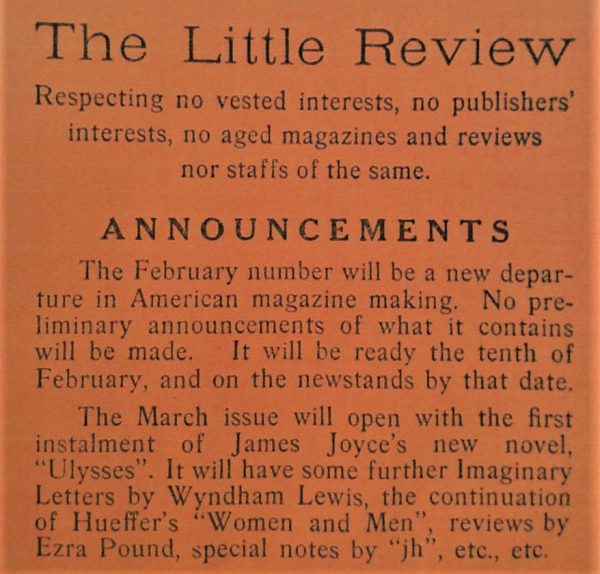
I can’t wait to find out what surprise the Little Review has in store for February 1918 that’s so huge that they can casually toss off “oh, and we’re publishing the first installment of Ulysses in March.”

The Little Review announcement of Ulysses publication, 1918

The Little Review, January 1918

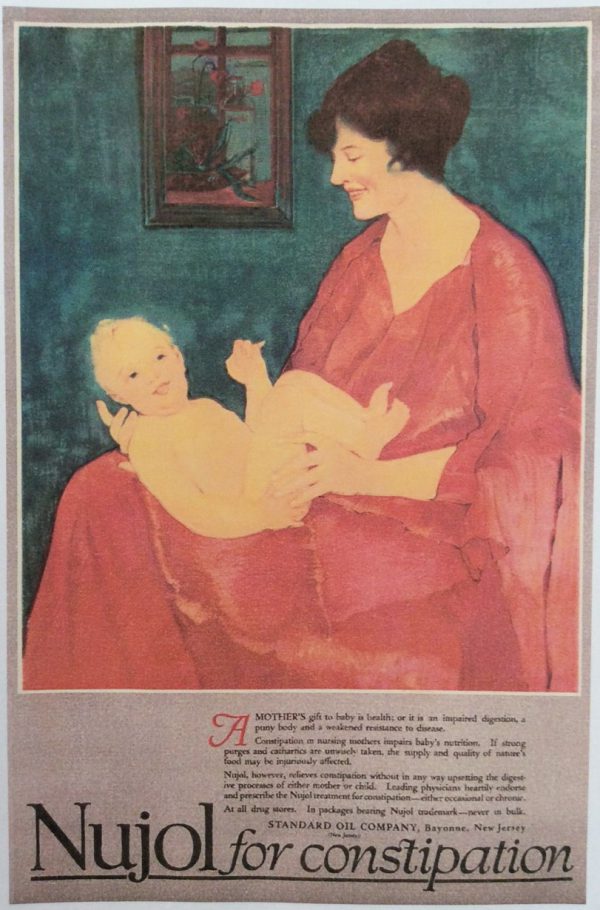
The best art of 1918 is found in some surprising places. For example, ads for constipation medicine.

Nujol constipation ad, painting of mother holding baby. 1918.

Woman’s Home Companion, January 1918

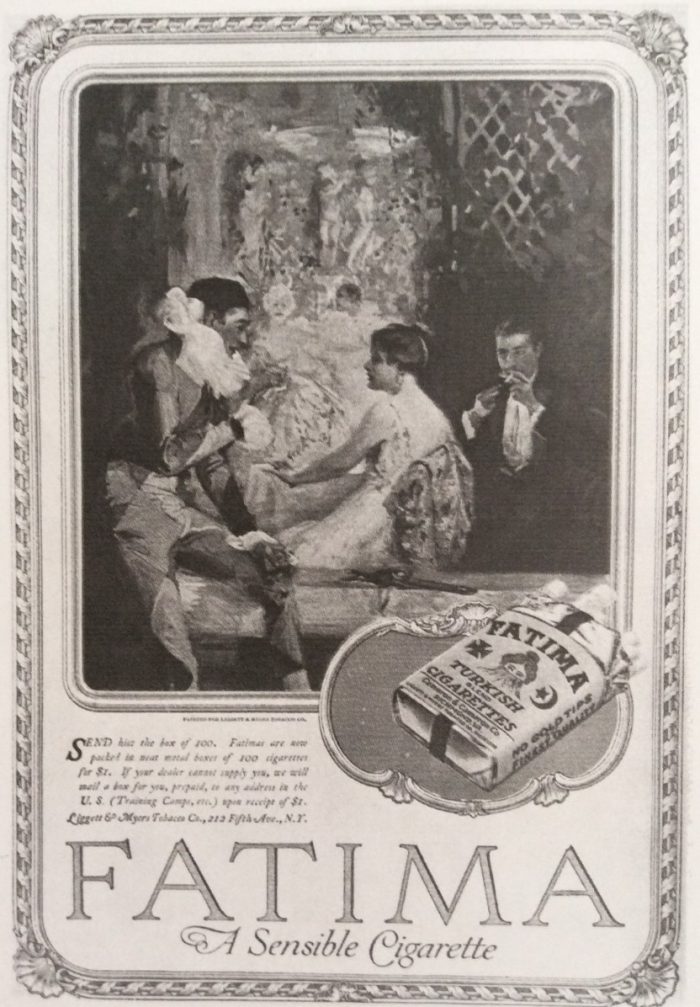
Support the troops! Send them cigarettes from the enemy!*

*Actually just pretend-Turkish: really Liggett & Myers tobacco.