The Top 10 Posts of 1918

Just two days to go in My Year in 1918! After spending 2018 reading books, magazines, and the news as if I were living a century ago, I’m excited but also nervous about returning to the modern world.

Before that, though, I thought I’d count down the most popular posts of the year.

The Top 10 (well, really 11 because there’s a tie at #10)
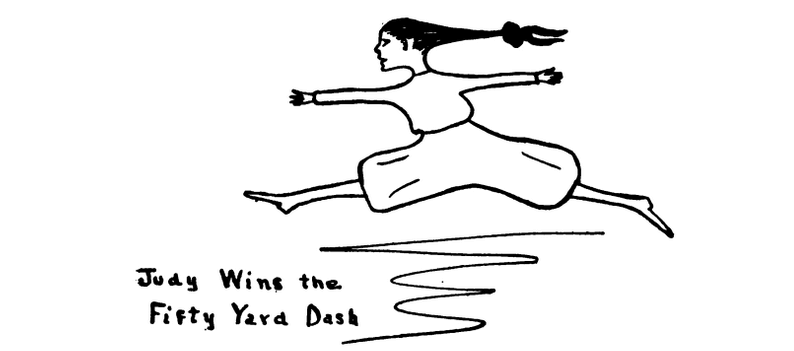
Illustration from Daddy-Long-Legs by Jean Webster captioned Judy Wins the Fifty Yard Dash.

Illustration from Daddy-Long-Legs by Jean Webster

10 (tie). Dear Daddy-Long-Legs, Drop dead! In this February post, I reread the Jean Webster classic, in which an orphan writes to the benefactor who’s putting her through college. An aspect of the story that seemed charming to 12-year-old me struck me as creepy this time around. (No spoilers here, but I spoil away in the post itself.)

July 1918 George Lepape Vanity Fair cover showing startled flapper looking at caterpiller on wallpaper.

10 (tie). The best and worst of June and July 1918: Insanity, proto-flappers, and octopus eyes. This post, featuring one of my favorite magazine finds of the year, the American Journal of Insanity, the worst New York Times editorial I read all year, which is saying a lot, and Murad cigarette art, probably benefited from sitting at the top of the blog for two weeks while I was in D.C. being lazy.
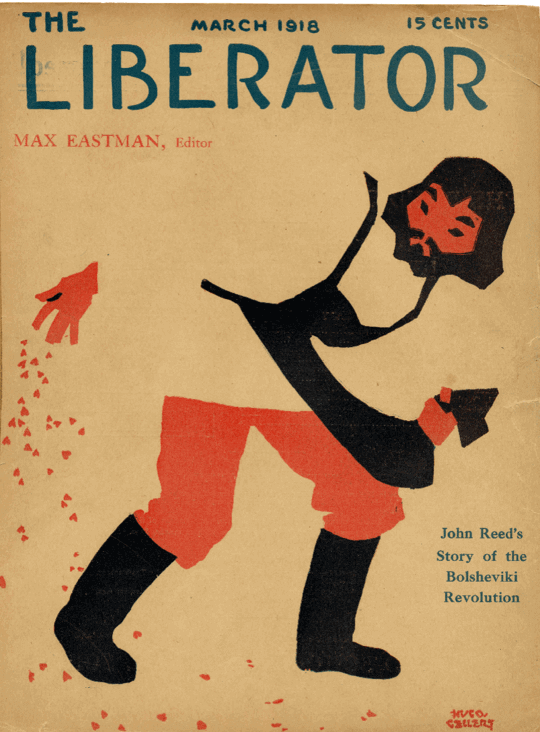
Hugo Gellert March 1918 Liberator cover illustration, cutout of bearded man.

9. My Year in 1918: Some thoughts at the halfway point. In which I ruminate about life as a literary time traveler, and about how checking out of the 2018 news has affected me.
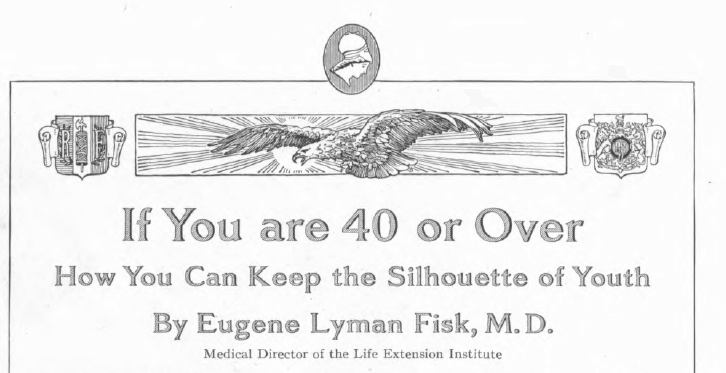
Headline of March 1918 Ladies' Home Journal article titled If You are 40 or Over, How You Can Keep the Silhouette of Youth

8. Wish me luck on my 1918 diet! Surprise surprise—people like reading about diets. My Year in 1918 had its best week ever with this October post on how I tried to regain the silhouette of youth by going on a 1918 diet, spurred on by a group DietBet.
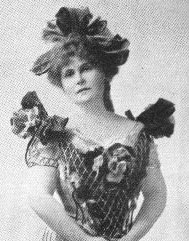
Photo portrait of novelist Marie Corelli, 1909.

Marie Corelli

7. The bonkers world of Marie Corelli. During my very first week, I read a New York Times article about how British novelist Corelli, whom I’d never heard of,* had been arrested for hoarding sugar. A little digging turned up an article in the January 1918 issue of Good Housekeeping in which she rants about modern horrors like Cubism and Debussy and ruminates insanely on who should be shot like a mad dog and who should be involuntarily sterilized—my first, but by no means last, encounter with 1918 eugenic thinking.
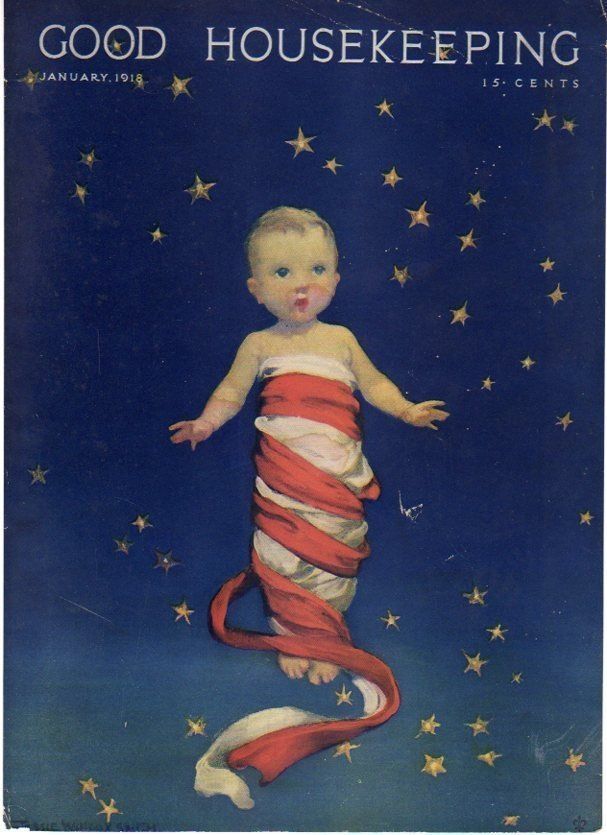
Good Housekeeping January 1918 cover showing swaddled baby in front of starry sky.

6. The journey begins! My January 1 post, in which I announce my project and make several promises I will fail to keep.
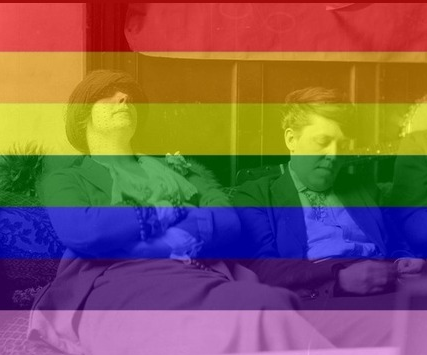
Photograph of Margaret Anderson and Jane Heap with rainbow flag tint.

Margaret Anderson and Jane Heap, date unknown

5. The surprisingly ubiquitous lesbians of 1918: A Pride Month salute. One of the biggest surprises of my project was how many lesbian women I came across, either out (The Little Review editor Margaret Anderson), closeted (Willa Cather), or closeted except that it’s totally obvious if you read their poetry so it’s mind-boggling to a modern reader that people didn’t get it (Amy Lowell).
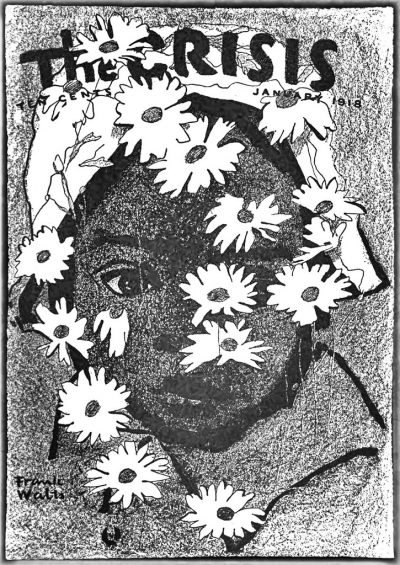
January 1918 The Crisis cover, black and white drawing of African-American woman with daisies in front of her face.

3 (tie). The best and worst of January 1918: Magazines, stories, thinkers, and jokes. The biggest head-scratcher on the list. I mean, I stand by it—it has W.E.B. Du Bois’s wonderful magazine The Crisis, and T.S. Eliot, and a G.K. Chesterton drinking game, and bad jokes—but I’m not sure what propelled it into the tied-for-#3 spot. The internet is a mystery sometimes.
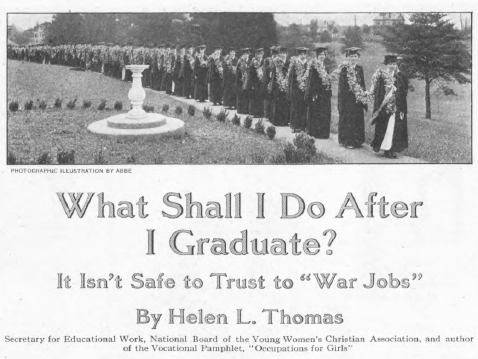
Headline of Ladies' Home Journal June 1918 article titled What Shall I Do After I Graduate? It Isn't Safe to Trust to War Jobs.

Ladies’ Home Journal, June 1918

3 (tie). What’s Your 1918 Girl Job? Take This Quiz and Find Out! Don’t count on keeping your “war job” when peace comes, the Ladies’ Home Journal (correctly) warns. Set your sights on a realistic career, like teacher, saleswoman, office girl, or dressmaker. Take this quiz to find YOUR 1918 girl job!
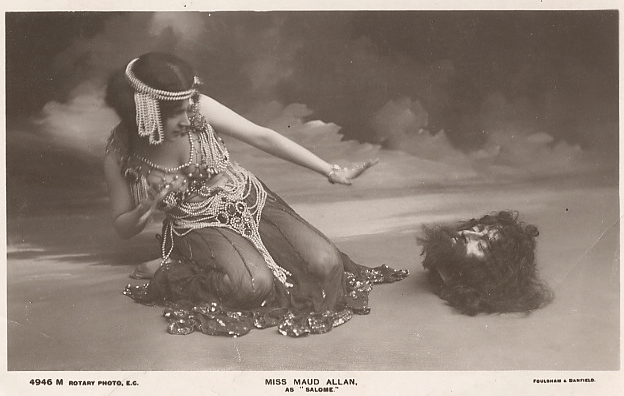
Postcard of Maud Allan as Salome, ca. 1906, showing Salomé recoiling from severed head.

Maud Allan as Salomé, c. 1906

2. Unmentionable vice, a secret German book, and a camarilla: The (looniest) trial of the century. This is the craziest story I came across all year, and that’s saying a lot. It’s about a dance production based on Oscar Wilde’s Salome and a libel trial spurred by an item about it in Member of Parliament Noel Pemberton-Billing’s right-wing newspaper, headlined “The Cult of the Clitoris.” Oh, and there’s (allegedly) a 47,000-member German-lesbian cabal. Except that the New York Times couldn’t say “clitoris” or “lesbian” so I had a terrible time figuring out what was going on.

And the winner
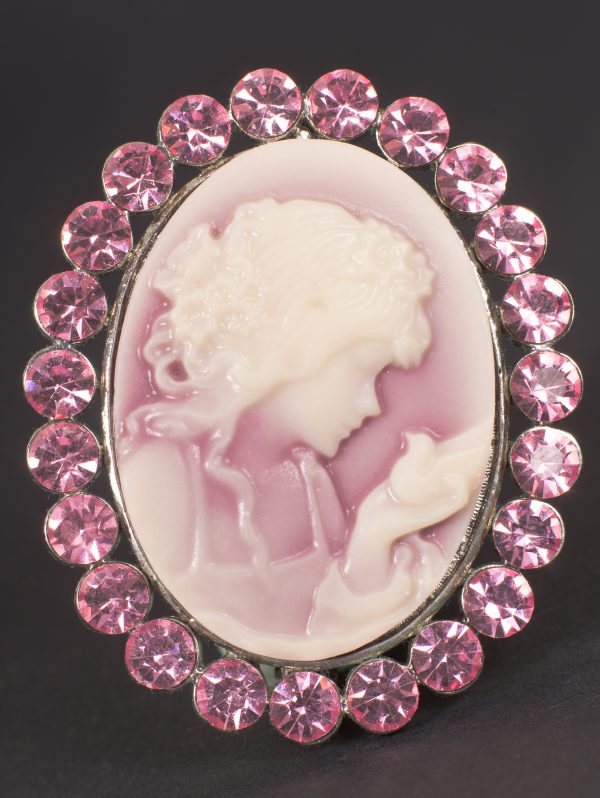
Photograph of cameo of girl holding out hand surrounded by pink gems.

1. Are you a superior adult? Take this 1918 intelligence test and find out! This post didn’t do all that well when it was published in February, but its continuing popularity over the year won it the top spot. You, too, can find out whether you’re a superior adult (as opposed to, say, feeble-minded or deficient) by taking this 100-word vocabulary test from Literary Digest. Which is totally accurate, the magazine assures us, because being able to identify a cameo or a parterre or shagreen has NOTHING to do with your socioeconomic status.

Honorable Mentions
Close-up of bride and groom's hands.

My Sad Search for 1918 Love. This post, in which I search in vain for a nice 1918 boyfriend, came in 13th despite having been published in mid-December.

Tinted photograph of poet George Sterling in robe and turban, illustration in The Rubaiyat.

Illustration by Adelaide Hanscom Leeson, “The Rubaiyat of Omar Khayyam,” 1905, with George Sterling as model

The Uncrowned King of Bohemia: The fascinating story of a not-so-great poet. Almost as crazy as the Unmentionable Vice story, this tale of a bad poet, scandalous goings-on in Carmel-by-the-Sea, and much taking of cyanide performed spectacularly when first posted, but then faded and didn’t even make the top 20.

Dishonorable Mention
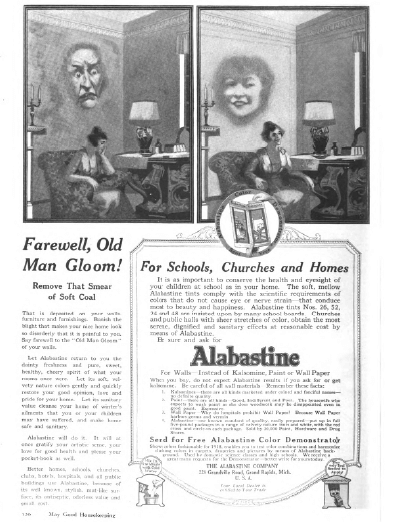
1918 advertisement for Alabastine showing disembodied faces on walls.

Thursday Miscellany: Mauvais français, trippy Kewpies, and loud loos. Don’t you always wonder what people’s worst-performing posts are? I do! My bottom ten were all Miscellanies or very early, kind of earnest, posts. The nadir, with TWO views,** is this one. It’s a pretty typical Miscellany, so I’m not sure why the hate. Although on second thought it IS kind of creepy, with kewpies, which always freak me out, and scary wall faces, and a toilet. You can click on the link if you feel sorry for it.

So What Does it All Mean?

Some takeaways: people like reading about loony bohemian goings-on and diets and lesbians and bests and worsts and explanations of what people’s blogs are about. And they love quizzes!

Well, all of you quiz lovers are in luck, because there’s one going on right now: a test of your Year-in-1918 knowledge. Enter by 1 a.m. EST on January 4 for a chance to win a book of your choice from the Book List!***
*Which seems inconceivable to steeped-in-1918 December me, since she was hugely famous.

**But you don’t have to feel TOO sorry for it, because numbers of views are kind of misleading. If you look at a post on the home page and don’t click on it, it counts as a view for the home page. So, to make a blogger happy, click on the link.

***For you people who say the quiz is hard—YOU KNOW WHO YOU ARE—it’s not! It’s an open-book test, and with judicious use of the search bar a perfect score can easily be yours. One of the answers is right here on this post!

New reviews on the Book List:

December 28: Anne of Green Gables by Lucy Maud Montgomery (1908)

December 29: The Answering Voice: One Hundred Love Lyrics by Women, edited by Sara Teasdale (1917)
Are You a Stagnuck? A 1918 Year-End Quiz (With a Prize!)
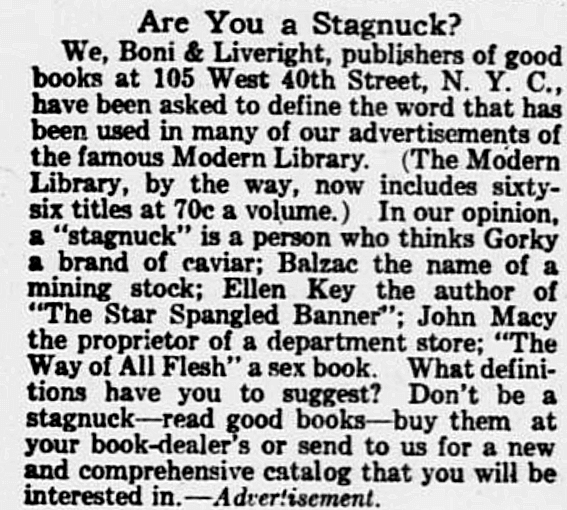
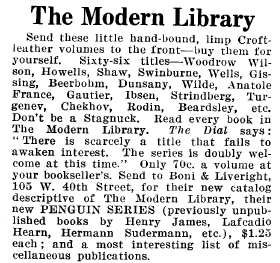
In 1918, Boni and Liveright, publishers of the Modern Library series, started running ads admonishing people, “Don’t be a Stagnuck.” The way not to be a Stagnuck: read every Modern Library book. Woodrow Wilson! Max Beerbohm! H.G. Wells! The Baron of Dunsany! And sixty-two more! A bargain at 70 cents each.

1919 Modern Library advertisement reading in part Don't be a Stagnuck. Read every book in The Modern Library.

The Liberator, January 1919

But what was a Stagnuck? The world was clamoring to know. Or so claimed Boni and Liveright, which answered the question in another ad:

1918 Boni and Liverright advertisement headlined Are You a Stagnuck?

The Sun (New York), October 20, 1918

Ha ha! A Stagnuck thinks The Way of All Flesh is a sex book! That John Macy is the proprietor of a department store! Imagine!*

In December 1918, The Bookman reported in its “Gossip Shop” department that Boni and Liveright’s request for definitions of “Stagnuck” had yielded six hundred suggestions. Their favorite: “a person who thinks that George Eliot was the father of ex-president Eliot of Harvard.”** The publisher was printing a booklet of the hundred best suggestions, which sadly seems to be lost in the mists of time.

But don’t worry! You can still find out how much of a Stagnuck you are. Just take this year-end quiz on your 1918 knowledge. And there’s a prize!!! I’ll randomly select a winner from the correct responses submitted to the Contact page by 1 a.m. EST on January 4, 2019, and he/she will receive a 1918-era book of his/her choice from the Book List.***

Get out your pencils! (Which, if you’re a veteran of My Year in 1918 quizzes, you already know were not actually made of lead in 1918, or ever.) Good luck, everybody!
Portrait photograph of Noel Pemberton-Billing, 1916.

Noel Pemberton-Billing, 1916

1. Noel Pemberton-Billing was prosecuted for:

a. Demonstrating sympathy for Germany by painting a blue stripe on a red, white, and blue pencil black.
b. Implying that dancer Maud Allan was part of a 47,000-member lesbian-German cabal.
c. Writing a short story about a young man who, about to be sent to the Western Front, sees animals mating and gets into the spirit with a local lass.

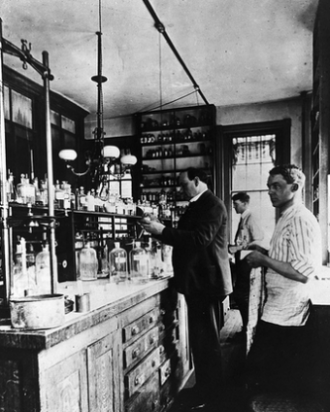
Harvey Wiley in his USDA lab.

Harvey Wiley in his USDA lab (FDA)

2. Nutrition and food safety pioneer Harvey Wiley described what food as follows? It has in its composition more protein than has wheat flour, and about twenty times as much fatty material, and a considerable proportion of starch as well. It is, therefore, extremely nourishing and is usually easily digested.”

a. Chocolate.
b. Graham flour.
c. Meaty little pig snouts.

3. Alan Dale not only penned The Madonna of the Future, a scandalous play about a society woman who became a single mother, he also (choose all that apply):

a. Wrote the first gay-themed novel in English.
b. Won an Olympic silver medal for watercolors and drawing.
c. Was a Hearst drama critic, derided by George Jean Nathan for making puns like “‘Way Down Yeast’ ought to get a rise out of everybody.”

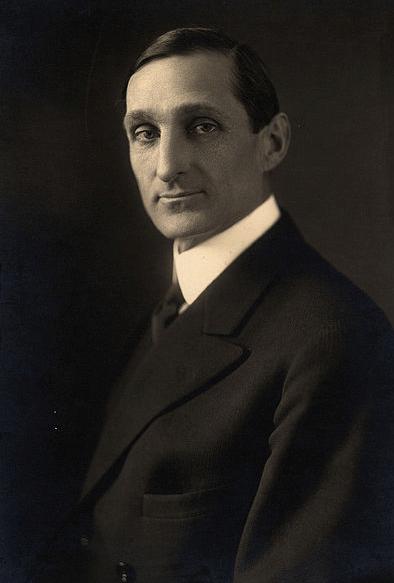
Portrait photograph of William Gibbs McAdoo, 1914.

William Gibbs McAdoo, official portrait, 1914

4. In addition to being Woodrow Wilson’s son-in-law, William Gibbs McAdoo was (choose all that apply):

a. Secretary of the Treasury.
b. Director General of Railroads.
c. The Chief Magistrate of New York who said that, if called upon, he would rule that the play The Madonna of the Future was obscene.

Tinted photograph of poet George Sterling in robe and turban, illustration for The Rubaiyat.

Illustration by Adelaide Hanscom Leeson, “The Rubaiyat of Omar Khayyam,” 1905, with George Sterling as model

5. Poet George Sterling earned the sobriquet “Uncrowned King of Bohemia” for (choose all that apply):

a. Founding the modernist journal The Little Review.
b. Living in a tent on Lake Michigan (with servants).
c. Establishing Carmel-by-the-Sea as an artists’ colony.
d. Having a partner, in work and life, who dressed as a member of the opposite sex.

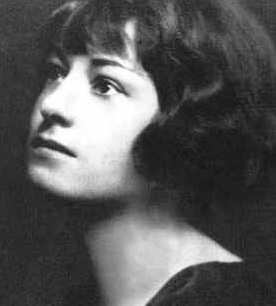
Photograph of young Dorothy Parker.

Young Dorothy Parker, date unknown

6. Dorothy Parker published hate poems in Vanity Fair about which of the following? (Choose all that apply.)

a. Women.
b. Men.
c. Huns.
d. Relatives.
e. Actresses.
f. Farmerettes.
g. Slackers.

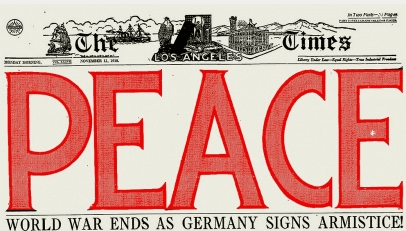
Los Angeles Times headline on WWI armistice, PEACE in huge red letters.

7. Joyous crowds poured out onto the streets of New York to celebrate the end of World War I on:

a. November 7, 1918.
b. November 11, 1918.
c. Both a and b.

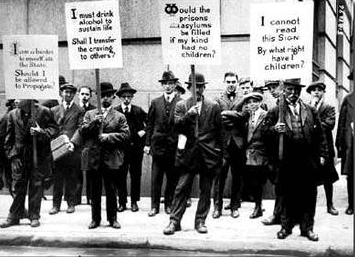
Eugenics supporters holding signs, 1915.

Eugenics supporters hold signs criticizing various “genetically inferior” groups. Wall Street, New York, c. 1915.

8. Which of the following were enthusiasts of eugenics? (Choose all that apply.)

a. Daddy-Long-Legs author Jean Webster.
b. Marie Carmichael Stopes, author of the banned marriage manual Married Love.
c. Fired Columbia university professor James McKeen Cattell.
d. The American Journal of Insanity.
e. How to Live co-author Eugene Lyman Fisk.

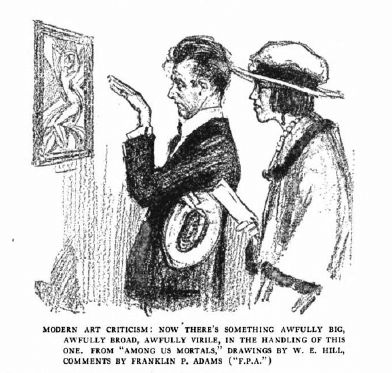
W.E. Hill cartoon showing man standing in front of modern painting talking pretentiously to woman.

The Bookman, January 1918

9. Which of the following were described as “virile”? (Choose all that apply.)

a. Society portrait painter Cecilia Breaux.
b. Alsace.
c. George Grey Barnard’s statue of Lincoln in Cincinnati.
d. Converting people to Christianity.
e. Readers of the literary magazine The Egoist.
f. William Carlos Williams’ grandmother.
g.  Canada.

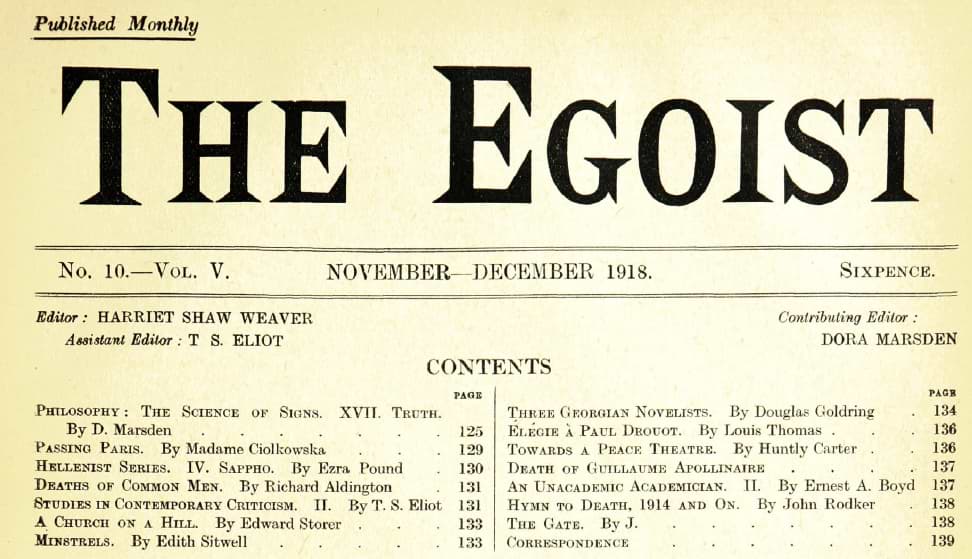
The Egoist banner and table of contents, November-December 1918.

10. Match the following people with criticism of their writing in the literary magazine The Egoist, where T.S. Eliot was literary editor:

a. John Drinkwater.
b. H. G. Wells and Arnold Bennet.
c. G.K. Chesterton.
d. Rebecca West.

1. “What interest can we take in instruments which must of nature miss two-thirds of the vibrations in any conceivable situation.”
2. “___________ says, ‘Hist!’.”
3.  “As a tale of human emotion it is altogether quite indecently unjust.”
4. His or her “brain swarms with ideas; I see no evidence that it thinks.”

(UPDATE 3/28/20: I’m re-running this quiz so I’ve temporarily removed the answers.)

*Feeling quite the Stagnuck, I Googled John Macy and learned that he was a Harvard University instructor, critic, and editor who helped Helen Keller with her books and married Keller’s teacher and interpreter Anne Sullivan. The three of them lived together for a while but Sullivan and Macy eventually separated. Ellen Key, by the way, was a Swedish feminist.

**I would think that even knowing the name of an ex-president of Harvard would move you out of Stagnuck territory. I went to college there, and I don’t even know the name of the president. (In my defense, they just got a new one, and I do know the name of the previous one: Drew Gilpin Faust, who I further know is not the protagonist of a classic German legend. I also know who the president of Harvard was in 1918: Abbott Lawrence Lowell, brother of poet Amy.) But, as I’ve said, the definition of celebrity has changed a lot over the past hundred years. In 1918, being president of Harvard was like being a late-night talk show host today.

***Subject to the availability of a reasonably priced edition of decent quality. (If I read an okay edition, I’ve linked to it.) If you live someplace outside the United States where shipping presents difficulties, I’ll come up with an equivalent prize. Please include your name, your city and state (or country) of residence, and your e-mail address in your submission. Answers are as they appear on the blog. If no one gets all the answers right, I’ll choose randomly from the entries with the most correct answers. But that shouldn’t happen because, like I said, they’re all right there on the blog!

Your 1918 Holiday Shopping Guide

It’s Christmas 1918, and everyone’s in the mood to celebrate! But what to get for that special someone?

Everyone’s already gotten the gift they wanted most,

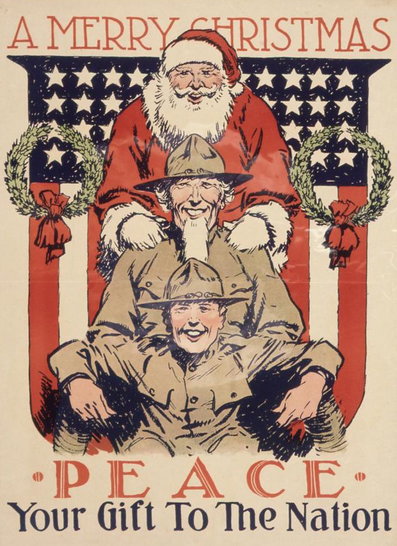
U.S. Food Administration poster, 1918. Santa with soldiers. A Merry Christmas. Peace, Your Gift to the Nation.

US Food Administration, Educational Division, 1918

but there’s lots of other cool stuff out there.

For the Kids

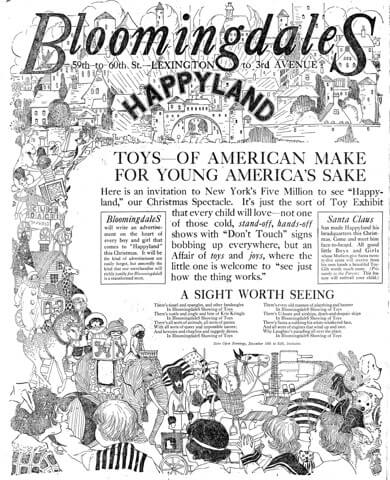
A good place to start your search is Happyland at Bloomingdale’s, where

There’s every old manner of plaything and banner
In BloomingdaleS Showing of Toys,
U-boats and airships, death-and-despair ships
In BloomingdaleS Showing of Toys.

Bloomingdales ad, 1918. Happyland. Toys of American make for young America's sake. Children looking at toys.

New York Times, December 15, 1918

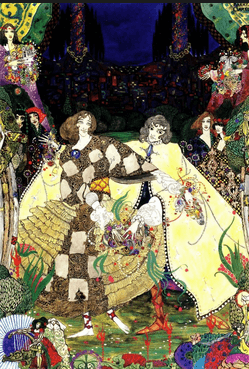
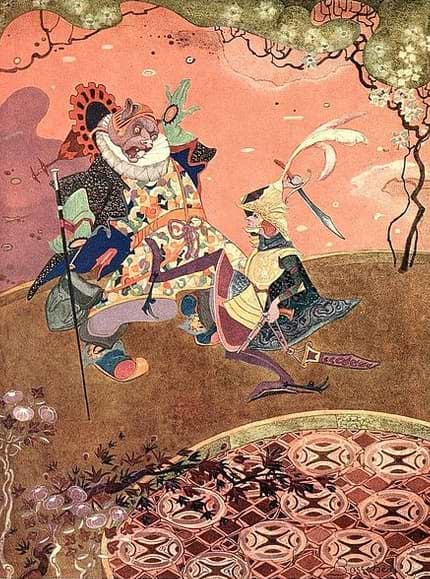
If your kid’s more into reading than visiting death on the Allied forces, you’re still in luck. Recommendations from The Bookman include an edition of Hans Christian Andersen’s fairy tales, with illustrations by Harry Clarke,

Harry Clarke illustration, Fairy Tales by Hans Christian Andersen, 1916. Women in gowns at party.

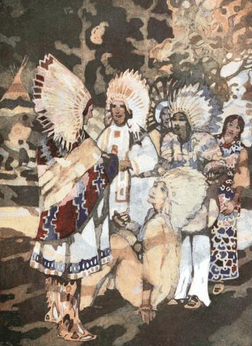
Canadian Wonder Tales by Cyrus Macmillan, illustrated by George Sheringham,

George Sheringham illustration from Canadian Wonder Tales, 1918. Indians in headdresses.

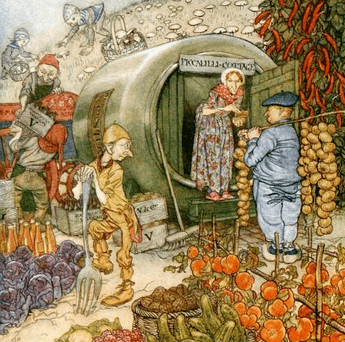
English Fairy Tales by Flora Annie Steel, illustrated by Arthur Rackham,

Arthur Rackham illustration, English Fairy Tales, 1918. Man selling vegetables to woman in round hut.

Folk Tales of Flanders, written and illustrated by Jean de Bosschère,

Illustration from Folk Tales from Flanders by Jean de Bosschère, 1918. Young man fighting with monster.

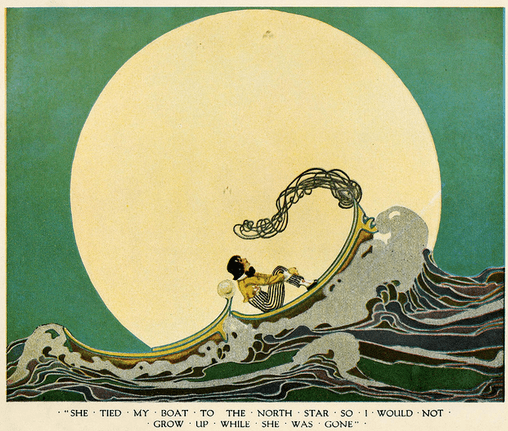
and Dream Boats, Portraits and Histories of Fauns, Fairies, and Fishes, written and illustrated by Dugald Steward Walker, of which The Bookman says that “text and drawing tinkle with elfish laughter and scintillate with flitting wings.”

Illustration from Dream Boats..., Dugald Steward Walker, 1918. Man in boat on cresting ocean wave in front of giant star.

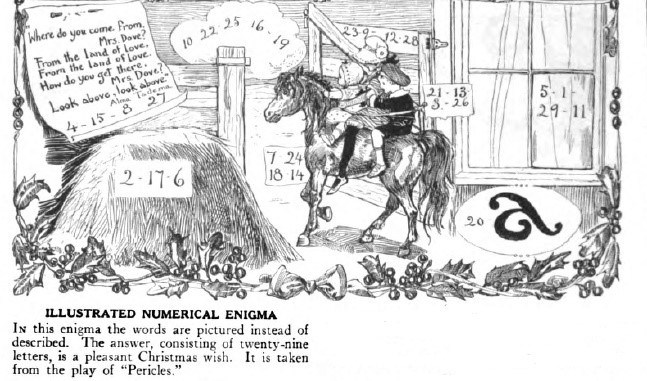
Or give the gift that keeps on giving, a subscription to St. Nicholas magazine. The kids will  spend many happy hours solving puzzles that leave me baffled, like this one:*

Illustrated numerical enigma from St. Nicholas magazine, December 1918.

St. Nicholas, December 1918

 For the Men

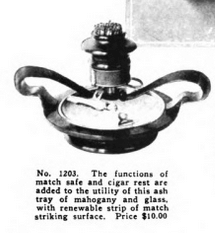
Vanity Fair’s holiday shopping guide is full of ideas for the “Male of the Species,” but once you weed out the smoking presents

Mahogany and glass ash tray, Vanity Fair, December 1918.

Vanity Fair, December 1918

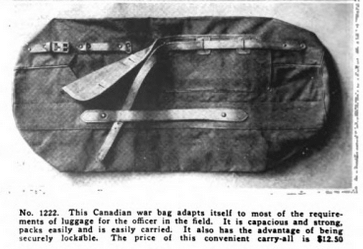
and the war presents

Canadian war bag, Vanity Fair, December 1918.

Vanity Fair, December 1918

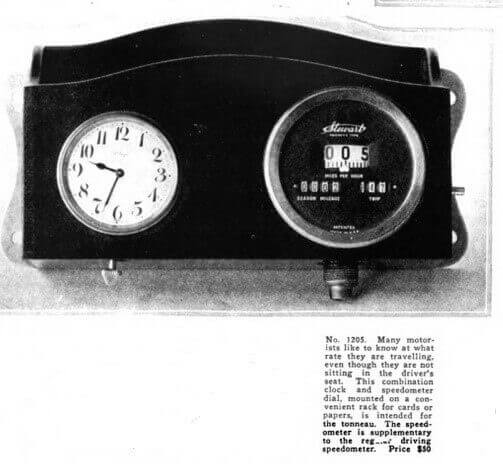
the selection’s a bit limited. There’s this extra speedometer for passenger’s seat viewing, but $50 ($834.56 in 2018 dollars) seems a bit pricey, plus, if given by a wife, isn’t this kind of passive-aggressive?

Clock and speedometer, Vanity Fair, December 1918.

Vanity Fair, December 1918

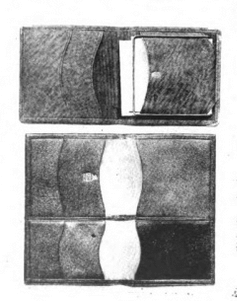
These wallets ($13 and $7.25) are perfectly nice and all, but a wallet always smacks of “I couldn’t think of anything else so I got you this” desperation.

Three wallets, Vanity Fair, December 1918.

Vanity Fair, December 1918

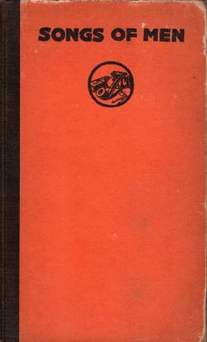
The Bookman assures us that the poetry anthology Songs of Men, compiled by Robert Frothingham, is a “a book such as nearly everybody has been looking for.”

It is a collection of verse for men, with a swinging range of the gamut of emotions; it sings of camping and seafaring, of mining and mountain-climbing, of cow-punching and horse-wrangling, of prospecting, pioneering, loving and fighting. From the woodsman to the college professor, every man will read this small volume with keen delight.

Cover of Songs of Men by Robert Frothingham, 1918.

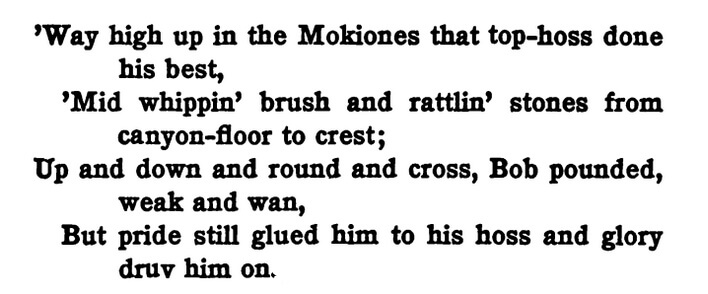
If you’re still not convinced, here’s a random sample, from the poem “High-Chin Bob” by Badger Clark:

Text beginning, 'Way high up in the Mokiones that top-hoss done his best.

No? Well, then, a fourteen-year supply of alcohol might be appreciated. Get it while it lasts!

For the Ladies

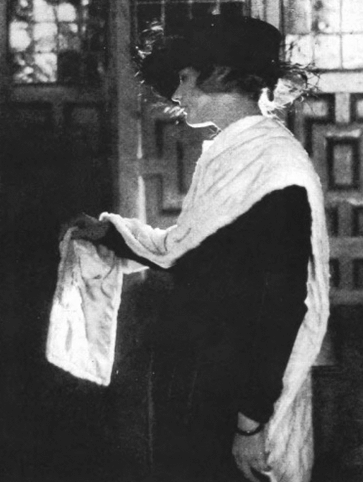
Vanity Fair’s “Gifts for the Eternal Feminine” have stood the test of time better than the men’s gifts, with only the fur stoles (ranging in price from $75 (seal or nutria) to $150 (ermine)) likely to raise eyebrows today. Just as well, since I’d probably leave mine at the opera a week after I got it.**

Woman wearing white fur stole, Vanity Fair, December 1918.

Vanity Fair, December 1918

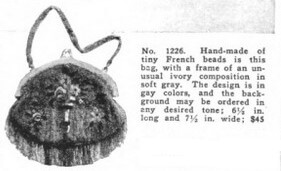
I’d probably do a better job of holding on to this gorgeous beaded bag,

Beaded handbag, Vanity Fair, December 1918.

Vanity Fair, December 1918

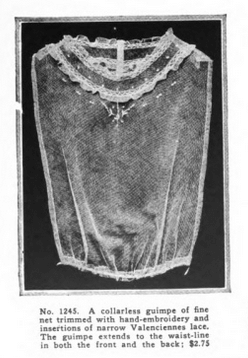
or, if you weren’t planning on spending $45 on me, I wouldn’t turn up my nose at this collarless guimpe, a steal at $2.75.

Lace guimpe shirt, Vanity Fair, December 1918.

Vanity Fair, December 1918

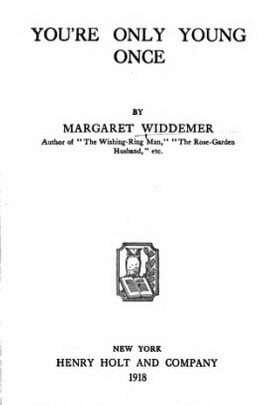
If the lady in your life is as ladylike as the readers of Songs of Men are manly, how about the new novel You’re Only Young Once by Margaret Widdemer? It’s about five sisters who find love and is, according to the (male) Bookman reviewer,

the pinkest book it has ever been our fortune to read. It is as feminine as a powder-puff, as delicate as the frou-frou of silken skirts, and as appealing as the passing of a faint aroma of orris.***

Title page of You're Only Young Once by Margaret Widdemer, 1918.

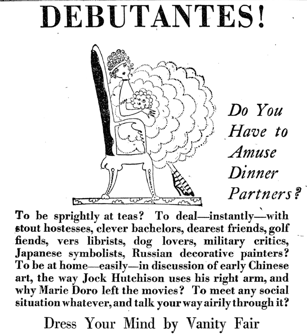
Or, if she’s a debutante and is constantly being called on to be sprightly at teas, there’s always Vanity Fair itself:

1918 advertisement for Vanity Fair headlined Debutantes! Do You Have to Amuse Dinner Partners?

New York Times, December 15, 1918

For the Whole Family

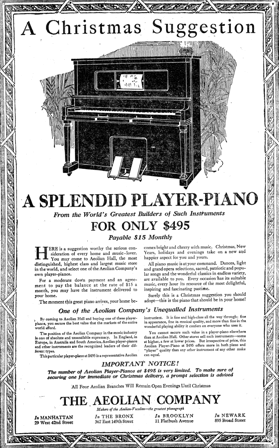
Hint hint: I’ve always dreamed of having a player piano, and this one’s a steal at $495! (Installment plan available.)

Advertisement for player piano from The Aeolian Company, 1918.

New York Times, December 15, 1918

On Second Thought…

You know what? My lifestyle doesn’t really call for beaded evening bags. I don’t even know what a giumpe is, to be honest. And there’s no room in my house for a player piano.

Which, now that I do the math, costs two years worth of wages for Lower East Side textile worker Elizabeth Hasanovitz, whose autobiography I just finished reading. (It was excerpted in the Atlantic in early 1918, and I wrote about Elizabeth here and here.) One day, when Elizabeth had just lost yet another job (her unionized shop had closed–it later reopened with more compliant workers), she passed a bread line and saw a man being angrily turned away because he’d arrived late. No weak coffee and stale bread today! She gave him a dime.

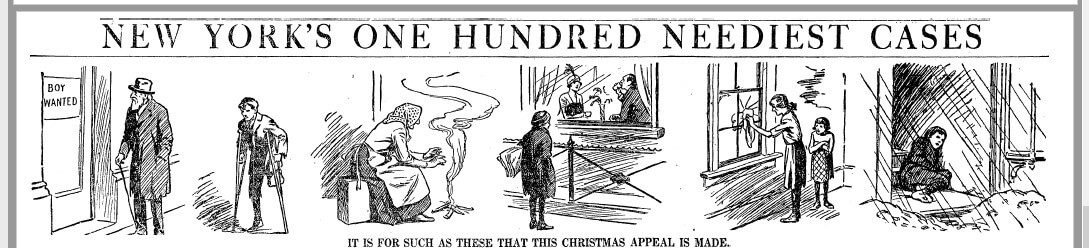
If Elizabeth can spare a dime for the (even) less fortunate, I can do without more stuff. Better the money should go somewhere where it will really do good, like to one of

Banner for New York's One Hundred Neediest Cases, 1918, showing disables and poor people.

New York Times, December 15, 1918

The stories are harrowing–abusive fathers, parents dead of suicide, breadwinners locked up in insane asylums, and children living on the street. Thanks to social safety nets, the kind of abject poverty that existed in the United States in 1918 has, for the most part, been eradicated. But there are still plenty of people in need, and the Neediest Cases Fund, now in its 107th year, is still extending a helping hand. So you don’t even have to be a time traveler to contribute!

Happy holidays to all of you, wherever (and whenever) you are!

Williams Roger Snow lithorgraph for The Night Before Christmas, 1918, showing Santa's sleigh in yard of large home.

Lithograph for The Night Before Christmas by William Roger Snow, 1918

*On the other hand, there was a double acrostic on the same page with the hint “my primals and my finals name what every loyal American should own” and I instantly said, “Liberty Bond,” and completed the puzzle in about two minutes. “Thrift Stamp” was the rest of the answer.

**This actually happened a lot–the 1918 New York Times classifieds are full of expensive stuff that rich people lost at the theater or in taxis.

***I read the first chapter a few weeks ago, and I agree, it’s pretty damn pink.

My Sad Search for 1918 Love

After almost a year in 1918, I have yet to find a decent man.

If I were gay, I’d have it made—this was the golden age of (if not for) lesbian women. Amy Lowell! Willa Cather! Little Review editor Margaret Anderson! Dancer Maud Allan! Plus lots of probablys like Jane Addams and Edna Ferber. But no, I’m stuck with men.

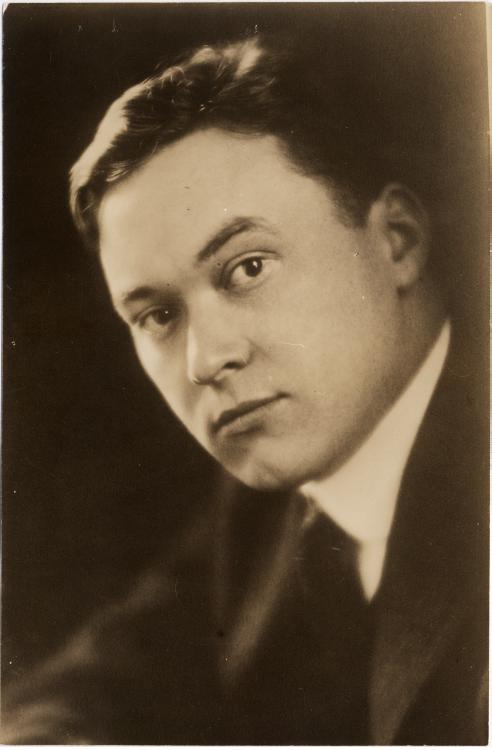
Portrait photograph of Walter Lippmann, 1914.

Walter Lippmann (Pirie MacDonald, 1914)

Back in January, I checked out two prospects*, H.L. Mencken and Walter Lippmann. Mencken’s denunciation of American Puritanism and hypocrisy appealed to me, but then he started going on about Jews and using racial slurs and I was over him. Lippmann seemed stodgy at first, but he won me over by sneaking a bunch of double-entendres into a sober discussion on prostitution in his 1912 book A Preface to Politics.

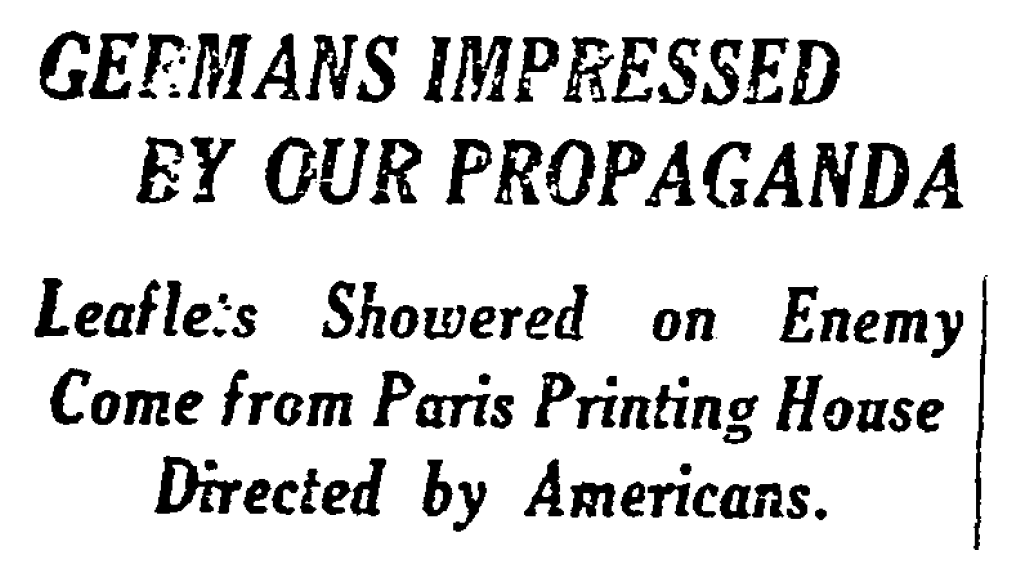
But then he disappeared, as seemingly good men often do. Having left the New Republic to head up the War Department’s propaganda office in Paris, he was almost invisible in 1918. The only traces of him I could find (aside from a swipe from Mencken about his “sonorous rhapsodies”) were two New York Times articles from right before the armistice about an operation he was running to drop leaflets over Germany.

New York Times headline beginning Germans Impressed by our Propaganda, November 9, 1918.

New York Times, November 9, 1918

So my search continued. After ruling out men who

I was left with ten men worth a closer look.

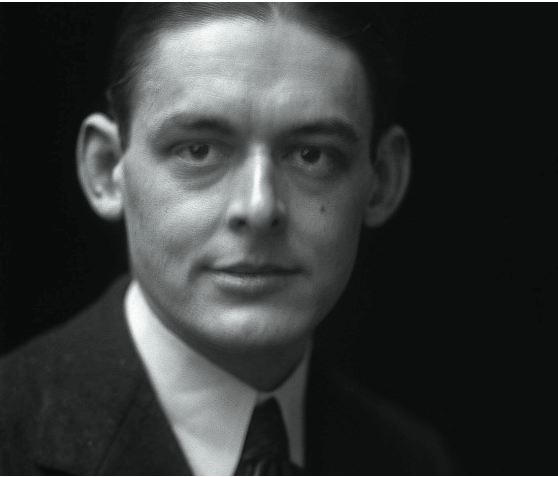
T.S. Eliot

Portrait photograph of T.S. Eliot, 1919.

T.S. Eliot (E.O. Hopp, 1919)

T.S. Eliot was my first 1918 love, way back in the eighties, when the internet wasn’t invented so people had to entertain themselves by memorizing The Love Song of J. Alfred Prufrock. Or maybe that was just me. You can disturb MY universe any time, T.S., I would say to myself. Even then, though, there were warning signs. Like how in the very next poem he’s hanging out with an older woman and wondering if he would have a right to smile if she died. But what can I say? I was twenty-two.

As I read more Eliot, and learned more about him, disillusionment set in. For a lot of reasons, but the anti-semitism alone would have been enough. It’s evident already in 1918, in the poem “Sweeney Among the Nightingales,” published in the September 1918 issue of The Little Review.***

Good-bye, T.S.!

George Jean Nathan

Portrait photograph of George Jean Nathan.

George Jean Nathan, date unknown

If Mencken wasn’t the guy for me, what about George Jean Nathan, his best pal and Smart Set co-editor, who was also the preeminent drama critic of his time? Smart and funny and urbane, and an excellent source of theater tickets.

Digging around to find out whether he shared Mencken’s anti-semitism, I learned that he was part Jewish himself—and that he went to great lengths to hide this. Which would be a deal-breaker today, but those were different times. Case in point: movie star Lilian Gish, whom Nathan was madly in love with, supposedly broke up with him when she learned of his Jewish roots.

But have you seen All About Eve? If so, do you remember the poisonous middle-aged critic who was squiring around 24-year-old Marilyn Monroe? Turns out he was based on Nathan.

Good-bye, George!

Alan Dale

Photograph of Alan Dale and his daughter on a ship, 1900.

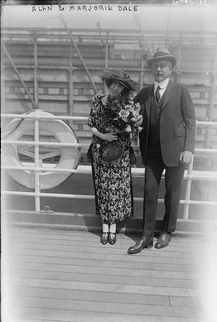
Alan Dale and his daughter Marjorie, 1900 (Library of Congress)

More than anything else I’ve written about this year, the story of Alan Dale’s play The Madonna of the Future has stuck with me. A Broadway play about a society woman who becomes a single mother by choice and acts like it’s no big deal? In 1918? How could this be? (Well, it wasn’t for long—facing obscenity complaints, the play closed after a month or so.) I was intrigued. Who was this Alan Dale person?

The hackiest of Broadway hacks, as it turns out. According to Nathan, the British-born Hearst drama critic (real name Alfred Cohen) perpetrated

the sort of humor…whose stock company has been made up largely of bad puns, the spelling of girl as “gell,” the surrounding of every fourth word with quotation marks, such bits as “legs—er, oh I beg your pahdon—I should say ‘limbs’,” a frequent allusion to prunes and to pinochle, and an employment of such terms as “scrumptious” and “bong-tong.”

I couldn’t be with someone who said “bong-tong.” Plus, might the author of the first gay-themed novel in the English language, which Dale also was, possibly be gay?****

Good-bye, Alan!

W.E.B. Du Bois

Portrait photograph of W.E.B. Du Bois, 1918.

W.E.B. Du Bois, 1918

Du Bois was a brilliant thinker and a wonderful writer and his magazine The Crisis is one of my favorite discoveries of 1918. But, the world being what it was in 1918, this wasn’t going to happen.

Plus, he intimidates the hell out of me.

Good-bye, W.E.B.!

H.G. Wells

Photograph of H.G. Wells, ca. 1918.

H.G. Wells, ca. 1918

Wells was the alpha male of the British literary scene, regarded as one of the greatest writers and thinkers of his day. It would no doubt astonish a 1918 person to learn that he would be known in the future primarily as a science fiction writer.

As a romantic partner, though? Bad news! Married to his cousin, he was always sleeping with other women, including a Soviet spy and birth control pioneer Margaret Sanger. Who at least could be relied on not to get pregnant, unlike 26-year-old writer Rebecca West and the daughter of one of his Fabian friends, both of whom bore him children.*****

Good-bye, H.G.!

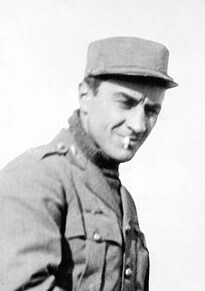
James Hall

Photograph of James Hall in military uniform smoking a cigarette, 1917.

James Hall, 1917

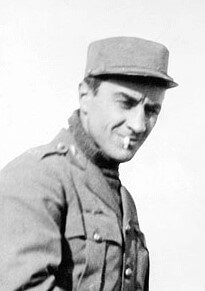
James Hall lied and said he was Canadian to get into World War I, was caught and got kicked out, joined the American branch of the French air force, and was shot down just after he was finally able to fly under American colors. He was feared dead but turned out to have been captured by the Germans. After the war, he moved to Polynesia and co-wrote, among other books, Mutiny on the Bounty.

A cool guy, but I’m not into the swashbuckling type.

Good-bye, Jimmy!

Christopher Morley

Portrait photograph of Christopher Morley sitting at a table, ca. 1918.

The Bookman, February 1918

A prolific young literary man-about-town, Morley published the popular novel Parnassus on Wheels and a book of poetry called Songs for a Little House in 1917 and an essay collection in 1918. He was also the literary editor of Ladies’ Home Journal. He married young, stayed married, and never got up to any shenanigans that I know of.

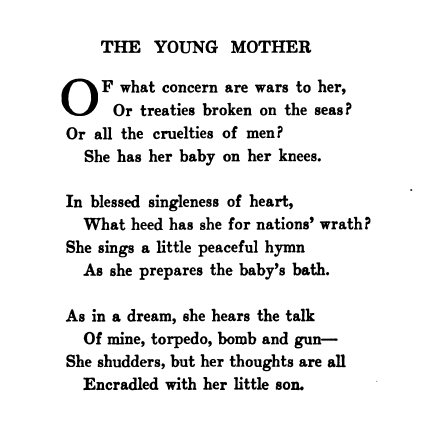
On the other hand, this is how he wrote about his wife:

Text of poem The Young Mother, beginning, Of what concern are wars to her, or treaties broken on the seas?

Songs for a Little House

I would die.

Good-bye, Christopher!

Harvey Wiley

Photograph of Harvey Wiley sitting at desk, ca. 1900.

Harvey Wiley, ca. 1900

Harvey Wiley fought against toxic preservatives in foods and was a driving force in the creation of the FDA. He’s one of my 1918 heroes.

Most of the badmouthing I’ve read about Wiley has broken down on examination. It’s been said that he thought women were stupid, but I haven’t found any evidence.****** He’s been called a eugenicist, but the main case for the prosecution is him saying in Good Housekeeping that there’s no better genetic stock than Scots-Irish, which I think was just him being funny because that’s his background. (This is, in any case, pretty mild as eugenics goes.) I’ll have to wait until 2019 rolls around and I can read his new biography to get the lowdown.

In the meantime, though, there’s this: if you’re the kind of guy who, at age 55, is so taken with your 22-year-old secretary that after she leaves you carry her picture around in your watch for ten years until you run into her on a streetcar and marry her, you’re probably not the guy for me.

Good-bye, Harvey!

Louis Untermeyer

Photograph of Louis Untermeyer in silhouette with pince-nez, ca. 1910-15.

Louis Untermeyer, ca. 1910-1915 (Library of Congress)

Untermeyer is one of those 1918 people I remember from when I was growing up, the editor of pretty much every literary anthology I came across. In 1918, he was all over the place, writing criticism for The Dial and The New Republic and poetry for The Smart Set and many other publications. He’s like a non-smarmy Christopher Morley. His wife, Jean Starr Untermeyer, was also a poet. I thought I might have found my man.

Then I looked into his life. He and Jean divorced in 1926, then he married someone else, then he and Jean got married again in 1929 but divorced in 1930. Then he married a judge named Esther Antin, and they lasted for over a decade, but then he got a Mexican divorce. She was presumably the wife who said in a lawsuit that he was, at 63, “still an inveterate anthologist, collecting wives with an eye always open for new editions.” His last marriage was to a much younger Seventeen magazine editor who wrote a book about their cat.

Good-bye, Louis!

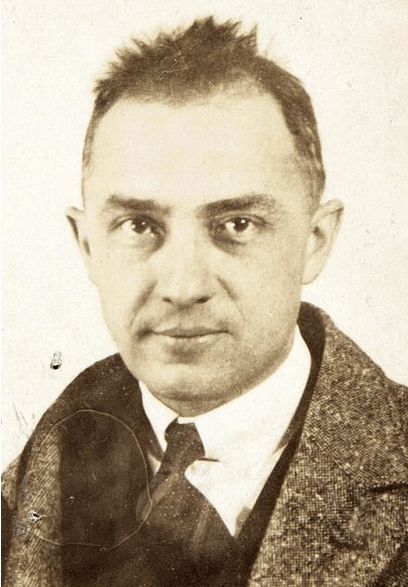
William Carlos Williams

Photograph of William Carlos Williams, 1921.

William Carlos Williams, 1921

And now for the one who broke my heart.

William Carlos Williams seemed like the ideal man. A groundbreaking poet AND a successful pediatrician. From New Jersey, like me. Part Puerto Rican, so I could practice my Spanish!

We even had a meet-cute story: In an early post, I trashed his foray into Cubist poetry. Kind of like H.G. Wells and Rebecca West, who met after she panned a book of his, except without the part where she immediately gets pregnant and they don’t admit to their son for quite a while that they’re his parents.

It was the 1917 collection Al Que Quiere! that made me fall in love. In “Danse Russe,” he dances around naked in his study, admiring his butt in the mirror, as his wife and nanny and children are napping. In “January Morning,” a poem I love so much I memorized all 500+ words of it, he takes us around Weehawken, New Jersey and environs, dancing with happiness on a rickety ferry-boat called Arden.

Here’s how the poem ends:

Well, you know how the young girls run giggling
on Park Avenue after dark
when they ought to be home in bed?
Well, that’s the way it is with me somehow.

A cheerful modernist, what a concept!

And there’s more. Judging from “Dedication for a Plot of Ground,” his tribute to his fierce, difficult grandmother, he appreciated strong women. He was attractive in a non-threatening way.******* Politically progressive without being loony. And a great family man! He married his wife Flossie in 1912 and they stayed married, stolen plums and all, until his death in 1963. Aside from the minor issue of how you could be named William Williams and then name your son William, he seemed perfect.

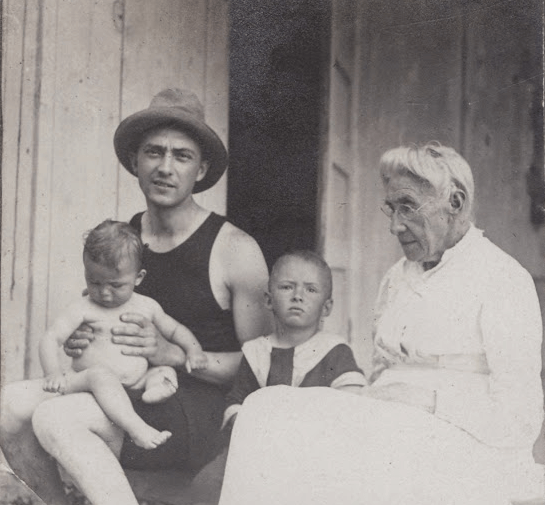
Photograph of William Carlos Williams, wearing fedora, with mother and sons, ca. 1918.

William Carlos Williams with his sons, Paul and William, and his mother, Raquel Helene Rose Hoheb Williams, ca. 1918

The first warning sign came at the end of Al Que Quiere!: a reference to “lewd Jews’ eyes” in the long poem “The Wanderer.” An isolated incident, I hoped. But, when I looked further, it all started to fall apart. The final blow came in a Washington Post review of a 1981 biography of Williams. The biographer acknowledges that he threw around an anti-Jewish ethnic slur but says that this wasn’t antisemitism, it was just part of the “popular racial myths of his time.” The reviewer responds, “Exactly. ‘Popular racial myths’ are what racism consists of.”

Exactly.

Good-bye, W.C.!

At this point I threw up my hands and said,

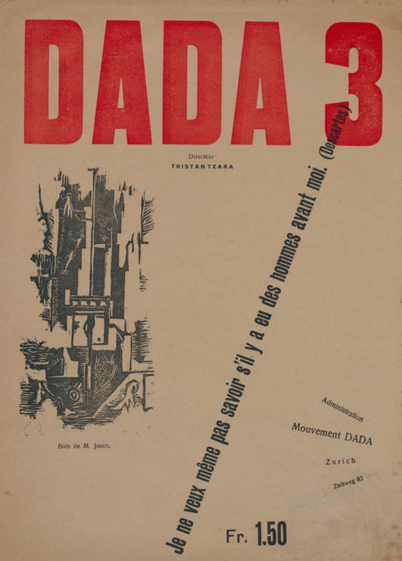
Cover of Dada 3 magazine, December 1918, with text Je ne veux meme pas savoir s'il y a eu des hommes avant moi - Descartes.

Dada 3, December 1918

Which, if you don’t know French (and yes, Ezra Pound, there are such people), means “I don’t even want to know if there were men before me.”

There are lots of ways 1918 was better than 2018. Cars looked cooler

Advertisement for Cole Aero-Eight with picture of car, 1918.

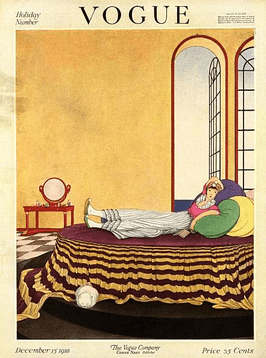
and magazine covers were more attractive

Vogue Magazine cover, woman reclining on bed in front of open window, December 15, 1918

George Wolfe Plank, Vogue, December 15, 1918

and, regardless of whether you’d want to marry them, these men were part of a far greater literary age than our own.

But my search for 1918 love has made me grateful that I’m living in a world of 2018 men.

Especially the one I married 15 years ago today.

Close-up of clasps hands of bride and groom.

Happy anniversary, S.!

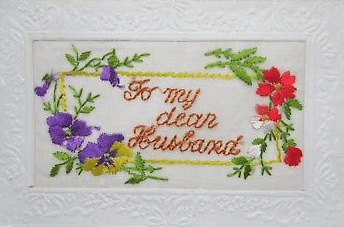
Embroidered postcard reading For my dear husband, with flowers.

Silk embroidered postcard, WWI

*I’m not being fussy here about whether people were single in 1918 (Mencken was; Lippmann wasn’t), or whether they were age-appropriate for a 100-years-older me.

**Who I just now found out was the father of Joan Aiken, one of my favorite children’s authors (The Wolves of Willoughby Chase, etc.).

***Also, Virginia Woolf called Eliot’s first wife a bag of ferrets around his neck in her journal, and I’d hate it if she said that about me.

****Judging from the photo, he had a daughter, but that didn’t mean much in 1918.

*****He also slept with the daughter of another Fabian friend, and when fellow Fabian Beatrice Webb called this a “sordid intrigue” he lampooned her and her husband Sidney in a novel.

******He did think some women were stupid, but that’s because they were.

Q and A from Dr. Wiley's Question Box, woman asking if Crisco is Ivory soap without the scent, July 1918.

Dr. Wiley’s Question-Box, Good Housekeeping, July 1918

*******If you beg to differ, that’s his passport photo. I got mine taken this week, and even though I made them retake it six times it still looks like the picture of Dorian Gray.

1918 Miscellany: Perplexing ads edition

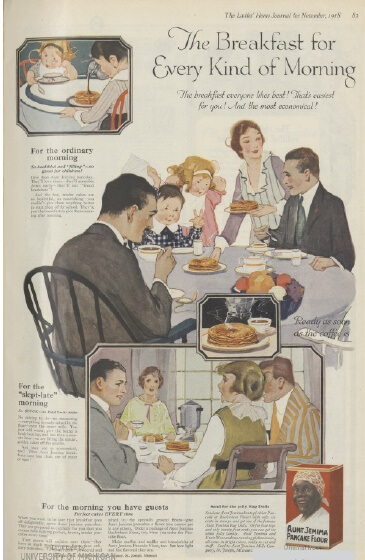
What to serve for breakfast to your two husbands and your children who are drawn in a completely different style.

1918 ad for Aunt Jemima pancake mix with family eating at table.

Ladies’ Home Journal, November 1918

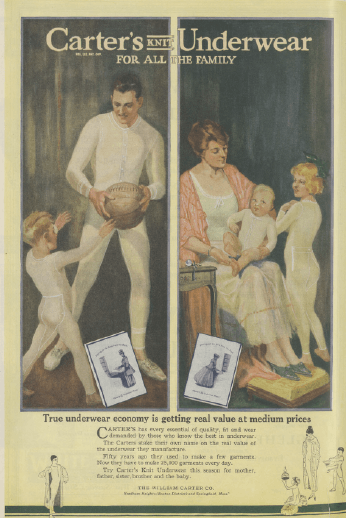
The whole point of UNDERwear has eluded this family.

1918 Carter's Underwear ad with family members wearing long underwear.

Ladies’ Home Journal, November 1918

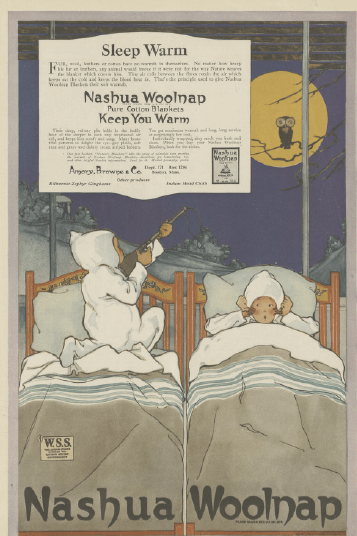
Cuuuuuute!

1918 Nashua Woolnap ad with child in bed aiming rifle at owl.

Ladies’ Home Journal, December 1918

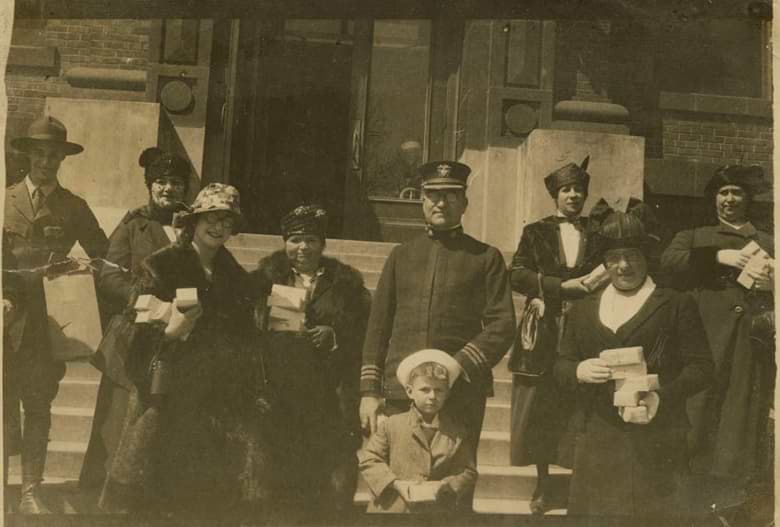
And happy Hanukkah to all who celebrate!*

1918 photograph of people bringing Chanukah gifts to soldiers.

Carrying Chanuka gifts to hospitalized servicemen at the Ninth Naval District Hospital, Great Lakes, Illinois, 1918 (American Jewish Historical Society)

*The first night of Hanukkah in 1918 was on Thanksgiving (November 28). The holidays next coincided in 2013; they won’t do so again until 2070.

The best and worst of November 1918: Fake and real armistices, osculation, and meat we’ll learn to like

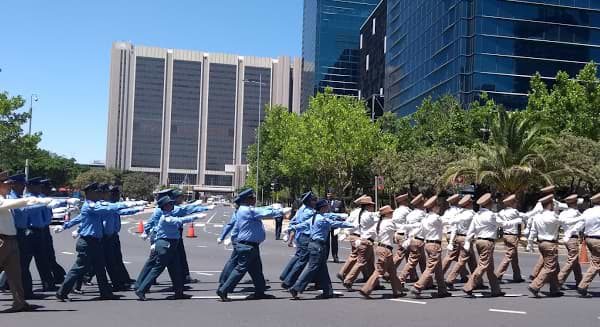
With the centenary of the Armistice approaching, I wanted to celebrate, but how? I couldn’t find any planned events for Remembrance Day (as it’s called in the Commonwealth) here in Cape Town.* But I knew that veterans lay a wreath at the war memorial every year, so I figured they’d be doing something special for this one. I arrived at 10:30 and found marching bands marching, bagpipers piping (oddly, “Sarie Marais,” an anti-British song from the Boer War) and a big tent full of people. A young woman gave me a paper poppy.

Marching band in Cape Town.

There were prayers, hymns, and a speech by Deputy Mayor Ian Neilson, my old friend from Pretoria in the late eighties. (South Africa can be small-towny like that.) How to celebrate an event like this, in the presence of both current soldiers and elderly white veterans who won their medals doing who knows what, is always a fraught question in South Africa. Ian hit just the right note, highlighting the contributions of black soldiers in South Africa and the United States for whom the Allied victory didn’t bring freedom.

At 11:00, the hour of the Armistice, there was a two-minute silence, a tradition that, it turns out, originated in Cape Town. Representatives of diplomatic missions and veterans’ groups laid wreaths on the monument, and afterwards the rest of us were given white roses. Here’s where I placed mine, thinking about the soldiers I’ve gotten to know in my year of 1918 reading, many of whom who didn’t make it home.

Wreaths at base of monument.

Now on to the best and worst of November.

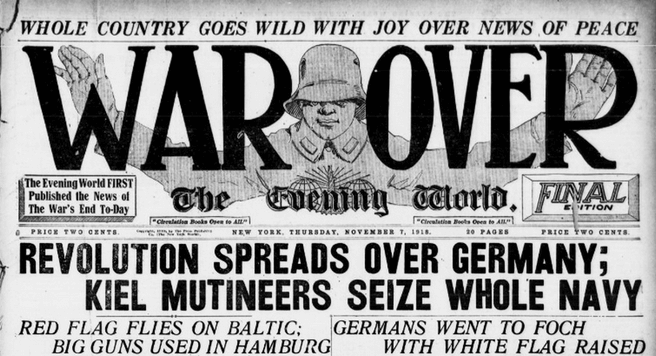
Best fake news: Allies win the war!

New York Evening World headline, War Over.

New York Evening World, November 7, 1918 (Library of Congress)

What’s fake about that, you may be asking. Well, check the date.

In one of the most monumental screw-ups in the history of journalism, the United Press Association (which later became the UPI) reported on November 7 that the war had ended. According to a gloating report in the New York Times, which didn’t run the erroneous story, reporters mistook a ceasefire in an area where French and German officials were meeting for the end of the war. The censors, who were responsible for weeding out secrets, not errors, OK’d the story, and the agency cabled its headquarters. Which didn’t bother to check with officials in Washington, the attitude being “What do they know?” Newspapers rushed out extra editions.

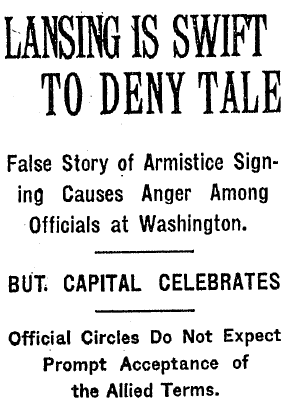
New York Times headline, Lansing is Swift to Deny Tale.

New York Times, November 8, 1918

Secretary of War Baker said this was news to him, and Secretary of State Lansing checked with Paris and issued a denial, but no one cared. New Yorkers poured onto the streets. In Washington, newspapers were dropped from helicopters. (CORRECTION: From an airplane. As an alert reader has pointed out, helicopters weren’t invented yet.) 1,500 women workers from the State and War Departments, who apparently didn’t take their bosses any more seriously than anyone else did, rushed over to the White House, where they waved American flags and cheered President Wilson.**

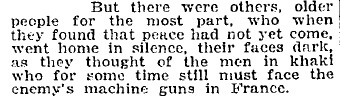
Later that night, when word spread that the war was in fact still going on, a lot of people were too drunk to care.

New York Times text, But there were others...

New York Times, November 8, 1918

Luckily, only four days passed before the…

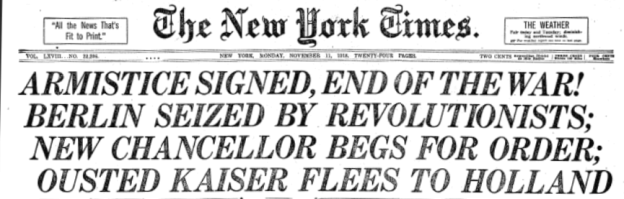
Best real news: Allies win the war!

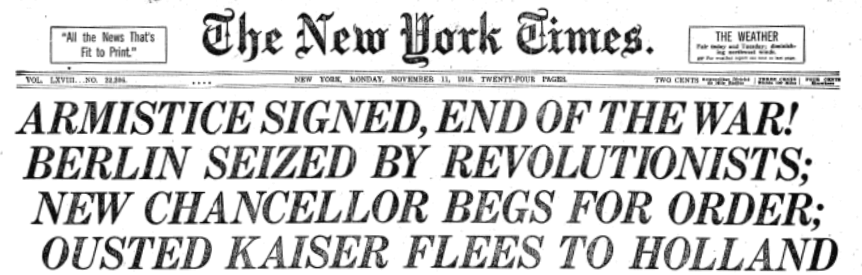
New York Times Armistice headline.

Or, more succinctly and colorfully,

Los Angeles Times headline, PEACE.

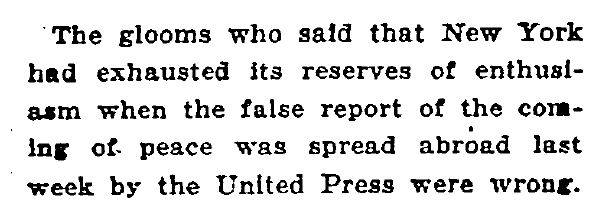
I worried about the fake victory celebration putting a damper on the real victory celebration, but that was just me being a gloom:

New York Times text, The glooms who said that New York...

New York Times, November 12, 1918

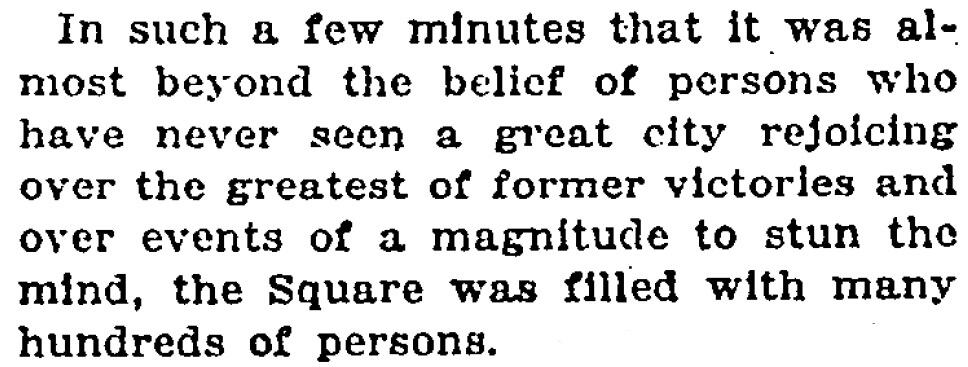
People went wild with joy all over again.

New York Times text, In such a few minutes that it was almost beyond belief...

New York Times, November 11, 1918

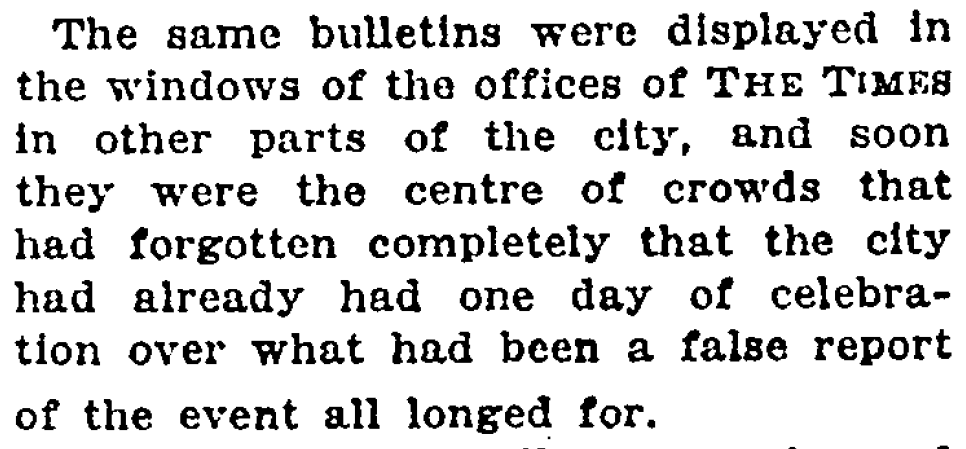
What persons were these, I wondered. Three-day-old persons? But the premature celebration had vanished from everyone’s heads, apparently.

New York Times text.

New York Times, November 11, 1918

Osculation ensued!

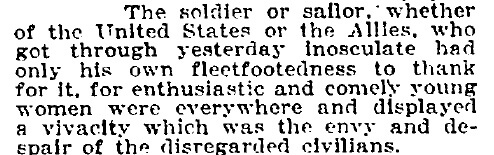
New York Times text, The soldier or sailor...who had got through yesterday inosculate...

New York Times, November 12, 1918

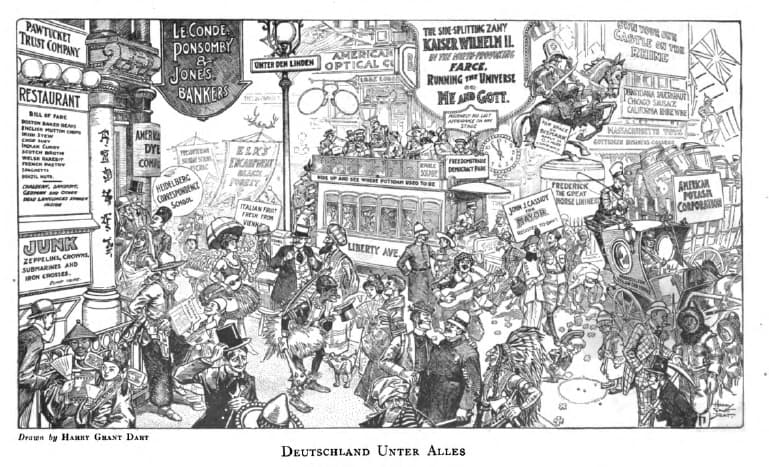
Best cartoon:

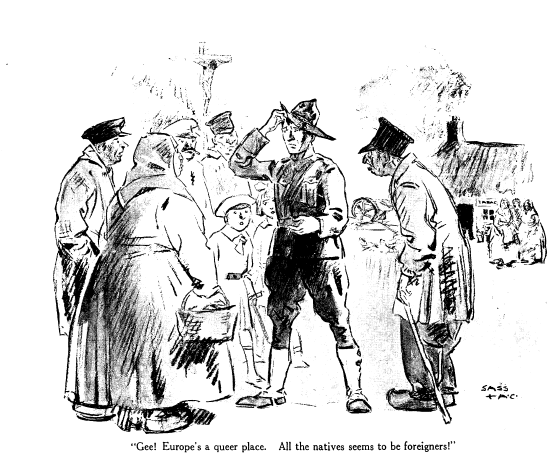
I only kind of get this Harry Gant Dart cartoon–something about the Germans not being in control of their own country anymore–but the drawing is amazing and it’s a refreshing change from all the cartoons about people hanging and strangling the Kaiser.

Cartoon of Berlin full of foreign people, stores, etc.

Judge, November 30, 1918

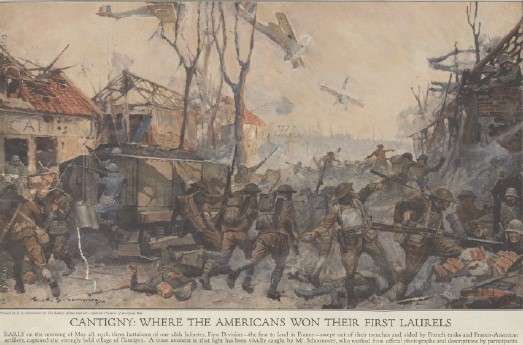
Best illustration:

Amid the celebration, a reminder of the conflict’s cost.

Painting of battle at Cantigny.

Frank E. Schoonover, Ladies’ Home Journal, November 1918

Worst Thanksgiving celebration:

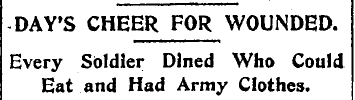
New York Times headline, Day's Cheer for Wounded.

New York Times, November 29, 1918

According to the New York Times, New Yorkers were eager to entertain the troops, including 750 convalescent and wounded soldiers who had returned from France during the week and were quartered at Debarkation Hospital No. 3 at 18th Street and 6th Avenue. Between them, they had received 1,400 invitations–two each! Lavish dinners and theater tickets had been laid on. But, when their uniforms returned from the sterilization department and the soldiers “prepared to don them to sally forth to the feasts,” it turned out that they had  shrunk beyond recognition. A “big soldier,” presented with his outfit, declared it a “Boy Scout uniform.”

Many unsuccessful efforts were made by others to wear the shrunken military garb, and, of course, regulations barred them from appearing on the streets in any other clothes.

An emergency order went out, and 125 uniforms were procured. What to do with the rest of the soldiers? Waive the regulations in appreciation of the sacrifices they had made in securing the biggest military victory of all time? Don’t make me laugh!

The fortunate wearers of these went forth, while the others, grumbling at their ill-luck, reclothed themselves in pajamas and hospital blankets.

Thank you for your service, boys!

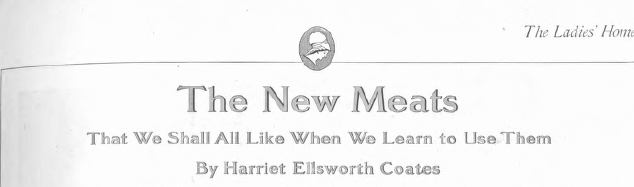
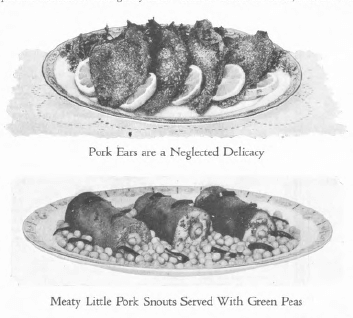
Worst Meats:

The headline had me worried

Headline, The New Meats That We Shall All LIke When We Learn to Use Them.

Ladies’ Home Journal, November 1918

and the illustrations confirmed my worst fears.

Illustration captioned Meaty Little Pork Snouts Served with Green Peas

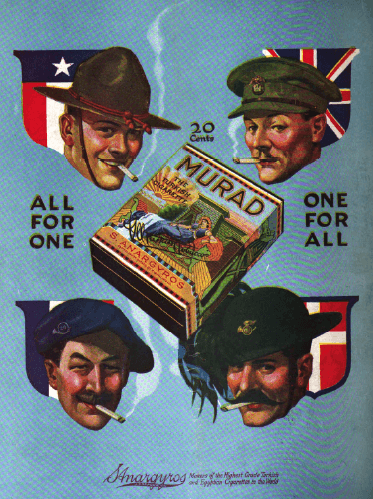
Worst ad:

Since you didn’t die in the war…

Murad cigarette ad with Allied soldiers smoking.

Judge, November 9, 1918

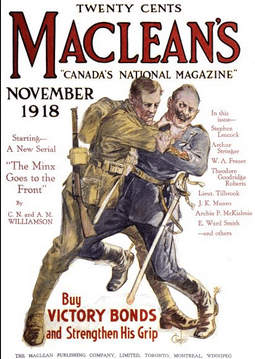
Worst magazine cover:

Like I said, not a fan of the Kaisercide trope.

Maclean's magazine cover, soldier strangling Kaiser.

Best magazine cover:

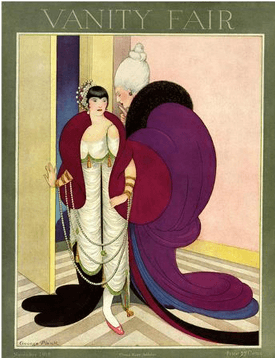
I like this George Wolfe Plank Vanity Fair cover a lot,***

Vanity Fair cover of society women whispering to other woman.

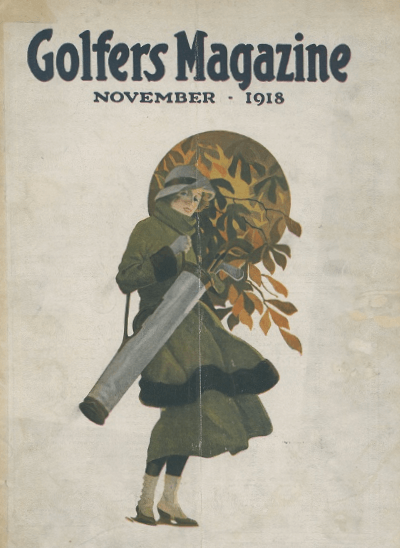
and also the crisp, clear lines of this one from Golfers Magazine,

Golfer's Magazine cover of woman with golf bag.

but the best cover award has to have something to do with what happened during this momentous month.

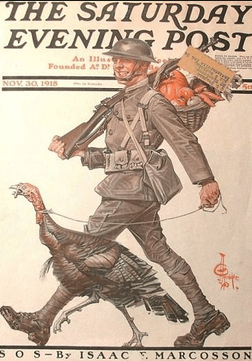
This J. C. Leyendecker Saturday Evening Post cover is wonderful, but I’ve already given it enough love.****

Saturday Evening Post cover of soldier walking turkey.

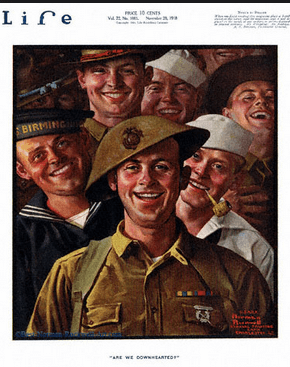
I was just about to bestow the award on Norman Rockwell’s joyful soldiers on the cover of Life

Norman Rockwell Life magazine cover of smiling soldiers, 1918.

Life, November 28, 1918

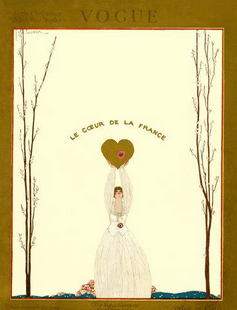
when I thought, “Wait, what about Vogue?”, and found the winner, this gorgeous, understated Georges Lepape cover:

Georges Lepape cover of woman holding up heart, caption Le Coeur de la France, 1918.

Vogue, November 15, 1918

On to—can it be?—December!

*Of course, only reading news from 100 years ago didn’t help.

**This item, which I cribbed from Whatever It Is, I’m Against It, makes me blush on behalf of my fellow women State Department workers.

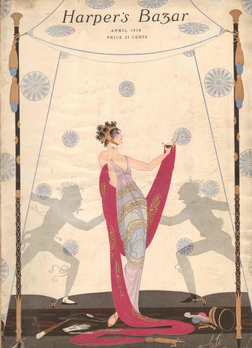
***If you’re wondering what’s happened to Erté, there aren’t any copies of the October and November 1918 issues of Harper’s Bazar, or even the covers, anywhere on the internet as far as I can tell.

****Fun fact: the soldier is Neil Hamilton, who later played Police Commissioner Gordon on Batman.

Looking for a Way to Go

One of the best things about My Year in 1918 has been the people I’ve met along the way. One of my favorites is Frank Hudson, who reflects on poets and writers, many of them from the 1918 era, and sets their work to music. In this post, he mentions the synergy between our projects and writes about Dorothy Parker, one of my favorite 1918 people.

Frank Hudson's avatarFrank Hudson

The year 2018 marches on, as we pass onward past Thanksgiving toward December. I’m quite thankful for the opportunity to continue this project. Time-consuming though it is to do these pieces, it also continues to fascinate me and (one hopes) it also continues to surprise and entertain you. For me there’s considerable enjoyment in trying out or finding out something new, thinking about something, or playing something, different.

Another blog that gives me those pleasures is My Year in 1918,  where its author has been immersing herself in the publications of that epochal year. Her recent thankfulness post looked at some 1918-era people she has run into on that nearly year-long project. As Thomas Hardy put it in his poem of this era, it was a time of the breaking of nations, but as Mary Grace McGeehan looks over her year of 1918, she highlights a few that…

View original post 662 more words

Saturday Evening Post cover, soldier walking turkey, 1918.

10 1918 People I’m Thankful For

1918 is a depressing year to look back on: war, influenza, rampant racism and sexism. But when something is depressing in retrospect that means we’ve made progress, right? I don’t mean to sound Pollyannaish about 2018—believe me, I’m not. For Thanksgiving, though, I decided to look at some of the people of 1918 who paved the way for the better world—and, for all its problems, it is a better world—we’re living in today.

So thank you, in no particular order, to

1. Jane Addams and the settlement movement

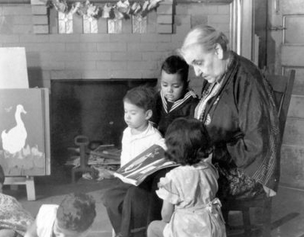
Jane Addams reading to children at Hull House.

Jane Addams reads to children at Hull House (Jane Addams Memorial Collection, University of Illinois at Chicago)

Jane Addams is one of my 1918 heroes. I had heard of her as the founder of Hull House, the famous Chicago settlement house, which I vaguely imagined as a social services center for the immigrant community. Then I listened to an audiotape of her wonderful memoir Twenty Years at Hull-House and learned that it was so much more—a playhouse and dance hall and crafts museum and lecture theater and book discussion venue and art gallery and sanitation office and whatever else Addams and her fellow settlement workers thought would uplift immigrants from their miserable living conditions. Some of her ideas worked, others didn’t (she discusses the failures with self-deprecating good humor), but she brought astonishing energy and creativity to her mission. Addams received the Nobel Peace Prize in 1931 and is now known as the “mother of social work.”

The rights of immigrants are under threat today, as they were in 1918, but today, at least, there are hundreds of organizations to protect and assist them.

Thank you, Jane Addams!

2. William Carlos Williams and my new favorite poem

William Carlos Williams with his mother and children, ca. 1918.

William Carlos Williams with his sons, Paul and William, and his mother, circa 1918 (Beinecke Library, Yale University)

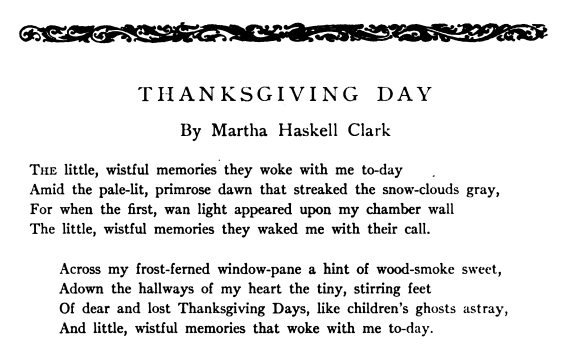
There was a LOT of bad poetry around in 1918. Or not bad, exactly, just sentimental, bland, and innocuous—sitting in the background like wallpaper. Like this poem. (In the unlikely event you want to read the rest, you can do so here.)

Poem, "Thanksgiving Day," 1916.

Scribner’s, November 1916

Then the modernists came along and changed everything. They threw aside Victorian notions of beauty and upliftment, as well as meter and rhyme, and wrote about the world they actually saw. The poet I’ve come to know best over the year (after a rocky start) is William Carlos Williams. I recently memorized his relatively little-known but wonderful poem “January Morning,” an account of his early-morning amblings on a winter day. Here’s how it begins:

I have discovered that most of
the beauties of travel are due to
the strange hours we keep to see them:

the domes of the Church of
the Paulist Fathers in Weehawken
against a smoky dawn–the heart stirred–
are beautiful as Saint Peters
approached after years of anticipation.

(And yes, I typed that off the top of my head. You can check for mistakes, and read the rest of the poem, here.)

Thank you, William Carlos Williams!

3. W.E.B. Du Bois, the NAACP, and The Crisis

Crisis Magazine cover, February 1918, drawing of W.E.B. Du Bois.

Portrait of W.E.B. Du Bois on the cover of The Crisis, February 1918

W.E.B. Du Bois is up there with Jane Addams in my 1918 pantheon. He gave up a successful academic career to edit The Crisis, the NAACP’s magazine for the African-American community. The Crisis took on discrimination and lynching and other horrors, but it also celebrated the achievements of the community’s “Talented Tenth” (like scholar-athlete Paul Robeson) and printed pictures of cute babies.

Thank you, W.E.B. Du Bois!

4. Harvey Wiley, the FDA, and healthy food

Dr. Harvey Wiley in his USDA lab.

Dr. Wiley in his USDA lab (FDA)

If your turkey dinner isn’t full of dangerous preservatives, you have Harvey Wiley to thank. From his lab at the USDA, Wiley pioneered food safety by testing chemicals on a group of young volunteers known as the “Poison Squad.” While his methods wouldn’t get past the ethics committee today, his efforts on behalf of passage of the Pure Food and Drug Act earned him the nickname “Father of the FDA.”

Thank you, Harvey Wiley!

5. Anna Kelton Wiley and women’s suffrage

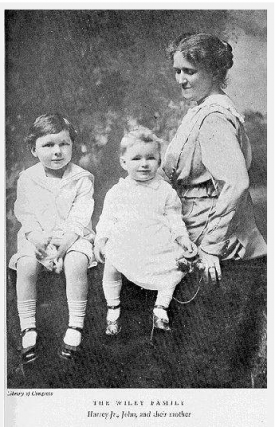
Suffragist Anna Kelton Wiley with her sons.

Anna Kelton Wiley with her sons

Anna who? you may be asking. Anna Kelton Wiley wasn’t America’s most famous suffragist. That would be Alice Paul. Paul deserves our thanks as well, but I thought of Wiley—Harvey Wiley’s much younger wife—because it’s not just the leaders who matter, it’s all the people in the rank and file who fight locally, day by day, for a better world. Women’s suffrage wasn’t a single victory, won in 1920, but a battle fought and won, state by state, over many years. Now more than ever, this is a lesson we need to remember.

Wiley wrote in Good Housekeeping that she and other suffragists decided to picket the White House—a highly controversial move—after less confrontational methods had failed. The demonstrations, she said, were

a silent, daily reminder of the insistence of our claims…We determined not to be put aside like children…Not to have been willing to endure the gloom of prison would have made moral slackers of all. We should have stood self-convicted cowards.

Thank you, Anna Kelton Wiley!

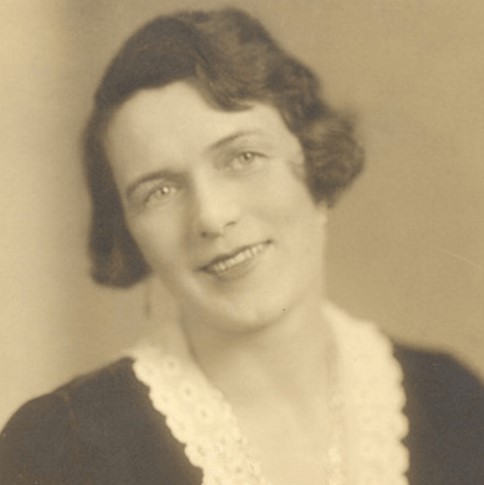
6. Mary Phelps Jacob and comfortable underwear

Photo portrait of bra inventor Mary Phelps Jacob.

Mary Phelps Jacob, ca. 1925 (phelpsfamilyhistory.com)

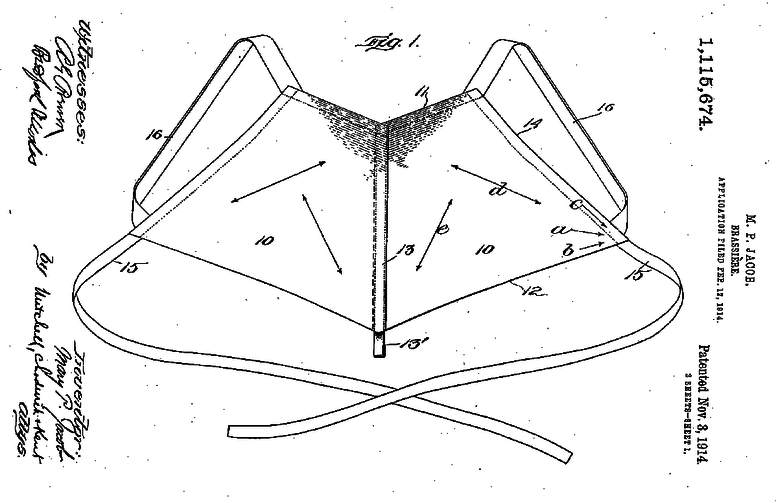
Segueing from women’s suffrage to underwear might seem like going from the sublime to the ridiculous, but it’s all part of the same thing. Disenfranchisement was one way to keep women down; corsets were another. Corsets were still very much around in 1918, but they were on their way out, partly due to wartime metal conservation efforts. And bras were on their way in, thanks to Mary Phelps Jacob, a socialite who, putting on an evening gown one night in 1913, found that the whalebone from her corset was sticking out from the neckline. With the help of her maid, she improvised a garment out of two handkerchiefs and a piece of ribbon. She patented it the next year as the “Backless Brassiere,” and the rest is history.

Brassiere patent drawing, Mary Phelps Jacob, 1914.

Brassiere patent drawing, Mary Phelps Jacob, 1914

Thank you, Mary Phelps Jacob!

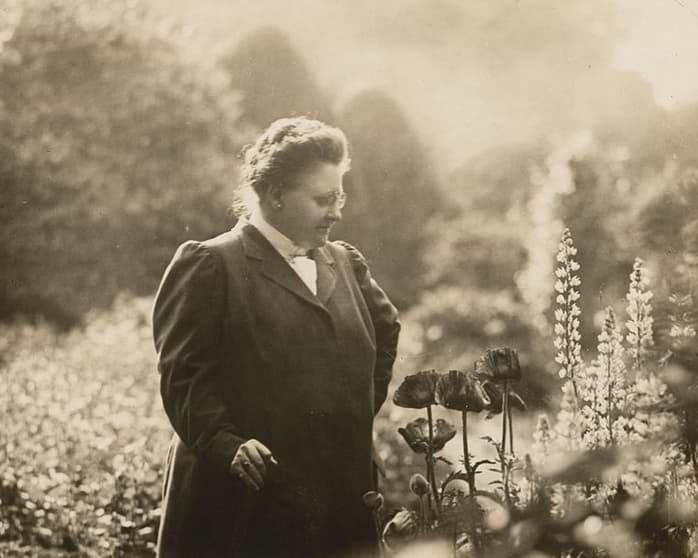
7. Amy Lowell and LGBT pride

Poet Amy Lowell in her garden, ca. 1916.

Amy Lowell, ca. 1916

Amy Lowell wrote about love as she experienced it—with her partner, Ada Dwyer Russell, in the Boston home they shared. They weren’t able to live openly as lovers, and Dwyer destroyed their correspondence at Lowell’s request, but their love shines through in Lowell’s poems. Here’s one of my favorites:

Amy Lowell poem Madonna of the Evening Flowers.

North American Review, February 1918

Thank you, Amy Lowell!

8. Katharine Bement Davis and sexual freedom

Photograph of Katharine Bement Davis , 1915.

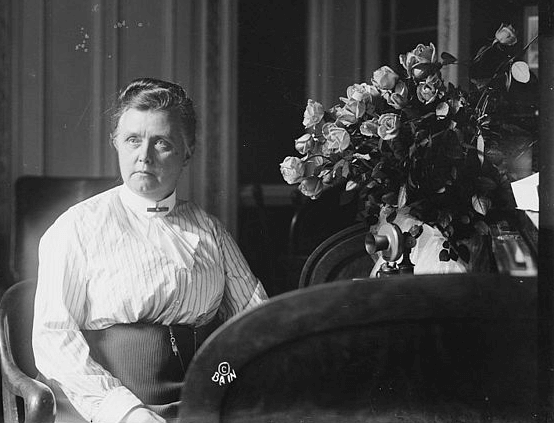
Katharine Bement Davis, 1915 (Bain News Service)

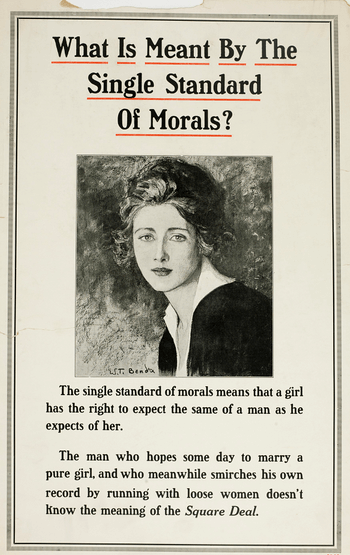
We think of sexual freedom as the right to sleep with whoever we want, inside or outside marriage. It is that, of course, but it also involves rights that we take so much for granted today that we don’t even think about them. Like the right of a wife who has contracted a sexually transmitted disease from her husband not to be lied to by her doctor. The right of a young woman to know the facts of life rather than being kept in ignorance to uphold an ideal of “purity.” The right of a teenager not to live in fear that masturbation will lead to blindness and insanity. The right of a couple to practice birth control without risking prison.

Poster with caption What is Meant by the Single Standard of Morals?

Poster, War Department Commission on Training Camp Activities, ca. 1918

Katharine Bement Davis, a settlement worker and social reformer, was at the forefront of the fight against sexual ignorance. When the United States entered World War I, venereal disease turned out to be rampant among recruits. Davis wrote in the Annals of the American Academy of Political and Social Science that combating this epidemic required efforts—and knowledge—on the part of “both halves of the community which is concerned.” Davis and her team at the Section on Women’s Work of the Sexual Hygiene Division of the Commission on Training Camp Activities educated women on sexual issues with publications, films, and lectures by women physicians.

Okay, Davis’s solution was that no one, male or female, should have sex outside of marriage. And she, like so many progressives, was a eugenicist. Still, breaking down the walls of ignorance was an important step.

Thank you, Katharine Bement Davis!

9. Dorothy Parker and humor that’s actually funny

Photograph of young Dorothy Parker, date unknown.

Dorothy Parker, date unknown

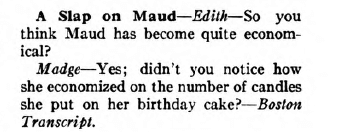
1918 humor was, for the most part, not funny. There were racist and sexist jokes, faux-folksy tales, and labored puns. Here is a joke I picked at random from Judge magazine:

Joke called Slap on Maud, Judge magazine, 1918.

Judge, November 9, 1918

Then Dorothy Parker came along, filling in for P.G. Wodehouse as Vanity Fair’s drama critic, and changed everything. The best way to make a case for Dorothy Parker is to quote her, so here are some excerpts from her theater reviews:

On the musical Going Up, April 1918: It’s one of those exuberant things—the chorus constantly bursts on, singing violently and dashing through maneuvers, and everybody rushes about a great deal, and slaps people on the back, and bets people thousands of stage dollars, and grasps people fervently by the hand, loudly shouting, “It’s a go!”

On the farce Toot-Toot!, May 1918: I didn’t have much of an evening at “Toot-Toot!” I was disappointed, too, because the advertisements all spoke so highly of it. It’s another of those renovated farces—it used to be “Excuse Me,” in the good old days before the war. I wish they hadn’t gone and called it “Toot-Toot!” When anybody asks you what you are going to see tonight and you have to reply “Toot-Toot!” it does sound so irrelevant.

Thank you, Dorothy Parker!

10. Erté and gorgeous magazine covers

Young Roman Petrovich Tyrtov (Erté) at his desk, date unknown.

Roman Petrovich Tyrtov (Erté), date unknown

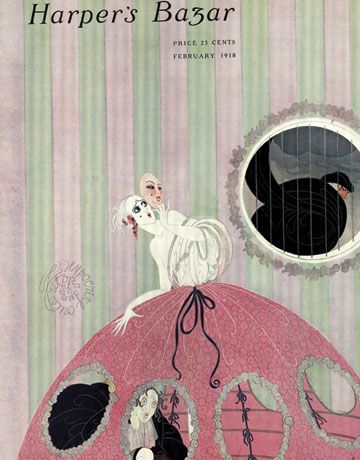
Okay, this doesn’t fit into my theme, because 1918 was the golden age of magazine covers and I get depressed whenever I pass by a 2018 magazine rack. But the beautiful cover art of the era is worth celebrating anyway. There were many wonderful artists, but the master was Erté, who turned twenty-six on November 23, 1918.

Erté Harper's Bazar cover, February 1918, masked woman with man hiding under her hoop skirt.

Erté May 1918 Harper's Bazar cover, woman holding up globe with fireflies flying out.

Thank you (and happy birthday), Erté!

The common thread on this list, I see, is freedom. Freedom for women, immigrants, people of color, and the LGBT community, but also less obvious but still important types of freedom: to wear clothes you can move around in, to know the facts of life, to eat healthy food, and to write about and laugh about the world as it really is.

Happy Thanksgiving, everyone! And thanks to all of you out there who, in large ways and small, are working to make the world of a hundred years from now better than the one we live in today.

My Year in World War I: A Centenary Reflection

For someone who decided  of her own free will to spend this year reading as if I were living in 1918, I have a curious aversion to reading and writing about World War I.

Part of it goes back to my education. In the seventies, when I was in school, battles and the like were out of fashion among history teachers. It was all cause and effect—the assassination of Archduke Ferdinand one day, Versailles the next.

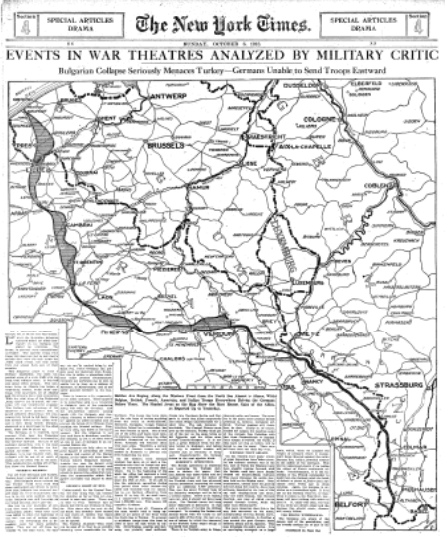
Also, there’s a horrible, reactionary part of my brain that, when faced with a lengthy article by the New York Times’ military critic* about the Meuse-Argonne Offensive, says, “Battles are for BOYS!” Believe me, I know how crazy this is. Just within the community I’ve become a part of through this project, Connie Ruzich has been telling the story of World War I through its—often horrifyingly graphic—poetry and Pamela Toler has a book coming out in February on women warriors through the ages. Not to mention Barbara Tuchman, author of The Guns of August, one of the classics of World War I history.** Which I actually have read. Even so, battles aren’t, and never will be, my thing.

An article I didn’t read, New York Times, October 6, 1918

In my post-college years, I learned about the war through novels like All Quiet on the Western Front and A Farewell to Arms and memoirs like Vera Brittain’s Testament of Youth. These left me with a clear sense of the traumatic effects of the war but a sketchy knowledge of how it actually transpired.

Now, on the 100th anniversary of the war’s end, I still can’t tell you how it played out French town by French town, but I have a better understanding of what happened during its last year, both on the battlefield and back home (mostly in the United States***). Here’s some of what I’ve learned.

First of all, the Americans got off to a sloooooow start. I’d always had the idea that the Doughboys showed up in 1917, went to the front to replace the depleted French and British forces, and saved the day.


Well, not so much. Or not so quickly, anyway.

To begin with, the United States didn’t have an army that was up to the task; American soldiers needed a huge amount of training. The U.S. declared war on Germany in April 1917, but American troops didn’t arrive in France in large numbers until almost a year later. When they arrived they were clueless,

Judge magazine, January 19, 1918

but cocky.

Judge magazine, January 19, 1918

Observers were unimpressed, if this AP report from the American sector, which I’m surprised made it past the censors, is anything to go by:

New York Times, February 21, 1918

A few American soldiers had prior combat experience from fighting with British or French forces. One of them, Captain Jimmy Hall, was shot down in May 1918, just as he was finally able to fly under American colors, and presumed dead. He survived, though, and was captured by the Germans. Hall went on to co-author Mutiny on the Bounty with fellow former aviator Charles Nordhoff.

James Hall in the Lafayette Escadrille, 1917

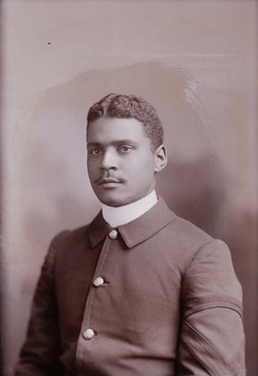
The U.S. armed forces were segregated, and most African-American units were led by white officers. A few African-Americans received commissions, though, including Benjamin O. Davis, a Spanish-American War veteran who was promoted to lieutenant colonel in 1918 (for the duration of the war, anyway—his rank later reverted to captain). Davis went on, during World War II, to become the first African-American general in the U.S. armed forces. His son, Benjamin O. Davis, Jr., was the first African-American general in the Air Force.

Benjamin O. Davis, 1901

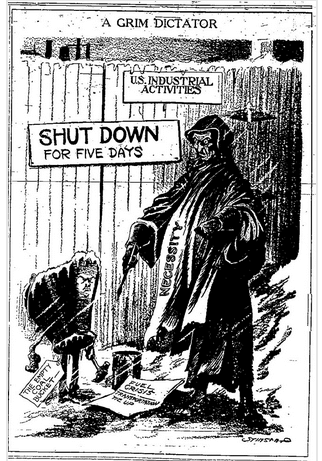
On the logistical side, America’s entry into the war was a colossal screw-up. The United States wasn’t producing many weapons or planes, and a fuel shortage, exacerbated by one of the coldest winters on record, slowed the shipment of what military equipment had been produced. In January, Fuel Administrator Harry Garfield took the drastic step of ordering all industry east of the Mississippi to shut down for a week, and then for the next five Mondays. There was grumbling, but surprisingly no one questioned whether closing down the country was in the fuel administrator’s job description.

Springfield (OH) Daily News, January 19, 1918 (clarkcountyhistory.wordpress.com)

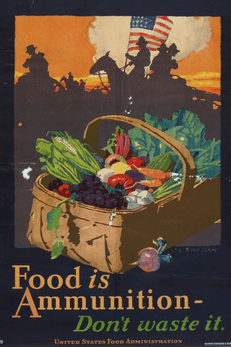
Meanwhile, Food Czar Herbert Hoover, who had gained celebrity status by organizing relief efforts in Belgium,**** was coordinating a food conservation campaign focused on “wheatless Wednesdays” and “meatless Tuesdays.” “Hooverize!” was the watchword.

U.S. Food Administration poster, John Sheridan, 1918

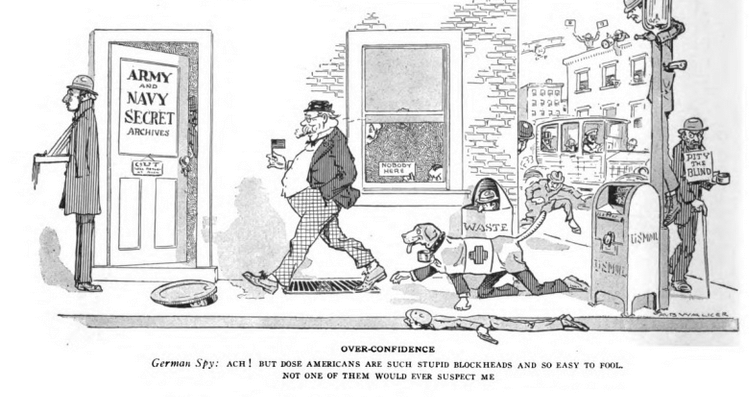
Anxiety over German spies was high.

Life, March 14, 1918

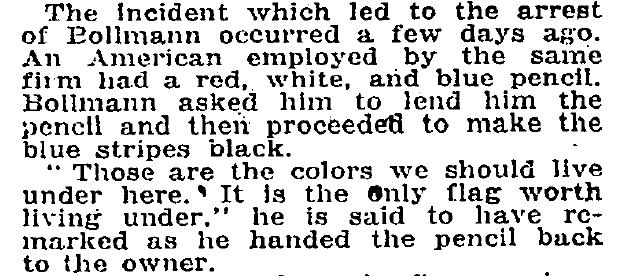
A few real ones, like 23-year-old spy ring leader Despina Storch, were rounded up, along with a lot of people who had committed “crimes” like painting pencils a treasonous color.

New York Times, July 6, 1918

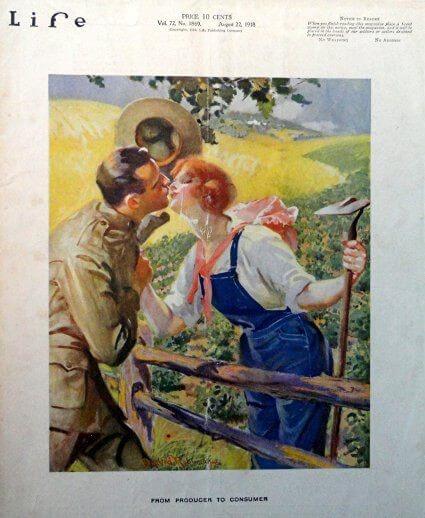
Women took over men’s work,

Life magazine, August 22, 1918

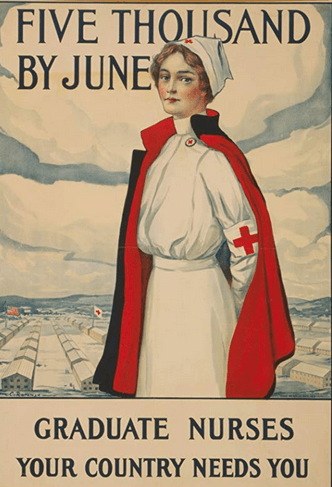
although they were reminded not to get too attached to their “war jobs,”

Ladies’ Home Journal, June 1918

and thousands of American women served in Europe in military or civilian roles, most of them as nurses.

Carl Rakeman, 1918

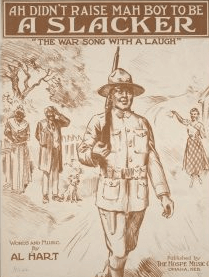
Americans took the war with deadly seriousness. “Slackers,” as draft evaders were known, were widely condemned,

Sheet music, 1917 (Library of Congress)

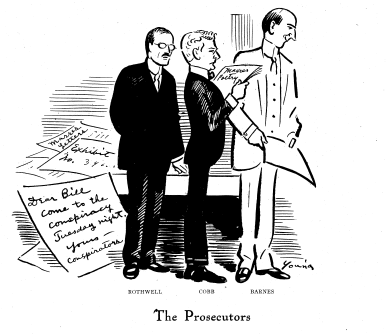
and pacifists were vilified. The staff of The Masses, a socialist magazine that was shut down in 1917, went on trial twice in 1918, charged under the Espionage Act with conspiracy to obstruct military recruitment. Both times, the jury was unable to come to a unanimous decision and a mistrial was declared. Art Young, one of the defendants, sketched the proceedings for The Masses’ successor, The Liberator.

Art Young, The Liberator, June 1918

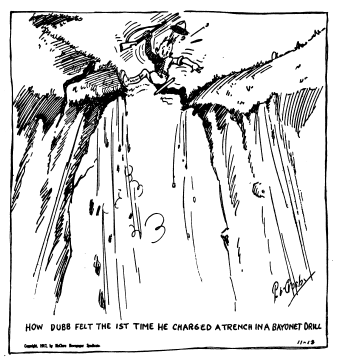
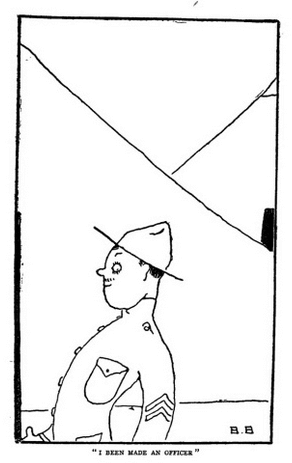
But just because war is a serious business doesn’t mean there’s no room for humor. Lt. Percy Crosby’s Private Dubb was a big hit,

That Rookie from the 13th Squad, Percy L. Crosby, 1918

as were Edward Streeter’s***** “Dere Mable” letters, supposedly written by semi-literate soldier Bill to his girlfriend back home.

Illustration from “Dere Mable” by G. William Breck, 1918

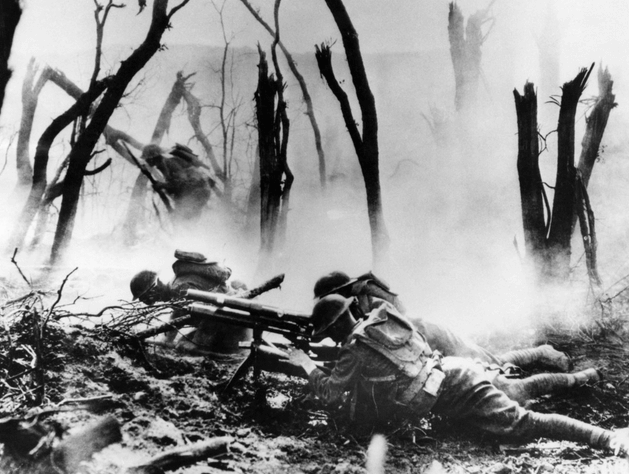
Once deployed, Dubb, Bill, and their compatriots rose to the task. American casualties mounted sharply as the Allied troops fought back the last German offensive in the Battles of Meuse-Argonne, which began on September 26 and lasted until the armistice. This remains the deadliest battle in United States history–26,277 American lives lost.

American soldiers, Argonne forest, September 26, 1918 (AP)

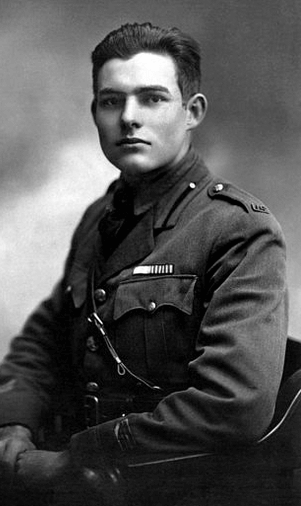
American participation in World War I didn’t last long enough to produce a literature equivalent to that of the British war poets, whose ranks included Rupert Brooke (who died in 1915), Wilfred Owen (who was killed a week before the war’s end), and Sigfried Sassoon (who survived). American veterans like Ernest Hemingway (who was seriously wounded while serving in Italy as an ambulance driver) and F. Scott Fitzgerald (who was commissioned but never made it overseas) would make their mark writing about the scars the war left on their generation.

Ernest Hemingway, Milan, 1918

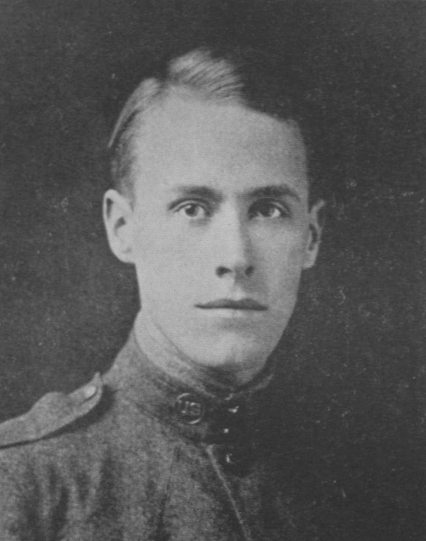
Some American voices of the war stay with us, though. American Alan Seeger, who fought with the French Foreign Legion and was killed in 1916, left behind his poem “I Have A Rendez-Vous with Death.”

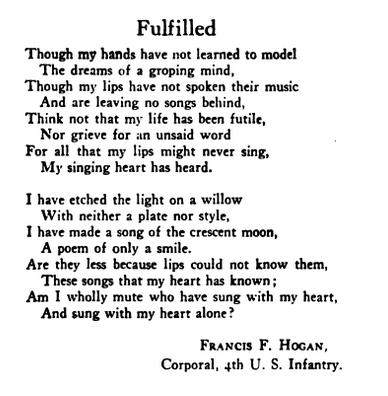
Francis Hogan (behindtheirlines.com)

I’ll end with a poem that is not as well-known but that has stayed with me since I read it, toward the beginning of this project, in the February 9, 1918, issue of The New Republic.

Corporal Hogan was killed on October 18, 1918, 24 days before the Armistice. He was 21 years old.

*An actual job title.

**Or all the women who have actually fought in battles, like Maria Bochkareva and the Battalion of Death.

***This is as good a place as any to point out that the America-centrism of this blog is not just because I’m American, it’s also because of differences in copyright laws that make American publications from 1918 more available than publications from other countries.

****1918 being an era when fuel administrators and relief coordinators and food safety scientists were celebrities.

*****Streeter later wrote the novel Father of the Bride.

Did College Shrink Your Breasts? A Quiz

I’m angry, people!

Over the past year, I’ve traded the horrible news of today for the even more horrible news of 1918, when the world was disease-ravaged and at war, suffragists were greeted with condescending amusement, there was a “Darkies” section in the leading humor magazine, and progressives debated about who should be allowed to breed.

I hate what was happening then, and I hate what’s happening now. But, unlike a lot of my friends, I haven’t fallen into a permanent state of anger and/or depression. It’s a question of temperament, I guess. At heart, I’m a sunny soul.

But then I read an article in the Educational Review called “Sex in Mind and Education,” and I was livid.

I was expecting an entertaining romp through the world of social hygiene, as sex education was known back then.* Instead, I got an article—two, actually, spread over the May and September 1918 issues—about why women are unfit for higher education.

An issue for another day, I thought, since I’ve been trying to focus more on World War I with the centenary of the armistice approaching. But then I remembered the suffragists being asked to put aside their demands because there was a war on. And, skipping back to the present, this West Virginia constitutional referendum I just voted on, which, whatever your views on abortion, is legally meaningless as long as Roe v. Wade is in place and also maybe not the most urgent issue in a state that’s awash in opioids. (UPDATE 11/7/2018: The amendment was approved, 52%-48%.)

West Virginia ballot - referendum on no constitutional right to abortion.

German imperial ambition is, I think we can say with confidence, safely in check. The war on women, not so much. So I retrieved “Sex in Mind and Education” from the “later” pile.

The article, written by British psychiatrist Henry Maudsley, turns out to date back to an 1874 issue of the Fortnightly Review. The Educational Review justifies its republication by noting that it was reprinted and given wide circulation in Mr. C.W. Bardeen’s Series of School Room Classics. Which happened in 1884, so I’m not sure why it was considered timely in 1918. Maybe because Maudsley had just died? Maybe to keep women in their place with suffrage on the rise? Maybe because the journal’s editor was Columbia University’s horrible, reactionary president Nicholas Butler? Maybe all of these things? Who knows?

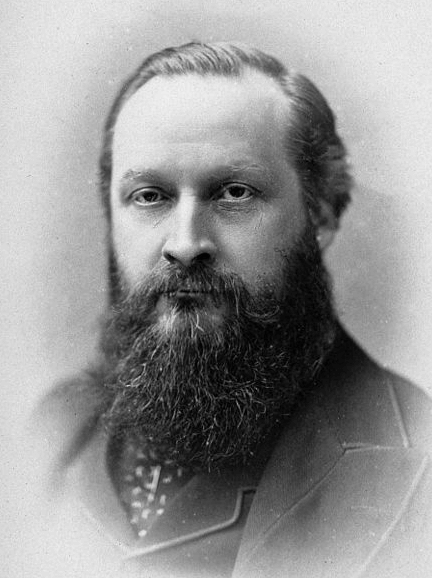
Photograph of Henry Maudsley, 1881.

Henry Maudsley, 1881

Maudsley’s bottom line: women shouldn’t go to college with men, because menstruation.

Of course, there’s more to his argument than that. He has a LOT of reasons why women shouldn’t go to college with men. But, for someone so esteemed that Britain’s largest mental health training institution bears his name to this day**, he’s not exactly rigorous about evidence. He’s all “it is quite evident that” this and “when we thus look the matter honestly in the face” that.

So I decided to subject his arguments to evidence-based testing by pulling out his assertions so that we college-educated women can compare them to our own experience. And turned them into a quiz, because what woman doesn’t love a quiz? (No need to feel left out, men—we need a control group, so you can take it too.)

Get out your pencils!

  1. If you have a delicate constitution, with little vitality to spare, did you break out into disease when you reached puberty?

YES                         NO                        N/A

  1. In your experience at university, could the difference between between male and female students accurately be described by the expression “for valor he” is formed and “for beauty she and sweet attractive grace”?***

YES                         NO                       N/A

  1. Have childbearing and raising been the most important offices of the best period of your life?

YES                         NO

  1. Did your laborious days of intellectual exercise and production cause injury to your functions as the conceiver, mother, and nurse of children?

YES                         NO

Photograph of women in Radcliffe physics class, 1912.

Radcliffe College physics class, 1912 (Radcliffe College archives)

  1. Has this intellectual exercise resulted in your children being puny, enfeebled, and sickly?

YES                         NO                         N/A

  1. If your household has a male primary caregiver, is he almost as much out of place in caring for the babies as he would be in attempting to suckle them?

YES                         NO                         N/A

  1. If your household has a male primary caregiver, has he abandoned the task in despair or disgust, and concluded it not to be worth while that mankind should continue on earth?

YES                         NO                         N/A

  1. If you attended a coeducational college, was it at a cost to your strength and health which has entailed life-long suffering, and even incapacitated you for the adequate performance of the natural functions of your sex?

YES                         NO                         N/A

  1. If you attended a coeducational college, do you feel that the stimulus of study had a more harmful effect on you than on your male classmates, not only because of your greater constitutional susceptibility, but also because women do not have the compensating balance of competition on the playing field?

YES                         NO                        N/A

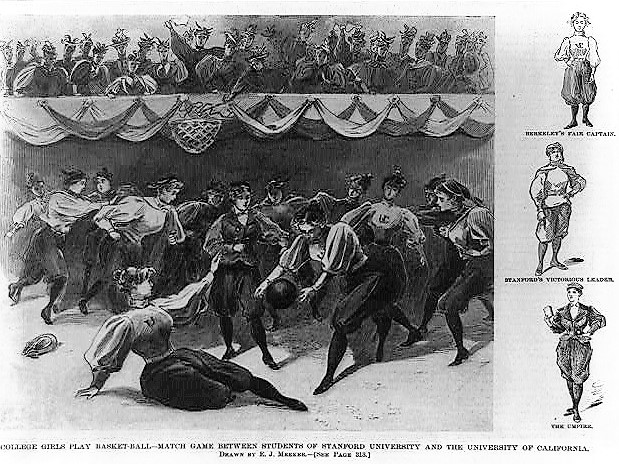
Drawing of women's basketball game, Stanford vs. University of California, 1896

Basketball game, Stanford vs. University of California, E.J. Meeker, 1896

  1. In your experience, has the prediction been borne out that, due an increase in women’s education, the wives who are to be the mothers in our republic [the United States—Maudsley’s quoting a Harvard professor now] must be drawn from transatlantic homes?

YES                         NO

  1. Has study during the periodical tides of your organization [i.e. your period] led to pallor, lassitude, debility, sleeplessness, headache, neuralgia, and then to worse ills?

YES                         NO

  1. As a result of your studies, have you become the victim of aches and pains, unable to go on with your work, and compelled to seek medical advice?

YES                         NO

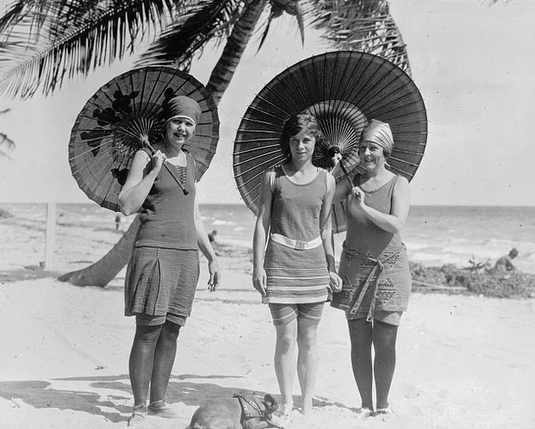
Photograph of three women on a beach holding parasols, 1915.

Women at the seaside, 1915

  1. If so, and if you were restored to health by rest from work, a holiday at the seaside, and suitable treatment, did you leave college a good scholar but a delicate and ailing woman, whose future life is one of more or less suffering? Did you fail to regain the vital energy which was recklessly sacrificed in the acquirement of learning?

YES                         NO                         N/A

  1. If so, and you subsequently married, were you unfit for the best discharge of maternal functions, and apt to suffer from a variety of troublesome and serious disorders in connection with them?

YES                         NO                         N/A

  1. Has the neglect of physical exercise, and the continuous application to study, left you lacking the instinct, desire, or capacity to nurse your offspring, forcing you to resort to a wet-nurse or feeding by hand?

YES                         NO                         N/A

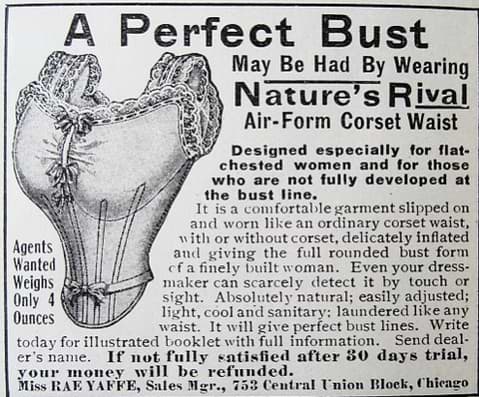
  1. If you have not nursed, has this caused the organs which minister to this function to waste and finally to become by disuse as rudimentary as they are in the male sex, forcing you to invoke the dressmaker’s aid in order to gain the appearance of them?

YES                         NO                         N/A

Advertisement for Nature's Rival bust enhancer, 1910

Delineator, 1910 (witness2fashion.wordpress.com)

  1. During the best years of your life, are/were you, for one-quarter of each month, more or less sick and unfit for hard work?

YES                         NO

  1. Have you turned into a monstrosity—something which having ceased to be a woman is not yet a man?

YES                         NO

Okay. Pencils down.

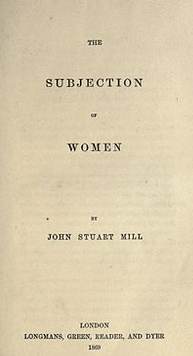
Title page, The Subjection of Women by John Stuart Mill

In the spirit of fairness, Dr. Maudsley quotes John Stuart Mill’s argument in The Subjection of Women, to wit:

  • What we call the nature of women is essentially an artificial thing.
  • It is the result of forced repression in some directions, unnatural stimulation in others.
  • Women’s character has been disguised by their subjugation by men.
  • If given equal opportunities, they would perform as well as men.

He says that

if these allegations contain no exaggeration, if they be strictly true, then is this article an entire mistake.

Is it??? Let’s score the quiz and see! Disregard the N/A’s, count up the yeses, and divide them by the total number of questions you answered.

It would be terrible for humankind if even a significant minority of Maudsley’s concerns turned out to be valid. So let’s give him the benefit of the doubt and say that if most women score over 25% we’d better rethink this this whole going to college with men business.

I threw out a bunch of questions because I don’t have kids and calculated my score: 9%. My one “Yes” answer was to #4, about my laborious days of intellectual exercise causing injury to my functions as the conceiver, mother, and nurse of children. Most college-education women have children, but the percentage is lower than among women without college, so I’ll give this one to Maudsley.

Photograph of Mary Grace McGeehan graduating from Harvard, with parents, 1983.

Me graduating from college with no apparent ill effects, 1983

Granted, one is a small sample size if we’re trying to be scientifically rigorous, but it’s one bigger than Maudsley’s. And I’m guessing that my score is typical. Maybe some of you moms consider childbearing and raising the most important offices of the best period of your lives. But maybe some of you dads do too, so here’s where the control group comes in.

So, unless I’m gravely mistaken, Maudsley is hoist with his own petard.

But he’s not giving up so easily. Even if John Stuart Mill turns out to be right, he says,

there is a right in might—the right of the strong to be strong. Men have the right to make the most of their powers, to develop them to the utmost, and to strive for, and if possible gain and hold, the position in which they shall have the freest play.

If women were treated equally, and used their political power to pass laws that men didn’t like, he asks,

can it be supposed that, as the world goes, there would not soon be a revolution in the state by men, which would end in taking all power from women and reducing them to a stern subjection? Legislation would not be of much value unless there were power behind to make it respected.

You see what’s happening here, people? Maudsley’s admitting that, if women get too equal, the men are going to have a revolution! Throw out all the laws! Rely on brute force!

We have to do something, women!****

Starting with this:

League of Women Voter's poster with caption VOTE, 1920.

League of Women Voters poster, 1920

*And which I can’t believe I’ve made it to November without writing about. On the list!

**Oh and he also gave them a lot of money.

***Hey Maudsley, you got the quote wrong! Here’s what Milton really said:

Not equal, as their sex not equal seemed;
For contemplation he and valor formed,
For SOFTNESS she, and sweet attractive grace.

****I realize that some men might be reading this, but if they managed to stomach all the menstruation talk they’re probably allies.