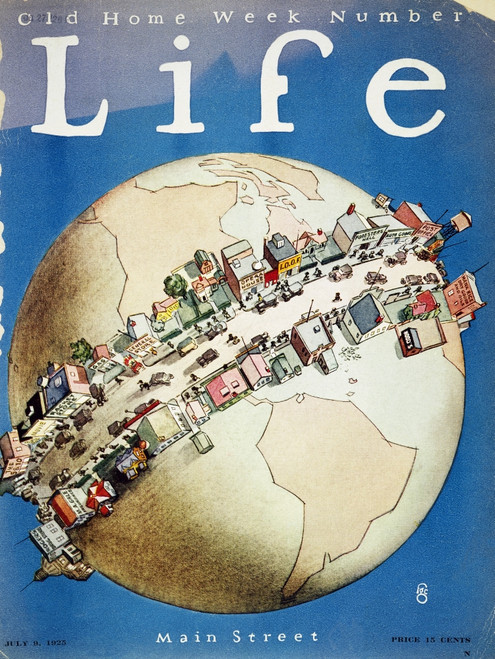
This year, a lot of Americans will be celebrating Independence Day in a minor key. I’m one of them. I’m spending our country’s anniversary in COVID isolation at Trinity College, Dublin, a set of circumstances not conducive to riotous celebration even at the best of times. I felt like I should mark the day somehow, though, so I’m sharing some magazine covers from July 1925 that show some of the many ways our country’s unquenchable spirit can be celebrated:
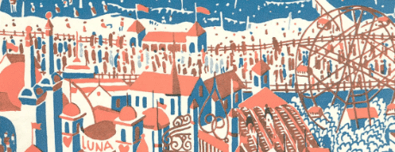
spending the day at Coney Island,
Ilonka Karasz, July 4, 1925
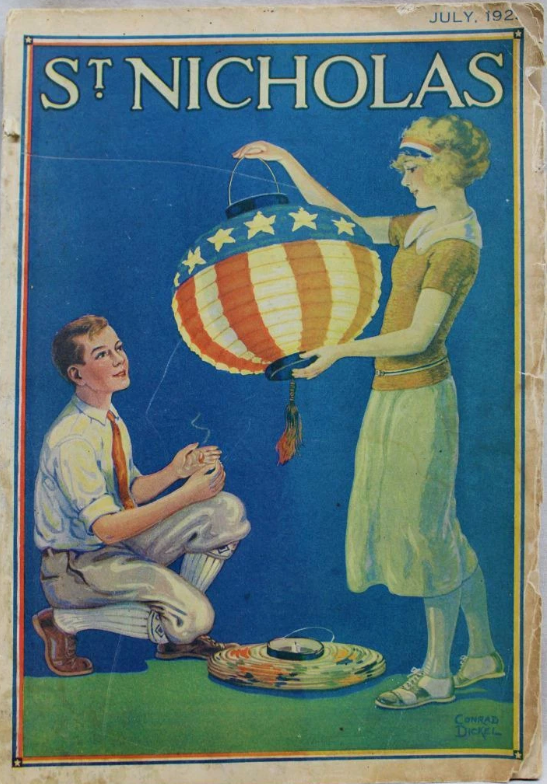
lighting a festive lantern,
Conrad Dickel, July 1925
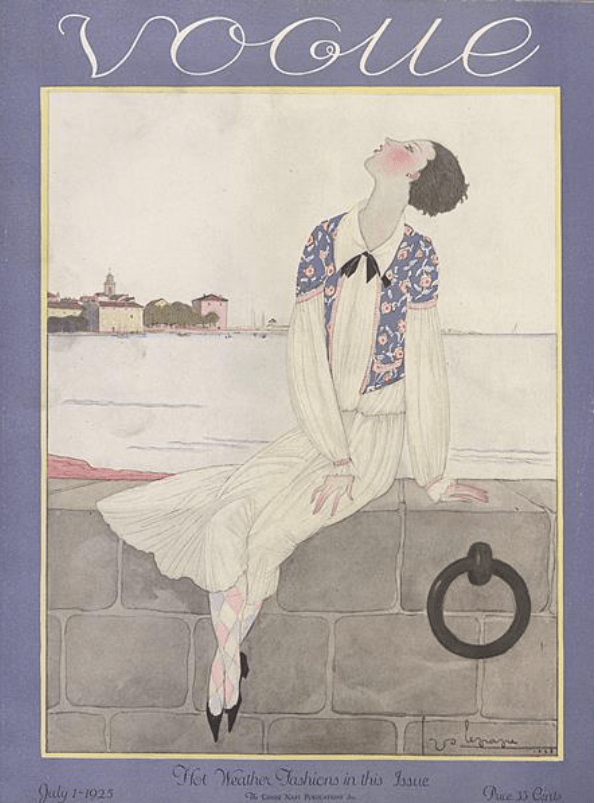
breathing in the sea air,
Georges Lepape, July 1, 1925
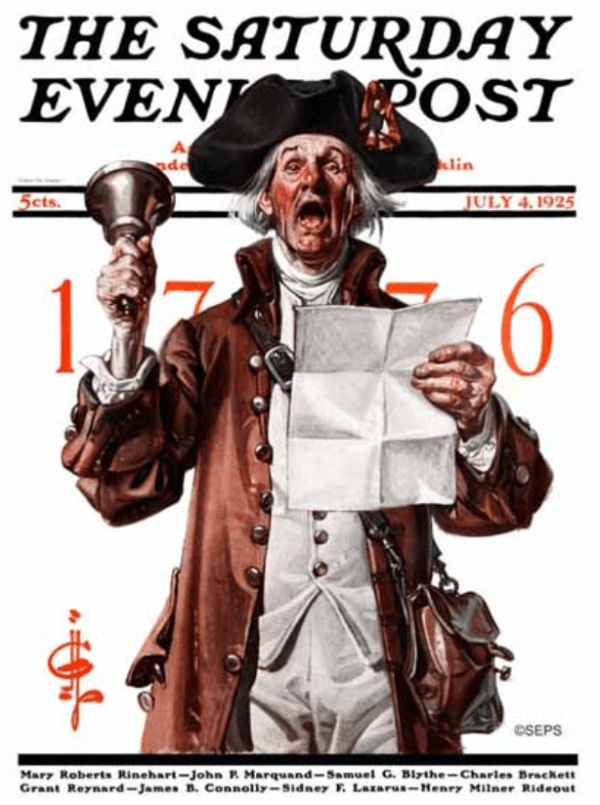
ringing the bell of freedom,
J.C. Leyendecker, July 4, 1925
and celebrating the diversity that always has been, and always will be, our country’s greatest strength.
Belated happy New Year, everyone, and welcome to the (can it be?) eighth year of My Life 100 Years Ago.*
J.C. Leyendecker, January 3, 1925
This year’s J.C. Leyendecker New Year’s baby apparently just registered his new car and immediately has to repair it, which I gather is par for the course for ca. 1925 vehicles.
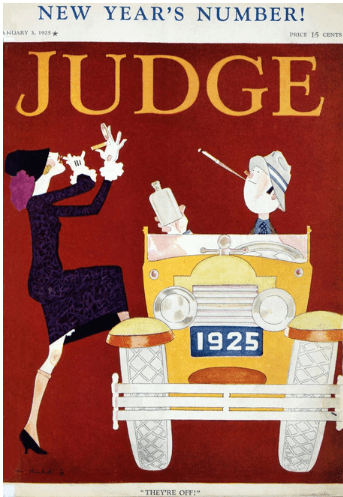
John Held Jr., January 5, 1925
Cars can be fun, though, as you can see from the most Roaring Twenties magazine cover ever. You can cavort and smoke and…well, let’s just say don’t base your driving behavior on hundred-year-old magazine covers.
Cars were also celebrated on the covers of Vogue**
Georges Lepape, January 1, 1925
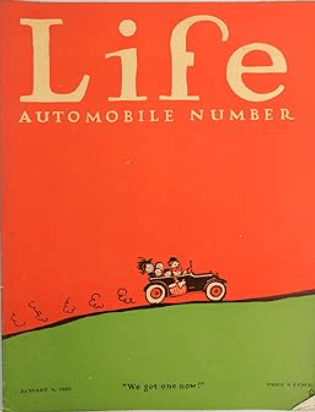
and Life (“We got one now,” the family exults in the caption),
F.G. Cooper, January 8, 1925
while, over at Motor, ironically, cars are a mere afterthought.
Coles Phillips, January 1925
On to the top posts of 1924!
Which is not a very competitive category because my productivity this year was less than stellar, with a mere three posts. Here they are:
Highlights of 1924 include When We Were Very Young, A.A. Milne’s first collection of Christopher Robin poems; a fun book of poems about a day in the life of two Parisian kids; and, for older kids, two Agatha Christies and The Cross Word Puzzle Book, the first-ever crossword collection, which, infuriatingly, I can’t download from South Africa.
Longing for sun in rainy, wintery Cape Town, I took refuge in a rainbow of summer 1924 magazine covers. (Now, in sunny, summery Cape Town, I’m wistfully scrolling Facebook for my DC friends’ photos of the recent snowstorm.)
In spite of my slack production, this blog had by far its most views ever in 2024, proving, depending on your world view, either that 1) sticking to something, however intermittently, pays off, or 2) life is unfair.*** The most popular posts this year overall were from past years. (The #1 new post was only #15 overall.) To make this a real Top 10, here are seven of them.
Parker’s “Any Porch,” her first published poem, is one of my favorite a hundred years ago things ever. It’s been a while—I’ll have to catch up with her in 1925.
For this Thanksgiving post, I was going to write about ten women I was thankful for, but Neysa McMein (who was Dorothy Parker’s best friend) ended up being so fascinating that I never would have gotten dinner on the table if I hadn’t cut back.
Langston Hughes wrote one of his greatest poems, “The Negro Speaks of Rivers,” as a teenager—and also wrote about fairies and Mexican children’s games.
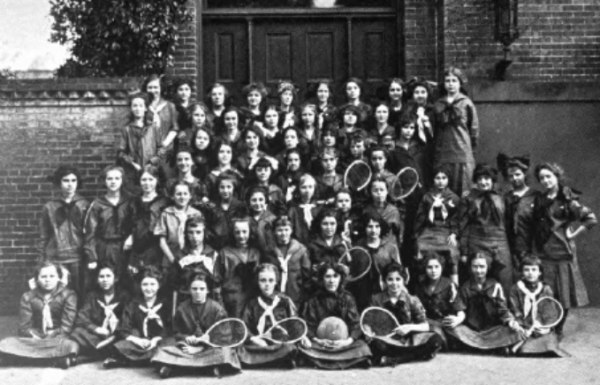
This is part one in my two-part quest to earn a Girl Scout badge from 100 years ago. Sadly, Part 2, where I actually succeeded in earning a couple, is less popular.
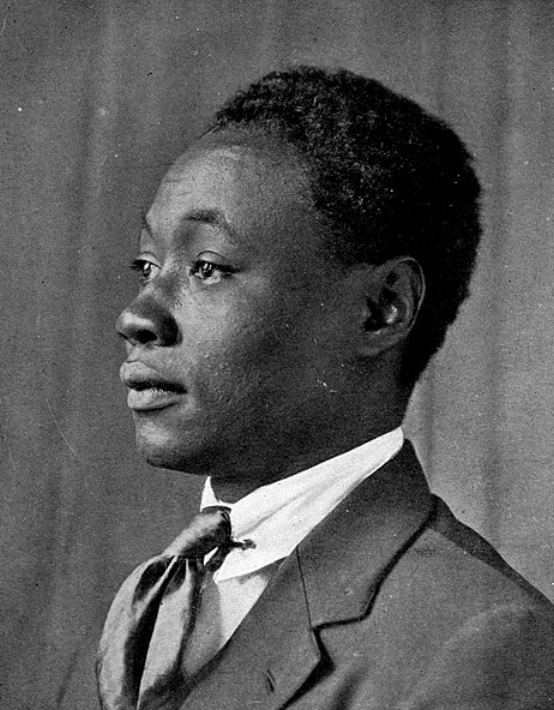
In last year’s most popular new post, I wrote about McKay’s poem “If We Must Die” and the confusion over whether it was entered into the Congressional Record, and if so, by whom.
It took a while for the twenties to start roaring, but halfway through the decade flappers are everywhere, Art Deco has come into its own, and the Jazz Age is well underway. I’m looking forward to what 1925 will bring.
*If you want to get technical, for the first two years it was My Life in 1918.
**The first few websites I saw attributed this cover to Sonia Delaunay, which surprised me since as far as I knew she was an artist, not an illustrator. The cover’s definitely by Lepape—you can see his signature in the top left hand corner—but according to this website it’s a portrayal of Delaunay’s “simultaneous” technique.
***Or, I guess, 3) search engine algorithms are weird.
I don’t know if there’s some symbolism behind this year’s J.C. Leyendecker New Year’s baby that I’m missing, or if it’s just a baby knight riding a mechanical horse and using a feather as a lance. Any insights would be welcomed.
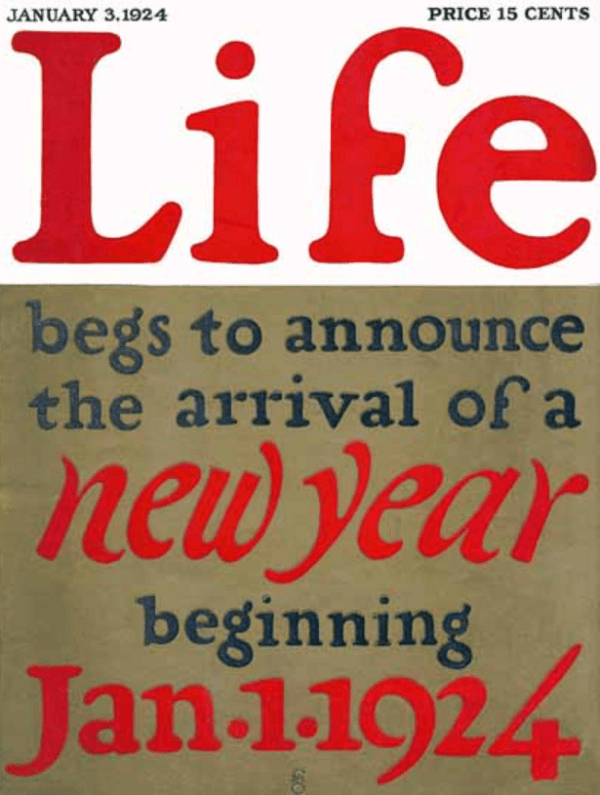
Elsewhere, Life waxes whimsical,
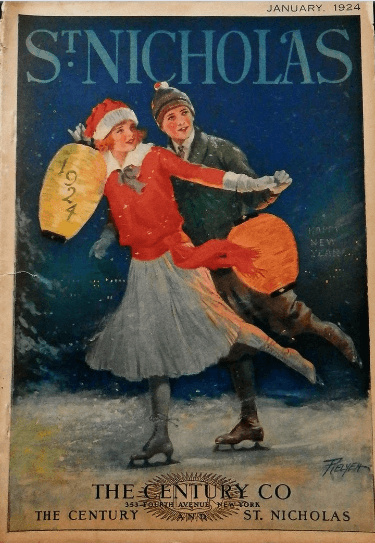
a skating duo rings in the new year at St. Nicholas,*
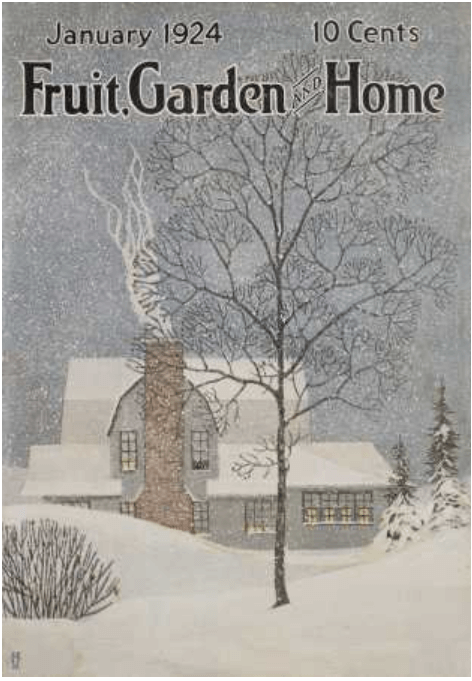
Fruit, Garden and Home (soon to be retitled, much more sensibly, Better Homes and Gardens) has a snowy scene,
and Motor magazine features the most scantily dressed Coles Phillips woman I’ve ever seen.
The Top Posts
As was the case last year, I didn’t have enough posts to fill out a top 10 list, but I did slightly better (8) than last year (7). Something must be going on with the Google algorithm, because 1) despite my lackadaisical posting schedule, my total views have shot up to unprecedented levels in recent months, and 2) almost all of the most popular posts, other than the home page (which makes up the vast majority of views), are from previous years. Pre-2023 posts don’t qualify for the Top 10, but I’ll mention the most popular ones after the countdown.
In researching my fifth annual children’s book shopping guide, I found a moral panic among magazine writers about children reading inappropriate books (Dare-Devil Dick! Seven Buckets of Blood!) and a couple of treasures: a beautifully illustrated alphabet book and an excellent poetry anthology.
In May, I announced that my friend Deborah Kalb and I were starting a podcast, Rereading Our Childhood, where, just like it sounds, we reread books we enjoyed as children. Six months in, we’ve published sixteen episodes, had a great time with our rereads, and, as I wrote this week in the top 10 countdown on the podcast blog, learned that producing a podcast is way harder than writing a blog. If you’re interested in following along, you can find us at rereadingourchildhood.buzzsprout.com.
I had a lot of fun doing this countdown of the best magazine covers of winter 1923, and discovering some not-so-artistic but still fascinating ones.***
This post was by far the most popular new one of the year. I wrote about the critical reception to McKay’s poetry and about the confusion over whether “If We Must Die” was entered into the Congressional Record, and if so, by whom. This was the second year in a row, after last year’s post on Langston Hughes, Teenaged Poet, that a post about an African American poet rose to the top.
On January 1, 2018, the day that I started this project and stopped reading anything from less than 100 years ago, I only expected it to last a year.**** (When I looked at my e-mail inbox this morning and found blog posts from Frank Hudson (talking about how Robert Frost is misunderstood) and witness2fashion (sharing some 1898 Delineator illustrations of women riding bicycles in very cumbersome clothing), I was reminded on the seventh New Year’s Day of this project of the wonderful community I’ve found along the way. I look forward to what 1924 will bring.*****
*Speaking of which, I went ice skating in Cape Town a few days ago. If you’re a skater of average ability and want to feel like Michelle Kwan, go to a skating rink in South Africa.
**I skipped 2022, apparently.
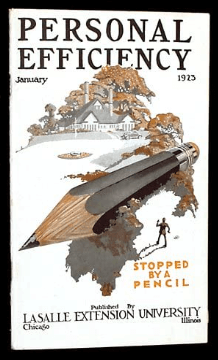
***I still love the giant pencil.
****For any new readers who may be concerned about my sanity and my status as a well-informed citizen, the part of the project where I ONLY (with a few exceptions) read from 100 years ago did only last a year.
*****A housekeeping issue: For those of you who follow me on Twitter, I’ve stopped posting there. You can find me on BlueSky at @marygracemcgeehan.bsky.social.
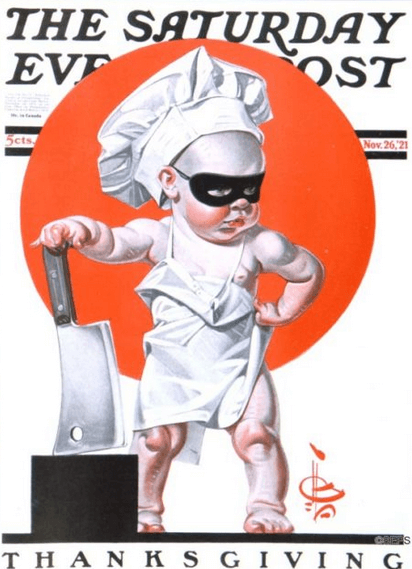
Happy Thanksgiving, everyone! Or, to be more precise, happy day after Thanksgiving. As I was cooking yesterday, I was mildly stressing out about whether I would have time to post this on the actual day. Then it occurred to me that it was highly unlikely that anyone would stop in the middle of cooking, eating, watching football, or whatever and say to their loved ones, “I have to check to see if there are any late-breaking blog posts.”
J.C. Leyendecker is best known for his New Year’s babies, but his Thanksgiving covers were also a regular feature at the Saturday Evening Post. This one is titled “Trading for a Turkey.” Thanksgiving is a more fraught holiday than New Year’s, though, and, even though the story about the Dutch buying the island of Manhattan from the Indians for $24 worth of beads turns out not to be true, this reminder of it still made me uncomfortable.
J.C. Leyendecker, December 1, 1923
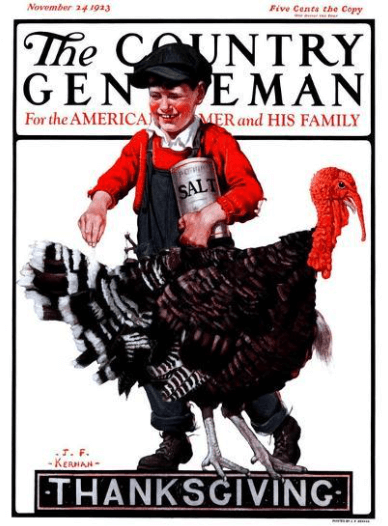
Speaking of the New Year’s babies, this J.F. Kernan Country Gentleman cover recalls Leyendecker’s 1922 cover, also featuring a bird’s tail being salted.
J.F. Kernan, November 14, 1923J.C. Leyendecker, December 31, 1921
For those of you who haven’t been following along, salting a bird’s tail is supposed to render it temporarily incapable of flying. So the New Year’s baby is trying to make sure the dove of peace doesn’t fly away. The Country Gentleman boy is presumably, more prosaically, trying to get the bird to stay still so he can eat it for Thanksgiving dinner. Or maybe he’s just pre-salting it.
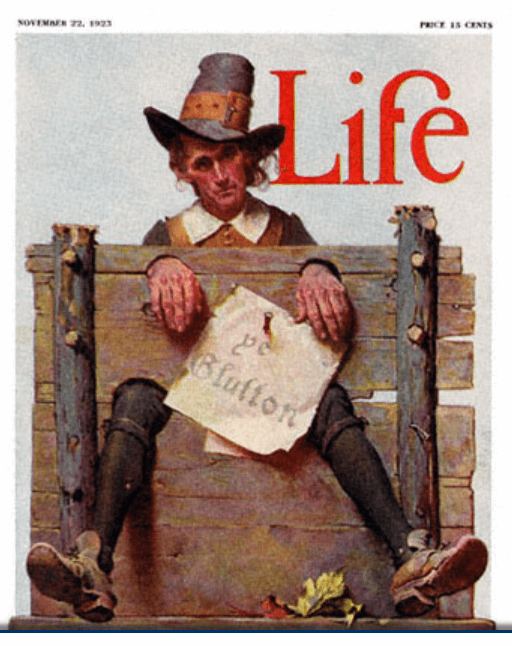
With Leyendecker doing the honors at the Saturday Evening Post, Norman Rockwell was over at Life depicting a svelte Pilgrim in the stocks for gluttony.
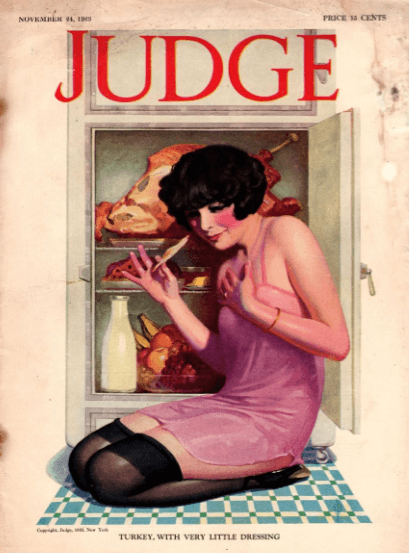
Rival humor magazine Life took a more risqué approach to the holiday with an Enoch Bolles cover titled “Turkey with Very Little Dressing.”*
Enoch Bolles, November 24, 1923
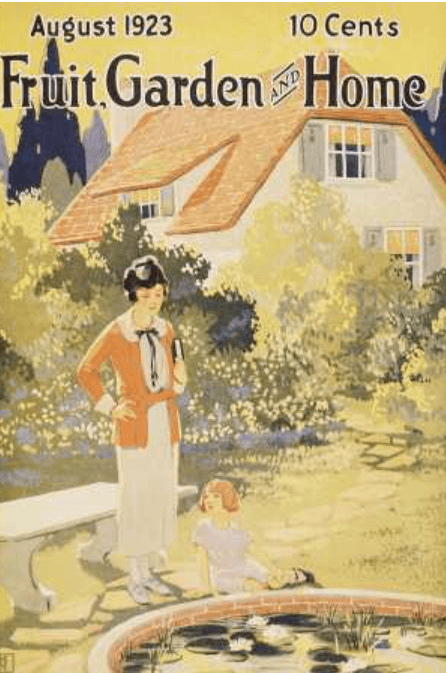
That was all I could find as far as actual Thanksgiving covers go, but this Fruit, Garden and Home cover has a nice autumn feel.**
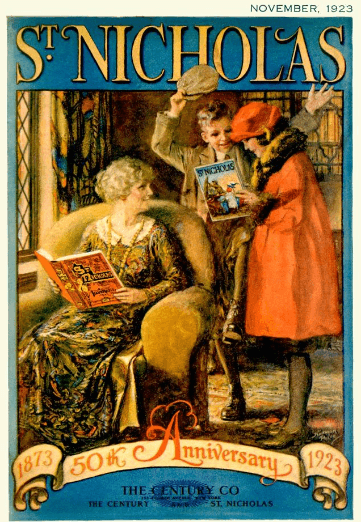
And last but not least, happy 50th anniversary to St. Nicholas magazine! “Is there any doubt that in the thoughts of thousands and thousands, old and young, who have read and to-day are reading its pages, ST. NICHOLAS will be numbered among the blessings for which they are grateful on Thanksgiving day?” the magazine asks, not stopping to wait for an answer.***
As for me, I’ll take a moment to give thanks for the wonderful magazines of 1923–yes, including you, St. Nicholas!
*When I was working on the post on summer 1923 magazine covers, I went down a research rabbit hole about Enoch Bolles (whose Judge cover I didn’t end up using) and learned that we were once neighbors of sorts—he was a long-term patient at a psychiatric hospital a few miles away from where my family lived in New Jersey in the 1960s.
**Again for those of you who haven’t been following along, this excellent title was changed to Better Homes and Gardens in 1924.
***Speaking of rabbit holes, I tried to figure out the vintage of the magazine (presumably from her own childhood) that the woman is reading, and therefore whether she is Mom or Grandma, but I couldn’t find any covers that resembled this one.
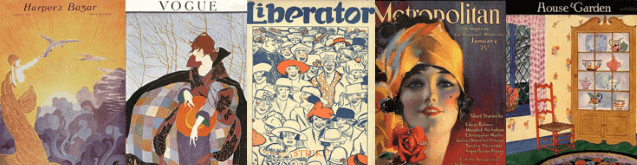
Belated happy summer, everyone! I’ve been so busy working on Rereading Our Childhood, the podcast that my friend Deborah Kalb and I launched back in May, that I’ve been woefully neglecting the world of a hundred years ago. But I’ve missed it. Summer is peak nostalgia season, so this feeling intensified after I left an especially cold and rainy Cape Town winter for summer in California, Colorado, and, now, Washington, D.C. I missed the trips to the beach of years past,
but as far as artistry went I was underwhelmed. I worried, as I occasionally have, that magazine covers had peaked sometime in the 1910s. My fears were unfounded, though—the summer 1923 covers revealed summer, and magazine artistry, in all their colorful glory.
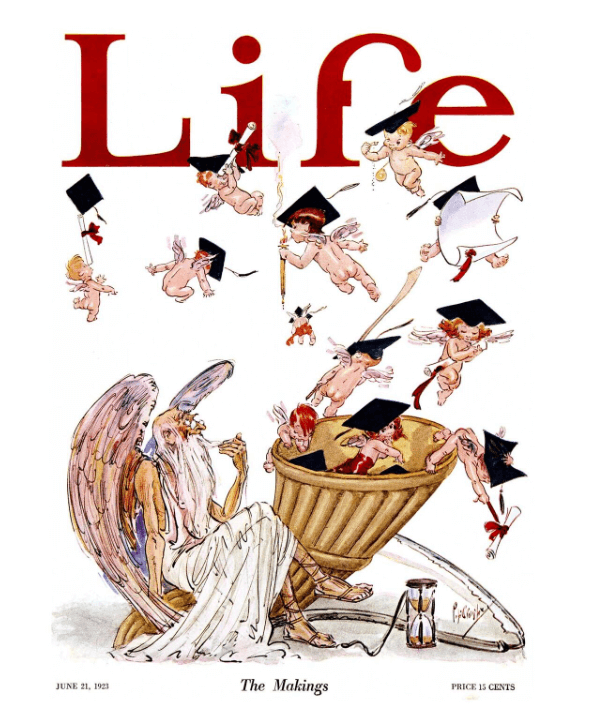
Summer kicked off in June with a “school’s out” celebration
Norman Rockwell
and graduates taking wing.
Percy Crosby
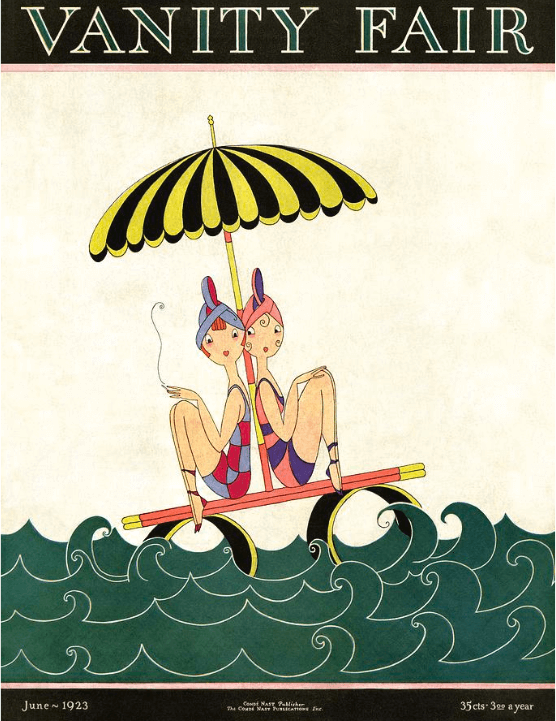
There were dips in the sea
Anna Harriet Fish
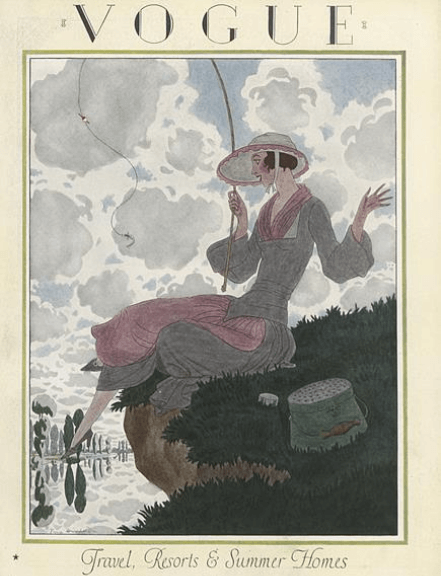
and fishing at the lake
Pierre Brissaud
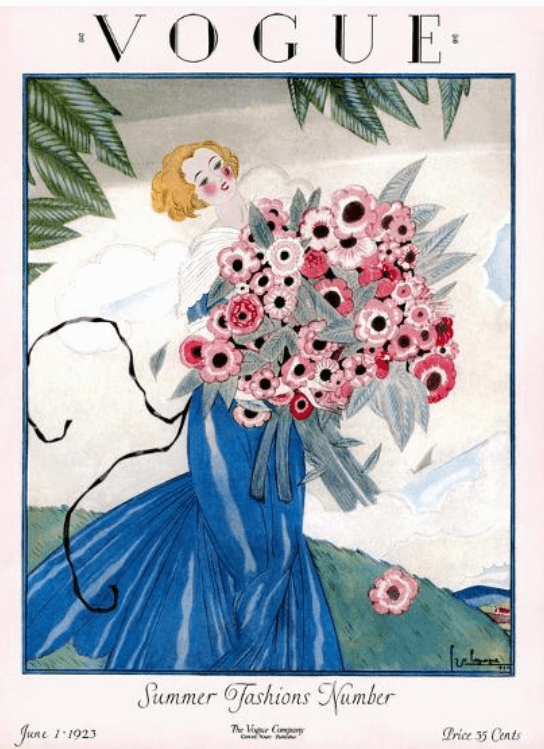
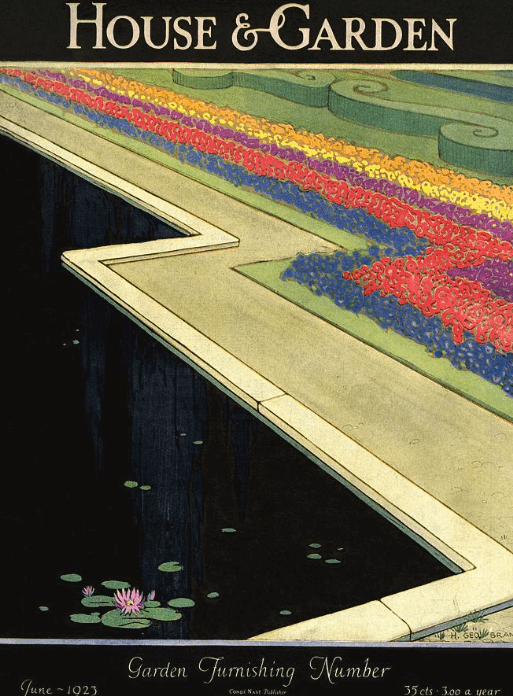
and flowers galore.
Georges LepapeGeorge Brandt
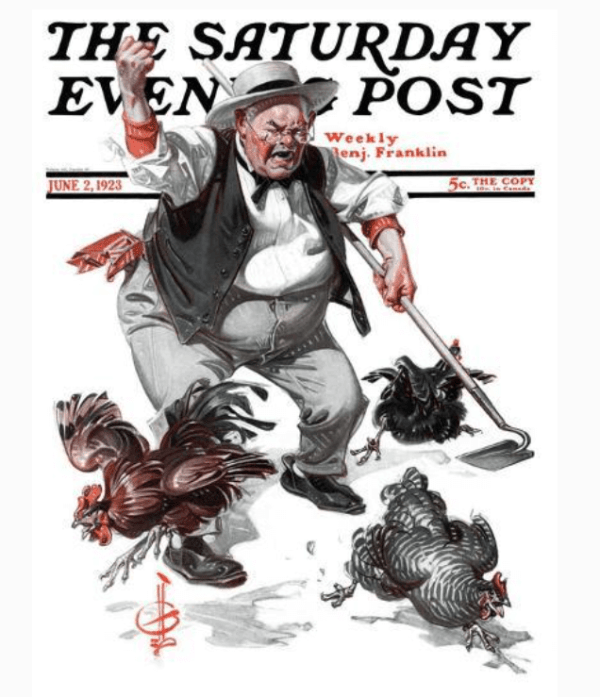
Also, chickens.
J.C. LeyendeckerFrank Walts
July
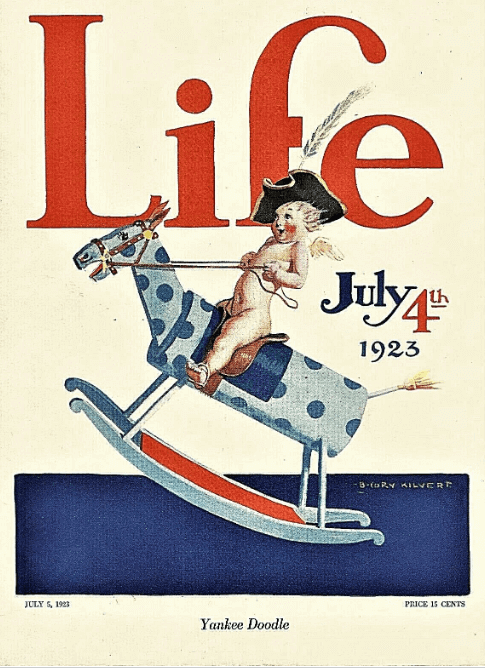
July started off with a celebration of the Glorious Fourth,
B. Cory Kilvert
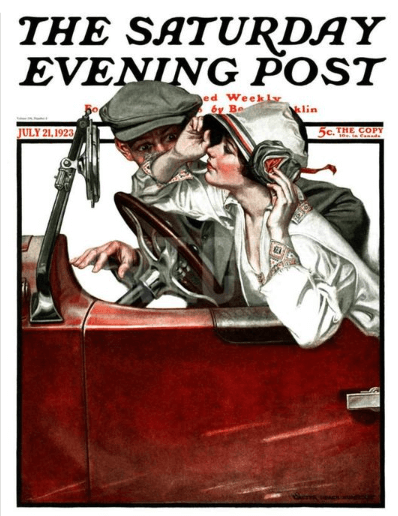
and then we got in the car
Ruth EastmanWalter Beach Humphrey
and headed off to the beach
George Wolfe PlankRobert Patterson
and then to the countryside.
Frank Walts Bradley Walker Tomlin
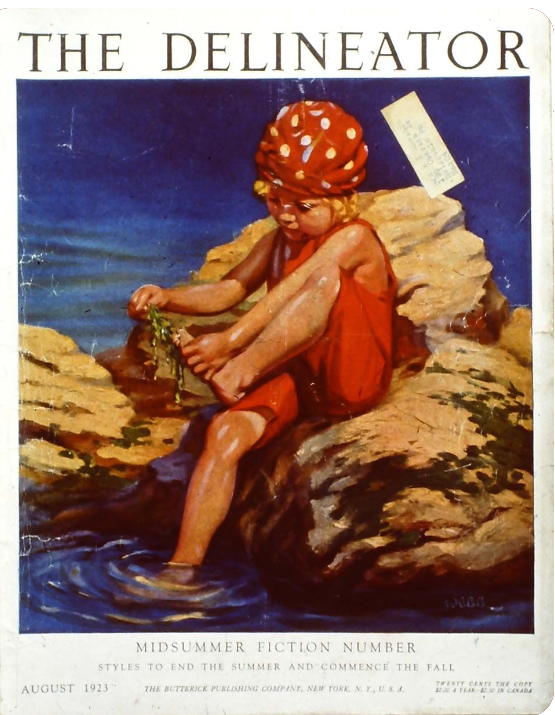
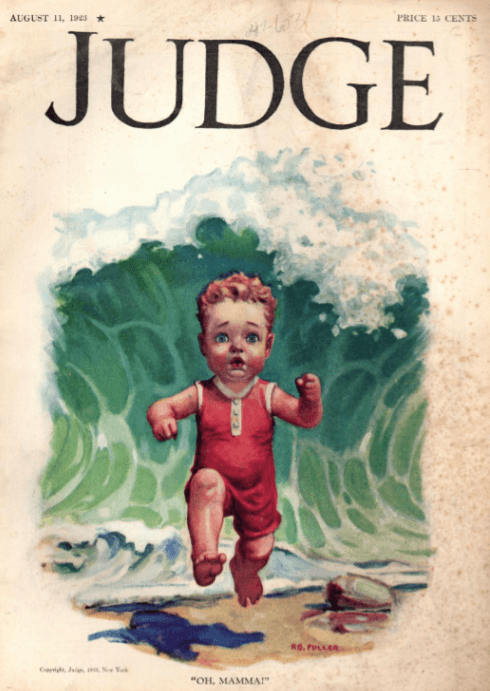
In August, we’ve been savoring the last few weeks of the season—spending time with the kids,
Thomas WebbR.B. FullerJ.C. Leyendecker
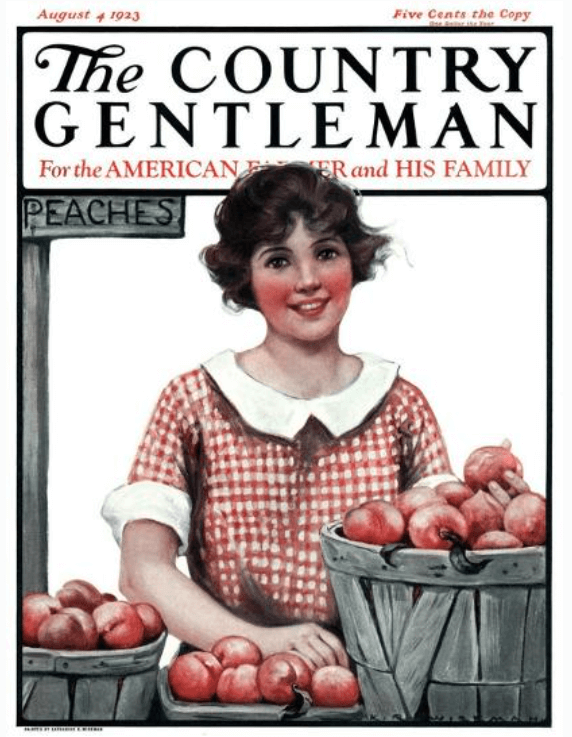
enjoying the last peaches of the season,
Katherine R. Wireman
and wishing that summer would stay with us for just a few more weeks.
Happy New Year, everyone! I’m full of New Year’s resolutions, including to do enough posts this year to actually do a Top 10 a year from now.*
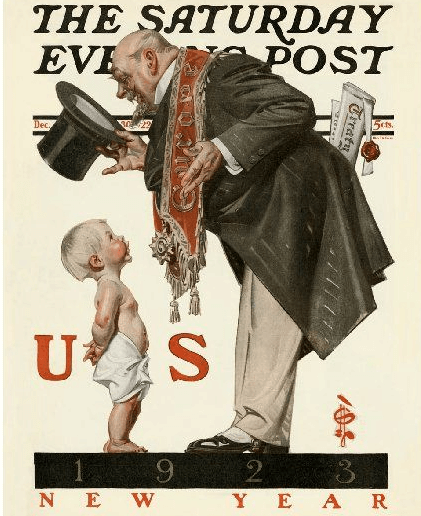
Halfway through his Saturday Evening Post New Year’s baby cover run, J.C. Leyendecker weighs in with a cover that left me baffled. A prosperous gentleman with a treaty in his pocket is conversing with the baby. But the Treaty of Versailles was signed in 1919 and went into effect in 1920, so what treaty is this? A Google search revealed that the Treaty of Lausanne, which cleaned up some remaining Turkey-related bits and pieces from World War I, was signed in 1923. But the United States wasn’t a signatory, so why the U and S on either side of the baby? I have no idea.** The baby, on the other hand, seems totally up to speed.
J.C. Leyendecker
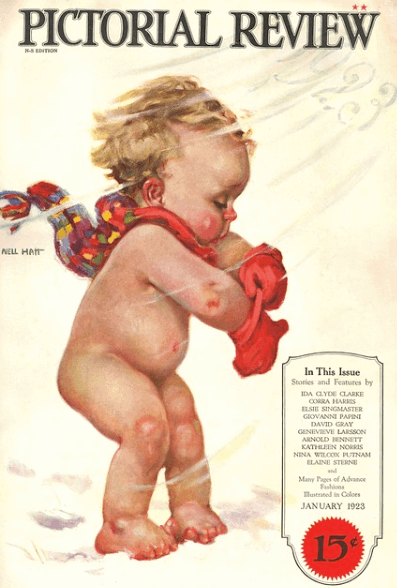
Meanwhile, they’re ringing in the new year at Pictorial Review
Nell Hatt
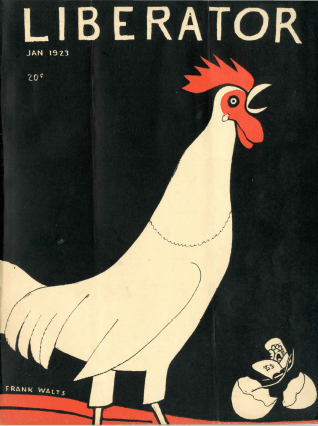
and Liberator in ways that you don’t have to have a Ph.D. in history to understand.
Frank Walts
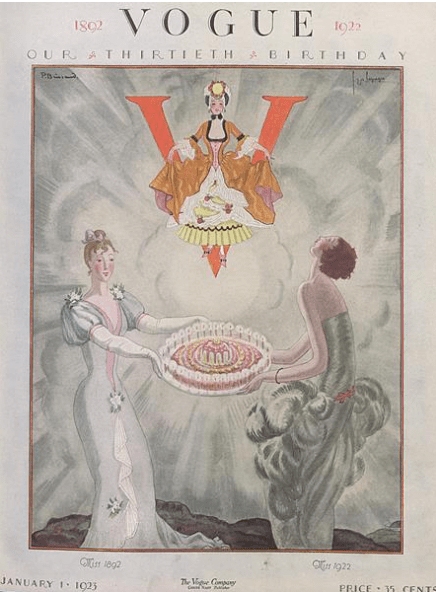
Vogue is celebrating its 30th anniversary, with Miss 1892 and Miss 1922 holding the cake.
Pierre Brissaud
The Top Seven
Now on to the Top Seven! As was the case last year, they’re pretty much in chronological order, with the last post in the last spot, etc., except that the Top 10 Posts of 1921, which was the first post chronologically, politely steps back to the sixth position to make way for more substantive fare.
As I do every year, I took a look at the latest crop of children’s books. I found a few that are now regarded as classics, some more deservedly so than others, along with some intriguing lesser-known books like one illustrated by a teenaged American Indian artist and one illustrated by Freud’s gender-nonconfirming niece.
A roundup of magazine ads took the top spot last year, with one of my favorite posts ever, a profile of illustrator Rita Senger featuring an interview with her granddaughter, in second place.
I scaled my ambition way back from my previous quest to earn all the badges from the 1916 Girl Scout book and set my sights on just one badge this time—Pathfinder, where you learn all about your community, Washington, D.C. in my case. But even that turned out to be an ambitious goal, so I focused on one requirement. Then I went to Belgium for six weeks, then back to D.C., then to Cape Town, where I am now. I’ll wrap this up with some long-distance pathfinding soon.
Reading a bunch of children’s books for a project I look forward to telling you about soon inspired me to take a magical journey to the advertising pages of the June 1922 Ladies’ Home Journal.
I loved loved loved writing this post about a 1920 book about Jane Austen by eccentric professor and critic Oscar Firkins. Firkins on Mansfield Park: “We feel that Edmund is overstarched, that Fanny is oversweetened, and that the two Crawfords are unfortunate in their resemblance to unstable chemical compounds.” For more, read the post, or better yet, Firkins’ book.
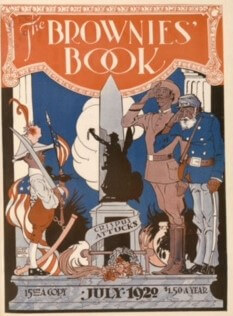
I was delighted to see this post, about Hughes’ first published writing in the children’s magazine The Brownies’ Book, in the top spot. His contributions included not just poems but also articles on Mexico, where he was living. “The Negro Speaks of Rivers,” which became his signature poem, was submitted to The Brownies’ Book but ended up in The Crisis instead.
The Best of the Rest
Meanwhile, the backlist was going strong, with the top eight pre-2022 posts outperforming the top 2022 post. (This isn’t a fair comparison, though, since views of current posts are credited to the home page.) Here are the top three. The Rita Senger post, mentioned above, was the fourth most read.
This post about the eventful and tragic life of poet George Sterling, who founded the artists’ colony in Carmel-by-the-Sea, bumped My Quest to Earn a 1919 Girl Scout Badge out of its traditional top perch. Fame has its price: it also attracted my first angry reader, who didn’t appreciate my flippant tone.
This post, which started out with my idle curiosity about what happened to a young woman who won one of those star of tomorrow contests in a movie magazine, turned into an obsession as I tracked down the fate of Helen Lee Worthing and her African-American husband, Eugene Nelson. I’ve never worked harder on a post, and I’m pleased that it’s still finding readers.
The Journey Continues
This month marks five years since I set off on my journey to 1918. It’s been more rewarding than I could have imagined. I’ve made a number of online friends, including my fellow members of a 1920s bestsellers book discussion group. Some of them became real-life friends when I joined them in Bristol, UK, over the summer for a roundtable at a conference of the British Association for Modernist Studies. I spoke about Edna Ferber and Dorothy Canfield Fisher (that’s me in the mask).
*Who knows how that resolution will go—not very well, if the timeliness of this post is any indication—but I can tell you about one that’s a rousing success so far: to lift 3-pound weights every day while listening to a Taylor Swift song. This is a hybrid of my failed weight-lifting resolution of last year and my aspiration to improve my credentials as a Taylor Swift fan. I’m catching up on the pre-Red era, starting with the first song on the first album. Best song so far: Our Song.
**Apparently there was a side agreement with the United States called the Chester Concession, but my interest in understanding this magazine cover does not extend to learning what this was all about. Besides, it was never ratified by the Senate.
New on the Book List: The Secret Adversary, by Agatha Christie
Happy 2022, everyone! I wish I had some memorable words of wisdom to share as we head into another uncertain year. But I don’t, so let’s look at some magazine covers, okay?
J.C. Leyendecker
As always, the year starts out with a J.C. Leyendecker New Year’s baby at the Saturday Evening Post. I had a bit of trouble with the semiotics of this one. I knew that the dove with an olive branch in its mouth represented peace, of course, and I knew that salting a bird’s tail symbolized something, but I forgot what. All I could think of was that the baby wanted to eat the dove of peace, but that didn’t make much sense.
Fortuitously, Googling “salting bird’s tail” took me to a Wikipedia article that features this very illustration and explains that sprinkling salt on a bird’s tail is supposed to render the bird temporarily unable to fly, ergo the baby is trying to prevent the dove of peace from flying away.
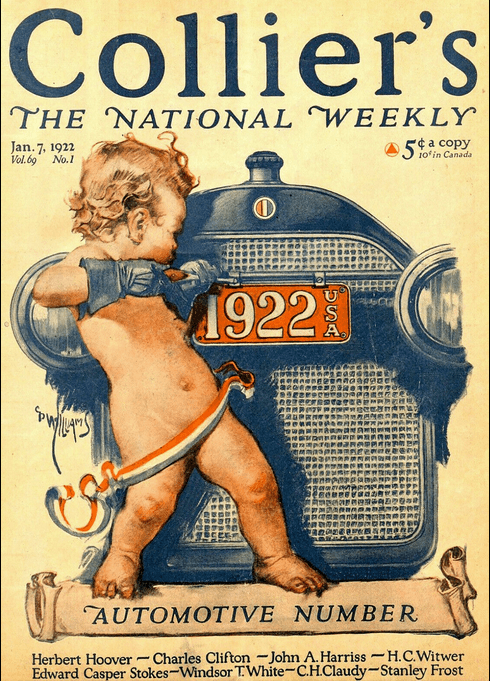
This was Leyendecker’s 17th New Year’s baby, the middle of his 36-year run, and a lot of other magazines had gotten onto the baby (or sometimes young child) bandwagon. There was a mechanic baby at Collier’s,
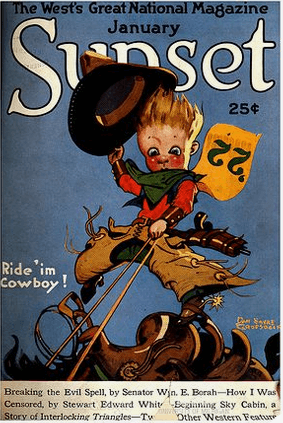
a cowboy tyke at Sunset,
Dan Sayre Groesbeck
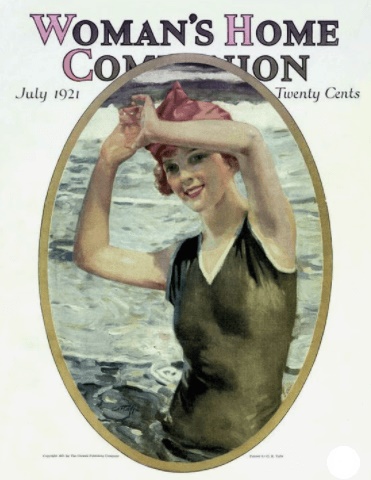
a toddler cutting off his or her golden locks at Woman’s Home Companion,
and, boringly, a just plain baby at Good Housekeeping.
Jessie Willcox Smith
Even high-art Vogue is getting into the spirit.
Georges Lepape
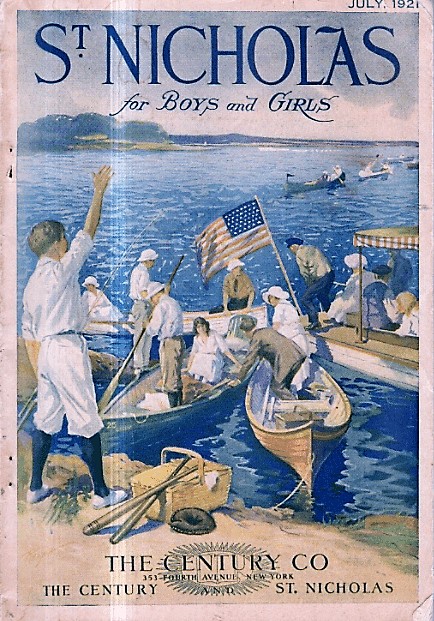
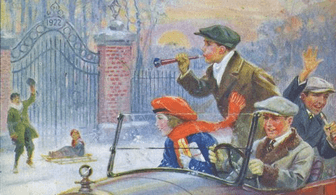
St. Nicholas rings in 1922 with a carload of revelers, which is irrelevant to the whole baby theme but I had to shoehorn it in so I could crop this cover for the featured image up top.
Now let’s turn back to 1921/2021 one last time to look at the top ten posts of the year.*
Or, more accurately, the ten posts. This year, everyone gets a participation trophy. As was the case last year, longevity was rewarded, with the posts’ number of views roughly in order of when they were published.
In which I read children’s books from 1921 so you don’t have to. Not that I imagine you were under much pressure. I did find some good ones, though, and one gem: Unsung Heroes by Elizabeth Ross Haynes, a series of biographic sketches of notable people of African descent.
For my Thanksgiving post during the first year of this project, I wrote about ten people from 1918 I’m thankful for. In 2019, I wrote about ten illustrators. In 2020, three women illustrators. Having painted myself into a corner with these increasingly narrow categories, I struck out into a new direction last year and gave thanks for real-life (well, virtual real-life) people I’ve met as a result of this project.
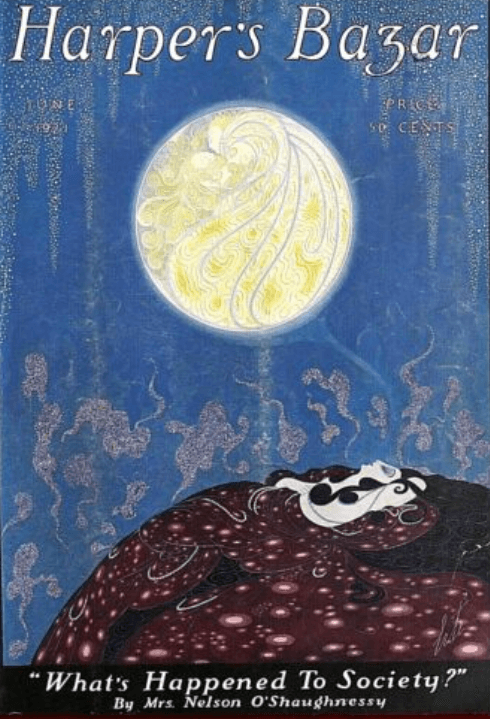
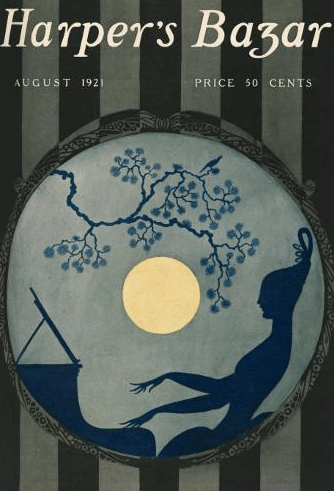
In my four years of trawling through the world of 100 years ago, I’ve unearthed a lot of potential projects that (as far as I knew) no one had tackled. I asked people to let me know if they were working on any of them, and was excited to hear from someone who has an extensive collection of Erté Harper’s Bazar covers (Project #1).
I test-drove the ads in the June 1921 issue of the Ladies’ Home Journal and found, along with some beautiful artistry, a passive-aggressive dish-breaking husband, a canned-meat picnic, and some vile Italian food.
This post, in which I read Elements of Retail Salesmanship by Professor Paul Wesley Ivey, picked at random from the 1920 edition of Book Review Digest, was one of my favorites of the year. I even ended up making a (kind of lame) pilgrimage to Professor Ivey’s place of employment, the University of Nebraska. This was so much fun that I decided to make it an annual tradition. I’ve picked my random book for 1921 but haven’t read it yet.
I don’t think I love anything from a hundred years ago as much as I love The Brownies’ Book, the NAACP’s magazine for African-American children. You know how people want to go back in time so they can buy Apple stock? I want to go back in time and give W.E.B. Du Bois a bunch of money so that The Brownies’ Book can last more than two years (1920-1921).
Nothing in this project has meant more to me than this post, in which I set out to find out what happened to the promising young illustrator Rita Senger and ended up interviewing her granddaughter. I’m thrilled that it reached so many readers.
For the second year running, a post about magazine ads tops the list. Note to self: do more posts about magazine ads.
How Girls Can Help Their Country
It tops the list of this year’s posts, anyway. As was the case last year, the top-ranking of all my posts this year was 1919’s My Quest to Earn a 1919 Girl Scout Badge. While this post had more than twice as many views last year as the top 2020 post, it edged out the top 1921 post by only four views. The third most-viewed post this year was The Uncrowned King of Bohemia: The fascinating story of a not-so-great poet, a 2018 post about the poet George Sterling. At the other viewership extreme were a few posts that only got one view, including Exploring Provo—And Mormon History, which tied the record for daily views on the day it was published. Come to think of it, Provo may have been the last new place I explored before the world came to a halt.
My book list for this year is extremely feeble, only two books. For this I blame my 1920s best-seller discussion group. We’ve read a book a month over the past year, and I’ve kept up,** but most of them are from after 1921 so they don’t count. (Actually one of them was from the 1910s, but I haven’t written it up yet. (UPDATE 1/13/2022: Done!))
In 2018, I read almost nothing written after 1918. In 2019, I returned to the world of the present but went back to visit a lot. In 2020, I changed my the name of my blog from My Year in 1918 to My Life 100 Years Ago. In 2021, I posted about my first interview (which actually took place in 2020) and my first random book (although I read it 2020—there was a lot of catching up going on in 2021). So what will be new and different in 2022?
This year is the centennial of The Waste Land and Ulysses, so they’ll probably feature in some way. I’d like to look into what’s going with in the Harlem Renaissance. And I recently completed an ambitious project I look forward to telling you about soon.*** Other than that, who knows? If there’s one thing I’ve learned over the past four years, it’s that there are surprises around every corner in the world of 100 years ago. I look forward to continuing the adventure.
*If you go back and look at any of these posts, the wacko sizing of the photos and images isn’t my fault. Some weird WordPress glitch resized everything a while back.
**Well, until this month. This month’s selection, J.B. Priestly’s 1929 tome The Good Companions, seems likely to be my Waterloo. (UPDATE 1/13/2022: I finished it just in time!)
***I hope this is vague enough to avert the Promised Post Curse.
On Thanksgiving every year, I’ve taken the opportunity to give thanks for some aspect of my adventures in the world of a hundred years ago. In 2018, I expressed gratitude for ten of the extraordinary people I’d come across during my year of reading as if I were living in 1918, like scholar/editor/activist W.E.B. Du Bois, food safety pioneer Harvey Wiley, and bra inventor Mary Phelps Jacob. The next year, I paid tribute to ten wonderful illustrators. The year after that, it was three women illustrators. (I had meant to cover more, but Neysa McMein proved to have such a fascinating life that I had to stop or the turkey wouldn’t have been done on time.)
As I was contemplating what to give thanks for this year, my thoughts turned to one of the best parts of this project—the twenty-first century people I’ve encountered along the way. I’ve given them shout-outs before, but now they’re front and center. Here they are, roughly in order of when I “met” them.
Pamela Toler and History in the Margins
One morning in February 2018, just five weeks into my project, I noticed a spike in my traffic. I soon discovered that Pamela Toler had recommended my blog, then titled My Year in 1918, on her own blog, History in the Margins. We’ve kept in touch through our blogs and Twitter since then.
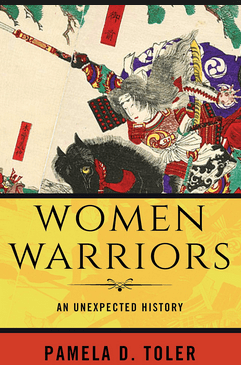
Pamela has a job—“freelance writer specializing in history and the arts,” as she describes it—that I can imagine having in a parallel universe. She takes her readers down fascinating, little-known byways of history. Sometimes it’s a quick dive on a subject like the history of microphones, which end up being newer than she (or I) thought. Sometimes it’s a whole book, like Women Warriors, a fascinating history of women soldiers through the ages that combines the expertise of a Ph.D. historian (which she is) with the flair of the natural storyteller. Here’s a sample from the introduction: “As a nerdy tweenager I read everything I could find on Joan of Arc, from biographies designed to give young girls role models to George Bernard Shaw’s Saint Joan.* As a less obviously nerdy graduate student, I was fascinated by Lakshmi Bai, the Rani of Jhansi, who led her soldiers onto the battlefield to fight the British in the Indian mutiny of 1857.”
I’m thankful to have discovered Pamela the writer, and even more thankful to have gotten to know Pamela the online friend.
Connie Ruzich and the Forgotten Poets of the First World War
World War I Twitter led me to Robert Morris University professor Connie Ruzich and her blog, Behind Their Lines, which originated with a Fulbright project on World War I poets. She describes her blog as “a site for sharing lesser known poetry of the First World War, what I think of as lost voices and faded poems.”
Connie’s book, International Poetry of the First World War: An Anthology of Lost Voices, came out late last year. Even though it wasn’t priced for general readers, I was seriously tempted to use some of my COVID stimulus check to buy it. I left the U.S. for South Africa shortly after it was published, though, and didn’t get around to it. So I was thrilled to discover while writing this post that that a paperback edition is on the way.
Connie still posts occasionally on her blog—her most recent post combines a number of my interests, including Amy Lowell, Harvard, and T.S. Eliot/Ezra Pound snarkiness—and she links to older posts on Twitter on poets’ birthdays, National Beer Day, and other relevant occasions.
Connie, like Pamela, has become an online friend. When I drove across the country last October,** pre-vaccination, it gave me a pang as I passed through Chicago and Pittsburgh not to be able to stop by and see Pamela and Connie.
Frank Hudson and the Parlando Project
Early on in this project, when I was posting several times a week, I’d occasionally feel overwhelmed. Whenever this happened, I’d give myself a little lecture, saying, “Well, Frank Hudson posts as often as you do AND writes a song for every post AND sings it.”
Amazing guy, that Frank.
For the typical Parlando Project post (tag line: “where words and music meet”), Frank takes a poem that’s in the public domain, puts it to music, and shares his thoughts about the writer and the poem. He covers a much wider time period than I do, all the way back to classical Chinese poetry, but he often records poems from 1910s and 1920s, including a multi-year serial performance of The Waste Land to celebrate National Poetry Month.
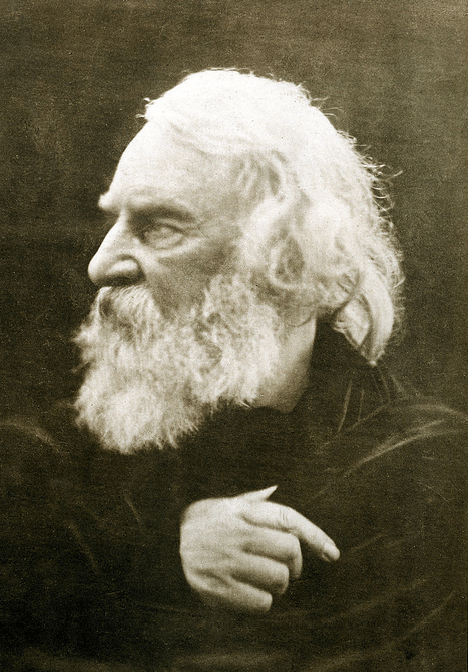
Henry Wadsworth Longfellow (Julia Margaret Cameron, 1868)
Maybe I’m biased because it was my idea (okay, there’s no maybe about it), but my favorite of Frank’s songs is his interpretation of the Henry Wadsworth Longfellow poem “Snow-Flakes,” featuring the wonderful line “This is the poem of the air.” In Frank’s rendition, recorded on Christmas 2018, “Snow-Flakes” and another Longfellow poem, “A Psalm of Life,” are being performed in a Beat Generation-era jazz club. If you’re in the mood for something seasonal but weary of the holiday standards, check it out!
Witness2Fashion and Century-Old Styles
Susan, the creative force behind the blog Witness2Fashion, is, like Frank, only a part-time resident of the world of a hundred years ago, but she stops by often. She’s a former theater costume designer who casts an expert eye on the fashions of the past while also tackling broader societal issues.
Delineator, January 1920
Witness2Fashion rang in the current decade, for example, with a visit to the January 1920 issue of Delineator magazine, showing us some Butterick patterns but then moving on to an article on sexual harassment called “It Won’t Do! A Warning for Business Women.”
Sometimes the posts take a more personal turn, like this one, featuring her detective work about the life of a TB patient named Ollie, a friend of her mother’s, whom she came to know through family photographs. My favorite Witness2Fashion post, with the irresistible title “Prudery in Advertising Used to Confuse Me,” is a mix of the personal and the historical.
Ladies’ Home Journal, June 1921
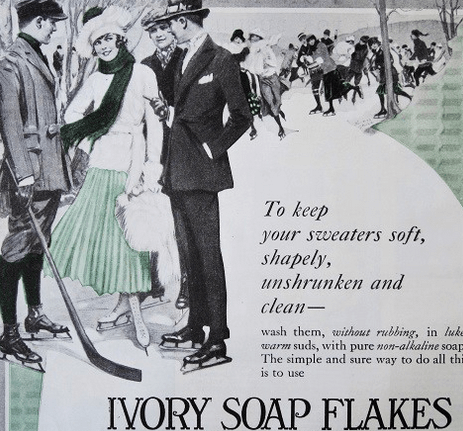
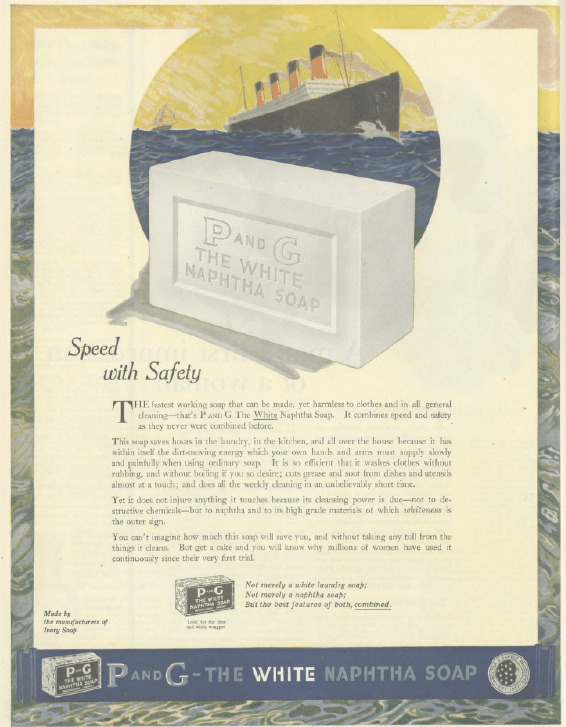
Susan and I check in with each other in the comments sections of our blogs every once in a while. When I wondered, a few months back, why hand-washing wasn’t one of the many uses listed for P and G White Naptha soap, she explained, “Naptha is a petroleum product, akin to mineral spirits (aka “Paint thinner,”) so you wouldn’t want to use it on your skin.” Mystery solved!
On a Witness2Fashion post about the evolution about corsets, I posted this comment: “I just came across a fascinating article in a 1922 issue of Printer’s Ink magazine, aimed at panicky corset sellers, assuring them that going corsetless is just a fad and reminding mothers to educate their daughters on the health benefits of corsets, including supporting internal organs and strengthening back muscles.” The actual Printer’s Ink article is unfortunately, as I have noted, lost in the mists of time.
It’s nice to have a kindred spirit!
Patty Stein and Rita Senger
Last year, I was wondering what happened to Rita Senger, a talented illustrator who disappeared from the covers of Vogue and Vanity Fair in 1919. A Google search led me to the blog of quilter Laurie Kennedy, who mentioned that Patty Stein, a fellow quilter, was Senger’s granddaughter. I e-mailed Laurie one night last November telling her of my interest in Rita Senger, and by morning I had heard from Patty.
Soon after that, I called Patty, who, while baking a cake, shared her memories of her grandmother, who traded her artistic career for marriage to a wealthy businessman. Rita came to life through Patty’s vivid stories, and hearing and writing about her was one of the high points of this project.
Old Books and New Friends
Last October, when I was out in Colorado, I spent two happy days virtually attending the annual meeting of the International T.S. Eliot Society. “Annual meeting” makes it sound like people introducing motions and voting, but it’s actually an academic conference. This was the year of the unveiling of the Emily Hale Archive at Princeton, which consists of over a thousand letters from Eliot to Hale, his long-distance companion of many years. The Eliot world was abuzz! But I digress.***
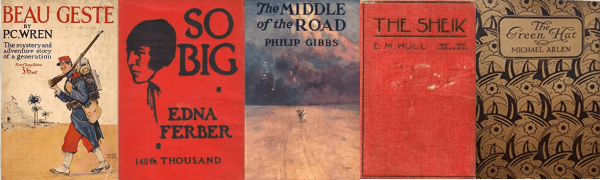
After the meeting, I followed some of the people I’d come across on Twitter. Just a few days later, one of them, Birkbeck/University of London lecturer Peter Fifield, tweeted that he was planning to start a 1920s best-seller discussion group. Needless to say, I was thrilled. In the year since, the group, which spans three continents, has read good books (The Home-Maker, So Big****) and not-so-good books (The Middle of the Road, The Green Hat) and problematic books (The Sheik, God’s Stepchildren), and we’ve had a great time talking about them all. (Sometimes, the worse the book, the better the discussion.) It’s become a group of friends that I look forward to seeing every month.
Happy Thanksgiving to All!
I haven’t met any of the people mentioned here (yet) in person*****, but my interactions with them, on Twitter, in blog comments, on the phone, and on Zoom, have greatly enriched my life—a silver lining to the virtual world we’re living in. So, to all of them, and to the rest of you who have shared my adventures in the world of a hundred years ago, happy Thanksgiving!******
*This is me, except Eleanor of Aquitaine.
**Okay, sat in the passenger’s seat. My brother did all the driving.
***The T.S. Eliot gang almost got its own entry, but my interest in Eliot precedes this project, so they were disqualified.
****Going out on a limb here—this is next month’s selection so I’m only speaking for myself. But it’s Edna Ferber! And it’s wonderful!
*****UPDATE 7/20/2024: I eventually did meet up with some of the 1920s bestseller reading group members, when we participated in a roundtable at the 1922 conference of the British Association for Modernist Studies (BAMS) in Bristol (that’s me with the mask). I wrote about this and other literary adventures here.
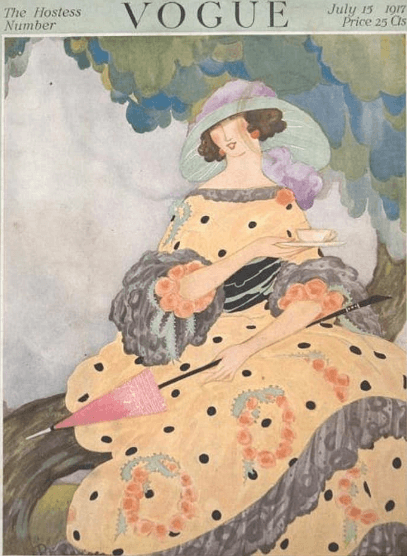
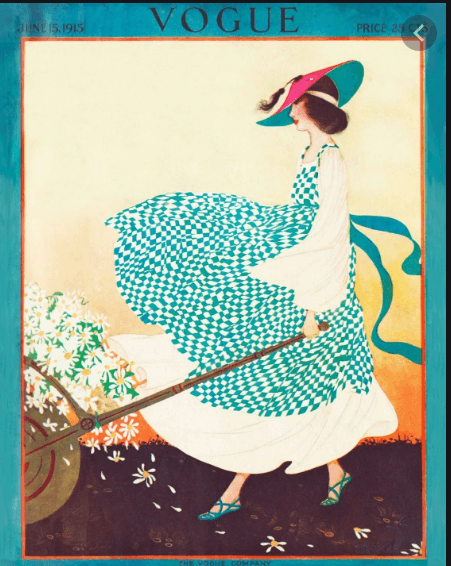
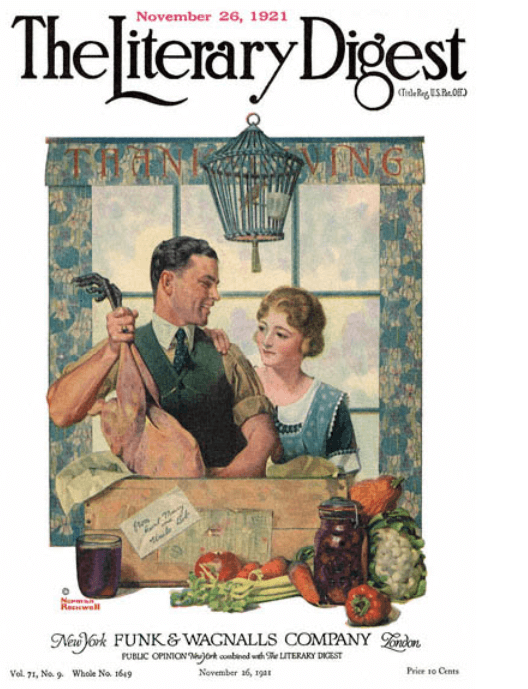
******I was going to round up this post with some charming Thanksgiving magazine covers, but this Norman Rockwell Literary Digest cover doesn’t look at all like a Rockwell,
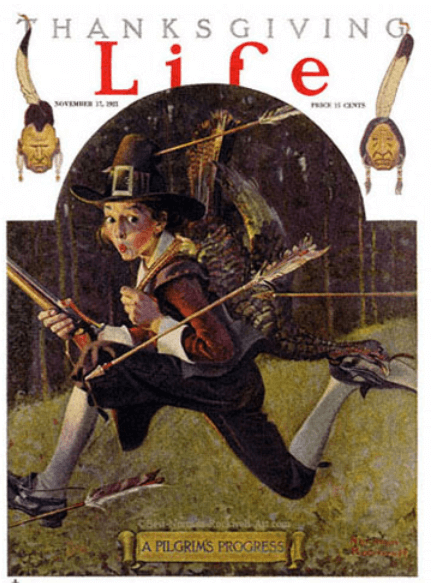
and this pilgrim/Indian warfare-themed Rockwell Life cover leaves me scratching my head,
People sometimes complain that the world of a hundred years ago is so picked over that there’s nothing left to write about.* After spending a year reading as if I were living in that period, though, I can tell you that there’s a treasure trove of subjects just waiting to be turned into books, articles, dissertations, or academic projects. Here are ten topics that I’m mystified that no one has gotten to yet.**
1. Archiving Erté’s Harper’s Bazar covers
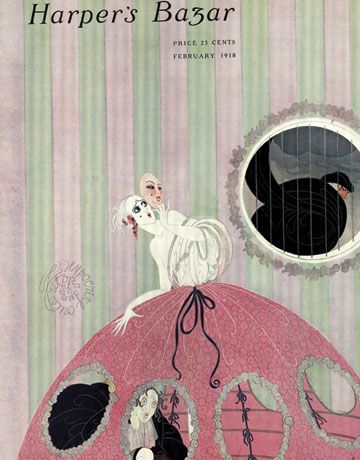
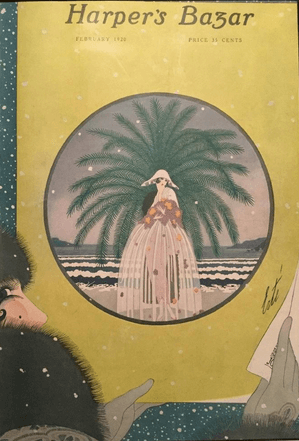
Over the (yikes!) almost four years of this project, I have spent many happy hours finding online copies of Harper’s Bazar covers by Erté, the legendary art deco artist, designer, and crossword puzzle clue stalwart who worked as the magazine’s regular cover artist from 1915 to 1936. I included him in my Thanksgiving lists of 10 1918 People I’m Thankful For and Ten 1919 Illustrators I’m Thankful For.***
But I have also spent many unhappy hours searching for Erté covers in vain. HathiTrust, the Google Books online archive, is missing some issues from 1918 and doesn’t have any at all for 1919 (or from 1923 to 1929, but I’ll worry about that in the future). I’ve found images for some, but not all, of these covers elsewhere, often on Pinterest, which is the source of most of my magazine cover images anyway. Those images that do exist aren’t at the level of quality that these important cultural artifacts deserve.
Roman Petrovich Tyrtov (Erté), date unknown
Someone needs to make high-quality digital scans of the full collection and archive them online**** before the original covers deteriorate any further. (Maybe Harper’s Bazaar—the extra A was added in 1930—has done this, but, if so, the archive isn’t available online, as Vogue’s is.) A book or scholarly article about the covers would be good, too. Get on this, digital humanities people!
2. A biography of cartoonist Percy Crosby
From The Rookie from the 13th Squad, 1918
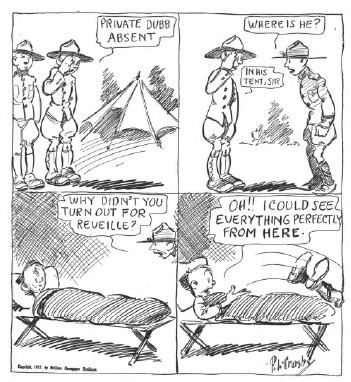
One of the most intriguing people I’ve written about for this blog is Percy Crosby, who penned the cartoon The Rookie from the 13th Squad. The hapless but ultimately stouthearted Rookie was the Sad Sack of World War I. Crosby, who received a Purple Heart after being hit in the eye with shrapnel, went on to create the popular cartoon Skippy, which the Charles Schulz website cites as an influence for Peanuts. He also, I kid you not, won the silver medal in the 1932 watercolors and drawing event in the 1932 Olympics.
Percy Crosby, date unknown
Crosby’s personal life was troubled, though. He ran with a hard-drinking crowd that included Jerome Kern, Ring Lardner, John Barrymore, and Heywood Broun. Following a violent episode, his wife divorced him and got a restraining order, and he never saw her or their four children again. He began taking out two-page ads in major newspapers, espousing left-wing views and taking on targets like the FBI, the IRS, and Al Capone. After a 1948 suicide attempt, he was confined to a mental hospital and diagnosed as a paranoid schizophrenic. One of the purported symptoms of his paranoia was his endless ranting about how Skippy Peanut Butter had violated the trademark on his character’s name. Now, I’m no intellectual property rights lawyer, but that doesn’t sound all that paranoid to me. Crosby himself believed that his left-wing views contributed to his prolonged confinement. He died in the mental hospital in 1964.
A biography of Crosby was published in 1978, but his life, and his long confinement, deserve a closer look.
3. Girl Scout badges through the ages
What gives you a better sense of what was expected of girls in a given era than its Girl Scout badges? Well, lots of things, probably, given that the 1920 edition of Scouting for Girls included badges for telegraphy (“send 22 words per minute using a sounder and American Morse Code”), bee keeping (“have a practical knowledge of bee keeping and assist in hiving a swarm…”), and rock tapping (“collect two or three scratched or glaciated pebbles or cobblestones in the drift”). But, as I discovered during my quest to earn a 1919 Girl Scout badge,***** Girl Scout badges do provide an interesting window into the era. I learned all about caring for sick relatives and found out what a cruel practice plucking egret feathers for women’s hats is.
Junior Girl Scout Handbook, 1960s
My own Girl Scout book was written closer to 1920 than to today (it had been around a while, but still!). There are some cool badges in that book, like Observer, where you learn about constellations and rock formations and make a conservation exhibit. Others, like Indian Lore and Gypsy, wouldn’t pass muster today.
The current badges look kind of trippy and feature topics like cybersecurity, coding, entrepreneurship, and preparing for STEM jobs. That all sounds way too stressful and careerist for me. Personally, I’d rather learn telegraphy.
Well, I’d better stop before I end up writing the book myself.
4. Did Daisy Ashford really write The Young Visiters?
Daisy Ashford, frontispiece, The Young Visiters (1919)
The Young Visiters, nine-year-old Daisy Ashford’s unintentionally hilarious account of sometimes unsavory high-society goings-on, became a runaway bestseller following its 1919 publication. The manuscript, written in 1890 or so, was discovered by the adult Daisy and circulated among her friends until it reached novelist and publisher’s reader Frank Swinnerton, who arranged for its publication, with an introduction by L. Frank Baum.
Or so the story goes. Some reviewers at the time were skeptical, and there was speculation that Baum himself was the author. When Ashford died in 1972 at the age of 90, her obituary in the New York Times mentioned the doubts about her authorship.
Here is the opening paragraph. You decide for yourself whether you buy it as the work of a preteen or if, like me, you’re with the skeptics.
Except you don’t have to leave it at that! Thanks to the wonders of modern technology, you can figure out the authorship for yourself. In recent years, researchers have used computer software that analyzes similarities between texts to discover new sources for Shakespeare’s plays and help unmask J.K. Rowling as the author of the mystery novel The Cuckoo’s Calling, published under the pseudonym Robert Galbraith. I wonder what a comparison between The Young Visiters and the works of L. Frank Baum (or maybe Frank Swinnerton) would reveal. Go for it!******
5. The Crisis Press, The Brownies’ Book, and Jessie Redmon Fauset
The Brownies’ Book, May 1920
The life and work of W.E.B. Du Bois is not exactly lost to history. To cite only one recent example of his place in the culture, the novel The Love Songs of W.E.B. Du Bois was an Oprah book club pick and was long-listed for this year’s National Book Award. The Crisis, the NAACP magazine that he edited, is rightly celebrated as a groundbreaking publication for and about African-Americans. Less well-known are the side projects of the magazine’s publishing company, including books like Hazel, by Ruth White Ovington, the first children’s book to figure an African-American protagonist, and The Brownies’ Book, an all-too-short-lived magazine “designed for all children, but especially for ours.” Recent high school graduate Langston Hughes published his first poems in the magazine. There have been a number of academic articles about The Brownies’ Book, as well as a 1996 anthology, but the magazine and the Crisis Publication Company’s other ventures deserve to be better known today.
Jessie Redmon Fauset, date unknown
While you’re at it, how about a biography of The Brownies’ Book managing editor Jessie Redmon Fauset, who was a major figure in the Harlem Renaissance?
6. Women Illustrators of the 1920s
Career opportunities for talented women in the 1920s were limited, but magazine illustration was one field where women could, and did, succeed. Their work and their lives are worth revisiting.
Why did Helen Dryden, once the highest-paid woman artist in the United States, end up living in a welfare hotel?
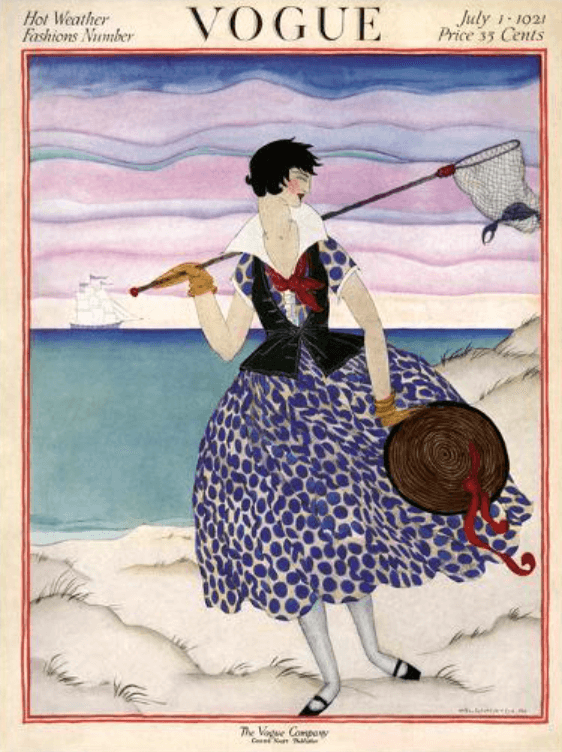
Helen Dryden, July 1, 1921
How did Gordon Conway make it to the top of her profession without taking a single art class?
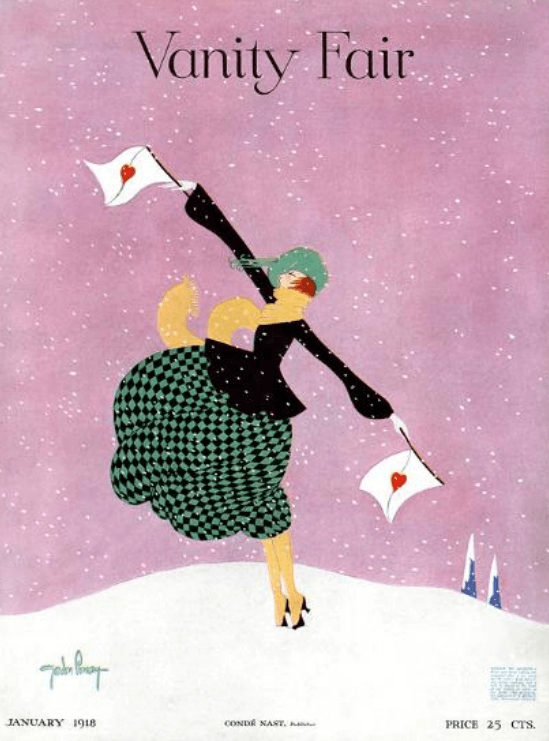
Gordon Conway, January 1918
Why did talented illustrator Rita Senger disappear from the covers of Vogue and Vanity Fair in 1919? (Well, I told you all about that here.)
Rita Senger, April 1918
As for Neysa McMein, suffragist, Saturday Evening Post illustrator, best friend of Dorothy Parker, lover of Charlie Chaplin, Ring Lardner, Robert Benchley, and others, I just want to spend a winter afternoon reading a gossipy account of her life.
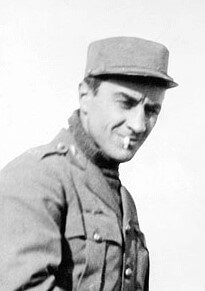
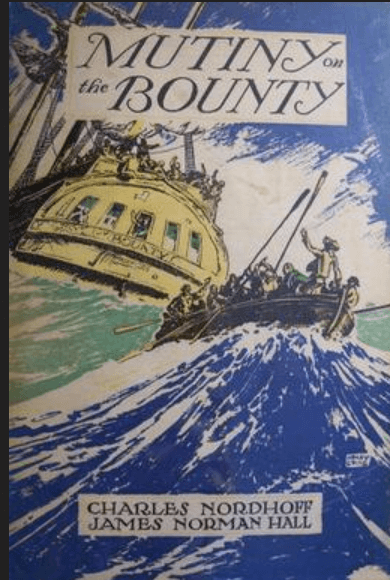
In May 2018, I read a May 1918 New York Times article about the apparent death of popular aviator Jimmy Hall, who had been shot down behind enemy lines. I decided to Google him to see if by any chance he had survived. But James Hall is a common name, and I kept getting articles about the co-author of Mutiny on the Bounty. Eventually I realized that the courageous aviator and the successful writer were…one and the same!
First edition, 1932
Hall, it turned out, had been captured by the Germans. After the war, he moved to Tahiti, where he and co-author Charles Nordhoff penned Mutiny on the Bounty and other best-sellers.******* His wife was partly of Polynesian descent. Their son, cinematographer Conrad Hall, won three Oscars, including one for Butch Cassidy and the Sundance Kid.
Amazingly, no one seems to have written a biography of this fascinating man. If I haven’t done enough to persuade you to take on this project, it would definitely require a trip to Tahiti, where his modest house is now a museum.
8. Edna Ferber biography and revival
Edna Ferber, date unknown (State Historical Society of Wisconsin Visual Archives)
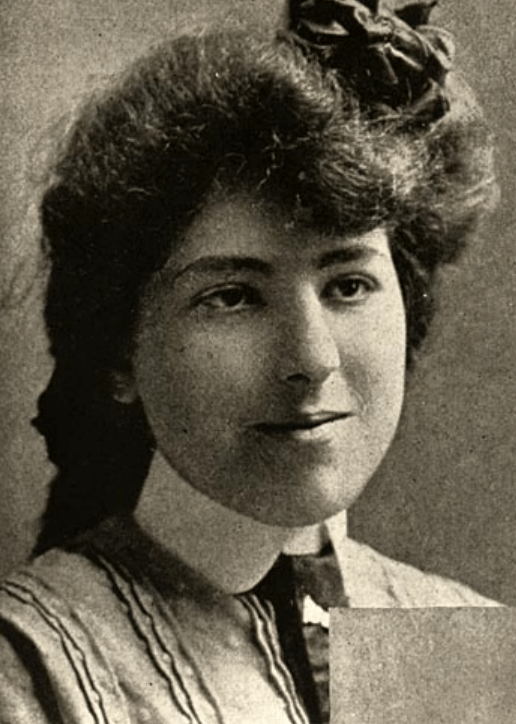
Edna Ferber checks a number of boxes to spark contemporary interest: she took on racism and sexism in her novels and short stories, and she may have been a lesbian. On top of that, she was a wonderful writer, at least judging from the early novel and short stories that I’ve read, featuring the dreams, disappointments, and, very occasionally, triumphs of department store saleswomen and accountants and stenographers. Ferber was a regular at the Algonquin Round Table, which would make for entertaining research.********
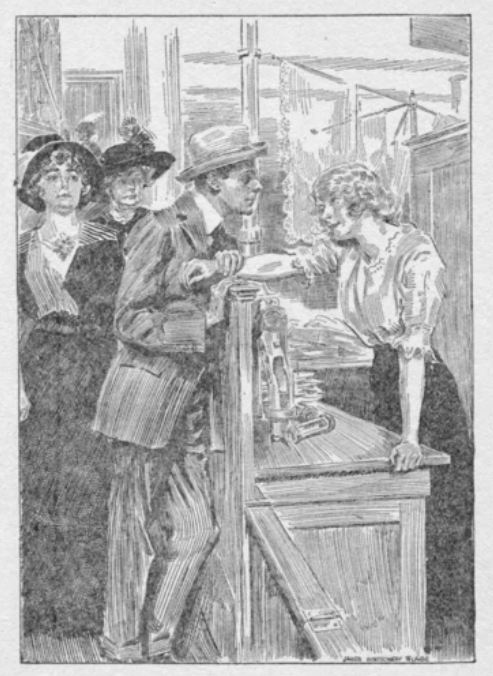
Illustration by James Montgomery Flagg from Roast Beef, Medium, by Edna Ferber (1913)
Harper Perennial Classics has reissued some of Ferber’s novels, which is a good start, but she’s due the kind of revival that Tim Page sparked for novelist Dawn Powell a few decades back when he published her diaries, her letters, and a biography. Any volunteers?
9. The Illustrators of New Rochelle, New York
Coles Phillips in his New Rochelle Studio, ca. 1921 (saturdayeveningpost.org)
High on the list of nonexistent books I’m longing to read is a group biography of Norman Rockwell, Coles Phillips, the Leyendecker brothers, and the other illustrators who turned suburban New Rochelle, New York, into one of the country’s most important artists’ colonies. If you can believe Wikipedia, New Rochelle was the source of more than half of the illustrations in major publications in the early 1920s.
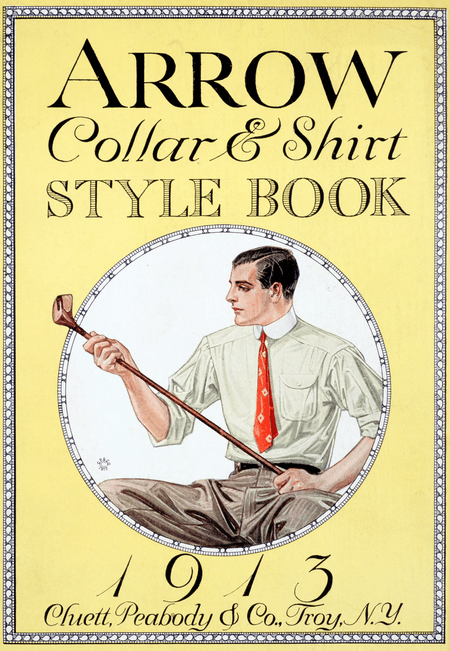
I want SO much to read about J.C. Leyendecker’s romantic relationship with the model for his Arrow shirt ads
J.C. Leyendecker (vogue.com)
and about his brother Frank’s short life and tragic death.
Frank Leyendecker, June 1915
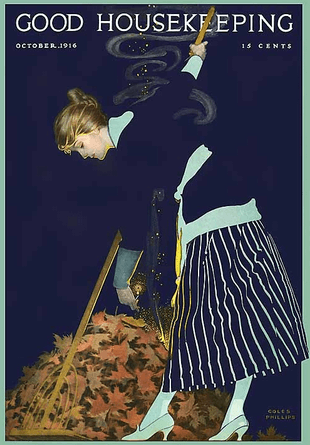
I want to read about Coles Phillips’ apparently happy marriage (one of all too few I’ve read about in the period) to his wife Teresa, who served as his primary model, “making up in keen interest and endurance what I lacked in pulchritude,” as she wrote in the Saturday Evening Post after his death in 1927 at the age of 46.
Coles Phillips, October 1916
I want to read about Normal Rockwell’s…well, I can’t think of anything I want to read about Norman Rockwell. But, if you write it, I’ll read it!
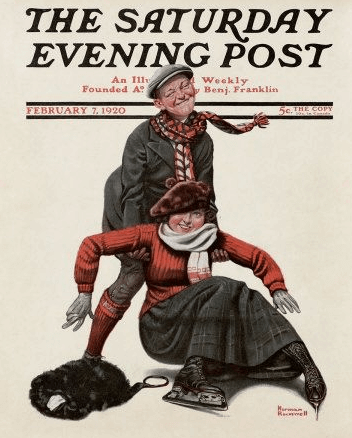
Norman Rockwell, February 7, 1920
10. This one’s for me!
By now, you may be wondering why I’m asking the rest of the world to do all of these projects and not saving any for myself. Well, don’t worry—I’ve set aside a project, or two, or three. I’m not sure when I’ll be able to finish, or, um, start them, but I look forward to telling you more when I can.
In the meantime, get to work, everyone!
*Actually, this is mostly an amateur opinion. The academics I know who are working on this period have more than enough to keep them busy.
**That I know if. If I’m wrong, please let me know!
***I’ve noticed recently that some of my old posts have gone all Alice in Wonderland on me, with small photos suddenly huge, like this squiggle from the Thanksgiving 2019 post.
I’ll get with WordPress to see what this is about and in the meantime am resizing the giant photos as I come across them.
****Or at least the covers (currently up to 1925) that are out of copyright.
*****Actually, a 1916 Girl Scout badge. My logic in using 1919 in the title was that this was the Girl Scout book being used 100 years ago at the time of the post. If I had known that this would go on to be by far my most popular post, read by many people who didn’t have a clue about my 100 years ago project, I would have used the 1916 in the blog post title.
******Go for it yourself, you might reasonably say. I tried once, with some different texts, and it’s kind of hard.
*******Speaking of fake child authors, Hall confessed in 1946 that he had written the critically acclaimed 1940 poetry collection Oh Millersville!, supposedly the work of a 10-year-old girl named Fern Gravel.
********That’s Ferber on the bottom right corner, looking like she’s wearing a skeleton mask, in the Al Hirschfeld cartoon of Algonquin Round Table members. I can’t post it here because it’s still under copyright.
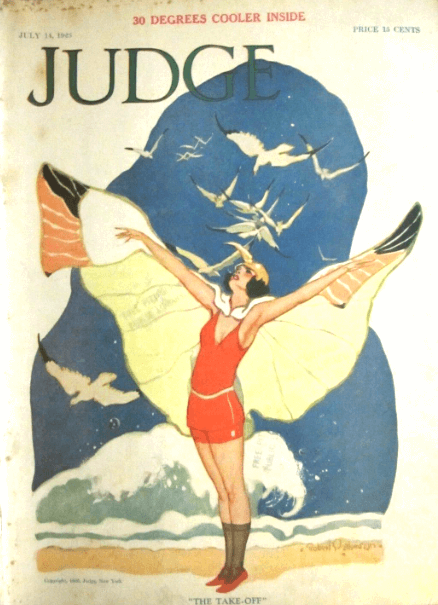
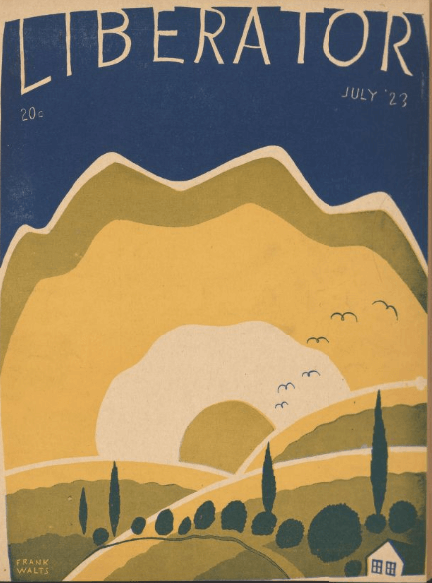
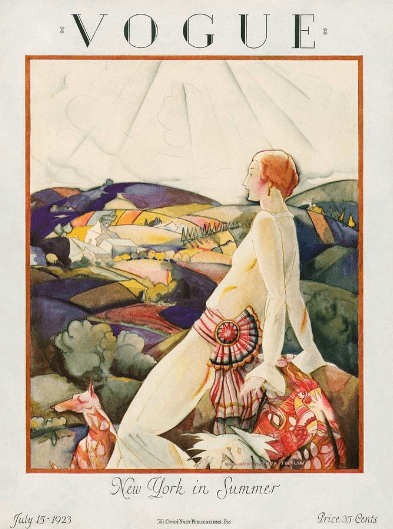
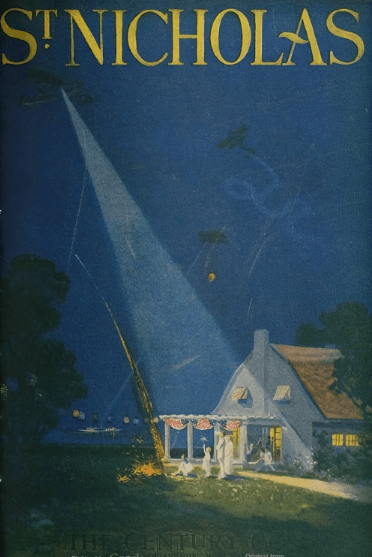
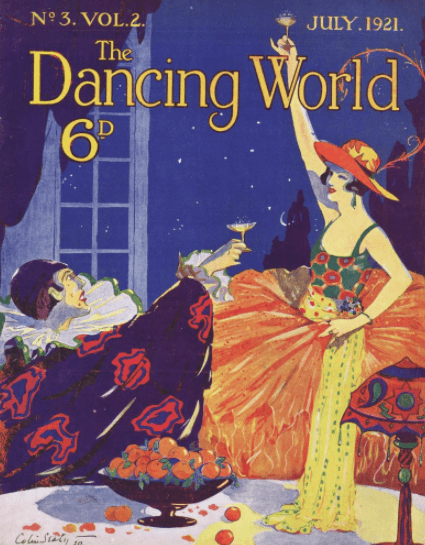
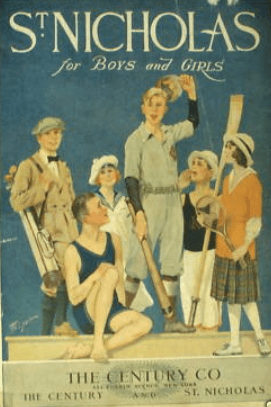
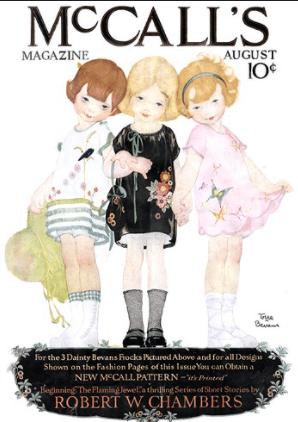
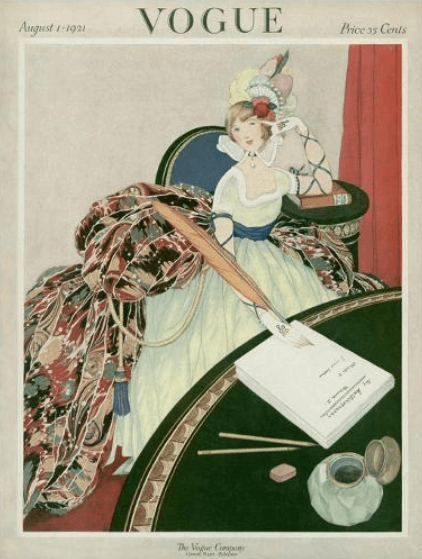
Objectively speaking, winter in Cape Town is not all that bad. The temperature rarely dips below the high 40s, and a cold day is one when it doesn’t make it into the 60s. Subjectively speaking, though, winter in Cape Town is miserable. It rains a lot, and houses don’t have central heating, so we sit around freezing and grumbling.*
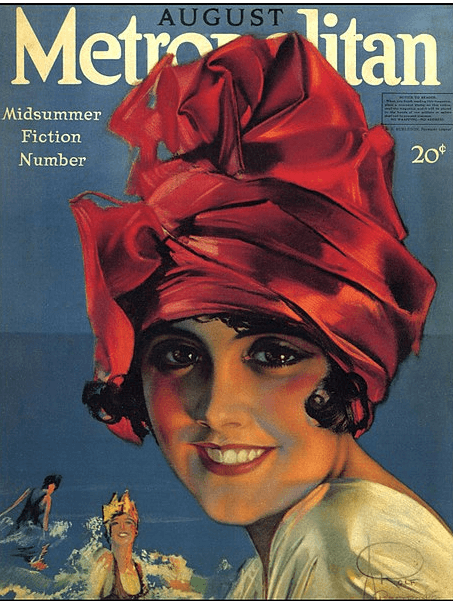
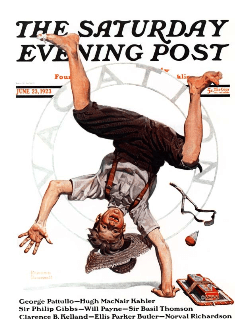
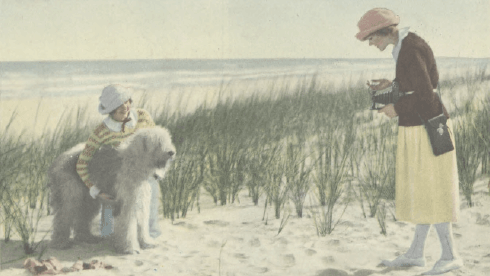
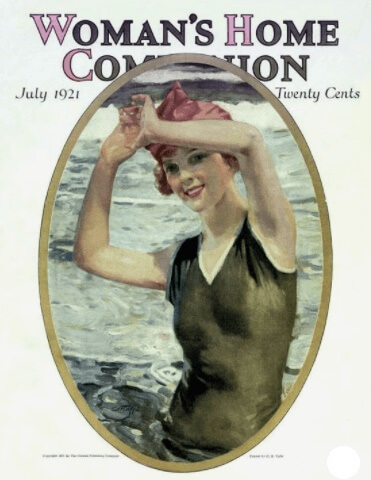
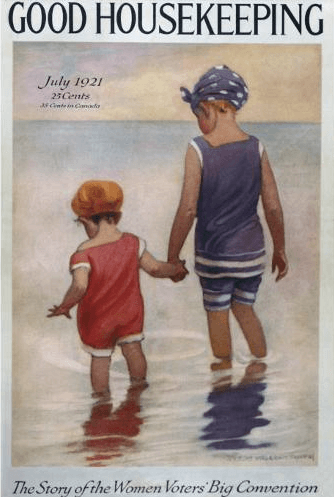
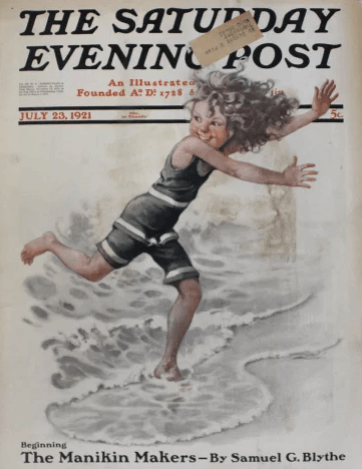
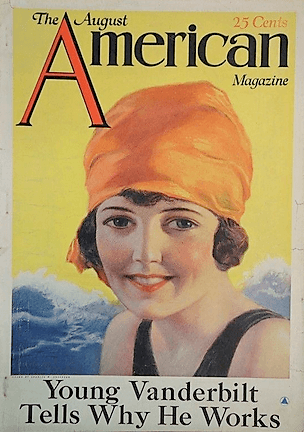
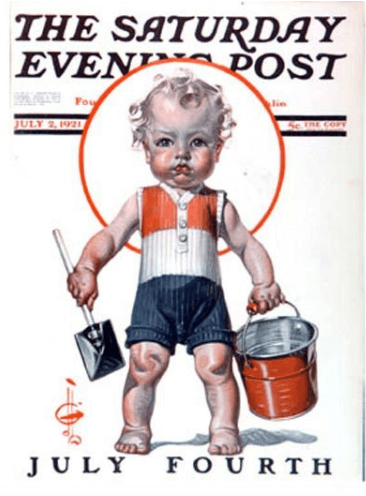
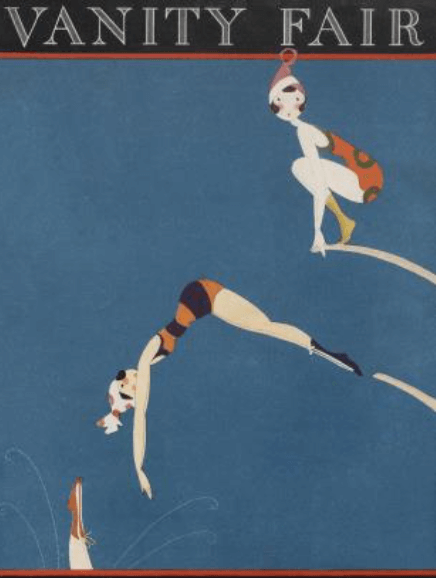
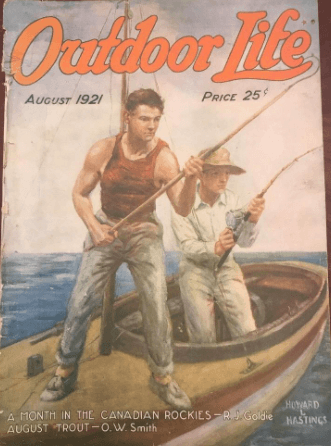
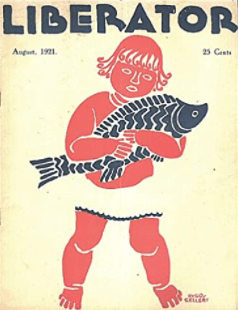
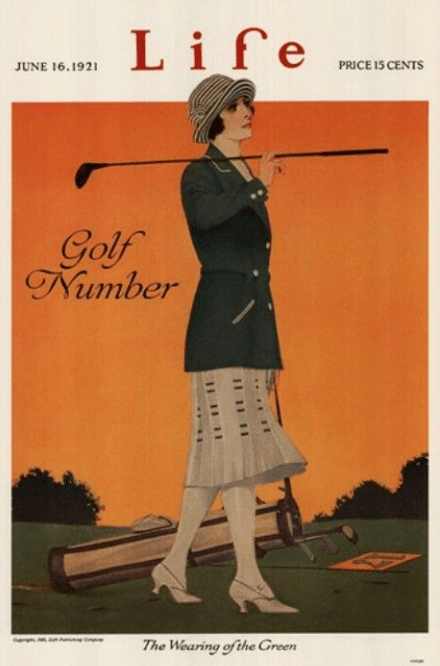
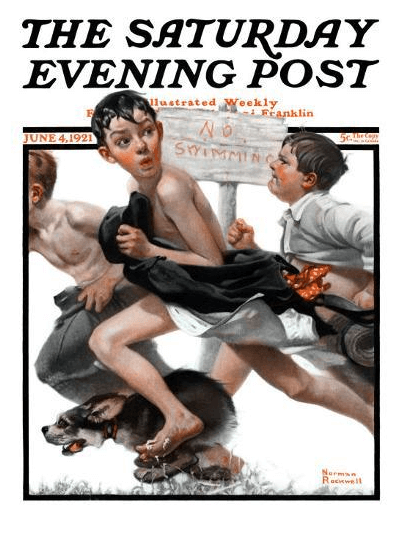
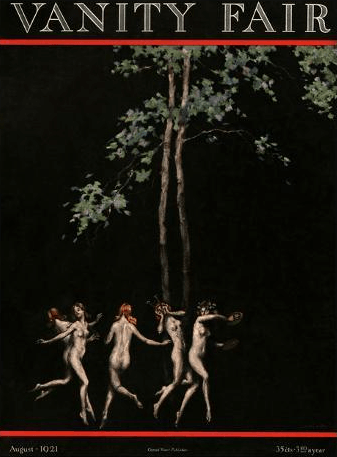
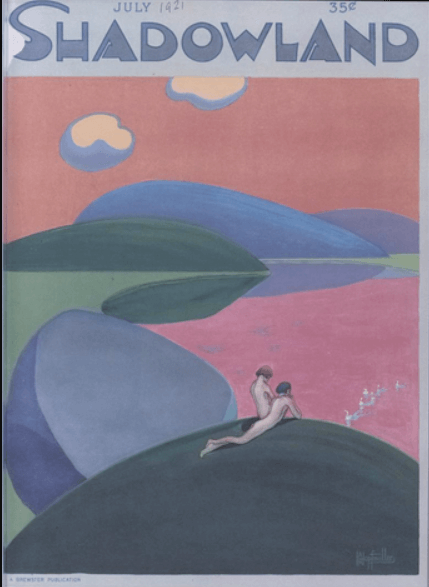
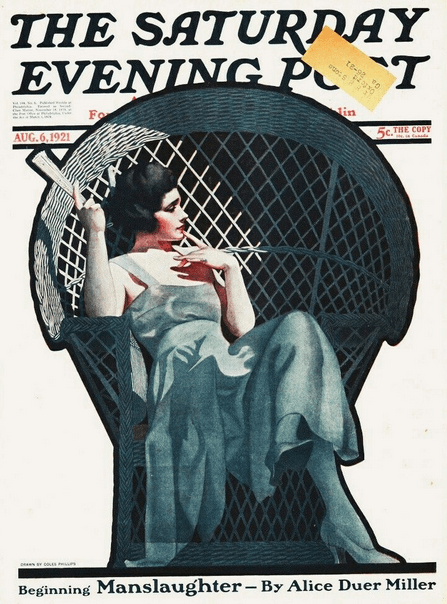
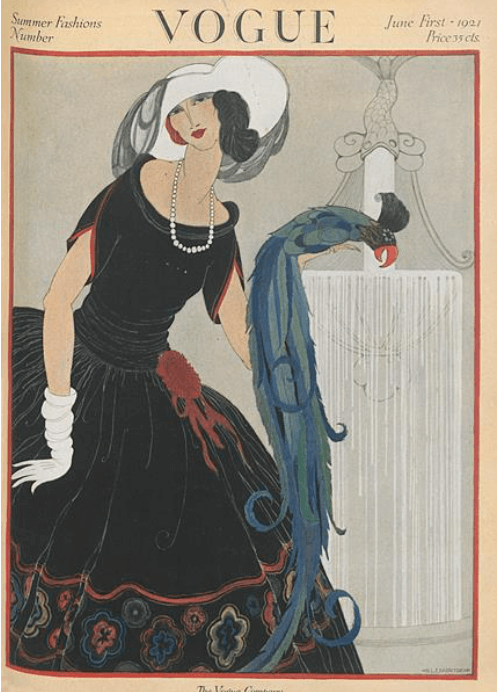
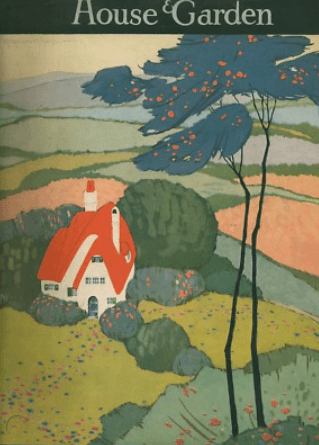
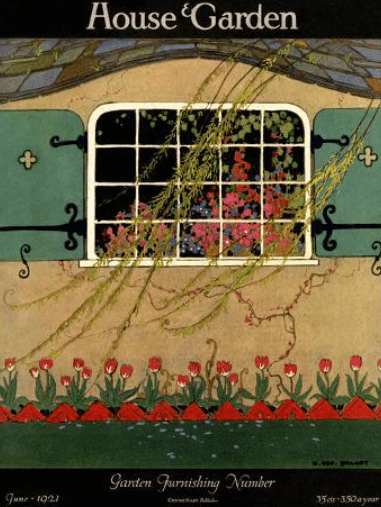
What I needed to improve my mood, I decided, was some summer fun from the covers of 1921 magazines. I could pretend I was somewhere hot, hanging around at the beach**
(Okay, these are not all ACTUAL wishes. I’m not much of a fisherman, for example.)
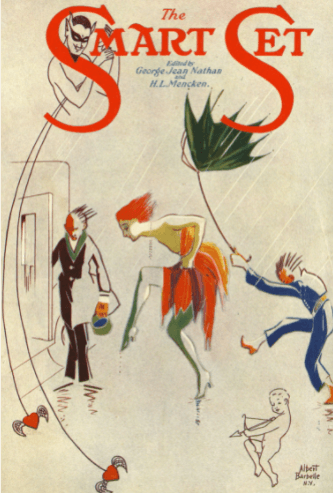
Lo and behold, I did actually make it to the northern hemisphere in time for the last few weeks of the summer. It turns out, though, that my image of Washington in August was a teeny bit romanticized. Life has been more like this
George Wolfe Plank
and this
Albert Barbelle
than this.
Colin Sealy
But I’ve had a great time hanging out with my friends,
and even though I haven’t spent much (okay, any) time working on my manuscript
George Wolfe Plank
I swear that’s going to happen before the fall sets in.
But fall is weeks away, so let’s not think about it right now. After all, in the words of the #1 hit song of late summer 1921, “In the meantime, in between time…”
*Of course, I always keep in mind how fortunate I am compared to most people in Cape Town.


















































 My Life 100 Years Ago