Tag Archives: The Great Gatsby

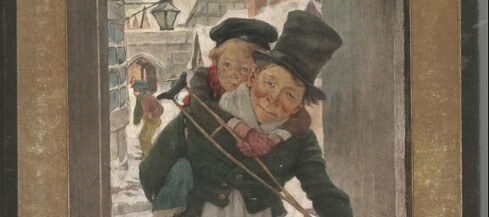
cropped photo from The Children of Dickens, 1925, Tiny Tim with crutch

Children’s Books: Your 1925 Holiday Guide

1925 is the best children’s book year ever!

Or a total washout!

New York Times headline, New Books for Children Herald The Holiday Season
New York Times, November 8, 1925

It depends on whether you believe the New York Times, whose anonymous critic tells us in its November 8 holiday children’s book roundup that “never since man began to make books, have there been so many and such beautiful books for young readers,” or The Outlook, where Edmund Pearson, writing in the November 11 issue, agrees about the abundance of beautiful books but adds, “but—and this is a perennial but—the number of juvenile books of merit is exceedingly small.”*
Headline, Outlook: The Book Table, Edited by Edmund Pearson
The Outlook, November 11, 1925

I had no choice, then but, to go through the books and make up my own mind, which I did with such excessive thoroughness that I’ve blasted right past Christmas. This might have stressed me out more, with seven on-time holiday children’s book roundups under my belt,** if I hadn’t heard the wise counsel, on the holiday episode of Caroline O’Donaghue’s*** podcast Sentimental Garbage, that we should stop stressing out about traditions and instead think of them as “things we like to do sometimes.” So, sometimes I like to post my children’s books holiday roundup in time for Christmas.

For the Youngest Readers
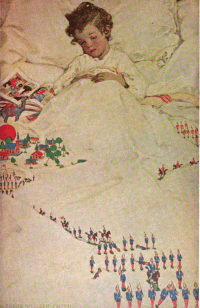
Jessie Willcox Smith, A Child’s Garden of Verses

There are always a lot of reissued classics by noted illustrators, and 1925 was no exception. The year’s crop includes A Child’s Garden of Verses, Robert Louis Stevenson’s 1885 collection, with illustrations by Jessie Willcox Smith. Smith’s black-and-white illustrations aren’t particularly memorable, and some of the poems
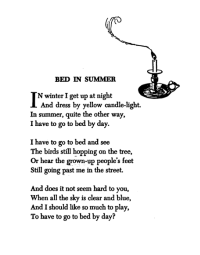
hold up better today than others,
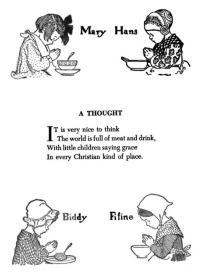
but Smith’s color plates do Stevenson’s poems justice.
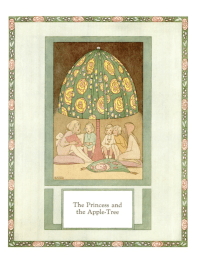
Henriette Willebeek LeMair, A Gallery of Children

A.A. Milne, who had a huge success with When We Were Very Young in 1924, is all over the place in 1925. A Gallery of Children is a collection of stories with illustrations by Henriette Willebeek LeMair. Pioneering children’s librarian Annie Carroll Moore**** tells us in an October roundup in The Bookman that Milne wrote the stories to go with the pictures rather than the other way around, and it shows. The pictures are indeed wonderful, but the stories are a mixed bag.
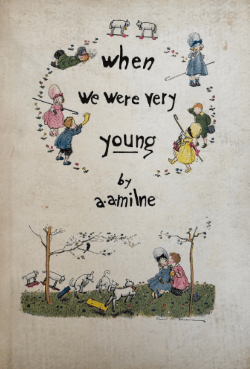
Cover illustration by E.H. Shepard

So if you’re going to go with Milne this season you might want to opt for When We Were Very Young, which is out in a new holiday edition, larger in size, and, as Marcia Dalphin is all excited to tell us in a December holiday children’s book roundup in The Bookman, with a picture of Christopher Robin as a frontispiece. I couldn’t find the original edition, so I don’t know if the frontispiece wasn’t there in that one or if Dalphin just wasn’t paying attention back in 1924. So that we can all share in the excitement, here it is.

E.H. Shepard, When We Were Very Young

For Middle-Grade Readers

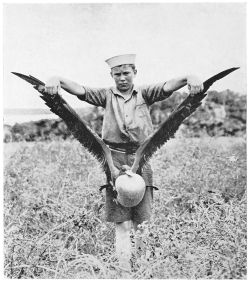
Photograph of David Binney Putnam, David Goes Voyaging

David Goes Voyaging, written by twelve-year-old David Binney Putnam, is the story of his experience as a cabin boy on the Arcturus expedition, a six-month-long journey to the Sargasso Sea and the Galapagos islands led by naturalist William Beebe. David’s age led me to suspect that he was yet another fake child author, but a look at the text convinced me that it was written by an actual twelve-year-old: “The writing took quite a long time, and I think being a naturalist would be more fun than being a writer. Anyway, my stories help me remember the fun we had on the Arcturus. I don’t see how it could have been much better.” David’s father was the promoter George Palmer Putnam, who married Amelia Earhardt in 1931, and David would go on to have a number of other adventures dreamed up by his publicity-hungry father.
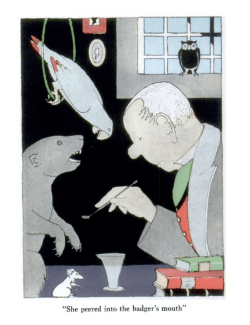
Hugh Lofting, Dr. Dolittle’s Zoo

At the beginning of Dr. Dolittle’s Zoo, written and illustrated by Hugh Lofting, Dr. D’s parrot Polynesia bemoans the addition of yet another installment to the series, the fifth since the publication of Dr. Dolittle in 1920. This one, about a cageless zoo where the animals can leave whenever they want, seems to be one of the more innocuous installments in the sometimes horribly racist series.
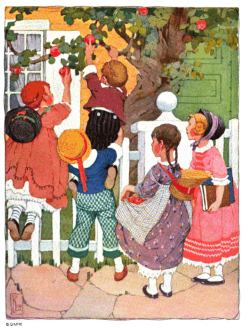
Gertrude A. Kay, Adventures in Our Street

Adventures in Our Street, written and illustrated by by Gertrude A. Kay, starts promisingly with these endpapers,
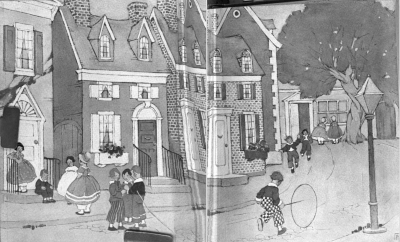
but the characters are all referred to by names like Two-Braids and the Door Slammer, which I took as a bad sign at first. The book turns out to be witty, though, as well as being beautifully illustrated. I even warmed up to some of the children’s epithets, especially The-Children-Who-Broke-All-Their-Toys-on-Christmas.

In Dorothy Canfield Fisher’s Made-to-Order Stories, it’s the author’s 10-year-old son Jimmy who’s giving the orders. He draws the line at fairies “because they’re foolish,” hates things that couldn’t possibly have happened, and despises stories that try to teach you something without your knowing it. Jimmy shows up at the beginning of each story, giving instructions, and again at the end, quibbling about plot holes. Jimmy went on to be an army surgeon in World War II and, sadly, died in the Philippines in 1945.
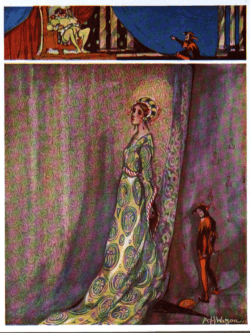
Illustration by A.H. Watson from “The Princess Who Could Not Laugh,” Number Three Joy Street

The Joy Street anthology series is coming off a rough year: Anticipating the third volume, Annie Carroll Moore says in her Bookman roundup that Number Two was “so disappointing to children that we reluctantly withhold our recommendation until we have sampled its contents with children under ten years old.” I checked out one story in Number Three Joy Street, “The Princess Who Could Not Laugh” by, you guessed it, A.A. Milne. What finally made the princess laugh was someone slipping on a plate of butter. Not being a fan of slapstick, I’m withholding my recommendation too.
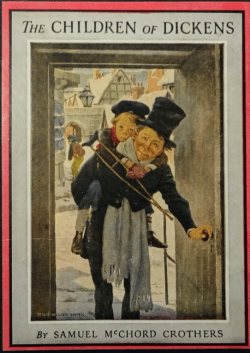
Jessie Willcox Smith

Reading The Children of Dickens by Samuel McChord Crothers is like being stuck next to someone at a dinner party who insists on recounting the plots of one Dickens novel after another. Jessie Willcox Smith contributes charming illustrations, though.
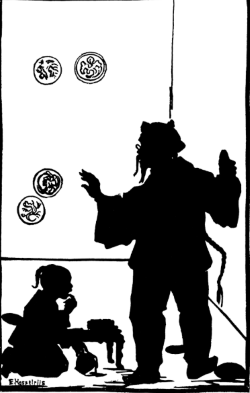
Else Hassleriis, Shen of the Sea

Shen of the Sea by Arthur Bowie Chrisman is the year’s Newbery Medal winner, but I had a hard time getting into it. People say “honorable” a lot. The author of a post on the book on the blog Orange Swan, who had more perseverance than I did, called both Chrisman’s stories and Else Hassleriis’s illustrations “faux Chinese” and noted that Chrisman had never visited China.
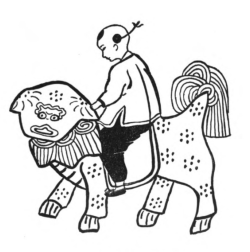
Ling Jui Tang, “The Rabbit Lantern”

The Rabbit Lantern, a collection of stories about Chinese children, didn’t appear in any reviews, let alone win a Newbery (I spotted it in an ad alongside the roundup in The Outlook). Author Margaret Rowe and illustrator Ling Jui Tang have way better China credentials than Chrisman, though. Rowe grew up in China, the daughter of missionaries, and Ling Jui Tang, according to the ad, was Chinese. I’m not qualified to judge the tales’ authenticity, but the book’s a lot livelier than Shen of the Sea.*****
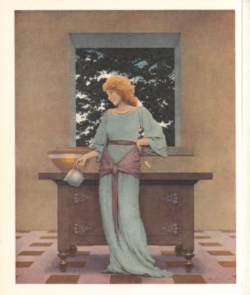
Maxfield Parish, The Knave of Hearts

“Worth all it costs,” the Independent’s D.R. tells us of Louise Saunders’ The Knave of Hearts, with illustrations by Maxfield Parrish. Someone tore out the part of the page where the price was listed, though, so I don’t know how much that is. The illustrations by Parrish make up for the text, which is in the form of a long, tedious play.
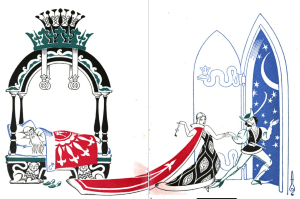
Boris Artzybasheff, The Forge in the Forest

Marcia Dalphin tells us in The Bookman that The Forge in the Forest by Padraic Colum is “a book with a fine stirring atmosphere in it, and the stroke of iron and iron.” Alice M. Jordan tells us in the Independent that Boris Artzybasheff’s illustrations have “a half-barbaric quality.” My brain can’t absorb another folk tale at this point, so I’ll take their word for it.

For Older Readers

Dalphin comments that, for older children, “stories of distinction are hard to come by”—a problem I’ve observed year after year in this age group. There are a number of re-illustrated classics on offer, including James Fenimore Cooper’s The Deerslayer, with illustrations by N.C. Wyeth,
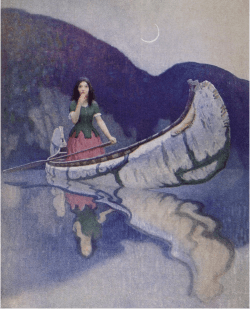
N.C. Wyeth, The Deerslayer

an abridged edition of Victor Hugo’s Les Miserables, with illustrations by Mead Schaeffer,
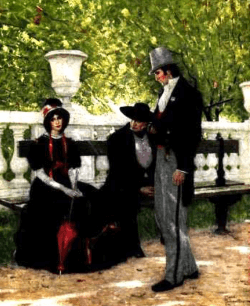
Mead Schaeffer, Les Miserables

and Lewis Carroll’s Alice’s Adventures in Wonderland, with illustrations by Arthur Rackham.
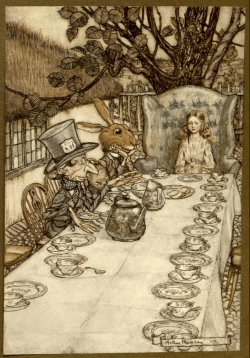
Arthur Rackham, Alice’s Adventures in Wonderland

The Flying Carpet, an anthology of poems and stories by noted writers, has been getting a lot of buzz. Contributors include Thomas Hardy, with just a short poem at the beginning, and, again, A.A. Milne, with a poem that will appear in his 1927 collection Now We Are Six.
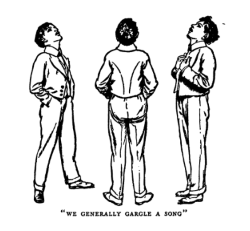
Illustration from “Neil and Tintinnabulum,” The Flying Carpet

The highlight for me, though, is a story by Peter Pan author James M. Barrie called “Neil and Tintinnabulum,” about a seven-year-old boy who’s sent off to boarding school. Barrie tells it in a meta way, saying at one point of a plot twist, “The situation is probably unparalleled in fiction.”
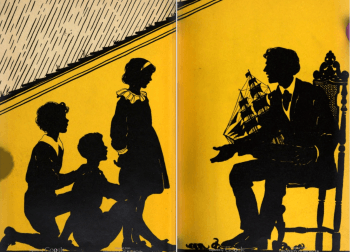
Edith Ballinger, Rain on the Roof

Every year I check out the latest Cornelia Meigs book, and every year I regret it. Rain on the Roof starts out with, yes, rain, and then the sun comes out, and then there’s a swallow, and…I’m done. The endpapers are cool, though.
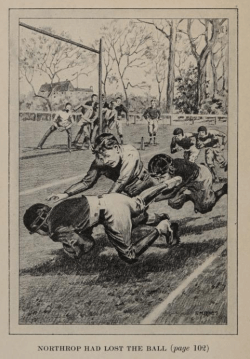
Frank M. Rines, Friends and Rivals

Alice M. Jordan, writing in the Independent, has this generic praise for Friends and Rivals by Arthur Stanwood Pier: “A real story with real characters.” After initially thinking, “Wait, isn’t that the gay hockey show?” (no, that’s Heated Rivalry), I checked it out and found myself getting into the story, about a sickly young man with a coddling mother who goes to boarding school and presumably—I didn’t get that far—joins the football team.
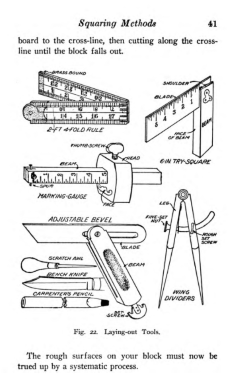
Chelsea Fraser, The Practical Book of Home Repairs

For the mechanically minded, there’s The Practical Book of Home Repairs by Chelsea Fraser, which Edmund Pearson, writing in The Outlook, calls “a severely practical volume” for boys and men. If the young person in your life is into soldering and repairing the water supply, this is just the thing.
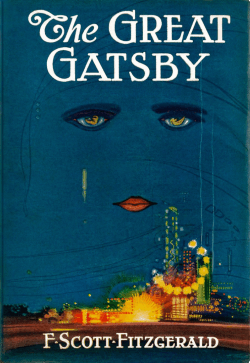
Cover illustration by Francis Cugat

If not, how about giving your young friend a book full of love and parties and heartbreak and jazz and flowing white dresses? It got so-so reviews, but trust me on this one.

For All Ages
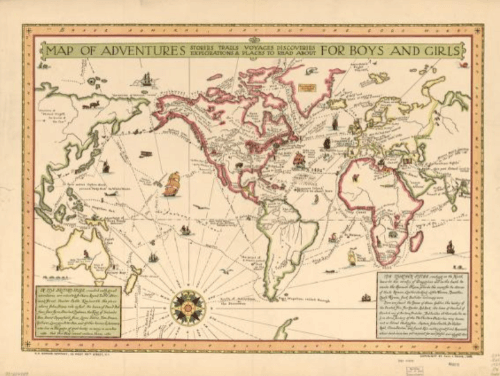
World Map of Adventures for Boys and Girls

If you can’t choose just one book, this Map of Adventures for Boys and Girls features 150 fictional and real-life adventures from children’s books throughout the ages. It is, Library Journal tells us, available free of charge from the Syracuse Public Library. Many of the adventures don’t hold up to contemporary sensibilities, but as an illustrated guide to the history of children’s reading it’s a marvel.

The Verdict

I have to say that I agree with Pearson that the number of children’s books of genuine merit published in 1925 is small. It’s an era of brilliant illustrators, and of advances in printing technology that allow for numerous color pages in vivid hues. With a few exceptions, though, it’s not an age of brilliant children’s writers. There aren’t any new books on this list that children are still reading today. But that’s not unusual—most years don’t give us a children’s book that will stand the test of time.

Some years do, of course—stay tuned for 1926!

*Pearson, a librarian and true-crime writer best known for a book about the Lizzie Borden case, does not seem to have been in a particularly good mood when he wrote the Outlook column. It ends with this writeup of The Fat of the Cat, and Other Stories by Gottfried Keller, translated by Louis Untermeyer: “My informant told me that it was one of the very best books of the season. I pass this information on for those who like to read about cats. I don’t. In my opinion, there are only two good cats in literature; one of them is in ‘Huckleberry Finn’ and the other is in ‘Penrod:’ one is dead and one is down a well.”

**Granted, sometimes it was down to the wire—last year’s roundup appeared on Christmas night.

***O’Donaghue is also the author of The Rachel Incident, one of my favorites of the books I read this year—high praise since this was one of my best reading years ever.

****Annie Carroll Moore, whose first name was actually Annie, officially changed it to Anne in her fifties to avoid confusion with another woman named Annie Moore who, what are the odds, was also writing about children’s libraries. Personally, I think she should have gotten dibs on Annie, having basically invented the profession of children’s librarian. In any case, she’ll always be Annie to me.

*****Rowe later ended up in a tragic love triangle involving her husband, who was a curator of Asian art, and a visiting linguist who, according to an account of the affair in the New York Times, was beguiled by the “Orientalism” of the Marches’ Detroit home.

A Pioneering Gay Novel of 1919

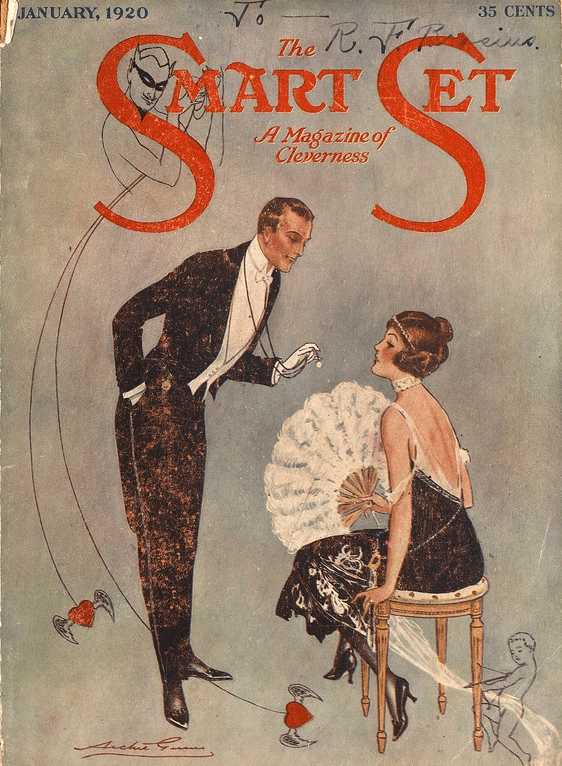
Early this year, I was reading H.L. Mencken’s fiction roundup in the January 1920 issue of The Smart Set in search of a good book. I didn’t have much hope, given Mencken’s generally dim view of the novels of the day.

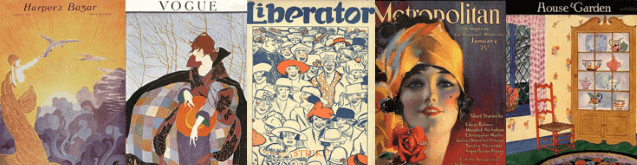
Smart Set cover, January 1910

So I was pleasantly surprised to come across his review of Henry B. Fuller’s novel Bertram Cope’s Year, which he calls “a very fair piece of writing, as novels go. A bit pizzicato; even a bit distinguished.” I enjoy academic novels, and Mencken described Bertrand Cope’s Year as a comic romp featuring a young college instructor who haplessly endures various townspeople’s attempts to ensnare him into romantic and social entanglements. I Googled the book, expecting to get the usual array of low-quality Amazon reprints and not much else.* To my surprise, I found a Wikipedia entry saying that Bertrand Cope’s Year is “perhaps the first American homosexual novel.”

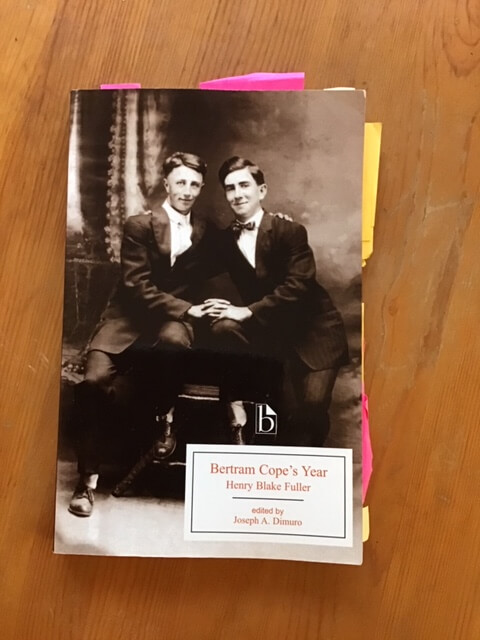
I immediately downloaded it on my Kindle and started reading. I made it about halfway through, but, this being early March, life and COVID intervened and I ended up putting it aside.** When I resumed, it was in the much more palatable form of this attractive annotated edition by Broadview Editions:

Photo of Bertram Cope's Year by Henry B. Fuller

Bertram Cope is a 24-year-old instructor and master’s degree student at a Northwestern-like university in the Evanston-like town of Churchton, Illinois. Cope is strikingly handsome; I picture him as a young blond Cary Grant. As soon as he shows up, the entire population of Churchton, male and female, goes into a swoon and sets out to ensnare him. Medora, a prosperous widow, installs him in her social set and, although clearly pining for him herself, throws her three young artistic protégées in his path. Much sitting in parlors ensues.

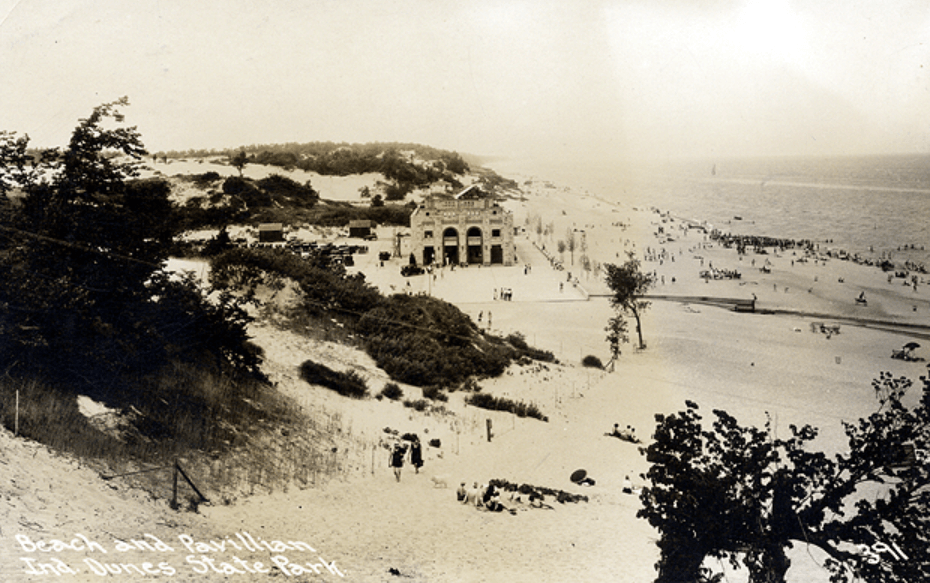
Randolph, a middle-aged businessman, schemes to become Bertram’s “mentor,” but, you know, the kind of mentor who moves to a bigger apartment so as to have a more suitable setup in case Bertram comes over for dinner and gets snowed in for the night. (This fails, but he does finagle some skinny-dipping at the Indiana Dunes.)

Postcard of Indiana Dunes, early 20th century

Postcard of Indiana Dunes, ca. 1910-1920 (rootsweb.com)

Meanwhile, all Bertram wants to do is set up housekeeping with his devoted friend Arthur, who’s back home in Wisconsin. When Randolph invites Bertram to accompany him on an overnight trip, Arthur puts the kibosh on it, even though the “fickle” Arthur (Bertram’s word) has been known to go on similar weekend jaunts himself.

(We’re getting into spoiler territory here, so if you’re planning to read the book, or just find plot summaries tedious, skip down to the photo of Henry Fuller.)

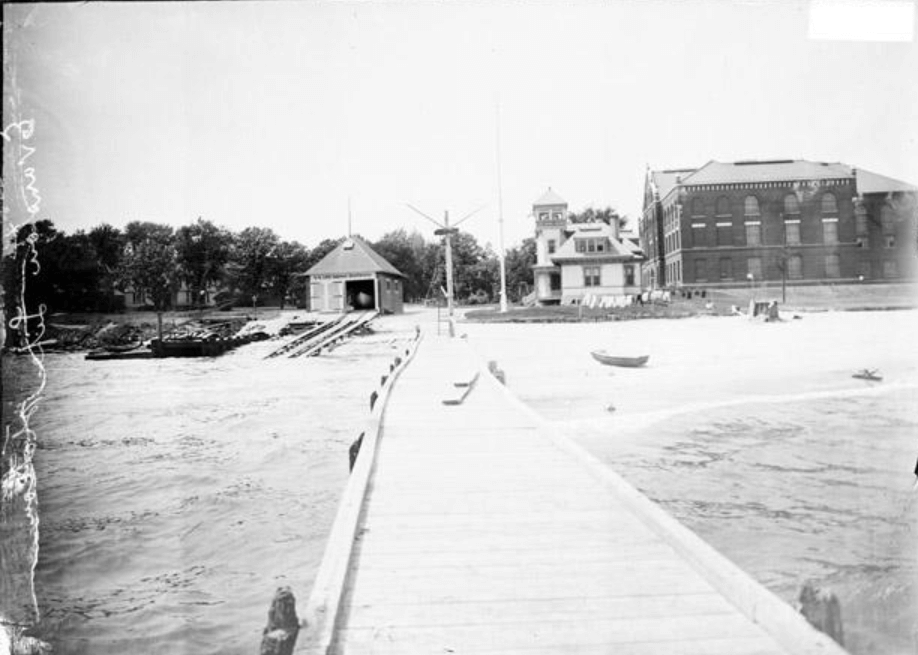
Evanston lifesaving station, 1910.

Evanston Life-Saving Station, 1910 (Chicago Daily News)

Amy, the most determined protégée, takes to stalking Bertram. One day they just happen to meet on the university campus and end up going for a sail. The boat capsizes, the two struggle to the shore, and Amy turns this into a tale of heroism on Bertram’s part even though, in Bertram’s opinion, if anyone did any saving it was Amy. This is the most exciting thing that has happened in Churchton in months, even more exciting than the time when Bertram fainted during one of Medora’s soirées. Amy starts blathering about “happiness” on their walks, and, without Bertram knowing exactly what happened, they end up engaged.

Arthur, as you can imagine, is NOT happy. Neither are Medora and Randolph, who conspire to throw a hail-fellow-well-met type named Pearson into Amy’s path. Between that and Bertram’s unavailability to see Amy ever, which even she sees as a red flag, the engagement comes to an end, to Bertram’s huge relief.

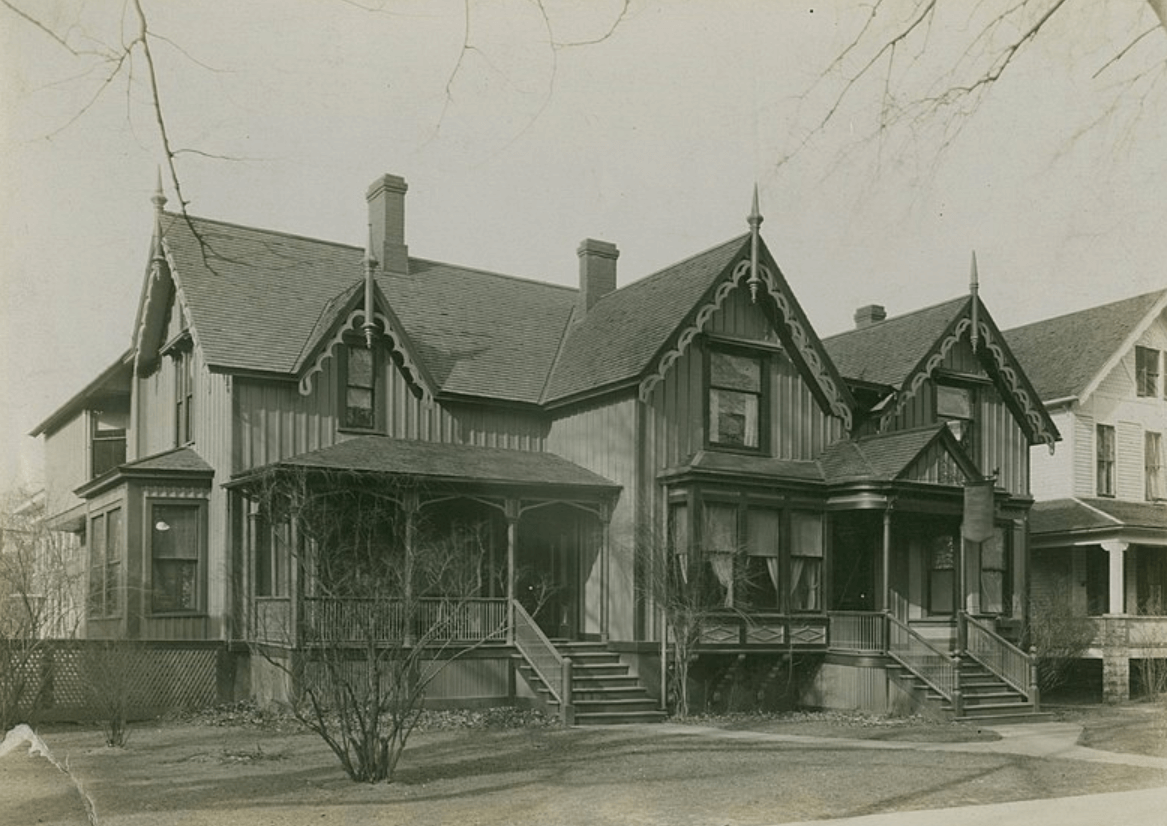
Frances Willard House, Evanston, Illinois.

Frances Willard House, Evanston, Illinois, early 20th century

Bertram and Arthur set up a home together and live in blissful cohabitation, so blissful that it starts raising eyebrows. Their PDAs prompt Medora’s disabled relative Foster, whose main activity in life is making caustic comments, to recall the time when similar behavior by a newlywed couple in Sarasota prompted an elderly woman to complain that they “brought the manners of the bedchamber into the drawing-room.”

Further complications ensue in the form of Hortense, another of Medora’s protégées, who makes a play for Bertram by painting his portrait. When Bertram, having learned his lesson from the Amy fiasco, rejects her, she flies into a fury, tears the portrait in half, and tells Bertram that his “preposterous friendship” with Arthur will not last long.

Arthur, meanwhile, has thrown himself into his female part in the campus theatricals.

Their room came to be strown with all the disconcerting items of a theatrical wardrobe. Cope soon reached the point where he was not quite sure that he liked it all, and he began to develop a distaste for Lemoyne’s preoccupation with it. He came home one afternoon to find on the corner of his desk a long pair of silk stockings and a too dainty pair of ladies’ shoes. “Oh, Art!” he protested.

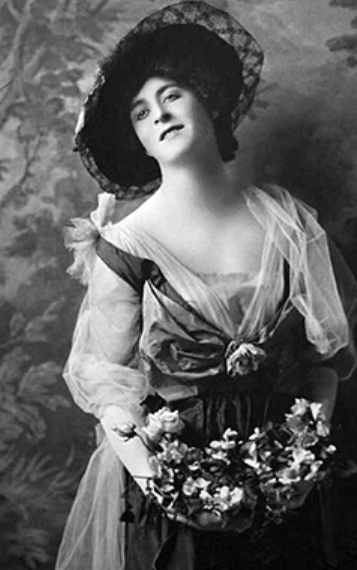
F. Scott Fitzgerald, Triangle Club production, Princeton, 1915.

F. Scott Fitzgerald in a Triangle Club production, Princeton University, 1915

When the big night finally arrives, the townspeople squirm at Arthur’s all-too-convincing female impersonation at first, but his final number brings down the house. Unfortunately, Arthur doesn’t know when to stop, and his post-curtain pass at a male costar who can’t take a joke (if it was one) is met with a whack. No prizes for guessing who gets drummed out of town as a result of this incident.

Bertram, having earned his master’s degree, hightails it for the East Coast, where he has gotten a job at an “important university.” Medora and Randolph admit defeat, but Carolyn, the third protégée, is in hot pursuit. The story ends with us wondering whether Bertram ends up with her or with Arthur.

“AR-THUR, AR-THUR, AR-THUR, AR-THUR,” contemporary readers call out in unison. Given that Bertram managed to escape Amy’s clutches when she was a) right there in Churchton and b) actually engaged to him, I’m fairly confident that he’ll succeed in giving Carolyn the slip. But this wasn’t such a slam-dunk case in 1919. Once again, I picture Cary Grant’s desperate, trapped expression at the supposedly happy ending of every romantic comedy he starred in.***

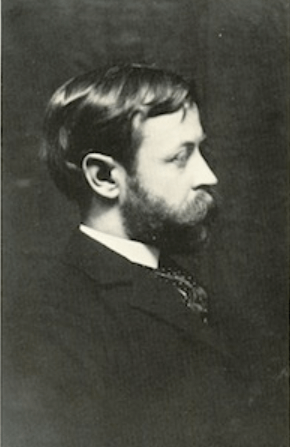
Henry B. Fuller, ca. 1893

Who, I wondered, was Henry Fuller? And how did this book come to be published in 1919?

Fuller, it turns out, was a well-established 62-year-old Chicago writer when Bertram Cope’s Year was published. He got his start in his twenties with allegorical travel novels about Italy, which sound heinous but brought him attention among the genteel New England literary set. He then turned to realist novels about his gritty native city. Along the way, he wrote a play about a young man who commits suicide at the wedding of his former (male) lover.

Fuller also wrote literary criticism for The Dial and other publications. Once I looked up his reviews, I realized that I had read quite a few of them.**** If you want to save yourself the trouble of spending a year reading as if you were living 100 years ago, just take my word for it that all literary criticism, by Fuller and everyone else (except H.L. Mencken), sounds exactly like this snippet from Fuller’s review in The Dial of a book of lectures by Lafcadio Hearne:

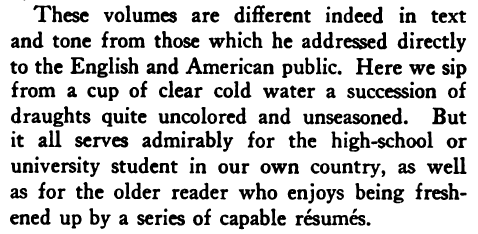
Text from an article by Henry Fuller, The Dial, January 17, 1918.

The Dial, January 17, 1918

The depiction of homosexuality in Bertram Cope’s Year is often described as subtle, an argument I have trouble buying unless your definition of subtle is that no one marches down the street waving a rainbow flag. Judging from all the rejections Fuller received, the publishing industry had no trouble understanding what the book was about. It ended up being published, at Fuller’s expense, by a small Chicago publishing house owned by his friend Ralph Fletcher Seymour.

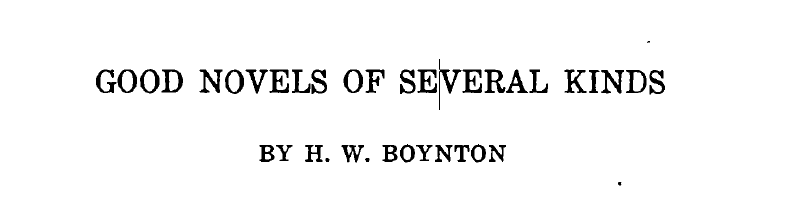
The Bookman headline, Good Novels of Several Kinds, May 1920

The Bookman, May 1920

The conventional wisdom, to the extent that there is conventional wisdom about Bertram Cope’s Year, is that the book was ignored or condemned by critics. However, in addition to Mencken’s write-up, it received favorable or semi-favorable reviews from The Bookman (“the kind of novel which must be enjoyed not for its matter so much as for its quality, its richness of texture and subtlety of atmosphere”), The Booklist (“live enough people and a sense of humor hovering near the surface”), and The Weekly Review (“a mild affair altogether whose sole and sufficient distinction lies in the delicate perfection of its setting forth”). This is a fair amount of press for a book from a small publisher. None of the reviews mention the homosexuality angle. Poor Arthur is nowhere to be seen, and some of the reviews portray Bertram’s desperate flight from Carolyn as a possible budding romance. It wasn’t until Carl Van Vechten published a laudatory essay in 1926 that the true subject of the book was acknowledged.

What was going on here? Did the reviewers just not get it? This seems impossible, but it’s hard, looking back from the knowing present, to see things through the lens of another era.***** Maybe they were just protecting the delicate sensibilities of their readers? But, in that case, why bother to review the book at all?

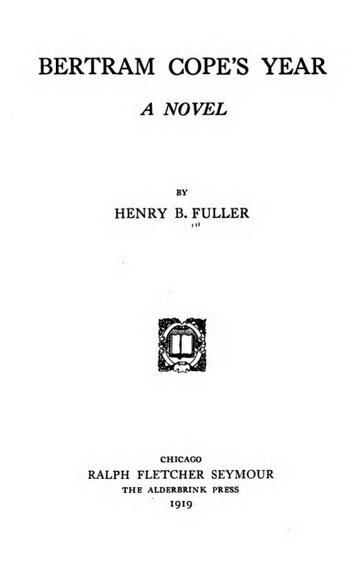
Title page, Bertram Cope's Year, by Henry B. Fuller, 1919.

HathiTrust Digital Library

It was a moot point in the end. Bertram Cope’s s Year sold very few copies. “My disrelish for the writing-and-publishing game is now absolute,” Fuller wrote to his friend Hamlin Garland in May 1920. ”There seems to be no way for one to get read or paid, so—Shutters up.” Fuller continued writing non-fiction, but he abandoned fiction for almost a decade, before writing one last novel that was published posthumously in 1929.

Fuller fell into obscurity after his death, but Bertram Cope’s Year has found a new life in the 21st century. The book was republished in 1998, with an afterword by Andrew Solomon, and a critical edition (the one I read) was published in 2010.

Wikipedia’s assertion that Bertram Cope’s Year is the first gay American novel falls apart upon examination. There is, for example, Bayard Taylor’s Joseph and His Friend, published in 1870, about a young Pennsylvania farmer who falls in love with a man who cares for him after a train crash. Edward Prime-Stevenson’s 1906 novel Imre: A Memorandum, is arguably the first American novel to depict an actual gay relationship, although some claim that it doesn’t count because it was published in Europe, where New Jersey-born Prime-Stevenson lived. Alan Dale, the hack drama critic whose play about an unrepentant unwed mother I wrote about a while back, published the gay melodrama A Marriage Below Zero in 1889, two years after he left Britain for the United States.

Vintage photo, young male couple.

boobob92******

So I guess the best claim we can make for Bertram Cope’s Year is that it’s the first novel by an American writer that was published in the United States, features a loving gay couple, and doesn’t end in a tragic death.******* Which is a bit of a mouthful as firsts go, but still one worth celebrating.

squiggle

*Don’t get me started on the shady business of print-on-demand. Four-point font! Typos on the cover! The totally wrong book (I’m talking to you, Robert Chambers’ The Tree of Heaven labeled as May Sinclair’s The Tree of Heaven)!

**Which is what I do with almost every book I start reading on my Kindle in any case.

***I didn’t actually re-watch every Cary Grant romantic comedy to fact-check this assertion, so I’m open to correction here. Still, I do get a “gay man trapped by determined women” vibe from his oeuvre as a whole.

****Among other things, Fuller started a heated debate about whether novels were too long or too short that I came in in the middle of. (No one thought that they were the right length, apparently.)

*****It wasn’t until probably my fourth reading of The Great Gatsby a decade or so ago that it struck me that the scene at the end of the second chapter where Nick is in Myrtle’s neighbor’s apartment is the aftermath of a gay sexual encounter. It seemed so unmistakable that I marveled that I could ever have missed it. I’ll try to remember to put in a link when the copyright expires at the beginning of 2021. If I forget, remind me. (UPDATE 6/4/2021: Here it is.) (P.S. If you didn’t look at the caption below the photo of the person wearing the hat, go back and check it out!)

******This photo was posted on the Flickr site of a collector of vintage postcards who thinks it looks a lot like Bertram and Arthur. I agree!

*******Although I worried a little, given that Bertram, in addition to his fainting episode, was constantly getting sick.