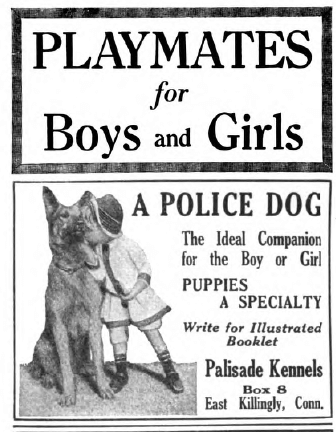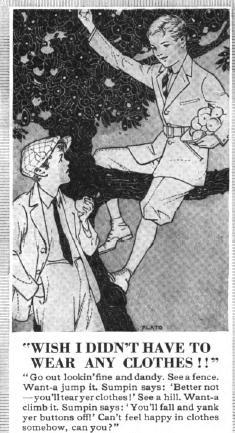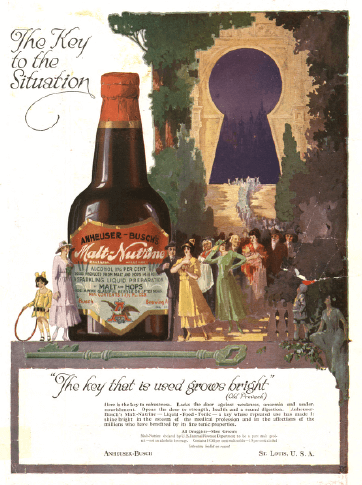
Category Archives: Magazines

My Sad Search for 1918 Love

After almost a year in 1918, I have yet to find a decent man.

If I were gay, I’d have it made—this was the golden age of (if not for) lesbian women. Amy Lowell! Willa Cather! Little Review editor Margaret Anderson! Dancer Maud Allan! Plus lots of probablys like Jane Addams and Edna Ferber. But no, I’m stuck with men.
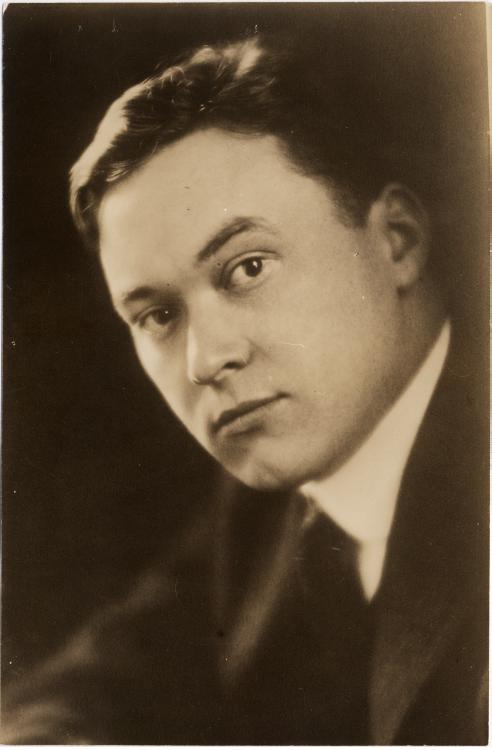
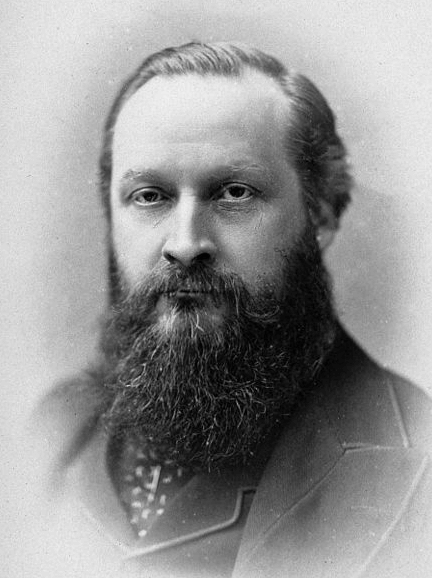
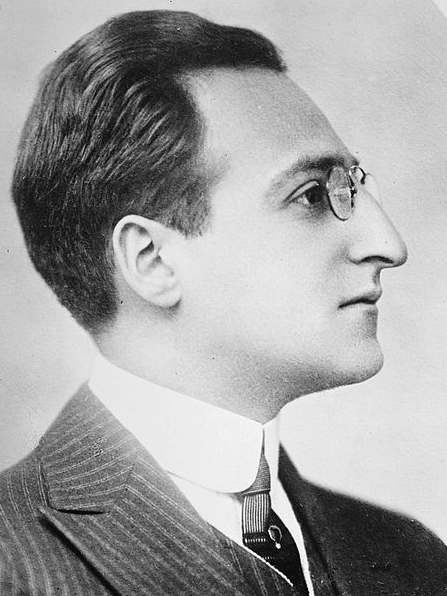
Portrait photograph of Walter Lippmann, 1914.

Walter Lippmann (Pirie MacDonald, 1914)

Back in January, I checked out two prospects*, H.L. Mencken and Walter Lippmann. Mencken’s denunciation of American Puritanism and hypocrisy appealed to me, but then he started going on about Jews and using racial slurs and I was over him. Lippmann seemed stodgy at first, but he won me over by sneaking a bunch of double-entendres into a sober discussion on prostitution in his 1912 book A Preface to Politics.

But then he disappeared, as seemingly good men often do. Having left the New Republic to head up the War Department’s propaganda office in Paris, he was almost invisible in 1918. The only traces of him I could find (aside from a swipe from Mencken about his “sonorous rhapsodies”) were two New York Times articles from right before the armistice about an operation he was running to drop leaflets over Germany.
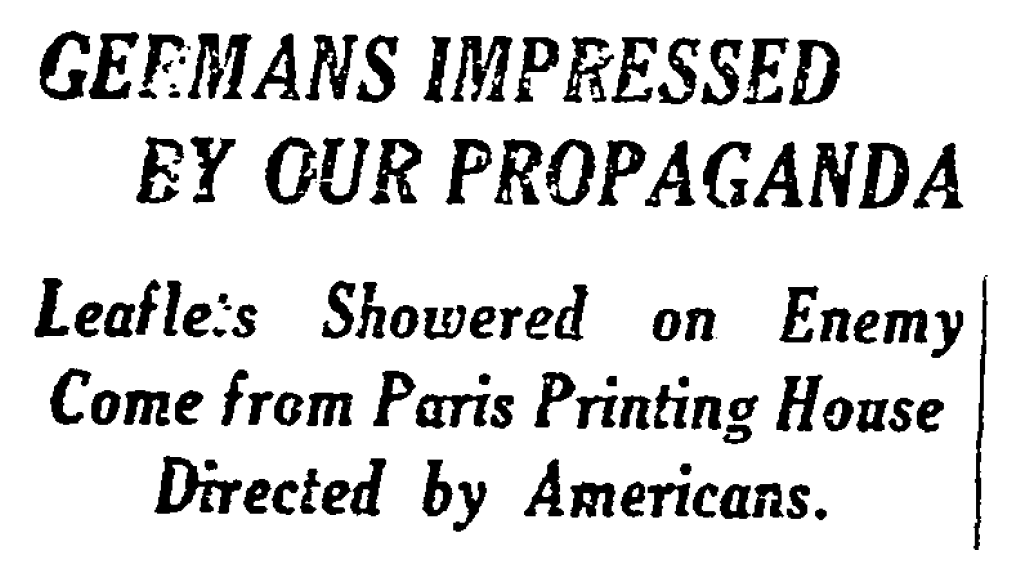
New York Times headline beginning Germans Impressed by our Propaganda, November 9, 1918.

New York Times, November 9, 1918

So my search continued. After ruling out men who

I was left with ten men worth a closer look.

T.S. Eliot
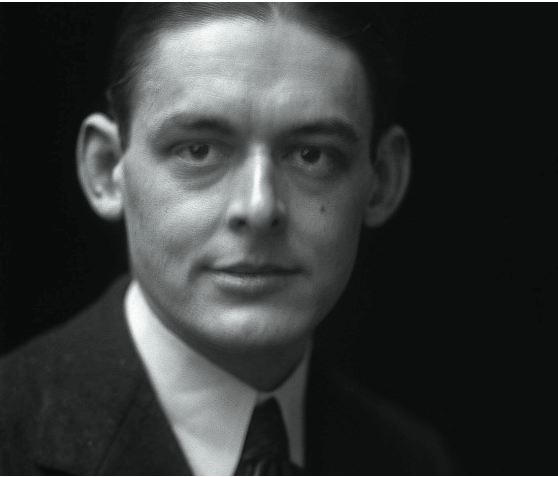
Portrait photograph of T.S. Eliot, 1919.

T.S. Eliot (E.O. Hopp, 1919)

T.S. Eliot was my first 1918 love, way back in the eighties, when the internet wasn’t invented so people had to entertain themselves by memorizing The Love Song of J. Alfred Prufrock. Or maybe that was just me. You can disturb MY universe any time, T.S., I would say to myself. Even then, though, there were warning signs. Like how in the very next poem he’s hanging out with an older woman and wondering if he would have a right to smile if she died. But what can I say? I was twenty-two.

As I read more Eliot, and learned more about him, disillusionment set in. For a lot of reasons, but the anti-semitism alone would have been enough. It’s evident already in 1918, in the poem “Sweeney Among the Nightingales,” published in the September 1918 issue of The Little Review.***

Good-bye, T.S.!

George Jean Nathan

Portrait photograph of George Jean Nathan.

George Jean Nathan, date unknown

If Mencken wasn’t the guy for me, what about George Jean Nathan, his best pal and Smart Set co-editor, who was also the preeminent drama critic of his time? Smart and funny and urbane, and an excellent source of theater tickets.

Digging around to find out whether he shared Mencken’s anti-semitism, I learned that he was part Jewish himself—and that he went to great lengths to hide this. Which would be a deal-breaker today, but those were different times. Case in point: movie star Lilian Gish, whom Nathan was madly in love with, supposedly broke up with him when she learned of his Jewish roots.

But have you seen All About Eve? If so, do you remember the poisonous middle-aged critic who was squiring around 24-year-old Marilyn Monroe? Turns out he was based on Nathan.

Good-bye, George!

Alan Dale
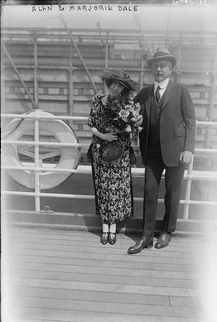
Photograph of Alan Dale and his daughter on a ship, 1900.

Alan Dale and his daughter Marjorie, 1900 (Library of Congress)

More than anything else I’ve written about this year, the story of Alan Dale’s play The Madonna of the Future has stuck with me. A Broadway play about a society woman who becomes a single mother by choice and acts like it’s no big deal? In 1918? How could this be? (Well, it wasn’t for long—facing obscenity complaints, the play closed after a month or so.) I was intrigued. Who was this Alan Dale person?

The hackiest of Broadway hacks, as it turns out. According to Nathan, the British-born Hearst drama critic (real name Alfred Cohen) perpetrated

the sort of humor…whose stock company has been made up largely of bad puns, the spelling of girl as “gell,” the surrounding of every fourth word with quotation marks, such bits as “legs—er, oh I beg your pahdon—I should say ‘limbs’,” a frequent allusion to prunes and to pinochle, and an employment of such terms as “scrumptious” and “bong-tong.”

I couldn’t be with someone who said “bong-tong.” Plus, might the author of the first gay-themed novel in the English language, which Dale also was, possibly be gay?****

Good-bye, Alan!

W.E.B. Du Bois

Portrait photograph of W.E.B. Du Bois, 1918.

W.E.B. Du Bois, 1918

Du Bois was a brilliant thinker and a wonderful writer and his magazine The Crisis is one of my favorite discoveries of 1918. But, the world being what it was in 1918, this wasn’t going to happen.

Plus, he intimidates the hell out of me.

Good-bye, W.E.B.!

H.G. Wells

Photograph of H.G. Wells, ca. 1918.

H.G. Wells, ca. 1918

Wells was the alpha male of the British literary scene, regarded as one of the greatest writers and thinkers of his day. It would no doubt astonish a 1918 person to learn that he would be known in the future primarily as a science fiction writer.

As a romantic partner, though? Bad news! Married to his cousin, he was always sleeping with other women, including a Soviet spy and birth control pioneer Margaret Sanger. Who at least could be relied on not to get pregnant, unlike 26-year-old writer Rebecca West and the daughter of one of his Fabian friends, both of whom bore him children.*****

Good-bye, H.G.!

James Hall
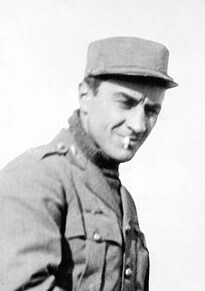
Photograph of James Hall in military uniform smoking a cigarette, 1917.

James Hall, 1917

James Hall lied and said he was Canadian to get into World War I, was caught and got kicked out, joined the American branch of the French air force, and was shot down just after he was finally able to fly under American colors. He was feared dead but turned out to have been captured by the Germans. After the war, he moved to Polynesia and co-wrote, among other books, Mutiny on the Bounty.

A cool guy, but I’m not into the swashbuckling type.

Good-bye, Jimmy!

Christopher Morley

Portrait photograph of Christopher Morley sitting at a table, ca. 1918.

The Bookman, February 1918

A prolific young literary man-about-town, Morley published the popular novel Parnassus on Wheels and a book of poetry called Songs for a Little House in 1917 and an essay collection in 1918. He was also the literary editor of Ladies’ Home Journal. He married young, stayed married, and never got up to any shenanigans that I know of.

On the other hand, this is how he wrote about his wife:
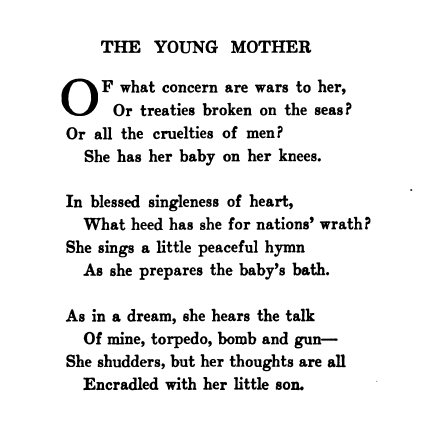
Text of poem The Young Mother, beginning, Of what concern are wars to her, or treaties broken on the seas?

Songs for a Little House

I would die.

Good-bye, Christopher!

Harvey Wiley

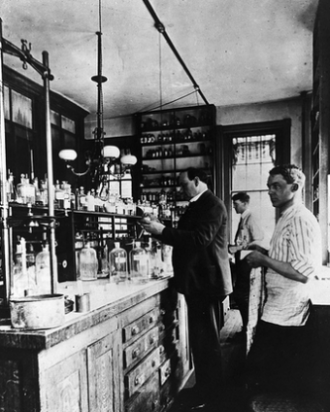
Photograph of Harvey Wiley sitting at desk, ca. 1900.

Harvey Wiley, ca. 1900

Harvey Wiley fought against toxic preservatives in foods and was a driving force in the creation of the FDA. He’s one of my 1918 heroes.

Most of the badmouthing I’ve read about Wiley has broken down on examination. It’s been said that he thought women were stupid, but I haven’t found any evidence.****** He’s been called a eugenicist, but the main case for the prosecution is him saying in Good Housekeeping that there’s no better genetic stock than Scots-Irish, which I think was just him being funny because that’s his background. (This is, in any case, pretty mild as eugenics goes.) I’ll have to wait until 2019 rolls around and I can read his new biography to get the lowdown.

In the meantime, though, there’s this: if you’re the kind of guy who, at age 55, is so taken with your 22-year-old secretary that after she leaves you carry her picture around in your watch for ten years until you run into her on a streetcar and marry her, you’re probably not the guy for me.

Good-bye, Harvey!

Louis Untermeyer

Photograph of Louis Untermeyer in silhouette with pince-nez, ca. 1910-15.

Louis Untermeyer, ca. 1910-1915 (Library of Congress)

Untermeyer is one of those 1918 people I remember from when I was growing up, the editor of pretty much every literary anthology I came across. In 1918, he was all over the place, writing criticism for The Dial and The New Republic and poetry for The Smart Set and many other publications. He’s like a non-smarmy Christopher Morley. His wife, Jean Starr Untermeyer, was also a poet. I thought I might have found my man.

Then I looked into his life. He and Jean divorced in 1926, then he married someone else, then he and Jean got married again in 1929 but divorced in 1930. Then he married a judge named Esther Antin, and they lasted for over a decade, but then he got a Mexican divorce. She was presumably the wife who said in a lawsuit that he was, at 63, “still an inveterate anthologist, collecting wives with an eye always open for new editions.” His last marriage was to a much younger Seventeen magazine editor who wrote a book about their cat.

Good-bye, Louis!

William Carlos Williams
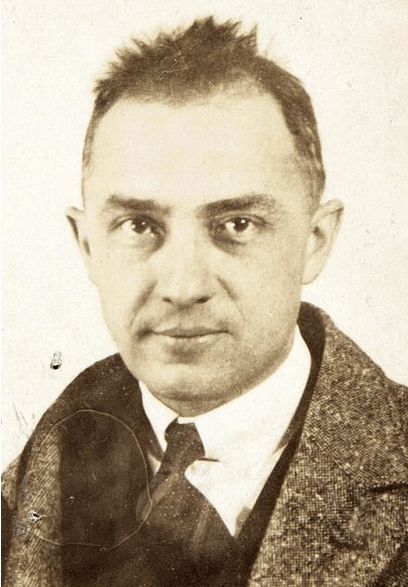
Photograph of William Carlos Williams, 1921.

William Carlos Williams, 1921

And now for the one who broke my heart.

William Carlos Williams seemed like the ideal man. A groundbreaking poet AND a successful pediatrician. From New Jersey, like me. Part Puerto Rican, so I could practice my Spanish!

We even had a meet-cute story: In an early post, I trashed his foray into Cubist poetry. Kind of like H.G. Wells and Rebecca West, who met after she panned a book of his, except without the part where she immediately gets pregnant and they don’t admit to their son for quite a while that they’re his parents.

It was the 1917 collection Al Que Quiere! that made me fall in love. In “Danse Russe,” he dances around naked in his study, admiring his butt in the mirror, as his wife and nanny and children are napping. In “January Morning,” a poem I love so much I memorized all 500+ words of it, he takes us around Weehawken, New Jersey and environs, dancing with happiness on a rickety ferry-boat called Arden.

Here’s how the poem ends:

Well, you know how the young girls run giggling
on Park Avenue after dark
when they ought to be home in bed?
Well, that’s the way it is with me somehow.

A cheerful modernist, what a concept!

And there’s more. Judging from “Dedication for a Plot of Ground,” his tribute to his fierce, difficult grandmother, he appreciated strong women. He was attractive in a non-threatening way.******* Politically progressive without being loony. And a great family man! He married his wife Flossie in 1912 and they stayed married, stolen plums and all, until his death in 1963. Aside from the minor issue of how you could be named William Williams and then name your son William, he seemed perfect.
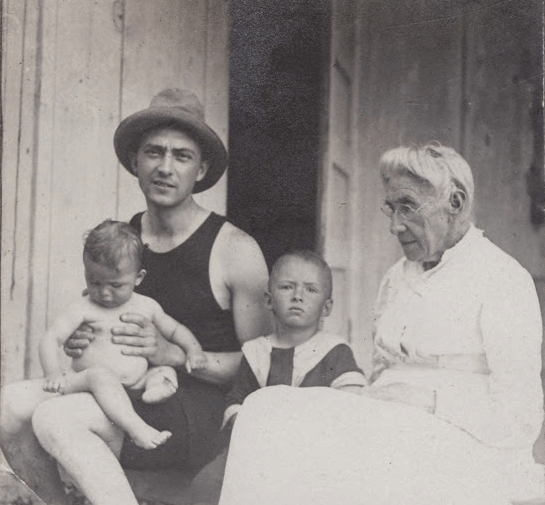
Photograph of William Carlos Williams, wearing fedora, with mother and sons, ca. 1918.

William Carlos Williams with his sons, Paul and William, and his mother, Raquel Helene Rose Hoheb Williams, ca. 1918

The first warning sign came at the end of Al Que Quiere!: a reference to “lewd Jews’ eyes” in the long poem “The Wanderer.” An isolated incident, I hoped. But, when I looked further, it all started to fall apart. The final blow came in a Washington Post review of a 1981 biography of Williams. The biographer acknowledges that he threw around an anti-Jewish ethnic slur but says that this wasn’t antisemitism, it was just part of the “popular racial myths of his time.” The reviewer responds, “Exactly. ‘Popular racial myths’ are what racism consists of.”

Exactly.

Good-bye, W.C.!

At this point I threw up my hands and said,
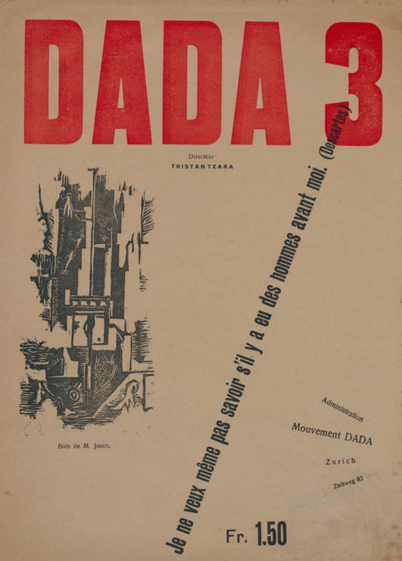
Cover of Dada 3 magazine, December 1918, with text Je ne veux meme pas savoir s'il y a eu des hommes avant moi - Descartes.

Dada 3, December 1918

Which, if you don’t know French (and yes, Ezra Pound, there are such people), means “I don’t even want to know if there were men before me.”

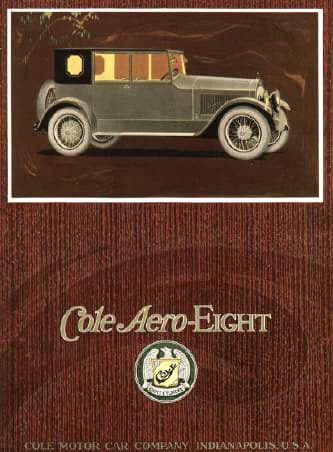
There are lots of ways 1918 was better than 2018. Cars looked cooler

Advertisement for Cole Aero-Eight with picture of car, 1918.

and magazine covers were more attractive
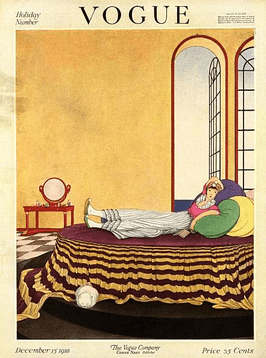
Vogue Magazine cover, woman reclining on bed in front of open window, December 15, 1918

George Wolfe Plank, Vogue, December 15, 1918

and, regardless of whether you’d want to marry them, these men were part of a far greater literary age than our own.

But my search for 1918 love has made me grateful that I’m living in a world of 2018 men.

Especially the one I married 15 years ago today.
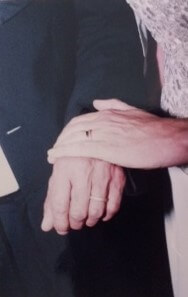
Close-up of clasps hands of bride and groom.

Happy anniversary, S.!

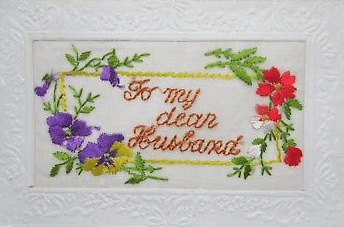
Embroidered postcard reading For my dear husband, with flowers.

Silk embroidered postcard, WWI

*I’m not being fussy here about whether people were single in 1918 (Mencken was; Lippmann wasn’t), or whether they were age-appropriate for a 100-years-older me.

**Who I just now found out was the father of Joan Aiken, one of my favorite children’s authors (The Wolves of Willoughby Chase, etc.).

***Also, Virginia Woolf called Eliot’s first wife a bag of ferrets around his neck in her journal, and I’d hate it if she said that about me.

****Judging from the photo, he had a daughter, but that didn’t mean much in 1918.

*****He also slept with the daughter of another Fabian friend, and when fellow Fabian Beatrice Webb called this a “sordid intrigue” he lampooned her and her husband Sidney in a novel.

******He did think some women were stupid, but that’s because they were.

Q and A from Dr. Wiley's Question Box, woman asking if Crisco is Ivory soap without the scent, July 1918.

Dr. Wiley’s Question-Box, Good Housekeeping, July 1918

*******If you beg to differ, that’s his passport photo. I got mine taken this week, and even though I made them retake it six times it still looks like the picture of Dorian Gray.
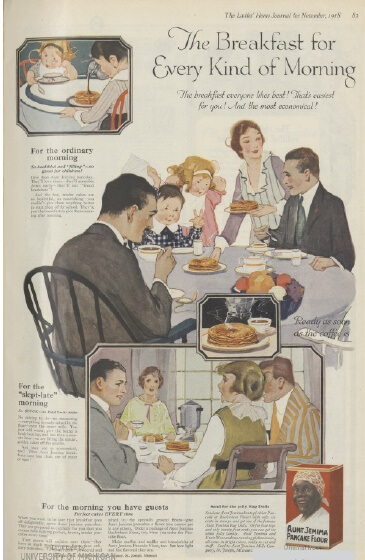
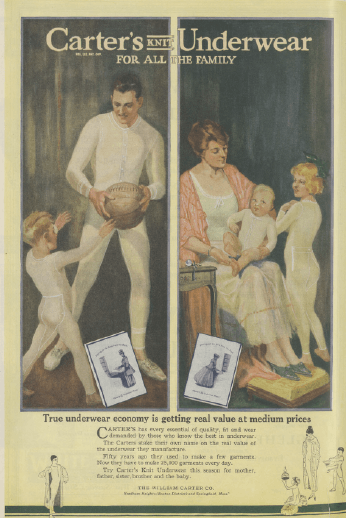
1918 Miscellany: Perplexing ads edition

What to serve for breakfast to your two husbands and your children who are drawn in a completely different style.

1918 ad for Aunt Jemima pancake mix with family eating at table.

Ladies’ Home Journal, November 1918

The whole point of UNDERwear has eluded this family.

1918 Carter's Underwear ad with family members wearing long underwear.

Ladies’ Home Journal, November 1918

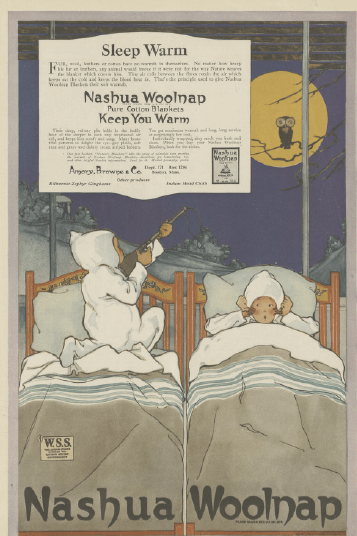
Cuuuuuute!

1918 Nashua Woolnap ad with child in bed aiming rifle at owl.

Ladies’ Home Journal, December 1918

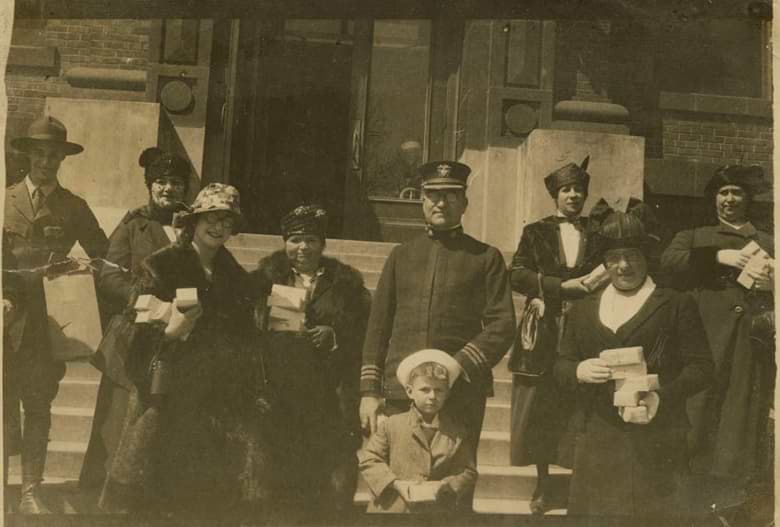
And happy Hanukkah to all who celebrate!*

1918 photograph of people bringing Chanukah gifts to soldiers.

Carrying Chanuka gifts to hospitalized servicemen at the Ninth Naval District Hospital, Great Lakes, Illinois, 1918 (American Jewish Historical Society)

*The first night of Hanukkah in 1918 was on Thanksgiving (November 28). The holidays next coincided in 2013; they won’t do so again until 2070.

The best and worst of November 1918: Fake and real armistices, osculation, and meat we’ll learn to like

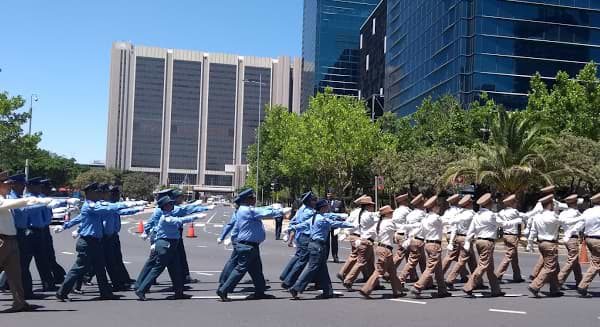
With the centenary of the Armistice approaching, I wanted to celebrate, but how? I couldn’t find any planned events for Remembrance Day (as it’s called in the Commonwealth) here in Cape Town.* But I knew that veterans lay a wreath at the war memorial every year, so I figured they’d be doing something special for this one. I arrived at 10:30 and found marching bands marching, bagpipers piping (oddly, “Sarie Marais,” an anti-British song from the Boer War) and a big tent full of people. A young woman gave me a paper poppy.

Marching band in Cape Town.

There were prayers, hymns, and a speech by Deputy Mayor Ian Neilson, my old friend from Pretoria in the late eighties. (South Africa can be small-towny like that.) How to celebrate an event like this, in the presence of both current soldiers and elderly white veterans who won their medals doing who knows what, is always a fraught question in South Africa. Ian hit just the right note, highlighting the contributions of black soldiers in South Africa and the United States for whom the Allied victory didn’t bring freedom.

At 11:00, the hour of the Armistice, there was a two-minute silence, a tradition that, it turns out, originated in Cape Town. Representatives of diplomatic missions and veterans’ groups laid wreaths on the monument, and afterwards the rest of us were given white roses. Here’s where I placed mine, thinking about the soldiers I’ve gotten to know in my year of 1918 reading, many of whom who didn’t make it home.

Wreaths at base of monument.

Now on to the best and worst of November.

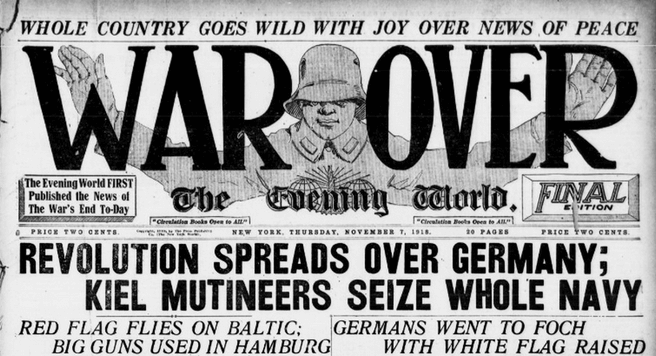
Best fake news: Allies win the war!

New York Evening World headline, War Over.

New York Evening World, November 7, 1918 (Library of Congress)

What’s fake about that, you may be asking. Well, check the date.

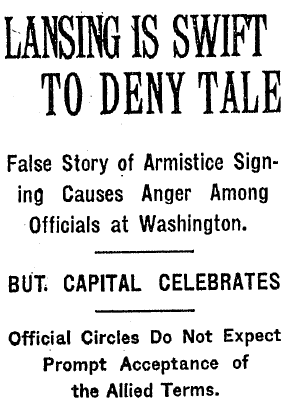
In one of the most monumental screw-ups in the history of journalism, the United Press Association (which later became the UPI) reported on November 7 that the war had ended. According to a gloating report in the New York Times, which didn’t run the erroneous story, reporters mistook a ceasefire in an area where French and German officials were meeting for the end of the war. The censors, who were responsible for weeding out secrets, not errors, OK’d the story, and the agency cabled its headquarters. Which didn’t bother to check with officials in Washington, the attitude being “What do they know?” Newspapers rushed out extra editions.

New York Times headline, Lansing is Swift to Deny Tale.

New York Times, November 8, 1918

Secretary of War Baker said this was news to him, and Secretary of State Lansing checked with Paris and issued a denial, but no one cared. New Yorkers poured onto the streets. In Washington, newspapers were dropped from helicopters. (CORRECTION: From an airplane. As an alert reader has pointed out, helicopters weren’t invented yet.) 1,500 women workers from the State and War Departments, who apparently didn’t take their bosses any more seriously than anyone else did, rushed over to the White House, where they waved American flags and cheered President Wilson.**

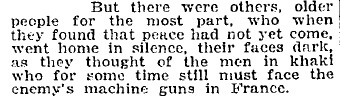
Later that night, when word spread that the war was in fact still going on, a lot of people were too drunk to care.

New York Times text, But there were others...

New York Times, November 8, 1918

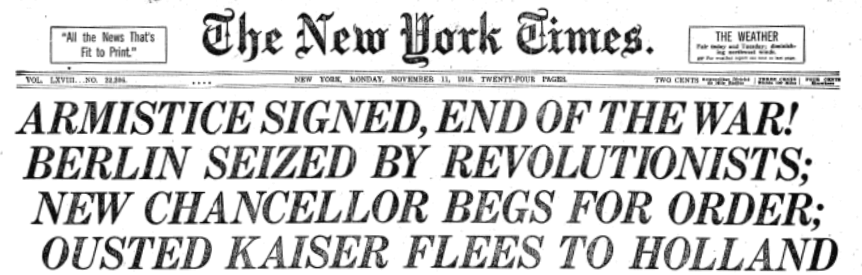
Luckily, only four days passed before the…

Best real news: Allies win the war!

New York Times Armistice headline.

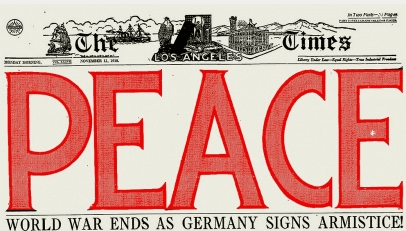
Or, more succinctly and colorfully,

Los Angeles Times headline, PEACE.

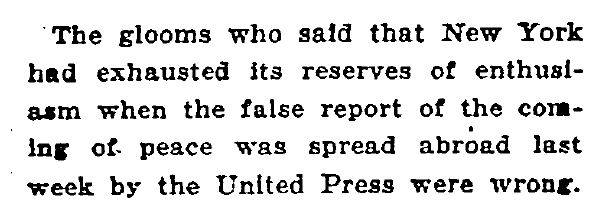
I worried about the fake victory celebration putting a damper on the real victory celebration, but that was just me being a gloom:

New York Times text, The glooms who said that New York...

New York Times, November 12, 1918

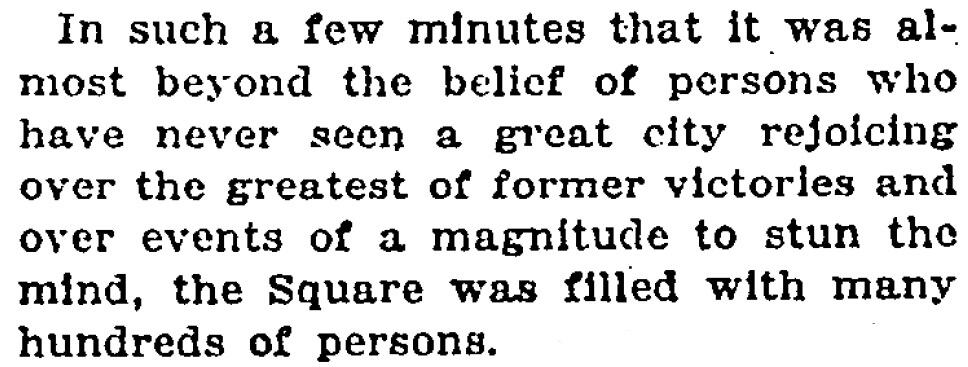
People went wild with joy all over again.

New York Times text, In such a few minutes that it was almost beyond belief...

New York Times, November 11, 1918

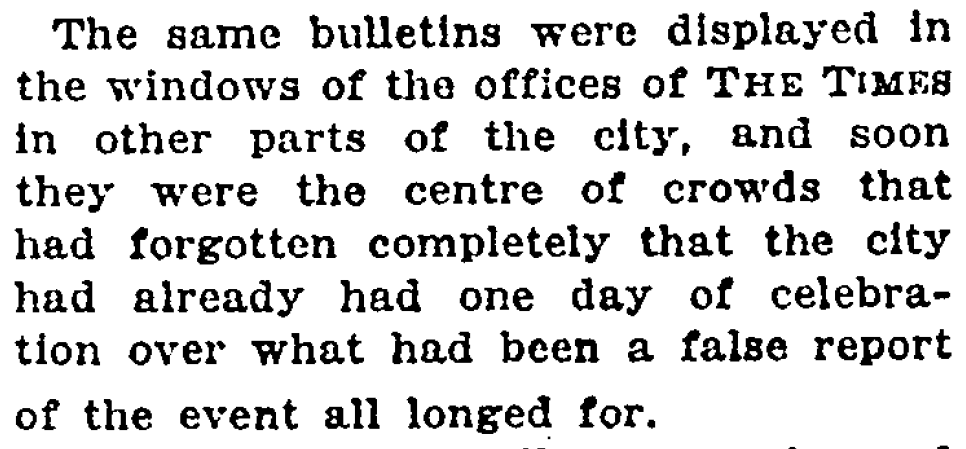
What persons were these, I wondered. Three-day-old persons? But the premature celebration had vanished from everyone’s heads, apparently.

New York Times text.

New York Times, November 11, 1918

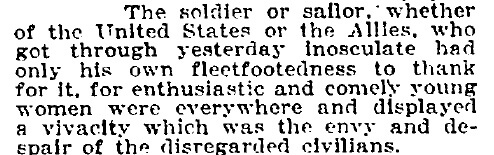
Osculation ensued!

New York Times text, The soldier or sailor...who had got through yesterday inosculate...

New York Times, November 12, 1918

Best cartoon:

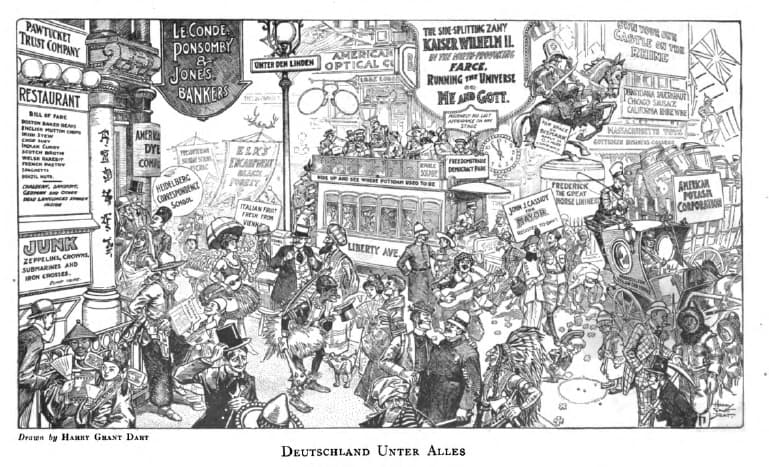
I only kind of get this Harry Gant Dart cartoon–something about the Germans not being in control of their own country anymore–but the drawing is amazing and it’s a refreshing change from all the cartoons about people hanging and strangling the Kaiser.

Cartoon of Berlin full of foreign people, stores, etc.

Judge, November 30, 1918

Best illustration:

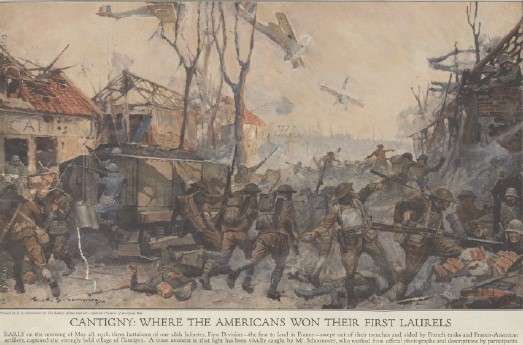
Amid the celebration, a reminder of the conflict’s cost.

Painting of battle at Cantigny.

Frank E. Schoonover, Ladies’ Home Journal, November 1918

Worst Thanksgiving celebration:

New York Times headline, Day's Cheer for Wounded.

New York Times, November 29, 1918

According to the New York Times, New Yorkers were eager to entertain the troops, including 750 convalescent and wounded soldiers who had returned from France during the week and were quartered at Debarkation Hospital No. 3 at 18th Street and 6th Avenue. Between them, they had received 1,400 invitations–two each! Lavish dinners and theater tickets had been laid on. But, when their uniforms returned from the sterilization department and the soldiers “prepared to don them to sally forth to the feasts,” it turned out that they had  shrunk beyond recognition. A “big soldier,” presented with his outfit, declared it a “Boy Scout uniform.”

Many unsuccessful efforts were made by others to wear the shrunken military garb, and, of course, regulations barred them from appearing on the streets in any other clothes.

An emergency order went out, and 125 uniforms were procured. What to do with the rest of the soldiers? Waive the regulations in appreciation of the sacrifices they had made in securing the biggest military victory of all time? Don’t make me laugh!

The fortunate wearers of these went forth, while the others, grumbling at their ill-luck, reclothed themselves in pajamas and hospital blankets.

Thank you for your service, boys!

Worst Meats:

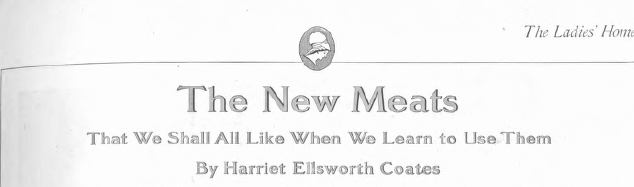
The headline had me worried

Headline, The New Meats That We Shall All LIke When We Learn to Use Them.

Ladies’ Home Journal, November 1918

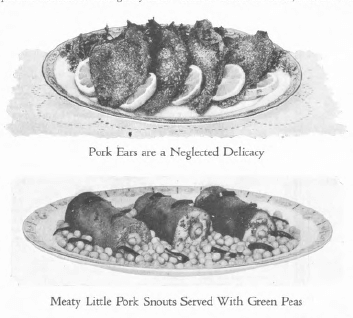
and the illustrations confirmed my worst fears.

Illustration captioned Meaty Little Pork Snouts Served with Green Peas

Worst ad:

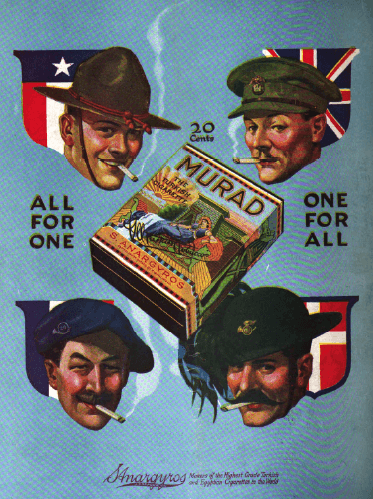
Since you didn’t die in the war…

Murad cigarette ad with Allied soldiers smoking.

Judge, November 9, 1918

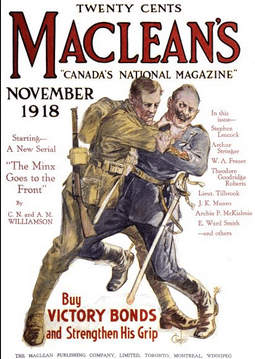
Worst magazine cover:

Like I said, not a fan of the Kaisercide trope.

Maclean's magazine cover, soldier strangling Kaiser.

Best magazine cover:

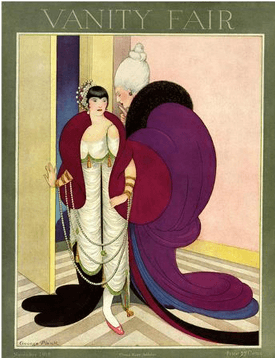
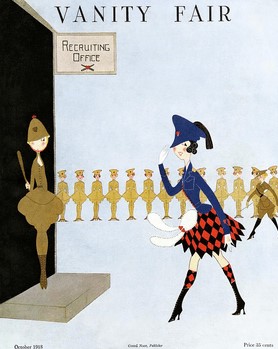
I like this George Wolfe Plank Vanity Fair cover a lot,***

Vanity Fair cover of society women whispering to other woman.

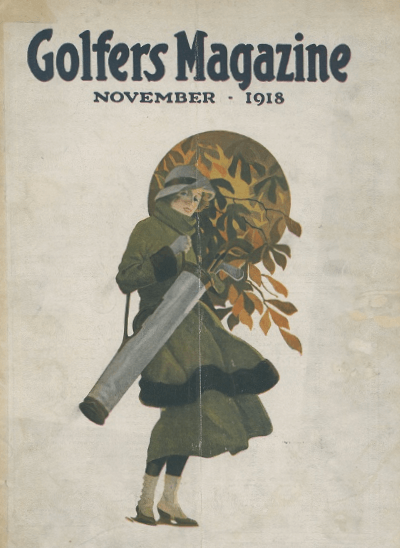
and also the crisp, clear lines of this one from Golfers Magazine,

Golfer's Magazine cover of woman with golf bag.

but the best cover award has to have something to do with what happened during this momentous month.

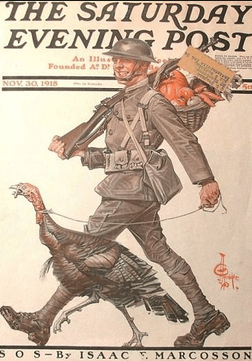
This J. C. Leyendecker Saturday Evening Post cover is wonderful, but I’ve already given it enough love.****

Saturday Evening Post cover of soldier walking turkey.

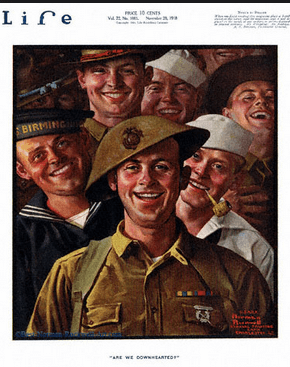
I was just about to bestow the award on Norman Rockwell’s joyful soldiers on the cover of Life

Norman Rockwell Life magazine cover of smiling soldiers, 1918.

Life, November 28, 1918

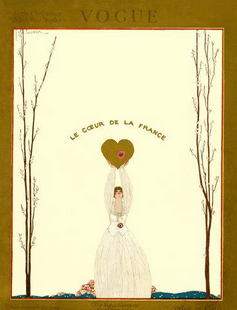
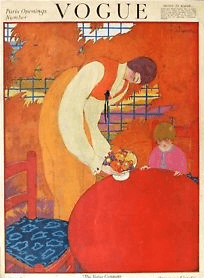
when I thought, “Wait, what about Vogue?”, and found the winner, this gorgeous, understated Georges Lepape cover:

Georges Lepape cover of woman holding up heart, caption Le Coeur de la France, 1918.

Vogue, November 15, 1918

On to—can it be?—December!

*Of course, only reading news from 100 years ago didn’t help.

**This item, which I cribbed from Whatever It Is, I’m Against It, makes me blush on behalf of my fellow women State Department workers.

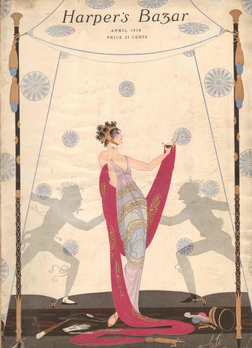
***If you’re wondering what’s happened to Erté, there aren’t any copies of the October and November 1918 issues of Harper’s Bazar, or even the covers, anywhere on the internet as far as I can tell.

****Fun fact: the soldier is Neil Hamilton, who later played Police Commissioner Gordon on Batman.

Saturday Evening Post cover, soldier walking turkey, 1918.

10 1918 People I’m Thankful For

1918 is a depressing year to look back on: war, influenza, rampant racism and sexism. But when something is depressing in retrospect that means we’ve made progress, right? I don’t mean to sound Pollyannaish about 2018—believe me, I’m not. For Thanksgiving, though, I decided to look at some of the people of 1918 who paved the way for the better world—and, for all its problems, it is a better world—we’re living in today.
So thank you, in no particular order, to

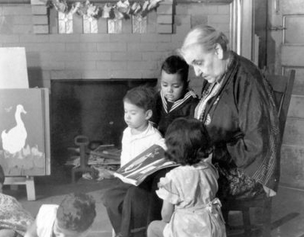
1. Jane Addams and the settlement movement

Jane Addams reading to children at Hull House.

Jane Addams reads to children at Hull House (Jane Addams Memorial Collection, University of Illinois at Chicago)

Jane Addams is one of my 1918 heroes. I had heard of her as the founder of Hull House, the famous Chicago settlement house, which I vaguely imagined as a social services center for the immigrant community. Then I listened to an audiotape of her wonderful memoir Twenty Years at Hull-House and learned that it was so much more—a playhouse and dance hall and crafts museum and lecture theater and book discussion venue and art gallery and sanitation office and whatever else Addams and her fellow settlement workers thought would uplift immigrants from their miserable living conditions. Some of her ideas worked, others didn’t (she discusses the failures with self-deprecating good humor), but she brought astonishing energy and creativity to her mission. Addams received the Nobel Peace Prize in 1931 and is now known as the “mother of social work.”
The rights of immigrants are under threat today, as they were in 1918, but today, at least, there are hundreds of organizations to protect and assist them.

Thank you, Jane Addams!

2. William Carlos Williams and my new favorite poem

William Carlos Williams with his mother and children, ca. 1918.

William Carlos Williams with his sons, Paul and William, and his mother, circa 1918 (Beinecke Library, Yale University)

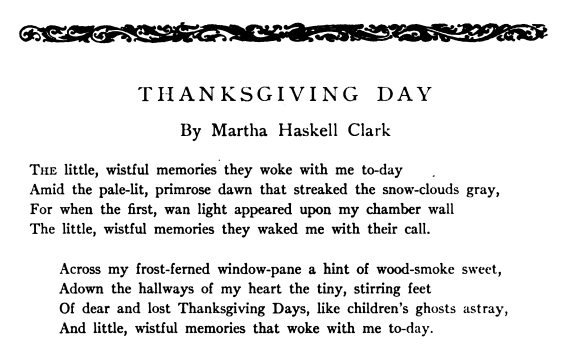
There was a LOT of bad poetry around in 1918. Or not bad, exactly, just sentimental, bland, and innocuous—sitting in the background like wallpaper. Like this poem. (In the unlikely event you want to read the rest, you can do so here.)

Poem, "Thanksgiving Day," 1916.

Scribner’s, November 1916

Then the modernists came along and changed everything. They threw aside Victorian notions of beauty and upliftment, as well as meter and rhyme, and wrote about the world they actually saw. The poet I’ve come to know best over the year (after a rocky start) is William Carlos Williams. I recently memorized his relatively little-known but wonderful poem “January Morning,” an account of his early-morning amblings on a winter day. Here’s how it begins:
I have discovered that most of
the beauties of travel are due to
the strange hours we keep to see them:

the domes of the Church of
the Paulist Fathers in Weehawken
against a smoky dawn–the heart stirred–
are beautiful as Saint Peters
approached after years of anticipation.

(And yes, I typed that off the top of my head. You can check for mistakes, and read the rest of the poem, here.)

Thank you, William Carlos Williams!

3. W.E.B. Du Bois, the NAACP, and The Crisis

Crisis Magazine cover, February 1918, drawing of W.E.B. Du Bois.

Portrait of W.E.B. Du Bois on the cover of The Crisis, February 1918

W.E.B. Du Bois is up there with Jane Addams in my 1918 pantheon. He gave up a successful academic career to edit The Crisis, the NAACP’s magazine for the African-American community. The Crisis took on discrimination and lynching and other horrors, but it also celebrated the achievements of the community’s “Talented Tenth” (like scholar-athlete Paul Robeson) and printed pictures of cute babies.
Thank you, W.E.B. Du Bois!

4. Harvey Wiley, the FDA, and healthy food

Dr. Harvey Wiley in his USDA lab.

Dr. Wiley in his USDA lab (FDA)

If your turkey dinner isn’t full of dangerous preservatives, you have Harvey Wiley to thank. From his lab at the USDA, Wiley pioneered food safety by testing chemicals on a group of young volunteers known as the “Poison Squad.” While his methods wouldn’t get past the ethics committee today, his efforts on behalf of passage of the Pure Food and Drug Act earned him the nickname “Father of the FDA.”

Thank you, Harvey Wiley!

5. Anna Kelton Wiley and women’s suffrage

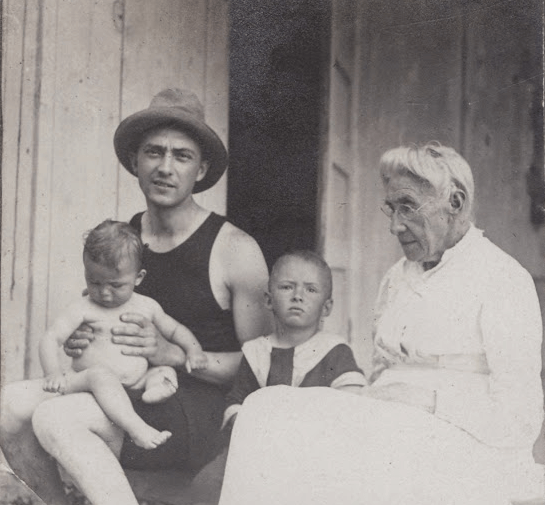
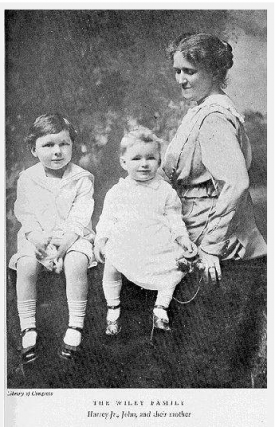
Suffragist Anna Kelton Wiley with her sons.

Anna Kelton Wiley with her sons

Anna who? you may be asking. Anna Kelton Wiley wasn’t America’s most famous suffragist. That would be Alice Paul. Paul deserves our thanks as well, but I thought of Wiley—Harvey Wiley’s much younger wife—because it’s not just the leaders who matter, it’s all the people in the rank and file who fight locally, day by day, for a better world. Women’s suffrage wasn’t a single victory, won in 1920, but a battle fought and won, state by state, over many years. Now more than ever, this is a lesson we need to remember.

Wiley wrote in Good Housekeeping that she and other suffragists decided to picket the White House—a highly controversial move—after less confrontational methods had failed. The demonstrations, she said, were

a silent, daily reminder of the insistence of our claims…We determined not to be put aside like children…Not to have been willing to endure the gloom of prison would have made moral slackers of all. We should have stood self-convicted cowards.

Thank you, Anna Kelton Wiley!

6. Mary Phelps Jacob and comfortable underwear

Photo portrait of bra inventor Mary Phelps Jacob.

Mary Phelps Jacob, ca. 1925 (phelpsfamilyhistory.com)

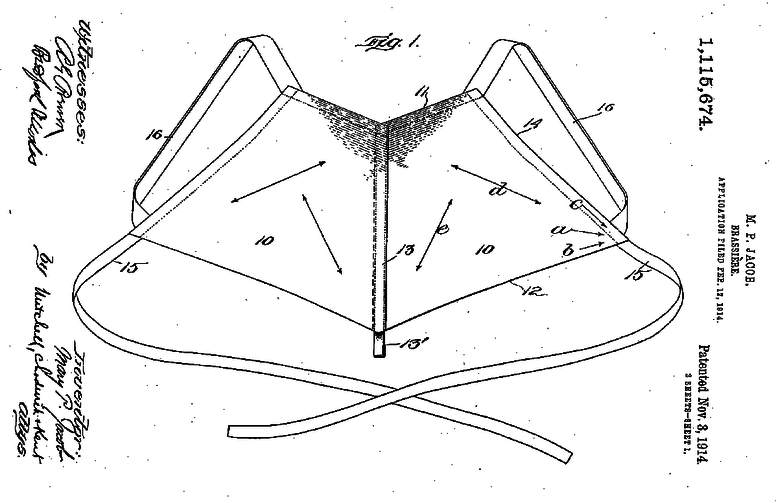
Segueing from women’s suffrage to underwear might seem like going from the sublime to the ridiculous, but it’s all part of the same thing. Disenfranchisement was one way to keep women down; corsets were another. Corsets were still very much around in 1918, but they were on their way out, partly due to wartime metal conservation efforts. And bras were on their way in, thanks to Mary Phelps Jacob, a socialite who, putting on an evening gown one night in 1913, found that the whalebone from her corset was sticking out from the neckline. With the help of her maid, she improvised a garment out of two handkerchiefs and a piece of ribbon. She patented it the next year as the “Backless Brassiere,” and the rest is history.

Brassiere patent drawing, Mary Phelps Jacob, 1914.

Brassiere patent drawing, Mary Phelps Jacob, 1914

Thank you, Mary Phelps Jacob!

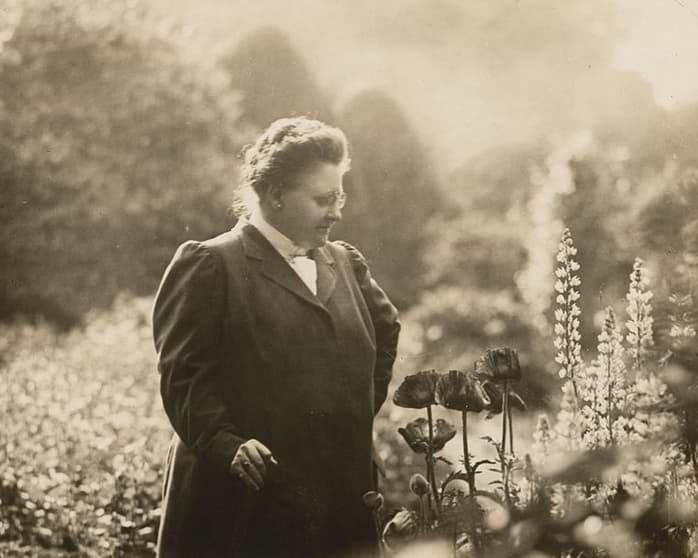
7. Amy Lowell and LGBT pride

Poet Amy Lowell in her garden, ca. 1916.

Amy Lowell, ca. 1916

Amy Lowell wrote about love as she experienced it—with her partner, Ada Dwyer Russell, in the Boston home they shared. They weren’t able to live openly as lovers, and Dwyer destroyed their correspondence at Lowell’s request, but their love shines through in Lowell’s poems. Here’s one of my favorites:

Amy Lowell poem Madonna of the Evening Flowers.

North American Review, February 1918

Thank you, Amy Lowell!

8. Katharine Bement Davis and sexual freedom

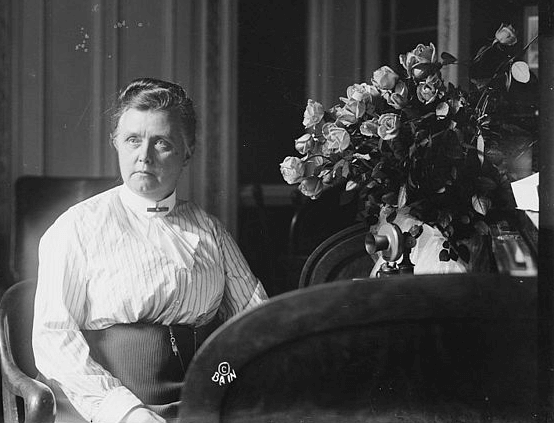
Photograph of Katharine Bement Davis , 1915.

Katharine Bement Davis, 1915 (Bain News Service)

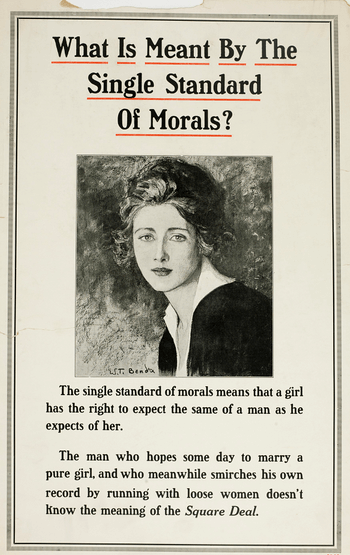
We think of sexual freedom as the right to sleep with whoever we want, inside or outside marriage. It is that, of course, but it also involves rights that we take so much for granted today that we don’t even think about them. Like the right of a wife who has contracted a sexually transmitted disease from her husband not to be lied to by her doctor. The right of a young woman to know the facts of life rather than being kept in ignorance to uphold an ideal of “purity.” The right of a teenager not to live in fear that masturbation will lead to blindness and insanity. The right of a couple to practice birth control without risking prison.

Poster with caption What is Meant by the Single Standard of Morals?

Poster, War Department Commission on Training Camp Activities, ca. 1918

Katharine Bement Davis, a settlement worker and social reformer, was at the forefront of the fight against sexual ignorance. When the United States entered World War I, venereal disease turned out to be rampant among recruits. Davis wrote in the Annals of the American Academy of Political and Social Science that combating this epidemic required efforts—and knowledge—on the part of “both halves of the community which is concerned.” Davis and her team at the Section on Women’s Work of the Sexual Hygiene Division of the Commission on Training Camp Activities educated women on sexual issues with publications, films, and lectures by women physicians.

Okay, Davis’s solution was that no one, male or female, should have sex outside of marriage. And she, like so many progressives, was a eugenicist. Still, breaking down the walls of ignorance was an important step.

Thank you, Katharine Bement Davis!

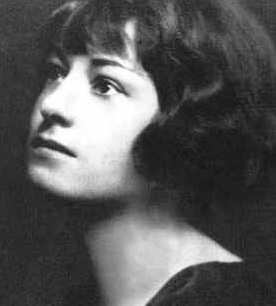
9. Dorothy Parker and humor that’s actually funny

Photograph of young Dorothy Parker, date unknown.

Dorothy Parker, date unknown

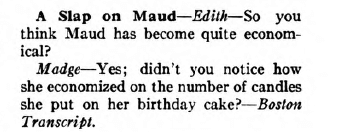
1918 humor was, for the most part, not funny. There were racist and sexist jokes, faux-folksy tales, and labored puns. Here is a joke I picked at random from Judge magazine:

Joke called Slap on Maud, Judge magazine, 1918.

Judge, November 9, 1918

Then Dorothy Parker came along, filling in for P.G. Wodehouse as Vanity Fair’s drama critic, and changed everything. The best way to make a case for Dorothy Parker is to quote her, so here are some excerpts from her theater reviews:

On the musical Going Up, April 1918: It’s one of those exuberant things—the chorus constantly bursts on, singing violently and dashing through maneuvers, and everybody rushes about a great deal, and slaps people on the back, and bets people thousands of stage dollars, and grasps people fervently by the hand, loudly shouting, “It’s a go!”

On the farce Toot-Toot!, May 1918: I didn’t have much of an evening at “Toot-Toot!” I was disappointed, too, because the advertisements all spoke so highly of it. It’s another of those renovated farces—it used to be “Excuse Me,” in the good old days before the war. I wish they hadn’t gone and called it “Toot-Toot!” When anybody asks you what you are going to see tonight and you have to reply “Toot-Toot!” it does sound so irrelevant.

Thank you, Dorothy Parker!

10. Erté and gorgeous magazine covers

Young Roman Petrovich Tyrtov (Erté) at his desk, date unknown.

Roman Petrovich Tyrtov (Erté), date unknown

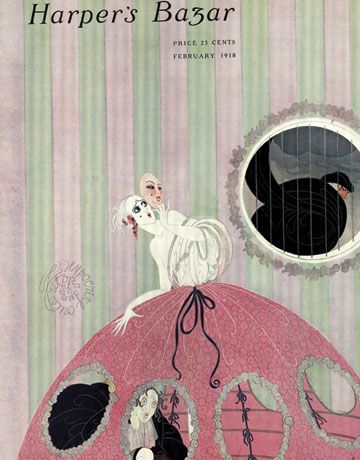
Okay, this doesn’t fit into my theme, because 1918 was the golden age of magazine covers and I get depressed whenever I pass by a 2018 magazine rack. But the beautiful cover art of the era is worth celebrating anyway. There were many wonderful artists, but the master was Erté, who turned twenty-six on November 23, 1918.

Erté Harper's Bazar cover, February 1918, masked woman with man hiding under her hoop skirt.

Erté May 1918 Harper's Bazar cover, woman holding up globe with fireflies flying out.

Thank you (and happy birthday), Erté!

The common thread on this list, I see, is freedom. Freedom for women, immigrants, people of color, and the LGBT community, but also less obvious but still important types of freedom: to wear clothes you can move around in, to know the facts of life, to eat healthy food, and to write about and laugh about the world as it really is.

Happy Thanksgiving, everyone! And thanks to all of you out there who, in large ways and small, are working to make the world of a hundred years from now better than the one we live in today.

Did College Shrink Your Breasts? A Quiz

I’m angry, people!

Over the past year, I’ve traded the horrible news of today for the even more horrible news of 1918, when the world was disease-ravaged and at war, suffragists were greeted with condescending amusement, there was a “Darkies” section in the leading humor magazine, and progressives debated about who should be allowed to breed.

I hate what was happening then, and I hate what’s happening now. But, unlike a lot of my friends, I haven’t fallen into a permanent state of anger and/or depression. It’s a question of temperament, I guess. At heart, I’m a sunny soul.

But then I read an article in the Educational Review called “Sex in Mind and Education,” and I was livid.

I was expecting an entertaining romp through the world of social hygiene, as sex education was known back then.* Instead, I got an article—two, actually, spread over the May and September 1918 issues—about why women are unfit for higher education.

An issue for another day, I thought, since I’ve been trying to focus more on World War I with the centenary of the armistice approaching. But then I remembered the suffragists being asked to put aside their demands because there was a war on. And, skipping back to the present, this West Virginia constitutional referendum I just voted on, which, whatever your views on abortion, is legally meaningless as long as Roe v. Wade is in place and also maybe not the most urgent issue in a state that’s awash in opioids. (UPDATE 11/7/2018: The amendment was approved, 52%-48%.)

West Virginia ballot - referendum on no constitutional right to abortion.

German imperial ambition is, I think we can say with confidence, safely in check. The war on women, not so much. So I retrieved “Sex in Mind and Education” from the “later” pile.

The article, written by British psychiatrist Henry Maudsley, turns out to date back to an 1874 issue of the Fortnightly Review. The Educational Review justifies its republication by noting that it was reprinted and given wide circulation in Mr. C.W. Bardeen’s Series of School Room Classics. Which happened in 1884, so I’m not sure why it was considered timely in 1918. Maybe because Maudsley had just died? Maybe to keep women in their place with suffrage on the rise? Maybe because the journal’s editor was Columbia University’s horrible, reactionary president Nicholas Butler? Maybe all of these things? Who knows?

Photograph of Henry Maudsley, 1881.

Henry Maudsley, 1881

Maudsley’s bottom line: women shouldn’t go to college with men, because menstruation.

Of course, there’s more to his argument than that. He has a LOT of reasons why women shouldn’t go to college with men. But, for someone so esteemed that Britain’s largest mental health training institution bears his name to this day**, he’s not exactly rigorous about evidence. He’s all “it is quite evident that” this and “when we thus look the matter honestly in the face” that.

So I decided to subject his arguments to evidence-based testing by pulling out his assertions so that we college-educated women can compare them to our own experience. And turned them into a quiz, because what woman doesn’t love a quiz? (No need to feel left out, men—we need a control group, so you can take it too.)

Get out your pencils!

  1. If you have a delicate constitution, with little vitality to spare, did you break out into disease when you reached puberty?

YES                         NO                        N/A

  1. In your experience at university, could the difference between between male and female students accurately be described by the expression “for valor he” is formed and “for beauty she and sweet attractive grace”?***

YES                         NO                       N/A

  1. Have childbearing and raising been the most important offices of the best period of your life?

YES                         NO

  1. Did your laborious days of intellectual exercise and production cause injury to your functions as the conceiver, mother, and nurse of children?

YES                         NO

Photograph of women in Radcliffe physics class, 1912.

Radcliffe College physics class, 1912 (Radcliffe College archives)

  1. Has this intellectual exercise resulted in your children being puny, enfeebled, and sickly?

YES                         NO                         N/A

  1. If your household has a male primary caregiver, is he almost as much out of place in caring for the babies as he would be in attempting to suckle them?

YES                         NO                         N/A

  1. If your household has a male primary caregiver, has he abandoned the task in despair or disgust, and concluded it not to be worth while that mankind should continue on earth?

YES                         NO                         N/A

  1. If you attended a coeducational college, was it at a cost to your strength and health which has entailed life-long suffering, and even incapacitated you for the adequate performance of the natural functions of your sex?

YES                         NO                         N/A

  1. If you attended a coeducational college, do you feel that the stimulus of study had a more harmful effect on you than on your male classmates, not only because of your greater constitutional susceptibility, but also because women do not have the compensating balance of competition on the playing field?

YES                         NO                        N/A

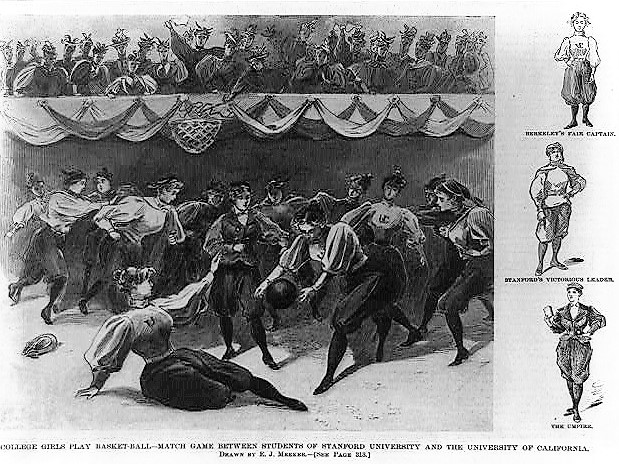
Drawing of women's basketball game, Stanford vs. University of California, 1896

Basketball game, Stanford vs. University of California, E.J. Meeker, 1896

  1. In your experience, has the prediction been borne out that, due an increase in women’s education, the wives who are to be the mothers in our republic [the United States—Maudsley’s quoting a Harvard professor now] must be drawn from transatlantic homes?

YES                         NO

  1. Has study during the periodical tides of your organization [i.e. your period] led to pallor, lassitude, debility, sleeplessness, headache, neuralgia, and then to worse ills?

YES                         NO

  1. As a result of your studies, have you become the victim of aches and pains, unable to go on with your work, and compelled to seek medical advice?

YES                         NO

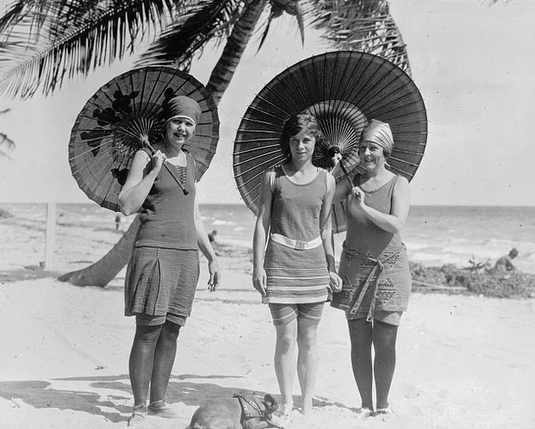
Photograph of three women on a beach holding parasols, 1915.

Women at the seaside, 1915

  1. If so, and if you were restored to health by rest from work, a holiday at the seaside, and suitable treatment, did you leave college a good scholar but a delicate and ailing woman, whose future life is one of more or less suffering? Did you fail to regain the vital energy which was recklessly sacrificed in the acquirement of learning?

YES                         NO                         N/A

  1. If so, and you subsequently married, were you unfit for the best discharge of maternal functions, and apt to suffer from a variety of troublesome and serious disorders in connection with them?

YES                         NO                         N/A

  1. Has the neglect of physical exercise, and the continuous application to study, left you lacking the instinct, desire, or capacity to nurse your offspring, forcing you to resort to a wet-nurse or feeding by hand?

YES                         NO                         N/A

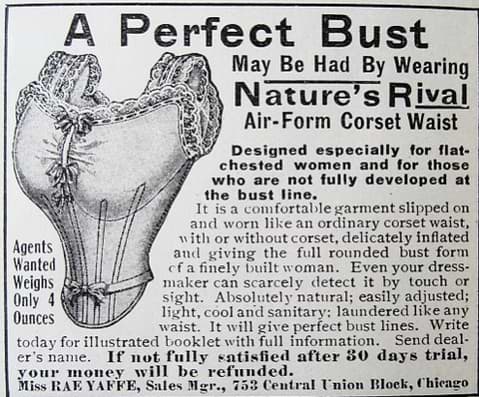
  1. If you have not nursed, has this caused the organs which minister to this function to waste and finally to become by disuse as rudimentary as they are in the male sex, forcing you to invoke the dressmaker’s aid in order to gain the appearance of them?

YES                         NO                         N/A

Advertisement for Nature's Rival bust enhancer, 1910

Delineator, 1910 (witness2fashion.wordpress.com)

  1. During the best years of your life, are/were you, for one-quarter of each month, more or less sick and unfit for hard work?

YES                         NO

  1. Have you turned into a monstrosity—something which having ceased to be a woman is not yet a man?

YES                         NO

Okay. Pencils down.

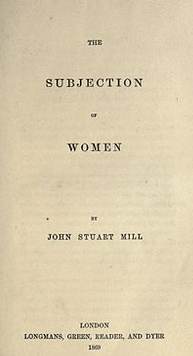
Title page, The Subjection of Women by John Stuart Mill

In the spirit of fairness, Dr. Maudsley quotes John Stuart Mill’s argument in The Subjection of Women, to wit:

  • What we call the nature of women is essentially an artificial thing.
  • It is the result of forced repression in some directions, unnatural stimulation in others.
  • Women’s character has been disguised by their subjugation by men.
  • If given equal opportunities, they would perform as well as men.

He says that

if these allegations contain no exaggeration, if they be strictly true, then is this article an entire mistake.

Is it??? Let’s score the quiz and see! Disregard the N/A’s, count up the yeses, and divide them by the total number of questions you answered.

It would be terrible for humankind if even a significant minority of Maudsley’s concerns turned out to be valid. So let’s give him the benefit of the doubt and say that if most women score over 25% we’d better rethink this this whole going to college with men business.

I threw out a bunch of questions because I don’t have kids and calculated my score: 9%. My one “Yes” answer was to #4, about my laborious days of intellectual exercise causing injury to my functions as the conceiver, mother, and nurse of children. Most college-education women have children, but the percentage is lower than among women without college, so I’ll give this one to Maudsley.

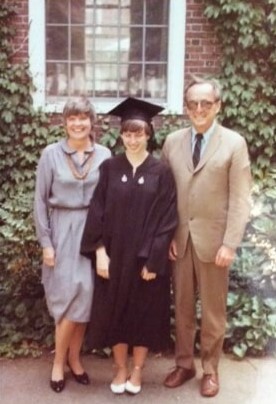
Photograph of Mary Grace McGeehan graduating from Harvard, with parents, 1983.

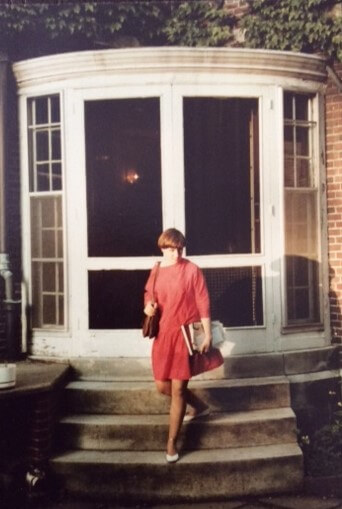
Me graduating from college with no apparent ill effects, 1983

Granted, one is a small sample size if we’re trying to be scientifically rigorous, but it’s one bigger than Maudsley’s. And I’m guessing that my score is typical. Maybe some of you moms consider childbearing and raising the most important offices of the best period of your lives. But maybe some of you dads do too, so here’s where the control group comes in.

So, unless I’m gravely mistaken, Maudsley is hoist with his own petard.

But he’s not giving up so easily. Even if John Stuart Mill turns out to be right, he says,

there is a right in might—the right of the strong to be strong. Men have the right to make the most of their powers, to develop them to the utmost, and to strive for, and if possible gain and hold, the position in which they shall have the freest play.

If women were treated equally, and used their political power to pass laws that men didn’t like, he asks,

can it be supposed that, as the world goes, there would not soon be a revolution in the state by men, which would end in taking all power from women and reducing them to a stern subjection? Legislation would not be of much value unless there were power behind to make it respected.

You see what’s happening here, people? Maudsley’s admitting that, if women get too equal, the men are going to have a revolution! Throw out all the laws! Rely on brute force!

We have to do something, women!****

Starting with this:

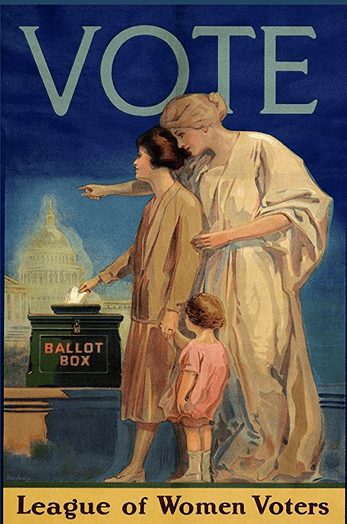
League of Women Voter's poster with caption VOTE, 1920.

League of Women Voters poster, 1920

*And which I can’t believe I’ve made it to November without writing about. On the list!

**Oh and he also gave them a lot of money.

***Hey Maudsley, you got the quote wrong! Here’s what Milton really said:

Not equal, as their sex not equal seemed;
For contemplation he and valor formed,
For SOFTNESS she, and sweet attractive grace.

****I realize that some men might be reading this, but if they managed to stomach all the menstruation talk they’re probably allies.

The best and worst of October 1918: Beautiful children, dubious remedies, and (sigh) fall colors

In the past, I’ve reflected cheerfully on how fast 1918 is flying by. Now, with two months to go, I do so with a sense of panic. I haven’t read The Magnificent Ambersons, or The Education of Henry Adams,* or any South African books, or anything in a foreign language except some French poems in The Little Review, or any children’s books except E. Nesbit’s disappointing The Railway Children. I blithely promised in my first post that “I’ll read magazines, watch movies, listen to music, and cook recipes from that time.” Well, I’ve read a lot of magazines. Much to be done in the next sixty days!

But first, the best and worst of October.

Best news:

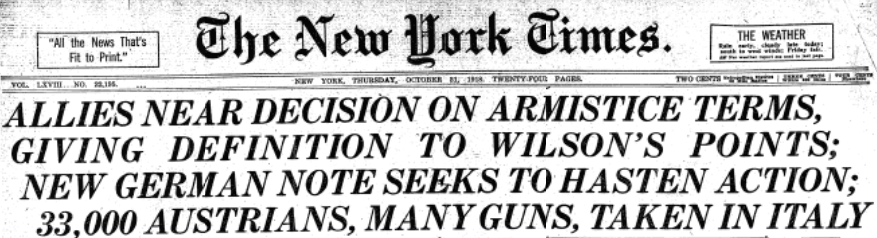
It’s a tie among pretty much all of the front-page New York Times headlines of the month, with the Germans retreating so fast that in some places the Allies can’t keep up with them.

New York Times, October 31, 1918

Worst news:

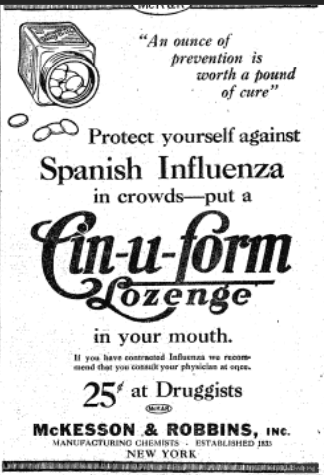
Authorities keep saying that the worst of the Spanish influenza epidemic is over, but they keep being wrong. This is a hard story to follow if you’re not reading historical accounts, but my fellow 100-years-ago blogger Whatever It Is, I’m Against It is on the job. He’s been tracking the coverage of the epidemic in the New York Times from the beginning, as well as highlighting the ridiculous ads touting the purported flu-preventing qualities of various products, like this one, which I saw in the Times and was going to use myself so it isn’t copying:

New York Times, October 23, 1918

Best magazine: The Crisis

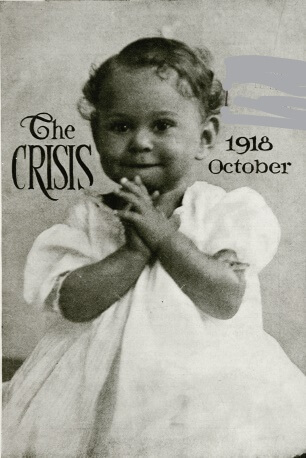
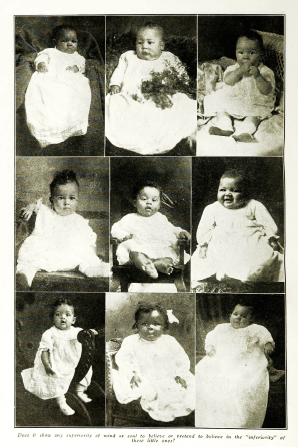
For its annual children’s issue, The Crisis asked readers to send in pictures of their children. 70 of them appear in the magazine. Under one group of pictures is the caption, “Would not the world be richer if the Gates of Opportunity were flung wide before these children as they grow?”

The Crisis, October 1918

In a story called “Race Purity,” a little boy, apparently African-American, hits a little girl, apparently white, in the face. A man passing by calls him a “d-mn little [racial slur]” and gently tells the girl to go home, saying, “I’d like to see that mother of yours that allows you to play with—.” The girl gasps through her tears, “he’s my bru-vv-er.”

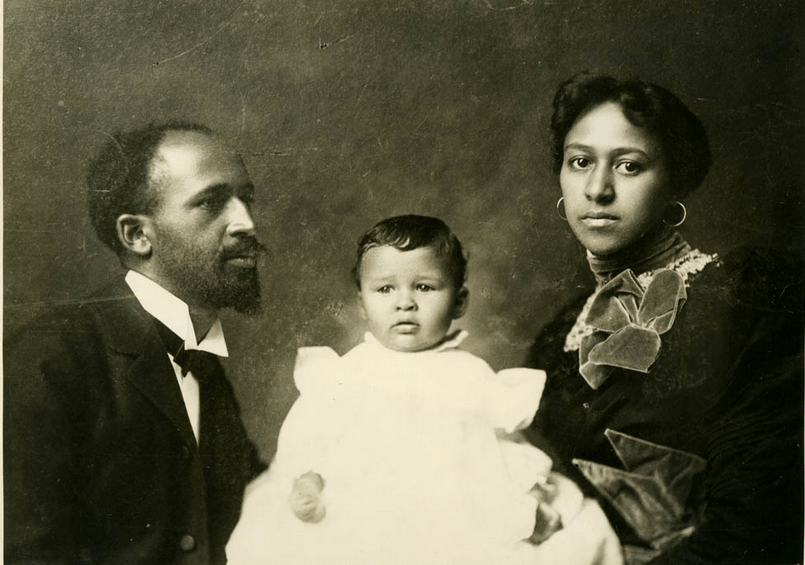
W.E.B. du Bois, his wife Nina, and their son Burghardt, ca. 1898

Du Bois imagines his only son, Burghardt, who died as an infant, as “a ghost boy—just twenty-one he would have been last May,” gone off to the war. “It was not given to this my boy nor yet to me to go in the flesh; but he went dead, yet dreaming, and I dream-drunk, and yet alive, albeit with twitching, hanging hands.”

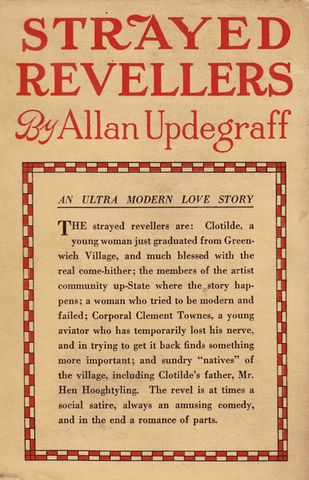
Best-sounding new novel: Strayed Revellers, by Allan Updegraff

The Bookman says of this book by Updegraff, a college buddy of Sinclair Lewis, that

his theme is very new, showing what the war did to a group of Greenwich villagers, extremely gay ones, who kill themselves, admit carelessly to illegitimate parents, get drunk on water and gelatin and lead a wild life generally.

 I’m sold!

 Worst new novel: Strayed Revellers, by Allan Updegraff

But then I pulled up the book on Hathitrust and flipped to the last page, which features a guy mansplaining anarchism to our heroine, Clothilde:

“The name’s filthied by men who care more for their individual stomachs and unwashed hides than they do for No-Rule. And it’s Socialism, too,–since they have a regard for the social will, as well as for their own individual wills—even though the name ‘Socialist’ has been so dirtied by men whose social instincts stop with the attainment of personal safety and a two-cent drop in the price of soup-meat, not to mention the dirtying done by rank pro-Germans, that real Socialists will probably take a new name after the war.”

No amount of getting drunk on gelatin is worth this. Run, Clothilde!

Worst headline:

Woman’s Home Companion, October 1918

So smack them!

Best ad:

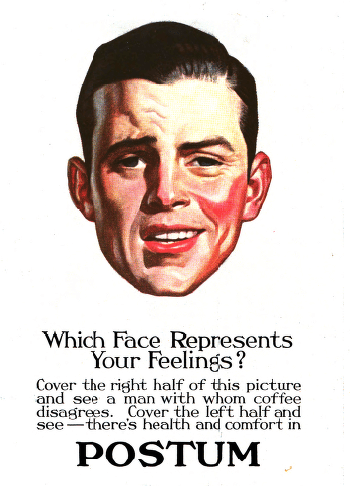
This is one of the least attractive ads I saw all month. But it caught my attention, all right. And it represents the direction advertising is moving in–good-bye beautiful artwork, hello gimmicks!**

Delineator, October 1918

Worst ad: 

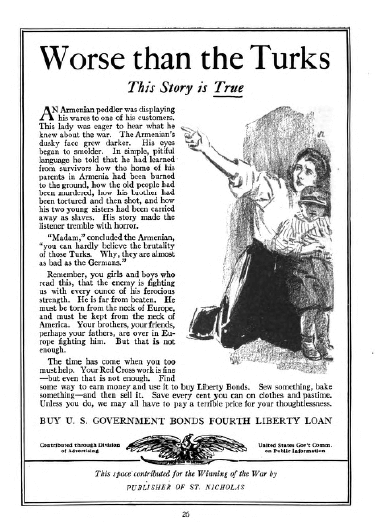
Hey, little kids! Murder! Rape!***

St. Nicholas magazine, October 1918

Best magazine cover:

Lots of worthy candidates.

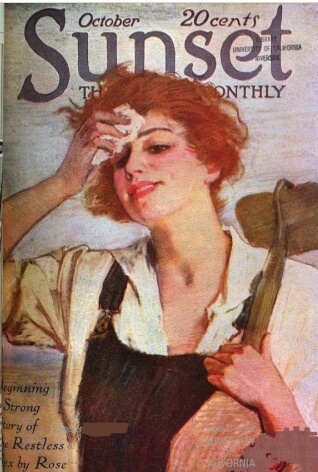
I always have a weakness for a hardworking farmerette.

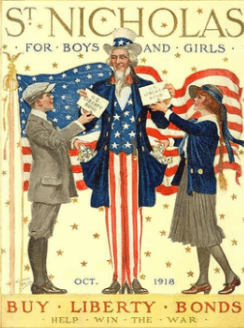
An appeal to kids’ patriotism at a time when the government seemed worried that the Allies were winning the war so fast that people wouldn’t want to fund it.

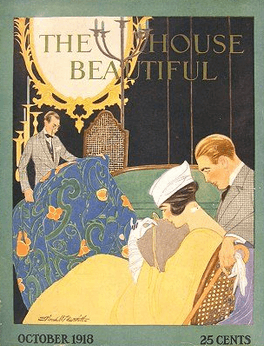
This because it’s, well, beautiful:

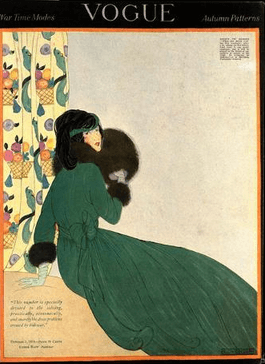
As is this.

In the end, I had to declare a tie, because I couldn’t bear to choose between this one

and this one, which makes me wistful from my perch in Cape Town, where it’s spring now. And even our backwards April autumns don’t have colors like this.

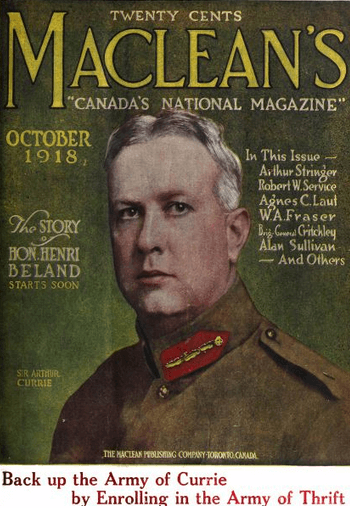
Worst magazine cover: Maclean’s

 Not doing much to counter the boringness image, Canada!****

On to November!

*Not my fault because, annoyingly, both of these American classics were published in late October.

**This is also, as it turns out, the cover image on the Spanish translation of Ring Lardner, Jr.’s memoir I’d Hate Myself in the Morning.

***Besides, the ad is all about how horrible the Turks are. It’s as if the copywriter forgot that that the U.S. never declared war on Turkey and then when he remembered hastily stuck something at the end about how the Germans are even worse.

****Especially since the most prominently featured boring story isn’t even in this issue, it just “starts soon.”

Book Review: The Return of the Soldier by Rebecca West

As I’ve mentioned, I’ve been trying to pay more attention to World War I as the centenary of the armistice approaches. So I put aside Virginia Woolf’s The Voyage Out, which is excellent but pre-war and also loooooong*, and picked up Rebecca West’s 1918 novel The Return of the Soldier, which is war-related (well, sort of, see below) and short (90 pages).

Rebecca West, The Independent, April 13, 1918

Rebecca West (real name Cicely Isabel Fairfield) was already a fixture on London’s cultural scene when she published The Return of the Soldier, her first novel, at the age of 25. Born into an intellectual but financially struggling Anglo-Irish family, she had a brief career as an actress (her pseudonym came from an Ibsen play) before turning to literary criticism. She and H.G. Wells met like characters in a romantic comedy—she panned a book of his, calling him “the Old Maid among novelists,” and he requested a meeting. This led to a long affair with Wells, who was married and 27 years older. They had a son, Anthony, born in 1914. To disguise his illegitimacy, West made him call her “Auntie” and Wells “Wellesie” during his early years, and she sent him to boarding school at the age of three. Perhaps not surprisingly, he and West ended up estranged. West went on to have a highly successful career as a journalist and writer of fiction and nonfiction. Her best-known work today is her monumental book on Yugoslavia, Black Lamb and Grey Falcon.

Rebecca West and her son Anthony, ca. 1918

The Return of the Soldier tells the story of Chris, who is sent home from the war when a shell explodes and wipes out his memory of the last 15 years, during which he married and lost his only child. It’s narrated by Jenny, Chris’s cousin and ardent admirer, who for unexplained reasons lives with him and Kitty, his wife, on their vast estate. Chris, in his damaged mind, is living in the happiest period of his life, when he was in love with Margaret, the daughter of the proprietor of a charmingly ramshackle inn. He insists that he must see her or die. Jenny is afraid he’ll be shattered when he encounters present-day Margaret,

repulsively furred with neglect and poverty**, as even a good glove that has dropped down behind a bed in a hotel and has lain undisturbed is repulsive when the chambermaid retrieves it from the dust and fluff.

But he loves her as much as ever and spends his days wandering around his estate with her, lost in his happy youth, while Jenny and Kitty agonize about how to bring him to his senses.

Illustration from “The Return of the Soldier,” Norman Price

As I read the first few chapters, I marveled that The Return of the Soldier, which received generally ecstatic reviews at the time of publication, is not better known today.*** Jenny’s initial visceral dislike of Margaret, she of the creaking stays and cheap plumes, says as much about the British class system as a Dickens novel. Speaking of her and Kitty’s sadness about Chris’s affliction, Jenny says that

grief is not the clear melancholy the young believe it. It is like a siege in a tropical city. The skin dries and the throat parches as though one were living in the heat of the desert; water and wine taste warm in the mouth and food is of the substance of sand; one snarls at one’s company; thoughts prick through one’s sleep like mosquitos.

Illustration from “The Return of the Soldier,” Norman Price

As I continued reading, though, the book’s flaws emerged. West was attempting to incorporate recent psychological discoveries into the story, but her account of Chris’s mental state rings false to the modern reader. His recent memory is completely wiped out, but beyond the 15-year gap it’s intact—he’s exactly the happy lad he once was. Later critics pointed out that this condition, however common it may be in the movies, doesn’t exist in real life.**** The way his amnesia is resolved (I won’t give spoilers, but you can look it up in the book’s Wikipedia entry if you’re curious) is equally dubious. This is the problem with novels that are based on psychological theories: psychology moves on and the novel remains full of discarded ideas about how the mind works.

Also, The Return of the Soldier isn’t really about the war at all. With Chris’s memory of his time at the front wiped clean and Jenny and Kitty living in sheltered luxury, the conflict doesn’t directly enter their lives. Aside from the implication that trauma might have played a role in Chris’s amnesia, and Kitty and Jenny’s anxiety about him being sent back to France if cured, the book could as easily have been called The Return of the Guy Who Fell off a Horse and Hit His Head.

In spite of these flaws, The Return of the Soldier is worth reading for its excoriating depiction of the British class system, its evocation of a lost world, and, above all, West’s wonderful writing.

(I read the Penguin Classics edition, which is pricey for a 90-page paperback but otherwise recommended.)

Illustration from “The Return of the Soldier,” Norman Price

*422 pages, which might not strike you as exceptionally long, but the median length of the books I’ve read for this project is about 100 pages, so I’ve developed a short attention span.

**In that early 20th century British sense of having only one servant.

***Not that it’s forgotten, exactly. After fading into obscurity even as West’s career took off, it gained a new readership when it was made into a film in 1982. It has fared much better than May Sinclair’s equally well-received 1917 war novel The Tree of Heaven, which is out of print today. (Both were named Book of the Month by the North American Review, a prominent literary journal.) Still, it’s hardly a fixture in the modernist canon.

****At least one critic at the time did as well—Dora Marsden of The Egoist. “As a tale of human emotion it is altogether quite indecently unjust,” she wrote in the magazine’s October 1918 issue. Marsden was preoccupied with the nature of consciousness, about which she wrote long, incoherent articles for the Egoist, which she founded and where T.S. Eliot served as literary editor.

Miscellany: Magic machines, embarrassing problems, and the Worst. Recipe. Ever.

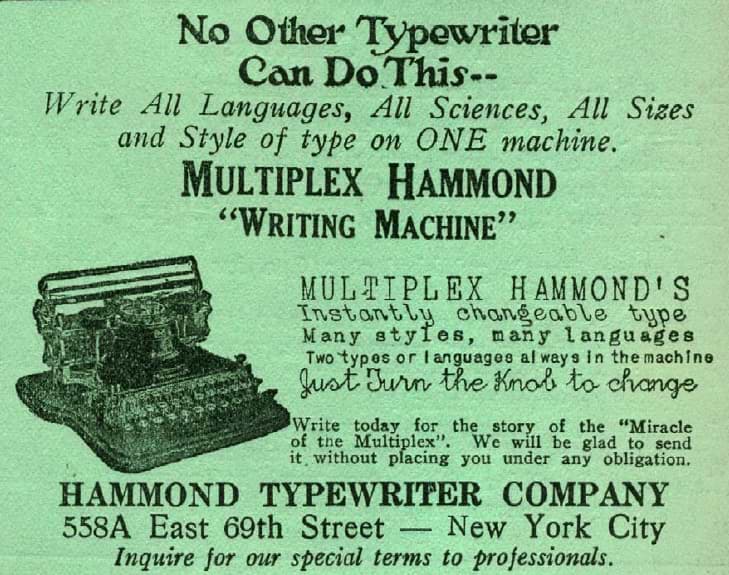
An all-ad miscellany.

Not to brag, but I have a machine that can do all this and more.

Little Review, September 1918

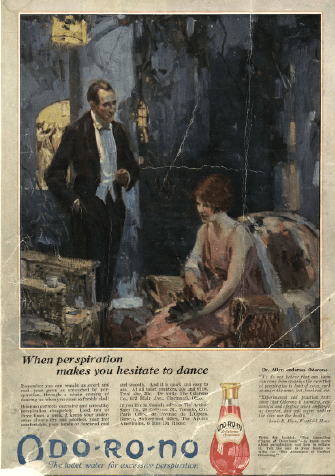
We’ve all been there, right?

Harper’s Bazar, June 1918

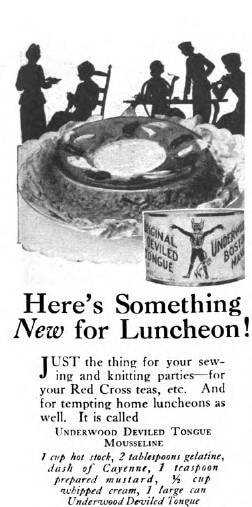
This deviled tongue mousseline is “just as good to taste as it is to look at.” Sometimes these things just write themselves.*

Good Housekeeping, September 1918

And sometimes I just have to throw up my hands in bewilderment.

I don’t think he’s really thought the naked fence-jumping through.

St. Nicholas, October 1918

If I’d seen this before bestowing the prestigious “Best Ad Depicting the Advertised Item as Humongous” award last month, things might have played out differently.

Harper’s Bazar, September 1918

I’m not that into cars, but I look at this, look at my white Toyota Corrolla, and sigh.

Harper’s Bazar, June 1918

*Plus it’s patriotic, because for some strange reason tongue has not been declared “Essential” for our fighting men.

Wish me luck on my 1918 diet!

Earlier this year, I was planning to write a post called “How I Lost 5 Pounds for My College Reunion on a 1918 Diet.” Well…that goal, modest though it was, was not achieved. But then last month my friend Emily* invited me to participate in a group diet contest on DietBet. (She invited all of her Facebook friends, so I didn’t take it personally.) I jumped at this opportunity to regain the silhouette of youth.

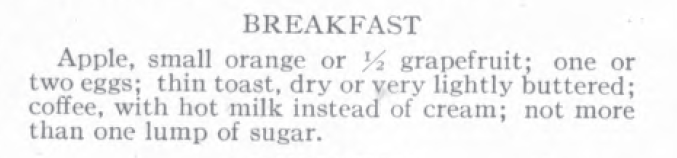
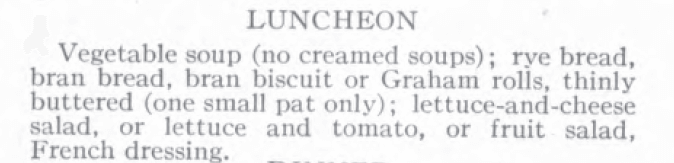
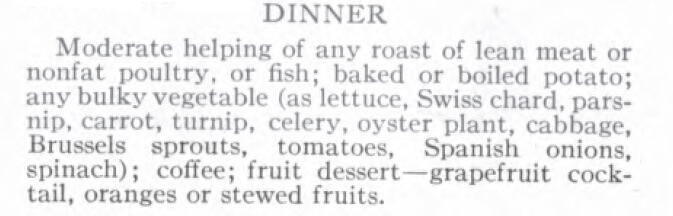
I had just the diet in mind, from this article in the March 1918 issue of the Ladies’ Home Journal by Eugene Lyman Fisk, M.D., who was the medical director of the Life Extension Institute and the co-author, with Yale professor Irving Fisher, of the bestselling 1915 book How to Live.**

I expected 1918 dieting wisdom to be dubious, but Dr. Fisk, like fellow nutrition doc Harvey Wiley of Good Housekeeping, turns out to be pretty sensible.***

Dr. Fisk starts out by saying that

At age 25, Miss Blank, an average young woman, fully grown, 5 foot 4 inches in height, weighs 128 pounds; at 40 she weighs 138 pounds; at 50, 144 pounds. This gain over age 25 is practically all fat, and its distribution has sadly changed Miss Blank’s silhouette.

I’ll spare you the TMI and leave it that the reaction of this 5’4” over-50 upon reading this was “No wonder I feel so at home in 1918!”

Dr. Fisk counsels against trying to lose weight through exercise. To the extent that we stout (Dr. Fisk doesn’t pull any punches) 40+ women do exercise, it should consist of walking, gentle hill climbing, and a few setting-up exercises. Substituting easy yoga for the setting-up exercises, this is exactly my routine!

Some recent gentle hill climbing in Cape Town

But, really, it’s all about the food. Starting with….

Breakfast

On my otherwise ill-fated pre-reunion diet, I did make a permanent switch from my previous granola, banana, and tea breakfast to the one outlined by Dr. Fisk. With maybe a LITTLE more butter than he recommends, but I don’t take milk or sugar in my tea or use butter to scramble my eggs, so it cancels out, right? And it’s worked—I find myself more energetic in the mornings, and less likely to snack before lunch.

Breakfast, with a rusk instead of toast

After much experimenting, I’ve come up with a great recipe for microwaved scrambled eggs. Here it is:

MARY GRACE’S 30-20-10 MICROWAVE SCRAMBLED EGGS

Break two eggs into a small bowl or teacup. Add salt and pepper as desired. Cook eggs in microwave without stirring for 30 seconds. Stir, then return to the microwave and cook for 20 seconds. Scramble, then cook for an additional 10 seconds or more as needed.

Lunch

Here I’ve followed Dr. Lyman’s plan more loosely, but I’ve kept to the basic spirit of something vegetable-y, something bread-y, and some fruit. Here’s a recent literal interpretation

and a 21st century variation, featuring homemade tabbouleh and (not-homemade) hummus.

Dinner

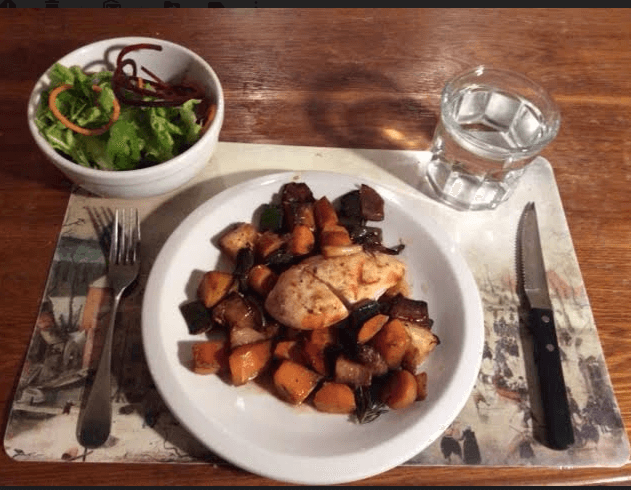
Dinner is your basic protein-starch-vegetable combo. Sometimes I cook a chicken breast in a foil pack at 350F for half an hour with whatever I happen to have around (typical ingredients are lemon, kale, garlic, aniseeds, and red pepper flakes). Lately I’ve been cooking frozen boneless chicken breasts**** in a pan with root vegetables and rosemary, which comes out way better than you’d expect. I’ve been eating a lot of grilled hake as well.

A recent dinner

Dr. Fisk is a big defender of potatoes, saying that

There is no tragedy in a fat woman***** eating a potato; the tragedy lies in the big pat of butter that is often melted in it, more than equal in fuel value to the whole potato.

My last name notwithstanding, I’m not much of a potatoes person, so I usually substitute couscous or rice or root vegetables as a starch at dinner. And I skip the stewed fruits for dessert. Virtuous, huh?

So How Am I Doing?

DietBet weigh-in

DietBet works like this: if you don’t lose 4% of your body weight during the competition period, your ante is divided among the people who do. With just eight days of the one-month contest to go, I’m only halfway there, so I need to step it up if I want to keep my money.

Although not to the extremes described in Maria Thompson Daviess’ 1912 novel The Melting of Molly, which was the very first book I read for this project. The gist, in case you missed it: Molly, a 160-pound 25-year-old widow, goes on a crash diet when she learns that her high school sweetheart, who’s in the Foreign Service, is coming back to town and wants to see her in the blue muslin dress she wore back when she had a 20-inch waist. Here’s the diet, as prescribed by her doctor neighbor:

Breakfast—one slice of dry toast, one egg, fruit and a tablespoonful of baked cereal, small cup of coffee, no sugar, no cream.

Dinner–one small lean chop, slice of toast, spinach, green beans and lettuce salad. No dessert or sweet.

Supper—slice of toast and an apple.

“Why the apple?” Molly mourns. “Why supper at all?”

Molly, busted with a jar of jam by the doctor

But I’m not going to do that! Crash diets are unhealthy! Besides, who has the discipline?******

I’ll stick with Dr. Fisk. Whose diet is, as I said, pretty sensible. The one thing that strikes a modern reader as odd is the tolerance for carbs. This isn’t surprising, since I can well remember a time—up to the 1990s—when no one cared about carbs, it was all about fat. Still, it’s strange seeing even poor starving Molly allowed three slices of (butterless) toast a day. Dr. Fisk does emphasize the importance of cutting down on starches, fats, and sugars, but he still allows, along with the potato at dinner, a piece of toast at breakfast and bread or a roll at lunch. (He stipulates that the roll should be made of rye, bran, or graham flour, but this isn’t only a nutrition thing—there was a huge wartime drive for wheat conservation, led by food czar Herbert Hoover.) Bread and potatoes, I guess, were such an important part of the 1918 diet that cutting back any further than this was inconceivable.

In happier times

I’ve followed my 1918 diet fairly closely, with just a few slip-ups here and there. I’m eating more lean proteins and vegetables and I’ve cut out Indian take-out, a former weekly staple. When I go out, I have grilled fish with vegetables. I rarely feel hungry or have cravings.

On the other hand, I don’t have high hopes of meeting my DietBet goal. I’m not too worried, though. For one thing, the entertainment value of our WhatsApp chat group is worth the money I put up. And, while it’s good to have a jump-start, healthy eating isn’t a one-month affair. If I just keep at it, I will—maybe not this month but eventually—regain the silhouette of youth.

Wish me luck!

The silhouette of youth, wasted in a drop-waist dress

UPDATE 10/18/2018: I did it!!!

*Whose blog you should check out! She writes about dinner parties and travel and decor and the NYU Writers in Paris program, where we met, and, a favorite topic of mine, how hideous embassy furniture is.

**Of course, when you see that someone was the director of the Life Extension Institute, your first question is how old he was when he died. Answer: 64. He died suddenly in 1931 on a trip to Dresden, where he had gone to visit the Museum of Hygiene. How to Live had an introduction by William H. Taft. And this is now the most irony-packed footnote of My Year in 1918.

***Not just about dieting. He was also a strong opponent of tobacco. Unfortunately, like so many otherwise admirable people of 1918, he was a—and if you’re a regular reader, you’ll be able to recite this along with me—horrible eugenicist.

****This is legit—the USDA says so. You just have to cook it longer.

*****I told you he doesn’t pull any punches.

******Well, Molly did. But, unlike me, she had a houseful of servants under orders to keep food away from her.

The best and worst of August and September 1918: Modernist all-stars, predictions, and red scarves

Three-quarters of the way through 1918, everything seems normal to me now.* Appalling a lot of the time (racism, eugenics, anti-Semitism, class snobbery), but normal. Nine months of immersion have broken down the barriers of aesthetics and language use. I now think of people as being the age they were in 1918. Happy August/September birthdays to Dorothy Parker (25), T.S. Eliot (30), and William Carlos Williams (35), youngsters all!

I didn’t do a Best and Worst for August because I was back in the United States, socializing nonstop. I don’t know how those 1918 rich people did it—it’s exhausting!** By the time I got back to Cape Town and emerged from the fog of jet lag, September was halfway gone. Which October will be too if I don’t hurry up. So, without further ado, the best and worst of August and September 1918!

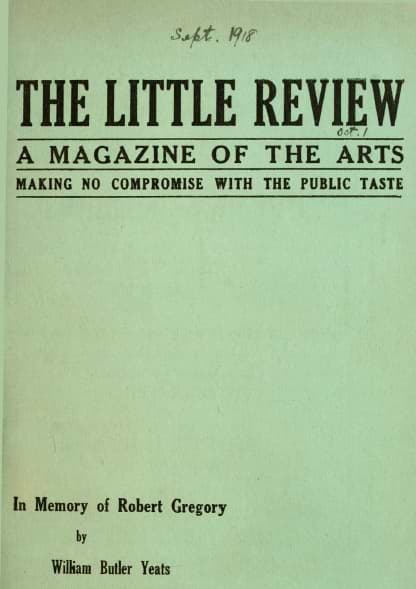
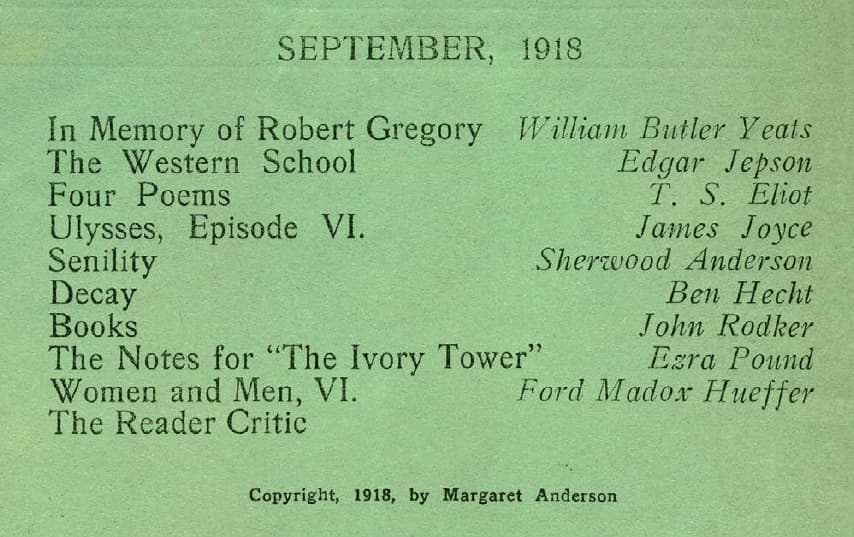
Best Magazine: The Little Review, September 1918

Just look at the table of contents of the Little Review’s September issue. It’s the literary equivalent of the Yankees’ 1927 starting lineup.***

Of course, another possible analogy is to one of those movies so overstuffed with stars that you just know it’s going to be horrible.

So which is it?

Somewhere in between. Yeats’s “In Memory of Robert Gregory,” mourning the death of the son of close friends in an aviation accident in Italy (or maybe it was friendly fire), sounds like outtakes from “Easter 1916,” but so-so Yeats is better than just about anyone else at the top of their game. The Eliot poems include his notoriously anti-Semitic “Sweeney Among the Nightingales” (“Rachel née Rabinovitch/Tears at the grapes with murderous paws”), but also a poem in French, “Dans le Restaurant,” part of which eventually made its way, in English, into “The Waste Land.” I confess that I haven’t kept up with the Ulysses serialization, but, hey, it’s Ulysses.

So more 1927 Yankees than New Year’s Eve. And there are more accolades for this issue to come—keep on reading!

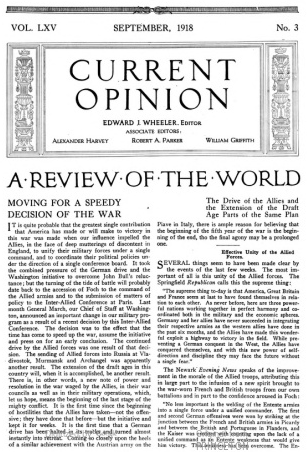
Worst Magazine: Current Opinion, September 1918

Halfway through the September issue of The Bookman, I was convinced we had a winner. The magazine, under a new owner, had undergone its second major revamp of the year, and 1918 magazines revamps are never a good thing. They just make the magazine more like all the other magazines. The old Bookman was fusty, but it was entertaining. In the new Bookman, most of the article aren’t even about books. If they are, they’re about old books like Tom Jones or boring books about “Sea Power Past and Present.” But then the magazine redeems itself with an Amy Lowell love poem**** and an excerpt from the upcoming sequel to Christopher Morley’s fun 1917 novel Parnassus on Wheels. And they kept “The Gossip Shop,” which, although most of the gossip is about which writer got his commission and is shipping off to France, is still kind of fun. So I felt better about The Bookman but was left without a worst magazine.

Then I came across the September issue of Current Opinion, featuring an article called “Why the Jew is Too Neurotic.” The reason is explained in the sub-head: “Because his Extraordinary Resemblance to the Average Spoiled Child Causes Mental Strain.” The rest of the article isn’t as bad as that makes it sound. Something about how the Jews were the favorite children of God, and were isolated from the rest of society, and…I’ll spare you the psychoanalytic logic. And there’s sympathetic discussion of anti-Jewish discrimination throughout the ages. But the article epitomizes what’s worst about 1918: the tendency to lump together entire “races” (African-Americans, Jews, Germans, Czechoslovakians, whoever) and ascribe a common set of qualities to them. Inconsistency alert: the issue also includes an admiring profile of New York Times owner Adolph Ochs, who comes across as a gee-whiz regular guy and not neurotic at all.

Best Line in an Editorial: “Vardaman Falls,” New York Times, August 22

I’m not a fan of 1918 NYT editorials, which are generally narrow-minded, prejudiced, and smug. But this one, a gloating account of the primary election defeat of Senator James Vardaman, one of the worst racists in congressional history (although that didn’t bother the Times nearly as much as his antiwar stance), has my favorite 1918 sentence so far:

Was he the victim of his own singularity, grown megalomaniacal, or did he simply overestimate the hillbilliness of his state?

Least Prescient Literary Criticism: Louis Untermeyer, “The Georgians,” The Dial,  August 15

Louis Untermeyer, ca. 1910-1915, Library of Congress

It’s not really fair, with the benefit of hindsight, to poke fun at predictions by past critics about how future critics will regard their own times. But it’s fun! So let’s!

Louis Untermeyer, who was actually one of the best critics of the era as well as being a noted poet himself, ruminates on this topic in a review of the anthology Georgian Poetry: 1916-1917. He says of the anthologized poets that “these men of what he [the future critic] will doubtless call the 1920s” will say that the Georgians “produced a literature as distinctive and even more human than their [Elizabethan and Victorian] predecessors.”

No they won’t, Louis. And we don’t call the 1910s the 1920s. We call them the 1910s.

Specifically, Untermeyer predicts that the future critic

will have a vigorous chapter on the invigorating vulgarisms of Mansfield and an interesting essay on Lascelles Abercrombie, who he will find, in spite of the latter’s too packed blank verse, to be even more “modern” than the author of “The Everlasting Mercy.”

Um, not quite. What’s really going to happen, Louis, is that T.S. Eliot***** and the modernists are going to wipe these guys off of the map. Which brings us to…

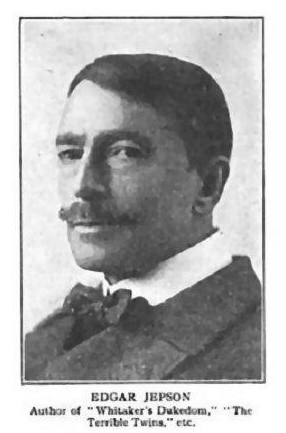
Most Prescient Literary Criticism: Edgar Jepson, “The Western School,” The Little Review, September

National Magazine, April-September 1915

Continuing our September 1918 Little Review/1927 Yankees starting lineup analogy, Edgar Jepson is, say, Tony Lazzeri to Eliot’s and Joyce’s Ruth and Gehrig. In his article “The Western School,” Jepson, a British writer of detective and adventure fiction, complains about the undue accolades being given to subpar work by prominent poets. He makes his case convincingly by quoting these lines by Vachel Lindsay:

And kettle-drums rattle
And hide the shame
With a swish and a swirk
and dead Love’s name

and these from “All Life in a Life” by Edgar Lee Masters:

He had a rich man or two
Who took up with him against the powerful frown
That looked him down
For you’ll always find a rich man or two
To take up with anything–
There are those who want to get into society, or bring
Their riches to a social recognition

and these from “Snow,” a long poem by Robert Frost about some monks having a conversation in the middle of the night:

That leaf there in your open book! It moved
Just then, I thought. It’s stood erect like that,
There on the table, ever since I came,
Trying to turn itself backward or forward—
I’ve had my eye on it to make out which…

But don’t despair for poetry! For, Jepson says,

the queer and delightful thing is that in the scores of yards of pleasant verse and wamblings and yawpings which have been recently published in the Great Pure Republic I have found a poet, a real poet, who possesses in the highest degree the qualities the new school demands.

None other than…T.S. Eliot!

Could anything be more United States, more of the soul of that modern land than “The Love Song of J. Alfred Prufrock”?… Never has the shrinking of the modern spirit of life been expressed with such exquisiteness, fullness, and truth.

Jepson also praises Eliot’s “La Figlia Che Piange” (“Weave, weave the sunlight in your hair”), saying that

it is hardly to be believed that this lovely poem should have been published in Poetry in the year in which the school awarded the prize [Poetry magazine’s Levinson prize] to that lumbering fakement “All Life in a Life.”

Jepson may be overstating his role in the discovery of Eliot, who, after all, is in plain sight in that very issue. But he deserves credit for his prescience, especially since he also complains about Lindsay’s “Booker Washington Trilogy” in language straight out of the #OwnVoices movement:

I have a feeling that it is rather an impertinence. Why should a white man set out to become the poetic mouth-piece of the United States blacks? These blacks have already made the only distinctively United States contributions to the arts—ragtime and buck-dancing. Surely it would be well to leave them to make the distinctively United States contribution to poetry.

Home run for Tony Lazzeri!

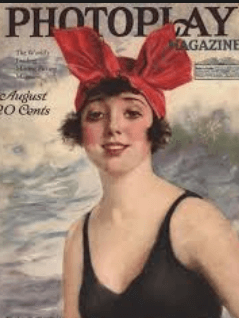
Best Magazine Cover of a Woman Swimming with a Red Scarf on Her Head:

In this surprisingly competitive category, here are the runner up

and the winner.

Best Ad Depicting the Advertised Item as Humongous

Winner:

Harper’s Bazar, September 1918

Runner-up:

Good Housekeeping, August 1918

Worst Magazine Cover:

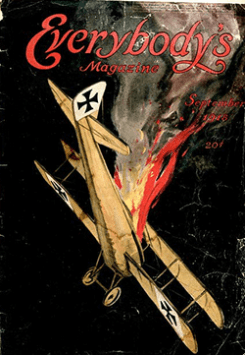
At the risk of sounding like a Boche sympathizer, this is just mean.

Screenshot (1116)-1

Everybody’s, September 1918

Best Magazine Cover:

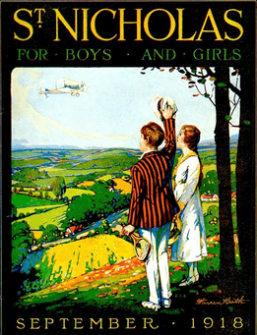
There are a lot of worthy contenders, like this

Screenshot (1137)

St. Nicholas, August 1918

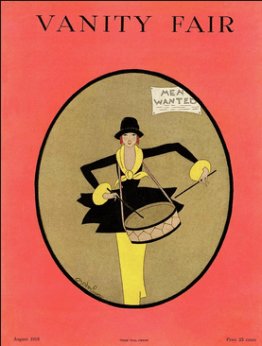
and this

Screenshot (1118)-1

Vanity Fair, August 1918

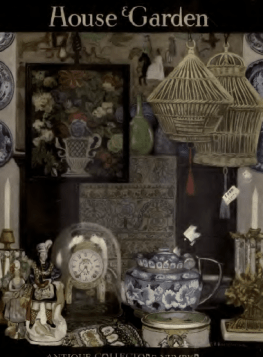
and this startlingly modern-looking one

Screenshot (1131)

House & Garden, August 1918

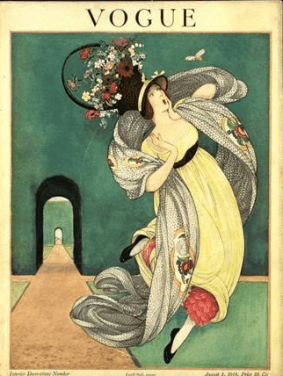
and this, which, in another month, might have won.

Screenshot (1128)-1

Vogue, August 1, 1918

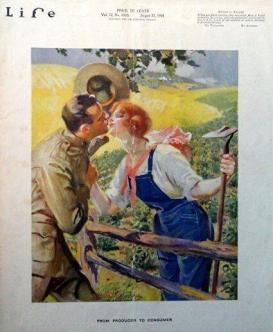
But the war was intensifying, American casualties were mounting, and it seems wrong not to recognize that. So here’s the winner, a soldier saying good-bye to his farmerette sweetheart.

August - Life cover - couple kissing-1

Life, August 22, 1918

On to October!

squiggle

*Of course, I might feel differently if I had to wear a corset.

**Although not as exhausting as working in a Lower East Side textile factory all day and then going to night school.

***Ford Madox Hueffer is Ford Madox Ford, remember.

****To her female lover. Which may not have been clear to her audience, although does “quiet like the garden/And white like the alyssum flowers/And beautiful as the silent spark of the fireflies” sound like a man to you?

*****Whom, to be fair, Untermeyer mentions later in the article. He says that the future critic will realize “in the light of the new psychology” how much prose writers like J.D. Beresford, Gilbert Cannan, A. Neil Lyons, Rebecca West and Thomas Burke had in common with “such seemingly opposed verse craftsmen” as Edward Thomas, W.W. Gibson, Rupert Brooke, James Stephens, and T.S. Eliot. If you blah-blah-blah out the writers no one reads today, we’re left with “Rebecca West has something in common with Rupert Brooke and T.S. Eliot.” I’ll give him that. Kind of.