Category Archives: Magazines

Wednesday miscellany: Naked microscope bookplate people, stylish women, and cherry blossoms

Imagine my surprise when I opened a copy of Hugh de Sélincourt’s 1918 book Nine Tales, digitized from Harvard’s Widener Library, and found these naked people on a microscope. I was all the more surprised because I went to Harvard* in the 1980s and Widener was so conservative that their cataloging system had a separate “X” category for dirty books, which you had to order from the librarian instead of getting them in the stacks. I had to check out Henry Miller’s Tropic of Cancer for a class one time and I felt like a pervert.

So what’s the story? I searched for the bookplate on Google Images and, proving that you can find anything on the internet, was directed to a website for The McCrone Group, a microscopy company, that includes a page about bookplates with pictures of microscopes, written by John Gustav Delly. I learned that Winward Prescott, Harvard ’09, was a serious bookplate collector; his donation now makes up the largest part of the extensive collection at Harvard’s Houghton Library. If you check out the McCrone Group page–which I highly recommend–the bookplate is image 72.

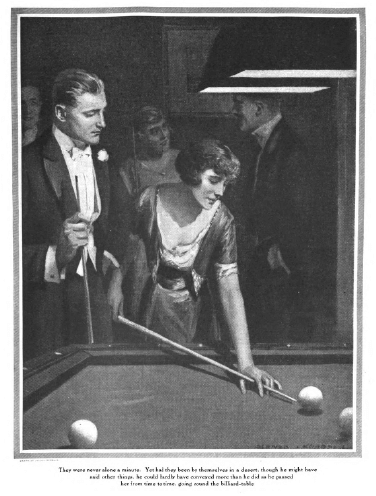
She’s living her best life.

Judge magazine, April 6, 1918

Okay, not courageous at a Russian woman soldier level, but wearing a dress this low-cut to play billiards takes guts.

Illustration from “Camille,” Cosmopolitan, April 1918

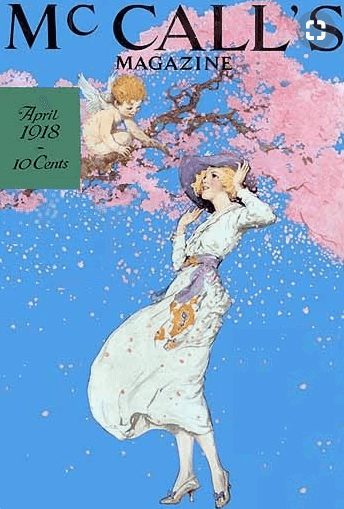
And, just in time for the D.C. cherry blossoms, a McCall’s cover by Willy Pogany.

*And, no, people don’t mention this at any possible opportunity. It’s relevant!

The giggling battalion: Russian women soldiers through the eyes of an American war correspondent

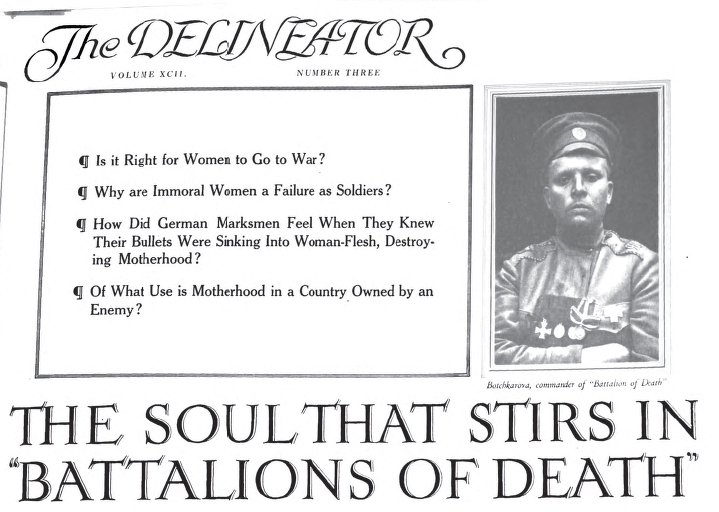
Reporting about Russia’s battalions of women soldiers in the March 1918 issue of The Delineator, war correspondent William G. Shepherd asks everyone the same question.

What about motherhood?

I thought of how it must feel to be a soldier and know that your bullets were sinking into woman-flesh, destroying motherhood; and of how, in spite of all this, you must shoot to kill these women soldiers lest they kill you.

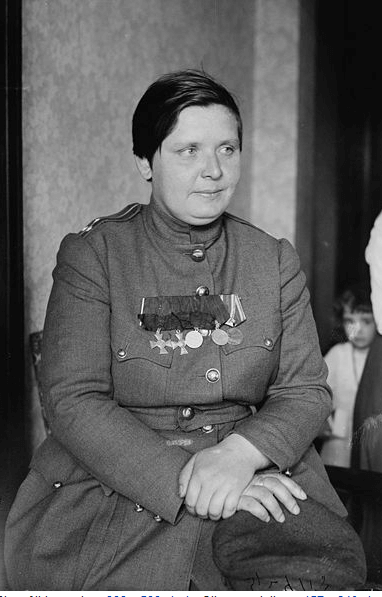
He gets an interview with Maria Bochkareva, the commander of the First Women’s Battalion. Amid the chaos of the Russian Revolution, her soldiers have deserted her, and she’s hospitalized in Petrograd (now St. Petersburg). He asks her why she went into the war. Weren’t the men fighting well enough to suit her?

“Yes, indeed,” she exclaimed…“But I can’t see why there should be any difference between men and women in this war and so I enlisted and went to the front.”

“But women have got something that men haven’t,” Shepherd mansplains. “They have potential motherhood, and if you kill that, you kill the whole race.”

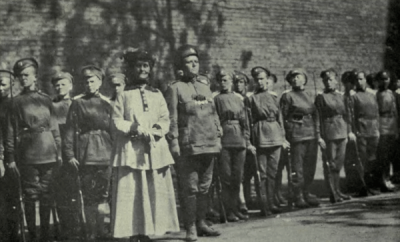
Maria Bochkareva and her soldiers with British suffragist leader Emmeline Pankhurst, 1917

Bochkareva, who at age twenty-eight has left two abusive husbands and fought in two wars, has a less sentimental take on the matter. “What is the use of motherhood in a country which is owned by an enemy?”

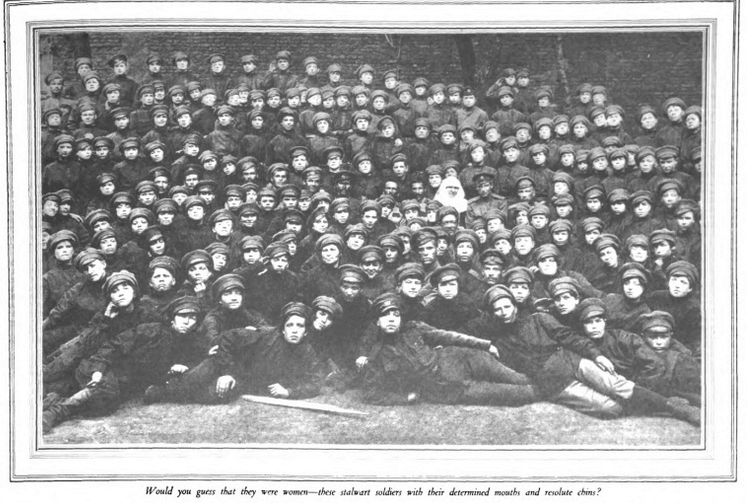
To Bochkareva, Shepherd marvels, the “girl” soldiers

are mere sets of brains that go to war. They are mere pairs of legs that can march, pairs of arms that can carry rifles, and most of all they include index fingers that can pull triggers, and good right eyes that can see marks.

Imagine!

Another issue weighing almost as heavily on Shepherd’s mind is the girl soldiers’ sex lives. He meets a deserter from Bochkareva’s battalion and asks her why she left.

“I left because there were too many bad girls in our company,” explained this seventeen-year-old miss in riding breeches who sat in a chair on the sidewalk before my hotel with her knees crossed.

“But I didn’t think morals had anything to do with fighting,” said my interpreter, who happened to be a celebrated Russian writer.

“Nothing to do with fighting!” exclaimed the girl. “Why, do you know you can never trust a bad girl in the firing-line?…I’ll fight for Russia, but not for that crowd.”

A light goes on in Shepherd’s head.

This was the first idea we got of the fact that in the girl legions of Russia, good girls make good soldiers and bad girls make poor ones.

The seventeen-year-old soldier goes on,

“Love hasn’t got any place in war, and when it comes to the other thing, it not only ruins girl soldiers, but the men soldiers, too.”

“But don’t the girls ever talk of their sweethearts at the front?” asked my interpreter.

“The girls who are in earnest don’t,” she said. “As soon as a girl begins to get sentimental or to talk about some man she likes, we just remind her that within a few days, if she is a good soldier of Russia, she may be dead.”

The Delineator, March 1918

Another thing about the girl soldiers: they’re so girly! In the barracks of another newly formed women’s battalion (made up, its leaders assure Shepherd, entirely of good girls),

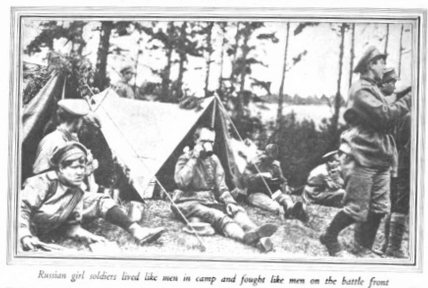
Some of them were reading, some were knitting, and several of them were romping girlishly. One was trying to stick another with a hatpin and another was chasing a girl with a glass of water with which she threatened to deluge the fugitive. It was just such a romp as one might have expected in the hallways of an exclusive girls’ boarding school. Only the clipped heads and the trousers seemed out of place.

Earlier, he watched Bochkareva’s equally girly soldiers decamping for the front.

Men soldiers do not giggle when they climb into cars, but I must admit that these girl soldiers did. They helped each other remove their packs from their backs; they threw their short, stubby rifles into the cars and then boosted each other in as best they could. There was giggling a-plenty and even little shrieks of mirth; when a girl fell, there was a shout of laughter.

For all his condescension, Shepherd ends up respecting the soldiers of the “Battalion of Death,” as Bochkareva’s soldiers were known. They fought courageously against the Germans, dodging bullets as they took ammunition to the front lines. For military security reasons, he can’t provide the names of the heroes, but

I can say that it was Bochkareva’s band that captured a hundred Germans and forced them to throw down their rifles and throw up their hands and exclaim, “Ach Gott! The Russian women!”

The Delineator, March 1918

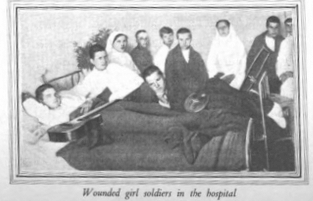
Shepherd visits some wounded veterans of the battle in the hospital and spots a German helmet. His interpreter asks the owner where she got it.

“I took it from a German soldier who tried to shoot me after he was wounded,” she said. “I was trying to help him, when suddenly he raised himself to his elbow and fired at me with his revolver.”

“What did you do?” we asked her.

“I shot him,” she said simply. “What else could I do?”

The Czar’s government, Shepherd tells us, authorized the women’s battalions in order to shame war-weary men into joining the army. But the situation was changing fast. On March 3, 1918, just as Shepherd’s story was hitting the newsstands, Russia made peace with Germany.

Maria Bochkareva (date unknown)

Bochkareva ended up on the wrong side of history. Branded an “enemy of the working class,” she was executed by the Soviet secret police in May 1920, at the age of thirty. The execution was against Lenin’s orders, and her killers were later put to death themselves.

As Bochkareva’s troops headed to the front, a Jewish seamstress stood sentinel on the train. At each stop, the soldiers faced insults and leers from men on the platform. At one station, a group of male soldiers tried to peer inside, saying, “We have come to see the girls.” The sentinel

made no outcry. She simply raised her rifle toward them and said:

“There are no girls here; only soldiers of Russia.”

(UPDATE: You can see Maria Bochkareva at a July 4 ceremony in Washington, D.C. in the last few seconds of this video, which I included in my post on the July 4 loyalty parade in New York.)

On a sad 50th anniversary, inspiration from 100 years ago

Thinking about Martin Luther King on the fiftieth anniversary of his death, it occurred to me that he hadn’t even been born a hundred years ago. I decided to look at The Crisis, the NAACP magazine edited by W.E.B. Du Bois, to look for something from that bleak time that pointed forward in a positive direction.

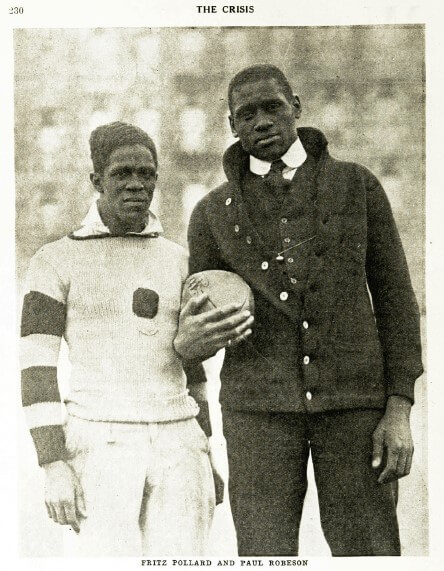
And I found it: 19-year old Paul Robeson.

The Crisis, March 1918

The March 1918 issue’s “Men of the Month” feature tells us that Robeson is a football All-American and a star student at Rutgers, winner for two consecutive years of the class oratorical prize.  In addition, he “is a varsity debater, plays guard in basketball, throws weights in track, catches in baseball, and is a baritone soloist.”

Robeson went on to play in the NFL (while studying law at Columbia!), but it was his work as a singer and actor, and his political activism, that won him lasting fame. During the McCarthy era, he was blacklisted and denied a passport, to the detriment of his career.

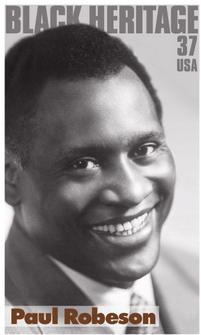
But times change, and in 2004 the U.S. Postal Service issued a stamp honoring him.

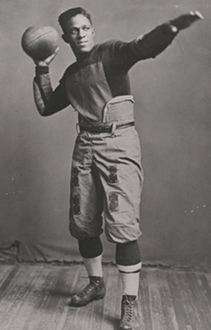
I was familiar with Robeson, but I hadn’t heard of Frederick Douglas “Fritz” Pollard, who is standing with Robeson in the photo. It turns out that he, too, entered the history books. He was a star player at Brown, went on to play professional football, and was the first black head coach in the NFL. In addition, he founded the first black-owned newspaper in New York. He served as a pallbearer at Robeson’s funeral in 1976.

Fritz Pollard (Brown University)

Pollard was inducted into the College Football Hall of Fame in 1954, where he was joined by Robeson in 1995. He was awarded an honorary doctorate by Brown University in 1981, five years before his death at the age of 92. In 2005, he became a member of the Pro Football Hall of Fame. His grandsons represented him at his induction.

“I Am a Jew”: A story of assimilation and identity in 1910s New York

If all you knew about Judaism came from the 1918 mainstream press, you’d think that every Jewish person in the world lived in a colorful village in Europe or worked the soil in Palestine or sewed shirtwaists in the Lower East Side. You might see this picture of the De Pinna family, department store owners, strolling down Fifth Avenue in their spring finery in Harper’s Bazaar, but you wouldn’t necessarily know they were Jewish. Depictions of American Jews outside the tenements were almost nonexistent.

Harper’s Bazar, April 1918

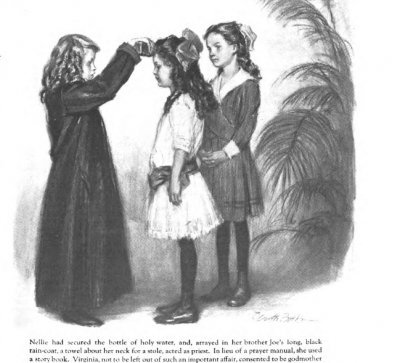
Well, there was “The Little Mixer,” in the January 1918 issue of Good Housekeeping. In this story by Lillian Nicholson Shearon, little Hannah Joseph longs to celebrate Christmas like her Christian friends. Chanukah, in her opinion, is a poor substitute. “Mama, I’m so tired of tales about the children of Israel,” she says. “They never did anything funny.” She listens with envy to her family cook’s reminiscences about about Marse and ole Mis’ going to town and buying Christmas presents for all the slave children.

Good Housekeeping, January 1918

Hannah’s friend comes to the rescue, donning a long black raincoat and performing an emergency baptism. Hannah writes to Santa informing him of her conversion and instructing, “Bring me any nice things you got left.” Her parents find the letters pinned to the wall next to a stocking she’s hung. Her mother cries, but her father thinks it’s hilarious. “Every child who has heard of Santa Claus deserves to enjoy the myth,” he says. He rushes downtown, and, on Christmas morning,

it seemed that Santa Claus, never having visited Hannah before, had a mind to make up for lost time. An overflowing stocking hung from the mantel; a tree loaded with presents and tinsel stood by her bed; about the room were placed larger gifts, everything a little girl might look for.

Hannah searches for a way to express her thanks, and finally “bowing her little bronze head reverently, she made the sign of the cross—upside down!”

You know what? I have a feeling that Lillian Nicholson Shearon wasn’t Jewish. The author of the article “I Am a Jew” definitely was, though. We know this because the article, which appeared in the North American Review in December 1917, opens with a note that says:

Because of the intimate character of this poignant disclosure, the author prefers to withhold his name. It is, however, known to the Editor of the REVIEW, as is the writer’s authenticity as an American Hebrew.

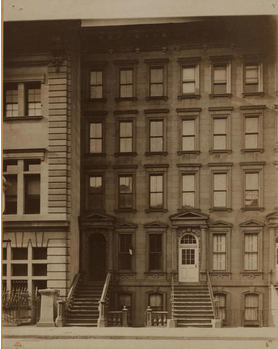
Upper East Side brownstone, ca. 1911 (oldnyc.org)

The writer tells us that he was born into “that pallid and genteel limbo, an uptown side-street in New York City; one of those colorless and respectable streets whose denizens are neither rich nor poor, neither good nor bad, neither all Jews nor all Gentiles.”

For the Jews in this neighborhood, being Jewish was

the rock bottom of their lives, never to be blasted away. Yet hardly less fundamental was the conviction that it was well not to insist too strongly on their Jewishness; not to flaunt it before strangers; not to be “too Jewish.”

He was raised outside the Jewish tradition, but he longs to find his God.

I did not know the name of my God, but I knew that He was there. I did not know the prayers which the people of my race prayed to him; so I prayed the prayer which I learned from my Gentile nurse…I prayed in secret, even as my father had, in secret, refrained from prayer.

For years he drifts through life unhappily.

And then one day I met a Negro, one of the leaders of his race, in whose veins, mingling with the blood of Africa, there flowed some of the best white blood of America, and of France. He looked—but for his golden-brown skin—like those patricians of the seventeenth century whom Van Dyck loved to paint.

W.E.B. Du Bois, ca. 1919 (Library of Congress)

This man—who must have been W.E.B. Du Bois—had a great reputation as a scholar and a writer.

Had had chosen to live in France, where he would have been looked upon as an individual, he might have had a respected and a leisured life. But he chose America. He chose persecution. He chose the black blood in his veins, instead of the white.

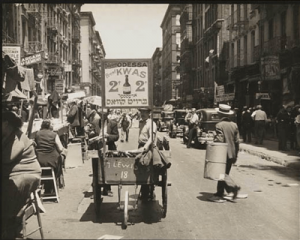
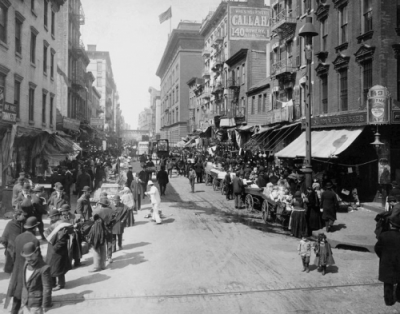
Pushcart, Lower East Side, date unknown

He asks himself, “If a Negro is proud of being a Negro, shall not a Jew be proud of being a Jew?” So he goes to seek his people, on the streets of the Lower East Side.

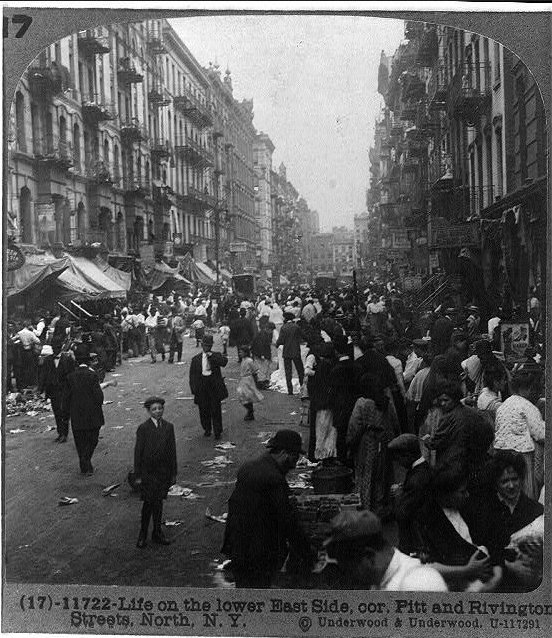
In the thunderous murk of Allen Street I came to feel at home, and on Houston Street, and where the pushcarts of Bleecker Street form long, motley lines, and on East Broadway, and where the fish and vegetable vendors set up their stands under the East River bridges. The reek of pickled fish and pickles ceased to offend my nostrils. Nor did I turn my eyes from the dirty bedding and the dirty children hanging over rusty fire-escapes which made the hideous fronts of tenements still more hideous. They were my people. They were Jews—undiluted, unAmericanized.

Lower East Side, ca. 1915 (Library of Congress)

But it was not as simple as that.

I had been taught to despise them. I now learned to admire them.

But I could not become one with them.

They would not accept me.

To them I was a Goy.

Lower East Side, ca. 1910

He closes with words from the Song of Solomon.

I opened to my beloved;
But my beloved had withdrawn himself and was gone.
My soul had failed me when he spake
I sought him, but I could not find him;
I called him, but he gave me no answer.

I hope that somehow, somewhere, he found his people.

Happy Passover to all who celebrate!

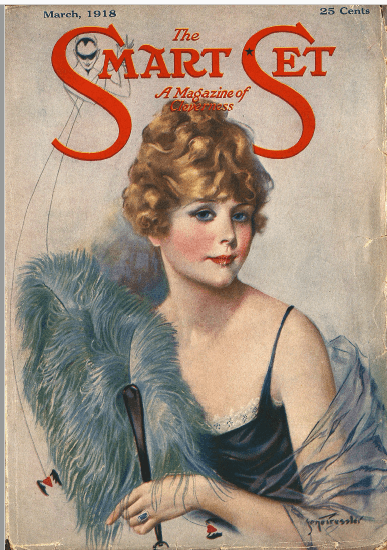
The best and worst of March 1918: Magazines, essays, cover art, and humor

When I was in the Foreign Service, living in Cambodia or Honduras or wherever, people used to ask, “But don’t you miss home?” I never knew what to say. The honest answer was, “I miss some things, sometimes, but it’s way more interesting here. Don’t you get bored living in the same place all the time?” That seemed kind of rude, though.

A quarter of the way through, that’s how I feel about my life in 1918. I’ll see, for example, that Meg Wolitzer, Curtis Sittenfeld, and Rebecca Harrington all have books coming out, and for a second I’ll wish that I could read them, but then I’ll pick up Mrs. Spring Fragrance or the latest issue of The Dial, and the feeling goes away. I can read those books next year. In the meantime, it’s way more interesting here.

Now for the best and worst of March 1918:

Best Magazine: The Little Review
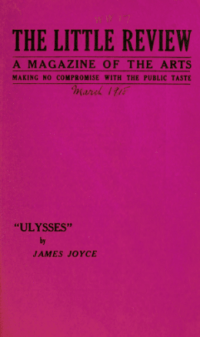
Ulysses, as I wrote earlier this month, made its first appearance in the Little Review in March 1918. The issue also includes Ezra Pound writing on Marianne Moore, fiction by Wyndham Lewis, and an essay by Ford Madox Hueffer (a.k.a. Ford) that contains the sentence “The Englishman’s mind is of course made up entirely of quotations.” But the rest of the issue could have been blank (which wouldn’t have been unprecedented—the first thirteen pages of the September 1916 issue were blank, an expression of editor Margaret Anderson’s frustration over the lack of quality submissions) and it still would have been the best magazine of the month, if not the year.

Worst Magazine: The Art World
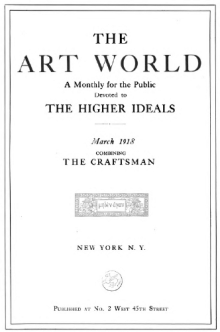
The Art World, as I noted last week, had nothing good to say about impressionism or anything that came after. To put that into perspective, the first major exhibition of impressionist art was in 1874. So an art magazine taking this stance in 1918 is like Rolling Stone saying in 2018 that this rock-and-roll music is just a lot of noise.
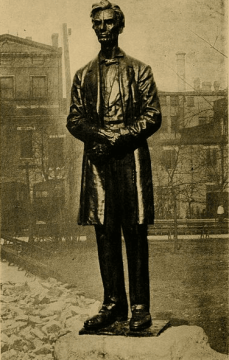
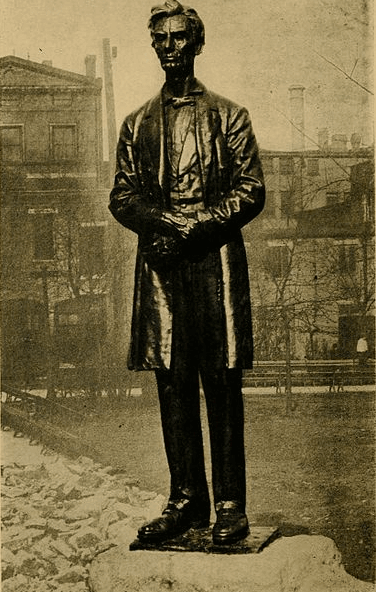
Statue of Lincoln, George Grey Barnard, Lytle Park, Cincinnati (1917)

In its March 1918 issue, the last before it merged into another magazine, The Art World criticized George Grey Barnard’s statue of Lincoln in Cincinnati, saying that Barnard

does not show the majestic Lincoln at the bar of history being judged and admired, but a slave Lincoln at the block, being sold and pitied…let us hope that Mr. Barnard will now deign to accept the advice we gave him in June 1917 and make a new Lincoln—virile, heroic, and majestic.

The magazine approvingly quotes portraitist Cecilia Beaux saying of the 1913 Armory Show in New York, the first large exhibition of modern art in the United States, that

“It was like a sudden windstorm that raises no little dust, noise, and confusion for the moment; when the wind dies down you discover that much that was of no real value has blown away, leaving a clearer, wholesome atmosphere.”

The Art World branches out to the written word in this issue, calling a modernist poem “speech worthy of a yapping maniac.”

Best humorous essay: “Making the Nursery Safe for Democracy,” by Harold Kellock, The Bookman

 

Essays about family life in 1918 are generally steeped in sarcasm (if they’re by men) or sentimentality (if they’re by women). It’s hard to find a family that seems real. Then I came across Harold Kellock’s essay about his four-year-old son being bombarded with royalist propaganda through his nursery reading. Every night, Kellock is forced to read his son a story about some heroic king. “In a world wherein we are pouring out our blood and treasure that democracy may live safely,” he complains, “our children scarcely out of the cradle are being made into staunch little monarchists.” He takes a stab at democratizing the stories, but it doesn’t work, and he resigns himself to nursery royalism.

“Then,” I read, “the king took Gretel to his palace and celebrated the marriage in great state. And she told the king all her story, and he sent for the fairy and punished her.” Think of having the power of punishment over fairies! The King und Gott! But my son swallows it complacently. He does not question the divine right of kings.
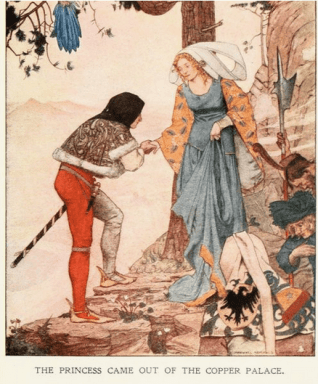
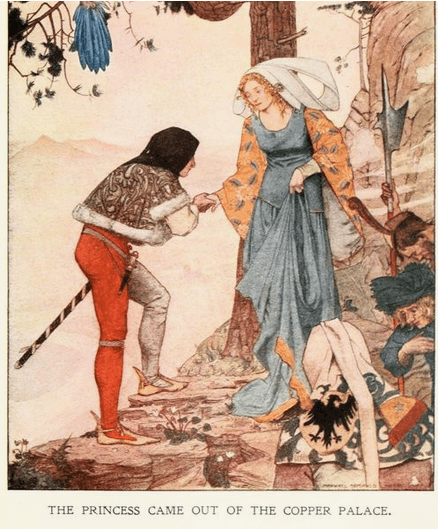
Faery Tales from Hans Christian Andersen, Maxwell Armfield, 1910

Kellock reassures himself that, when the time comes, he can turn his child into a democrat by showing him photographs “of some vacuous king, discreetly bearded to hide his recessional features,” or “a typical princess, whose hat and features alike seem so unfortunately chosen, opening a Red Cross bazaar.”

But not for a while, he says.

Worst humorous essay: “I Must Have Been A Little Too Rough,” by George B. Jenkins, Jr., Smart Set
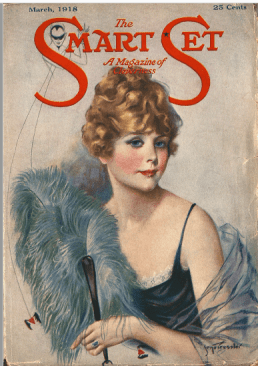
I hope this is the worst thing I read all year. There must be an anti-gender violence message hidden somewhere, but…well, read it for yourself.

I must have been a little too rough.

“Women,” her father had told me, “are tired of the courteous treatment of the average man. They are bored by the vapid compliments, the silly lies, the stupid chatter of pale youths with gardenias in their lapels. If you want to be a success with women, be rude! Be violent! Overpower them, assert your physical superiority! If necessary, beat them!” He became quite excited. “Pound them! Assault them! Half-murder them!”

I listened to him respectfully, though I did not care for him at all. Yet I believed him, for he is notoriously successful in his affaires.

I decided to test his theories. Striding into the next room, I grasped his daughter about the waist.

“I love you!” I roared, squeezing her until her face was purple.

“You belong to me!” I shouted, dragging her around the room by her hair, and overturning several chairs in our progress.

“Damn you!” I shrieked, striking her on the shoulder, where the blow left a blue welt, “I will fight the world for you.”

She began to whimper.

“Shut up!” I ordered, in my rudest manner, and slung her across the room.

But I must have been a little too rough, for she fell out the window.

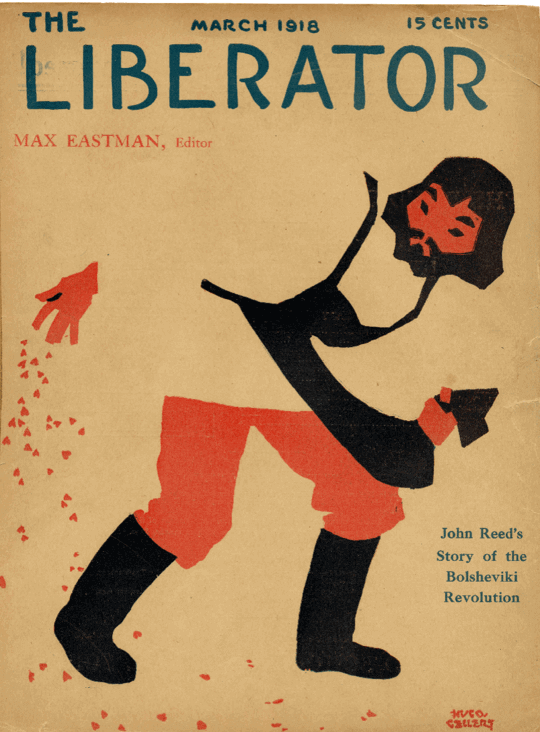
Best magazine cover: The Liberator
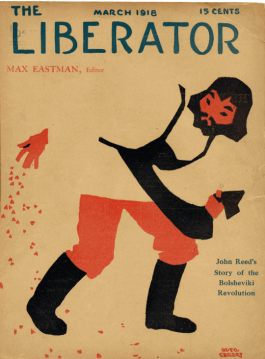
The first issue of The Liberator was published in March 1918. Its predecessor, The Masses, had closed down in 1917 after being declared treasonous by the government for its anti-war stance. The debut issue included reporting from Russia by John Reed, whose Ten Days that Shook the World was published the next year (and who died in Russia in 1920 at the age of 32). I’ll write more about The Liberator later. For now, here’s its inaugural cover, by Hungarian-American artist Hugo Gellert.

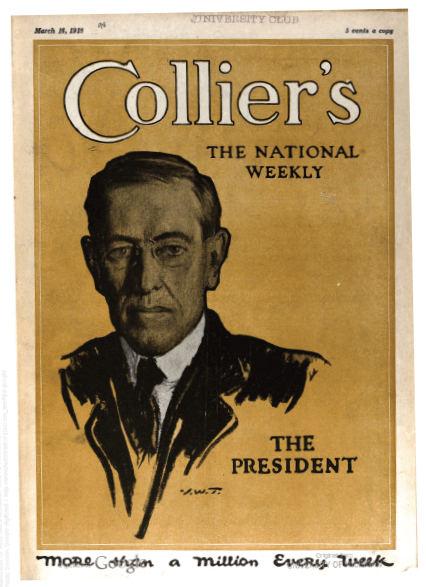
Worst magazine cover: Collier’s
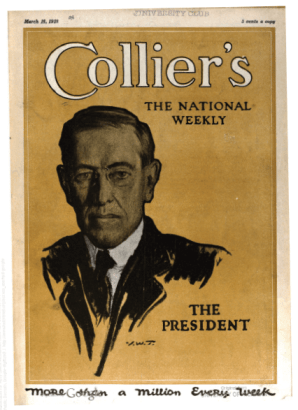
I’m imagining the meeting where this cover was conceived.

Art director: How about…the President?
Editor: What would he be doing?
Art director: Nothing, just a picture of his face, in black and white. With a caption that says [stretches his hand into the air dramatically], “The President.”
Editor: I like it!

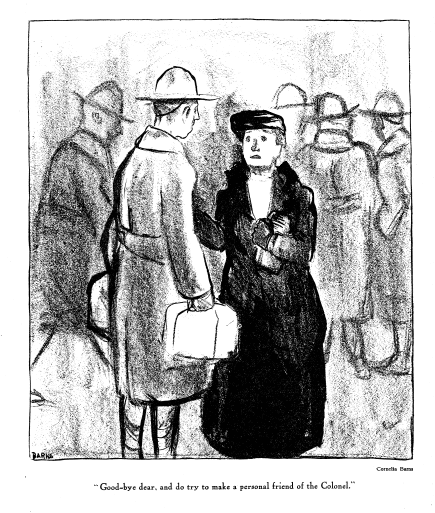
Best humor:
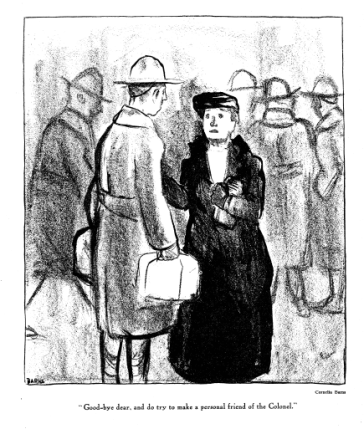

As I’ve noted before, there are no good jokes in 1918 magazines. But I liked this Cornelia Barns Liberator cartoon, featuring the world’s most coldhearted mother seeing her son off to war.

Worst humor:
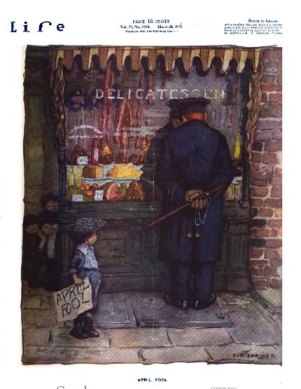
First dog: How is brother collie over there? Is he in your set?
Second: Oh, yes; we visit the same garbage pails.

(Life magazine, March 28, 1918)

And, in honor of Women’s History Month, the most inspiring women:

I came across so many! Novelists Edith Wharton, Willa Cather, and Mary Roberts Rinehart; artist Elizabeth Gardner; dancer Irene Castle; Little Review editor Margaret Anderson; suffragist Anna Kelton Wiley; prosecutor Annette Abbott Adams; rebellious housewife Julia Clark Hallam; and the anonymous woman who wrote about how divorce saved her sanity.

But every month is Women’s History month at My Year in 1918, and there are lots more inspiring women to come. (Sneak preview: a pioneering British sexologist and a witty Chinese-American writer.) On to April!

Wednesday Miscellany: Grotesque wallpaper, a Locomobile, and a Rockwell Easter cover

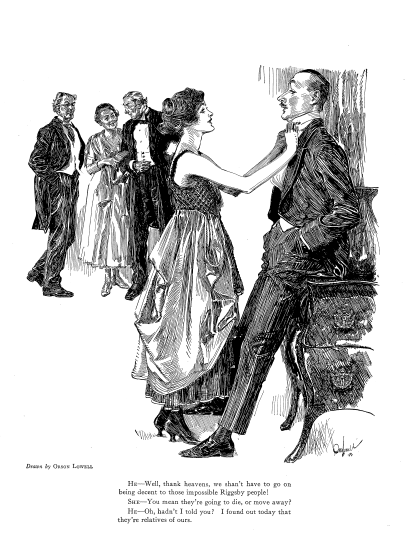
He—Well, thank heavens, we shan’t have to go on being decent to those impossible Riggsby people!
She—You mean they’re going to die, or move away?
He—Oh, hadn’t I told you? I found out today that they’re relatives of ours.

The punch line’s only so-so, but I love “You mean they’re going to die, or move away?”

Judge magazine, March 16, 1918

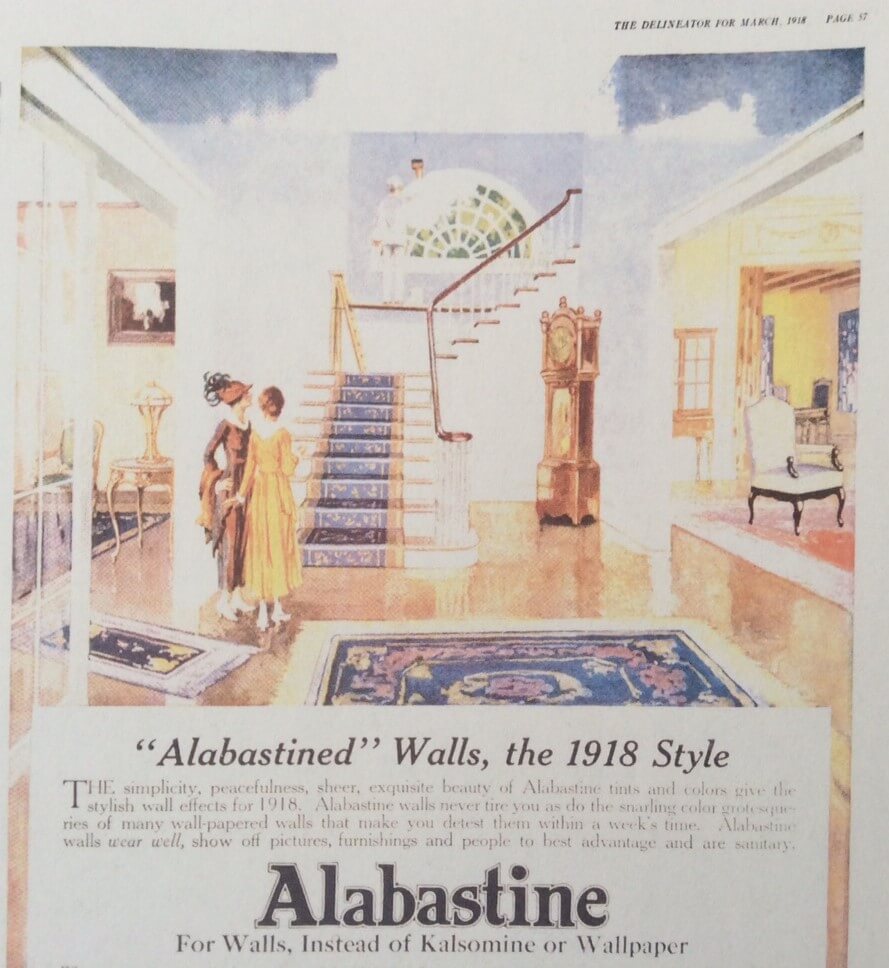
I know, right? The snarling color grotesqueries of wallpaper are the worst.

The Delineator, March 1918

Um, if your car is so serious that it has its own Latin motto, maybe don’t call it the Locomobile?

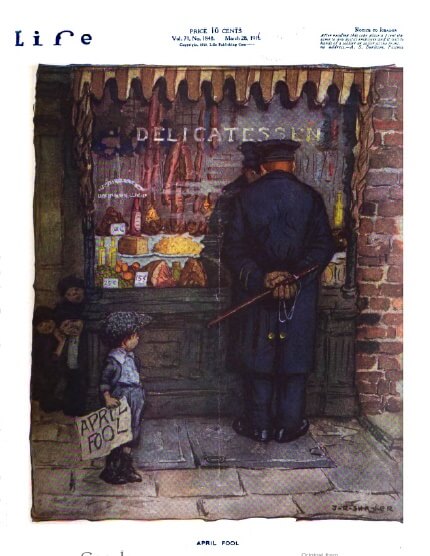
Life magazine, March 28, 1918

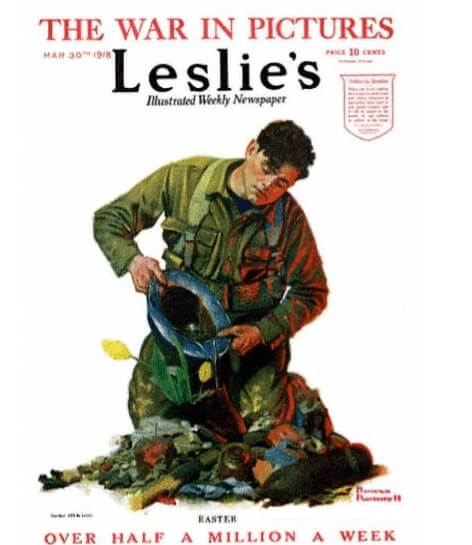
And finally, a soldier uses his helmet to water tulips on this Norman Rockwell cover, titled “Easter.”

A forgotten early 20th-century Betty Friedan

Quick: where do these sentences come from?

[The housewife] masters in a year or two years at most details which must nevertheless be repeated, although all the freshness and interest have gone out of them, as long as life lasts.

In a vague and unanalyzed way she feels the inexorable effects of child training and housekeeping upon her own mental life and powers.

She has a sense of injury that she has fallen upon a career so uninteresting and uncongenial.

Betty Friedan, right? The Feminine Mystique. The problem that has no name.

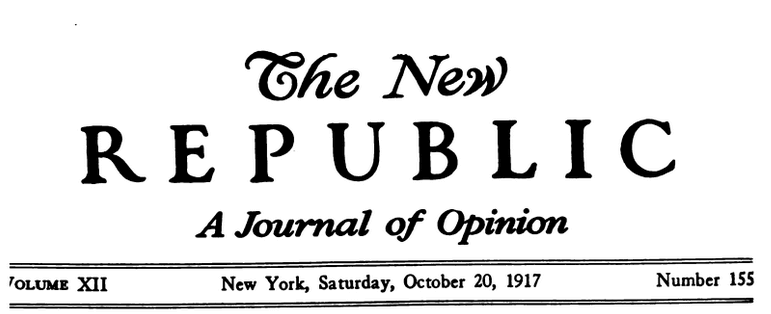
No, not right—as you’ve probably guessed, since this blog isn’t called “My Year in 1963.” (The post title may have been a tip-off as well.) They come from an October 20, 1917,* article in the New Republic called “The Price of a Home,” by Julia Clark Hallam.

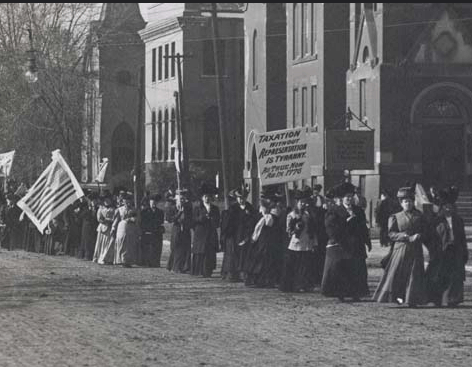
Parade staged by the Iowa Woman’s Suffrage Association. Boone, Iowa. October 29, 1908. Photographer: Moxley. (State Historical Society of Iowa, Des Moines)

There were feminists back then, of course. For the most part, though, they were fighting for the vote, not talking about bored housewives. In fact, in order to win men over to the suffragist cause, they were deliberately not rocking the gender equality boat.

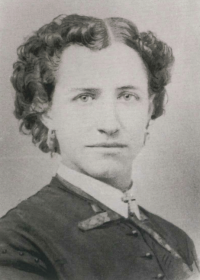
Julia Clark Hallam was a suffragist, too—she headed the Iowa Equal Suffrage Society from 1909 to 1910. But she wasn’t having any of this “one battle at a time” business.

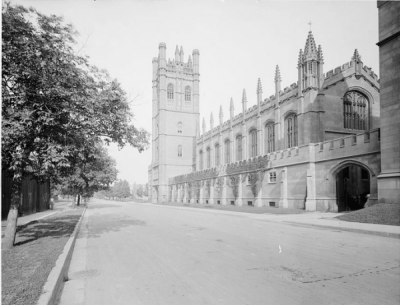
Hutchison Hall, University of Chicago, ca. 1910-1920 (Library of Congress)

“The Price of a Home” starts with the tale of a woman (clearly Hallam herself) who applies to graduate school twenty-five years after graduating from college with honors. In the years in between, she has raised four children. The school’s dean agrees to admit her, but he predicts that she won’t succeed. She asks why.

“Because,” replied the dean, after taking a moment or two for reflection, “our experience has compelled us to realize that the occupation of home making, important as it is, does not prepare the mind for its higher activities and attainment.”

Hallam sees the dean’s point.

Lack of intellectual content in experience and constant repetition arrest mental development as certainly as newness, freshness and interestingness make for mental growth.

The way she describes this problem leaves little doubt that she’s experienced it first-hand.

There are days when [the housewife] feels she must throw all the dishes on the scrap heap rather than wash them, and as for breaking an egg, which has to be done so endlessly in cooking, she clenches her teeth lest she jam the whole sack of eggs into the garbage pail.

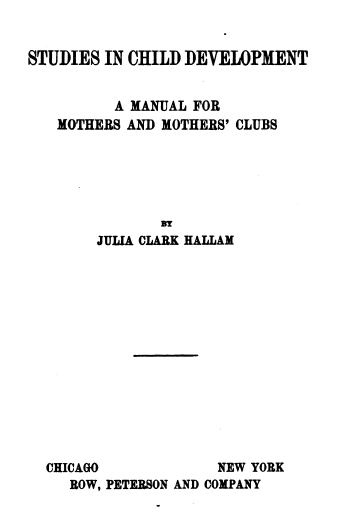
Frontispiece, Studies in Child Development, Julia Clark Hallam

In a follow-up article the next week, Hallam takes on the argument that, while keeping house might be tedious, raising children is intellectually stimulating.

Doubtless there are elements of truth in this argument, yet I wonder if those who press it realize how often a child has to be bathed? Let us admit that the first ministrations of this kind bring the thrill of the mentally fresh and the emotionally pleasurable. But after the act has been repeated several hundred times the thrill refuses to report for duty.

Again sounding very much like Friedan, she says that technology is not the solution.

I am inclined to believe that mechanical inventions are proving thought-killers rather than thought-producers, and that the time they save is wasted unless it can be given to activities which have a real mental content.

Good Housekeeping, January 1918

It’s too late for the present generation of homemakers, Hallam says. But she’s optimistic about the future.

My most earnest hope and conviction is that through the influence of continued intellectual rebellion on their parts against the present conditions, we shall blaze a trail which for our daughters and granddaughters will lead out to a reconstructed society where all individuals shall have equal share in grasp of mind and freedom of spirit.

In the debate sparked by the article, Hallam comes in for a fair amount of condescension. But not all of her critics are men. Elizabeth Childe of Washington, D.C., says that, after searching through “a mind darkened by twenty years of homemaking,” she has found the flaw in Hallam’s argument: her failure to distinguish between housework and the rewarding—to Childe, at least—occupation of homemaking. Friedan, too, was criticized for saying that no one could possibly enjoy being a housewife. (Another criticism of Friedan, that of class bias, could also be applied to Hallam. Her husband’s work—he was a lawyer—might seem enviable, but would she want to trade places with a male assembly line worker?)

Frontispiece, The Story of a European Tour, Julia Clark Hallam

Hallam did earn her degree, an M.A. from the University of Chicago, in 1910. In addition to her work as a suffragist, she taught high school in the United States and the Philippines. She wrote several books as well. The Story of a European Tour (1900), is, sad to say, even more boring than it sounds.** In Studies in Child Development (1913), we learn about “The Boy’s Greatest Danger,” which is, you guessed it, “onanism, or self-pollution.” You can read what she has to say about this life-threatening problem, and how to solve it, here.*** But most of her advice is more sensible, and she was described as a pioneering advocate for sex education (or social hygiene, as it was then known).

Hallam died in 1927, at the age of 67. Her occupation, as listed on her death certificate: housewife.

*Granted, this blog isn’t called “My Year in 1917” either. But the debate over Hallam’s article continued for months in the letters to the editor, which is how I came across her.

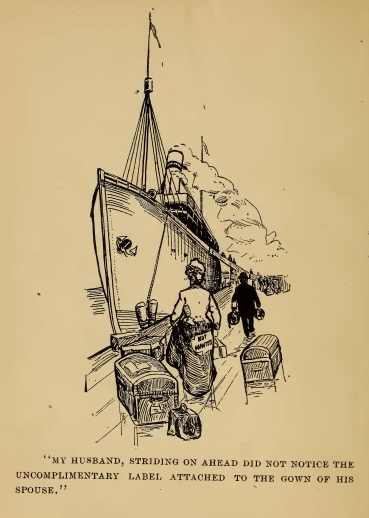
**The height of the action, judging from my quick skim: she and her husband think they’ve lost their train tickets, find them at the last minute, are separated on the platform in the confusion, and are brought together by a nice young man from Princeton.

***If you’re pressed for time, here’s a sample: “Everyone has seen an electric battery which has spent its force. It is a dead thing. So the body, with its splendid life forces wasted—not to speak of the moral and spiritual and degradation that follows. It is one of the great tragedies of life.”

Elizabeth Gardner: A boundary-breaking, cross-dressing painter with a surprising afterlife

In the March 1918 issue of the The Art World, there’s an article called “Some Painters Who Happen to Be Women.” I read it, and it’s true! They all just happened to be women. None of them did it on purpose, just to be annoying.

According to the article’s author, Lida Rose* McCabe, who happened to be a woman herself,

woman as an art producer has ceased to be curio, enigma or trifle. Upon intrinsic merit her achievement now stands or falls. In all that makes for exhibition, Jury award, Academician, museum purchase or public commission, hers is today the modern sexlessness—attributed to angels in painting and sculpture.

Elizabeth Jane Gardner, ca. 1860

The oldest of these modern sexless artists—“her years fourscore!” McCabe marvels—is Elizabeth Jane Gardner. The Art World is a pretty fusty magazine, so I assumed that she was a boring society painter. Well, I was wrong. In 1864, at the age of 23, Gardner left for Paris to study art, but, McCabe tells us,

no school, no master would receive her. The few French or foreign women then known to the Salon or Latin quarter, like the few who had preceded them down the ages, were the wives, sisters, or daughters of artists.

Gardner found an ingenious way to get around this problem. Her hair had been cut short because of a fever before she left for France, so, she tells McCabe,

“I applied to the police to wear boy’s clothes. It was readily granted, and in that guise I entered the Gobelin’s school. My masculine attire which I always changed on heading home, never caused me the slightest annoyance. The students were most courteous, and in the streets I was never inconvenienced.”

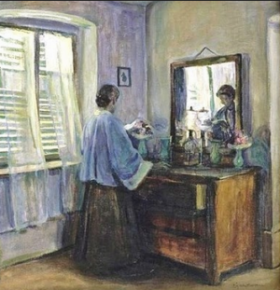
Closed Shutters, Elizabeth Gardner

Success came quickly. Two of Gardner’s paintings were selected for the Salon in 1866, and in 1872 she was awarded its gold medal, the first woman to receive that honor.** In the early 1900s, the Musée de Luxembourg bought her painting Closed Shutters for its American wing. In the otherwise admiring profile, McCabe sneers at this painting, saying that

with due deference to its quality, there are few of our museums, private collections or current exhibitions without a picture by a native home-trained woman painter to equal if not surpass Closed Shutters.***

McCabe tells us that Gardner married her teacher, noted artist William Bouguereau. What she doesn’t tell is that Gardner, who was maybe not as sexless as McCabe makes out, carried on a long liaison with Bouguereau after the death of his first wife in 1877. His mother bitterly opposed their marriage, and this was apparently too great an obstacle for this pair of otherwise free spirits to overcome. (Could money have been involved?) His mother finally died in 1896, at the age of ninety-one, and they married shortly afterwards.

Self-portrait, William Bouguereau, 1879

Gardner was heavily influenced by Bouguereau, to the extent that she was quoted as saying, “I know I am censured for not more boldly asserting my individuality, but I would rather be known as the best imitator of Bouguereau than be nobody!”

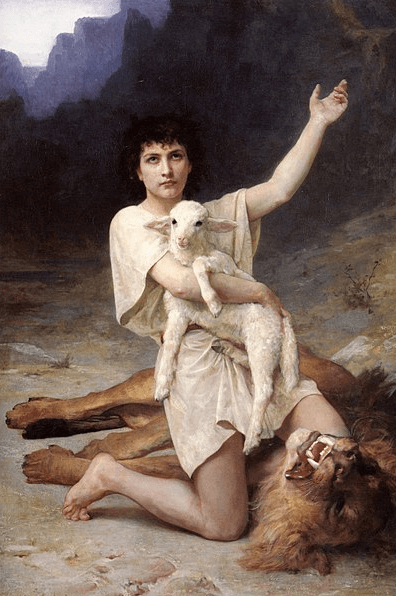
David the Shepherd, Elizabeth Gardner, ca. 1895

Many of Gardner’s paintings are conventional nineteenth-century tableaux: Greek myths, biblical scenes, and the like. Others, though, raise eyebrows today.

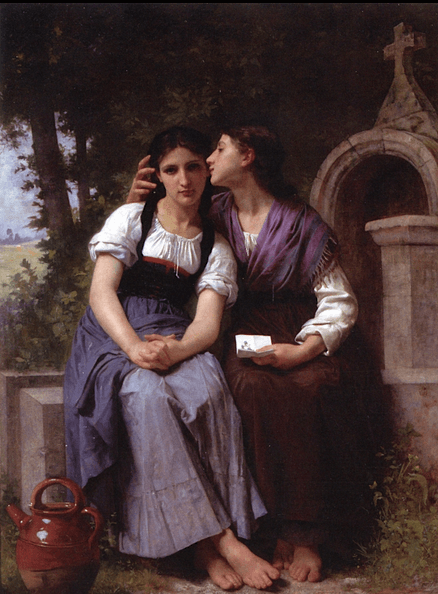
Take, for instance, The Confidence (ca. 1880). The painting, now owned by the Georgia Museum of Art in Athens, Georgia, shows two young women sharing a secret. To a modern eye, it looks sexualized—the intimate position of the heads, the bare feet close together. In a 2013 article about the loan of the painting to (of all places) Bob Jones University, however, a museum staff member said that this wasn’t the case.  “It’s very affectionate, but it’s also very 19th-century sisterly affectionate.”

The Confidence, Elizabeth Gardner, ca. 1880

The Confidence had a second life in—I bet you didn’t see this coming!—an R.E.M. video. As the Athens-based band sings its 1991 song “Low,” the girls in the painting come to life and the action continues. And, take my word for it, it’s anything but sisterly. (Or check it out yourself on R.E.M.’s website.)

I’m not sure what Elizabeth Gardner would have thought, but Lida Rose McCabe must be turning over in her grave.

squiggle

*So now I can’t get the song from The Music Man out of my head.

**The Art World sees art as a resume-building process. Still—impressive!

***The Art World’s taste in art was so reactionary that even impressionism was a bridge too far. Its take on Monet’s Rouen Cathedral: “Nothing more than a ‘color stunt.’”

Wednesday Miscellany: Pacifist nightmares, a sad funny page, and a widowed dancer

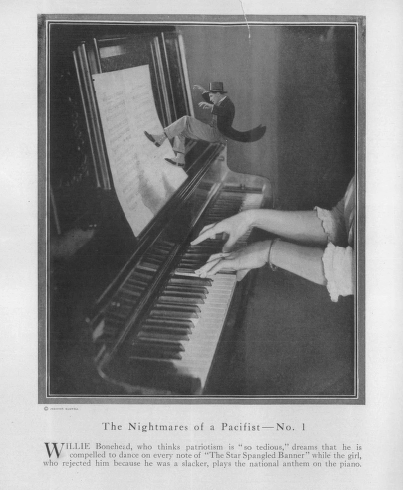
Judge magazine has been running a series called “The Nightmares of a Pacifist,” featuring conscientious objector Willie Bonehead, whose guilty subconscious places him in a series of horrific scenarios. First he is “compelled to dance on every note of the ‘Star Spangled Banner,’ while the girl, who rejected him because he was a slacker, plays the national anthem on the piano.”

Judge magazine, March 2, 1918

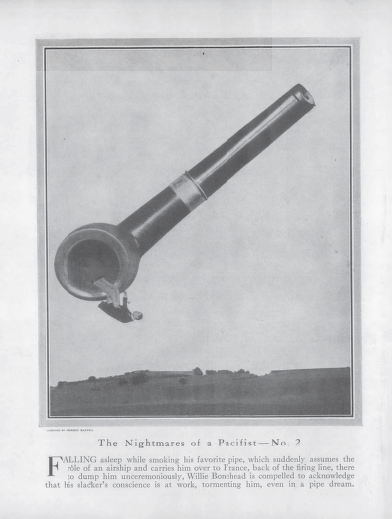
Next he falls asleep while smoking his pipe, which transports him to the front line.

Judge magazine, March 9, 1918

The political message is pretty heavy-handed, but I like the proto-surrealist art.

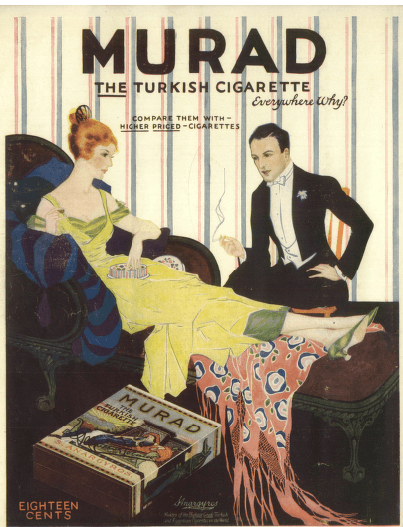
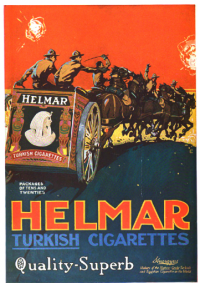
Turkish cigarettes join the fight against…the Turks.*

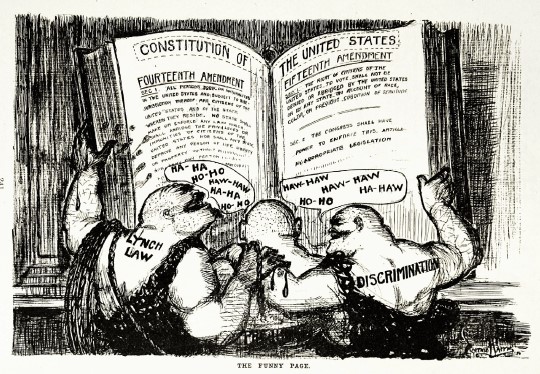
The table of contents of the March 1918 issue of The Crisis, the NAACP magazine edited by W.E.B. Du Bois, has a listing for “The Funny Page.” The Crisis isn’t exactly a barrel of laughs, so I wondered what this could be. Here’s the answer:

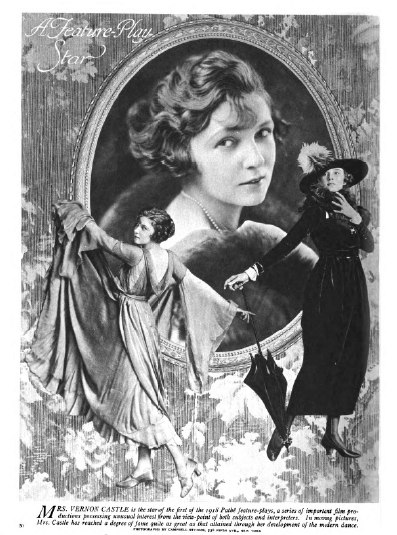
I can’t stop looking at this picture of dancer Irene Castle, which appeared in Cosmopolitan in  March 1918. Just as the issue was hitting the newsstands, her husband and dancing partner Vernon died in an aviation training accident in Texas. He had completed 300 missions as a Royal Air Corps pilot. The Castles were the subject of a 1939 Astaire-Rogers biopic.

*Yes, yes, I know, the United States was not actually at war with the Ottoman Empire.

Ulysses is 100!

The Little Review, March 1918

Happy 100th anniversary, Ulysses! This week, more or less, marks the centennial of the first publication of its opening chapter in the American journal The Little Review.

The reason for the “more or less” is that The Little Review wasn’t the world’s most prompt publication. The February issue, according to an announcement in the January issue, was published on February 10. Ezra Pound, who was the magazine’s foreign editor, wrote to Joyce on March 29 that the March issue was in print and thirty copies had reached him in London, so mid-month seems a reasonable estimate. (If anyone has a more exact publication date, please let me know!)

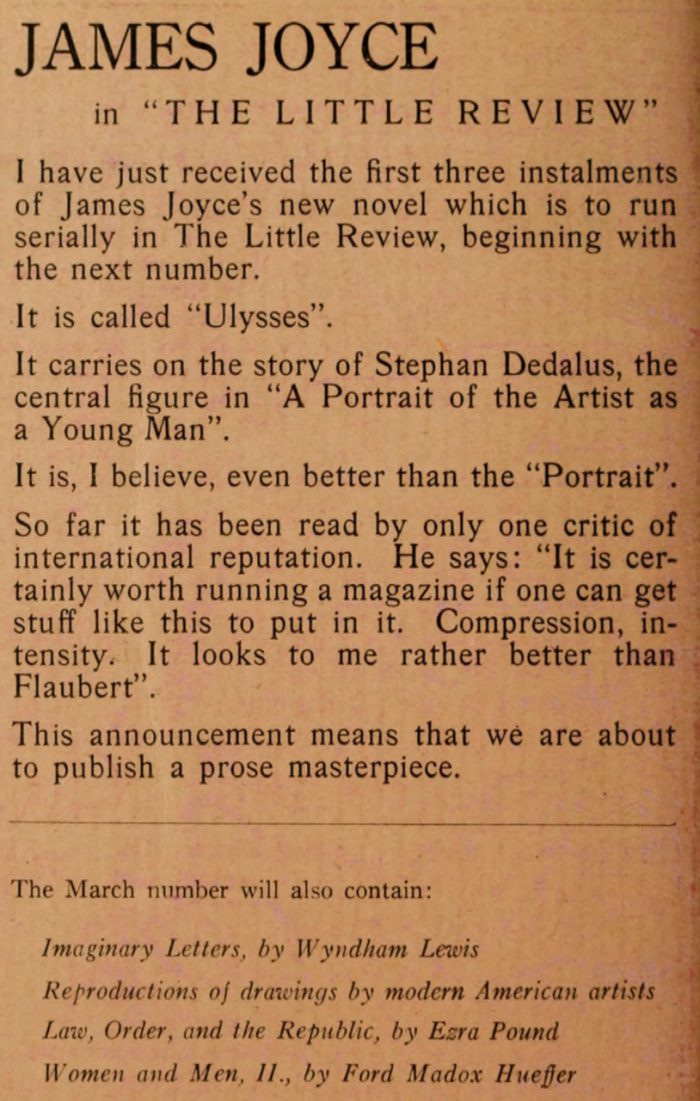
Not hedging any bets, the Little Review announced in its January issue, and again in February, that “we are about to publish a prose masterpiece.”

Little Review, February 1918

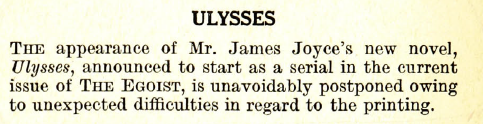
The Egoist also announced the upcoming serialization, but with British reserve rather than American braggadocio.

But The Egoist had to back out because its printer refused to print the issue.

Egoist, March 1918

So the Little Review had to go it alone.

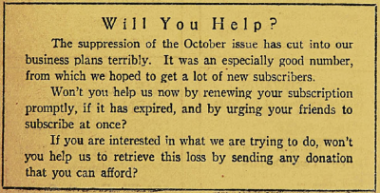
The magazine’s editors knew they were taking a risk. As I recently noted, the October 1917 issue had been suppressed after the Postmaster General declared Wyndham Lewis’s story “Cantleman’s Spring-Mate” obscene*—a disappointing and expensive blow.

Little Review, December 1918

They knew that publishing Ulysses could get them into even more trouble. But they went ahead anyway.

Who were these people? I wondered.

Ezra Pound, 1913 (Alvin Langdon Coburn)

I knew who Ezra Pound was, of course. He was everywhere in 1918, working himself into a state of exhaustion as the foreign editor of the Little Review and Poetry magazine, an editor at the Egoist, and a contributor to New Age, another modernist journal. He wrote prolifically—sometimes at the expense of coherence**—for these and other publications, and did translation as well. And, oh right, he was a poet. It’s Pound who is best remembered as the creative mind behind The Little Review.

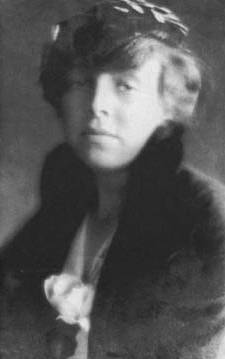
But it was the magazine’s editor, Margaret Anderson, who had the most at stake. She would be responsible for any criminal charges regarding its content while Pound was safe in London.

Margaret Anderson

Like a surprisingly large number of people I’ve come across in my 1918 reading, Anderson was from Indiana***.  She grew up in various towns, including Columbus (Indiana, not Ohio), where I lived for a few years as a child, and which is way less boring now than it was in Anderson’s time. The rebellious daughter of wealthy parents, she dropped out of the genteel women’s college where she was being groomed for life as a society matron and moved to Chicago just as the Chicago literary renaissance was getting underway. She worked as a book critic for a Chicago newspaper and literary editor at a religious publication before joining the staff of Dial magazine, where she learned the ropes of magazine publishing.

In 1914, at the age of twenty-seven, Anderson founded The Little Review with financial support from Breeder’s Gazette editor DeWitt Wing, whom she met at a party. (Everyone who wrote about Anderson mentioned her physical attractiveness, which might have played a role in Witt’s impetuous decision.)  Money was always tight, though. Accounts of Anderson’s life make much of a six-month period that she and her colleagues spent living in a tent on Lake Michigan after she was forced out of her apartment—although most don’t mention the wooden floors, or the servants.

Anderson’s partner at the magazine, and also in life, was Jane Heap, a former lover of Djuna Barnes. They moved briefly to San Francisco and then relocated to Greenwich Village in 1917.  Pound joined the magazine that year. Its table of contents during that period is a Who’s Who of modernism.

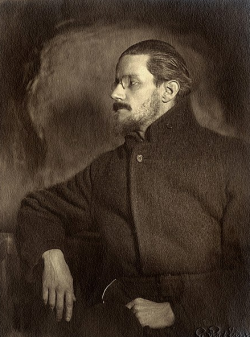
James Joyce, ca. 1918 (Cornell Joyce collection)

Reading the chapter in the Little Review was my own first encounter with Ulysses, and it wasn’t as difficult as I’d been led to believe.**** I had read A Portrait of the Artist of the Young Man, and its main character, Stephen Dedalus, features in the opening section. Stephen and Buck Mulligan, his roommate (towermate, actually—they live in a former military fort), are bickering as they get ready for work. It’s not exactly Bab: A Sub-Deb, but it’s not any more difficult than some of the mannered, faux-archaic novels of the time.

Obscenity-wise, it’s pretty tame stuff, unless the sexual references went over my head, which is quite possible. The most risqué passages I could find were this description of a milk seller:

He watched her pour into the measure and thence into the jug rich white milk, not hers. Old shrunken paps.

and this song sung by Buck Mulligan:

—For old Mary Ann
She doesn’t care a damn
But, hising up her petticoats……

 Way tamer than “Cantleman’s Spring-Mate.” The Postmaster General apparently thought so too, and the March issue made it through the mail. The Little Review was safe—for now.

James Joyce Tower and Museum in Sandycove, Dublin, Ireland (YvonneM)

*A recap, in case you missed it: Cantleman, going off to war, sees animals rutting, gets into the spirit, does same with local lass.

**If you can make any sense of his overview of popular magazines in the January 3, 1918 issue of New Age—Part XVIII in a series—you’re a better 1918 reader than I am.

***Other influential Hoosiers: novelist Booth Tarkington, food safety pioneer Harvey Wiley, and folksy poet James Whitcomb Riley, who died in 1916 but was still much written about in the stodgier magazines. Janet Flanner was working as a film critic in Indianapolis but in a few years would step onto the national stage as the Paris correspondent of the New Yorker.

****Of course, I realize that this is like saying after the first mile that running a marathon is a piece of cake.