
Tag Archives: House & Garden

A Double Rainbow of 1924 Magazine Covers

I recently went on on a trip from Cape Town to Washington, D.C., Seattle, North Cascades National Park, Seattle again, Denver, D.C. again, and then back home to Cape Town, all in three weeks. It was wonderful, but it was too much: too many airports, too many suitcases, too many weird bathroom setups. (Well, two, but that was two too many.) I kept saying to myself, “I’ll be so happy to just be able to hang out at home,” forgetting to take Cape Town winters into consideration and add, “provided that it doesn’t rain nonstop so that staying at home is the only option.”

I went out walking every day when the rain let up, hoping to make it home before the skies opened again. On one of these walks I looked up and saw a double rainbow, which lifted my spirits tremendously. Cape Town is unfortunately not a place where it’s wise to to take out your phone and start snapping away while walking along a busy road, so I don’t have a photo of it. But I assume you’re familiar with the concept.

I haven’t done a magazine illustration post in a while,* so I decided to pay tribute to that moment, and to summer from a Cape Town winter, with a rainbow of summer 1924 magazine covers.

First up in vivid red is Spanish illustrator Eduardo Garcia Benito’s June Vanity Fair cover.**

Eduardo Garcia Benito, June 1924

Imposing a constraint, like “it has to be orange,” makes you expand your horizons. I wasn’t familiar with The Designer, although it must have had a large circulation if it was serializing Sinclair Lewis’s Arrowsmith.*** I wasn’t familiar with the cover artist, American illustrator Charles Allan Winter, either.

Charles Allan Winter, June 1924

It’s nice to see Life cover artist Warren Davis drawing something other than his usual half-naked women frolicking around.
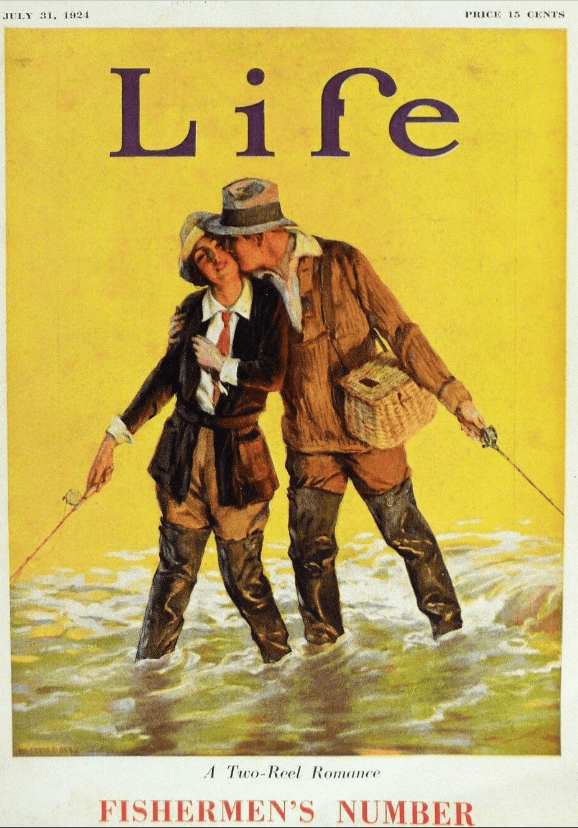
Warren Davis, July 31, 1924

You can’t expand your horizons much further than to a short-lived Spanish sports magazine for which the only online reference I could find is a Catalan-language Wikipedia page that has been flagged for possible deletion. The illustrator, Spanish artist Rafael de Penagos, is new to me. He received a gold medal at the 1925 International Exhibition of Modern Decorative and Industrial Arts in Paris, from which Art Deco got its name (surprisingly, not until the 1960s).
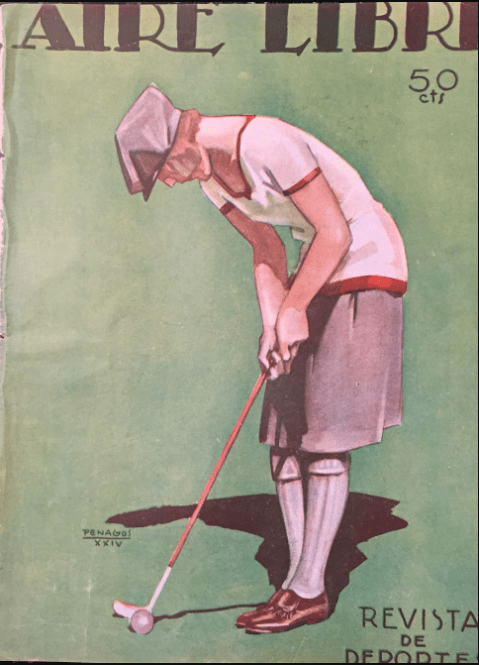
Rafael de Panagos, July 1, 1924

In vibrant blue, a House & Garden cover by French artist André Édouard Marty. Marty, not to be confused with leading French Communist Party member André Marty, was another leading figure in the Art Deco movement.
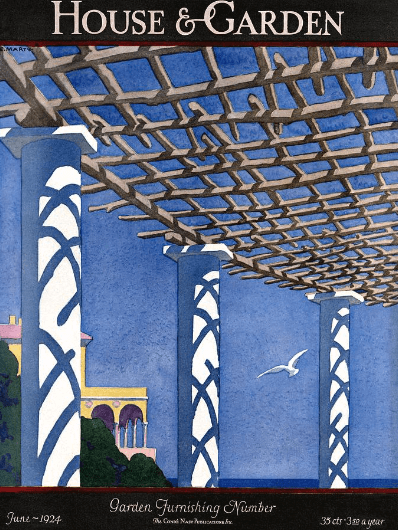
André Édouard Marty, June 1924

I’m not of the school of thought that indigo is a color of the rainbow, since squeezing it in between blue and purple throws off the symmetry, but I couldn’t resist these flower-strewing children, drawn by an artist I couldn’t identify.**** This issue of Woman’s Home Companion includes an essay on parenthood by F. Scott Fitzgerald, the last installment of Dorothy Canfield Fisher’s The Home-Maker, an ahead-of-its-time novel about a stay-at-home dad,***** and an illustrated story by N.C. Wyeth. Not bad for fifteen cents.
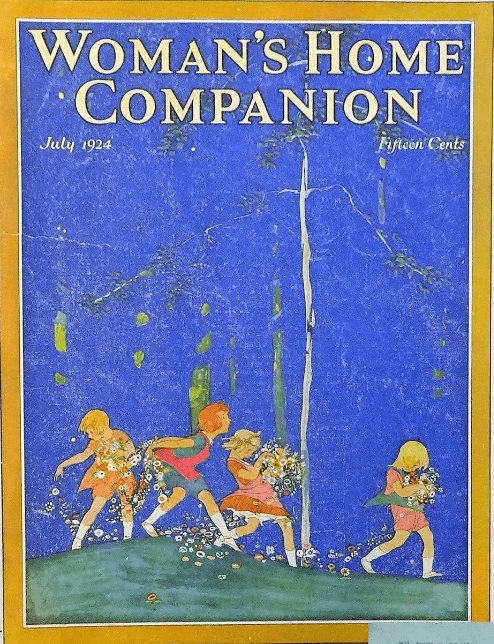
July 1924

Here’s the purplest cover I could find, from Vogue regular Pierre Brissaud.******
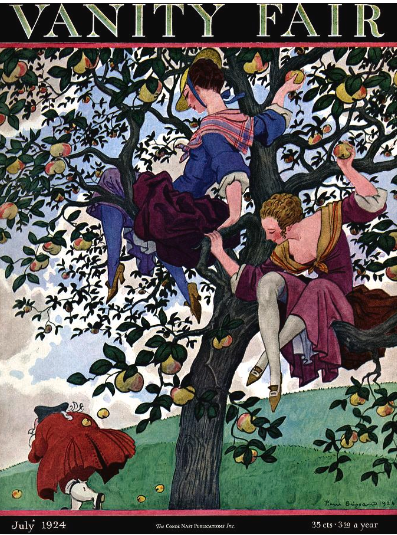
Pierre Brissaud, July 1924

To wrap things up, here’s a cover by John Holmgren, yet another new-to-me artist, who managed to fit every color of the rainbow onto this Judge cover.
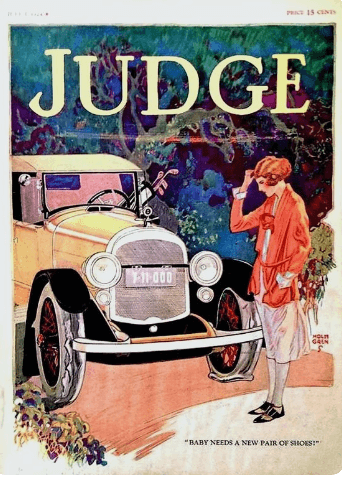
John Holmgren, July 5, 1924

But wait! This is just a SINGLE rainbow.

July slipped into August as I was working on this post, which gave me another month’s worth of magazine covers to work with. Now August is slipping away as well, and I’m back in Washington. At this rate, the leaves will be falling off the trees by the time I post this if I write about each one, so here they all are:
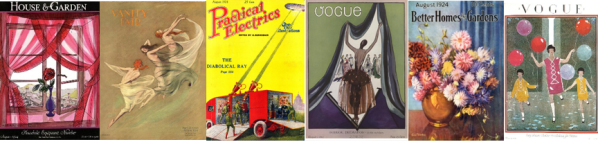
House and Garden: Joseph B. Platt. Vanity Fair: Warren Davis (back to his old tricks). Vogue (green): George Wolfe Plank. Vogue (purple): Harriet Meserole. Other artists unknown.

Enjoy the end of summer (or, if you’re in Cape Town, FINALLY the end of winter), everyone!

squiggle

*Or any other post, for that matter.

**There’s a truly bonkers essay by D.H. Lawrence in this issue called “On Being a Man.” It starts out with a racist account of sitting on a train with an African American man and segues into a discussion of why marriage is literally hell.

***Lewis won, and rejected, the 1926 Pulitzer for Arrowsmith. In a written statement, he objected to the criteria for which the prize was awarded: “for the American novel published during the year which shall best present the wholesome atmosphere of American life, and the highest standard of American manners and manhood.” I’m with Lewis on this, although some said that he was just miffed that he hadn’t won the award for Main Street, published in 1921.

****ChatGPT claimed that the cover artist was Charles Dana Gibson, which I didn’t buy. I asked for a source for this information, and it said, oh, sorry, it’s actually Frances Tipton Hunter. This sounded more plausible but I still wasn’t convinced, so I asked again for the source, at which point ChatGPT threw up its hands and admitted that it was just making stuff up.

*****I spoke about this book at a roundtable on 1920s best-sellers at a conference on Modernism in the UK in 2022.

******As I was finishing up this post I came across this beautiful, and arguably purpler, Vogue cover by George Wolfe Plank.

George Wolfe Plank, June 15, 2024
squiggle

New on Rereading Our Childhood, the podcast I cohost (or not so new but newer than my last blog post):

Our Favorite Children’s Books from 50 Years Ago

Rereading Danny Dunn and the Anti-Gravity Paint by Jay Williams and Raymond Abrishkin

Rereading The Egypt Game by Zilpha Keatley Snyder

Rereading The Phantom Tollbooth by Norton Juster

Rereading Stuart Little by E.B. White

Rereading February’s Road by John Verney

Reading Anne of Green Gables by L.M. Montgomery

Rereading The Book of Three by Lloyd Alexander

Rereading Misty of Chingoteague by Marguerite Henry

Rereading The Mysterious Disappearance of Leon (I Mean Noel) by Ellen Raskin

Rereading Ramona the Pest by Beverly Cleary

Rereading Black Hearts in Battersea by Joan Aiken

1920 magazine covers bring late winter cheer

When I picked up my mail after arriving in D.C. from Cape Town a couple of weeks ago, I found to my surprise that I have been a New Yorker subscriber since September. My first reaction: “Oh, look, a giant pile of guilt!” Then I saw the brightly colored covers, and I wanted to gather them all in a slippery embrace, like fellow survivors from a lost world. Few things from 100 years ago bring me as much joy as magazine covers, and few things (well, few non-news-related things) are as dispiriting as a 2020 magazine rack.

I had a post on February 1920 covers almost ready before I left Cape Town, but what with all the electricity cuts I didn’t manage to post it. So I’m covering both February and March here.

The February magazines feature lots of women engaging in wholesome outdoor activities like skiing,

Country Life magazine cover, February 1920, woman skiing.

Edwin Wilson

snowshoeing,

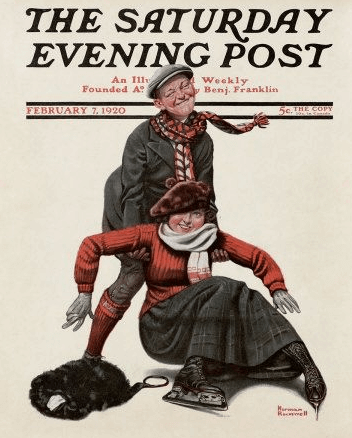
and pathetic ice skating.

Norman Rockwell cover, Saturday Evening Post, February 7, 1920

Norman Rockwell

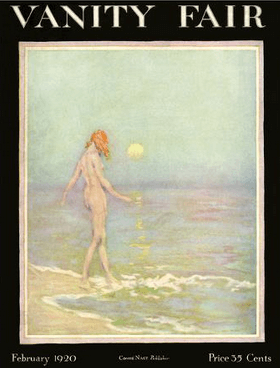
And also engaging in unwholesome outdoor activities like this:

Warren Davis March 1920 Vanity Fair cover, naked woman walking into the ocean.

Warren Davis

The artist for this surprisingly risqué cover is Warren Davis. He also drew this February 1918 Vanity Fair cover,

which I took note of back in February 2018. That one was also daring, but it struck me as having that Greek mythology vibe that lets you get away with anything. It turns out, though, that young women cavorting around outdoors naked, or at most with a diaphanous scarf, comprise pretty much Warren Davis’ entire oeuvre.*

Some favorite artists are back: Frank Walts at The Crisis,

Frank Walts The Crisis cover, February 1920, drawing of African-American boy.

Frank Walts

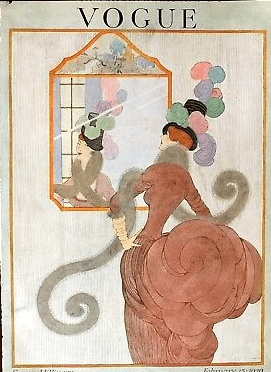
Helen Dryden at Vogue,

Helen Dryden Vogue cover, February 15, 1920, woman looking in mirror.

Helen Dryden

A.M. Hopfmuller at Shadowland,

A.M. Hopfmuller February 1920 Shadowland cover, abstract landscape.

A.M. Hopfmuller

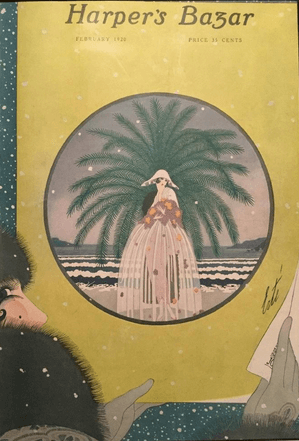
and, as always, Erté at Harper’s Bazar.

Erté February 1920 Harper's Bazar cover, woman in gown on beach.

Erté

There’s a Valentine’s theme at Red Cross

Red Cross magazine cover, February 1920, dog carrying Valentines.

(Google/HathiTrust)

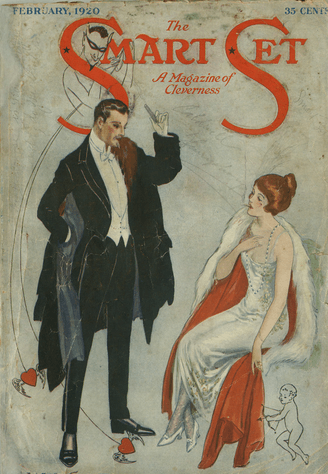
and at Smart Set, which I’m pleased to see breaking out of its face-of-young-attractive-woman rut.

There are people in traditional dress at Sunset

Sunset magazine cover, February 1920, woman in traditional Spanish-Mexican dress.

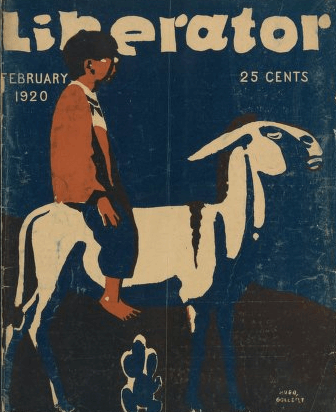
and Liberator

Hugo Gellert

and World Outlook.

I loved these covers from House & Garden

Charles Livingston Bull House & Garden cover, February 1920.

Charles Livingston Bull

and Popular Mechanics

February 1920 Popular Mechanics cover, vehicles transporting houses and stores.

and Elite Styles.

February 1920 Elite Styles cover, woman in gown in room.

As I prepared for my trip, I was all psyched up to leave the southern hemisphere summer for some outdoor winter fun. Of course, what I actually ended up doing was lugging groceries home in the rain. So good riddance to February…

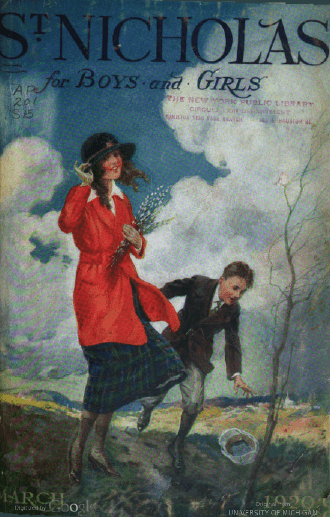
…and onward to blustery March!

St. Nicholas cover, March 1920, young man and women in wind.

(Google/HathiTrust)

Woman's World cover, February 1920, children struggling with kite.

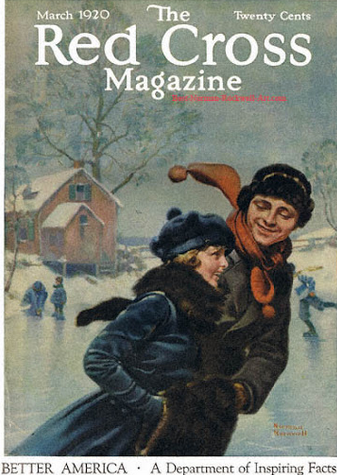
They’re getting in some late-season ice skating at Red Cross**

Norman Rockwell Red Cross cover, couple skating.

Norman Rockwell

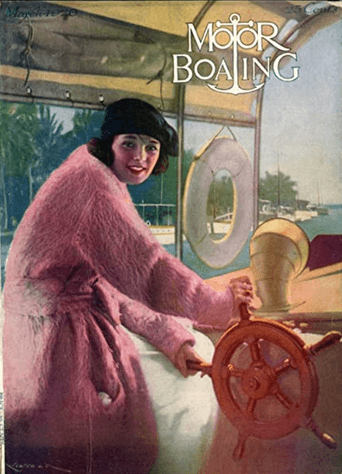
and some early-season boating at Motor Boating.

Motor Boating cover, March 1920, woman in pink coat steering wheel of boat.

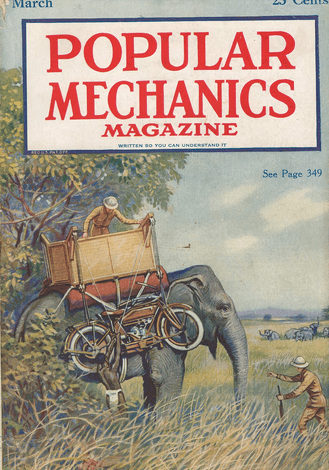
Am I reading this wrong or is this elephant being used as an accessory to kill other elephants?*** And don’t get me started on the African man in the loincloth.

Popular Mechanics cover, March 1920, elephant hunt.

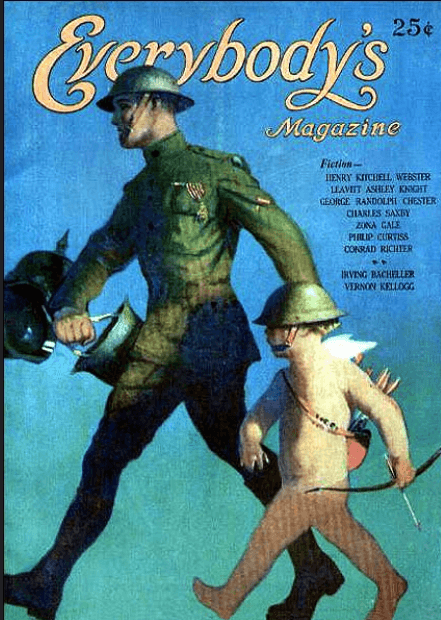
Everybody’s is late to the Valentine’s Day party.

Everybody's magazine cover, March 1920, soldier with cupid in helmet.

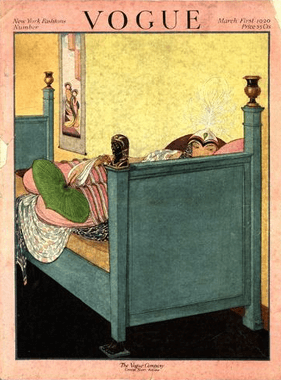
Vogue has a cover by regular George Wolfe Plank

George Wolfe Plank Vogue cover, March 1, 1920, flapper on bed.

George Wolfe Plank

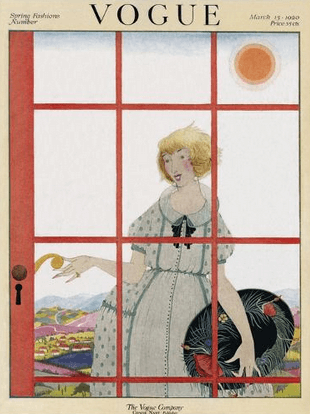
and one by 26-year-old newcomer Harriet Meserole, who would go on to be a Vogue stalwart.****

Vogue cover, March 15, 1920.

Harriet Meserole

Bright spring colors abound at Harper’s Bazar

Erte Harper's Bazar cover, March 1920, Erte.

Erté

and The Delineator

Delineator cover, March 1920, woman in cape.

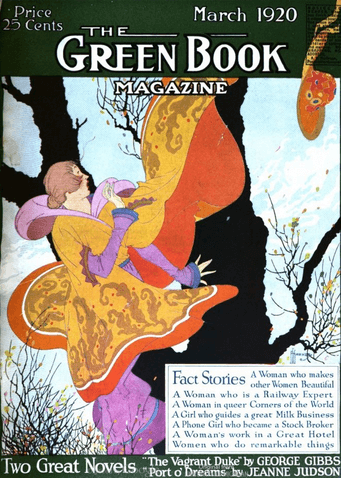
and The Green Book

Green Book cover, March 1920.

and House & Garden

Harry Richardson House & Garden cover, March 1920, house with path and flowers.

Harry Richardson

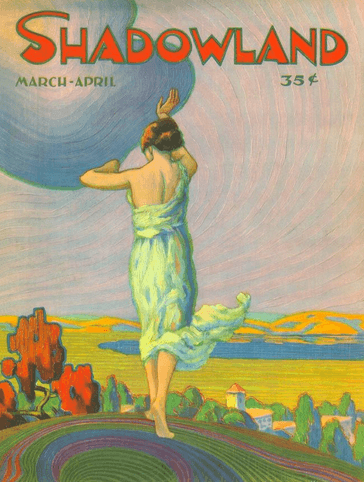
and Shadowland

A.M. Hopfmuller Shadowland cover, March 1920.

A.M. Hopfmuller

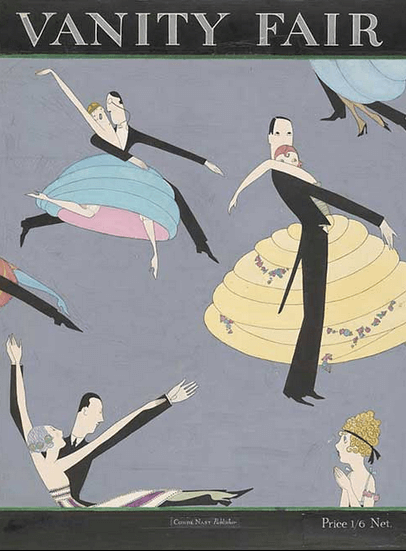
and Vanity Fair, which features a cover by Anne Harriet Fish, an artist whom I wasn’t familiar with but who will now join Gordon Conway and John Held Jr. in the ranks of VF artists whose work I can’t tell apart.

Anne Harriet Fish Vanity Fair cover, March 1920, couples dancing.

Anne Harriet Fish

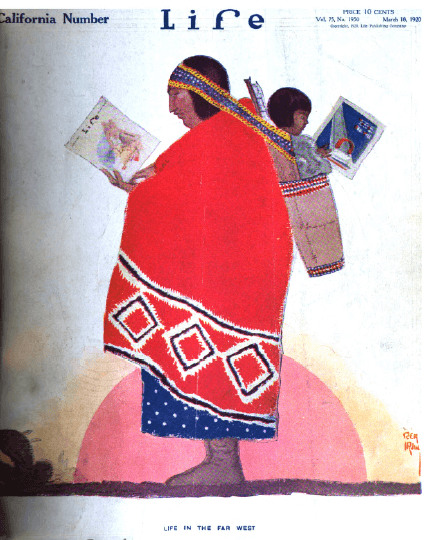
Future New Yorker cartoonist Rea Irvin was the artist for this striking, though problematic to modern sensibilities, Life cover.

Rea Irvin Life magazine cover, March 1920.

Rea Irvin

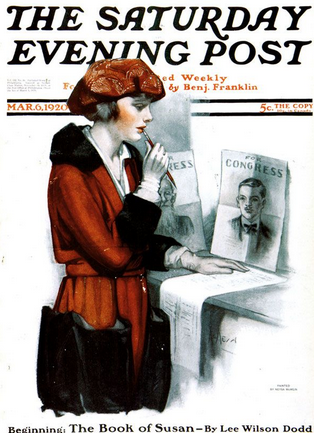
This woman on the cover of the Saturday Evening Post seems to be about to ditzily cast her first vote for the supposedly more handsome candidate, which I would take offense at, except, um, Warren Harding.*****

Neysa McMein Saturday Evening Post cover, March 6, 1920.

Neysa McMein

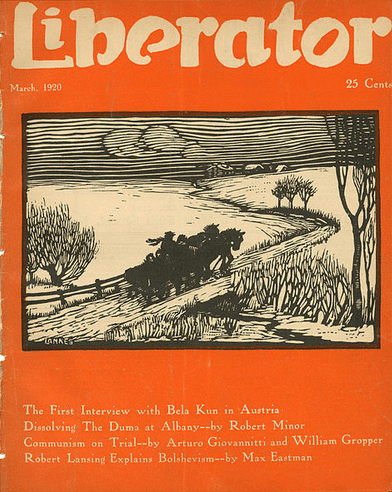
The woodcut on the cover of Liberator is by J.J. Lankes, who was a friend of, and illustrator for, Robert Frost and Sherwood Anderson.

J.J. Lankes Liberator cover, March 1920, woodcut of horse and cart.

J.J. Lankes

This Photoplay cover isn’t particularly notable except that “If Christ Went to the Movies” is the best cover headline ever.******

Rolf Armstrong Photoplay cover, March 1920, Alice Joyce.

Rolf Armstrong

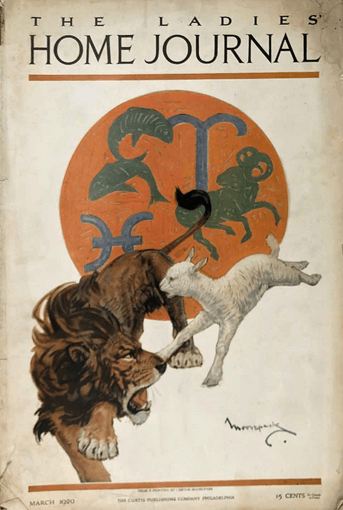
And it wouldn’t be March without a lion and a lamb, courtesy of Carton Moore-Park:*******

Carton Moore-Park Ladies' Home Journal cover, March 1920, lion and lamb with astrological signs.

Carton Moore-Park

Counting the days until spring!

squiggle

*Google him if you don’t want to take my word for it. Just don’t do it at the office.

**According to the go-to site for Norman Rockwell cover information, this was Rockwell’s fourth and last cover for Red Cross, which folded in late 1920. Rockwell turned to smaller magazines when large-circulation magazines passed on his illustrations.

***I always thought you couldn’t ride African, as opposed to Asian, elephants. Apparently you can, although, according to animal rights advocates, you shouldn’t.

****As far as I can tell, this is Meserole’s first Vogue cover other than this February 1919 one, which is mostly white space:

Harriet Meserole Vogue cover, March 15, 1920

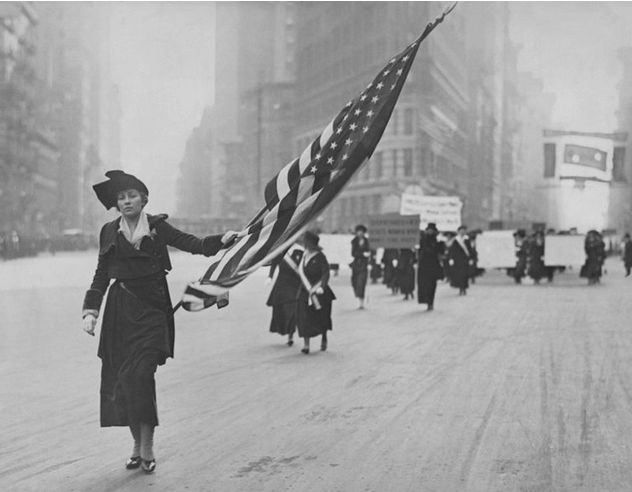
*****Also, the cover artist, Neysa McMein, was a woman and an ardent supporter of gender equality. Here she is marching in a suffragist parade in 1917.

Neysa McMein marching in a suffragist parade, 1917.

New York Times, November 4, 1917

******Excerpt:

Excerpt from March 1920 Photoplay article "If Christ Went to the Movies."

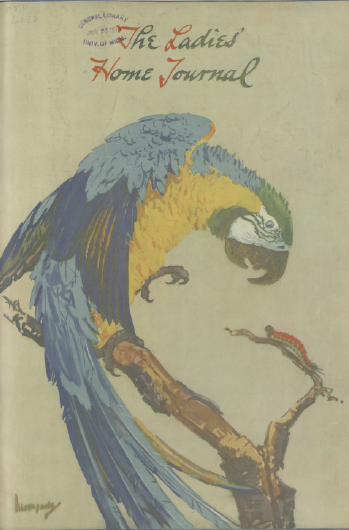
*******Moore-Park also drew the “is it a lady or a parrot?” August 1919 LHJ cover.

Carton Moore-Park August 1919 Ladies' Home Journal cover, parrot looking at caterpiller.

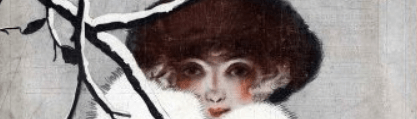
Woman's face, from La Vie Parisienne cover, January 1920.

Magazine Covers Ring in the 1920s

I’ve been in summer school at the University of Cape Town for the last three weeks, studying, among other things, Portuguese.* Between that, obsessing over the recently released archive of T.S. Eliot’s letters to his longtime love Emily Hale, and a pair of maritime mishaps that have been wreaking havoc on South Africa’s internet, I haven’t been able to get much blogging done. But it doesn’t seem right to let the first month of a new decade pass unrecognized, so I figured I’d look into how magazine covers ushered in the 1920s.**

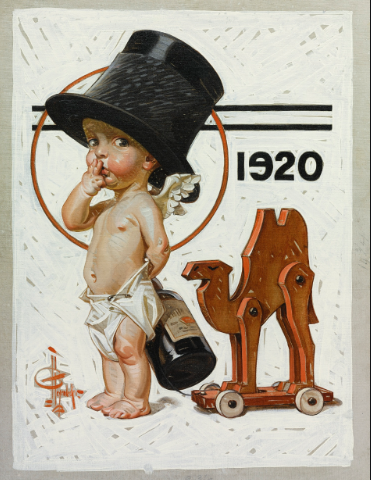
The Saturday Evening Post rang in the new year with this J.C. Leyendecker cover. (The camel is a symbol of Prohibition.)

J.C. Leyendecker January 1920 Saturday Evening Post cover, baby with camel toy.

Sotheby’s website features this painting by Leyendecker, which may have been his original concept for the cover.

J.C. Leyendecker painting of baby with whiskey bottle and camel toy.

sothebys.com

I can see why the Saturday Evening Post wouldn’t go for it, but this version makes more sense because without the bottle of whiskey what is the baby shushing us about?

That’s about it for New Year’s-themed covers.

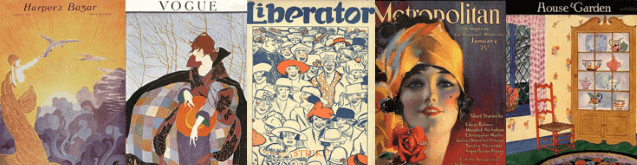
Erté, as always, is at the helm at Harper’s Bazar, with this cover,

Erte cover, Harper's Bazar, January 1920, woman with flowing shawl.

which, unusually, has some text on the illustration: “Begin Arnold Bennett’s New Essays on Women in this Issue.” I skimmed the essay, which was in equal parts irritating, boring, and off-topic.***

Vogue starts out the decade with a Georges Lepape cover featuring a person of color, but not in a good way:

George Lepape Vogue cover, January 1920, woman holding fruit, black man with tray on head.

This Vanity Fair cover is too good not to repeat. I’m not sure who the artist is, but I’m guessing John Held Jr. or possibly Gordon Conway. (Update 2/4/2019: It’s John Held Jr. I found the signature on a scanned copy of the magazine on Hathitrust.)

Vanity Fair cover, January 1920, cartoon of people driving cars.

There’s a George Brandt interior on House & Garden,

George Brandt House & Garden January 1920 cover, sofa with portrain of woman.

and a picture of movie star Norma Talmadge by Rolf Armstrong on Photoplay.****

Illustration of Norma Talmadge by Rolf Armstrong, Photoplay, January 1920.

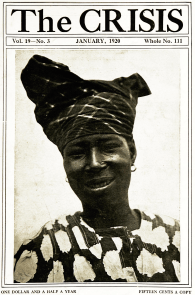
The Crisis features a photograph of a woman from St. Lucia,

The Crisis cover, January 1920, woman wearing turban.

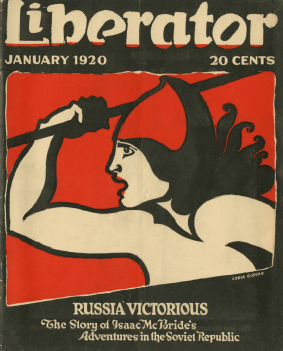
and Liberator has, um, something Bolshiviki by Lydia Gibson.

Liberator cover, Lydia Gibson, January 1920, woman with spear.

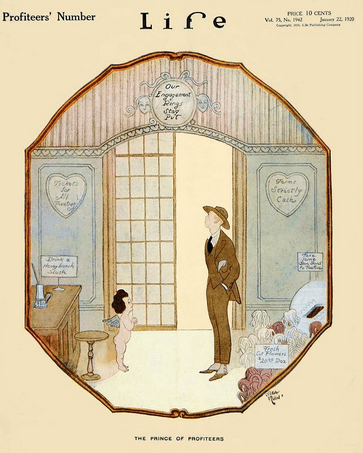
Life’s “Profiteers’ Number” features a cover by John Madison.

Life cover, January 1920, John Madison, cartoon of man and cupid.

In sunny South Africa, I sighed over the snowy scenes on the covers of Literary Digest (by Norman Rockwell)

Norman Rockwell January 1920 Literary Digest cover, bearded man looking at thermometer in snow.

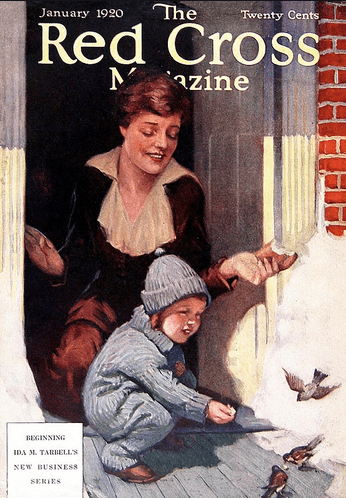
and Red Cross Magazine

Red Cross magazine cover, baby feeding birds in snow while mother watches.

and Country Life

Country Life cover, January 1920, car in snow.

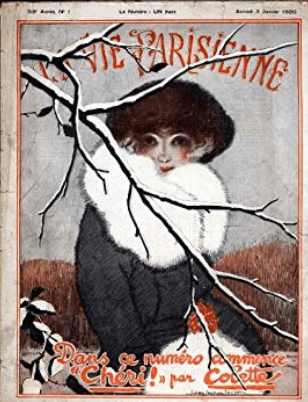
and La Vie Parisienne.*****

La Vie Parisienne cover, January 1920, woman in fur behind snowy branch.

If I could pick one snow scene to transport myself into, Mary Poppins-style, it would be this one, from St. Nicholas.

St. Nicholas cover, January 2020, skating boy pushing girl on sled.

And, finally, two new****** publications that are well worth looking at: Shadowland, a beautifully designed movie magazine that features A.M. Hopfmuller as its regular cover artist,

Shadowland cover, January 1920, trees with swirls of green.

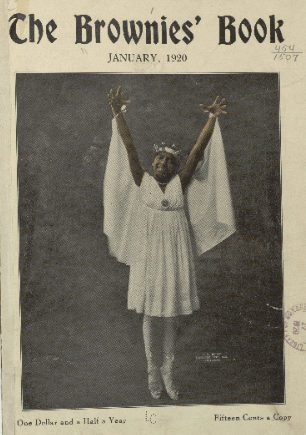
and The Brownies’ Book, the first-ever magazine for African-American children, edited by, who else, W.E.B. Du Bois.

The Brownies' Book first issue cover, girl dressed as angel.

Battey

I’ll be following both of these exciting ventures in the months to come.

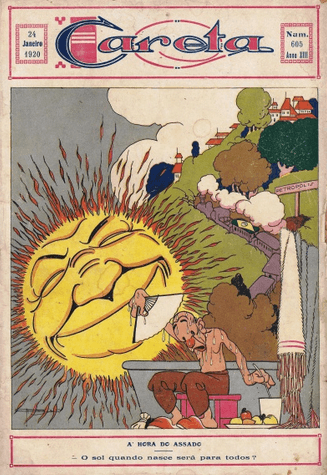
In the meantime, happy January, everyone. Or, as we say in Portuguese, feliz janeiro!

Cartera magazine cover, January 2020, man sweating in front of giant sun with face.

*The other things: Dante’s Purgatorio, special relativity, Rembrandt, Plato and Euclid, Vermeer, Virginia and Leonard Woolf’s Hogarth Press, religious poetry, South African history and politics, and the Enlightenment. I tend to shop for summer school tickets like a hungry person at the supermarket.

**It turns out that when you put 1920 in Google it thinks you’re talking about the whole decade, so I keep having to sift through irrelevant pictures of flappers. It’s going to be an annoying year.

***But don’t worry, Virginia Woolf will, with her brilliant 1924 essay “Mr. Bennett and Mrs. Brown” (published by the aforementioned Hogarth Press), make Arnold Bennet regret that he’d ever SEEN a woman.

Cover of Mr. Bennett and Mrs. Brown, Virginia Woolf, 1924.

****Armstrong also turns out to have illustrated the August 1918 Metropolitan magazine cover that won the surprisingly competitive Best Magazine Cover of a Woman Swimming with a Red Scarf on Her Head award.

*****This woman is, by La Vie Parisienne standards, displaying an unusual ability to keep all her clothes on.

******Or, in the case of Shadowland, almost new—its first issue appeared in September 1919.