Category Archives: Advertising

Thursday Miscellany: Mauvais français, trippy Kewpies, and loud loos

French phonetic pronunciation was a big thing in 1918 product names. (See also Bozart Rugs.) In this case I kind of get it, since you wouldn’t want to go to all the effort of creating a costly new odor out of 26 flowers only to have everyone call it “Talc Gentile.”
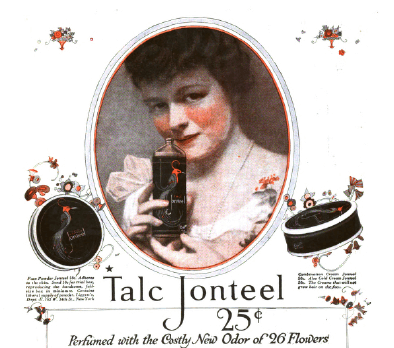
Good Housekeeping, May 1918

Good Housekeeping ran a recurring feature on the Kewpies for the children of 1918, who were apparently less easily freaked out than I am. In this episode, an invalid child’s bed is absolutely infested with Kewpies, but she’s OK with it.
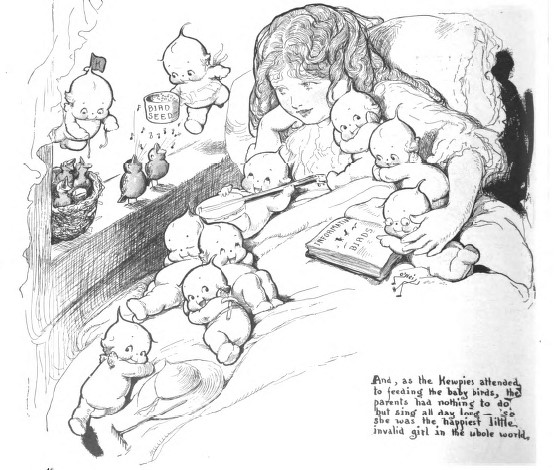
Good Housekeeping, May 1918

Apparently having other people hear you flush the toilet was a highly dreaded 1918 situation.

Good Housekeeping, May 1918

I don’t know, my own ideal scenario is NO creepy disembodied faces on my living room wall.
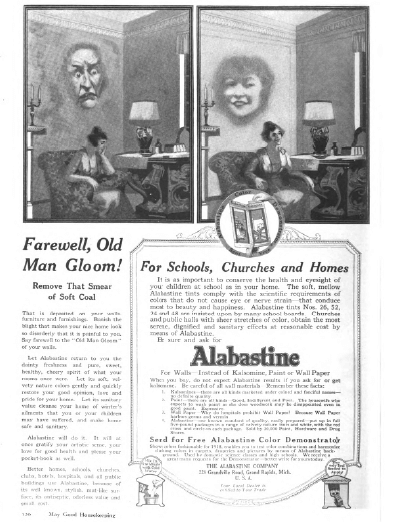
Good Housekeeping, May 1918

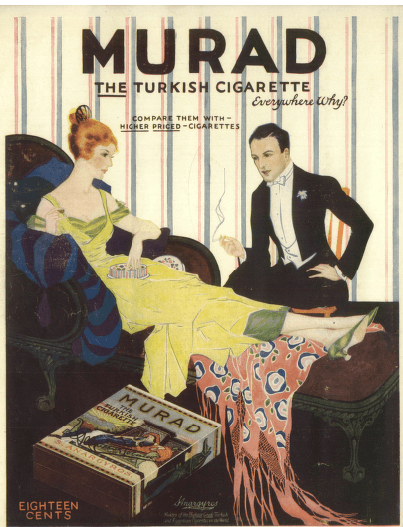
I know I’ve been kind of a shill for the 1918 cigarette industry, and Murads in particular. But I can’t help it, I just love Murad ads. So, just so we’re all on the same page here, CIGARETTES ARE BAD FOR YOU. THEY KILL. THEY SMELL REALLY, REALLY BAD. YOU SHOULDN’T SMOKE, AND IF YOU ALREADY DO YOU SHOULD QUIT.* Now that I’ve made that clear, here’s an ad for Murads in the May 1918 Scribner’s. 
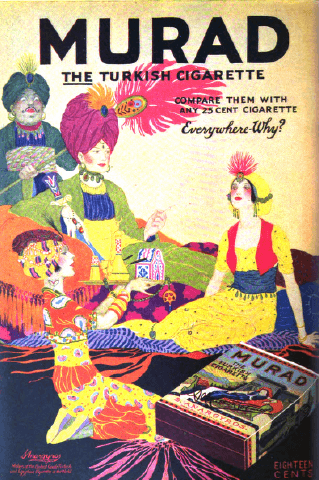
*ESPECIALLY IF YOU LIVE IN MY BUILDING.
Thursday Miscellany: an eight-year-old writer, a Vanity Fair harlequin, and toasted cigarettes

(I’m changing my schedule from M-W-F to Tu-Th-Sat, so Wednesday Miscellany is now Thursday Miscellany.)

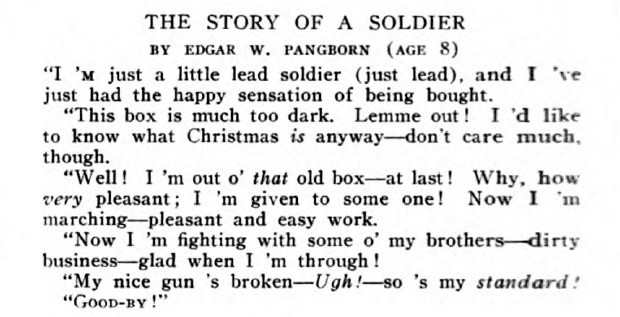
This story was a submission to a contest in St. Nicholas magazine. Even if you don’t read it as an allegory of a doomed WWI soldier–and it’s hard not to–it seems way too good to have been written by an eight-year-old. I Googled Edgar Pangborn,  and it turns out that he went on to become a science fiction writer who was one of the founders of the “humanist” school and served as an inspiration to Ursula Le Guin.*
St. Nicholas magazine, April 1918

Oh, how sweet! My boyfriend killed someone!

Ladies’ Home Journal, April 1918

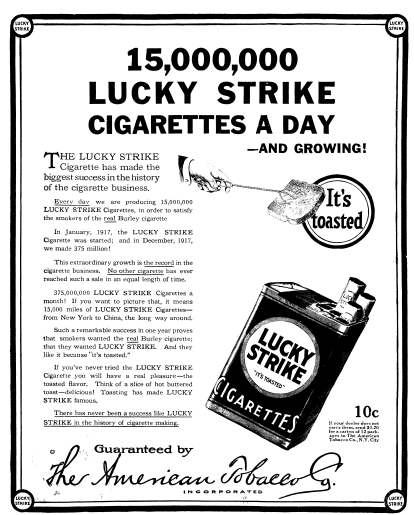
In case you thought, like I did, that Don Draper made up “It’s toasted” in 1960.

Judge magazine, March 2, 1918

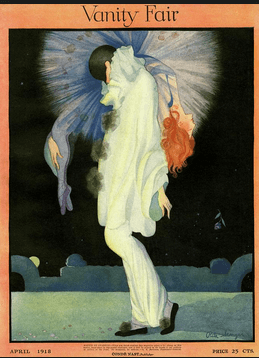
And finally, a harlequin and a ballerina on Rita Senger’s April 1918 Vanity Fair cover.

*He’s going to be hard to top as the youngest person I run across in My Year in 1918 who will go on to later fame.

Wednesday miscellany: Naked microscope bookplate people, stylish women, and cherry blossoms

Imagine my surprise when I opened a copy of Hugh de Sélincourt’s 1918 book Nine Tales, digitized from Harvard’s Widener Library, and found these naked people on a microscope. I was all the more surprised because I went to Harvard* in the 1980s and Widener was so conservative that their cataloging system had a separate “X” category for dirty books, which you had to order from the librarian instead of getting them in the stacks. I had to check out Henry Miller’s Tropic of Cancer for a class one time and I felt like a pervert.

So what’s the story? I searched for the bookplate on Google Images and, proving that you can find anything on the internet, was directed to a website for The McCrone Group, a microscopy company, that includes a page about bookplates with pictures of microscopes, written by John Gustav Delly. I learned that Winward Prescott, Harvard ’09, was a serious bookplate collector; his donation now makes up the largest part of the extensive collection at Harvard’s Houghton Library. If you check out the McCrone Group page–which I highly recommend–the bookplate is image 72.

She’s living her best life.

Judge magazine, April 6, 1918

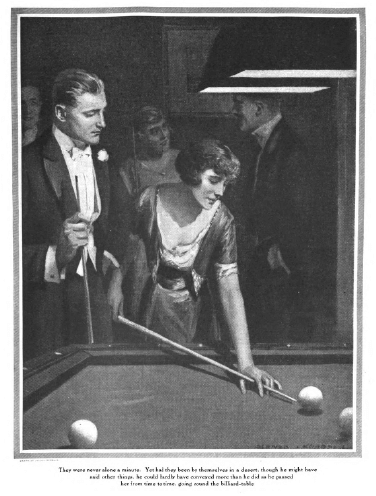
Okay, not courageous at a Russian woman soldier level, but wearing a dress this low-cut to play billiards takes guts.

Illustration from “Camille,” Cosmopolitan, April 1918

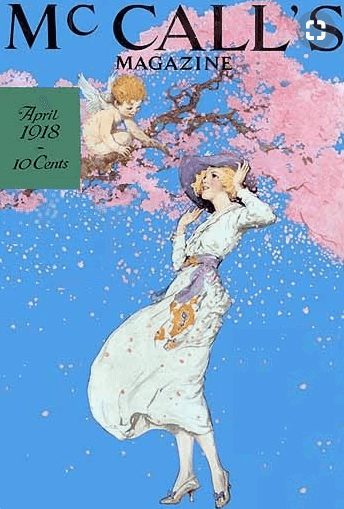
And, just in time for the D.C. cherry blossoms, a McCall’s cover by Willy Pogany.

*And, no, people don’t mention this at any possible opportunity. It’s relevant!

Wednesday Miscellany: Grotesque wallpaper, a Locomobile, and a Rockwell Easter cover

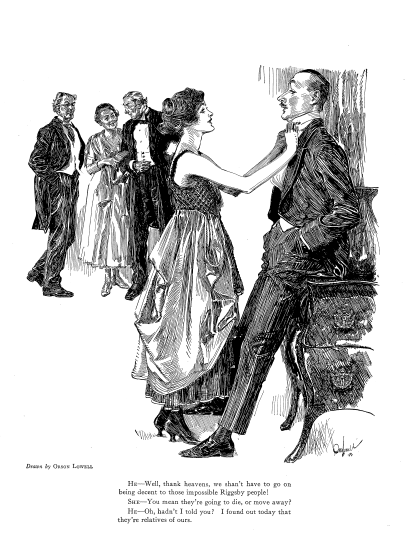
He—Well, thank heavens, we shan’t have to go on being decent to those impossible Riggsby people!
She—You mean they’re going to die, or move away?
He—Oh, hadn’t I told you? I found out today that they’re relatives of ours.

The punch line’s only so-so, but I love “You mean they’re going to die, or move away?”

Judge magazine, March 16, 1918

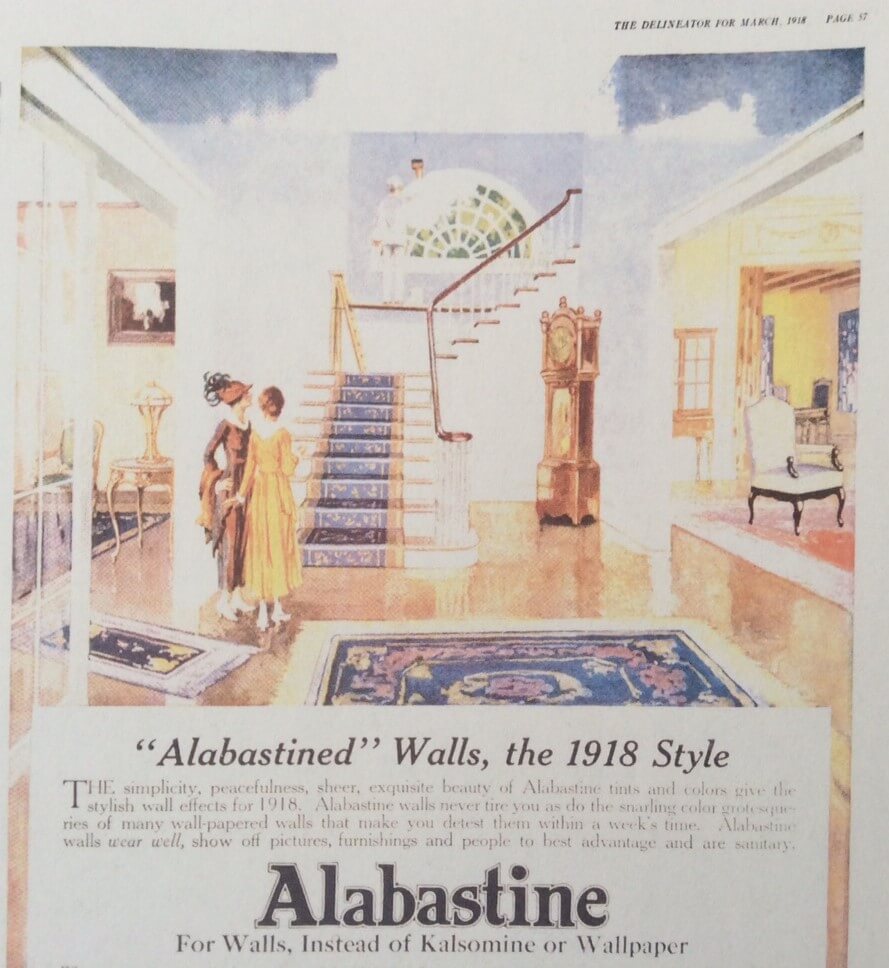
I know, right? The snarling color grotesqueries of wallpaper are the worst.

The Delineator, March 1918

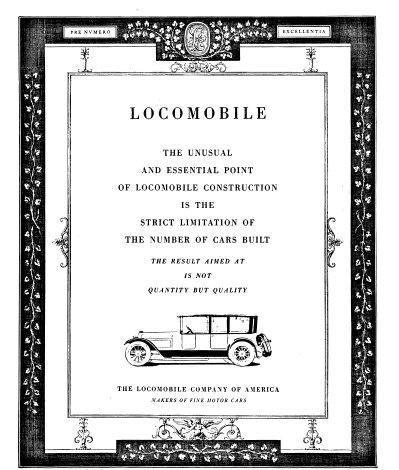
Um, if your car is so serious that it has its own Latin motto, maybe don’t call it the Locomobile?

Life magazine, March 28, 1918

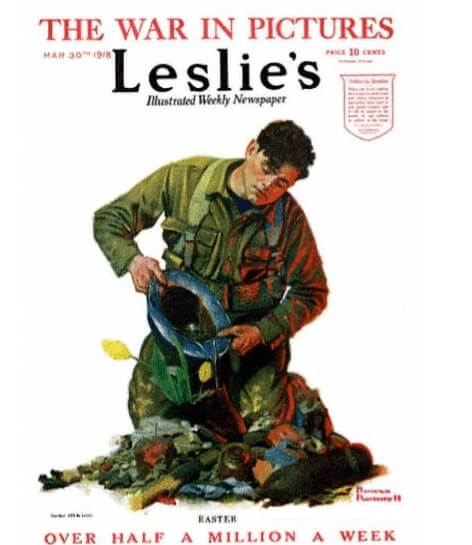
And finally, a soldier uses his helmet to water tulips on this Norman Rockwell cover, titled “Easter.”

Wednesday Miscellany: Pacifist nightmares, a sad funny page, and a widowed dancer

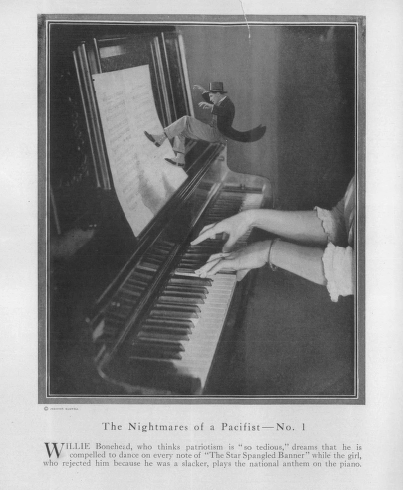
Judge magazine has been running a series called “The Nightmares of a Pacifist,” featuring conscientious objector Willie Bonehead, whose guilty subconscious places him in a series of horrific scenarios. First he is “compelled to dance on every note of the ‘Star Spangled Banner,’ while the girl, who rejected him because he was a slacker, plays the national anthem on the piano.”

Judge magazine, March 2, 1918

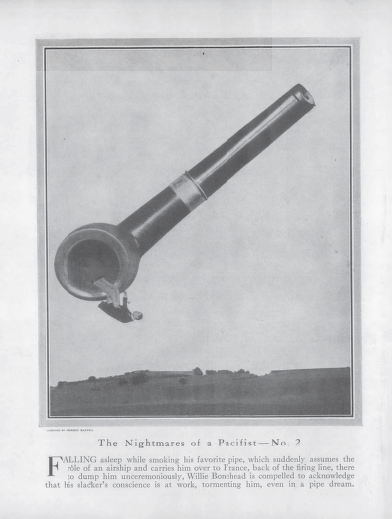
Next he falls asleep while smoking his pipe, which transports him to the front line.

Judge magazine, March 9, 1918

The political message is pretty heavy-handed, but I like the proto-surrealist art.

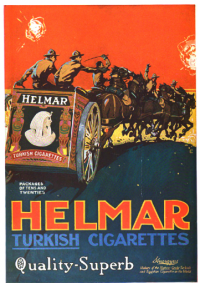
Turkish cigarettes join the fight against…the Turks.*

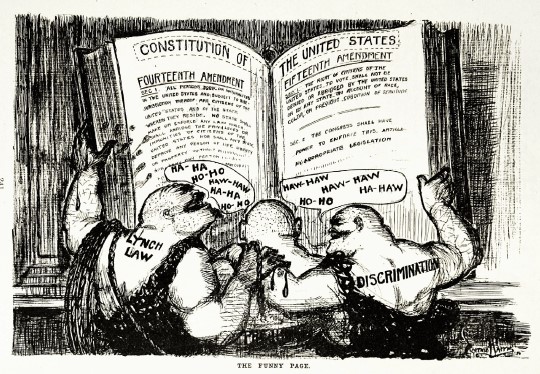
The table of contents of the March 1918 issue of The Crisis, the NAACP magazine edited by W.E.B. Du Bois, has a listing for “The Funny Page.” The Crisis isn’t exactly a barrel of laughs, so I wondered what this could be. Here’s the answer:

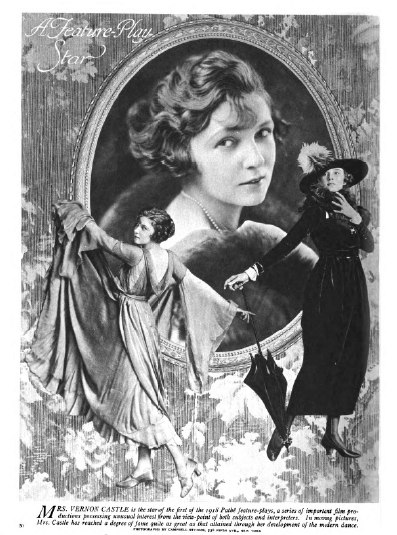
I can’t stop looking at this picture of dancer Irene Castle, which appeared in Cosmopolitan in  March 1918. Just as the issue was hitting the newsstands, her husband and dancing partner Vernon died in an aviation training accident in Texas. He had completed 300 missions as a Royal Air Corps pilot. The Castles were the subject of a 1939 Astaire-Rogers biopic.

*Yes, yes, I know, the United States was not actually at war with the Ottoman Empire.

Wednesday Miscellany: Paper doll servants, a puzzling puzzle, and a bad ad

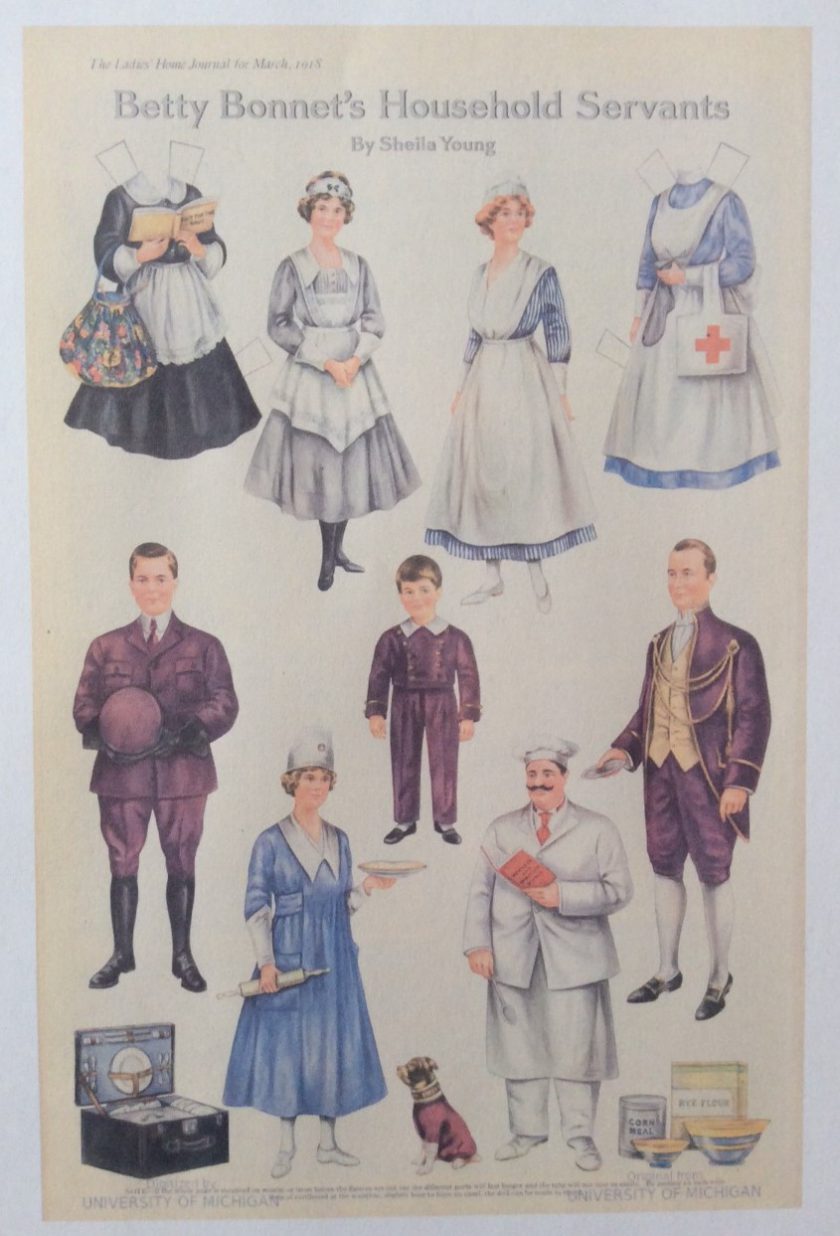
Look, kids! Paper doll servants to order around!

Paper doll servants, Ladies' Home Journal, 1918.

Ladies’ Home Journal, March 1918

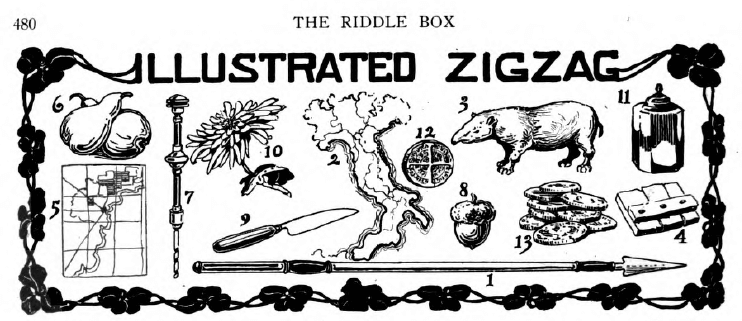
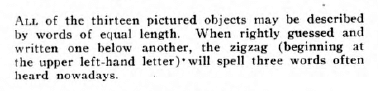
Can someone help me out with this Illustrated Zigzag? STICT RICK SUES can’t possibly be right.

Illustration for Illustrated Zigzag puzzle, St. Nicholas magazine, 1918.

St. Nicholas magazine, March 1918

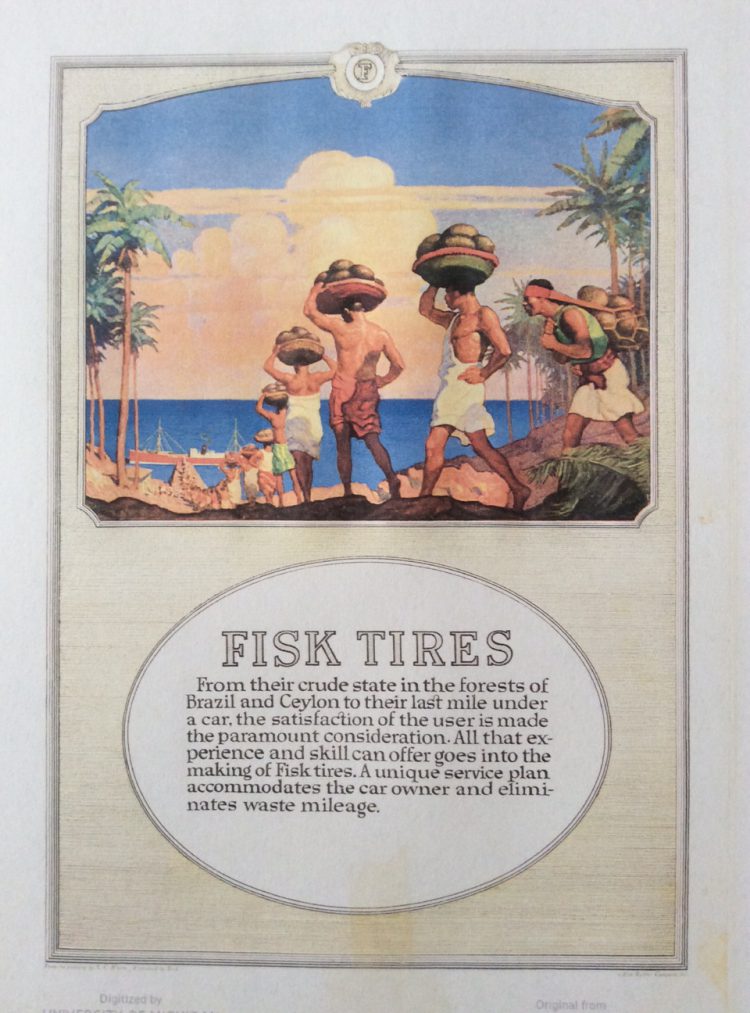
I wonder how many people had to sign off on this before it was green-lighted.

Fisk Tires ad with dark-skinned men carrying things on their heads next to palm trees, 1918.

Harper’s Bazar, March 1918

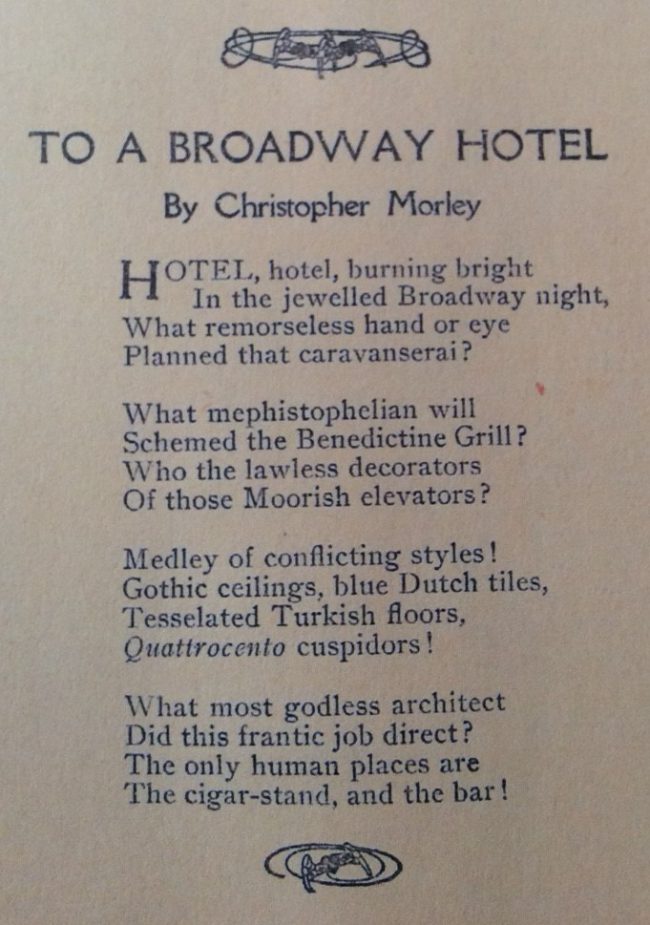
Garish New York hotels are apparently not just a contemporary phenomenon.

Christopher Morley poem, To a Broadway Hotel, Smart Set magazine, 1918.

Smart Set, March 1918

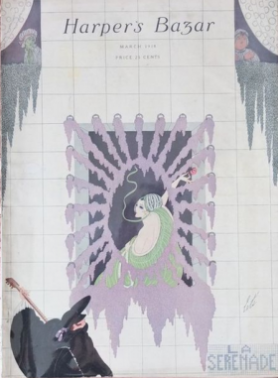
And finally, an Erté serenade.

Harper's Bazar cover by Erté showing masked man serenading a woman, March 1918.

Harper’s Bazar, March 1918

Wednesday Miscellany: Congressional courtesy, $100 apartments, and other bygone notions

I’ve been neglecting the New York Times lately. Here are some recent snippets.

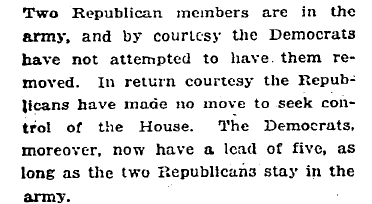
With four special elections in New York, control of the House of Representatives, held by the Democrats in coalition with some small parties, was on a knife-edge. The result? A Democratic sweep, and courtesy all around.

Paragraph from New York Times about congressional balance of power, March 6, 1918.

New York Times, March 6, 1918

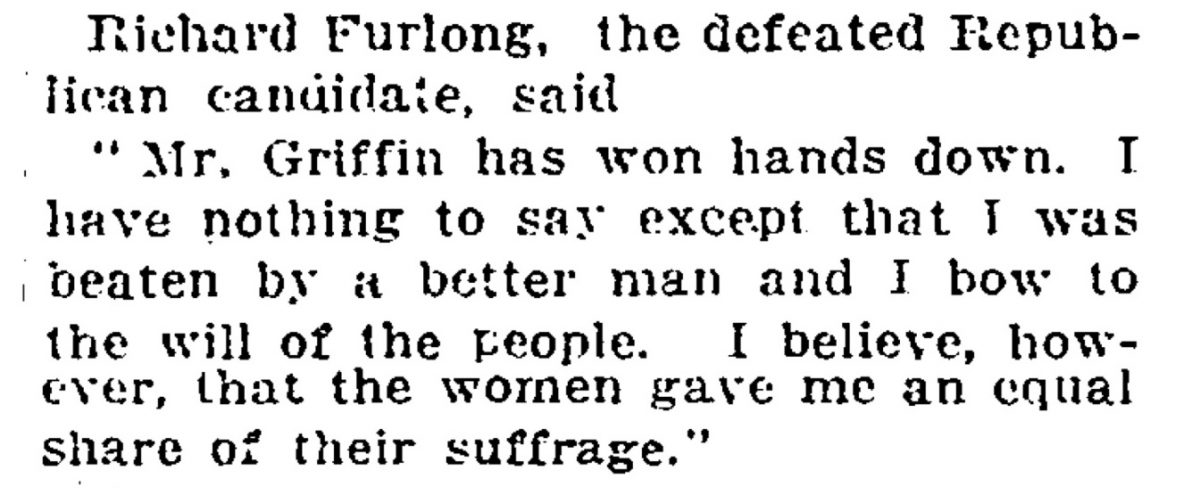
A defeated Republican candidate’s gracious response:

New York Times article quoting a defeated Republican candidate saying "I was beaten by a better man," 1918.

New York Times, March 6, 1918

Sigh…

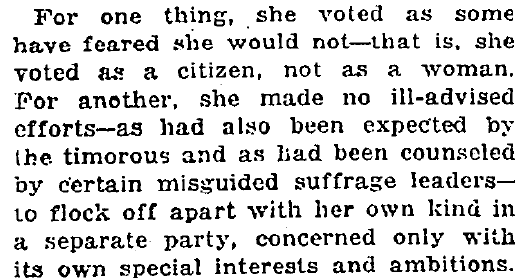
This was the first time women in New York were able to vote. They did so in large numbers and–good news!–did not get up to all kinds of silly nonsense.

New York Times editorial discussing how New York women voted, March 1918.

New York Times, March 7, 1918

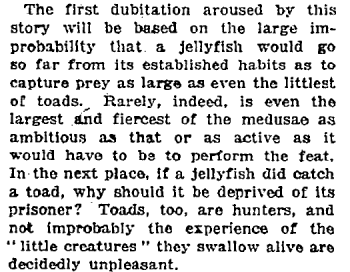
Now for some fact checking. John Francis Hylan, the Tammany mayor of New York, has told a story about a kind man on the shore at Palm Beach rescuing a toad that was being eaten by a jellyfish. Dubitation ensues.

New York Times editorial discussing dubitation over a story the mayor told, March 1918.

New York Times, March 6, 1918

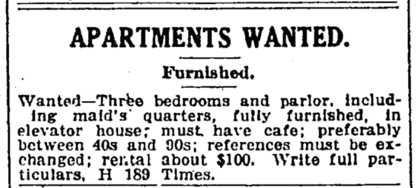
On to the classified ads. Hey, I want one of those too!

New York Times ad for a three-bedroom furnished apartment, $100 a month, March 1918.

New York Times, March 6, 1918

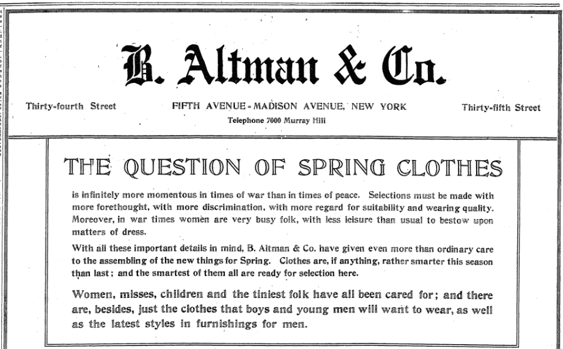
Now that you’re caught up on the news, it’s time to party! Make a momentous decision on what to wear,

B. Altman ad, The Question of Spring Clothes, March 1918.

New York Times, March 3, 1918

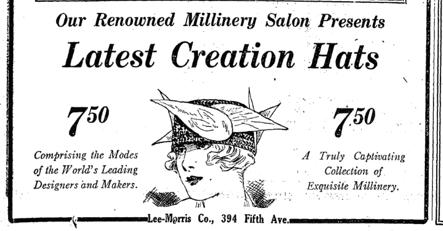
put on your favorite hat,

Hat ad, New York Times, March 1918.

New York Times, March 3, 1918

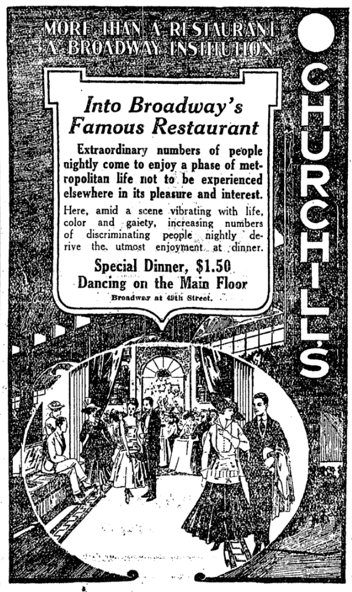
and head on out to the the hottest joint in town!

Churchill's Restaurant ad, New York Times, 1918.

New York Times, March 3, 1918

(These articles were accessed at https://timesmachine.nytimes.com/browser. I make fun of the Times a lot, but I’m very grateful for this valuable resource.)

Friday Miscellany: The artistry of 1918 magazine ads

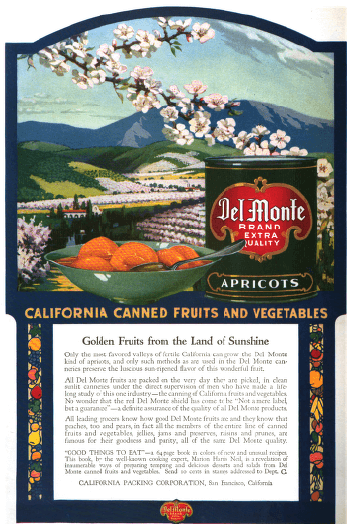
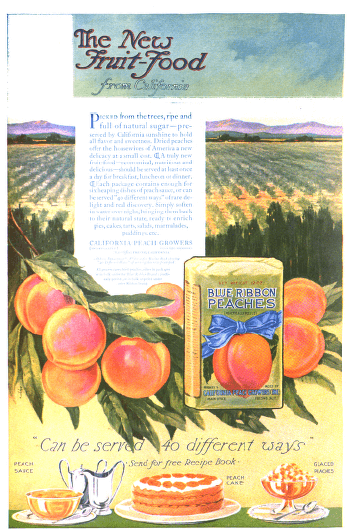
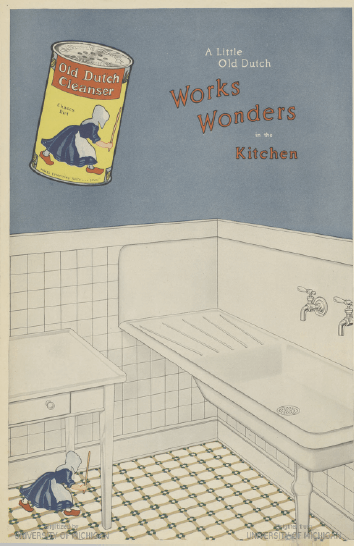
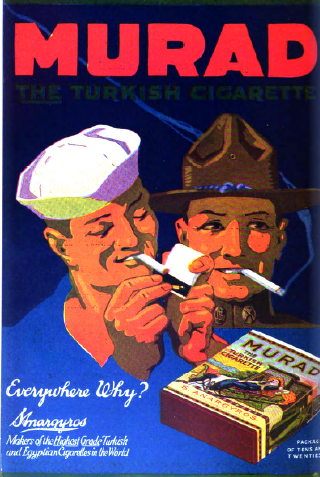
There wasn’t a lot of room for color in magazines in 1918–often just the cover and a few pages of ads. The advertisers made the most of their limited opportunities. Here are a few ads that caught my eye.

These two make me want to spend my next vacation in 1918 magazine ad California.

Del Monte advertisement showing bowl of apricots in front of mountain scene, 1918.

Woman’s Home Companion, March 1918

Blue Ribbon peaches ad showing peaches in front of a field, 1918.

Woman’s Home Companion, March 1918

This one almost makes me want to go scrub the kitchen.

Old Dutch Cleanser ad showing tiny woman cleaning a kitchen floor, 1918.

Cosmopolitan, January 1918

And this one makes war seem like an absolute pleasure, as long as you have your Murads.

Murad cigarette ad showing a sailor and soldier lighting cigarettes, 1918.

Scribner’s, March 1918

Wednesday Miscellany: Virile modernists, “quotation marks,” and a masterpiece on the way

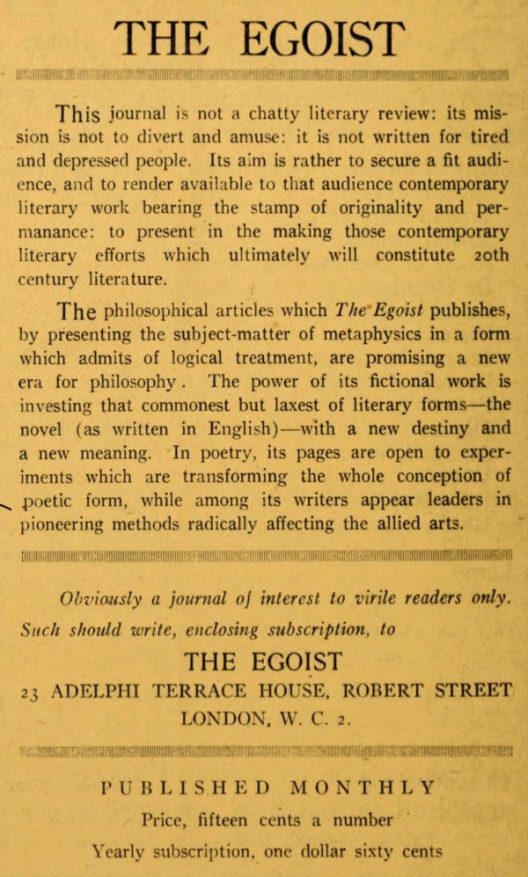
An ad for The Egoist in The Little Review: “Obviously a journal of interest to virile readers only.”  In that case, I want my $1.60 back.

Also: “It is not written for tired and depressed people.” Sorry, Egoist, but in our day only tired and depressed people read T.S. Eliot.

“Transforming the whole conception of poetic form.” Okay, I’ll give you that one.

Little Review ad for The Egotist, "obviously a journal of interest to virile readers only."

Little Review, February 1918

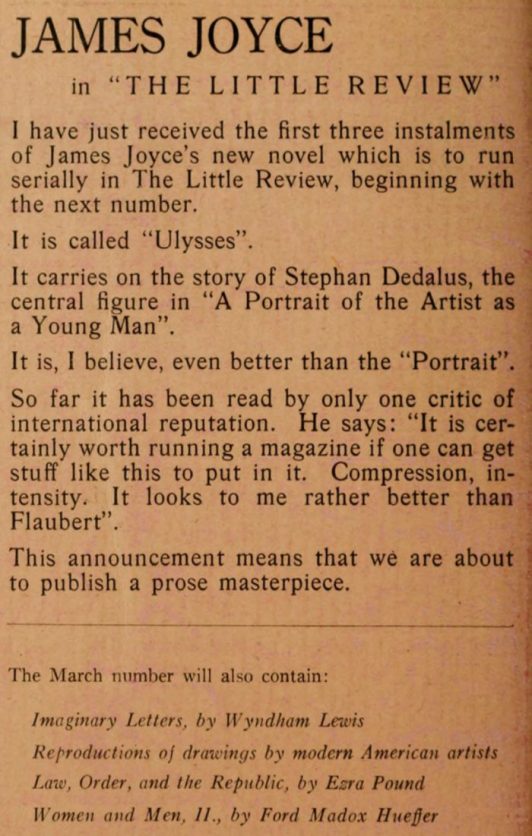
An ad for next month’s Little Review: “We are about to publish a prose masterpiece.” Okay, if you’re publishing Ulysses, and your other contributors are Wyndham Lewis, Ezra Pound, and Ford Madox Hueffer (aka Ford), then you’re entitled to a little attitude.

(In case you’re wondering what they had in store for February that made them reduce Ulysses to a footnote, it was a full issue devoted to French poets, in French. Cool, but no Ulysses.)

Little Review ad for Ulysses serialization, February 1918.

Little Review, February 1918

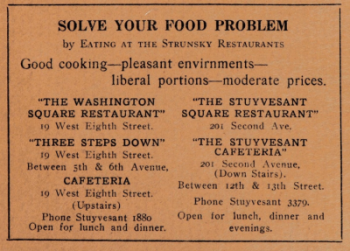
One last Little Review ad, showing us that “overuse” of “quotation marks” is not a strictly “contemporary” phenomenon. I do like “Solve Your Food Problem” as a restaurant slogan, though. Sometimes, it’s just that simple.

Little Review, February 1918

Wednesday Miscellany: Erté, boys’ fashion, and fast cars

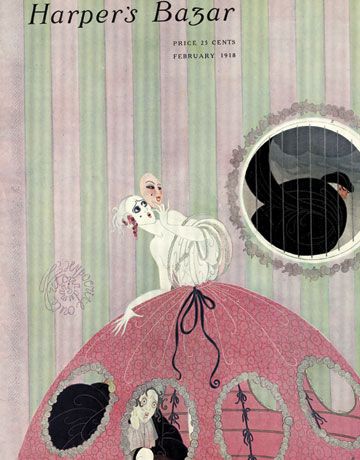
Erté, the artist and designer whose name is synonymous with Art Deco, was only twenty-five in 1918, but he was already making a name for himself. (A fake name: his real one was Romain de Tirtoff. Erté comes from the French pronunciation of his initials.) He got his start designing covers for Harper’s Bazar. I’m not sure what this one means, but an online slideshow of classic covers at the magazine’s website says that it “suggests a dadaist influence.”

Erté Harper's Bazar cover, February 1918, masked woman looking out window at man.

Erté, February 1918

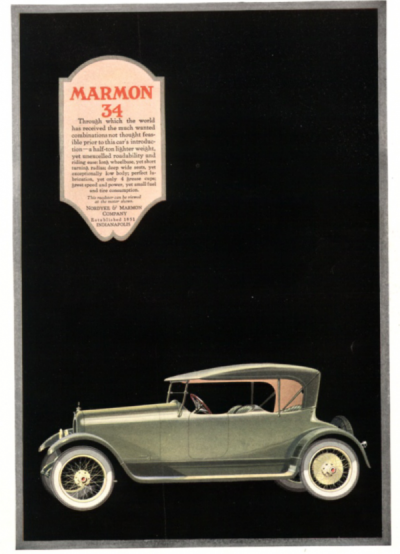
I had the impression that everyone drove around in Model T’s in 1918, but the magazines were full of ads for all different kinds of cars. This one, the Marmon 34, set a new coast-to-coast speed record in 1916: 5 days. 18 hours. 30 minutes.

Marmon 34 ad, 1918, car on black background.

Harper’s Bazar, February 1918

Clothes for the well-dressed boy. The Palm Beach suit costs $7.49–a week’s pay for an office boy at a New York law firm.

Macy's boys' clothing ad, Harper's Bazar, 1918.

Harper’s Bazar, February 1918