This year, a lot of Americans will be celebrating Independence Day in a minor key. I’m one of them. I’m spending our country’s anniversary in COVID isolation at Trinity College, Dublin, a set of circumstances not conducive to riotous celebration even at the best of times. I felt like I should mark the day somehow, though, so I’m sharing some magazine covers from July 1925 that show some of the many ways our country’s unquenchable spirit can be celebrated:
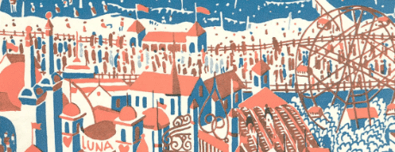
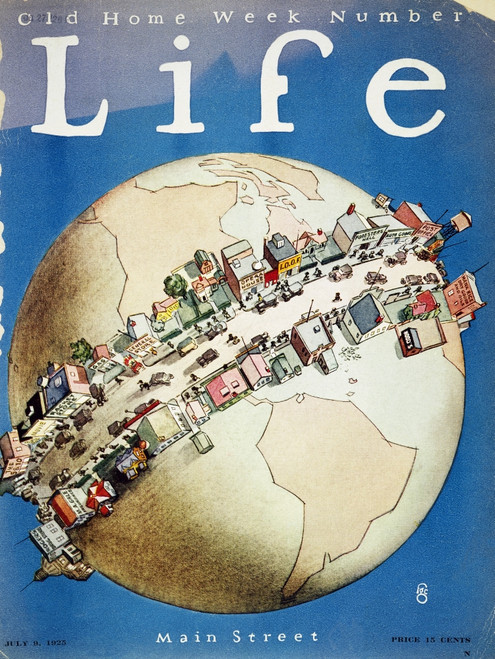
spending the day at Coney Island,
Ilonka Karasz, July 4, 1925
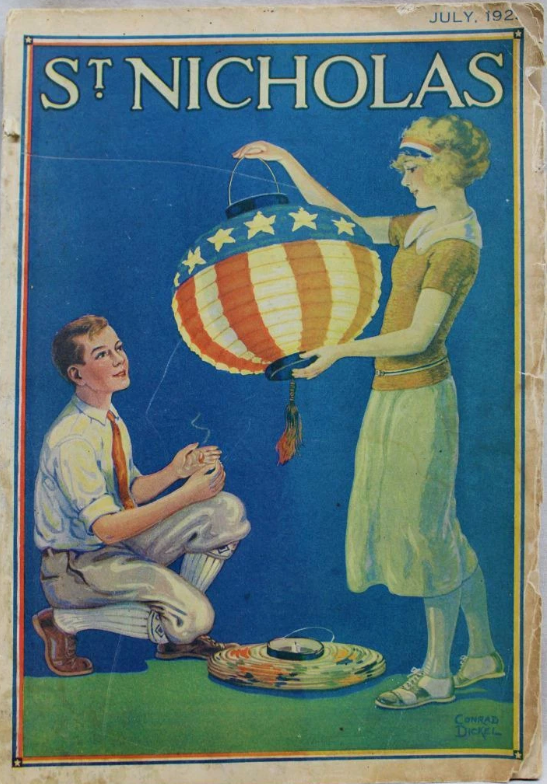
lighting a festive lantern,
Conrad Dickel, July 1925
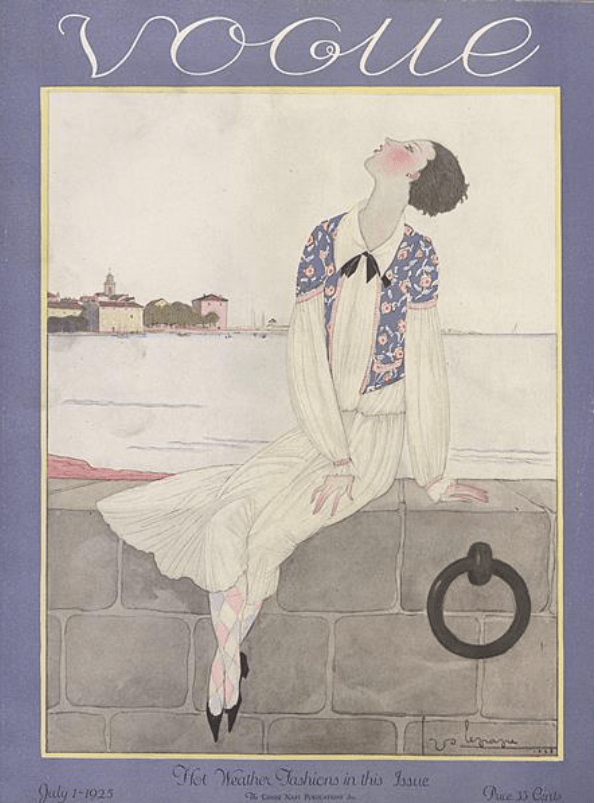
breathing in the sea air,
Georges Lepape, July 1, 1925
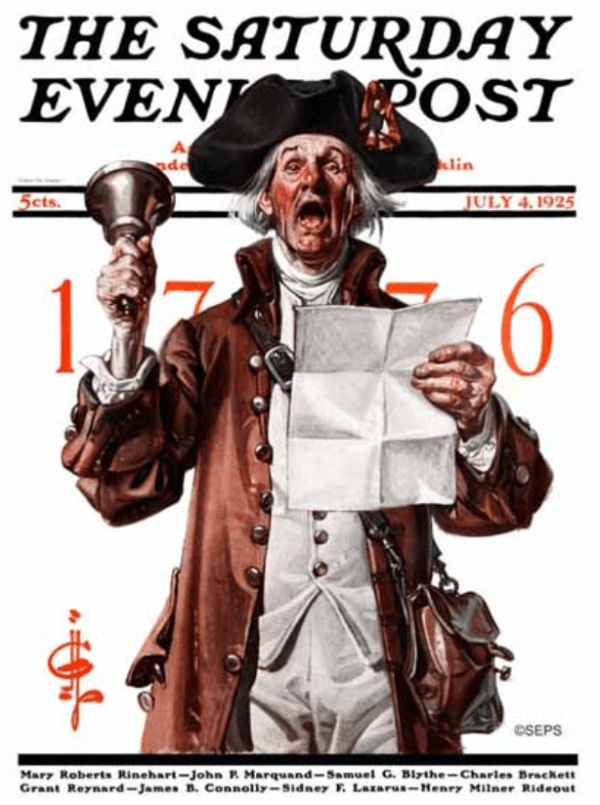
ringing the bell of freedom,
J.C. Leyendecker, July 4, 1925
and celebrating the diversity that always has been, and always will be, our country’s greatest strength.
Belated happy New Year, everyone, and welcome to the (can it be?) eighth year of My Life 100 Years Ago.*
J.C. Leyendecker, January 3, 1925
This year’s J.C. Leyendecker New Year’s baby apparently just registered his new car and immediately has to repair it, which I gather is par for the course for ca. 1925 vehicles.
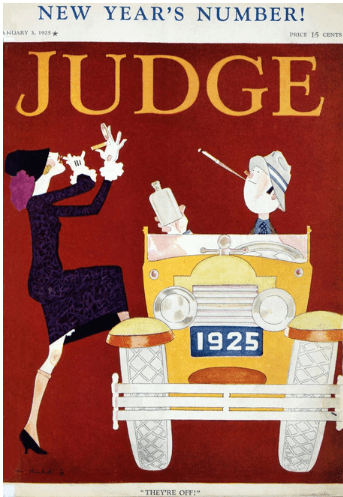
John Held Jr., January 5, 1925
Cars can be fun, though, as you can see from the most Roaring Twenties magazine cover ever. You can cavort and smoke and…well, let’s just say don’t base your driving behavior on hundred-year-old magazine covers.
Cars were also celebrated on the covers of Vogue**
Georges Lepape, January 1, 1925
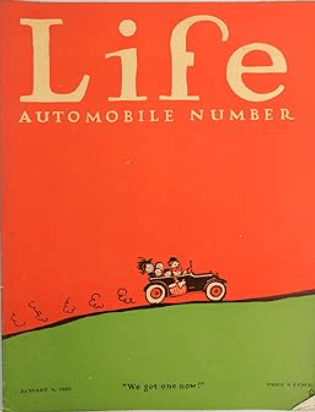
and Life (“We got one now,” the family exults in the caption),
F.G. Cooper, January 8, 1925
while, over at Motor, ironically, cars are a mere afterthought.
Coles Phillips, January 1925
On to the top posts of 1924!
Which is not a very competitive category because my productivity this year was less than stellar, with a mere three posts. Here they are:
Highlights of 1924 include When We Were Very Young, A.A. Milne’s first collection of Christopher Robin poems; a fun book of poems about a day in the life of two Parisian kids; and, for older kids, two Agatha Christies and The Cross Word Puzzle Book, the first-ever crossword collection, which, infuriatingly, I can’t download from South Africa.
Longing for sun in rainy, wintery Cape Town, I took refuge in a rainbow of summer 1924 magazine covers. (Now, in sunny, summery Cape Town, I’m wistfully scrolling Facebook for my DC friends’ photos of the recent snowstorm.)
In spite of my slack production, this blog had by far its most views ever in 2024, proving, depending on your world view, either that 1) sticking to something, however intermittently, pays off, or 2) life is unfair.*** The most popular posts this year overall were from past years. (The #1 new post was only #15 overall.) To make this a real Top 10, here are seven of them.
Parker’s “Any Porch,” her first published poem, is one of my favorite a hundred years ago things ever. It’s been a while—I’ll have to catch up with her in 1925.
For this Thanksgiving post, I was going to write about ten women I was thankful for, but Neysa McMein (who was Dorothy Parker’s best friend) ended up being so fascinating that I never would have gotten dinner on the table if I hadn’t cut back.
Langston Hughes wrote one of his greatest poems, “The Negro Speaks of Rivers,” as a teenager—and also wrote about fairies and Mexican children’s games.
This is part one in my two-part quest to earn a Girl Scout badge from 100 years ago. Sadly, Part 2, where I actually succeeded in earning a couple, is less popular.
In last year’s most popular new post, I wrote about McKay’s poem “If We Must Die” and the confusion over whether it was entered into the Congressional Record, and if so, by whom.
It took a while for the twenties to start roaring, but halfway through the decade flappers are everywhere, Art Deco has come into its own, and the Jazz Age is well underway. I’m looking forward to what 1925 will bring.
*If you want to get technical, for the first two years it was My Life in 1918.
**The first few websites I saw attributed this cover to Sonia Delaunay, which surprised me since as far as I knew she was an artist, not an illustrator. The cover’s definitely by Lepape—you can see his signature in the top left hand corner—but according to this website it’s a portrayal of Delaunay’s “simultaneous” technique.
***Or, I guess, 3) search engine algorithms are weird.
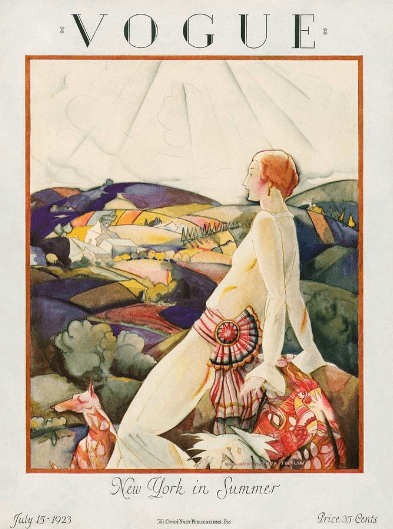
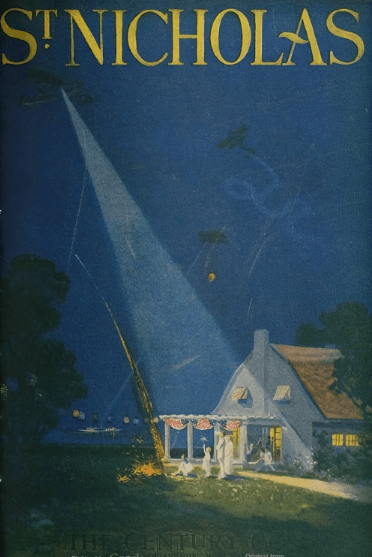
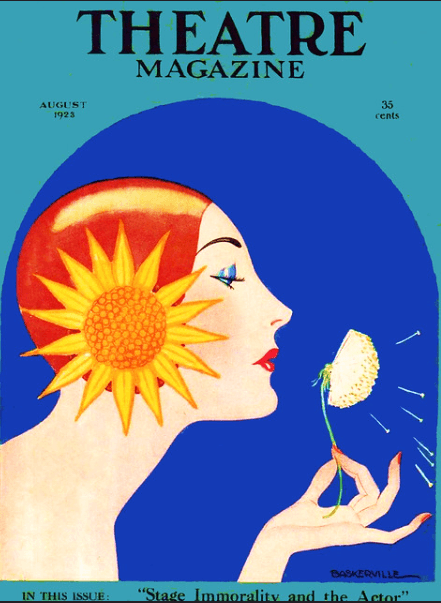
Belated happy summer, everyone! I’ve been so busy working on Rereading Our Childhood, the podcast that my friend Deborah Kalb and I launched back in May, that I’ve been woefully neglecting the world of a hundred years ago. But I’ve missed it. Summer is peak nostalgia season, so this feeling intensified after I left an especially cold and rainy Cape Town winter for summer in California, Colorado, and, now, Washington, D.C. I missed the trips to the beach of years past,
but as far as artistry went I was underwhelmed. I worried, as I occasionally have, that magazine covers had peaked sometime in the 1910s. My fears were unfounded, though—the summer 1923 covers revealed summer, and magazine artistry, in all their colorful glory.
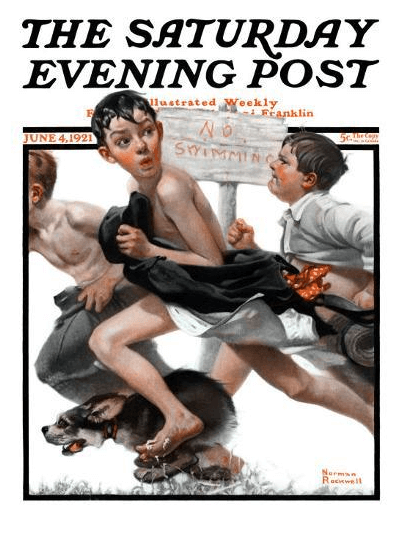
Summer kicked off in June with a “school’s out” celebration
Norman Rockwell
and graduates taking wing.
Percy Crosby
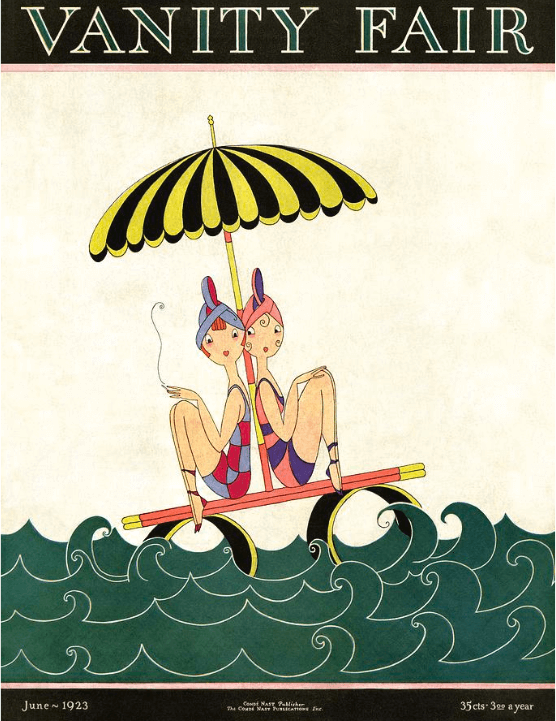
There were dips in the sea
Anna Harriet Fish
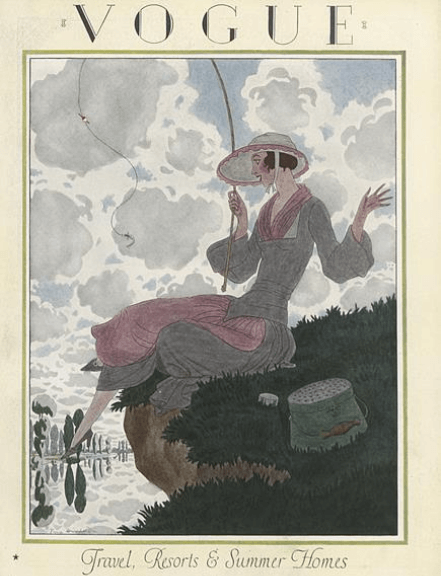
and fishing at the lake
Pierre Brissaud
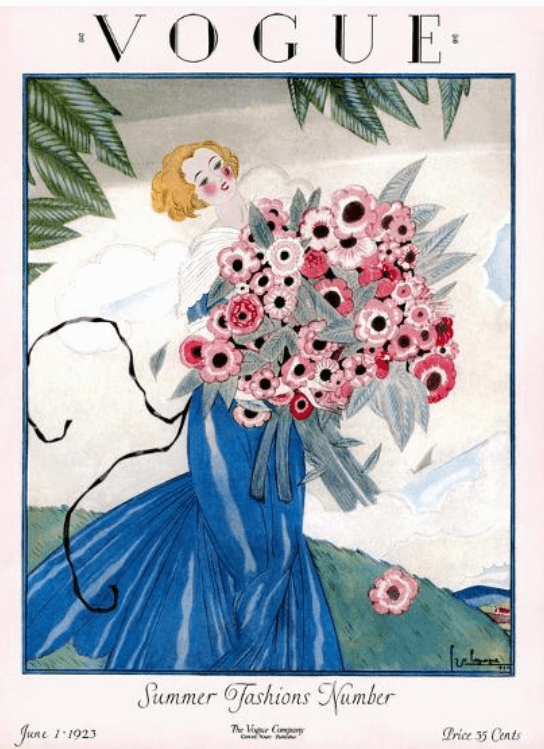
and flowers galore.
Georges LepapeGeorge Brandt
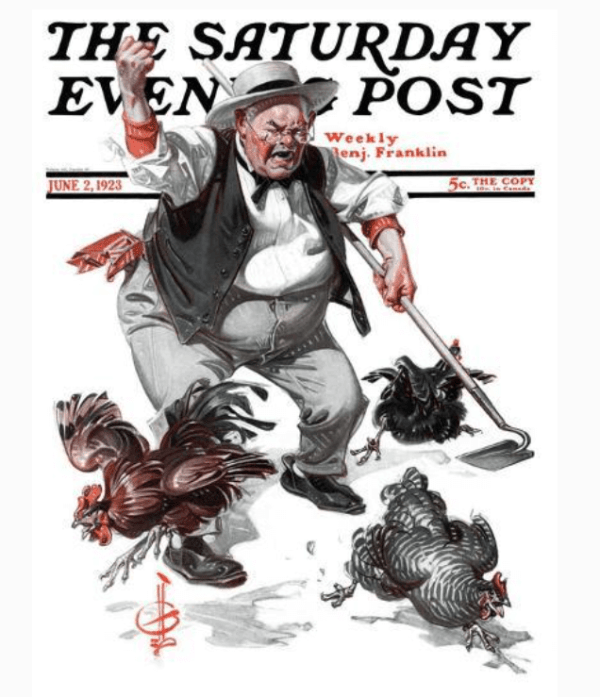
Also, chickens.
J.C. LeyendeckerFrank Walts
July
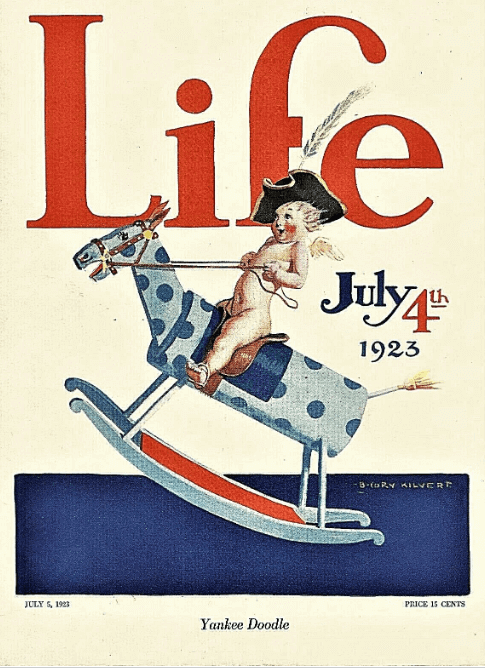
July started off with a celebration of the Glorious Fourth,
B. Cory Kilvert
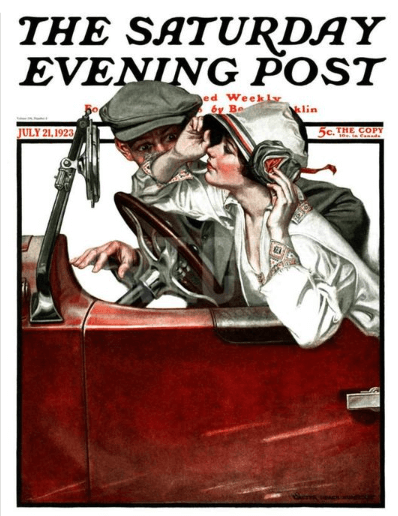
and then we got in the car
Ruth EastmanWalter Beach Humphrey
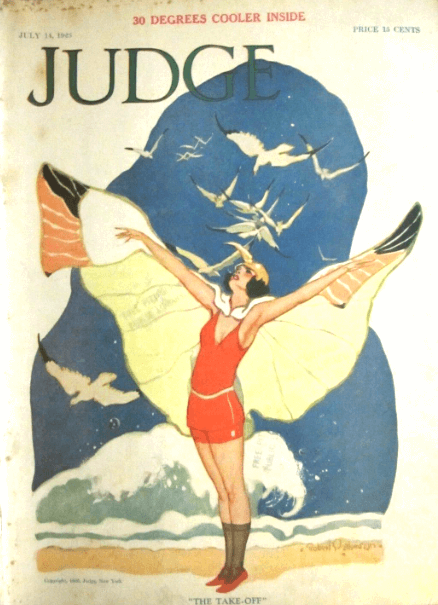
and headed off to the beach
George Wolfe PlankRobert Patterson
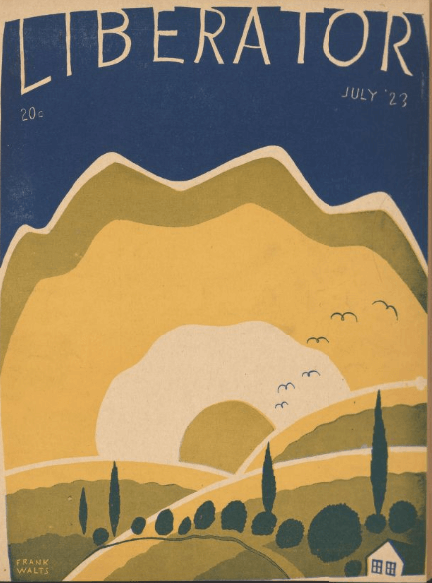
and then to the countryside.
Frank Walts Bradley Walker Tomlin
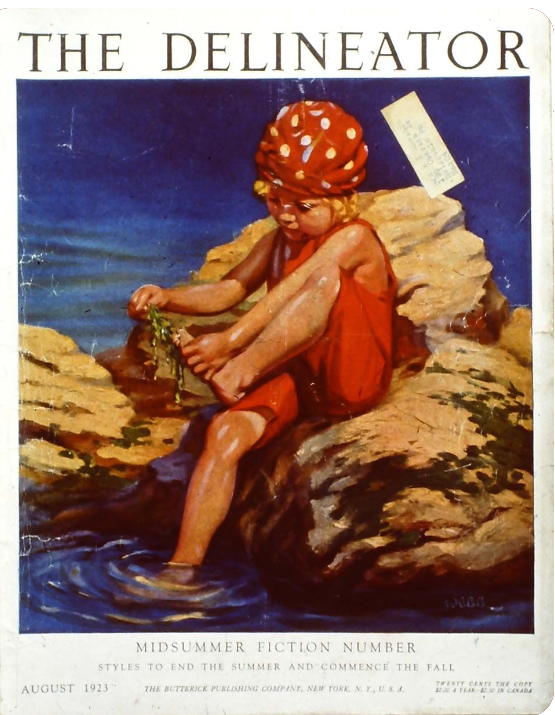
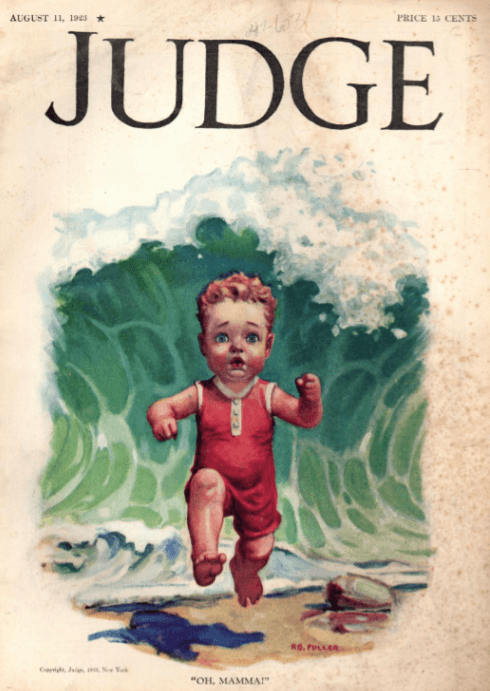
In August, we’ve been savoring the last few weeks of the season—spending time with the kids,
Thomas WebbR.B. FullerJ.C. Leyendecker
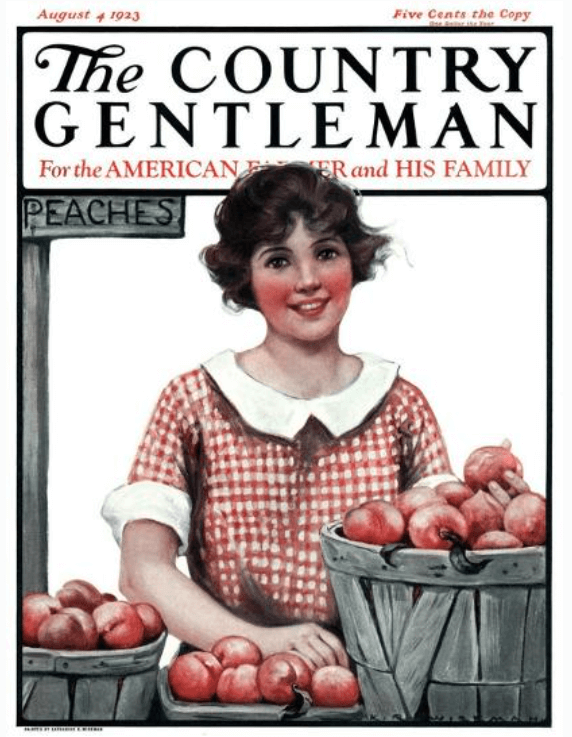
enjoying the last peaches of the season,
Katherine R. Wireman
and wishing that summer would stay with us for just a few more weeks.
It’s been a while since I’ve done a magazine cover post, and last time I was kind of snarky, so I decided to set out in search of the top 10 magazine covers of January and February 1923.
Except that it was really hot outside (I’m in Cape Town), and I wasn’t feeling all that energetic, so I thought maybe ChatGPT could find them for me.
In other words, do your own blog post, I’m too busy writing term papers!
Feeling slightly chastened, I set out on my search.
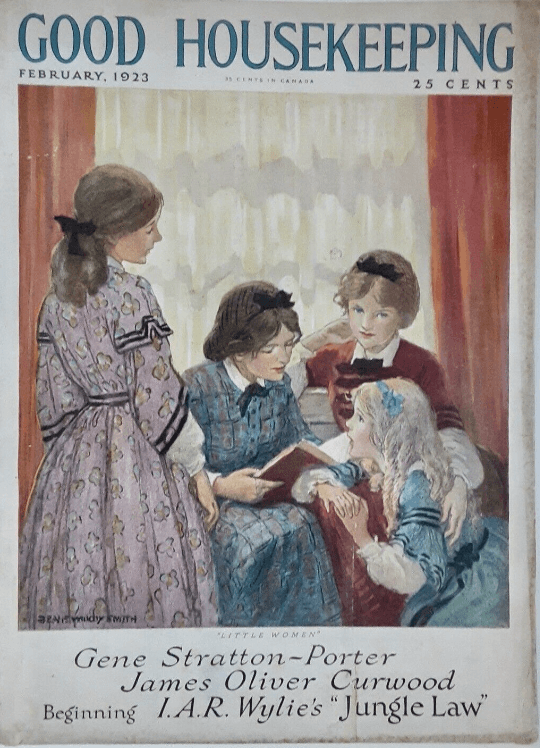
I started out with a round of disqualifications, beginning with covers that reused illustrations that had originally appeared elsewhere. This led me down a rabbit hole of trying to figure out whether the Jessie Willcox Smith illustration from Little Women that appears on the cover of the February 1923 issue of Good Housekeeping is from the edition of the book that she illustrated. I tentatively decided that it isn’t.
Jessie WIllcox Smith
I had an even harder time figuring out the provenance of Smith’s January 1923 cover featuring Hans Brinker. Irritated, I summarily disqualified Smith. I was looking for edgier covers in any case.
Jessie Willcox Smith
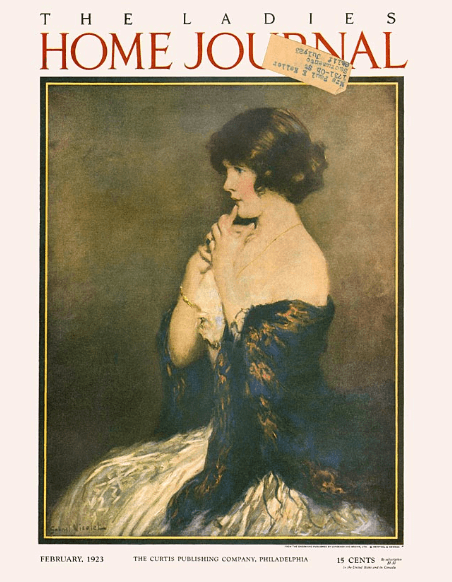
Next to go was the February Ladies’ Home Journal cover, which turned out to be a painting by French artist Gabriel Émile Edouard Nicolet, who died in 1921.
Gabriel Émile Edouard Nicolet
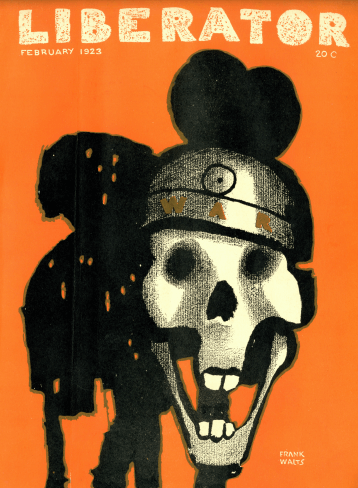
Then I eliminated covers that gave me the creeps, regardless of their artistic merit.
Frank WaltsA. M. Hopfmuller.
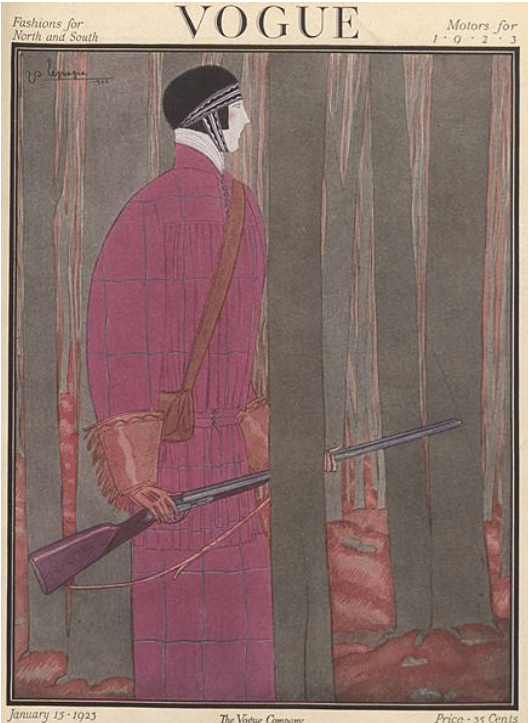
Ditto, covers with guns,
Georges Lepape
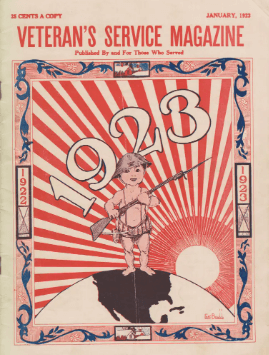
especially covers with babies with guns.
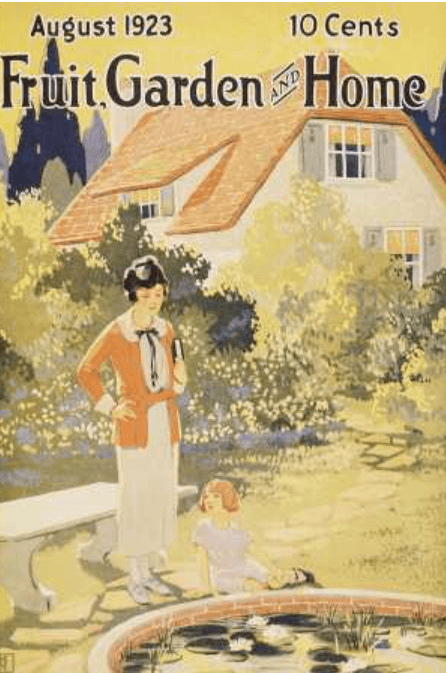
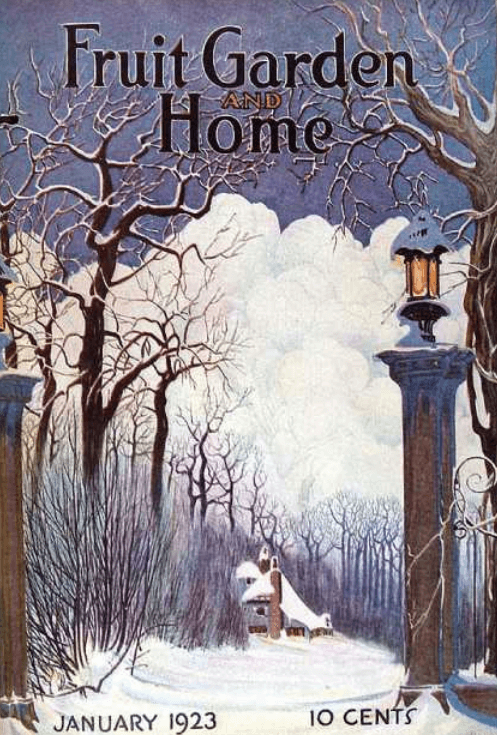
Next up are the covers that captured my interest for reasons other than the quality of the art, like this one from Fruit, Garden and Home, which, fascinatingly, turns out to be the original name of Better Homes and Gardens, from its founding in 1922 until August 1924, when sanity prevailed and the magazine was renamed.
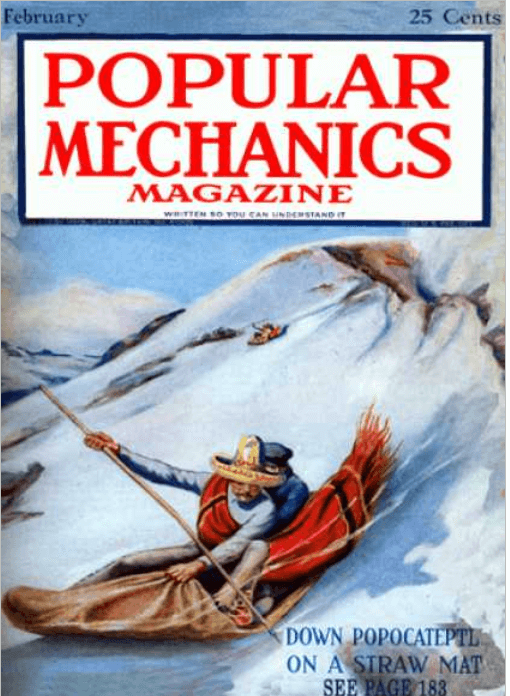
And this one from Popular Mechanics, illustrating an article called “Down Popocatepetl on a Straw Mat.” As someone who rode up Popocatepetl (a volcano outside Mexico City) in a car and struggled to walk up a tiny bit of it, I have a great deal of admiration for anyone who accomplished this.*
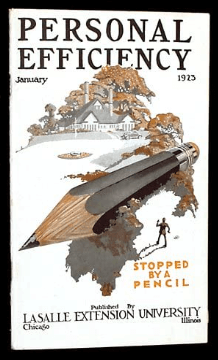
And this intriguing cover illustrating the article “Stopped by a Pencil” in Personal Efficiency magazine. What the heck is going on here? A metaphor for bureaucracy? An actual giant pencil on the rampage? Sadly, Personal Efficiency is not available online, so I’ll never know.
And now for the Top 10! Ranking them was a challenge, not for the usual “it was so hard to decide, everyone deserved to win” reason but because of the lack of standouts. Most of the covers struck me as deserving to be ranked #5. Here’s what I came up with, after a lot of hemming and hawing.
10. Popular Science, January 1923, artist unknown
I toyed with the idea of relegating this cover to the same category as the giant pencil, but it’s just too cool. I mean, it’s a monster new airship that will carry passengers across the continent! Called the San Francisco Express! Okay, it might be a dubious bit of futurology at a time when transatlantic airplane flights had already taken place,** but still…cool!
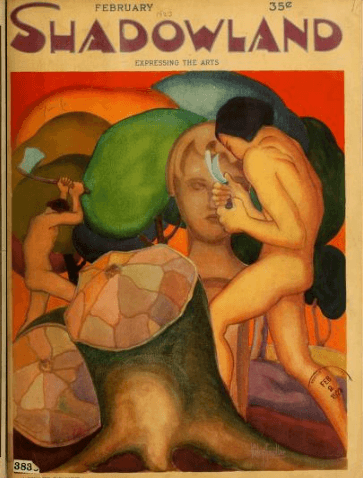
9. Shadowland, February 1923, A. M. Hopfmuller.
A. M. Hopfmuller
I can never figure out what exactly is going on in A.M. Hopfmuller’s Shadowland covers, but I’ll miss them when the magazine ceases publication in November 1923.
8. Vanity Fair, February 1923, Anne Harriet Fish
Anne Harriet Fish
I’m a fan of Fish’s Vanity Fair covers, and this one might have ranked more highly if I could figure what exactly was going on. A woman is looking through store receipts??? and is crying??? or holding another receipt up to her face??? while her husband smokes nonchalantly??? Or something??? Plus, what’s the deal with that chair?
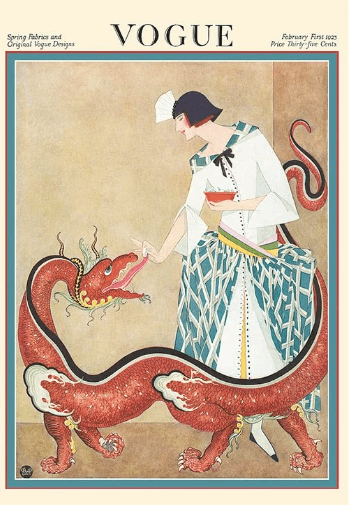
7. Vogue, George Wolfe Plank, February 1, 1923
George Wolfe Plank
This cover, of a woman feeding a sugar cube to a dragon, is done with Plank’s usual artistry, but it just didn’t particularly grab me the way some of his other covers did.***
6. Saturday Evening Post, Coles Phillips, February 17, 1923
Coles Phillips
My love for Coles Phillips knows no bounds, and I’m always happy to see him pop up, but the Saturday Evening Post’s limited color palate doesn’t play to his strengths.
5. McCall’s, January 1923, Neysa McMein
Neysa McMeen
I’m normally more of a fan of Neysa McMein as a fascinating 1920s figure (salon hostess, suffragist, Dorothy Parker’s best friend, etc.) than as an artist, but there’s something that haunts me about this woman. “Who are you?” I keep asking myself. “And what’s wrong?”
4. The Crisis, February 1923, Louis Portlock
Louis Portlock
I’m not familiar with Louis Portlock and I couldn’t find out anything about him except for one other cover for The Crisis, from 1922. I like the simplicity of this illustration.
Erté’s never not brilliant, but, as with Plank, I wouldn’t say he was at his best here.****
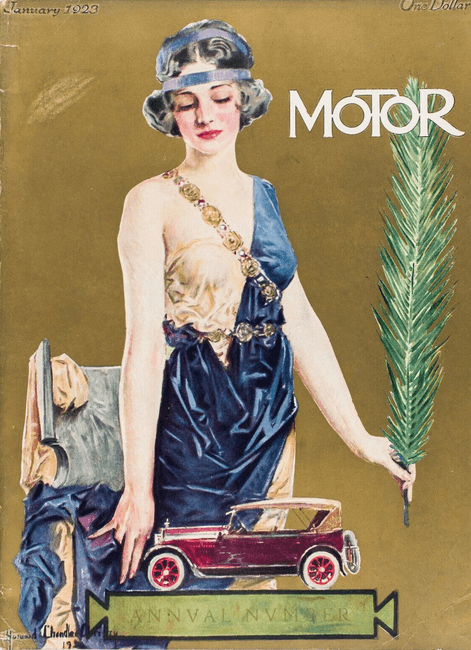
2. Motor, January 1923, Howard Chandler Christy
Howard Chandler Christy
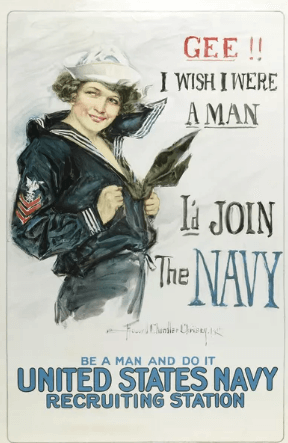
I was struck by this Motor cover, although I can’t figure out what’s going on in the lower left corner, where the woman’s dress seems to turn into a wall, or something. I didn’t think I was familiar with Christy, but it turns out that he was the artist behind some of the most famous World War I recruiting posters, like this one:
Howard Chandler Christy
1. The Liberator, January 1923, Frank Walts
Frank Walts
I almost disqualified this Liberator cover because I featured it with other New Year’s covers in last month’s top posts of 1922 post, but that just seemed unfair, especially given the lack of top-quality covers.***** It wasn’t a shoo-in for #1, but I like the simple artistry.
Even though I wasn’t wowed by this batch of covers, I had fun seeing what some of my favorite artists were up to, discovering a few new ones, and pondering the mystery of the giant pencil. In retrospect, I’m glad ChatGPT wasn’t up to the task.
*Although I have more admiration for the Mexican guy steering with the stick than for the the guy holding on for dear life in the back, who I assume is the writer of the article.
**If, like me until recently, you thought Charles Lindbergh was the first person to fly across the Atlantic, he was just the first person to do it SOLO. British aviators John Alcock and Arthur Brown made the first transatlantic flight in 1919.
***Like this one
George Wolfe Plank, Vogue, June 15, 1921
and this one,
George Wolfe Plank, August 1, 1918
for example.
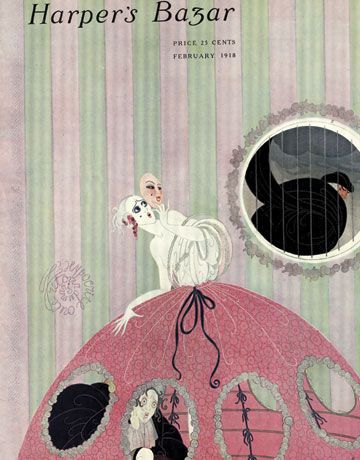
****As opposed to here
Erté, February 1918
and here.
Erté, May 1918
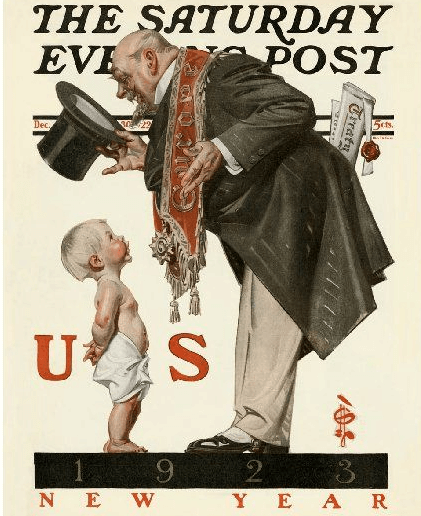
*****J.C. Leyendecker’s Saturday Evening Post cover was disqualified, though, because it came out on December 30. Besides, it was confusing.
I haven’t done a post on magazine covers since last August. I tried early this year, but the covers I found were uninspiring. Has the Golden Age of Illustration come to an end, I wondered.*
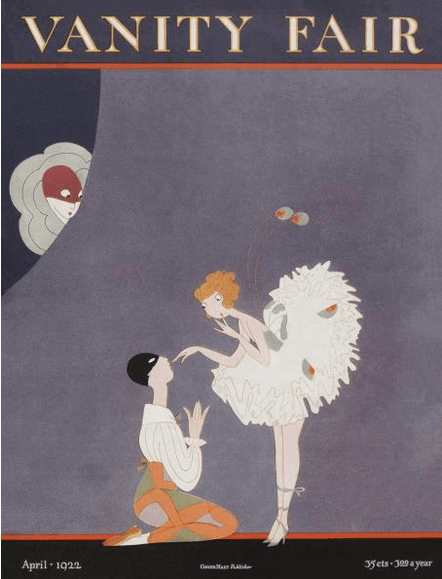
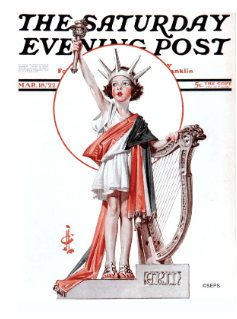
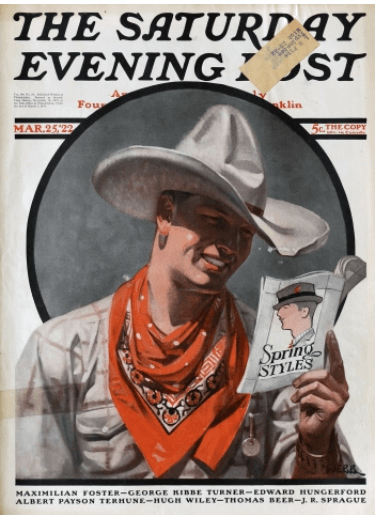
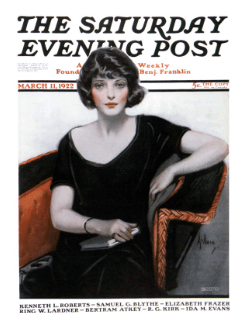
I decided to give it another shot, and I spent a long time looking at covers from March and April 1922. They weren’t bad. Most of them were quite good, in fact. But nothing seemed new or fresh or different.
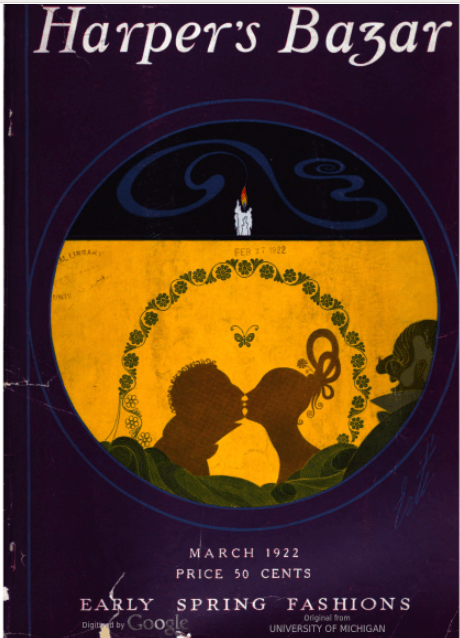
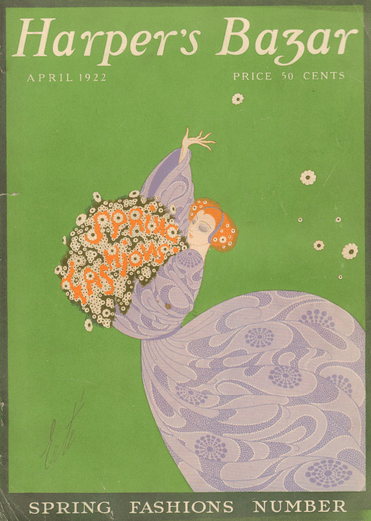
I expect Erté’sHarper’s Bazar covers to be attractive and haunting, but the March one is haunting without being attractive and the April one is attractive without being haunting.**
Erté, March 1922Erté, April 1922
This A. H. Fish Vanity Fair cover was solid but not memorable.
A.H. Fish, April 1922
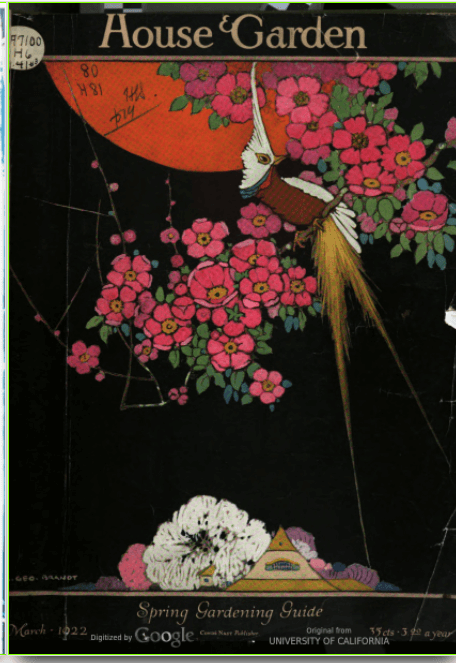
Are these either houses or gardens? I think not, House & Garden!
H. George Brandt, March 1922Bradley Walker Tomlin, April 1922
Okay, maybe I was just in a bad mood. I’ll stop carping now and just tell you what I found.
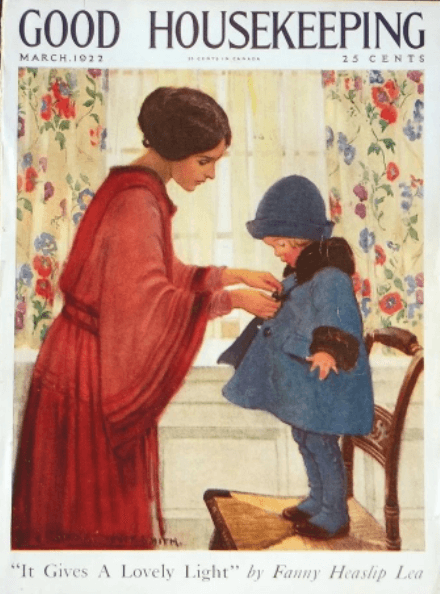
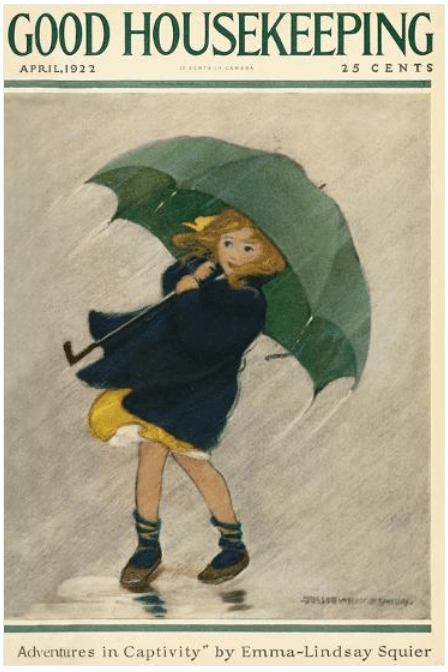
Regular Good Housekeeping cover illustrator Jessie Willcox Smith was her usual competent, family-friendly self.
Jessie Willcox Smith, March 1922Jessie Willcox Smith, April 1922
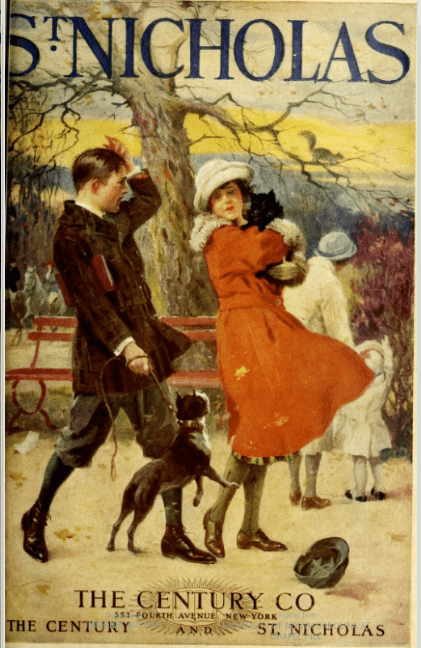
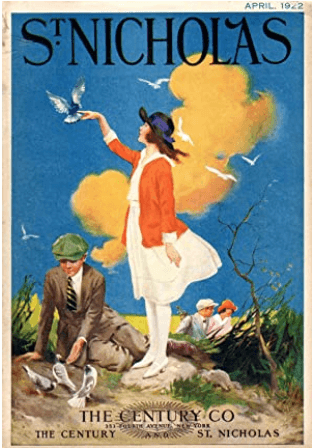
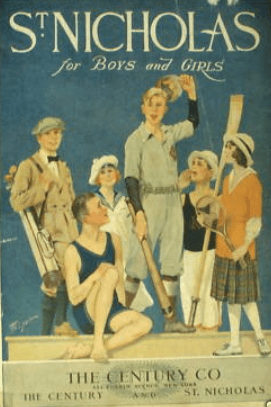
The kids were up to their usual wholesome fun at St. Nicholas.
March 1922April 1922
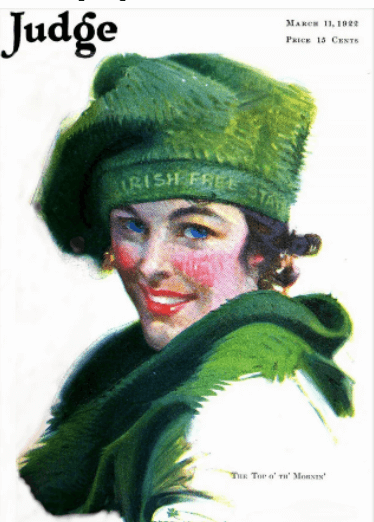
With Ireland newly independent, St. Patrick’s Day celebrations were especially festive.
March 11, 1922J.C. Leyendecker, March 18, 1922
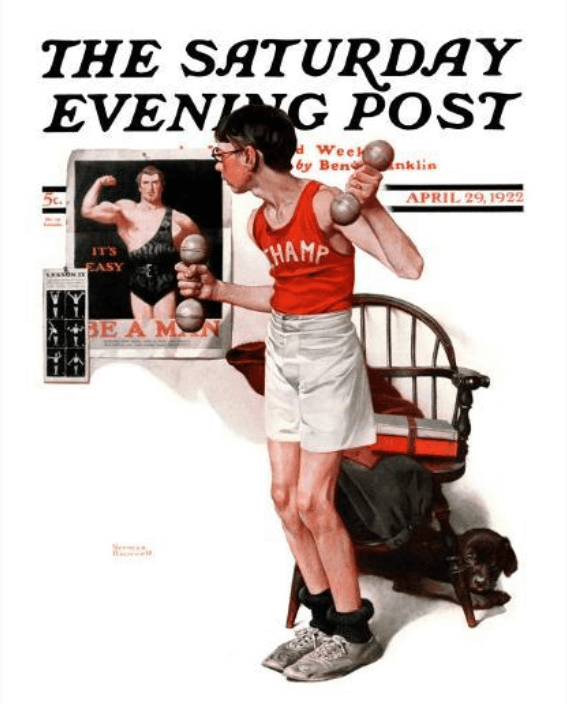
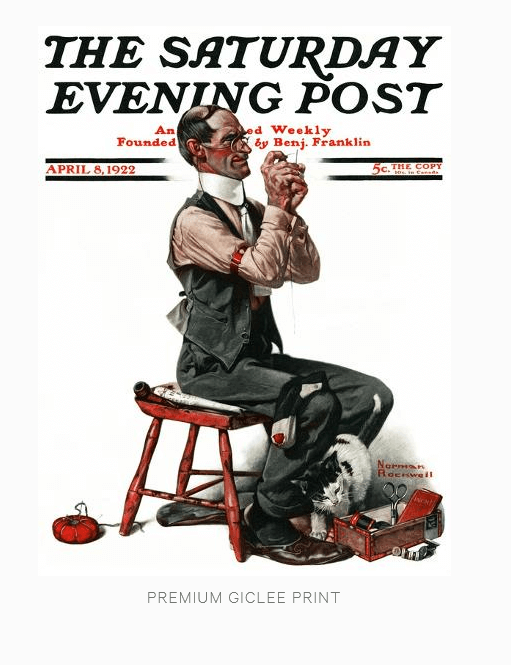
There was a newcomer, Tom Webb, at the Saturday Evening Post,
Norman Rockwell, April 29, 1922Norman Rockwell, April 8, 1922
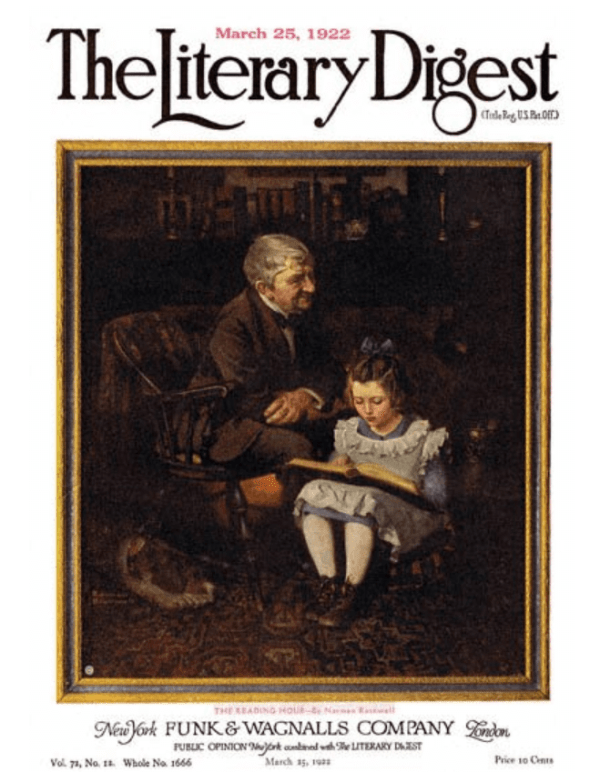
The insanely prolific Rockwell was all over the place in March and April, at The Literary Digest
Norman Rockwell, March 25, 1922
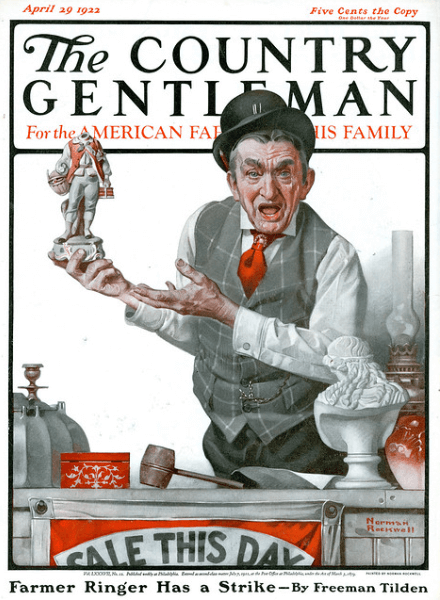
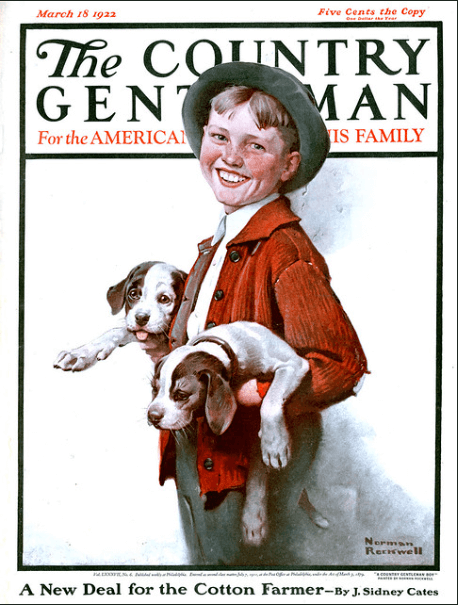
and The Country Gentleman
Norman Rockwell, April 29, 1922Norman Rockwell, March 18, 1922
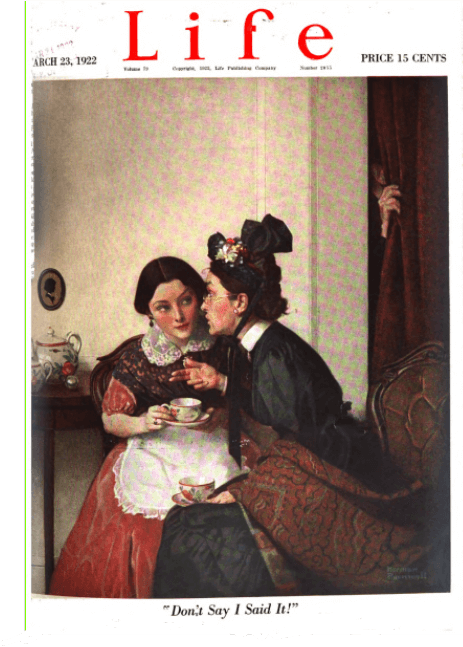
and Life.
Norman Rockwell, March 23, 1922
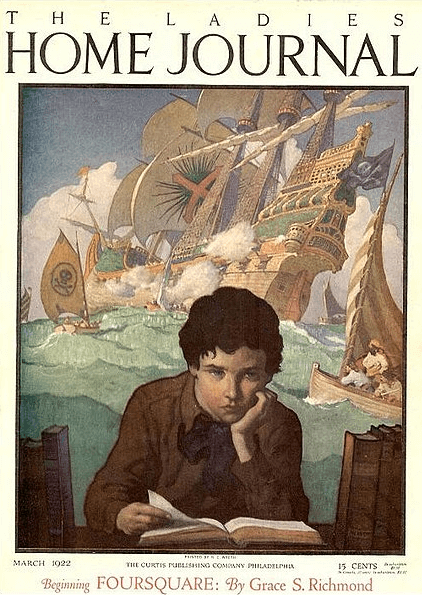
For the Ladies’ Home Journal, N.C. Wyeth (father of Andrew) painted a boy dreaming of stolen loot.
N.C. Wyeth, March 1922
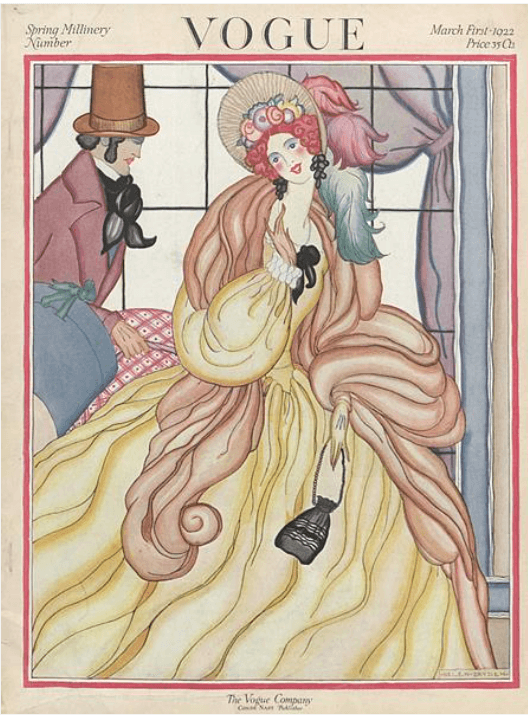
Over at Vogue, a Helen Dryden cover featured an old-timey couple,
Helen Dryden, March 1, 1922
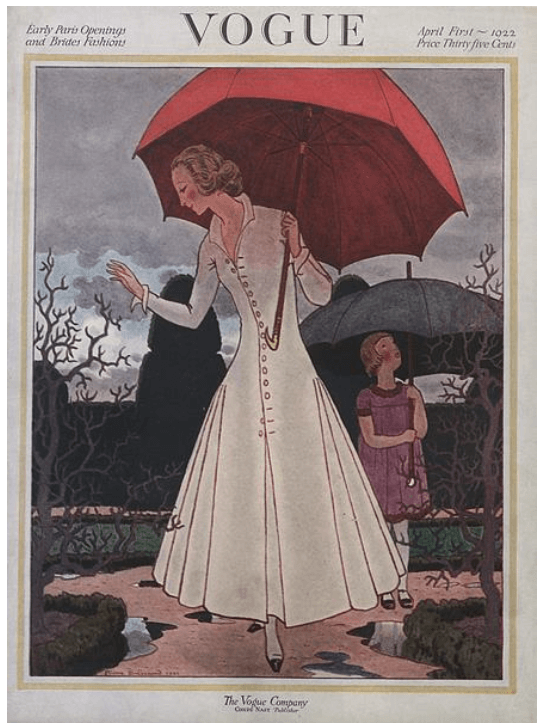
and there were two new-to-me Vogue cover artists, Pierre Brissaud and Henry R. Sutter.***
Pierre Brissaud, April 1, 1922Henry R. Sutter, April 15, 1922
So, this is all very nice, and if I hadn’t been looking at hundred-year-old magazine covers for over four years I might be impressed. It’s just that there wasn’t anything that hadn’t been done before.
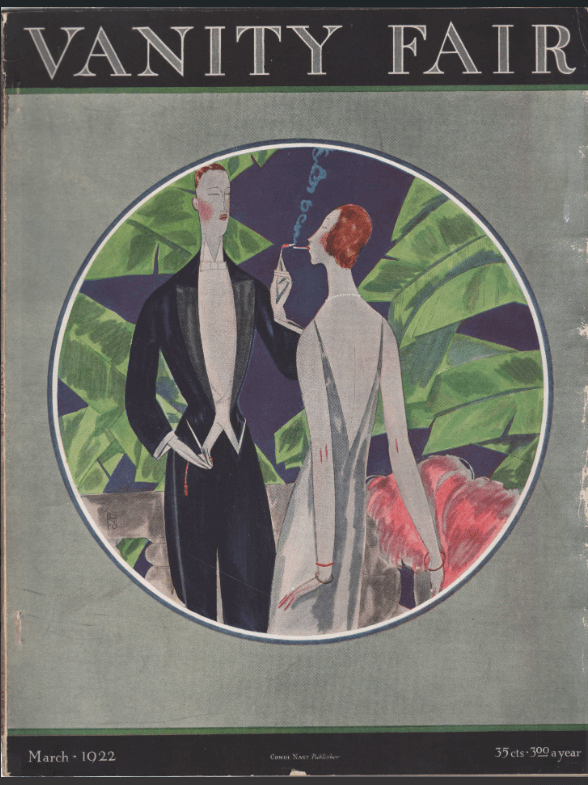
And then I came across this Vanity Fair cover from March 1922, by newcomer Eduardo Garcia Benito, who had arrived in New York from Spain the year before.**** I hadn’t seen anything yet like the sleek, clear lines and bold colors of this cover, which would come to typify Art Deco illustration.*****
Eduardo Garcia Benito, March 1922
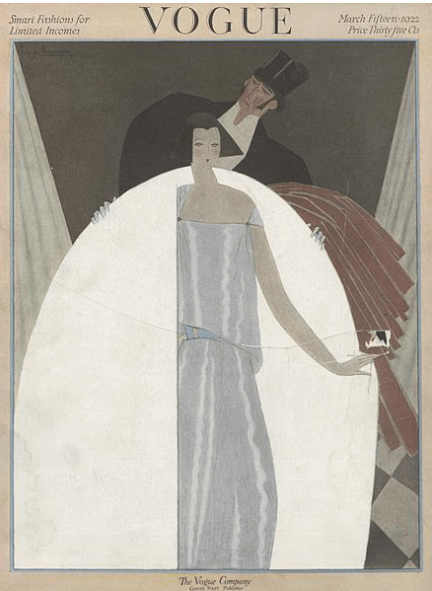
And then I took a second look at the other March Vogue cover, by Georges Lepape, which, maybe because of the muted colors, I hadn’t paid particular attention to.
Georges Lepape, March 15, 1922
Same minimalist design. Same clear lines. Same boyish silhouette on the woman.
Two years into the decade, the twenties have begun!
**Here is an examples of an attractive and haunting Erté cover:
Erté, February 1918
***UPDATE 5/1/2022: I looked into this some more and these both seem to be Vogue debuts. Brissaud went on to be a regular Vogue cover artist. Sutter only did six covers that I could find (i.e. that appear on art.com, which I think has all of them), all in 1922 and 1923. I haven’t been able to find much information about him other than that he lived in Provincetown, Massachusetts.
****This wasn’t Benito’s Condé Nast debut, though. This November 15, 1921, Vogue cover was his first (as far as I can tell) of many for the magazine.
Eduardo Garcia Benito, November 15, 1921
*****I could do without the “Women can smoke too!” message, though.
Objectively speaking, winter in Cape Town is not all that bad. The temperature rarely dips below the high 40s, and a cold day is one when it doesn’t make it into the 60s. Subjectively speaking, though, winter in Cape Town is miserable. It rains a lot, and houses don’t have central heating, so we sit around freezing and grumbling.*
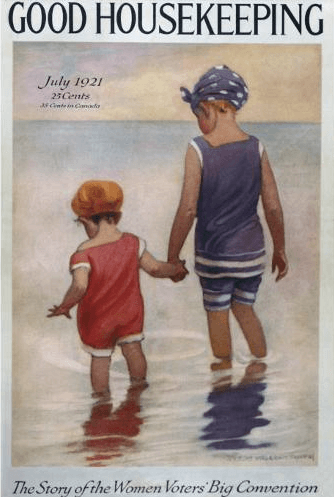
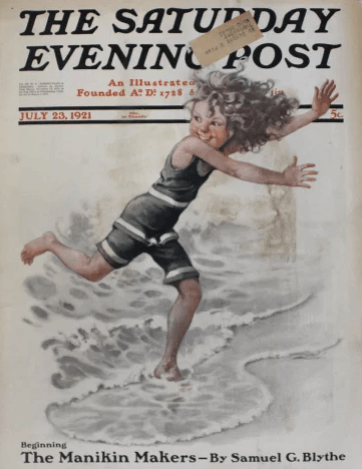
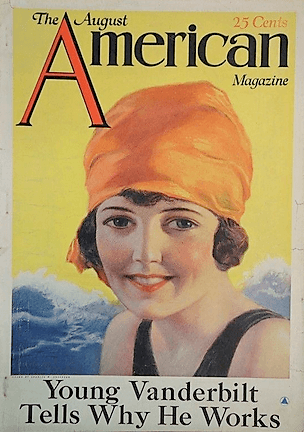
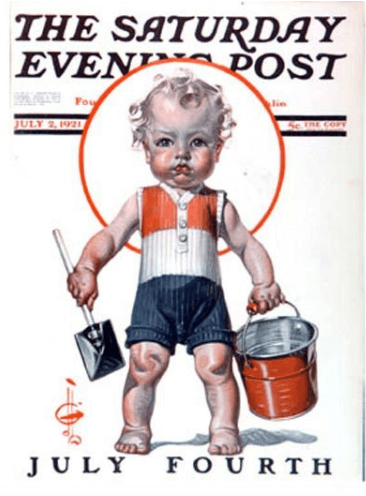
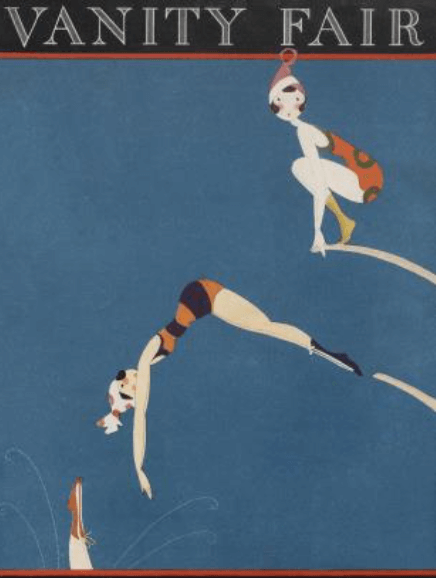
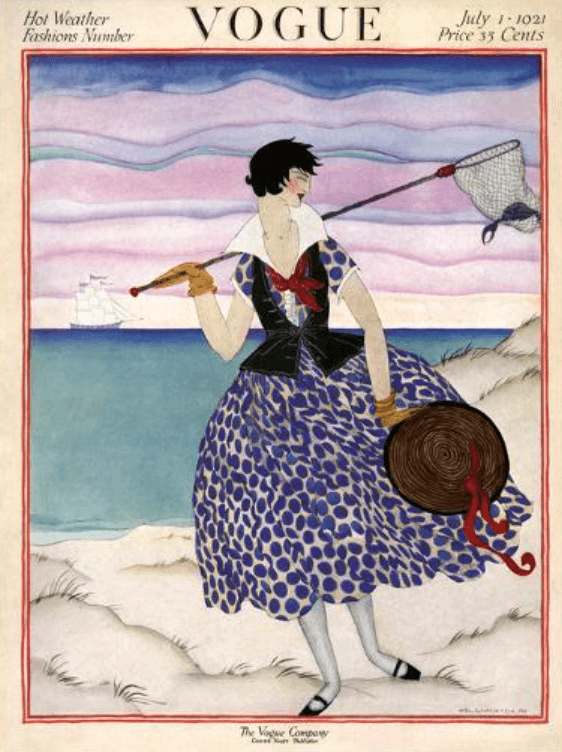
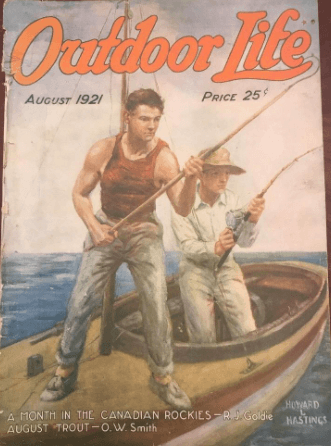
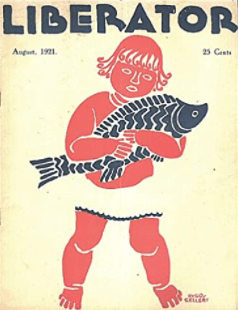
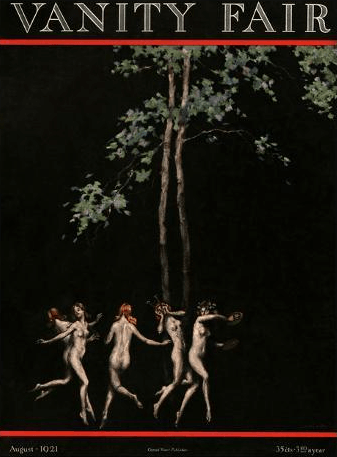
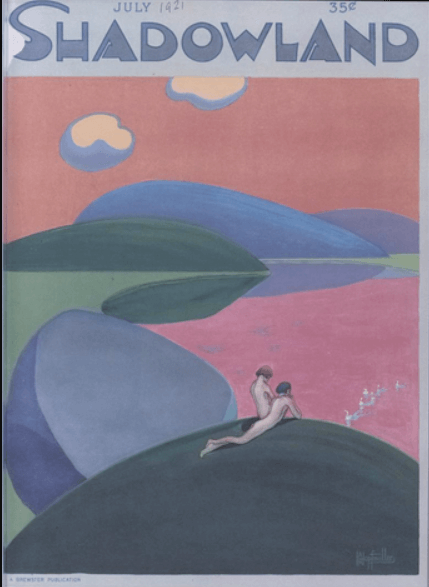
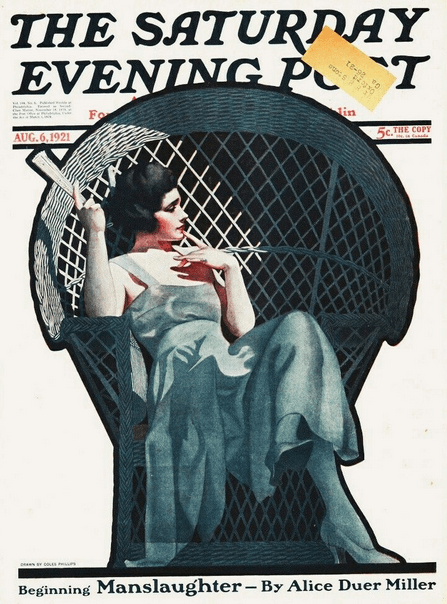
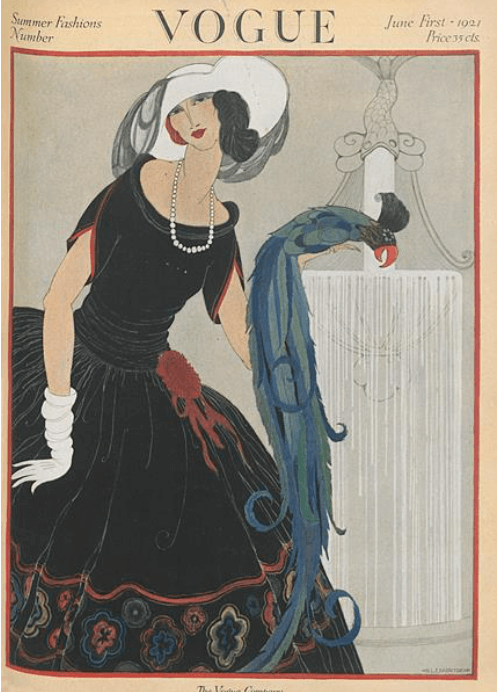
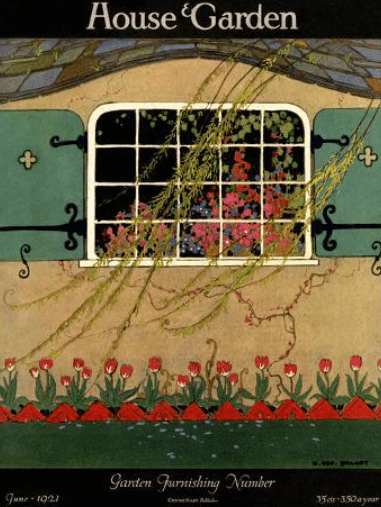
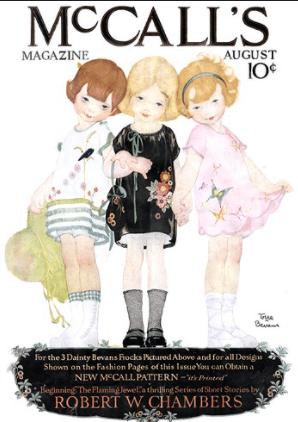
What I needed to improve my mood, I decided, was some summer fun from the covers of 1921 magazines. I could pretend I was somewhere hot, hanging around at the beach**
(Okay, these are not all ACTUAL wishes. I’m not much of a fisherman, for example.)
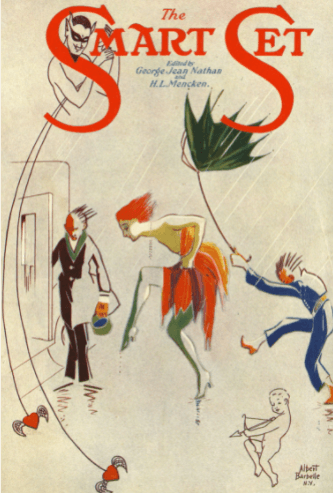
Lo and behold, I did actually make it to the northern hemisphere in time for the last few weeks of the summer. It turns out, though, that my image of Washington in August was a teeny bit romanticized. Life has been more like this
George Wolfe Plank
and this
Albert Barbelle
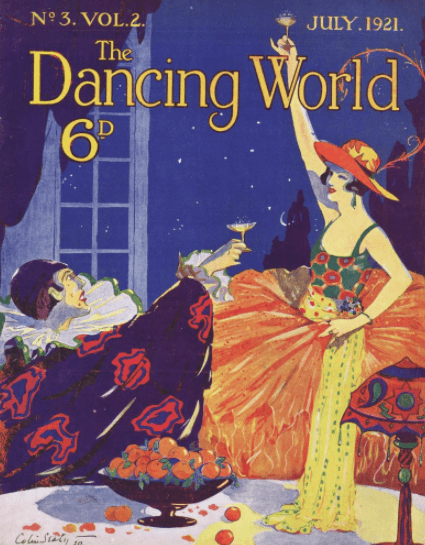
than this.
Colin Sealy
But I’ve had a great time hanging out with my friends,
and even though I haven’t spent much (okay, any) time working on my manuscript
George Wolfe Plank
I swear that’s going to happen before the fall sets in.
But fall is weeks away, so let’s not think about it right now. After all, in the words of the #1 hit song of late summer 1921, “In the meantime, in between time…”
*Of course, I always keep in mind how fortunate I am compared to most people in Cape Town.
I’ve been in summer school at the University of Cape Town for the last three weeks, studying, among other things, Portuguese.* Between that, obsessing over the recently released archive of T.S. Eliot’s letters to his longtime love Emily Hale, and a pair of maritime mishaps that have been wreaking havoc on South Africa’s internet, I haven’t been able to get much blogging done. But it doesn’t seem right to let the first month of a new decade pass unrecognized, so I figured I’d look into how magazine covers ushered in the 1920s.**
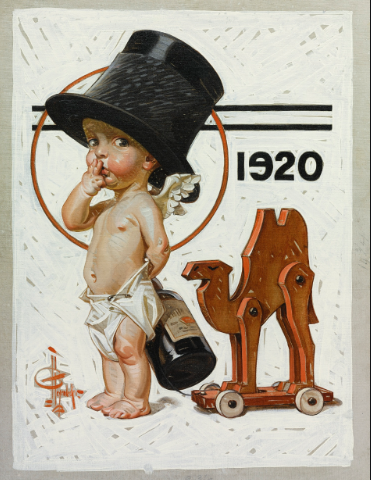
The Saturday Evening Post rang in the new year with this J.C. Leyendecker cover. (The camel is a symbol of Prohibition.)
Sotheby’s website features this painting by Leyendecker, which may have been his original concept for the cover.
sothebys.com
I can see why the Saturday Evening Post wouldn’t go for it, but this version makes more sense because without the bottle of whiskey what is the baby shushing us about?
That’s about it for New Year’s-themed covers.
Erté, as always, is at the helm at Harper’s Bazar, with this cover,
which, unusually, has some text on the illustration: “Begin Arnold Bennett’s New Essays on Women in this Issue.” I skimmed the essay, which was in equal parts irritating, boring, and off-topic.***
Vogue starts out the decade with a Georges Lepape cover featuring a person of color, but not in a good way:
This Vanity Fair cover is too good not to repeat. I’m not sure who the artist is, but I’m guessing John Held Jr. or possibly Gordon Conway. (Update 2/4/2019: It’s John Held Jr. I found the signature on a scanned copy of the magazine on Hathitrust.)
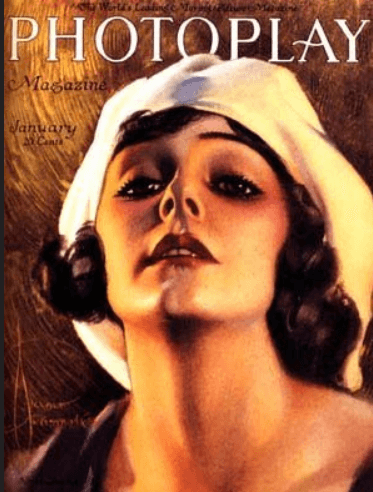
and a picture of movie star Norma Talmadge by Rolf Armstrong on Photoplay.****
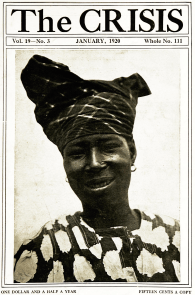
The Crisis features a photograph of a woman from St. Lucia,
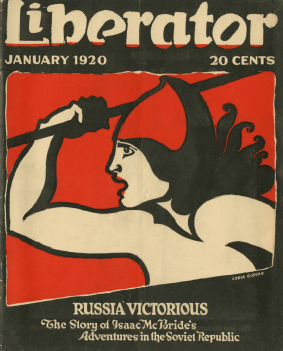
and Liberator has, um, something Bolshiviki by Lydia Gibson.
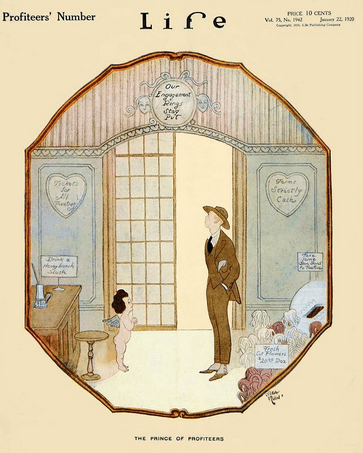
Life’s “Profiteers’ Number” features a cover by John Madison.
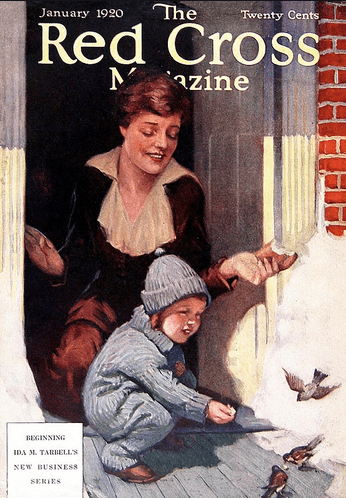
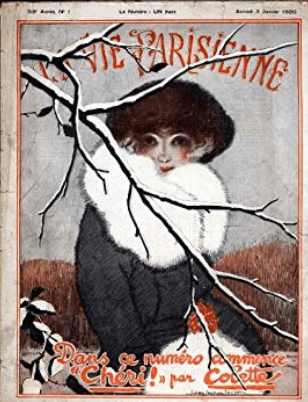
In sunny South Africa, I sighed over the snowy scenes on the covers of Literary Digest (by Norman Rockwell)
and Red Cross Magazine
and Country Life
and La Vie Parisienne.*****
If I could pick one snow scene to transport myself into, Mary Poppins-style, it would be this one, from St. Nicholas.
And, finally, two new****** publications that are well worth looking at: Shadowland, a beautifully designed movie magazine that features A.M. Hopfmuller as its regular cover artist,
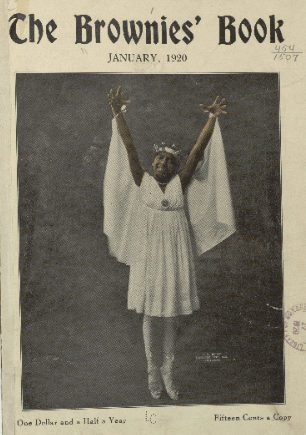
and The Brownies’ Book, the first-ever magazine for African-American children, edited by, who else, W.E.B. Du Bois.
Battey
I’ll be following both of these exciting ventures in the months to come.
In the meantime, happy January, everyone. Or, as we say in Portuguese, feliz janeiro!
*The other things: Dante’s Purgatorio, special relativity, Rembrandt, Plato and Euclid, Vermeer, Virginia and Leonard Woolf’s Hogarth Press, religious poetry, South African history and politics, and the Enlightenment. I tend to shop for summer school tickets like a hungry person at the supermarket.
**It turns out that when you put 1920 in Google it thinks you’re talking about the whole decade, so I keep having to sift through irrelevant pictures of flappers. It’s going to be an annoying year.
***But don’t worry, Virginia Woolf will, with her brilliant 1924 essay “Mr. Bennett and Mrs. Brown” (published by the aforementioned Hogarth Press), make Arnold Bennet regret that he’d ever SEEN a woman.
Happy Thanksgiving! Or, as we say in South Africa, “Happy Normal Day When Spouses’ Employers Schedule Evening Work Events!”
So I won’t be celebrating with turkey this year, but I do want to pause to think about some people of 1919 I’m particularly thankful for. Last year, I thanked some of my most admired people from 1918. This year, as the end of the decade rolls around, I’m celebrating the illustrators of the 1910s who made the decade such a visual delight to go back to. You can learn about their lives, or, if you’re too zonked out from overeating, skip the words and feast your eyes on their beautiful art.
Gordon Conway
Gordon Conway, date unknown (fashionmodeldirectory.com)
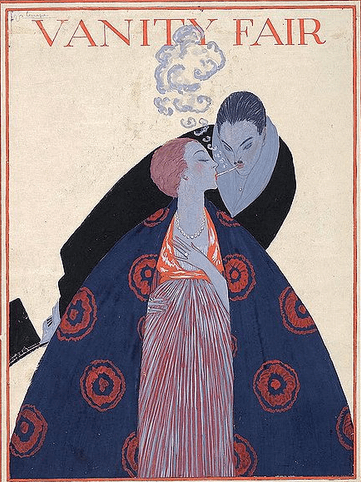
Gordon Conway, who despite her name was a woman, was born in Texas in 1894, the daughter of wealthy parents. Encouraged in her artistic aspirations by her globetrotting mother, she began her career with Condé Nast at the age of 20. She also designed costumes for film and the stage in New York and in Europe, where she moved in 1920 with her husband. The marriage didn’t last long, but she stayed in London, living with her mother. Conway’s work ethic was legendary, but ill health forced her into early retirement in 1937. She returned to the United States as World War II approached, moved to a family estate in Virginia, and died in 1956.
Here’s how Vanity Fair described her in a contributors column in August 1919:
She is one of the more temperamentally inclined of the younger artistic set; she finds it absolutely impossible to get any real stuff into her sketches unless she is sitting in the midst of her pale lavender boudoir, and wearing a green brocaded robe de chambre lined with dull gold and having a single rose on the shoulder. Miss Conway is justly proud of the fact that she draws entirely by ear—never had a lesson in her life.
Here are two of her covers for the magazine,
January 1918
August 1918
here is one that Condé Nast lists as “artist unknown” but sure looks like her,
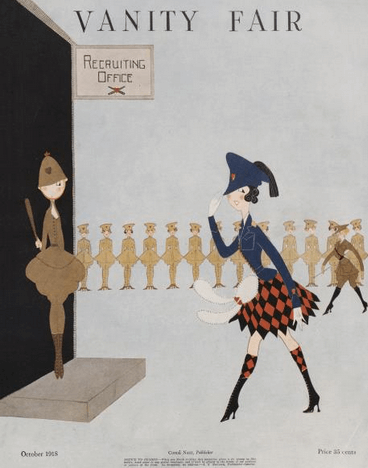
October 1918
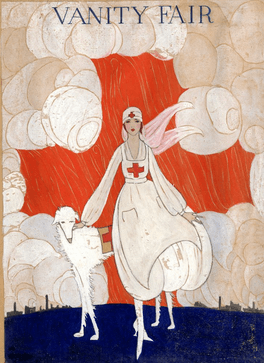
and here is an illustration that Vanity Fair rejected but was later used as a Red Cross poster:
sites.utexas.edu
The “new women” Conway portrayed helped shape an era.
Thank you, Gordon!
Georges Lepape
Georges Lepape, date unknown (babelio.com)
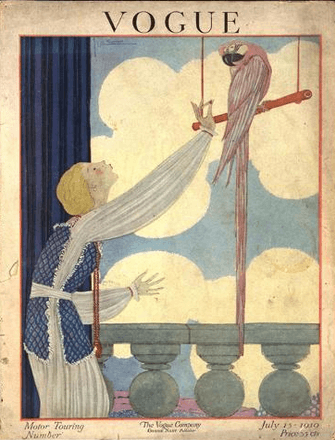
Georges Lepape, born in 1887 in Paris, was a regular cover artist for Vogue. He lived in France, aside from a brief stint at Condé Nast in New York. He died in 1971.
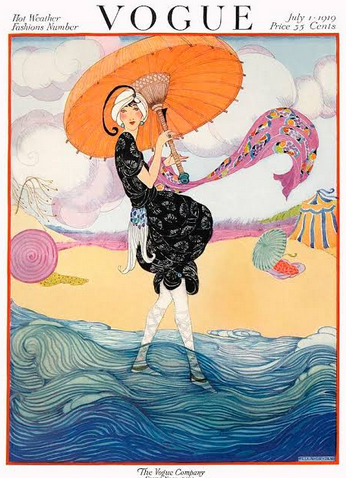
Here are some of his Vogue covers from 1919,
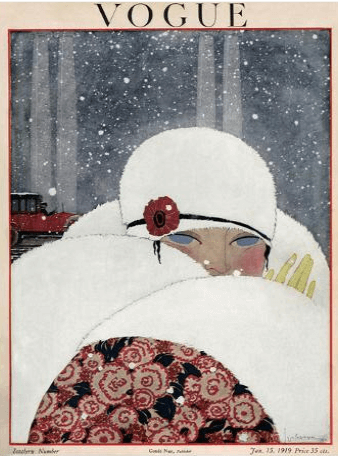
January 15, 1919
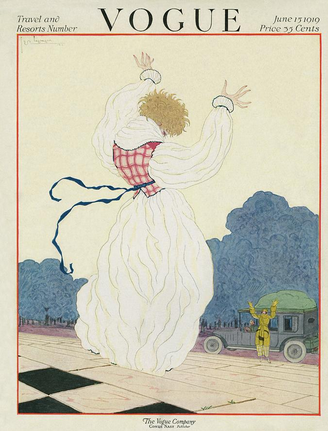
June 15, 1919
July 15, 1919
and here’s one from Vanity Fair.
December 1919
Merci, Georges!
John Held Jr.
John Held Jr. (Judge magazine, 1923)
John Held Jr. was born in Salt Lake City in 1889, the son of a British convert to Mormonism. He went to high school with future New Yorker founder Harold Ross, a lifelong friend and associate. Held had just about the best job you could have as a soldier in World War I, supposedly copying hieroglyphics from Mayan ruins in Central America but really drawing maps of the coastline and keeping an eye out for German submarines.*
My family had an anthology of New Yorker cartoons when I was growing up, and Held’s woodcuts used to give me the creeps.** So I was surprised to see that he was the artist behind some of Vanity Fair’s cheeriest covers, like these:
October 1919
November 1919
July 1919
Held would go on to do cover illustrations for F. Scott Fitzgerald.
Like a Fitzgerald character, he lived a riotous life, marrying four times, earning a fortune, losing most of it in the 1929 stock market crash, and suffering a nervous breakdown. Fitzgerald notwithstanding, his life did have a second act: he designed the sets for the phenomenally successful 1937 Broadway revue Helzapoppin and served as an artist-in-residence at Harvard. He died in 1958.
Thank you, John!
Frank Walts
Last year, my favorite leftist artist was Hugo Gellert, who did several cover illustrations for The Liberator. I couldn’t find a trace of him in 1919, though. Luckily, the progressive press had another talented illustrator, Frank Walts.
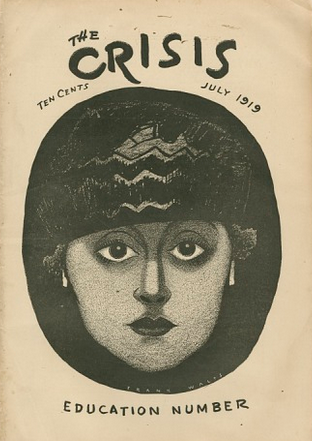
Walts was born in Indiana (like a surprisingly large number of people I’ve come across in 1919***) in 1877. His art appeared frequently on the cover of The Masses, which shut down in 1917 amid legal problems and was succeeded by The Liberator. He drew the January and February 1918 covers for the NAACP magazine The Crisis,
January 1918
February 1918
both of which I featured on my blog without paying much attention to Walts because I was new at this and not focused on who drew what.
In 1919, Walts drew the cover illustration for the annual children’s issue of The Crisis in October
as well as the magazine’s July 1919 issue
and the December 1919 issue of The Liberator, which shines in an otherwise mediocre year of Liberator cover art.
Walts, who also worked as a civil engineer, would go on to illustrate many more covers for The Crisis and The Liberator. He died in 1941.
Thank you, Frank!
Helen Dryden
American Club Woman, October 1914
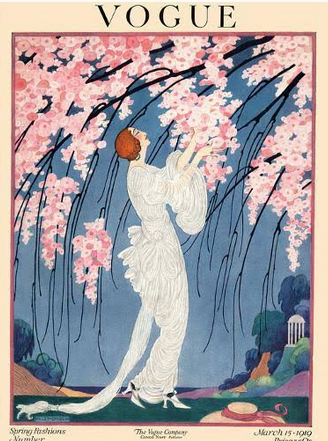
I wrote about Dryden in my post for Women’s History Month, so you can read about her life there and enjoy more of her Vogue covers here:
March 15, 1919
July 1, 1919
June 1, 1919
Thank you, Helen!
Coles Phillips.
Coles Phillips (Bain News Service, date unknown)
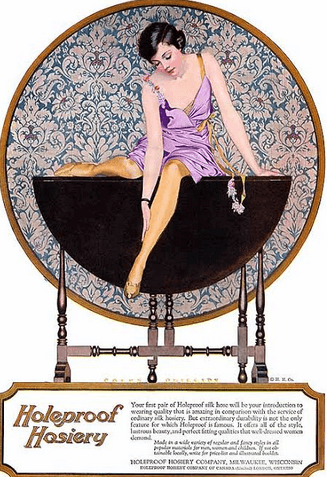
I first noticed Coles Phillips as the artist behind this haunting hosiery ad:
Ladies’ Home Journal, April 1919
He was born in Ohio in 1880, moved to New York after a few years at Kenyon college, took night classes in art for a few months, and soon established his own advertising agency, because that’s how life worked in 1919, for some people, anyway. Among his employees was the young Edward Hopper. He joined the staff of Life magazine in 1907 and drew his first “fadeaway girl” cover the next year.
May 21, 1908
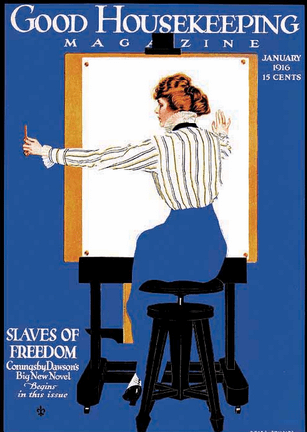
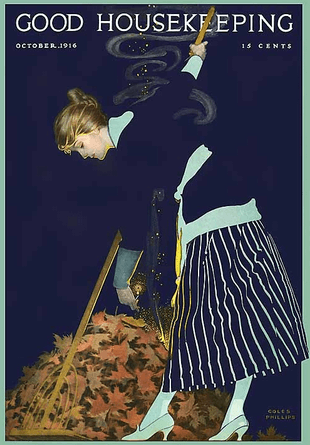
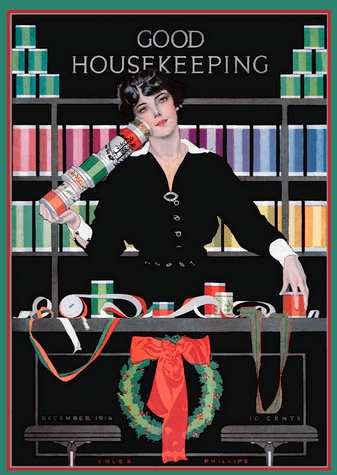
He repeated this technique on many subsequent covers of Life and other magazines, including Good Housekeeping, where he was the sole cover artist from 1912 to 1916.
January 1916
October 1916
December 1916
By 1919, though, he was focusing mostly on advertising, and specifically on women’s legs.****
Ladies’ Home Journal, October 1919
He contracted tuberculosis in 1924 and died of a kidney ailment in 1927, at the age of 46.
Thank you, Coles!
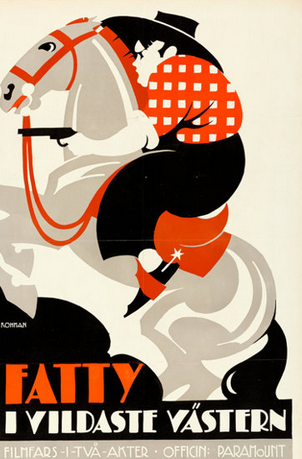
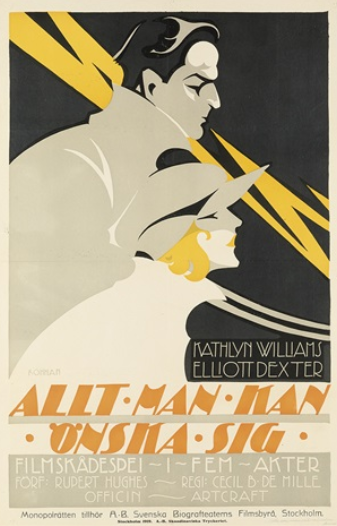
Eric Rohman
Remember Selma Lagerlöf, the Nobel Prize-winning Swedish author I wrote about in September? In the course of researching her life, I came across some amazing Swedish posters for silent films, some of them made from her books. Digging around, I discovered that most are the work of the incredibly prolific Eric Rohman.
Rohman was born in Sweden in 1891. He became an actor and illustrator in the mid-1910s and opened an art studio in about 1920, where he designed posters for Swedish and foreign films. By his own estimate, he produced 7000 posters over the course of his career. He died in 1949.
Here are some of my favorites:
Out West, 1918
Bound in Morocco, 1918
Komtesse Doddy (Countess Doddy), 1919
We Can’t Have Everything, 1918
Tack, Eric!
George Brandt
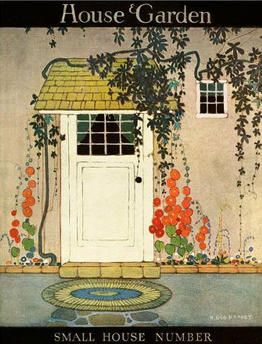
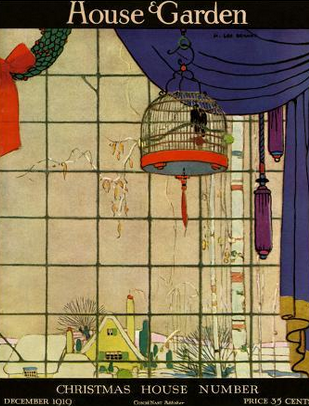
House & Garden is one of those 1919-era magazines that consistently punches above its weight in terms of cover art, but in an unassuming way, so it had never occurred to me to ask who the artists behind my favorite covers were.
One of them, I learned, is Henry George Brandt. (The other is Harry Richardson, but there is even less information available about him online than there is about Brandt, so Brandt it is.) Brandt was born in Germany in 1862, immigrated to the United States in 1882, and studied at the Art Institute of Chicago from 1911 to 1916. (Yes, in his fifties!) He was a painter and muralist as well as an illustrator. He died in Chicago in 1946.
Here are some of his House & Garden covers:
July 1919
September 1919
December 1919
Thank you, George!
9. Erté
Erté, date unknown
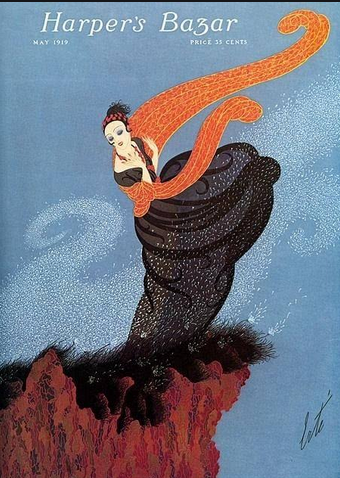
Erté is a repeat–he was one of the people I was thankful for last year. But you can’t talk about illustration in 1919 without talking about him. He was born in Russia in 1894 (real name Romain de Tirtoff–his father wanted him to be a naval officer and he adopted the pseudonym to avoid embarrassing his family*****). He moved to Paris as a young man and began a career as an illustrator and costume designer; Mata Hari was among his clients. Harper’s Bazar hired him in 1915; he would go on to illustrate over 200 covers for the magazine. He later went into theater, designing sets and costumes for ballets, revues, and films. He died in Paris in 1960.
I wasn’t able to find most of Erté’s 1919 Harper’s Bazar covers–they’re missing from Hathitrust, the most reliable source of online magazines, and few and far between on the internet. Here are two I was able to find:
March 1919
May 1919
Спасибо (and merci), Erté!
10. Norman Rockwell
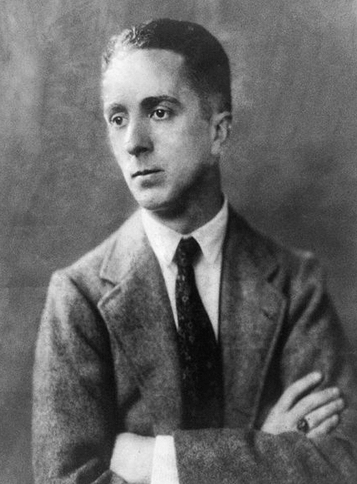
Portrait of Norman Rockwell, date unknown
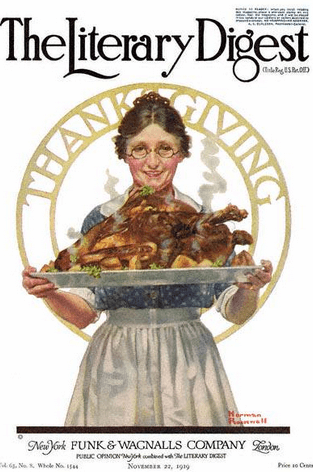
It wouldn’t be Thanksgiving without Norman Rockwell. In 1919, his iconic 1943 Thanksgiving picture Freedom from Want was still far in the future, but he did do a Thanksgiving cover for the November 22 issue of Literary Digest:
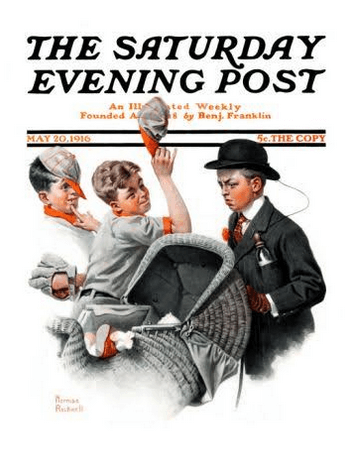
Rockwell is one of those people I was surprised to come across in the 1910s because he lived well into my lifetime. (Anthologist Louis Untermeyer and poet Marianne Moore are others.) And he was pretty young then, born in New York in 1894. An early bloomer, he became the art editor of Boy’s Life magazine at the age of 19. His first cover for the Saturday Evening Post appeared in May 1916;
322 others were to follow.
April 26, 1919
March 22, 1919
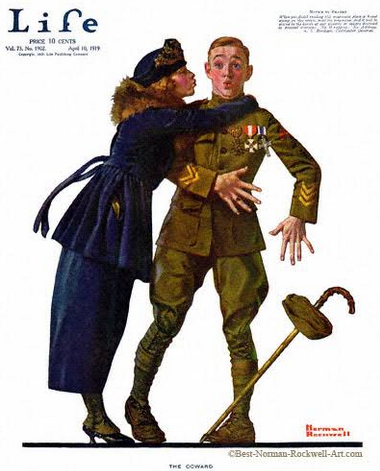
The humor magazines Life and Judge published some illustrations apparently deemed not wholesome enough for the Saturday Evening Post, like this one
By the time of his death in 1978, Rockwell was one of America’s most beloved artists.
Thank you, Norman!
And last but definitely not least, thanks to all of you who, over the past two years, have turned a personal project into a community. Happy Thanksgiving, everyone!
(UPDATE 11/30/2019: They had turkey–with cranberry sauce–at the work event. So I had my Thanksgiving dinner after all!)
*Although I wonder how many people were fooled into thinking that copying hieroglyphics was a real soldier job.
**They’re still under copyright, but there are lots of them posted online by less scrupulous people than me.
****UPDATE 12/3/2019: I originally included this ad, which I’d seen identified as being from 1919. I had my doubts, because it seemed too risqué for 1919, plus would Phillips really have been working for competing hosiery companies? But I was in a rush so I put it in. Turned out I was right: it’s from 1924.
*****No doubt unaware that it would gain him immortality as a crossword puzzle clue.
As I mentioned last week, I’ve been posting some of my favorite images from 1918 on Twitter while I regroup after spending 2018 reading as if I were living in 1918. Here’s this week’s batch.
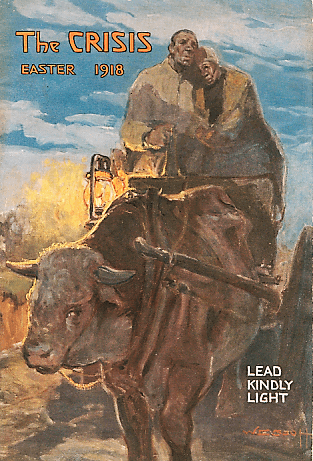
On Martin Luther King Day, I posted the April 1918 cover of The Crisis, featuring a painting by William Edouard Scott of a couple making their way to a new life in the north. The painting is now in the Huntington Museum of Art in West Virginia (although not currently on display).
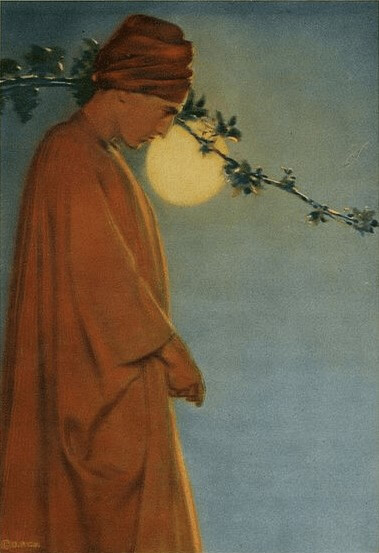
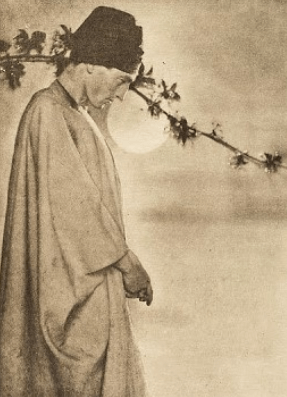
Poet George Sterling posed for this illustration in an edition of the Rubaiyat of Omar Khayyam featuring photographs by Adelaide Hanscom (later Leeson). The original 1905 edition was in black and white; the photographs were tinted in a 1914 reissue. I wrote about Sterling, who founded Carmel, California as an artists’ colony and was known as the “Uncrowned King of Bohemia,” here.
I’m intrigued by the short-haired, drop-waisted woman on the cover of the July 1918 issue of Vanity Fair. She looks like a time-traveling flapper from 1923. The artist is Georges Lepape.
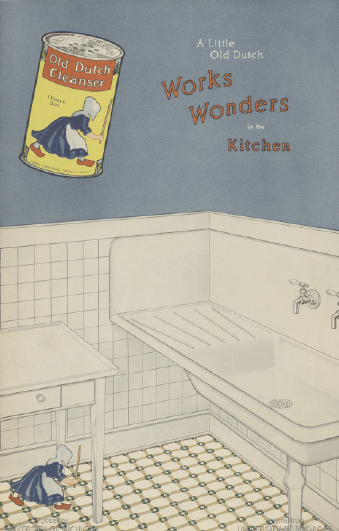
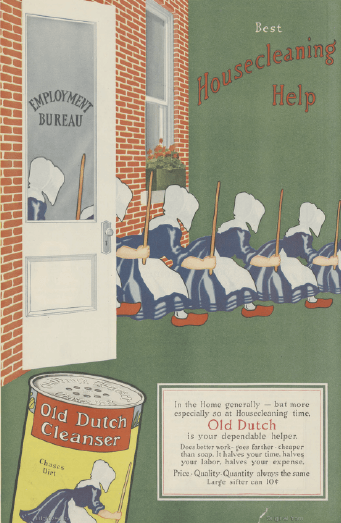
“Haunting” isn’t a word we typically associate with cleaning products, but I was haunted by the tiny cleaners in the Old Dutch Cleanser ads. Here are two of my favorites, from the February and May 1918 issues of the Ladies’ Home Journal.
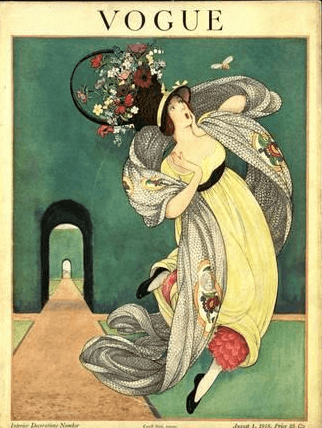
Women in 1918 were apparently easily startled by insects. This one’s from George Wolf Plank’s cover for the August 1 issue of Vogue.
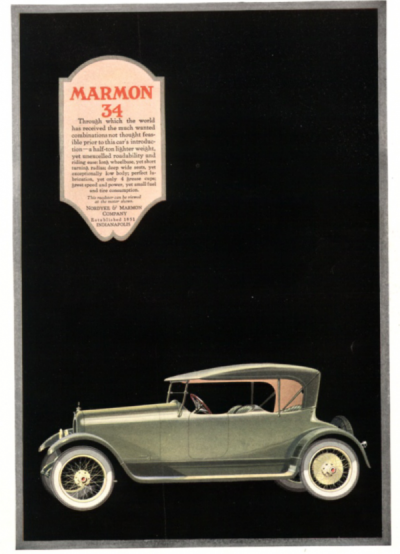
I’m not a car person, but I love 1918 cars (and car advertisements). The Marmon 34 set a coast-to-coast speed record in 1916: 5 days, 18 hours, 30 minutes. This ad is from the February 1918 issue of Harper’s Bazar.
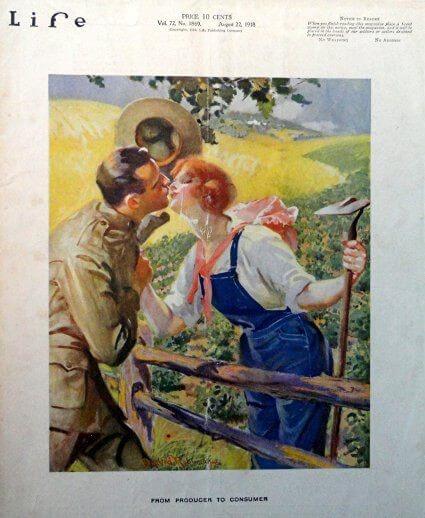
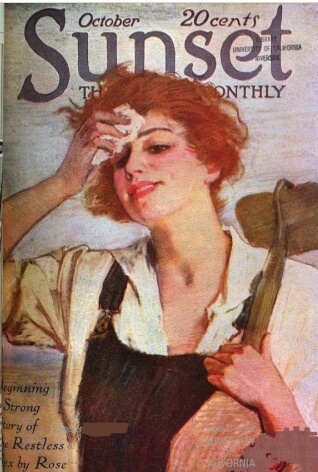
I found the word “farmerette” hilarious when I started my reading-in-1918 project, but now I see a picture of a woman in overalls and think, “Oh, a farmerette.” Italian-American painter Matteo Sandonà drew the farmerette on the Sunset cover; I couldn’t find the artist for the Life cover.
Maybe I’ll be ready to move on to 1919 soon. If not, there are lots more great pictures from 1918.







































































 My Life 100 Years Ago