Category Archives: Books

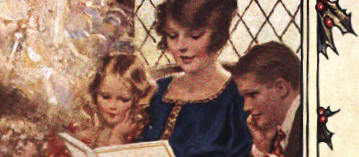
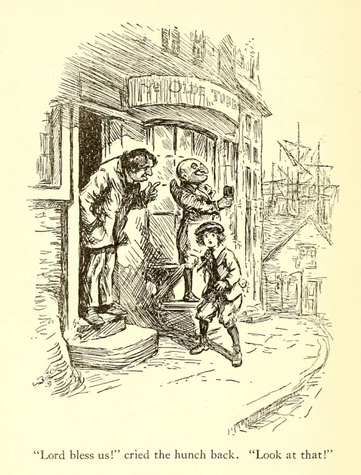
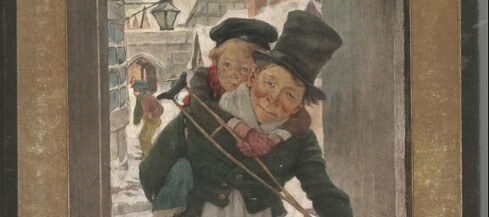
cropped photo from The Children of Dickens, 1925, Tiny Tim with crutch

Children’s Books: Your 1925 Holiday Guide

1925 is the best children’s book year ever!

Or a total washout!

New York Times headline, New Books for Children Herald The Holiday Season
New York Times, November 8, 1925

It depends on whether you believe the New York Times, whose anonymous critic tells us in its November 8 holiday children’s book roundup that “never since man began to make books, have there been so many and such beautiful books for young readers,” or The Outlook, where Edmund Pearson, writing in the November 11 issue, agrees about the abundance of beautiful books but adds, “but—and this is a perennial but—the number of juvenile books of merit is exceedingly small.”*
Headline, Outlook: The Book Table, Edited by Edmund Pearson
The Outlook, November 11, 1925

I had no choice, then but, to go through the books and make up my own mind, which I did with such excessive thoroughness that I’ve blasted right past Christmas. This might have stressed me out more, with seven on-time holiday children’s book roundups under my belt,** if I hadn’t heard the wise counsel, on the holiday episode of Caroline O’Donaghue’s*** podcast Sentimental Garbage, that we should stop stressing out about traditions and instead think of them as “things we like to do sometimes.” So, sometimes I like to post my children’s books holiday roundup in time for Christmas.

For the Youngest Readers
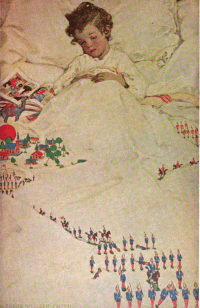
Jessie Willcox Smith, A Child’s Garden of Verses

There are always a lot of reissued classics by noted illustrators, and 1925 was no exception. The year’s crop includes A Child’s Garden of Verses, Robert Louis Stevenson’s 1885 collection, with illustrations by Jessie Willcox Smith. Smith’s black-and-white illustrations aren’t particularly memorable, and some of the poems
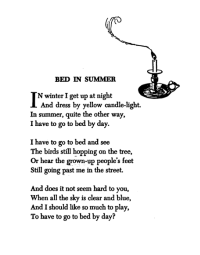
hold up better today than others,
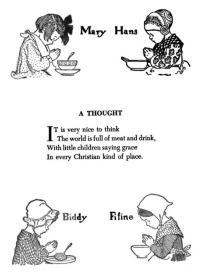
but Smith’s color plates do Stevenson’s poems justice.
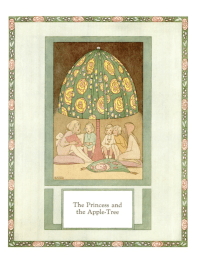
Henriette Willebeek LeMair, A Gallery of Children

A.A. Milne, who had a huge success with When We Were Very Young in 1924, is all over the place in 1925. A Gallery of Children is a collection of stories with illustrations by Henriette Willebeek LeMair. Pioneering children’s library Annie Carroll Moore**** tells us in an October roundup in The Bookman that Milne wrote the stories to go with the pictures rather than the other way around, and it shows. The pictures are, indeed wonderful, but the stories are a mixed bag.
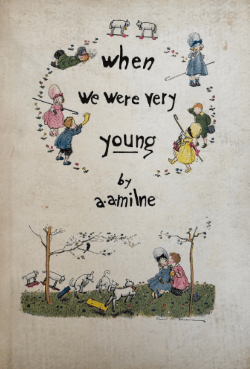
Cover illustration by E.H. Shepard

So if you’re going to go with Milne this season you might want to opt for When We Were Very Young, which is out in a new holiday edition, larger in size, and as Marcia Dalphin is all excited to tell us in a December holiday children’s book roundup in The Bookman, with a picture of Christopher Robin as a frontispiece. I couldn’t find the original edition, so I don’t know if the frontispiece wasn’t there in that one or if Dalphin just wasn’t paying attention back in 1924. So that we can all share in the excitement, here it is.

E.H. Shepard, When We Were Very Young

For Middle-Grade Readers

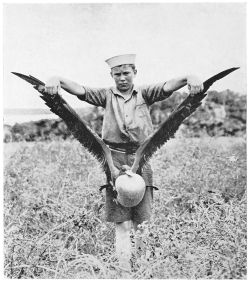
Photograph of David Binney Putnam, David Goes Voyaging

David Goes Voyaging, written by twelve-year-old David Binney Putnam, is the story of his experience as a cabin boy on the Arcturus expedition, a six-month-long journey to the Sargasso Sea and the Galapagos islands led by naturalist William Beebe. David’s age led me to suspect that he was yet another fake child author, but a look at the text convinced me that it was written by an actual twelve-year-old: “The writing took quite a long time, and I think being a naturalist would be more fun than being a writer. Anyway, my stories help me remember the fun we had on the Arcturus. I don’t see how it could have been much better.” David’s father was the promoter George Palmer Putnam, who married Amelia Earhardt in 1931, and David would go on to have a number of other adventures dreamed up by his publicity-hungry father.
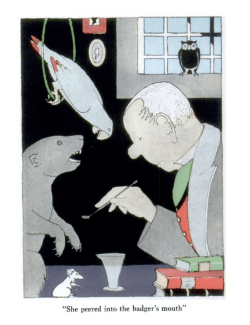
Hugh Lofting, Dr. Dolittle’s Zoo

At the beginning of Dr. Dolittle’s Zoo, written and illustrated by Hugh Lofting, Dr. D’s parrot Polynesia bemoans the addition of yet another installment to the series, the fifth since the publication of Dr. Dolittle in 1920. This one, about a cageless zoo where the animals can leave whenever they want, seems to be one of the more innocuous installments in the sometimes horribly racist series.
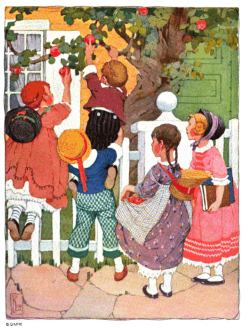
Gertrude A. Kay, Adventures in Our Street

Adventures in Our Street, written and illustrated by by Gertrude A. Kay starts promisingly with these endpapers,
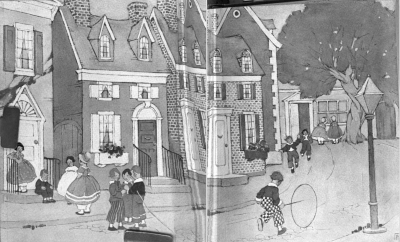
but the characters are all referred to by names like Two-Braids and the Door Slammer, which I took as a bad sign at first. The book turns out to be witty, though, as well as being beautifully illustrated. I even warmed up to some of the children’s epithets, especially The-Children-Who-Broke-All-Their-Toys-on-Christmas.

In Dorothy Canfield Fisher’s Made-to-Order Stories, it’s the author’s 10-year-old son Jimmy who’s giving the orders. He draws the line at fairies “because they’re foolish,” hates things that couldn’t possibly have happened, and despises stories that try to teach you something without your knowing it. Jimmy shows up at the beginning of each story, giving instructions, and again at the end, quibbling about plot holes. Jimmy went on to be an army surgeon in World War II and, sadly, died in the Philippines in 1945.
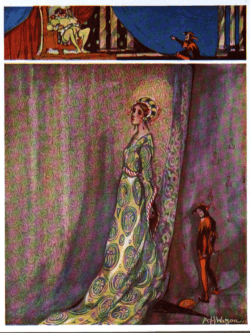
Illustration by A.H. Watson from “The Princess Who Could Not Laugh,” Number Three Joy Street

The Joy Street anthology series is coming off a rough year: Anticipating the third volume, Annie Carroll Moore says in her Bookman roundup that Number Two was “so disappointing to children that we reluctantly withhold our recommendation until we have sampled its contents with children under ten years old.” I checked out one story in Number Three Joy Street, “The Princess Who Could Not Laugh” by, you guessed it, A.A. Milne. What finally made the princess laugh was someone slipping on a plate of butter. Not being a fan of slapstick, I’m withholding my recommendation too.
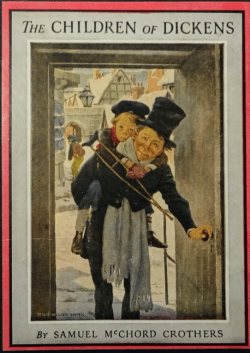
Jessie Willcox Smith

Reading The Children of Dickens by Samuel McChord Crothers is like being stuck next to someone at a dinner party who insists on recounting the plots of one Dickens novel after another. Jessie Willcox Smith contributes charming illustrations, though.
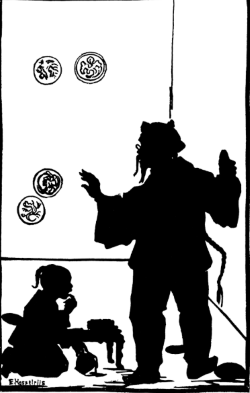
Else Hassleriis, Shen of the Sea

Shen of the Sea by Arthur Bowie Chrisman is the year’s Newbery Medal winner, but I had a hard time getting into it. People say “honorable” a lot. The author of a post on the book on the blog Orange Swan, who had more perseverance than I did, called both Chrisman’s stories and Else Hassleriis’s illustrations “faux Chinese” and noted that Chrisman had never visited China.
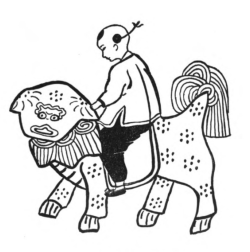
Ling Jui Tang, “The Rabbit Lantern”

The Rabbit Lantern, a collection of stories about Chinese children, didn’t appear in any reviews, let alone win a Newbery—I spotted it in an ad alongside the roundup in The Outlook. Author Margaret Rowe and illustrator Ling Jui Tang have way better China credentials than Chrisman, though. Rowe grew up in China, the daughter of missionaries, and Ling Jui Tang, according to the ad, was Chinese. I’m not qualified to judge the tales’ authenticity, but the book’s a lot livelier than Shen of the Sea.*****
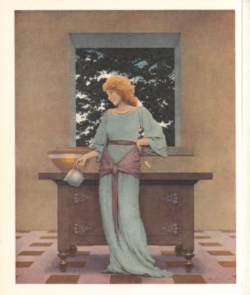
Maxfield Parish, The Knave of Hearts

“Worth all it costs,” the Independent’s D.R. tells us of Louise Saunders’ The Knave of Hearts, with illustrations by Maxfield Parrish. Someone tore out the part of the page where the price was listed, though, so I don’t know how much that is. The illustrations by Parrish make up for the text, which is in the form of a long, tedious play.
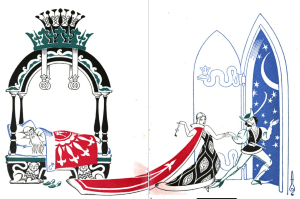
Boris Artzybasheff, The Forge in the Forest

Marcia Dalphin tells us in The Bookman that The Forge in the Forest by Padraic Colum is “a book with a fine stirring atmosphere in it, and the stroke of iron and iron.” Alice M. Jordan tells us in the Independent that Boris Artzybasheff’s illustrations have “a half-barbaric quality.” My brain can’t absorb another folk tale at this point, so I’ll take their word for it.

For Older Readers

Dalphin comments that, for older children, “stories of distinction are hard to come by”—a problem I’ve observed year after year in this age group. There are a number of re-illustrated classics on offer, including James Fenimore Cooper’s The Deerslayer, with illustrations by N.C. Wyeth,
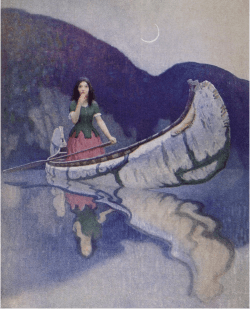
N.C. Wyeth, The Deerslayer

an abridged edition of Victor Hugo’s Les Miserables, with illustrations by Mead Schaeffer,
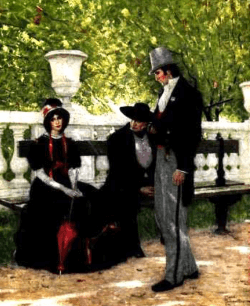
Mead Schaeffer, Les Miserables

and Lewis Carroll’s Alice’s Adventures in Wonderland, with illustrations by Arthur Rackham.
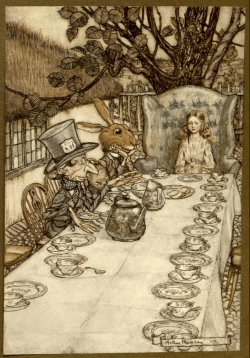
Arthur Rackham, Alice’s Adventures in Wonderland

The Flying Carpet, an anthology of poems and stories by noted writers, has been getting a lot of buzz. Contributors include Thomas Hardy, with just a short poem at the beginning, and, again, A.A. Milne, with a poem that will appear in his 1927 collection Now We Are Six.
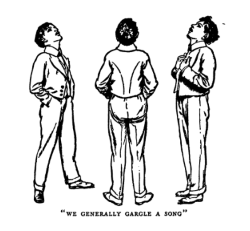
Illustration from “Neil and Tintinnabulum,” The Flying Carpet

The highlight for me, though, is a story by Peter Pan author James M. Barrie called “Neil and Tintinnabulum,” about a seven-year-old boy who’s sent off to boarding school. Barrie tells it in a meta way, saying at one point of a plot twist, “The situation is probably unparalleled in fiction.”
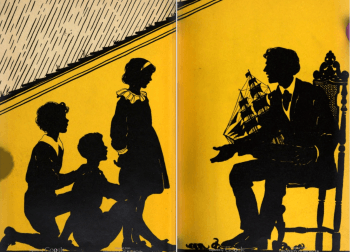
Edith Ballinger, Rain on the Roof

Every year I check out the latest Cornelia Meigs book, and every year I regret it. Rain on the Roof starts out with, yes, rain, and then the sun comes out, and then there’s a swallow, and…I’m done. The endpapers are cool, though.
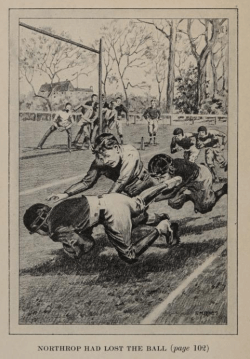
Frank M. Rines, Friends and Rivals

Alice M. Jordan, writing in the Independent, has this generic praise for Friends and Rivals by Arthur Stanwood Pier: “A real story with real characters.” After initially thinking, “Wait, isn’t that the gay hockey show?” (no, that’s Heated Rivalry), I checked it out and found myself getting into the story, about a sickly young man with a coddling mother who goes to boarding school and presumably—I didn’t get that far—joins the football team.
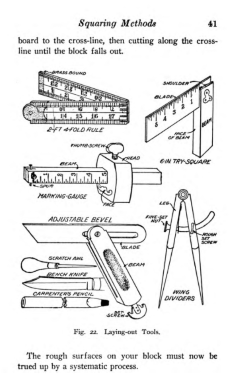
Chelsea Fraser, The Practical Book of Home Repairs

For the mechanically minded, there’s The Practical Book of Home Repairs by Chelsea Fraser, which Edmund Pearson, writing in The Outlook, calls “a severely practical volume” for boys and men. If the young person in your life is into soldering and repairing the water supply, this is just the thing.
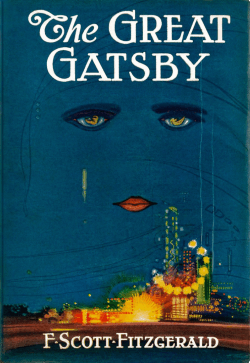
Cover illustration by Francis Cugat

If not, how about giving your young friend a book full of love and parties and heartbreak and jazz and flowing white dresses? It got so-so reviews, but trust me on this one.

For All Ages
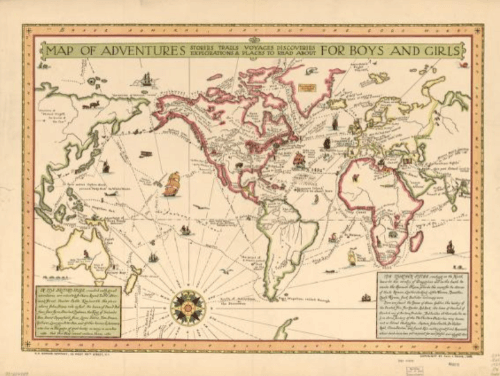
World Map of Adventures for Boys and Girls

If you can’t choose just one book, this Map of Adventures for Boys and Girls features 150 fictional and real-life adventures from children’s books throughout the ages. It is, Library Journal tells us, available free of charge from the Syracuse Public Library. Many of the adventures don’t hold up to contemporary sensibilities, but as an illustrated guide to the history of children’s reading it’s a marvel.

The Verdict

I have to say that I agree with Pearson that the number of children’s books of genuine merit published in 1925 is small. It’s an era of brilliant illustrators, and of advances in printing technology that allow for numerous color pages in vivid hues. With a few exceptions, though, it’s not an age of brilliant children’s writers. There aren’t any new books on this list that children are still reading today. But that’s not unusual—most years don’t give us a children’s book that will stand the test of time.

Some years do, of course—stay tuned for 1926!
*Pearson, a librarian and true-crime writer best known for a book about the Lizzie Borden case, does not seem to have been in a particularly good mood when he wrote the Outlook column. It ends with this writeup of The Fat of the Cat, and Other Stories by Gottfried Keller, translated by Louis Untermeyer: “My informant told me that it was one of the very best books of the season. I pass this information on for those who like to read about cats. I don’t. In my opinion, there are only two good cats in literature; one of them is in ‘Huckleberry Finn’ and the other is in ‘Penrod:’ one is dead and one is down a well.”

**Granted, sometimes it was down to the wire—last year’s roundup appeared on Christmas night.

***O’Donaghue is also the author of The Rachel Incident, one of my favorites of the books I read this year—high praise since this was one of my best reading years ever.

****Annie Carroll Moore, whose first name was actually Annie, officially changed it to Anne in her fifties to avoid confusion with another woman named Annie Moore who, what are the odds, was also writing about children’s libraries. Personally, I think she should have gotten dibs on Annie, having basically invented the profession of children’s librarian. In any case, she’ll always be Annie to me.

*****Rowe later ended up in a tragic love triangle involving her husband, who was a curator of Asian art, and a visiting linguist who, according to an account of the affair in the New York Times, was beguiled by the “Orientalism” of the Marches’ Detroit home.

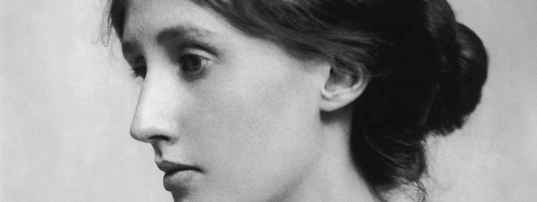
Crop of photo of Virginia Woolf

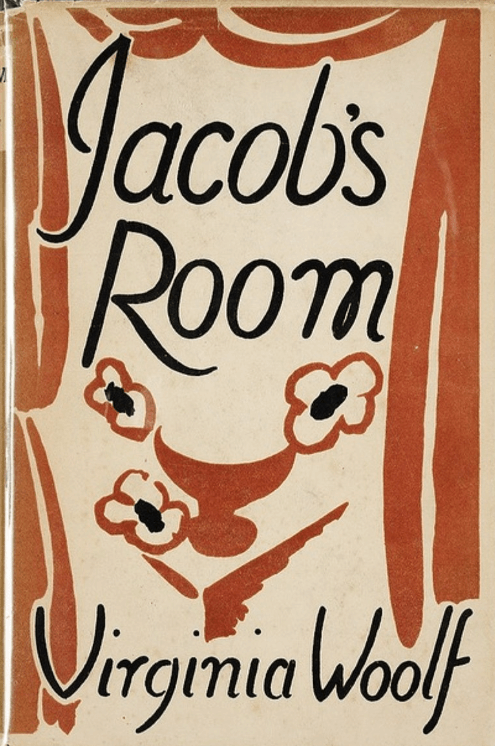
Virginia Woolf, Jacob’s Room, and Literary Beefs

I realize that it’s unreasonable to sign up for the annual meeting of the International T.S. Eliot Society, followed immediately by the T.S. Eliot International Summer School, and complain that people talk about T.S. Eliot too much. I became a member of the T.S. Eliot community in a roundabout way, though, my lifelong but low-key interest in his poetry having being reinvigorated when I encountered his early poems and criticism in “real time” during my year of reading as if I were living in 1918. The society’s annual meetings were online during COVID, which seemed like a low-investment way to dip my toe into Eliot studies. Next thing I knew, I was attending the 2022 summer school in London, followed by in-person conferences in Cambridge, Massachusetts, and St. Louis, Missouri. In real life, I’m way more interested in Eliot than anyone else I know (as my loved ones occasionally gently remind me), but the Eliot community is, to put it mildly, not real life. Sometimes, a few days into a conference, I walk into a room, hear it buzzing with, “T.S. Eliot, T.S. Eliot, T.S. Eliot,” and think that there must be more to life.*

T.S. Eliot and Virginia Woolf (Lady Ottoline Morrell, 1924), National Portrait Gallery

I was excited, then, to see that among the the seminars on offer at this year’s summer school, which is taking place this week at Merton College, Oxford, was one on Eliot and Virginia Woolf. As an added bonus, it was taught by one of the most interesting and fun young Eliot scholars (a surprisingly competitive category). I’ve always had a vague interest in Woolf. I read To the Lighthouse for AP English in high school, read her first novel, The Voyage Out, as part of this project, read her essay “Mr. Bennett and Mrs. Brown” twice in recent years for reasons I can’t remember, and read her long feminist essay “A Room of One’s Own” somewhere along the way. (Recently I realized, aghast, that I have never actually read Mrs. Dalloway.) I wanted to read more of Woolf’s work, but I needed a kick in the pants, which I got with this seminar: the main texts were Eliot’s The Waste Land and Woolf’s Jacob’s Room, both published in 1922.

Trinity College, Dublin

Fate had other ideas, though. The morning after I arrived in Dublin, a few days early for the annual meeting at Trinity College, I woke up with a fever and tested positive for COVID. This entailed five days of isolation in my dorm room, followed by a period of mask-wearing and avoiding people, putting the kibosh on both the conference and summer school. I cancelled my travel to the UK and stayed on in Dublin **

Merton College, Oxford, sigh (Jonas Magnus Lystad, Wikimedia Commons)

For the Woolf-Eliot seminar, we had been assigned a final project that could be anything. Since mine was this, and I didn’t exactly have an action-packed schedule in Dublin, I figured I’d go ahead and do it anyway.

I decided to skip Eliot for this project*** and focus on Jacob’s Room, Woolf’s third novel—specifically, on the reviews that it received following its publication in 1922 in the UK and 1923 in the United States.

Vanessa Bell

Jacob’s Room is generally considered Woolf’s first fully experimental novel. It’s the story of Jacob, a young man from an upper-class but down-on-its-luck family who’s intellectual but not, from what I gather, all that smart. He basically thinks everything after Shakespeare is trash. Also, he’s rude to waiters. Everyone is fascinated by him, though, which led me to assume that he’s extremely good-looking. His fan base includes (naturally) his mom, a widow living in the seaside town of Scarborough; Clare, an upper-class woman who seems like appropriate wife material (her thoughts about him are along these lines: “Jacob! Jacob!”), Bonamy, a Cambridge classmate who’s in love with him (he also thinks, “Jacob! Jacob!” a lot), and several women who skirt the line between girlfriend and sex worker.

We mostly see Jacob through the eyes of these people and others. The reviews state that there’s little from Jacob’s point of view, but that’s not quite true: we see his thoughts, for example, on a sailing trip off Cornwall and on a solo tour of Italy and Greece where he experiences a (to this current solo traveler very relatable) mix of elation and existential angst.

Nothing much happens. Jacob finds a sheep’s jaw in Scarborough as a boy. He goes to Cambridge. He moves to London, works at a vaguely described office job, hangs out with his friends and in society, writes intellectual essays that don’t get published, and travels. In the last two pages, we learn obliquely that he has died in the war.

In between all this, there is a lot of description of whatever happens to be going on around Jacob—London traffic, the musings of random people, and the play of light on water. To give you a sense of it, I picked a random passage, which comes after Woolf informs us that little paper flowers in finger bowls are all the rage:

It must not be thought, though, that they ousted the flowers of nature. Roses, lilies, carnations in particular, looked over the rims of vases and surveyed the bright lives and swift dooms of their artificial relations. Mr Stuart Ormond made this very observation; and charming it was thought; and Kitty Kraster married him on the strength of it six months later. But real flowers can never be dispensed with. If they could, human life would be a different affair altogether. For flowers fade; chrysanthemums are the worst; perfect over night; yellow and jaded the next morning—not fit to be seen.

Trinity College, Dublin

This is a perfect example of what Woolf’s doing here. In the middle of all the flower description, she throws in what could be a whole novel itself about two people who we never hear about again. (And who, by the way, typify one of my pet peeves about people in novels—and, presumably, real life—from 100 years ago: their hasty and uninformed choices of marriage partners.)

But imagine 182 solid pages of this. That high a concentration of brilliance can get exhausting, and it’s possible, as you read, to simultaneously think “Virginia Woolf is a genius” and “if I have to read one more page, I’m going to die.”

International Book Review, Literary Digest, February 1923

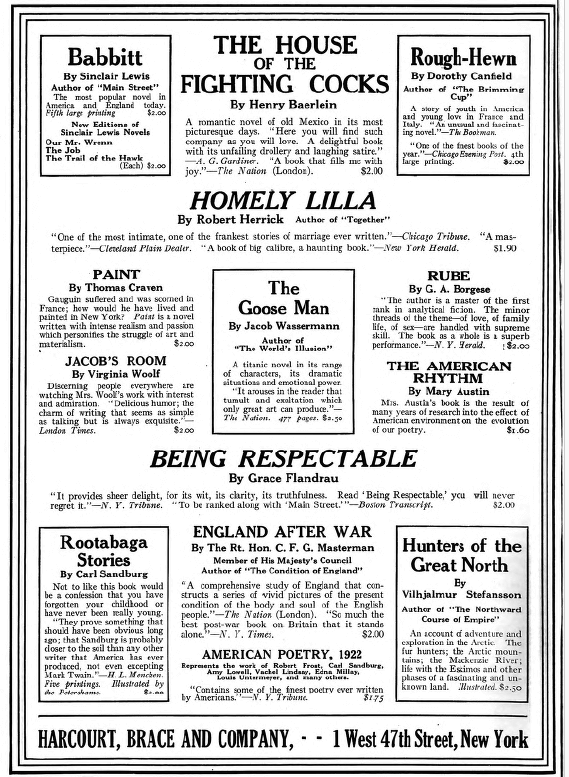
I was curious about what reviewers 100 years ago made of all this. Jacob’s Room was reviewed widely considering its small print run (1,200 copies from the Hogarth Press, which Woolf and her husband owned, followed by a second impression of about 2,000 copies, and, in the United States, 1,500 copies from Harcourt Brace). The 1923 edition of Book Review Digest includes excerpts from reviews of Jacob’s Room in a number of American publications, including The Boston Transcript, The New York World, The New York Times, The Springfield (Massachusetts) Review,**** Booklist, The Dial, Freeman, The Independent, and The International Book Review, a Literary Digest supplement. It also lists UK reviews, mostly from 1922, in The Spectator, The Saturday Review, The Times Literary Supplement, and The New Statesman.

I expected to sit on my born-into-a-world-where-modernism-already-existed perch and scoff at the reviews, which I assumed would be along the lines of the article in the first issue of Time magazine speculating that The Waste Land was a hoax. On the whole, though, they were quite positive, especially the ones in American publications.

David Garnett (Lady Ottoline Morrell, 1920)

In the case of the first review I read, in the modernist journal The Dial, this was not much of a surprise, since the reviewer, David Garnett,***** was a fellow member of the Bloomsbury Group. “Virginia Woolf seems to be the most interesting of the younger writers now living as well as the best of them,” he writes about his friend. He compares Jacob’s Room favorably with James Joyce’s Ulysses, also published in 1922, saying that “it is the things from which mankind instinctively turns away that Mr Joyce delights to write about” while Woolf is “the kind of butterfly that stoops only at the flowers.” He does have one critique: “The book would be better if not quite so many pictures were called up; with all its beauty it is a little bit too much like fire, or like a very amusing person’s memory of life.”

New York Times, March 4, 1923

The New York Times included Jacob’s Room in a March 4, 1923, fiction roundup. The anonymous reviewer writes that, though the book is composed of mostly minor events, “it is the manner in which these things are revealed that makes the book of importance, at least as an example of what the younger rebels are doing in England.” The review says of the book’s style that “at first one is uneasily aware of Miss Woolf’s bizarre qualities as a writer of prose, but after one has progressed a way in the book this consciousness rather vanishes.” It wraps up by placing Woolf among a cohort of talented British women writers, none of whom, aside from May Sinclair, I have ever heard of,****** saying, “Her influence is one that modern England needs.”

Some more praise from across the Atlantic:

M.M. Colum in The Freeman: Woolf “shows herself to be possessed of one of the most entertaining minds among contemporary writers—witty, subtle, and ironic.”

H.W. Boynton in The Independent: Woolf’s “air of ironic detachment does not conceal a very warm concern in human affairs. Jacob’s Room, her new study of youth, is full of tenderness, though empty of the facile sentiment often confounded with tenderness.”

Mary Graham Bonner in the Literary Digest International Book Review: “A strangely beautiful book is Jacob’s Room, and the author, Virginia Woolf, has given us many a flash of genius here.”

This was an improvement over the reviews Jacob’s Room had received back home. Rebecca West wrote in the November 22, 1922, issue of the New Statesman that “Mrs. Woolf has once again provided us with a demonstration that she is at once a negligible novelist and a supremely important writer.” Gerald Gould wrote in the November 11, 1922, issue of the Saturday Review that “Mrs. Woolf has written something wholly interesting and partly beautiful. It is at once irritating and encouraging to reflect how much better she would do if her art were less self-conscious.”

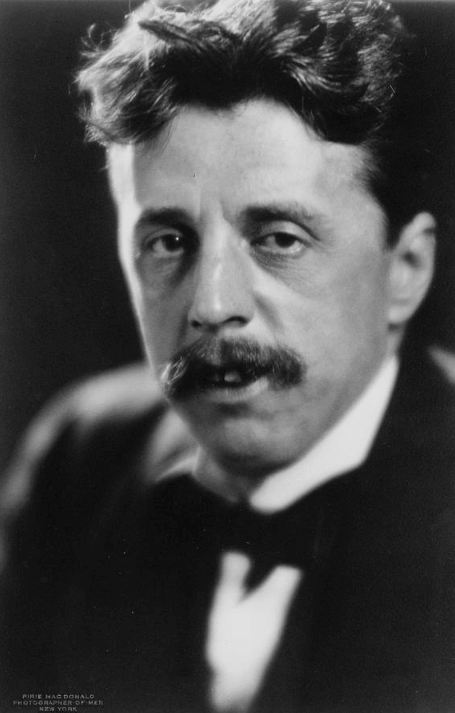
Arnold Bennett, ca. 1920 (Pirie MacDonald)

Then there’s novelist Arnold Bennett, whose feud with Woolf had the rancor and longevity of a rap beef. First, in the essay “Modern Fiction,” which was published in the Times Literary Supplement on April 10, 1919, Woolf wrote about Bennett, H.G. Wells,******* and John Galsworthy that “it is because they are concerned not with the spirit but with the body that they have disappointed us, and left us with the feeling that the sooner English fiction turns its back upon them, as politely as may be, and marches, if only into the desert, the better for its soul.” Of the three writers, she writes, “Mr. Bennett is perhaps the worst culprit of the three.” She asks about his characters, “How do they live, and what do they live for?”

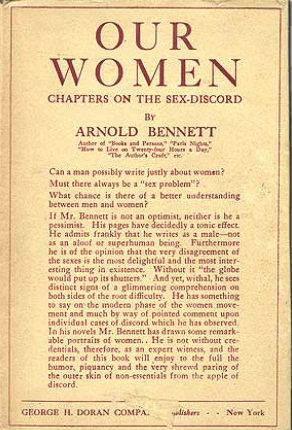
Then Bennett wrote a book called Our Women: Chapters on the Sex-Discord. The title alone is enough to tell you where this is going, but here’s a passage from the chapter on women writers:

The literature of the world can show at least fifty male poets greater than any woman poet. Indeed, the women poets who have reached even second rank are exceedingly few – perhaps not more than half a dozen. With the possible exception of Emily Bronte no woman novelist has yet produced a novel to equal the great novels of men. (One may be enthusiastic for Jane Austen without putting Pride and Prejudice in the same category with Anna Karenina or The Woodlanders.)********

Woolf, according to the introduction in the Oxford World’s Classics edition of Jacob’s Room, wrote “spirited letters to the New Statesman” in response to this while on a break from writing Jacob’s Room. Then she went a step further and put Bennett in the novel: “For example, there is Mr [John] Masefield, there is Mr Bennett. Stuff them into the flame of Marlow and burn them to cinders. Let not a shred remain. Don’t palter with the second rate. Detest your own age. Build a better one.”

Granted, Jacob, whose consciousness this is streaming through, is being a twit here, but if you’re Arnold Bennet you might not appreciate this fine point, given the whole “burn them to cinders” thing.

Bennett’s next step: An essay in the March 28, 1923, issue of Cassell’s Weekly called “Is the Novel Decaying? The Work of the Young,” in which he says,

I have seldom read a cleverer book than Virginia Woolf’s ‘Jacob’s Room,’ a novel which has made a great stir in a small world. It is packed and bursting with originality, and it is exquisitely written. But the characters do not vitally survive in the mind because the author has been obsessed by details of originality and cleverness.

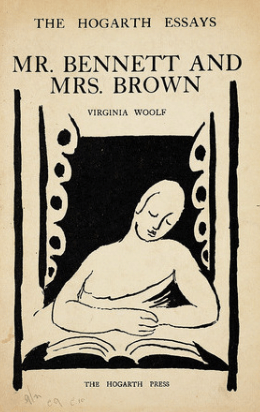
Cover of Mr. Bennett and Mrs. Brown, illustration of woman reading
Vanessa Bell

Woolf’s response to this was the aforementioned “Mr. Bennett and Mrs. Brown.” It was first published in the Nation and Atheneum, a British weekly, on December 1, 1923, then in expanded form under the title “Character and Fiction” in the July 1924 issue of The Criterion in response to a request for an article by (full circle!) editor T.S. Eliot, then as a stand-alone publication by the Hogarth Press.

I’m not going to try to do justice to “Mr. Bennett and Mrs. Brown” here. It’s one of the greatest literary essays of all time, a clarion call for modernism. It’s also one of the all-time great literary put-downs. If this is a rap beef, then Bennett is Drake, Woolf is Kendrick Lamar, and “Mr. Bennett and Mrs. Brown” is “Not Like Us.” Except that in a hundred years people will remember Drake, and, if people remember Arnold Bennett today, it’s probably because of “Mr. Bennett and Mrs. Brown.”

We could leave things here, with Woolf triumphant.

Except…

Except that Woolf, while a brilliant writer and a defining figure in feminism (with the even more famous essay “A Room of One’s Own” to come in 1929), was also a snob and a horrible racist.

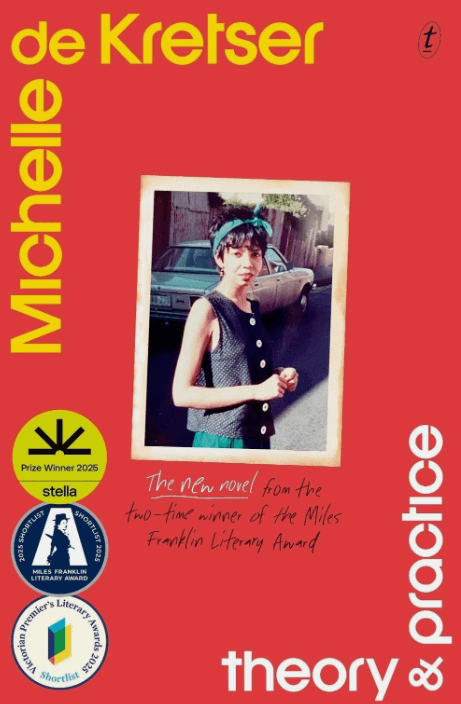
Cover of Theory & Practice by Michelle de Kretser, photo of De Kretser as a young woman on red background

How should we think about this when we’re assessing Woolf’s work? Luckily, I don’t have to answer this question. Instead, I can point you to a wonderful novel about this very issue: Theory & Practice, by the Australian writer Michelle de Kretser. I bought it during a recent trip to Sydney, but it’s available worldwide and was reviewed in the New York Times in February. De Kretser’s heroine is a Sri Lanka-born graduate student in Melbourne in the 1980s, studying Woolf’s diaries as critical theory is taking over English departments at her university and elsewhere. (She’s referred to once late in the novel as Cindy, but I thought of her as “Michelle de Kretser,” which I don’t think is too unfair seeing as that’s a photo of De Kretser as a young woman on the cover of the Australian edition.) Then she comes across Woolf’s racist description of a key figure in Sri Lanka’s struggle against colonialism, but none of the theorists she’s surrounded by think this is important. The novel’s about loving Woolf, and about responding to the flaws of your literary heroes, but it’s also about being young, and going to parties in ramshackle group houses, and the stupid choices you make about love when you’re in your twenties. If that sounds like your thing (and I can’t think of anything that’s more my thing than all this), you should read it.

Jacob’s Room is brilliant, too, and, if I didn’t devour it the way I did Theory & Practice, I’m grateful to have been spurred to read it.

Now I need to get someone to make me read Mrs. Dalloway.

*Obviously, I AM very interested in T.S. Eliot or I wouldn’t do this to myself. But it’s like when I was a full-time Lao language student for ten months at the Foreign Service Institute. FSI is like a high school full of overaged students who are studying just one subject, with schedules along these lines: First period, Lao conversation. Second period, Lao grammar. Third period, Lao reading. Lunch. Fourth period, Lao grammar again. Fifth period, Lao reading again. On Wednesday afternoons they’d spring us for area studies, where we’d study Laos, along with Thailand and Burma. I loved it, but I’d often think, “Can’t we study something else for a change, like Japanese, or the parts of a cell?”

**Having, and recovering from, COVID in Dublin has been way more fun than you’d imagine. I Zoomed in to a seminar on Eliot and translation during the annual meeting, and it was awesome. After a few days of isolation I got the OK from a telehealth doctor to walk outside with a mask. There was a concert series going on that I could hear pretty clearly from my room. One night, the band started singing, “hip hip,” and I thought, oh, they’re covering that Weezer song, and I looked up the program and it ACTUALLY WAS Weezer.

***I haven’t been completely neglecting Eliot. I did my translation seminar paper on a 1992 translation of The Waste Land into Afrikaans.

****The inclusion of The Springfield Republican in the small selection of newspapers The Book Review Digest compiles review from is one of those 100-years-ago mysteries.

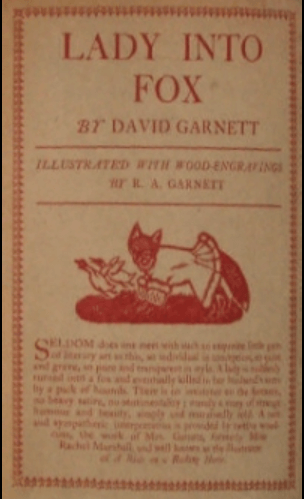
*****Garnett is the author of the 1922 novel Lady Into Fox, which I read for my 1920s bestseller book group, and which actually is about a lady who turns into a fox.

Cover, Lady into Fox by David Garnett. Woodcut of a fox.

******Here they are: Sheila Kaye-Smith, Mary Butts, Ethel Colburne Mayne, F. Tennyson Jesse (which sounds like the name on a fake Facebook friend request and turns out to be a pseudonym), and Elinor Mordaunt.

*******Further ramping up the interpersonal drama, West had a son with H.G. Wells. As I noted in my post on West’s novel The Return of the Soldier, they made some highly debatable child-rearing decisions, including telling him for years that they were his aunt and uncle.

********As fellow blogger Stuck in a Book wrote,  “Who on earth would pick The Woodlanders as their ammunition in favour of Thomas Hardy??”

Children’s Books: Your 1924 Holiday Shopping Guide

Welcome to the sixth annual children’s books holiday shopping guide! I’ve just arrived in Cape Town from Washington, D.C., as I do at this time every year.* This year, determined to avoid a repetition of last year’s kind of pathetic effort, I got an earlier start. The problem was, I couldn’t stop myself from reading just one more 1924 roundup, or looking up just one more book, so here I am on Christmas Eve afternoon in full Bird by Bird mode.

The Bookman, October 1924

This year, as always, pioneering children’s librarian Annie Carroll Moore** is my principal guide. And, as always, she’s kind of annoying. In her article in the May 1924 issue of The Bookman, she’s supposedly having a conversation with a young writer who’s published two children’s books and isn’t sure whether he should continue. Her reply, supposedly, is the whole rest of the article, with quotation marks and everything. If this were a real conversation, he’d be extremely sorry that he asked. Skip the framing device, Annie! Just tell us about the books! Luckily, in her October article, she writes more or less like a normal person.

The October issue of The Bookman also has an article by Louise Hunting Seaman about giving books to children, with lots of cool examples of how to do it without looking like you’re giving them a homework assignment. You could, for example, give them a real Italian puppet*** holding a copy of Pinocchio or give them Padraic Colum’s The Island of the Mighty, a tale of Celtic Britain, and take them to the Hall of Armor at the Metropolitan Museum (although, as noted below, I’m not so gung-ho on The Island of the Mighty.)

New York Times, December 7, 1924

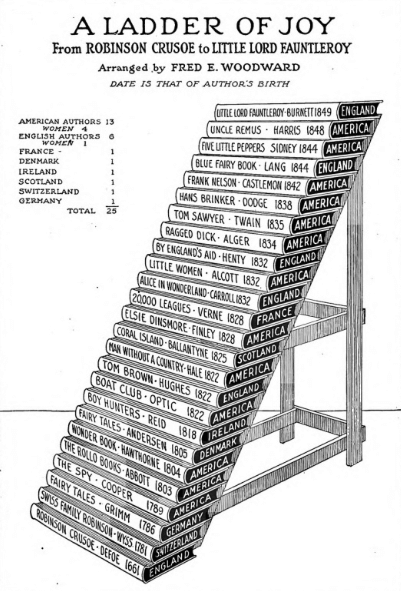
The New York Times weighs in on the children’s books of the season in the December 7 issue,**** the Library Journal give us a comprehensive list “designed merely for the convenience of children’s librarians in checking the fall and winter output” (not realizing that it might come in handy for bloggers a hundred years in the future too), and St. Nicholas’s November issue has a list of books for children that turn out to all be really old, but that’s OK with me because it’s accompanied by this cool graphic by one of my favorite 100-year-ago people, infographics pioneer Fred Woodward.

Fred Woodward, St. Nicholas, November 1924

So plenty to work with, even with Publisher’s Weekly’s excellent roundup sadly having bitten the dust in 1922 and HathiTrust, my main source of 100-year-old books and magazines, infuriatingly having blocked access to a lot of books outside the U.S. for copyright reasons.*****

Fairy Tales, Nursery Rhymes, and Folk Tales

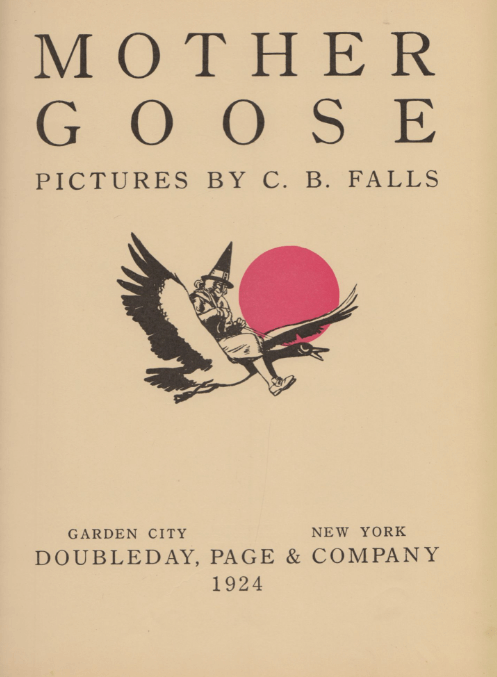
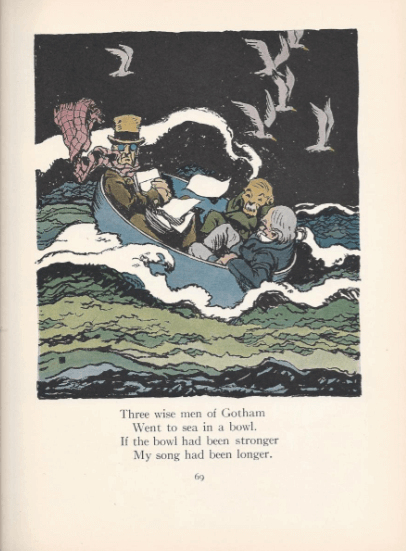
I was a fan of C.B. Falls’ 1923 offering The A B C Book, but I’m meh on his Mother Goose, as is Moore, who says, ““It is a book of distinguished appearance, but something highly important to little children is missing from its pictures—the quality that, differentiating Mother Goose characters from all others, makes them live again in a new way of their own.” The three men in the illustration of “Three Wise Men of Gotham” are, she points out, “easily recognizable as Wilson, Lloyd George, and Clemenceau.” I wasn’t familiar with this particular nursery rhyme, which turns out to be pretty horrifying.******

For Young Children

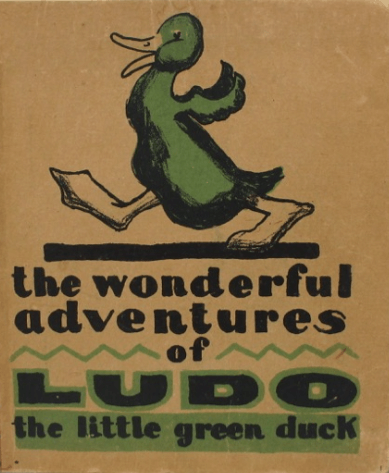
Moore praised Jack Roberts’ The Wonderful Adventures of Ludo the Little Green Duck, saying, “It’s gay, it’s fresh, and it’s different,” and adding, “It captured my imagination at a psychological moment, for the dummy came into my office on the last day of the Democratic Convention in Madison Square Garden.” I’m not sure what that means, but, hey, we’re all at a psychological moment, right? This was one of the books that was blocked by HathiTrust, but Ludo’s adventures take him around the world, and “around the world” plus “1924” generally equals “racist.” The online images I was able to find seemed to bear this out. (That’s Ludo in the Bookman headline with some of his new friends.)

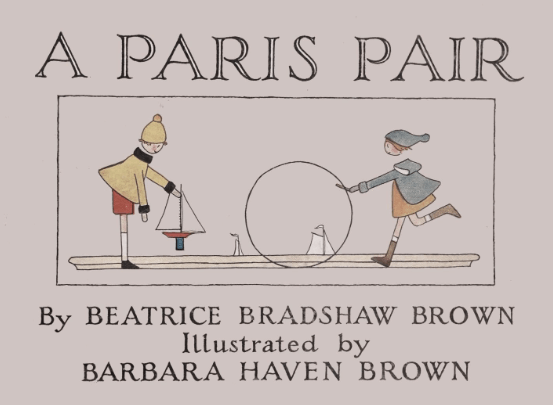
A Paris Pair: Their Day’s Doings by Beatrice Bradshaw Brown is, according to Moore, a “delightful, inexpensive book” that features “a clever verse in English for each hour in the day of two French children.” I did in fact find it pretty delightful, although going to the Louvre EVERY day sounds pretty exhausting. Here’s lunchtime:

LUNCHEON never comes too soon,
For we are nearly starved at noon!
Spinach and an omelette,
Salad, too, and better yet
Delicious jam with creamy cheese—
A dish that’s very sure to please!
Becoming gratitude they feel,
And thank le bon Dieu for their meal

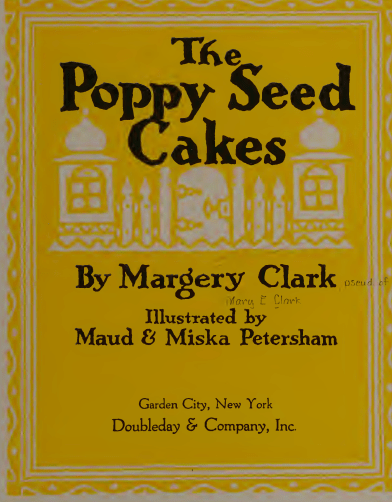
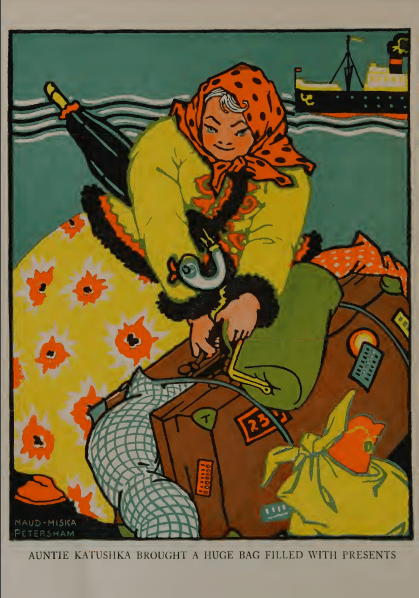
Moore calls The Poppy Seed Cakes by Margery Clark, illustrated by Maude and Miska Petersham, “certain to appeal to little children,” although I (admittedly not any kind of child) found the stories silly and some of the illustrations, like this one,

kind of sinister.

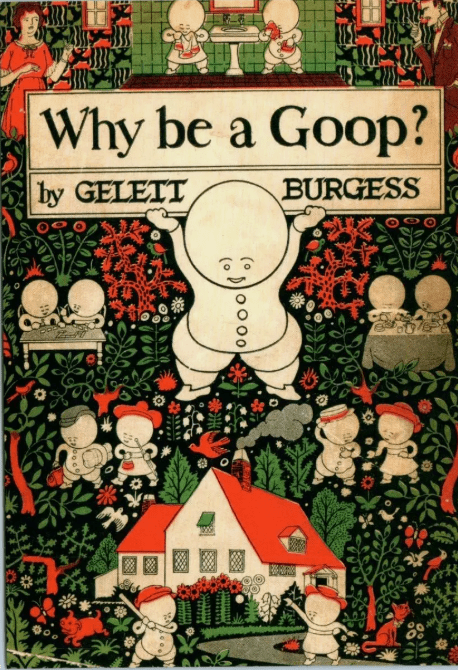
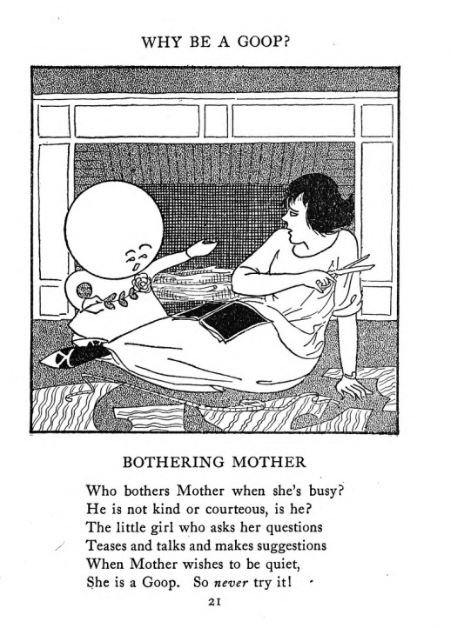
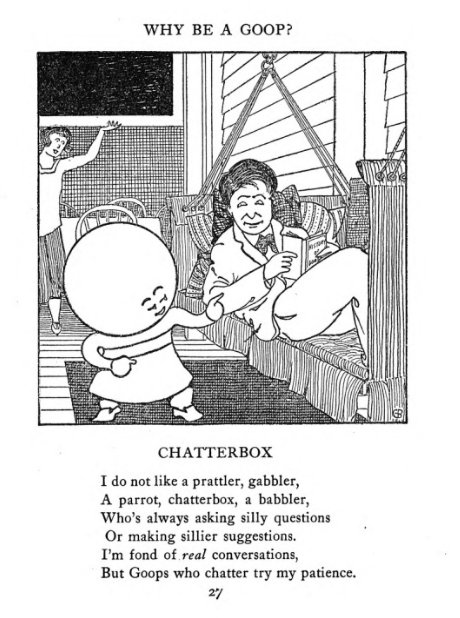
Why Be a Goop? is a late installment in Gelett Burgess’s series that started in 1900 with Goops and How to Be Them, which was a favorite of mine when I was little, although the Goops’ round heads freaked me out. In that book, the Goops did things like lick their fingers and lick their knives and generally lead “disgusting lives.” In this one, though, they seem to spend most of their time trying to get the attention of their negligent parents.

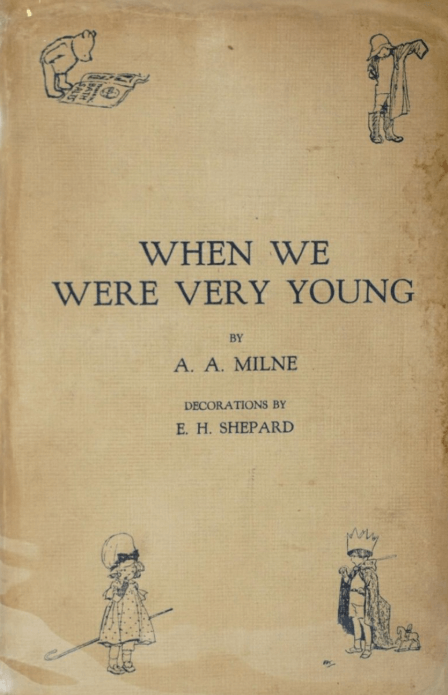
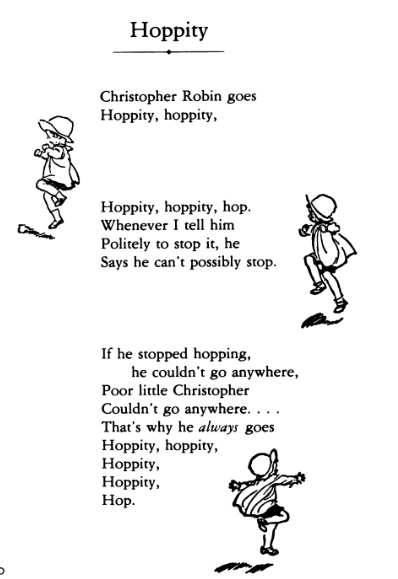
When We Were Very Young, A.A. Milne’s classic book of verses featuring Christopher Robin, surprisingly didn’t make it onto any of the lists, maybe because of its November publication date. I loved this book as a child. We had a record of the poems, too, and I can still recite some of them, like this one,*******

by heart.

For Middle-Grade Readers

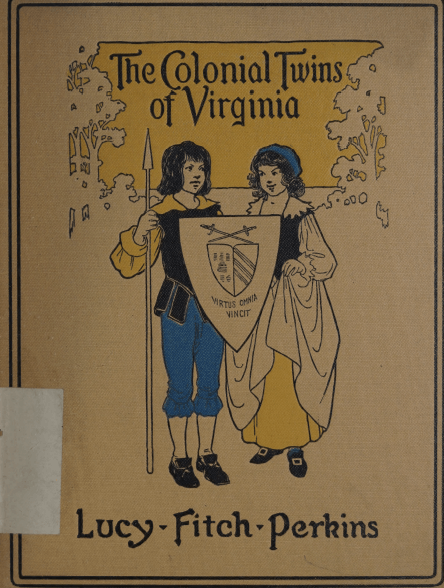
Its title alone would have DQ’d The Colonial Twins of Virginia, the latest installment in Lucy Fitch Perkins’s twins series, even if I hadn’t done a word search for “slave,” which yielded, among other things, one of the twins saying to the other, “One has to love people, and there aren’t any other people here to love except the slaves, and of course they don’t count.”

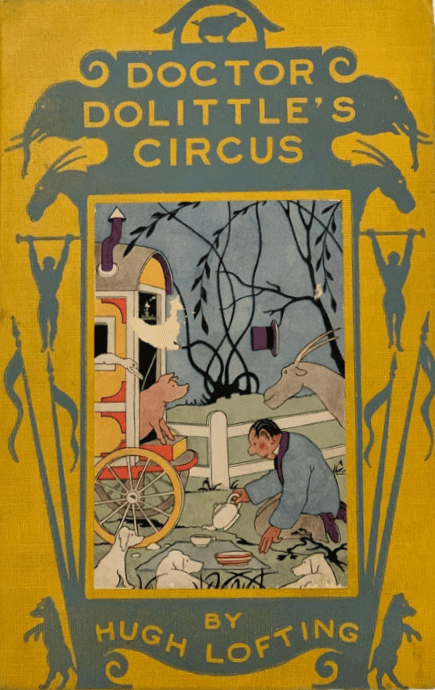
I didn’t have high hopes, but Dr. Dolittle’s Circus by Hugh Lofting appears to be one of the less offensive books` in the series (I wrote about previous installments here and here). Dr. D. comes to the aid of abused animals in a circus, including returning a seal to the sea.

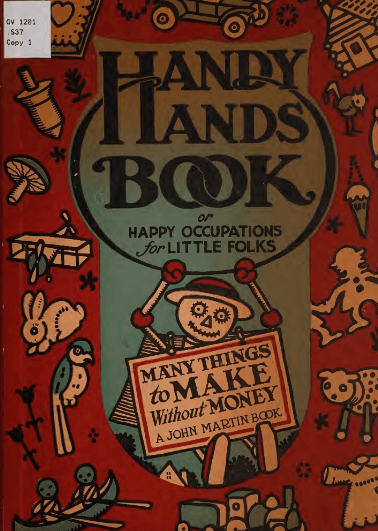
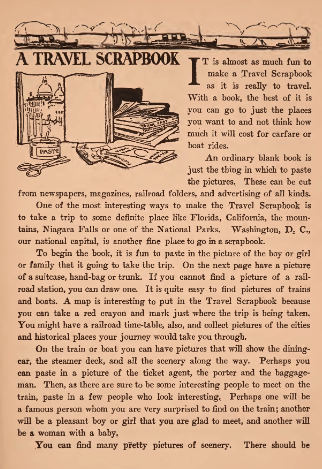
I loved activity books as a kid and am always on the lookout for a good hundred-year-old one. I’m not a fan of John Martin’s annual miscellany, so his Handy Hands Book was a pleasant surprise. I don’t buy Martin’s argument that “it is almost as much fun to make a Travel Scrapbook as it is really to travel” (unless maybe you’re stuck at DFW on Christmas Eve), but making a scrapbook of an imaginary journey does seem like fun.

For Older Children

Novels for high-school-aged children from a hundred years ago tend to be unbearably tedious, and this year’s were no exception.

Moore describes Earl Silvers’ Barry the Undaunted as “a story of high school boys and girls with an element of civic interest,” and it’s about as thrill-packed as that makes it sound. I gave up early on, in the middle of a prolonged discussion between Barry (who is a girl) and her fellow campers about what rules their swim team should have.

The New Moon

Moore quotes the introduction to Cornelia Meigs’ The New Moon as saying, “It might seem a tedious journey to walk at a sheep’s pace across the whole state of Pennsylvania.” Indeed it might, I say as someone who found a journey across half of the state of Pennsylvania in the passenger seat of a Prius pretty tedious. The journeyer is a boy who makes his way from Ireland to the American frontier. From a quick flip-through it struck me as more interesting than Meigs’ previous novels, but that’s not saying much.

The first word of The Island of the Mighty, the book that Louise Hunting Seaman suggests that you accompany with a visit to the Hall of Armor at the Met, is “thus.” As “distinguished” as Moore finds it, I didn’t make it much further. Wilfred Jones’s illustrations are pretty cool, though.

Wilfred Jones, The Island of the Mighty

You will, this New York Times ad claims of Waldemar Kaempffert’s A Popular History of American Invention, “read these exciting volumes as you would a novel…You watch Goodyear in rags vulcanizing rubber over the kitchen stove; Davenport tearing up his wife’s one silk dress to insulate a motor.”

Oh no! I raced to find the horrifying scene:

“Tearfully but bravely the young wife handed to her boyish inventive husband, ‘Tom,’ the silk dress in which she had been married only eight years before. He needed it in his work as an inventor. It had been carefully folded away in lavender by the beautiful bride when, in 1827, Thomas Davenport, the active but studious village blacksmith of Brandon, Vt., had so far forgotten his profound interest in the ‘galvanic magnet’ of Joseph Henry as to fall in love and ‘settle down.’”

This is, I have to say, a lot more exciting than Cornelia Meigs.

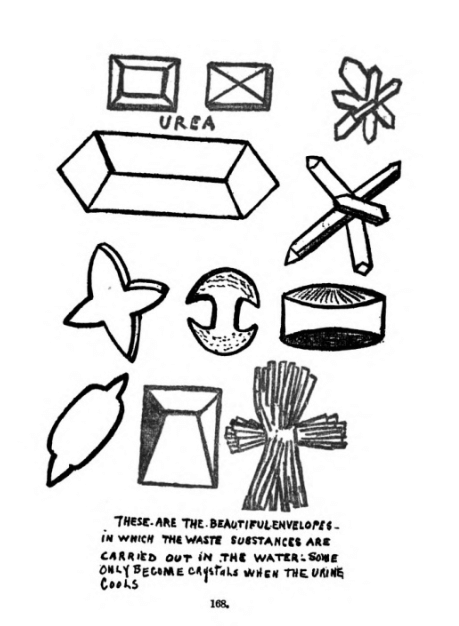
Moore calls Dr. W.T. Grenfell’s Yourself and Your Body “a unique and valuable book embodying Dr. Grenfell’s talks to his own children, with original and amusing drawings.” Grenfell, unsurprisingly, doesn’t cover ALL of your body, although there’s a chapter called “Waste,” which ends with, “Here ends this difficult chapter.” Here’s a cute drawing of urea:

Young Adults

Or the older children might just want to skip right up to reading adult books, like Agatha Christie, a favorite of my own mid- to late teens.

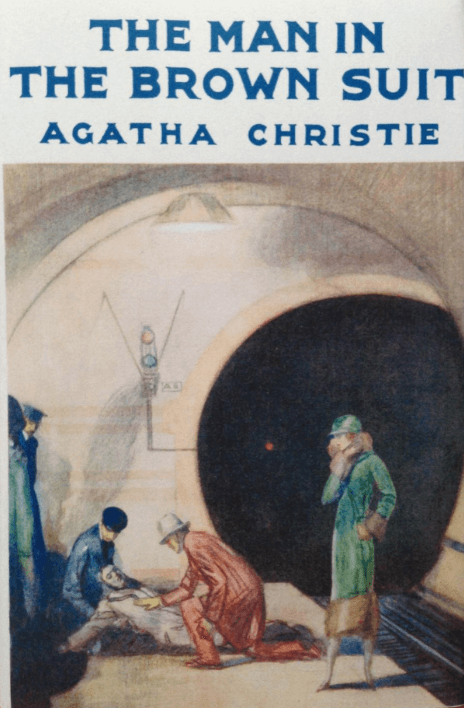
Some critics were disappointed that her latest novel, The Man in the Brown Suit, was a stand-alone thriller that didn’t figure Hercule Poirot, but it turns out to be partly set in Cape Town, which I’m pretty excited about.

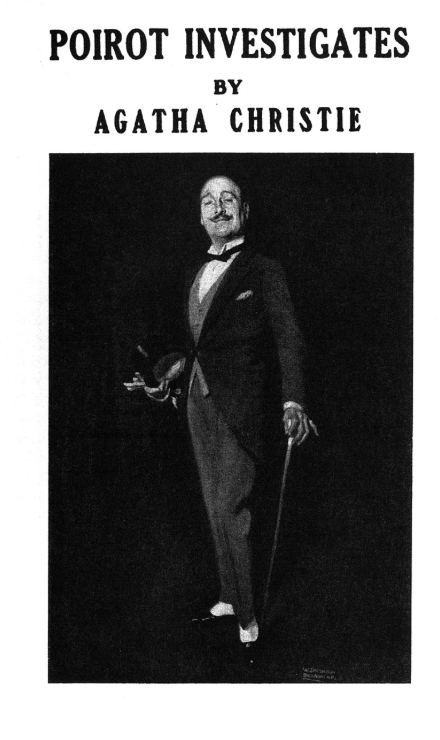
Plus, luckily for Poirot fans, there’s also her first short story collection, Poirot Investigates.

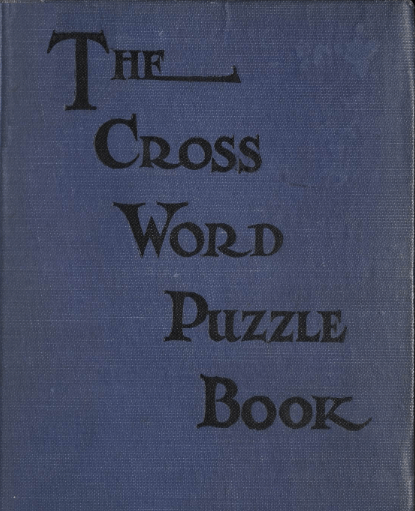
Number one on my 1924 wish list, and on the list of books I’m mad at HathiTrust for blocking in South Africa, is The Cross Word Puzzle Book, the first book of crossword puzzles ever and also Simon and Schuster’s first book ever. It launched a craze I have quite a bit of expertise on, since it featured prominently in my seventh-grade history paper “Fads of the 1920s.” (You can also get it at Project Gutenberg, but it’s not in the original format so you can’t print it out and do the puzzles yourself.) (UPDATE 12/24/2024: The Library of Congress has a PDF, but you can’t download it.)

Christmas Eve has given way to Christmas day and now Christmas night,********* and I’d love to curl up with a good cross word. Oh, well. Good thing I have Agatha Christie to keep me entertained.

Happy holidays, everyone!

squiggle

*Although not, as people often assume, because I want to avoid the northern hemisphere winter. While people here are celebrating the holidays by having barbecues (braais in local parlance) or going to the beach, I’m dreaming of hot chocolate and long nights.

**Who, I see, has changed the name she writes under from Annie to Anne. I knew this was coming—Wikipedia says that she “officially changed her name to Anne in her fifties, to avoid confusion with Annie E. Moore, another woman who was also publishing material about juvenile libraries at that time.” In my opinion, ACM, who basically invented children’s libraries and children’s book reviewing, should have been the one to keep the i.

***I was going to say something snooty about Pinocchio being a marionette, not a puppet, but I looked into it and marionette is a subcategory of puppet.

****As always, there are a lot of reissued classics, which qualify for inclusion if they have new illustrations.

*****In the past, HathiTrust allowed worldwide access after 95 years, which is when copyright expires in the U.S., for most publications except U.K. periodicals.

******The Times, which is more of a fan than Moore, points out that Falls’s collection includes about three hundred verses “and must be comprehensive of all of them that are now extant.” There’s something to be said for selectivity.

*******Admittedly not a particularly complex piece of verse.

********The fake-sounding Martin turns out to have been a real person, although his actual name was Morgan van Roorbach Shepard, which would have been hard to squeeze onto the cover of all those books.

*********Don’t worry, I haven’t been doing this the WHOLE time.

Children’s Books: Your 1923 Holiday Shopping Guide

Welcome to the fifth annual children’s books holiday shopping guide! It’s been a hectic holiday season, including a trip from Washington, D.C., to Cape Town less than a week ago (I split my time between the two cities), so this is a pared-down edition.

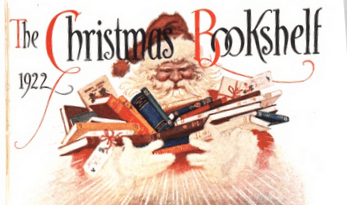
My research this year started out with a big disappointment: it turns out that the 1922 edition of Publisher’s Weekly’s annual Christmas Bookshelf issue, which had been one of the highlights of my My Life 100 Years Ago year, was the last. Why, Publisher’s Weekly? Why?

Luckily, there’s still a lot of coverage, including holiday roundups in the New York Times, one on children’s books and another buone on books for the general reader with lots of books older children might enjoy. And, as always, pioneering children’s librarian Annie Carroll Moore weighs in in The Bookman, this time with not just one but two articles on holiday books, in the October and December issues.

New York Times, December 23, 1923

In non-book news, the Times also provides some helpful advice on keeping your children healthy over the holidays, including, “Don’t overdress them with their new sweaters or furs, just because it is Christmas.”

For Young Readers

From The A B C Book by Charles B. Falls

A piece of all-around good news: there are more pictures, and in particular more color pictures, in books for young children than there were just a few years ago. There’s even a book with color illustrations on every page, the first I’ve seen: Charles B. Falls’ The A B C Book, a book of woodcuts with an animal for each letter. (If you’re wondering what he did about X, it’s for xifius, which turns out to be Greek for swordfish.) It’s a favorite of Moore’s, and of mine.

From The Six Who Were Left in a Shoe by Padraic Colum

The New York Times recommends Padraic Colum’s The Six Who Were Left in a Shoe, and, although I found the story kind of silly, their praise for the endpapers is justified.

For Middle-Grade Readers and Older Children

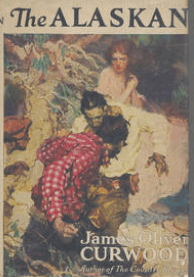
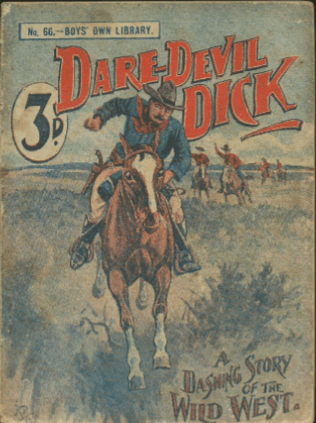
There was a bit of a moral panic going on regarding children’s reading in 1923, including in an article in the October 1 issue of The Library Journal by librarian Wilhelmina Harper. Harper’s bottom line: children are reading too much sensational adult literature, like Daredevil Dick and Seven Buckets of Blood (neither of which, sadly, I was unable to find),* and should be directed to high-quality children’s literature instead. I wondered whether Harper was being excessively prim and proper until I found The Alaskan: A Novel of the North, a 1923 novel by James Oliver Curwood, whose books, Harper tells us with concern, fifth- and sixth-grade boys have been asking for. Flipping through it, I found the following sentence: “He hurried back, seized a loaded gun, and sprang to the window, knowing that he must continue to deal death until he was killed.” Maybe Harper has a point.

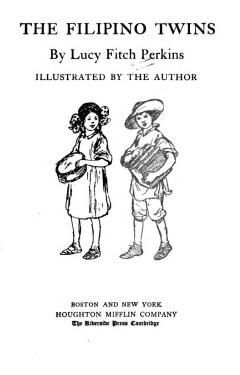
So what does Harper think children should be reading? Books published before 1923, mostly, which doesn’t do me much good. She speaks highly of Lucy Fitch Perkins’ series about twins from around the world, but I had a bad feeling about the 1923 installment, The Filipino Twins, When I skimmed through the first few chapters, though, I found it surprisingly lacking in racism. Unfortunately, the same thing can’t be said for the 1931 installment, which is about a pair of African American twins. So I’ll pass on Perkins.

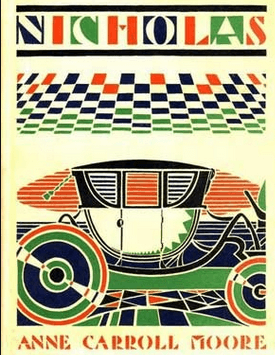
Nicholas: A Manhattan Christmas Story, by Anne Carroll Moore

I would have been more impressed by Annie Carroll Moore’s positive write-up about Nicholas, A Manhattan Christmas Story in the October 1923 Bookman roundup if the book hadn’t been written by…Moore herself.** Then, in the December issue, she waxes lyrical about writing Nicholas. According to my research for my post about Moore, it is not exactly a forgotten classic. Luckily for present-day me, though, it wasn’t actually published until 1924, so I can wait until next year. Cool Art Deco cover, though.

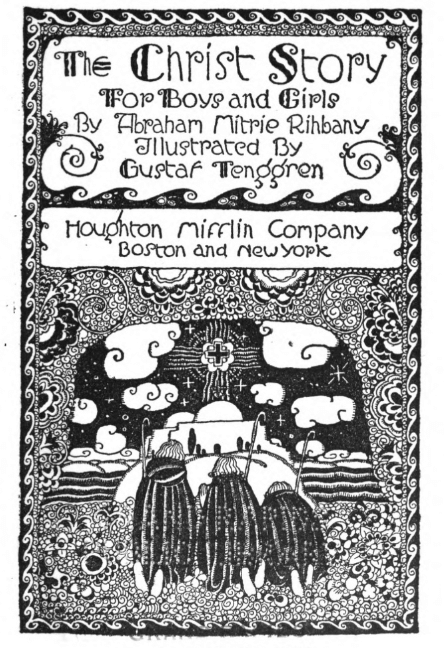
The Christ Story for Boys and Girls, featured in the New York Times roundup (which not very inclusively refers to Jesus as “our Savior”), is described as attempt by Abraham Mitrie Ribhany, a Lebanese Christian who moved to the United States as a young man, to draw on his own childhood experiences with Palestinian traditions to give children an idea of what Jesus’ life was like. I was intrigued by the premise, but I’m leery of a book that refers to Jesus repeatedly as Syrian*** without ever mentioning that he was Jewish.

From A Child’s Story of American Literature

The Times raves about A Child’s Story of American Literature by Algernon Tassin and Arthur Bartlett Maurer, although the reviewer calls the title “deplorable,” since it’s for older readers who would turn up their noses at the word “child.” Also, they think Tassin and Maurer have assigned insufficient importance to the works of Sidney Lanier. I’m okay with that, but, skipping through the book, I found a number of things to give me pause. For example, this passage:

You are a child of culture. Is it not your affair to make sure that, a hundred years hence, the story of which you are the first chapter will not have the same regrettable thing to record?

My hundred-years-hence ears perked up. It turns out that the regrettable thing is how, just as America has not made enough of an effort to Americanize her aliens, there has been insufficient appreciation of the United States of America’s own literature. I took issue with the first part, since, whatever you think of Americanization as a concept, my own experience of the world of 100 years ago is that people never shut up about. I do agree about the low self-esteem regarding American literature, though. Be that as it may, I’m not adding this book to my gift list.

A number of poetry anthologies for young people are on offer. I summarily disqualified The Boy’s Book of Verse, edited by Mary Gould Davis, which is the follow-up to her 1922 volume titled, you guessed it, The Girl’s Book of Verse. Moore and the Times both recommend This Singing World: Modern Poems for Young People, edited by Louis Untermeyer. “Hardly any boy or girl in the teens, or even for a few years earlier, but will find much in the volume to enjoy,” the Times raves.****

I wouldn’t bet money on that, but it is a nice selection, featuring poets including William Butler Yeats, Carl Sandburg, H.D., and, um, Louis Untermeyer and his wife, Jean Starr Untermeyer. This one’s going on my list. And the great thing about getting a poetry book as a present is that you don’t have to pretend to have read the whole thing.

Happy holidays, everyone, and happy reading!

squiggle

*UPDATE 12/27/2023: An enterprising reader found a listing for Dare-Devil Dick on Abe Books.

**The only reason that Moore even kind of gets away with this is that she only mentions the illustrator in the text of the article, with her name listed as the author in the list of books at the end.

***The Christ Story for Boys and Girls is based on Ribhany’s influential 1916 adult book The Syrian Christ.

****It took me a while to get my head around that syntax.

A New Project!

It’s been a long time since my last post, but I have an excellent excuse. I’ve been preparing for the launch of Rereading Our Childhood, a podcast where my friend Deborah Kalb and I revisit books we read as children.

Deborah and I met in college and have been talking about books ever since. We’ll continue this conversation on the podcast, revisiting our childhood favorites (and sometimes not-so-favorites) and assessing how well they hold up from our present-day vantage point. We’ll delve into the lives of the writers, discuss what the kids in the books are reading, and weigh in on whether we’d recommend the books to children today (not always an easy call, even for some books we loved as children).

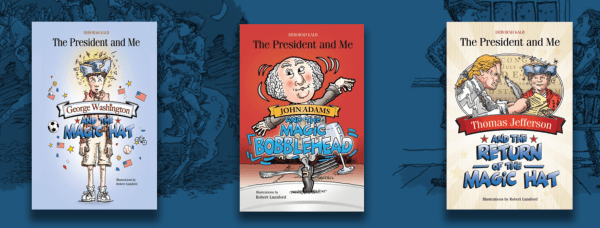
Deborah is the author of the series The President and Me, in which children travel in time and meet early American presidents. I’m not a children’s writer myself,* but children’s literature is a longstanding interest of mine, reflected on this blog with holiday children’s book roundups from 1919, 1920, 1921, and 1922 and my post on pioneering children’s librarian Annie Carroll Moore.**

We’re launching this podcast at a moment when, in the name of protecting children, books dealing with gender identity, race, and other “controversial” topics are being removed from the shelves of public libraries and school libraries around the United States. Most of the banned children’s books are relatively recent, but some date from our childhood. (A recent PEN America report provides an overview of the situation.)

Creative Commons license CC BY-SA 4.0

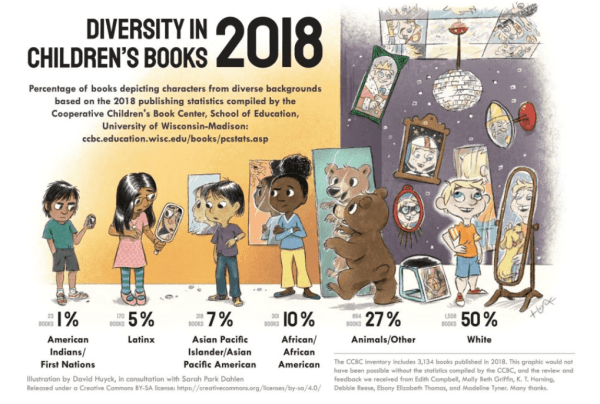
On the positive side, children’s literature has become much more diverse since our childhood, when, as we’ll discuss, almost all children’s authors and almost all characters in children’s books were white. The recent graphic above shows that much has changed since that time, but that book characters are still (once you take “animals and others” out of the equation) mostly white. The lack of representation in the books of our childhood will inevitably be reflected in the books we talk about, but we’ll seek out the exceptions.

During the period when Deborah and I were growing up—the 1960s and 1970s—the shelves of school libraries and the children’s rooms at public libraries*** included a higher proportion of books that had been published a decade or more ago than seems to be the case today. Our childhood reading went back to the 1920s and 1930s, with an occasional pre-1920 classic. This gives us access, in this project, to books spanning half a century or more.

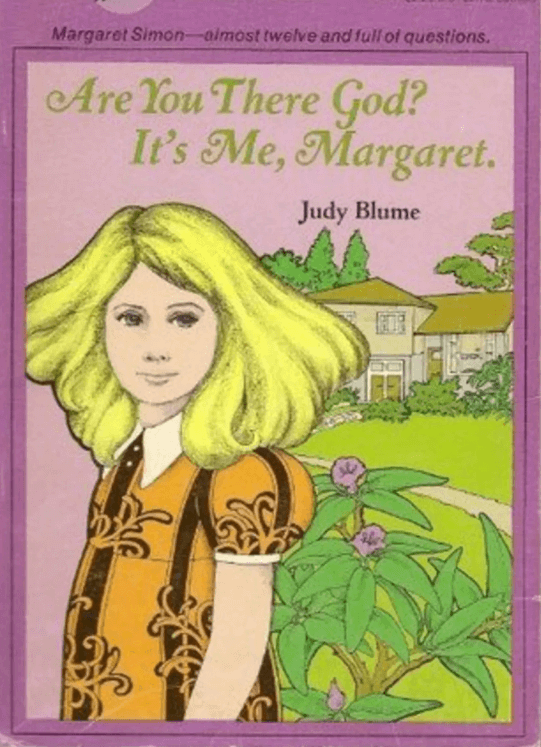
On our first episode, we discuss Are You There, God? It’s Me, Margaret, Judy Blume’s 1970 classic of adolescence. We talk about our opinions of the book then and now (preview: I was and am a big Blume fan but not such a big fan of Margaret herself) and its impact on our lives. We look into the Blume moment currently underway, with a feature film of Are You There God? It’s Me, Margaret in theaters now and other film and TV productions in the works. We discuss Blume’s advocacy against book banning, which her own books have been subjected to.

Preparing for the podcast has been quite a learning experience. Starting a podcast turns out to be way harder than starting a blog, although my memory of the challenges that presented may have dimmed. There’s editing**** and distribution and artwork and music and show notes and—something I never used to think about at all and now think about all the time—getting your chair not to squeak.

The world of a hundred years ago and the world of twentieth-century children’s books are different, but I imagine that there’s a lot of overlap in terms of people’s interest, so I hope some of you will join Deborah and me on our latest adventure. I don’t want to give away too much in terms of specific books, but I can tell you that spying and witchcraft and crime solving and dancing and haunting will be involved!

Rereading Our Childhood is hosted at Buzzsprout, and you can listen to it on Spotify, Apple, Google, and other podcast platforms.***** The website, with show notes and links to the episodes, is at www.rereadingourchildhood.com. We’re on Twitter at @RereadingPod. We’d love to hear from you with your thoughts about the podcast or memories of your own childhood favorites.

Now that the podcast is up and running, I look forward to having more time to return to the world of 100 years ago!

squiggle

*Apologies to my childhood self for not living this dream.

**The artwork for the podcast and the podcast’s website, with the girl reaching for a book, is from a 1921 Children’s Book Week poster by Jessie Willcox Smith, whose work is frequently featured here. (The same illustration was used on the poster for the first Children’s Book Week in 1919.)

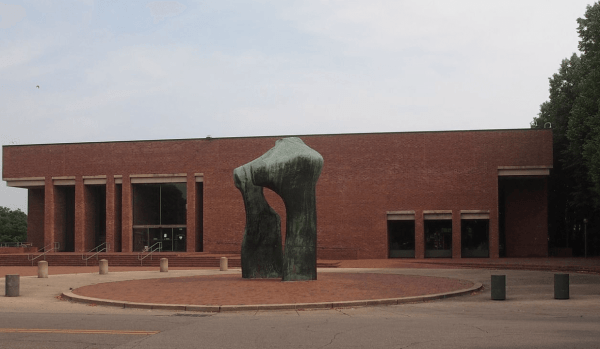
***I had access to wonderful public libraries in the various places I lived as a child, but the most extraordinary one was the I.M. Pei-designed library in Columbus, Indiana, with a Henry Moore sculpture in front.

Richard McCoy, 2013 (Creative Commons license, CC BY-SA 3.0)

****I got extremely stressed out over this before throwing up my hands and deciding to use a professional editor, at least for now.

*****If you can’t find the podcast at your podcast platform or if you run into any technical difficulties, please let me know, here or through the podcast website.

Claude McKay’s Harlem Shadows, “If We Must Die,” and Congressional Confusion

Portrait of Claude McKay, 1920

To celebrate Black History Month, I read Claude McKay’s 1922 collection Harlem Shadows, one of the first major works of the Harlem Renaissance. Up to now, the only one of McKay’s poems that I was familiar with was “If We Must Die,” his searing response to white supremacist attacks on African-Americans. The poem was first published in the July 1919 issue of the left-wing magazine The Liberator and later appeared in Harlem Shadows.

The Liberator, July 1919

“If We Must Die” is so powerful as a clarion call that I had never paid particular attention to its traditional structure—it’s a rhyming sonnet.  McKay, it turns out, was an unapologetic traditionalist when it comes to form. The British poetry, religious revivals, and African folklore he grew up with in Jamaica, he says in the “Author’s Word” in Harlem Shadows, “are all punctuated by meter and rhyme. And nearly all my own poetic thought has always run naturally into these regular forms.”

Harlem Shadows, first edition

Harlem Shadows covers the arc of 32-year-old McKay’s life: his fondly remembered Jamaica childhood, depicted most memorably through his descriptions of tropical fruits; his arrival in the United States as a young man and the racism he encountered there; his observations of life in Harlem, with unsentimental depictions of prostitution and grindingly hard work; and elegiac, sensual recollections of his short marriage.*

I was curious to see how Harlem Shadows was received by critics of McKay’s own time. Given how condescending The Liberator editor Max Eastman was in his introduction to the book,** I wasn’t optimistic.

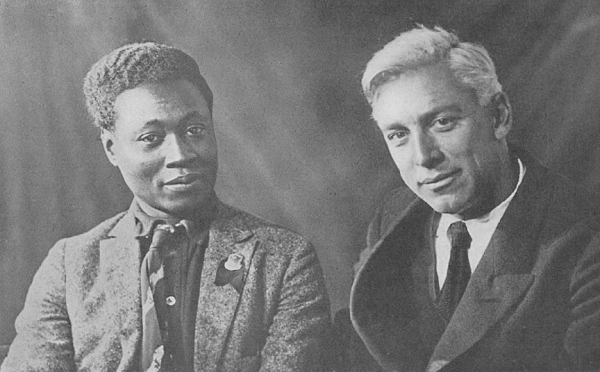
Claude McKay and Max Eastman, 1923 (Reds in America)

“These poems have a special interest for all the races of man because they are sung by a pure blooded Negro,” Eastman begins. He goes on to say that “here for the first time we find our literature vividly enriched by a voice from this most alien race among us. And it should be illuminating to observe that while these poems are characteristic of that race as we most admire it – they are gentle-simple, candid, brave and friendly, quick of laughter and of tears – yet they are still more characteristic of what is deep and universal in mankind.” There’s some more about the good and bad kinds of educated Negroes (McKay, of course, is the good kind), but I’ll spare you that.

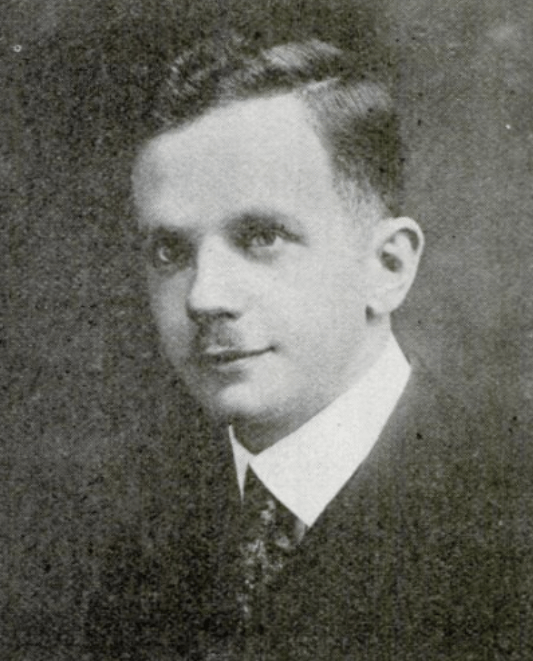
Walter F. White, c. 1918 (The Crisis)

Reading excerpts from reviews in Book Review Digest, I was surprised at first to see that the reviewers were generally more respectful than Eastman. This was explained in part by the fact that two of the reviews, in The Bookman and The Nation, were written by Walter F. White, an African-American civil rights activist who would later head the NAACP.*** The Nation review is edgier than the brief Bookman writeup, concluding with the collection’s title poem, which is about a Harlem prostitute, while the Bookman review ends with an innocuous poem about feeling like a flower in a storm. It’s more nuanced as well, saying along with the praise that “there is in this volume perhaps too much sameness of form.”

In the New Republic, critic Robert Littell was lukewarm about McKay’s versifying, saying, “I feel that a hospitality to echoes of poetry he has read has time and again obscured a direct sense of life.” He praised the collection’s political message, though. “It is not a merely poetic emotion that they express,” he says, referring to McKay and other African-American poets, “but something fierce, and constant, and icy cold, and white hot.” The New York Times praised McKay too, saying that “this young negro is responsible for a bulk of poetry that seems quite new from his race.” All in all, other than some lumping together of African-American poets, it was a more respectful reception than I would have imagined.

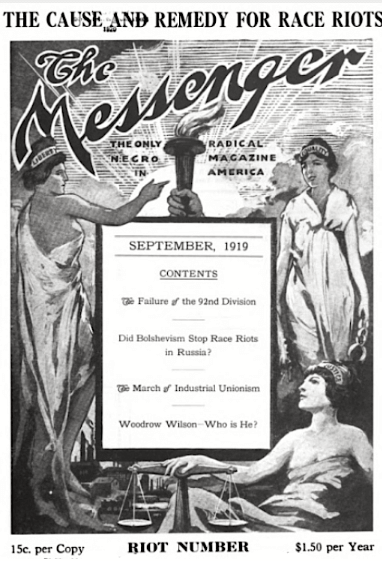
The Messenger, September 1919

Reading Harlem Shadows gave me an opportunity to go back to an idea for a post that I had around the time of the 100th anniversary of the first publication of “If We Must Die” in 2019. I had been surprised to read in the short Wikipedia article about the poem that, in addition to its appearance in The Liberator and its republication in the left-wing African-American magazine The Messenger in September 1919, it was “read to Congress that year by Henry Cabot Lodge, the Republican Senator from Massachusetts.” The source was a a book on the Harlem Renaissance.

Henry Cabot Lodge, ca. 1915 (Bain News Service)

That sounded bogus to me, so I did some research. Other sources claimed that Lodge quoted the poem during World War II as a source of inspiration (Lodge Sr. died in 1924, so this would have had to be his grandson and namesake, who was also a senator), or that he read it as a disturbing example of black radicalism. I couldn’t find a free searchable copy of the Congressional Record online, so I e-mailed the Library of Congress, using their awesome Ask a Librarian resource.**** The librarian responded that they had been unable to locate a record of Henry Cabot Lodge reading “If We Must Die” in the House of Representatives, which I took as cautious librarian-speak for “it didn’t happen.”*****

However, the librarian informed me, Senator Truman Handy Newberry had the poem entered into the Congressional Record on September 23, 1919. Newberry didn’t actually read the poem in Congress; he submitted for the record a statement by the Commission on After-War Problems of the African Methodist Episcopal Church appealing to Congress to investigate the race riots in Washington, D.C., Chicago, and Knoxville, Tennessee. The statement quoted “If We Must Die” in full and said that the poem represents the sentiments of a large portion of the African-American community.

Truman Newberry, 1907 (Walden Fawcett)

Who was this Senator Newberry, I wondered, imagining a heroic figure, a progressive and outspoken ally of the black community. I was soon disabused of this rosy view. Newberry, it turned out, was a Republican from Michigan who defeated Henry Ford (yes, THE Henry Ford) in the 1918 election. He resigned in November 1922 after being convicted of committing election irregularities in violation of the Federal Corrupt Practices Act. His conviction was reversed when the Supreme Court ruled, in the 1921 case Newberry v. United States, that the Act was unconstitutional. The Senate, after an investigation, decided that he could remain a member but criticized him for excessive campaign spending. When a new effort to unseat him began, he resigned.****** So not exactly an illustrious Senate career, but I was pleased to see “If We Must Die,” and the compelling statement that accompanied it, in the Congressional Record.

I never got around to doing this post, however. (In my defense, this is probably not the only late-2019 plan that was never carried out.) I also never got around to doing anything about the Lodge reference in the Wikipedia article, although I did correct the date of the poem’s publication in The Liberator, which some misinformed person had changed from July 1919 to July 1922.

Liberator, July 1919

Others were on it, though, with varying degrees of accuracy. In October 2020, someone added a sentence to the Wikipedia article saying that, in reading “If We Must Die” to Congress, Lodge intended the poem to serve as an example of “black radicalism.” Then, in February 2021, a substantially revised and expanded version was published, and the article was upgraded from its previous “stub” status. The new version refers to the claim that Lodge read the poem in Congress, but quotes a scholar as saying that there is no evidence of this. This scholar also casts doubt on similar claims that Winston Churchill read the poem in the U.S. Congress and/or the House of Commons.

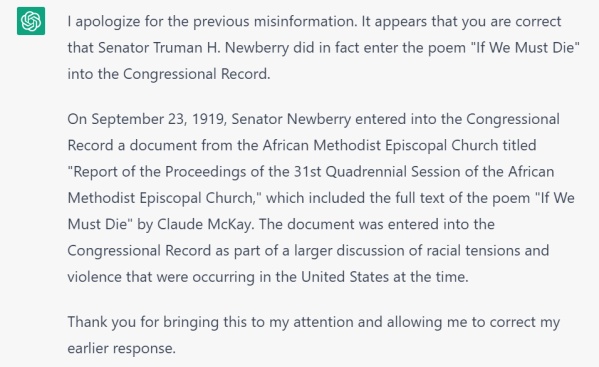
I promise I’m not going to do this on every single post, but I was curious to see what ChatGPT had to say about all this, so I asked whether Henry Cabot Lodge read “If We Must Die” in Congress. Never happened, ChatGPT said. “While he was known for his eloquent speeches and strong political positions, there is no record of him ever reading or referencing the poem ‘If We Must Die’ during his time in Congress.”

I was impressed for a moment, but then I wondered what ChatGPT would have to say about Senator Newberry. “While the poem was referenced and discussed by various political figures and commentators at the time of its publication,” the bot responded, “there is no evidence that it was formally entered into the Congressional Record by Senator Newberry or any other member of Congress.”

I begged to differ, noting the date and circumstances. Within seconds, ChatGPT responded with this gracious apology:

I’m glad I finally managed to write about “If We Must Die,” and I’m glad to have read the rest of the poems in Harlem Shadows. Even though, poetically, many of them are too old-fashioned for my taste, they’ve lingered with me, leaving a vivid sense of the early years of McKay’s remarkable life.

squiggle

*I assumed, reading the poems, that his wife had died. It turns out, though, she returned to Jamaica six months after their wedding. (She and McKay had been childhood sweethearts.) He never met their daughter, his only child. McKay was bisexual and had relationships with both men and women over the course of his life.

**This introduction, unsurprisingly, does not appear in the edition I read on my Kindle.

***In the two reviews, White also discusses the collection The Book of American Negro Poetry. The Nation review also discusses a book called Negro Folk Rhymes. This is the only time I can think of, now or a hundred years ago, that I’ve seen the same person write two different reviews of the same works.

****Which, I hasten to add, you should only use if you have tried really, really hard to find whatever it is you’re looking for yourself.

*****The librarian also informed me that there is in fact a free online version of the Congressional Record, at https://www.govinfo.gov/app/collection/crecb. It doesn’t appear very user-friendly, though.

******This strikes me as an unusually speedy sequence of crime-committing, charging, convicting, Supreme Court overturning, and Senate investigating.

Children’s Books: Your 1922 Holiday Shopping Guide

Happy holidays, everyone! It’s been a while.

Last year, I grumbled that my go-to children’s book resource, pioneering children’s librarian and Bookman columnist Annie Carroll Moore, was too busy waxing whimsical to make book recommendations. The year before, I moaned about the poor selection of books on offer.

Be careful what you wish for. This year I was hit with a veritable firehose of books. And I wasn’t the only one who felt that way: “Books for children continue to pour from the presses much faster than descriptions of them can be hammered out on the typewriter,” says the anonymous, but very relatable, writer of the Children’s Bookshelf column in the December 10, 1922, New York Times.

Over at The Bookman, Moore is back on form, wasting only the first page of her October 1922 column on flights of fancy (something about an imaginary train ride, don’t ask) before going on to six pages of solid recommendations.

Fellow children’s book columnist Marian Cutter weighs in in the December Bookman, but mostly about classics.* She and others, like Library Journal and The World’s Work,** are abuzz about a list of the best books for children that a group of librarians and educators had come up with. The idea is that, if you have a one-room schoolhouse and a limited budget, these are the books you should buy. Other than the boy-specific titles and some colonialism, the list holds up pretty well today. Little Women is the runaway winner, followed by the two Alice books, Robinson Crusoe, Tom Sawyer, and Treasure Island, followed by:

The World’s Work, December 1922

Publishers Weekly’s November 4 holiday issue has its usual extensive listing of children’s and every other kind of books, along with ads that are just as much fun. My only regret was that the snarky blurb writer of last year has been replaced with a more temperate colleagues (or else it’s the same guy and he’s recovered from last year’s burnout).

The October 1, 1922, issue of The Library Journal featured a charming article, originally published in the Manchester Guardian Weekly, called “The Books Children Like.” The writer, Evelyn Sharp, is a British suffragist and children’s book writer.*** “One has to be what is called a children’s author, perhaps, to know what it feels like, after writing a book for children, to discover that one has written a very nice story for fathers or aunts,” she sighs. The biggest mistake children’s writers can make, she says, is writing down to children, and the best children’s books are “the ones that make him feel on a level with the author, whether it is actually written for them or their elders.”
So here I am faced with an embarrassment of riches, which is great, except that the holiday season is ticking away, I have a huge (virtual) pile of books to get through, and seasonal activities keep getting in the way.**** So I’ll have to fly through the selection at a torrid pace. Here goes!

Fairy Tales, Nursery Rhymes, and Folk Tales

Katharine Pile, from Fairy Tales from Far and Near

I was underwhelmed by Fairy Tales from Far and Near, written and illustrated by Katharine Pyle, with its muted illustrations and plethora of thous, thees, and thys.

Rie Cramer, from Grimm’s Fairy Tales

Frances Jenkins Olcott’s retelling of Grimm’s Fairy Tales is a better choice. It’s told in refreshingly non-faux-archaic language, and Rie Cramer’s illustrations are brighter and more numerous than Pyle’s.

Back in 2020, I was charmed by Rose Fyleman’s Fairies and Chimneys, which mixed magic and city life a la Mary Poppins, but The Fairy Flute just isn’t doing it for me. It’s just a bunch of poems about what to do if you come across a fairy (bottom line: don’t run away), with no illustrations. Plus, the first poem, “Consolation,” tells you that the fairies will love you even if you are “very ugly and freckely and small.”

Lining pages from Mighty Mikko

Moore calls Parker Fillmore’s Mighty Mikko, a collection of Finnish tales, “a capital piece of work.” It’s an attractive volume, illustrated by Jay Van Everen, whose small wood-block drawings, like the ones on the lining pages above, I prefer to the full-page illustrations.

Fred Kabotie, from Taytay’s Tales

My most fascinating discovery of the year was Taytay’s Tales, a collection of American Indian stories collected by Elizabeth Willis De Huff. I skipped over it at first, since Moore said that “some of the tale are like Uncle Remus stories,” which wasn’t exactly a draw. It showed up on all the lists, though, so I decided to take a look. De Huff says that the book was illustrated by two Hopi teenagers, including 17-year-old Fred Kabotie. Since books by fake Native Americans are common even now, I was suspicious, but, it turns out that Kabotie not only was for real, but he went on to be a renowned artist whose honors included a Guggenheim fellowship and France’s Palme Academique. Two of his paintings are in the collection of the National Gallery of Art.

E.G. Morris, from The King of the Snakes

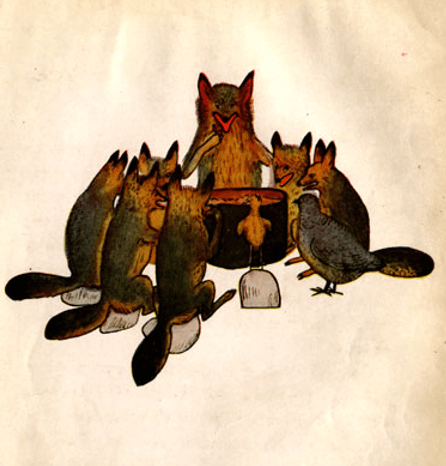
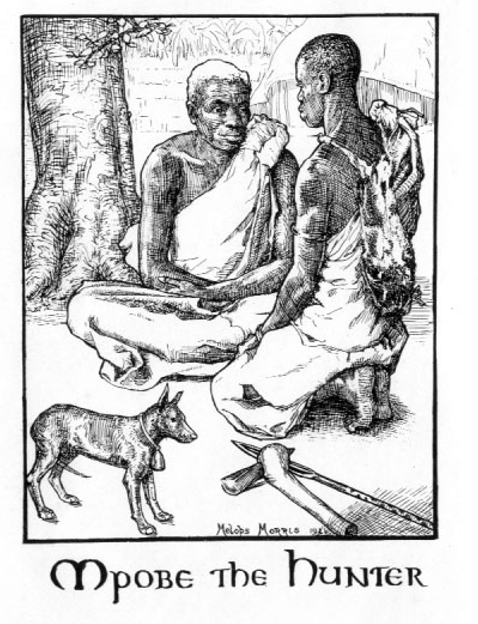
The stories in Rosetta Baskerville’s The King of the Snakes, advertised as Ugandan folk tales, also seem to be authentic—at least, the creation myth is—and E.G. Morris’s illustrations are respectfully done. On the other hand, “Ndaba kuki basebo, basebo ndaba kuki,” which is supposed to mean “The Song of the Forest Wanderer,” comes out in Google Translate as meaning “I see cookies, guys—guys, I see cookies!” in the Ganda language.

For Young Children

George Howard Vyse, from Perez the Mouse

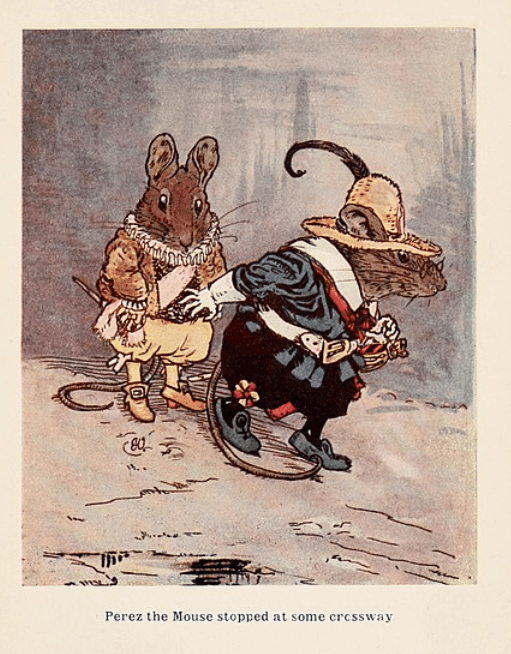
Luis Coloma, a Spanish priest and Royal Academy member, was commissioned to write Perez, the Mouse (originally Ratón Pérez) in 1894 for eight-year-old King Alfonzo XIII, who had lost a tooth. Perez lives in a box of cookies with his family and runs through the city’s pipes to the rooms of children who have lost their teeth. To this day, children in Spanish-speaking countries to this day leave their teeth under their pillows for the mouse. This 1914 version, reprinted in 1922, was adapted by Lady Moreton with illustrations by George Howard Vyse. “A great favorite with children,” Moore calls it, and I can see the appeal.

Gertrude A. Kay, from The Boy Who Lived in Pudding Lane

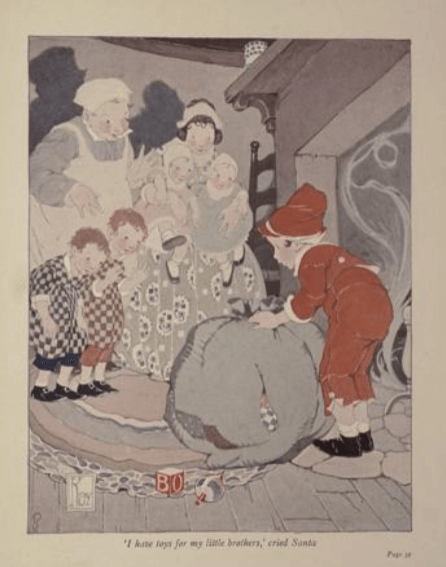
Sarah Addington’s The Boy Who Lived in Pudding Lane, illustrated by Gertrude A. Kay, is Santa’s origin story. “The younger children will be amused to read how the very fat little boy who always wore a red suit came to make toys for all children the wide world over,” Cutter tells us.

For Middle-Grade Readers

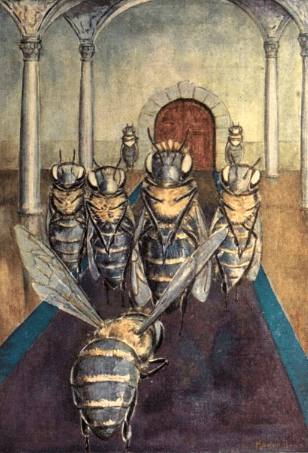
Homer Boss, from The Adventures of Maya the Bee

The Adventures of Maya the Bee by Waldemar Bonsels, illustrated by Homer Boss, was published in German in 1912 and (after a postwar cooling down period, presumably) first appeared in English in 1922. It’s the story of Maya, a bee who gets caught up in bee-hornet warfare. “One of the most delightful insect stories every written,” Cutter raves, which strikes me as a low bar. In any case, I’m not enthusiastic about the German militarism angle, plus the pictures freak me out, so I’m passing.*****

Kay Nielson’s illustrations for Peter Christen Asbjørnsen and Jørgen Engebretsen Moe’s retelling of the Norwegian fairy tale East of the Sun, West of the Moon are beautiful—she’s like the Erté of children’s book illustration—but the story itself is way longer than a fairy tale has any business being. Too bad, because I’ve always loved that title.

Tom Freud, from David the Dreamer

Ralph Bergengren’s David the Dreamer came out too late for Moore’s roundup, but Cutter gave it a rave review, and Tom Freud’s illustrations are sprinkled through the article. I couldn’t find a copy online, and when that’s the case I usually skip the book. Plus, who wants to read about someone else’s dreams? But then I found this blog post from The Marginalian (formerly Brain Pickings) about how Tom Freud started life as Sigmund Freud’s niece Martha but, at age fifteen, took on the name Tom and began wearing men’s clothes. Plus, just look at that illustration. (And lots more at The Marginalian.) Freud, sadly, committed suicide in 1930 at the age of 37.

For Older Children

From Gypsy and Ginger, illustrator unidentified

Moore is quite taken with the whimsy of Gypsy and Ginger, about a carefree couple who get married right after they meet, like Dharma and Greg without the sexual innuendo. Me, not so much.

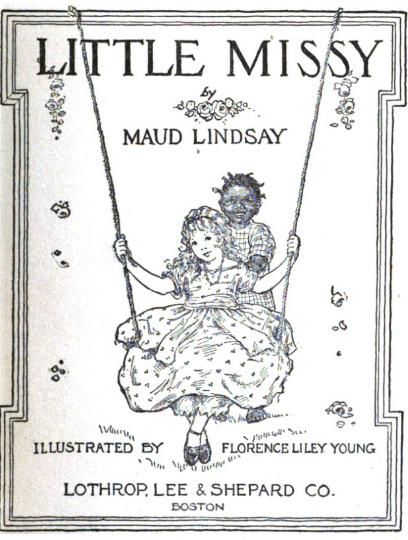
“The Southern slaves were childlike people,” Maud Lindsay says in Little Missy, a tale of life on the old plantation. And that’s just on page 1. I didn’t make it to page 2.

For Older Children

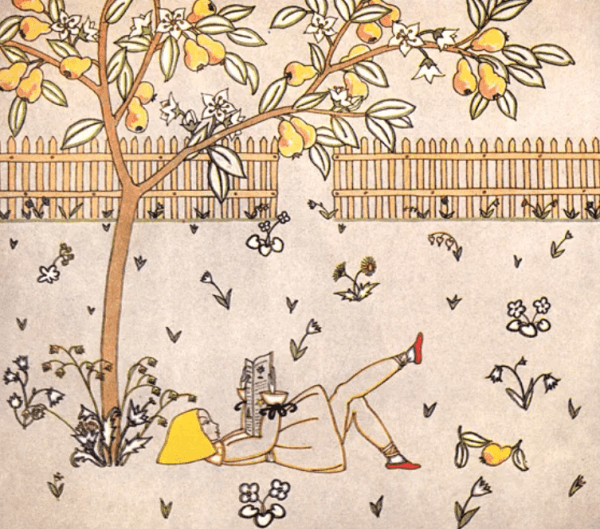
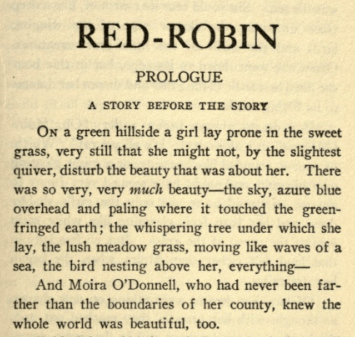
From Red-Robin, illustrator not specified

“Books written for girls present the usual problem,” Moore says, but doesn’t explain what the problem is. This is my fourth year on the beat, so I think I know what she means: they’re boring. I had high hopes for Red-Robin by Jane Abbott, though, since it had gotten rave reviews. I was sorely disappointed. If you think I’m just being grumpy, here’s the opening:

“Maybe she’s just setting the scene,” I said, trying to be fair, so I skipped to the next chapter, which started with more description. As I browsed, I encountered dialect, our heroine calling her father “Father dear,” and a young man who seemed promising at first (walking out of the store he works at, whistling, paying not the slightest attention to the sky) but then ruined everything by saying, “Giminy Gee!”

Kay Nielson, from Tales from Shakespeare

Moore says that the 1922 edition of Charles and Mary Lamb’s 1807 Tales from Shakespeare, with illustrations by Kay Nielson, is “perhaps the most distinguished in form of the books of the year,” and I can see her point. I would definitely get this for 13-year-old me.******

Dugald Walker, from Rainbow Gold

The standout poetry anthology for children in a season full of them, the critics say, is Rainbow Gold by Sara Teasdale. “Miss Teasdale works on the assumption that children prefer the poetry of such figures as Wordsworth, Tennyson, and Swinburne to what may be termed professional children’s poetry, and she is correct,” the New York Times reviewer says. I agree—I would buy this for thirteen-year-old me too. The frontispiece is, disappointingly, the only color illustration in the book, but, as a Dugald Walker fan from way back,******* I’m happy with his black-and-white Art Nouveau illustrations.

From Won for the Fleet, illustrator unidentified

Oh, wait! I forgot something. As much as I balk at the gender-specific reading lists of 1922, I have to admit that there’s a good swath of the adolescent male population that isn’t going to happy with any of these choices. Well, I have just the thing for them! Won for the Fleet: A Story of Annapolis by Fitzhugh Green (Lt.-Commander – U.S.N.) is a rollicking tale of…well, I just skimmed through the beginning and there was Naval Academy hazing (with trash talk like “Oh, you slacker! Oh, you kindergarten kid!”) and someone’s father’s financial ruin and I think a battle in Cuba. It was a bit confusing, but definitely rollicking.

For Young Adults

Young adults want to read about actual adults, not about fake for-children’s-consumption adults like Gypsy and Ginger. And what could be more entertaining than reading about the out-of-control party couple Anthony and Gloria Patch in F. Scott Fitzgerald’s second novel, The Beautiful and Damned? Well, honestly, I found it a bit boring when I read it during my freshman year in college, and critics generally agree, but subpar Fitzgerald is better than peak almost anybody else.

From Dancing Made Easy, illustrator unidentified

Or, if that young person in your life needs help finding a partner (and hasn’t been scared away from the whole idea by The Beautiful and Damned), there’s always Dancing Made Easy, by Charles Coll and Gabrielle Rosiere. It is the tragedy of my life that I have never hung out with a crowd that does dances like this:

Dancing Made Easy, illustrator unidentified

Classic or Not?

The following 1922 books make a claim for the title of “classic,” or at least fall into the category “really old but I’ve heard of it.” Let’s see how well they hold up.

Hugh Lofting, from The Voyages of Dr. Dolittle

I remember being so eager to get back to The Voyages of Dr. Dolittle, Hugh Lofting’s Newbery Medal-winning sequel to The Story of Dr. Dolittle, that I woke up early to read it in bed. What can I say? My racial politics weren’t very evolved when I was nine. Luckily, I don’t have to dig around in the book for all the racism because Sara Beth West did it already in this excellent blog post, part of a series on Newbery winners. She says that, while some egregious passages have been removed, “the edition I read was still thoroughly offensive.” Example: a monkey successfully disguises himself as a black woman to get passage on a ship. Not a classic!

Maud and Miska Petersham, from Rootabaga Stories

Moore is a big fan of Carl Sandburg’s Rootabaga Stories, which plays a big part in the aforementioned incomprehensible whimsical journey. I looked at the first page, which featured characters named Gimme the Ax, Please Gimme, and Ax Me No Questions, and could get no further. Which may be unfair, but do you know of anyone who has actually read this book? I don’t. Not a classic!

William Nicholson, from The Velveteen Rabbit

The Velveteen Rabbit, by Margery Williams, is one of those books that was always lurking around when I was a child but that I never got around to. It was old and about animals, so it had two strikes against it. Adult me was charmed by it, though. It’s the story of a toy rabbit that is initially ignored in favor of flashier, but breakable, mechanical toys but eventually finds its way to a boy’s heart and, thereby, life as a real live rabbit. It has humor that I actually found funny, like the self-importance of the other toys: “Even Timothy, the jointed wooden lion, who was made by disabled soldiers, and should have had broader views, put on airs and pretended that he was connected with Government.” Finally—a classic!

So that’s it! This is definitely the best holiday children’s book selection I’ve come across. There’s something for everyone. And it’s only 9:30 p.m. at Christmas Eve Cape Town Time, which is 2:30 p.m. or earlier if you’re in the United States, which, if you’re celebrating Christmas, gives you HOURS to get your shopping done.

Best wishes for the holiday season, everyone!

squiggle

*I learned from this fascinating post on the blog “Bibliophemera” that Cutter was the founder of the first children’s bookstore in New York.

**I had the idea that The World’s Work was a socialist magazine, but it turns out to be a pro-business magazine with stories like “How a Business Man Would Run The Government.”

***Evelyn Sharp gossip: She and her best friend’s husband were in love for many years. They married after the friend died, when Sharp was 63 and her husband was 77.

****I returned to Cape Town from Washington, D.C., this week, and the obligations are along the lines of picking young people up at this beach, so I’m not expecting a lot of sympathy.

*****The film industry was more enthusiastic, and Maya’s story was recently made into a series of animated films.

******14-year-old me would have turned my nose up at Lamb and plowed uncomprehendingly through the original text.

*******Although I see I misidentified him both of the times I’ve mentioned him, calling him Dugald Steward Walker one time and Dugald Stewart the other time (although I may have fixed these errors by the time you read this). His actual name was Dugald Stewart Walker.

Jane Austen’s Life 100 Years Ago

Happy Women’s History Month, everyone! Celebrating isn’t generally a heavy lift for me, since I write about women a lot anyway and everything on this blog is history by definition. This year, though, I decided to take a look at someone who was already history in 1922—Jane Austen, who had died just over a hundred years before.

I ordered Oscar Firkins’ 1920 book Jane Austen two years ago, while I was in Washington during the early months of COVID. I figured it would shed interesting light on how Austen was viewed at the time. What I wasn’t expecting was a delightful romp through her work that brightened some lonely afternoons during that terrible spring.

Our own century, of course, is not lacking in writing about Austen. There is scholarship focusing on all sorts of topics, including material culture and her depiction of slavery. There are memoirs and novels about reading Austen. What we don’t have, at least to my knowledge, is a book that makes you feel like you’re talking about Austen with a witty, perceptive friend.* So I was delighted to find that friend in Firkins.

Rather than describing Firkins’ writing on Austen, I’ll let him speak for himself. I realize the risk this poses, as does Firkins, who prefaces a long passage from Pride and Prejudice by acknowledging that “extracts, like other transplantations, are likely to be disappointing.” (If you’re not in the mood for transplantations, you can skip down to the first squiggle and read about Firkins’ intriguing life.)

If Firkins comes across as overly critical here, that’s my fault, not his—he’s an Austen fan, with plenty of good things to say, but criticism is so much more fun to read than praise. Also, admiration of Austen is a bit of a civic religion, so it’s refreshing to encounter someone who’s willing to look at her work through a non-adulatory lens.

On Sense and Sensibility

“Our liking [for Elinor Dashwood] passes through crises at every turn, and its final safety is a form of miracle. The reader is aided by the fact that under Miss Austen’s convoy he takes up his abode in the mind of Elinor, and a well-bred person feels a difficulty in quarreling with his hostess.”

On Pride and Prejudice

“When he [Darcy] first appears, he speaks insultingly of a young girl within her hearing. After that, all is over, and to search the character for virtues is to delve among ruins for salvage.”**

“A family, as Americans understand that term, they [the Bennets] are not; they are a congeries.*** They are bedded and boarded in the same enclosure, but a family life is unimaginable in their case. Even under the double disadvantage of the father’s neglect and the mother’s attention it is difficult to conceive that Kitty and Lydia should have sprung from the same stem from which Jane and Elizabeth were the primary offshoots.”

On Northanger Abbey

“I think I am drawn to Catherine by the fact that she is the only one of the heroines who acts like a young girl. Anne Elliot’s youthfulness is past; she already wears the willow,**** and her attitude imitates its droop. Emma, Elizabeth, and Elinor (they run to E’s like the early Saxon kings) are not really young. I reject the futility of baptismal registers and the vain umpireship of the family Bible. They all impress us as having sat on boards; we are lucky if we do not feel that they are sitting on boards in our very presence. Marianne’s conversation is ten years older than her behavior. I shall be told that Fanny Price is a young girl. Miss Becky Sharp was obliged by circumstances to be her own mamma; to my mind, Fanny Price is obliged by nature to be her own maiden aunt. But Catherine Morland is young in the fashion of young girls whom I actually know, simple, warm-hearted, pleasure-loving, diffident between her impulses and eager behind her shyness.”

On Mansfield Park

“Transferred to Mansfield Park, the ten-year-old girl [Fanny] grows up with the marvellous rapidity with which that operation—so tedious in real life—is accomplished by the heroines of fiction.”

“The elopement of Henry Crawford and Maria Rushworth in a story of this kind is like the firing of a pistol shot at an afternoon tea. The story, naturally enough, flees to the nearest hiding-place, crouches down, and puts its fingers in its ears.”

“We feel that Edmund is overstarched, that Fanny is oversweetened, and that the two Crawfords are unfortunate in their resemblance to unstable chemical compounds.”

On Emma

“We respect [Mrs. Weston] for bearing a child; that is an act of refreshing solidity in a world in which the people are mostly idle observers of each other’s idleness.”

“He [Mr. Knightley] is almost cruel in his rebuke of cruelty; one feels that he is the sort of master who would damn a servant for a lapse into profanity. I cannot but feel that this world must be far better and far better-natured than it now is before a mere flick of satire at another person’s obvious and obtrusive folly can deserve the avalanche of reprobation which Emma receives for her treatment of Miss Bates.”

“As for her [Jane Fairfax’s] sufferings, there are people who have a talent for endurance which is little short of an entreaty to destiny to unload its carload of misfortunes at their door.”

On Persuasion

“A doctor’s resource for a troublesome case and a novelist’s expedient for an invalid story are one and the same. They must go to Bath.”

“Even the exertions of a novelist can no longer keep the lovers [Anne and Captain Wentworth] apart, but the contrivance by which understanding is brought about is so clumsy and artificial that perhaps it ought not to surprise us to hear that it has been warmly admired.”

“For my own pleasure, I could wish that Anne was less subject to agitation. I feel the same mixture of pity and irritation before the quivers and tremors that I should feel for a woman whose veils and draperies were blown hither and thither in the turbulence of a high wind. The embarrassment may be real, but the costume seems to invite it.”

On the novels as a group

maggs.com

“If a novelist wants to portray many persons, he must choose between logic and nature, in other words between artifice and incoherence. Dickens, in his populously intricate fiction, to his gain and to his loss, chose artifice. But for Jane Austen the grand scale of Dickens was impracticable. Her world was a Belgium—populous but minute.”

This is just a small sample of what Firkins has to offer. If you open the book at random, there’s a good chance that you’ll come upon something as clever as what I’ve quoted here.*****

squiggle

As I was reading through these passages, it flashed through my mind that Firkins, with his biting wit, might have been a worthy partner to Austen in life. I immediately swatted that thought away, though. In the first place, there’s no need to think that a single novelist must be in want of a husband. Also, pairing Austen with someone by virtue of his put-downs of her is veering into Mr. Knightley territory. And there are other obstacles that we’ll get to by and by.

Oscar Firkins ca. 1920 (Minnesota Historical Society)

Who, I wanted to know, was Firkins? I knew nothing about him when I read Jane Austen other than that he was a college professor. When I started researching this post, he proved elusive at first. No Wikipedia entry. No grave at Find a Grave. No photo. (I eventually found the ones included here on the website of the Minnesota Historical Society.)

It turned out that I wasn’t the only one who had trouble pinning Firkins down. In an introduction to his essay on O. Henry in the 1921 collection Modern Essays, literary man-about-town Christopher Morley, the volume’s editor, wrote that he had been surprised not to find an entry for Firkins in Who’s Who. “It seemed hardly credible,” he wrote, “that a critic so brilliant had been overlooked by the industrious compilers of that work, which includes hundreds of hacks and fourflushers.” Morley wrote to Firkins asking for biographical details, but “modestly, but firmly, he denied me.”

Finally, in an entry on Firkins in the SNAC Archive,****** I learned that he was a professor at the University of Minnesota and a well-known critic, and that he also wrote plays and poetry. He was born in 1864 and died in 1932.

A 1934 New York Times review of Firkins’ posthumously published memoirs and letters revealed that he suffered from severe vision problems all his life. The reviewer calls the book “the quiet record of a quiet and scholarly life,” which isn’t exactly jacket blurb material, but he ends up praising it and calling Firkins “a good citizen of the American intellectual world.”

And then I found it, the Rosetta Stone of Oscar Firkins studies: a 1938 University of Arizona master’s thesis by Lena Smith Doyle titled “Can the Plays of Oscar W. Firkins Succeed on the Stage?” Her answer, in brief, is “sort of,”******* but, more to the point for my purposes, the thesis includes a ten-page chapter on Firkins’ life.

Firkins, Doyle tells us, was described by those who knew him as a man whose “gentleness of nature but inflexibility of intellect and morals” was most “eccentric and original.” He was “capable of being both depressed and exalted.” While “a recluse when he chose,” he “could be most charmingly entertaining when he accepted social responsibility.”

Oscar Firkins ca. 1868 (Minnesota Historical Society)

Doyle tells us of Firkins’ early life that “one cannot help feeling that the twig had been severely inclined if not bent in childhood,” but, infuriatingly, she tells us nothing more of the twig-bending. (His memoirs may shed light on this, but they’re still under copyright.) With his “strange, gifted, and almost mysterious personality,” she writes, Firkins “was not of the earthly earth but lived within the cloistered circles of a constructive educational atmosphere and imposed upon himself rigid rules of living which had limiting tendencies toward the idealistic and spiritual personality.”

Soon after his graduation from the University of Minnesota, Firkins began teaching there. He was to remain at the university for the rest of his life except for the years 1919 to 1921, when, after being “called to New York,” he served as the drama critic for the Weekly Review. The prominent British critic William Archer called Firkins “the ablest of the living American critics of the drama.” The Weekly Review was absorbed into The Independent in 1921, which may have put Firkins out of a job.

The Weekly Review, July 21, 1921

In Minnesota, Firkins lived with his mother and sisters, who supported his career, reading to him to save his eyes and taking care of the practical details of life. He went to New York for Christmas every year, taking in plays and lecturing on them when he returned. A student said of his teaching that “those present could not but feel that they were listening to scholarship interpreted by wit and epigrammatic analysis of a Damascus-blade sharpness and brilliance.” Along with the study of Austen, Firkins also published books on Emerson and William Dean Howells, as well as essays, poems, and plays.

This sounds like a career to be proud of, but Firkins considered himself a failure. In a letter to a friend, he described himself as experiencing “a moral as well as a material November, a season of blankness, grayness, depressions, finalities.” He went on to say that “the sum of evils is, as commonly happens with me, far less imposing in recital than painful in experience, consisting in brief of a marked aggravation of my chronic nervous disorder, a series of vexations and disappointments in my literary and quasi-literary work, and a moral shock, the slight ground of which has been redoubled and multiplied by a sensitiveness which refuses to yield to my clear sense of its irrationality.”

Ina Firkins, date unknown (University of Minnesota Library)

Firkins’ sister Ina, who worked as a librarian at the University of Minnesota and edited his posthumous memoir, described him as suffering from “social maladjustment” and “chronic nervous exhaustion.” His emotional life, she said, was “repressed and starved.”

Firkins died of pneumonia at the age of 67, shortly before his planned retirement. After his death, a friend commented that “the deepening of character that come through marriage and the knowledge of womanhood and parenthood were not his,” yet his treatment of “the sex relations” was “rich profound, and many-sided.”

New York Times, March 8, 1932

“Dare one suggest,” Doyle asks in her thesis, “that had Firkins possessed and experienced the love of an immediate family he could have reached even greater heights?”

No, Lena, one daren’t! These descriptions show us a man who was nervous and depressed, reclusive and secretive, and subject to morbid introspection and vaguely defined “moral shock.” At the same time, he was witty, companionable, and fond of travel. A modern reader—or at least this modern reader, but I doubt I’m alone here—looks at this and sees a closeted gay man. (Or maybe an uncloseted gay man whose sexual orientation his friends and family members were tiptoeing around. That could be what Doyle’s bent twig reference was about.)

University District, Minneapolis. ca. 1920s (Minnesota Historical Society)

Firkins, as I imagine him, had a blast during his holiday sojourns and the two years he lived in New York, finding kindred spirits and, perhaps, romance. I picture him returning reluctantly to the bosom of his family and to the university. (I think of T.S. Eliot in England, so desperate to avoid returning to his preordained life as a Harvard philosophy professor that he married a woman he hardly knew in order to be able to stay there.)

It may be, as the author of the biographical sketch in his memoir pointed out, that Firkins “loved the sparkle of a fine phrase more than he could love the somber fact behind it.” He was more of a reader than a scholar. But, like any good Jane Austen fan, I can’t resist a sparking phrase. I’m grateful that Firkins left his lively prose behind, and eager to read more of it.********

squiggle

*The novelist Brandon Taylor, who is in my opinion the most entertaining and insightful literary critic writing right now, shared his thoughts on Mansfield Park recently in his Substack newsletter, Sweater Weather.

**In case Darcy’s take-down isn’t fresh in your mind, here it is: “She is tolerable, but not handsome enough to tempt me; and I am in no humor at present to give consequence to young ladies who are slighted by other men.”

***I.e. a jumble.

****I.e. mourning.

*****That’s exactly what I had to do with Pride and Prejudice and Sense and Sensibility, since apparently I didn’t have my Post-It Notes on hand when I was reading these chapters in 2020.

******The Social Networks and Archival Context (SNAC) Archive is an online biographic database compiled by a consortium of archives. It’s such an amazing resource that I was embarrassed that I had never come across it until I learned, in a 2017 article on the University of Virginia website ominously titled “Digital Social Network Linking the Living and the Dead Expands,” that it’s fairly new.

*******Judging from their titles, like The Bride of Quietness and The Revealing Moment, I don’t picture Firkins’ plays packing them in on Broadway.

********His poetry, not so much. Here are the opening lines of a typical example, which was published in an anthology of war poems after appearing in The Nation.

A Treasury of War Poetry, Second Series (1919)
squiggle

New on the Book List:

The Way of an Eagle, by Ethel Dell (1911)

Langston Hughes, Teenaged Poet

Last year, I celebrated Black History Month by writing about The Brownies’ Book, the groundbreaking magazine for African American children that was edited by W.E.B. Du Bois. Sadly, the magazine failed to reach its subscription goals and, after a two-year run, ceased publication in December 1921. While it lasted, The Brownies’ Book not only provided young African Americans with a chance to read about young people like themselves but also gave them a chance to see themselves in print by sending in letters to the editor, photos, poems, or stories. Aspiring writer Langston Hughes did all of these things.

Langston Hughes, The Brownies’ Book, June 1920

Hughes, who graduated from Cleveland’s Central High School in 1920,* made his first appearance in the pages of The Brownies’ Book in July of that year. Along with his graduation photo, he submitted a letter saying, “It might interest you to know that I have been elected Class Poet and have also written the Class Song for the graduates. I am, too, the editor of The Annual and am the first Negro to hold the position since 1901, when it was held by the son of Charles W. Chestnut. I thank you for the honor of having my picture in your publication.”**

After his graduation, Hughes went to Toluca, Mexico, to live with his father, who had separated from his mother shortly after he was born. Hughes was hoping to convince him to pay for his education at Columbia University. There was tension between the two, in part because Hughes’ father disliked what he thought of as his son’s sissified demeanor.*** Hughes’ father eventually agreed to pay his tuition, but only if he studied engineering instead of literature, which Hughes agreed to do.

In September 1920, Hughes submitted three poems to The Brownies’ Book. Jessie Redmon Faust, the magazine’s literary editor, wrote to Hughes accepting one of the poems, “The Fairies,” which she considered “very charming.” She asked if he had any stories about Mexico, or if he knew of any Mexican games. Hughes sent her an article about Mexican games, along with some more poems. “Fairies” and another poem, “Winter Sweetness,” appeared in the January 1921 issue of The Brownies’ Book, along with the article.

You can judge the poems for yourself, but, as something of a connoisseur, I have to say that “The Fairies” is not top-tier ca. 1920 fairy poetry. It is, however, the kind of writing that gets you published in The Brownies’ Book, which is what Hughes was aiming for.

On to the games! In one of them, called Lady White, a girl is chosen as Lady White and another as her suitor, Don Philip. The other players circle her in Ring Around the Rosie formation and sing a song about how Lady White’s suitor must break a window to behold Lady White. Some more singing goes on, and then Don Philip tries to break through the circle to get inside. Curious about this Freudian game, I Googled “Doña Blanca” and found this video from a children’s program, which I beg you to drop everything this instant to watch. In this version, the children don’t try to ram through each other’s enlaced hands, so it’s safer but makes for kind of a lame game.****

Toluca, ca. 1920, Hugo Brehme (mexicoenfotos.com)

More publications soon followed. The March 1921 issue included another poem, and an article about the Mexican city of Toluca appeared in April. In the article, Hughes recounts interesting details of daily life, such as, “On the second of November, which is a day in honor of the dead, they sell many little cardboard coffins and paper dolls dressed as mourners, and if a person meets you in the street and says ‘I’m dying,’ you must give him a gift unless you have said ‘I’m dying’ first; then, of course, he has to treat you to the present.”***** Also, Hughes notes that people’s houses have hardly any furniture except chairs, 27 in the case of one of his friends. “Perhaps it is a good idea, for on holidays there is plenty of room to dance without moving anything out,” he philosophizes.

In July 1921, there was a play by Hughes about a young couple who earn a gold piece selling pigs at the market, fantasize about what they can buy with it, and end up giving it to a poor old woman with a blind son. This is as close to hack work as Hughes gets.

The November 1921 issue featured a poem by Hughes, “Thanksgiving Time,” as well as a story, “Those Who Have No Turkey,” about a country girl who, visiting her snooty city cousins on Thanksgiving, is shocked to hear from a newsboy that his family has no turkey to eat and invites him and his family to dinner at her relatives’ house. It’s an engagingly told story, although Hughes spends too much time on buildup and rushes through the dinner in two paragraphs.

Hughes’ account of accompanying a high school class on a hike up Xinantecatl, an inactive volcano near Toluca, appeared in the December 1921 issue, the magazine’s last. Again, there are lots of interesting details, like the list of items he was told to bring along: “first, plenty of lunch; then, two warm blankets because we were to sleep in the open mountains; my camera for pictures; a bottle for water; a small amount of cognac or some other liquor in case of mountain sickness in the high altitude; and a pistol. ‘But above all,’ they said, ‘take onions!” The reason, it turned out, was that smelling them helps with altitude sickness. Indeed, Hughes reports, the onions turned out to be a lifesaver in the thin mountain air.

Langston Hughes, The Brownies’ Book, December 1921

Hughes’ work in The Brownies’ Book shows us an aspiring writer who knows his audience and has a flair for words, but there’s no evidence of budding genius. There’s more to the story, though. Early in 1921, he sent Faust a poem that he had written in July 1920, after crossing the Mississippi on his way to Mexico. She told him that she would publish it–not in The Brownies’ Book but in The Crisis, the NAACP’s magazine for adults.

The poem was “The Negro Speaks of Rivers.” It appeared in the June 1921 issue of The Crisis and became Hughes’ signature poem.******

The career of one of America’s greatest poets had begun.*******

squiggle

*Hughes believed throughout his life that he was born on February 1, 1902, but, as this fascinating 2018 New York Times article recounts, a writer and poet researching his own family history came across several 1901 references to the infant Langston Hughes in the Topeka Plaindealer, an African American newspaper. February 1, 1901, is now widely accepted as his date of birth. So “Teenaged Poet” is a bit of a stretch–but he thought he was a teenager in 1921.

Charles W. Chesnutt, ca. 1898 (Cleveland Public Library)

**Charles Waddell Chesnutt was a well-known writer and political activist. His daughter Helen Chesnutt was Hughes’ Latin teacher and a figure of inspiration to him. Chesnutt’s Wikipedia entry says that he had four daughters but does not mention a son.

***Information about Hughes’ personal relationships is scant, but many scholars now believe that he was gay.

****We used to play a version of the ramming through the hands game when I was a kid, which, like many aspects of 1960s-1970s childhood, is horrifying in retrospect.

*****I lived in Mexico City in the 1980s, but sadly never observed this particular Day of the Dead tradition in practice. I suppose it would have been impracticable in a city with a population of 20 million.

******Unfortunately in retrospect, The Crisis often used swastikas in the magazine’s graphic design. The symbol had no political significance at the time, of course.

*******Blogger/composer Frank Hudson of The Parlando Project has been focusing on Hughes’ early work this month. His post about “The Negro Speaks of Rivers” is here.

Children’s Books: Your 1921 Holiday Shopping Guide

Immersing myself in the children’s books of a hundred years ago has become one of my favorite holiday traditions, and it’s one that I especially appreciate during a season when many of our more extroverted traditions have to be set aside.

For my third annual children’s books holiday shopping guide (the previous ones are here and here), I turned first, as always, to pioneering children’s librarian and The Bookman columnist Annie Carroll Moore.

Who totally let me down. Her November 1921 holiday roundup starts out as a foray into incomprehensible whimsicality that seems to have something to do with an imaginary trip to France and England. Example: “Put a paper cover on John Farrar’s ‘Songs for Parents’ and paste up the title-page until you get to ‘Fairy London,’ then ask Rose Fyleman to give new titles to some of its enchanting verses and to the book itself while she autographs your last year’s copy of her ‘Fairies and Chimneys.’”

“What?” I asked in utter bafflement, and I’m someone who has actually read (some of) Fairies and Chimneys, which I recommended in last year’s holiday shopping guide.*

Moore, it transpires, actually made a trip to Europe. “I came back too late to do full justice to our own output of children’s books,” she tells us blithely, before rushing through the entire American national output, much of which she has not had time to read, on the last page. YOU HAD ONE JOB, ANNIE!**

November 5, 1921

Luckily, I had other help. Publishers Weekly’s November 5 Christmas Bookshelf issue included  an encyclopedic children’s book roundup, penned by an uncredited writer whose task of reading through dozens of children’s books had left him (or her, but it sounds like a him) entertainingly grumpy.*** The Survey magazine, which was published by the Charity Organization Society of the City of New York but is way more interesting than that makes it sound, ran an article called “The Season’s Books for Children” that includes some charity-ish selections like “a group of health rhymes and jingles written by the children of Public School Fifteen in New York,” but others that looked promising. One, which wasn’t reviewed anywhere else, turned out to be my Children’s Book of the Year. I recommend that you check it out if you’re otherwise just scrolling through and looking at the artwork (which is fine! You’re a busy person!).
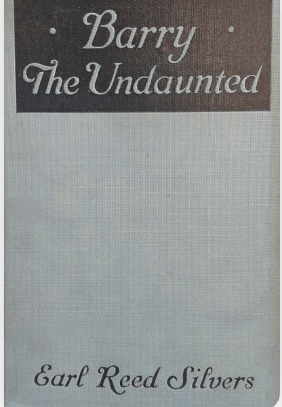
Also, the Newbery Medal for excellence in children’s literature was first awarded in 1922 for books published in 1921. There were some runners-up as well (later designated as Newbery Honor Books), so that provided several good candidates.****

Without further ado, here are the books of the season.

Fables, Folk Tales, and Songs

An Argosy of Fables

Paul Bransom, from An Arbosy of Fables

Moore says that “Paul Bransom’s fine illustrations for ‘The Argosy of Fables,’***** selected by Frederic Taber Cooper, bespeak special consideration for this book, which is to be issued in two editions, both too expensive for most libraries I fear.” I fear too! When I saw the price–$7.50—in the Publishers Weekly roundup, I thought that it must be a typo. That’s $116.46 in today’s money.

The illustrations are fine indeed, but there are only 23 of them in the 500-page book, way too low a ratio of pictures to text to be worth plowing through prose like “The mouse besought him to spare one who had so unconsciously offended.”

Cantilene Popolari and Grilli Canterini

Cantilene Populari
Grilli Canterini

Moore devotes a huge amount of real estate in her column to Cantilene Popolari and Grilli Canterini, two books of children’s songs published in Italy. She says of Grilli Canterini that “the pictures are so full of the detail children love as to tell their own story to children of any race.”

These books may not be quite the thing, though, for children who (unlike me) have not been studying Italian. Also, the dedication in Cantilene Populari to the “future defenders of the rights and honor of our nation,” which Moore finds “refreshing,” is chilling in retrospect.

American Indian Fairy Tales

Publishers Weekly calls American Indian Fairy Tales “enchanting,” and John Rae’s illustrations are lovely, but I’m leery of a book that depends on the research of an “ethnologist and government agent” from 1837, as this one does.

John Rae, from American Indian Fairy Tales

For Young Readers

Orphant Annie Story Book

Johnny Gruelle, from Orphant Annie Story Book

Orphant Annie Story Book, written and illustrated by Johnny Gruell of Raggedy Ann and Andy fame, purports to be a collection of stories told by Little Orphant Annie, the household servant of the James Whitcomb Riley poem (and inspiration for the later cartoon character). Books featuring color pictures on every page hadn’t been introduced yet in 1921, but this one comes as close as any I’ve seen, so, even though the goblin illustrations freak me out, this is going on my list.
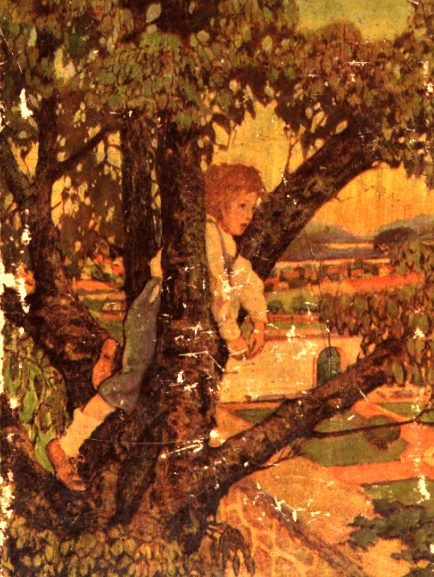
Bubble Books
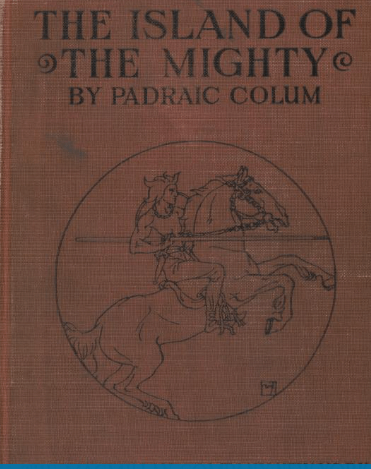
Rhoda Chase

Bubble Books are slender books that come with records. There are fourteen so far, Publishers Weekly tells us, with two new ones out for the 1921 holiday season. Cooooooool! “The happy owner of the ‘Chimney Corner Bubble Book’ may snuggle up on a rug, close to the warm fire, and listen to the howling of the winter wind as the phonograph plays ‘The North Wind Doth Blow,’” PW says. Throw in some cocoa and some snow and you have my ideal life. The Child’s Garden of Verses Bubble Book sounds cool, too, as does the cut-out Bubble Book that you can find on this website devoted to all things Bubble Book.
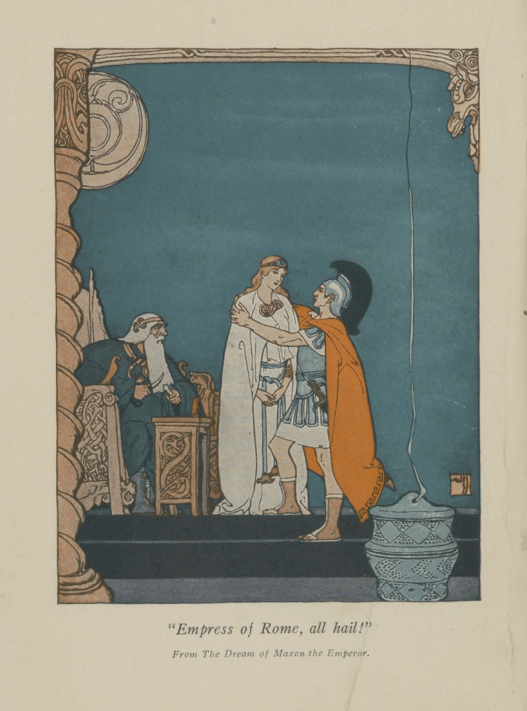
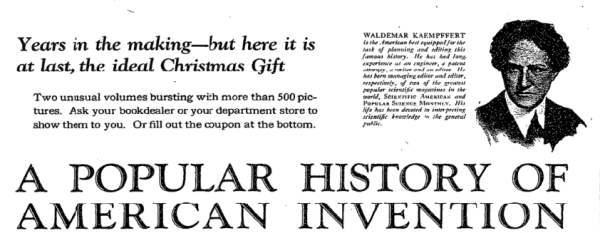
For Middle-Grade Readers

Midsummer

Edward C. Caswell, from Midsummer

Katharine Adams’ Midsummer, which Moore called “a girl’s book of great charm,” seemed promising. It’s about two American children who visit Sweden, where I’ve spent a lot of time but, thanks to COVID and work, not lately. And it was a timely read, seeing that it was the summer solstice here in South Africa. But Midsummer started slowly, and also there was this,

so I was about to give up. But when a new day dawned (at 5:32, but luckily I slept later than that), I decided to give it another try. I figured that the sun might have been making me, like Audrey, our heroine, a little cranky. I skipped ahead to the chapter about the midsummer festival, and there were pancakes with strawberry jam, and slabs of sticky gingerbread, and a merry-go-round, and folk dancing, and a bonfire, and “Astrid wore her new pink and white dress and there were wide pink ribbons on her stiff little braids.” Also Swedish kids who think it would be much more exciting to visit Coney Island. I’m glad I gave it another try.

Modern Physiology, Hygiene, and Health

Survey magazine isn’t suggesting Mary S. Haviland’s Modern Physiology, Hygiene, and Health as a gift for a child; it’s more of a resource for teachers. I found it strangely compelling, though. First I checked out whether I was following the eleven steps to be a Modern Health Crusader.

  1. I washed my hands before every meal to-day. Check!
  2. I washed not only my face but my ears and neck and I cleaned my finger-nails today. Check! (Well, my finger-nails were already clean.)
  3. I kept fingers, pencils, and everything likely to be unclean or injurious out of my mouth and nose. Check!

I was on a roll!

From Modern Physiology, Hygiene, and Health

I failed a few of the later steps, though, like being in bed for at least ten hours with the windows open, drinking no tea, coffee, or other injurious drinks, and trying to sit up straight. (I am slouching on the sofa with my laptop as I write this.) And I wasn’t sure what to make of “I went to the toilet at my regular time.”

Margaret F. Brown, from Modern Physiology, Hygiene, and Health

Most of the rest of the book consists of Ruth and Paul talking to Uncle George in great detail about what should be in your house. There’s a lot of sensible talk about the need for fresh air, and some fun activities like picking out furniture for your living room from pictures in a magazine.

Still, as much as I, personally, might find Modern Physiology, Hygiene, and Health a delightful gift, it’s the book equivalent of giving a kid socks for Christmas. Even though it’s a bargain at eighty-three cents, I’m going to have to give it a pass.

Games—School, Church, Home

Survey magazine says that George O. Draper’s Games—School, Church, Home is “a convenient volume for the play director,” but, unlike Modern Physiology, I think it would be an excellent gift for children as well. They can play some of the games on their own, like Fox Den, which involves chasing each other around this diagram marked on the ground or in the snow,

From Games–School, Church, Home

and they can devoutly wish that they went to the kind of school where complete chaos reigns and games like Seat Vaulting Tag are played.

For Older Children

The Story of Mankind

Last year, I was startled by Hendrik van Loon’s contemporary-looking illustrations in his 1920 book Ancient Man, and I found the narrative interesting, if dated.

Ancient Man by Hendrik Willem Van Loon, 1920, pyramids on yellow background.
Hendrik van Loon, from Ancient Man

So I had high expectations for Van Loon’s The Story of Mankind, which was awarded the first-ever Newbery Medal in 1922.****** The illustrations were less bold and less numerous than those in Ancient Man, though, and, despite Van Loon’s claim that “this is a story of mankind and not an exclusive history of the people of Europe and our western hemisphere,” the vast majority of the book’s 465 pages are devoted to Europe and the United States.

Hendrik van Loon, from The Story of Mankind

Still, I kept coming across interesting facts as I flipped through the book, like that “Jesus” is a Greek rendition of the name that we know in English as Joshua, which is one of those things that everyone else probably knows but I didn’t. And, while I’m sure careful perusal would reveal some howlers, Van Loon’s treatment of non-Europeans is respectful by the standards of the day. Plus, no one can accuse Van Loon of dumbing down history for children. Here’s a sample:

If I ever decide to learn, for example, who exactly the Phoenicians were, I may turn to Van Loon. So might your favorite teenager, if he/she is of an intellectual bent.

The Old Tobacco Shop

Reginald Birch, from The Old Tobacco Shop

Moore assures us that William Bowen’s The Old Tobacco Shop “will give pure joy to boys and their fathers,” and it was a runner-up for the Newbery Medal. All of this did little to inspire my confidence in what I feared would be a heartwarming story about a boy’s coming of age as a smoker. The book’s opening—a father sends his little son, Freddie, out to buy tobacco for his pipe—didn’t help.

The Old Tobacco Shop turned out, far more weirdly, to be a trippy tale of why preschoolers shouldn’t smoke opium. Freddie disobeys the tobacconist’s warning never to smoke the “magic tobacco” stored in a pipe shaped like a Chinaman’s head, and tediously surreal adventures ensue. For anyone who’s on the fence as to whether to leave their head shop in the hands of a small boy, this is an instructive read. Everyone else can take a pass.

The Windy Hill

Another Newbery runner-up, Cornelia Meigs’ The Windy Hill is the story of a brother and sister who go to the country to stay with their uncle. He’s acting mysteriously, and they try to get to the bottom of it.

Edward C. Caswell, from The Windy Hill

And presumably succeed, but you couldn’t prove it by me. I wasted an hour two years ago on Meigs’ The Pool of Stars, about a girl who goes to the country and tries to figure out why her neighbor is acting mysteriously, and I’m not going to make that mistake again.

The Scottish Chiefs

The period of 1890 to the 1920s is referred to as the golden age of illustration. No one has ever accused it of being the golden age of children’s literature, though,******* so there were a lot of reissues of classic books with new illustrations. One of them Moore mentions is Jane Porter’s 1810 book The Scottish Chiefs, illustrated by N.C. Wyeth. I checked it out and it turned out to be a rip-roaring tale of Scottish nationalism, although not rip-roaring enough for me to commit to reading all 503 pages. (The Scottish Chiefs, like many books that make their way into the childhood cannon, was intended originally for adult readers.) There were a lot of “thees” and “thys” for a story that starts out in Scotland in 1296, and sentences like, “I come in the name of all ye hold dear to tell you the poniard of England is unsheathed!” But there are also strong women characters, and an Elizabeth and Darcy-like marriage between our hero, William Wallace, and his wife Marion: “Affection had grown with their growth; and sympathy of taste and virtues, and mutual tenderness, had made them entirely one.” And the Wyeth illustrations are wonderful and numerous.

N.C. Wyeth, from The Scottish Chiefs

More Newbery Runners-Up

Bernard Marshall, from Cedric the Forrester

If you don’t want your kid to grow up with a one-sided view of 13th-century English-Scottish tensions, you can add Newbery runner-up Cedric the Forester, Bernard Marshall’s tale of an English nobleman and his squire in the days of Richard the Lionheart, to your gift list. Moore says that Cedric the Forester “is written in somewhat stilted style, but the idea of freedom is admirably brought out.” Apparently forgetting that she had just reviewed The Scottish Chiefs, she adds that “the historical period represented is one for which little story writing has been done.” Perusal of the first few pages includes the inevitable faux-Shakespearean dialogue and someone saying “gadzooks.” But there are also several aperçus by our narrator, Dickon (Cedric is the squire), like “My father laughed as one laughs at the sorriest jest when he is gay,” that left me inclined to follow him on his adventures.

Willy Pogany, from The Golden Fleece and the Story of the Heroes who Lived Before Achilles

Padraic Colum’s The Golden Fleece and the Story of the Heroes who Lived Before Achilles sounded promising, seeing as it was illustrated by acclaimed artist Willy Pogany, but the illustrations are in black and white and the stories are flatly told, so I passed.

George Varian, from The Great Quest

Charles Boardman Hawes’ The Great Quest is about a Massachusetts lad’s adventures fighting against slave traders in Africa. I figured that, despite the anti-slavery message, any 1921 book on this subject was going to be super-problematic. It was.

A Princeton Boy Under the King

“If Princeton is hovering in the background of your boy’s day dreams,” Publishers Weekly tells us, “he will want to read a story of student life at the College of New Jersey in the middle of the eighteenth century.”******* The history of my graduate alma mater is an interest of mine, so A Princeton Boy Under the King sounded like just the thing. I gathered from my own reading that the university’s early years consisted mostly of drunkenness and food fights in Nassau Hall, and I wondered whether A Princeton Boy Under the King would present a sanitized version. But no, that’s pretty much what goes down. It’s like an 18th-century This Side of Paradise.

The Children’s Book of the Year

Last year, I couldn’t find any books about people of color at all, so I recommended the magazine The Brownies’ Book, from the publisher of The Crisis magazine, which was described as being “designed for all children, but especially ours.” (I wrote about The Brownies’ Book in more detail during Black History Month this year.) Sadly, the magazine failed to meet its circulation goals and the December 1921 issue was the last of its two-year run.

Elizabeth Ross Haynes (photographer unknown)

As I learned in the Survey article, there’s a silver lining. “What is there in the autumn output to open up to the boy or girl any of the avenues of civic life; any of the nationalities with which we have been brought into greater contact since the war; of the Negroes, neighbors of the children of the South…?” the magazine asks. (Since almost no one else was asking this kind of question, I’ll skip over the “neighbors” issue.) The magazine points us in the direction of Unsung Heroes, by Elizabeth Ross Haynes, an African-American social worker, which was also published by The Crisis’ publishing company.

C. Thorpe, from Unsung Heroes

Each of the book’s seventeen chapters is a portrait of a notable person of African ancestry from the United States or elsewhere, including Frederick Douglas, Booker T. Washington, Harriet Tubman, Haitian general Toussaint Louverture, Alexandre Dumas, and Alexander Pushkin. (I knew that Dumas was of partly African descent, but I didn’t know about Pushkin.)

C. Thorpe, from Unsung Heroes

The profiles in Unsung Heroes start out, like the children’s biographies of my youth, with fictional scenes from the subjects’ childhoods and go on to recount their later achievements. Some of the language wouldn’t make it into a book published today (“Many years ago a keen-faced little boy with protruding lips, Toussaint by name, was busy, day by day, tending a great herd of cattle on the Island of Hayti in the West Indies”), but I don’t care. The stories are compelling, and the fact that this book was written and published at all in 1921 is a small miracle.

Judging from Goodreads (0 ratings, 0 reviews) and Google Scholar (one hit, for a 1990 article on the history of African-American children’s literature that I had already read for my post on the children’s novel Hazel), Unsung Heroes is little remembered today. Haynes is my new unsung hero, and Unsung Heroes is my choice for Best Children’s Book of 1921.

Some Final Thoughts

Moore complains in The Bookman that “in robbing fairy tales of all their terrors and poetry of all its sadness, we have let loose a new sort of made-to-order story, which needs the cleansing wind, wide spaces, and hearty laughter created by Mary Mapes Dodge in her time.” My perusal of the Publishers Weekly roundup left me with some sympathy for Moore’s argument that children’s books were becoming generic. On the other hand, after all the morbid stories I came across last year, I was relieved to see 1921’s children better protected from the horrors of the world. There are worse things for a child than blandness.

Happy holidays, and happy holiday reading, to all of you!

squiggle

*Further research revealed that 1) John Farrar, who later founded Farrar, Straus, and Giroux, was the editor of The Bookman in 1921, and 2) Songs for Parents is a truly awful book of poetry.

**I also checked out Moore’s other 1921 Bookman column, from May. It starts out with the magazine’s new editor (Farrar) saying, “Won’t you give us something new and different in place of the old omnibus review? Make it purely fanciful if you like.” Dangerous words when spoken to someone who had a puppet as an inseparable companion. My desperate cries of, “No! Do the old omnibus review!” failed to turn back time, and this column turned up nothing useful.

***1920s Publishers Weekly is one of those magazines where the ads are as good as the editorial content, and this issue had a treasure trove. This one left me scratching my head, though.

****Sadly for me, there were no more runners-up until 1925. One of the 1925 runners-up, in an act of blatant favoritism by the American Library Association, was Moore’s horrible book about her puppet.

Nicholas: A Manhattan Christmas Story, by Anne Carroll Moore
Cover of Nicholas: A Manhattan Christmas Story, by Anne Carroll Moore

*****It’s actually An Argosy of Fables, not The. 1920s book reviewers make an amazing number of mistakes with the titles of books.

******I first came across The Story of Mankind at the top of the list of Newbery Medal winners that was posted in my school library, and it totally creeped me out. The 1920s seemed like the stone age back then. Now they’re twice as far away and they seem like yesterday!

*******UPDATE 12/28/2021: Well, this syllabus for a class on the Golden Age of Children’s Literature dates it from 1865 to 1926, but the latest book on the reading list is Pollyanna, from 1913.

********Publishers Weekly’s holiday roundup includes a “Books for Boys” section and a “Books for Girls” section, along with a section for both boys and girls and others for younger readers. I was fuming about the sexism of this until I came across three books in a row on railroads in “Books for Boys.” “Fine, I admit it, I’m a girl!” I said. “Just give me a story about two friends who make a cake on a snowy day and leave out the baking powder, with disastrous consequences.”