Tag Archives: New York Times

Children’s Books: Your 1924 Holiday Shopping Guide

Welcome to the sixth annual children’s books holiday shopping guide! I’ve just arrived in Cape Town from Washington, D.C., as I do at this time every year.* This year, determined to avoid a repetition of last year’s kind of pathetic effort, I got an earlier start. The problem was, I couldn’t stop myself from reading just one more 1924 roundup, or looking up just one more book, so here I am on Christmas Eve afternoon in full Bird by Bird mode.

The Bookman, October 1924

This year, as always, pioneering children’s librarian Annie Carroll Moore** is my principal guide. And, as always, she’s kind of annoying. In her article in the May 1924 issue of The Bookman, she’s supposedly having a conversation with a young writer who’s published two children’s books and isn’t sure whether he should continue. Her reply, supposedly, is the whole rest of the article, with quotation marks and everything. If this were a real conversation, he’d be extremely sorry that he asked. Skip the framing device, Annie! Just tell us about the books! Luckily, in her October article, she writes more or less like a normal person.

The October issue of The Bookman also has an article by Louise Hunting Seaman about giving books to children, with lots of cool examples of how to do it without looking like you’re giving them a homework assignment. You could, for example, give them a real Italian puppet*** holding a copy of Pinocchio or give them Padraic Colum’s The Island of the Mighty, a tale of Celtic Britain, and take them to the Hall of Armor at the Metropolitan Museum (although, as noted below, I’m not so gung-ho on The Island of the Mighty.)
New York Times, December 7, 1924

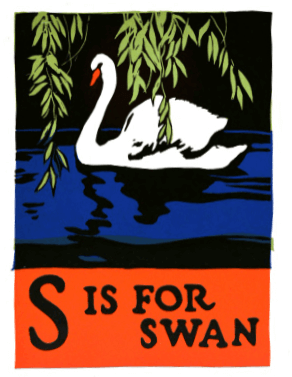
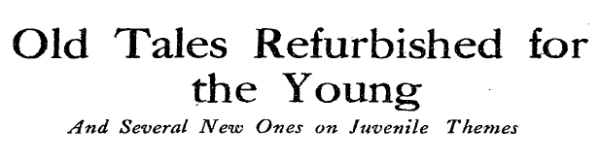
The New York Times weighs in on the children’s books of the season in the December 7 issue,**** the Library Journal give us a comprehensive list “designed merely for the convenience of children’s librarians in checking the fall and winter output” (not realizing that it might come in handy for bloggers a hundred years in the future too), and St. Nicholas’s November issue has a list of books for children that turn out to all be really old, but that’s OK with me because it’s accompanied by this cool graphic by one of my favorite 100-year-ago people, infographics pioneer Fred Woodward.
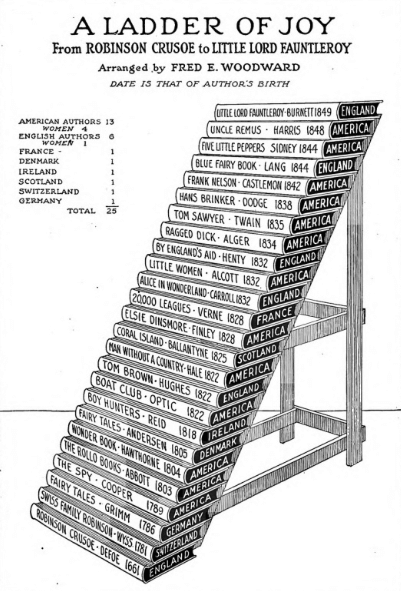
Fred Woodward, St. Nicholas, November 1924

So plenty to work with, even with Publisher’s Weekly’s excellent roundup sadly having bitten the dust in 1922 and HathiTrust, my main source of 100-year-old books and magazines, infuriatingly having blocked access to a lot of books outside the U.S. for copyright reasons.*****

Fairy Tales, Nursery Rhymes, and Folk Tales
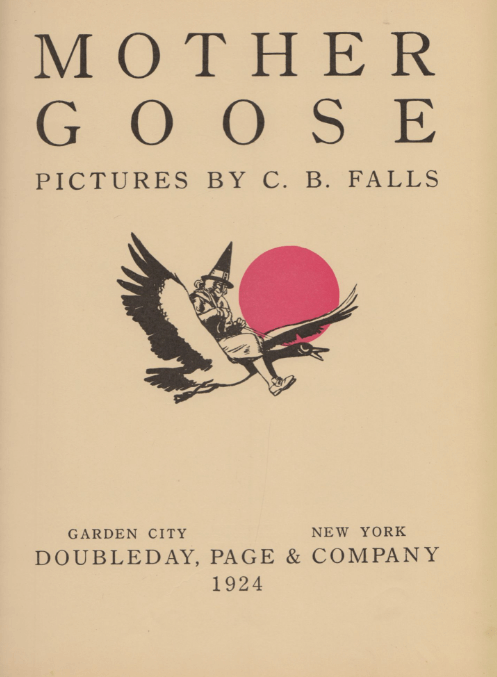
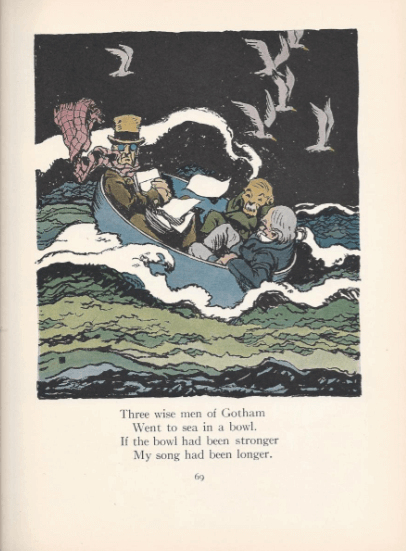
I was a fan of C.B. Falls’ 1923 offering The A B C Book, but I’m meh on his Mother Goose, as is Moore, who says, ““It is a book of distinguished appearance, but something highly important to little children is missing from its pictures—the quality that, differentiating Mother Goose characters from all others, makes them live again in a new way of their own.” The three men in the illustration of “Three Wise Men of Gotham” are, she points out, “easily recognizable as Wilson, Lloyd George, and Clemenceau.” I wasn’t familiar with this particular nursery rhyme, which turns out to be pretty horrifying.******
For Young Children
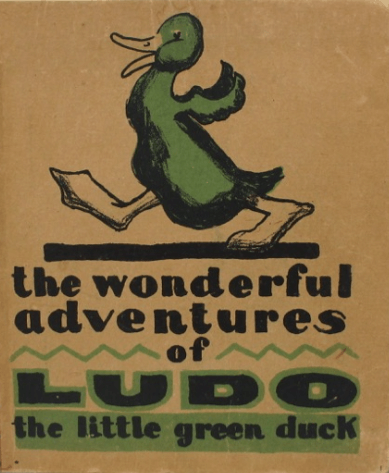
Moore praised Jack Roberts’ The Wonderful Adventures of Ludo the Little Green Duck, saying, “It’s gay, it’s fresh, and it’s different,” and adding, “It captured my imagination at a psychological moment, for the dummy came into my office on the last day of the Democratic Convention in Madison Square Garden.” I’m not sure what that means, but, hey, we’re all at a psychological moment, right? This was one of the books that was blocked by HathiTrust, but Ludo’s adventures take him around the world, and “around the world” plus “1924” generally equals “racist.” The online images I was able to find seemed to bear this out. (That’s Ludo in the Bookman headline with some of his new friends.)
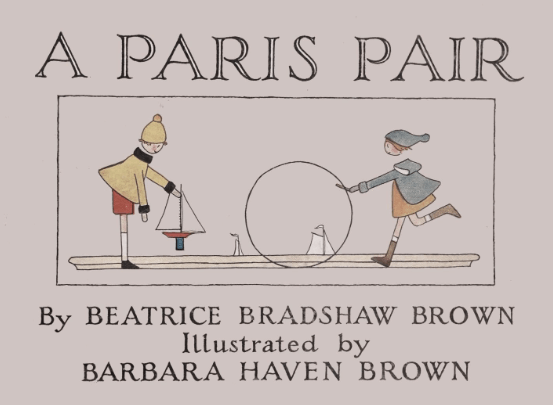
A Paris Pair: Their Day’s Doings by Beatrice Bradshaw Brown is, according to Moore, a “delightful, inexpensive book” that features “a clever verse in English for each hour in the day of two French children.” I did in fact find it pretty delightful, although going to the Louvre EVERY day sounds pretty exhausting. Here’s lunchtime:

LUNCHEON never comes too soon,
For we are nearly starved at noon!
Spinach and an omelette,
Salad, too, and better yet
Delicious jam with creamy cheese—
A dish that’s very sure to please!
Becoming gratitude they feel,
And thank le bon Dieu for their meal

Moore calls The Poppy Seed Cakes by Margery Clark, illustrated by Maude and Miska Petersham, “certain to appeal to little children,” although I (admittedly not any kind of child) found the stories silly and some of the illustrations, like this one,
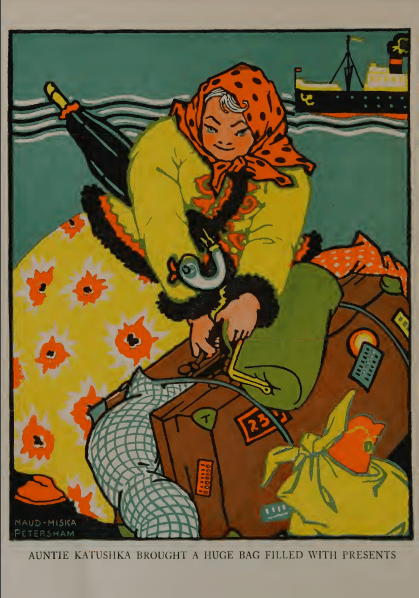
kind of sinister.
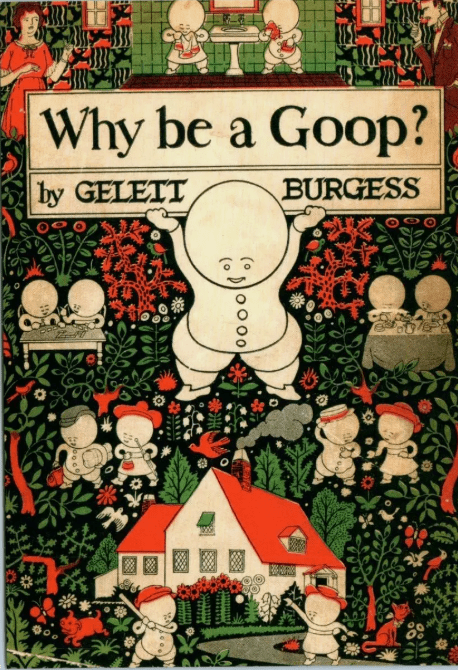
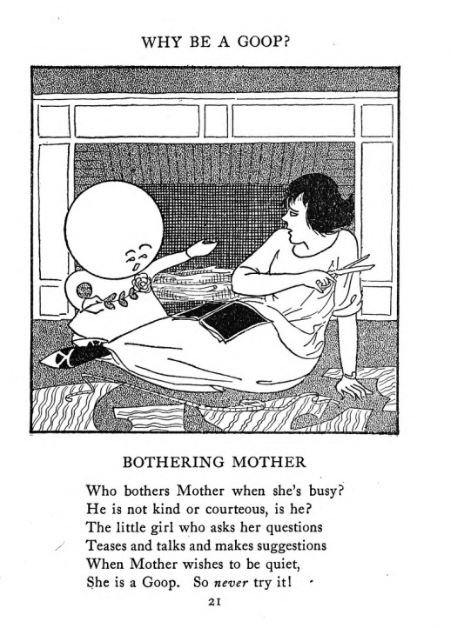
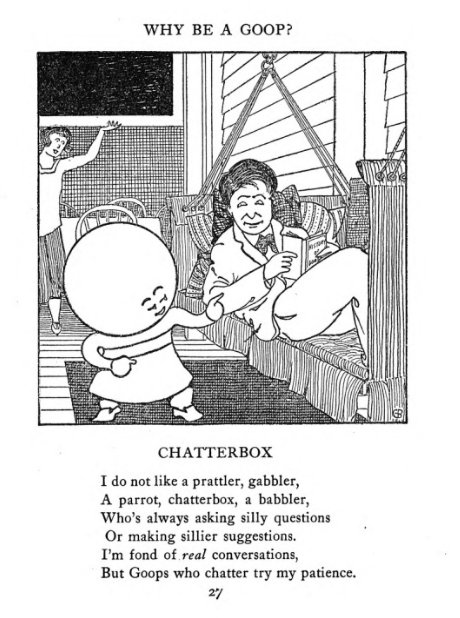
Why Be a Goop? is a late installment in Gelett Burgess’s series that started in 1900 with Goops and How to Be Them, which was a favorite of mine when I was little, although the Goops’ round heads freaked me out. In that book, the Goops did things like lick their fingers and lick their knives and generally lead “disgusting lives.” In this one, though, they seem to spend most of their time trying to get the attention of their negligent parents.
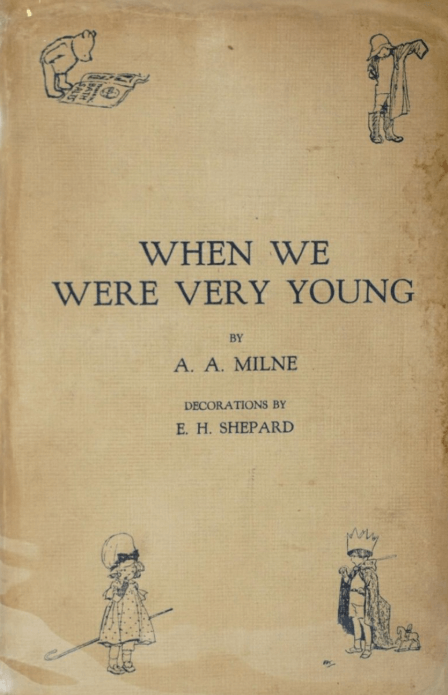
When We Were Very Young, A.A. Milne’s classic book of verses featuring Christopher Robin, surprisingly didn’t make it onto any of the lists, maybe because of its November publication date. I loved this book as a child. We had a record of the poems, too, and I can still recite some of them, like this one,*******
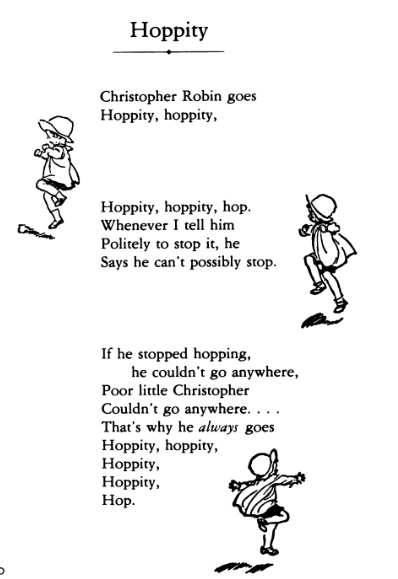
by heart.

For Middle-Grade Readers
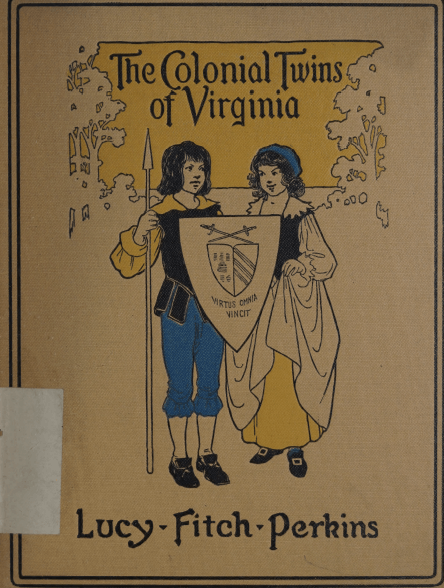
Its title alone would have DQ’d The Colonial Twins of Virginia, the latest installment in Lucy Fitch Perkins’s twins series, even if I hadn’t done a word search for “slave,” which yielded, among other things, one of the twins saying to the other, “One has to love people, and there aren’t any other people here to love except the slaves, and of course they don’t count.”
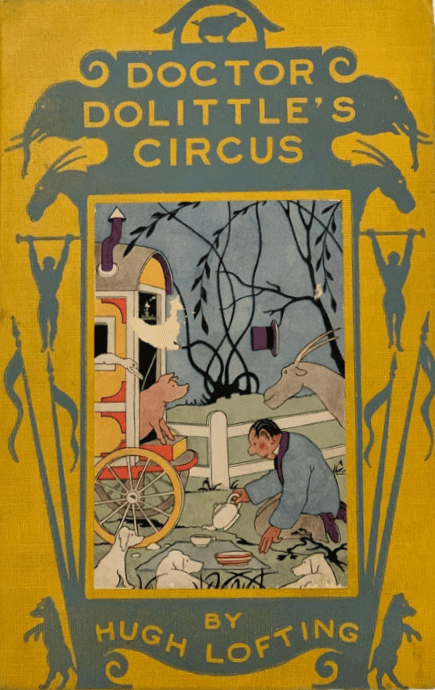
I didn’t have high hopes, but Dr. Dolittle’s Circus by Hugh Lofting appears to be one of the less offensive books` in the series (I wrote about previous installments here and here). Dr. D. comes to the aid of abused animals in a circus, including returning a seal to the sea.
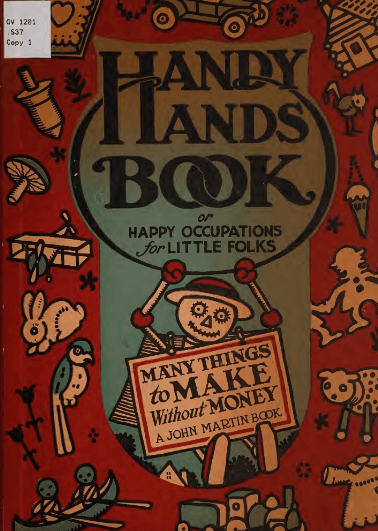
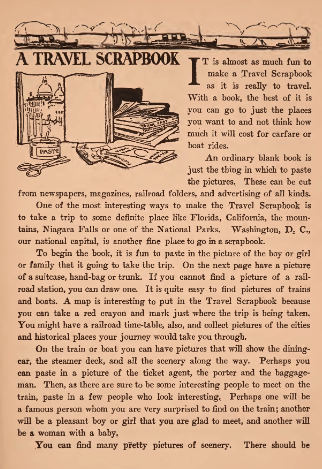
I loved activity books as a kid and am always on the lookout for a good hundred-year-old one. I’m not a fan of John Martin’s annual miscellany, so his Handy Hands Book was a pleasant surprise. I don’t buy Martin’s argument that “it is almost as much fun to make a Travel Scrapbook as it is really to travel” (unless maybe you’re stuck at DFW on Christmas Eve), but making a scrapbook of an imaginary journey does seem like fun.
For Older Children

Novels for high-school-aged children from a hundred years ago tend to be unbearably tedious, and this year’s were no exception.
Moore describes Earl Silvers’ Barry the Undaunted as “a story of high school boys and girls with an element of civic interest,” and it’s about as thrill-packed as that makes it sound. I gave up early on, in the middle of a prolonged discussion between Barry (who is a girl) and her fellow campers about what rules their swim team should have.

The New Moon

Moore quotes the introduction to Cornelia Meigs’ The New Moon as saying, “It might seem a tedious journey to walk at a sheep’s pace across the whole state of Pennsylvania.” Indeed it might, I say as someone who found a journey across half of the state of Pennsylvania in the passenger seat of a Prius pretty tedious. The journeyer is a boy who makes his way from Ireland to the American frontier. From a quick flip-through it struck me as more interesting than Meigs’ previous novels, but that’s not saying much.
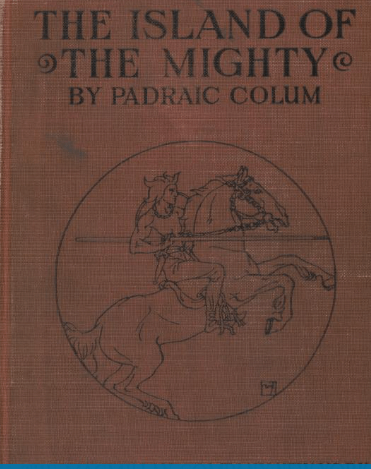
The first word of The Island of the Mighty, the book that Louise Hunting Seaman suggests that you accompany with a visit to the Hall of Armor at the Met, is “thus.” As “distinguished” as Moore finds it, I didn’t make it much further. Wilfred Jones’s illustrations are pretty cool, though.
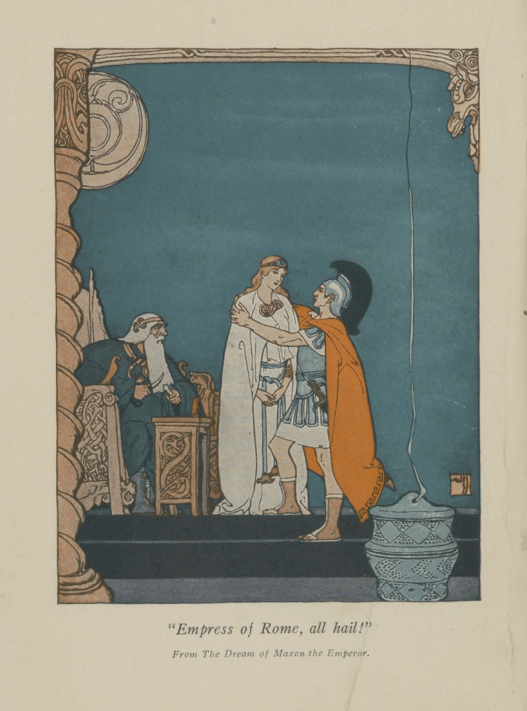
Wilfred Jones, The Island of the Mighty

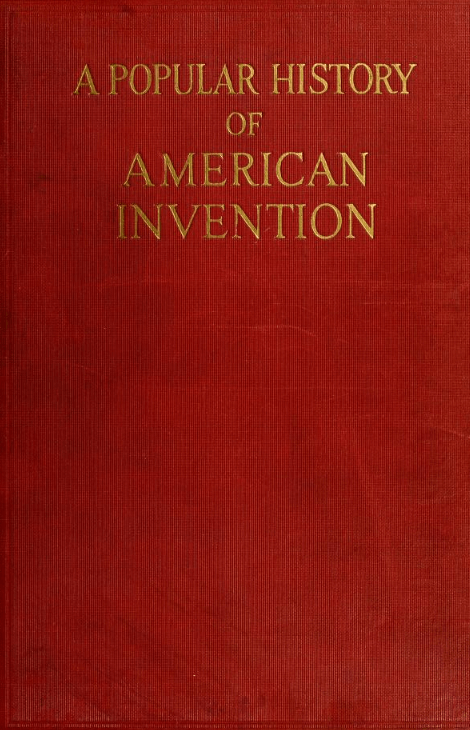
You will, this New York Times ad claims of Waldemar Kaempffert’s A Popular History of American Invention, “read these exciting volumes as you would a novel…You watch Goodyear in rags vulcanizing rubber over the kitchen stove; Davenport tearing up his wife’s one silk dress to insulate a motor.”
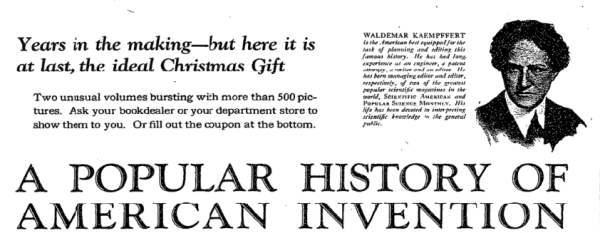
Oh no! I raced to find the horrifying scene:

“Tearfully but bravely the young wife handed to her boyish inventive husband, ‘Tom,’ the silk dress in which she had been married only eight years before. He needed it in his work as an inventor. It had been carefully folded away in lavender by the beautiful bride when, in 1827, Thomas Davenport, the active but studious village blacksmith of Brandon, Vt., had so far forgotten his profound interest in the ‘galvanic magnet’ of Joseph Henry as to fall in love and ‘settle down.’”

This is, I have to say, a lot more exciting than Cornelia Meigs.
Moore calls Dr. W.T. Grenfell’s Yourself and Your Body “a unique and valuable book embodying Dr. Grenfell’s talks to his own children, with original and amusing drawings.” Grenfell, unsurprisingly, doesn’t cover ALL of your body, although there’s a chapter called “Waste,” which ends with, “Here ends this difficult chapter.” Here’s a cute drawing of urea:

Young Adults

Or the older children might just want to skip right up to reading adult books, like Agatha Christie, a favorite of my own mid- to late teens.
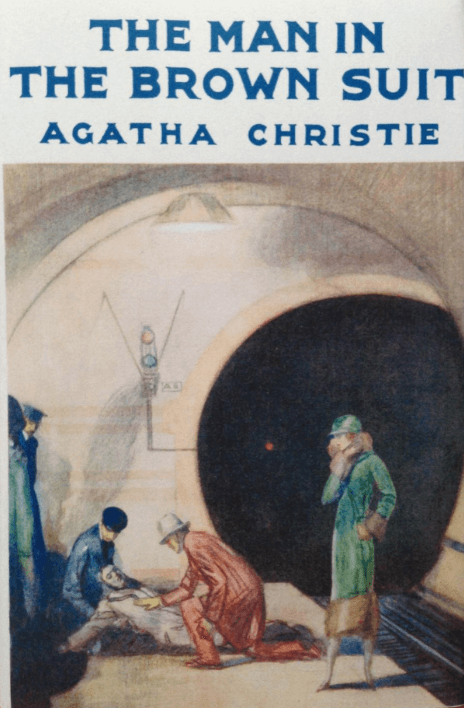
Some critics were disappointed that her latest novel, The Man in the Brown Suit, was a stand-alone thriller that didn’t figure Hercule Poirot, but it turns out to be partly set in Cape Town, which I’m pretty excited about.
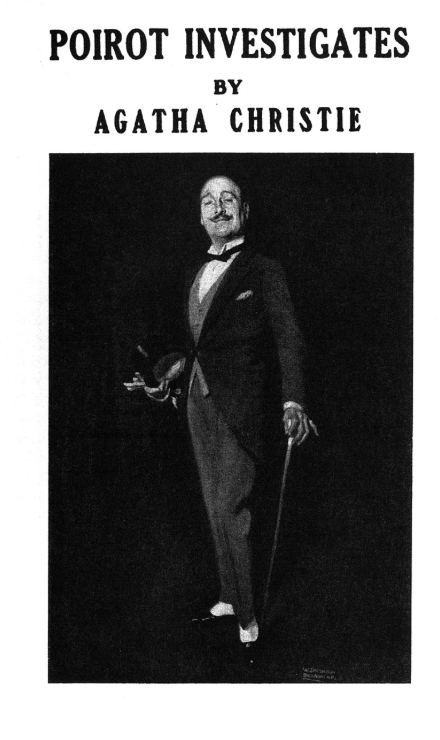
Plus, luckily for Poirot fans, there’s also her first short story collection, Poirot Investigates.
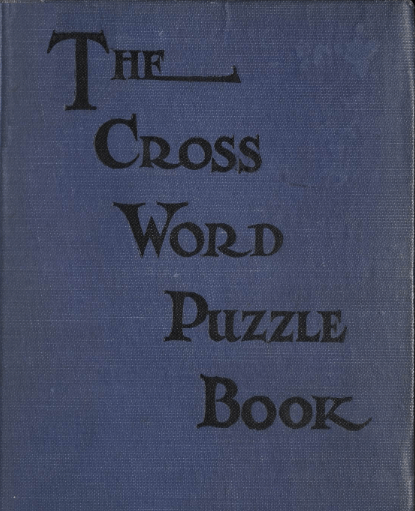
Number one on my 1924 wish list, and on the list of books I’m mad at HathiTrust for blocking in South Africa, is The Cross Word Puzzle Book, the first book of crossword puzzles ever and also Simon and Schuster’s first book ever. It launched a craze I have quite a bit of expertise on, since it featured prominently in my seventh-grade history paper “Fads of the 1920s.” (You can also get it at Project Gutenberg, but it’s not in the original format so you can’t print it out and do the puzzles yourself.) (UPDATE 12/24/2024: The Library of Congress has a PDF, but you can’t download it.)

Christmas Eve has given way to Christmas day and now Christmas night,********* and I’d love to curl up with a good cross word. Oh, well. Good thing I have Agatha Christie to keep me entertained.
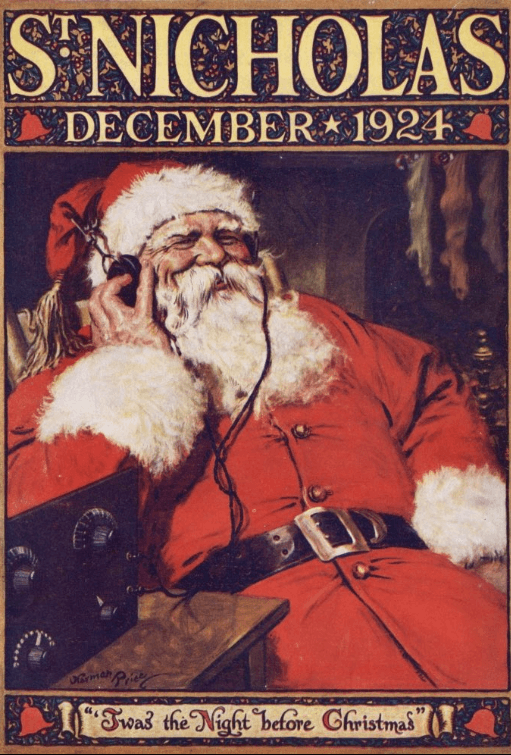
Happy holidays, everyone!

squiggle

*Although not, as people often assume, because I want to avoid the northern hemisphere winter. While people here are celebrating the holidays by having barbecues (braais in local parlance) or going to the beach, I’m dreaming of hot chocolate and long nights.

**Who, I see, has changed the name she writes under from Annie to Anne. I knew this was coming—Wikipedia says that she “officially changed her name to Anne in her fifties, to avoid confusion with Annie E. Moore, another woman who was also publishing material about juvenile libraries at that time.” In my opinion, ACM, who basically invented children’s libraries and children’s book reviewing, should have been the one to keep the i.

***I was going to say something snooty about Pinocchio being a marionette, not a puppet, but I looked into it and marionette is a subcategory of puppet.

****As always, there are a lot of reissued classics, which qualify for inclusion if they have new illustrations.

*****In the past, HathiTrust allowed worldwide access after 95 years, which is when copyright expires in the U.S., for most publications except U.K. periodicals.

******The Times, which is more of a fan than Moore, points out that Falls’s collection includes about three hundred verses “and must be comprehensive of all of them that are now extant.” There’s something to be said for selectivity.

*******Admittedly not a particularly complex piece of verse.

********The fake-sounding Martin turns out to have been a real person, although his actual name was Morgan van Roorbach Shepard, which would have been hard to squeeze onto the cover of all those books.

*********Don’t worry, I haven’t been doing this the WHOLE time.

Children’s Books: Your 1923 Holiday Shopping Guide

Welcome to the fifth annual children’s books holiday shopping guide! It’s been a hectic holiday season, including a trip from Washington, D.C., to Cape Town less than a week ago (I split my time between the two cities), so this is a pared-down edition.

My research this year started out with a big disappointment: it turns out that the 1922 edition of Publisher’s Weekly’s annual Christmas Bookshelf issue, which had been one of the highlights of my My Life 100 Years Ago year, was the last. Why, Publisher’s Weekly? Why?

Luckily, there’s still a lot of coverage, including holiday roundups in the New York Times, one on children’s books and another buone on books for the general reader with lots of books older children might enjoy. And, as always, pioneering children’s librarian Annie Carroll Moore weighs in in The Bookman, this time with not just one but two articles on holiday books, in the October and December issues.

New York Times, December 23, 1923

In non-book news, the Times also provides some helpful advice on keeping your children healthy over the holidays, including, “Don’t overdress them with their new sweaters or furs, just because it is Christmas.”

For Young Readers

From The A B C Book by Charles B. Falls

A piece of all-around good news: there are more pictures, and in particular more color pictures, in books for young children than there were just a few years ago. There’s even a book with color illustrations on every page, the first I’ve seen: Charles B. Falls’ The A B C Book, a book of woodcuts with an animal for each letter. (If you’re wondering what he did about X, it’s for xifius, which turns out to be Greek for swordfish.) It’s a favorite of Moore’s, and of mine.

From The Six Who Were Left in a Shoe by Padraic Colum

The New York Times recommends Padraic Colum’s The Six Who Were Left in a Shoe, and, although I found the story kind of silly, their praise for the endpapers is justified.

For Middle-Grade Readers and Older Children

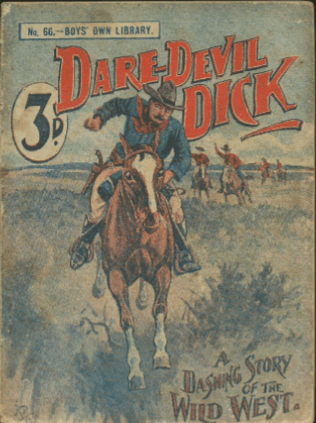
There was a bit of a moral panic going on regarding children’s reading in 1923, including in an article in the October 1 issue of The Library Journal by librarian Wilhelmina Harper. Harper’s bottom line: children are reading too much sensational adult literature, like Daredevil Dick and Seven Buckets of Blood (neither of which, sadly, I was unable to find),* and should be directed to high-quality children’s literature instead. I wondered whether Harper was being excessively prim and proper until I found The Alaskan: A Novel of the North, a 1923 novel by James Oliver Curwood, whose books, Harper tells us with concern, fifth- and sixth-grade boys have been asking for. Flipping through it, I found the following sentence: “He hurried back, seized a loaded gun, and sprang to the window, knowing that he must continue to deal death until he was killed.” Maybe Harper has a point.

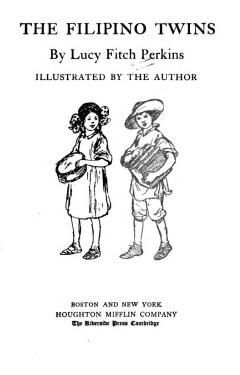
So what does Harper think children should be reading? Books published before 1923, mostly, which doesn’t do me much good. She speaks highly of Lucy Fitch Perkins’ series about twins from around the world, but I had a bad feeling about the 1923 installment, The Filipino Twins, When I skimmed through the first few chapters, though, I found it surprisingly lacking in racism. Unfortunately, the same thing can’t be said for the 1931 installment, which is about a pair of African American twins. So I’ll pass on Perkins.

Nicholas: A Manhattan Christmas Story, by Anne Carroll Moore

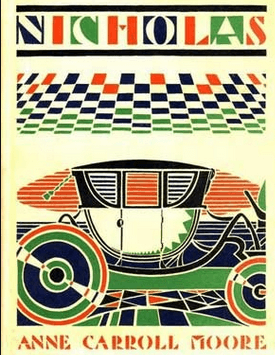
I would have been more impressed by Annie Carroll Moore’s positive write-up about Nicholas, A Manhattan Christmas Story in the October 1923 Bookman roundup if the book hadn’t been written by…Moore herself.** Then, in the December issue, she waxes lyrical about writing Nicholas. According to my research for my post about Moore, it is not exactly a forgotten classic. Luckily for present-day me, though, it wasn’t actually published until 1924, so I can wait until next year. Cool Art Deco cover, though.

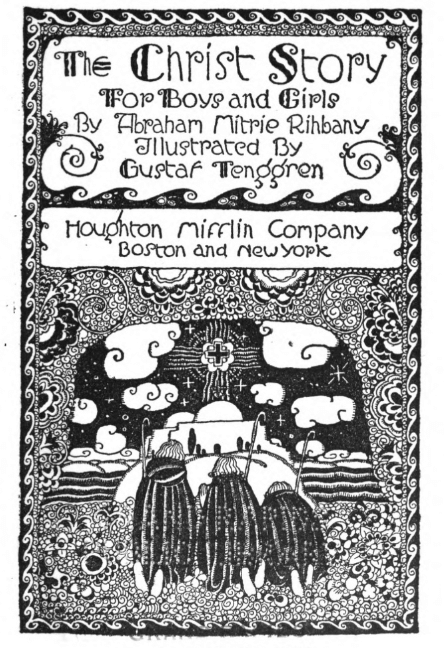
The Christ Story for Boys and Girls, featured in the New York Times roundup (which not very inclusively refers to Jesus as “our Savior”), is described as attempt by Abraham Mitrie Ribhany, a Lebanese Christian who moved to the United States as a young man, to draw on his own childhood experiences with Palestinian traditions to give children an idea of what Jesus’ life was like. I was intrigued by the premise, but I’m leery of a book that refers to Jesus repeatedly as Syrian*** without ever mentioning that he was Jewish.

From A Child’s Story of American Literature

The Times raves about A Child’s Story of American Literature by Algernon Tassin and Arthur Bartlett Maurer, although the reviewer calls the title “deplorable,” since it’s for older readers who would turn up their noses at the word “child.” Also, they think Tassin and Maurer have assigned insufficient importance to the works of Sidney Lanier. I’m okay with that, but, skipping through the book, I found a number of things to give me pause. For example, this passage:

You are a child of culture. Is it not your affair to make sure that, a hundred years hence, the story of which you are the first chapter will not have the same regrettable thing to record?

My hundred-years-hence ears perked up. It turns out that the regrettable thing is how, just as America has not made enough of an effort to Americanize her aliens, there has been insufficient appreciation of the United States of America’s own literature. I took issue with the first part, since, whatever you think of Americanization as a concept, my own experience of the world of 100 years ago is that people never shut up about. I do agree about the low self-esteem regarding American literature, though. Be that as it may, I’m not adding this book to my gift list.

A number of poetry anthologies for young people are on offer. I summarily disqualified The Boy’s Book of Verse, edited by Mary Gould Davis, which is the follow-up to her 1922 volume titled, you guessed it, The Girl’s Book of Verse. Moore and the Times both recommend This Singing World: Modern Poems for Young People, edited by Louis Untermeyer. “Hardly any boy or girl in the teens, or even for a few years earlier, but will find much in the volume to enjoy,” the Times raves.****

I wouldn’t bet money on that, but it is a nice selection, featuring poets including William Butler Yeats, Carl Sandburg, H.D., and, um, Louis Untermeyer and his wife, Jean Starr Untermeyer. This one’s going on my list. And the great thing about getting a poetry book as a present is that you don’t have to pretend to have read the whole thing.

Happy holidays, everyone, and happy reading!

squiggle

*UPDATE 12/27/2023: An enterprising reader found a listing for Dare-Devil Dick on Abe Books.

**The only reason that Moore even kind of gets away with this is that she only mentions the illustrator in the text of the article, with her name listed as the author in the list of books at the end.

***The Christ Story for Boys and Girls is based on Ribhany’s influential 1916 adult book The Syrian Christ.

****It took me a while to get my head around that syntax.

Your 1918 Holiday Shopping Guide

It’s Christmas 1918, and everyone’s in the mood to celebrate! But what to get for that special someone?

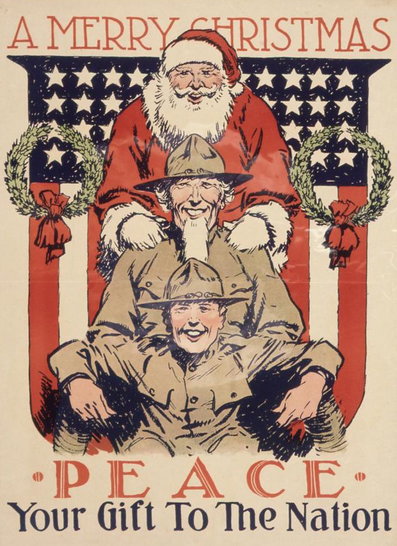
Everyone’s already gotten the gift they wanted most,

U.S. Food Administration poster, 1918. Santa with soldiers. A Merry Christmas. Peace, Your Gift to the Nation.

US Food Administration, Educational Division, 1918

but there’s lots of other cool stuff out there.

For the Kids

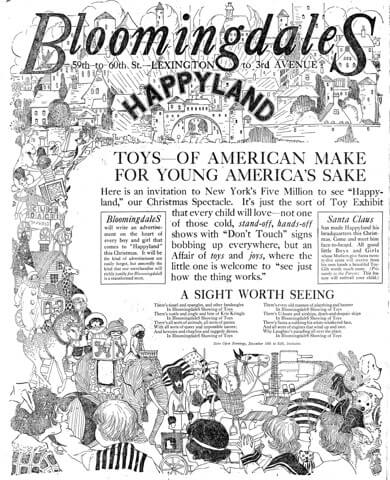
A good place to start your search is Happyland at Bloomingdale’s, where

There’s every old manner of plaything and banner
In BloomingdaleS Showing of Toys,
U-boats and airships, death-and-despair ships
In BloomingdaleS Showing of Toys.

Bloomingdales ad, 1918. Happyland. Toys of American make for young America's sake. Children looking at toys.

New York Times, December 15, 1918

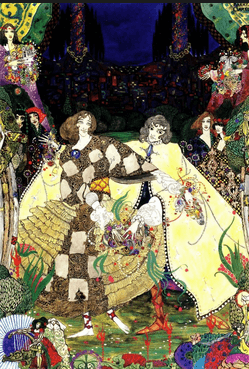
If your kid’s more into reading than visiting death on the Allied forces, you’re still in luck. Recommendations from The Bookman include an edition of Hans Christian Andersen’s fairy tales, with illustrations by Harry Clarke,

Harry Clarke illustration, Fairy Tales by Hans Christian Andersen, 1916. Women in gowns at party.

Canadian Wonder Tales by Cyrus Macmillan, illustrated by George Sheringham,

George Sheringham illustration from Canadian Wonder Tales, 1918. Indians in headdresses.

English Fairy Tales by Flora Annie Steel, illustrated by Arthur Rackham,

Arthur Rackham illustration, English Fairy Tales, 1918. Man selling vegetables to woman in round hut.

Folk Tales of Flanders, written and illustrated by Jean de Bosschère,

Illustration from Folk Tales from Flanders by Jean de Bosschère, 1918. Young man fighting with monster.

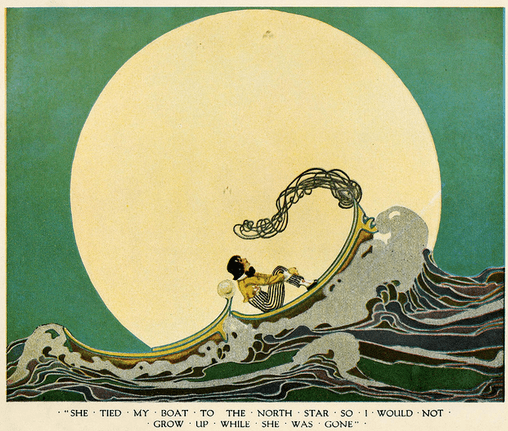
and Dream Boats, Portraits and Histories of Fauns, Fairies, and Fishes, written and illustrated by Dugald Steward Walker, of which The Bookman says that “text and drawing tinkle with elfish laughter and scintillate with flitting wings.”

Illustration from Dream Boats..., Dugald Steward Walker, 1918. Man in boat on cresting ocean wave in front of giant star.

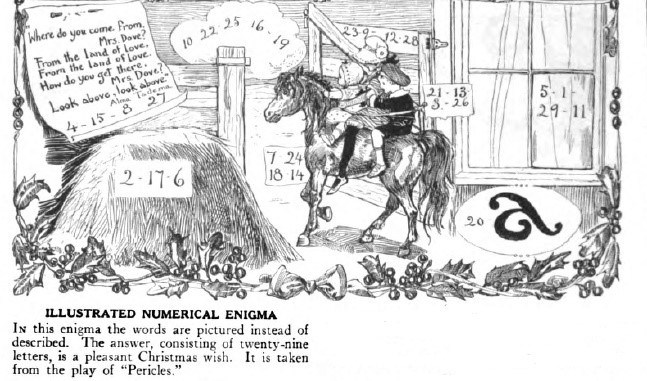
Or give the gift that keeps on giving, a subscription to St. Nicholas magazine. The kids will  spend many happy hours solving puzzles that leave me baffled, like this one:*

Illustrated numerical enigma from St. Nicholas magazine, December 1918.

St. Nicholas, December 1918

 For the Men

Vanity Fair’s holiday shopping guide is full of ideas for the “Male of the Species,” but once you weed out the smoking presents

Mahogany and glass ash tray, Vanity Fair, December 1918.

Vanity Fair, December 1918

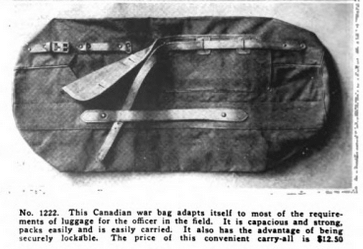
and the war presents

Canadian war bag, Vanity Fair, December 1918.

Vanity Fair, December 1918

the selection’s a bit limited. There’s this extra speedometer for passenger’s seat viewing, but $50 ($834.56 in 2018 dollars) seems a bit pricey, plus, if given by a wife, isn’t this kind of passive-aggressive?

Clock and speedometer, Vanity Fair, December 1918.

Vanity Fair, December 1918

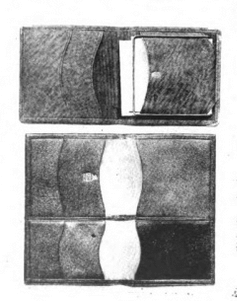
These wallets ($13 and $7.25) are perfectly nice and all, but a wallet always smacks of “I couldn’t think of anything else so I got you this” desperation.

Three wallets, Vanity Fair, December 1918.

Vanity Fair, December 1918

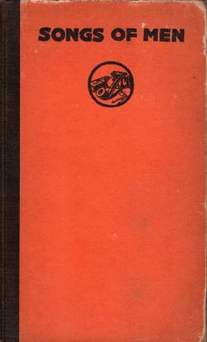
The Bookman assures us that the poetry anthology Songs of Men, compiled by Robert Frothingham, is a “a book such as nearly everybody has been looking for.”

It is a collection of verse for men, with a swinging range of the gamut of emotions; it sings of camping and seafaring, of mining and mountain-climbing, of cow-punching and horse-wrangling, of prospecting, pioneering, loving and fighting. From the woodsman to the college professor, every man will read this small volume with keen delight.

Cover of Songs of Men by Robert Frothingham, 1918.

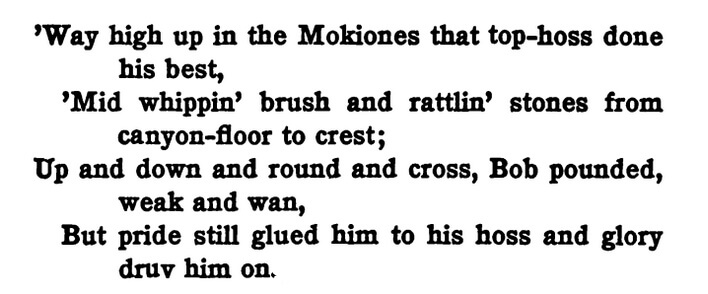
If you’re still not convinced, here’s a random sample, from the poem “High-Chin Bob” by Badger Clark:

Text beginning, 'Way high up in the Mokiones that top-hoss done his best.

No? Well, then, a fourteen-year supply of alcohol might be appreciated. Get it while it lasts!

For the Ladies

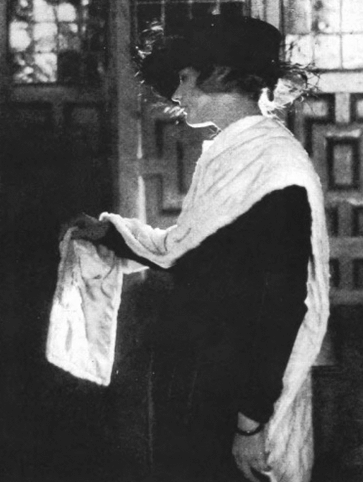
Vanity Fair’s “Gifts for the Eternal Feminine” have stood the test of time better than the men’s gifts, with only the fur stoles (ranging in price from $75 (seal or nutria) to $150 (ermine)) likely to raise eyebrows today. Just as well, since I’d probably leave mine at the opera a week after I got it.**

Woman wearing white fur stole, Vanity Fair, December 1918.

Vanity Fair, December 1918

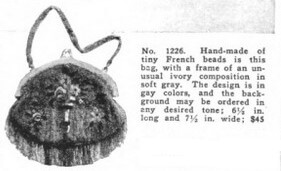
I’d probably do a better job of holding on to this gorgeous beaded bag,

Beaded handbag, Vanity Fair, December 1918.

Vanity Fair, December 1918

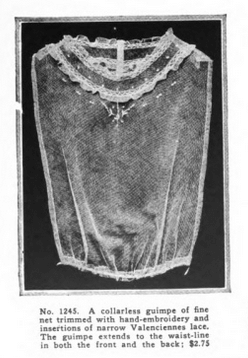
or, if you weren’t planning on spending $45 on me, I wouldn’t turn up my nose at this collarless guimpe, a steal at $2.75.

Lace guimpe shirt, Vanity Fair, December 1918.

Vanity Fair, December 1918

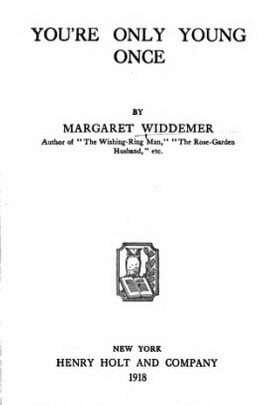
If the lady in your life is as ladylike as the readers of Songs of Men are manly, how about the new novel You’re Only Young Once by Margaret Widdemer? It’s about five sisters who find love and is, according to the (male) Bookman reviewer,

the pinkest book it has ever been our fortune to read. It is as feminine as a powder-puff, as delicate as the frou-frou of silken skirts, and as appealing as the passing of a faint aroma of orris.***

Title page of You're Only Young Once by Margaret Widdemer, 1918.

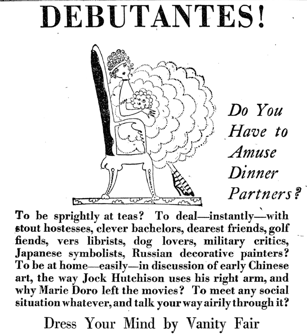
Or, if she’s a debutante and is constantly being called on to be sprightly at teas, there’s always Vanity Fair itself:

1918 advertisement for Vanity Fair headlined Debutantes! Do You Have to Amuse Dinner Partners?

New York Times, December 15, 1918

For the Whole Family

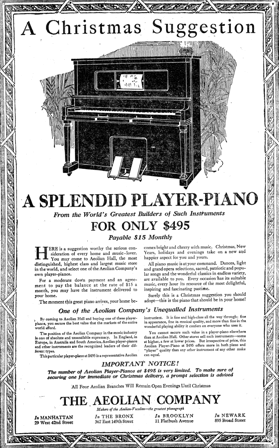
Hint hint: I’ve always dreamed of having a player piano, and this one’s a steal at $495! (Installment plan available.)

Advertisement for player piano from The Aeolian Company, 1918.

New York Times, December 15, 1918

On Second Thought…

You know what? My lifestyle doesn’t really call for beaded evening bags. I don’t even know what a giumpe is, to be honest. And there’s no room in my house for a player piano.

Which, now that I do the math, costs two years worth of wages for Lower East Side textile worker Elizabeth Hasanovitz, whose autobiography I just finished reading. (It was excerpted in the Atlantic in early 1918, and I wrote about Elizabeth here and here.) One day, when Elizabeth had just lost yet another job (her unionized shop had closed–it later reopened with more compliant workers), she passed a bread line and saw a man being angrily turned away because he’d arrived late. No weak coffee and stale bread today! She gave him a dime.

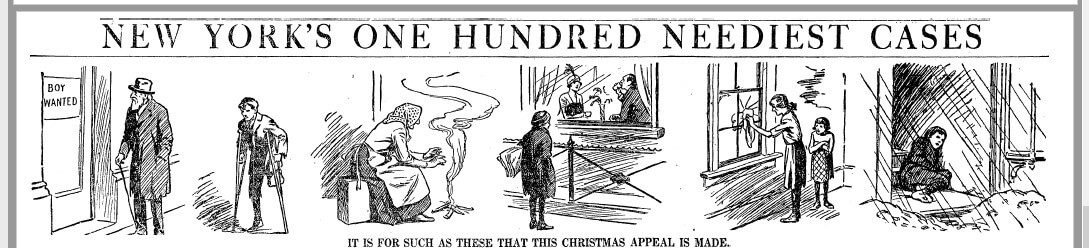
If Elizabeth can spare a dime for the (even) less fortunate, I can do without more stuff. Better the money should go somewhere where it will really do good, like to one of

Banner for New York's One Hundred Neediest Cases, 1918, showing disables and poor people.

New York Times, December 15, 1918

The stories are harrowing–abusive fathers, parents dead of suicide, breadwinners locked up in insane asylums, and children living on the street. Thanks to social safety nets, the kind of abject poverty that existed in the United States in 1918 has, for the most part, been eradicated. But there are still plenty of people in need, and the Neediest Cases Fund, now in its 107th year, is still extending a helping hand. So you don’t even have to be a time traveler to contribute!

Happy holidays to all of you, wherever (and whenever) you are!

Williams Roger Snow lithorgraph for The Night Before Christmas, 1918, showing Santa's sleigh in yard of large home.
Lithograph for The Night Before Christmas by William Roger Snow, 1918

*On the other hand, there was a double acrostic on the same page with the hint “my primals and my finals name what every loyal American should own” and I instantly said, “Liberty Bond,” and completed the puzzle in about two minutes. “Thrift Stamp” was the rest of the answer.

**This actually happened a lot–the 1918 New York Times classifieds are full of expensive stuff that rich people lost at the theater or in taxis.

***I read the first chapter a few weeks ago, and I agree, it’s pretty damn pink.

The best and worst of June and July 1918: Insanity, proto-flappers, and octopus eyes

I’m not in much of a mood to wax philosophical, having recently made my second trip from Cape Town to Washington, D.C. in two months. So I’ll just say that I feel really, really sorry for all those people out there who aren’t spending the year reading as if they were living in 1918. Check out these bests and worsts of June and July to see why.

Best Magazine: The American Journal of Insanity

The American Journal of Insanity is so good that its name isn’t even the best thing about it. It’s full of case histories of various psychological conditions that read like novels.* The saddest is the story, in an article titled “The Insane Psychoneurotic,”  of a Romanian Jewish immigrant who studied to become a lawyer while working (like Marcus Eli Ravage and every other Romanian Jewish immigrant) in a Lower East Side textile factory. He fell into a depression after failing the bar exam three times, became elated when he passed on his fourth try, and then went blind. A doctor restored his sight by pressing a pencil against his eye and telling him that he would be able to see when he opened his eyes. He lost the ability to talk and recovered it when a woman volunteer agreed to his (written) request that she allow him to use her first name. He was institutionalized for a while and released to outpatient care when he seemed to be getting better. Twelve days after his release, though, he hanged himself.
There’s also an article on shell shock by a French doctor that deals in a sympathetic and nuanced manner with the often-dismissed condition, and that in no way justifies the discussion of his and his colleagues’ research in the New York Times under this headline:**

New York Times, July 2, 1918

Before awarding it the prestigious “Best Magazine” title, I figured I should check whether The American Journal of Insanity, like many other erstwhile subjects of my 1918 admiration (I’m looking at you, Marie Carmichael Stopes!), was a fan of eugenics, and in particular of the forced sterilization of “defectives.” So I did a word search of the 1918-1919 volume, cheated a little to glance at the 1919 article that came up, and found out that they were absolutely appalled by it. Way to go, AJI!

Best quote from a book in a review:  

Ambrose Bierce, 1892

“They had a child which they named Joseph and dearly loved, as was then the fashion among parents in all that region.” (From the Ambrose Bierce short story “A Baby Tramp” (1893), quoted in a retrospective on Bierce in The Dial, July 18, 1918.)

Worst Editorial: “Their Hope Doomed to Disappointment,” New York Times, July 27, 1918

A German newspaper has, according to a July 27 Times editorial, proposed that the German army undermine morale among American prisoners of war by making black and white soldiers live together in close quarters.

This, the deviser of the scheme thinks, would give keenest pain both to those thus united in misfortune and to Americans in general…His basis of belief is some vague knowledge he has of the negro’s place in the United States and an exaggerated and distorted notion of an antagonism existing here between the white and black races.

Which, the Times says, is totally not the case!***

Someone should tell the German editor that negroes are not hated in this country—that in innumerable white families they occupy positions that bring them into daily and intimate contact with the other members, especially the children, and it is the Americans who know the negro best that in proper place and season are most forgetful of racial differences or make most kindly allowance for them.

Really, you can’t make this stuff up.

Best Ad: 

I wish I could honor a more healthy product, but Murad owns this category.

Scribner’s, July 1918

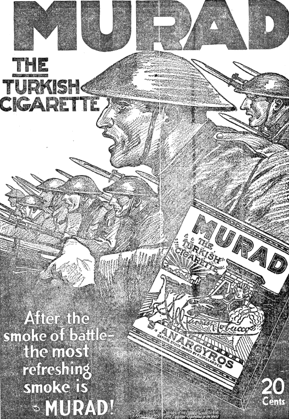
Worst Ad:

…Although not all Murad ads are created equal. This one looks like their regular artist was off sick so they hired a failed Italian Futurist as a temp.

New York Times, July 31, 1918

Best Magazine Covers:

I love this Georges Lepape portrait of a short-haired, drop-waisted proto-flapper.

Vanity Fair, July 1918

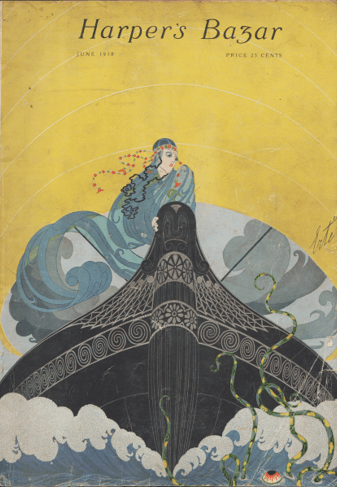
My favorite thing about this Erté Harper’s Bazar cover, called “Surprises of the Sea,” is the octopus eye.

On to August!

*Although they don’t seem, at this point in the history of psychiatry, to ever actually cure anyone. Which could explain why the case histories read like novels.

**Which first came to my attention as a “Whatever It Is, I’m Against It” Headline of the Day.

***Even though the very same issue has an article and an editorial about lynching.

On Marx’s 100th birthday, a surprising New York Times tribute

It’s May 5, 1918, the 100th anniversary of Karl Marx’s birth. There’s an admiring article about him in the New York Times Magazine.

My first reaction: What?

Karl Marx, New York Times, May 5, 1918.

Illustration for John Spargo’s article on Karl Marx, New York Times Magazine, May 5, 1918

The New York Times was so conservative that it had recently let the president of Columbia University write the Times’ good-riddance editorial himself after renowned historian Charles Beard resigned from the university’s staff over free speech issues. If you’re having trouble disentangling this sentence, you can read all about this episode here. Or you can just take my word for it: the Times was really, really conservative.

Then I started reading about John Spargo, who wrote the article, and got even more confused. The British-born Spargo was a leading socialist thinker and a founding member of the Socialist Party of America. He was the author of Karl Marx: His Life and Work.

What was going on here?

John Spargo, Midweek Pictorial, October 7, 1919.

John Spargo, Midweek Pictorial, October 7, 1919

As I learned more about Spargo, it started to make sense. It turned out that he had resigned from the Socialist Party in 1917 after his attempt to get it to support U.S. participation in the war was roundly defeated. He started his own short-lived socialist party and helped found the American Alliance for Labor and Democracy, a pro-war labor organization led by AFL president Samuel Gompers.

In 1918, it all came down to where you stood on the war. Being a socialist was a less serious offense than being a pacifist. The defunct socialist magazine The Masses was on trial, but for obstructing conscription, not for advocating socialism (although that probably didn’t help).* Also, Wilson had until recently been trying to keep Russia’s Bolshevik government in the war (they made peace with Germany in March), so a hard-line anti-socialist stance hadn’t been in the national interest.

New York Times headline, Today is 100th Anniversary of Marx's Birth.

New York Times Magazine, May 5, 1918

In Spargo, the Times had found a prominent socialist who would argue in favor of the war in Marx’s name. Kind of, anyway. The headline of Spargo’s article reads “Today is 100th Anniversary of Marx’s Birth: Bitterly Opposed to Prussia and an Ardent Admirer of America—his Record Shows Where He Would Have Stood in the Present War.” Which overstates Spargo’s case, kind of.

Spargo writes that

because Marx wrote in the famous “Communist Manifesto” that “the workingmen have no country,” and because he was a strong advocate of internationalism, it has been generally supposed that Marx did not believe in nations or nationalism. This is a profound misconception.

Cover of German edition of Communist Manifesto, first edition, 1848.

Communist Manifesto, first edition, in German, 1848

According to Spargo, Marx was a strong German nationalist, and was no pacifist—favoring, for example, vigorous action against France in the 1870 Franco-Prussian War. He hated militarism, though, “with all the fierce passion of which he was so magnificently capable.” His view on war was nuanced:

Always he asked himself whether a particular war, or the triumph of one or the other side in a particular war, made for human progress or against it.

Marx was also a “a great friend of America,” and a big Abraham Lincoln fan. According to Spargo, he played an influential role in Britain’s decision to stay out of the Civil War instead of siding with the south.

Therefore, Spargo says,

Having regard to his life’s record, we are justified in believing that, if Marx were alive today, he would hold in scorn those Socialists who, in the name of Socialist Internationalism, have proclaimed their opposition to America’s participation in the great struggle for freedom, democracy, and that independence and integrity of nations without which there can be no internationalism.

That’s a bit of a leap of logic. But it got Marx into the New York Times on his centenary.

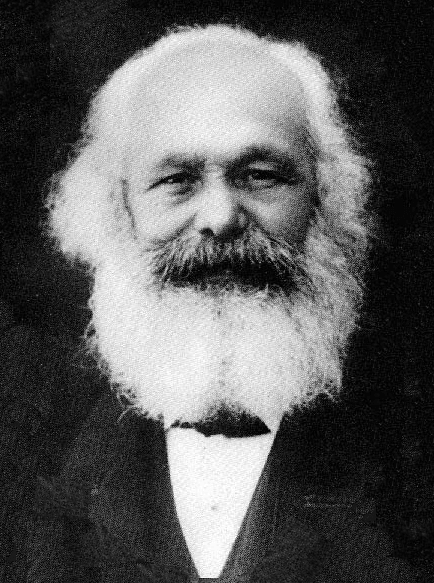
Karl Marx, 1882.

Karl Marx, 1882

*Actually, it was between trials—Judge Augustus Hand (cousin of Learned) had declared a mistrial on April 27 after the jurors failed to reach agreement. One juror held out for acquittal and eventually persuaded one or two others (accounts vary) to side with him. When his fellow jurors found out that he was of Austrian descent, they threatened to have him lynched. “If I had noticed that man’s jaw, I never would have let him on the jury,” the prosecutor later said. A new trial was scheduled for later in the year.

Thursday Miscellany: What they did in 1918 because they didn’t have…

1918 situation: You want to make a movie about dolls coming to life.
Obstacle: Animation is in its infancy and mostly happening in Europe.
Solution: Make a stop-motion movie with custom-made dolls.

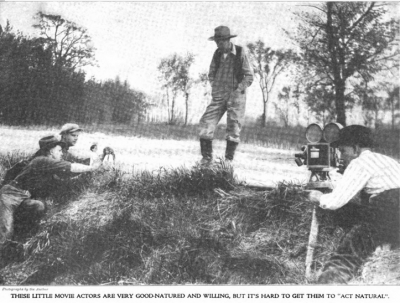
The 50-minute movie, called The Dream Doll, was released in December 1917.  You can read more about the film-making process in the January 1918 issue of Everyone’s magazine. Sadly, this movie doesn’t seem to be available online. Most silent movies are “lost,” i.e. there are no copies still in existence,* and this may be the case for The Dream Doll. So it’s not much of a spoiler to tell you that it was all a dream.

(UPDATE 5/4/2018: My recently discovered fellow back-to-1918 blogger, Whatever It Is, I’m Against It, found two short movies by Moss here.  The first one is from much later, but the second one, Mary and Gretel, is also from 1917 and is presumably similar in technique to The Dream Doll. WIIIAI is also on the swapped babies story, see below.)

Everyone’s magazine, January 1918

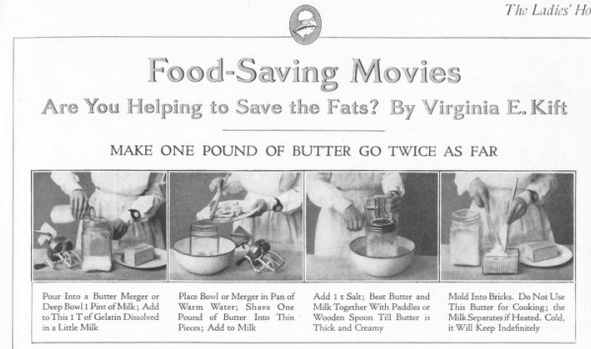
1918 situation: You want to show video clips of how to do your bit for food conservation by saving fat.
Obstacle: YouTube not invented.
Solution: Food-saving “movies,” i.e. photo sequences.

In the unlikely case that you want to make butter go twice as far by mixing it with milk and gelatin, or save butter by using chocolate instead, or use your inedible fat for soap making, you can learn how here.

Ladies’ Home Journal, March 1918

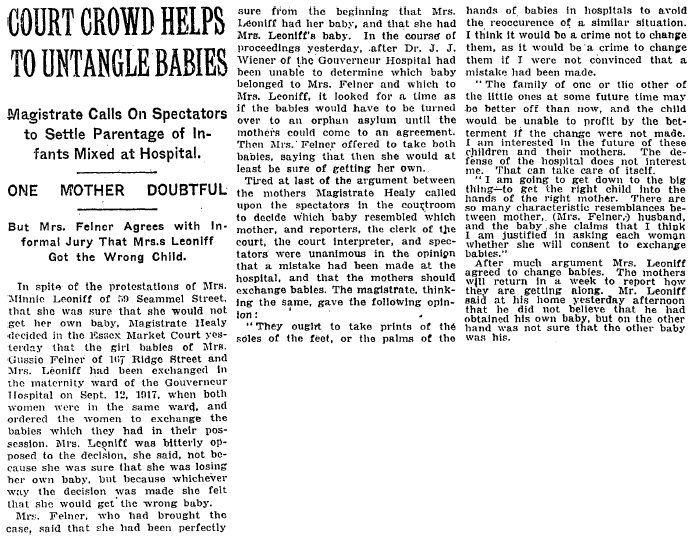
1918 situation: Babies maybe switched at birth.
Obstacle: No DNA testing yet.
Solution: Have everyone in the courtroom vote about who looks like who.

The reporters, court clerk, court interpreter, and spectators all thought that the babies had been swapped. The judge agreed, and ordered them swapped back. One of the mothers wanted to keep the baby she’d been raising for the past eight months. Too bad. Case closed!

New York Times, April 28, 1918

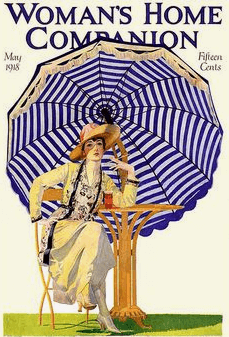
This post needs some color, so, apropos of nothing, here is the cover of the May 1918 issue of Woman’s Home Companion.

*Reasons: lack of storage space, deterioration, fires, and unawareness that people in the future would care.

1918 campus wars: Academic freedom at Columbia

Tension is high at the universities. Some say the war is unnecessary and immoral; those who support it cry “treason.” There’s a raging debate over free speech. Columbia University is at the epicenter.

Yes, 1968—but 1918 as well.

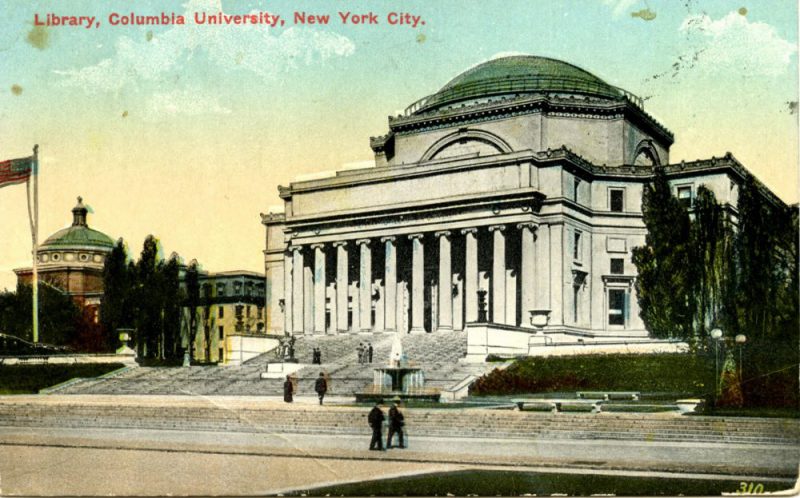
Columbia University library, 1917 (librarypostcards.blogspot.com)

In 1917, the Columbia board of trustees came up with a plan to investigate the teachings of the university’s faculty members, in order to determine “whether the influence of a given teacher is injurious to private morals or dangerous to public order and security.”

The idea was eventually dropped amid widespread opposition—law professor Ellery Stowell called it “Prussianistic”—but in October the trustees fired two faculty members, James McKeen Cattell and Henry Wadsworth Longfellow Dana, for anti-war activities. Their crimes: Cattell had written to Congress asking that conscientious objectors be exempted from service, and Dana was involved with the People’s Council, a pacifist organization.

Cattell had been the first American to publish a dissertation in psychology, and was the first American psychology professor.* Dana was a comparative literature professor and a grandson of both Henry Wadsworth Longfellow and Richard Henry Dana, the author of Two Years Before the Mast.**  To the Philadelphia Ledger, that was the worst part: “The distressing feature of the situation is that both these men bear eminent names and come from long strains of patriotic ancestors.”

Charles Beard in 1917 (Library of Congress)

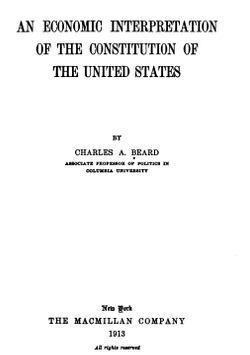
On October 8, noted historian Charles A. Beard resigned from the Columbia faculty in protest. Beard was one of America’s most prominent historians; his 1913 book An Economic Interpretation of the Constitution of the United States remains famous (and controversial) today. He was pro-war himself, but, as he said in his resignation letter to Columbia president Nicholas Butler,

thousands of my countrymen do not share this view. Their opinions can not be changed by curses or bludgeons. Arguments addressed to their reason and understanding are our best hope. Such arguments, however, must come from men whose disinterestedness is above all suspicion…I am convinced that while I remain in the pay of the trustees of Columbia University I can not do effectively my humble part in sustaining public opinion in support of the just war on the German Empire.

Good riddance, the New York Times said in an October 10 editorial. In resigning, the paper snarked, Professor Beard “has just rendered the greatest service it was in his power to give.” About An Economic Interpretation of the Constitution of the United States, the Times said that

it was pointed out to him at the time, with due kindness but frankly, that his book was bad, that it was a book that no professor should have written since it was grossly unscientific…It was a book that did Columbia much harm, just as the two professors who were recently dropped for seditious utterances did the university much harm.

If this type of nonsense was allowed to go on, the Times said, “we would soon see the doctrine of economic determinism applied to everything from the binomial theorem to the Lord’s prayer.” The trustees, the Times said,

have been very tolerant, very patient, and the university has suffered through the acts, the utterances, and the teachings of some of its professors who mistook the chairs they occupied for pulpits from which doctrines might freely be preached that are dangerous to the community and the nation.

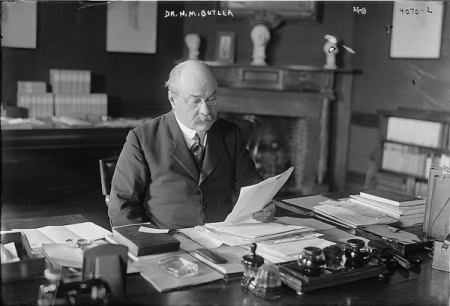
Nicholas Murray Butler in 1916 (Library of Congress)

If you’re thinking that the Times is taking this way too personally, you might be onto something. According to a 1958 article in Columbia’s newspaper, the Daily Spectator, it was widely believed that Times publisher Adolph Ochs let Butler, who was a friend of his, write the editorial himself. That seems plausible. For one thing, the Times editorial board displays a surprising amount of knowledge about the inner workings of Columbia University. Also, the turnaround between Beard’s October 8 letter and the October 10 publication of the editorial was awfully speedy.

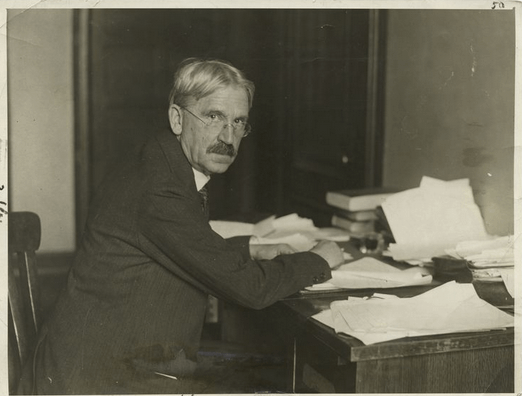
John Dewey, date unknown (New York Public Library Digital Archive)

Writing in The Dial on November 8, educationist John Dewey, who was also on the university’s (apparently very illustrious) faculty, said that the press had falsely portrayed the controversy as a free speech issue because the real issue, administrative control of the universities, was too boring. But just because it’s boring doesn’t mean it’s not important:

It is not too much to say that the final issue is how much the American people cares about the integrity and responsibility of the intellectual life of the nation.

Ellery Stowell in 1917 (Library of Congress)

In February 1918, Ellery Stowell, the law professor who had called the inquiry “Prussianistic,” submitting his own resignation. Stowell himself supported not only the war but the firing of Cattell and Dana. Like Dewey, though, he believed that the issue should have been left up to the faculty rather than the trustees.

Beard himself weighed in in the Dial on April 11:

At bottom and forever, the question of academic freedom is the question of intellectual and spiritual leadership in American democracy. Those who lead and teach, are they free, fearless, and worthy of trust?

If the trustees take over, Beard says,

men who love the smooth and easy will turn to teaching…Men of will, initiative, and inventiveness, not afraid of falling into error in search for truth, will shun such a life of futile lubricity, as the free woman avoids the harem.

Abbott Lawrence Lowell, “The World’s Work,” 1919

Beard praised Harvard president Abbott Lawrence Lowell, who wrote in the university’s annual report in December 1917 that

the teaching by the professor in his class room on the subjects within the scope of his chair ought to be absolutely free. He must teach the truth as he has found it and sees it. This is the primary condition of academic freedom, and any violation of it endangers intellectual progress.

Well said, President Lowell!***

The debate over free speech (or whatever you want to call it) wasn’t the only battle raging on the campuses. Also at issue was the whole essence of what a university, and the country’s intellectual life as a whole, should be about. Here, too, Columbia was at the center of the action.

But that’s an issue for another post.

Widener Library, Harvard University, 1914 (Harvard University Archives)

*He was also a eugenicist. He offered his children a cash gift of $1000 if they married the offspring of a professor.

**That ought to be worth at least $2000 to Cattell’s kids.

***I’d be a lot prouder on my alma mater’s behalf, though, if Lowell–who was the brother of poet and critic Amy Lowell–didn’t have such a sorry record on treatment of black, Jewish, and gay students.

Women spies of 1918

I was going to write about women artists in honor of Women’s History Month, but then I opened the March 19, 1918, New York Times and saw that women were hatching international conspiracies all over Manhattan. Change of plan!

First, this:

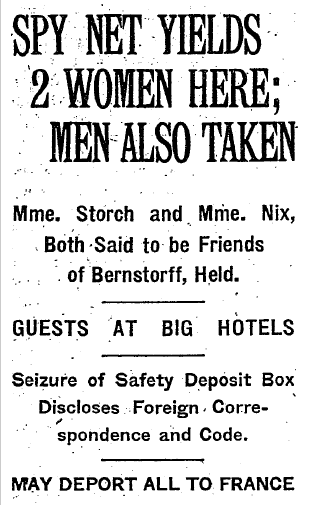
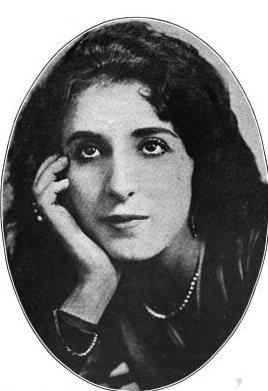
Two men and two women were arrested, the Times reports, for alleged participation in an international German spy ring. The principal suspect is Despina Davidovitch Storch, the 23-year-old Turkish ex-wife of a French army officer. The Times said of Storch that

she is in appearance a strikingly handsome woman, and in the year that she made her home at the Waldorf-Astoria numbered among her friends many well-known persons, some of whom it was intimated yesterday are not at all anxious now to appear to have been among her admirers.

Despina Storch, 1917 (Underwood & Underwood, N.V.)

Mme. Storch was arrested in Key West with a young Frenchman, the Baron Henri de Beville, as the two were preparing to flee to Cuba. The Baron’s father, according to the apparently sympathetic Times, was “broken hearted as a result of his son’s arrest,” and felt that his son was “a victim of the ‘charms’ of the Turkish woman.”

(This account of masculine helplessness comes from a paper that, remember, wasn’t particularly sympathetic to women getting the vote.)

The pair had been living a peripatetic life. They were taken into custody in Madrid in 1915 as suspected enemy agents, sailed to Cuba after their release, and went on to the United States. They had also lived in Paris and Lisbon, where they amassed bills of $1000 a month. Their equally lavish New York lifestyle attracted the attention of the American authorities, who also found a safe deposit box in Mme. Storch’s name containing “a mass of foreign correspondence and a code.”

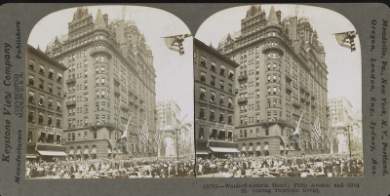
Waldorf-Astoria, 1917 (Library of Congress)

Their alleged co-conspirators were picked up in New York. Mrs. Elizabeth Charlotte Nix, who, according to the Times, “is about 40 years of age, but looks ten years younger,” had received a $3000 payment from the German ambassador before he left the country when war was declared, but she denied that it was a spy payment. The principal crime of “Count” Robert de Clairmont, as far as I can tell, was his dubious claim to his title.

The Justice Department official who announced the arrests, Charles F. De Woody,* recommended that the four suspects be deported to France. The problem with trying them in the United States was that—oops!—the espionage law only applied to men. President Wilson had mentioned this problem in his State of the Union address, and Congress was taking action, but not in time to go after Mme. Stroch and Mrs. Nix.

Meanwhile, down in Greenwich Village, a very different sort of (alleged) German-sponsored conspiracy was uncovered.

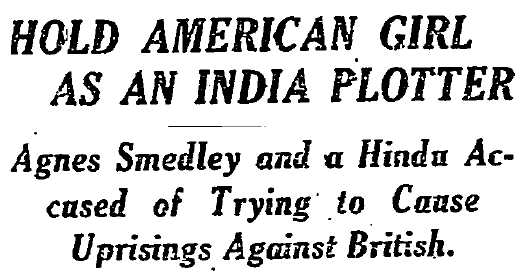
Agnes Smedley, the twenty-six-year-old “girl,” was arrested with Sailendra Nath Ghose, a “highly educated Hindu” who was already under indictment in San Francisco, for fomenting rebellion against British rule in India. (Uncharacteristically, the Times makes no mention of Smedley’s level of attractiveness.) Their activities were allegedly part of a “worldwide German-directed plot to cause trouble in India” and thereby weaken British war efforts. They sought assistance from several Latin American countries (Ghose lived for a time in Mexico, under the implausible pseudonym of Sanchez) and from Leon Trotsky.

Agnes Smedley

“First women arrested in New York for enemy activities” might not be your idea of an inspiring Women’s History Month first. Well, then, there’s Annette Abbott Adams, the San Francisco-based Assistant U.S. District Attorney who spoke to the Times about the Ghose indictment. She would go on to be the first woman Assistant Attorney General and later a high-ranking California judge.

Annette Abbott Adams, 1914

The indictment against Smedley was eventually dropped. She spent many years in China as a sympathetic chronicler of the Communist Party, and wrote a well-regarded autobiographical 1929 novel, Daughter of the Earth. She counted a Soviet spymaster among her lovers. She died in England at the age of 58, and is buried in Beijing.

As for Despina Storch…stay tuned! (UPDATE: Find out what happened to her here.)

*Even the bureaucrats in this story have picturesque names.

Wednesday Miscellany: Congressional courtesy, $100 apartments, and other bygone notions

I’ve been neglecting the New York Times lately. Here are some recent snippets.

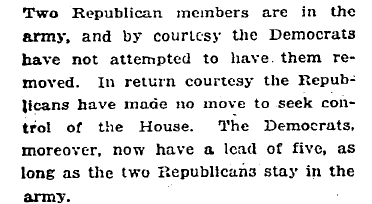
With four special elections in New York, control of the House of Representatives, held by the Democrats in coalition with some small parties, was on a knife-edge. The result? A Democratic sweep, and courtesy all around.

Paragraph from New York Times about congressional balance of power, March 6, 1918.

New York Times, March 6, 1918

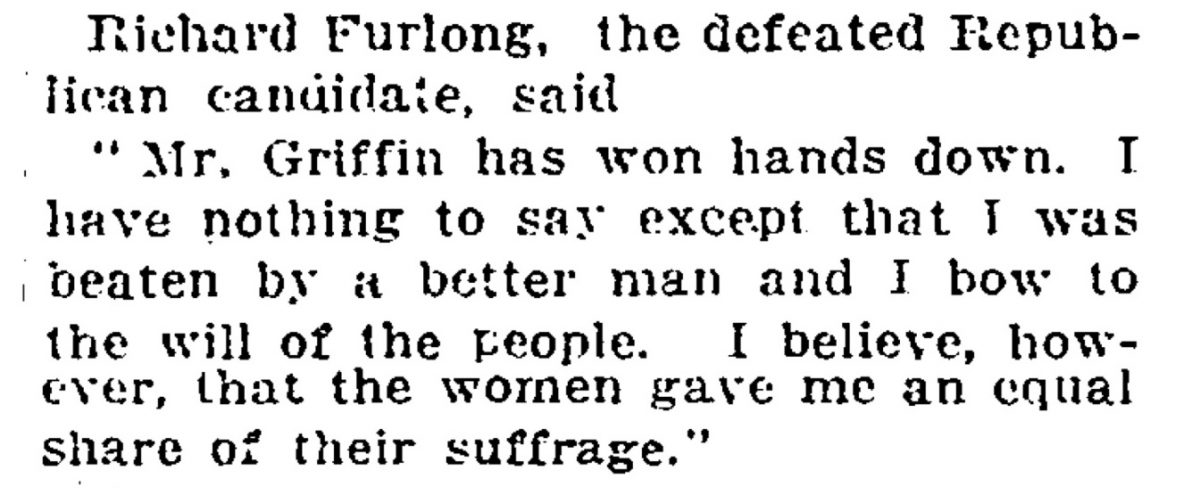
A defeated Republican candidate’s gracious response:

New York Times article quoting a defeated Republican candidate saying "I was beaten by a better man," 1918.

New York Times, March 6, 1918

Sigh…

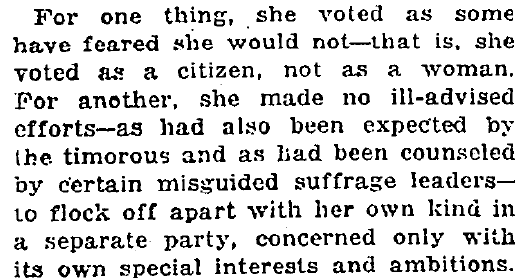
This was the first time women in New York were able to vote. They did so in large numbers and–good news!–did not get up to all kinds of silly nonsense.

New York Times editorial discussing how New York women voted, March 1918.

New York Times, March 7, 1918

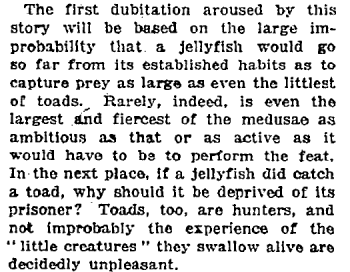
Now for some fact checking. John Francis Hylan, the Tammany mayor of New York, has told a story about a kind man on the shore at Palm Beach rescuing a toad that was being eaten by a jellyfish. Dubitation ensues.

New York Times editorial discussing dubitation over a story the mayor told, March 1918.

New York Times, March 6, 1918

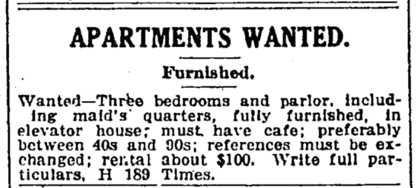
On to the classified ads. Hey, I want one of those too!

New York Times ad for a three-bedroom furnished apartment, $100 a month, March 1918.

New York Times, March 6, 1918

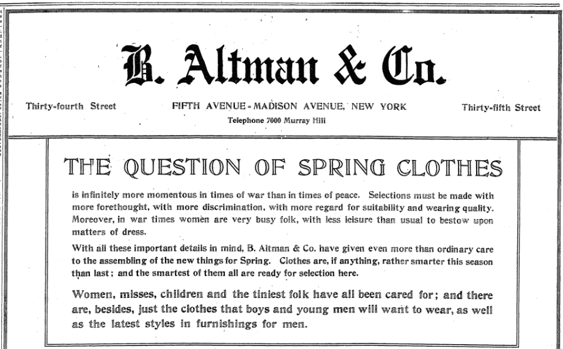
Now that you’re caught up on the news, it’s time to party! Make a momentous decision on what to wear,

B. Altman ad, The Question of Spring Clothes, March 1918.

New York Times, March 3, 1918

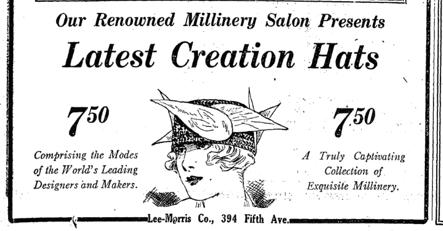
put on your favorite hat,

Hat ad, New York Times, March 1918.

New York Times, March 3, 1918

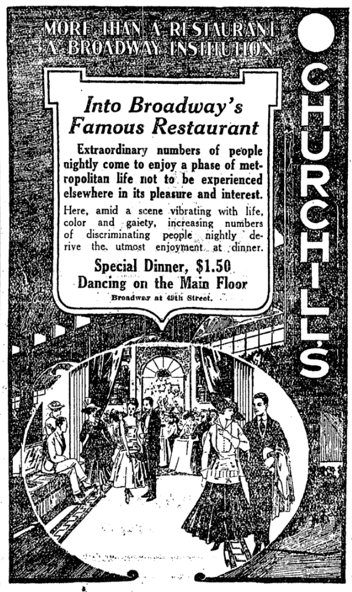
and head on out to the the hottest joint in town!

Churchill's Restaurant ad, New York Times, 1918.

New York Times, March 3, 1918

(These articles were accessed at https://timesmachine.nytimes.com/browser. I make fun of the Times a lot, but I’m very grateful for this valuable resource.)

When half the country shut down

There seems to be a pattern: when something bad happens in 2018, it turns out that a similar, but way worse, thing happened on the same day in 1918. First the cold weather, now the shutdown.

Believe me, I know how bad a government shutdown is—I went through several of them during my Foreign Service career. But on January 21, 1918, half the country shut down.

The problem: ships full of war supplies destined for Europe were sitting idle because they didn’t have coal to fuel them. The fuel couldn’t get through because of congestion on the railways. So, on January 16, Fuel Administrator Harry Garfield ordered manufacturers east of the Mississippi and in Louisiana and Minnesota to shut down for five days beginning on January 18. In addition, all business establishments, with a few exceptions, were ordered to shut down for the next five Mondays.

posted photo of Harry Garfield, ca. 1911

Harry Garfield, ca. 1911

The order, according to the New York Times, “came with an abruptness which left official Washington gasping.” Surprisingly, not many people asked, “What gives you the right to do this? You’re the fuel administrator, not the economic commissar.” But there were a lot of objections. The Times editorial page questioned Garfield’s competence, saying that “chloroforming a nation to spare it the pangs of hunger is not good therapeutics, it is malpractice.” The Senate, which was controlled by the Democrats but you’d never know it by the way they treated President Wilson, voted 50 to 19 in favour of a resolution requesting suspension of the order for five days to allow time to evaluate it. Too late! By the time the resolution was approved at “6:05 o’clock,” Garfield had signed the order and it “was flashed to every city in the country.” The Times noted that, after a day that “had been enough to try to nerves of every one,” Garfield seemed unperturbed. (It could be that, having been an eyewitness to the assassination of his father, President Garfield, at age 17, nothing seemed all that bad after that.)

In response to objections that workers would lose their wages, Garfield suggested that their employers could pay them. The board of U.S. Steel, though, decided that this was not such a good idea. Chairman E.H. Gary, who, according to the Times, “did one of the hardest day’s work in his busy life,” said that to pay idle workers “would establish a precedent that would eventually be unfair to the employer and the employe.” The New York State Federation of Labor estimated that 80 percent of the state’s 600,000 workers would lose their pay during the shutdown.

photograph of train in rail yard

Railway Age

For the first few days, things went all right. More coal was making its way to the ports, despite freezing temperatures and snowstorms. But then came the first Monday shutdown. Disaster! Federal officials had mobilized longshoremen to unload the thousands of tons of coal that had been rushed to the piers, but they were stopped by police and soldiers because they didn’t have photo IDs. The rule requiring the IDs wasn’t supposed to go into effect until February 1, but it was implemented early because of bomb threats. By the time it was lifted, most of the workers had gone home. Meanwhile, merchandise that arrived by train couldn’t be moved out of the rail yards to make room for the coal because, oops, the department store warehouses they were destined for were closed under Garfield’s order. The result of all the chaos: less than half the normal daily supply of coal arrived in New York.

Some theatrical fare on offer (January 22, 1918)

At least the idle workers had something to entertain them. Theaters had been given permission to stay open on Mondays and close on Tuesdays instead. On the first workless Monday, it was standing room only in the theaters and the vaudeville, motion-picture, and burlesque houses.