Tag Archives: Judge

One last summer swim in 1925

August in Washington, D.C., wound down in a very un-D.C. fashion, with moderate temperatures and low humidity, a far cry from the weather in late July when I went to the DC Open finals.* The women’s final, played in the afternoon after a long rain delay, felt like a battle to see which player could draw more of the humid air into her lungs. (Conditions were better for the men, who played at sunset after another long rain delay.)

DC Open winner Leylah Fernandez and finalist Anna Kalinskaya

I started my Labor Day weekend early by joining two friends for a swim at the Hearst Pool near the National Cathedral. This was my first visit to this pool, which opened in 2021, and only my second swim of the summer. As I swam leisurely laps and lazed on a lounge chair chatting with my friends, I regretted that I hadn’t spent more time at the pool.

I decided to cut myself some slack, though, given that my summer started out as a Cape Town winter and along the way featured COVID in Dublin, a week visiting family in Colorado, and Hurricane Erin, which didn’t come as far north as DC but brought cloudy skies and cool weather. I’d celebrate the last days of summer, I decided, by taking a look at swimmers on the magazine covers of 1925.

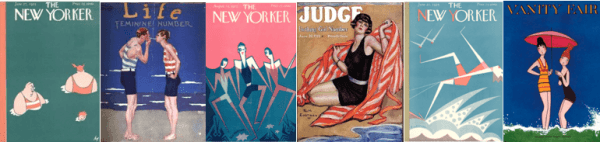
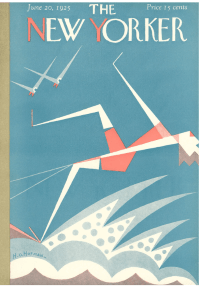
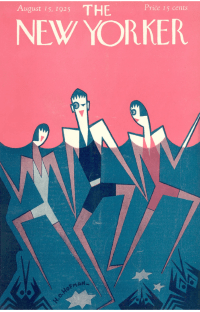
The New Yorker, in its first summer, went all-in on celebrating the joys of the surf.

H.O. Hofman, June 20, 1925
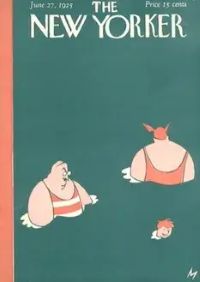
New Yorker cover, June 27, 1925, Julian de Miskey, family swimming
Julian de Minskey, June 27, 1925
New Yorker cover, August 15, 1925, three people swimming.
H.O. Hofman, August 15, 1925

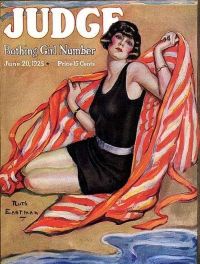
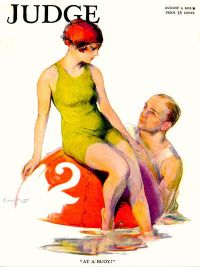
Judge was on board too.

Judge magazine cover, June 20, 1925, woman in bathing suit holding striped towel.
Ruth Eastman
Judge magazine cover, August 1, 1925, woman on buoy with man
Guy Hoff, August 1, 1925

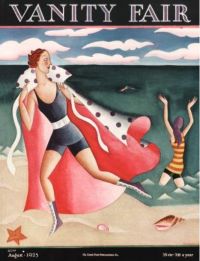
Vanity Fair was not to be outdone by Judge in the red wrap department.

Vanity Fair, July 1925, Miguel Covarrubias, woman in red cape at beach.
Miguel Covarrubias, July 1925

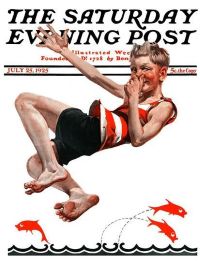
Kids joined in the fun at the Saturday Evening Post.

Saturday Evening Post cover, boy jumping into water, Elberg McGran Jackson, July 24, 1925.
Elberg McGran Jackson, July 24, 1925
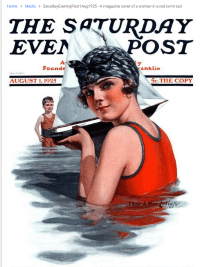
Saturday Evening Post cover, Charles McLellan, August 1, 1925, woman with boat with boy in background.
Charles McLellan, August 1, 1925

It struck me that, while the men and boys are still covered up on top, the women’s suits aren’t all that different from what you’d see at the beach or the pool these days. When I was growing up, all girls’ and women’s suits had higher-cut legs (if you wanted to be modest, you had to get one with a little skirt, which was kind of pointless because it would float up when you got into the water), but now you see all different kinds of suits, including ones like these.

Women had to fight for the type of suits that you see on the 1925 covers. Twenty years before, bathing suits looked like this:

Martin Justice, July 1905
Lafayette Maynard Dixon, August 1905

Stockings were on their way out by the mid-1910s,

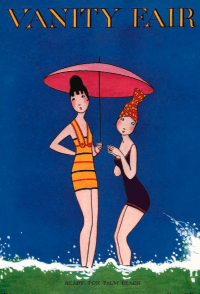
Vanity Fair cover, November 1915, Anne Harriet Fish, two women at beach holding parasol, "Ready for Palm Beach Issue."
Anne Harriet Fish, November 1915
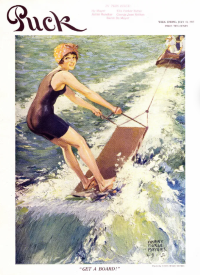
Puck cover, Harry Morse Meyers, July 18, 1915, woman in bathing suit on board being towed by boat.
Harry Morse Meyers, July 18, 2015

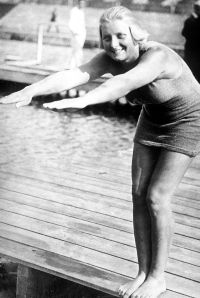
but bare-legged swimming was still barred in some places. The outcry following the arrest of Olympic gold medalist Ethelda Bleibtrey for swimming “nude” (i.e. without stockings) at Manhattan Beach in Los Angeles in 1919 helped put an end to the leg-baring bans.

Ethelda Bleibtrey at Olympic games, Antwerp, 1920.
Ethelda Bleibtrey at Olympic Games, Antwerp, 1920.

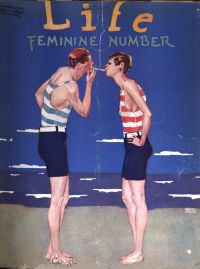
By 1925, Life was poking fun at the similarity between men’s and women’s suits. (They would diverge again when men started bathing topless in the 1930s.)

Garrett Price, August 27, 1925

With Labor Day behind us and pools closed, swimming is a wistful memory.

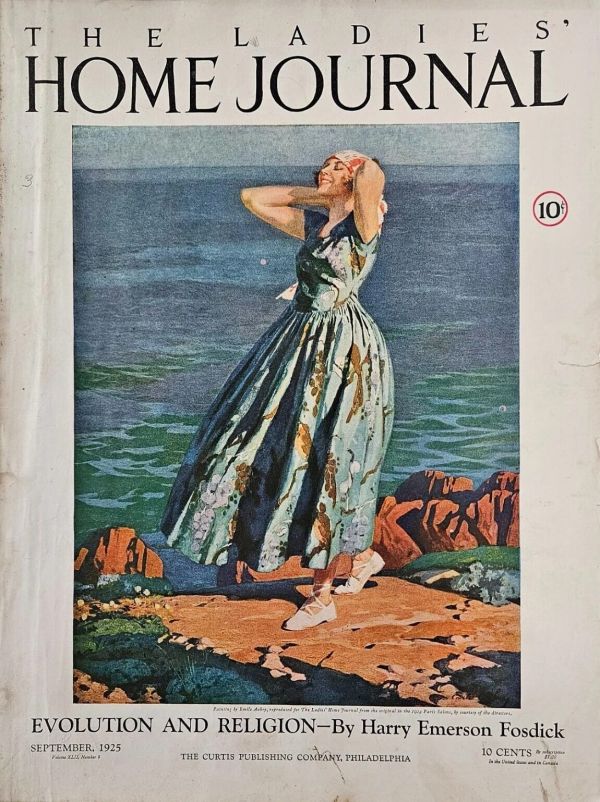
Emile Aubry, September 1925

As this woman reminds us, though, you don’t have to go in the water to enjoy the warm weather while it lasts.

*The tournament is officially called the [Corporate Sponsor 1] [Corporate Sponsor 2] DC Open, but I don’t have either the mental energy to remember all that or the desire to advertise these companies every time I mention it.

**I really, really want her dress.

A Double Rainbow of 1924 Magazine Covers

I recently went on on a trip from Cape Town to Washington, D.C., Seattle, North Cascades National Park, Seattle again, Denver, D.C. again, and then back home to Cape Town, all in three weeks. It was wonderful, but it was too much: too many airports, too many suitcases, too many weird bathroom setups. (Well, two, but that was two too many.) I kept saying to myself, “I’ll be so happy to just be able to hang out at home,” forgetting to take Cape Town winters into consideration and add, “provided that it doesn’t rain nonstop so that staying at home is the only option.”

I went out walking every day when the rain let up, hoping to make it home before the skies opened again. On one of these walks I looked up and saw a double rainbow, which lifted my spirits tremendously. Cape Town is unfortunately not a place where it’s wise to to take out your phone and start snapping away while walking along a busy road, so I don’t have a photo of it. But I assume you’re familiar with the concept.

I haven’t done a magazine illustration post in a while,* so I decided to pay tribute to that moment, and to summer from a Cape Town winter, with a rainbow of summer 1924 magazine covers.

First up in vivid red is Spanish illustrator Eduardo Garcia Benito’s June Vanity Fair cover.**

Eduardo Garcia Benito, June 1924

Imposing a constraint, like “it has to be orange,” makes you expand your horizons. I wasn’t familiar with The Designer, although it must have had a large circulation if it was serializing Sinclair Lewis’s Arrowsmith.*** I wasn’t familiar with the cover artist, American illustrator Charles Allan Winter, either.

Charles Allan Winter, June 1924

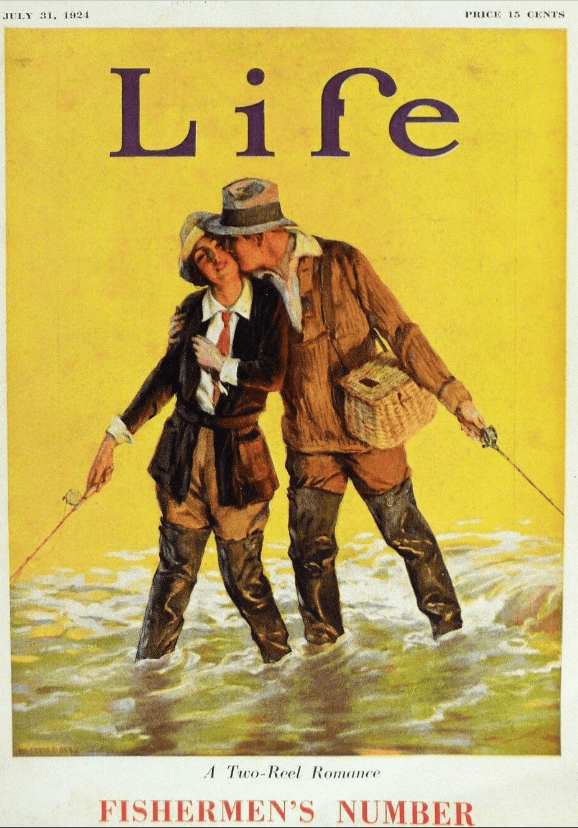
It’s nice to see Life cover artist Warren Davis drawing something other than his usual half-naked women frolicking around.

Warren Davis, July 31, 1924

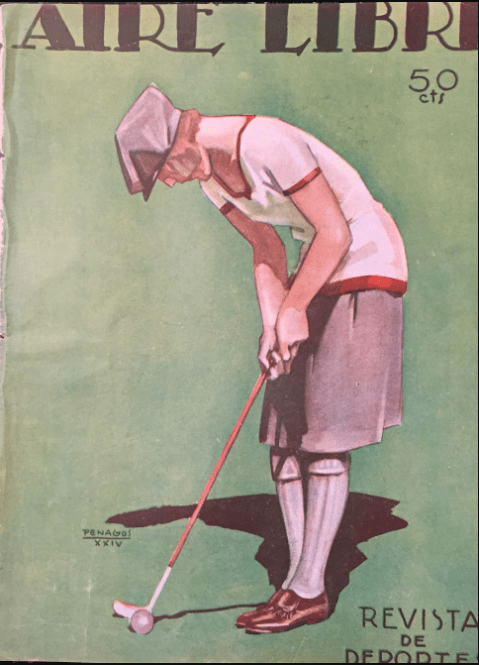
You can’t expand your horizons much further than to a short-lived Spanish sports magazine for which the only online reference I could find is a Catalan-language Wikipedia page that has been flagged for possible deletion. The illustrator, Spanish artist Rafael de Penagos, is new to me. He received a gold medal at the 1925 International Exhibition of Modern Decorative and Industrial Arts in Paris, from which Art Deco got its name (surprisingly, not until the 1960s).

Rafael de Panagos, July 1, 1924

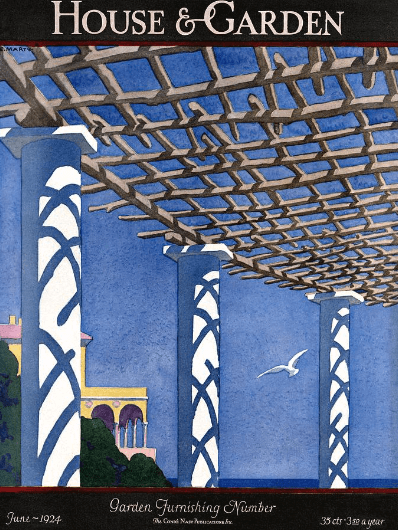
In vibrant blue, a House & Garden cover by French artist André Édouard Marty. Marty, not to be confused with leading French Communist Party member André Marty, was another leading figure in the Art Deco movement.

André Édouard Marty, June 1924

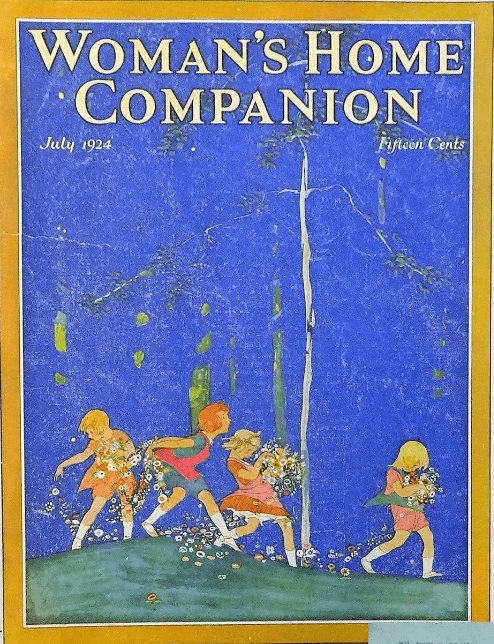
I’m not of the school of thought that indigo is a color of the rainbow, since squeezing it in between blue and purple throws off the symmetry, but I couldn’t resist these flower-strewing children, drawn by an artist I couldn’t identify.**** This issue of Woman’s Home Companion includes an essay on parenthood by F. Scott Fitzgerald, the last installment of Dorothy Canfield Fisher’s The Home-Maker, an ahead-of-its-time novel about a stay-at-home dad,***** and an illustrated story by N.C. Wyeth. Not bad for fifteen cents.

July 1924

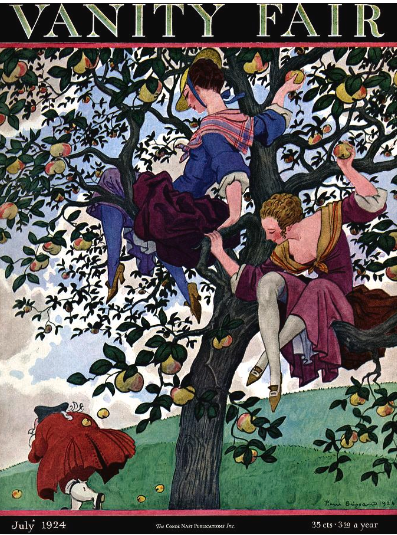
Here’s the purplest cover I could find, from Vogue regular Pierre Brissaud.******

Pierre Brissaud, July 1924

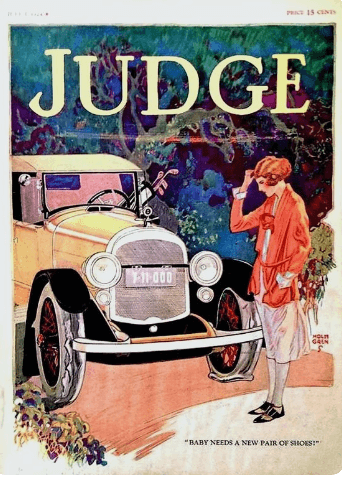
To wrap things up, here’s a cover by John Holmgren, yet another new-to-me artist, who managed to fit every color of the rainbow onto this Judge cover.

John Holmgren, July 5, 1924

But wait! This is just a SINGLE rainbow.

July slipped into August as I was working on this post, which gave me another month’s worth of magazine covers to work with. Now August is slipping away as well, and I’m back in Washington. At this rate, the leaves will be falling off the trees by the time I post this if I write about each one, so here they all are:

House and Garden: Joseph B. Platt. Vanity Fair: Warren Davis (back to his old tricks). Vogue (green): George Wolfe Plank. Vogue (purple): Harriet Meserole. Other artists unknown.

Enjoy the end of summer (or, if you’re in Cape Town, FINALLY the end of winter), everyone!

squiggle

*Or any other post, for that matter.

**There’s a truly bonkers essay by D.H. Lawrence in this issue called “On Being a Man.” It starts out with a racist account of sitting on a train with an African American man and segues into a discussion of why marriage is literally hell.

***Lewis won, and rejected, the 1926 Pulitzer for Arrowsmith. In a written statement, he objected to the criteria for which the prize was awarded: “for the American novel published during the year which shall best present the wholesome atmosphere of American life, and the highest standard of American manners and manhood.” I’m with Lewis on this, although some said that he was just miffed that he hadn’t won the award for Main Street, published in 1921.

****ChatGPT claimed that the cover artist was Charles Dana Gibson, which I didn’t buy. I asked for a source for this information, and it said, oh, sorry, it’s actually Frances Tipton Hunter. This sounded more plausible but I still wasn’t convinced, so I asked again for the source, at which point ChatGPT threw up its hands and admitted that it was just making stuff up.

*****I spoke about this book at a roundtable on 1920s best-sellers at a conference on Modernism in the UK in 2022.

******As I was finishing up this post I came across this beautiful, and arguably purpler, Vogue cover by George Wolfe Plank.

George Wolfe Plank, June 15, 2024
squiggle

New on Rereading Our Childhood, the podcast I cohost (or not so new but newer than my last blog post):

Our Favorite Children’s Books from 50 Years Ago

Rereading Danny Dunn and the Anti-Gravity Paint by Jay Williams and Raymond Abrishkin

Rereading The Egypt Game by Zilpha Keatley Snyder

Rereading The Phantom Tollbooth by Norton Juster

Rereading Stuart Little by E.B. White

Rereading February’s Road by John Verney

Reading Anne of Green Gables by L.M. Montgomery

Rereading The Book of Three by Lloyd Alexander

Rereading Misty of Chingoteague by Marguerite Henry

Rereading The Mysterious Disappearance of Leon (I Mean Noel) by Ellen Raskin

Rereading Ramona the Pest by Beverly Cleary

Rereading Black Hearts in Battersea by Joan Aiken

1923 Magazine Covers Celebrate Thanksgiving

Happy Thanksgiving, everyone! Or, to be more precise, happy day after Thanksgiving. As I was cooking yesterday, I was mildly stressing out about whether I would have time to post this on the actual day. Then it occurred to me that it was highly unlikely that anyone would stop in the middle of cooking, eating, watching football, or whatever and say to their loved ones, “I have to check to see if there are any late-breaking blog posts.”

In previous years, I gave thanks for ten of my favorite people from 1918, ten of my favorite illustrators from 1919, three of my favorite women illustrators from 1920 (Neesa McMein turned out to have had such a fascinating life that that was all I could manage), and, in 2021, the friends I’ve made over the course of this project. (I skipped Thanksgiving—the post, not the holiday—in 2022.) This year I decided to focus on how Thanksgiving was celebrated on the covers of 1923 magazines.

J.C. Leyendecker is best known for his New Year’s babies, but his Thanksgiving covers were also a regular feature at the Saturday Evening Post. This one is titled “Trading for a Turkey.” Thanksgiving is a more fraught holiday than New Year’s, though, and, even though the story about the Dutch buying the island of Manhattan from the Indians for $24 worth of beads turns out not to be true, this reminder of it still made me uncomfortable.

J.C. Leyendecker, December 1, 1923

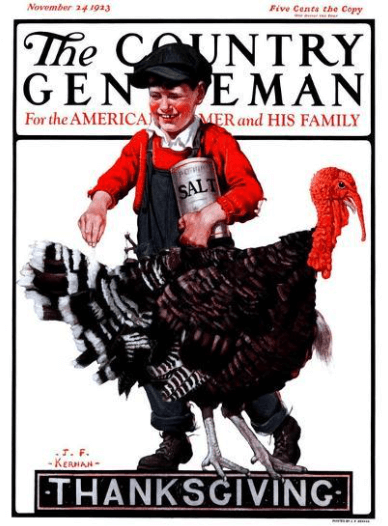
Speaking of the New Year’s babies, this J.F. Kernan Country Gentleman cover recalls Leyendecker’s 1922 cover, also featuring a bird’s tail being salted.

J.F. Kernan, November 14, 1923

J.C. Leyendecker, December 31, 1921

For those of you who haven’t been following along, salting a bird’s tail is supposed to render it temporarily incapable of flying. So the New Year’s baby is trying to make sure the dove of peace doesn’t fly away. The Country Gentleman boy is presumably, more prosaically, trying to get the bird to stay still so he can eat it for Thanksgiving dinner. Or maybe he’s just pre-salting it.

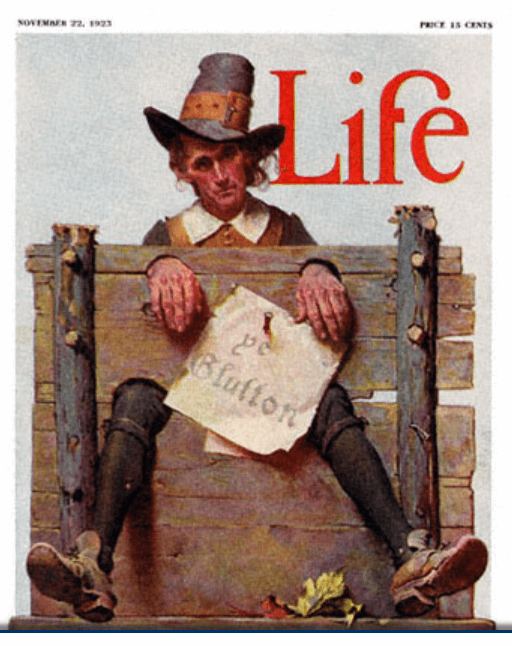
With Leyendecker doing the honors at the Saturday Evening Post, Norman Rockwell was over at Life depicting a svelte Pilgrim in the stocks for gluttony.

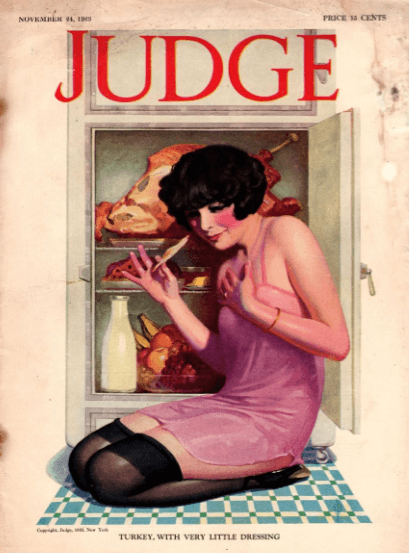
Rival humor magazine Life took a more risqué approach to the holiday with an Enoch Bolles cover titled “Turkey with Very Little Dressing.”*

Enoch Bolles, November 24, 1923

That was all I could find as far as actual Thanksgiving covers go, but this Fruit, Garden and Home cover has a nice autumn feel.**

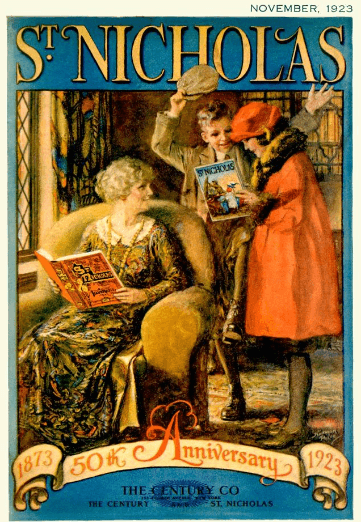
And last but not least, happy 50th anniversary to St. Nicholas magazine! “Is there any doubt that in the thoughts of thousands and thousands, old and young, who have read and to-day are reading its pages, ST. NICHOLAS will be numbered among the blessings for which they are grateful on Thanksgiving day?” the magazine asks, not stopping to wait for an answer.***

As for me, I’ll take a moment to give thanks for the wonderful magazines of 1923–yes, including you, St. Nicholas!

squiggle

*When I was working on the post on summer 1923 magazine covers, I went down a research rabbit hole about Enoch Bolles (whose Judge cover I didn’t end up using) and learned that we were once neighbors of sorts—he was a long-term patient at a psychiatric hospital a few miles away from where my family lived in New Jersey in the 1960s.

**Again for those of you who haven’t been following along, this excellent title was changed to Better Homes and Gardens in 1924.

***Speaking of rabbit holes, I tried to figure out the vintage of the magazine (presumably from her own childhood) that the woman is reading, and therefore whether she is Mom or Grandma, but I couldn’t find any covers that resembled this one.

squiggle

New on our podcast, Rereading Our Childhood:

Rereading Caddie Woodlawn by Carol Ryrie Brink

The best and worst of December 1918: Book talk, strewn violets, a sad loss, and a magazine of the future

2018 is over!

I should have anticipated that this would happen eventually, leaving me with a blog title and tag line that make me look like I can’t do simple arithmetic. (UPDATE 9/8/2020: At the time I wrote this, this blog was called My Year in 1918 and the tag line was “A journey to the world of 100 years ago.”) When I started this project last January, though, the end of the year seemed so far off that it wasn’t worth thinking about. To the extent that I envisioned 2019 rolling around, I imagined myself luxuriating in all the reading I’d missed out on—diving into the new books that have been waiting on my bookshelf
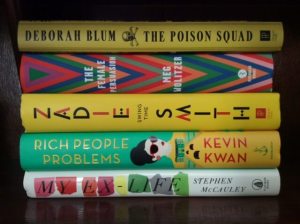
Photograph of a pile of books

and reading frivolous lifestyle articles, which 1918 was woefully short of. Maybe taking a quiz to find out what Hogwarts house I belong in or what Jane Austen character I resemble.*

What actually happened: I got stuck, like someone in a science fiction story who invents a time machine that breaks down as the dinosaurs are descending. I couldn’t bring myself to read any of those new books, not even the biography of food safety pioneer Harvey Wiley, one of my favorite 1918 people. (That’s it at the top of the pile.) I did look at the New York Times headlines on my iPad on New Year’s Day, but they freaked me out. “What is all this news?” I asked myself. “And what does it have to do with me?” So I retreated to the January 1, 1919 news and My Antonia.

It looks like it will take a while. Maybe I’ll read The Waste Land and work my way gradually back to the present.

In the meantime, from my cozy perch in 1918, here are the December bests and worsts.

Best quiz contestants:  

The winners of the “Are You a Stagnuck?” quiz: fellow blogger Deborah Kalb of Books Q&A with Deborah Kalb** and Barbara Dinerman. For their prizes, Deborah has chosen a copy of The Melting of Molly and Barbara has chosen My Antonia. Congratulations to both of these loyal readers! You are not Stagnucks at all. The answers will be posted below the quiz soon. (UPDATE 1/11/2019: You can find them here.)

Best magazine:

Front page header for The Bookman magazine, December 1918

Up to now, four magazines have won the Best Magazine award: The Crisis (three times), The Little Review (twice), The Dial, and The American Journal of Insanity. But the magazine that I turned to most eagerly every month, the one that became my 1918 comfort read, never won the honor. In fact, I came close to naming it Worst Magazine one month, after an ownership change that seemed likely to send it down the tubes.

I’m happy to say that The Bookman’s wonderful December 1918 issue richly deserves the honor.

It began unpromisingly, with a profile of the editor of The Saturday Evening Post and a 15-page article called “The Amazing Story of the Government Printing Office.”*** But then things started looking up, with a Sara Teasdale poem and an interesting article by British war poet Robert Nichols called “To the Young Writers of America,” in which he discusses British taste in American books and vice versa, and notes that up-and-coming poets Robert Frost and T.S. Eliot**** were published in England before they were published in the United States. The highlight for me was when he said that

a certain American poet, come to live among us, antagonized the majority of those who were longing to hear what the real American poets were doing. I will not advertise his name. He does not need my help. He is an adept.

Well, I’ll advertise it: it must be Ezra Pound. I love feeling like a 1918 insider.

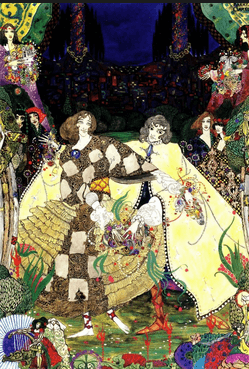
Then there was Margaret Ashmun’s Christmas round-up, including several gorgeously illustrated children’s books I mentioned in the 1918 Holiday Shopping Guide,
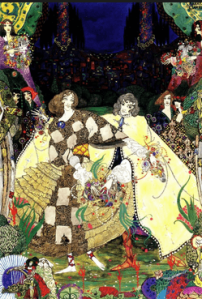
Harry Clarke illustration from Fairy Tales by Hans Christian Anderson, 1916. People in formal dress.

Fairy Tales by Hans Christian Andersen (1916)

and a fascinating set of articles on children’s literature around the world by writers from England, France, Holland, Spain, and Scandinavia. I was so riveted by the history of children’s books in the Netherlands that I looked up the writer, Hendrik Willem van Loon, who turns out to be the author of The Story of Mankind, which won the first-ever Newbery Award in 1921.
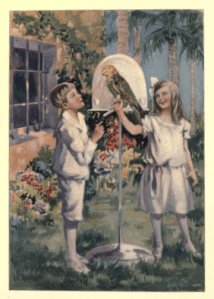
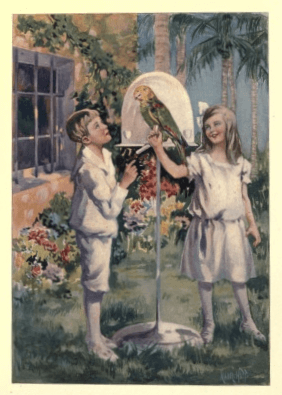
Illustration from Twin Travellers in South America by Mary H. Wade. Boy and girl outside house with parrot.

Frontispiece, Twin Travellers in South America, by Mary H. Wade

In an article about children’s holiday books, Annie Carroll Moore test-drives them on an actual child, nine-year-old Edouard–an ingenious gimmick in an era when gimmicks were sorely lacking.

“Twin Travellers in South America” looked promising but failed to hold his interest for more than a hasty glance at the pictures. “I think my teacher would like that book because it seems like a geography trying to be a story.”*****

And there’s a review of Booth Tarkington’s The Magnificent Ambersons by H.W. Boynton, who feels exactly as I do about it:

I take pleasure in the book, I suspect, because it covers vividly the range of my own generation and yields the atmosphere of and color of that “middle distance” which, as one emerges from it, is wont to be as blurred and insignificant to the backward eye. And I close the book with the queer feeling that everything about it is true except the central figure.

He reviews My Antonia too, but I’m saving that until I finish the book.

Okay, enough Bookman love–on to rest of the best (and worst).

Worst loss to criticism
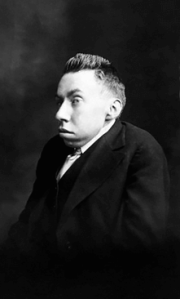
Portrait photograph of Randolph Bourne.

Randolph Bourne, date unknown

One of the highlights of my 1918 reading has been Randolph Bourne’s criticism in The Dial. He was modern without (like Ezra Pound) descending into incoherence, hard-headed without (like H.L. Mencken) crossing the line to nastiness. At 32, he had a bright future ahead of him. Or he would have, if he hadn’t fallen victim, after suffering from chronic health problems and disabilities throughout his life, to the influenza epidemic. He died on December 22, 1918.  His last essay for The Dial, published on December 28, was a rapturous review of Lytton Strachey’s Eminent Victorians. It ends as follows:

The book runs over with good things. One closes it with a new sense of the delicious violence of sheer thought. If there were more Gideons like this, at the sound of such trumpets all the walls of the Victorian Jerichos would certainly fall.

I wish he had lived to leave us his thoughts on the explosion of literary talent that would emerge after the war.

On a more cheerful note…

Best nostalgia-inducing headline:

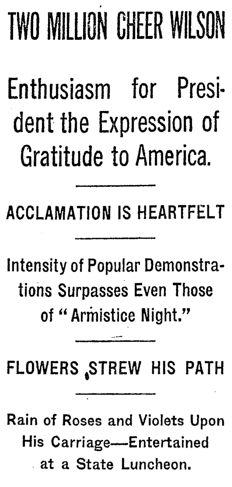
President Wilson arrives in France, and the crowds go wild. Like, strewn violets wild. Sigh.
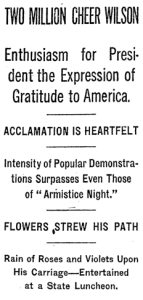
New York Times headline, December 15, 1918, Two Million Cheer Wilson. Includes subhead Flowers Strew His Path.

New York Times, December 15, 1918

Best Christmas present:

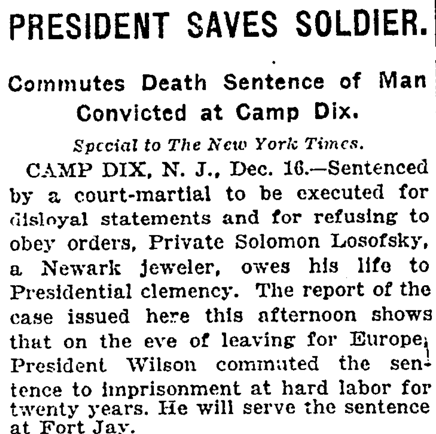
Because what says “Christmas” better than not executing someone for exercising their First Amendment rights?

December 17, 1918 New York Times story President Saves Soldier. Wilson commutes death sentence for disobeying orders.

New York Times, December 17, 1918

Worst Christmas present:

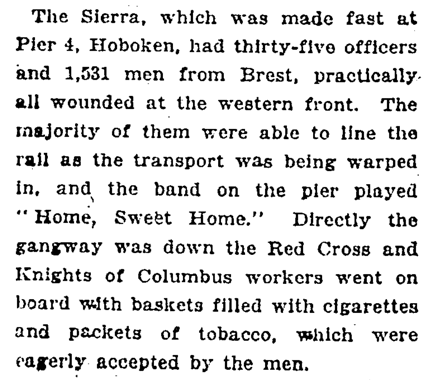
Because what says “Red Cross” better than a basket of tobacco?

December 10, 1918 New York Times story about Red Cross workers giving baskets of ciagrettes to returning soldiers.

New York Times, December 10, 1918

Best judicial decision:

Most 1918 judicial decisions were pretty appalling, but I can get behind Johnson v. Johnson.
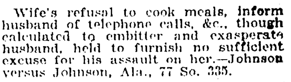
December 16, 1918 New York Times item about judge ruling that wife's refusal to cook meals does not justify assault.

New York Times, December 16, 1918

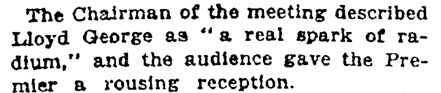
Worst praise for a leader during a political campaign:
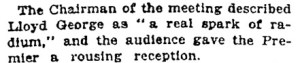
Excerpt from December 15, 1918 New York Times story saying Lloyd George was called a real spark of radium at a meeting.

New York Times, December 15, 1918

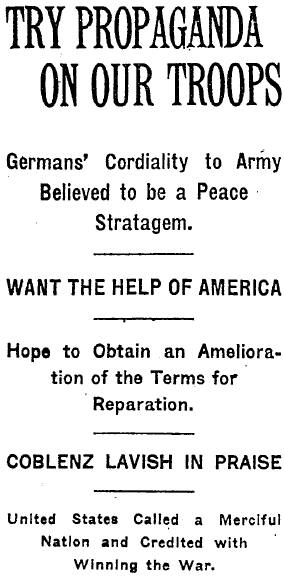
Best sinister stratagem:

Cordiality! Those dastards!
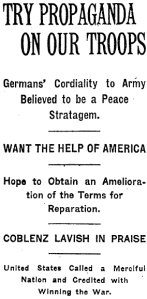
December 15, 1918 New York Times headline reading in part Germans' Cordiality to Army Believed to be a Peace Strategem.

New York Times, December 15, 1918

Worst journalistic flat-footedness:

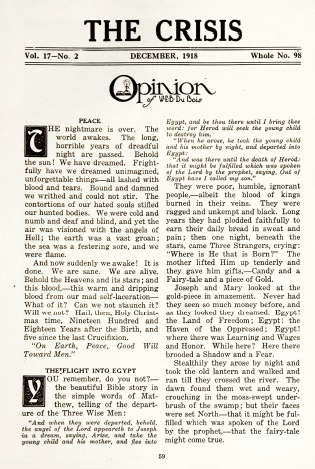
World War I, as you undoubtedly know, ended on November 11, 1918. Some monthly magazines were on it, like The Crisis
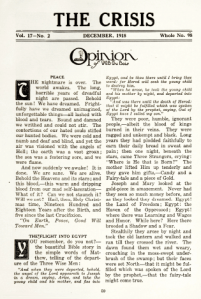
Editorial page of The Crisis, December 1918, with editorial titled Peace.

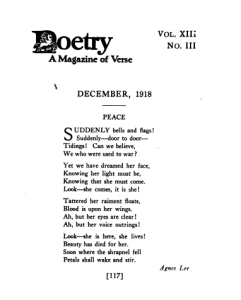
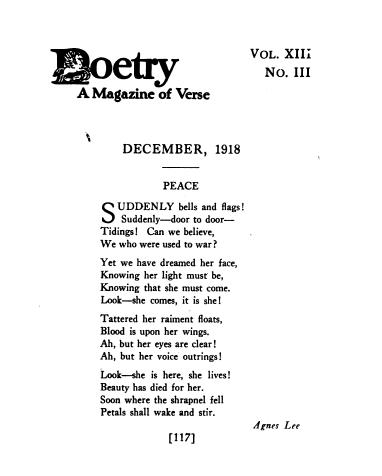
and Poetry.

First page of Poetry Magazine, December 1918, with poem titled Peace.

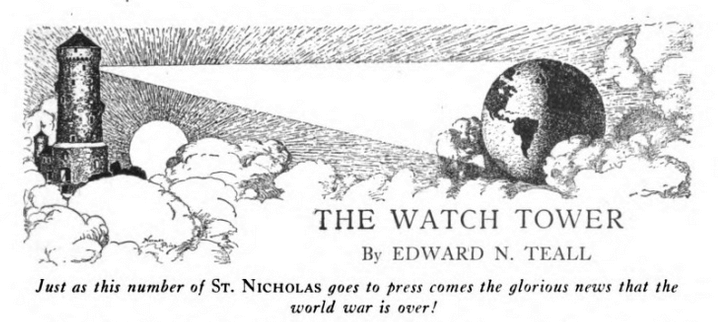
Others missed the boat. The Atlantic Monthly was full of war articles with titles like “Morale” and “Impressions of the Fifth Year.”  St. Nicholas published its monthly update on how the war was going, with one line at the top saying, oh, wait, we won.
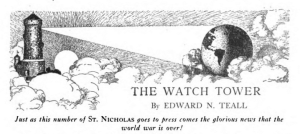
Header in December 1918 St. Nicholas with sentence announcing the war is over.

St. Nicholas, December 1918

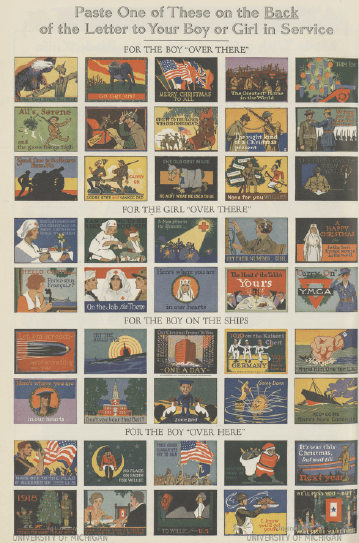
And if you look closely at these festive stamps in the Ladies’ Home Journal to paste onto your letter to your boy or girl in service
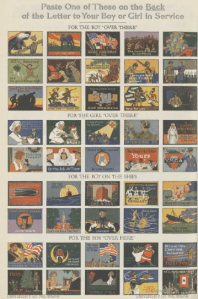
Page of stickers in December 1918 Ladies' Home Journal.

Ladies’ Home Journal, December 1918

you’ll find this

Sticker reading 1919 on the Kaiser's Chest with picture of happy sailors sitting on a chest.

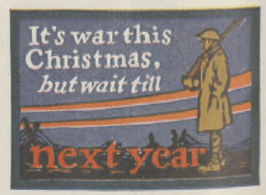
and this.

Sticker reading It's war this Christmas, but wait till next year.

Best caption on an illustration:

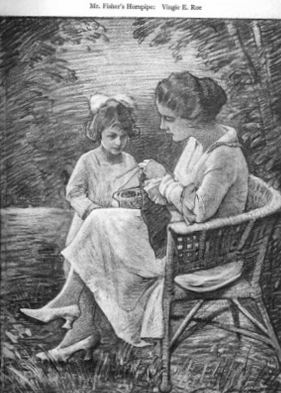
Phillisy sidled up to her Aunt Marion, intent on a Red Cross sweater. “So,” she asked, “can people come alive when they’re dead?”
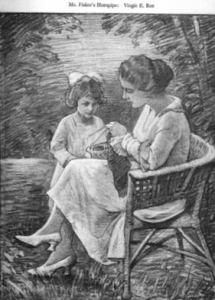
Illustration from December 1918 Sunset magazine. Woman knitting outdoros with girl standing next to her.

Sunset, December 1918

Best cartoons:

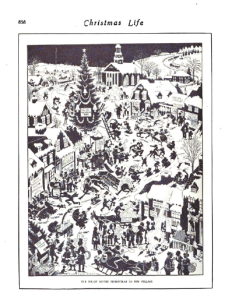
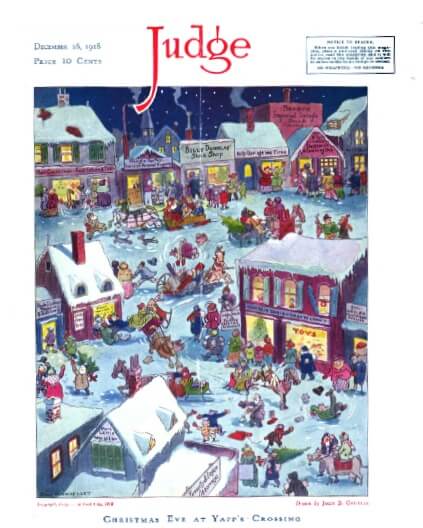
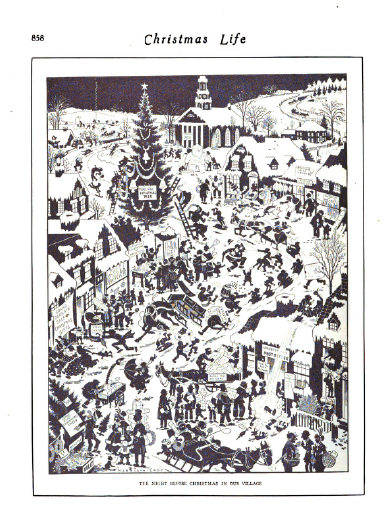
I love both of these Christmas-Eve-in-the-village scenes by Johnny Gruelle of Judge (the creator of Raggedy Ann and Andy) and Harrison Cady at rival humor magazine Life.
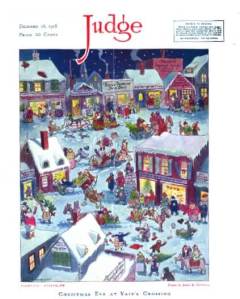
December 28, 1918 Johnny Gruelle Life cover titled Christmas Eve at Yapp's Crossing.

Judge, December 28, 1918

December 5, 1918 Harrison Cady Life illustration showing snowy village.

Life, December 5, 1918

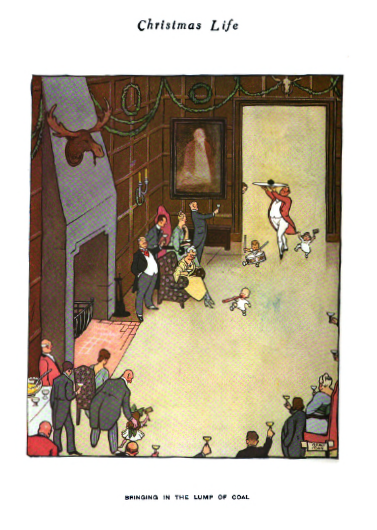
Curious about who drew this charming Life cartoon, I blew it up to to 800% of its size and managed to read the signature: Rea Irvin, who later became a New Yorker cartoonist and created the magazine’s mascot, Eustace Tilley.
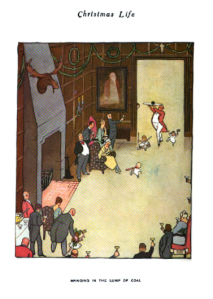
Rea Irvin cartoon in Life, December 5, 1918. Butler bringing lump of coal on tray into living room.

Life, December 5, 1918

Worst cartoon:

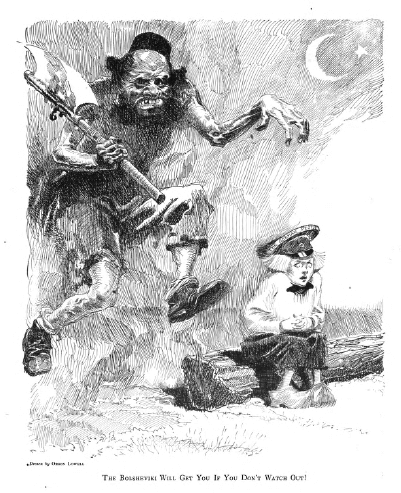
With the Huns out of the picture, the cartoonists need a new scary-looking villain. Sounds like a job for…the Bolsheviki!
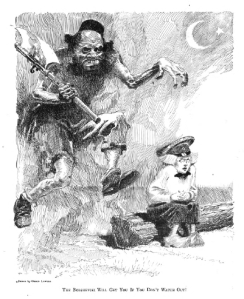
Judge cartoon, December 7, 1918 showing monstrous man about to attack little boy with caption about Bolsheviki.

Judge, December 7, 1918

Best ad (magazine)

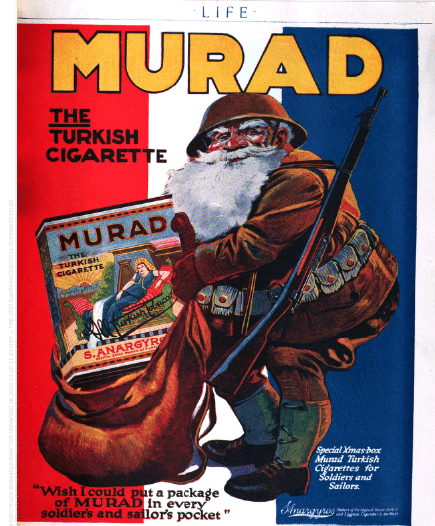
Murad generally owns this category******
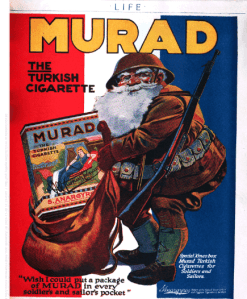
1918 Murad cigarette ad showing Santa with giant box of Murads in his sack.

Life, December 19, 1918

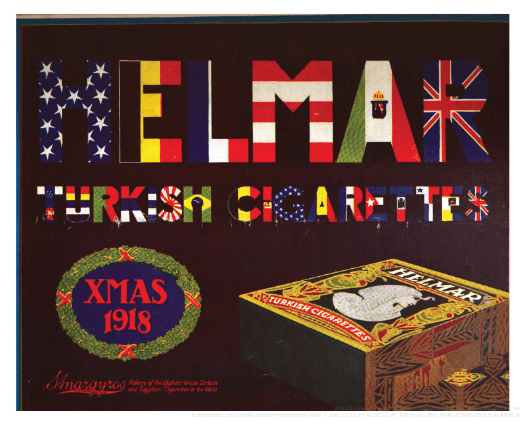
but is edged out this month by rival Turkish cigarette Helmar.
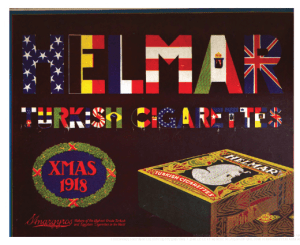
1918 Helmar cigarette ad saying Helmar Turkish cigarettes with each letter colored with a country's flag.

Judge, December 28, 1918

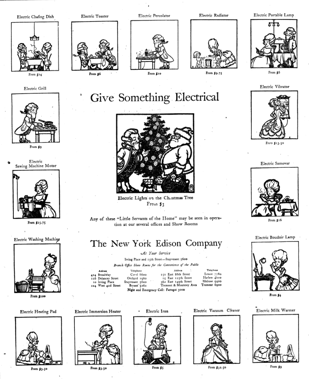
Best ad (newspaper)

Newspaper ads are rarely interesting, but I did like this one. I’m unclear on the purpose of the electric vibrator that the woman on the right in the second row is using on her head.
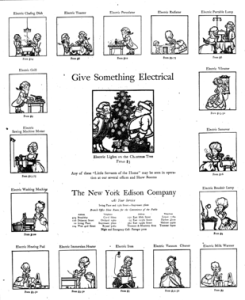
1918 ad for New York Edison titled Give Something Electric with cartoons of people using electrical appliances.

New York Times, December 20, 1918

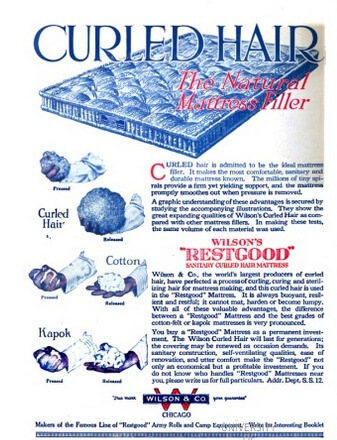
Worst ad:

In another month it might have been this,
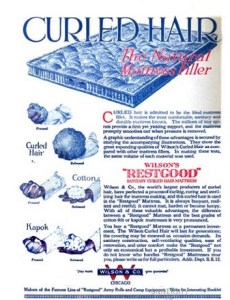
1918 ad for Restgood mattress with headline Curled Hair: The Natural Mattress Filler.

Sunset, December 1918

or this,

1918 ad for Radioc with headline Radium and Hair Health.

New York Times, December 17, 1918

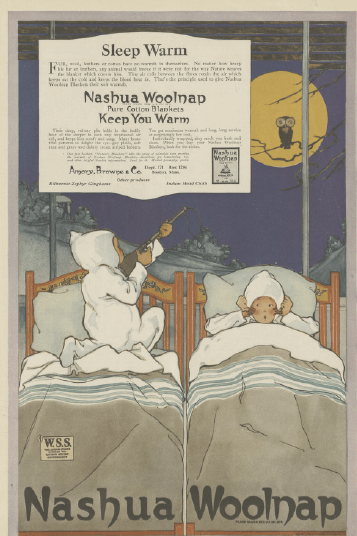
but this was the month of
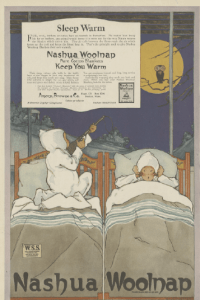
1918 Nashua Woolnap ad showing child in bed aiming rifle at owl.

Ladies’ Home Journal, December 1918

so it was no contest.

Best magazine covers:

There was surprisingly little Yuletide festiveness on the December magazine covers, perhaps due to bet-hedging on the war.

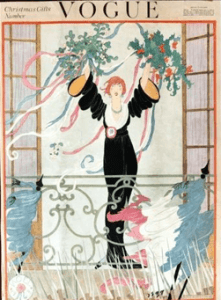
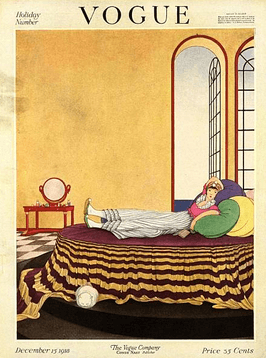
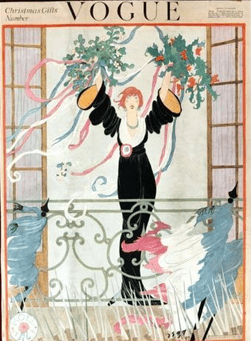
Vogue upheld its usual high standard with two beautiful covers.
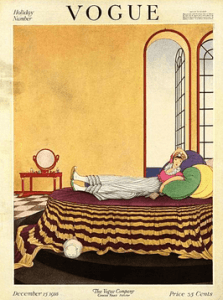
Helen Dryden Vogue cover, December 15, 1918. Woman reclining on bed with colorful cushions in front of open window.

Vogue, December 15, 1918

Vogue 1918 Christmas Gifts number cover. Woman on Juliet balcony waving garlands.

Vogue Christmas Gifts Number, 1918

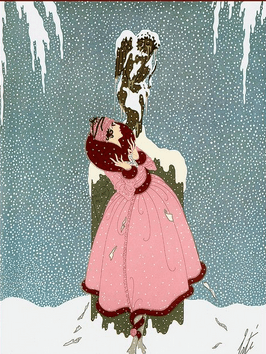
Erté finally turned up again after several months of covers that are lost to history, or at least to the internet.*******
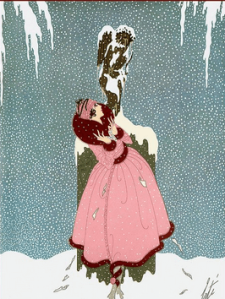
Erté December 1918 Harper's Bazar cover illustration, woman in pink coat in snow.

Harper’s Bazar cover illustration, December 1918, Erté

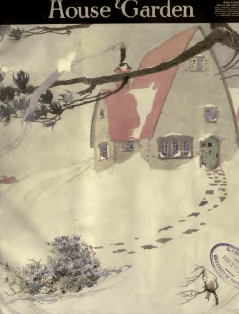
House & Garden featured this snowy scene.
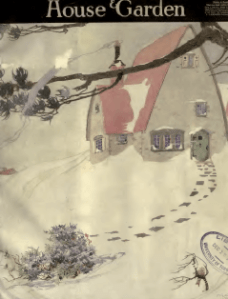
House and Garden December 1918 cover illustration. Gray house with pink roof, footprints in snow.

Artist William Edouard Scott was back with another luminous painting on the cover of The Crisis.

The Crisis December 1918 cover. William Edouard Scott painting The Flight into Egypt. Black family next to river with lamp.

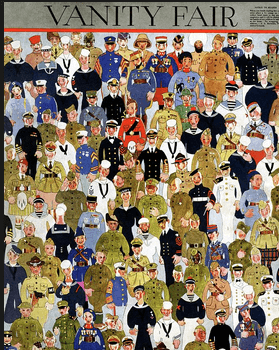
And I loved this Vanity Fair cover,

Vanity Fair December 1918 cover, colorful cartoon of crowd of happy soldiers.

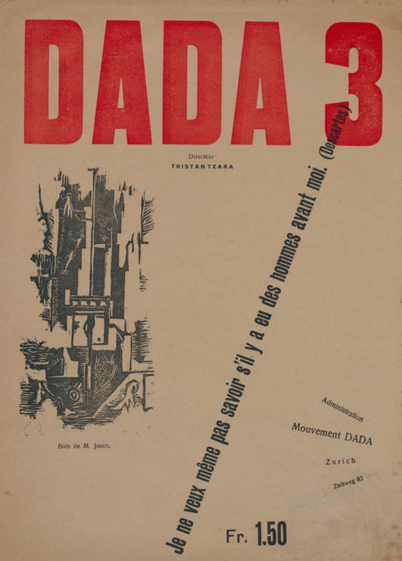
which might have won, but then I remembered this Dada 3 cover, which was featured in the post on my sad 1918 love life. With the war over, it’s a new era, with a new, sometimes anarchic, aesthetic emerging. And nothing looks more like that future than
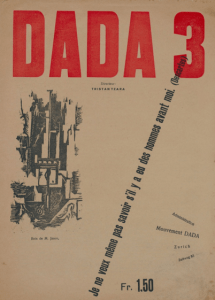
Cover of Dada 3, December 1918 with caption reading Je ne veux meme pas savoir s'il y a eu des hommes avant moi.

On to…1919!!!!!!

*Although I don’t need to; I know I’m a Ravenclaw and, like everyone else, Lizzie.

**You should check out her website, which features interviews with a huge number of authors (although none from 1918).

***Which, it turns out, is so amazing that the story continues in the January 1919 issue.

****What The Bookman had to say about Eliot under the previous ownership: “There is such a display of cynical cleverness in the verse of T.S. Eliot that I think he might be able to write almost anything except poetry.”

*****Edouard was right. A sample of the twins’ childish prattle: “‘Why, that must be a mataco,’ he said. ‘It’s a kind of armadillo. See, it has rolled itself into a ball for safety. Matacos always do that when they think danger is near. With its head hidden and its jointed shell curled around, it now feels quite safe.'”

******Fun fact: cartoonist Rea Irvin was a Murad illustrator.

*******I couldn’t find an undamaged copy of the actual cover–this is a reproduction of the illustration.


New review on the Book List:

December 31: Renascence and Other Poems by Edna St. Vincent Millay (1917).
The best and worst of February 1918: Magazines, stories, cover art, and jokes

Two months into My Year in 1918, I feel like I used to feel two months into a Foreign Service posting: completely at home in some ways but totally bewildered in others. I know who Viscount Morley was*, and which author every critic trots out to bemoan the sad state of fiction**, but there are references that go right over my head. Who is Baron Munchausen? What is Fletcherizing? And the jokes. I’ll never get the jokes.
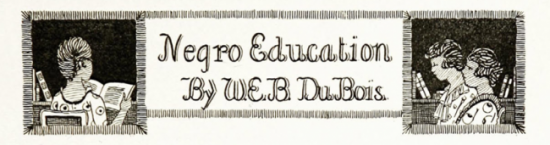
Best magazine: The Crisis

Banner reading Negro Education by W.E.B. DuBois with illustrations of women reading, The Crisis, 1918.

The Crisis, February 1918

 This is a repeat, but no other magazine approaches The Crisis in terms of quality of writing and importance of subject matter. Aside from W.E.B. Du Bois’ autobiographical essay, which I wrote about last week on the 150th anniversary of his birth, the February issue includes Du Bois’ scathing take-down of a government-sponsored study on “Negro Education” that advocated the replacement of higher education institutions with manual, industrial, and educational training. There’s a horrifying account of the mob murder of an African-American man in Dyersburg, Tennessee—so brutal, the magazine reports, that some white townspeople felt he should have had a “decent lynching.” On the literary side, there’s “Leonora’s Conversion,” a slight but engaging story about a wealthy young black woman’s brief flirtation with the church.

I’m not awarding a Worst Magazine this month. Good Housekeeping was a contender again—dialect-talking black maid Mirandy has the month off, but Japanese manservant Hashimura Togo*** expounds on his employer’s marital problems in equally fractured English. (“‘You have left off kissing me as usually,’ she dib. ‘O.’ He march and deliver slight lip.”) The magazine redeems itself somewhat, though, with an article by suffragist Anna Kelton Wiley called “Why We Picketed the White House.”

Illustration of story about Togo by Wallace Irving, Good Housekeeping, February 1918.

Good Housekeeping, February 1918

Best short story: “A Sordid Story,” by J., The Egoist

February wasn’t a great month for short stories. Most of the ones I read, including two that made it into The Best American Short Stories of 1918, started out promisingly but ended with pathos or a gimmicky twist. “A Sordid Story,” in the January**** Egoist, isn’t great literature, but it has daring subject matter and lots of atmosphere. It features a Cambridge student named Alphonse, whose life is described in the most British sentence I’ve ever read:

He made friends easily and took friendship seriously; so seriously that he spent nearly the whole of the Michaelmas term following the taking of his degree in reading Aeschylus’s Prometheus Bound and The Gospel according to St. Luke in the Greek with a much younger man—a certain Roderick Gregory—who was in his second year, but had hitherto failed to pass his Little-Go.

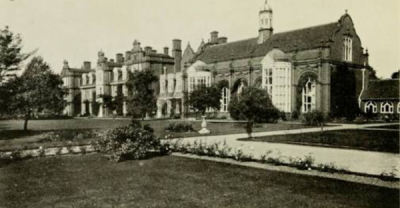
Photograph of Cambridge University by Maxwell Armfield, Cambridge and Its History, 1912.

Maxwell Armfield, from “Cambridge and its History,” 1912

Alphonse falls for Roderick’s sister Beatrice, who “used to have a pet pig, and she called him Shakespeare, because he would be Bacon after his death.” But he spends the night with a working-class girl who grabs his arm as he’s walking near Midsummer Common and says, giggling, “Can yer tell me what o’clock it is?” Horrified with himself the next day, he goes back to her lodgings to pay her off. She tells him that he was her first lover, then, when he tells her it’s over, says, “Yer weren’t the first, then!” Relieved “not to be the first to help send a woman downward,” he goes back to his rooms, where Roderick is playing the cello and twenty-five copies of the Quarterly Journal of Mathematics, in which he has published a paper, await him. It’s only years later that he figures out that he was, in fact, the first.

Worst short story: “A Verdict in the Air,” J.A. Waldron, Judge

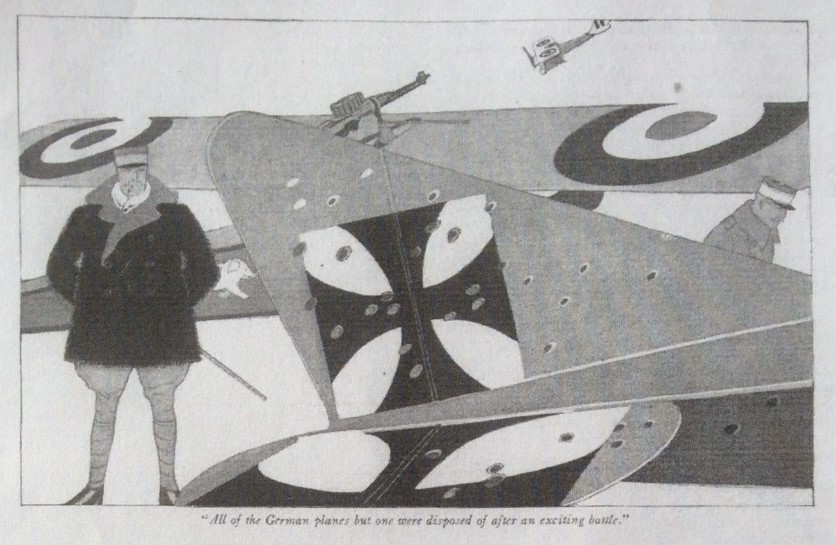
Lawrence Fellows illustration, Judge magazine, 1918, man standing near airplanes.

Lawrence Fellows, Judge, February 9, 1918

Harwood, on leave from aviation training, goes to a cabaret in Chicago. To his surprise, one of the singers is his childhood sweetheart Bessie Dean, who left their Ohio hometown to pursue a career in opera. She introduces Harwood to her husband Grindel, who takes a dislike to him. A few days later, Harwood is training on the Pacific Coast, when who should show up as a mechanic but Grindel! Harwood has a series of flying accidents, and Grindel is suspected, but he goes AWOL. Harwood is sent to fight with the French army. He visits a friend at a field hospital, where the nurse is none other than Bessie, who has escaped her husband. Back at the front, there’s a heated battle. Harwood pursues the last remaining German plane and hits its rudder after a lively skirmish. As the plane plunges to the ground, he sees that the pilot is—you guessed it—Grindel!

Well, the illustration is kind of cool.

Best magazine covers:

February was a great month for magazine covers. I just wish that the insides of the magazines were half as good. Besides the ones from Harper’s Bazar and Vanity Fair that I’ve mentioned already, there’s this Helen Dryden cover from Vogue,

Helen Dryden Vogue cover, February 1918, woman in pink hoop skirt looking into mirror.

Helen Dryden, February 1918

 and this one, which Norman Rockwell sold to Judge after the Saturday Evening Post turned it down. I can kind of see why.

Norman Rockwell Judge magazine cover, girl grabbing tartan skirt from brother dressed as a Scottish soldier.

Norman Rockwell, Judge, February 9, 1918

Best joke:

 This isn’t exactly a joke, but it made me laugh. It’s the opening of Louis Untermeyer’s review of poetry collections by Edna St. Vincent Millay, Samuel Roth, and Edwin Curran in the February 14 issue of The Dial.

These three first volumes, with their curious kinship and even more curious contrasts, furnish a variety of themes. They offer material for several essays: on “What Constitutes Rapture”; on “The Desire of the Moth for the Star”; on “The Growing Tendency among Certain Publishers to Ask One Dollar and Fifty Cents for Seventy Pages of Verse”; on “A Bill for the Conservation of Conservative Poetry”; on “Life, Literature, and the Last Analysis”; on “Why a Poet Should Never be Educated.”

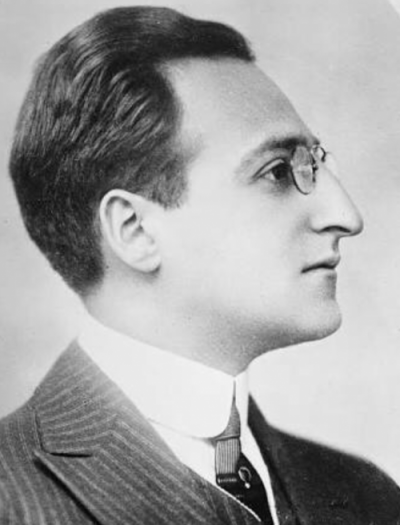
Studio photograph of Louis Untermeyer, ca. 1910-1915.

Louis Untermeyer, ca. 1910-1915, Library of Congress

The Growing Tendency among Certain Publishers to Ask One Dollar and Fifty Cents for Seventy Pages of Verse! That Louis Untermeyer is such a card!

Not amused? Okay, then, you go back to 1918 and try to find something funnier.

Worst joke:

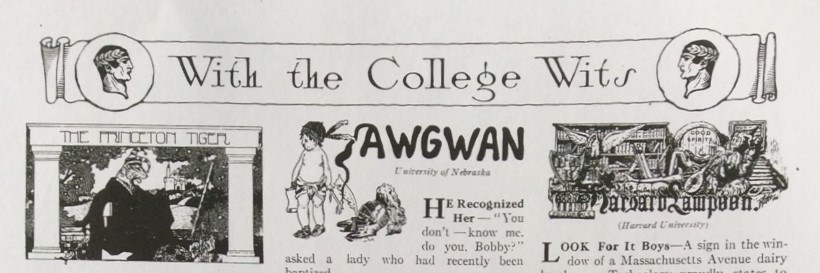
Judge magazine banner, With the College Wits, February 9, 1918.

Judge magazine, February 9, 1918

 Once again, hard to choose. Maybe this, from the February 9 issue of Judge:

“You don’t—know me, do you, Bobby?” asked a lady who had recently been baptized.
“Sure I do,” piped the youth. “You’re the lady what went in swimming with the preacher, last Sunday.”

On to March!

*A British diplomat

**Mrs. Humphrey Ward

***Really Wallace Irwin, who made a career of writing about Togo. Mark Twain was a fan.

****I was reading The Egoist a month late on the principle that it would have taken time for the magazine to get to the United States, which I’ve since decided is ridiculous.

Wednesday Miscellany

An ad in The Egoist, the British literary journal where T.S. Eliot was assistant editor. I love how proudly they quote the criticism. Dissatisfying! Very unequal! Missing the effort by too much cleverness!

Advertisement for Prufrock by T.S. Eliot.

The Egoist, January 1918

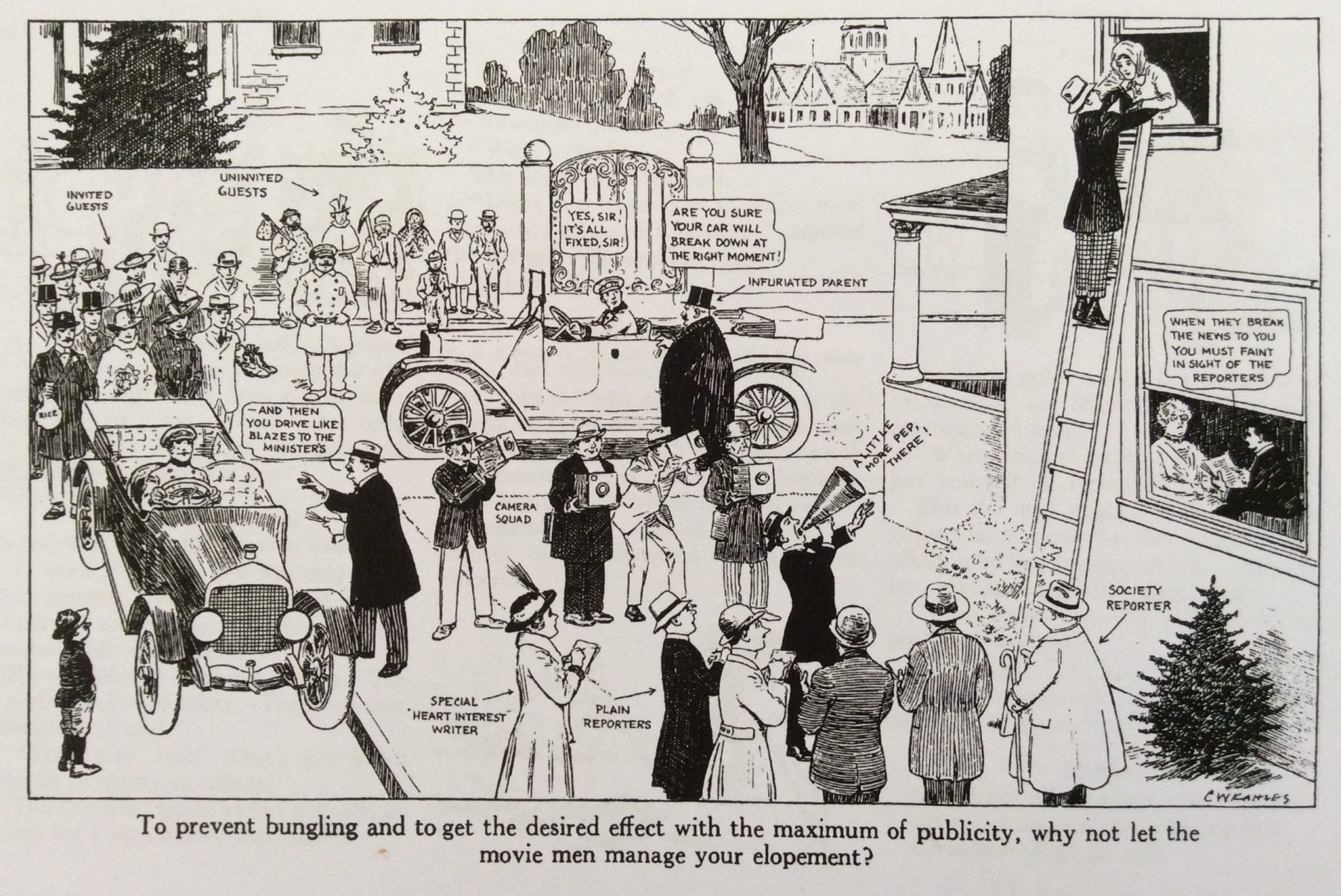
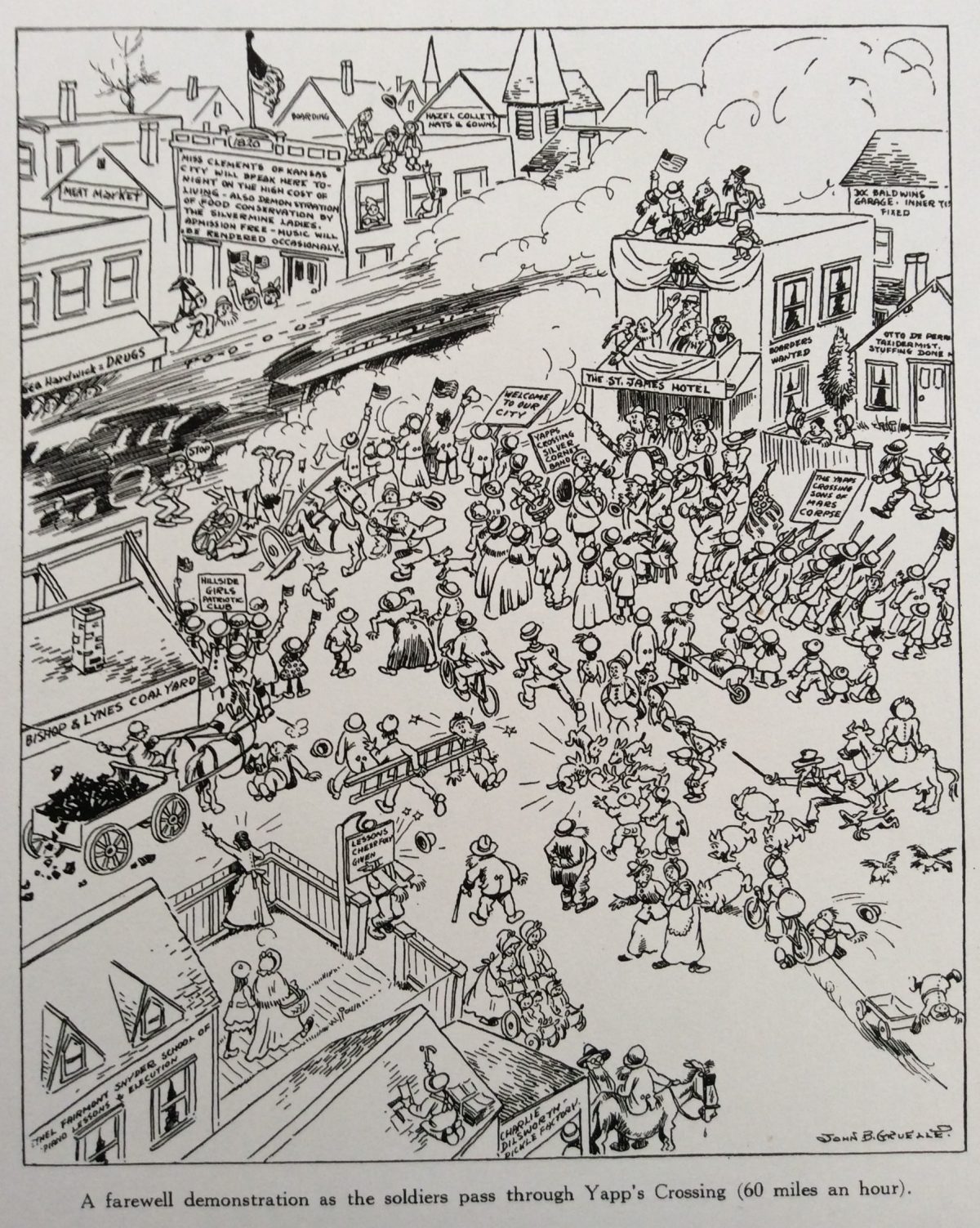
Judge was a humor magazine that managed almost never to be funny–more on that later–but they had some great illustrators. My favorites from the January 3, 1918, issue:

Judge cartoon, what if the movie men managed your elopement, January 3, 1918

Judge Cartoon, soldiers pass through Yapp's crossing, Johnny Gruelle, January 3, 1918.

Johnny Gruelle